Article

Effect of Inclined Angles and Contouring Parameters on Upskin Surface Characteristics of Parts Made by Laser Powder-Bed Fusion


by
Nismath Valiyakath Vadakkan Habeeb
* and
Kevin Chou
Department of Industrial & Systems Engineering, University of Louisville, Louisville, KY 40292, USA
*
Author to whom correspondence should be addressed.
Coatings 2026, 16(1), 119; https://doi.org/10.3390/coatings16010119
Submission received: 10 December 2025 / Revised: 8 January 2026 / Accepted: 13 January 2026 / Published: 16 January 2026

Abstract

Surface finish plays a critical role in the tribological performance of additively manufactured engineering components. In exploring part characteristics in laser powder-bed fusion (L-PBF), this study investigates the effect of contouring strategies on the upskin surface of inclined specimens (30°, 45°, and 60°) made with L-PBF, using post- and pre-contouring strategies with various levels of process parameters. The surface data of fabricated inclined specimens were acquired by white-light interferometry, followed by a quantitative analysis using surface images. The results show that post-contouring leads to better surface finishes, with the lowest Sa of 8.68 µm attained at the highest laser power (195 W) and the slowest scan speed (500 mm/s) on 30°-inclined specimens, likely due to increased remelting and less step-edges. In contrast, pre-contouring produces distinct surface textures on the upskin of L-PBF specimens, resulting in a rougher surface morphology, with a maximum Sa of 33.39 µm also from 30°-inclined specimens at the lowest power (100 W) and the highest speed (2000 mm/s), suggesting an insufficient remelting of surface defects. In comparative analysis, in general, post-contouring yields smoother upskin surfaces, with a 17%–30% reduction in Sa, than those from equivalent pre-contouring conditions, highlighting the potential of scan sequences for optimizing L-PBF to improve the surface finish of inclined structures.

1. Introduction

Laser powder-bed fusion (L-PBF) has become a popular metal additive manufacturing technique for fabricating complex components in aerospace, biomedical, automotive, and energy fields because of its high design freedom [1,2]. Thin layers of metallic powder are selectively melted using a laser beam and are solidified layer-by-layer in this process. It enables the fabrication of intricate geometries with overhangs, internal channels, and lattice structures that are nearly impossible or difficult to produce using conventional manufacturing techniques [1,3]. Despite these advantages, the as-built surface morphology of L-PBF parts is often inferior, with a high surface roughness and dimensional inaccuracy that can severely limit the functional usage and mechanical performance of the parts, necessitating additional post-processing steps which are costly and time-consuming [4,5]. The roughness of the surface is especially critical for components exposed to fatigue loading conditions, where the stress concentrations can cause a failure in mechanical performance [6,7]. A surface roughness reduction of 91.2% in Ti6Al4V L-PBF parts was shown to improve the fatigue strength by 75% [8]. A 93% reduction in surface roughness for a Ti6Al4V femoral head fabricated using L-PBF has shown an ~87% improvement in the corrosion rate in biomedical research [9]. Dimensional inaccuracy may also lead to poor assemblability, which hinders applications where the precision of the components is critical [10,11].
The surface formation mechanisms are dependent on the surface orientation relative to the build plate in the L-PBF process [12]. The horizontal surfaces, which are parallel to the build plate, are mainly influenced by the raster scanning parameters and hatch strategies, whereas the vertical surfaces, which are perpendicular to the build plate, are influenced by the scan track overlap and the staircase effect [4,13]. However, the formation of inclined surfaces, which have a relative slope to the build plate, is much more complex than horizontal and vertical surface formation due to the unsupported melt region and exposure to the powder bed [14,15]. As a result, the upward-facing (upskin) and downward-facing (downskin) surfaces typically have a higher surface roughness than horizontal and vertical surfaces [16,17]. Interestingly, the formation mechanism for both the upskin and downskin is entirely different. The upskin surface roughness is dominantly due to the staircases or step edges formed due to the layer-by-layer fabrication process and minor adherence of particles along the step edges [4,14,18,19,20]. The downskin surface roughness is a result of powder particle attachment and the resulting dross formation due to the melt pools exposed to the powder bed underneath [21,22,23].
The inclination angle of the part plays a critical role in the upskin and downskin surface morphology because it determines the inter-layer shift and the area of the melt pool exposed to the powder bed [22,24]. Many studies have reported that the upskin surface roughness increases with the inclination angle due to the increased number of step edges as the inter-layer shift becomes smaller [4,24,25]. The particles attaching to these step edges are also a contributor to the surface roughness [26]. In contrast, downskin surface roughness increases at lower inclination angles due to a larger overhang area exposed to the powder bed underneath the scanning domain at each layer, which increases the powder particle attachment onto the melted region [27,28]. It is hence known from the literature that the optimization of inclined surfaces requires angle-dependent strategies that are tailored for the upskin and downskin distinctively.
The process parameters, like laser power, scan speed, hatch spacing, layer thickness, scan strategy, powder characteristics, etc., also significantly impact the surface quality of L-PBF parts [5,16,29,30,31,32,33]. Several studies have reported that an excessive linear energy density (LED) on horizontal surfaces can initially reduce roughness by stabilizing the melt pool and suppressing balling phenomena; however, it may cause keyholing, spatter, and sub-surface porosity [27,34]. For inclined surfaces, the energy input selection is challenging as the high LED, which improves upskin morphology, may severely worsen that of the downskin due to deep melt pools enlarging the exposed area to the powder bed [35,36,37]. Additionally, the LED as a metric for parameter optimization does not uniquely define melt pool behavior or surface quality because many different combinations of laser power and scan speed can yield the same LED ( L E D = L a s e r   p o w e r , P S c a n   s p e e d , V , [5]), but result in distinct thermal histories, defect formation, and contour–raster interactions for a given material and machine setup [38]. Therefore, the LED alone is insufficient for process optimization, and discrete P-V combinations must be identified for each material, system, and contouring strategy to ensure the desired surface quality. To control the effect of the infill energy density on the surface morphology, contour scanning is an accepted method [39].
One or more additional scans along the part contour with dedicated input process parameters help in remelting the boundary region and thus smoothing the surface irregularities caused by the raster scan edges and excessive or low energy input [37,40,41,42,43,44,45]. While implementing contour scanning strategies to control surface irregularities, the sequence of the contour and raster scanning and the contour process parameters are the critical variables. Tian et al. have reported a reduced vertical surface roughness using high-energy density contouring [16]. Ren et al. showed that contouring before raster scanning (or pre-contouring) reduced the lateral vertical surface roughness under the majority of LED ranges because of the better energy absorption of the powder particles [39]. Conversely, another reported study on micro-selective laser melting showed that pre-contouring resulted in surface defects and increased roughness [46]. A double-contouring approach with two contour scans at an offset distance from the raster scan has also been reported as beneficial for reducing the inclined surface roughness [42]. Despite advances in contouring methodologies, key research gaps remain in the multi-parameter synergistic regulation of inclined surface quality, including the conflicting effects of pre- and post-contouring across LED ranges, the limited understanding of the combined and individual effects of contour sequence, input energy density, offset distance, and inclination angles on step edge formation and particle attachment, and the lack of systematic design of experiments to explore wide parameter ranges for double-contouring strategies. Addressing these gaps necessitates a comprehensive study on the effects of different contouring strategies and parameters on the upskin and downskin surfaces exclusively.
This work is a part of such a comprehensive research framework designed to study the effects of various contouring strategies on inclined L-PBF parts through extensive experimentation [47,48]. In the first phase of the research, a post-contouring strategy with a double-contouring approach was tested across a wide range of processing parameters [47]. The variables in the study included the contour laser power, scan speed, offset strategy, and the inclination angle of the part. In this prior study, double-contouring using an inner and outer contour with the same contour laser power and scan speed, scanned at designed offset distances from the raster scan, was used to manufacture Ti6Al4V parts at three different inclination angles. The results from the first phase research obtained using white light interferometry surface imaging confirmed that the upskin and downskin surfaces are significantly influenced by all the considered variables and have different formation mechanisms [47]. Additionally, the same work concluded that post-contouring using a high LED (high laser power and/or low scan speed) and lower inclination angles resulted in a lower upskin surface roughness and higher downskin surface roughness. To address this disparity, in the second phase of the study, a post-contouring strategy with a high-LED inner contour and low-LED outer contour was designed to retain the remelting of the upskin while reducing particle attachment onto the downskin. Also, a pre-contouring strategy with a broad range of parameters was included in the second phase of the research framework, as various reported works have conflicting results [39,46]. The effect of post-contouring (with different LEDs for both contours) and pre-contouring on the downskin surfaces of inclined L-PBF parts has been reported [48].
The research presented here aims to investigate the influence of post- and pre-contouring strategies on the upskin surface roughness of inclined L-PBF parts. A wide range of processing conditions and three different inclination angles are examined for both contouring methods. The complete experimental methodology is explained in Section 2. The surface images from interferometry, as well as the statistical analysis of surface roughness metrics, are reported in Section 3. A comprehensive comparison of previously published results for downskin surfaces [48], along with this study’s findings, is presented in Section 4 to understand the influence of each considered variable on the inclined L-PBF surfaces, which can aid in process optimization.

2. Materials and Methods

The study uses Ti6Al4V inclined specimens fabricated with a commercial EOS M270 L-PBF system (EOS GmbH, Krailling/Munich, Germany) to evaluate the effect of post- and pre-contouring strategies on the upskin surface morphology over a range of inclination angles and contour scan parameters. Process parameters were selected at a span of a practically relevant process window of linear energy density (LED) and offset strategies by keeping the machine’s default settings as a reference.
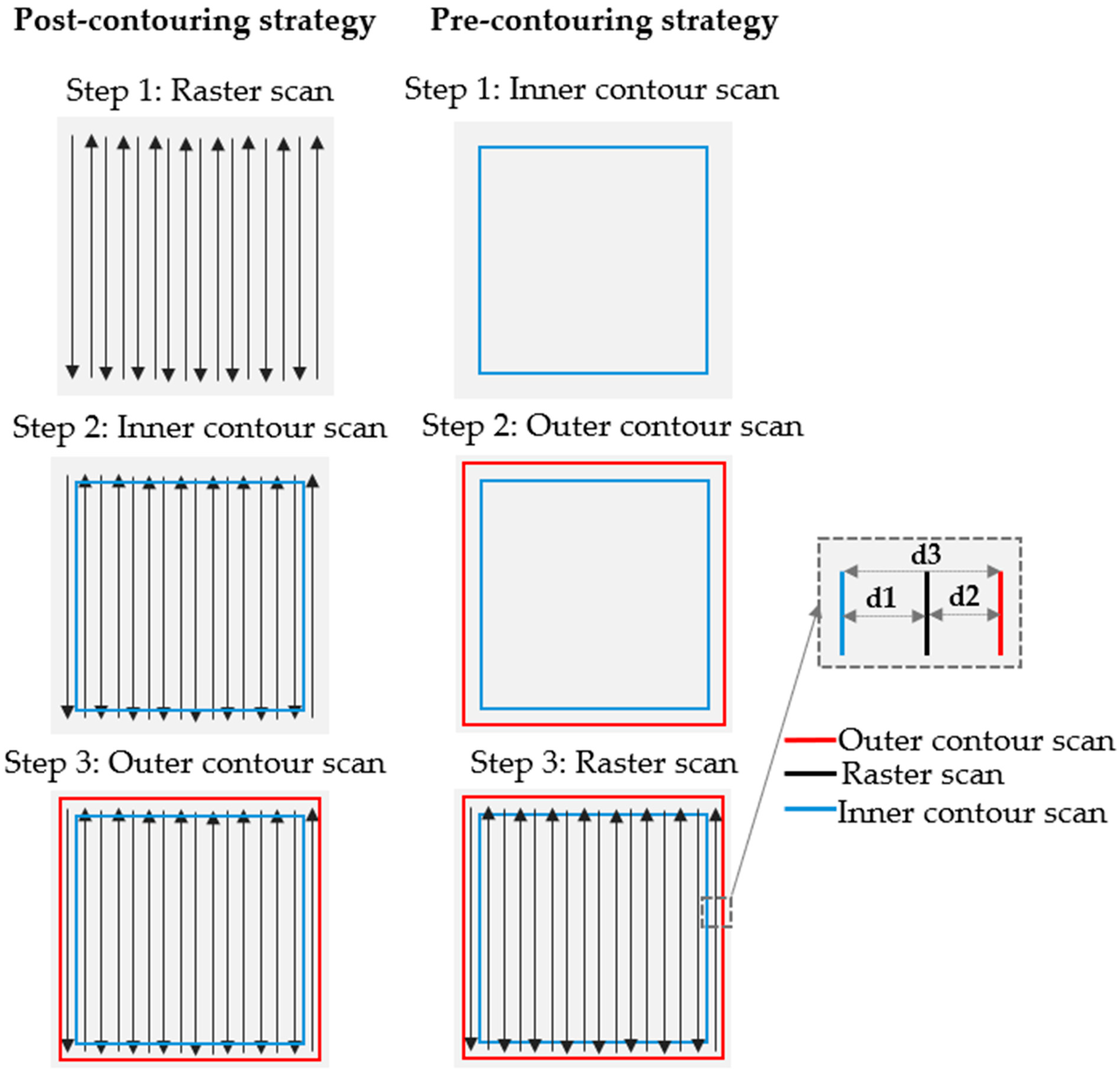
A factorial design of experiment (DOE) was developed with two different contouring sequences, namely post-contouring (Section 2.1) and pre-contouring (Section 2.2), with various contour laser powers (P), scan speeds (V), inclination angles (θ), and total offset distances (d3). In both strategies, a double-contour approach was adopted in which one contour is shifted inward with respect to the raster scan region by an offset distance, d1, and the second contour is shifted outward by the offset distance d2, such that d3 = d1 + d2 defines the total distance between the inner and outer contour scans, as illustrated in Figure 1. This scan strategy was chosen to promote controlled overlap between the raster hatch and both contour tracks, targeting a sufficient remelting of the hatch edges while allowing for an independent tuning of the outer surface forming tracks.

2.1. Post-Contouring Strategy

In the post-contouring strategy experiment, the raster hatching occurs first, followed by an inner contour and then an outer contour scan, as illustrated in Figure 1. In this strategy, as the contour scans act as a finishing step, the parameters are selected to tailor the melt pool size and solidification dynamics at the upskin boundary. From the previous studies, it is established that a higher LED can enhance remelting at upskin surfaces but can cause increased particle attachment on downskin surfaces [47]. Hence, this study implements a higher-LED inner contouring combined with a lower-LED outer contouring to enable the remelting of raster edges efficiently on the upskin, without worsening the downskin surface properties. The offset distance between the two contour scans (d3) is fixed at 20 μm to isolate the impact of contour laser power and scan speed rather than overlap geometry. The effect of overlapping contour scans during post-contouring is studied extensively in [47]. The machine’s default contour processing parameter (P = 150 W, V = 1250 mm/s) is selected as the medium-LED case, and the low- and high-LED cases were selected by adjusting the contour laser power on each specimen, while keeping a constant scan speed. The constant scan speed simplifies the LED tuning by reducing the number of experimental factors and complexity in parameter setup. The selected parameter for the experiment is listed in Table 1.

2.2. Pre-Contouring Strategy

As Figure 1 shows, in the pre-contouring strategy, both contour scans precede the raster scanning process. The inner contour scanning is the first step, which is followed by the outer contour scan at a distance d3, and then the raster scan. Earlier studies on vertical surfaces have shown that scanning of the contour first onto the powder layer can enhance energy absorption and stabilize melt pool wetting, leading to a reduction in surface roughness [39]. The previous study on downskin surface morphology also showed that pre-contouring results in a better surface finish with lower powder attachment [48]. The effect of pre-contouring on inclined upskin surfaces is not reported elsewhere.
The DOE for the pre-contouring case is a fractional factorial design with three levels each for P, V, θ, and d3, as listed in Table 2. The parameters are selected by keeping the manufacturer-recommended contour scan parameters for Ti6Al4V, which are P = 150 W, V = 1250 mm/s, and d3 = 20 µm, as reference. The factor levels are chosen to bracket these default settings such that both lower and higher LEDs are represented. The d3 levels are selected based on prior studies using post-contouring strategies, which concluded that the offset distance has a significant impact on the surface roughness of inclined surfaces [47]. The total offset distance was selected to obtain different overlaps between the raster and contour scans by setting the d1 to 1/3rd to 1/4th of the d3, to ensure the pre-melting of the boundary of the raster scan region, and positioning the d2 at 2/3rd to 3/4th of the d3 to contour and pre-melt the edges of both the raster and inner-contour melt region. It is well established from that study that the offset distance influences the remelting of raster scan edges and thereby the surface roughness of post-contoured surfaces. However, as the remelting will not occur in pre-contouring, the effect of the offset distance is unknown.

2.3. Specimen Fabrication and Surface Roughness Measurement

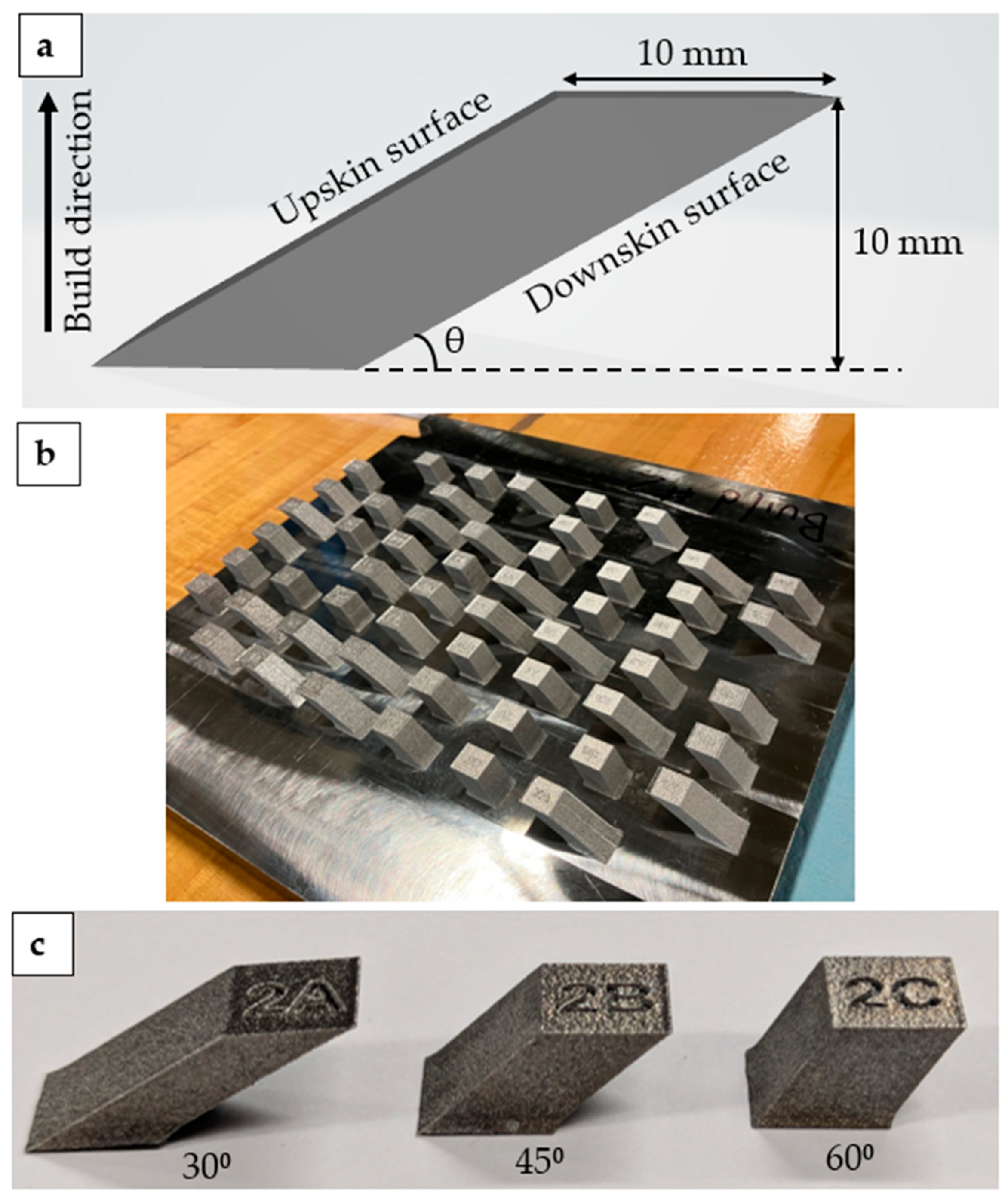
Inclined specimens with a nominal height and width of 10 mm were modeled at inclination angles of 30°, 45°, and 60° relative to the build plate, as shown in Figure 2. These angles were selected because the published literature has proven that surface roughness and particle attachment vary strongly across this range, with lower inclination angles typically showing a more pronounced defect formation [17,21,49]. For each unique parameter set, three replicates were fabricated for collecting data for statistical analysis and to reduce build-to-build variation. Specimens were placed randomly on the build plate to reduce the location-dependent effects that typically arise in the L-PBF process. All specimens were fabricated using Ti6Al4V powder with a size distribution within 15–45 μm and chemical composition given in Table 3 on an EOS M270 system with a nominal laser beam diameter of 100 μm.
The raster scan was set up using the machine’s recommended parameters for the Ti6Al4V, which is a laser power of 170 W and a scan speed of 1250 mm/s, with a layer thickness is 30 μm. A hatch spacing of 100 μm and a 90° rotation of the hatch direction between successive layers is set up. The raster scanning parameters were maintained constant to isolate the influence of the contour scanning on the upskin morphology.
The upskin surface morphology was quantified using a non-contact white light interferometer (WLI) (WYKO NT1100, Veeco Instruments, Inc., Plainview, NY, USA), which provides a sub-micrometer vertical resolution suitable for characterizing L-PBF surface features. Measurements were performed in vertical scanning interferometry mode with a 50× objective and 0.5× field of view. It acquires a sequence of height-indexed interferograms as the objective is translated in the z-direction and reconstructs a 3D surface map from the fringe signal at each pixel. The pixel resolution of surface images is 340 nm × 394 nm, and the total vertical scan distance was set to 350 µm for all measurements, providing sufficient height range for the surfaces examined in this work. For each specimen, a single WLI scan covering a relatively large area of 2.65 mm × 1.25 mm at the center of the upskin surface was acquired, rather than multiple smaller fields of view, so that each average surface roughness (Sa) value represents the average roughness over a statistically representative surface region. The WLI machine is mounted on a pneumatic table for vibration control, and each specimen was calibrated by identifying the center of the upskin surface and subsequently focusing the lens at the center and four corners of the scan area to ensure flatness across the measured region.
Vision v3.60 software was used for the WLI image processing and extraction of roughness metrics such as average surface roughness, Sa, and average surface skewness, Ssk. The software automatically adjusts the color bar scale to the measured height range of each scan, so the surfaces with higher Sa are plotted with a larger color range, whereas smoother surfaces appear with a narrower range, while all data remain within the configured vertical scan distance. Statistical analysis using ANOVA is performed on data obtained from the three replicates, and main effects plots are analyzed for process parameter effects on the measured metrics.

3. Results

3.1. Post-Contouring Strategy

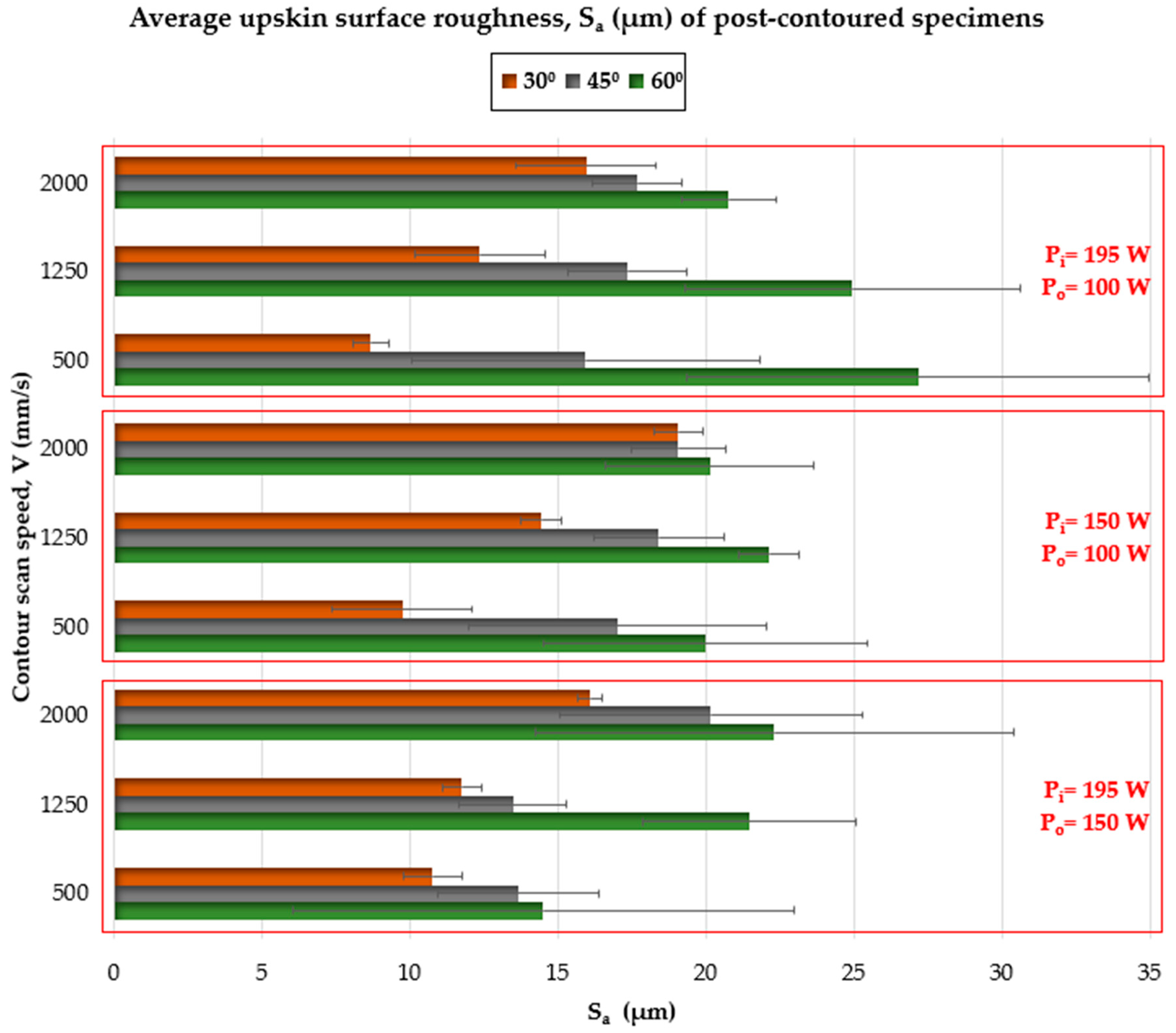
The average upskin surface roughness, Sa, of all the samples fabricated with the post-contouring strategy, using different LEDs for inner and outer contour scans, is presented in Figure 3. The standard deviation at all parameter sets is below 8 µm. The smallest average roughness, Sa = 8.68 µm, was observed for a specimen with an inclination angle of 30°, inner contour laser power Pi = 195 W, outer contour laser power Po = 100 W, and contour scan speed V = 500 mm/s. In contrast, using the same contour process parameters on a 60°-inclined specimen yielded the largest average roughness, Sa (27.16 µm). Overall, Sa increases with the inclination angle, which is consistent with earlier observations for post-contoured specimens built with the same contouring parameters applied to both contour scans [47]. The Sa also increases with scan speed for all power combinations used for the contouring scans. For instance, for the 30°-inclined sample fabricated with Pi = 195 W and Po = 150 W, the average surface roughness increased from 10.78 µm at 500 mm/s to 16.10 µm at 2000 mm/s. Our previous work showed that lower scan speeds result in a larger melt pool, promoting a good material fusion in the upskin region, and are associated with a better surface finish [42,47].
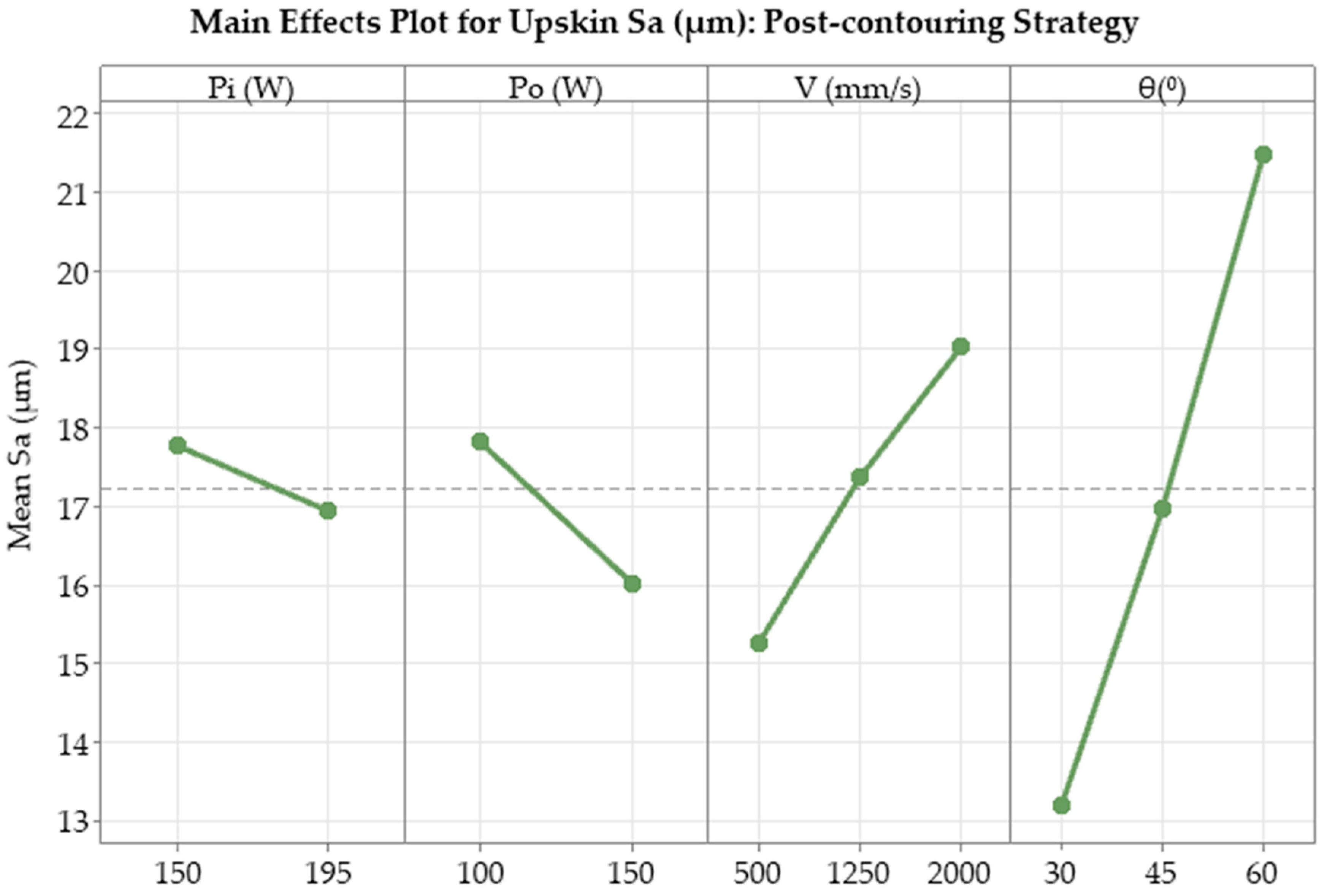
The ANOVA results are summarized in Table 4. At a 95% confidence interval, the contour scan speed and inclination angle have a statistically significant influence on Sa (p-value < 0.05), whereas the laser powers of inner and outer contour scans are not significant. The inclination angle accounts for 79.60% of the variability and therefore dominates over the effect of other variable factors.
The regression equation correlating the dependence of Sa on individual effects of variables is presented in Equation (1).
S a ( µ m ) = 0.0254 P i W 0.0346 P o W + 0.002709 V m m s + 0.2944 θ ( ° )
The main effect plots (Figure 4) confirm that the upskin Sa value increases with both scan speed and inclination angle, while the changes in Pi and Po remain small relative to the overall mean, which explains the higher p-value of laser powers.
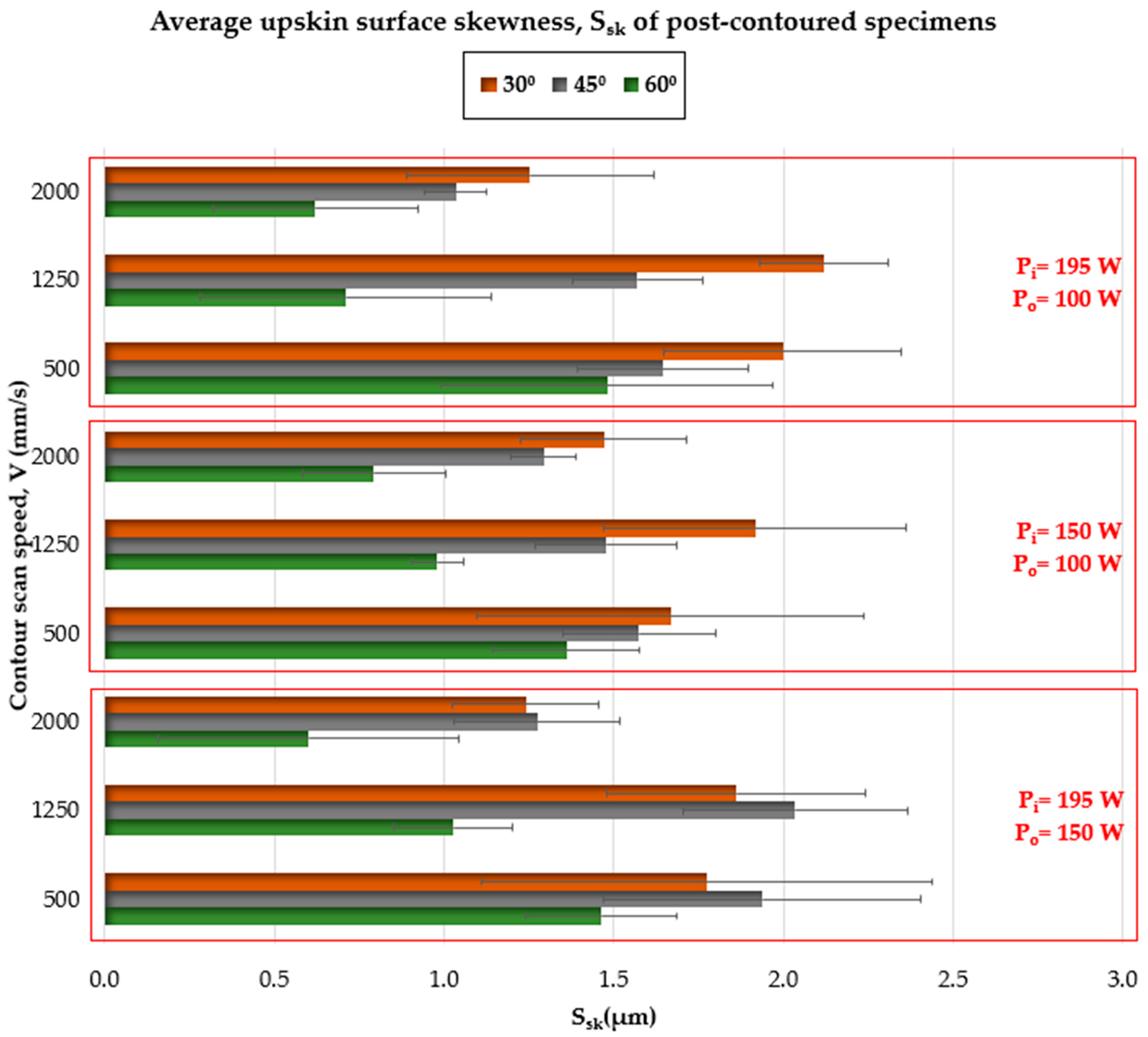
In this study, the average surface skewness, Ssk, is used as a complementary metric to Sa to indicate whether the surface is predominantly made of peaks or valleys. Skewness describes the asymmetry of peak–valley distributions about the mean plane. A zero skew (Ssk = 0) represents a symmetric height distribution, while a positive skew (Ssk > 0) and negative skew (Ssk < 0) indicate peak-dominated and valley-dominated surfaces, respectively. However, note that Ssk is inherently sensitive to localized features such as attached particles or deep valleys and therefore cannot, by itself, distinguish between process-induced surface morphology and surface variations due to particle attachment. Hence, Ssk is interpreted along with Sa and the corresponding WLI images and is not a standalone measure of surface quality. The average surface skewness (Ssk) data of post-contoured specimens are plotted in Figure 5. The results show that all upskin surfaces exhibit a positive skew, indicating predominantly peaks on the surfaces. The skewness decreases as the scan speed increases, implying that these peaks are largely process-driven features rather than particles attached to the surface.
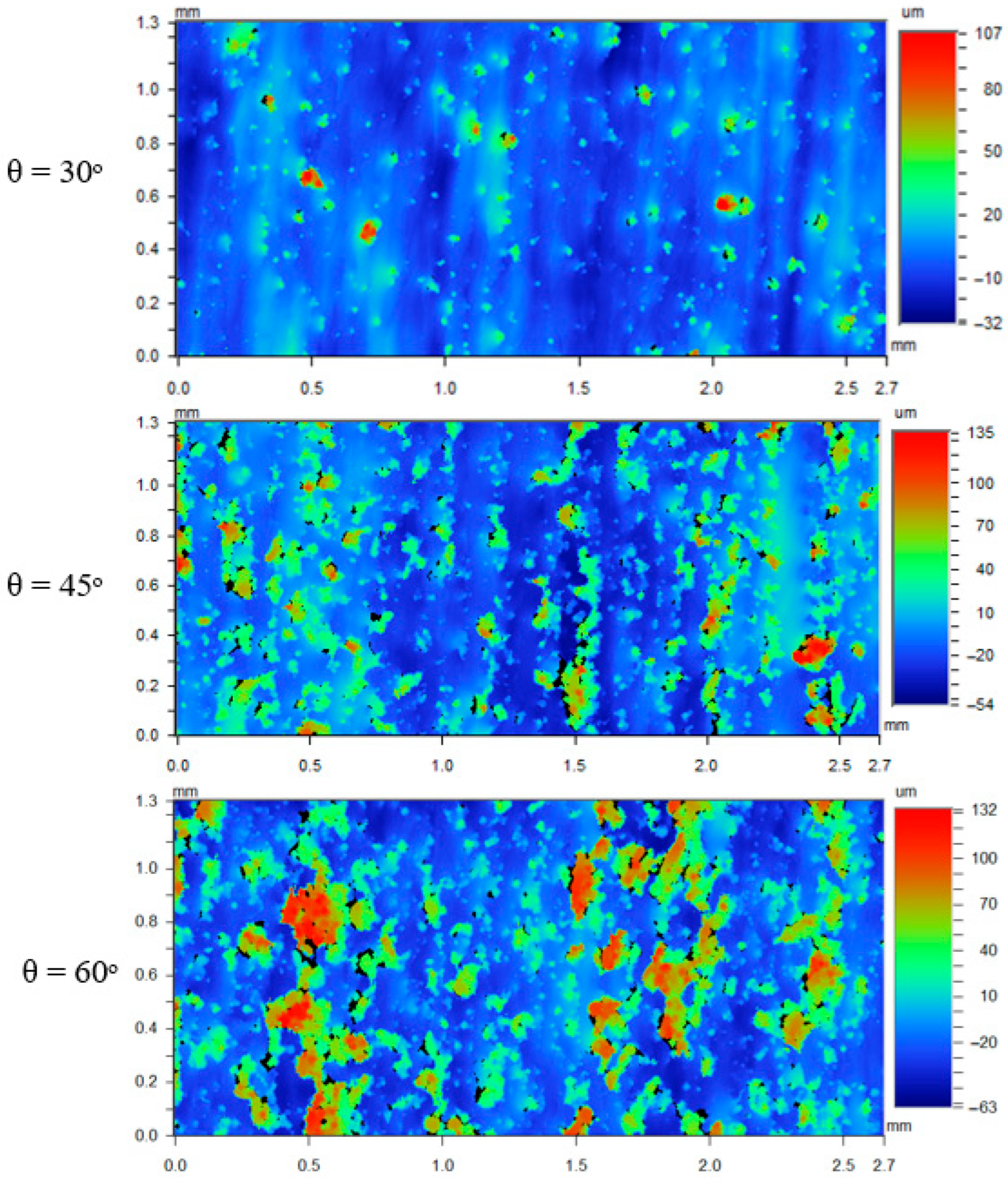
The upskin surface images of specimens fabricated with the same parameter (Pi = 195 W, Po = 100 W, V = 500 mm/s) and different inclination angles are shown in Figure 6. Under the same processing conditions, the 60°-inclined surface exhibits noticeably more attached particles than the corresponding 30°-inclined surface. Note that the specimens were cleaned rigorously before scanning to eliminate the loosely bound particles from printing, and hence the attached particles seen in WLI images are metallurgically bound due to the melting and solidification process.
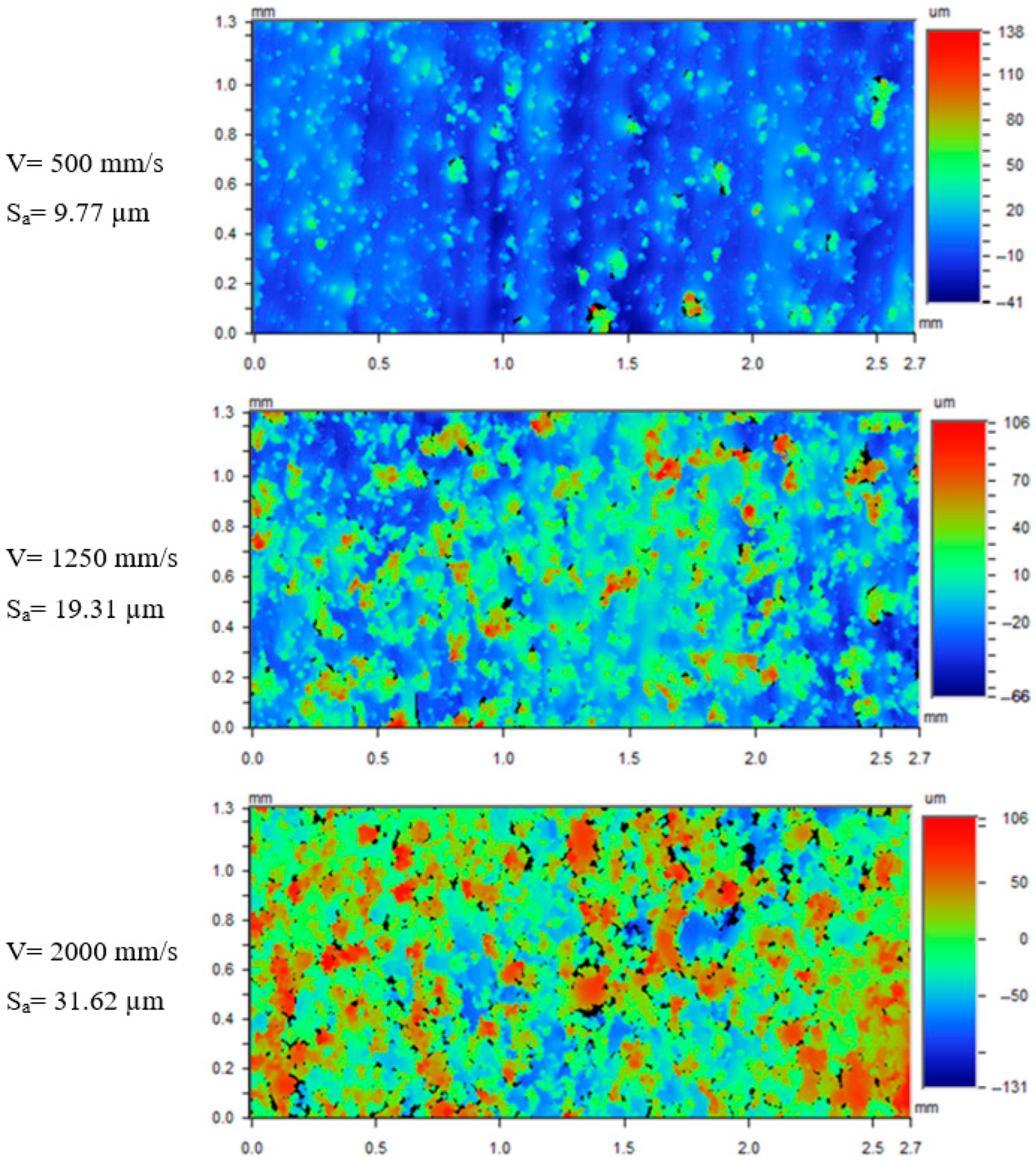
Figure 7 shows the surface images for specimens with different scan speeds and the same laser powers and inclination angles. With an increase in scan speed, the attached powder particles on the upskin surface increase. The larger melt pool formed during low scan speeds aids in better material fusion along the melt region, hence reducing the attachment of powder particles. This process explains the relatively lower level of powder particle attachment seen on the specimen with an average roughness of 9.77 µm.

3.2. Pre-Contouring Strategy

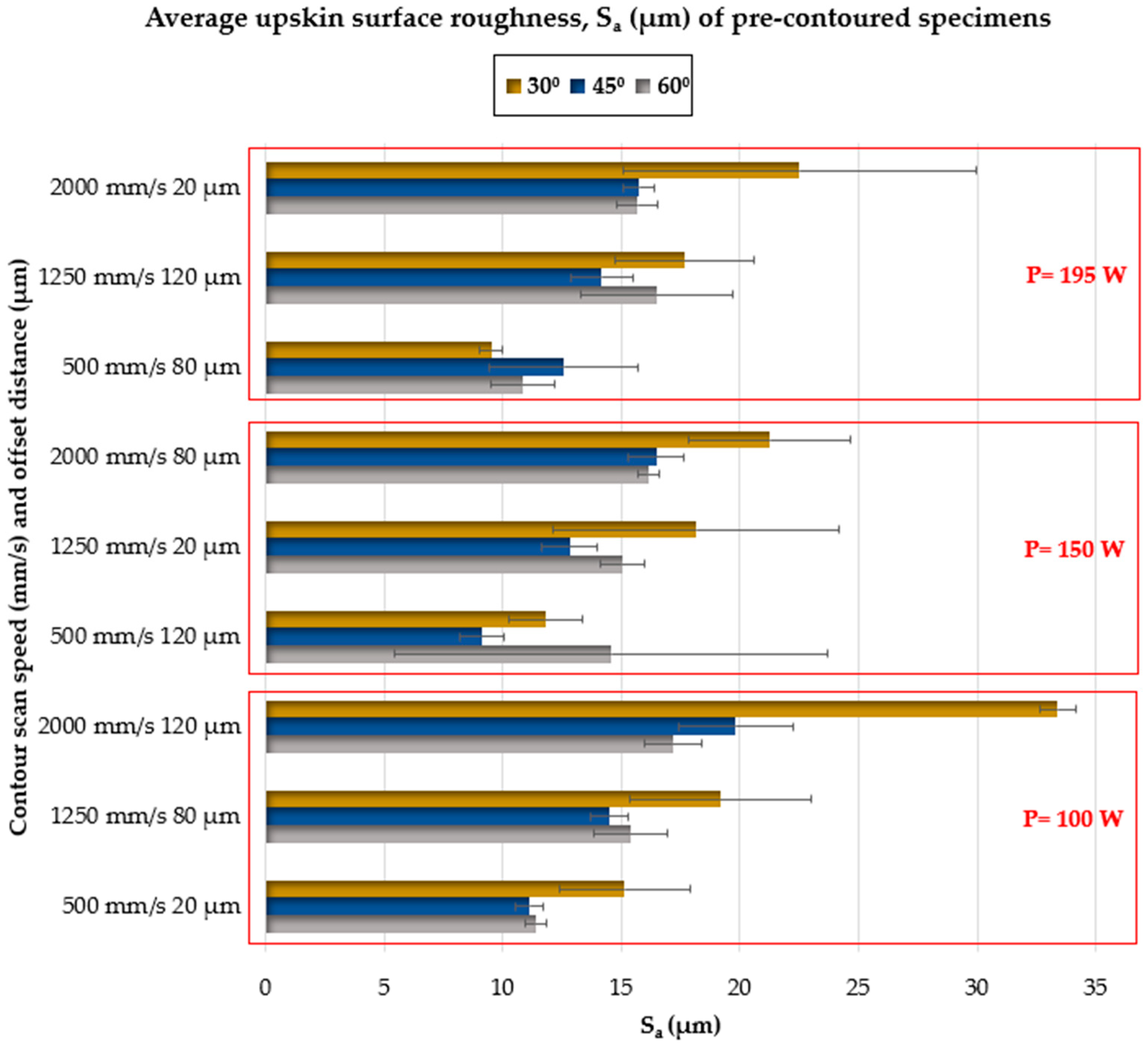
The average upskin surface roughness, Sa, of all the pre-contoured specimens is plotted in Figure 8, with standard deviations of measurements between different replicates below 10.00 µm. The lowest Sa (9.12 µm) is obtained for the specimen fabricated at P = 195 W, V = 500 mm/s, d3 = 80 µm, and θ = 30°. In contrast, the highest surface roughness (33.39 µm) corresponds to the 30°-inclined specimen built with the lowest laser power of 100 W, the highest scan speed of 2000 mm/s, and with an offset distance of 120 µm. This result is in contradiction to that of the post-contouring strategy case, where the 60°-inclined samples had a higher surface roughness.
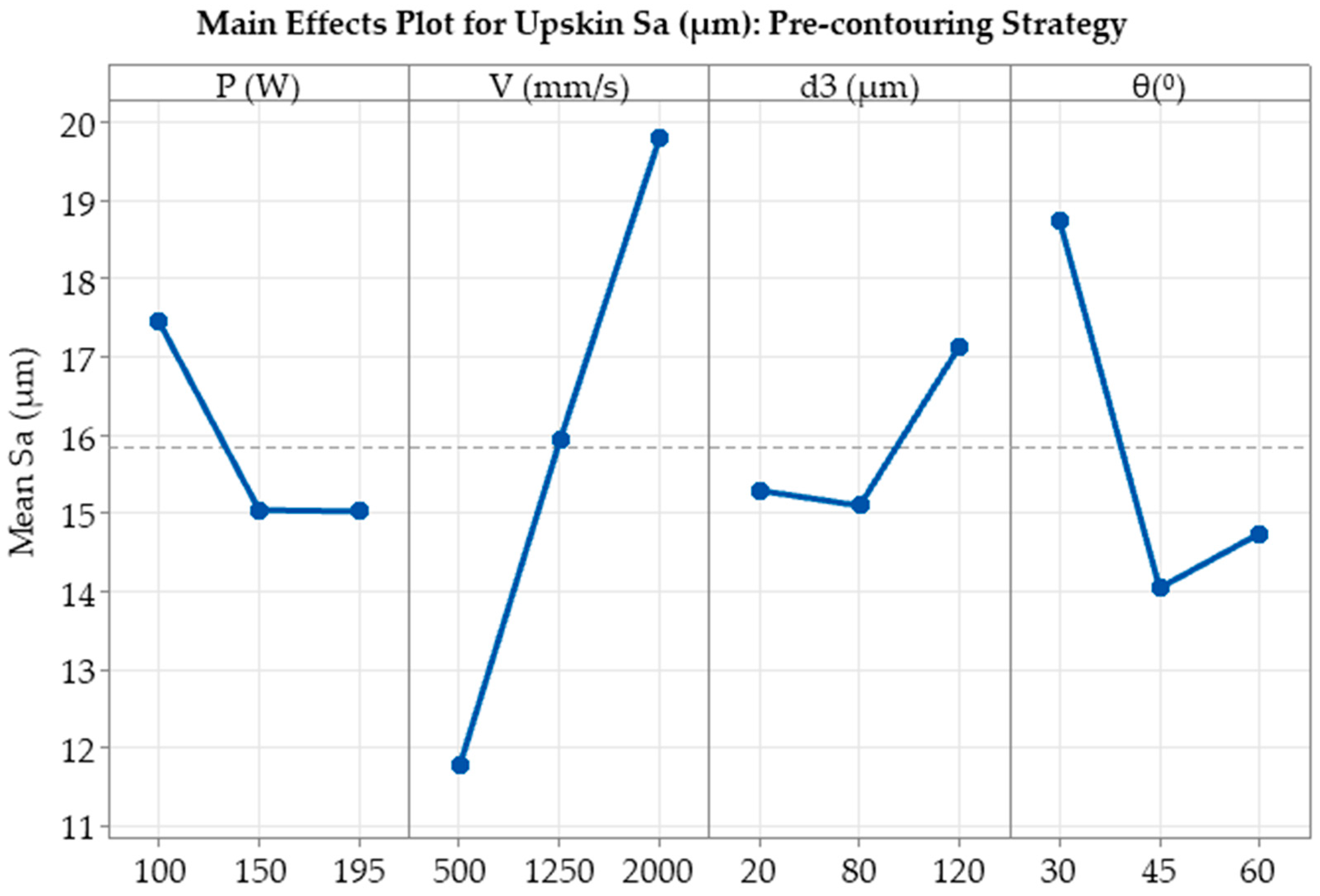
The statistical analysis using ANOVA gives more insights into the effects of each variable on the surface roughness. The ANOVA results are listed in Table 5, and the main effects plot for Sa is shown in Figure 9.
The regression equation correlating the Sa value and individual variables is presented in Equation (2).
S a µ m = 0.0220 P W 0.006967 V m m s + 0.0379 d 3 µ m + 0.0132 θ ( ° )
The p-value in ANOVA is less than 0.05 for the laser power, scan speed, and inclination angle, suggesting that they have a significant effect on the Sa at a confidence interval of 95%. The offset distance has a large p-value, indicating that it is certainly not impacting the upskin surface roughness, even though the coefficient for d3 is large in the regression equation, probably due to the repeated melting at the pre-contoured region, unlike the post-contouring case. The main effect plot shows that the roughness is comparable at laser powers of 150 W and 195 W, but is substantially higher at the lowest laser power, 100 W. There is also a sharp increase in the Sa value with increasing scan speeds from 500 mm/s to 2000 mm/s. The reason for the lower roughness at high-LED cases could be the remelting of the pre-contoured region by the raster. However, the roughness is high for the 30°-inclined upskin surface, and the 45°- and 60°-inclined samples have nearly similar, lower Sa values.
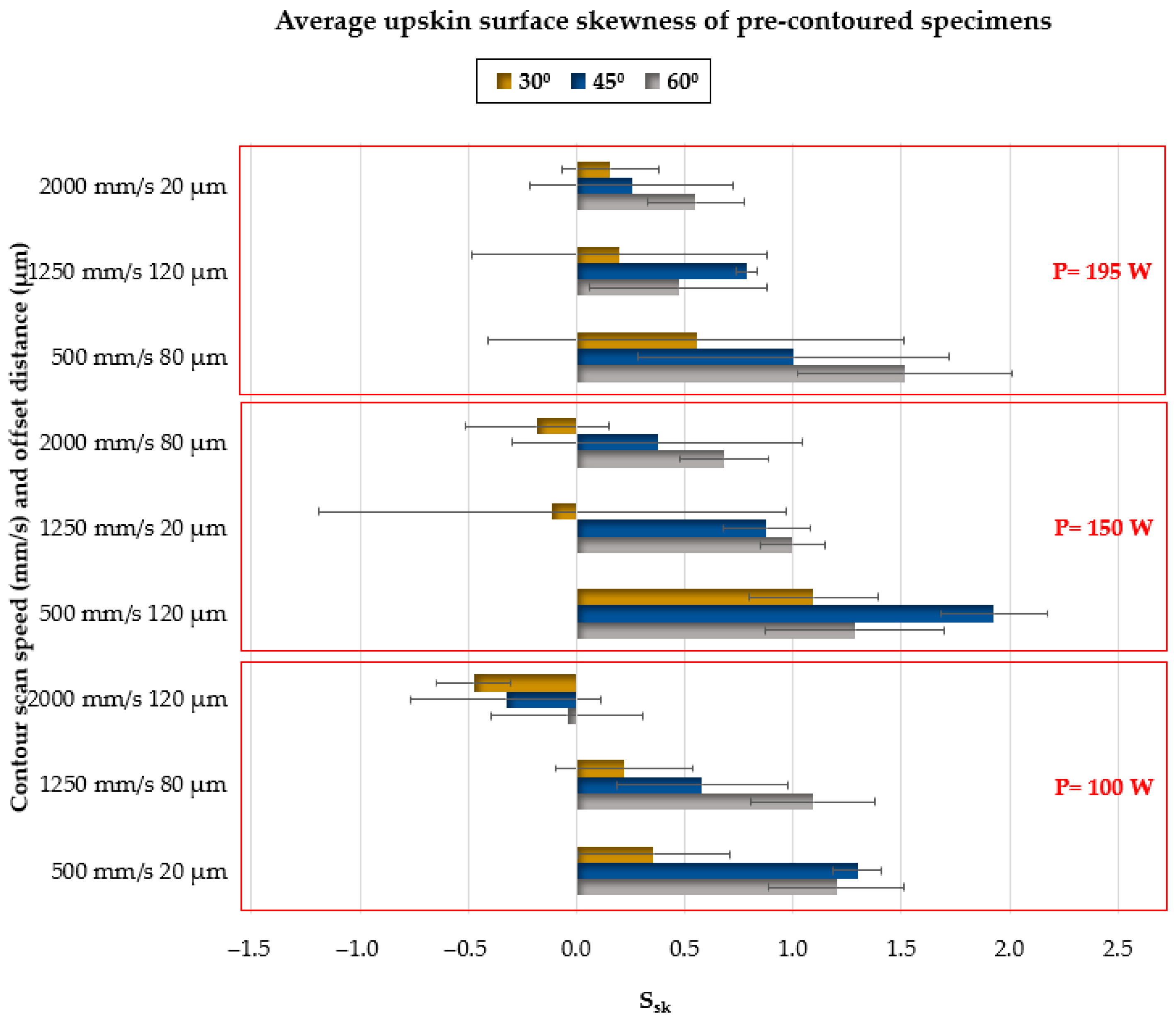
The average surface skewness results (Figure 10) span a large range of −0.47 to 1.93 without a clear dependence on laser power, scan speed, or inclination angles, suggesting that the peaks and valleys are influenced by additional mechanisms and are not process-induced.
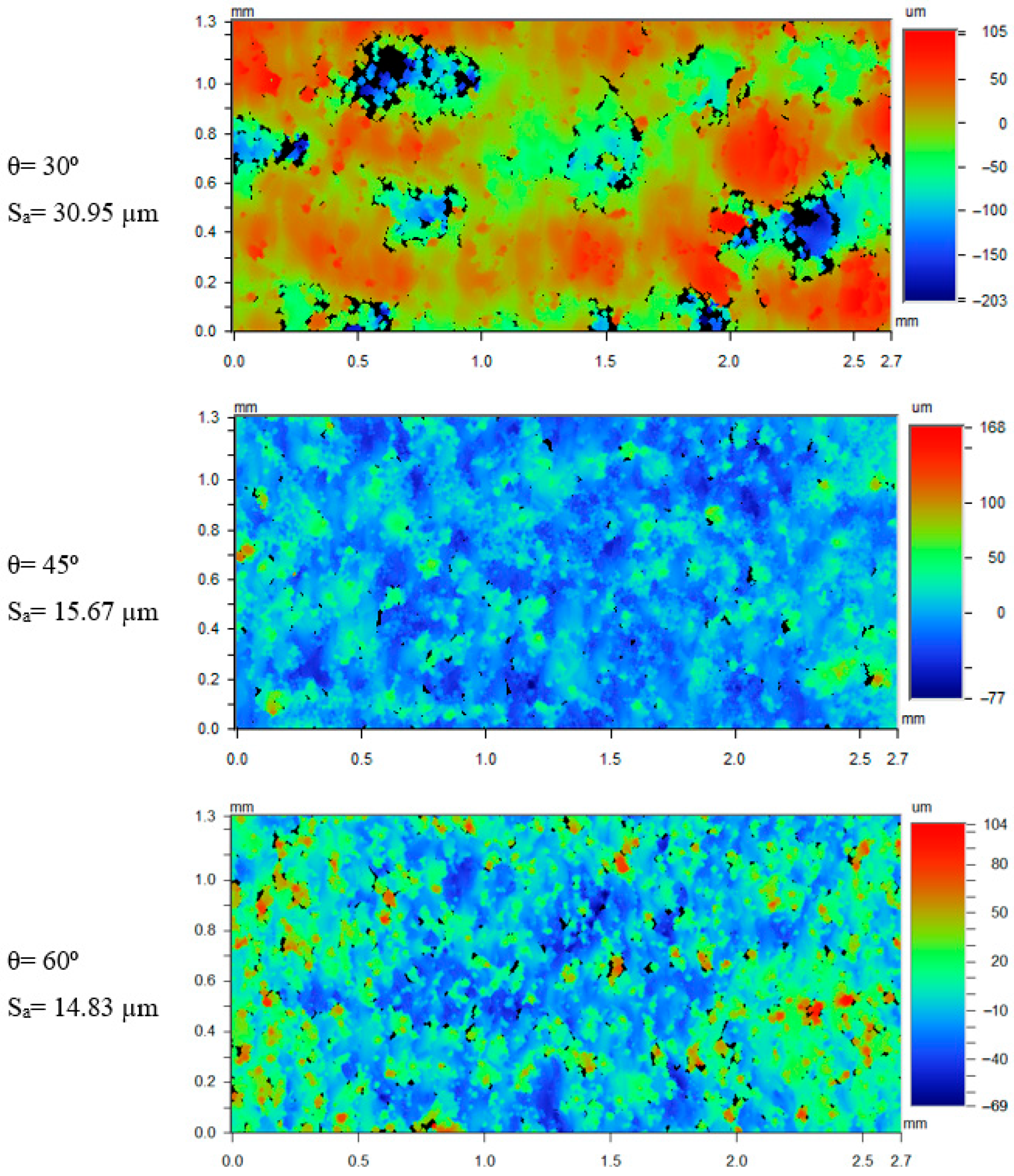
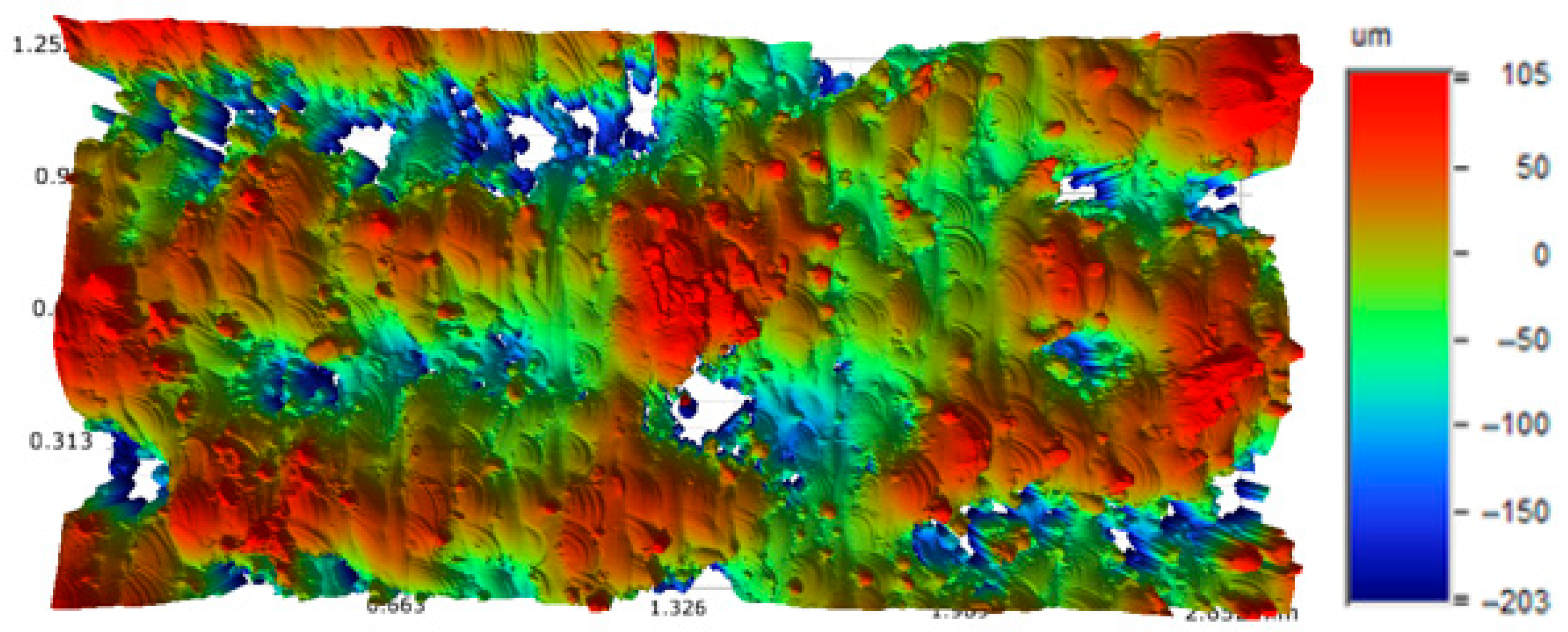
The WLI images of specimens with P = 195 W and V = 2000 mm/s at different inclination angles are shown in Figure 11. This case with a high laser power and high scan speed was chosen because of the peculiar texture observed on the 30°-inclined surfaces. The 45°- and 60°-inclined surfaces do not show the pattern and are smoother, even though there are a few powder particles attached to the 60° surface. To visualize the texture and to identify the defects better, a 3D image was taken for the specimen inclined at 30° and is shown in Figure 12.
In the 3D image, the step edges, as well as the scan edges in the semi-circular texture on the step edges, are visible. This semi-circular texture corresponds to the raster scan track edges protruding beyond the pre-melted contour region, forming curved solidification boundaries due to the partial remelting along the raster scan direction. In addition to the semi-circular raster scan edges overlapping the contour scan region, there are other continuous regions also that are causing the high surface roughness of the specimen. Additionally, the presence of white regions in the 3D surface image representing deep valleys confirms that the surface has a substantial height variation with respect to the mean plane, which is consistent with the high Sa values obtained. The pre-contouring creates a molten region inside where the raster scan happens afterwards. The literature indicates that this strategy helps in improving the energy absorption in the in-skin region, and continuous remelting on the edges (contour region) helps in reducing powder particle attachment [39]. This cited work uses a very-low-LED raster scan and higher-LED pre-contour scan parameters, so that the raster scan is mostly contained within the contoured region. Also, it is known that, at very high scan speeds (or low-LED cases in general), defects like surface porosity, balling of molten metal, etc., occur on the surfaces, which could adversely affect the surface quality [38]. During post-contouring, the remelting at edges is due to the contouring scan, which helps in alleviating such defects. Meanwhile, in pre-contouring, if the melt pool dimensions at the contoured region are lower (low-LED cases) than those of the raster scan, it could overlap and cause an increase in melt region dimensions, along with the possible surface defects [20]. At 30°-inclined surfaces, the inter-layer shift is larger, and the remelting will be less compared to the surfaces built with higher inclination angles. This explains the higher upskin surface roughness of 30°-inclined samples, especially at a high scan speed of 2000 mm/s.

4. Discussion

This study demonstrates that contouring strategies, process parameters, and inclination angles strongly influence the upskin surface morphology in inclined L-PBF parts. The upskin surface roughness is governed primarily by the step-edge formation and melt pool morphology, whereas a previous study on the downskin of the same specimens attributed surface roughness mainly to powder particle attachment [48]. In the reported downskin study, pre-contouring resulted in smoother surfaces than post-contouring at comparable processing conditions. In the present study, post-contouring resulted in approximately a 17%–30% lower upskin Sa compared to pre-contoured specimens, indicating that the selection of the contouring sequence is surface-dependent. Specifically, pre-contouring is beneficial for reducing downskin roughness, while post-contouring is more effective for the upskin.
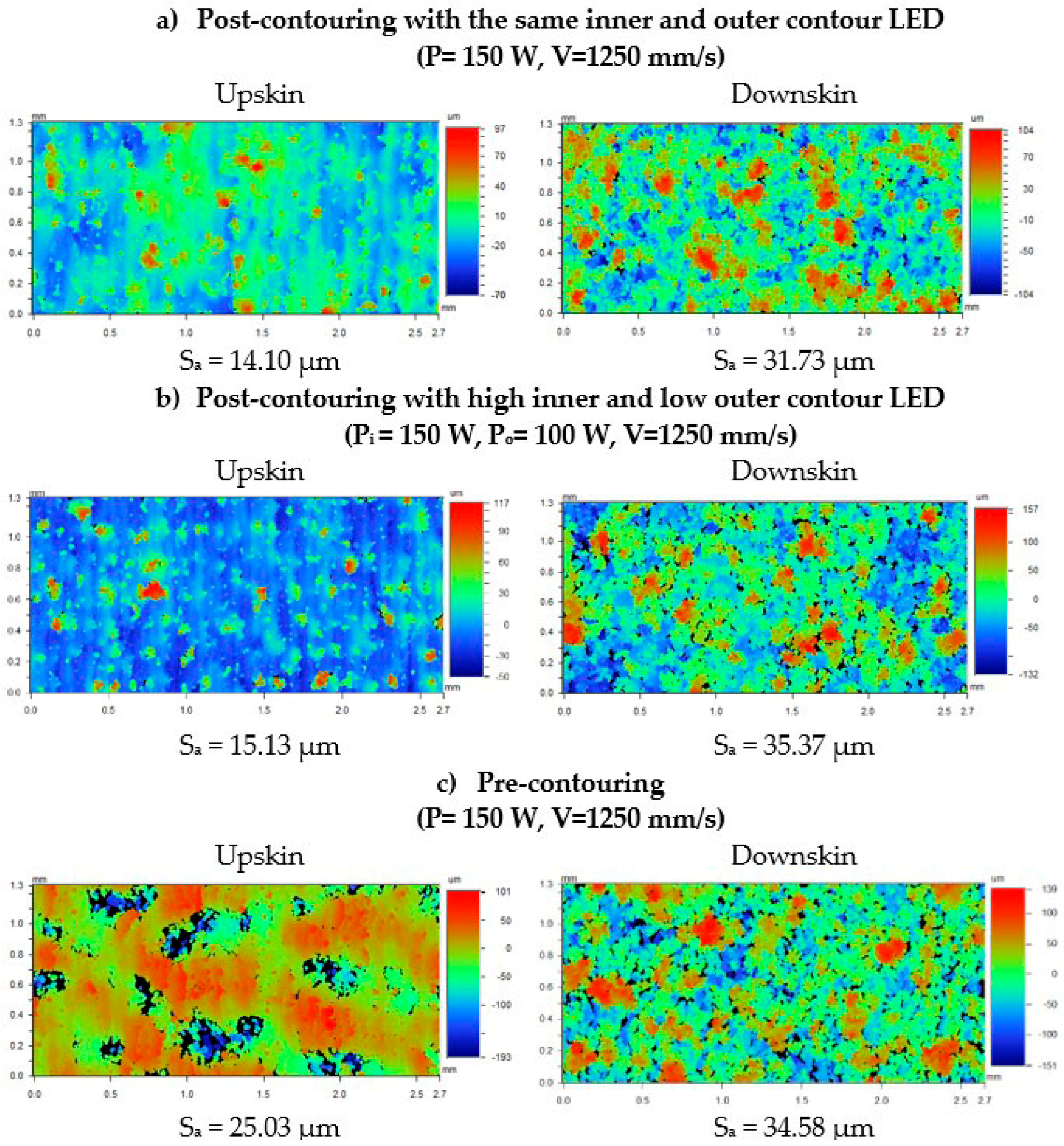
When compared to the post-contouring study using the same processing parameters for both inner and outer contours, specimens fabricated with the proposed contouring strategy, with a relatively higher laser power for the inner contour laser power and lower outer contour laser power, exhibited nearly identical Sa values [47]. The latter strategy yielded slightly higher Sa values for specimens, indicating that the higher LED for both contour scans results in a more efficient remelting and smoother upskin surfaces. The previously reported melt pool dimensions and melting behavior analysis during contour scanning obtained from thermo-fluid simulations support these findings [20,42]. A comparison of upskin and downskin surface images of specimens built using various contouring strategies is shown in Figure 13. The comparison shows images of the specimen built at post- and pre-contouring using P = 150 W, V = 1250 mm/s, d3 = 20 µm, and θ = 30° (Figure 13a and Figure 13c, respectively). For the example with post-contouring using a high-LED inner and low-LED outer contour (Figure 13b), Pi is 150 W and Po is 100 W.
A direct comparison of the upskin and downskin under similar contour strategies highlights the roles of the LED. The effects of process parameters on upskin surfaces diverge from the previously reported work on downskin surfaces [48]. For the downskin, a relatively lower laser power and higher scan speed (or lower LED) at the contour region helped in reducing the melt pool–powder contact area, which decreased the powder particle attachment onto the surface, irrespective of the contouring strategy used. In contrast, the current work shows that the high-LED post-contour (high Pi, low V) reduced Sa by effectively remelting the raster scan edges (Figure 7). The dependence of upskin surface morphology on the inclination angle of the part observed in this study is broadly consistent with the prior reported works [47], with additional insights. The present study shows that the Sa of post-contoured surfaces increases with the inclination angle, as expected from a larger number of step edges at higher angles. However, at pre-contouring, the surfaces at lower inclination angles with larger inter-layer shift can have a higher Sa than that of highly inclined ones, when the raster LED exceeds that of pre-contouring, resulting in raster scan edges extending beyond the contour region, giving rise to surface defects. As the contouring is not performed after the in-skin scanning, the raster edges and associated defects do not become remelted and remain as surface irregularity on the pre-contoured parts.
In conclusion, an excessive LED and lower inclination angles, which are detrimental for the downskin due to increased particle attachment, are beneficial for a smoother upskin, with an efficient remelting of step edges and defects. Hence, a single optimum LED or contouring strategy cannot be selected for both surfaces because their surface formation mechanisms are fundamentally different.

5. Conclusions

This experimental work investigated how contouring scan strategies and process parameters affect the upskin surfaces of sloped L-PBF parts. The roles of contouring sequences, such as pre- and post-contouring strategies, were examined over a broad range of processing conditions, including contour laser powers, scan speeds, offset distances, and inclination angles. White light interferometry images and the average surface roughness, Sa, and surface skewness, Ssk, were used for qualitative and quantitative analysis. The major findings from the study are summarized below.
  • The lowest upskin surface roughness, Sa (8.68 µm), was obtained for the post-contoured sample with the following parameters: inner contour laser power (Pi) of 195 W, outer contour laser power (Po) of 100 W, contour scan speed (V) of 500 mm/s, and inclination angle (θ) of 30°. The highest surface roughness (33.39 µm) was obtained for the 30°-inclined pre-contoured sample built with the lowest laser power of 100 W, the highest scan speed of 2000 mm/s, and with an offset distance of 120 µm.
  • The upskin surface roughness of post-contoured samples is lower at a high laser power, low scan speed, and low inclination angle. The better remelting due to the high LED helps in smoothing the upskin surface. The larger inter-layer shifts at lower inclination angles result in a lower number of step edges and reduce the surface roughness. The surface characteristics are mainly attributable to the step edges in this case.
  • The pre-contoured samples showed a peculiar texture on upskin surfaces built at a 30° inclination, resulting in a higher surface roughness, in contradiction to the post-contoured samples. The texture is predominant at higher scan speeds. The reason could be the surface defects not being effectively remelted after raster scans, as contouring is performed first with a relatively lower LED than raster scans.
  • The experiments suggest that post-contouring is better for fabricating smoother upskin surfaces, with a reduction in surface roughness values of approximately 17%–30% compared to similar processing conditions using pre-contouring.
  • The conditions favorable for the smoother upskin surfaces (high LED, low inclination angles) have a negative impact on the corresponding downskin surfaces. Also, the upskin surface roughness is dictated by the step edge formation, while the downskin surface roughness is primarily due to the powder particle attachment. An exception is on the upskin surfaces of pre-contoured samples at a high scan speed.
The findings illustrate that the combined control of contouring strategies, process parameters, and inclination angles may help to tailor the inclined surface characteristics in L-PBF. The proposed framework enables the application-specific selection of scan strategies and parameters for the desired surface properties. However, this study is limited to Ti6Al4V parts fabricated with fixed raster parameters in an EOS M270 L-PBF system, and so the findings may not directly transfer to other alloys or machine setups. While contouring parameters were systematically varied, the effects of possible interactions between contour and raster energy densities, as well as layer thickness, on the step-edge formation were not explored. Additionally, even though the metrics Sa and Ssk, along with the surface images, are relevant indicators of as-built surface quality, they do not capture sub-surface defects such as porosity and cracking or represent functional properties like fatigue performance that depend on microstructural properties as well. The future scope of this work includes extending the framework to other alloys, investigating the effect of layer thickness, characterizing sub-surface defects and microstructural features, and measuring mechanical properties. The study can be extended to the development of dynamic adjustments of contour strategies to optimize both upskin and downskin surface quality, as well as a multi-angle adaptive scanning strategy that automatically selects the contouring strategy based on surface inclination.

Author Contributions

Conceptualization, methodology, formal analysis, investigation, data curation, visualization, writing—original draft preparation, N.V.V.H.; conceptualization, writing—review and editing, resources, supervision, funding acquisition, K.C. All authors have read and agreed to the published version of the manuscript.

Funding

This research was funded by Technical Data Analysis, Inc. through a Navy STTR project, contract no. N68335-21-C-0168.

Institutional Review Board Statement

Not applicable.

Informed Consent Statement

Not applicable.

Data Availability Statement

Data are contained within the article.

Acknowledgments

The authors gratefully acknowledge the technical assistance of Rabiul Islam (Department of Industrial & Systems Engineering) and David Jaggers (Department of Mechanical Engineering), University of Louisville, KY, in this research work.

Conflicts of Interest

The authors declare no conflicts of interest. The funders had no role in the design of the study; in the collection, analyses, or interpretation of data; in the writing of the manuscript; or in the decision to publish the results.

References

  1. Gibson, I.; Rosen, D.; Stucker, B. Additive Manufacturing Technologies: 3D Printing, Rapid Prototyping, and Direct Digital Manufacturing, 2nd ed.; Springer: Berlin/Heidelberg, Germany, 2015. [Google Scholar]
  2. Herzog, D.; Seyda, V.; Wycisk, E.; Emmelmann, C. Additive manufacturing of metals. Acta Mater. 2016, 117, 371. [Google Scholar] [CrossRef]
  3. Bhushan, B.; Caspers, M. An overview of additive manufacturing (3D printing) for microfabrication. Microsyst. Technol. 2017, 23, 1117. [Google Scholar] [CrossRef]
  4. Strano, G.; Hao, L.; Everson, R.M.; Evans, E. Surface roughness analysis, modelling and prediction in selective laser melting. J. Mater. Process Technol. 2013, 213, 589. [Google Scholar] [CrossRef]
  5. Yadroitsev, I.; Smurov, I. Surface Morphology in Selective Laser Melting of Metal Powders. Phys. Procedia 2011, 12, 264. [Google Scholar] [CrossRef]
  6. Sanaei, N.; Fatemi, A. Analysis of the effect of surface roughness on fatigue performance of powder bed fusion additive manufactured metals. Theor. Appl. Fract. Mech. 2020, 108, 102638. [Google Scholar] [CrossRef]
  7. Sanaei, N.; Fatemi, A. Defects in additive manufactured metals and their effect on fatigue performance: A state-of-the-art review. Prog. Mater. Sci. 2021, 117, 100724. [Google Scholar] [CrossRef]
  8. Varsha, K.P.; Yeo, S.-H.; Soyama, H. Investigation of surface finish and fatigue life of laser Powder Bed fused Ti-6Al-4V. Int. J. Fatigue 2024, 189, 108558. [Google Scholar] [CrossRef]
  9. Rajput, A.S.; Kapil, S.; Das, M. A post processing technique to achieve nanofinishing for functionality enhancement of Ti-6Al-4V femoral head fabricated by Laser Powder Bed Fusion. CIRP J. Manuf. Sci. Technol. 2023, 45, 99. [Google Scholar] [CrossRef]
  10. Elangeswaran, C.; Gurung, K.; Koch, R.; Cutolo, A.; Van Hooreweder, B. Post-treatment selection for tailored fatigue performance of 18Ni300 maraging steel manufactured by laser powder bed fusion. Fatigue Fract. Eng. Mater. Struct. 2020, 43, 2359. [Google Scholar] [CrossRef]
  11. Kamarudin, K.; Wahab, M.S.; Shayfull, Z.; Ahmed, A.; Raus, A.A. Dimensional Accuracy and Surface Roughness Analysis for AlSi10Mg Produced by Selective Laser Melting (SLM). MATEC Web Conf. 2016, 78, 01077. [Google Scholar] [CrossRef]
  12. Fardan, A.; Klement, U.; Brodin, H.; Hryha, E. Effect of Part Thickness and Build Angle on the Microstructure, Surface Roughness, and Mechanical Properties of Additively Manufactured IN-939. Met. Mater. Trans. A 2023, 54, 1792. [Google Scholar] [CrossRef]
  13. Wang, L.; Wang, S.; Wu, J. Experimental investigation on densification behavior and surface roughness of AlSi10Mg powders produced by selective laser melting. Opt. Laser Technol. 2017, 96, 88. [Google Scholar] [CrossRef]
  14. Metelkova, J.; Vanmunster, L.; Haitjema, H.; Van Hooreweder, B. Texture of inclined up-facing surfaces in laser powder bed fusion of metals. Addit. Manuf. 2021, 42, 101970. [Google Scholar] [CrossRef]
  15. Shange, M.; Yadroitsava, I.; Yadroitsev, S.P.I.; du Plessis, A. Determining the Effect of Surface Roughness and Porosity at Different Inclinations of LPBF Parts. In Proceedings of the 20th Annual International RAPDASA Conference, Bloemfontein, South Africa, 6–8 November 2019; pp. 6–8. [Google Scholar]
  16. Tian, Y.; Tomus, D.; Rometsch, P.; Wu, X. Influences of processing parameters on surface roughness of Hastelloy X produced by selective laser melting. Addit. Manuf. 2017, 13, 103. [Google Scholar] [CrossRef]
  17. Covarrubias, E.E.; Eshraghi, M. Effect of Build Angle on Surface Properties of Nickel Superalloys Processed by Selective Laser Melting. JOM 2018, 70, 336. [Google Scholar] [CrossRef]
  18. Snyder, J.C.; Thole, K.A. Understanding Laser Powder Bed Fusion Surface Roughness. J. Manuf. Sci. Eng. 2020, 142, 71003. [Google Scholar] [CrossRef]
  19. Chen, H.; Gu, D.; Xiong, J.; Xia, M. Improving additive manufacturing processability of hard-to-process overhanging structure by selective laser melting. J. Mater. Process Technol. 2017, 250, 99. [Google Scholar] [CrossRef]
  20. Nismath, V.H.; Aydogan, B.; Jaggers, D.; Chou, K. On morphology and roughness of upskin surfaces in laser powder-bed fusion additive manufacturing—Contouring strategy effects. Manuf. Lett. 2024, 41, 920. [Google Scholar] [CrossRef]
  21. Fox, J.C.; Moylan, S.P.; Lane, B.M. Effect of Process Parameters on the Surface Roughness of Overhanging Structures in Laser Powder Bed Fusion Additive Manufacturing. Procedia CIRP 2016, 45, 131–134. [Google Scholar] [CrossRef]
  22. Wang, D.; Yang, Y.; Yi, Z.; Su, X. Research on the fabricating quality optimization of the overhanging surface in SLM process. Int. J. Adv. Manuf. Technol. 2013, 65, 1471. [Google Scholar] [CrossRef]
  23. Ullah, R.; Akmal, J.S.; Laakso, S.V.A.; Niemi, E. Anisotropy of additively manufactured AlSi10Mg: Threads and surface integrity. Int. J. Adv. Manuf. Technol. 2020, 107, 3645. [Google Scholar] [CrossRef]
  24. Cabanettes, F.; Joubert, A.; Chardon, G.; Dumas, V.; Rech, J.; Grosjean, C.; Dimkovski, Z. Topography of as built surfaces generated in metal additive manufacturing: A multi scale analysis from form to roughness. Precis. Eng. 2018, 52, 249. [Google Scholar] [CrossRef]
  25. Metelkova, J.; Ordnung, D.; Kinds, Y.; Witvrouw, A.; Van Hooreweder, B. Improving the quality of up-facing inclined surfaces in laser powder bed fusion of metals using a dual laser setup. Procedia CIRP 2020, 94, 266. [Google Scholar] [CrossRef]
  26. Metelkova, J.; Ordnung, D.; Kinds, Y.; Van Hooreweder, B. Novel strategy for quality improvement of up-facing inclined surfaces of LPBF parts by combining laser-induced shock waves and in situ laser remelting. J. Mater. Process Technol. 2021, 290, 116981. [Google Scholar] [CrossRef]
  27. Shange, M.; Yadroitsava, I.; Plessis, A.D.; Yadroitsev, I. Roughness and Near-Surface Porosity of Unsupported Overhangs Produced by High-Speed Laser Powder Bed Fusion. 3D Print. Addit. Manuf. 2022, 9, 288. [Google Scholar] [CrossRef]
  28. Viale, V.; Stavridis, J.; Salmi, A.; Bondioli, F.; Saboori, A. Optimisation of downskin parameters to produce metallic parts via laser powder bed fusion process: An overview. Int. J. Adv. Manuf. Technol. 2022, 123, 2159. [Google Scholar] [CrossRef]
  29. Cao, L.; Li, J.; Hu, J.; Liu, H.; Wu, Y.; Zhou, Q. Optimization of surface roughness and dimensional accuracy in LPBF additive manufacturing. Opt. Laser Technol. 2021, 142, 107246. [Google Scholar] [CrossRef]
  30. Gockel, J.; Sheridan, L.; Koerper, B.; Whip, B. The influence of additive manufacturing processing parameters on surface roughness and fatigue life. Int. J. Fatigue 2019, 124, 380. [Google Scholar] [CrossRef]
  31. Shrestha, S.; Chou, Y.K. Process Effect on Part Surface Roughness in Powder-Bed Electron Beam Additive Manufacturing. In Volume 2: Additive Manufacturing; Materials; American Society of Mechanical Engineers: New York, NY, USA, 2017. [Google Scholar]
  32. Whip, B.; Sheridan, L.; Gockel, J. The effect of primary processing parameters on surface roughness in laser powder bed additive manufacturing. Int. J. Adv. Manuf. Technol. 2019, 103, 4411. [Google Scholar] [CrossRef]
  33. Yang, T.; Liu, T.; Liao, W.; Wei, H.; Zhang, C.; Chen, X.; Zhang, K. Effect of processing parameters on overhanging surface roughness during laser powder bed fusion of AlSi10Mg. J. Manuf. Process. 2021, 61, 440. [Google Scholar] [CrossRef]
  34. Valente, E.H.; Gundlach, C.; Christiansen, T.L.; Somers, M.A.J. Effect of Scanning Strategy During Selective Laser Melting on Surface Topography, Porosity, and Microstructure of Additively Manufactured Ti-6Al-4V. Appl. Sci. 2019, 9, 5554. [Google Scholar] [CrossRef]
  35. Elambasseril, J.; Rogers, J.; Wallbrink, C.; Munk, D.; Leary, M.; Qian, M. Laser Powder Bed Fusion Additive Manufacturing (LPBF-AM): The Influence of Design Features and LPBF Variables on Surface Topography and Effect on Fatigue Properties. Crit. Rev. Solid State Mater. Sci. 2022, 48, 132–168. [Google Scholar] [CrossRef]
  36. Charles, A.; Elkaseer, A.; Thijs, L.; Hagenmeyer, V.; Scholz, S. Effect of Process Parameters on the Generated Surface Roughness of Down-Facing Surfaces in Selective Laser Melting. Appl. Sci. 2019, 9, 1256. [Google Scholar] [CrossRef]
  37. Wang, D.; Lv, J.; Wei, X.; Lu, D.; Chen, C. Study on Surface Roughness Improvement of Selective Laser Melted Ti6Al4V Alloy. Crystals 2023, 13, 306. [Google Scholar] [CrossRef]
  38. DebRoy, T.; Wei, H.L.; Zuback, J.S.; Mukherjee, T.; Elmer, J.W.; Milewski, J.O.; Beese, A.M.; Wilson-Heid, A.; De, A.; Zhang, W. Additive manufacturing of metallic components—Process, structure and properties. Prog. Mater. Sci. 2018, 92, 112. [Google Scholar] [CrossRef]
  39. Ren, Z.; Wei, D.; Wang, S.; Zhang, D.Z.; Mao, S. On the role of pre- and post-contour scanning in laser powder bed fusion: Thermal-fluid dynamics and laser reflections. Int. J. Mech. Sci. 2022, 226, 107389. [Google Scholar] [CrossRef]
  40. Vrána, R.; Jaroš, J.; Koutný, D.; Nosek, J.; Zikmund, T.; Kaiser, J.; Paloušek, D. Contour laser strategy and its benefits for lattice structure manufacturing by selective laser melting technology. J. Manuf. Process. 2022, 74, 640. [Google Scholar] [CrossRef]
  41. Karimialavijeh, H.; Ghasri-Khouzani, M.; Das, A.; Pröebstle, M.; Martin, É. Effect of laser contour scan parameters on fatigue performance of A20X fabricated by laser powder bed fusion. Int. J. Fatigue 2023, 175, 107775. [Google Scholar] [CrossRef]
  42. Le, T.-N.; Rauniyar, S.; Nismath, V.H.; Chou, K. An investigation into the effects of contouring process parameters on the up-skin surface characteristics in laser powder-bed fusion process. Manuf. Lett. 2023, 35, 707. [Google Scholar] [CrossRef]
  43. Artzt, K.; Mishurova, T.; Bauer, P.-P.; Gussone, J.; Barriobero-Vila, P.; Evsevleev, S.; Bruno, G.; Requena, G.; Haubrich, J. Pandora’s Box–Influence of Contour Parameters on Roughness and Subsurface Residual Stresses in Laser Powder Bed Fusion of Ti-6Al-4V. Materials 2020, 13, 3348. [Google Scholar] [CrossRef]
  44. Chen, Z.; Wu, X.; Tomus, D.; Davies, C.H.J. Surface roughness of Selective Laser Melted Ti-6Al-4V alloy components. Addit. Manuf. 2018, 21, 91. [Google Scholar] [CrossRef]
  45. DePond, P.J.; Guss, G.; Ly, S.; Calta, N.P.; Deane, D.; Khairallah, S.; Matthews, M.J. In situ measurements of layer roughness during laser powder bed fusion additive manufacturing using low coherence scanning interferometry. Mater. Des. 2018, 154, 347. [Google Scholar] [CrossRef]
  46. Abele, E.; Kniepkamp, M. Analysis and optimisation of vertical surface roughness in micro selective laser melting. Surf. Topogr. 2015, 3, 034007. [Google Scholar] [CrossRef]
  47. Habeeb, N.V.V.; Chou, K. Surface roughness and image analyses of contour scanning offset effects on sloping topography in laser powder bed fusion. Int. J. Adv. Manuf. Technol. 2025, 138, 3575. [Google Scholar] [CrossRef]
  48. Habeeb, N.V.V.; Islam, R.; Chou, K. Influence of Pre- and Post-Contouring Strategies to Downskin Sloped Surfaces in Laser Powder-Bed Fusion (L-PBF) Additive Manufacturing. Materials 2024, 17, 2639. [Google Scholar] [CrossRef]
  49. Sarkar, S.; Porwal, A.; Yaswanth, N.; Nath, A.K. A Study on Effect of Different Process Parameters on the Quality of Overhang Surface Produced by Selective Laser Melting. In Volume 1: Additive Manufacturing; Bio and Sustainable Manufacturing; American Society of Mechanical Engineers: New York, NY, USA, 2018. [Google Scholar]
  50. Habeeb, N.V.V.; Chou, K. Size Effects on Process-Induced Porosity in Ti6Al4V Thin Struts Additively Manufactured by Laser Powder-Bed Fusion. J. Manuf. Mater. Process. 2025, 9, 226. [Google Scholar]
Figure 1. Illustration of post- and pre-contouring strategies.
Coatings 16 00119 g001
Figure 2. (a) Model of the inclined specimen with inclination angle, θ; (b) build plate with various fabricated specimens; (c) comparison of samples inclined at 30°, 45°, and 60° (the labeling indicates parameter number and inclination angle represented as A, B, and C for user convenience).
Coatings 16 00119 g002
Figure 3. Average upskin surface roughness data of post-contoured specimens.
Coatings 16 00119 g003
Figure 4. Main effects plot for upskin Sa of post-contoured specimens.
Coatings 16 00119 g004
Figure 5. Upskin surface skewness data of post-contoured specimens.
Coatings 16 00119 g005
Figure 6. Upskin surface images of post-contoured specimens built with Pi = 195 W, Po = 100 W, and V = 500 mm/s at different inclination angles.
Coatings 16 00119 g006
Figure 7. Surface images of samples built with Pi = 195 W, Po = 150 W, and θ = 60°, but with different scan speeds.
Coatings 16 00119 g007
Figure 8. Average upskin surface roughness of pre-contoured specimens.
Coatings 16 00119 g008
Figure 9. Main effect plot for the upskin surface roughness of pre-contoured specimens.
Coatings 16 00119 g009
Figure 10. Average upskin surface skewness of the pre-contoured specimens.
Coatings 16 00119 g010
Figure 11. WLI images of pre-contoured upskin surfaces at different inclination angles and same processing conditions (P = 195 W, V = 2000 mm/s, d3 = 20 µm).
Coatings 16 00119 g011
Figure 12. Three-dimensional image of the 30°-inclined upskin surface built at P = 195 W, V = 2000 mm/s, and d3 = 20 µm by pre-contouring.
Coatings 16 00119 g012
Figure 13. Upskin and downskin surface image comparison of specimens fabricated with various contouring strategies.
Coatings 16 00119 g013
Table 1. Selected parameter sets for the experiment using the post-contouring strategy.
Parameter SetInner Contour Scan Laser Power, Pi (W)Outer Contour Scan Laser Power, Po (W)Contour Scan Speed,
V (mm/s)
1195150500
21951501250
31951502000
4150100500
51501001250
61501002000
7195100500
81951001250
91951002000
Table 2. Selected parameter sets for the experiment using the pre-contouring strategy.
Parameter SetContour Laser Power,
P (W)
Contour Scan Speed,
V (mm/s)
Offset Distance,
d3 (μm)
110050020
2100125080
31002000120
4150500120
5150125020
6150200080
719550080
81951250120
9195200020
Table 3. Chemical composition of Ti6Al4V powder [50].
ElementTiAlVFeOC
wt. %Balance6.094.130.250.130.08
Table 4. ANOVA results for upskin surface roughness of post-contoured specimens.
SourceDFAdj SSAdj MSF-Valuep-ValuePercent Contribution
Pi (W)10.1200.1210.010.9340.010
Po (W)146.2446.242.660.1073.968
V (mm/s)2191.395.655.510.00616.41
θ (°)2927.6463.826.70.00079.60
Table 5. ANOVA results for upskin surface roughness of pre-contoured specimens.
SourceDFAdj SSAdj MSF-Valuep-ValuePercent Contribution
P (W)2105.752.8553.870.0250.0446
V (mm/s)2866.9433.4531.70.0000.3659
d3 (µm)268.2934.1432.500.0890.0288
θ (°)2345.6172.7912.70.0000.1459
Disclaimer/Publisher’s Note: The statements, opinions and data contained in all publications are solely those of the individual author(s) and contributor(s) and not of MDPI and/or the editor(s). MDPI and/or the editor(s) disclaim responsibility for any injury to people or property resulting from any ideas, methods, instructions or products referred to in the content.