Article

Study on Desulfurized Crumb Rubber–Modified Epoxy Asphalt

School of Transportation, Southeast University, Nanjing 211189, China
*
Author to whom correspondence should be addressed.
Coatings 2026, 16(1), 102; https://doi.org/10.3390/coatings16010102
Submission received: 11 December 2025 / Revised: 5 January 2026 / Accepted: 6 January 2026 / Published: 13 January 2026
(This article belongs to the Special Issue Advances in Pavement Materials and Civil Engineering)

Abstract

Epoxy asphalt, as a thermosetting material, has received increasing attention due to its outstanding mechanical properties and durability. However, its insufficient low-temperature resistance, limited toughness, and relatively high material cost still restrict its large-scale application in pavement engineering. To improve its low-temperature performance and reduce construction costs, this study investigates the low-temperature behavior of epoxy asphalt modified with desulfurized crumb rubber. In this study, a functional additive, hereafter referred to as WJFL (a laboratory-designated organic disulfide-based rubber plasticizer), was incorporated during the preparation of the desulfurized rubber–asphalt binder to enhance the curing rate of the modified epoxy asphalt. The addition of WJFL promotes the devulcanization and activation of rubber powder, enhancing the overall performance of the modified epoxy asphalt. When the desulfurized rubber content is 20%, WJFL additive dosage is 2%, and asphalt content is 300% of epoxy resin mass, the modified epoxy asphalt not only meets the specification requirements but also exhibits excellent low-temperature crack resistance and improved economic efficiency. The addition of crumb rubber increased tensile strength by 15.38% and elongation at break by 17.24%. Furthermore, WJFL additive increased tensile strength by 80% and elongation at break by 25% when WJFL content was increased from 0% to 2%. Additionally, optimizing the asphalt-to-epoxy ratio, with asphalt content increased from 100% to 300%, resulted in an 80% increase in tensile strength and a 28.57% improvement in elongation at break. Moreover, desulfurized crumb rubber modification enhanced the low-temperature stiffness modulus, highlighting better performance in cold regions. Relaxation tests conducted at −10 °C, −15 °C, −20 °C, and −25 °C show that the modified epoxy asphalt has significant potential for use in pavement surfacing, particularly in cold climates.

1. Introduction

With the continuous increase in traffic volume and the frequent occurrence of overloaded vehicles, together with the intensified influence of extreme climate events, asphalt pavement distress—such as cracking, raveling, potholes, and premature failures—has become increasingly severe. These issues highlight the limitations of conventional paving asphalt in meeting the modern requirements for high durability and high performance in road engineering [1,2,3,4]. Consequently, modified asphalt has emerged as a major research focus. Common polymer modifiers for asphalt binders include natural rubber (NR), styrene–butadiene rubber (SBR), styrene–butadiene–styrene (SBS) block copolymer, polyethylene (PE), and ethylene–vinyl acetate (EVA). However, these modifiers predominantly interact with asphalt through physical blending rather than chemical reactions, and thus do not fundamentally alter the thermoplastic nature of the binder. As a result, issues such as insufficient high-temperature stability, poor low-temperature toughness, and limited mechanical strength remain [5,6,7].
Epoxy asphalt, as a new class of thermosetting binder, is formed through the cross-linking reaction between epoxy resin and asphalt in the presence of a curing agent, producing a stable three-dimensional network structure. This significantly enhances strength, stiffness, and high-temperature stability, while providing excellent fatigue resistance and durability [1,8,9]. Recent state-of-the-art reviews and long-term field evaluations have further confirmed the superior functional and in-service performance of epoxy asphalt mixtures on steel bridge decks [10,11]. Nevertheless, due to the intrinsic high stiffness and limited elongation of epoxy networks, conventional epoxy asphalt is prone to brittle fracture under low-temperature or large-deformation conditions. Its high viscosity and narrow workable time window further limit its engineering applicability [12].
To achieve better stiffness–flexibility balance and improve environmental sustainability, the use of waste tire crumb rubber as a modifier has attracted significant attention. On one hand, crumb rubber can enhance the performance of epoxy asphalt and reduce material costs. On the other hand, the continuous growth in global vehicle ownership has resulted in a massive accumulation of waste tires, leading to environmental pollution and land occupation, making their recycling an urgent global issue [13]. Processing waste tires into crumb rubber for use in pavement engineering helps promote resource recycling and alleviates environmental pressure [14,15,16,17,18]. Laboratory and field investigations have consistently shown that waste rubber–modified asphalt mixtures can deliver improved rutting and fatigue resistance compared with conventional mixtures [19,20].
Previous studies have confirmed the beneficial effects of crumb rubber modification in epoxy asphalt. Gong et al. (2022) [21] incorporated waste tire rubber into epoxy asphalt for bridge expansion joint mixtures and found that increased rubber content improved viscosity, deformation resistance, and fatigue performance, although workable time decreased. Similar conclusions were drawn in other epoxy–rubber systems, where the inclusion of tire rubber waste or polymer–rubber composites was shown to improve the toughness and cracking resistance of epoxy asphalt mixtures under service-like loading conditions [22]. Xu et al. (2022)) [23] demonstrated that rubber particles can form effective energy-dissipating zones, thereby enhancing fatigue damage resistance. Li et al. (2019) [7] compared conventional and desulfurized rubber-modified asphalt and reported that desulfurized rubber significantly improves viscosity, storage stability, and high-temperature rutting resistance while maintaining good fatigue performance. Zhang et al. (2022) [24] further revealed that the desulfurization process promotes rubber swelling, refinement, and uniform dispersion within asphalt, resulting in superior modulus–phase angle characteristics across a wide temperature range.
In addition, Xu et al. (2021) [25] showed that the composite modification of desulfurized crumb rubber and SBS enhances the elastic network structure of asphalt and improves both high- and low-temperature performance. Wang et al. (2022) [26] systematically evaluated high-content desulfurized rubber asphalt and confirmed its excellent durability in terms of rutting resistance, crack resistance, fatigue life, and temperature susceptibility. Cong et al. (2023) [27] further demonstrated that incorporating waterborne polyurethane into crumb rubber–modified asphalt can effectively reduce emissions of volatile organic compounds (VOCs) during production, thereby supporting the development of more environmentally friendly asphalt materials. More recently, process-oriented studies have clarified how desulfurization variables and improved rubber–asphalt compatibility govern the rheological response and workability of desulfurized crumb rubber-modified asphalt, especially in high-rubber systems [28,29,30,31,32].
Despite the above progress, most existing studies have focused on desulfurized rubber-modified base asphalt and conventional asphalt mixtures [33,34,35], rather than epoxy asphalt systems. Current research on rubber-modified epoxy asphalt predominantly uses untreated crumb rubber and mainly examines the influence of rubber dosage on viscosity, mechanical performance, and fatigue behavior, with relatively limited attention paid to desulfurized crumb rubber. Furthermore, systematic investigations into the coupled effects of desulfurized rubber content, additive dosage, and asphalt proportion on the low-temperature performance of epoxy asphalt binders remain scarce.
Based on these gaps, this study focuses on the low-temperature performance of desulfurized crumb rubber–modified epoxy asphalt. A series of formulations with different rubber contents, additive dosages, and asphalt–epoxy ratios was designed to evaluate their low-temperature mechanical responses, specifically at temperatures of −10 °C, −15 °C, −20 °C, and −25 °C, and identify the optimal composition. The findings deepen the understanding of the toughening mechanism of desulfurized rubber in epoxy asphalt systems and provide scientific guidance for its application in steel bridge deck surfacing and pavement engineering in cold regions.
To address the above research gaps, this study presents several novel aspects. First, desulfurized crumb rubber is introduced into an epoxy asphalt system, extending its application beyond conventional base asphalt and untreated rubber–modified epoxy asphalt. Second, the low-temperature mechanical and rheological behavior of desulfurized crumb rubber–modified epoxy asphalt is systematically investigated, with particular emphasis on relaxation and deformation characteristics under cold conditions. Third, the coupled effects of rubber content, functional additive dosage, and asphalt–epoxy ratio are comprehensively evaluated, rather than considering individual parameters in isolation. Finally, the study adopts an engineering-oriented perspective to identify optimal formulations for steel bridge deck surfacing and pavement applications in cold regions. These contributions provide new insights into the toughening mechanism of desulfurized crumb rubber in epoxy asphalt systems and support the development of durable, low-temperature-resistant epoxy asphalt materials.

2. Materials and Methods

2.1. Materials

The preparation of the desulfurized crumb rubber–modified epoxy asphalt in this study involved the following materials: base asphalt, desulfurized crumb rubber, additive, curing agent, and epoxy resin.

2.1.1. Asphalt

A 70# base asphalt produced in Taizhou was used. Its physical and technical properties are presented in Table 1.

2.1.2. Desulfurized Crumb Rubber

An 80-mesh desulfurized crumb rubber with good modification performance was used. Its physical and chemical properties are listed in Table 2.

2.1.3. Additive

To enhance the curing rate of the modified epoxy asphalt, a functional additive (WJFL) was incorporated during the preparation of the desulfurized rubber–asphalt binder. WJFL can be classified as an organic disulfide-based rubber plasticizer, with a typical chemical structure represented as R–S–S–R′, where R and R′ denote alkyl or phenyl groups.
The incorporation of WJFL introduces disulfide bonds (–S–S–) into the rubber–asphalt system, which can participate in dynamic sulfur exchange reactions under thermal and shear processing. As a result, these disulfide bonds may partially cleave into thioether (–S–) structures and generate a small amount of thiol (–SH) groups, thereby promoting the devulcanization and activation of rubber powder [36].
Consequently, the modified rubber–asphalt binder is able to act not only as a filler in the epoxy system but also as a curing-active component for the epoxy resin. The alkyl groups contribute to the plasticization and flexibility of the rubber phase, while the phenyl groups enhance compatibility with the aromatic components of asphalt, which improves the compatibility between asphalt and epoxy resin and significantly enhances the overall performance of the modified epoxy asphalt.

2.1.4. Epoxy Resin

There are various types of epoxy resins, among which bisphenol A epoxy resin is commonly used as a modifying resin in epoxy asphalt due to its excellent mechanical properties, heat resistance, and cost-effectiveness. It has high tensile strength and flexural strength, which significantly enhance the stiffness, durability, and fatigue resistance of epoxy asphalt. Bisphenol A epoxy resin also has good adhesion, which improves the bonding between the modified asphalt and other materials, ensuring long-term stability under extreme environmental conditions. Moreover, its low cost and availability make it an ideal choice for the preparation of epoxy asphalt. Therefore, in this study, bisphenol A epoxy resin is used as the modifying resin in desulfurized crumb rubber-modified epoxy asphalt.

2.2. Experimental Methods

The experimental design followed these steps:
(1)
Determine the appropriate crumb rubber content;
(2)
Investigate the effect of additive dosage on the performance of the modified epoxy asphalt;
(3)
Study the influence of different asphalt–epoxy ratios based on economic considerations;
(4)
Simulate practical application conditions to evaluate the combined effects of all parameters.
During modification, the rubber–asphalt binder was stirred for 1 h and sheared for 15 min. The curing agent and epoxy resin dosage remained constant throughout the tests to ensure a fair comparison between different influencing factors. Each test was repeated at least three times to ensure the reliability and reproducibility of the results, and the reported data represent the average values with standard deviations.

2.2.1. Performance Evaluation Methods

Through extensive analysis and research on U.S. epoxy asphalt, domestic scholars have successfully developed a domestically produced version of epoxy asphalt and proposed a set of technical specifications tailored to domestic conditions, as shown in Table 3.
Since desulfurized crumb rubber–modified epoxy asphalt shares similar characteristics with conventional epoxy asphalt, viscosity, tensile strength, and elongation at break were selected as the core performance evaluation indices.
(1) Viscosity
The viscosity of the modified epoxy asphalt directly affects the uniformity of mixture blending. Excessively low viscosity leads to insufficient coating of aggregates, while excessively high viscosity hinders asphalt dispersion during mixing, resulting in poor mixture homogeneity. Maintaining stable viscosity during compaction is essential for achieving desirable pavement performance [37].
In this study, the viscosity–time behavior of the modified epoxy asphalt was measured using a Brookfield rotational viscometer (spindle No. 27).
(2) Tensile Strength and Elongation at Break
The tensile properties of cured epoxy asphalt were evaluated using dumbbell-shaped specimens according to ASTM D638.
Component A (epoxy resin) was heated to 70 ± 5 °C and Component B to 130 ± 5 °C, then mixed thoroughly before casting into rectangular molds. After curing at 120 °C for 4 h, specimens were demolded and cut into standard dumbbell shapes. Tests were conducted on a universal testing machine with a loading rate of 500 ± 50 mm/min. The force–displacement response was recorded to calculate tensile strength and elongation at break.

2.2.2. Preparation of Desulfurized Crumb Rubber–Modified Epoxy Asphalt

Based on the preparation processes of both conventional rubberized asphalt and epoxy asphalt, the following steps were used:
  • Heat the base asphalt in an oil bath at 190 °C and add rubber powder at the target proportion; stir for 1 h.
  • Preheat the colloid mill to 190 °C and feed the rubber–asphalt mixture. The mill gap was initially set at its maximum and gradually reduced to 0.2 mm during the 15 min shearing process while maintaining constant temperature.
  • Calculate the mass of Component A and Component B according to predetermined proportions and asphalt dosage. Mix both components under controlled temperature to prepare the desulfurized crumb rubber–modified epoxy asphalt.

2.2.3. Rubber Content

Three rubber contents (10%, 20%, and 25% by mass of base asphalt) were used to prepare rubberized asphalt binders. Each binder was then blended with epoxy resin and curing agent, using a fixed asphalt-to-epoxy mass ratio of 300%. The viscosity, tensile strength, and elongation at break of the cured modified asphalt were tested to evaluate the effect of rubber dosage.

2.2.4. Additive Dosage

After determining the optimal rubber content, different WJFL dosages (0%, 1%, 2%, and 3% of the rubber–asphalt binder) were added during mixing and shearing. The asphalt-to-epoxy ratio remained 300%. Performance tests were conducted to evaluate the influence of additive dosage on the modified epoxy asphalt.

2.2.5. Asphalt Content

To further enhance economic efficiency, the asphalt content in the epoxy system was varied. The rubber–asphalt binder was used at 150%, 300%, 450%, 600%, and 750% of the epoxy resin mass. Brookfield viscosity, tensile strength, and elongation at break were evaluated to determine the optimal asphalt dosage.

2.2.6. Low-Temperature Performance Evaluation

Low-temperature behavior was characterized using a stress relaxation test similar to the Bending Beam Rheometer (BBR) test. Modified epoxy asphalt beams were tested under three-point bending with constant displacement. Since epoxy asphalt has higher stiffness than conventional binders, the displacement was adjusted through multiple trials to match its mechanical range.
The beam dimensions were 10 mm × 20 mm × 160 mm. Tests were conducted at −10 °C, −15 °C, −20 °C, and −25 °C. Specimens were conditioned for 60 min at each target temperature before loading. A constant displacement of 10%–30% of the fracture deformation was applied, and load–time curves were recorded over 240 s.
Relaxation stiffness S ( t ) and relaxation rate k were calculated using:
S ( t )   = P L 3 4 b h 3 δ ( t )
k = d ( l o g S ) d ( l o g t )
where S ( t ) = relaxation stiffness at time t , MPa; P = applied load, N; L = span length, mm; b = specimen width, mm; h = specimen height, mm; δ ( t ) = mid-span deflection at time t , mm.
The effects of rubber modification on low-temperature performance were analyzed by comparing relaxation stiffness and relaxation rate among different temperatures and material formulations.

3. Results and Discussion

3.1. Effect of Crumb Rubber Content

3.1.1. Viscosity Analysis

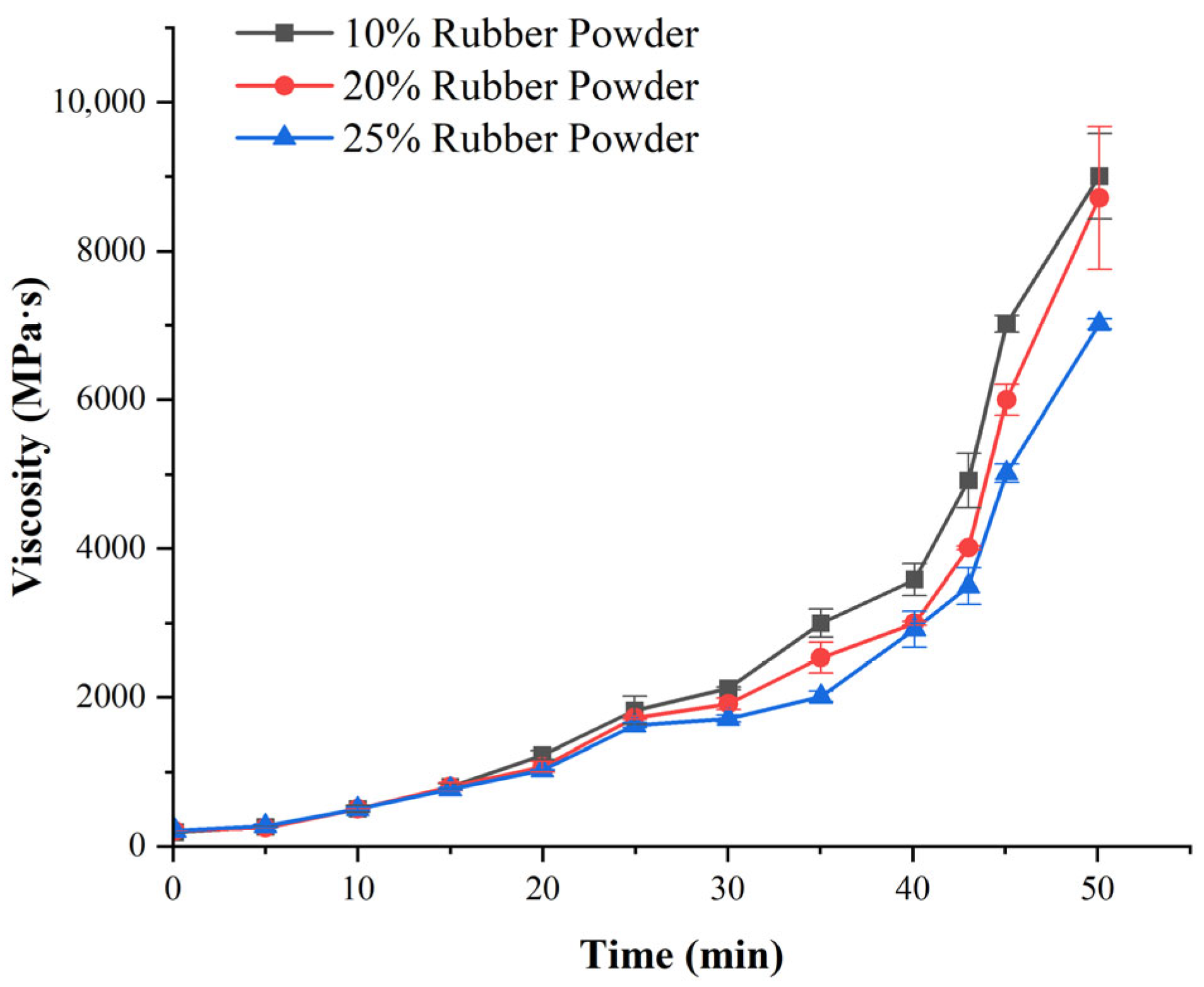
Figure 1 presents the viscosity–time curves of epoxy asphalt modified with three different desulfurized crumb rubber contents (10%, 20%, and 25%). As shown in the figure, all three formulations exhibit similar viscosity-growth patterns. During the initial stage, the viscosity increases slowly. When the curing time reaches approximately 20 min, the viscosity rises to around 1000 mPa·s, after which it enters a rapid growth phase. In the final stage, the viscosity increases sharply and quickly exceeds the measuring range of the rotational viscometer.
A comparison of the three curves shows noticeable differences in the initial viscosities. The initial viscosity of the 10% rubber content is 410 mPa·s, followed by 343 mPa·s for the 20% content, and only 230 mPa·s for the 25% content. Moreover, as the rubber dosage increases, the rate of viscosity growth gradually decreases. For example, the time required for the viscosity to reach 8000 mPa·s is 45 min for the 10% formulation, 47 min for the 20% formulation, and 50 min for the 25% formulation.
This phenomenon is attributed to the increasing number of rubber particles within the modified asphalt colloid. At higher dosages, part of the desulfurized crumb rubber is not fully swollen and forms agglomerated particle clusters. The internal particles of these clusters exhibit poor cohesion and insufficient interfacial bonding with asphaltene structures. These free clusters hinder the curing reaction of the epoxy asphalt binder, resulting in reduced initial viscosity and slower viscosity growth.

3.1.2. Tensile Strength and Elongation at Break

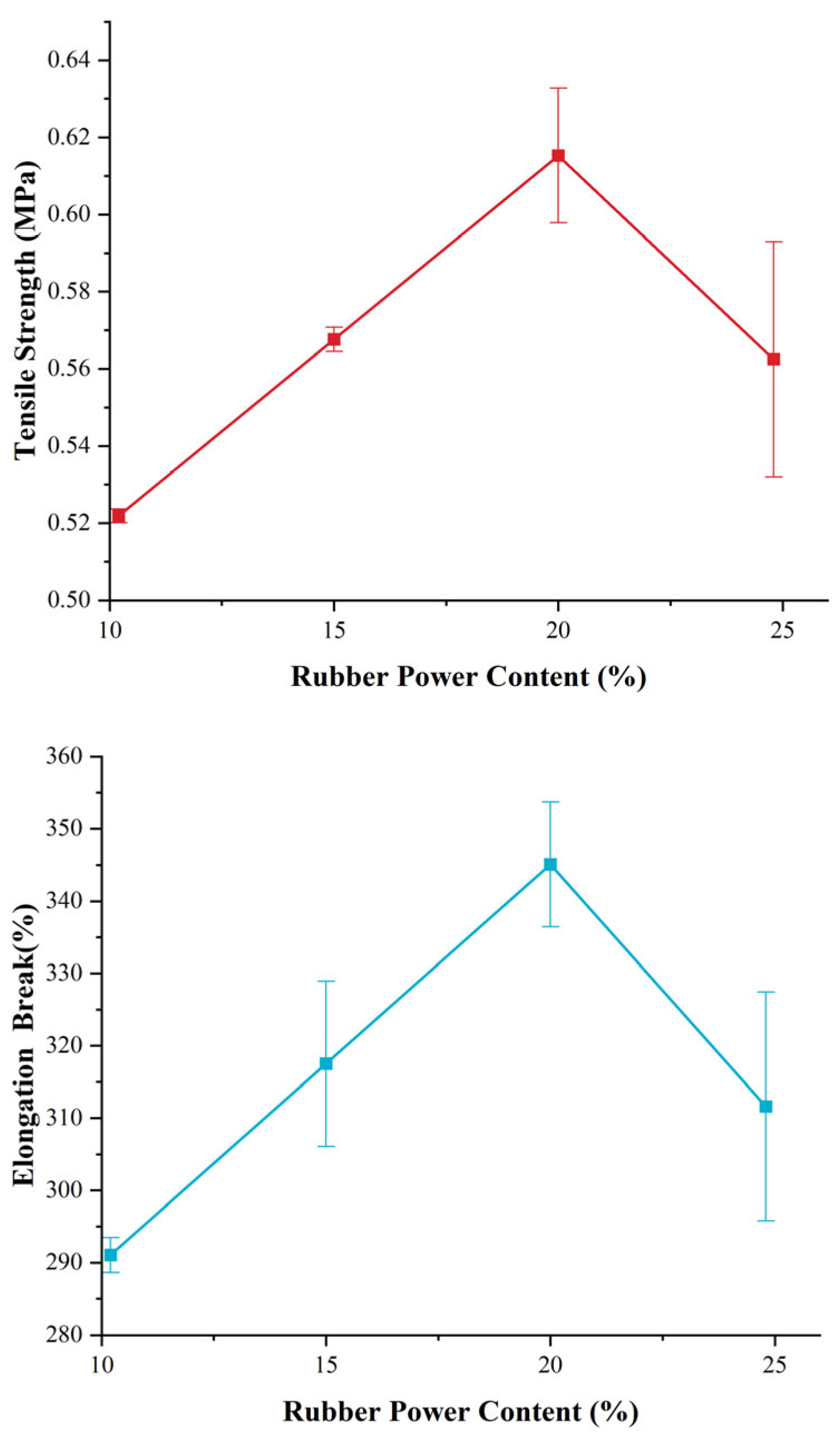
Figure 2 shows the tensile test results of epoxy asphalt modified with different crumb rubber contents. The tensile strengths of the 10%, 20%, and 25% formulations are 0.49 MPa, 0.62 MPa, and 0.55 MPa, respectively—much lower than the strength of unmodified epoxy asphalt (approximately 3 MPa). This significant reduction can be explained by two reasons:
(1) Incomplete swelling of rubber clusters: Large rubber agglomerates with insufficient development exhibit poor internal cohesion and behave as stress concentration points, reducing the tensile strength of the cured binder.
(2) Intrinsic incompatibility of epoxy resin and asphalt: Epoxy resin and asphalt are inherently poorly compatible due to their large difference in solubility parameters. Introducing rubber particles further worsens phase compatibility, causing additional strength degradation.
Although the overall strength is low, the variation among the three contents shows a clear trend: the tensile strength first increases and then decreases with increasing rubber dosage, reaching a maximum at the 20% content. This indicates that moderate rubber addition contributes to strength improvement, whereas excessive rubber introduces too many poorly bonded clusters, reducing strength.
Despite the low strength, all three formulations exhibit high elongation at break, exceeding 300%, which demonstrates that desulfurized crumb rubber significantly improves the elastic extensibility of the epoxy asphalt binder.
Based on viscosity, tensile strength, and elongation evaluations, 20% desulfurized crumb rubber was determined to be the optimal dosage, providing a balance between mechanical performance and workability.

3.2. Effect of Additive (WJFL) on Modified Epoxy Asphalt

The above results show that although desulfurized crumb rubber improves ductility, the overall strength of the modified epoxy asphalt remains insufficient and cannot meet performance requirements. Simply adjusting the rubber dosage is not enough to achieve desirable properties. Therefore, the additive WJFL was introduced to chemically modify the rubber–asphalt binder, improving its reactivity with epoxy resin and enhancing the performance of the resulting composite binder.
The base formulation contained 20% rubber by mass of asphalt, and different WJFL dosages were introduced during the shearing process. Modified binders were then evaluated to determine the influence of additive dosage.

3.2.1. Viscosity Analysis

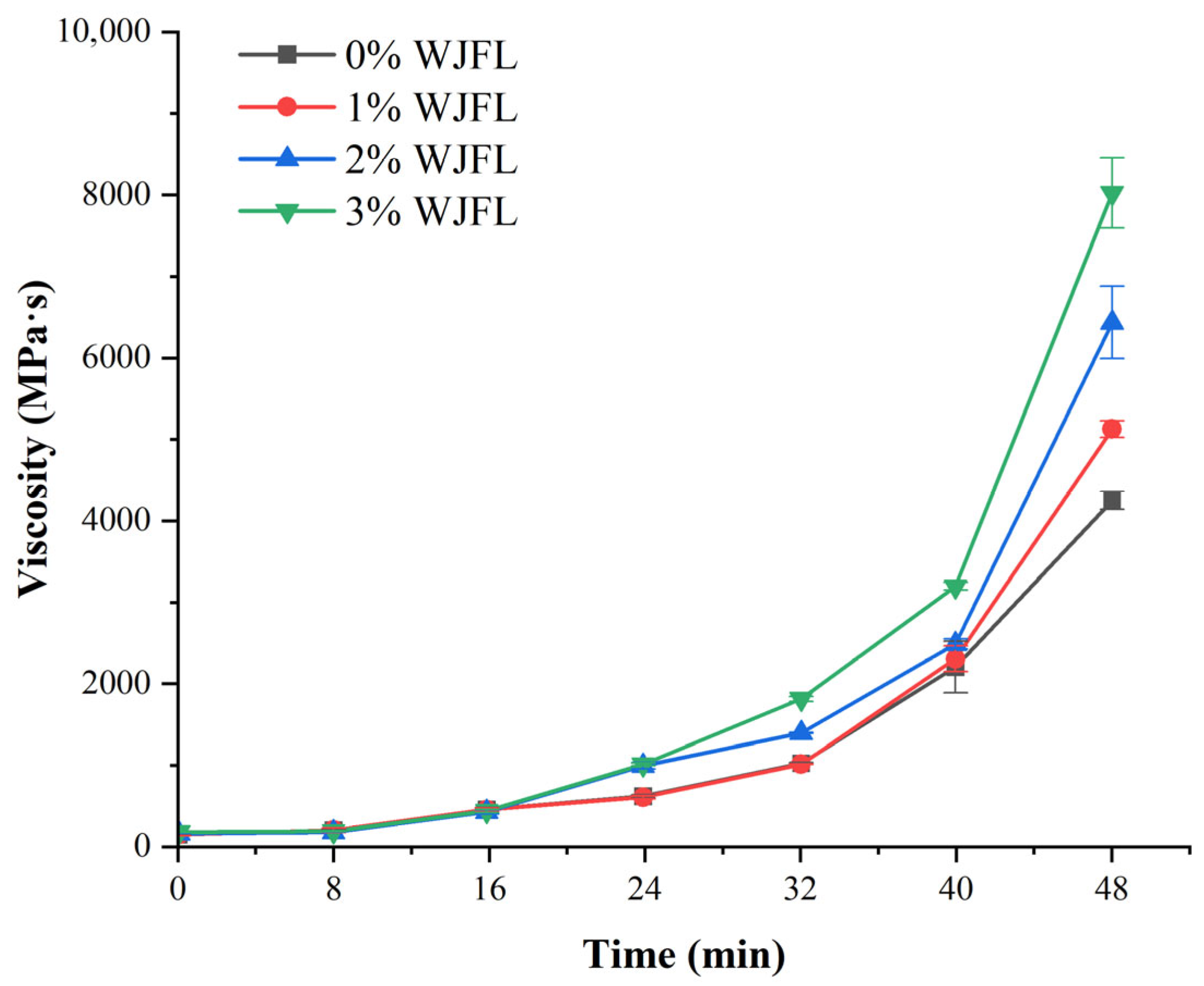
Figure 3 shows the viscosity–time curves for formulations with varying WJFL dosages. It is evident that the addition of WJFL accelerates viscosity growth compared with the control sample without WJFL. Higher WJFL dosages produce faster viscosity increases.
WJFL chemically modifies the rubber–asphalt binder, enabling it to serve as a curing component rather than merely as filler in the final epoxy asphalt network. This enhances the compatibility between asphalt and epoxy resin and increases the degree of cross-linking, thereby accelerating curing and causing a faster rise in viscosity.

3.2.2. Tensile Strength and Elongation at Break

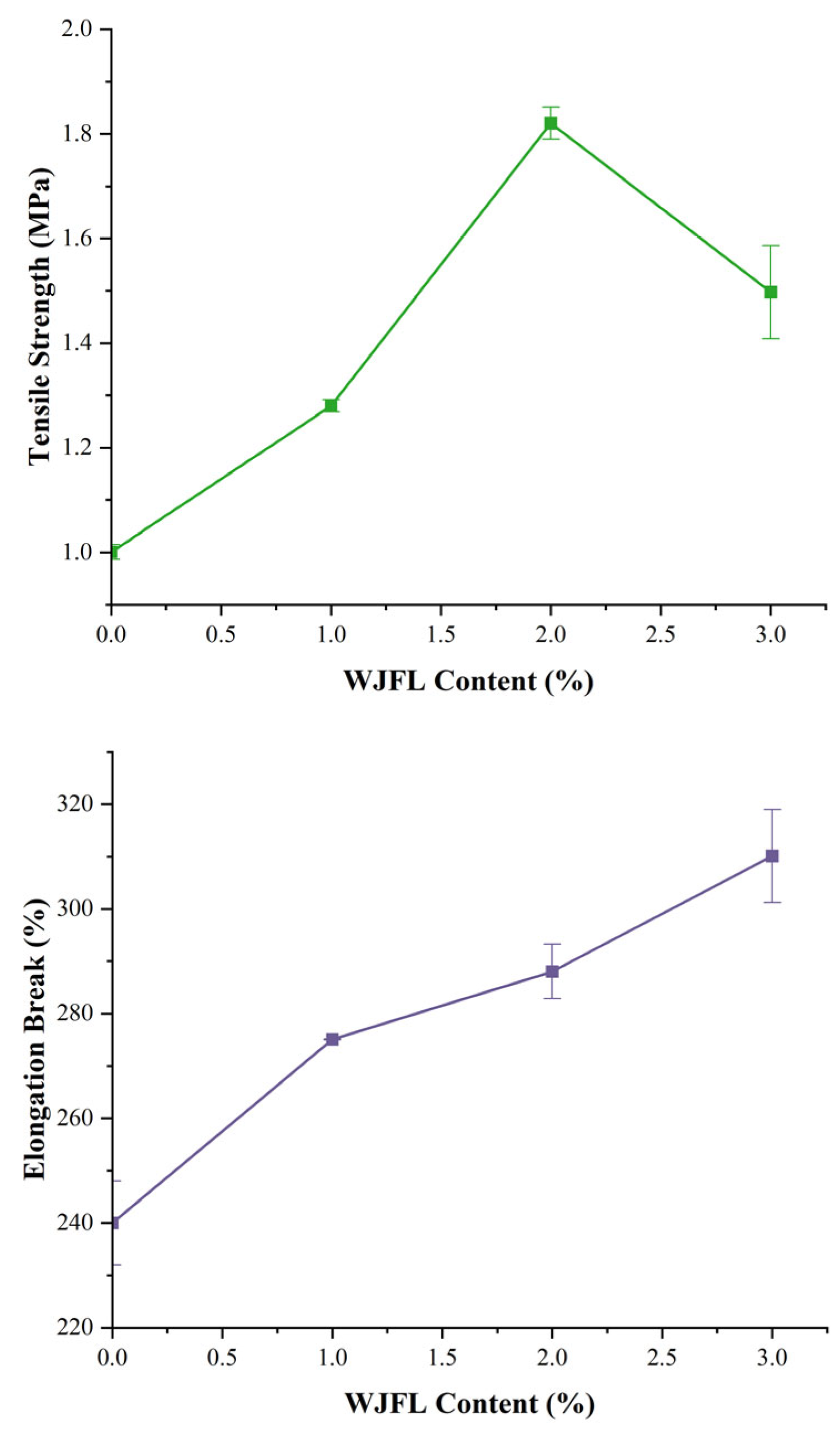
Figure 4 shows the tensile properties of epoxy asphalt modified with different WJFL dosages. The tensile strength of the binder without WJFL is approximately 0.99 MPa. Even a small amount of WJFL noticeably improves strength: the tensile strength increases to 1.31 MPa and up to 1.86 MPa, demonstrating a significant enhancement.
This improvement results from the increased reactivity of the modified asphalt binder. The WJFL-modified rubber–asphalt binder participates more effectively in the curing reaction with epoxy resin, forming a stronger cross-linked structure. However, the tensile strength does not increase monotonically with WJFL dosage; instead, it reaches a maximum at 2%, then decreases. This behavior is attributed to incomplete conversion of WJFL during modification. At higher dosages, WJFL may not fully participate in the asphalt modification reactions, and part of the additive can remain in a free or physically dispersed state, which hinders the formation of an effective crosslinked network.
The elongation at break also increases with higher WJFL content, rising from 241% to 305%. This indicates that WJFL not only enhances strength but also promotes network formation, improving extensibility and overall mechanical performance.

3.3. Effect of Asphalt Content on Modified Epoxy Asphalt

To address the high production and construction costs of conventional epoxy asphalt, this study explored the feasibility of adjusting the asphalt dosage in the desulfurized crumb rubber–modified epoxy asphalt system. The goal is to improve economic efficiency while maintaining acceptable performance. A binder containing 20% desulfurized crumb rubber and 2% WJFL (by mass of rubber–asphalt binder) was prepared. The rubber–asphalt binder was incorporated at 150%, 300%, 450%, 600%, and 750% of the epoxy resin mass. The viscosity and mechanical performance of the resulting epoxy asphalt were evaluated.

3.3.1. Viscosity Analysis

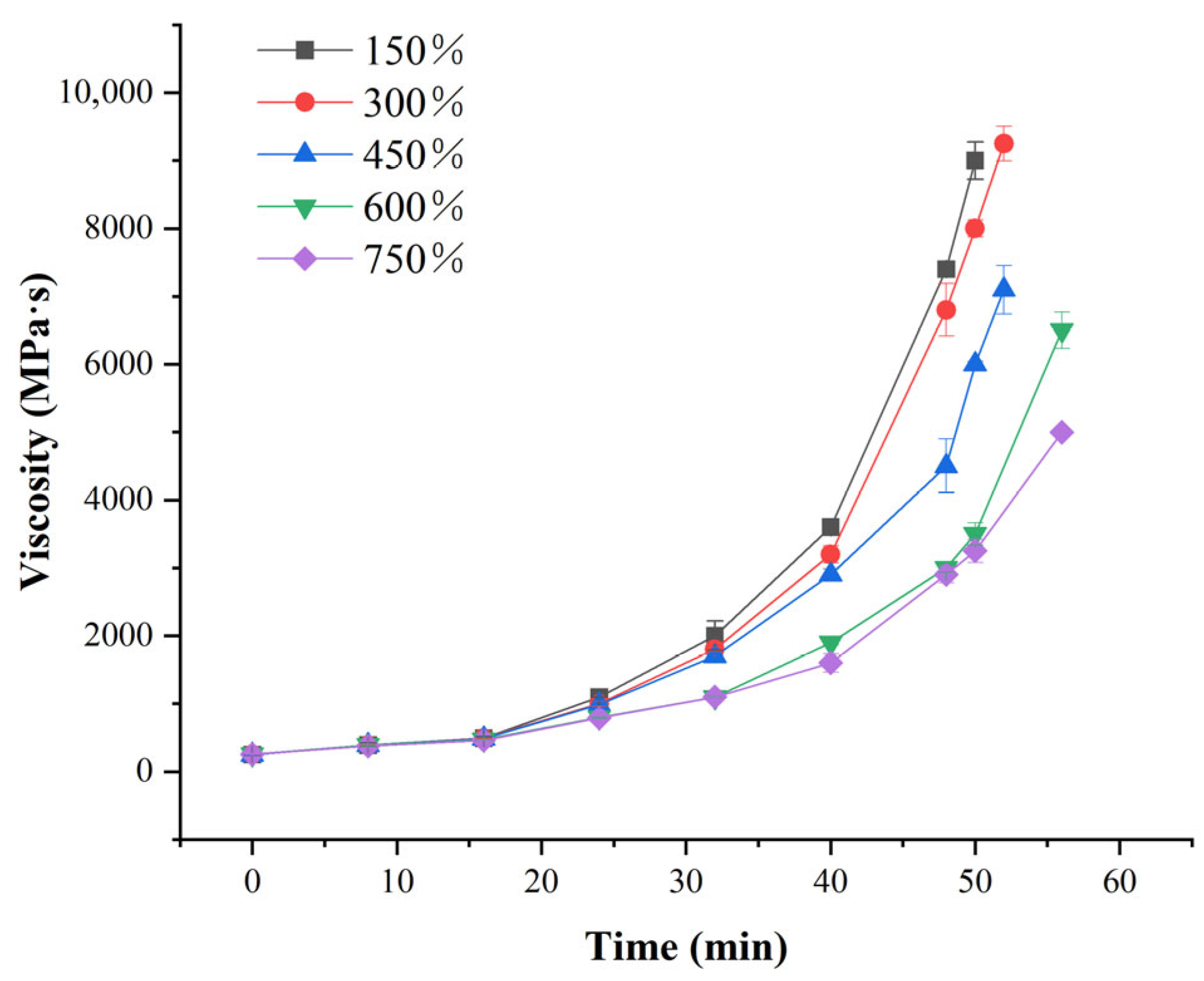
Figure 5 illustrates the viscosity–time curves for epoxy asphalt prepared with different asphalt contents. All binders exhibited an initial viscosity of approximately 300 mPa·s, followed by a gradual increase showing a similar growth trend across formulations.
A clear relationship was observed between asphalt dosage and viscosity development. When asphalt was added at 150%, 300%, and 450% of the epoxy resin mass, the modified epoxy asphalt reached 1000 mPa·s in roughly 22 min. However, for the 600% and 750% dosages, the time required to reach 1000 mPa·s increased to approximately 32 min, with subsequent viscosity growth occurring much more slowly.
In laboratory preparation, samples containing higher asphalt dosages exhibited significant curing difficulties, including incomplete curing and demolding failure. This is because the fixed amount of curing agent could not fully react with excessive rubber–asphalt binder, resulting in reduced curing efficiency and slower viscosity development.

3.3.2. Tensile Strength and Elongation at Break

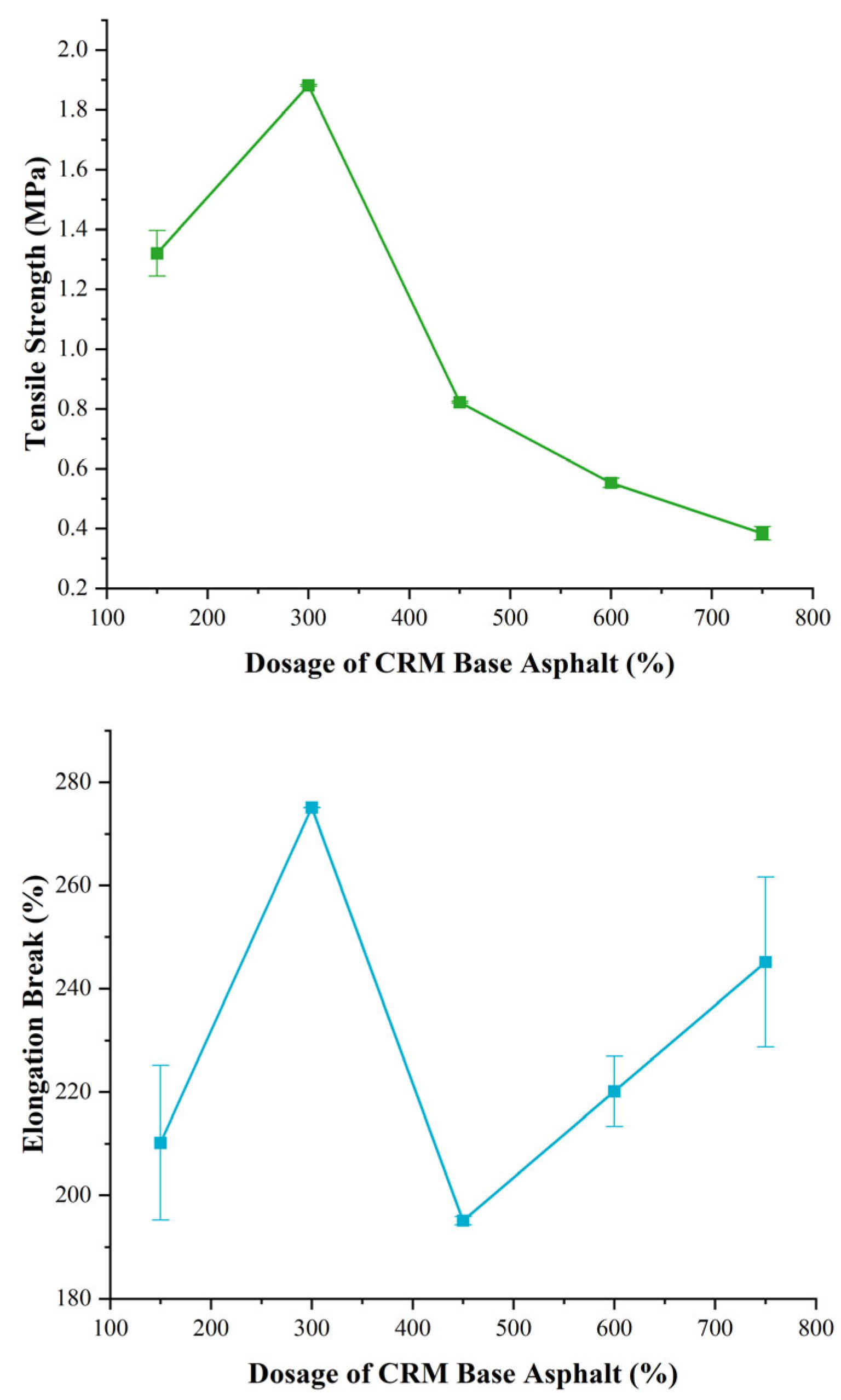
Figure 6 presents the tensile strength and elongation at break of epoxy asphalt with different asphalt dosages. Unlike the viscosity trend, the tensile strength increased at first and then decreased as the asphalt dosage increased, reaching a peak of 1.86 MPa at the 300% dosage. Beyond this point, the tensile strength dropped sharply, with the 600% and 750% formulations exhibiting values below 0.55 MPa.
This behavior indicates that an optimal asphalt dosage exists for the desulfurized crumb rubber–modified epoxy asphalt. When the asphalt dosage is too low, part of the epoxy resin fails to participate in the curing reaction, resulting in insufficient load-bearing network formation. Conversely, when the asphalt dosage is too high, the fixed curing agent cannot fully cure the rubber–asphalt component. As a result, the final composite binder contains two distinct phases: uncured rubber–asphalt binder and cured epoxy asphalt, leading to severe strength reduction.
The elongation at break exhibited a similar non-linear trend, increasing initially and then decreasing. The maximum elongation (272%) was observed for the 300% asphalt dosage. Overall, based on viscosity behavior, tensile strength, and elongation performance, the optimal asphalt dosage is determined to be 300% of the epoxy resin mass.

3.4. Low-Temperature Performance Analysis

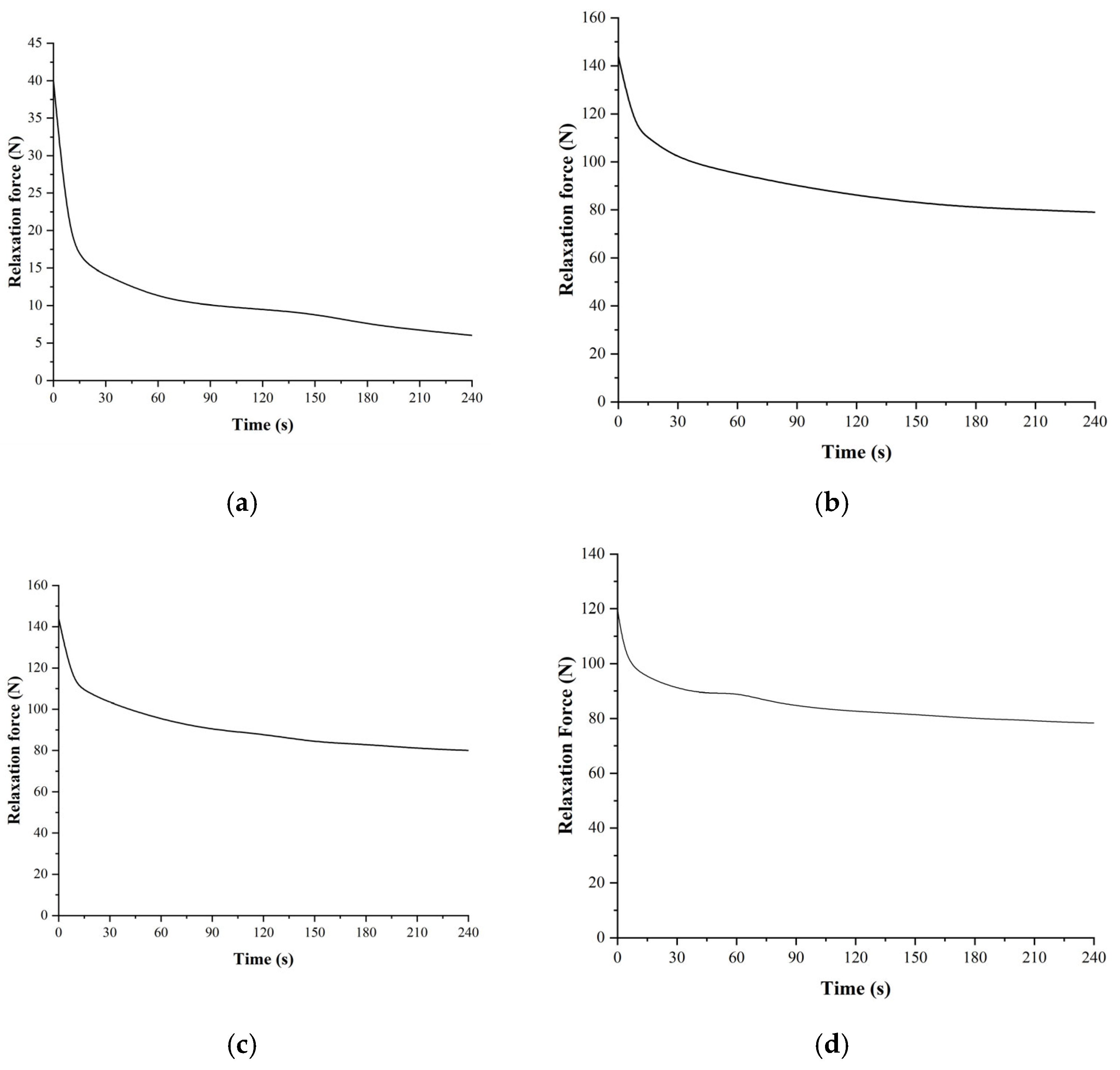
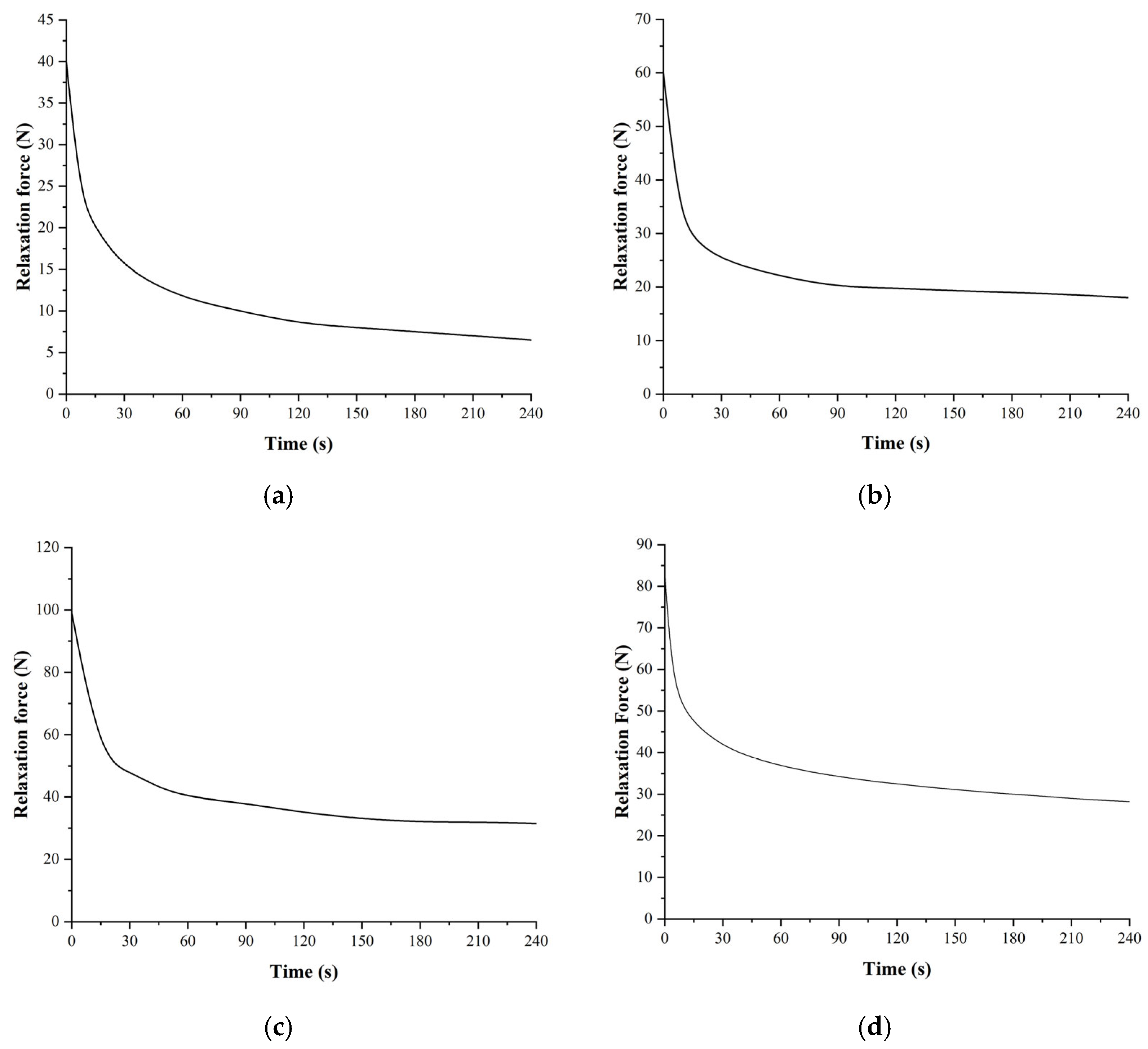
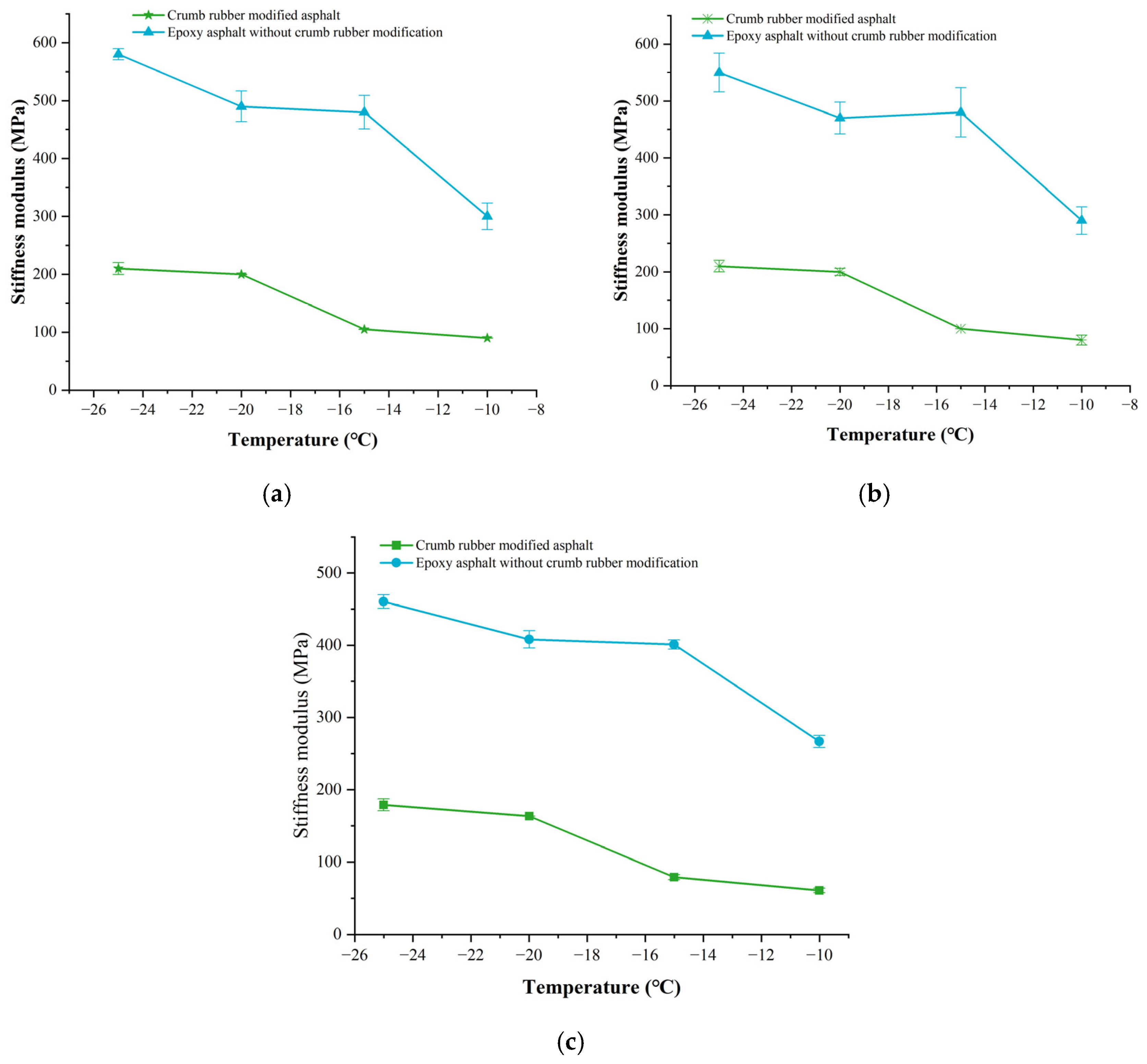
The relaxation performance of both unmodified epoxy asphalt and modified crumb rubber epoxy asphalt was tested at four different temperatures using the above-mentioned relaxation tests. The relaxation force-time comparison curves for both are shown in Figure 7 and Figure 8.
Figure 7 and Figure 8 present the relaxation curves of the desulfurized crumb rubber–modified epoxy asphalt at three different temperatures. Using Equation (1), the relaxation stiffness values at 60 s, 120 s, and 180 s were calculated. Relaxation stiffness (S) reflects the resistance of a binder to imposed deformation under constant displacement. A higher stiffness indicates a more brittle material, which is more susceptible to cracking under low-temperature loading.
As shown in Figure 9, the relaxation stiffness of the modified epoxy asphalt is significantly lower than that of the unmodified epoxy asphalt at all test temperatures. This demonstrates that the internal stress generated within the modified binder during low-temperature deformation is substantially reduced, resulting in superior low-temperature performance.
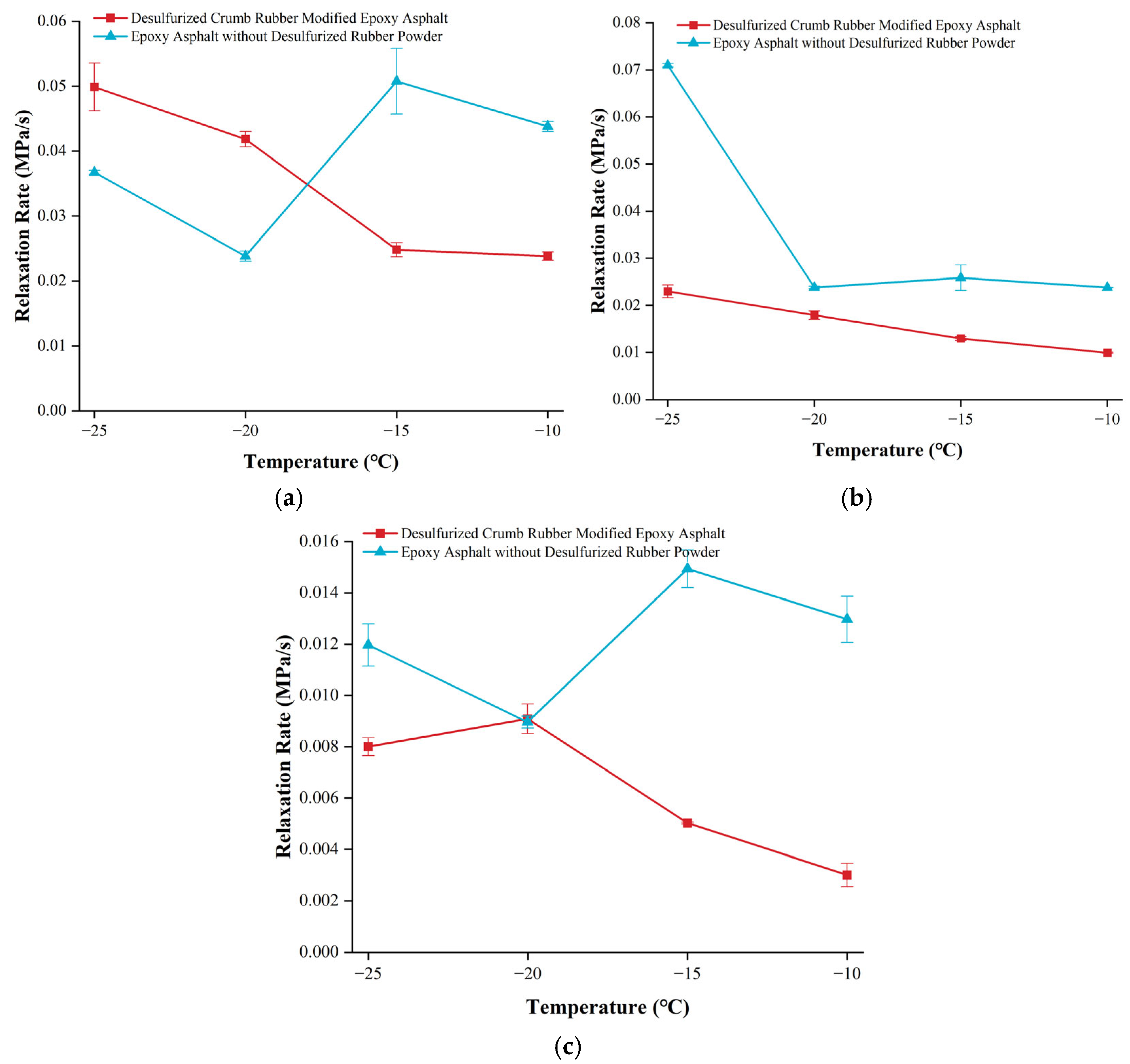
Based on Equation (2), the relaxation rates k at 30 s, 60 s, and 120 s were calculated. The relaxation rate represents the rate of stiffness variation with time during the displacement-controlled loading process. By combining the relaxation curves shown in Figure 7 and Figure 8 with the analysis presented in Figure 10, it can be observed that, when larger time control points are selected, the relaxation rates of the crumb rubber–modified epoxy asphalt are consistently lower than those of the epoxy asphalt without crumb rubber. This behavior indicates that the modified epoxy asphalt undergoes most of its deformation relaxation within a relatively short period and subsequently enters a stable deformation stage, leading to a reduced rate of stiffness change over time. Consequently, the relaxation rates obtained at 60 s and 120 s are not suitable indicators for characterizing stiffness evolution.
Therefore, 30 s was selected as the control point for evaluating the relaxation rate in this study. The results show that, at extremely low temperatures, the relaxation rate k of the crumb rubber–modified epoxy asphalt is relatively high. This suggests that, when temperature reduction induces pavement contraction, the asphalt mixture responds in a manner similar to a material with reduced stiffness, resulting in lower tensile stress development and, consequently, a reduced susceptibility to low-temperature cracking.
Furthermore, the experimental results indicate that the incorporation of crumb rubber significantly decreases the low-temperature stiffness modulus of the modified epoxy asphalt, accompanied by a corresponding reduction in the k value. These findings demonstrate that the addition of crumb rubber effectively enhances the low-temperature creep and deformation performance of crumb rubber–modified epoxy asphalt.
The improvement can be explained by several mechanisms. During the swelling process, the desulfurized crumb rubber particles absorb light components (such as aromatics and saturates) from the base asphalt, leading to an increased proportion of colloidal structures and reduced brittleness at low temperatures. In addition, the fine rubber particles promote the formation of micro-scale “crazing zones” under tensile stress at low temperature. These zones help dissipate external energy and delay the initiation and propagation of cracks.
Furthermore, the rubber hydrocarbons present in the desulfurized crumb rubber contribute additional elasticity and flexibility, significantly enhancing the binder’s crack-resistance capability at low temperatures. Overall, the incorporation of desulfurized crumb rubber markedly improves the inherent low-temperature limitations of conventional epoxy asphalt.

4. Conclusions

This study investigated the influence of desulfurized crumb rubber content, additive dosage, and asphalt content on the performance of modified epoxy asphalt. The conclusions are summarized as follows:
(1) Without additional modification, incorporating desulfurized crumb rubber reduces the tensile strength of epoxy asphalt but significantly improves its ductility. An optimal dosage of approximately 20% was identified, balancing strength and extensibility.
(2) The additive WJFL effectively accelerates viscosity growth and significantly enhances the tensile strength of the modified epoxy asphalt. The optimum dosage was determined to be 2% of the rubber–asphalt binder, at which the degree of cross-linking and mechanical performance are maximized.
(3) Adjusting the asphalt dosage showed that excessive rubber–asphalt content leads to incomplete curing and a sharp reduction in tensile strength, along with brittle failure at low temperatures. The optimal dosage was determined to be 300% of the epoxy resin mass, providing the best balance between performance and economic feasibility.
(4) Low-temperature relaxation tests revealed that desulfurized crumb rubber considerably enhances the low-temperature crack-resistance of epoxy asphalt. Mechanistic analysis based on viscoelastic behavior confirmed that rubber modification reduces stress concentration and improves deformation recovery under low-temperature loading. This effectively addresses the inherent brittleness of conventional epoxy asphalt in cold environments.

Author Contributions

Y.Z.: Conceptualization, methodology, visualization, writing—original draft preparation; P.Y.: writing—review and editing. All authors have read and agreed to the published version of the manuscript.

Funding

This research received no external funding.

Institutional Review Board Statement

Not applicable.

Informed Consent Statement

Not applicable.

Data Availability Statement

The original contributions presented in this study are included in the article. Further inquiries can be directed to the corresponding author.

Conflicts of Interest

The authors declare that they have no known competing financial interests or personal relationships that could have appeared to influence the work reported in this paper.

References

  1. Huang, W. Integrated Design Procedure for Epoxy Asphalt Concrete-Based Wearing Surface on Long-Span Orthotropic Steel Deck Bridges. J. Mater. Civ. Eng. 2016, 28, 04015189. [Google Scholar]
  2. Xue, Y.; Qian, Z.; Yao, Z. Development and Performance Evaluation of Epoxy Asphalt Concrete Modified with Mineral Fiber. Constr. Build. Mater. 2016, 102, 378–383. [Google Scholar] [CrossRef] [Scilit]
  3. Qian, Z.; Liu, Y.; Liu, C.; Zheng, D. Design and Skid Resistance Evaluation of Skeleton-Dense Epoxy Asphalt Mixture for Steel Bridge Deck Pavement. Constr. Build. Mater. 2016, 114, 851–863. [Google Scholar] [CrossRef] [Scilit]
  4. Min, W.; Lu, P.; Liu, S.; Wang, H. A Review of Crack Sealing Technologies for Asphalt Pavement: Materials, Failure Mechanisms, and Detection Methods. Coatings 2025, 15, 836. [Google Scholar] [CrossRef] [Scilit]
  5. Polacco, G.; Filippi, S.; Merusi, F.; Stastna, J. A Review of the Fundamentals of Polymer-Modified Asphalts: Asphalt/Polymer Interactions and Principles of Compatibility. Adv. Colloid Interface Sci. 2015, 224, 72–112. [Google Scholar]
  6. Bilema, M.; Karim, M.R.; Mashaan, N.S. A Review of Rubberised Asphalt for Flexible Pavement Applications. Sustainability 2023, 15, 14481. [Google Scholar] [CrossRef] [Scilit]
  7. Li, H.; Dong, B.; Zhao, D.; Guo, P.; Zhang, J. Physical, Rheological and Stability Properties of Desulfurized Rubber Asphalt and Crumb Rubber Asphalt. Arab. J. Sci. Eng. 2019, 44, 5043–5056. [Google Scholar] [CrossRef] [Scilit]
  8. Xu, X.; Li, Y.; Huang, W.; Chen, D.; Zhang, C.; Shi, W. Fatigue Design of Steel Bridge Deck Asphalt Pavement Based on Nonlinear Damage Accumulation Theory. Appl. Sci. 2021, 11, 5668. [Google Scholar] [CrossRef] [Scilit]
  9. Yang, J.; Yi, X.; Chen, H.; Wong, Y.D.; Fan, W.; Huang, W. Homogeneity Enhancement of Mixtures Containing Epoxy Polymer and 100% Reclaimed Asphalt Pavement. Polymers 2023, 15, 4261. [Google Scholar] [CrossRef] [Scilit]
  10. Jamshidi, A.; White, G.; Kurumisawa, K. Functional and Field Performance of Epoxy Asphalt Technology—State-of-the-Art. Road Mater. Pavement Des. 2023, 24, 881–918. [Google Scholar]
  11. Han, Y.; Zhang, Z.; Tian, J.; Ni, F.; Gu, X. Long-Term In Situ Performance Evaluation of Epoxy Asphalt Concrete for Long-Span Steel Bridge Deck Pavement. Coatings 2023, 13, 545. [Google Scholar] [CrossRef] [Scilit]
  12. Min, Z.; Wang, Q.; Zhang, K.; Shen, L.; Lin, G.; Huang, W. Investigation on the Properties of Epoxy Asphalt Mixture Containing Crumb Rubber for Bridge Expansion Joint. Constr. Build. Mater. 2022, 331, 127344. [Google Scholar] [CrossRef] [Scilit]
  13. Duan, K.; Wang, C.; Liu, J.; Song, L.; Chen, Q.; Chen, L. Research progress and performance evaluation of crumb-rubber-modified asphalts and their mixtures. Constr. Build. Mater. 2022, 361, 129687. [Google Scholar] [CrossRef] [Scilit]
  14. Liu, B.; Zhang, K.; Fan, X.; Tu, C. Performance Evaluation of Desulfurized Rubber Powder and Styrene–Butadiene–Styrene Composite-Modified Asphalt. Coatings 2025, 15, 607. [Google Scholar] [CrossRef] [Scilit]
  15. Zhao, Z.; Wu, S.; Xie, J.; Yang, C.; Yang, X.; Wang, F.; Liu, Q. Utilization of High Contents Desulfurized Crumb Rubber in Developing an Asphalt Rubber Pellets Modified Asphalt. Constr. Build. Mater. 2023, 402, 133043. [Google Scholar] [CrossRef] [Scilit]
  16. Zhao, Y.; Chen, M.; Wu, S.; Jiang, Q.; Xu, H.; Zhao, Z.; Lv, Y. Effects of Waterborne Polyurethane on Storage Stability, Rheological Properties and VOCs Emission of Crumb Rubber Modified Asphalt. J. Clean. Prod. 2022, 340, 130682. [Google Scholar] [CrossRef] [Scilit]
  17. Min, Z.; Li, F.; Zhang, X.; Wang, L.; Zhai, R. The Preparation Process, Service Performances and Interaction Mechanisms of Crumb Rubber Modified Asphalt (CRMA) by Wet Process: A Comprehensive Review. Constr. Build. Mater. 2022, 354, 129168. [Google Scholar] [CrossRef] [Scilit]
  18. Gong, Y.; Wang, X.; Jia, D. Waste Tire Crushing Technology and Its Application Progress. Rubber Ind. 2021, 68, 66–72. [Google Scholar]
  19. Xia, C.; Lv, S.; Cabrera, M.B.; Wang, X.; Zhang, C.; You, L. Unified Characterizing Fatigue Performance of Rubberized Asphalt Mixtures Subjected to Different Loading Modes. J. Clean. Prod. 2021, 279, 123740. [Google Scholar] [CrossRef] [Scilit]
  20. Ban, I.; Barišić, I.; Cuculić, M.; Zvonarić, M. Performance Evaluation of Waste Rubber-Modified Asphalt Mixtures: A Comparative Study of Asphalt Concrete and Stone Mastic Asphalt Gradings. Infrastructures 2025, 10, 107. [Google Scholar] [CrossRef] [Scilit]
  21. Gong, J.; Jing, F.; Zhao, R.; Li, C.; Cai, J.; Wang, Q.; Xie, H. Waste Cooking Oil-Modified Epoxy Asphalt Rubber Binders with Improved Compatibility and Extended Allowable Construction Time. Molecules 2022, 27, 7061. [Google Scholar] [CrossRef] [Scilit]
  22. Hasan, S.S.; Abd Al-Ameer, R.H.; Hassani, H.A. Laboratory Assessment of Epoxy Asphalt Mixture Incorporating Tire Rubber Waste. Wasit J. Eng. Sci. 2021, 9, 1–10. [Google Scholar] [CrossRef] [Scilit]
  23. Xu, G.; Kong, P.; Yu, Y.; Yang, J.; Zhu, M.; Chen, X. Rheological Properties of Rubber Modified Asphalt as a Function of Waste Tire Rubber Reclaiming Degree. J. Clean. Prod. 2022, 332, 130113. [Google Scholar] [CrossRef] [Scilit]
  24. Zhang, H.; Zhang, Y.; Chen, J.; Liu, W.; Wang, W. Effect of Desulfurization Process Variables on the Properties of Crumb Rubber Modified Asphalt. Polymers 2022, 14, 1365. [Google Scholar] [CrossRef] [Scilit]
  25. Xu, G.; Yu, Y.; Yang, J.; Wang, T.; Kong, P.; Chen, X. Rheological and Aging Properties of Composite Modified Bitumen by Styrene–Butadiene–Styrene and Desulfurized Crumb Rubber. Polymers 2021, 13, 3037. [Google Scholar] [CrossRef] [Scilit] [PubMed]
  26. Wang, S.; Huang, W.; Liu, X.; Lin, P. Influence of High Content Crumb Rubber and Different Preparation Methods on Properties of Asphalt Under Different Aging Conditions: Chemical Properties, Rheological Properties and Fatigue Performance. Constr. Build. Mater. 2022, 327, 126937. [Google Scholar] [CrossRef] [Scilit]
  27. Cong, P.; Liu, C.; Han, Z.; Zhao, Y. A Comprehensive Review on Polyurethane Modified Asphalt: Mechanism, Characterization and Prospect. J. Road Eng. 2023, 3, 16–34. [Google Scholar] [CrossRef] [Scilit]
  28. Zhang, S.; Yang, Y.; Guo, R.; Yan, Y.; Huan, H.; Wan, B. Study on the Low-Temperature Pre-Desulfurization of Crumb Rubber-Modified Asphalt. Polymers 2023, 15, 2273. [Google Scholar] [CrossRef] [Scilit] [PubMed]
  29. Xie, S.; Cheng, Z.; Zhou, Y.; Cao, Y.; Wang, T.; Zhang, Z.; Dai, Y.; Zhang, W. Performance of Asphalt Mixtures Modified with Desulfurized Rubber and Rock Asphalt Composites. Buildings 2024, 14, 3026. [Google Scholar] [CrossRef] [Scilit]
  30. Abualia, A.; Akentuna, M.; Mohammad, L.N.; Cooper, S.B., III; Cooper, S.B., Jr. Improving Asphalt Binder Durability Using Sustainable Materials: A Rheological and Chemical Analysis of Polymer-, Rubber-, and Epoxy-Modified Asphalt Binders. Sustainability 2024, 16, 5379. [Google Scholar] [CrossRef] [Scilit]
  31. Wang, Z.; Li, H.; Jia, M.; Du, Q. Emission Risk and Inhibition Technology of Asphalt Fume from Crumb Rubber Modified Asphalt. Sustainability 2024, 16, 8840. [Google Scholar] [CrossRef] [Scilit]
  32. Lee, S.-Y.; Le, T.H.M. Laboratory and Full-Scale Testbed Study in the Feasibility of Styrene-Butadiene-Styrene Asphalt Pavement Having Epoxy Resin and Crumb Rubber Powder. Buildings 2023, 13, 652. [Google Scholar] [CrossRef] [Scilit]
  33. Zhao, P.; Liang, H.; Wu, W.; Yang, Y.; Liu, Y.; Li, C.; Meng, W.; Zhang, R.; Song, X.; Wang, C.; et al. Rheological properties of high-asphalt-content emulsified asphalt. Constr. Build. Mater. 2024, 419, 135511. [Google Scholar] [CrossRef] [Scilit]
  34. Zhao, P.; Zhou, X.; Yang, Y.; Wang, C.; Wang, C.; Liang, H.; Li, C.; Ren, H. Molecular dynamics simulation study of the effect of molecular structure of warm mix additive on lubricating properties. Constr. Build. Mater. 2023, 407, 133529. [Google Scholar] [CrossRef] [Scilit]
  35. Zhao, P.; Song, X.; Dong, M.; Sun, H.; Wu, W.; Zhang, R.; Sun, M.; Zhao, X. Preparation and characterization of CQDs/SBS composites and its application performance as asphalt modifier. Constr. Build. Mater. 2022, 320, 126312. [Google Scholar] [CrossRef] [Scilit]
  36. Yang, P.; Min, Z.; Chen, W.; Yang, S.; Huang, W.; Tao, R.; Guo, K.; Chen, H. Crosslinking sites of sulfur and asphalt molecules: A DFT and macroscopic experimental study. Constr. Build. Mater. 2025, 477, 141364. [Google Scholar] [CrossRef] [Scilit]
  37. Wu, W.; Wang, C.; Zhao, P.; Xiu, L.; Fan, L.; Bi, F.; Song, X.; Zhou, X. The Fingerprint Identification of Asphalt Aging Based on 1H-NMR and Chemometrics Analysis. Materials 2022, 15, 19. [Google Scholar] [CrossRef] [Scilit] [PubMed]
Figure 1. Viscosity–time curves of desulfurized crumb rubber modified epoxy asphalt with different crumb rubber contents.
Coatings 16 00102 g001
Figure 2. Tensile test results of desulfurized crumb rubber modified epoxy asphalt with different crumb rubber contents.
Coatings 16 00102 g002
Figure 3. Viscosity–time curves of desulfurized crumb rubber modified epoxy asphalt with different WJFL contents.
Coatings 16 00102 g003
Figure 4. Tensile test results of desulfurized crumb rubber modified epoxy asphalt with different WJFL contents.
Coatings 16 00102 g004
Figure 5. Viscosity–time curves of desulfurized crumb rubber modified epoxy asphalt with different asphalt contents.
Coatings 16 00102 g005
Figure 6. Tensile behavior of desulfurized crumb rubber–modified epoxy asphalt with different asphalt contents.
Coatings 16 00102 g006
Figure 7. Relaxation curves of epoxy asphalt without crumb rubber at four temperatures. (a) Relaxation curve of neat epoxy asphalt at −10 °C. (b) Relaxation curve of neat epoxy asphalt at −15 °C. (c) Relaxation curve of neat epoxy asphalt at −20 °C. (d) Relaxation curve of neat epoxy asphalt at −25 °C.
Coatings 16 00102 g007
Figure 8. Relaxation curves of desulfurized crumb rubber–modified epoxy asphalt at four temperatures. (a) Relaxation curve of desulfurized crumb rubber–modified epoxy asphalt at −10 °C. (b) Relaxation curve of desulfurized crumb rubber–modified epoxy asphalt at −15 °C. (c) Relaxation curve of desulfurized crumb rubber–modified epoxy asphalt at −20 °C. (d) Relaxation curve of desulfurized crumb rubber–modified epoxy asphalt at −25 °C.
Coatings 16 00102 g008
Figure 9. Comparison of stiffness modulus between the two materials. (a) Comparison of the stiffness modulus of the two materials at 60 s. (b) Comparison of the stiffness modulus of the two materials at 60 s. (c) Comparison of the stiffness modulus of the two materials at 60 s.
Coatings 16 00102 g009
Figure 10. Comparison of the relaxation rates of the two materials. (a) Relaxation rate of the two materials at 30 s. (b) Relaxation rate of the two materials at 60 s. (c) Relaxation rate of the two materials at 120 s.
Coatings 16 00102 g010
Table 1. Technical properties of 70# base asphalt.
Technical IndexSpecification RequirementTest Result
Penetration/0.1 mm
(25 °C, 100 g, 5 s)
60~8069
Penetration Index−1.5~1.00.2
Softening Point/°C≥4647.6
Ductility (15 °C, 5 cm/min/cm)≥100165
Dynamic Viscosity (60 °C)/Pa·s≥180256
Flash Point (Cleveland Open Cup)/°C≥260285
Solubility/%≥99.599.8
Residues after RTFOT
RTFOT Mass Change/%≤±0.80.26
Retained Penetration (25 °C)/%≥6168.7
Retained Ductility (15 °C)/cm≥1548
Table 2. Properties of desulfurized crumb rubber (80 mesh).
CategoryItemTechnical Value (80 mesh)
Physical PropertiesRelative Density1.15
Moisture Content (%)0.85
Metal Content (%)0.02
Fiber Content (%)0.22
Ash Content (%)8.4
Heating Loss (163 °C, 5 h, %)1.8
Chemical PropertiesAcetone Extract (%)17.6
Carbon Black Content (%)29.8
Rubber Hydrocarbon Content (%)54.6
Table 3. Technical specifications for domestic epoxy asphalt.
Technical IndexSpecification RequirementTest Method
Tensile Strength (20 °C, MPa)≥1.5ASTM D 638
Elongation at Break (20 °C, %)≥200ASTM D 638
Time for Viscosity to Reach 1000 cp (120 °C, min)≥50JTJ052-2000
Disclaimer/Publisher’s Note: The statements, opinions and data contained in all publications are solely those of the individual author(s) and contributor(s) and not of MDPI and/or the editor(s). MDPI and/or the editor(s) disclaim responsibility for any injury to people or property resulting from any ideas, methods, instructions or products referred to in the content.