The results are organized into three main parts.
Section 3.1 presents the structural and morphological characterization of the electrodes, supported by SEM, HRTEM, XRD, XPS, and Raman analyses, confirming the successful deposition and integrity of UNCD and N-UNCD films on NG/Cu substrates.
Section 3.2 examines the electrochemical charge–discharge behavior, comparing the capacity retention and Coulombic efficiency of coated and uncoated NG/Cu anodes. Finally,
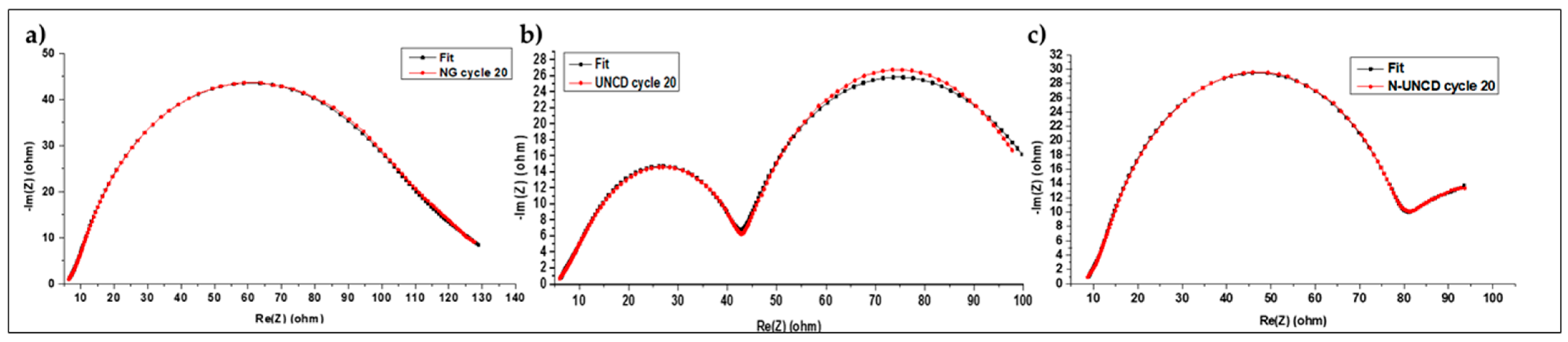
Section 3.3 focuses on electrochemical impedance spectroscopy (EIS) analysis, including DRT and ECM analyses, to elucidate the distinct relaxation processes and interfacial stability mechanisms introduced by the UNCD and N-UNCD coatings.
3.1. Analysis of N-UNCD Coating Surface Morphology and Structure
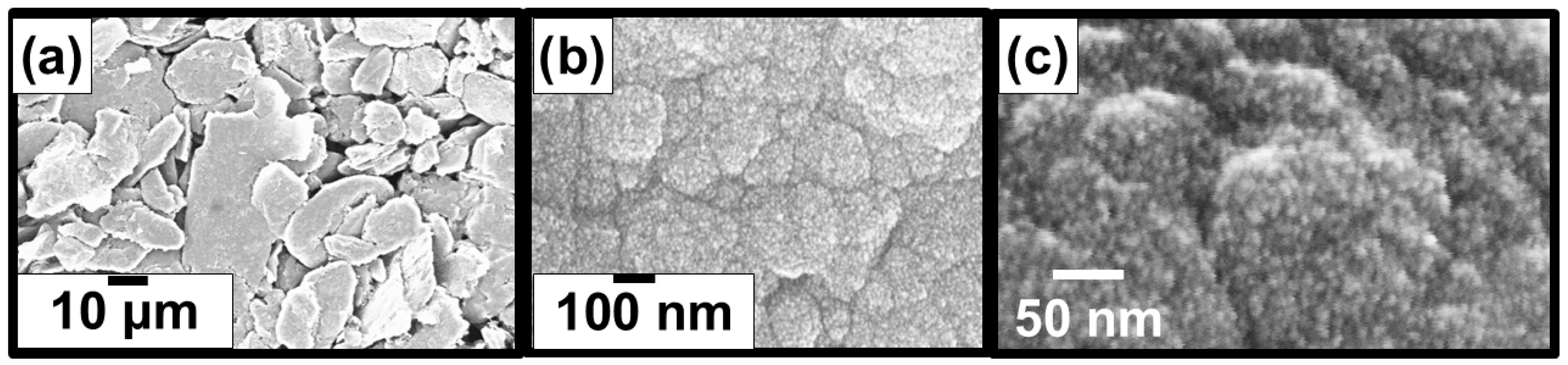
SEM micrographs of a N-UNCD film (
Figure 2) show the surface morphology of the coating at three magnifications, highlighting that a continuous N-UNCD layer is indeed coating the surface of a NG/Cu anode.
Figure 2a shows a large area at microscale, revealing a uniform film coverage across the surface. The morphology of the observed grains actually comes from the graphite and carbon black grains. N-UNCD covers the grains.
Figure 2b reveals that the surface of the grains has a dense, coalesced nano- crystalline texture, which is characteristic of N-UNCD, with closely packed nodules and no obvious pinholes at this scale.
Figure 2c reveals the ultrafine, “cauliflower-like” morphology at the tens-of-nanometers scale, consistent with the characteristic N-UNCD surface morphology characterized in extensive prior research related to N-UNCD coating of NG/Cu anodes and other substrate materials [
12,
14,
22].
The SEM images in
Figure 2 confirm conformal coverage and continuity of the N-UNCD coating on NG/Cu anode, supporting the diamond phase identification obtained from XRD and Raman analyses.
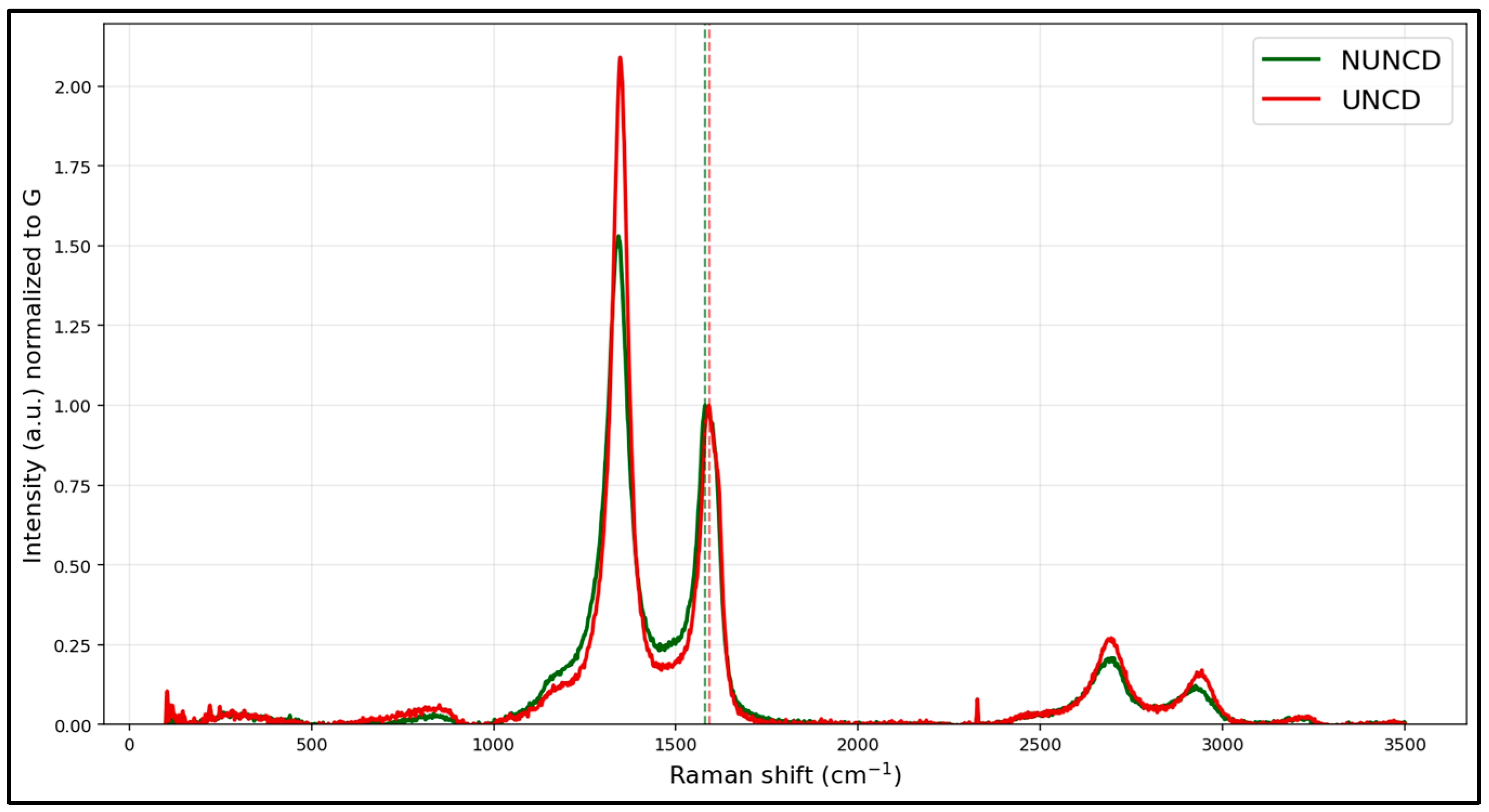
Figure 3 shows Raman spectra of NG/Cu anodes coated with N-UNCD and UNCD films. After normalizing both spectra to the G band, vertical lines on the graph (~1580 cm
−1), the Raman results show that the response is dominated by graphitic sp
2 bonded C atoms—with the characteristic D (~1350 cm
−1) and G (~1580 cm
−1) peaks present in both samples—while a discernible shoulder/peak near 1332 cm
−1 evidences measurable sp
3-bonded C atoms characteristic of a diamond structure attributable to the UNCD and N-UNCD coatings. Grown on top of the graphite layer, relative to the G band, the UNCD spectrum exhibits a stronger D component and more pronounced 2D/overtone features (≈2700–3000 cm
−1), consistent with nanodiamond grains embedded in a sp
2 matrix, whereas the spectrum for N-UNCD coating shows a comparable, sometimes slightly sharper, signature at ~1332 cm
−1 together with nitrogen-related disorder in the sp
2 network. Taken together, these trends confirm the coexistence of graphite and UNCD and N-UNCD phases on the NG/Cu anodes and align with the established interpretation of D–G diamond deconvolution in carbon systems [
23,
24].
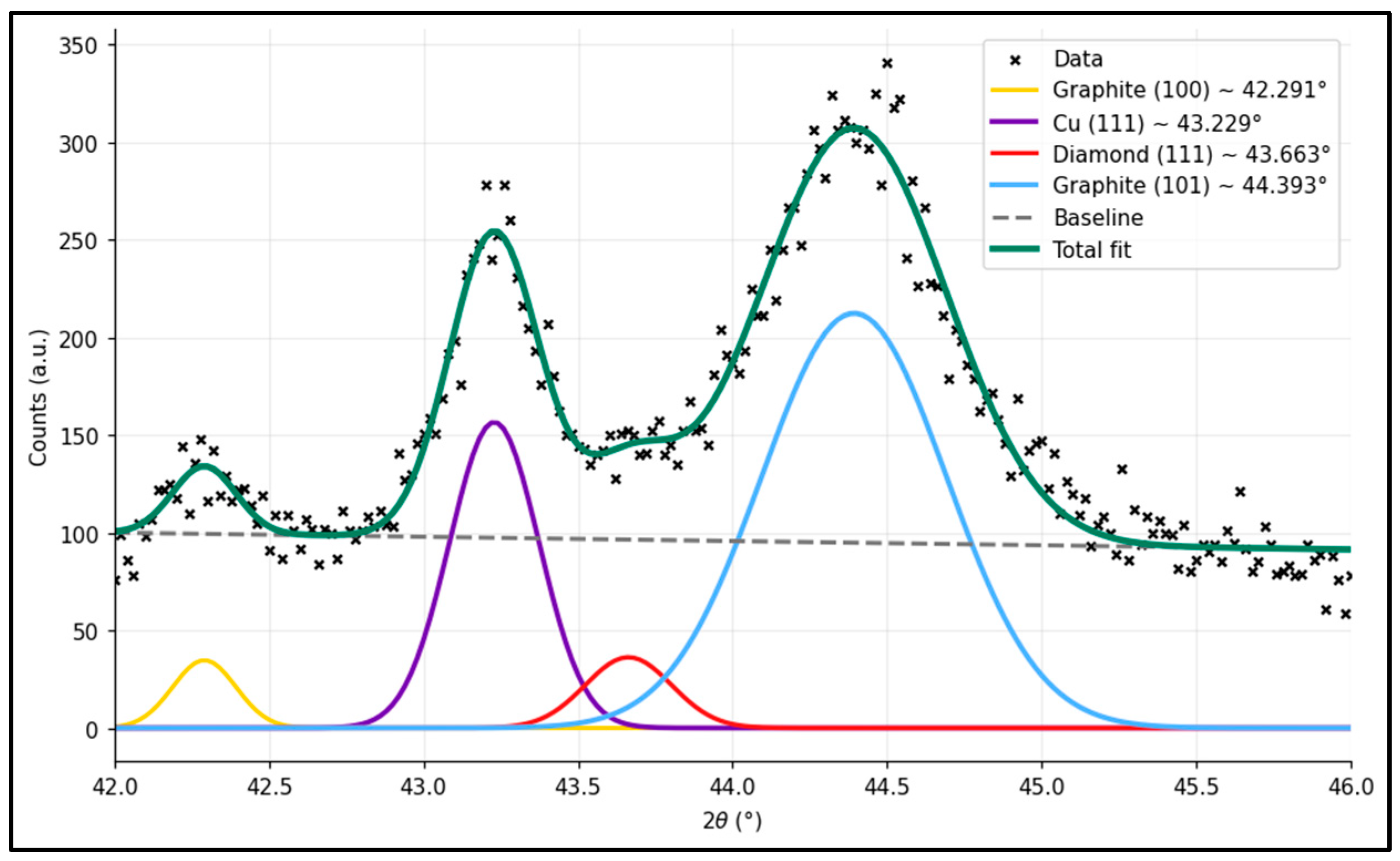
Figure 4 shows the 42–46° spectra of the XRD pattern. In the 42–46° window, the reflections near 42.3° and 44.4° correspond to the graphite (100) and (101) planes, consistent with Boehm [
25]. The strong peak at ~43.3° arises from the Cu (111) substrate as described by Cullity and Stock [
26]. The shoulder at ~43.7–43.9° matches the diamond (111) reflection reported for UNCD films [
27], and the additional broadening observed in the N-UNCD samples is in line with the nitrogen incorporation effects described by Sumant et al. [
28]. Its presence—once the overlapping contributions are separated—confirms that a diamond phase (consistent with UNCD and N-UNCD) is present on top of the NG/Cu stack.
Peak deconvolution was performed using Gaussian line shapes, and the fitted parameters are summarized in
Table 3.
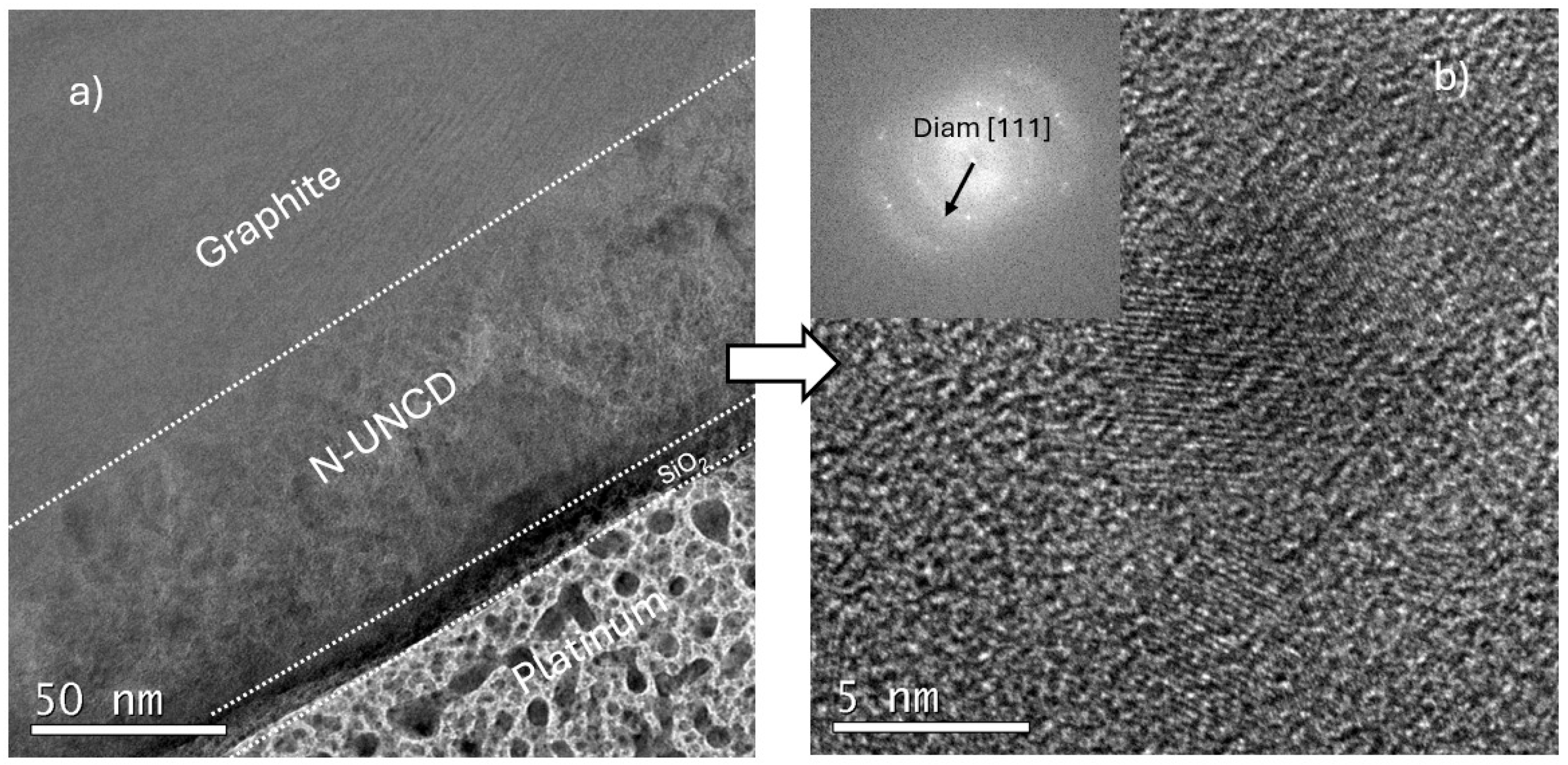
Figure 5a shows a cross-sectional HRTEM image of the multilayer structure of the N-UNCD/NG/Cu anode. As can be observed the N-UNCD coating forms a continuous, uniform film on a graphite grain, with a clearly defined and conformal interface. The micrograph of the film exhibits bright and dark regions, presumably indicating N-UNCD grains and their interphases. The platinum layer was deposited during FIB sample preparation to protect the underlying structure from ion beam damage. The intermediate SiO
2 layer visible beneath the coating is an artifact of the protective lamella preparation and does not belong to the original electrode stack.
Figure 5b shows a high-resolution image of the N-UNCD region revealing the nanocrystalline diamond lattice fringes with interplanar spacing consistent with the (111) planes of diamond. The inset is a selected-area fast Fourier transform (FFT) pattern, exhibiting a ring with a diameter that corresponds to the diamond {111} lattice. X-ray photoelectron spectroscopy (XPS) was conducted to determine the chemical bonding states and elemental composition of the UNCD and N-UNCD coatings, providing insight into the degree of nitrogen incorporation, surface termination, and the relative fractions of sp
2 and sp
3 carbon bonds. While techniques such as XRD and Raman spectroscopy confirm the crystalline phase and bonding structure at the bulk and grain-scale levels, XPS uniquely probes the surface and near-surface chemistry (≈5–10 nm depth)—the region that directly interacts with the electrolyte during battery operation. The XPS depth profile analysis was performed on a N-UNCD-coated NG/Cu anode that had been cycled for 20 charge–discharge cycles under standard conditions. Prior to introduction into the analysis chamber, the anode was exposed to ambient air for approximately 10 min, which likely led to partial surface oxidation and adsorption of adventitious carbon species. This short exposure was unavoidable due to sample transfer constraints but is relevant for interpreting the surface oxygen- and carbon-containing components detected in the initial spectra.
Nitrogen was not analyzed in this series despite the N-UNCD nature of the coating. The decision was intentional, as the N 1s signal is expected to be very weak due to both its low atomic concentration in the film and the low relative sensitivity factor (RSF) for nitrogen in XPS measurements. Acquiring statistically meaningful N 1s data would have required prohibitively long acquisition times and increased beam exposure, potentially leading to charging or sputtering artifacts. Therefore, the focus was placed on the major electrochemically relevant elements (C, O, F, P, and Li) that dominate the surface chemistry and SEI evolution.
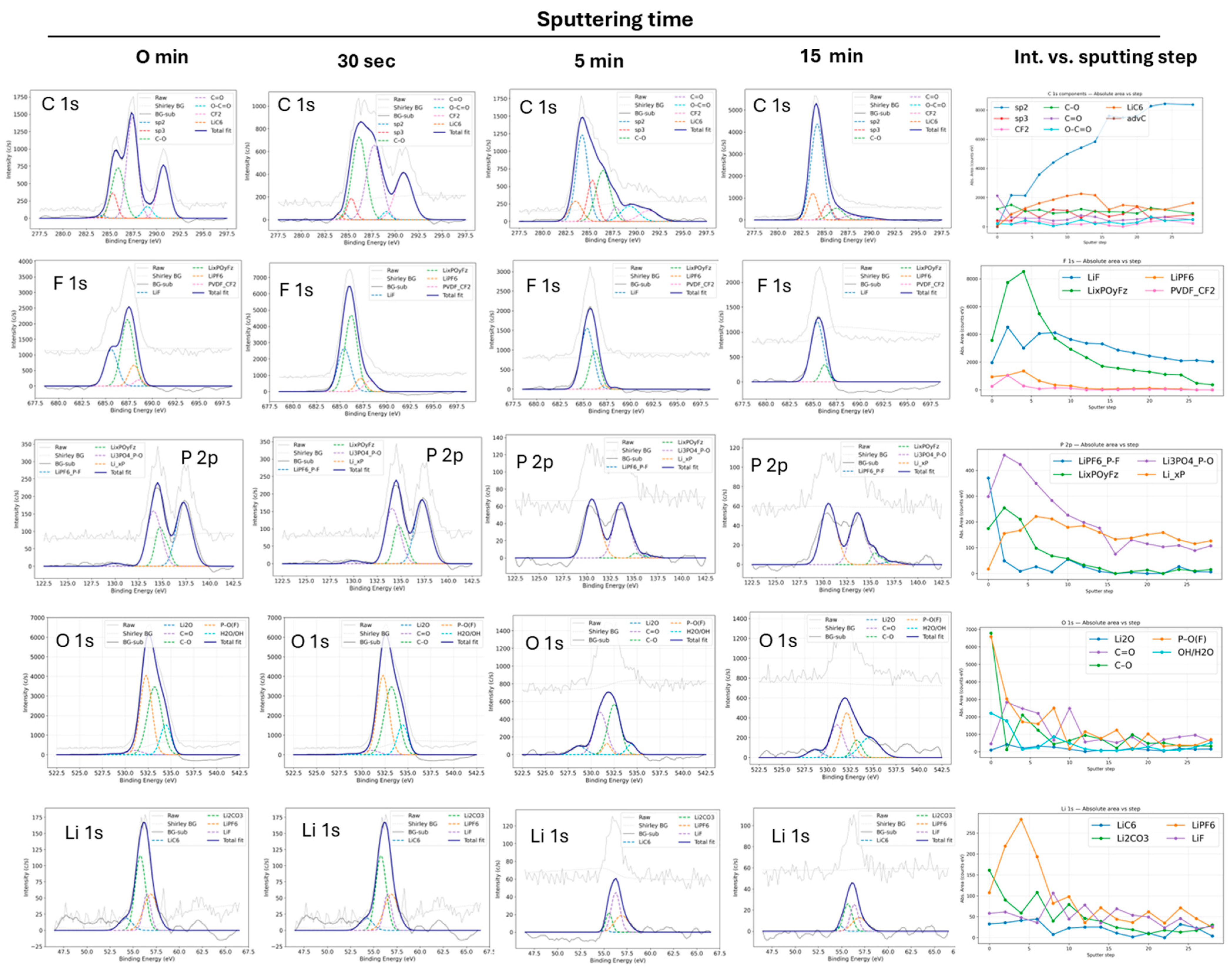
The depth-resolved XPS analysis, as it can be seen in
Figure 6, reveals a clear transition from a surface dominated by organic and polymeric species to a progressively more inorganic and graphitic bulk, consistent with the expected evolution of the solid–electrolyte interphase (SEI) on graphitic electrodes cycled in LiPF
6-based electrolytes and coated with UNCD.
At the surface (0–30 s sputtering), the spectra are dominated by C 1s sp3, C–O, and O–C=O components, accompanied by strong F 1s peaks corresponding to PVDF (–CF2–) and LiPF6. The P 2p region shows LiPF6 and partially hydrolyzed LixPOyFz, while O 1s exhibits broad signals attributed to carbonates and alkoxides. This topmost layer thus corrsponds to the polymeric and organic SEI phase.
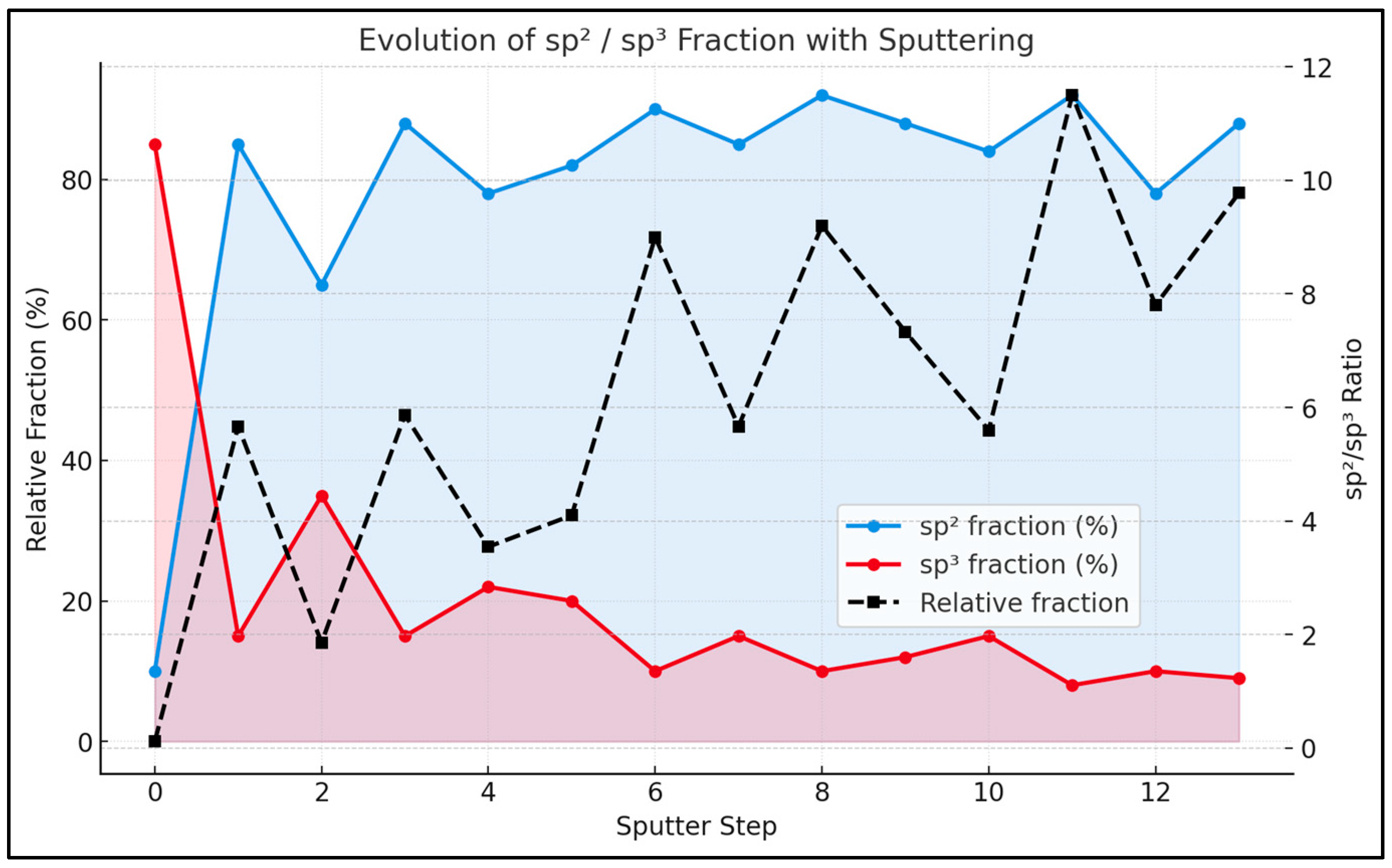
After 5 min of sputtering, the C 1s spectra show a rapid increase in the sp
2 fraction, while sp
3 and oxygenated species decline, indicating the partial removal of the UNCD-derived interfacial carbon and SEI matrix. This is clearly indicated in
Figure 7.
To strengthen the interpretation of the depth-dependent chemical evolution,
Table 4 reports the atomic percentages of C, O, Li, F and P at seven sputtering times (0 s, 30 s, 5 min, 10 min, 20 min, 30 min and 40 min). At the surface (0 s), the electrode is dominated by oxygen-rich organic SEI species (36.5 at.% O). After 30 s of sputtering, the composition shifts toward an inorganic SEI enriched in Li and F (27.8 and 19.2 at.%, respectively), consistent with the formation of LiF and LixPOyFz.
Between 5 and 10 min of sputtering, the surface becomes carbon-dominated (59–64 at.% C), reflecting the progressive removal of the SEI and partial exposure of the coating and underlying graphite. At 20–30 min, carbon further increases to 75–78.5 at.% with O and F below 7 at.%, indicating near-complete removal of SEI species. At 40 min, carbon reaches 86.3 at.% with minimal contributions of O, F and P (<4 at.%), confirming full exposure of the graphite bulk and the disappearance of SEI and coating remnants.
This quantitative depth profile aligns with the evolution observed in the C 1s spectra. Simultaneously, F 1s becomes dominated by LiF (~685 eV), and P 2p reveals the formation of Li
3PO
4 (~134 eV) and the disappearance of fluorinated species, while the O 1s and Li 1s spectra confirm the transition from carbonates and LiPF
6 to Li
2O, Li
3PO
4 and residual LiF—signatures of the inorganic SEI [
29]. At longer sputtering times (≥10–14 min), the C 1s signal is governed by sp
2 carbon (~284.5 eV), indicating exposure of the underlying graphite, whereas Li 1s becomes dominated by LiC
6 (~54.7 eV), confirming that both the SEI and the coating have been removed and that the intercalated graphite bulk is reached.
The overall chemical sequence LiPF
6 → LixPOyFz → LiF/Li
3PO
4 → LiC
6, coupled with the structural transition sp
3 → sp
2, is consistent with the transformation from a UNCD-protected, SEI-rich interface toward the electrochemically active graphite phase [
10,
11,
30]. The persistence of LiF and phosphate residues indicates the stability of the inorganic SEI components formed upon electrolyte decomposition and coating interaction.
3.2. LIB Charge/Discharge Tests
To better understand the early interfacial behavior,
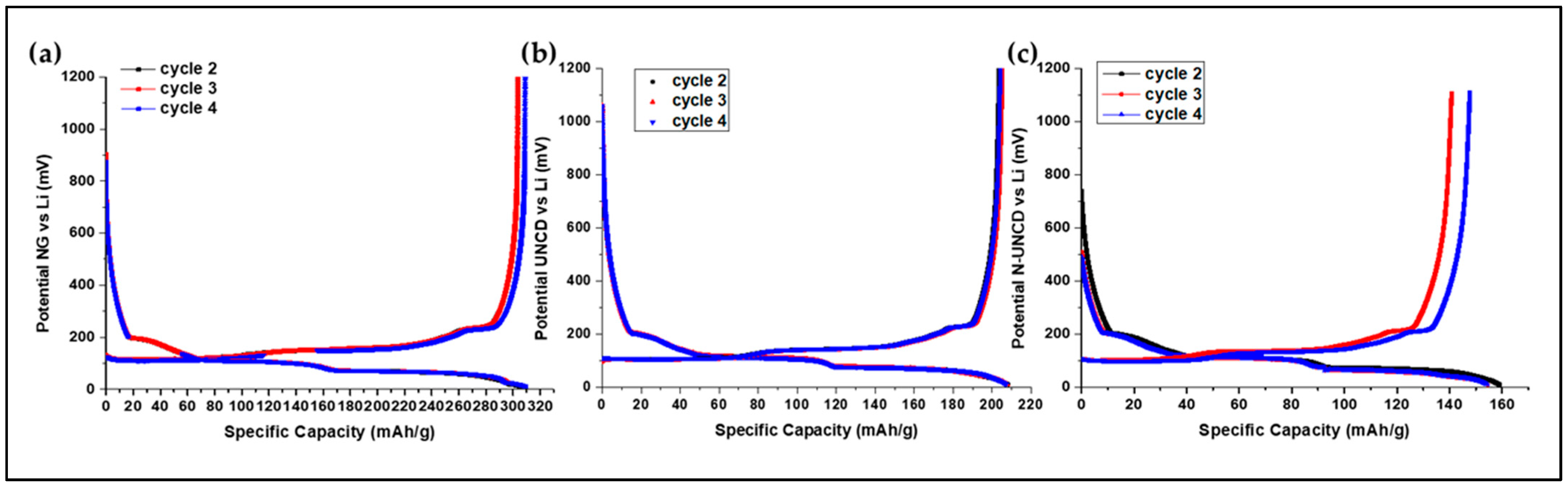
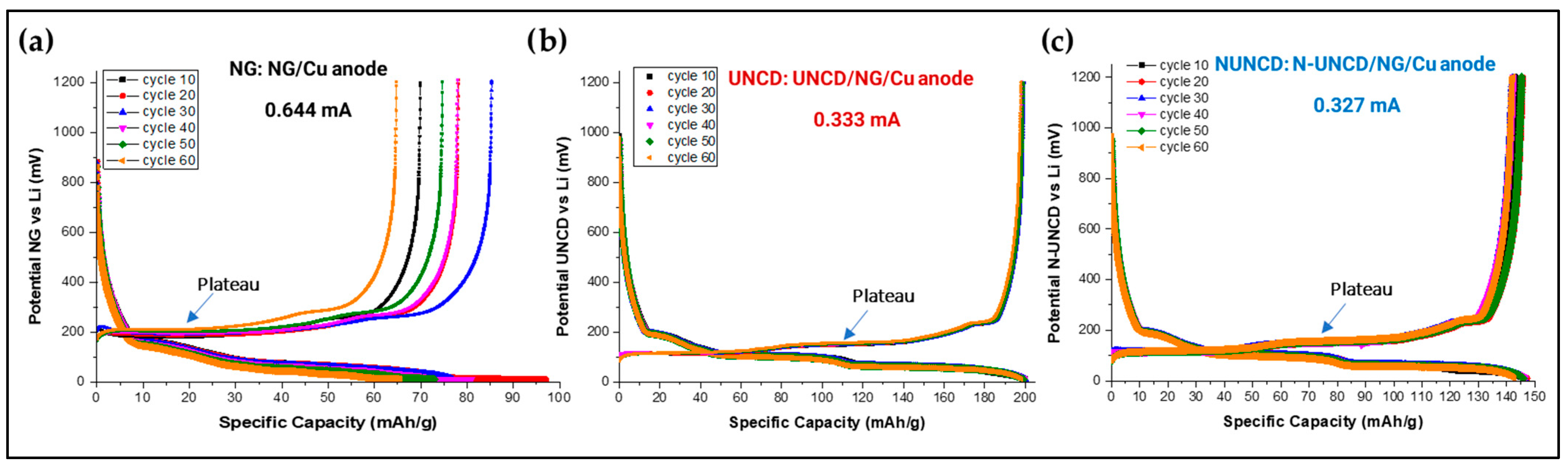
Figure 8 shows the charge– discharge voltage profiles recorded between cycles 2 and 4 for the reference (NG/Cu), UNCD/NG/Cu, and N-UNCD/NG/Cu anodes in the half-cells LIBs. All three configurations exhibit the characteristic potential plateaus near 0.1 V and 0.2 V associated with the LiC
12 → LiC
6 phase transition, confirming the typical lithium intercalation mechanism within graphite.
The UNCD and N-UNCD-coated anodes display smoother voltage profiles and reduced hysteresis compared with the uncoated NG/Cureference, indicating a more stable anode–electrolyte interface during the early formation of the SEI layer. Notably, the potential curves of the coated samples show negligible deviation in plateau potential, which demonstrates that the UNCD and N-UNCD layers do not contribute to lithium storage but instead function as chemically inert and electrically conductive interfacial barriers that mitigate parasitic reactions during the initial charge/discharge cycles.
These observations are consistent with the results shown in
Figure 9, where the same UNCD and N-UNCD-coated anodes maintain enhanced stability and capacity retention after extended charge/discharge cycling. Overall, the early-cycle analysis confirms that UNCD and N-UNCD coatings promote a uniform SEI formation process, providing mechanical and electrochemical stabilization from the onset of charge/discharge cycling.
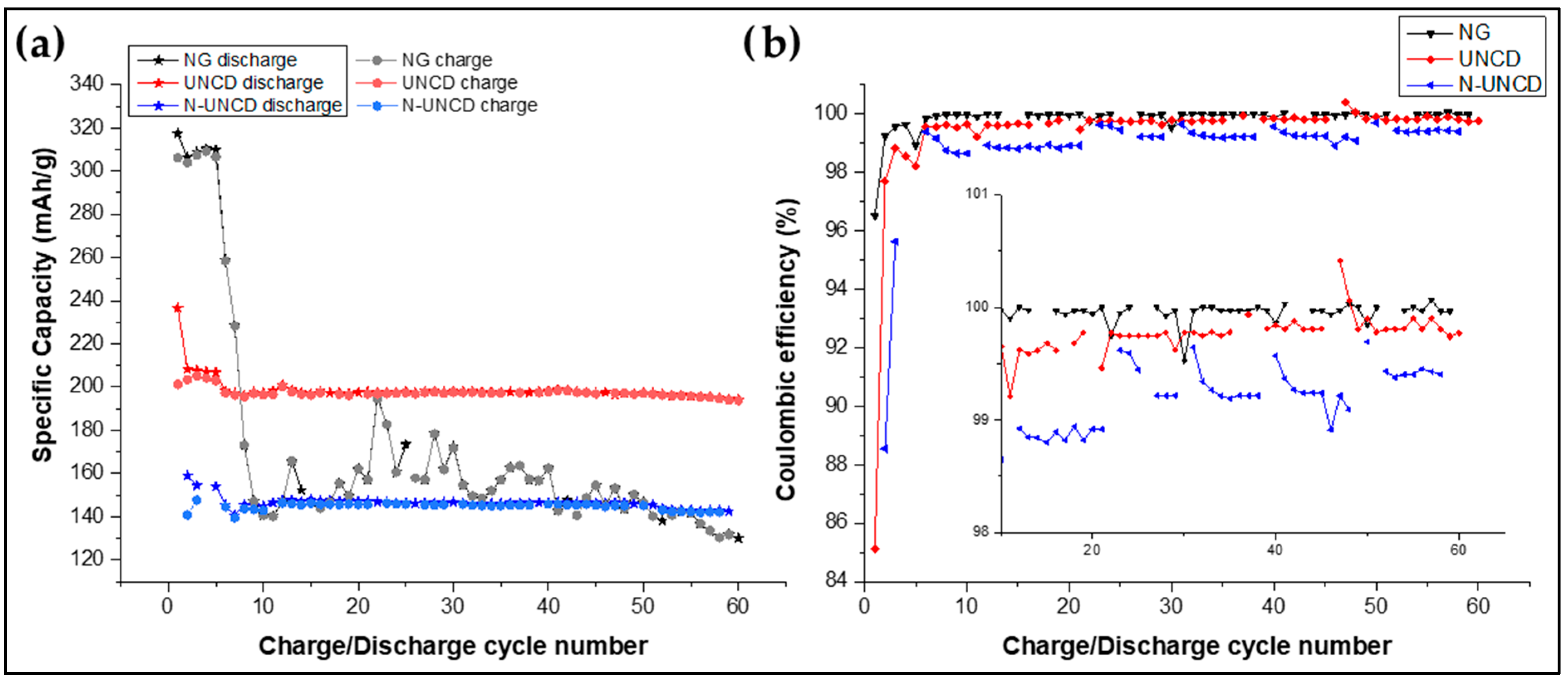
Figure 9 presents the charge (delithiation) and discharge (lithiation) capacity evolution of the half-cells LIBs with NG/Cu (Reference) anode, UNCD-coated NG/Cu, and N-UNCD-coated NG/Cu anode, from charge/discharge cycle 10 to 60, using a C/10 current. The deposition of a UNCD and N-UNCD layers on natural graphite reduces the amount of active material in the anode, as reported by Villarreal et al. [
14].
For the LIB with NG/Cu anode the discharge capacity shown in
Figure 9a, increases progressively from cycle 10 (black) to cycle 20 (red) and cycle 30 (blue), followed by a slight decrease at cycle 40 (magenta). This behavior suggests that capacity degradation does not occur during early-stage cycling, indicating that SEI instability is not the dominant degradation mechanism at this stage. Instead, the variations observed may arise from inhomogeneous slurry dispersion or partial loss of electrical contact with the current collector—both potential effects of manual anode preparation. Despite these artifacts, the NG.Cu anode provides a valid baseline to assess the stabilizing influence of the UNCD and N-UNCD coatings on NG/Cu anodes, as shown in
Figure 9b,c.
It is important to note that the reduced reversible capacity observed for LIBs with the UNCD- and N-UNCD-coated NG/Cu anodes does not originate from the mass of the UNCD or N-UNCD films, which represents <0.5 wt% of the total anode. Instead, the capacity decrease is consistent with transport limitations imposed by the UNCD and N-UNCD layers, which act as a dense, sp
3-rich interfacial barrier that partially restricts Li
+ diffusion and increases interfacial resistance. Similar effects have been reported in Si-based anodes, where surface coatings or rigid interfacial layers lead to apparent capacity losses not due to active-material weight but due to impeded ionic transport or constrained volume changes [
31,
32]. In those studies, coatings altered the interfacial transport kinetics and mechanical freedom of the anode, affecting the accessible capacity while simultaneously improving structural stability. Likewise, the objective of the present research was not to maximize specific capacity but to investigate the interfacial stability, SEI evolution, and impedance behavior induced by the ultrathin UNCD and N-UNCD coatings.
In contrast, the UNCD- and N-UNCD-coated NG/Cu anodes demonstrate superior capacity retention and more stable charge–discharge profiles over prolonged cycling. This improvement indicates that the UNCD and N-UNCD coatings contribute to surface stabilization, mitigating interfacial degradation and suppressing uncontrolled SEI growth.
Figure 10a shows the specific capacity as a function of the number of charge/discharge cycles during the first five cycles, involving formation of the SEI layer, enabling stabilization of the anode.
After cycle 5, the charge current was calculated based on the full-charge capacity within one hour (C-rate), and, for the remainder of the cycling process, the current was maintained at C/10 to ensure cycling under controlled conditions.
The half-cells LIBs with UNCD and N-UNCD-coated NG/Cu anodes demonstrate greater capacity retention and stability compared to the LIBs with NG/Cu anode. The LIB with UNCD/NG/Cu anode and Li cathode exhibits the highest specific capacity, averaging around 195 mAh/g. The LIB with N-UNCD/NG/Cu anode and Li cathode follows with a capacity of approximately 145 mAh/g. In contrast, the LIB with NG/Cu anode and Li cathode exhibits a sharp capacity drop at cycle 5, followed by fluctuations between 140 mAh/g and 195 mAh/g after cycle 10, indicating instability in capacity retention.
Figure 10b displays the Coulombic efficiency of the LIB cells. While all three LIB cells exhibit efficiency values ranging between 98.5% and 100%, the LIB half-cell with N-UNCD-coated NG/Cu anode shows a cyclic dependency in its efficiency. This behavior is attributed to the testing protocol, where the cells were periodically removed for electrochemical impedance spectroscopy (EIS) measurements every 10 cycles. Interestingly, this cyclic variation is not observed in the LIB half-cells with NG/Cu or UNCD-coated NG/Cu anodes, suggesting that the presence of nitrogen in N-UNCD may be influencing this behavior.
The Coulombic efficiency (CE) of the UNCD- and N-UNCD-coated NG/Cu anodes remains comparable to that of bare NG/Cu anodes throughout charge/discharge cycling, indicating that the UNCD and N-UNCD films do not introduce parasitic reactions with Li+. The voltage profiles of the coated anodes exhibit only the characteristic lithiation/delithiation plateaus of graphite, with no additional redox features. These observations confirm that the UNCD and N-UNCD layers are electrochemically inert within the operating potential window and primarily act as mechanically and chemically stabilizing interfacial barriers rather than participating in Faradaic processes.
While this study provides clear comparative evidence of stabilization effects introduced by the UNCD and N-UNCD coatings, we acknowledge that the analysis is based on single representative half-cells per configuration. The absence of replicate cells prevents formal statistical treatment of variance. Future work will incorporate full statistical replicates to quantify variability and confidence intervals.
3.4. Distribution Relaxation Time (DRT) Measurements
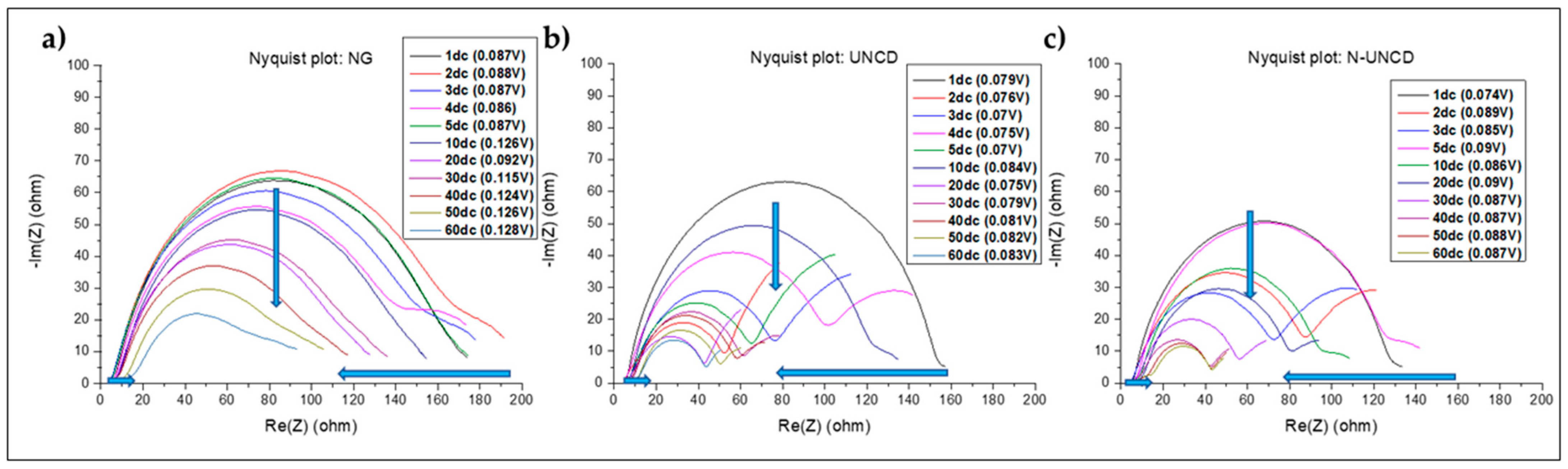
This technique utilizes electrochemical impedance spectroscopy (EIS) as input and calculates the probability of a dominant process occurring at a specific frequency. This approach helps to better understand the contributions of each anode and the electrolyte, particularly in relation to the Nyquist plot arcs in an EIS spectrum [
1,
33,
34].
The impedance data measured in the frequency domain are deconvoluted to fit the following equation:
where
is the Ohmic resistance,
is the relaxation time distribution function,
is the imaginary unit,
is the frequency, and
is the time constant. The relationship between
and
is given by the following:
Impedance data are typically acquired on a logarithmic scale, leading to the following expression [
18,
35]:
where
, making
an alternative representation of the relaxation time distribution function.
Once
has been determined, the distribution function can be used to interpret various phenomena associated with the inherent electrochemical processes in lithium-ion cells, including the number of processes involved and their variations over time [
36].
The peak-based representation of
enables the differentiation of distinct processes occurring at various time constant values (
) [
37]. Consequently, the area under each specific peak corresponds to the impedance contribution of the underlying process [
36], determined by integrating within a specific time constant range [τ
initial, τ
final] as shown in Equation (4).
The DRT peak contributions are critical for identifying the primary electrochemical processes and degradation mechanisms occurring within the cells [
13]. Additionally, DRT profiles provide valuable insights into anode behavior and their impact on overall cell performance.
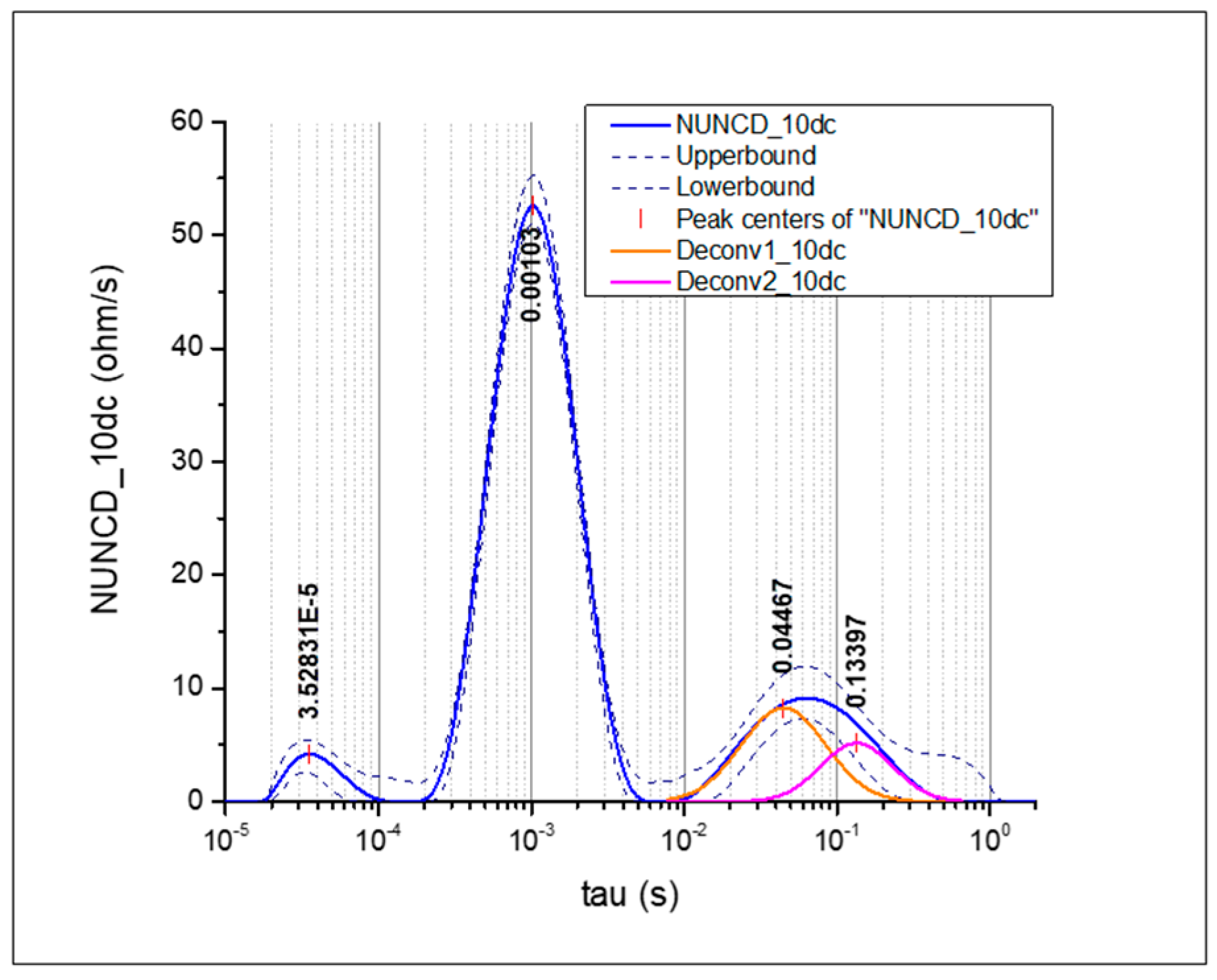
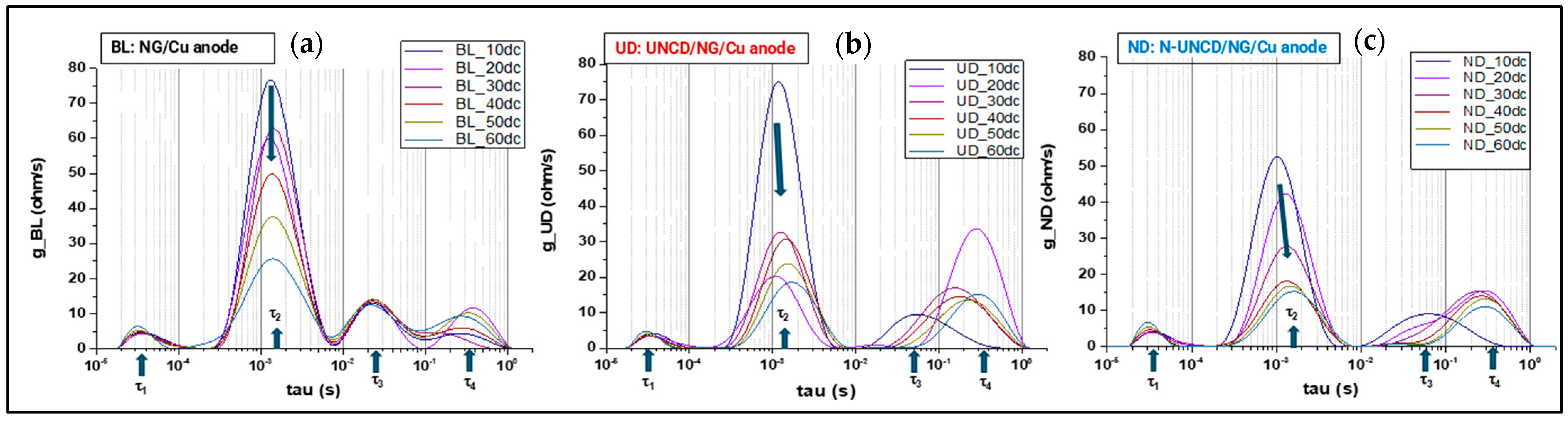
The DRT spectra for all three half-cell configurations,
Figure 12, —NG, UNCD, and N-UNCD—show four main relaxation regions, corresponding to the characteristic time constants
τ1 through
τ4. These peaks represent, respectively, electronic transport (τ
1), ionic transport in the electrolyte (τ
2), SEI-related processes (τ
3), and lithium intercalation into graphite (τ
4). While the overall spectral structure remains consistent across samples, the evolution of peak amplitude and position throughout the 10–60 charge/discharge cycle range reveals distinct stability trends associated with each anode configuration.
For the reference NG/Cu, the DRT profiles evolve noticeably with cycling: the
τ3 peak broadens and shifts toward longer relaxation times, while the
τ4 peak becomes less defined after 40 cycles. This behavior reflects the progressive increase in interfacial resistance and the degradation of the anode–electrolyte interface, consistent with SEI thickening and non-uniform charge transport during extended operation [
10,
38,
39].
In contrast, the UNCD-coated NG/Cu exhibits narrower and more stable peaks throughout all measured charge/discharge cycles. The τ3 contribution remains constant in position and intensity, indicating that the UNCD coating effectively suppresses SEI growth and preserves interfacial uniformity. The τ4 peak also remains stable, suggesting sustained lithium intercalation kinetics and a uniform charge-transfer environment. These results support the notion that the UNCD layer acts as a chemically inert and mechanically robust barrier that enhances electrochemical stability.
The N-UNCD-coated NG/Cu anode shows an intermediate behavior. During the initial cycles, the
τ3 peak appears at slightly longer relaxation times with higher intensity, implying greater interfacial resistance likely associated with nitrogen-induced structural disorder. However, from cycle 20 onward, both the
τ3 and
τ4 peaks gradually converge toward the stable profiles observed for the LIB with UNCD-coated NG/Cu anode. This behavior indicates that the N-UNCD coating undergoes electrochemical self-stabilization, where initial heterogeneities reorganize into a more conductive and stable interface [
15,
22].
Although the coated anodes exhibit no additional peaks, the partial overlap between τ3 and τ4 required Gaussian deconvolution to resolve their individual contributions accurately, as described by Equation (4). This analysis confirmed that the UNCD and N-UNCD coatings significantly reduce the SEI-related resistance component (τ3) while maintaining similar lithium intercalation characteristics (τ4) to those of the uncoated NG/Cu anodes.
Overall, the DRT results presented in
Figure 12 confirm that the diamond coatings preserve the fundamental electrochemical architecture of the system while improving interfacial stability. The consistent number of relaxation peaks and the reduced variation in
τ3 and
τ4 over time demonstrate that UNCD and N-UNCD coatings effectively suppress SEI growth, stabilize charge-transfer pathways, and maintain the characteristic relaxation behavior of the graphite–electrolyte system, thereby enhancing the long-term electrochemical performance of the anode.
3.6. Internal Resistance Modeling and Analysis
To interpret the plots, it is important to present a model based on the physical properties of the cell corroborated by the literature.
To facilitate the discussion by having a graphical support,
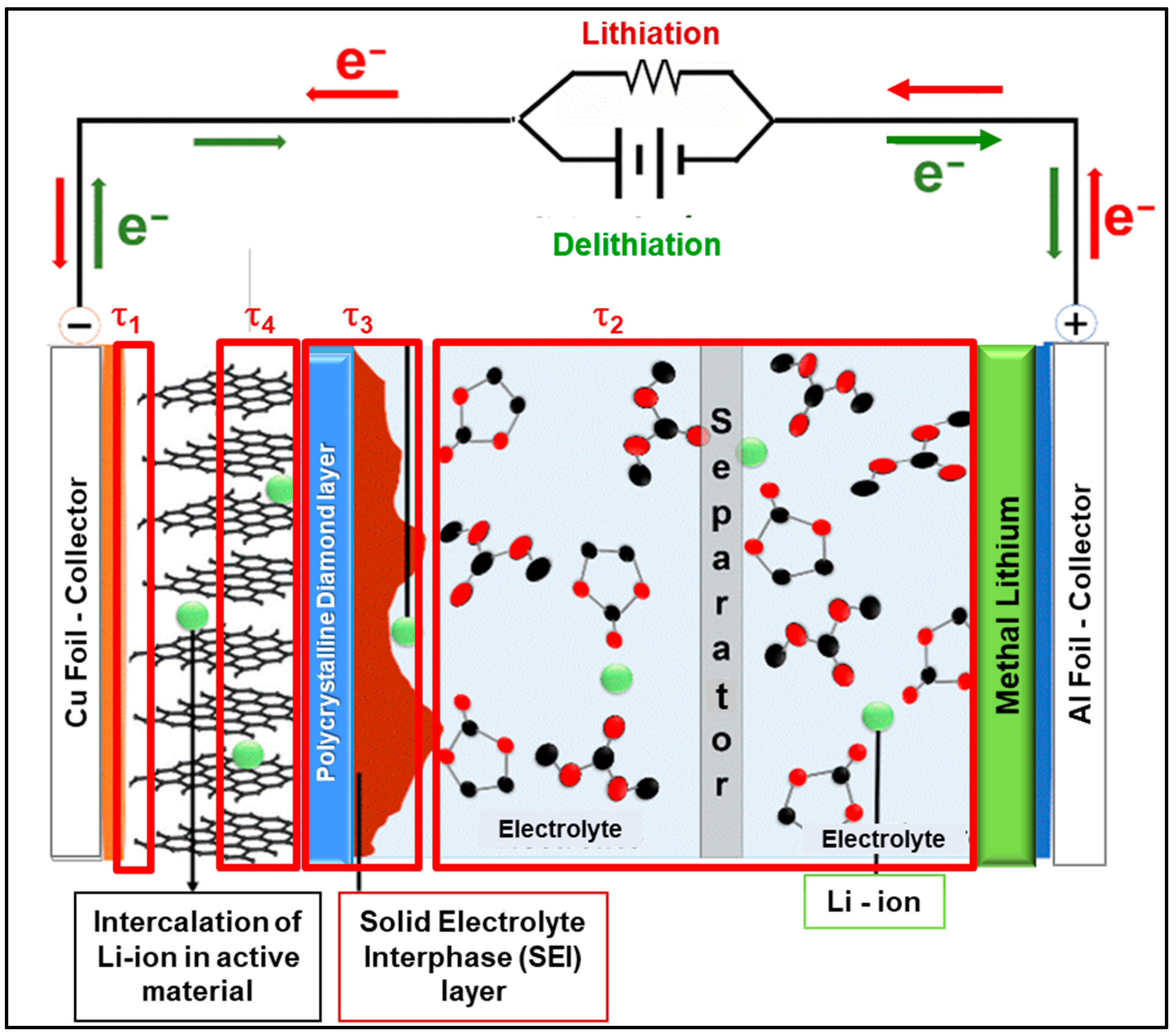
Figure 15 shows a generic representation of the half-cell used for this study. The first section (with time constant τ1) depicts the area for electronic transport, which occurs from the current collector (copper foil) passing through the anode paste (80% natural graphite, 10% Acetylene Black and 10% pdf binder). This section also has dielectric properties, causing a capacitive response. The second section (with time constant τ4) depicts the area of ionic intercalation of the Li+ in graphite. The third section (with time constant τ3) is the area of SEI formation, which combines with UNCD or N-UNCD. The fourth section (with time constant τ2) is the area of ionic transport of Li+ through the electrolyte, which has resistive and capacitive characteristics. It is assumed that Li+ comes from Li metal.
3.6.1. Tau 1—Electronic Transport in the Anode
The first relaxation time constant, τ
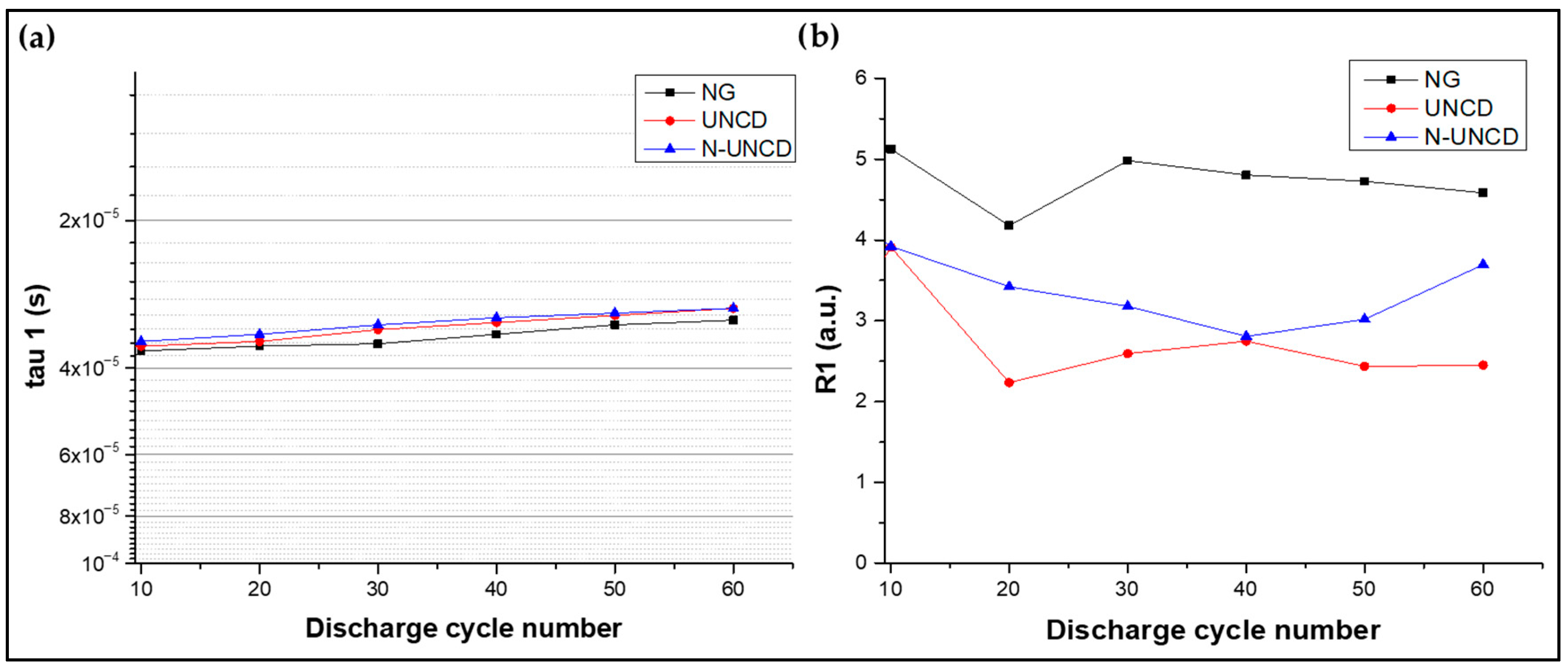
1, corresponds to electronic transport processes occurring at the anode and current collector interface. As shown in
Figure 16a, τ
1 remains nearly constant across cycles for all samples, with values around 4 × 10
−5 s. According to the literature [
13,
33,
40], this time scale is typically associated with electronic conduction through the copper current collector and the conductive carbon network within the anode.
Figure 16a shows the extracted characteristics time for tau 1 vs. discharge cycle for all the all the anodes.
As illustrated in
Figure 16a,b, all samples exhibit a similar trend with slight decrease in resistance with increasing discharge cycle numbers. N-UNCD exhibits a modest downward trend relative to NG and UNCD; however, in the absence of replicate cells and formal uncertainty analysis, we consider this difference suggestive rather than statistically significant.
3.6.2. Tau 2—Ionic Transport Through the Electrolyte
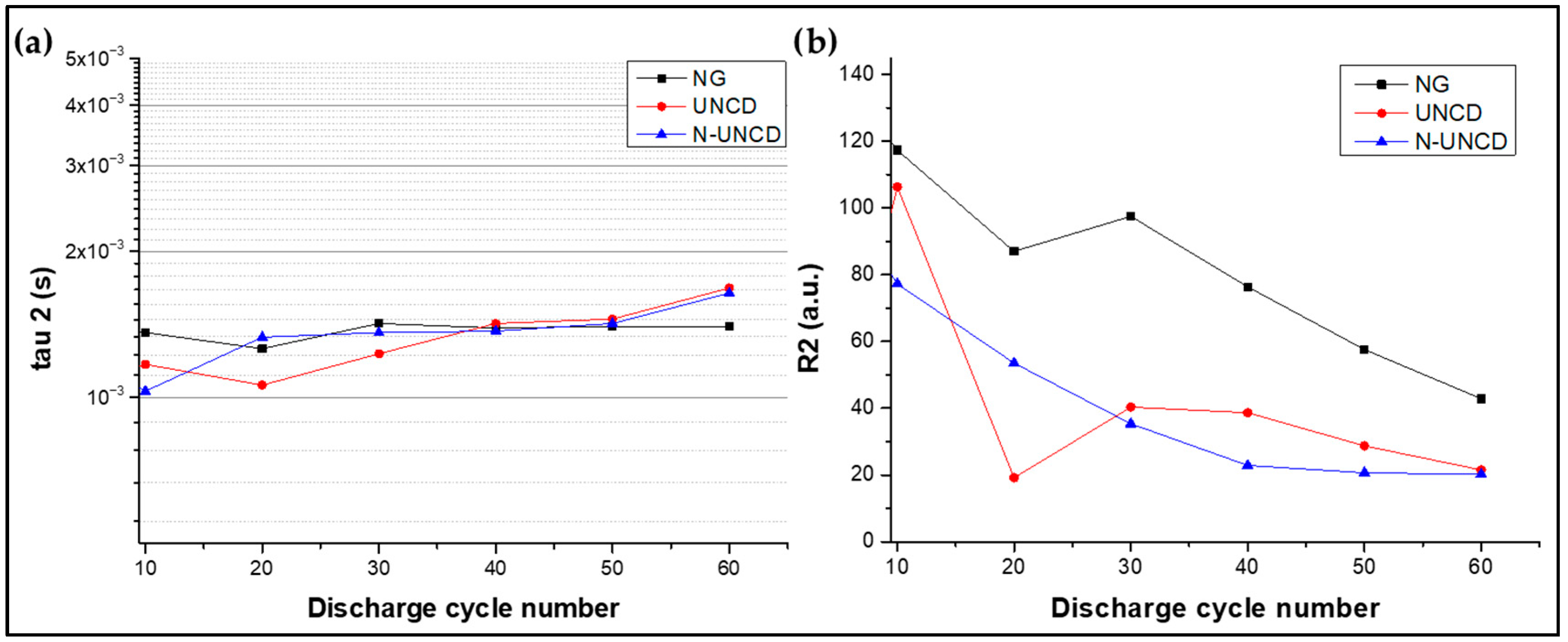
Figure 17a shows the charge-transfer resistance (Rₜ) values extracted from equivalent circuit fitting of the impedance spectra, while
Figure 17b presents the total resistance (R_DRT) obtained by integrating the Distribution of Relaxation Times (DRT) related to tau 2.
The characteristic time constant τ
2 corresponds to the ionic transport within the electrolyte, particularly through the separator region connecting the graphite-based working anode and the metallic lithium counter electrode (cathode. This process governs the migration of Li
+ between both electrodes and typically manifests within the 10
−3–10
−2 s range in the DRT spectra, representing the intermediate frequency regime of the impedance response [
38,
39].
It is important to point out that this time constant does not arise from a double-layer capacitance at the electrode–electrolyte interface but instead originates from the bulk electrolyte. Within the electrochemical cell, two electrodes—the graphite anode and the lithium counter electrode (cathode)—define a confined ionic region filled by an electrolyte that possesses both a characteristic dielectric constant (ε) and a non-ohmic resistive response. Thus, the τ2 relaxation time reflects the dielectric relaxation and ion mobility phenomena occurring inside the electrolyte volume, rather than surface charge accumulation at the electrode interfaces.
This interpretation is consistent with previous studies reporting that the intermediate relaxation regime in lithium-ion systems primarily arises from bulk electrolyte polarization and displacement processes, rather than purely interfacial double-layer effects [
13,
39,
41]. Accordingly, τ
2 captures the collective response of Li
+ oscillating under the alternating electric field applied during electrochemical impedance measurements, a behavior governed by the intrinsic ionic conductivity, viscosity, and dielectric properties of the electrolyte medium.
Throughout the cycling sequence (10–60 cycles), τ2 exhibited a gradual decrease in both magnitude and integrated resistance (Rᵢ), indicating a possible change in the effective ionic conduction pathway. Such variations may be attributed to morphological modifications or the onset of dendritic growth at the lithium counter electrode, which effectively shortens the ionic path length or locally alters the electric field distribution within the cell. Since this trend was consistently observed across all three configurations—reference (NG), UNCD-coated NG/Cu, and N-UNCD-coated NG/Cu—it can be concluded that the τ2 process is primarily dictated by the electrolyte’s inherent physical properties, remaining largely unaffected by surface modifications on the graphite layer introduced by the UNCD and N-UNCD coatings.
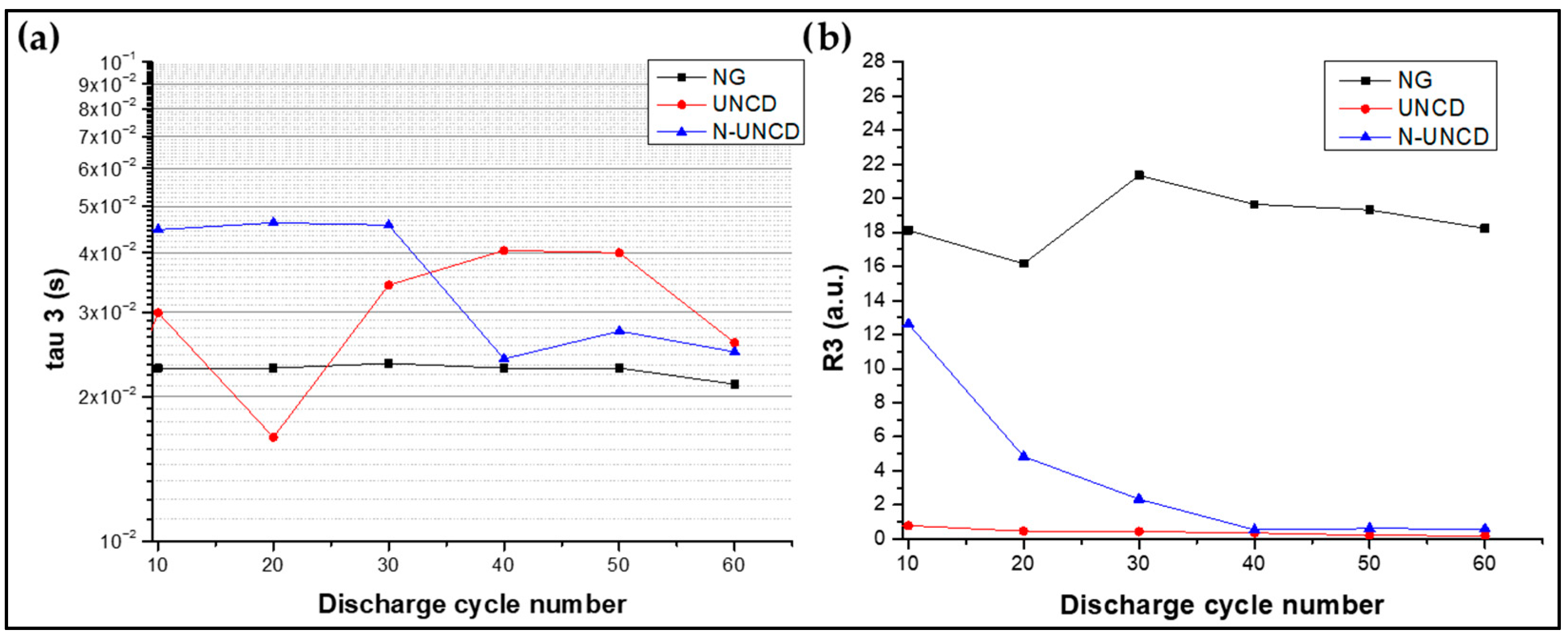
3.6.3. Tau 3—Electrical Properties of the Solid Electrolyte Interphase (SEI)
Figure 18a shows the charge-transfer resistance (Rₜ) values extracted from equivalent circuit fitting of the impedance spectra, while
Figure 18b shows the total resistance (R_DRT) obtained by integrating the Distribution of Relaxation Times (DRT) related to τ
3.
The time constant τ
3 is directly associated with the electrical properties of the Solid Electrolyte Interphase (SEI), a nanometric layer that forms at the anode–electrolyte interface during the initial charge–discharge cycles of a lithium-ion cell. The SEI plays a dual role: it stabilizes the anode surface by preventing continuous electrolyte decomposition, yet it also consumes active lithium and electrolyte, contributing to irreversible capacity loss. In the analyzed cells, τ
3 consistently appeared within the 10
−2–10
−1 s range, corresponding to characteristic SEI formation and evolution processes [
13,
21,
39].
Notably, the τ
3 peak intensity and its integrated resistance (R
i) were significantly reduced for both UNCD- and N-UNCD-coated NG/Cu anodes in the LIB half-cells compared to the reference NG/Cu anode, indicating that the presence of the UNCD and N-UNCD coatings modifies the interfacial dynamics of SEI formation. This trend suggests that the coatings suppress or stabilize SEI growth, potentially by creating a more uniform and chemically inert interface. Such behavior is consistent with the literature reports where nanostructured or carbon-based protective layers effectively reduce interfacial impedance and improve long-term cycle stability [
13,
21].
Importantly, the τ3 trends for the UNCD and N-UNCD coated anodes diverge from those of the NG/Cu anode performance, reflecting a distinct interfacial response. These results confirm that the UNCD and N-UNCD coatings do not act as active lithium storage media—the lithium intercalation process occurs exclusively within the NG component. Instead, the UNCD and N-UNCD coatings primarily enhance electrical contact stability and improve the mechanical integrity of the anode–collector interface, minimizing degradation under repeated charge/discharge cycling.
This interpretation is supported by the voltage versus specific capacity profiles shown in
Figure 8 and
Figure 9, where no additional plateaus are observed for the UNCD- or N-UNCD-coated anodes in half-cells LIBs. The absence of such features indicates that no secondary lithiation process is associated with the UNCD or N-UNCD layer, confirming that the observed electrochemical effects are purely interfacial rather than bulk storage phenomena. Furthermore, this conclusion is corroborated by the Distribution of Relaxation Times (DRT) analysis (
Figure 12), where it is evident that the addition of UNCD or N-UNCD layers does not result in an extra peak corresponding to an additional interface, thus confirming the absence of another electrochemical process beyond the intrinsic responses of the graphite–electrolyte system. The physical (capacitive and resistive) properties of the diamond coatings are in parallel with those of the SEI, as found out with the XPS analysis.
Additionally, while both UNCD and N-UN CD coated NG/Cu anodes exhibit lower τ
3-associated resistances than the uncoated NG/Cu anode, the N-UNCD coating, initially induces a higher τ
3 resistance, which progressively decreases with charge/discharge cycling. This behavior may result from nitrogen incorporation into the grain boundaries, introducing sp
2-rich conductive regions that initially interfere with uniform SEI formation but eventually stabilize as the interface reorganizes over successive cycles [
14,
21,
22]. The presence of the UNCD and N-UNCD coating does not mechanically hinder the electrochemical behavior of the NG/Cu anode. The NG layer experiences only marginal volume changes upon lithiation (≈8–10%), unlike Si-based materials that undergo changes in several hundred percent. Consequently, the ultrathin (~70 nm) UN CD and N-UNCD layers do not constrain the structural breathing of the graphite, and no signs of mechanical trapping, layer delamination or capacity fading associated with volumetric restriction were observed. Similar considerations have been reported by Sattari et al. and Quiroga et al. [
31,
32] for Si wires coated with rigid layers, where coatings can impede expansion and reduce capacity; however, this effect is absent in graphite due to its intrinsically low volumetric strain. The role of the UNCD and N-UNCD layers is therefore interfacial stabilization rather than mechanical confinement.
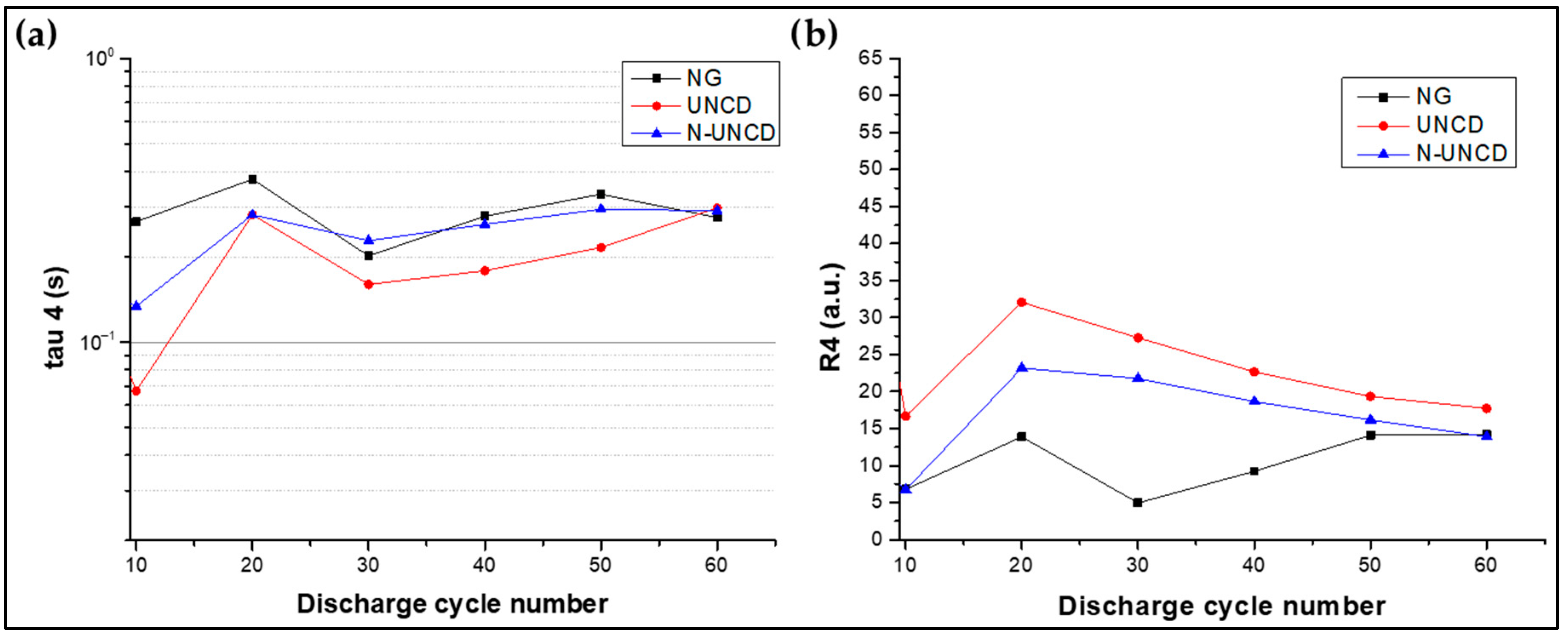
3.6.4. Tau 4—Lithium Intercalation into Graphite
Figure 19a shows the charge-transfer resistance (Rₜ) values extracted from equivalent circuit fitting of the impedance spectra, while
Figure 19b presents the total resistance (R_DRT) obtained by integrating the Distribution of Relaxation Times (DRT) related to τ
4. The time constant τ
4 corresponds to the charge-transfer and lithium intercalation process within the graphite structure, representing the slowest and most kinetically dominant step in the electrochemical response of the half-cell. This relaxation regime typically appears at low frequencies, within the 10
−1–10
0 s range, and occurs previous to the diffusion of Li
+ across the graphite galleries and the subsequent formation of staged graphite–lithium compounds (LiC
6–LiC
12) [
13,
39].
For the reference NG/Cu anode, the DRT spectra show a pronounced
τ4 peak whose magnitude increases progressively with charge/discharge cycling, accompanied by a shift toward longer relaxation times. This trend reflects a decrease in lithium diffusivity and an increase in charge-transfer resistance at the anode–electrolyte interface. Such behavior can be attributed to the thickening of the SEI and the gradual loss of electronic connectivity between graphite particles after multiple lithiation/delithiation cycles, as reported in similar systems [
21,
39].
In contrast, the UNCD-coated NG/Cu anode exhibits a significantly smaller τ4 peak and a stable relaxation time throughout all tested cycles. The constancy of this response indicates that the UNCD layer promotes efficient electron transport and uniform Li+ diffusion into the underlying graphite structure. The chemical inertness and high sp3-bonded density of the UNCD film likely reduce parasitic reactions at the surface, preventing localized polarization and thereby sustaining the electrode’s kinetic uniformity over prolonged operation.
The N-UNCD-coated NG/Cu anode initially presents a slightly higher
τ4 resistance compared to UNCD-coated NG/Cu anode, likely due to nitrogen-induced grain boundary disorder and localized variations in electronic conductivity. However, this behavior gradually stabilizes after approximately 20 cycles, as evidenced by the reduced
τ4 peak intensity and its convergence toward the UNCD profile. This evolution suggests a self-healing or stabilization process of the nitrogen-incorporated grain boundaries, where sp
2-enriched domains reorganize into continuous conductive pathways that facilitate charge transfer and Li
+ insertion [
15,
22].
When comparing all three anode configurations, it becomes evident that the UNCD and N-UNCD-coated NG/Cu anode exhibit slower degradation of τ
4 with cycling, demonstrating that both coatings preserve the electrochemical accessibility of the graphite domains. Moreover, the absence of any additional peaks in the DRT spectra (as shown in
Figure 12) reinforces that neither coating introduces new interfacial reactions or secondary storage mechanisms; instead, their effect is limited to improving the structural and electronic stability of the active electrode surface.
In summary, τ4 reflects the fundamental lithium intercalation kinetics within graphite, and its evolution across cycles serves as a sensitive indicator of anode stability. The reduced τ4 resistance and stable relaxation profile observed for the UNCD and N-UNCD-coated NG/Cu anodes confirm that the UNCD and N-UNCD coatings enhance charge-transfer uniformity, suppress degradation of diffusion pathways, and maintain the long-term electrochemical integrity of the graphite anode.
This behavior is consistent with the interfacial stability reported for UNCD coatings, which remain chemically inert, mechanically robust, and strongly adherent under repeated cycling, preventing SEI disruption and surface degradation [
12].
A limitation of this study is the use of single half-cells per experimental condition. Although fabrication of additional UNCD- and N-UNCD-coated cathodes was not feasible due to equipment constraints, the fabrication protocol has demonstrated high reproducibility in previous works from our group. Consequently, the conclusions emphasize comparative behavior rather than statistical dispersion. Future studies will expand this dataset to include replicates and error-quantified measurements.




 ,
,