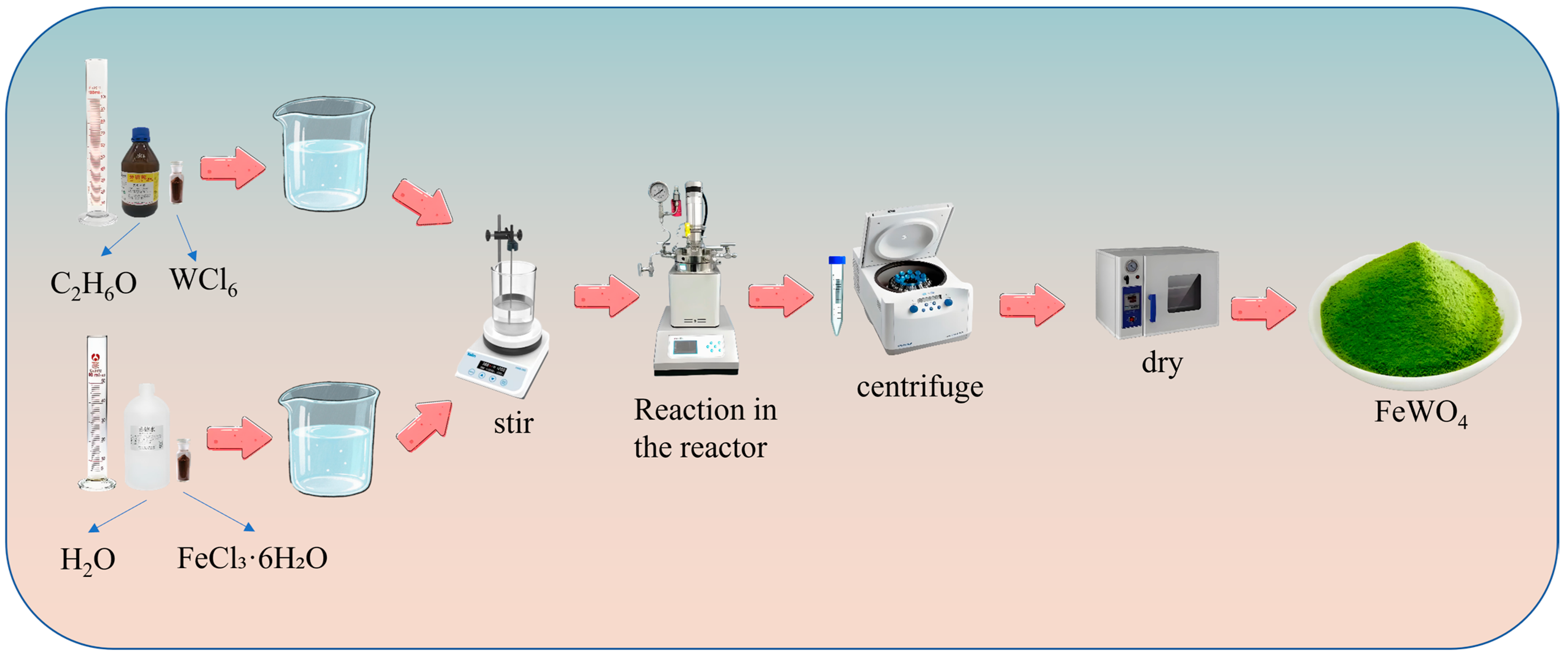
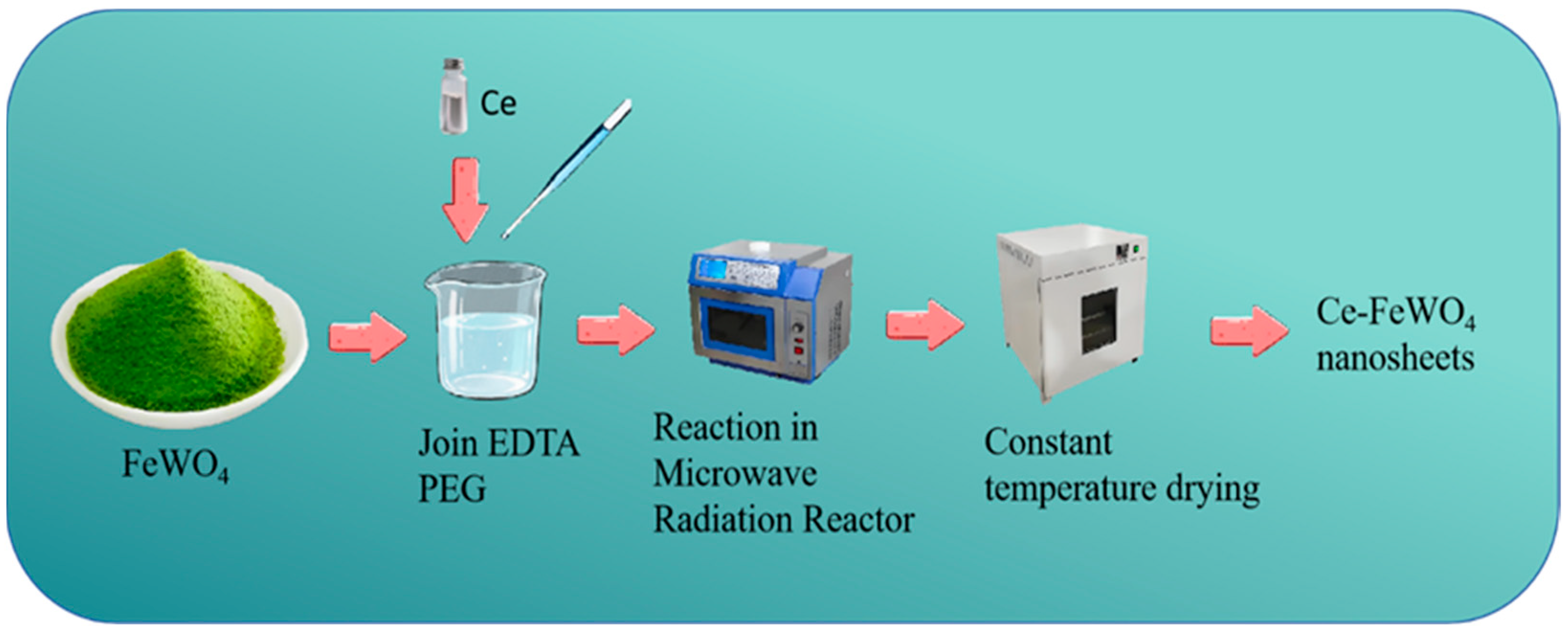
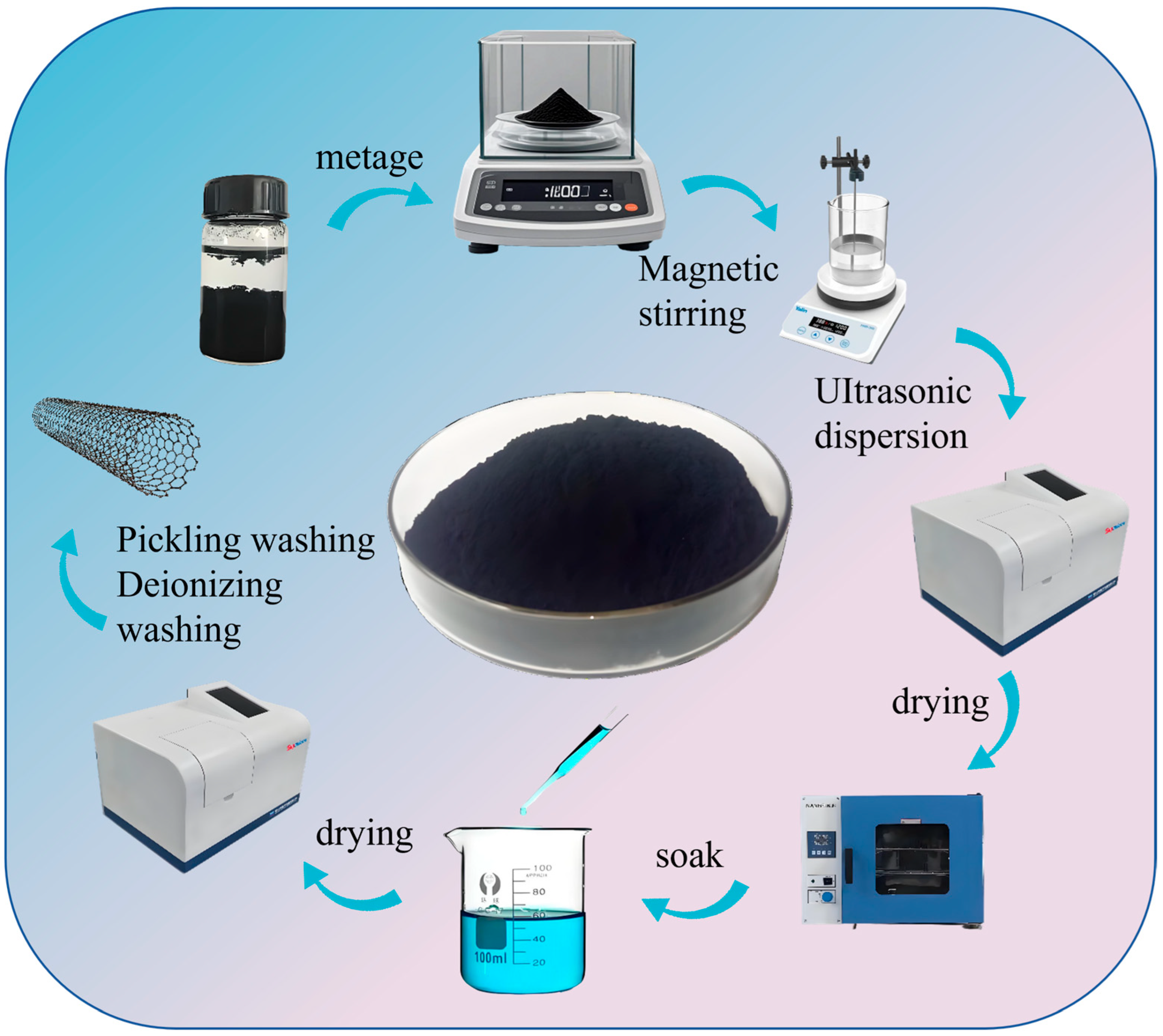
1. Introduction
Against the backdrop of rapid global economic development and a growing population, the consumption rate of fossil energy has accelerated significantly, which not only causes a severe energy shortage crisis but also triggers a series of intractable environmental issues such as climate change and environmental pollution; therefore, the development of green, environmentally friendly, and renewable clean energy has become extremely urgent [
1,
2]. Supercapacitors, with their unique advantages, including fast charge–discharge speed, wide operating temperature range, and reliable safety performance, play a crucial role in numerous fields, such as electronic devices, aerospace, and new energy vehicles; however, due to the low energy density of existing supercapacitors [
3], it is difficult for them to fully meet people’s ever-increasing daily needs. Thus, in-depth research and development of new electrode materials for asymmetric supercapacitors not only aligns with the trend of technological development but also holds high practical application value [
4,
5]. Based on charge storage mechanism, supercapacitors can be divided into two categories: pseudocapacitive and electric double-layer types. Among them, pseudocapacitive supercapacitors achieve charge storage through redox reactions on the surface of active materials; this unique mechanism not only improves energy density but also results in higher capacitance values, while the asymmetric structure further optimizes their energy storage performance [
6,
7]. The chemical properties and catalytic efficiency of materials are closely related to their microstructures; microstructures such as nanosheets, nanorods, nanoneedles, and nanotubes significantly expand the specific surface area of materials through their special geometric shapes [
8]. They not only provide more channels and contact space for ion migration, and enhance permeability, but also construct abundant surface-active sites, which can promote sufficient reactions between materials and ions, thereby shortening ion diffusion distance and improving the electrochemical performance and application potential of materials. The importance of electrode materials in supercapacitor technology is thus self-evident [
9,
10].
Previous studies have shown that Li Wenchao doped transition metal V into flower-like Fe
2(MoO
4)
3 and used it as an electrode for hybrid supercapacitors [
11]. At a current density of 1 A/g, it exhibited an ultra-high specific capacitance of 2157 F/g, with a capacitance retention rate of 98.2% after 10,000 cycles at 15 A/g. Zhang Hexin doped La into Fe
2(MoO
4)
3, constructing Fe
2+-O
2−-Fe
3+ electron transport channels and generating oxygen vacancies; the synergistic effect between Fe
2+/Fe
3+ cycles and oxygen vacancies enhanced the electrocatalytic performance [
12]. Gao Ya’s research on high-energy-density nickel-based tungstate supercapacitors showed that the specific surface area increased from 18 m
2/g to 162 m
2/g after Co doping, mainly achieved by doping-induced destruction of the tungstate structure [
13]. In contrast, our approach not only destroys the tungstate structure through doping but also introduces oxygen vacancies to further increase the specific surface area. To precisely optimize electrochemical performance, this study uses FeWO
4 as the matrix and constructs micro-flaky Ce-FeWO
4 materials with a disordered porous structure via rare earth Ce doping—this design can introduce abundant redox-active sites and excellent electrical conductivity, laying a foundation for high-performance energy storage Rare earth elements play a key enabling role in various fields due to their superior physicochemical properties: they provide performance support for electronic products, enhance the core properties of magnetic materials, accelerate catalytic reaction processes, and facilitate the optimization and upgrading of precision optical equipment.
Although the above studies have shown that dopant elements can significantly improve electrochemical performance by regulating lattice structure and electronic states, most of the research is still limited to transition metals or some rare earth element (such as La) systems, and there is relatively insufficient research on the structural regulation and energy storage mechanism of rare earth elements in tungstate-based materials. To precisely optimize electrochemical performance, this study used FeWO
4 as the matrix and constructed micro-flaky Ce-FeWO
4 materials with disordered porous structures through rare earth Ce-element doping—a design that can introduce abundant redox-active sites and excellent electrical conductivity, laying a foundation for high-performance energy storage. Rare earth elements play a key enabling role in multiple fields due to their excellent physical and chemical properties: they not only provide performance support for electronic products, but also enhance the core performance of magnetic materials; they also accelerate the catalytic reaction process, and help optimize and upgrade optical precision equipment [
14,
15]. For problems such as low electrical conductivity, small specific surface area, and insufficient chemical activity existing in some materials, modification by doping rare earth elements is an efficient solution [
16,
17]. This method can effectively regulate multiple physical and chemical properties of the main material, including crystal structure, surface morphology, specific surface area, electron conduction efficiency, chemical stability, and structural stability. Among them, we know that the rare earth element cerium (Ce) has shown particularly outstanding performance in the field of electrochemical material innovation due to its unique electronic configuration and excellent chemical activity [
18,
19]. As a transition metal oxide, FeWO
4 has high specific capacitance, good electrical conductivity, and both Fe and W can participate in multivalent state changes, enabling multi-electron transfer, which is more conducive to the improvement in energy density. We doped Ce element into FeWO
4 to optimize its electrochemical performance. We understand that the rare earth element cerium (Ce) shows outstanding advantages in the field of electrochemical material innovation due to its unique electronic configuration and excellent chemical activity [
20,
21]; the transition metal oxide FeWO
4 not only has high specific capacitance and good electrical conductivity, but its constituent elements Fe and W can also realize multi-electron transfer through multivalent state changes, which is more helpful for improving the material’s energy density [
22,
23]. Based on this, we conducted further research by doping Ce element into the FeWO
4 matrix, aiming to further optimize its electrochemical performance [
24,
25].
Hydrophilic carbon nanotubes were used as the anode material in this study, and they exhibit multiple significant advantages in this role: the abundant hydrophilic groups on their surface can effectively improve the wettability between the electrode and electrolyte, greatly reducing interface impedance and thus accelerating ion transport rate [
26,
27]; their unique hollow tubular structure not only provides sufficient active sites and channels for lithium ion intercalation and deintercalation, but also buffers the volume expansion of the material during charge–discharge processes, enhancing cycle stability [
28]; at the same time, their excellent inherent conductivity can improve the efficiency of electron conduction inside the electrode, and when combined with good chemical stability, it further ensures the safety and rate performance of the battery during long-term charge–discharge cycles [
29]. These properties collectively meet the requirements for electrochemical energy storage with high capacity and long lifespan [
30,
31].
To summarize, this study first prepared Ce-FeWO4 material with a purity of 99.9%. Subsequently, taking doping time and Ce-element doping ratio as key variables, the doping product with the optimal performance was screened out by combining a series of characterization and analysis methods. On this basis, a high-performance supercapacitor was further constructed using the optimal Ce-FeWO4 as the positive electrode material and the hydrophilic carbon nanotubes as the negative electrode material; the electrochemical performance of the device was systematically studied.
3. Physicochemical Characterization of FeWO4 and Ce-FeWO4 Nanosheet Electrodes
The microscopic morphology of materials plays a crucial role in their electrochemical performance; this study focuses on the optimal reaction conditions for the preparation of electrode materials, and
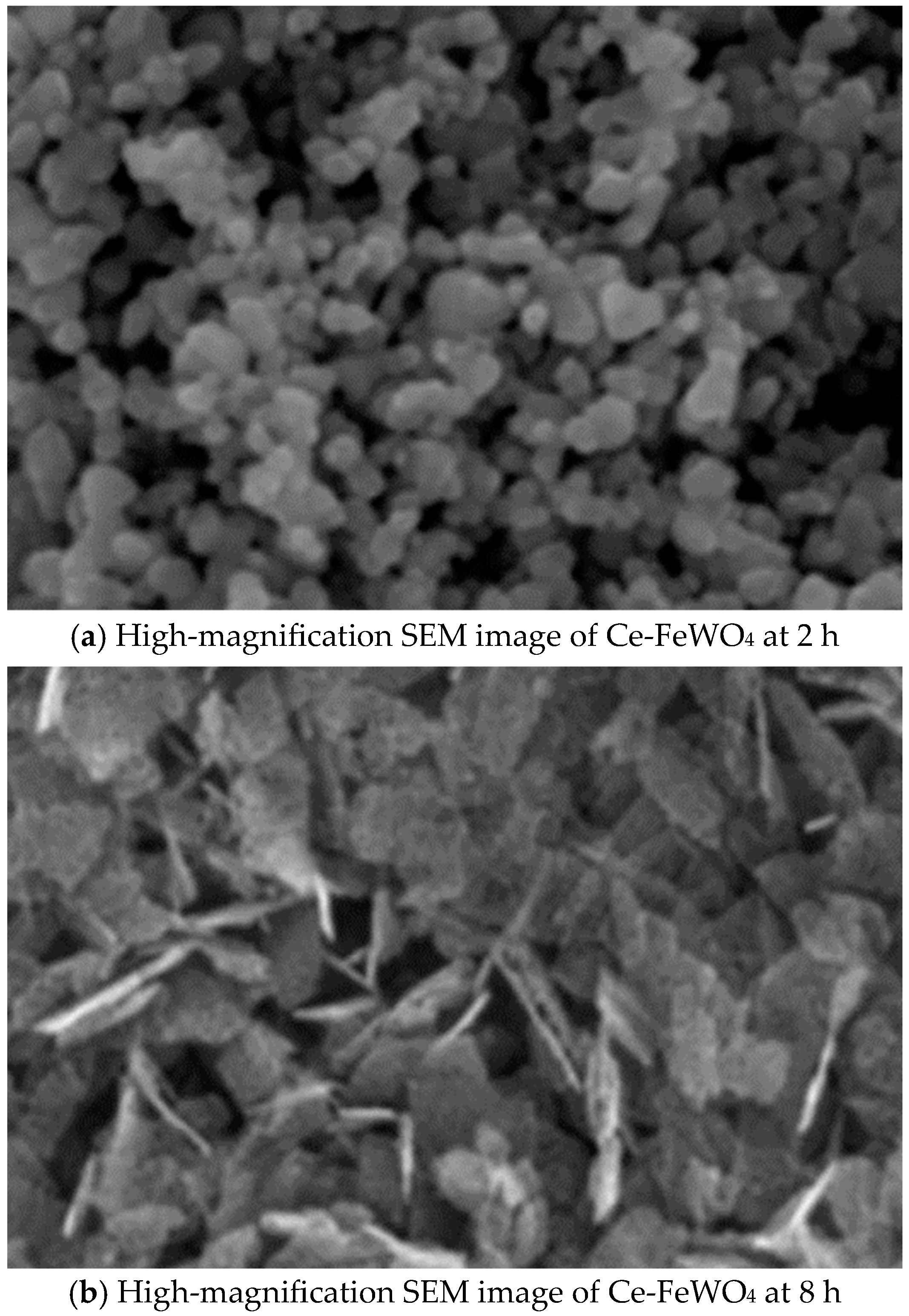
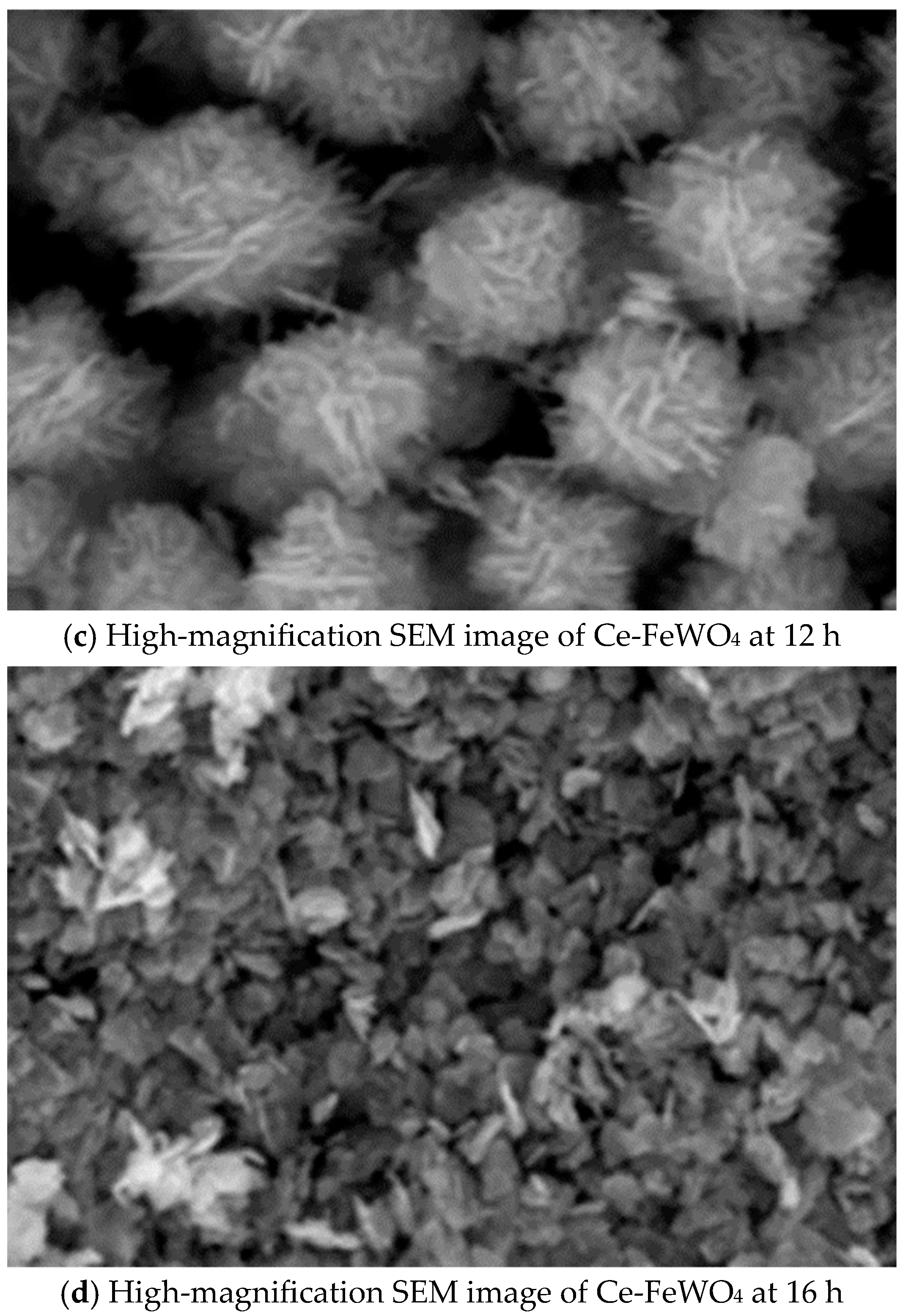
Figure 4a–d shows the evolution characteristics of the microscopic structure of Ce-FeWO
4 under different doping reaction times.
Figure 4a presents the SEM characterization results after a 2 h reaction, where the reaction is not fully completed; the material exists as nanospheres with relatively smooth surfaces, resulting in a small specific surface area that cannot meet the demand for active sites in electrochemical reactions [
41].
Figure 4b–d corresponds to the high-magnification SEM images after 8 h, 12 h, and 16 h of reaction, respectively, of which all exhibit a staggered distribution of thin nanosheet structures that can effectively shorten the electron transport path and improve conduction efficiency; moreover, with the extension of reaction time, the surface roughness of the material gradually increases, and a large number of fine particles aggregate on the nanosheet surfaces to form a thin-layered structure, facilitating the migration of ions in the electrolyte. Notably, the reaction time has no significant effect on the length and width of the nanosheets, mainly due to the introduction of Ce element which disrupts the regular structure of the original crystal and maintains the stability of the material’s size parameters; specifically, after 12 h of reaction (
Figure 4c), the thickness of the Ce-FeWO
4 nanosheets increases with raised structures appearing on the surface, further expanding the specific surface area and enhancing the specific capacitance performance, while Ce doping transforms the originally disordered nanorod structure into an ordered arrangement, increasing the contact area between the electrode and electrolyte, as well as the number of redox-active sites, thus providing favorable conditions for rapid charge transfer [
42]. In contrast, after 16 h of reaction (
Figure 4d), Ce-FeWO
4 exhibits obvious excessive growth of nanosheets with significantly increased structural disorder, accompanied by severe lattice fracture and damage; excessive growth leads to nanosheet stacking, which reduces the crystallinity and destroys the chemical stability of the material, and lattice damage further impairs the integrity of the crystal structure, being unfavorable for the stable transport of electrons and the exertion of electrochemical performance. Based on a comprehensive analysis of the correlation between microscopic morphology and performance, the optimal reaction time for the Ce-FeWO
4 doping reaction is determined to be 12 h, and the material prepared under this condition is used in all subsequent studies.
After investigating the effect of reaction time on the morphology of Ce-FeWO
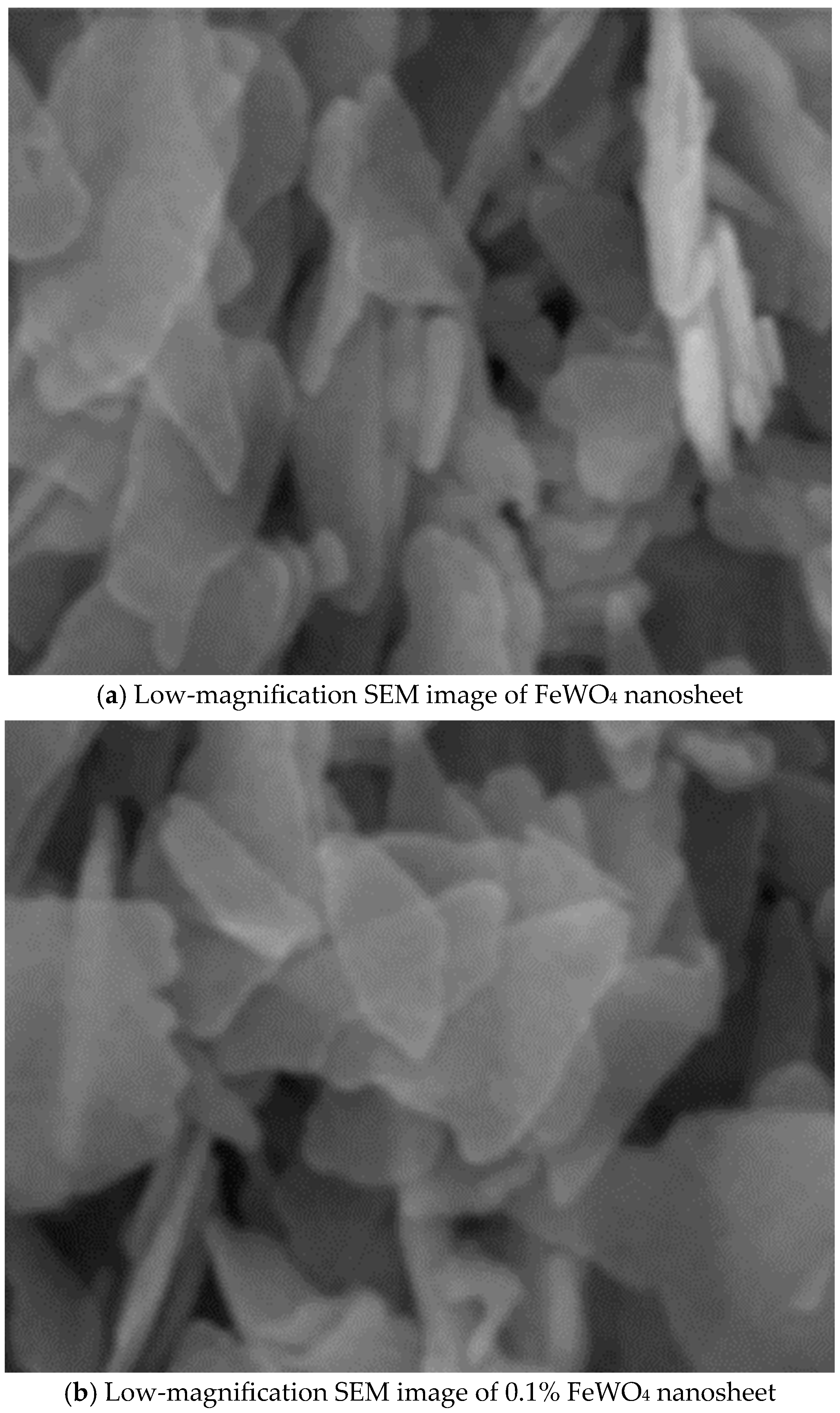
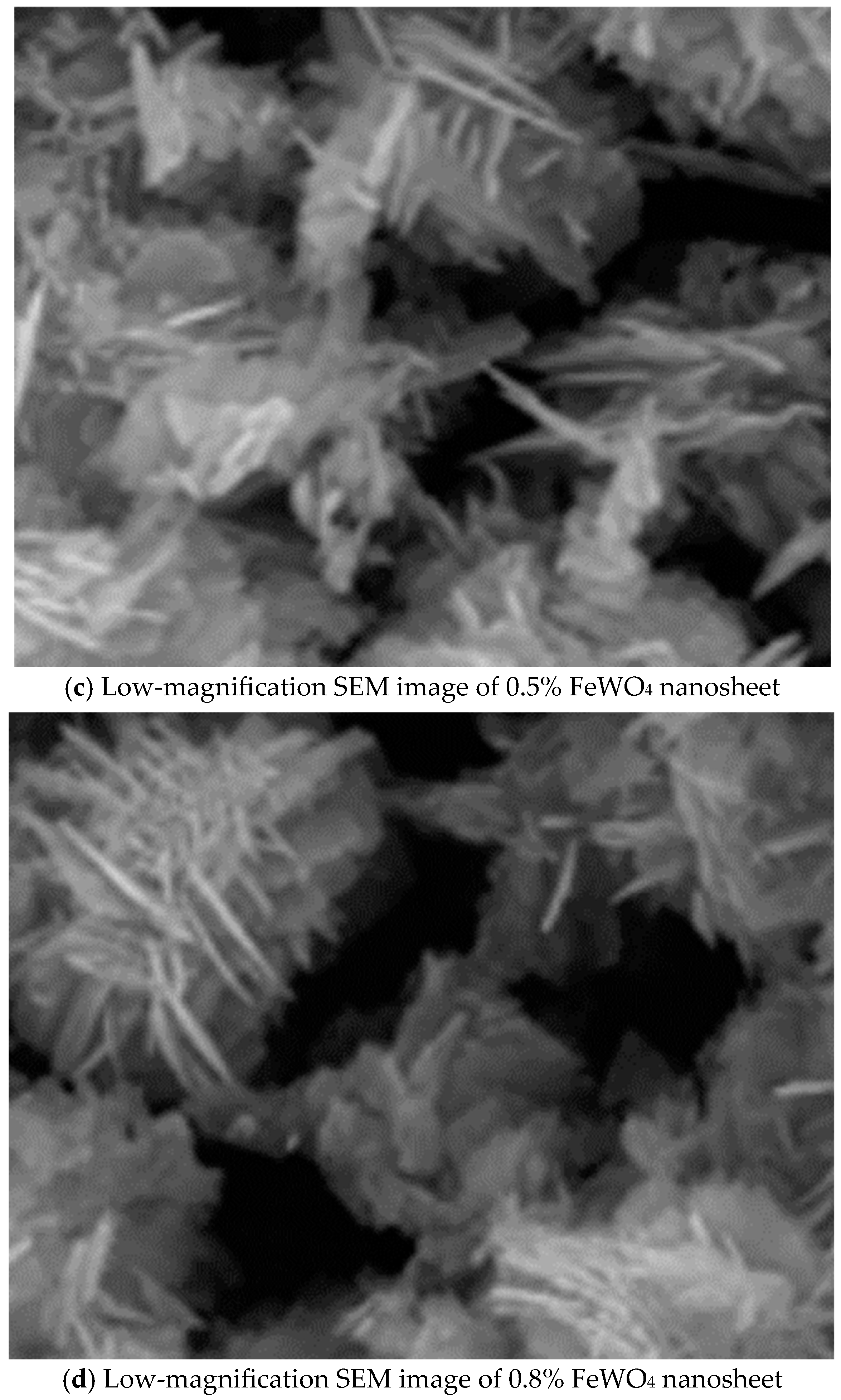
4, this study further examined the law governing the influence of different Ce-doping ratios on the material’s microstructure, with the relevant characterization results shown in
Figure 5. Experiments revealed that as the concentration of Ce doping gradually increased, the grain size and deposition amount of the material remained basically stable once the concentration reached a specific threshold—a phenomenon indicating that the introduction of Ce into the FeWO
4 system did not alter the material’s inherent closed characteristics. A detailed analysis of the SEM images under different doping ratios is as follows:
Figure 5a corresponds to the microstructure of pure FeWO
4, from which a large number of intertwined nanosheet structures with obvious stacking and relatively disordered overall arrangement can be observed, along with identifiable mesoporous structures and some rib-like structures in the material;
Figure 5b, by contrast, shows the SEM characterization results of Ce-FeWO
4 with a 0.1% Ce-doping amount, and compared with pure FeWO
4, the material’s specific surface area increased significantly under this doping ratio, providing more sufficient space conditions for electrochemical reactions. For Ce-FeWO
4 with a 0.5% Ce-doping amount, its microstructure exhibits unique characteristics: obvious adhesion appears on the surface of the nanorod structures, and the surface roughness of the nanosheets increases significantly—this morphological change directly leads to a further increase in the material’s specific surface area, thereby increasing the number of active sites required for electrochemical reactions, and the essential reason for this change is that materials of other growth phases migrate to and adhere to lattice cracks, which effectively inhibits the expansion of early lattice damage and ultimately promotes the optimization of the material’s surface structure [
43]. As shown in
Figure 5d, when the Ce-doping amount continued to increase, although the roughness of the nanorod surface still intensified, severe stacking occurred between the nanorods, which not only prevented the material’s specific surface area from increasing but even caused it to decrease, with a corresponding reduction in the number of redox-active sites; this is because the introduction of excessive Ce leads to partial Ce ions replacing Fe ions, triggering lattice cracking and slight fragmentation of nanosheets, and as the doping amount further increases, the degree of lattice damage and cracking intensifies simultaneously; the reaction process tends to reduce the material’s surface area by splitting and breaking nanosheets, which ultimately results in performance degradation. Based on the comprehensive analysis of the correlation between morphology and performance under the aforementioned different doping ratios, the optimal Ce-doping amount for Ce-FeWO
4 was determined to be 0.5%, and materials with this doping ratio were used in all subsequent experiments.
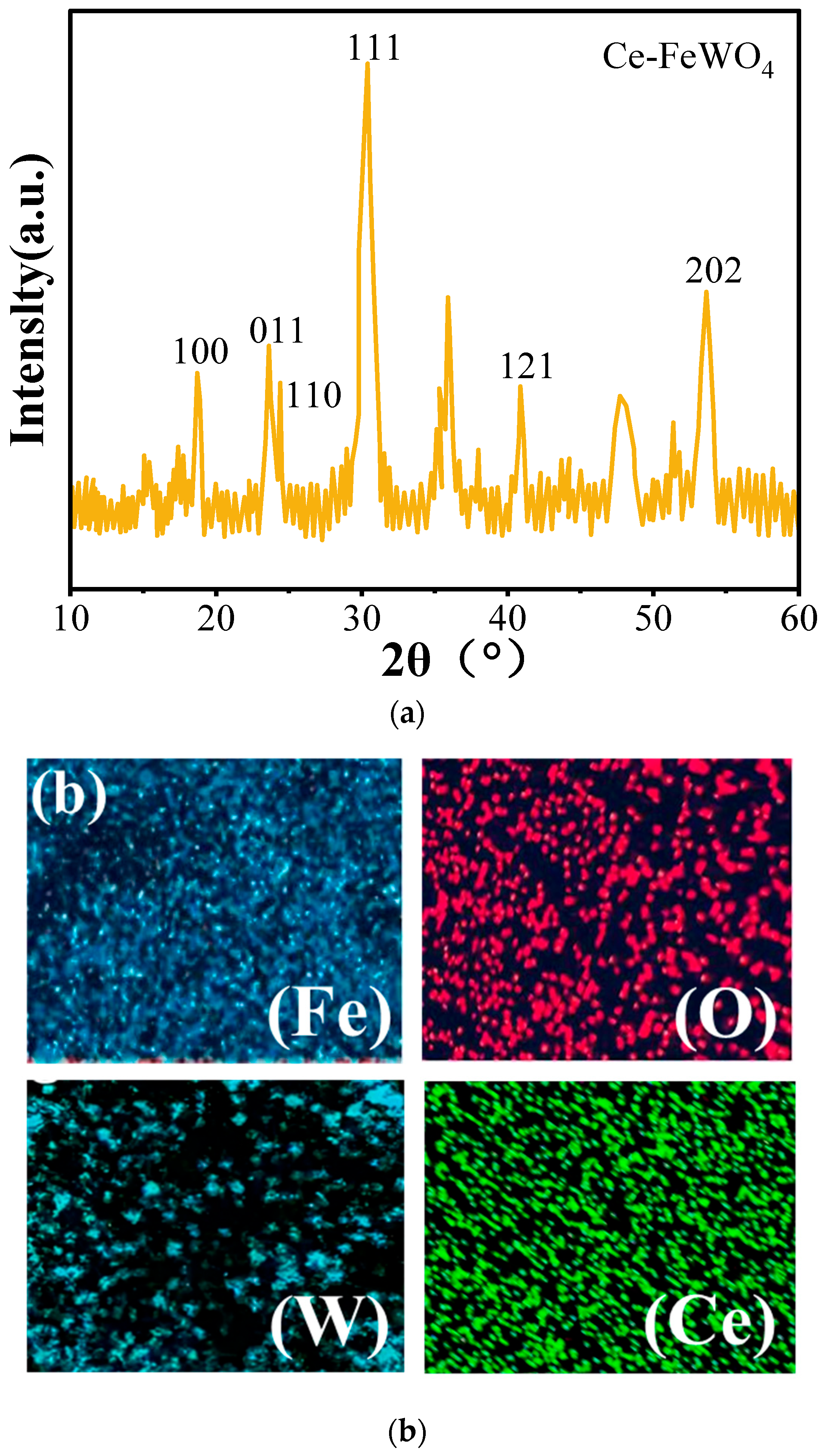
We also analyzed the material’s structure, crystallinity, and phase, and conducted an EDS (energy dispersive X-ray spectroscopy) test for analysis. As shown in
Figure 6a, the X-ray diffraction (XRD) pattern of Ce-FeWO
4 was obtained using an X-ray diffractometer from UK Malvern Panalytical Limited. A very obvious peak appears at 2θ = 33.077, which confirms the successful doping of Ce element. To further verify the prepared product Ce-FeWO
4, a TEM elemental analysis test was also conducted, as shown in
Figure 6b. The test results indicate the presence of four elements, W, Fe, O, and Ce, which again confirms that Ce has been successfully doped into FeWO
4. Moreover, in cerium-doped iron tungstate, the lattice parameters undergo significant changes with the introduction of cerium dopants. Taking typical tetragonal-phase iron tungstate as an example, the lattice parameters a and a of pure-phase iron tungstate are approximately 5.08 angstroms, and the parameter a is about 11.58 angstroms. When cerium ions (with an ionic radius of 1.14 angstroms) partially substitute iron ions (with an ionic radius of 0.645 angstroms), the larger ionic radius of cerium induces lattice expansion, which is specifically manifested by the increases in lattice parameters and a to varying degrees; for instance, when the molar fraction of cerium doping reaches 5%, a and a can increase to around 5.12 angstroms, c can rise to approximately 11.65 angstroms, and the unit cell volume shows a linear expansion trend as the doping amount increases. Such changes in lattice parameters can be verified by combining XRD refinement with comparisons against the standard cards from the International Center for Diffraction Data, which directly demonstrates the regulatory effect of cerium doping on the crystal structure of iron tungstate and provides structural-level evidence for its doping mechanism and performance optimization.
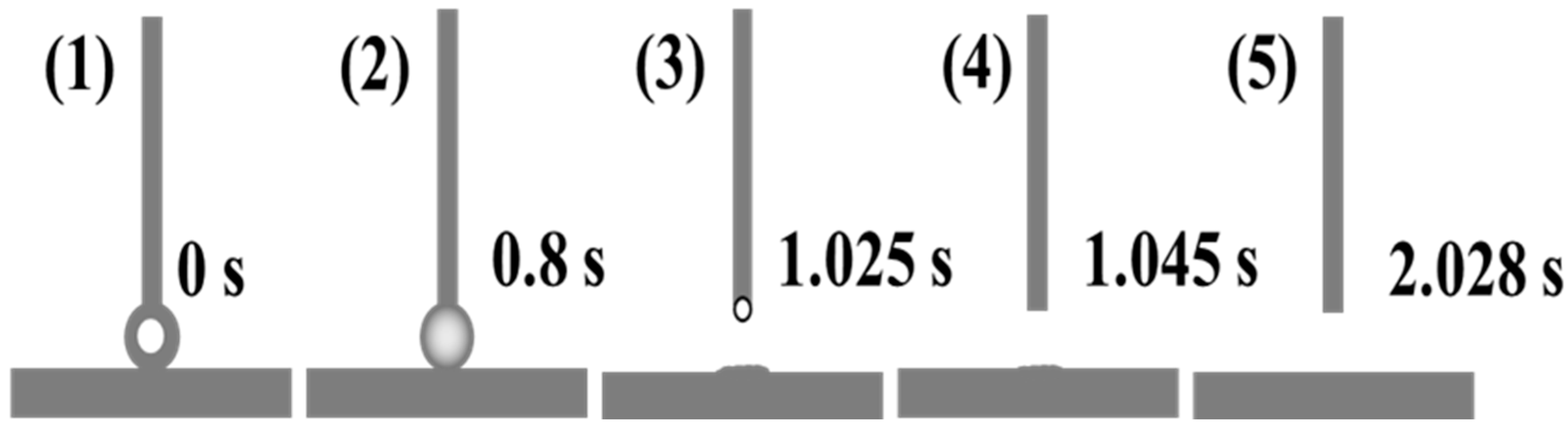
According to the Wenzel theory, the wettability of hydrophilic materials is jointly determined by surface roughness and water contact angle. When a liquid droplet is in a space free from external force field interference, the liquid surface tension causes the droplet to take on a spherical shape; however, when the droplet comes into contact with a solid surface, the final existing form of the droplet depends on the relative magnitude of the cohesive force inside the liquid and the adhesive force between the solid and the droplet—after placing the droplet on the solid surface, its state of spreading freely or forming a specific angle with the solid surface is defined as the contact angle. In the water contact angle equation cosθw = rcosθ, r represents the surface roughness ratio, i.e., the ratio of the actual solid surface area to the projected solid surface area, and θ is the contact angle of the rough surface under the Wenzel model; specifically, when θ is less than 90°, θw decreases as the surface roughness of the material increases, and the material surface exhibits stronger lyophilicity at this time; when θ is greater than 90°, θw decreases as the surface roughness increases, and the material surface shows stronger lyophobicity. It can be seen from
Figure 7 (2), (5) that the water contact angle of the 1CNTS material is 0°, which indicates that the 1CNTS material treated with acidification is a hydrophilic material.
According to the Wenzel theory, the wettability of hydrophilic materials is jointly determined by surface roughness and water contact angle. When a liquid droplet is in a space free from external force field interference, the liquid surface tension causes the droplet to assume a spherical shape; however, when the droplet comes into contact with a solid surface, its final morphology depends on the relative magnitude of the cohesive forces within the liquid and the adhesive forces between the solid and the droplet—after placing the droplet on the solid surface, its state of free spreading or forming a specific angle with the solid surface is defined as the contact angle. In the water contact angle equation cosθw = rcosθ, r represents the surface roughness ratio (i.e., the ratio of the actual physical surface area to the projected physical surface area), and θ is the contact angle of the rough surface under the Wenzel model; specifically, when θ is less than 90°, θw decreases with the increase in the material's surface roughness, and the liquid affinity of the material surface becomes stronger at this time. When θ is greater than 90°, θw decreases as the surface roughness increases, and the material surface exhibits stronger liquid repellency. It can be seen from
Figure 7 (1) (2) (3) (4) (5) that the water contact angle of the 1CNTS material is 0°, which indicates that the acid-treated 1CNTS material is a hydrophilic material.
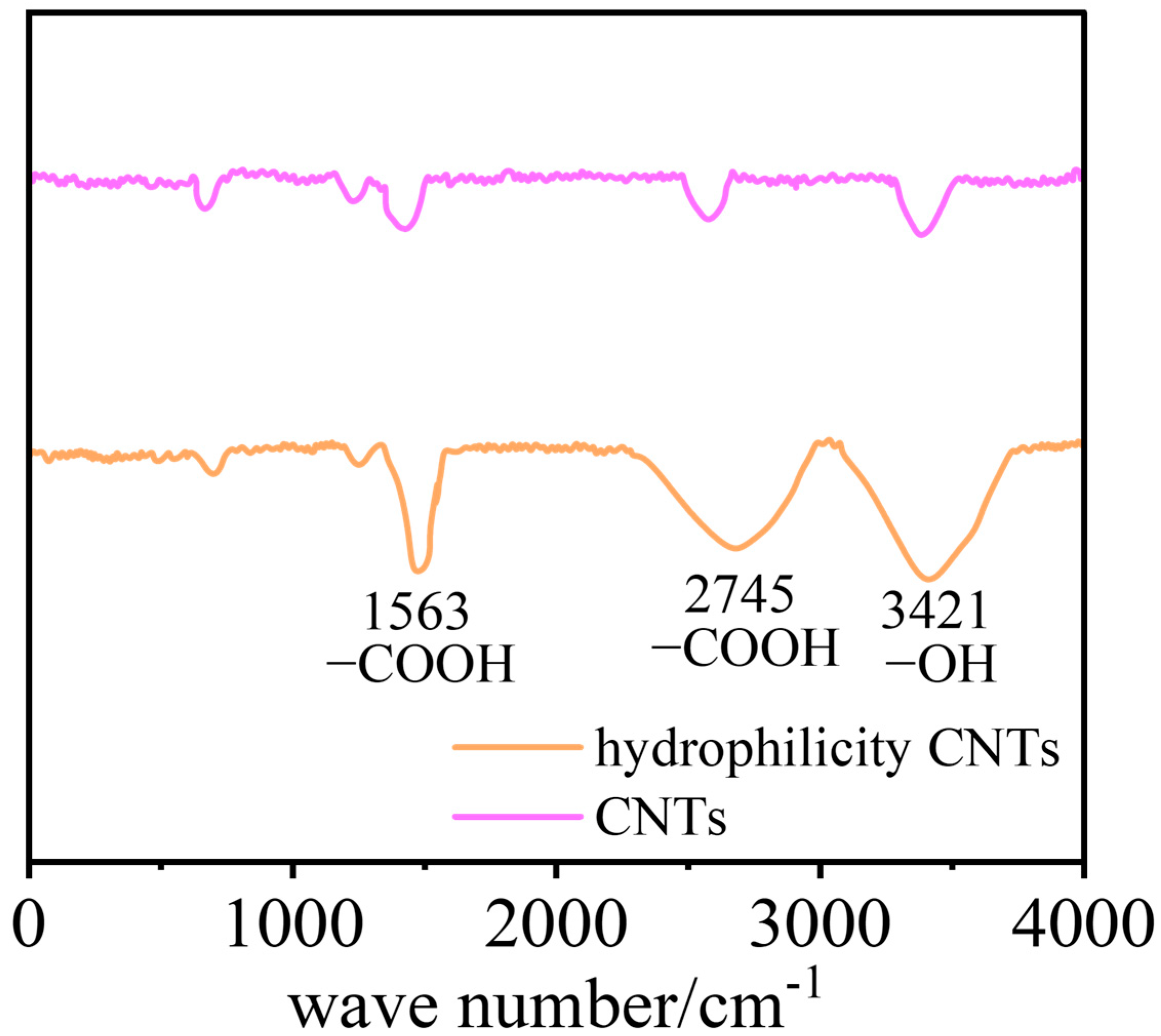
To re-verify the previously prepared hydrophilic carbon nanotubes (CNTs), Fourier transform infrared (FTIR) spectroscopy was employed to analyze both the hydrophilic CNTs and pristine CNTs. The resulting FTIR spectra are presented in
Figure 8. Distinct absorption valleys are clearly observed at 1563 cm
−1; and 2745 cm
−1, indicating the presence of a large number of carboxyl groups (-COOH) in the prepared hydrophilic CNTs. An additional prominent absorption valley appears at 3421 cm
−1, which confirms the introduction of abundant hydroxyl groups (-OH). Since both -COOH and -OH are hydrophilic functional groups, the hydrophilicity of the modified CNTs is significantly enhanced. This result verifies the successful preparation of the hydrophilic carbon nanotubes as reported earlier.
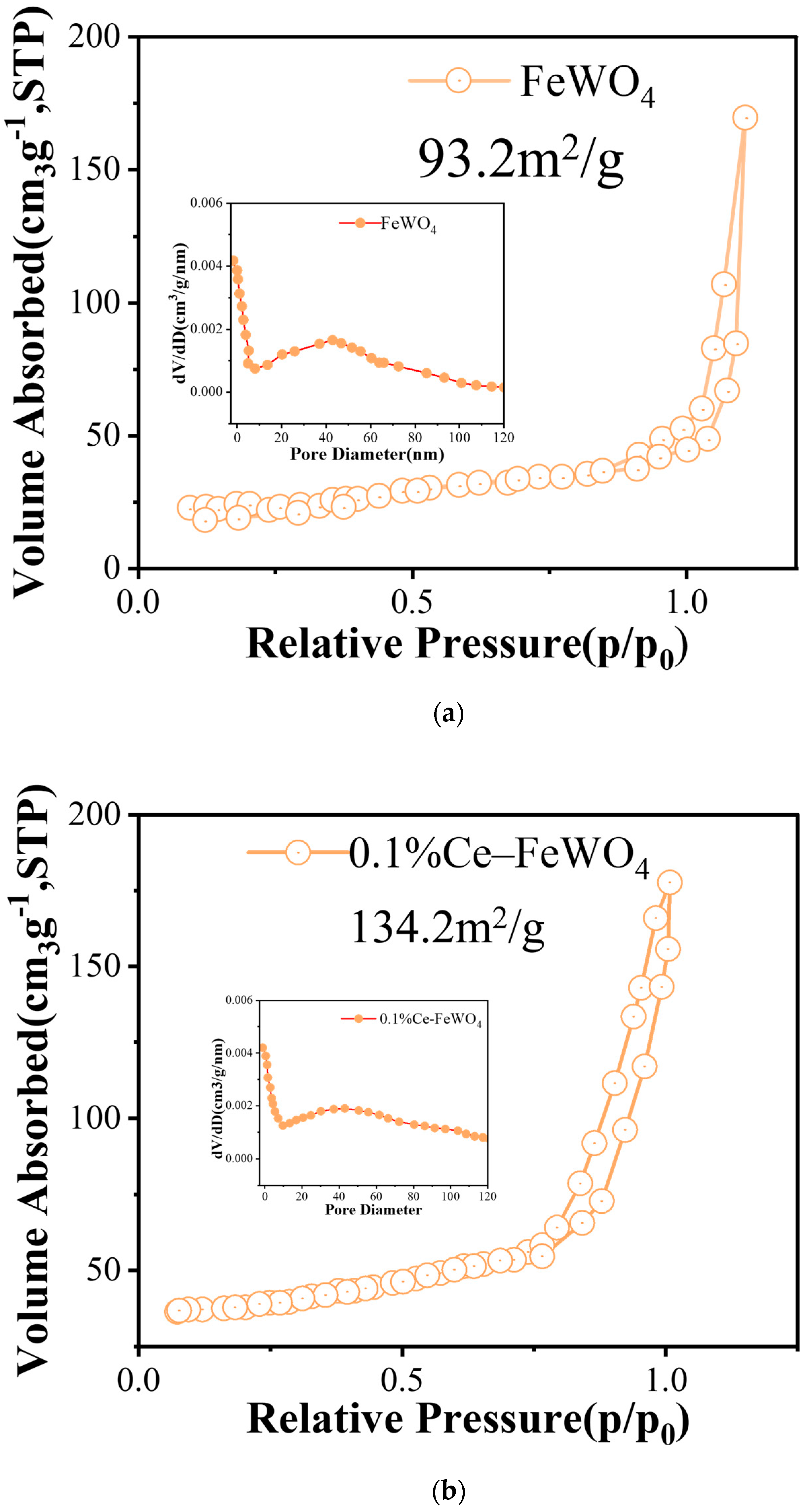
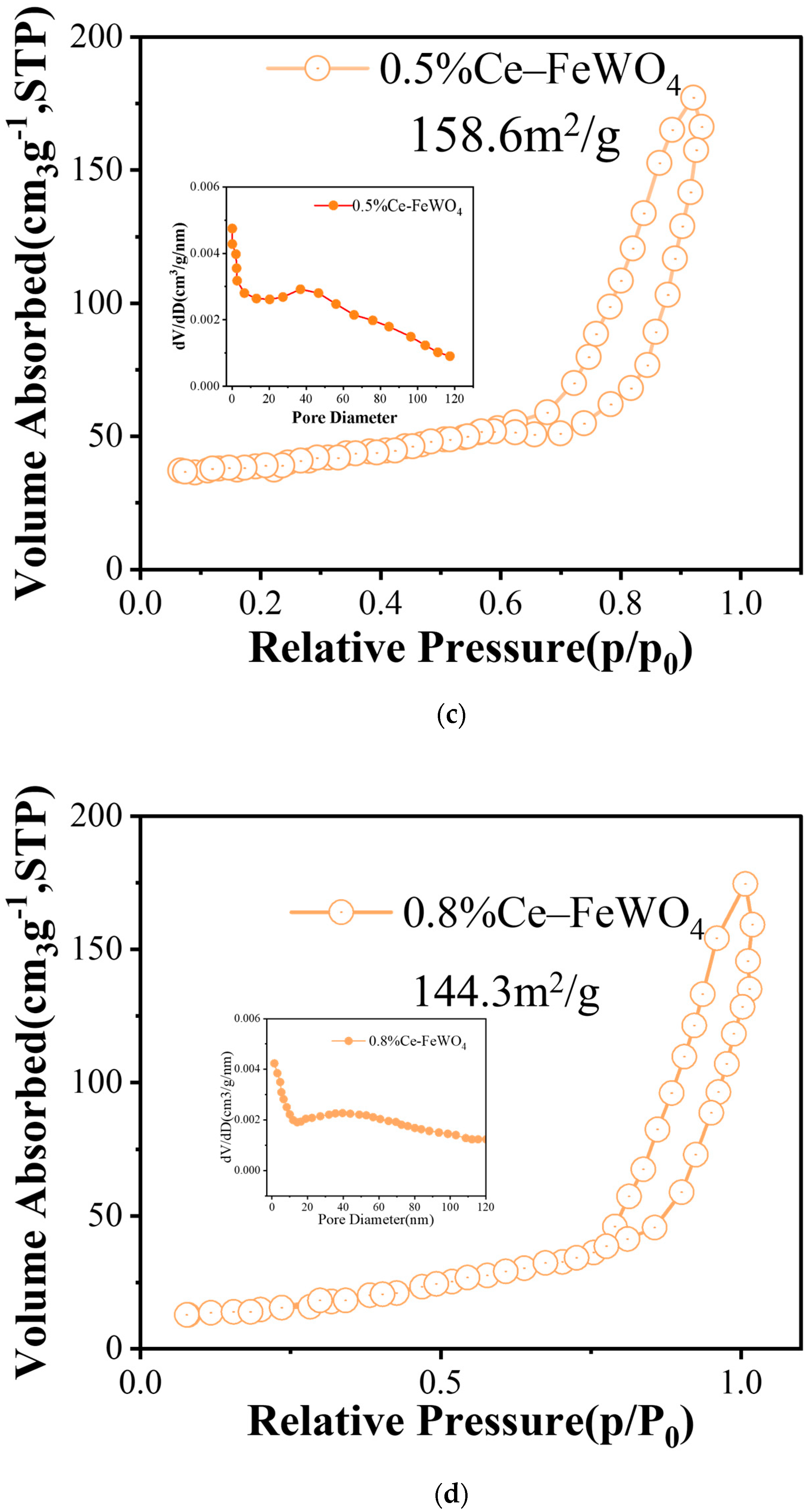
To verify the experimental results in
Figure 6, this study analyzed the specific surface area (BET) and pore size distribution of Ce-FeWO
4 and pure FeWO
4 materials via nitrogen adsorption–desorption experiments, with the results presented in
Figure 9—where
Figure 9a,b corresponds to the adsorption–desorption isotherms and pore size distribution curves of the four materials, respectively; from the perspective of isotherm characteristics, the nitrogen adsorption–desorption curves of all four materials exhibit typical Type IV isotherm features (high saturated adsorption pressure, flat extended platforms, and a significant increase in curve slope within the high relative pressure range), and their hysteresis loops are all of Type H3, confirming that both types of materials are mesoporous. Notably, pure FeWO
4 shows an obvious hysteresis loop only in the 0.8–1.0 relative pressure range, while 0.5% Ce-FeWO
4 exhibits a hysteresis loop at approximately 0.6 relative pressure, indicating that Ce doping can effectively promote the early formation of pores in the material’s nanosheet structure and increase their quantity. Based on calculations using BET theory, the specific surface areas of FeWO
4, 0.1% Ce-FeWO
4, 0.5% Ce-FeWO
4, and 0.8% Ce-FeWO
4 are 93.2 m
2/g, 134.2 m
2/g, 158.6 m
2/g, and 144.3 m
2/g, respectively—this data confirms that Ce doping has a positive effect on increasing the specific surface area of FeWO
4, and a larger specific surface area can not only provide more active sites for electrochemical reactions but also accelerate the transport efficiency of electrolyte ions inside the material. The pore size distribution curves show that the main pore sizes of the four materials are approximately 26 nm, 29 nm, 32 nm, and 30 nm, respectively, which is consistent with the aforementioned analysis conclusion of the mesoporous structure; in addition, the pore size distribution curve of 0.5% Ce-FeWO
4 exhibits an obvious characteristic peak at approximately 7 nm, indicating a significant increase in the number of small pores around 7 nm in this material, and the increase in the number of small pores can inhibit excessive grain growth to a certain extent, thereby further expanding the material’s specific surface area. In summary, the increased specific surface area and number of small pores brought about by Ce doping not only provide abundant electrochemical-active sites for electrochemical reactions, but also improve the dissolution rate of the electrode material in the electrolyte, and shorten the transport path of electrons and ions while increasing their transport efficiency, laying a structural foundation for optimizing the material’s electrochemical performance.
4. Electrochemical Performance Measurement of FeWO4 and Ce-FeWO4 Nanosheet Electrode Materials
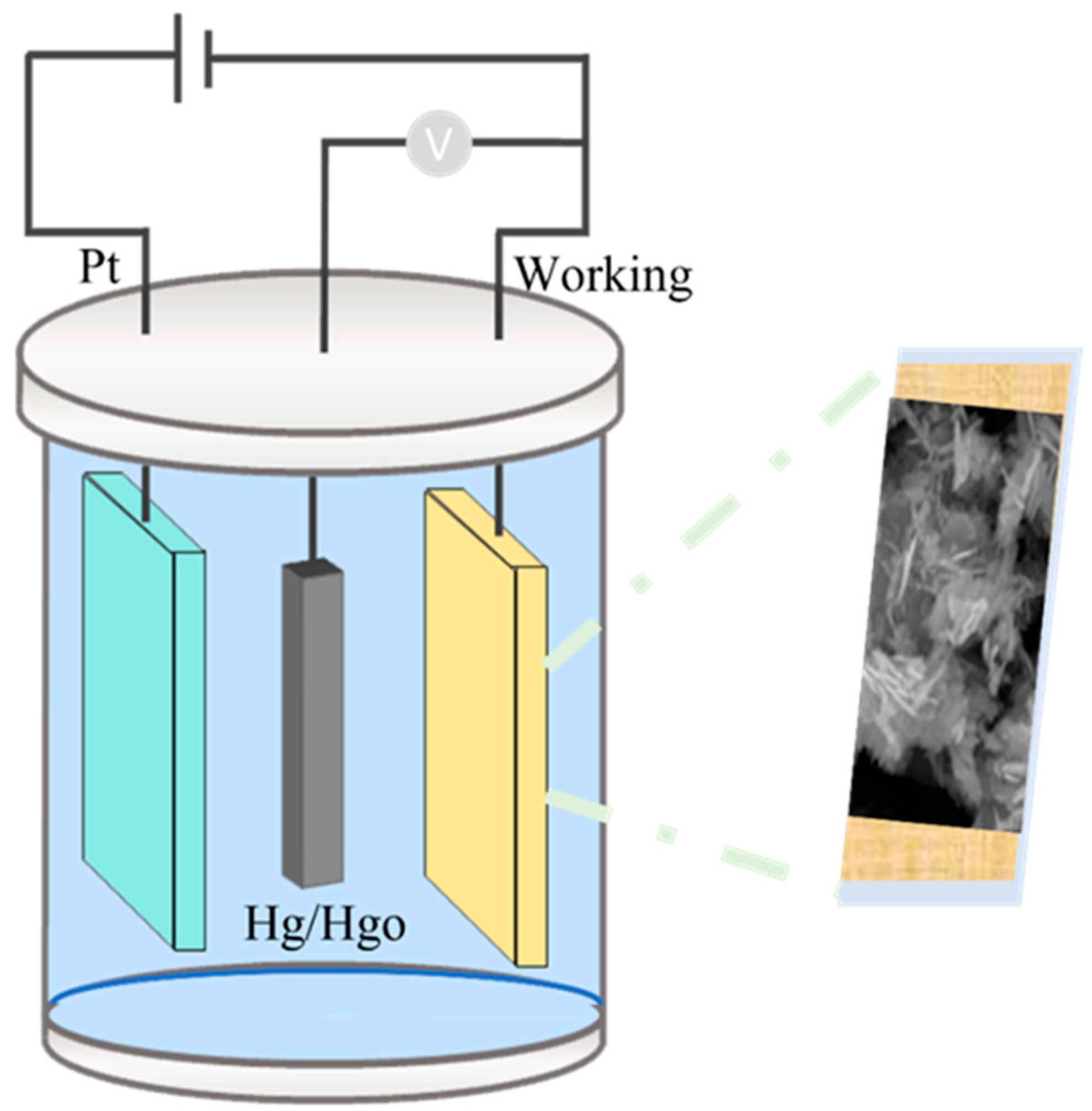
The electrochemical performance of the prepared electrode materials was tested in a three-electrode system with 6 M KOH as the electrolyte. A platinum sheet was used as the counter electrode, Hg/HgO was used as the reference electrode, and the prepared material was used as the working electrode.
Figure 10 shows the corresponding diagram of the three-electrode system.
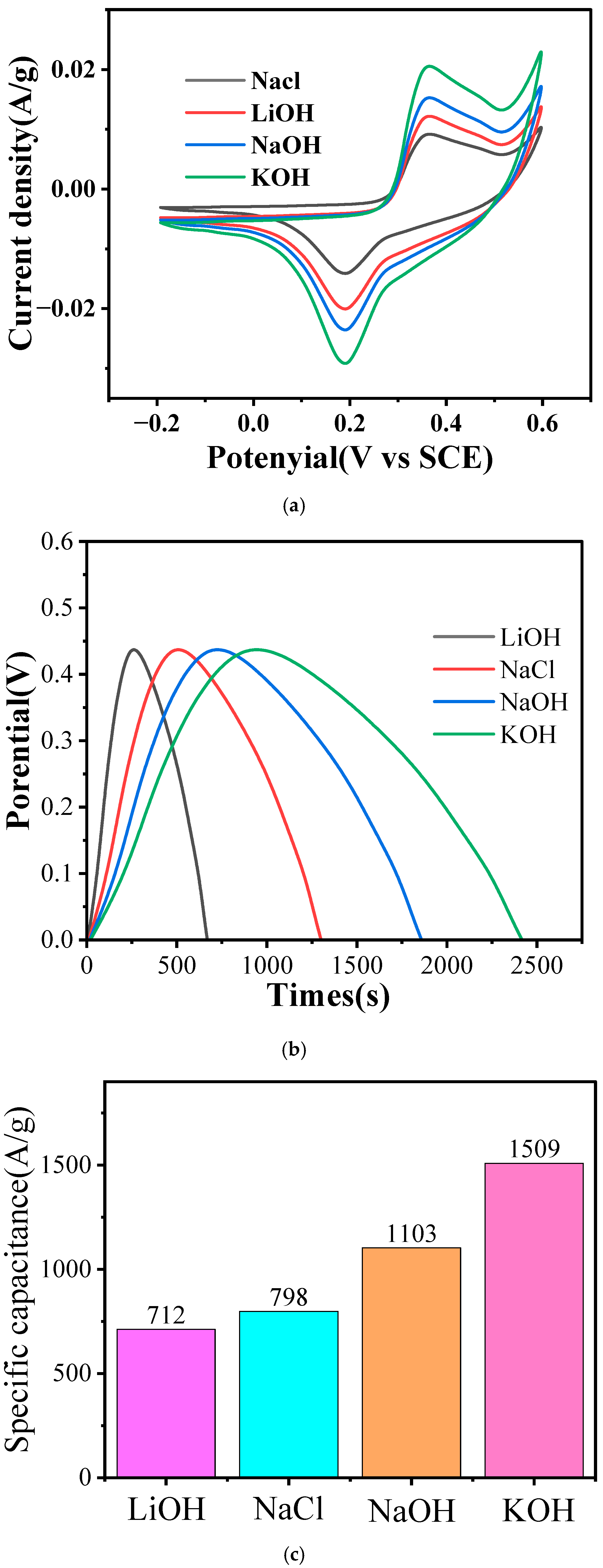
In the selection of electrolyte systems, acidic electrolytes were excluded, considering that the electrode materials prepared in this study are metal oxides. This is because acidic electrolytes tend to corrode metal oxides, damage their material structure, and affect their electrochemical performance. Instead, three alkaline solutions (KOH, NaOH, LiOH) and a neutral NaCl solution were selected as candidate electrolytes, and their compatibility was compared through electrochemical tests. The relevant test results are shown in
Figure 11:
Figure 11a presents the cyclic voltammetry (CV) curves of the material under the four electrolyte systems. From the area enclosed by the curves, the CV curve corresponding to the KOH electrolyte has the largest area, a feature that directly indicates the material exhibits the best electrochemical activity in this electrolyte system. Meanwhile, obvious redox peaks appear in the CV curves within the potential range of 0.3–0.4 V, further confirming that the material has typical pseudocapacitive characteristics, and these characteristics are more prominent in the KOH system.
Figure 11b shows the galvanostatic charge–discharge (GCD) curves of the four electrolytes at a scan rate of 4 mV/s. Comparison of the curves reveals that at the same scan rate, the KOH electrolyte corresponds to the longest charge–discharge time; the extension of charge–discharge time means the material has better charge storage and release capabilities in this system, i.e., the optimal charge–discharge performance. In addition,
Figure 11c displays the specific capacitance comparison results of the four electrolytes at a current density of 3 A/g. The data shows that the specific capacitance of the material in the KOH electrolyte system is significantly higher than that in the other three electrolytes, further verifying that KOH has better compatibility with the electrode material. Based on the comprehensive test results of CV curves, GCD curves, and specific capacitance, it can be concluded that when KOH is used as the electrolyte for this metal oxide electrode material, it can maximize the material’s electrochemical performance. Therefore, KOH was determined as the optimal electrolyte choice for this experiment.
After investigating the effects of different doping times and doping ratios on the morphology of Ce-FeWO
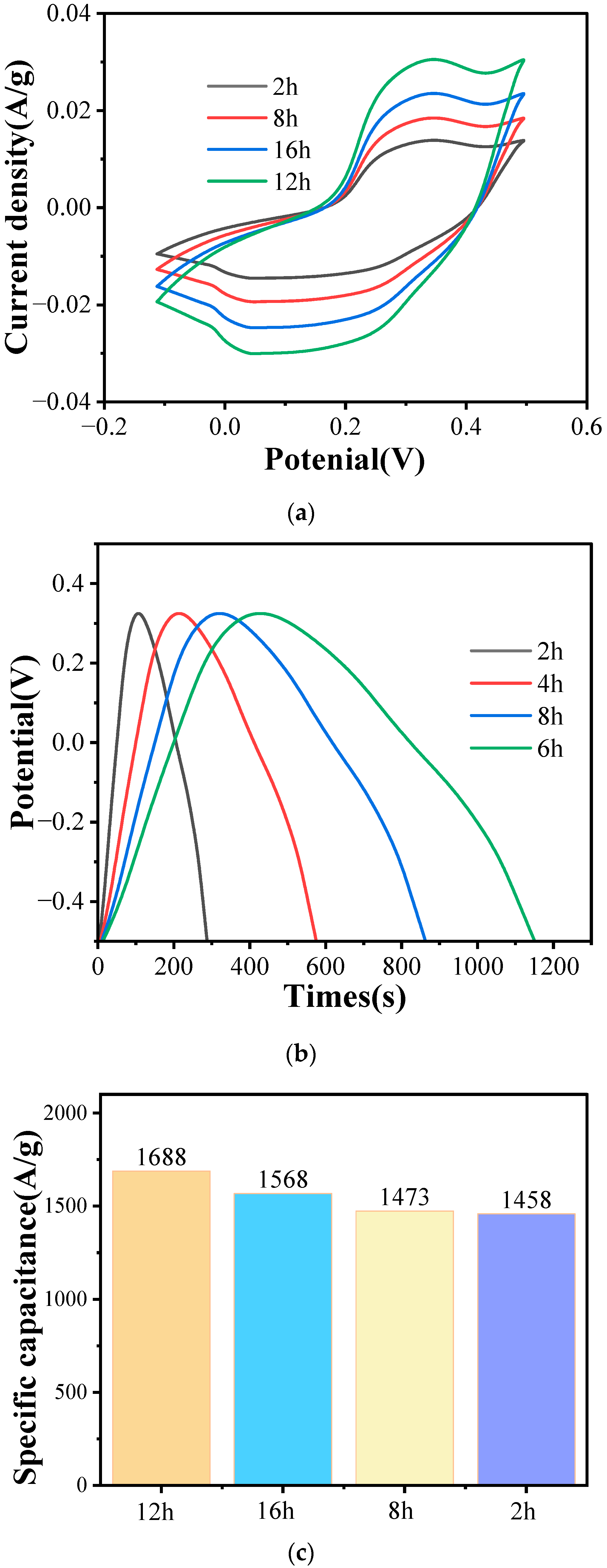
4, this study used an electrochemical workstation with KOH alkaline solution as the electrolyte to conduct electrochemical performance tests on the prepared electrode materials. First, cyclic voltammetry (CV) tests were performed to analyze the charge storage characteristics of the materials.
Figure 12a presents the CV curves of Ce-FeWO
4 at doping times of 2 h, 8 h, 12 h, and 16 h. It can be seen that none of the four curves exhibit the rectangular characteristic of an ideal capacitor, and the curve shape changes in a regular proportional manner as the reaction time increases. This phenomenon indicates that the material has obvious pseudocapacitive behavior during the charge storage process; among them, the CV curve of Ce-FeWO
4 at a reaction time of 12 h encloses the largest area, while the curve area decreases significantly at 16 h, proving that the material prepared at 12 h has optimal electrochemical activity and good electrochemical performance. This performance advantage can effectively improve the transport efficiency of electrons and ions in the solution, and this conclusion is also verified by galvanostatic charge–discharge (GCD) tests.
Figure 12b shows the GCD curves of the materials at different doping times under a current density of 3 A/g. From the curves, it can be seen that the discharge time of Ce-FeWO
4 at a reaction time of 12 h is the longest (approximately 704 s), and a longer discharge time corresponds to better charge–discharge performance and a larger specific capacitance. Based on the specific capacitance calculation formula (1) and the GCD data in
Figure 12b the specific capacitances of the materials at different doping times in
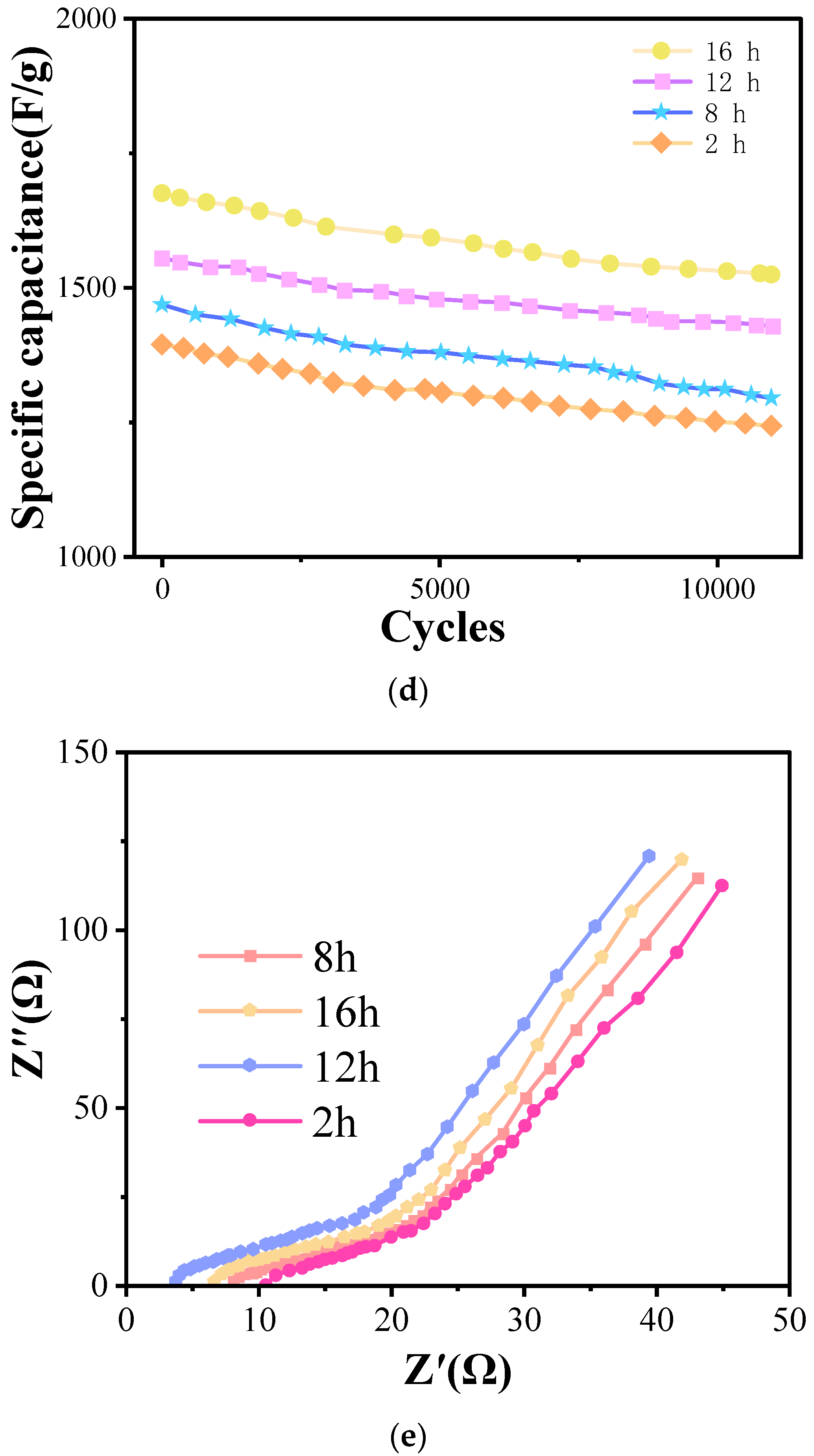
Figure 12c were further calculated: the specific capacitance reaches 1688 F/g at 12 h, and 1568 F/g, 1473 F/g, and 1458 F/g at 16 h, 8 h, and 2 h, respectively. The data clearly shows that 12 h is the optimal doping time for the material’s specific capacitance to reach its peak. In addition, the capacitance retention test results in
Figure 12d show that the capacitance retention rates of the samples at 2 h, 8 h, 12 h, and 16 h are 95.3%, 96.5%, 99.3%, and 97.7% in sequence. The 12 h sample has the highest capacitance retention rate, demonstrating better cycle stability. In order to further analyze the charge transfer capability of the electrode, this study also carried out electrochemical impedance spectroscopy (EIS) testing.
Figure 12e shows the EIS spectrum in the frequency range of 5 Hz–100 Hz. For the electrochemical kinetic behavior of Ce-FeWO
4 electrode material, we use a composite equivalent circuit including series resistance (RS), charge transfer resistance (RCT), constant phase element (CPE), Warburg impedance (ZW), and capacitance (C1) for modeling. In the low-frequency region, the slope of the curve is related to the Warburg impedance (reflecting the impedance of electrolyte ions passing through the electrode body). The low-frequency line of the 12 h sample is closer to vertical and has a larger slope, proving that it has typical ideal capacitive behavior and smaller diffusion resistance, which is beneficial to accelerating the diffusion of ions and electrons in the electrolyte, improving the chemical properties of the material and promoting chemical reactions; in the high-frequency region, the x-axis intercept represents the solution resistance; at 12 h, the high-frequency semicircle diameter of the sample is the smallest, indicating that its electron transfer resistance is lower and its conductivity is better. The 12 h sample has the smallest high-frequency semicircle diameter, indicating that it has lower electron transfer impedance and better conductivity. Based on the comprehensive results of the above electrochemical performance tests and combined with the previous analysis of the material with a 0.5% Ce-doping ratio, it can be concluded that the Ce-FeWO
4 prepared with 0.5% Ce doping and a reaction time of 12 h has capacitance performance closest to that of an ideal supercapacitor. Therefore, the Ce-FeWO
4 prepared under this condition was determined as the core research object for subsequent experiments.
To clarify the effect of the Ce-doping ratio on the material’s electrochemical performance, this study conducted electrochemical tests on four samples: FeWO
4, 0.1% Ce-FeWO
4, 0.5% Ce-FeWO
4, and 0.8% Ce-FeWO
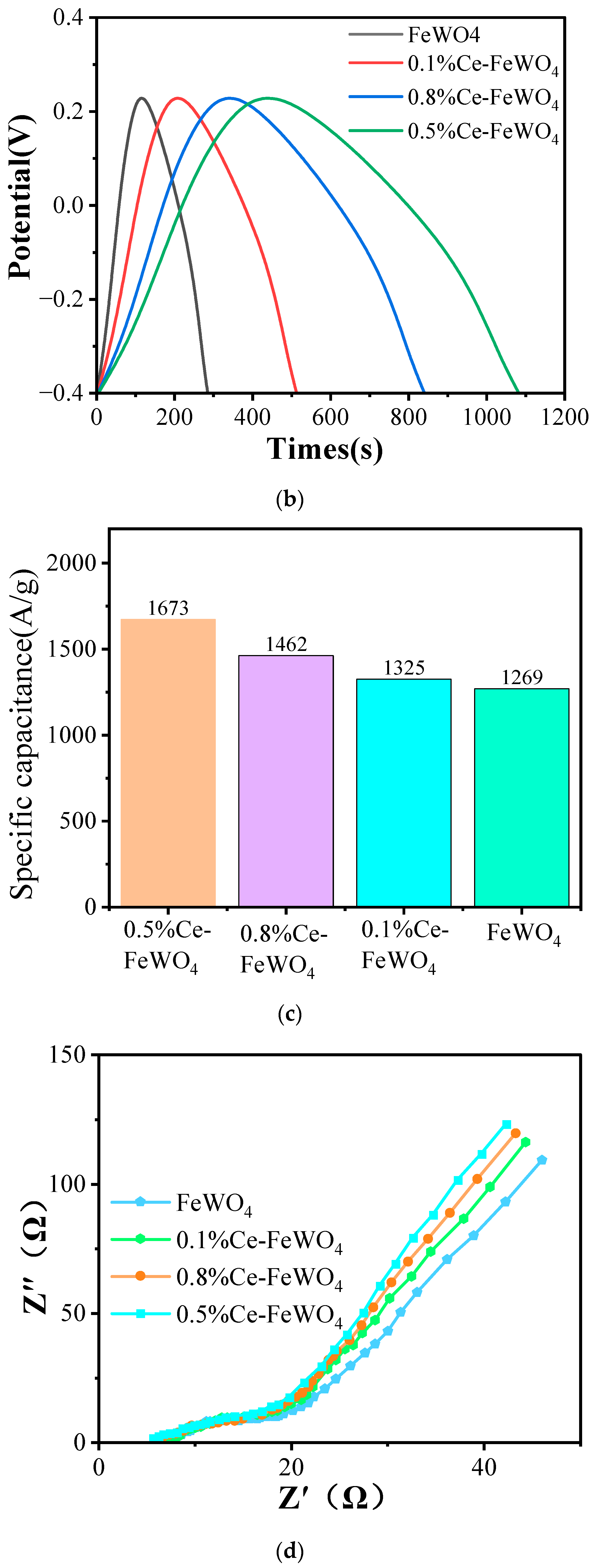
4, with relevant data shown in
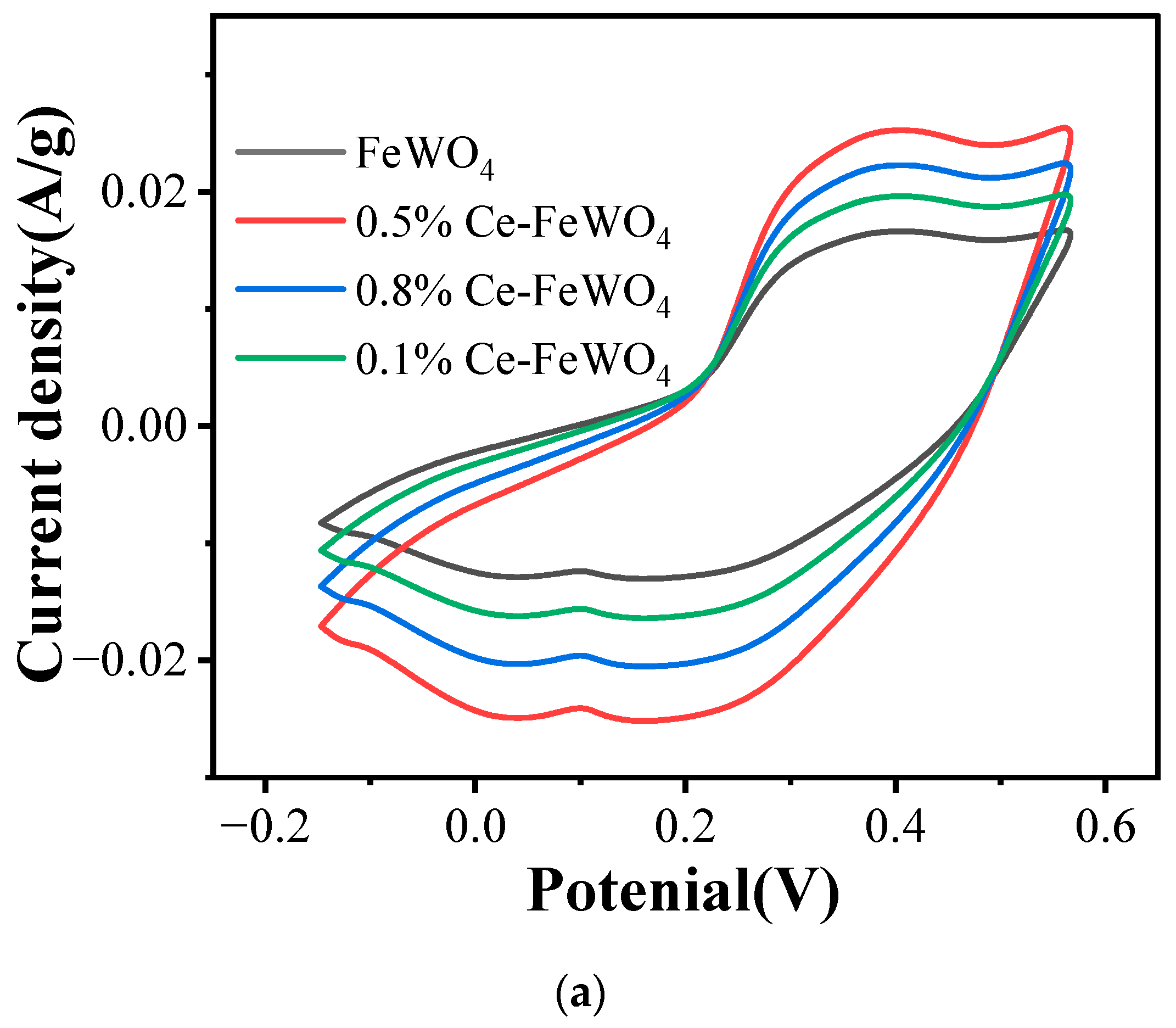
Figure 13. First, cyclic voltammetry (CV) tests were used to analyze the material’s charge storage behavior, and
Figure 13a presents the CV curves of the four samples; as the Ce-doping amount increases, the area enclosed by the CV curves of Ce-FeWO
4 samples gradually increases, fully proving that the doping of rare earth Ce has a significant effect on improving the material’s electrochemical performance. In addition, the CV curves of all Ce-FeWO
4 samples show obvious redox peaks (or redox bulges) in the potential range of 0.1–0.4 V, a feature that directly reflects the material’s typical pseudocapacitive characteristics. Galvanostatic charge–discharge (GCD) tests further verified the above conclusion:
Figure 13b shows the GCD curves of the four samples at a scan rate of 4 mV/s, among which 0.5% Ce-FeWO
4 has the longest charge–discharge time (up to 703 s) and the best charge–discharge performance, and according to the characteristics of GCD curves, a longer discharge time corresponds to better specific capacitance performance. Combined with the specific capacitance calculation formula (1) and the test data in
Figure 13b, the specific capacitances of the four samples at a current density of 3 A/g were calculated (
Figure 13c): 1269 F/g for FeWO
4, 1325 F/g for 0.1% Ce-FeWO
4, 1673 F/g for 0.5% Ce-FeWO
4, and 1462 F/g for 0.8% Ce-FeWO
4; the data clearly shows that 0.5% is the optimal Ce-doping ratio, at which the material’s specific capacitance reaches its peak. From the perspective of the relationship between material structure and performance, the specific surface area of Ce-FeWO
4 is significantly higher than that of pure FeWO
4, and a larger specific surface area allows it to adsorb more charges, thereby achieving higher electrochemical activity and better chemical properties. From
Figure 13d, it can be seen that the capacitance retention rates at 2 h, 8 h, 12 h and 16 h are 96.4%, 97.2%, 99.3% and 97.9%, respectively. Subsequently, electrochemical impedance spectroscopy (EIS) testing was performed to examine and compare the charge transfer capabilities of the electrode samples.
Figure 13d is a sinusoidal AC impedance spectrum (EIS) test pattern obtained in the frequency range from 5 Hz to 100 Hz. For the electrochemical kinetic behavior of Ce-FeWO
4 electrode material, we use a composite equivalent circuit including series resistance (RS), charge transfer resistance (RCT), constant phase element (CPE), Warburg impedance (ZW), and capacitance (C1) for modeling. The low-frequency line represents the Warburg impedance encountered by electrolyte ions as they pass through the electrode body. In the low-frequency region, the 12 h Ce–FeWO4 has a more vertical straight line and a larger slope compared to other samples, proving its excellent capacitive behavior. This shows that it has a small diffusion resistance, which is conducive to increasing the diffusion of ions and electrons in the electrolyte, improving the chemical properties of the material, and accelerating chemical reactions. In the high-frequency region, the x-axis represents solution resistance, and the Sm-Fe
2(MoO
4)
3 sample prepared at 12 h has a smaller semicircle diameter in the impedance plot, indicating smaller electron transfer impedance and excellent conductivity. Second, through the above analysis of the 0.5% Ce-FeWO
4 plot, it can be concluded that the capacitance performance of the 0.5% Ce-FeWO
4 sample is closer to that of an ideal supercapacitor; therefore, Ce-FeWO
4 prepared with a 12 h reaction time was selected as the experimental object.
This study continued to use an electrochemical workstation to conduct electrochemical tests on the prepared Ce-FeWO
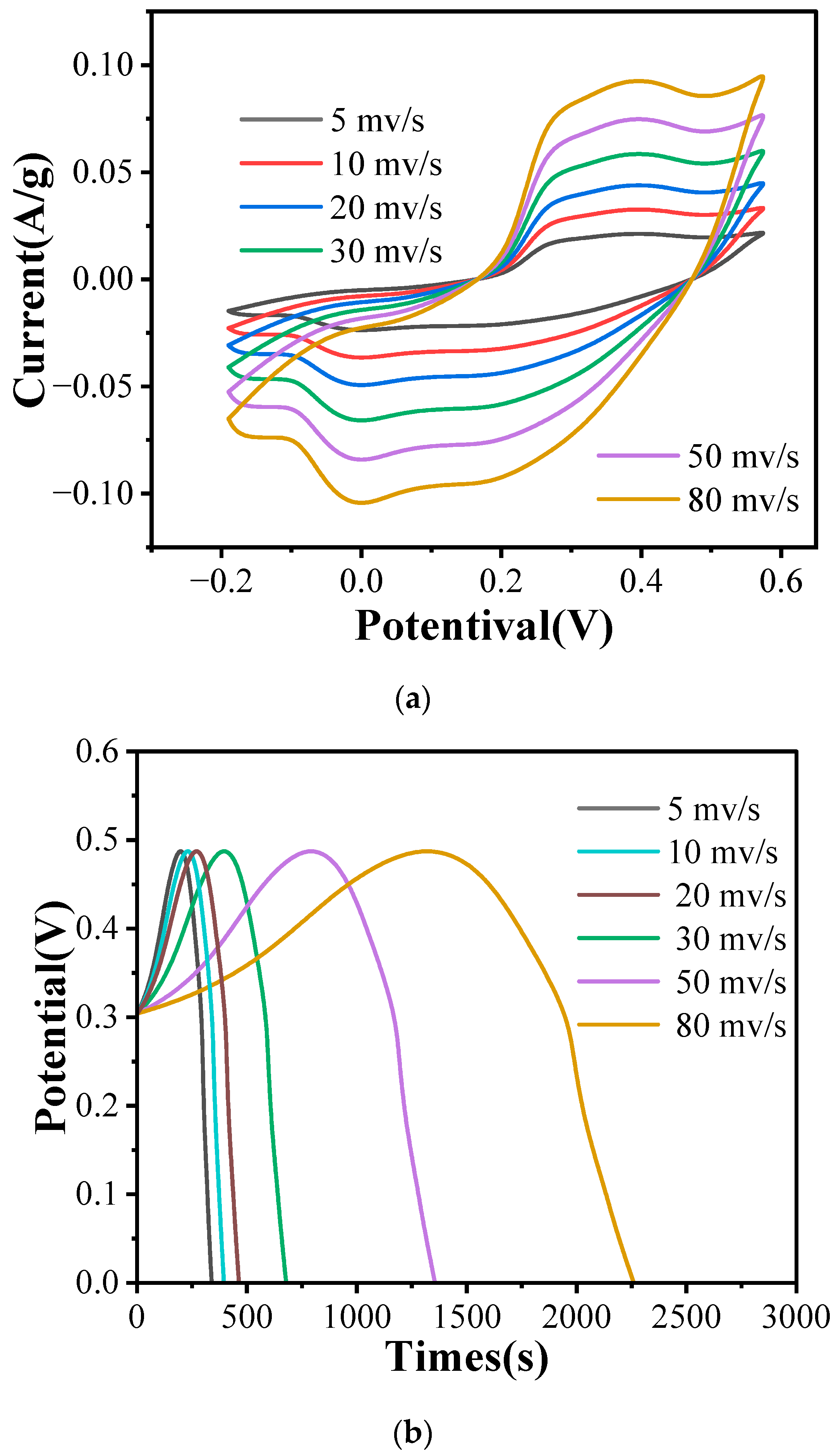
4 electrode in KOH alkaline electrolyte. The positive potential window of the experiment was set to −0.4 V to 0.4 V, and within this range, cyclic voltammetry (CV) curves of the sample were collected at six scan rates (5, 10, 20, 30, 50, and 80 mV/s), with the test results shown in
Figure 14a. It can be observed from
Figure 14a that the CV curves of Ce-FeWO
4 at the six scan rates all exhibit an approximately non-rectangular shape, and each curve has obvious redox peaks—this feature is consistent with the typical behavior of pseudocapacitive materials, indicating that the material has pseudocapacitive charge storage characteristics. Meanwhile, as the scan rate increases from 5 mV/s to 80 mV/s, the peak current corresponding to each curve shows a linear upward trend, and the overall shape of the curves remains basically unchanged without obvious distortion or peak shift; this experimental phenomenon fully indicates that Ce-FeWO
4 can quickly participate in electrochemical reactions at different scan rates and has a fast chemical reaction kinetic rate; it also reflects that the material has high structural stability, whose electrochemical performance will not decrease due to changes in scan rate.
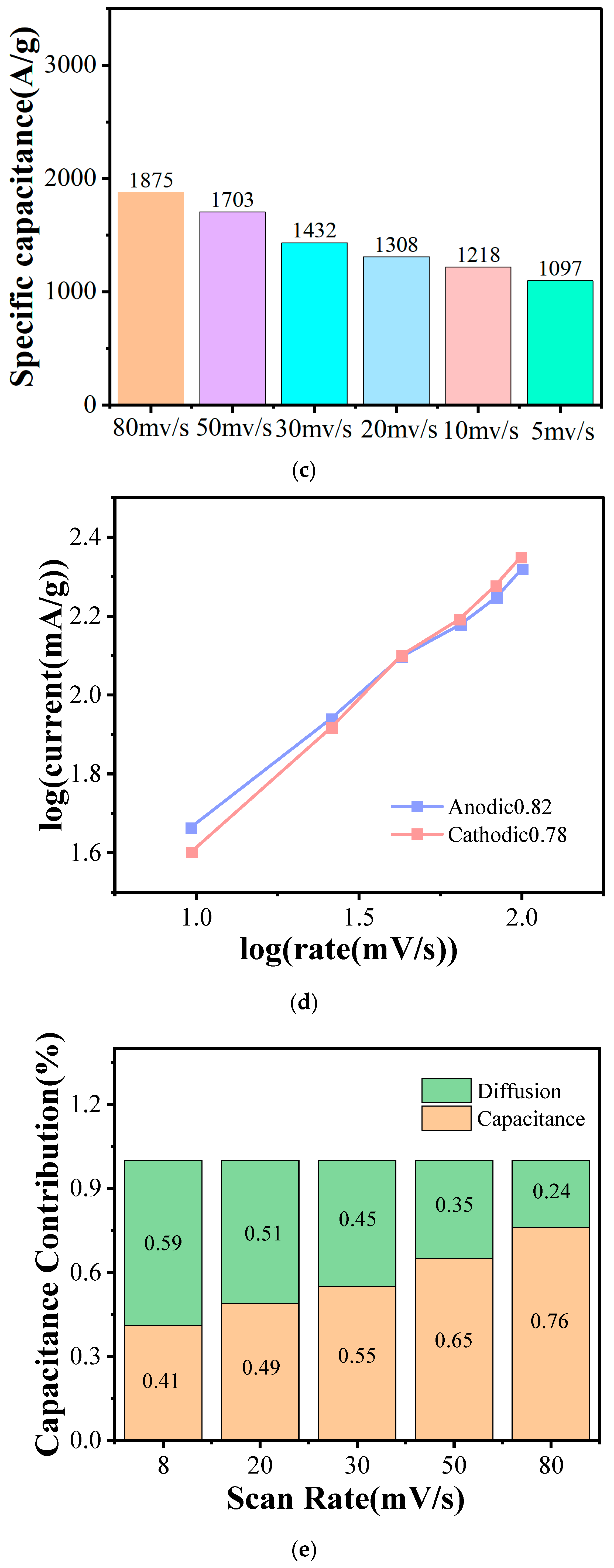
Figure 14a–c shows the specific capacitance test results at current densities of 1, 5, 10, 20, 30, 50, and 80 mV/s. The specific capacitances are 1875, 1703, 1432, 1308, 1218, and 1097 F/g, respectively. The reason for the increase in specific capacitance is that as the scan rate increases, the discharge time prolongs, which enhances the activity of the active substances; alternatively, this may be due to the increased contact time between the electrode and the electrolyte at higher scan rates. Even so, the material still possesses excellent chemical properties.
Herein, i and v represent the peak current and scan rate, respectively; a is a constant, and b can be derived from the functional relationship between log(i) and log(v). I(v), v, K
1v, and K
2v represent the current effect, scan rate, capacitive process, and diffusion-controlled process, respectively. Meanwhile, we also investigated the diffusion effect and kinetic behavior of Ce-FeWO
4 nanomaterials. Using the above data, the linear plot of log(i) versus log(v) is shown in
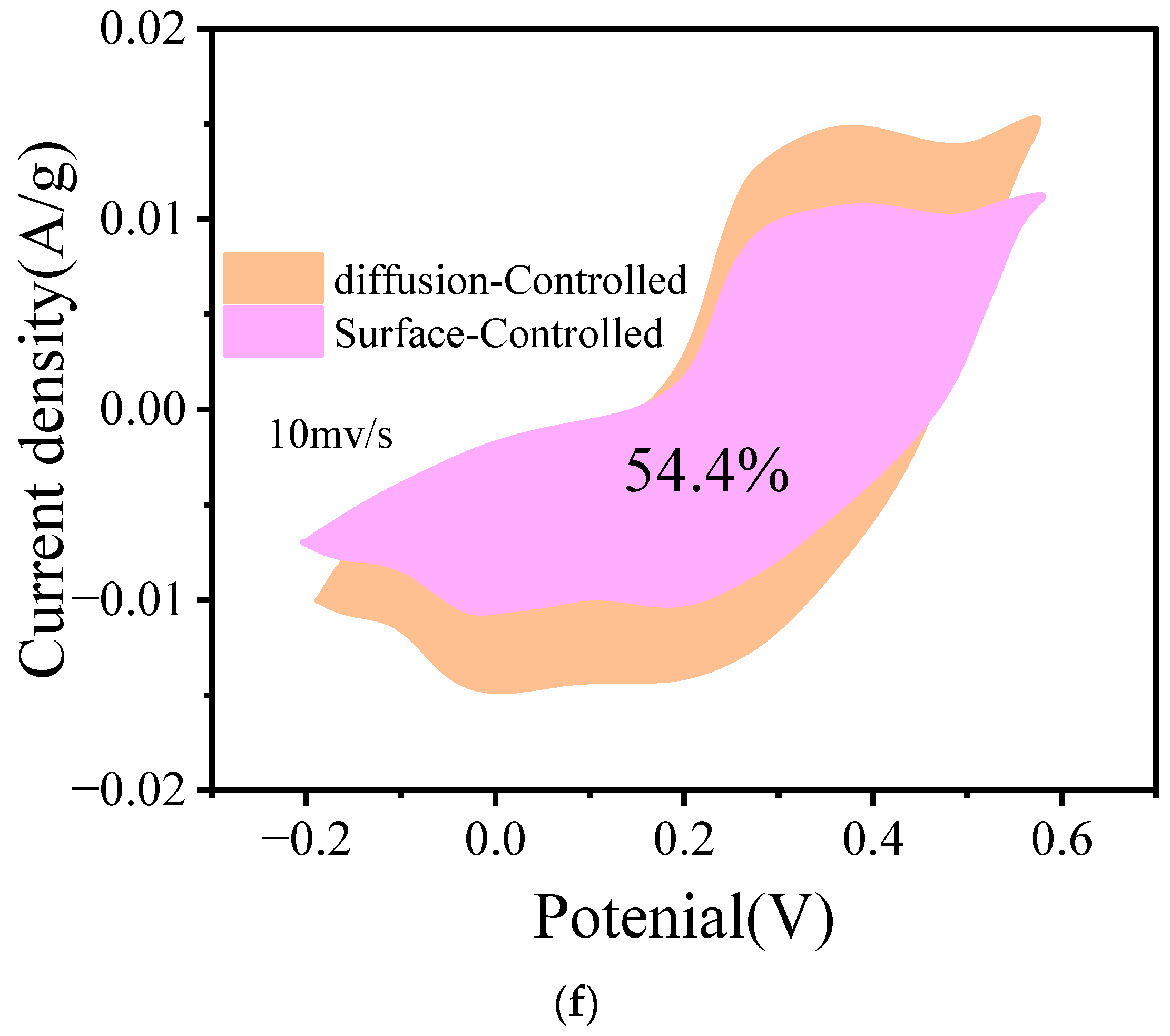
Figure 14d, where log(i) and log(v) exhibit a linear fitting relationship. According to the equation i = av^b, diffusion control dominates when b = 0.5, while capacitive control dominates when b = 1.0. In this study, the b-values of the anode and cathode are 0.80 and 0.77, respectively, both of which are close to 1. The contribution rate of pseudocapacitance at different scan rates is shown in
Figure 14e, which indicates that Ce-FeWO
4 nanomaterials are mainly controlled by surface pseudocapacitance, which is supplemented by diffusion control, and the two control modes complement each other; the surface control and diffusion control of current at 10 mV/s are shown in
Figure 14f. Based on the above analysis, the Ce-FeWO
4 nanocomposite material exhibits remarkable pseudocapacitive characteristics, with its charge storage mechanism primarily governed by surface-controlled processes, accompanied by partial diffusion-controlled behavior. By fitting the relationship between log(i) and log(v), the b-values for the anodic and cathodic processes were determined to be 0.80 and 0.77, respectively, with both approaching 1, indicating that the material displays pronounced capacitive behavior in electrochemical reactions. Further analysis using the empirical formula i = k1v + k2v^(1/2) for currents at different scan rates revealed that at low scan rates, ions have sufficient time to diffuse into the electrode interior, making the diffusion-controlled contribution significant. As the scan rate increases (e.g., up to 140 mV/s), the pseudocapacitive contribution rises substantially to approximately 75%, indicating that under high scan rate conditions, the electrode reactions rely more on rapid Faradaic processes at the surface or near-surface regions. This phenomenon can be attributed to the high specific surface area and abundant surface-active sites provided by the Ce-FeWO
4 nanostructure, which facilitate rapid ion adsorption/desorption and surface redox reactions, thereby enhancing the material’s pseudocapacitive performance. Therefore, the energy storage mechanism of Ce-FeWO
4 is a synergistic combination of capacitive and diffusion behaviors, exhibiting excellent pseudocapacitive characteristics at high scan rates.
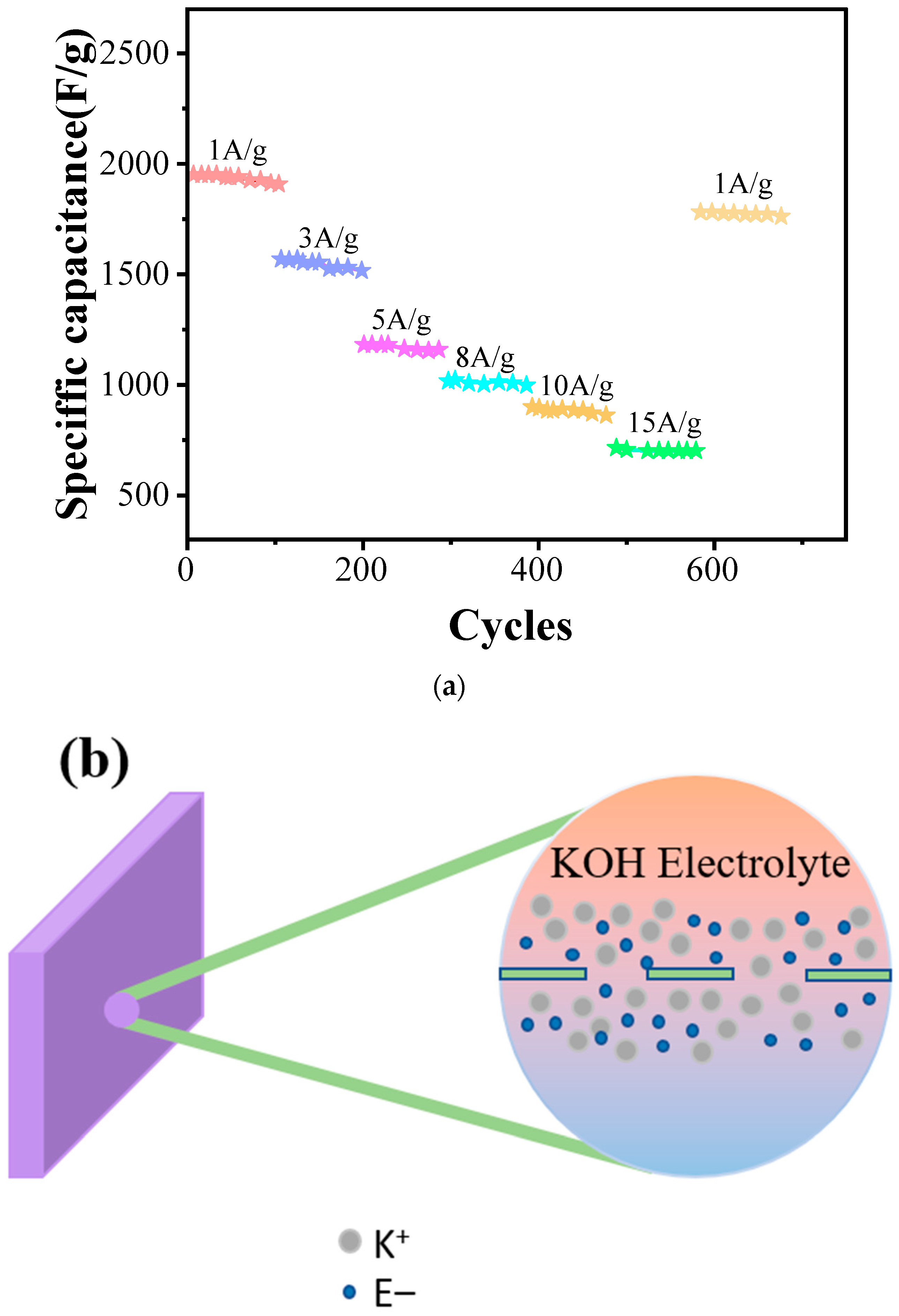
Figure 15 presents the charge–discharge cycling test results of the Ce-FeWO
4 electrode material at a current density of 1 A/g. Under this current density, the material exhibits an ultra-high specific capacitance of 1954 F/g; after 100 alternating charge–discharge cycles, followed by another 5400 cycles at different current densities, when the current density is restored to 1 A/g, its specific capacitance still remains at 1907 F/g with almost no capacitance decay, and the capacity retention rate is as high as 97.6%—this result fully proves that Ce-FeWO
4 has excellent charge–discharge cycle stability and long-term cycling performance. In addition, the material also demonstrates outstanding high-current charge–discharge characteristics; even at a high current density of 20 A/g, it can still maintain a relatively high specific capacitance. From the perspective of the mechanism, the doping of cerium effectively increases the specific surface area of the material, which allows more active sites to form on the surface of the nanorod structure, thereby promoting the occurrence of more redox reactions and ultimately achieving a significant improvement in the material’s specific capacitance.
Figure 15b further explains the specific reasons why the Ce-FeWO
4 electrode material exhibits excellent electrochemical performance: it has good electrical conductivity, the nanomaterial has a large specific surface area, and doping forms oxygen vacancies, all of which result in its excellent electrochemical performance and high specific capacitance.
5. Overview of Asymmetric Supercapacitor Device Performance Analysis
To conduct an in-depth analysis of the chemical properties of Ce-FeWO
4, this paper constructs an asymmetric supercapacitor using Ce-FeWO
4 as the positive electrode and carbon nanotubes (CNTs) as the negative electrode, with the specific preparation process integrating electrode fabrication, mass loading control, and substrate treatment as follows: First, the positive electrode is fabricated. Ce-FeWO
4, conductive carbon black, and polyvinylidene fluoride (PVDF) are mixed at a mass ratio of 5:1:1, and an appropriate amount of solvent is added dropwise and stirred evenly. The mixture is then coated onto the surface of the carbon cloth substrate. Prior to coating, the carbon cloth, which acts the electrode substrate, undergoes basic cleaning to remove surface impurities and oil stains, ensuring good adhesion between the active material and the substrate. After coating, the electrode material is dried in a vacuum environment at 100 °C for 10 h to obtain a positive electrode with a geometric area of 1 cm
2, and the mass loading of the active material (Ce-FeWO
4) on the carbon cloth is precisely controlled during the coating process to guarantee stable electrochemical performance. Next, the negative electrode is prepared. Hydrophilic carbon nanotubes (CNTs), conductive carbon black, and PVDF are mixed at the same mass ratio of 5:1:1. Similarly, an appropriate amount of solvent is added dropwise and thoroughly stirred before being coated onto the pretreated carbon cloth substrate. After vacuum drying at 100 °C for 10 h, a negative electrode with a geometric area of 1 cm
2 is obtained, and the mass loading of the CNT-based active layer on the carbon cloth is also strictly regulated to match the positive electrode’s performance. Subsequently, the electrode shells used for assembly are subjected to substrate-like treatment: they are ultrasonically cleaned with ethanol to eliminate surface contaminants and then dried in a blast drying oven. Then, device assembly is carried out. First, place the negative electrode shell on the workbench, put the negative electrode sheet into it, and add a small amount of polyvinyl alcohol-potassium hydroxide (PVA-KOH) electrolyte dropwise to soak the electrode sheet. Next, place a polypropylene separator and add several drops of electrolyte to moisten it; then put the positive electrode sheet and add several drops of electrolyte to soak it. After that, place the gasket, shrapnel, and positive electrode shell in sequence. The assembled device is pressed with a tablet press and finally cured at 25 °C and vacuum-dried for 20 h to complete the entire preparation process. As shown in
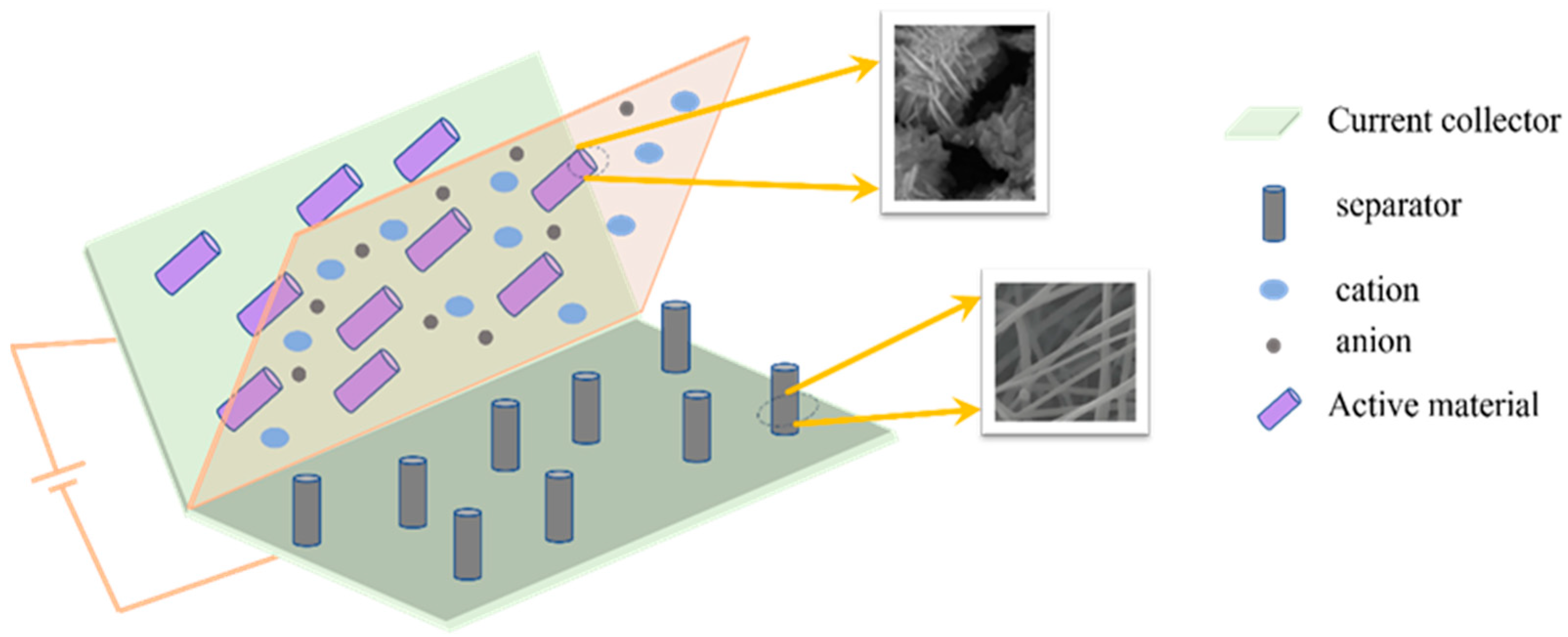
Figure 16 is a schematic diagram illustrating the working principle of the supercapacitor.
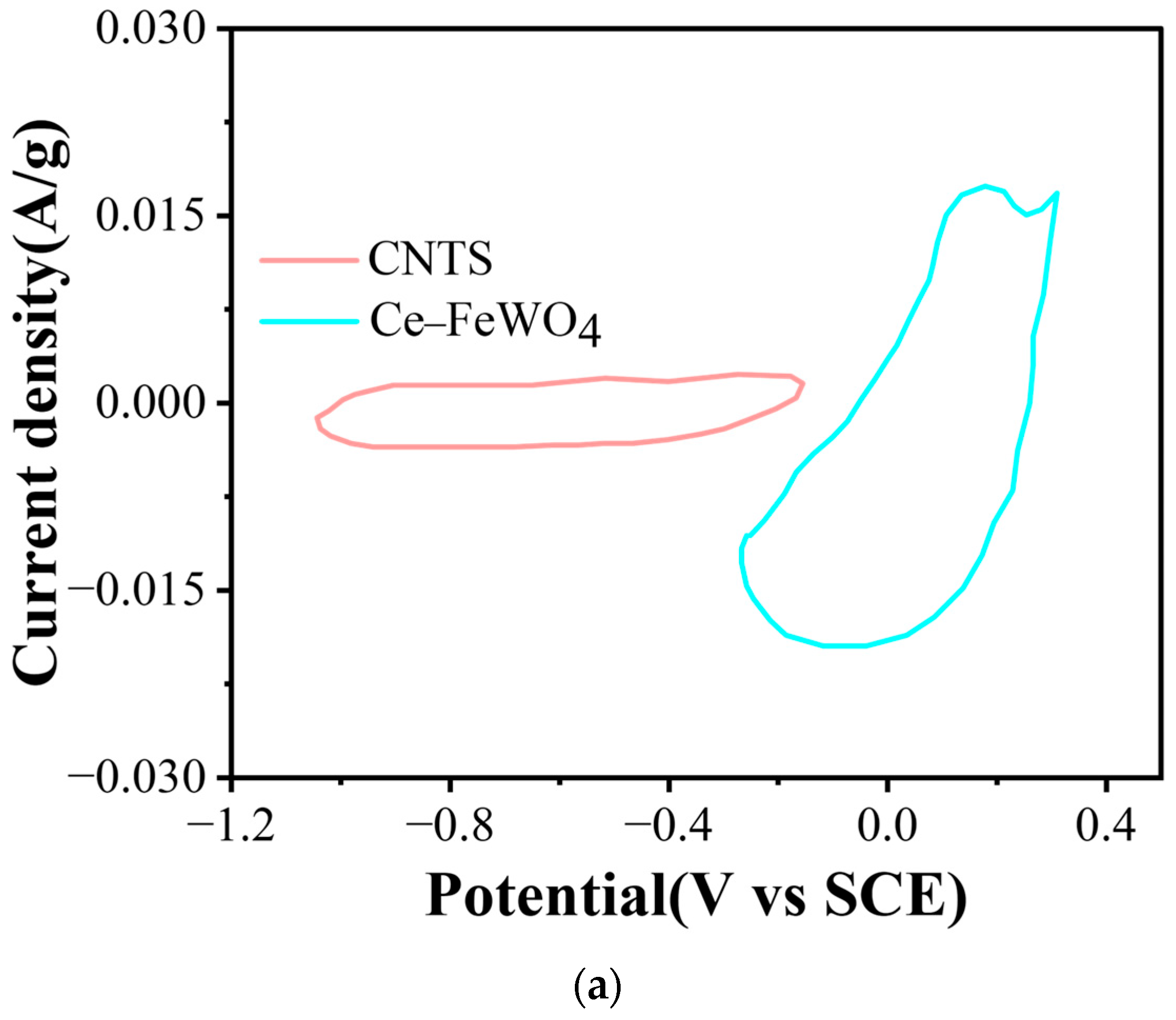
Figure 17a presents the cyclic voltammetry (CV) curves of the Ce-FeWO
4//CNT electrode and the CNT electrode; the relevant three-electrode tests in this study were completed in a 6 M KOH electrolyte at a scan rate of 4 mV/s. On the one hand,
Figure 17b shows the CV curves of Ce-FeWO
4//CNTs at different scan rates, from which it can be seen that the maximum voltage of the Ce-FeWO
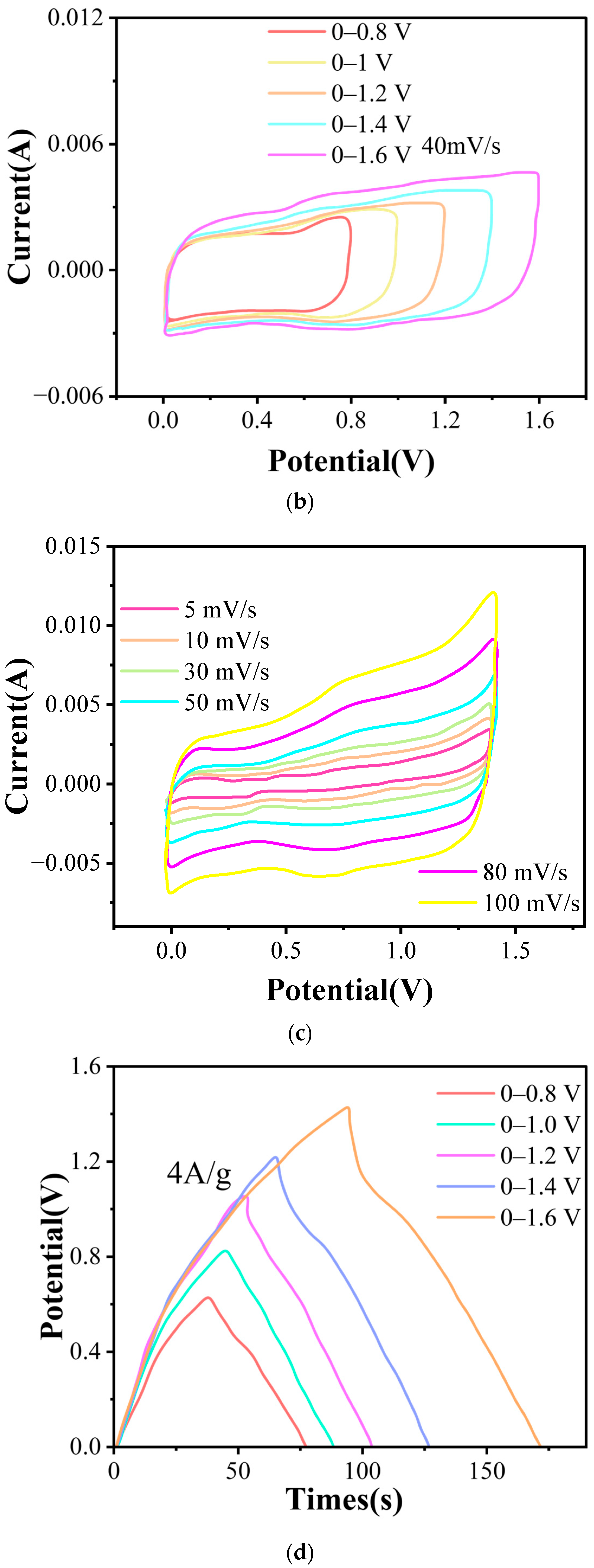
4//CNTs electrode is 0.6 V and the minimum voltage of the CNT electrode is −1 V—thus, the asymmetric supercapacitor device composed of these two types of materials has a theoretical voltage range of 0–1.6 V, indicating that both materials exhibit excellent supercapacitive performance within complementary working potential ranges, and the device further enhances this performance compatibility through the synergistic effect of positive and negative electrode materials; on the other hand, this figure also presents the CV curves of Ce-FeWO
4//CNTs under different voltage windows at a scan rate of 40 mV/s, and the results show that when the voltage window is 1.6 V, the device capacity reaches its peak without polarization reactions, so this study decided to explore the electrochemical performance of the Ce-FeWO
4//CNT asymmetric device within the voltage window of −1–1.6 V.
Figure 17c shows the CV curves within a voltage window of 1.8 V and a scan rate range of 5 mV/s to 100 mV/s, and the similar shape of each curve proves that the device has good stability and excellent electrochemical performance. At the same time,
Figure 17d compares the charge–discharge curves of Ce-FeWO
4//CNTs under different voltage windows at different scan rates, and all these curves show good symmetry, indicating that the device has excellent reversibility and sufficient electrochemical characteristics. From the perspective of the mechanism, the positive electrode material Ce-FeWO
4 works following the Faradaic pseudocapacitance mechanism; during the charge–discharge process, the valence states of some ions (such as iron ions) change, and charge storage and release are realized through fast and reversible redox reactions—the redox peaks appearing in the CV curves at different scan rates further confirm the occurrence of such reactions in this material. Redox peaks appear in the CV curves of Ce-FeWO
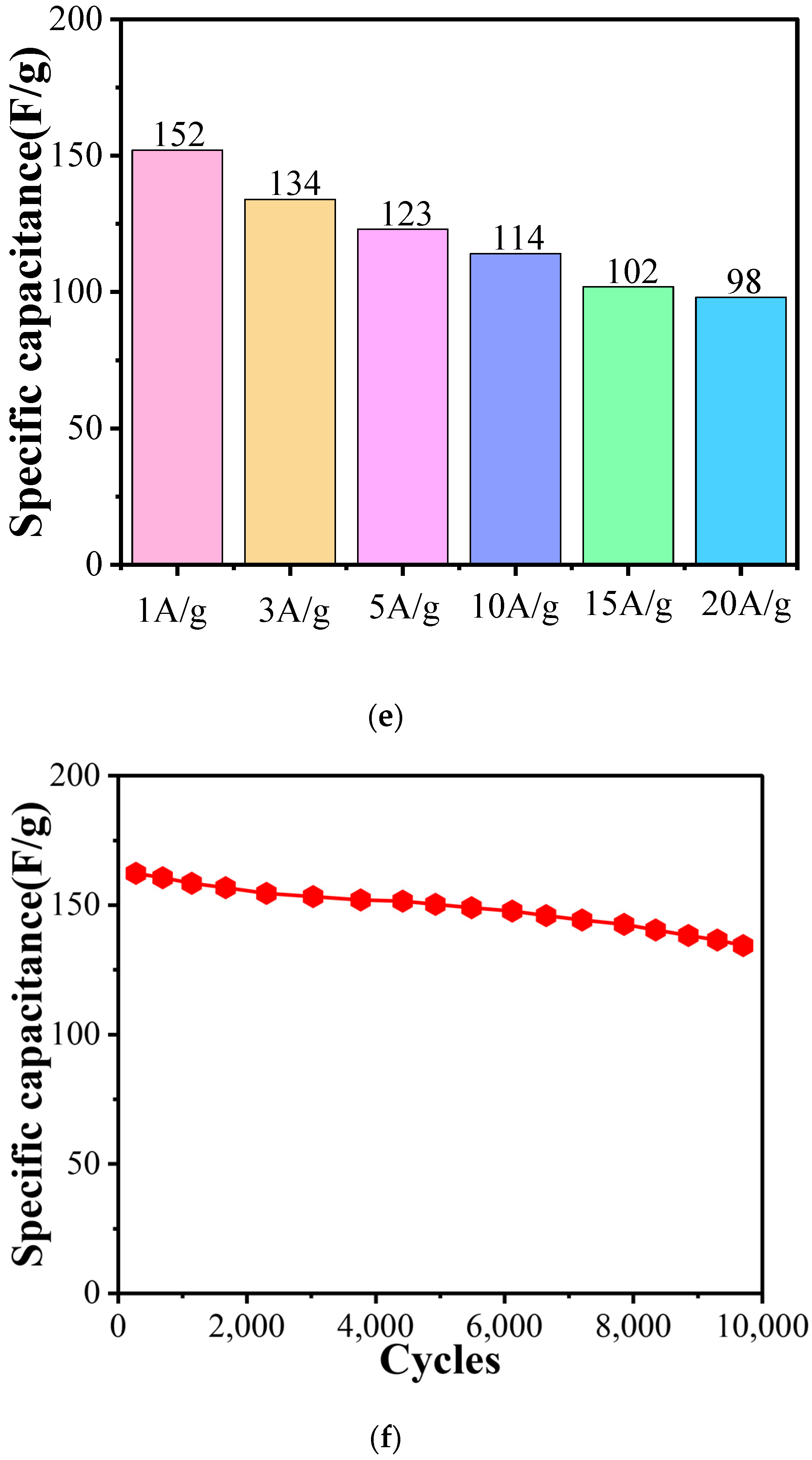
4//CNTs at different scan rates; with the synergistic effect of the positive and negative electrode materials, the device exhibits a specific capacitance of 272 F/g at a current density of 1 A/g, and its calculated energy density reaches 81.4 Wh/kg and its power density reaches 768 W/kg; after 10,000 cycles of testing at a current density of 3 A/g, the capacitance retention rate remains at 94.6%, and it occupies a relatively high position in the Ragone plot.
Figure 17e shows the change in specific capacitance of Ce-FeWO
4//CNTs at different current densities; as the current density continues to increase, the specific capacitance of the device decreases from 152 F/g to 98 F/g, and the capacity retention rate still reaches 64.5%. This phenomenon may be due to the accelerated charge transfer frequency after the increase in current density, which leads to an increase in the surface resistance of the material electrode, thereby affecting the specific capacitance.
Figure 17f shows that after 10,000 cycles of testing at a current density of 3 A/g, the capacitance retention rate of the device is still 94.6%.
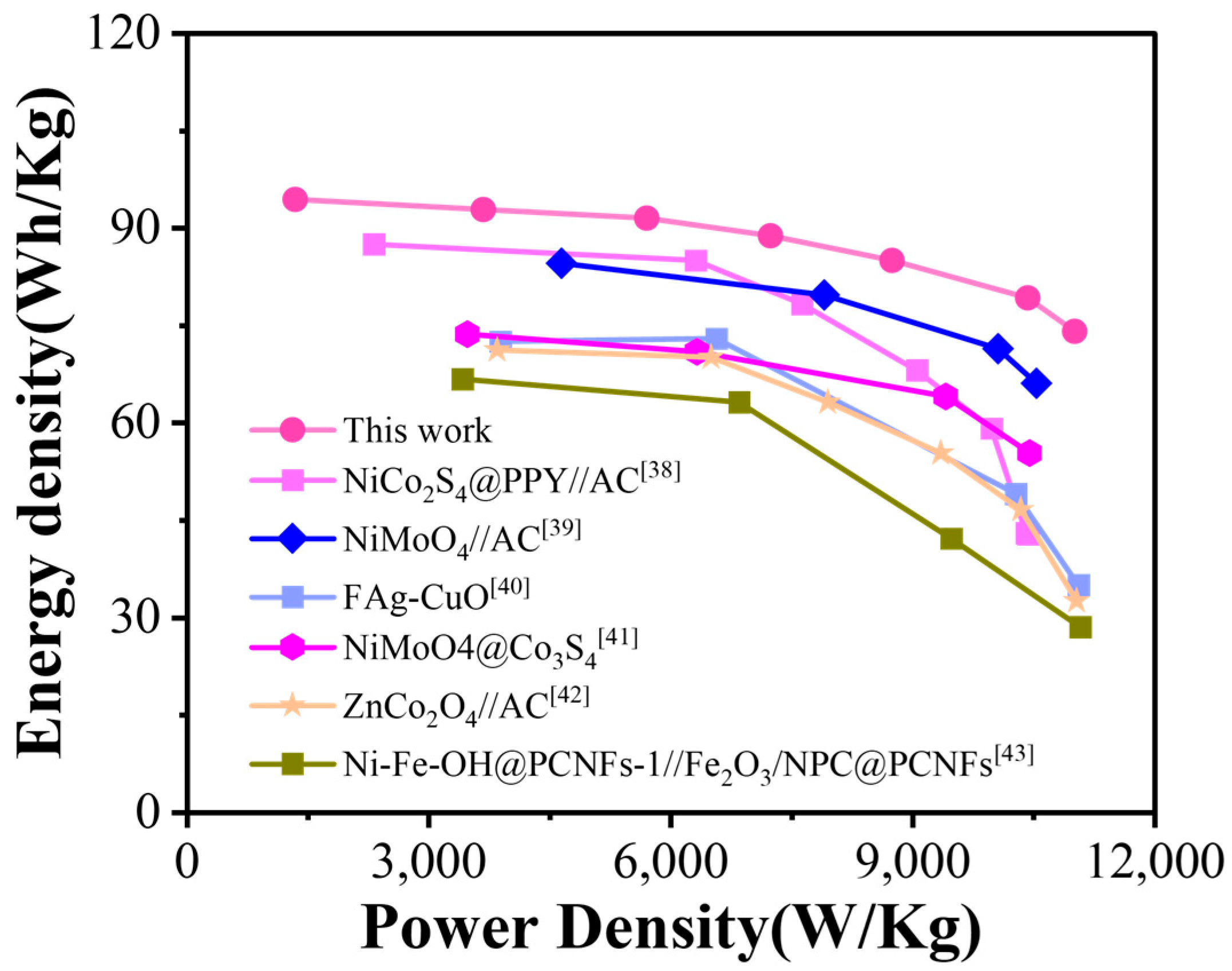
Figure 18 shows that the device has an energy density of 81.4 Wh/kg and a power density of 768 W/kg. Compared with other similar devices, this device exhibits superior energy density and power density—an advantage also attributed to the device’s effective balance between energy storage and power output performance requirements through the synergistic effect of the positive and negative electrode materials.