Article

Light-Induced Surface Wrinkling on Azo-Based Composite Films
1
School of Materials Science and Engineering, Tianjin University, Tianjin 300072, China
2
Tianjin Key Laboratory of Building Green Functional Materials, School of Materials Science and Engineering, Tianjin Chengjian University, Tianjin 300384, China
*
Authors to whom correspondence should be addressed.
Coatings 2022, 12(5), 608; https://doi.org/10.3390/coatings12050608

Submission received: 27 March 2022 / Revised: 23 April 2022 / Accepted: 27 April 2022 / Published: 29 April 2022
(This article belongs to the Special Issue Functional Polymer Films and Their Applications)

Abstract

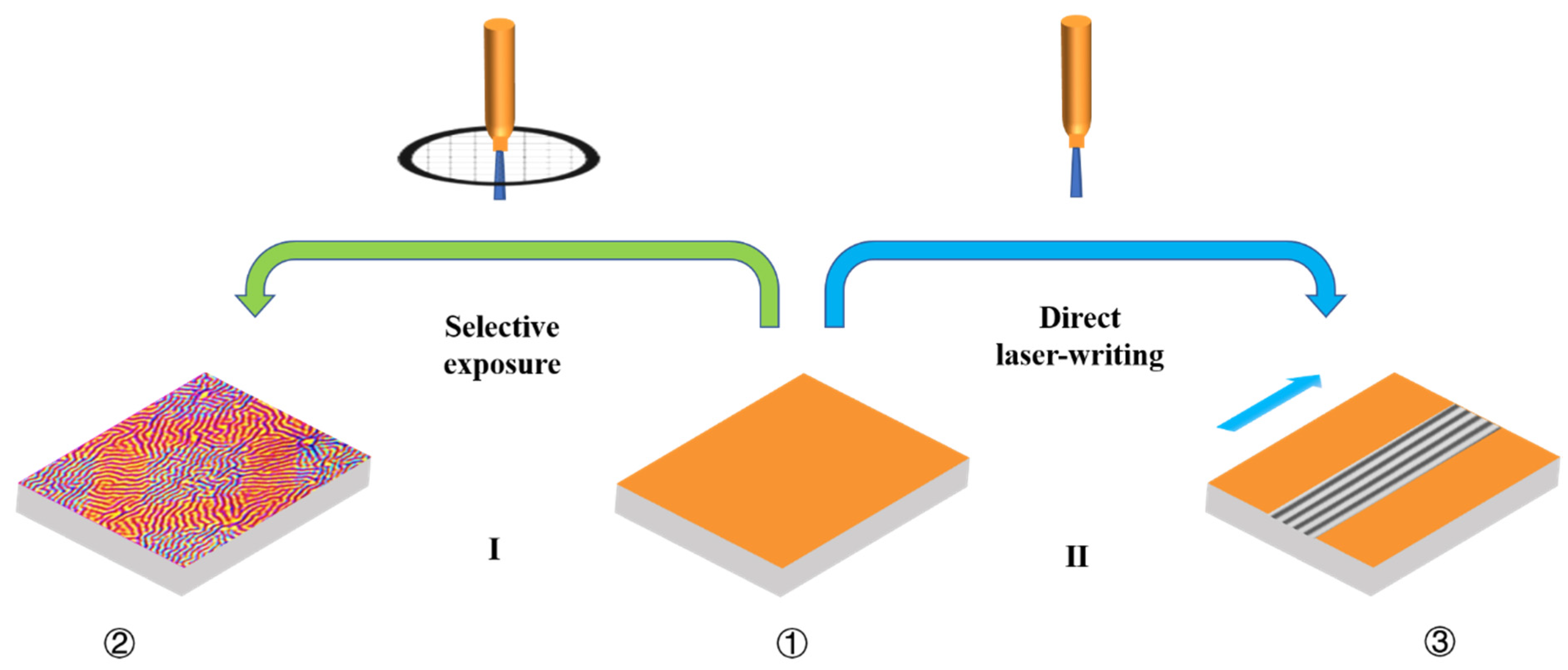
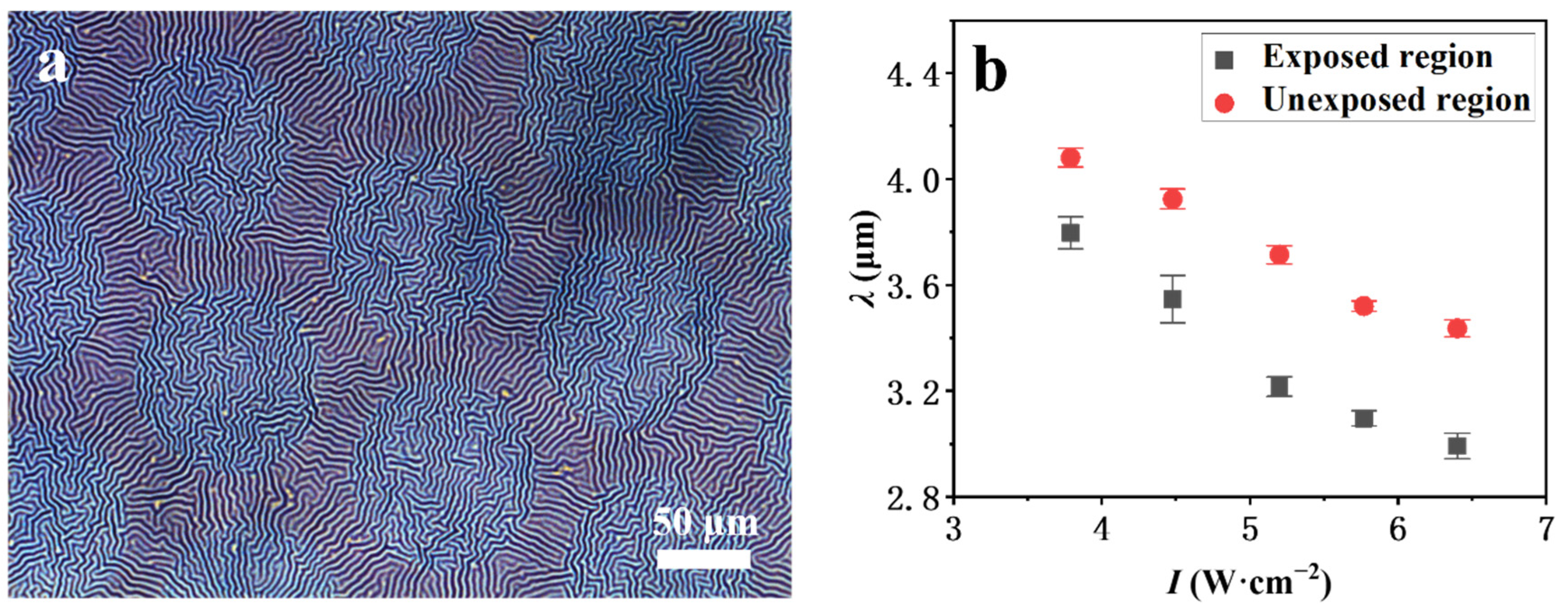
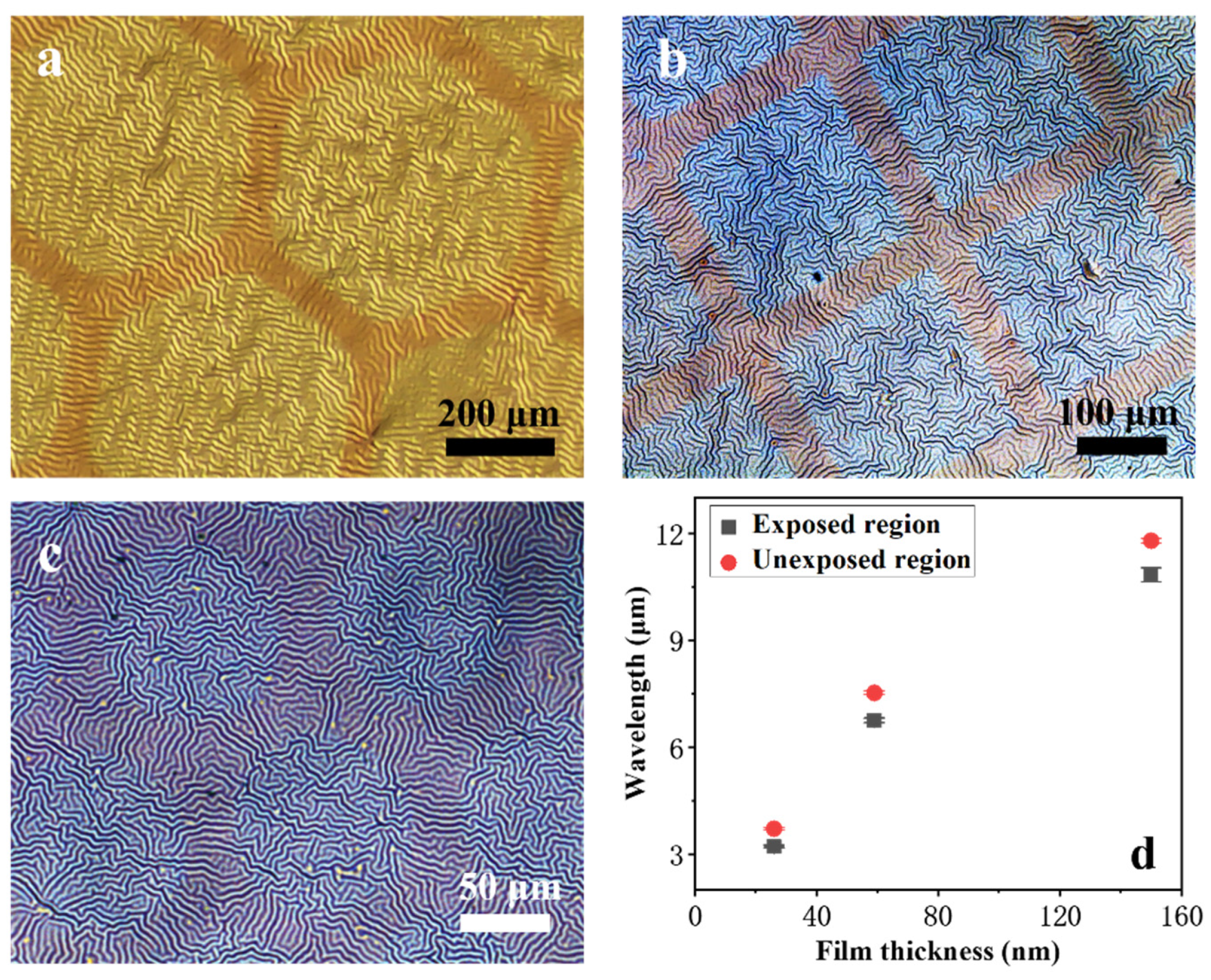
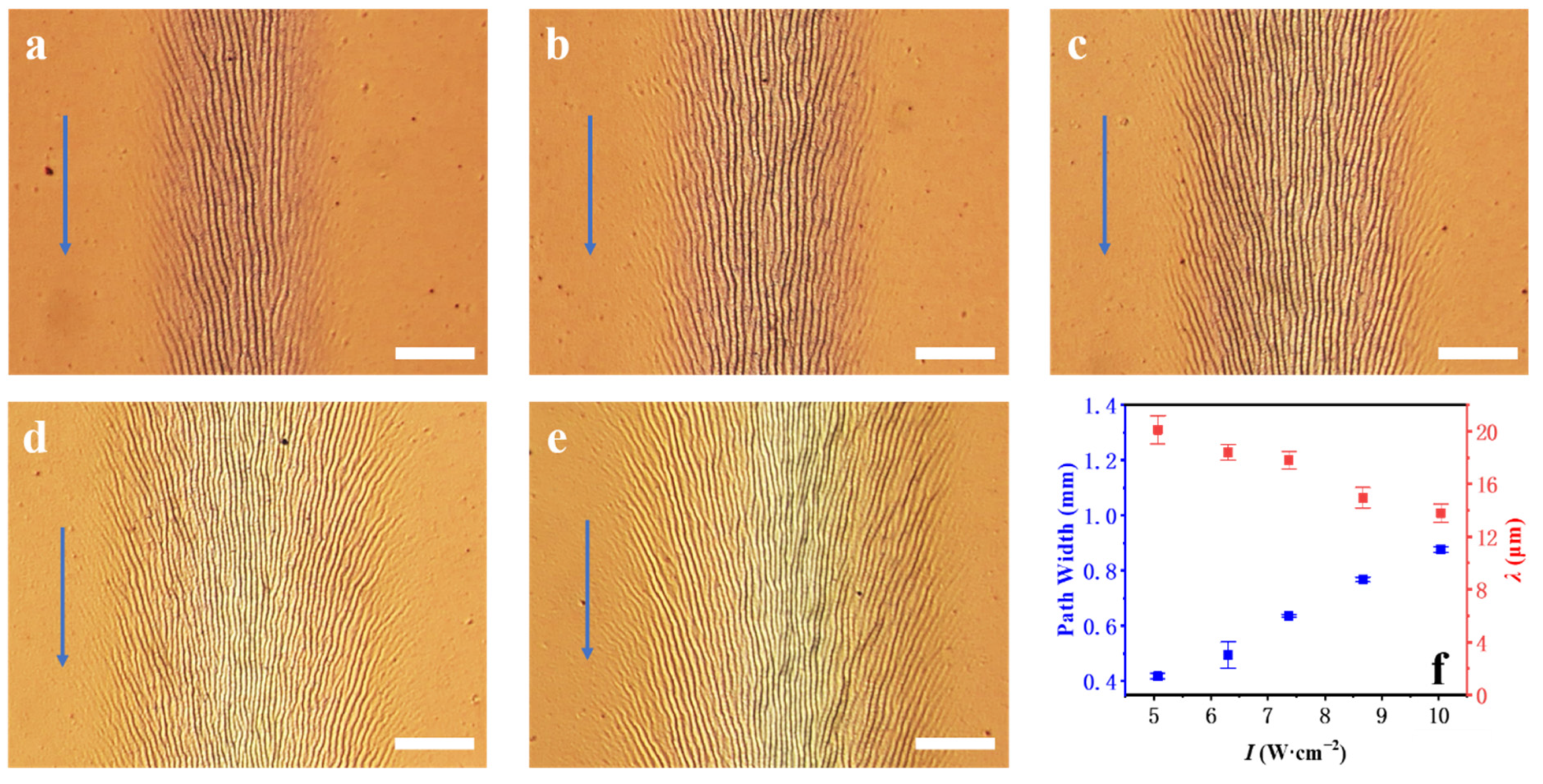
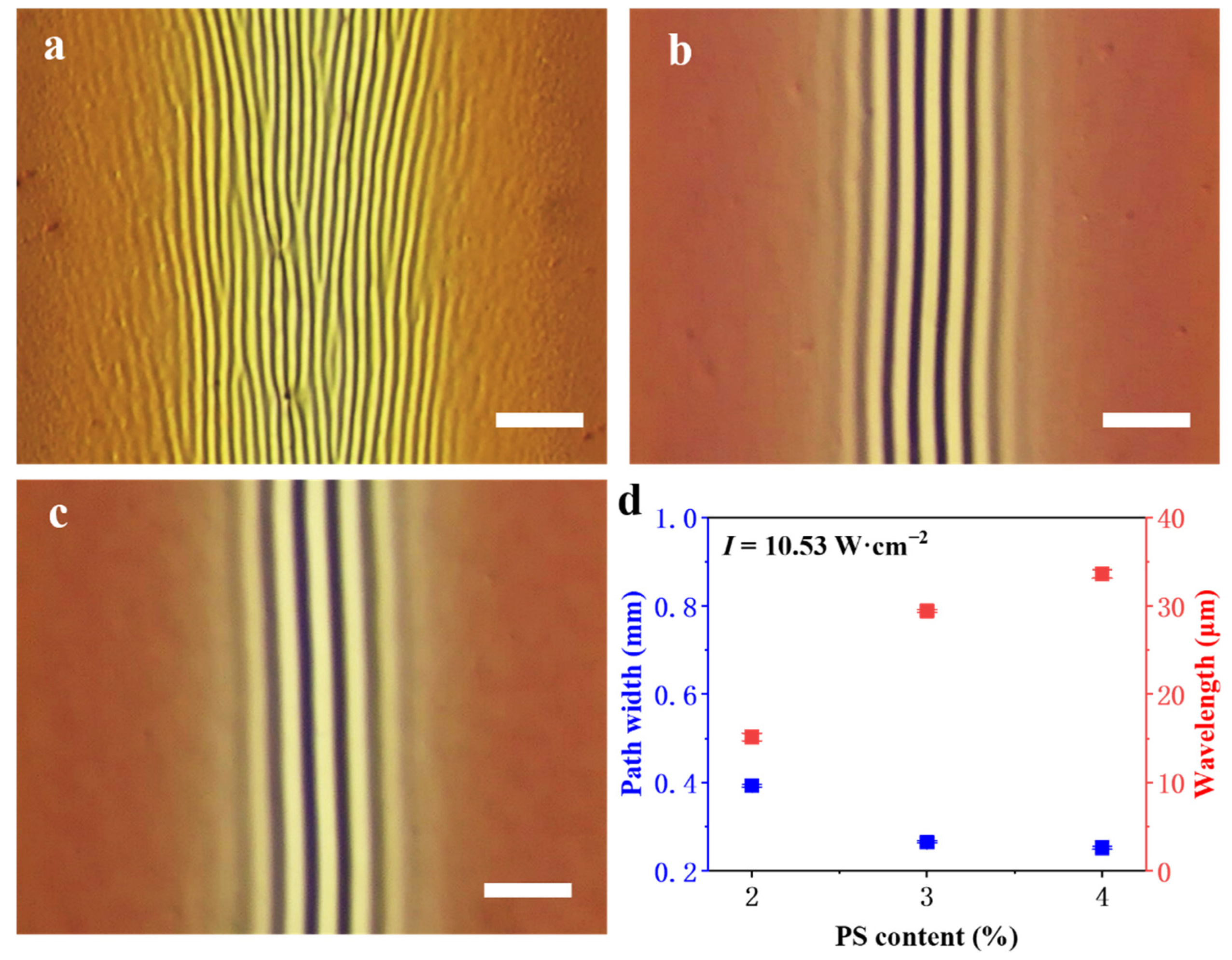
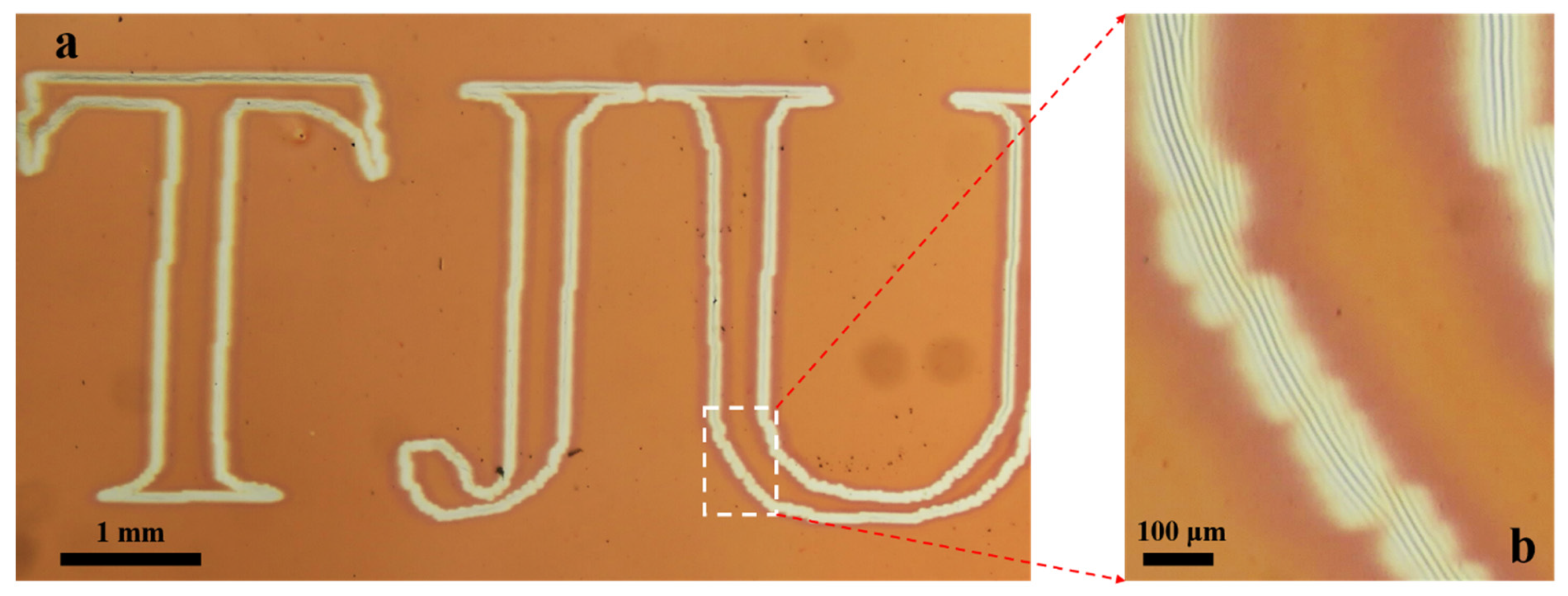
Here we report a simple micro/nano patterning strategy based on light-induced surface wrinkling. Namely, we fabricated a film/substrate system composed of polydimethylsiloxane (PDMS) as a soft substrate and non-photosensitive polymer polystyrene (PS) mixed with azo-polymer (polydisperse orange 3, PDO3) as a stiff film. Taking advantage of the photo-thermal effect and photo-softening effect of PDO3, we fabricated various microstructured wrinkling morphologies by a simple light illumination. We investigated the influence of two exposure modes (i.e., static selective exposure and dynamic moving exposure), the illumination conditions, the composition of the blended film, and the film thickness on the resulting wrinkling patterns. It is highly expected that this azo-based photosensitive wrinkling system will be extended to functional systems for the realization of light-induced surface micro/nanopatterning.
Keywords: azopolymer; polystyrene; surface wrinkling; photoresponses; polydimethylsiloxane azopolymer; polystyrene; surface wrinkling; photoresponses; polydimethylsiloxane