Article

Optimization Study of Fluffy Materials Flocking Drainage Pipes to Resist Blockage Based on MD Binding Energy


1
State Key Laboratory of Mountain Bridge and Tunnel Engineering, Chongqing Jiaotong University, Chongqing 400074, China
2
College of Civil Engineering, Chongqing Jiaotong University, Chongqing 400074, China
*
Author to whom correspondence should be addressed.
Coatings 2021, 11(7), 853; https://doi.org/10.3390/coatings11070853

Submission received: 25 June 2021 / Revised: 13 July 2021 / Accepted: 13 July 2021 / Published: 15 July 2021
(This article belongs to the Special Issue Corrosion and Degradation of Materials)

Abstract

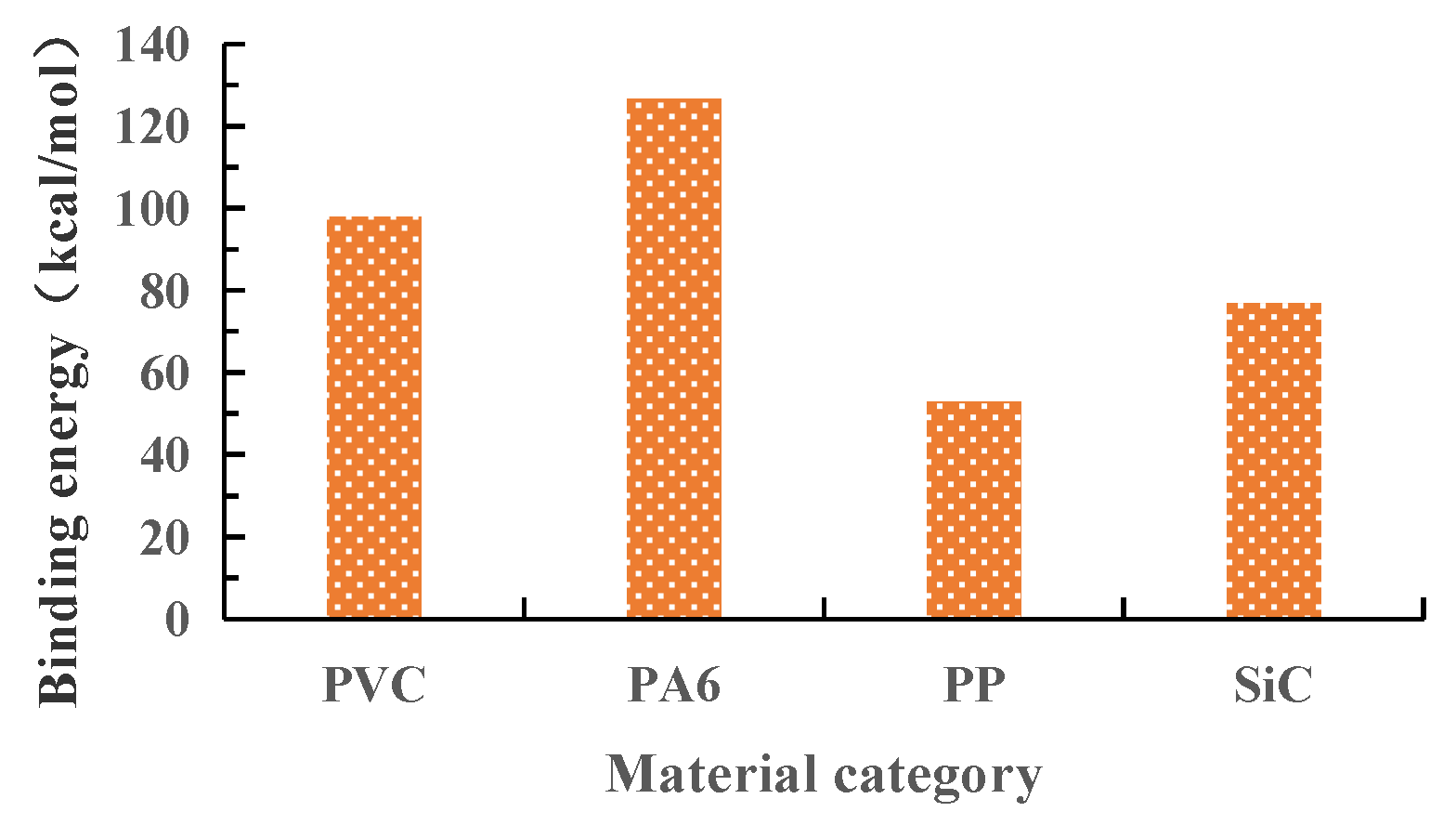
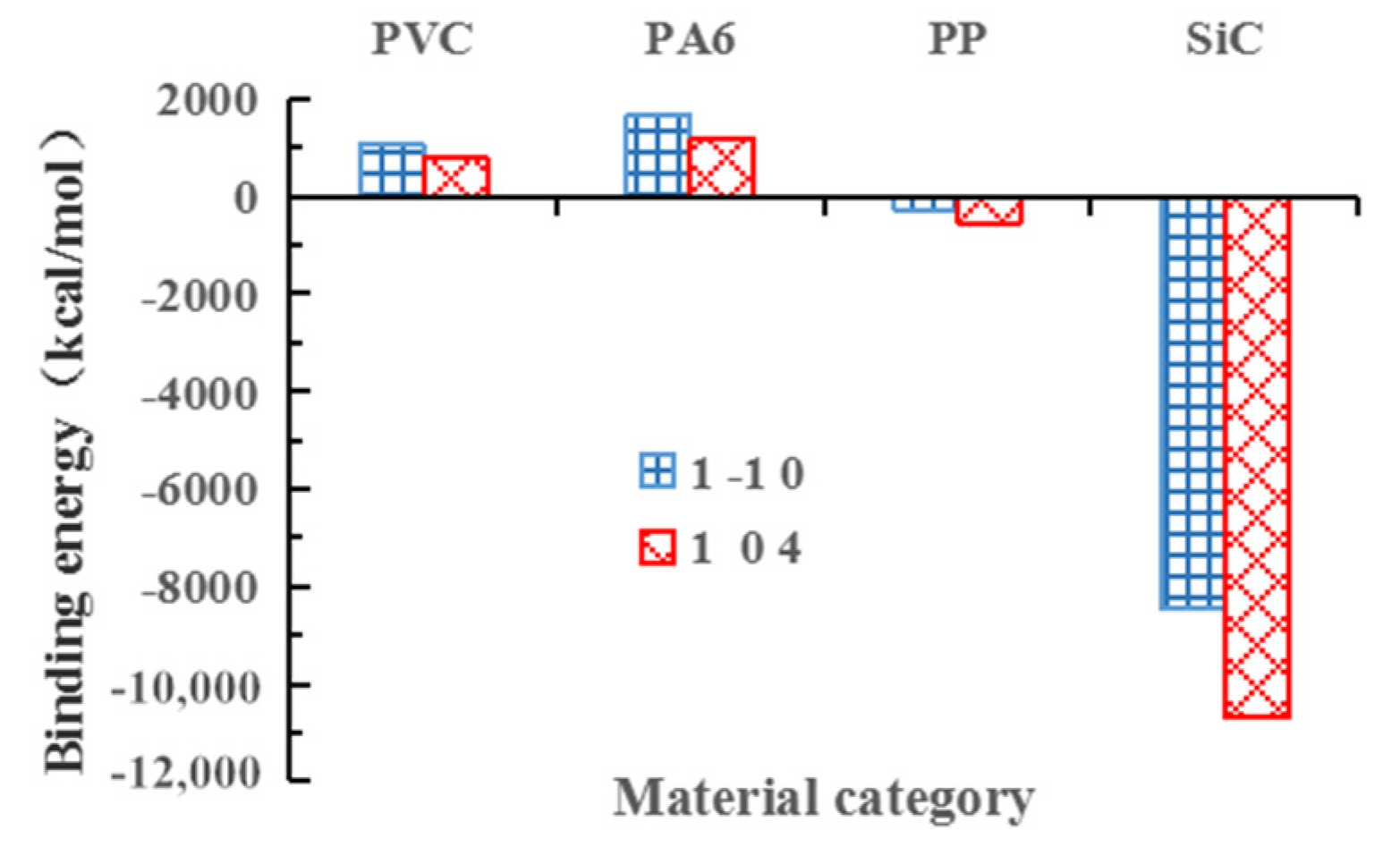
Drainage pipe blockage resulting from crystals is one of the causes for cracking and leakage of tunnel lining. Therefore, effective prevention from drainage pipe blockage caused by crystals is crucial to ensure the safety and stability of lining structures during the operation of tunnel drainage system. Based on a large number of indoor model tests and numerical simulation analyses, binding energy between four materials and the calcium carbonate aqueous solution (“solid + liquid” system) and that between the four materials and the two typical growth crystals of calcium carbonate (“solid + solid” system) were studied. The research results indicated that: (1) The four materials all had an adsorption effect on the calcium carbonate aqueous solution system, and the PA6 had the greatest adsorption effect while the PP had the smallest adsorption effect; (2) There was spontaneous adsorption between the PVC or PA6 and the two typical growth crystals of calcium carbonate and no adsorption between the PP or SiC and the two typical growth crystals of calcium carbonate unless external energy was in place; (3) The PP and SiC can be used as the materials for drainage pipe flocking, but it shall be ensured that the fluffy material has a good geometrical property. The prevention technology for crystallization that causes drainage pipe blockage fills the gap in the research of drainage pipe blockage caused by crystals, which can reduce the maintenance cost for the operation of the tunnel drainage system and ensure safe and normal operation of the tunnel.
Keywords: molecular dynamics; binding energy; crystallization prevention; flocking for resisting blockage; drainage pipe molecular dynamics; binding energy; crystallization prevention; flocking for resisting blockage; drainage pipe