Article

Genomic and GWAS-Based Insights into Antimicrobial Resistance in Shewanella algae Isolated from Penaeus monodon


by
Ponsit Sathapondecha
1,
Wichai Pornthanakasem
2,
Timpika Thepsuwan
2,
Pacharaporn Angthong
2,
Wiyada Chumpol
2,
Kamonwan Lunha
2,
Suganya Yongkiettrakul
2 and
Wanilada Rungrassamee
2,*
1
Division of Biological Science, Faculty of Science, Prince of Songkla University, Hat Yai 90110, Songkhla, Thailand
2
National Center for Genetic Engineering and Biotechnology, National Science and Technology Development Agency, 111 Thailand Science Park, Phahonyothin Road, Khlong Luang 12120, Pathum Thani, Thailand
*
Author to whom correspondence should be addressed.
Antibiotics 2026, 15(4), 405; https://doi.org/10.3390/antibiotics15040405
Submission received: 31 January 2026 / Revised: 11 March 2026 / Accepted: 7 April 2026 / Published: 16 April 2026

Abstract

Background/Objectives: The emergence of antimicrobial-resistant (AMR) pathogens in aquaculture ecosystems poses a significant risk to both food security and human health. Shewanella species are recognized as significant AMR reservoirs, yet their prevalence and resistance mechanisms within a shrimp-related ecosystem remain poorly characterized. This study aimed to perform a genotypic and phenotypic characterization of S. algae VK101, isolated from wild-caught black tiger shrimp (Penaeus monodon) broodstock. Methods: A complete 5.21 Mb genome was generated using a hybrid Illumina and Oxford Nanopore sequencing approach. Antimicrobial susceptibility was evaluated for 21 antibiotics via Minimum Inhibitory Concentration (MIC) testing. Comparative pangenomics and genome-wide association studies (GWAS) across 125 S. algae genomes were conducted to identify novel resistance determinants. Results: MIC analysis revealed that VK101 was resistant to ampicillin (>16 µg/mL) and colistin (8 µg/mL), while showing intermediate susceptibility to imipenem and ciprofloxacin. In silico analysis identified 205 antimicrobial resistance genes (ARGs), including a perfect hit for the fluoroquinolone resistance gene qnrA3. Notably, no mcr genes were detected. Although VK101 exhibited moderate resistance (8 µg/mL), GWAS across the broader S. algae population linked a specific lptA mutation (K140N) to high-level resistance (64 µg/mL). Other GWAS-identified genes (e.g., czcA, ampC, and oprM) likely represent indirect associations driven by genetic linkage or clade-specific markers rather than direct causal factors. Conclusions: These findings highlighted the presence of multidrug-resistant S. algae in wild-caught P. monodon broodstock, reflecting the occurrence of antimicrobial resistance in aquatic environments. Colistin resistance in these isolates was primarily mediated by chromosomal variants rather than mobile mcr elements, indicating the need for integrated genomic surveillance within the aquaculture value chain.

1. Introduction

Antimicrobial resistance (AMR), particularly bacterial AMR, has become a crucial global public health threat, compromising the efficacy of current therapeutic interventions and preventative measures against infectious diseases [1]. Bacterial AMR was associated with an estimated 5 million deaths in 2019, with this number predicted to increase substantially by 2050. Consequently, urgent action is needed to mitigate the dissemination of resistant determinants [2]. This challenge is particularly pronounced among Gram-negative species [3]. Due to increasingly limited treatment options, the World Health Organization (WHO) has designated many of these, including Escherichia coli, Staphylococcus aureus, Klebsiella pneumoniae, Streptococcus pneumoniae, Acinetobacter baumannii, and Pseudomonas aeruginosa, as high-priority pathogens [4]. Under the One Health framework, human health is intrinsically linked to animal health and the shared environment. Within this paradigm, environmental reservoirs function as critical sources of resistant genetic determinants and opportunistic pathogens, where resistance is driven by antimicrobial selection pressure, such as the systemic overuse of antimicrobials, natural adaptive mutations, and rapid environmental spread facilitated by horizontal gene transfer [5]. Moreover, both climate change and antibiotic exposure can alter microbial ecosystems, resulting in the induction of resistance mechanisms [6]. Importantly, multidrug resistance was detected, particularly to β-lactams, sulfonamides, tetracyclines, and fluoroquinolones, among pathogenic bacteria [7].
Within global animal production, aquaculture served as a critical interface for the dissemination of AMR determinants between environmental reservoirs and clinical settings [8]. This dissemination is evident in the cultivation of the black tiger shrimp (Penaeus monodon), an economically important species in Southeast Asia and Australia [9]. While the industry aims to shift toward domesticated broodstock to enhance biosecurity, a significant portion of production remains dependent on wild-caught individuals [10,11]. These wild populations harbor diverse and complex microbial communities, frequently dominated by the genera Vibrio and Photobacterium [12], which could be significant reservoirs for diverse resistance genes [13,14]. Consequently, the introduction of wild-caught broodstock into controlled hatchery systems may result in a management challenge, potentially integrating naturally occurring AMR bacteria into the production value chain.
Much of the research on AMR in aquaculture have focused extensively on the genus Vibrio, as these dominant marine bacteria are frequently associated with both host pathogenicity and the carriage of mobile antibiotic resistance genes (ARGs) [15,16]. While these studies have led to fundamental insights into the dissemination of resistance and the development of targeted mitigation strategies to effectively control Vibrio within farming environments [17], other ubiquitous and ecological bacteria genera remain under characterized. Specifically, members of the genus Shewanella have been reported as potential reservoirs for ARGs [8,18,19,20]. While considered ubiquitous environmental bacteria, several species, including S. algae, S. putrefaciens, and S. xiamensis, are now identified as emerging opportunistic pathogens in human clinical cases, associated with bacteremia and severe soft-tissue infections [21,22,23,24]. Despite their clinical relevance and ability to live on across diverse ecological niches, the characterization of Shewanella isolates originating from shrimp-related ecosystems remains limited. The transition toward sustainable, non-antibiotic disease management strategies, such as probiotics, vaccination, and enhanced biosecurity, is essential for the future of responsible aquaculture [25,26]. However, the successful implementation of these alternative methods requires a comprehensive genomic understanding of the baseline environmental AMR. Identifying specific chromosomal and mobile genetic determinants of resistance in under-studied genera like Shewanella is therefore important for designing interventions that effectively reduce and mitigate risks of AMR dissemination.
In this study, we reported a high-resolution genotypic and phenotypic characterization of S. algae VK101, isolated from the intestinal microbiome of a wild-caught P. monodon broodstock. By utilizing an integrated sequencing approach of short- and long-read platforms to resolve a complete 5.21 Mb circular genome, we established a definitive antimicrobial susceptibility profile against 21 antibiotics and identified the underlying genetic determinants of resistance. Our comparative analysis across a dataset of 125 S. algae genomes revealed that colistin resistance in these environmental isolates was likely driven by stable chromosomal variants rather than mobile mcr elements. Particularly, species-wide comparative analysis identified a K140N mutation in the lipopolysaccharide transport protein gene (lptA) in highly resistant isolates, suggesting a structurally based resistance mechanism that may have been overlooked by traditional molecular screening methods. Elucidating these pathways is essential for developing the rigorous genomic surveillance and comprehensive biosecurity protocols required to safeguard the aquaculture value chain and public health.

2. Results

2.1. Whole Bacterial Genome Annotation and Functional Prediction

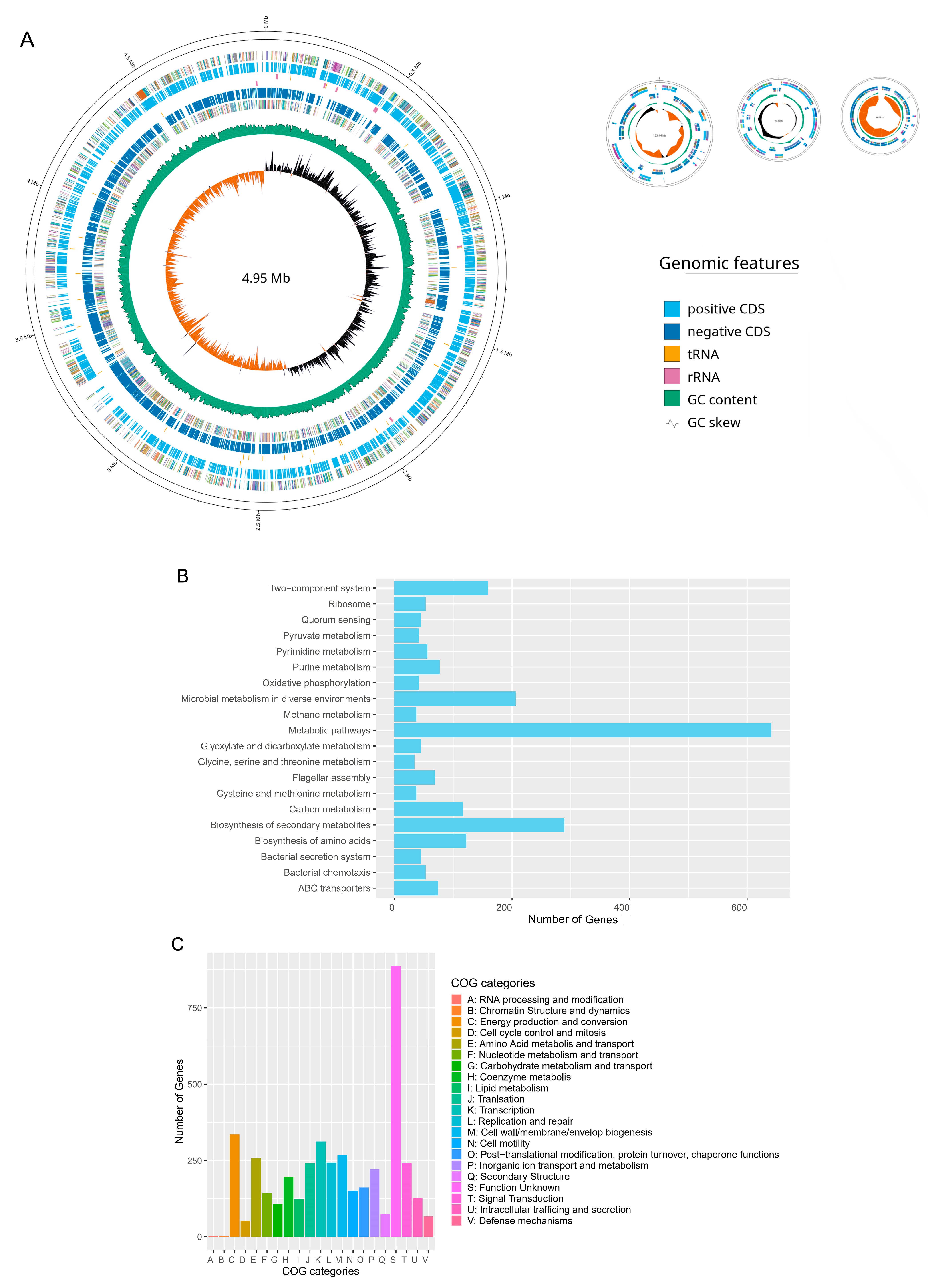
The complete genome of S. algae VK101 was successfully constructed using a hybrid assembly strategy that integrated 8,305,448 high-accuracy short reads with 305,874 long reads. The final assembly resulted in a genome size of 5.21 Mb, characterized by four complete circular contigs (Table 1 and Figure 1). The high-resolution assembly featured a dominant 4.95 Mb chromosome, and an average GC content of 52.6%, while the other three smaller contigs were 123.44 kb, 76.36 kb, and 66.66 kb, respectively. Genomic annotation identified 4620 coding sequences (CDS), 103 tRNAs, and 25 rRNAs, resulting in a coding ratio of 87.2% (Table 1 and Figure 1A). Functional annotation of the S. algae VK101 genome by KEGG pathway analysis showed that most genes were involved in metabolisms (Figure 1B). While metabolic pathways dominated the functional profile, a significant number of genes were related to the biosynthesis of secondary metabolites, microbial metabolism in diverse environments, and two-component system. Furthermore, classification through Clusters of Orthologous Groups (COG) showed that while most genes were classified under unknown function, the most prevalent categories were energy production and conversion, transcription, and cell wall/membrane/envelope biogenesis (Figure 1C). Conversely, genes associated with RNA processing and modification and chromatin structure and dynamics were infrequently represented in the VK101 genome (Figure 1C).

2.2. Phenotypic Susceptibility and Antimicrobial Profiling

The MIC values were 2 μg/mL of imipenem and less than or equal to 0.5 μg/mL of meropenem, ertapenem, and doripenem (Table 2). Moreover, the result indicated that the MIC values for ciprofloxacin and levofloxacin of the fluoroquinolone class were 0.5 and 0.25 μg/mL, respectively. The observation was consistent with our in silico analysis, and the MIC value of colistin was obtained at 8 μg/mL as the highest of the concentration range in the antibiotic plate, suggesting potential resistance to this antibiotic.
The VK101 isolate was susceptible to most beta-lactam/beta-lactamase inhibitor combinations, including ampicillin/sulbactam (8/4 µg/mL) and piperacillin/tazobactam (≤8/4 µg/mL). It also showed susceptibility to cephalosporins: cefoxitin (8 µg/mL), cefuroxime ≤8 µg/mL), cefotaxime (≤1 µg/mL), ceftazidime (≤1 µg/mL), ceftriaxone (≤0.5 µg/mL), and cefepime (≤1 µg/mL). Among carbapenems, VK101 remained susceptible to meropenem (≤0.5 µg/mL), ertapenem (≤0.5 µg/mL), and doripenem (≤0.5 µg/mL). Additional agents with full activity included fluoroquinolones (levofloxacin, 0.25 µg/mL), aminoglycosides (amikacin, ≤8 µg/mL; gentamicin, ≤2 µg/mL; netilmicin, ≤8 µg/mL), and trimethoprim/sulfamethoxazole (≤1/19 µg/mL). In contrast, VK101 exhibited intermediate susceptibility to amoxicillin/clavulanic acid (16/8 µg/mL), imipenem (2 µg/mL), and ciprofloxacin (0.5 µg/mL). Notably, the isolate was resistant to ampicillin (>16 µg/mL) and colistin (8 µg/mL) (Table 2).

2.3. Targeted Resistome Profiling in S. algae VK101

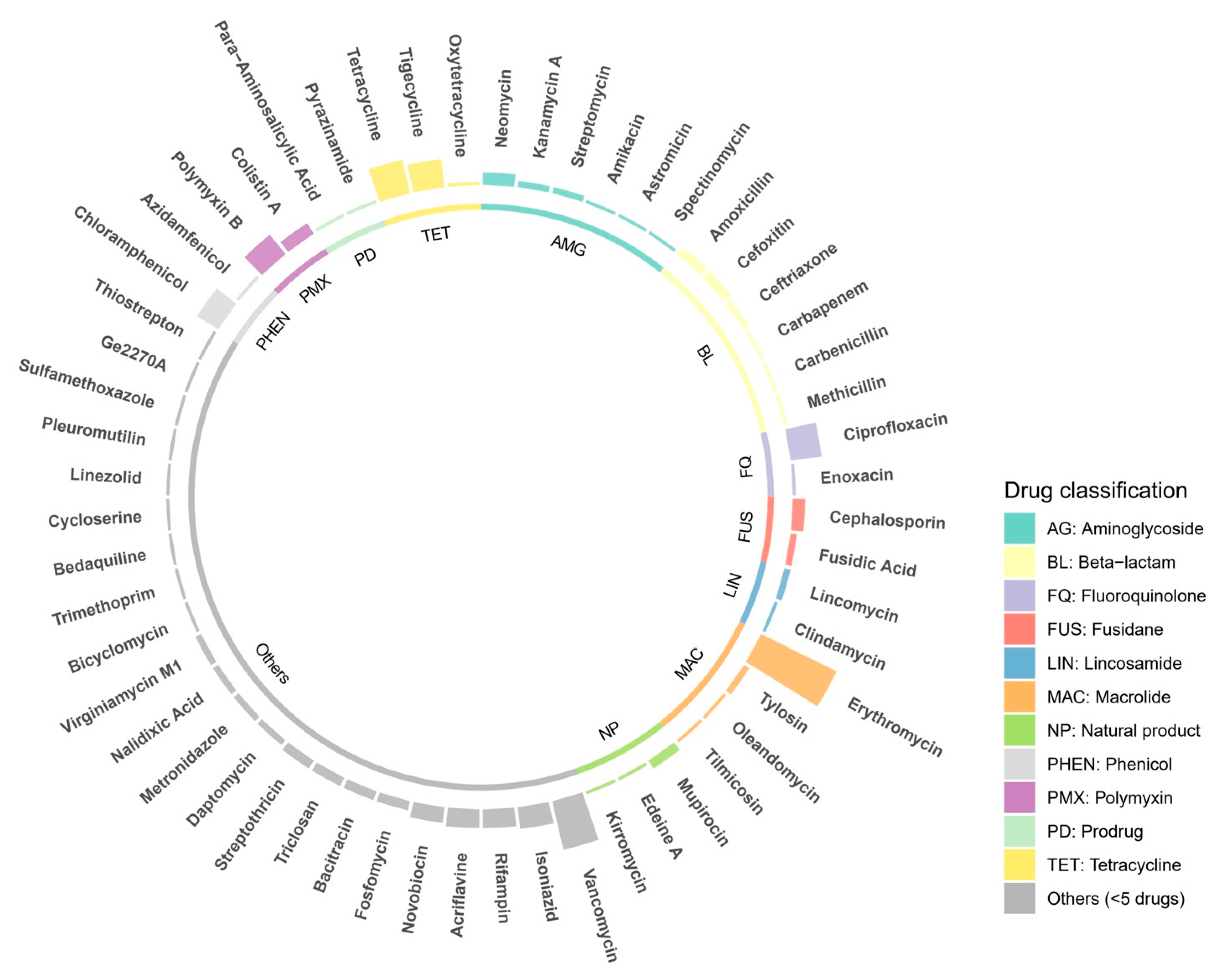
The complete genome of S. algae VK101 was performed in silico analysis to map its intrinsic genes and ARGs. Our screening identified a total of 205 ARGs, encompassing 420 loci, distributed across the chromosome and smaller contigs of the genome (Supplementary Materials, Table S1). The functional mapping of these determinants showed a diverse resistome profile (Figure 2), with significant hits identified for major compound classes such as fluoroquinolones, beta-lactams, and polymyxins.
Among these determinants, the quinolone resistance protein, QnrA3, was identified as a perfect hit (100% identity), providing a genetic basis for the intermediate susceptibility observed toward ciprofloxacin and levofloxacin (Table 3). Furthermore, additional hits were characterized including OXA-964 (98.96% identity), rsmA (86.67%), and E. coli EF-Tu mutants (88.3%), which collectively contributed to the isolate’s multidrug-resistant profile (Table 2). Interestingly, our genomic analysis did not identify mcr, the key ARG related to colistin resistance.

2.4. Comparative Pangenomic Analysis of S. algae

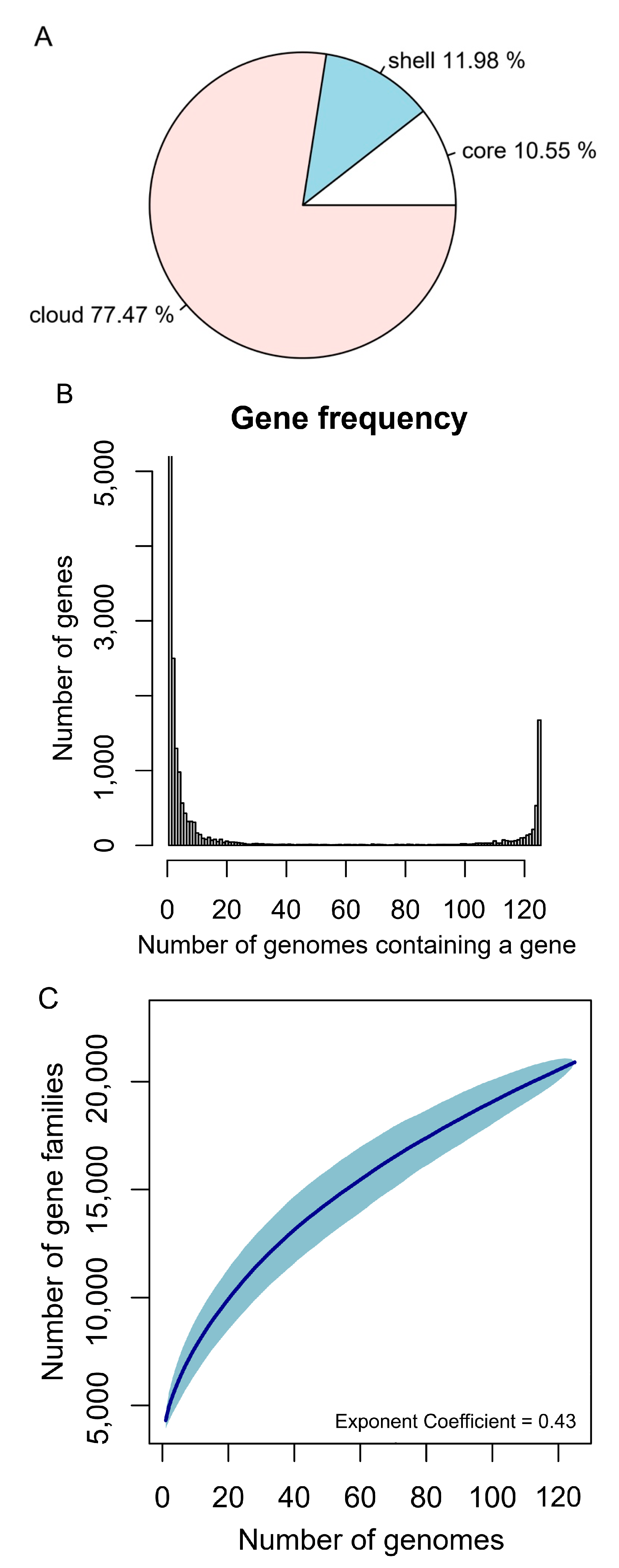
To explore the genomic architecture of S. algae VK101 within the species-wide landscape, a comparative pangenome analysis was performed utilizing a dataset of 125 S. algae isolates, including S. algae VK101 (Supplementary Materials, Table S2; Figure 3). The pangenome was partitioned into three distinct categories based on gene prevalence as follows: core (10.55%), shell (11.98%), and cloud (77.47%) fractions (Figure 3A). Here, we observed significant genetic heterogeneity within the species; approximately 1000 core genes were conserved across all isolates, whereas a vast majority of the total gene content (comprising 2000–5000 genes) was found in a minor subset of Shewanella genomes (Figure 3B). The pangenome rarefaction analysis revealed a continuous increase in the cumulative number of gene families relative to the expansion of the genome sampling (Figure 3C). The calculated exponent coefficient of 0.43 from [28] showed that S. algae possessed an open pangenome, in which its size could increase indefinitely as new genomes were added.
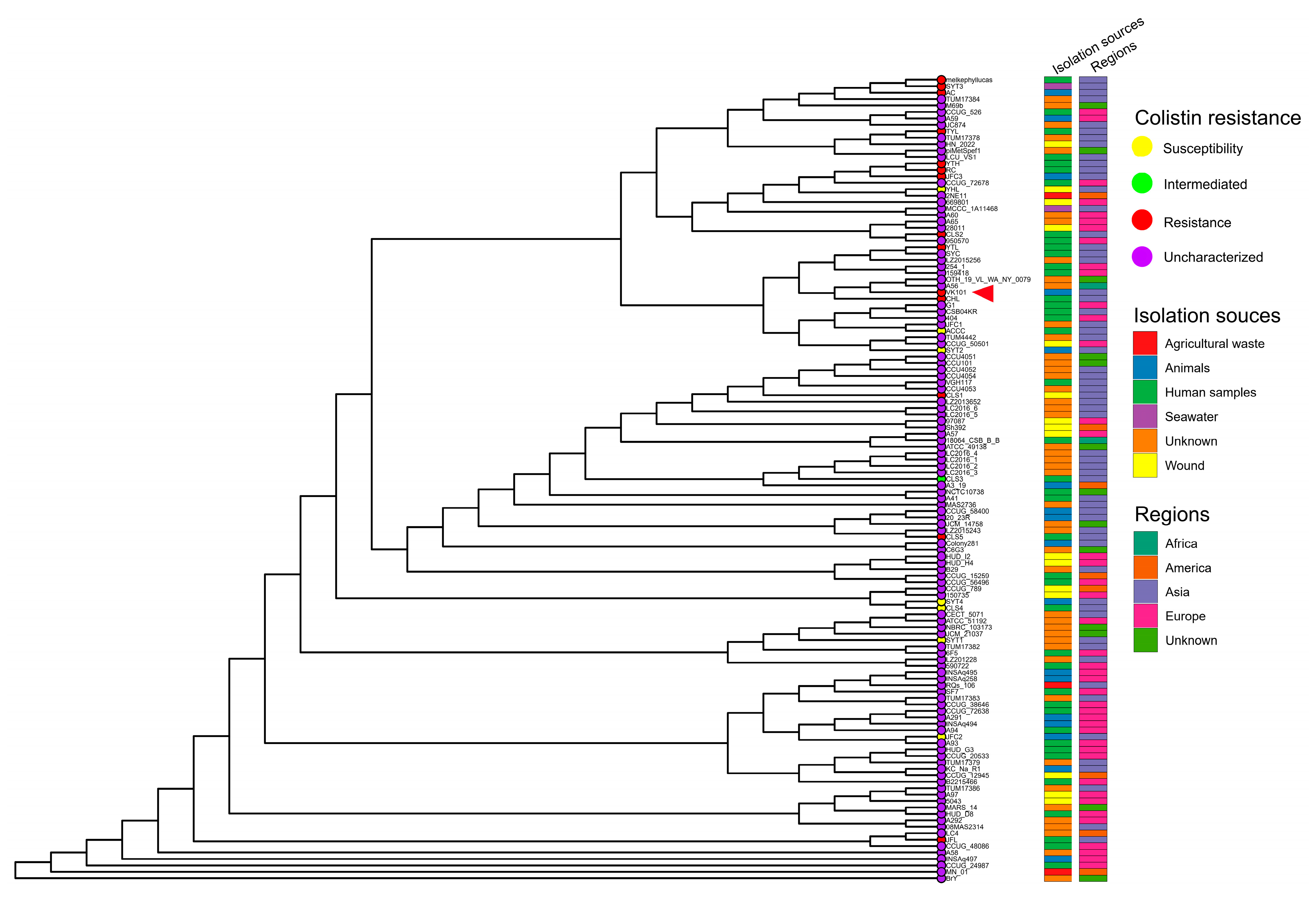
The phylogenetic reconstruction, derived from the presence–absence matrix of accessory genes, indicated that VK101 was clustered with S. algae A56, CHL, and OTH_19_VL_WA_NY_0079 isolates (Figure 4). Interestingly, VK101, despite its environmental isolation from the intestinal microbiome of the black tiger shrimp (P. monodon), was clustered closely with those of human clinical isolates. While VK101 exhibited high topological proximity to the colistin-resistant strain CHL, the majority of available public S. algae genomes lacked corresponding phenotypic metadata regarding colistin susceptibility, precluding species-wide resistome-phenotype correlations. An average nucleotide identity (ANI) analysis also supported our observation, with all 125 isolates exhibiting 98–99% sequence similarity, thereby confirming high-confidence taxonomic classification within the same species (Supplementary Materials, Figure S1).

2.5. Comparative Analysis of Potential Chromosomal Colistin-Resistance Determinants

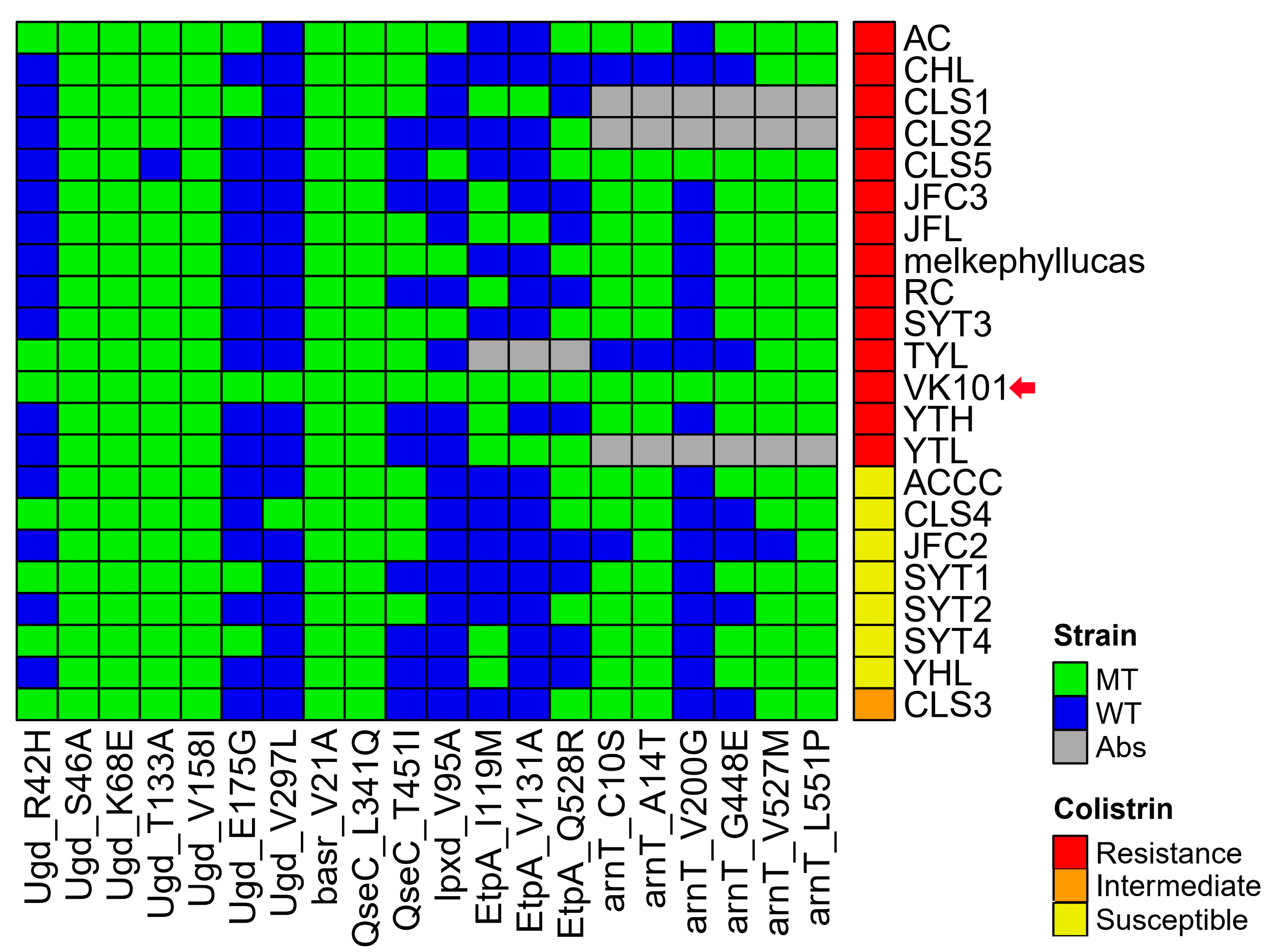
To elucidate the genetic basis for the high-level colistin resistance observed in S. algae VK101, we systematically examined established chromosomal determinants associated with lipid A modification and two-component regulatory systems. We performed a high-resolution comparative analysis of candidate genes—including ugd, qseC, lpxD, basR, eptA, and arnT—across S. algae VK101 and a reference dataset of both colistin-resistant and susceptible isolates (Figure 5).
A comparative heatmap analysis revealed that amino acid substitutions in ugd and basR were nearly ubiquitous across all tested S. algae isolates. Importantly, the specific patterns of these substitutions remained conserved across the population and did not significantly differ between colistin-resistant and susceptible strains (Figure 5). While some residues in qseC, lpxD, eptA, and arnT remained conserved, the variants that did occur were largely shared across the population regardless of their phenotypic susceptibility.
To determine if these variants exerted functional determinants, we employed a SIFT (sorting intolerant from tolerant) analysis, categorizing scores below 0.05 as deleterious (Table 4). This analysis identified multiple amino acid substitutions predicted to impair protein function. Within the two-component regulatory systems, the sensor kinase, PhoQ harbored a significant R441C mutation (score 0.00), while the phosphoethanolamine transferase (PmrC, eptA) contained deleterious mutations at positions I119M (score 0.04), V131A (score 0.04), and Q528R (score 0.00). Additional deleterious substitutions were observed in the lipid A biosynthesis protein LpxD (V95A) and the phosphoethanolamine transferases PmrK (C10S, A14T) and PmrX (G448E, V527M). However, the presence of these deleterious variants in both phenotypically resistant and susceptible isolates suggested that these canonical pathways were likely not the primary drivers of the observed 8 μg/mL colistin MIC in the VK101 isolate. This lack of phenotypic–genotypic correlation among traditional determinants would require an approach beyond established models and the utilization of genome-wide association studies (GWAS) to identify genomic loci associated with colistin resistance in the Shewanella genus. Such associations provide a foundation for subsequent functional analyses aimed at elucidating novel, non-traditional resistance contributing to trait dissemination.

2.6. Association Analysis of Genes and Variants Correlated with Colistin Resistance in S. algae VK101

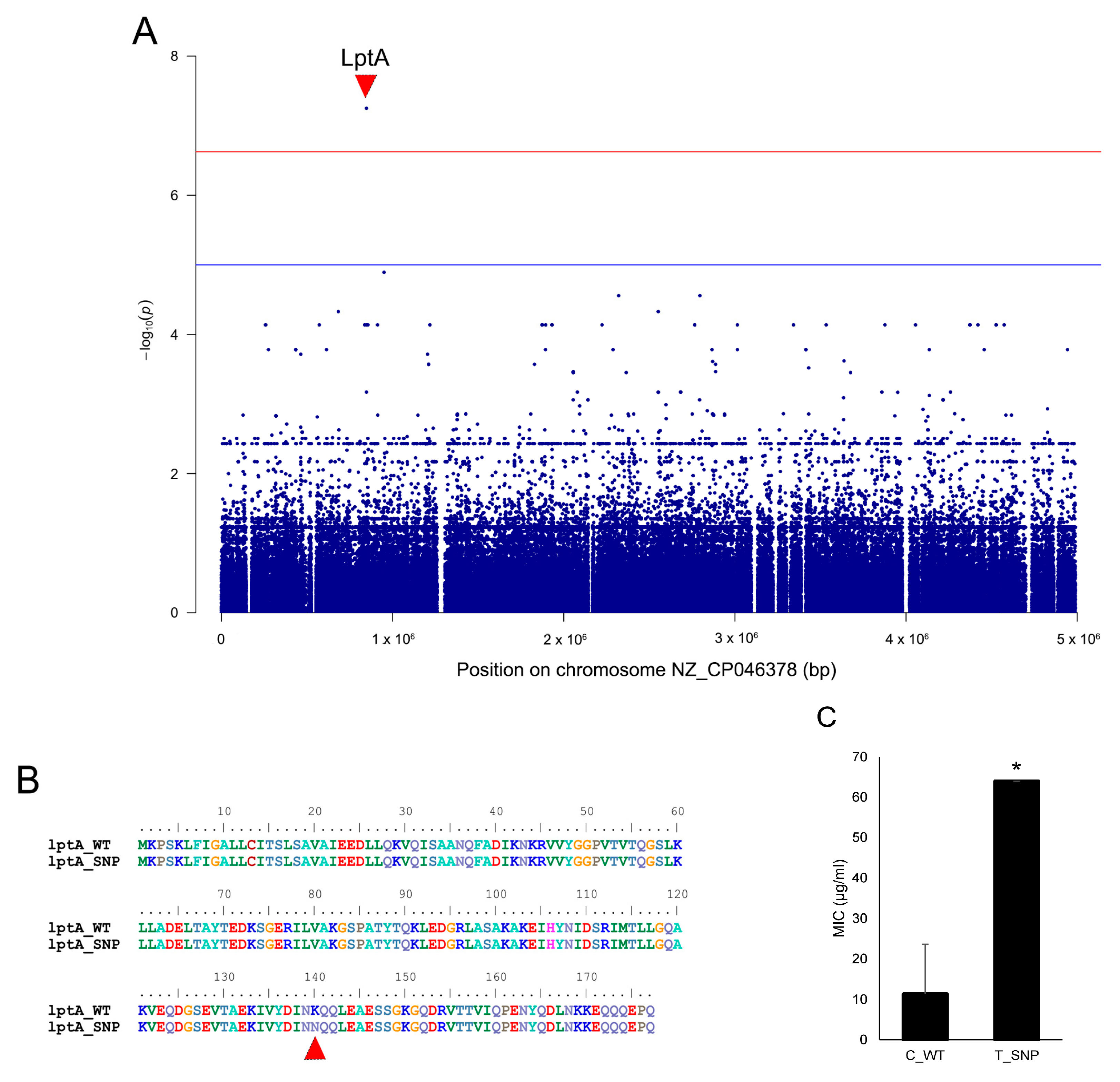
To identify the novel genetic determinants contributing to colistin resistance in S. algae, we performed a GWAS using the presence–absence profiles of the accessory pangenome across the 125-isolate dataset. This analysis identified 29 genes significantly associated with the colistin-resistant phenotype (Supplementary Materials, Table S3). Among these, the top ten candidates including czcA2 (cobalt–zinc–cadmium resistance), dmlR (transcriptional regulator), ampC (beta-lactamase), oprM (outer membrane protein), and the pqiA/B intermembrane transport system, showed 100% sensitivity and 86.67% specificity with an infinite odds ratio, respectively (Table 5). Functional annotation further revealed that these associated determinants were primarily involved in defense mechanisms, transmembrane transport, and cell wall biogenesis (Supplementary Materials, Figure S2). To achieve a higher resolution, we conducted a variant-based association study analyzing 210,755 SNPs across the core genome (Figure 6). This analysis identified only one high-confidence SNP (C > T) that was significantly associated with colistin resistance (Bonferroni-adjusted threshold of p = 0.011) (Figure 6A). The SNP (C > T) was found in lptA, which encodes for the lipopolysaccharide transport system protein within a mutation from lysine to asparagine at position 140 (Figure 6B). The SNP was found in lptA in S. algae isolates that survived a very high dose (64 µg/mL) of colistin, while other isolates, including S. algae VK101 (which survived at 8 µg/mL), had no changes in lptA (Figure 6C).

3. Discussion

Here, we characterized the complete genome of the 5.21 Mb genome of S. algae VK101, which contained a dominant 4.95 Mb circular chromosome. Our assembly size was consistent with other reported S. algae genomes ranging from 4.60 to 5.20 Mb [29,30]. Our pangenomic analysis also showed that S. algae possessed an open pangenome, as evidenced by a continuous increase in new gene families and an exponent coefficient of 0.43. This genetic flexibility suggests a high capacity for horizontal gene transfer and adaptation to diverse ecological niches, including aquaculture environments [28]. Furthermore, the phylogenetic analysis revealed that S. algae VK101 shared a close evolutionary lineage with colistin-resistant isolates recovered from diverse human and environmental reservoirs. This observation shows the potential for the inter-sectoral transmission of resistant bacteria, thus supporting the necessity of integrated One Health surveillance to monitor the dissemination of such microorganisms across the aquaculture value chain.
Phenotypically, VK101 exhibited its resistance profile to ampicillin and colistin, alongside intermediate susceptibility to imipenem and ciprofloxacin. Mobile colistin-resistance (mcr) genes, ranging from variants mcr-1 to mcr-10, are globally recognized as primary drivers of colistin resistance [31,32]. Interestingly, despite its colistin-resistant phenotype, no mcr homologs were detected within the genome of S. algae VK101. Our findings were consistent with a previous study of genomic evaluations of S. algae isolates [30] and the studies of other colistin-resistant bacterium, Acinetobacter baumannii, which similarly lacked mobile mcr elements [33,34]. This genotype–phenotype gap suggests that colistin resistance in S. algae could be predominantly mediated by chromosomal mechanisms rather than horizonal gene transfer. Our SIFT-based functional analysis supported this hypothesis, identifying several deleterious mutations (score ≤ 0.05) in chromosomal colistin-responsive determinants. These included R441C substitution in the sensor kinase PhoQ and multiple substitutions within the pmrCAB operon, specifically in the phosphoethanolamine transferase PmrC/eptA (I119M, V131A, and Q528R). Alterations in the pmrCAB operon has been well characterized as one of the key mechanisms for colistin resistance in clinical pathogens such as A. baumannii [35]. Furthermore, significant functional disruptions were predicted for PmrK/arnT, which harbored six deleterious mutations (C10S, A14T, V200G, G448E, V527M, and L551P), for instance, the enzymatic modification of lipid A or the structural disruption of lipopolysaccharide (LPS) biosynthesis [33,36,37]. The addition of phosphoethanolamine to lipid A, which is regulated by phosphoethanolamine transferases (pmr) and lipid A biosynthesis (lpx), reduces the negative charge of the bacterial outer membrane, thereby reducing its binding affinity for cationic polymyxin groups including colistin [36]. Within the Shewanella, previous studies have reported specific combinatorial mutations in the pmrB, pmrE, and pmrH genes as primary drivers of colistin resistance [30]. Collectively, these modifications likely facilitate lipid A modification, providing a mechanistic insight into the resistance observed in S. algae VK101. Beyond colistin, chromosomal analysis also identified determinants for other antibiotic classes including a perfect identity match (100%) for the QnrA3 protein, explaining the intermediate susceptibility to fluoroquinolones [38]. The presence of the OXA-964 beta-lactamase (98.96%) and RND-family efflux pumps like rsmA further defined the isolate’s multidrug-resistant profile [39].
While our GWAS identified significant associations between the colistin-resistant phenotype and several genes (czcA, ampC, oprM, and pqiAB), these will further require functional validation to understand biological causality. Given the lack of existing evidence connecting these genes to primary colistin-resistance mechanisms, their high statistical association could likely be driven by a combination of genetic collinearity (co-selection) and indirectly by membrane stability and efflux systems. For instance, czcCBA, a tripartite RND efflux pump system that mediates resistance to heavy metals, also contributes to carbapenem resistance by suppressing oprD porin in P. aeruginosa [40]. Furthermore, the deletion of czcA results in reducing tetracycline resistance, while overexpression of crdAB-czcBA through copper supplementation decreases tetracycline efflux in Helicobacter pylori [38]. Additionally, multidrug-resistant A. baumannii AC30 and R14, which exhibit resistance to carbapenems and colistin, shows the presence of czcCBA [41]. This suggests that czcA may be co-selected in multidrug-resistant genetic backgrounds or implicated in indirect colistin tolerance via secondary efflux transporters. Similarly, ampC (a beta-lactamase) typically confers beta-lactam resistance by hydrolyzing the beta-lactam ring [42], frequently found co-expressed with ESBL and MBL genes in colistin-resistant bacteria such as K. pneumoniae, E. coli, and P. aeruginosa [43,44]. This suggests a co-selection environment rather than a direct colistin degrading mechanism. Moreover, the efflux pumps via oprM, an outer membrane channel protein that is responsible for the direct export of antibiotics from the cells [45], can impart resistance to several drugs, including beta-lactams, fluroquinolones, and aminoglycosides in P. aeruginosa [46]. Notably, the efflux pump mexXY-oprM is implicated in the PA4773-PA4774-PA4775 pathway and ara4N-based modification of LPS during colistin resistance in P. aeruginosa [46]. Therefore, colistin resistance in S. algae, including our isolate, S. algae VK101, might be partially supported by these indirect efflux mechanisms. Finally, pqiABC regulates lipid transport and membrane integrity in association with the yebST operon and Mla pathway [47,48]. While direct evidence is still lacking, enhancing the Mla pathway (e.g., through an mlaF mutation) could drive colistin resistance in Aeromonas hydrophila [49]. Consequently, pqiABC might indirectly influence colistin resistance in S. algae by modulating this shared Mla transport pathway.
The phenotypic variation in colistin susceptibility within the S. algae population suggests complex regulatory components. While S. algae VK101 exhibited a moderate resistance phenotype (8 µg/mL), this was notably lower than the high-level resistance (64 µg/mL) recently reported in other S. algae isolates [30]. This suggests that the moderate resistance in S. algae VK101 was likely driven by the intrinsic chromosomal pathways, potentially involving lipid A modifications. It is worth noting that a definitive classification of these resistance levels remains ambiguous due to the absence of established MIC criteria for Shewanella spp. To elucidate the broader species-wide mechanisms driving high-level resistance, our GWAS identified a non-synonymous mutation (K140N) in the lptA gene significantly associated with an MIC of 64 µg/mL) [30]. The LptA protein is a central component of the trans-envelope machinery [50]. We hypothesize that substituting a positively charged lysine with a neutral asparagine (K140N) at the LptA C- terminus destabilizes its interaction with the N-terminal domain of LptD [51,52]. This impaired assembly likely decreases in LPS transport and depletes surface LPS molecules, thereby limiting the binding targets available for colistin [53]. Future structural modeling and functional studies such as assays measuring LPS levels, transport efficiency, and direct colistin binding will be crucial to further validate and understand impact of this mutation on antibiotic resistance.
Viewed through a One Health framework, characterizing multidrug-resistant S. algae VK101 from wild-caught P. monodon broodstock demonstrated environmental AMR reservoirs as crucial components of the aquaculture value chain. Our findings showed that colistin resistance could be driven by complex chromosomal modifications, suggesting that traditional molecular screening for mobile mcr genes may no longer be sufficient for comprehensive risk assessment. To mitigate the dissemination of these non-canonical determinants, it is imperative to move beyond static resistance databases toward integrated genomic surveillance that prioritizes functional variant analysis. Establishing these baseline genomic signatures will provide a foundation for the precision biosecurity protocols and sustainable management strategies necessary to safeguard global food security and public health.

4. Materials and Methods

4.1. Microbial Culture Conditions and DNA Preparation

Bacterial species isolated from the intestines of black tiger shrimp (P. monodon) were subjected to whole-genome analysis. The bacterial isolate was streaked onto Luria–Bertani (LB) agar and incubated at 30 °C for 16 h. Twenty single bacterial colonies were used for DNA extraction using the ZymoBIOMICS DNA Miniprep kit (Zymo Research, Irvine, CA, USA) according to the manufacturer’s protocol. The DNA sample was cleaned up using AMPure PB bead (Pacific Biosciences, Menlo Park, CA, USA). The extracted DNA was quantified by NanoDrop 8000 spectrophotometer (Thermo Fisher Scientific, Waltham, MA, USA) and Qubit dsDNA BR Assay kit (Invitrogen, Carlsbad, CA, USA) using a Qubit 4.0 fluorometer (Invitrogen, USA). The DNA quality and integrity were visualized by UV light after electrophoresis in 0.8% agarose gel.

4.2. Library Preparation and Bacterial Genome Sequencing

Whole-genome sequencing was performed using a hybrid approach combining Illumina short-read and Oxford Nanopore Technologies (ONT) long-read platforms. For short-read sequencing, a paired-end (2 × 150 bp) library was prepared using the NEBNext® Ultra™ II DNA Library Prep Kit (New England Biolabs, Ipswich, MA, USA) and sequenced on the Illumina NovaSeq platform (Illumina, San Diego, CA, USA). For long-read sequencing, a library was constructed using the Rapid Barcoding Kit (RBK004; Oxford Nanopore Technologies, Oxford, UK). Sequencing was performed on a MinION Mk1C device equipped with an R10.3 flow cell for 48 h.
Illumina sequencing adapters were trimmed using Fastp v0.19.5 with default parameters, and the quality of clean reads was assessed using FastQC v0.11.9. ONT raw signals were base called using Guppy v5.0.16 with the super-accurate model (dna_r10.3_450bps_sup.cfg). Adapters were removed using Porechop v0.2.4. Long-read quality was assessed using NanoPlot v1.28.1, and reads were filtered using NanoFilt v2.5.0 [54] to retain reads of > 1000 bp with a mean quality score (Q-score) of > 8. A de novo hybrid assembly was performed using Unicycler v0.4.4 [55]. The quality of the final assembly was evaluated using QUAST v5.0.2 [56] and BUSCO v5.8.3 [57]. Genome annotation was performed using the NCBI Prokaryotic Genome Annotation Pipeline (PGAP) v4.11 [58].

4.3. Genetic Analysis of Chromosomal Genes Associated with Colistin Resistance

Genomic sequences of isolate VK101 were screened for candidate genes previously implicated in colistin resistance, including lpxA, lpxC, lpxD, phoP, phoQ, pmrA, pmrB, pmrC, pmrH, pmrK, and pmrX). Protein-coding sequences from those genes were extracted and aligned against the sequence of Shewanella algae CECT-5071 reference strain (GenBank accession CP068230.1) using MUSCLE v5.1 [59], and non-synonymous mutations were identified by pairwise comparison. The functional impact of each amino acid substitution was predicted using the sorting intolerant from tolerant (SIFT) algorithm [60] using the SIFT web server (https://sift.bii.a-star.edu.sg/, accessed on 10 October 2025) with default parameters. SIFT calculates the probability that an amino acid substitution at a given position is tolerated based on sequence homology and the frequency of amino acids observed at that position. Substitutions with normalized values ≤ 0.05 were classified as deleterious, indicating a high likelihood of functional disruption and potential association with colistin resistance.

4.4. MIC Method

The antimicrobial susceptibility of VK101 was evaluated using the broth microdilution method with commercially prepared, dehydrated 96-well microtiter plates, THAN2F (Sensititre, Trek Diagnostic Systems Ltd., West Sussex, UK). A total of 21 antibiotics from different drug classes and mechanisms of action were included in this study (Table 2). MIC tests were performed according to the manufacturer’s instruction with minor modifications. Briefly, VK101 were streaked onto sheep blood agar and incubated for 24 h at 37 °C. The selected colonies were suspended in Sensititre cation-adjusted Mueller–Hinton broth with TES buffer (CAMHBT) and adjusted to be a 0.5 McFarland standard. Subsequently, a 30 µL aliquot of the suspension was transferred into a tube of CAMHBT to obtain an inoculum density of 5 × 10⁵ CFU/mL. The THAN2F antibiotic panels were reconstituted by adding 50 µL per well, sealed with an adhesive seal and incubated at 35 ± 2 °C in Sensititre ARISTM 2X system for 20–24 h. The MIC value, defined as the lowest drug concentration inhibiting visible bacterial growth, was determined automatically by the Sensititre ARISTM 2X and verified visually using a manual viewbox, according to the instructions in the Sensititre SWIN software v 3.4. Escherichia coli ATCC 25922 was used as an antimicrobial-susceptible control strain, and MICs were within the accepted quality control ranges. As there were no established MIC breakpoints specifically for Shewanella spp., the results of susceptible (S), intermediate (I), and drug resistance (R) were interpreted according to the Enterobacterales standards of Clinical and Laboratory Standards Institute [27]. The application of Enterobacterales criteria is a widely adopted and standardized approach for interpreting susceptibility in related non-fermenting Gram-negative bacilli including Shewanella when species-specific clinical breakpoints are unavailable [61].

4.5. Comparative Genomics of S. algae VK101 and In Silico Antibiotic Resistant Gene Identification

The genomes of S. algae VK101 and other S. algae were compared. The 125 reported S. algae genomes were retrieved from the NCBI database. The list of S. algae used in this study was shown in the Supplementary Materials, Table S2. The genomes of S. algae were annotated using Prokka v. 1.14.6 [62] with the S. algae database. Then, the generic feature format (gff) files obtained from the annotation results of these S. algae were used for comparative analysis using Roary v. 3.13.0 [63]. The output of absent and present genes was used to construct a phylogenetic tree using FastTree v.2.1 [64]. In addition, average nucleotide identity (ANI) was analyzed among these S. algae, including VK101, by FastANI v. 1.33 [65].
According to the examination of colistin-resistant ability of S. algae isolates [30], we retrieved these genomes, including 7 susceptible and 14 resistant ones, together with our S. algae VK101 for genes and variant analyses (Supplementary Materials, Table S1). The reported colistin MIC values for S. algae isolates were utilized as phenotypic data to analyze gene absence/presence associations using Scoary v. 1.6.16 [66], applying a naive p-value threshold of <0.05 and an odds ratio of >10. The related colistin-resistant genes were functionally annotated by emapper-eggNOG via the eggNOG database [67] as well as gene ontology (GO), COG, and the KEGG pathway. In addition, these genomes were compared with the reference genome of S. algae RQs-106 (RefSeq Accession No. GCF_009730655.1) using ParSNP v. 1.7.4 [68] with default parameters. The SNPs were further filtered for missing genotype rates of ≤5% and minimum allele frequencies of ≤0.01 using PLINK v.1.9 [69]. The SNPs were then analyzed for association with the colistin resistance using PLINK v. 1.9 using Fisher’s test and Bonferroni’s p-value adjustment. The genome of S. algae VK101 was analyzed for antibiotic resistant genes using resistant gene identifier v. 6.0.5 against CARD v. 4.0.1 [70].

5. Conclusions

In this study, we successfully resolved the 5.21 Mb complete circular genome of Shewanella algae VK101, isolated from the intestinal microbiome of wild-caught Penaeus monodon broodstock. Our multi-platform sequencing approach confirmed that this isolate contained a diverse resistome, including a perfect hit for the fluoroquinolone resistance gene qnrA3, and exhibited phenotypic resistance to both ampicillin and colistin. Interestingly, the absence of mobile mcr genes suggested that colistin resistance in this environmental isolate was mediated by chromosomal mechanisms. Our GWAS identified a novel K140N mutation in the lipopolysaccharide transport protein gene (lptA) associated with high-level colistin resistance. While this mutation was absent in VK101, this study showed a diverse landscape of colistin resistance in aquaculture reservoirs, ranging from moderate chromosomal-mediated resistance to high-level structural modifications. Under a One Health framework, our results support the urgent need for integrated genomic surveillance in aquaculture to monitor the dissemination of non-canonical resistance determinants through the food production chain to safeguard public health.

Supplementary Materials

The following supporting information can be downloaded at https://www.mdpi.com/article/10.3390/antibiotics15040405/s1.; Figure S1. Average nucleotide identity (ANI) heatmap analysis of Shewanella algae genomes; Figure S2. Functional characterization of genes associated with colistin resistance. (A) Distribution of the 29 genes significantly associated with colistin resistance by functional role, (B) COG classification of these associated determinants, and (C) KEGG pathway enrichment; Table S1. Descriptive information of the identified ARGs in S. algae VK101 genome; Table S2. Metadata information of S. algae genome used in this study; Table S3. Statistical analysis of gene associated with colistin resistance trait; Table S4. Characterization of colistin and polymyxin resistance determinants and mutational tolerance. Genomic profile of putative colistin and polymyxin resistance genes in Shewanella algae VK101, categorized by functional role.

Author Contributions

P.S.: Methodology, software, formal analysis, and writing—original draft. W.P.: Investigation and formal analysis. T.T.: Investigation, formal analysis, and visualization. P.A.: Investigation and formal analysis. W.C.: Investigation and formal analysis. K.L.: Investigation and formal analysis. S.Y.: Conceptualization and writing—review and editing. W.R.: Conceptualization, methodology, writing—original draft, writing—review and editing, and funding acquisition. All authors have read and agreed to the published version of the manuscript.

Funding

W.R. received a mid-career fellowship grant from the National Research Council of Thailand (NRCT) and the National Science and Technology Development Agency (NSTDA) (grant number N42A670241). Additional funding was provided by the NSRF via the Program Management Unit for Human Resources & Institutional Development, Research, and Innovation (grant number B05F640108).

Institutional Review Board Statement

Ethical approval for animal experimentation was obtained from the National Center for Genetic Engineering and Biotechnology Animal Ethics Committee under approval code BT-Animal 06/2568 on 28 November 2024. All procedures adhered to institutional protocols and applicable national guidelines.

Informed Consent Statement

Not applicable.

Data Availability Statement

The sequencing data of Shewanella algae VK101 has been deposited in the Bioproject database under accession number PRJNA1285665.

Acknowledgments

We thank Nitsara Karoonuthaisiri and Kallaya Sritunyalucksana-Dangtip for their mentorship and guidance in the shrimp research.

Conflicts of Interest

The authors declare no conflict of interest.

References

  1. Ramirez-Plascencia, H.H.F.; Colima-Fausto, A.G.; Licona-Lasteros, K.C.; Díaz-Zaragoza, M.; Cazarez-Navarro, G.; Macias-Barragan, J.G.; Rodriguez-Preciado, S.Y. Presence of microorganisms in the environment: One Health approach. Microorganisms 2025, 13, 2435. [Google Scholar] [CrossRef]
  2. Ho, C.S.; Wong, C.T.H.; Aung, T.T.; Lakshminarayanan, R.; Mehta, J.S.; Rauz, S.; McNally, A.; Kintses, B.; Peacock, S.J.; de la Fuente-Nunez, C.; et al. Antimicrobial resistance: A concise update. Lancet Microbe 2025, 6, 100947. [Google Scholar] [CrossRef]
  3. Hickson, S.M.; Ledger, E.L.; Wells, T.J. Emerging antimicrobial therapies for Gram-negative infections in human clinical use. npj Antimicrob. Resist. 2025, 3, 16. [Google Scholar] [CrossRef] [PubMed]
  4. Murray, C.J.L.; Ikuta, K.S.; Sharara, F.; Swetschinski, L.; Robles Aguilar, G.; Gray, A.; Han, C.; Bisignano, C.; Rao, P.; Wool, E.; et al. Global burden of bacterial antimicrobial resistance in 2019: A systematic analysis. Lancet 2022, 399, 629–655. [Google Scholar] [CrossRef] [PubMed]
  5. Darby, E.M.; Trampari, E.; Siasat, P.; Gaya, M.S.; Alav, I.; Webber, M.A.; Blair, J.M.A. Molecular mechanisms of antibiotic resistance revisited. Nat. Rev. Microbiol. 2023, 21, 280–295. [Google Scholar] [CrossRef] [PubMed]
  6. Pandey, A.; Mideo, N.; Platt, T.G. Virulence evolution of pathogens that can grow in reservoir environments. Am. Nat. 2022, 199, 141–158. [Google Scholar] [CrossRef]
  7. Grudlewska-Buda, K.; Bauza-Kaszewska, J.; Wiktorczyk-Kapischke, N.; Budzyńska, A.; Gospodarek-Komkowska, E.; Skowron, K. Antibiotic resistance in selected emerging bacterial foodborne pathogens-an issue of concern? Antibiotics 2023, 12, 880. [Google Scholar] [CrossRef]
  8. Mohammed, E.A.H.; Kovács, B.; Kuunya, R.; Mustafa, E.O.A.; Abbo, A.S.H.; Pál, K. Antibiotic Resistance in Aquaculture: Challenges, Trends Analysis, and Alternative Approaches. Antibiotics 2025, 14, 598. [Google Scholar] [CrossRef]
  9. Waiho, K.; Ling, Y.; Ikhwanuddin, M.; Shu-Chien, A.C.; Afiqah-Aleng, N.; Wang, Y.; Hu, M.; Liew, H.; Kasan, N.A.; Peh, J.H.; et al. Current Advances in the Black Tiger Shrimp Penaeus monodon Culture: A Review. Rev. Aquac. 2025, 17, e12958. [Google Scholar] [CrossRef]
  10. Vo, S.N.; Cu, T.T.L.; Chau, T.T.; Nguyen, L.T.; Tang, T.T.; Au, H.V.; Tran, K.N.D.; Nguyen, Q.D.; Ho, V.V.; Trinh, T.Q.; et al. Capture-based hatchery of black tiger shrimp (Penaeus monodon) in Vietnam: An analysis of resource utilisation and challenges. Front. Mar. Sci. 2024, 11, 1434255. [Google Scholar] [CrossRef]
  11. Nguyen, T.M.; Tran, N.M.; Tran, Y.T.H.; Le, T.T.H.; Tran, L.M.; Le, P.N.T.; Elizur, A.; Ventura, T.; Vo, T.T.M.; Nguyen, T.V. Transcriptomic comparison between wild-caught and domesticated black tiger shrimp (Penaeus monodon) in early and late-vitellogenic broodstock females. Aquac. Rep. 2025, 41, 102675. [Google Scholar] [CrossRef]
  12. Rungrassamee, W.; Klanchui, A.; Maibunkaew, S.; Chaiyapechara, S.; Jiravanichpaisal, P.; Karoonuthaisiri, N. Characterization of Intestinal Bacteria in Wild and Domesticated Adult Black Tiger Shrimp (Penaeus monodon). PLoS ONE 2014, 9, e91853. [Google Scholar] [CrossRef] [PubMed]
  13. Lattos, A.; Giantsis, I.A.; Tsavea, E.; Kolygas, M.; Athanassopoulou, F.; Bitchava, K. Virulence Genes and In Vitro Antibiotic Profile of Photobacterium damselae Strains, Isolated from Fish Reared in Greek Aquaculture Facilities. Animals 2022, 12, 3133. [Google Scholar] [CrossRef] [PubMed]
  14. Bloomfield, S.J.; Palau, R.; Janecko, N.; Baker-Austin, C.; Mather, A.E. Association of antimicrobial resistant Vibrio and species pathogenic to humans with aquacultured seafood. Food Microbiol. 2025, 132, 104819. [Google Scholar] [CrossRef]
  15. Ekundayo, T.C.; Tabit, F.T. Occurrence and Antibiotic Resistance Risk Burden of Vibrio mimicus Isolates from Seafood and Aquatic Environments. Antibiotics 2025, 14, 1075. [Google Scholar] [CrossRef] [PubMed]
  16. Li, Y.; Lin, G.; Pengsakul, T.; Yan, Q.; Huang, L. Antibiotic Resistance in Vibrio parahaemolyticus: Mechanisms, Dissemination, and Global Public Health Challenges—A Comprehensive Review. Rev. Aquac. 2025, 17, e13010. [Google Scholar] [CrossRef]
  17. Romero, J.; Blas-Chumacero, S.; Urzúa, V.; Villasante, A.; Opazo, R.; Gajardo, F.; Miranda, C.D.; Rojas, R. Lysin and Lytic Phages Reduce Vibrio Counts in Live Feed and Fish Larvae. Microorganisms 2024, 12, 904. [Google Scholar] [CrossRef] [PubMed]
  18. Cimmino, T.; Olaitan, A.O.; Rolain, J.-M. Whole genome sequence to decipher the resistome of Shewanella algae, a multidrug-resistant bacterium responsible for pneumonia, Marseille, France. Expert Rev. Anti-Infect. Ther. 2016, 14, 269–275. [Google Scholar] [CrossRef]
  19. Tseng, S.-Y.; Liu, P.-Y.; Lee, Y.-H.; Wu, Z.-Y.; Huang, C.-C.; Cheng, C.-C.; Tung, K.-C. The pathogenicity of Shewanella algae and ability to tolerate a wide range of temperatures and salinities. Can. J. Infect. Dis. Med. Microbiol. 2018, 2018, 6976897. [Google Scholar] [CrossRef]
  20. Johnson, T.; Richards, G.P.; Jacobs, J.; Townsend, H.; Almuhaideb, E.; Rosales, D.; Chigbu, P.; Dasilva, L.; Parveen, S. Prevalence and pathogenic potential of Shewanella species in oysters and seawater collected from the Chesapeake Bay and Maryland Coastal Bays. Front. Microbiol. 2025, 16, 1502443. [Google Scholar] [CrossRef]
  21. Hau, H.H.; Gralnick, J.A. Ecology and biotechnology of the genus Shewanella. Annu. Rev. Microbiol. 2007, 61, 237–258. [Google Scholar] [CrossRef]
  22. Poovorawan, K.; Chatsuwan, T.; Lakananurak, N.; Chansaenroj, J.; Komolmit, P.; Poovorawan, Y. Shewanella haliotis associated with severe soft tissue infection, Thailand, 2012. Emerg. Infect. Dis. 2013, 19, 1019–1021. [Google Scholar] [CrossRef]
  23. Zhang, F.; Fang, Y.; Pang, F.; Liang, S.; Lu, X.; Kan, B.; Xu, J.; Zhao, J.; Du, Y.; Wang, D. Rare Shewanella spp. associated with pulmonary and bloodstream infections of cancer patients, China: A case report. BMC Infect. Dis. 2018, 18, 454. [Google Scholar] [CrossRef]
  24. Zong, Z. Nosocomial peripancreatic infection associated with Shewanella xiamenensis. J. Med. Microbiol. 2011, 60, 1387–1390. [Google Scholar] [CrossRef]
  25. Elgendy, M.Y.; Ali, S.E.; Dayem, A.A.; Khalil, R.H.; Moustafa, M.M.; Abdelsalam, M. Alternative therapies recently applied in controlling farmed fish diseases: Mechanisms, challenges, and prospects. Aquac. Int. 2024, 32, 9017–9078. [Google Scholar] [CrossRef]
  26. Lim, K.C.; Yusoff, F.M.; Natrah, F.M.I.; De Zoysa, M.; Md Yasin, I.S.; Yaminudin, J.; Karim, M. Biological strategies in aquaculture disease management: Towards a sustainable blue revolution. Aquac. Fish. 2025, 10, 743–763. [Google Scholar] [CrossRef]
  27. CLSI. Performance Standards for Antimicrobial Susceptibility Testing, 32nd ed.; CLSI: Wayne, PA, USA, 2022. [Google Scholar]
  28. Zhong, C.; Han, M.; Yu, S.; Yang, P.; Li, H.; Ning, K. Pan-genome analyses of 24 Shewanella strains re-emphasize the diversification of their functions yet evolutionary dynamics of metal-reducing pathway. Biotechnol. Biofuels 2018, 11, 193. [Google Scholar] [CrossRef] [PubMed]
  29. Tellgren-Roth, C.; Thorell, K.; Galperin, M.Y.; Krell, T.; Römling, U.; Sjöling, Å.; Martín-Rodríguez, A.J. Complete genome sequence and methylome of the type strain of Shewanella algae. Microbiol. Resour. Announc. 2021, 10, e0055921. [Google Scholar] [CrossRef] [PubMed]
  30. Huang, Y.-T.; Mao, Y.-C.; Tseng, C.-H.; Liu, C.-W.; Liu, P.-Y. Identification of combinatorial mutations associated with colistin resistance in Shewanella algae. Microbes Infect. 2023, 25, 105143. [Google Scholar] [CrossRef] [PubMed]
  31. Abavisani, M.; Bostanghadiri, N.; Ghahramanpour, H.; Kodori, M.; Akrami, F.; Fathizadeh, H.; Hashemi, A.; Rastegari-Pouyani, M. Colistin resistance mechanisms in Gram-negative bacteria: A Focus on Escherichia coli. Lett. Appl. Microbiol. 2023, 76, ovad023. [Google Scholar] [CrossRef]
  32. Hussein, N.H.; Al-Kadmy, I.M.S.; Taha, B.M.; Hussein, J.D. Mobilized colistin resistance (mcr) genes from 1 to 10: A comprehensive review. Mol. Biol. Rep. 2021, 48, 2897–2907. [Google Scholar] [CrossRef] [PubMed]
  33. Srisakul, S.; Wannigama, D.L.; Higgins, P.G.; Hurst, C.; Abe, S.; Hongsing, P.; Saethang, T.; Luk-In, S.; Liao, T.; Kueakulpattana, N.; et al. Overcoming addition of phosphoethanolamine to lipid A mediated colistin resistance in Acinetobacter baumannii clinical isolates with colistin-sulbactam combination therapy. Sci. Rep. 2022, 12, 11390. [Google Scholar] [CrossRef]
  34. Vijayakumar, S.; Swetha, R.G.; Bakthavatchalam, Y.D.; Vasudevan, K.; Shankar, B.A.; Kirubananthan, A.; Walia, K.; Ramaiah, S.; Biswas, I.; Veeraraghavan, B.; et al. Genomic investigation unveils colistin resistance mechanism in carbapenem-resistant Acinetobacter baumannii clinical isolates. Microbiol. Spectr. 2024, 12, e02511–e02523. [Google Scholar] [CrossRef] [PubMed]
  35. Romano, M.; Falchi, F.; De Gregorio, E.; Stabile, M.; Migliaccio, A.; Ruggiero, A.; Napolitano, V.; Autiero, I.; Squeglia, F.; Berisio, R. Structure-based targeting of the lipid A-modifying enzyme PmrC to contrast colistin resistance in Acinetobacter baumannii. Front. Microbiol. 2024, 15, 1501051. [Google Scholar] [CrossRef]
  36. Lee, H.; Hsu, F.-F.; Turk, J.; Groisman, E.A. The PmrA-regulated pmrC gene mediates phosphoethanolamine modification of lipid A and polymyxin resistance in Salmonella enterica. J. Bacteriol. 2004, 186, 4124–4133. [Google Scholar] [CrossRef] [PubMed]
  37. Islam, M.M.; Jung, D.E.; Shin, W.S.; Oh, M.H. Colistin resistance mechanism and management strategies of colistin-resistant Acinetobacter baumannii infections. Pathogens 2024, 13, 1049. [Google Scholar] [CrossRef]
  38. Zhang, L.; Ye, M.; Dong, Y.; Yuan, L.; Xiang, J.; Yu, X.; Liao, Q.; Ai, Q.; Qiu, S.; Zhang, D. Resistance Mechanisms of Fluoroquinolone in Escherichia coli Isolated from Taihe Black-Boned Silky Fowl Exhibiting Abnormally Slow Fluoroquinolone Metabolism in Jiangxi, China. Antibiotics 2025, 14, 955. [Google Scholar] [CrossRef]
  39. Zhang, M.; Xu, Y.; Wang, S.; Su, W.; Zhang, Y.; Xu, H.; Li, L.; Wang, M.; Zhang, J.; Yang, Z. Resistomic features and novel genetic element identified in hospital wastewater with short- and long-read metagenomics. Ecotoxicol. Environ. Saf. 2025, 303, 118991. [Google Scholar] [CrossRef]
  40. Ducret, V.; Gonzalez, M.R.; Leoni, S.; Valentini, M.; Perron, K. The CzcCBA Efflux System Requires the CadA P-Type ATPase for Timely Expression Upon Zinc Excess in Pseudomonas aeruginosa. Front. Microbiol. 2020, 11, 911. [Google Scholar] [CrossRef]
  41. Thadtapong, N.; Chaturongakul, S.; Soodvilai, S.; Dubbs, P. Colistin and Carbapenem-Resistant Acinetobacter baumannii Aci46 in Thailand: Genome Analysis and Antibiotic Resistance Profiling. Antibiotics 2021, 10, 1054. [Google Scholar] [CrossRef]
  42. Pandey, D.; Gupta, I.; Gupta, D. AmpC β-lactamases: A key to antibiotic resistance in ESKAPE pathogens. Cell Surf. 2025, 14, 100154. [Google Scholar] [CrossRef]
  43. Yusuf, I.; Qabli, S.M.; Magashi, A.M.; Balarabe, A.I.; Kabir, A.; Kabir, M.R.; Olivia, E.S.; Abbas, R. Detection of colistin resistant Klebsiella pneumonia co-producing extended spectrum, AmpC beta lactamase and carbapenemase in a tertiary hospital in Nigeria. Antimicrob. Resist. Infect. Control 2015, 4, P129. [Google Scholar] [CrossRef]
  44. Patil, S.; Chen, X.; Dong, S.; Mai, H.; Lopes, B.S.; Liu, S.; Wen, F. Resistance genomics and molecular epidemiology of high-risk clones of ESBL-producing Pseudomonas aeruginosa in young children. Front. Cell. Infect. Microbiol. 2023, 13, 1168096. [Google Scholar] [CrossRef]
  45. Glavier, M.; Puvanendran, D.; Salvador, D.; Decossas, M.; Phan, G.; Garnier, C.; Frezza, E.; Cece, Q.; Schoehn, G.; Picard, M.; et al. Antibiotic export by MexB multidrug efflux transporter is allosterically controlled by a MexA-OprM chaperone-like complex. Nat. Commun. 2020, 11, 4948. [Google Scholar] [CrossRef]
  46. Puja, H.; Bolard, A.; Noguès, A.; Plésiat, P.; Jeannot, K. The Efflux Pump MexXY/OprM Contributes to the Tolerance and Acquired Resistance of Pseudomonas aeruginosa to Colistin. Antimicrob. Agents Chemother. 2020, 64, e02033-19. [Google Scholar] [CrossRef]
  47. Nakayama, T.; Zhang-Akiyama, Q.-M. pqiABC and yebST, Putative mce Operons of Escherichia coli, Encode Transport Pathways and Contribute to Membrane Integrity. J. Bacteriol. 2017, 199, e00606-16. [Google Scholar] [CrossRef]
  48. Ekiert, D.C.; Bhabha, G.; Isom, G.L.; Greenan, G.; Ovchinnikov, S.; Henderson, I.R.; Cox, J.S.; Vale, R.D. Architectures of Lipid Transport Systems for the Bacterial Outer Membrane. Cell 2017, 169, 273–285.e217. [Google Scholar] [CrossRef]
  49. Liu, J.; Xiao, G.; Zhou, W.; Yang, J.; Wang, Y.; Wu, Y.; Cheng, X.; Sun, Z. Various Novel Colistin Resistance Mechanisms Interact To Facilitate Adaptation of Aeromonas hydrophila to Complex Colistin Environments. Antimicrob. Agents Chemother. 2021, 65, e0007121. [Google Scholar] [CrossRef]
  50. Yoon, Y.; Song, S. Structural Insights into the Lipopolysaccharide Transport (Lpt) System as a Novel Antibiotic Target. J. Microbiol. 2024, 62, 261–275. [Google Scholar] [CrossRef]
  51. Sperandeo, P.; Cescutti, R.; Villa, R.; Di Benedetto, C.; Candia, D.; Dehò, G.; Polissi, A. Characterization of lptA and lptB, two essential genes implicated in lipopolysaccharide transport to the outer membrane of Escherichia coli. J. Bacteriol. 2007, 189, 244–253. [Google Scholar] [CrossRef]
  52. Sperandeo, P.; Villa, R.; Martorana, A.M.; Samalikova, M.; Grandori, R.; Dehò, G.; Polissi, A. New insights into the Lpt machinery for lipopolysaccharide transport to the cell surface: LptA-LptC interaction and LptA stability as sensors of a properly assembled transenvelope complex. J. Bacteriol. 2011, 193, 1042–1053. [Google Scholar] [CrossRef]
  53. Wang, F.; Merces, G.; Alderson, D.; Wollman, A.J.M.; Geoghegan, M.; Chang, C.-Y. Lipopolysaccharide clustering in colistin persistent and resistant bacteria. npj Antimicrob. Resist. 2025, 3, 88. [Google Scholar] [CrossRef]
  54. De Coster, W.; D’Hert, S.; Schultz, D.T.; Cruts, M.; Van Broeckhoven, C. NanoPack: Visualizing and processing long-read sequencing data. Bioinformatics 2018, 34, 2666–2669. [Google Scholar] [CrossRef]
  55. Wick, R.R.; Judd, L.M.; Gorrie, C.L.; Holt, K.E. Unicycler: Resolving bacterial genome assemblies from short and long sequencing reads. PLoS Comput. Biol. 2017, 13, e1005595. [Google Scholar] [CrossRef]
  56. Gurevich, A.; Saveliev, V.; Vyahhi, N.; Tesler, G. QUAST: Quality assessment tool for genome assemblies. Bioinformatics 2013, 29, 1072–1075. [Google Scholar] [CrossRef]
  57. Manni, M.; Berkeley, M.R.; Seppey, M.; Simão, F.A.; Zdobnov, E.M. BUSCO update: Novel and streamlined workflows along with broader and deeper phylogenetic coverage for scoring of eukaryotic, prokaryotic, and viral genomes. Mol. Biol. Evol. 2021, 38, 4647–4654. [Google Scholar] [CrossRef]
  58. Tatusova, T.; DiCuccio, M.; Badretdin, A.; Chetvernin, V.; Nawrocki, E.P.; Zaslavsky, L.; Lomsadze, A.; Pruitt, K.D.; Borodovsky, M.; Ostell, J. NCBI prokaryotic genome annotation pipeline. Nucleic Acids Res. 2016, 44, 6614–6624. [Google Scholar] [CrossRef]
  59. Edgar, R.C. MUSCLE: Multiple sequence alignment with high accuracy and high throughput. Nucleic Acids Res. 2004, 32, 1792–1797. [Google Scholar] [CrossRef]
  60. Ng, P.C.; Henikoff, S. SIFT: Predicting amino acid changes that affect protein function. Nucleic Acids Res. 2003, 31, 3812–3814. [Google Scholar] [CrossRef]
  61. Johnson, T.; Collins, T.; Richards, G.P.; Parveen, S. Antibiotic Resistance Profiling of Hemolytic Shewanella Species in Oysters and Seawater from the Mid-Atlantic Region. J. Food Prot. 2025, 88, 100596. [Google Scholar] [CrossRef]
  62. Seemann, T. Prokka: Rapid prokaryotic genome annotation. Bioinformatics 2014, 30, 2068–2069. [Google Scholar] [CrossRef]
  63. Page, A.J.; Cummins, C.A.; Hunt, M.; Wong, V.K.; Reuter, S.; Holden, M.T.G.; Fookes, M.; Falush, D.; Keane, J.A.; Parkhill, J. Roary: Rapid large-scale prokaryote pan genome analysis. Bioinformatics 2015, 31, 3691–3693. [Google Scholar] [CrossRef]
  64. Price, M.N.; Dehal, P.S.; Arkin, A.P. FastTree 2—Approximately maximum-likelihood trees for large alignments. PLoS ONE 2010, 5, e9490. [Google Scholar] [CrossRef]
  65. Jain, C.; Rodriguez-R, L.M.; Phillippy, A.M.; Konstantinidis, K.T.; Aluru, S. High throughput ANI analysis of 90K prokaryotic genomes reveals clear species boundaries. Nat. Commun. 2018, 9, 5114. [Google Scholar] [CrossRef]
  66. Brynildsrud, O.; Bohlin, J.; Scheffer, L.; Eldholm, V. Rapid scoring of genes in microbial pan-genome-wide association studies with Scoary. Genome Biol. 2016, 17, 238. [Google Scholar] [CrossRef]
  67. Cantalapiedra, C.P.; Hernández-Plaza, A.; Letunic, I.; Bork, P.; Huerta-Cepas, J. EggNOG-mapper v2: Functional annotation, orthology assignments, and domain prediction at the metagenomic scale. Mol. Biol. Evol. 2021, 38, 5825–5829. [Google Scholar] [CrossRef]
  68. Treangen, T.J.; Ondov, B.D.; Koren, S.; Phillippy, A.M. The Harvest suite for rapid core-genome alignment and visualization of thousands of intraspecific microbial genomes. Genome Biol. 2014, 15, 524. [Google Scholar] [CrossRef]
  69. Chang, C.C.; Chow, C.C.; Tellier, L.C.; Vattikuti, S.; Purcell, S.M.; Lee, J.J. Second-generation PLINK: Rising to the challenge of larger and richer datasets. Gigascience 2015, 4, 7. [Google Scholar] [CrossRef]
  70. Alcock, B.P.; Huynh, W.; Chalil, R.; Smith, K.W.; Raphenya, A.R.; Wlodarski, M.A.; Edalatmand, A.; Petkau, A.; Syed, S.A.; Tsang, K.K.; et al. CARD 2023: Expanded curation, support for machine learning, and resistome prediction at the Comprehensive Antibiotic Resistance Database. Nucleic Acids Res. 2023, 51, D690–D699. [Google Scholar] [CrossRef]
Figure 1. Complete genome architecture and functional landscape of Shewanella algae VK101. (A) Circular representation of the 5.21 Mb S. algae VK101 genome, (B) distribution of genes across KEGG metabolic pathways, and (C) COG functional classification of the VK101 proteome.
Antibiotics 15 00405 g001
Figure 2. Circular distribution of the environmental resistome in S. algae VK101. Comparative circular plot identifying the diverse classes of antimicrobial resistance genes (ARGs) detected in the VK101 genome. Bar heights represent the relative abundance or match confidence for specific resistance determinants, including those for fluoroquinolones, beta-lactams, and polymyxins.
Antibiotics 15 00405 g002
Figure 3. Pangenome dynamics and rarefaction analysis of 125 S. algae isolates. (A) Pie chart illustrating the pangenome composition of 125 S. algae genomes, partitioned into core (10.55%), shell (11.98%), and cloud (77.47%) gene fractions; (B) gene frequency distribution showing the number of genes present across the sampled genomes; and (C) pangenome rarefaction curve displaying the cumulative increase in gene families as a function of the number of genomes analyzed.
Antibiotics 15 00405 g003
Figure 4. Phylogenetic distribution and ecological origins of the S. algae lineage. Maximum-likelihood phylogenetic tree based on the presence/absence of accessory genes across 125 S. algae isolates. Color-coded metadata strips indicate colistin-resistance status (red: resistant; yellow: susceptible), isolation source (e.g., human, animal, environmental), and geographical region. The red arrowhead marks the phylogenetic position of S. algae VK101.
Antibiotics 15 00405 g004
Figure 5. Heatmap of non-synonymous variants in colistin-responsive determinants. Comparative analysis of amino acid substitutions in candidate colistin-resistance genes across 21 S. algae isolates. Cells represent mutant (MT, green), wild-type (WT, blue), or absent (Abs, gray) residues compared with the reference strain. The red arrow marks the position of S. algae VK101. Phenotypic colistin-resistance status is indicated by the colored sidebar (red: resistant; orange: intermediate; yellow: susceptible).
Antibiotics 15 00405 g005
Figure 6. Variant-based association study of colistin-resistance mechanisms. (A) Manhattan plot of 210,755 SNPs analyzed for association with colistin resistance. The red triangle identifies a high-confidence SNP in the lptA gene exceeding the Bonferroni-adjusted significance threshold (redline, p-value = 0.011), while the blue line represents the unadjusted-significance threshold (p-value < 0.05), (B) sequence alignment of the LptA protein showing the K140N mutation (red triangle), and (C) comparison of colistin MIC values between wild-type (C_WT) and mutant (T_SNP) isolates, demonstrating that the K140N variant was related to strains exhibiting high-level resistance. Asterisk (*) indicates statistically significant difference between groups (p-value < 0.05).
Antibiotics 15 00405 g006
Table 1. Genomic features and assembly metrics for the complete Shewanella algae VK101 genome. The genome was reconstructed using a hybrid assembly strategy integrating Illumina short-read and Oxford Nanopore long-read data. Statistics include total genome size, assembly contiguity (N50), and functional annotation metrics including coding sequences (CDS), transfer RNAs (tRNAs), and ribosomal RNAs (rRNAs).
VK101
Genome size (Four complete circular contigs, Mb)5.21
Genome size (Domain chromosome, Mb)4.95
Number of reads (Short reads)8,305,448
Number of reads (Long reads)305,874
Number of assembled contigs4
N50 (bp)4,951,710
Genome size (bp)5,218,190
GC content (%)52.6
Number of CDSs4620.0
Coding Ratio (%)87.2
Number of rRNAs25.0
Number of tRNAs103.0
Table 2. Phenotypic antimicrobial susceptibility profile of Shewanella algae VK101. Minimum inhibitory concentration (MIC) values for 21 antimicrobial agents across six functional categories. Interpretations of susceptibility (S), intermediate (I), and resistance (R) were determined based on Clinical and Laboratory Standards Institute (CLSI) M100 standards [27] for Enterobacterales.
Antimicrobial CategoryAntimicrobial AgentTHAN2F Plate (µg/mL)MIC Breakpoints (µg/mL)S. algae VK101
SIRMIC (µg/mL)Interpretation
Cell wall synthesis inhibitor
Beta-lactams/Ampicillin8–16≤816≥32>16R
Beta-lactamase inhibitorsAmpicillin/Sulbactam4/2–16/8≤8/416/8≥32/168/4S
Amoxicillin/Clavulanic Acid4/2–16/8≤8/416/8≥32/1616/8I
Piperacillin/Tazobactam8/4–64/4≤8/416/4≥32/4≤8/4S
CephalosporinsCefoxitin4–16≤816≥328S
Cefuroxime (sodium)8–16≤816≥32≤8S
Cefotaxime1–32≤12≥4≤1S
Ceftazidime1–32≤48≥16≤1S
Ceftriaxone0.5–32≤12≥4≤0.5S
Cefepime1–32≤24–8≥16≤1S
CarbapenemsImipenem0.5–16≤12≥42I
Meropenem0.5–16≤12≥4≤0.5S
Ertapenem0.5–4≤0.51≥2≤0.5S
Doripenem0.5–16≤12≥4≤0.5S
DNA replication inhibitor
FluoroquinolonesCiprofloxacin0.06–2≤0.250.5≥10.5I
Levofloxacin0.06–8≤0.51≥20.25S
Protein synthesis inhibitor
AminoglycosidesAmikacin8–32≤1632≥64≤8S
Gentamicin2–8≤48≥16≤2S
Netilmicin8–16≤816≥32≤8S
Outer cell membrane disruptor
PolymyxinsColistin1–8-≤2≥48R
Folate synthesis inhibitor
SulfonamidesTrimethoprim/
Sulfamethoxazole
1/19–4/76≤2/38-≥4/76≤1/19S
S, Susceptibility; I, Intermediate; R, Resistance.
Table 3. Genomic identification of putative antimicrobial resistance genes. Percent identity hits for antimicrobial resistance genes (ARGs) identified in the Shewanella algae VK101 genome using the Comprehensive Antibiotic Resistance Database (CARD).
List of ARGsNo. of HitAMR Gene FamilyDrug ClassAntibioticsBest Identities (%)
qnrA31quinolone resistance proteinfluoroquinolone antibioticciprofloxacin; levofloxacin; moxifloxacin; gatifloxacin; nalidixic acid; norfloxacin; sparfloxacin100
OXA-9641OXA beta-lactamase; OXA-55-like beta-lactamasecarbapenem; penicillin beta-lactamoxacillin98.96
Escherichia coli EF-Tu mutants conferring resistance to Pulvomycin2elfamycin resistant EF-Tuelfamycin antibioticpulvomycin88.30
rsmA1resistance-nodulation-cell division (RND) antibiotic efflux pumpfluoroquinolone antibiotic; diaminopyrimidine antibiotic; phenicol antibiotictrimethoprim; chloramphenicol86.67
Table 4. Sorting intolerant from tolerant (SIFT)-based prediction of functional impacts of chromosomal mutations in colistin-resistance determinants. Amino acid substitutions were identified by comparing S. algae VK101 against the S. algae CECT-5071 reference strain. SIFT scores reflect the predicted tolerance of each substitution based on sequence homology. Shaded cells (red) indicate deleterious mutations (SIFT score ≤ 0.05).
DeterminantsMutationsSIFT Score
LpxAWT
LpxCL270Q1
LpxDV95A0.1
PhoPQ65R1
PhoQK290R0.2
K335E0.64
D436A0.12
R441C0
PmrC (eptA)I119M0.04
V131A0.04
I136T0.16
I143M0.19
I158V0.74
E212K1
N287S0.68
H307N0.16
Q528R0
PmrA (basR, qseB)V21A0.44
PmrB (basS, qseC)L341Q0.62
T451I0.21
PmrH (arnB)A307S0.56
S309A0.08
PmrF (arnC)WT
PmrK (arnT)C10S0
A14T0.01
R15K0.31
V200G0
F334L1
R420K0.3
G448E0.01
V527M0
L551P0
PmrE (ugd)R42H0.13
S46A0.8
K68E1
T133A0.52
V158I0.4
E175G0.55
V297L0.36
Table 5. Top-ranked genes associated with high-dose colistin resistance in S. algae. Genomic association analysis identifying the top 10 genes significantly correlated with survival in high concentrations of colistin among 125 S. algae isolates. Statistics include sensitivity, specificity, and the odds ratio (Inf = infinite correlation).
GeneAnnotationSensitivitySpecificityOdds
Ratio
Naïve
p-Value
czcA2Cobalt–zinc–cadmium resistance protein10086.66667Inf0.000211
dmlR_1HTH-type transcriptional regulator10086.66667Inf0.000211
ampCBeta-lactamase10086.66667Inf0.000211
oprM_2Outer membrane protein10086.66667Inf0.000211
pqiAIntermembrane transport protein10086.66667Inf0.000211
pqiBIntermembrane transport protein10086.66667Inf0.000211
BedF_1Efflux pump periplasmic linker10086.66667Inf0.000211
DsbD_1Thiol:disulfide interchange protein10086.66667Inf0.000211
cobQCobyric acid synthase85.7186.67390.002345
hcaRHca operon transcriptional activator85.7180240.006614
Disclaimer/Publisher’s Note: The statements, opinions and data contained in all publications are solely those of the individual author(s) and contributor(s) and not of MDPI and/or the editor(s). MDPI and/or the editor(s) disclaim responsibility for any injury to people or property resulting from any ideas, methods, instructions or products referred to in the content.