Article

Periprosthetic Infection of Transfibular Ankle Arthroplasties Managed with Implant Retention: Anatomical Limitations of Surgical Debridement


by
Pilar Hernández-Jiménez
1,*,
Mikel Mancheño-Losa
1,
María Ángeles Meléndez-Carmona
2,
M Ángela Mellado-Romero
3,
Patricia Brañas
2,
Carlos Lumbreras-Bermejo
1,4,
Jesús Enrique Vilá y Rico
3 and
Jaime Lora-Tamayo
1,4
1
Department of Internal Medicine, Hospital Universitario “12 de Octubre”, Instituto de Investigación Sanitaria Hospital “12 de Octubre” (imas12), PC 28041 Madrid, Spain
2
Department of Clinical Microbiology, Hospital Universitario “12 de Octubre”, Instituto de Investigación Sanitaria Hospital “12 de Octubre” (imas12), PC 28041 Madrid, Spain
3
Foot and Ankle Unit, Department of Orthopaedics and Traumatology Surgery, Hospital Universitario “12 de Octubre”, PC 28041 Madrid, Spain
4
Centro de Investigación Biomédica en Red de Enfermedades Infecciosas (CIBERINFEC), Instituto de Salud Carlos III (ISCIII), PC 28029 Madrid, Spain
*
Author to whom correspondence should be addressed.
Antibiotics 2025, 14(3), 215; https://doi.org/10.3390/antibiotics14030215

Submission received: 25 January 2025 / Revised: 12 February 2025 / Accepted: 18 February 2025 / Published: 21 February 2025
(This article belongs to the Special Issue Diagnosis and Antimicrobial Therapy of Osteoarticular Infection)

Abstract

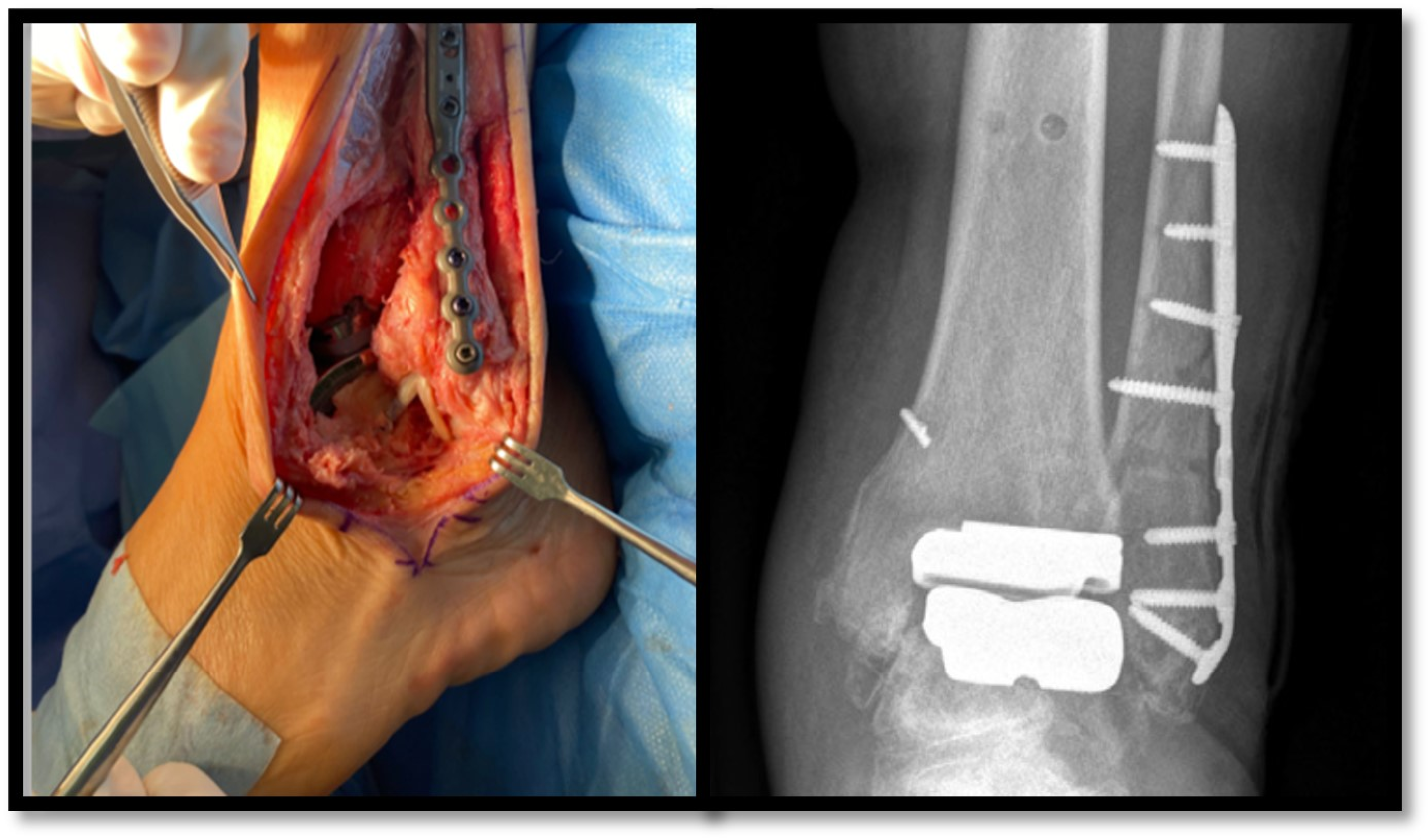
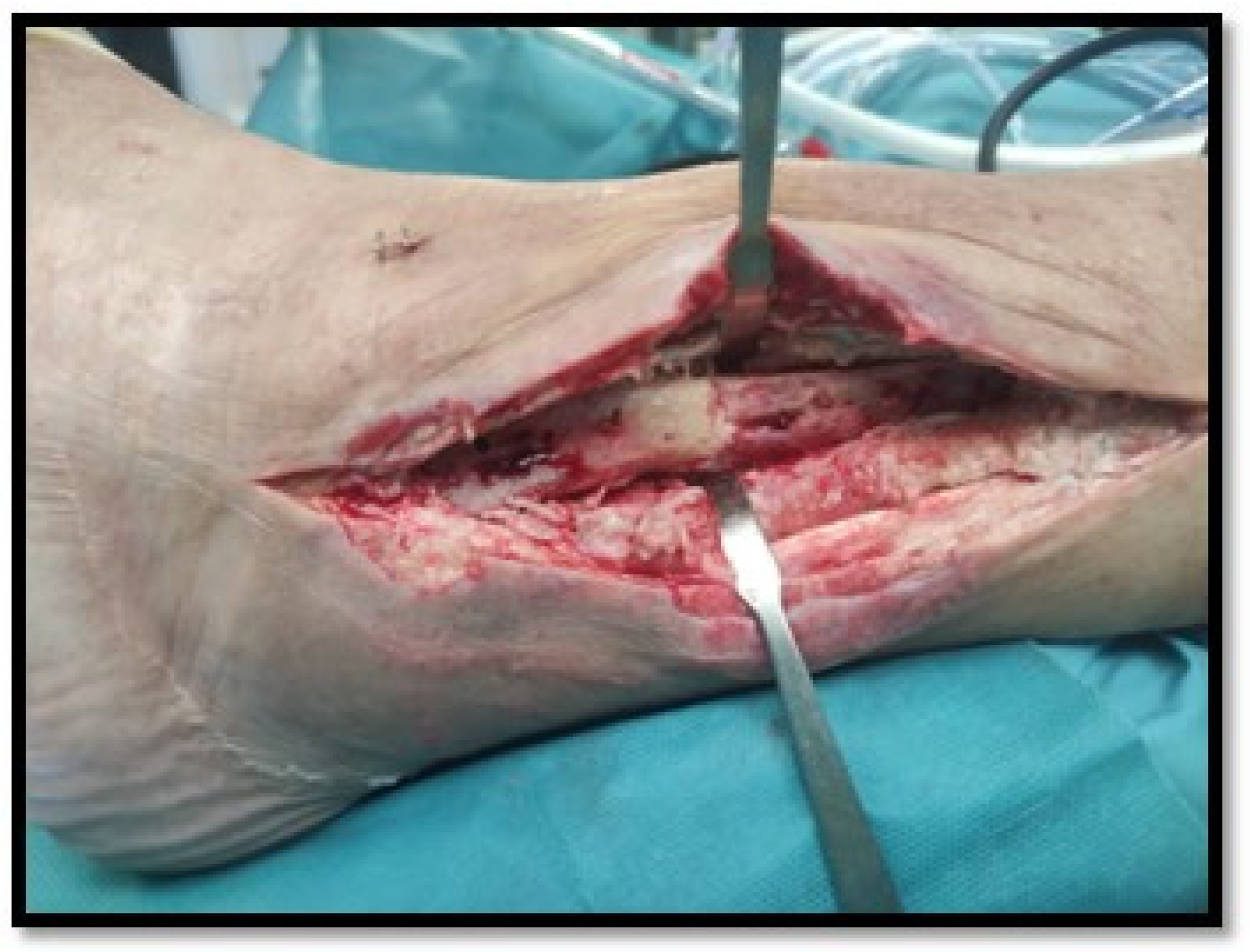
Background: Prosthetic ankle infection is an infrequent and rarely explored prosthetic joint infection (PJI). In early infection, the debridement of implants inserted using the transfibular approach has certain peculiarities that pose a diagnostic and therapeutic challenge, the impact of which on infection prognosis is still unknown. Methods: This study prospectively collected all cases of transfibular prosthetic ankle infection at a tertiary hospital between 2014 and 2022, describing their demographic, clinical, microbiological, and management characteristics, along with the outcome over a long follow-up. This cohort was compared with a cohort of infected fibular plates without prostheses implanted in the same period of time. Results: Seven cases of ankle PJI were analysed, all of them implanted using a transfibular approach. They were all early prosthetic infections. The median age was 63 years (range 54–74) with a predominance of women (71.4%), three patients with diabetes (42.9%), and one patient with rheumatoid arthritis (14.3%). The aetiology was predominantly staphylococcal (4 [57.1%] methicillin-susceptible S. aureus and 1 [14.3%] S. epidermidis). All cases were managed with irrigation and debridement limited to the fibular plate, four of which failed (57%). By comparison, eleven cases of infected fibular plates without prostheses implanted were analysed. There were no differences in clinical, microbiological, or therapeutic management characteristics between the groups. Failure among infected fibular plates occurred in only two cases (18%). Conclusions: Debridement of infected transfibular ankle prostheses suggests a worse evolution than would be expected for other joint infections. This could be explained by the nature of the debridement, limited to the fibular component. Further detailed studies of the surgical possibilities in prosthetic ankle infections are necessary to improve the prognosis of these infections, given their impact on joint function.
Keywords: ankle arthroplasty; transfibular; prosthetic joint infections ankle arthroplasty; transfibular; prosthetic joint infections