3.2. Risk of Bias and Reporting Quality
Human clinical studies: Both randomized trials were judged overall to have “some concerns” using RoB 2, driven mainly by incomplete detail on deviations from intended interventions and handling of missing data; outcome measurement was blinded and judged to have low risk (
Table 4). Non-randomized clinical studies ranged from moderate to serious risk with ROBINS-I due to potential confounding and limited reporting of masking and preregistration, while intervention classification and outcome measurement were generally appropriate (
Table 5). Animal studies: Across the animal experiments, most domains related to exposure characterization (implant/coating identification and preparation) and outcome assessment (standard histomorphometry/µCT) were rated probably/definitely low. In contrast, randomization, allocation concealment, and blinding of personnel/assessors were often not described and, therefore, judged to be probably high by rule. Overall, OHAT confidence categorized four studies as Tier 2 and 13 studies as Tier 3; none met Tier 1 (
Table 6). A SYRCLE sensitivity check mirrored these patterns, with the same critical gaps centered on randomization and blinding rather than data completeness.
In vitro studies (RoBDEMAT): Bench studies commonly provided clear specimen preparation and outcome validity, but randomization/blinding of specimens and a priori sample size calculations were rarely reported, leading to “some concerns” in most domains (
Table 7).
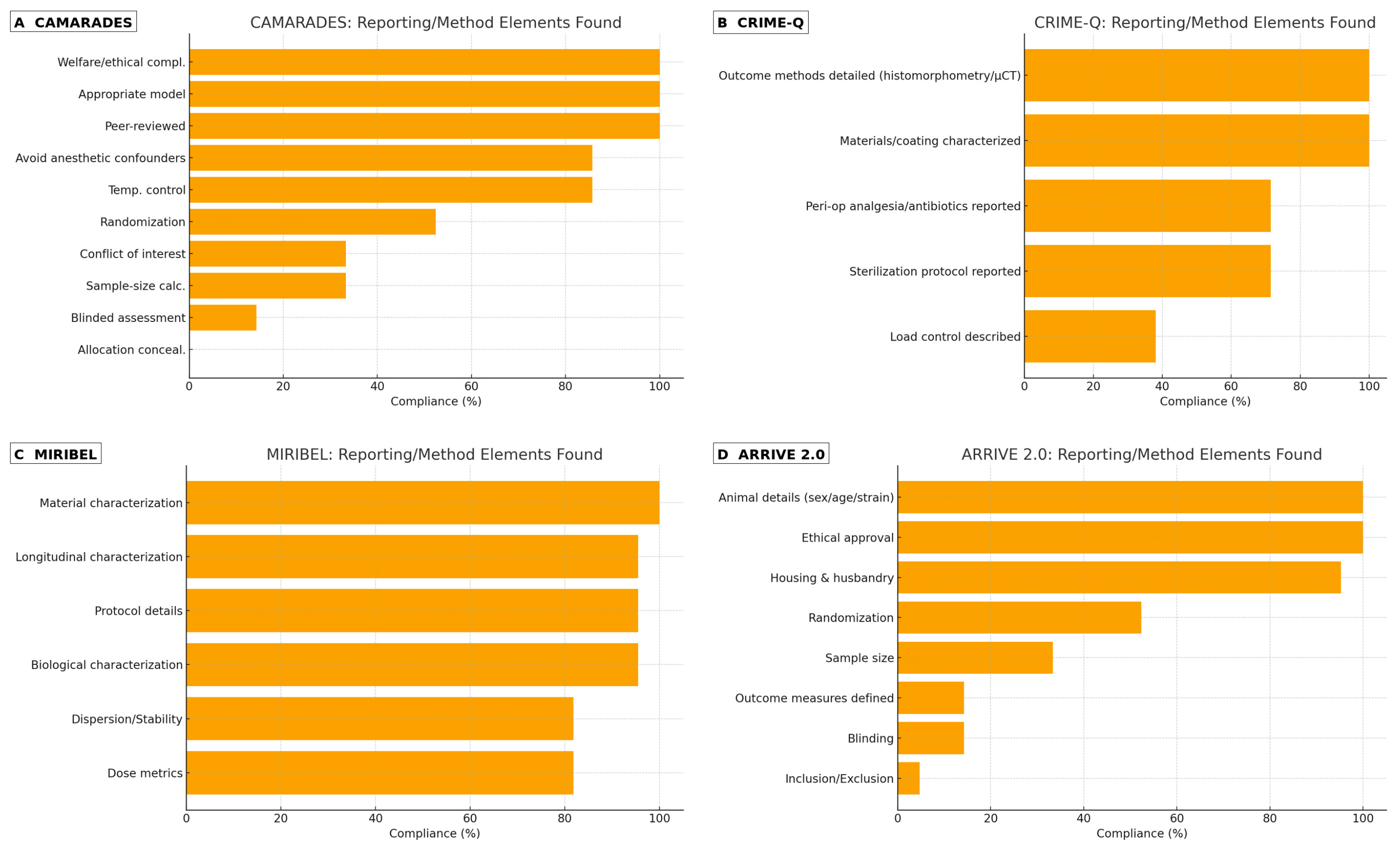
Reporting and technical quality (CAMARADES, CRIME-Q, MIRIBEL, ARRIVE 2.0): The most frequently fulfilled CAMARADES items were peer-reviewed publication, appropriate model, and welfare/ethical compliance; the least frequently fulfilled were sample size calculation, randomization, blinding, and temperature control reporting. CRIME-Q mapping highlighted strong materials/implant descriptions and sterilization protocols in a subset, with heterogeneity in surgical technique standardization, load control, and perioperative analgesia/antibiotics reporting. MIRIBEL mapping showed that surface morphology/roughness/thickness/composition were usually characterized (e.g., SEM/AFM/EDS), whereas dose metrics (delivered vs. administered), dispersion/stability in relevant media, and longitudinal characterization were inconsistently reported. ARRIVE 2.0 checks reiterated shortfalls in randomization, blinding, sample size justification, and prespecified inclusion/exclusion criteria, which likely contributed to the OHAT Tier 3 designations (
Figure 2).
Implications for synthesis: Taken together, the clinical body of evidence is limited by sample size and some concerns about trial conduct but benefits from blinded outcome assessment; the animal evidence is broadly Tier 2–3 due to reporting omissions in key internal validity safeguards; and in vitro evidence is constrained by typical laboratory omissions (randomization/blinding/power).
3.4. Summary of Included Studies
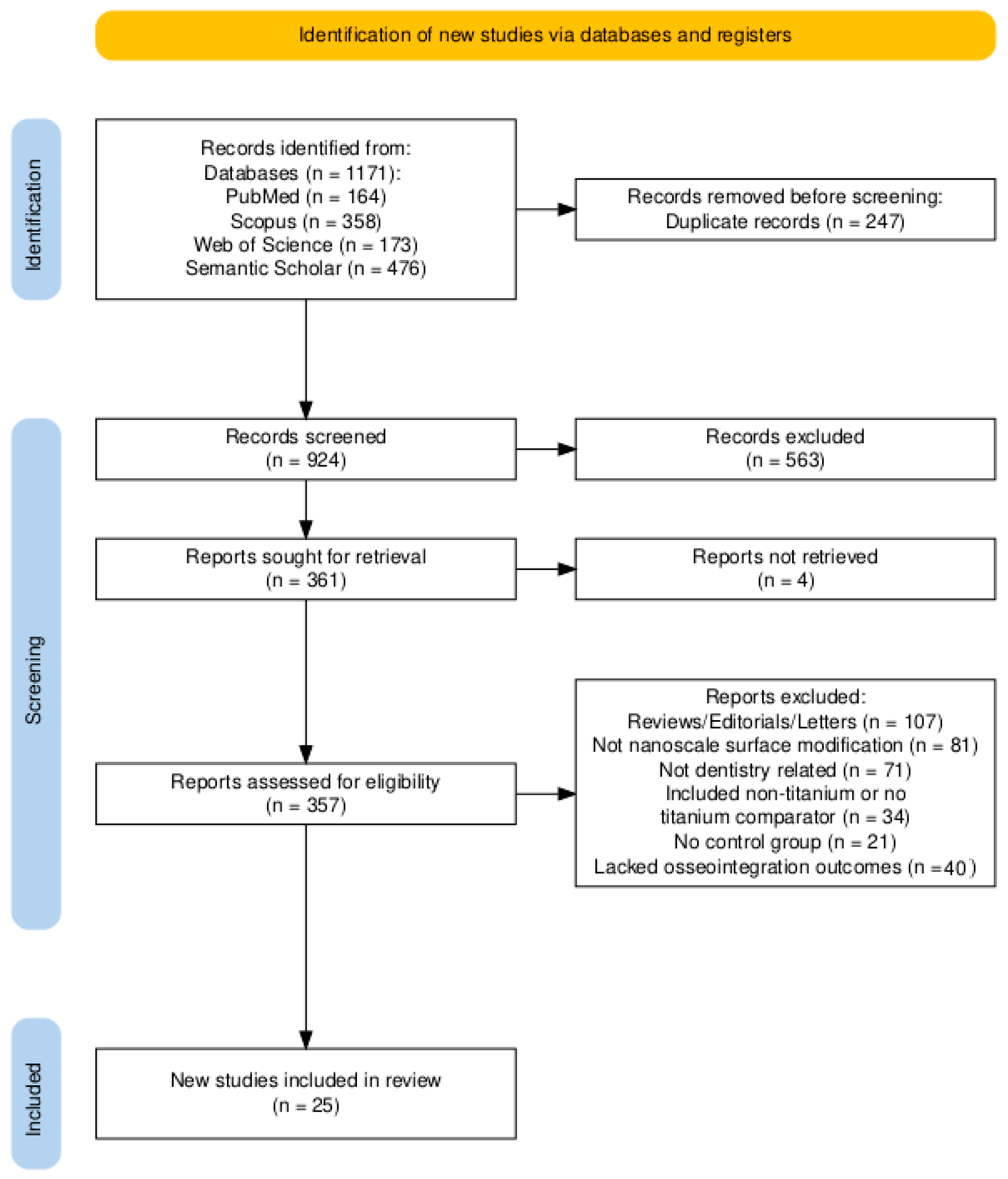
Twenty-five studies met the inclusion criteria, encompassing a range of experimental models and nanocoating strategies. Four studies were in vivo human trials, including two randomized controlled trials and two observational or exploratory studies of patients. Ten were in vivo animal studies (e.g., rabbit, rat, dog, sheep, or minipig models), another ten were combined in vitro and in vivo experiments (often testing cellular responses in vitro alongside animal implantation), and one was a stand-alone in vitro study evaluating osteogenic and antibacterial performance under dynamic oral-flow conditions [
49] (
Table 9). The follow-up periods for bone healing were typically short-to-medium term: most animal studies evaluated early osseointegration at 2–12 weeks post-implantation, while the human studies assessed outcomes from immediate loading up to about 4–6 months.
Across the included studies, the control implants were uncoated titanium surfaces with standard topographies, most commonly conventional sandblasted/acid-etched (SLA) or machined surfaces. Several control groups were well-established commercial surfaces (e.g., machined cp-Ti or SLA without nanocoating). The nanocoated interventions varied widely in composition and fabrication. Approximately one-quarter of the studies (6/25) examined titanium dioxide nanotube surfaces created by anodization, sometimes with added treatments [
50,
55,
57,
59,
60,
61,
69]. Hydroxyapatite (HA) nanoparticle coatings were tested in three studies [
44,
56,
64,
66]. Silver-based nanocoatings (typically Ag nanoparticles or Ag ion incorporated into TiO
2) were evaluated in two studies [
48,
67]. Other nanoscale modifications included strontium-infused surfaces, nanopatterned or nanostructured topographies on titanium, and unique coatings such as nanospikes produced by acid peroxide treatment, ultrananocrystalline diamond, nanofibrous polymer/ceramic layers, bioactive agent-loaded nanostructures like propolis in TiO
2 nanotubes or Korean ginseng in nanotubes, and dual ion implantation of zinc and magnesium. Despite this diversity, all coatings were applied onto titanium implant substrates and aimed at nanoscale surface features or chemistry to enhance integration.
Almost all studies measured multiple osseointegration outcomes. The most common outcome was histomorphometric bone-to-implant contact (BIC), quantified in 17 of the 25 studies as a percentage of implant surface in direct bone contact. Roughly ten studies assessed bone density or bone volume around implants (via histology or micro-CT), and about seven measured related metrics such as bone area fraction or bone volume/tissue volume. Four studies evaluated removal torque or push-out strength as a biomechanical measure of integration (typically in animal models). A few studies reported bone formation rates or mineral apposition (using fluorescent labels), and three reported bone mineral content/density in the peri-implant region. Several in vitro components measured osteogenic activity markers: six studies quantified alkaline phosphatase (ALP) activity or mineralized nodule formation in cell culture, and five examined osteogenic gene expression (e.g., RUNX2, osteocalcin, BMPs) to gauge cellular differentiation. Only a small subset specifically included antimicrobial or biofilm, and one human trial uniquely focused on soft tissue outcomes (healing and peri-implant mucosal health) with a nano-modified abutment. Importantly, most studies reported on early osseointegration phases; none had clinical follow-up beyond 1 year, and long-term functional outcomes (such as implant survival) were outside the scope of these experiments. To minimize interpretive bias across heterogeneous designs, results are signposted by evidence tier—first, human clinical studies, followed by animal in vivo experiments, and then in vitro assays—and within each tier by outcome.
3.5. Osseointegration Evaluation
Across the included evidence, nanoengineered surfaces generally improved early osseointegration metrics (most clearly BIC and, in a subset of clinical series, ISQ), while insertion and removal torque were usually unchanged once integration had consolidated. The direction and magnitude of effects varied by coating class, animal model versus human setting, and follow-up time, with several studies showing pronounced early gains that attenuated as both test and control surfaces matured (
Table 10).
3.5.1. Clinical Studies
In humans, early stability favored nano-modified implants in some trials. For example, Ko et al. (2024) reported higher ISQ for hydroxyapatite nanocoated SLA implants during healing, with mean ISQ ~76.5 vs. ~71.3 at 2 months and ~79.1 vs. ~73.4 at 4 months (both significant), despite similar radiographic bone levels, consistent with an interface quality effect rather than bulk bone gain [
44]. In a clinical series with a silver nanoparticle surface, Memon et al. (2025) observed significantly greater BIC than uncoated controls (
p = 0.013), alongside reductions in local inflammatory markers, indicating that antibacterial functionality did not compromise integration [
67]. In contrast, an anodized abutment surface study [
45] did not detect stability or bone advantages over conventional components, underscoring that not every nanofeature translates to a clinical gain. Overall, the clinical pattern is time-dependent: when differences appear, they are typically largest at 2–4 weeks and often narrow by ≥12 weeks as both arms improve.
3.5.2. Animal Histology and Mechanics
Animal models consistently showed higher early BIC for several nanocoating classes at 2–4 weeks, sometimes with accompanying increases in peri-implant bone fraction; later, at ≥12 weeks, effects became more tempered and occasionally indistinguishable from microrough controls. In sheep, Rousseau et al. (2021) reported persistent BIC advantages for a micro/nanofeatured surface (~79% vs. 68% at 4 weeks and ~86% vs. 75% at 13 weeks) demonstrating a case where benefits did not fully converge [
54]. In beagle dogs, Li et al. (2023) found that Sr-loaded nanotextured implants achieved ~76.6% BIC at 12 weeks compared with ~44.1% for TiO
2-nanotube controls, suggesting a strong osteogenic effect of strontium incorporation [
57]. In rabbits, Yang & Hong (2024) showed that Ca-incorporated (XPEED
®) implants outperformed SLA and HA controls at 4 weeks (BIC and removal torque) [
66], while Toscano et al. (2024) [
56] observed higher reverse torque and bone area for HA nanoparticle surfaces in osteoporotic tibiae, which are instances of early mechanical reinforcement [
56]. Scarano et al. (2020) reported no significant BIC difference for a silver ion–TiO
2 coating versus control [
48], and Auciello et al. (2022) found UNCD coatings comparable to uncoated Ti, indicating that chemistry, release kinetics, and coating integrity modulate outcomes [
68].
3.5.3. In Vitro Mechanical Surrogates and RFA Context
In vitro experiments illuminate biological plausibility rather than anchorage per se, but their signals mirror early in vivo gains. Wang et al. (2022) [
50] showed that hydrogenated TiO
2 nanotubes increased early bone formation and osteogenic gene expression at 2–4 weeks versus machined Ti [
70], and Bierbaum et al. (2018) reported higher ALP and mineralization on nano-modified topographies [
49]. Clinically, ISQ is derived from RFA on a unitless 1–100 scale; longitudinal series typically rise in both groups, with some showing a steeper early slope for nano-modified implants—an effect exemplified by the Ko et al. trajectory noted above.
3.5.4. By Coating Class (Narrative Synthesis)
Anodized TiO2 nanotubes: Multiple models indicate early BIC gains and, where tested, higher removal/push-out forces early; for example, hydrogenated nanotubes accelerated histology and markers in rats, and combining TNTs with PLGA/rhBMP-2 increased removal torque in rabbits versus smooth Ti, supporting a biological and mechanical advantage in the early phase.
Ca/P-incorporated (include HA/PEO): XPEED® consistently outperformed SLA and HA comparators at 4 weeks for BIC and torque in rabbits, and nanostructured HA coatings improved BIC and bone area fraction in low-density bone; in osteoporotic bone, HA nanoparticle surfaces increased reverse torque and bone area, indicating robust early fixation across bone qualities.
Ag-containing: Results are mixed for osseointegration. A clinical series with AgNPs reported higher BIC and lower peri-implant inflammation, whereas a rabbit Ag-ion coating study found no BIC difference, highlighting dose/formulation dependencies for silver surfaces.
Zn/Mg-modified: Dual Zn/Mg ion co-implantation yielded the highest peak push-out force at 12 weeks versus Zn-only, Mg-only, or pure Ti, suggesting a synergistic mechanical integration effect; this aligns with reports of enhanced bone density and contact for such doped surfaces.
Graphene-based/nanospikes: A nanospike topography produced higher early BIC in rabbits (~56% at 3 weeks vs. ~41% smooth), while concurrently demonstrating strong antibacterial performance in vitro and in vivo models—an example of mechanical and biological benefits co-existing when geometry is cell-safe.
3.5.5. Time-Course Sensitivity and Convergence
The largest nano-versus-control differences typically appear at 2–4 weeks (BIC, sometimes ISQ) and shrink by 8–12 weeks as controls “catch up”. This pattern is explicit in minipigs, where hydrophilic nanopatterned implants showed faster early maturation but similar BIC by ~8 weeks [
51]. Nevertheless, exceptions exist: in sheep, micro/nanofeatured implants maintained a BIC lead up to 13 weeks [
54] and in dogs, Sr-loaded nanotextures delivered a large BIC advantage at 12 weeks [
57]. Early mechanical benefits are likewise documented, e.g., higher reverse torque for HA nanoparticles at 4 weeks [
56] and increased removal/push-out forces with TNT + BMP-2 and Zn/Mg co-implantation [
62,
63].
3.5.6. Interim Synthesis
Taken together, nanoengineered coatings accelerate early osseointegration in many models, most consistently reflected in BIC and supported by increases in ISQ in selected clinical series; once integration consolidates, torque measures are commonly similar across groups, and some surfaces show no advantage at all. The balance of findings (spanning Ca/P- and Sr-augmented chemistries, anodized nanotubes, antimicrobial Ag-based designs, Zn/Mg-doped surfaces, and nanospike topographies) supports early-phase benefits with heterogeneous persistence by class, model, and follow-up, with notable counterexamples (e.g., Ag-ion TiO2, UNCD) where effects were neutral.
Table 10.
Osseointegration outcomes.
Table 10.
Osseointegration outcomes.
| Study | Surface Treatment | Outcome Measure | Effect Size | Statistical Significance |
|---|
| Zekiy et al., 2019 [47] | Fluorine-containing nanosurface | Bone density | Improved vs. control | Not reported in the available text |
| Memon et al., 2025 [67] | Silver nanoparticle coating | Bone-to-implant contact (BIC), bone density | Enhanced BIC (p = 0.013), bone density (p = 0.012/0.006) | Statistically significant |
| Yang and Hong, 2024 [66] | Nanostructured calcium-coated (XPEED) | BIC, bone area, removal torque | XPEED > SLA > HA; higher BIC and torque | p < 0.05 |
| Toscano et al., 2024 [56] | Hydroxyapatite nanoparticles (ZiHa) | Reverse torque, bone area, BIC | ZiHa > Zi; torque 4.75 ± 2.22 vs. 1.5 ± 0.58 N·cm | p < 0.05 |
| Das et al., 2019 [65] | Osteogenic nanofibers | BIC, BMD, tensile strength | BIC 50.9% vs. 45.4%; BMD 1078.6 vs. 222.4; tensile 52.1 N vs. 30.9 N | Not reported in the available text |
| Chappuis et al., 2018 [51] | Hydrophilic nanopatterned (SLActive) | BIC, BMD, BV/TV | High BIC both groups; BMD higher in mandible | Not reported in the available text |
| Ko et al., 2024 [44] | HA-nanocoated SLA | ISQ, PBA-T, bone density | Higher ISQ at 2–4 months; similar bone density | p < 0.01; p < 0.05; p < 0.0001 |
| Wang et al., 2022 [50] | Hydrogenated TiO2 nanotubes | BIC, BV/TV, gene expression | Hydrogenated > nanotubes > machined; higher BIC and gene expression | Not reported in the available text |
| Scarano et al., 2020 [48] | Silver ion–TiO2 | BIC, bone density | No significant difference vs. control | Not significant (p > 0.05) |
| Rousseau et al., 2021 [54] | Micro/nanofeatured | BIC | 79.3%/86.4% (4/13 weeks) vs. 68.3%/74.8% | Statistically significant |
| Hall et al., 2019 [45] | Anodized titanium dioxide (anatase) | Marginal bone level | No significant difference | Not significant |
| Auciello et al., 2022 [68] | Ultrananocrystalline diamond | BIC | 58.8% vs. 53.4% | Not significant (p > 0.05) |
| Karazisis et al., 2021 [46] | Nanopatterned | Osteogenic gene expression | 1.7–2× upregulation (RUNX2, ALP, osteocalcin) | Statistically significant |
| Gil and Sanz, 2025 [58] | Nanospikes | BIC, cell adhesion, ALP | BIC 54% vs. 41%; enhanced adhesion and ALP | Statistically significant |
| Almeida et al., 2023 [64] | Nanostructured hydroxyapatite | BIC, BAFo | Higher BIC/BAFo at 28 days vs. dual acid-etched | p = 0.01; p = 0.007 |
| Bierbaum et al., 2018 [49] | Nanopitted | ALP, mineralization | Highest ALP/mineralization | N/A |
| Costa-Filho et al., 2024 [52] | Micro–nano + strontium | BIC, BV/TV, gene expression | Improved BIC, BV/TV, gene upregulation | N/A |
| Hoornaert et al., 2020 [53] | Nanostructured | BIC | Mandible: 35.7%/47% vs. 12.6%/32.2% | N/A |
| Kang et al., 2020 [59] | TiO2 nanotubes + Korean Red Ginseng extract | Bone formation, BMD, BMP-2/7, ALP | Enhanced bone formation, BMD, gene expression | N/A |
| Lee et al., 2019 [60] | TiO2 nanotubes | Bone coverage | Complete bone coverage (qualitative) | N/A |
| Somsanith et al., 2018 [55] | Propolis-loaded TiO2 nanotubes | Bone density, ALP, BMP-2/7 | Increased bone density, ALP, BMP-2/7 | N/A |
| Sadrkhah et al., 2023 [61] | SLActive-nano-titanium | BIC, BMD, BMC, BV/TV | Highest BIC, BMD, BMC, BV/TV | N/A |
| Li et al., 2023 [57] | Sr-loaded nanotextured Ti | BIC, bone density, MAR, ALP | BIC 76.6% vs. 44.1%; bone density 54.9% vs. 28.8% | N/A |
| Zhang et al., 2021 [63] | TiO2 nanotubes + PLGA/rhBMP-2 | BIC, removal torque, gene expression | Higher BIC and torque; gene upregulation | N/A |
| Yu et al., 2016 [62] | Zn/Mg ion co-implanted titanium | BIC, bone density | Higher BIC and bone density | p < 0.05 |
3.7. Mechanical Stability Outcomes
Several animal studies directly measured the mechanical anchorage of implants via removal torque or push-out tests. These outcomes corroborate the histologic findings. Nanocoated implants consistently required equal or higher force to detach, indicating stronger osseointegration. In an ovariectomized rat model, reverse-torque testing at 4 weeks showed that implants with an HA nanoparticle-blasted surface (ZiHa) had a mean failure torque of 4.75 ± 2.22 N·cm, compared to only 1.5 ± 0.58 N·cm for the standard blasted surface [
56]. This ~three-fold increase in interfacial shear strength was statistically significant (
p = 0.03). Likewise, Zhang et al. (2021) observed higher removal torque in rabbit implants that combined TiO
2 nanotubes with a PLGA/rhBMP-2 coating, relative to smooth titanium controls [
69]. Yu et al. (2017) conducted push-out tests in rabbit femurs: after 12 weeks, the dual Zn/Mg ion implants exhibited the highest peak push-out force among all groups, significantly greater than Zn-only, Mg-only, or pure Ti implants (
p < 0.05) [
62]. This suggests a synergistic effect of co-implanting Zn and Mg ions on mechanical integration strength. On the other hand, one human trial measured clinical stability via resonance frequency (ISQ) and found no difference between an anodized nanosurface abutment and a conventional abutment, aligning with its finding of no BIC difference [
45]. In contrast, another human RCT by Ko et al. (2024) did find differences in implant stability quotient (ISQ) over time [
44]. In that trial of immediate maxillary implants, both nanocoated and uncoated SLA implants were well stabilized at placement (~70 ISQ), but the HA-nanocoated implants showed a significantly greater increase in ISQ during early healing. By 2 months the test group’s mean ISQ was ~76.5 vs. ~71.3 in controls (
p < 0.01), and by 4 months the difference was even more pronounced (~79.1 vs. 73.4,
p < 0.0001). These data indicate faster and stronger stabilization of the nanocoated implants in vivo. Ko et al. also reported no difference in radiographic bone level changes between groups at 4 months, suggesting that the ISQ benefit was due to qualitative interface improvements rather than gross bone volume changes [
44]. Overall, 21 of the 25 studies reported that nanocoated implants achieved better outcomes on at least one osseointegration metric (whether histologic or mechanical) compared to non-nano controls. Only two studies reported unequivocally null findings; the silver ion coating in Scarano et al. (2020) and the anodized abutment in Hall et al. (2019) [
45] both failed to improve integration versus controls [
45,
48]. Two other studies could be described as having mixed or partial improvements: Chappuis et al. (2018) saw early differences (hydrophilic nanopatterned implants had faster integration), but by 8 weeks, the BIC was equally high (~70–80%) in both nanopatterned and control SLA implants, while Ko et al. (2024) showed improved stability for nanocoated implants but similar bone remodeling outcomes [
44,
51]. In summary, the evidence indicates that nanocoatings tend to enhance early osseointegration, improving bone contact and mechanical fixation, although the magnitude of benefit varies, and a few coatings provide no clear advantage over traditional surfaces.
3.8. Temporal Patterns of Bone Healing
A recurring theme across the studies is that time plays a critical role in the observed benefits of nanocoatings. Many experiments noted that nanocoated implants have an edge during the early healing phase (the first few weeks), which may diminish as healing progresses in both groups. For example, Wang et al. (2022) [
50] evaluated titanium dioxide nanotube implants (with and without additional hydrogenation) in a rat model and found that nano-modified implants showed significantly greater new bone formation and gene expression of osteogenic markers at 2 and 4 weeks compared to machined titanium. This suggests an accelerated onset of osseointegration. Yang and Hong (2024) [
66] similarly reported that the largest differences between their Ca-coated XPEED surface and controls were at the 4-week mark; at that point, XPEED implants clearly outperformed both SLA-only and HA-coated implants in BIC and removal torque. By later timepoints, differences tended to narrow. Later timepoints (8–12 weeks) often showed a convergence of outcomes, especially in animal models where the control implants eventually achieve substantial osseointegration. Chappuis et al. (2018) [
51] provide a clear illustration: in minipigs, they compared ultrafine-grained, nanopatterned titanium implants to conventional SLA implants. At 2–4 weeks, the nanopatterned implants had slightly more bone fill and higher bone density in certain regions, indicating faster initial integration. However, by 8 weeks post-surgery, both surfaces had reached comparably high BIC (~80% in mandible), and bone density measurements equalized, implying that the standard implants had “caught up” in osseointegration by two months. The authors noted that the time-to-osseointegration was shorter with the nanosurface, but given sufficient healing time, the endpoint osseointegration was similar. Sadrkhah et al. (2023) [
61] tested a nanostructured titanium implant (grain-refined titanium with SLA/SLActive surface) against various controls and found that at 4 weeks, the nano-treated implants exhibited the highest histomorphometric indices (BIC, bone mineral content, etc.). Although that study did not report beyond one month, it suggested the nanosurface particularly benefits early bone bonding [
61]. Some coatings appear to maintain an edge even at later times: Rousseau et al. (2021)’s sheep study showed that the micro/nanofeatured implants had higher BIC than controls at both 1 month and 3 months, with the gap persisting (79% vs. 68% at 4 wks; 86% vs. 75% at 13 wks) [
54]. This indicates certain nanotopographies confer not just faster integration but a higher plateau of bone contact. In general, however, a pattern emerges: nanocoated implants tend to demonstrate their greatest relative benefit in the early postoperative period, promoting quicker bone apposition and stability when it is most needed (initial healing). With longer healing durations, control implants often continue improving and can reduce the difference. This has important clinical implications, as it suggests nanocoated implants might be especially useful for early loading or in poor-quality bone where the early gains in stability could prevent micromotion or failure. It should be noted that few studies extended beyond 3–4 months, so whether some nanocoating advantages might re-emerge or further diminish at true long-term endpoints (1–5 years) remains unknown. Nonetheless, within the observed windows, the evidence supports that nano-modified surfaces accelerate bone healing kinetics. These temporal findings highlight that the timing of outcome assessment is crucial: an evaluation at 2–4 weeks may show significant differences favoring the nano implant, whereas by 3–6 months the difference might be smaller or not significant if both have achieved substantial osseointegration. In summary, nanocoatings appear most beneficial for early-stage osseointegration, helping implants gain stability faster, which could translate to shorter required healing periods before functional loading.
3.9. Comparative Effectiveness by Nanocoating Type
The included studies encompassed a wide array of nanocoating types, enabling some comparisons across different nanotechnologies. However, it is important to note that most studies only compared a nano-treated implant to an uncoated control, not directly against other nanocoatings. Therefore, any comparative effectiveness statements are drawn from separate studies rather than head-to-head trials, and differences in models must be considered. Differences in reported osseointegration or antibacterial performance can reflect not only the nanofeature itself but also the depth and scope of surface characterization underpinning each claim. To contextualize the comparisons that follow,
Table 11 charts, for every included study, which key domains were reported: topography (SEM/AFM/profilometry), chemistry (XPS/EDS/ToF-SIMS), wettability/surface energy, roughness metrics (Ra/Sa), phase (XRD/Raman/FTIR), ion/particle release (ICP/AAS), thickness/adhesion/durability, and sterilization.
Table 11.
Surface characterization coverage by study.
Table 11.
Surface characterization coverage by study.
| Study | Nano-Feature/Surface Treatment | Topography (SEM/AFM/Profil.) | Chemistry (XPS/EDS/ToF-SIMS) | Wettability/Surface Energy | Roughness Metrics (Ra/Sa/Etc.) | Phase (XRD/Raman/FTIR) | Ion/Particle Release (ICP/AAS) | Thickness/Adhesion/Durability | Sterilization Stated | Commercial Platform Named |
|---|
| Yu et al., 2017 [62] | Zinc/magnesium ion co-implanted titanium | ✔ | ✔ | ✔ | — | — | ✔ | ✔ | ✔ | ✔ |
| Bierbaum et al., 2018 [49] | Nanotubular/nanopitted (anodization) | ✔ | — | ✔ | ✔ | ✔ | ✔ | ✔ | ✔ | ✔ |
| Chappuis et al., 2018 [51] | Hydrophilic nanopatterned (SLActive) | ✔ | — | ✔ | ✔ | — | — | ✔ | — | ✔ |
| Somsanith et al., 2018 [55] | Propolis-loaded TiO2 nanotubes | ✔ | — | — | — | — | — | ✔ | ✔ | ✔ |
| Das et al., 2019 [65] | Osteogenic nanofibrous coating | ✔ | — | ✔ | — | — | — | ✔ | ✔ | — |
| Hall et al., 2019 [45] | Anodized titanium oxide (anatase) | — | — | — | ✔ | — | — | ✔ | ✔ | ✔ |
| Lee et al., 2019 [60] | TiO2 nanotubes (anodic oxidation) | ✔ | — | ✔ | — | — | — | ✔ | ✔ | ✔ |
| Zekiy et al., 2019 [47] | Fluorine-containing nanosurface (OsseoSpeed) | — | — | ✔ | ✔ | — | — | — | ✔ | ✔ |
| Hoornaert et al., 2020 [53] | Nanostructured cp-Ti (severe plastic deformation) + SLA | ✔ | ✔ | ✔ | ✔ | — | — | ✔ | ✔ | ✔ |
| Kang et al., 2020 [59] | TiO2 nanotubes + Korean Red Ginseng extract | ✔ | — | ✔ | — | — | — | ✔ | ✔ | ✔ |
| Scarano et al., 2020 [48] | Silver ion–TiO2 nanoparticle coating | ✔ | ✔ | — | ✔ | — | — | ✔ | ✔ | — |
| Karazisis et al., 2021 [46] | Nanopatterned (colloidal lithography) | ✔ | ✔ | ✔ | ✔ | — | — | ✔ | ✔ | ✔ |
| Rousseau et al., 2021 [54] | Micro/nanofeatured (Starsurf®) | ✔ | ✔ | ✔ | ✔ | — | — | ✔ | ✔ | ✔ |
| Zhang et al., 2021 [63] | TiO2 nanotubes + PLGA/rhBMP-2 | ✔ | ✔ | ✔ | ✔ | — | — | ✔ | ✔ | ✔ |
| Auciello et al., 2022 [68] | Ultrananocrystalline diamond (UNCD) | ✔ | ✔ | ✔ | — | — | — | ✔ | ✔ | ✔ |
| Wang et al., 2022 [50] | TiO2 nanotubes, hydrogenated (superhydrophilic) | ✔ | — | ✔ | — | — | — | ✔ | ✔ | ✔ |
| Almeida et al., 2023 [64] | Nanostructured hydroxyapatite | ✔ | — | — | — | — | — | ✔ | ✔ | ✔ |
| Li et al., 2023 [57] | Strontium-loaded nanotextured titanium; TiO2 nanotubes (head-to-head) | ✔ | ✔ | ✔ | — | — | — | ✔ | ✔ | ✔ |
| Sadrkhah et al., 2023 [61] | SLA/SLActive on nanostructured commercially pure titanium (cp-Ti) | ✔ | — | ✔ | ✔ | — | — | ✔ | ✔ | ✔ |
| Costa Filho et al., 2024 [52] | Micro–nanotextured + strontium | ✔ | ✔ | ✔ | ✔ | — | ✔ | ✔ | ✔ | — |
| Ko et al., 2024 [44] | Hydroxyapatite nanocoated sandblasted large-grit acid-etched (SLA) | ✔ | — | ✔ | ✔ | — | — | ✔ | ✔ | ✔ |
| Toscano et al., 2024 [56] | Hydroxyapatite nanoparticles on zirconia-blasted/acid-etched | ✔ | ✔ | ✔ | ✔ | — | ✔ | ✔ | ✔ | ✔ |
| Yang et al., 2024 [66] | Nanostructured calcium-coated (XPEED®) | ✔ | ✔ | ✔ | ✔ | ✔ | ✔ | ✔ | ✔ | ✔ |
| Gil et al., 2025 [58] | Nanospikes (acid/peroxide) | ✔ | — | ✔ | ✔ | — | ✔ | ✔ | ✔ | — |
| Memon et al., 2025 [67] | Silver nanoparticle (AgNP) coatings | — | — | — | ✔ | — | ✔ | ✔ | ✔ | ✔ |
Hydroxyapatite-Based Nanocoatings: Three studies reported positive outcomes with nano-HA coatings. These surfaces combine microscale roughness with a calcium/phosphate apatite at the nanoscale. In rats, adding HA nanoparticles to an SLA-type surface (Toscano et al.) improved all measured parameters (reverse torque, new bone area, BIC) relative to the same rough surface without HA. In a dog model of low-density bone, Almeida et al. found significantly higher 28-day BIC for nanostructured HA-coated implants versus dual-etched titanium, indicating that even in poor bone quality, the HA nano-layer enhanced bone anchorage. Ko et al.’s RCT in humans further demonstrated that an HA-nanocoated implant achieved higher stability in the crucial early months than an identical implant without HA [
44]. Collectively, these suggest that nano-HA coatings are effective in promoting osseointegration, likely due to HA’s osteoconductivity. It is worth noting that older first-generation plasma-sprayed HA coatings sometimes failed in the long term due to delamination, but the nano-thickness HA layers here did not show such issues in short-term observation. They improved early bone bonding without adverse events. Thus, among the various types, hydroxyapatite nanoparticle coatings emerge as a reliably beneficial modification for osseointegration.
Titanium Dioxide Nanotube Surfaces: Six studies focused on anodically fabricated TiO
2 nanotubes (usually 30–100 nm diameter tubes on the titanium surface) [
50,
55,
57,
59,
60,
69]. These studies generally found improved biologic responses, but specific outcomes varied with additional modifications. Plain TiO
2 nanotubes (without added bioactive elements) were examined by Lee et al. (2019) [
60] in dogs—the result was qualitatively better bone coverage on nanotube implants (complete bone coverage along the threads) compared to machined implants that had patchy bone contact. This indicates nanotubes provided a more hospitable surface for bone growth. Wang et al. (2022) [
50] went a step further by hydrogenating TiO
2 nanotubes to make them superhydrophilic; in their in vivo/in vitro study, the hydrogenated-nanotube implants showed superior early BIC and higher expression of osteogenic genes than both smooth titanium and even non-hydrogenated nanotubes. This suggests that modifications to nanotube chemistry (e.g., incorporating hydroxyls) can further boost performance. Several studies doped nanotubes with bioactive agents. Somsanith et al. (2018) [
55] loaded propolis, a natural resin with antimicrobial and anti-inflammatory properties, into TiO
2 nanotubes. In rat mandibles, the propolis-loaded nanotube implants had greater bone formation and bone density than unmodified titanium, accompanied by higher ALP activity and BMP-2/-7 expression in surrounding bone, all indicating an enhanced osteogenic milieu. Kang et al. (2020) [
59] similarly functionalized TiO
2 nanotubes with an herbal extract: Korean red ginseng. They found the ginseng-infused nanotubes led to significantly more new bone formation and higher local bone mineral density in rabbit femurs compared to nanotubes without the extract. They also observed an upregulation of BMP-2/7 and ALP in peri-implant tissue, reflecting stimulated bone turnover. Hence, functionalized nanotubes can serve as a delivery vehicle for osteo-promotive substances, yielding additive benefits beyond nanotopography alone. Finally, Zhang et al. (2021) [
63] used TiO
2 nanotubes as part of a composite coating carrying PLGA microspheres with rhBMP-2 growth factor. This design achieved synergistic effects: the nanotexture provided immediate structural integration, and the slow-release BMP-2 further induced bone formation. Consequently, BMP-loaded nanotube implants had higher BIC and torque removal strength than smooth implants in rabbits, as well as elevated expression of osteogenic genes (e.g., RUNX2) in peri-implant bone. Taken together, TiO
2 nanotube surfaces (with or without bioactive augmentation) consistently showed improved osteointegration metrics in their respective studies. They appear particularly effective when combined with biochemical agents or modified surface chemistry. The open tube structure may facilitate cell attachment and act as a reservoir for growth factors or antimicrobials. It is notable that in one comparative study [
57], a Sr-doped nanotextured surface outperformed a pure TiO
2 nanotube surface, hinting that further doping of nanotubes (with elements like Sr, Ca, etc.) is beneficial. No study indicated any detriment from nanotubes; even in the absence of added agents, they at least matched and usually exceeded the performance of smooth surfaces.
Silver-Containing Coatings: Two studies show insight into the role of silver. Silver nanoparticles or ions are added primarily for their antimicrobial property, but their effect on bone integration has been debated. Scarano et al. (2020) tested a Ti implant coated with a “bifunctional molecule” that released Ag
+ ions, hypothesizing that it would prevent infection and promote bone growth [
48]. While the coating did prevent any overt infection in their rabbit model, osseointegration was not improved: BIC and bone density did not differ significantly from control implants. The silver-coated implants integrated well (no inhibition of bone healing was observed, indicating biocompatibility), but they offered no clear advantage in bone metrics. In contrast, Memon et al. (2025) observed both antimicrobial and pro-bone effects in a clinical cohort [
67]. Their AgNP-coated implants showed a statistically significant increase in histologic BIC compared to uncoated implants (
p = 0.013) and concurrently reduced bacterial adhesion and inflammatory markers. This positive finding may be attributed to a specific form of silver (nanoparticles deposited on the surface) and the context (possibly patients with high risk of peri-implantitis). The discrepancy between studies suggests that the effect of silver on osseointegration might be context-dependent or sensitive to the coating method. The primary benefit of silver is antimicrobial; any bone effect could be secondary to reduced inflammation or infection. Notably, neither study found silver to impair bone healing (a reassuring point, since silver ions at excessive doses can be cytotoxic [
71]). In these nanocoatings, the dosage was evidently within a safe range. In summary, silver-based nanocoatings provided demonstrable antimicrobial benefits (discussed below) but mixed osseointegration results: one showed no bone gain, another did. It underscores that silver coatings should be tuned to maximize antibacterial action while maintaining biocompatibility, and improvements in bone integration are not guaranteed unless infection is a confounding factor.
Strontium and Other Trace Elements: Strontium is known as an osteogenic and anti-resorptive trace element (used in osteoporosis medications), and two studies evaluated Sr-enriched implant surfaces. Costa-FIlho et al. (2024) created a micro–nanotextured titanium surface with Sr incorporation and tested it in rats (with accompanying cell studies) [
52]. They reported improved outcomes across the board: higher BIC and BV/TV in vivo, and upregulation of osteogenic genes (likely indicating Sr-stimulated osteoblast activity). Li et al. (2023) [
57] directly compared Sr-loaded nanotextured implants to TiO
2 nanotubes (without Sr) in dog extraction sockets; as noted, the Sr group had dramatically higher BIC and bone fraction after 3 months. While antimicrobial outcomes were not a major focus in these studies, Sr has been noted to have some antimicrobial or anti-inflammatory effects in bone, and generally the Sr-coated implants showed no signs of infection and possibly faster healing. We can infer that Sr-enhanced nanosurfaces are among the most effective for boosting bone formation, combining topographical cues with a chemical stimulus for bone [
57]. Another dual-dopant approach was the Zn/Mg ion co-implantation studied by Yu et al. [
62]. This surface is not a coating per se but an ion-infused titanium surface at the nanoscale. The Zn/Mg-co-implanted titanium was explicitly designed to be “multifunctional,” and indeed, it achieved multiple advantages: it significantly enhanced osteogenesis (e.g., more bone and higher push-out strength than pure Ti or single-ion implants) and also showed antibacterial capabilities (inhibiting periopathogenic bacteria in lab assays). This indicates that combining osteogenic and antibacterial ions can yield a well-rounded improvement in implant integration. Other unique coatings each showed some promise. For example, nanospikes produced by acid–peroxide can be considered a topography-driven antibacterial surface [
58]. That study is noteworthy as it achieved one of the highest reported bactericidal efficiencies (up to 90% bacterial reduction) while still improving BIC. The nanospike surface did not sacrifice bone integration for antimicrobial effect; in fact, it slightly increased BIC and ALP production relative to the control. Ultrananocrystalline diamond is at the other end of the spectrum, an extremely hard, inert nanocoating [
68]. That study found that the diamond-coated implants were highly biocompatible and integrated without issues, but they did not improve BIC beyond that of the uncoated implant (the inertness means it neither helps nor hurts bone). Diamond might have other benefits (e.g., smoother surface for soft tissue or abrasion resistance), but in terms of osseointegration, it was equivalent to standard titanium. Nanopatterned surfaces produced by colloidal lithography stand out as the only included human molecular study [
46]. In that trial, patients received a small nanopatterned implant and a machined implant, which were later retrieved for analysis of gene expression in the interface bone. The nanopatterned implants did not necessarily show gross histologic differences (the publication focused on molecular outcomes), but they induced a different gene expression profile, significantly upregulating genes related to osteogenesis and extracellular matrix formation (e.g., ALP, osteocalcin, collagen) in the local bone at 4–8 weeks [
46]. This indicates that even if two surfaces achieve similar BIC by 8 weeks, the quality of the interface might differ at the microscopic or molecular level, with nanostructures promoting a more osteoblastic phenotype. Finally, surfaces with combined micro–nanotextures (without a specific added coating) were tested [
53,
54]. These surfaces, created by modifications like sandblasting + acid etching + anodic treatment, essentially provide a multiscale roughness. They generally outperformed simple microrough surfaces. For instance, Rousseau’s micro–nanofeatures had better bone integration than standard grit-blasted implants at both timepoints measured [
54]. Hoornaert et al. (2020) used a severe plastic deformation to create ultrafine-grained (nanostructured) cp-Ti implants which were then SLA-treated; those implants showed dramatically higher BIC in minipigs at early times compared to conventional SLA titanium [
53]. These underscore that topographical nanostructuring, even without bioactive agents, can significantly enhance bone ingrowth, likely by increasing surface area and facilitating protein/cell attachment.
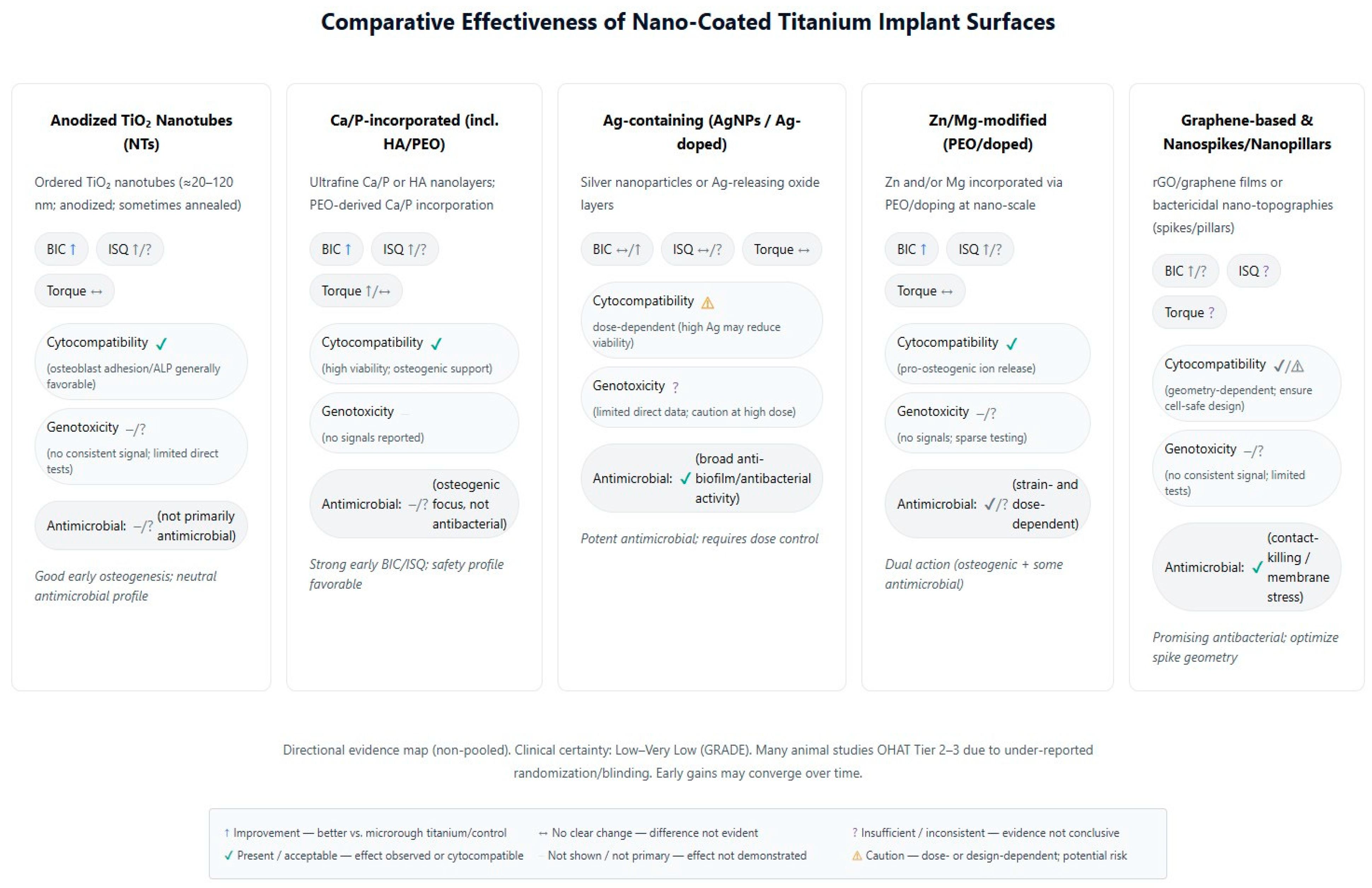
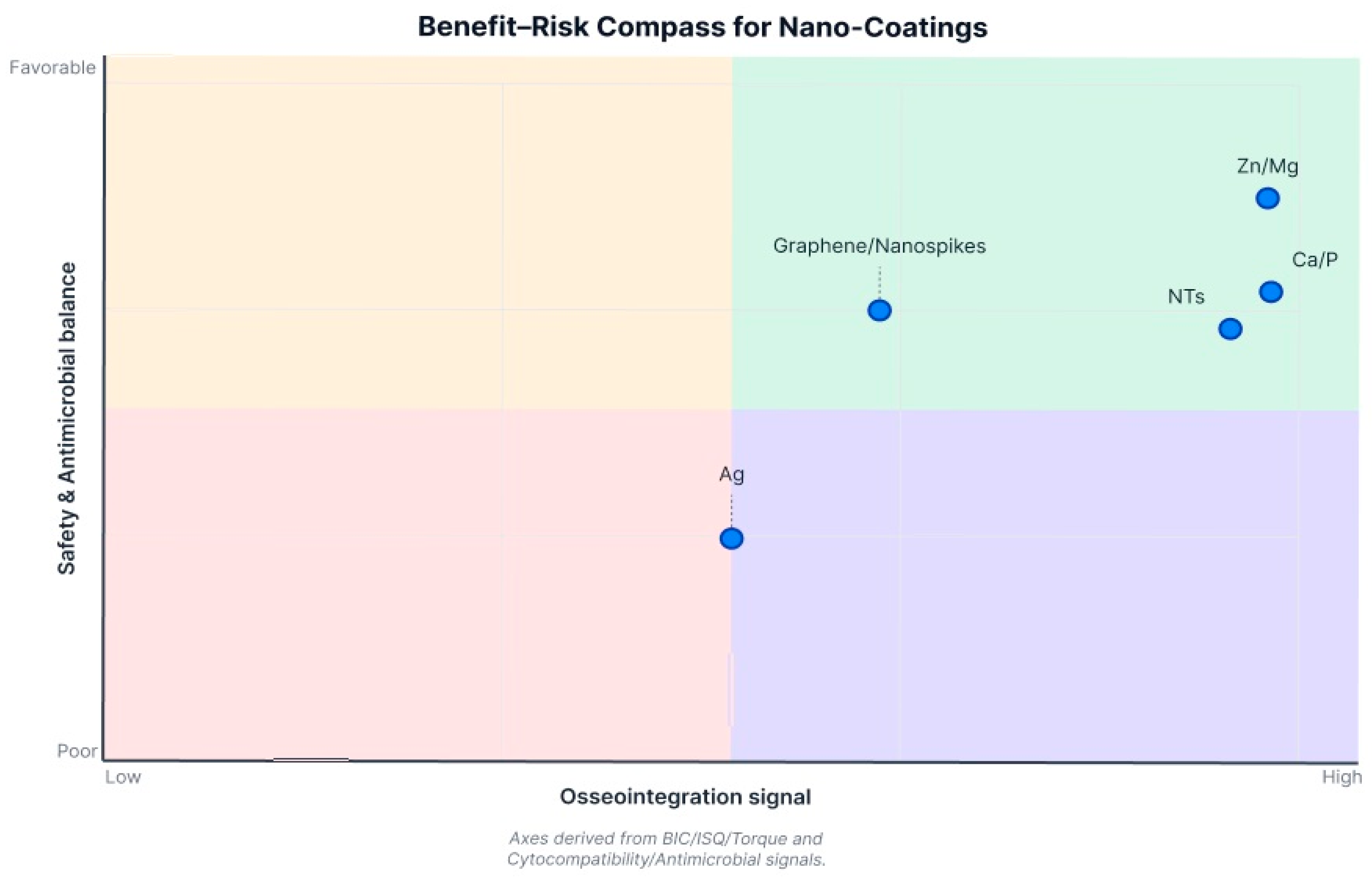
Comparing across coating types: no single nanocoating emerged as universally superior in all aspects. Each type offers certain advantages. HA- and calcium-based nanosurfaces are consistently osteoconductive, giving reliable boosts to bone contact and early stability. TiO
2 nanotubes (and similar nanoporous textures) provide an excellent platform for both bone response and for loading additional therapies (drugs, growth factors)—these have shown versatility and strong results, especially when combined with osteogenic factors. Metallic ion integrations (Sr, Zn/Mg) yield dual benefits for bone and bacteria, making implants more “bioactive” rather than just passive. Purely antibacterial nanostructures like Ag or nanospikes successfully reduce bacteria and can do so without harming osseointegration; some even improve bone outcomes, though others are neutral on bone. Inert nanocoatings like nanodiamond demonstrate safety and equivalence to current gold-standard surfaces, which might be useful in scenarios requiring extreme material properties. Ultimately, effectiveness can be context-dependent: for instance, if preventing infection is a priority (compromised patients or poor hygiene environments), a silver or antimicrobial nanocoating might contribute greatly by avoiding peri-implantitis, even if bone metrics are only unchanged or modestly improved. On the other hand, in healthy conditions, a purely osteogenic coating like nano-HA or Sr-doped implant may maximize bone bonding. The variability in reported effectiveness highlights that coating chemistry, nanotopography, and the biological context all influence osseointegration outcomes. Importantly, because there were no direct comparative trials between different nanocoating types in this review, any ranking of “which nanocoating is better” remains tentative. The evidence suggests many nanocoatings outperform uncoated surfaces, but differences among nanocoatings would require further study. In practical terms, a coating that also confers antimicrobial properties (e.g., nanospikes, Zn/Mg, AgNP) offers a broader spectrum of benefits, provided it still supports bone integration, whereas a coating solely aimed at bone formation might maximize mechanical outcomes in straightforward healing scenarios (
Figure 3).
3.10. Cytogenotoxicity and Antimicrobial Effects
Several included studies explicitly evaluated the antimicrobial properties of nanocoated implants, as well as their biocompatibility in terms of cytotoxic or inflammatory effects. Overall, the nanocoatings tested tended to reduce microbial colonization at the implant surface without inducing cytotoxic harm to host tissues, although data on genotoxicity were very limited.
Antimicrobial Outcomes: Findings are interpreted within in vitro assay contexts (CFU counts, live/dead imaging, static adhesion or flow-cell biofilms), with in vivo infection signals summarized qualitatively where quantitative microbiology was not reported (
Table 12). Two studies performed quantitative microbial assays in vivo or in vitro, and a few others provided qualitative observations. Silver nanoparticle coatings demonstrated notable antibacterial activity. In the clinical study by Memon et al. (2025), implants coated with AgNPs showed significantly reduced bacterial adhesion in an in vitro biofilm model using Pseudomonas aeruginosa (
p = 0.009) [
67]. Although P. aeruginosa is an uncommon oral pathogen, this result likely extends to general antibiofilm capacity. Gil and Sanz (2025) tested a nanospike titanium surface against four bacterial strains (including oral Gram-positive and Gram-negative species) [
58]. They reported bactericidal efficiency of approximately 70–90%, meaning that the nanospiked surface killed most bacteria that contacted it, whereas a smooth control surface allowed those bacteria to survive. This high kill rate is attributed to the physical nanotopography (the spikes mechanically disrupt bacterial cell membranes) and possibly surface chemistry, notably achieved without any antimicrobial chemicals like silver. Another multi-functional approach was the Zn/Mg ion implantation [
62]. In that study, the Zn/Mg-treated titanium inhibited the growth of peri-implant anaerobes: the authors noted roughly a 40–50% reduction in colony counts of Porphyromonas gingivalis and Fusobacterium nucleatum (key periodontal pathogens), as well as Streptococcus mutans, compared to pure titanium (which had no antimicrobial ion release). Scarano et al. (2020) did not find a difference in infection rates between their silver-coated and control implants; effectively, the silver kept the infection risk to at least the same low level as the control, though quantitative bacterial counts were not given [
48]. Bierbaum et al. (2018) specifically looked at bacterial adhesion under dynamic flow conditions. They found that certain nano-modified surfaces (anodic TiO
2 nanotubes with additional nano-pitting and polymer coating) had reduced bacterial adhesion compared to conventional grit-blasted surfaces when exposed to oral bacteria in a flow chamber [
49]. Propolis, an antimicrobial natural agent, was included in one nanocoating; although that study did not directly measure bacterial counts, propolis release might be expected to inhibit bacteria around the implant, potentially contributing to the lower inflammation they observed around those implants. Overall, the evidence suggests that nanocoatings can be engineered to provide significant antimicrobial effects. Silver nanoparticles and nanospike topographies were particularly effective, each reducing bacterial colonization by over 70% in their tests. Even more modest approaches like Zn ion integration achieved a near-half reduction in bacterial growth. Importantly, these antimicrobial surfaces did not compromise osseointegration; in some cases, Refs. [
58,
67], the antimicrobial group actually had better bone integration than the control. This dispels the concern that adding antibacterial agents (which might be cytotoxic at high dose) impairs healing; when properly controlled, they can suppress bacteria while still supporting bone cells.
Cytotoxicity: Results are synthesized by assay class (e.g., MTT/XTT, live/dead, apoptosis markers), emphasizing alignment with the corresponding surface characterization detail reported in each study (
Table 13). Several in vitro experiments examined cell viability, proliferation, or differentiation on nanocoatings and found no harmful effects. For example, Yang and Hong (2024) assessed MC3T3 osteoblast-like cell viability on their Ca-coated (XPEED) surface versus SLA and HA surfaces; all surfaces supported excellent cell growth; in fact, the XPEED and SLA had significantly higher cell viability than the conventional HA-coated surface [
66]. Gil and Sanz (2025) performed cell culture with human osteoblasts (SaOs-2) on nanospiked vs. control surfaces: they observed enhanced cell adhesion on the nanospikes at 3 and 7 days, along with a higher ALP activity at 14 days, indicating not only the lack of cytotoxicity but a promotion of cell differentiation [
58]. Bierbaum et al. (2018) similarly found that nano-modified surfaces (especially those with a combination of nanotopography and bioactive polymer) yielded the highest ALP and mineralization among the tested groups, implying robust osteoblast function on those surfaces [
49]. None of the cell studies reported increased cell death or impaired proliferation due to the nanofeatures. As for in vivo tissue response, Memon et al. (2025) measured peri-implant inflammation markers in patients and found that the AgNP-coated implants had lower IL-6 and C-reactive protein (CRP) levels in the peri-implant context than uncoated implants (IL-6 and CRP were significantly reduced,
p = 0.015) [
67]. This indicates a dampened inflammatory response around the nanocoated implants, which could be attributed to reduced bacterial irritants (due to silver’s antibacterial action) or inherent biocompatibility of the coating. Either way, the nanocoating did not provoke an exacerbated inflammatory or immune reaction; on the contrary, the local inflammatory milieu was improved. Across all 25 studies, there were no reports of abnormal tissue necrosis, allergic reactions, or systemic toxicity attributable to the nanocoatings. Within the scope of this systematic review, the evidence points to nanocoated titanium implants being safe and biologically well-tolerated, with no intrinsic genotoxicity noted, and, indeed, some coatings actively reduce local inflammation. The ability of certain nanocoatings to simultaneously promote bone cell activity and deter bacterial colonization is especially promising.




 ,
,