Angucycline-like Aromatic Polyketide from a Novel Streptomyces Species Reveals Freshwater Snail Physa acuta as Underexplored Reservoir for Antibiotic-Producing Actinomycetes
by
 , ,
, ,
Nasim Safaei
1 ,
,
Yvonne Mast
2 ,
,
Michael Steinert
3,
Katharina Huber
2,
Boyke Bunk
2 and 
Joachim Wink
1,*
1
Helmholtz Centre for Infection Research, Department of microbial Strain Collection, Inhoffenstrasse 7, D-38124 Braunschweig, Germany
2
German Center for Infection Research (DZIF), Leibniz Institute DSMZ, Inhoffenstrasse 7, D-38124 Braunschweig, Germany
3
Technical University of Braunschweig, Spielmannstr. 7, 38106 Braunschweig, Germany
*
Author to whom correspondence should be addressed.
Antibiotics 2021, 10(1), 22; https://doi.org/10.3390/antibiotics10010022
Submission received: 11 November 2020
/
Revised: 23 December 2020
/
Accepted: 25 December 2020
/
Published: 29 December 2020
(This article belongs to the Special Issue Novel Antibiotics from Actinomycetes)
Simple Summary
The current study shows that freshwater snails can be considered as new sources for bioactive metabolites, since a novel Streptomyces species 7NS3 produced four active compounds against Gram-positive bacteria. One of the compounds was an angucycline-like aromatic polyketide matched with a known compound, emycin A. Genome mining studies based on the whole-genome sequence of 7NS3 resulted in the identification of a gene cluster potentially coding for emycin A biosynthesis.
Abstract
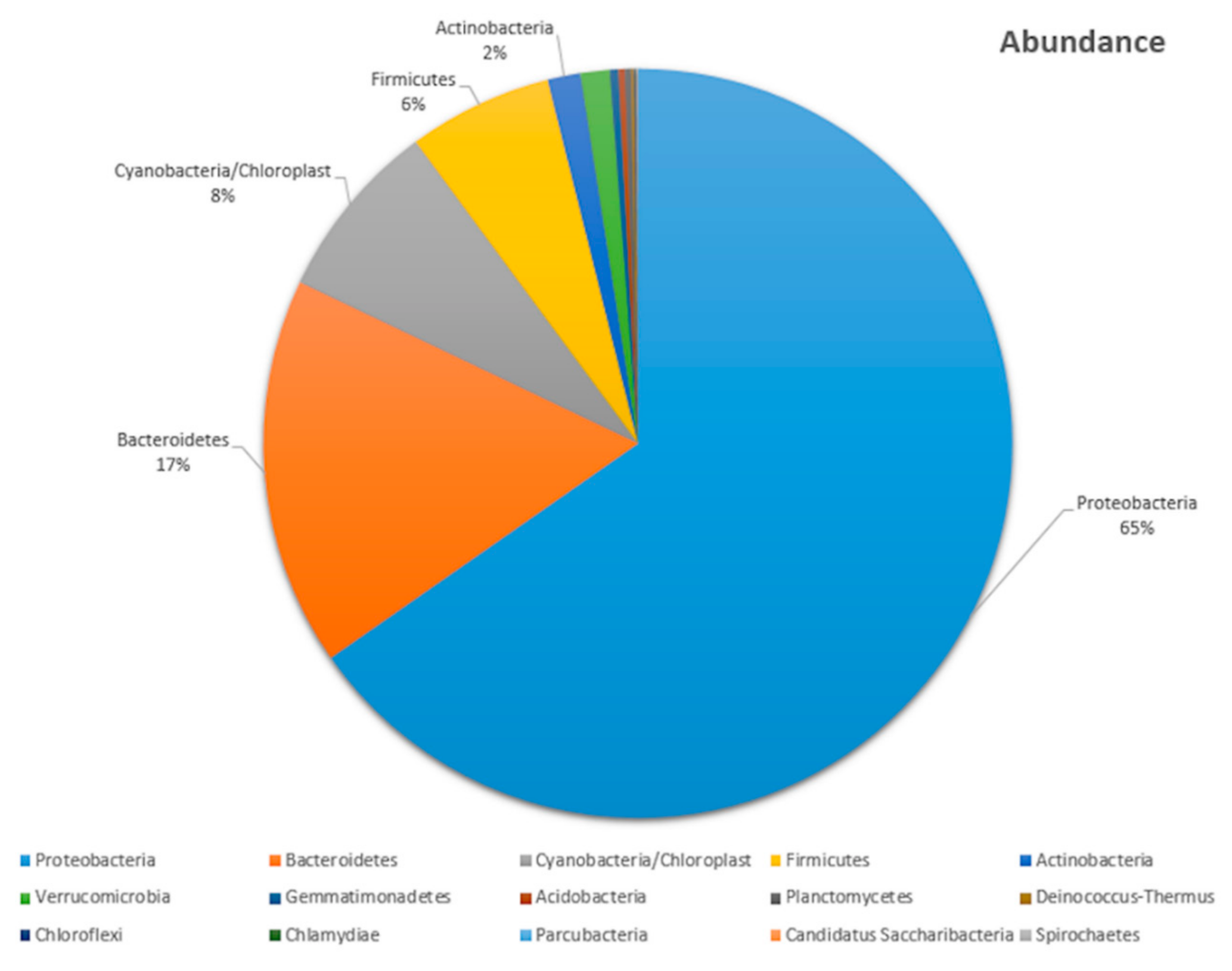
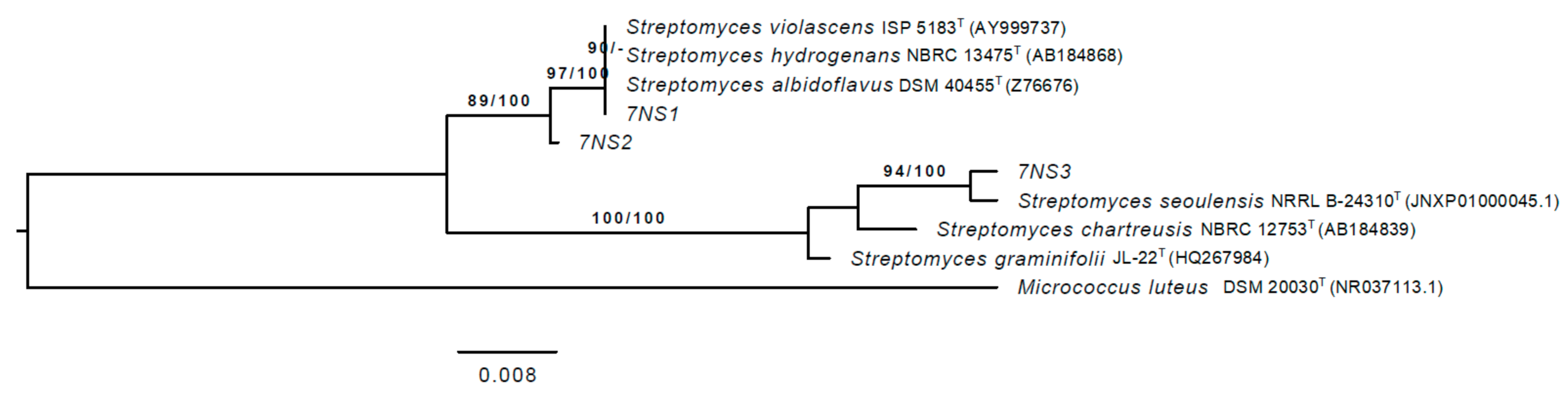
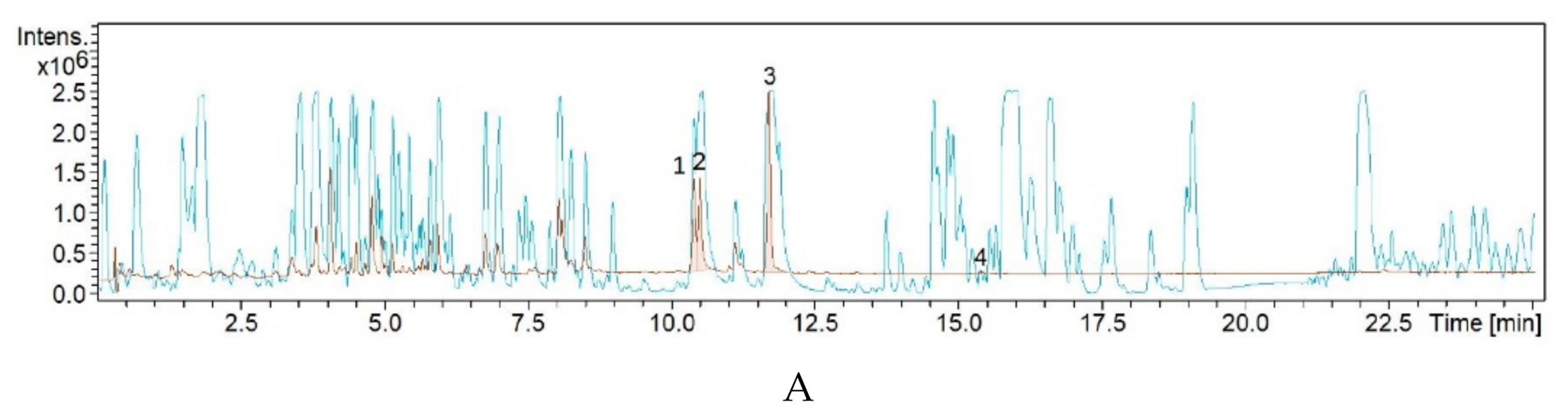
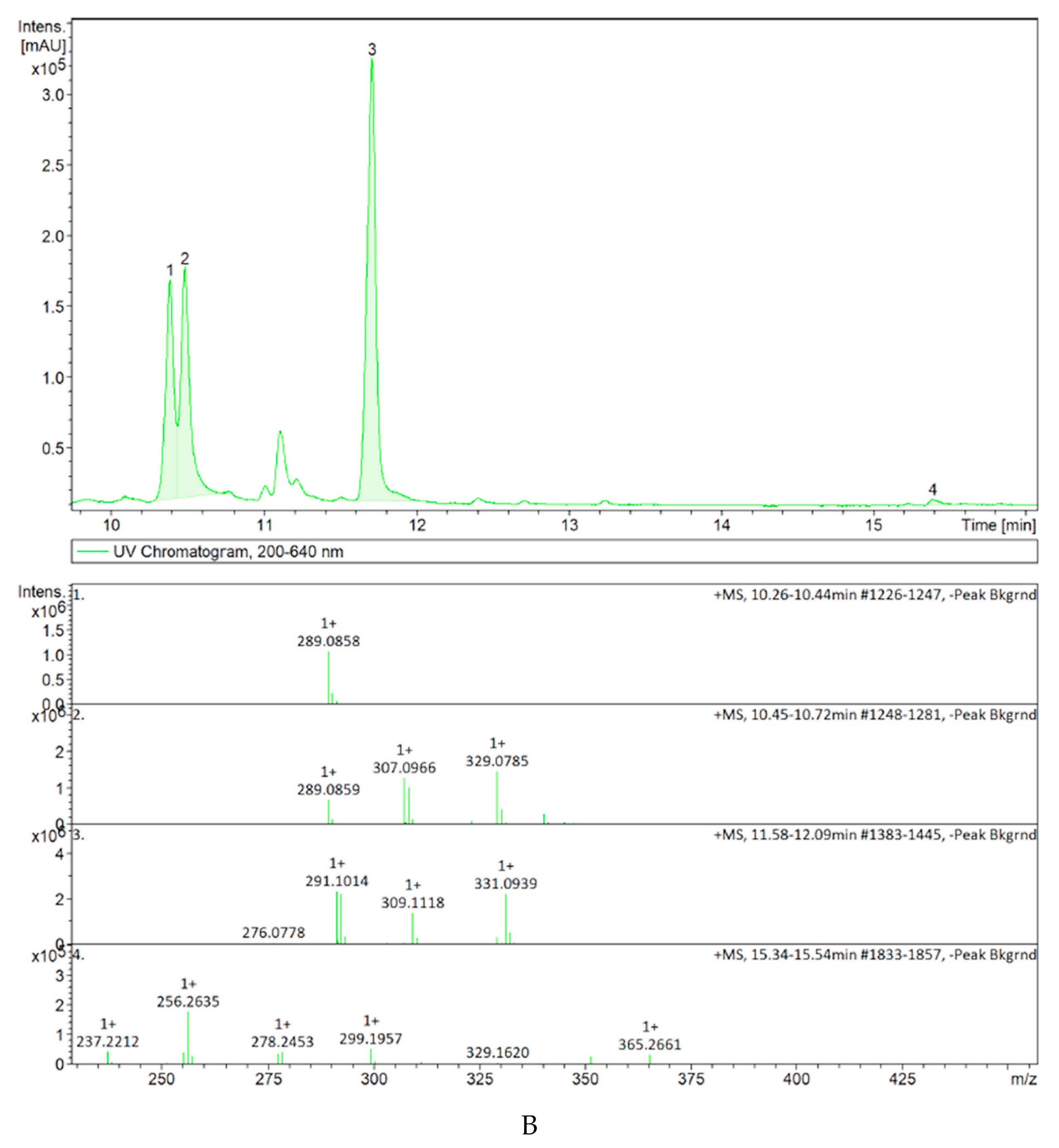
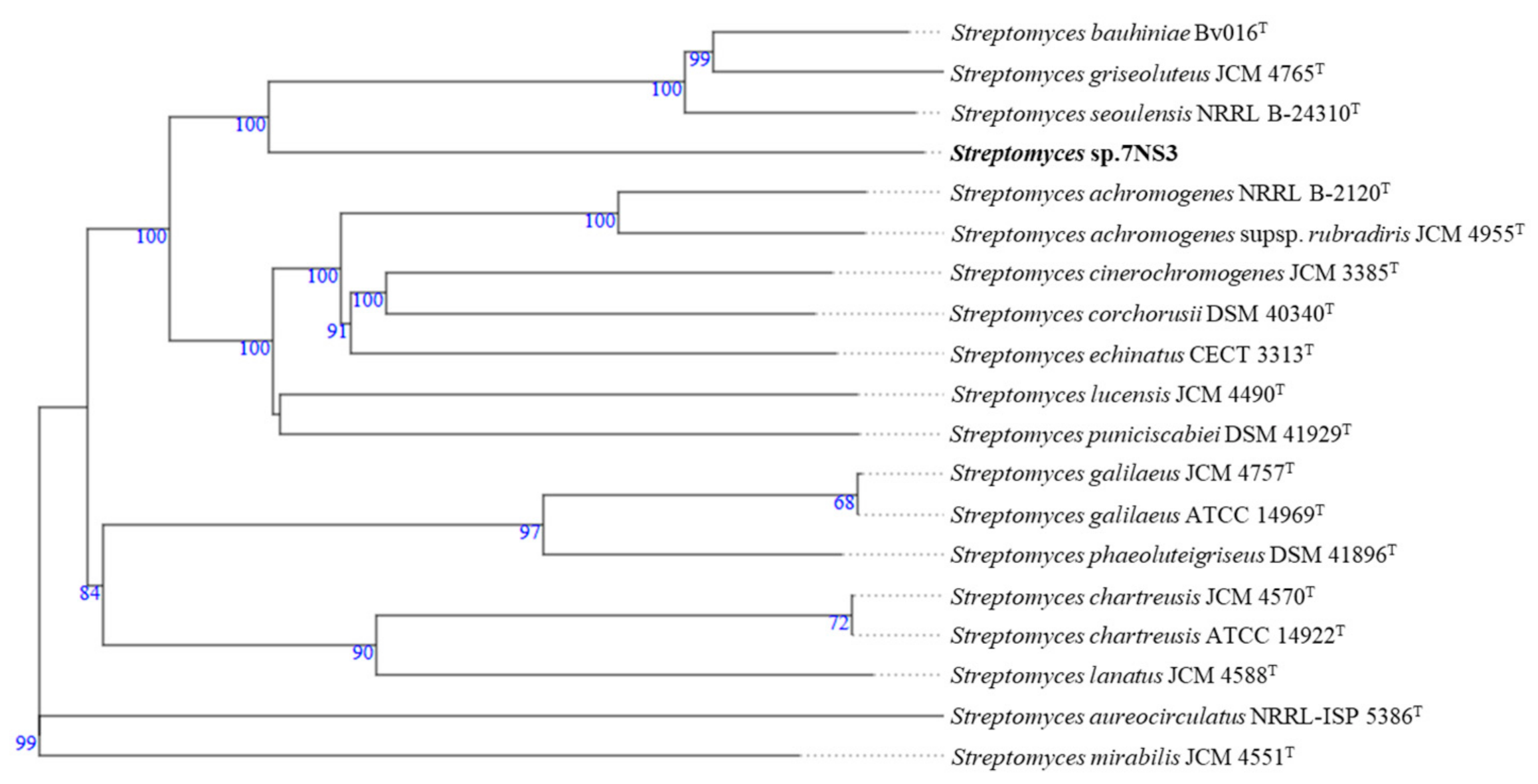
Antibiotic producers have mainly been isolated from soil, which often has led to the rediscovery of known compounds. In this study, we identified the freshwater snail Physa acuta as an unexplored source for new antibiotic producers. The bacterial diversity associated with the snail was characterized by a metagenomic approach using cultivation-independent high-throughput sequencing. Although Actinobacteria represented only 2% of the bacterial community, the focus was laid on the isolation of the genus Streptomyces due to its potential to produce antibiotics. Three Streptomyces strains (7NS1, 7NS2 and 7NS3) were isolated from P. acuta, and the antimicrobial activity of the crude extracts were tested against a selection of Gram-positive and Gram-negative bacteria and fungi. 7NS3 showed the strongest activity against Gram-positive bacteria and, thus, was selected for genome sequencing and a phylogenomic analysis. 7NS3 represents a novel Streptomyces species, which was deposited as Streptomyces sp. DSM 110735 at the Leibniz Institute-German Collection of Microorganisms and Cell Cultures (DSMZ). Bioassay-guided high-performance liquid chromatography (HPLC) and high-resolution electrospray ionization-mass spectrometry (HR-ESI-MS) analyses of crude extract fractions resulted in the detection of four compounds, one of which matched the compound characteristics of emycin A, an angucycline-like aromatic polyketide. Genome mining studies based on the whole-genome sequence of 7NS3 resulted in the identification of a gene cluster potentially coding for emycin A biosynthesis. Our study demonstrates that freshwater snails like P. acuta can represent promising reservoirs for the isolation of new antibiotic-producing actinobacterial species.
Keywords:
Actinobacteria; Physa acuta; Streptomyces; antibiotics; angucycline