Article

MoS2 Nanoflower-Based Colorimetric and Photothermal Dual-Mode Lateral Flow Immunoassay for Highly Sensitive Detection of Pathogens


1
Key Laboratory of Liquid Crystal Polymers Based Flexible Display Technology in National Petroleum and Chemical Industry, Xi’an Key Laboratory of Advanced Photo-Electronics Materials and Energy Conversion Device, Technological Institute of Materials & Energy Science (TIMES), Xijing University, Xi’an 710123, China
2
State Key Laboratory of High Performance Ceramics, Shanghai Institute of Ceramics, Chinese Academy of Sciences, 1295 Dingxi Road, Shanghai 200050, China
3
Center of Materials Science and Optoelectronics Engineering, University of Chinese Academy of Sciences, Beijing 100049, China
*
Authors to whom correspondence should be addressed.
Biosensors 2025, 15(10), 661; https://doi.org/10.3390/bios15100661
Submission received: 1 September 2025 / Revised: 25 September 2025 / Accepted: 29 September 2025 / Published: 2 October 2025
(This article belongs to the Special Issue Nanomaterial-Based Biosensors for Point-of-Care Testing)

Abstract

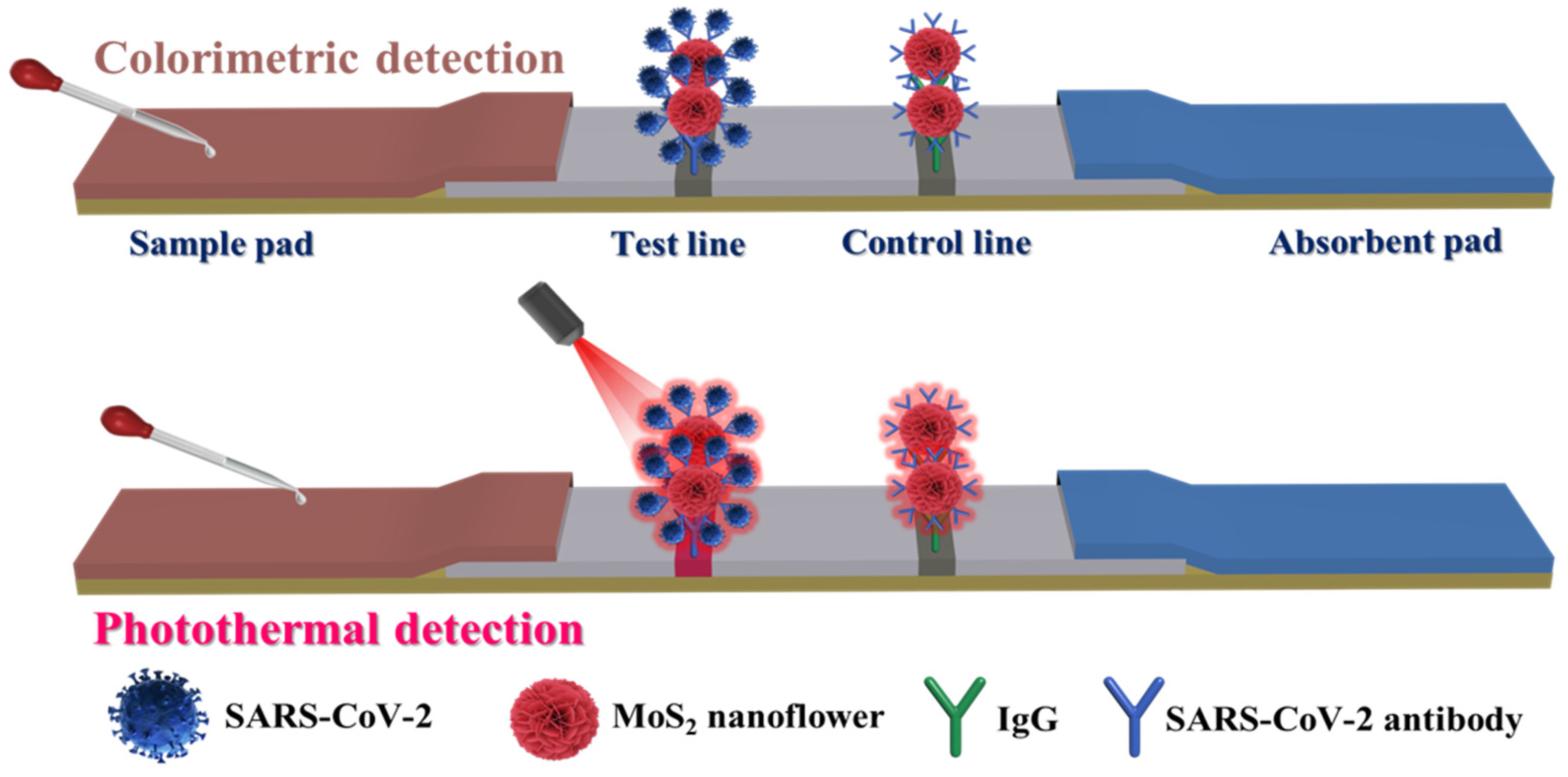
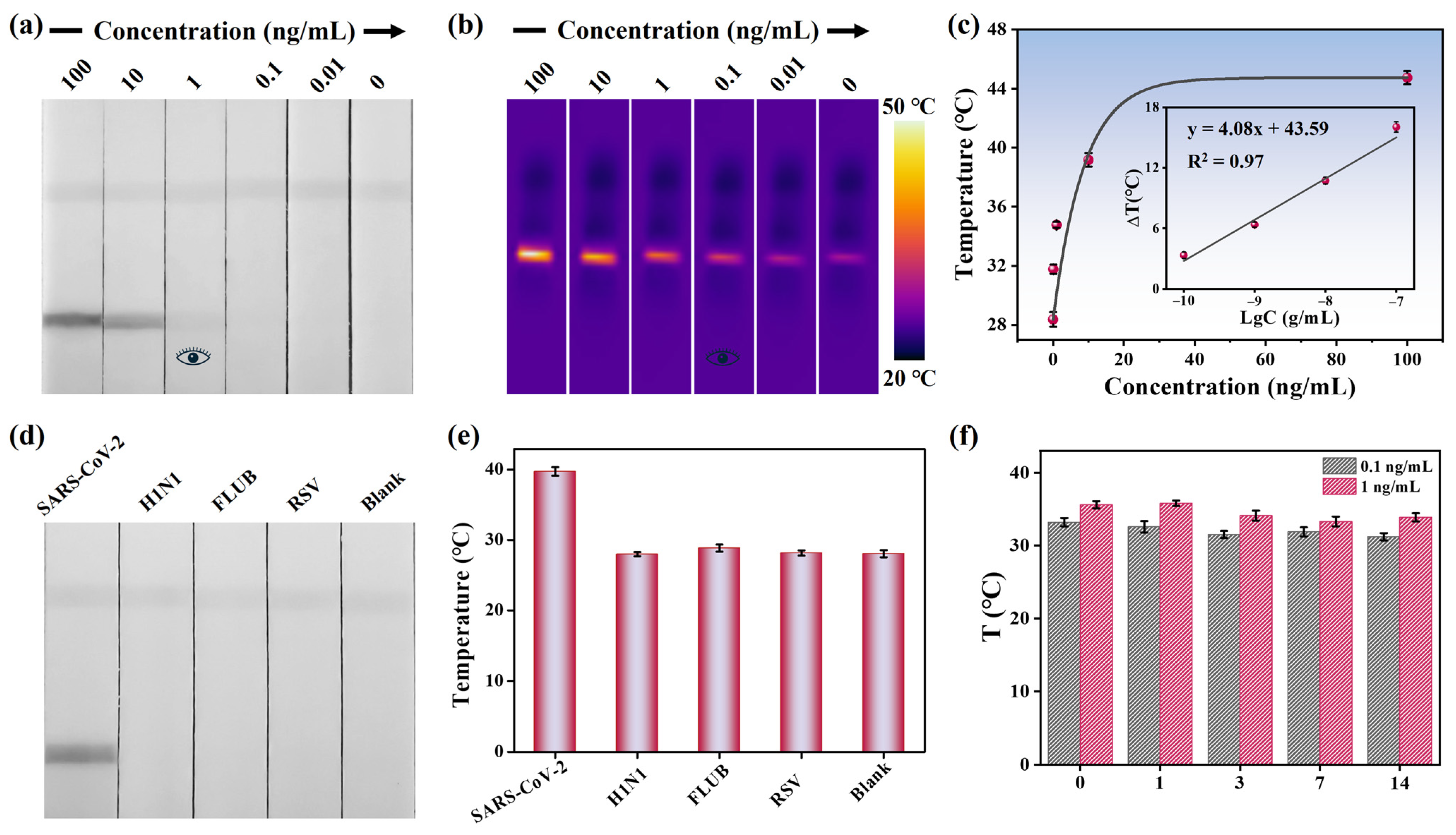
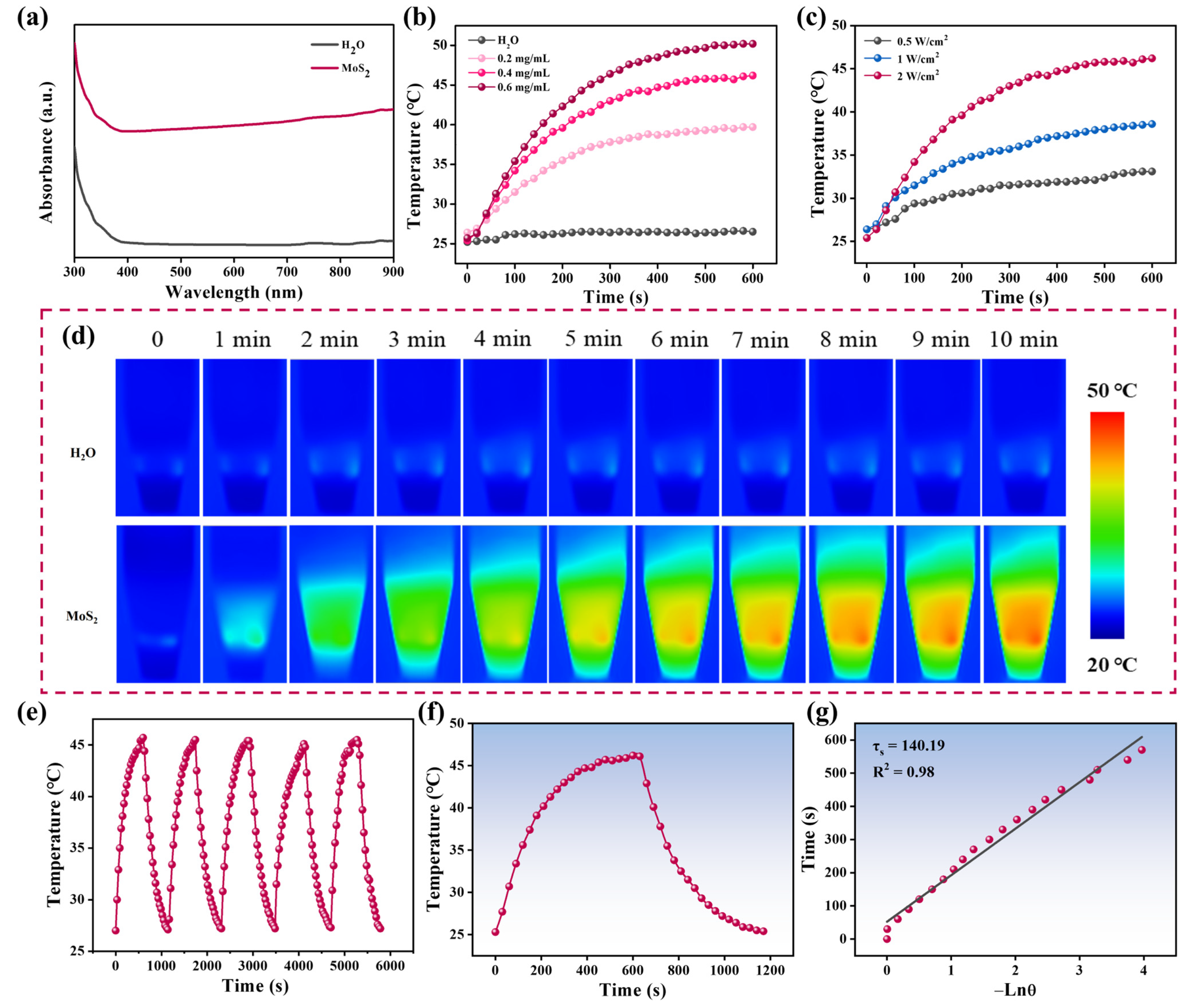
The single colorimetric signal readout mode of traditional lateral flow immunoassay (LFIA), which relies on gold nanoparticles (Au NPs), is inadequate to meet the growing demand for detection in terms of sensitivity, accuracy, and flexibility. Herein, we reported a novel colorimetric and photothermal dual-mode LFIA (dLFIA) based on MoS2 nanoflowers for rapid detection of severe acute respiratory syndrome coronavirus 2 nucleocapsid protein (SARS-CoV-2 NP). Benefiting from the strong color-producing ability and near-infrared absorption of MoS2 nanoflowers, the visual limits of detection in colorimetric and photothermal modes were 1 and 0.1 ng/mL, respectively. The limit of detection for quantitative analysis in photothermal mode was 48 pg/mL, with a sensitivity about 10~208 times higher than that of Au NPs-LFIA. Additionally, the dLFIA strips exhibited excellent specificity, good reproducibility, and satisfactory recovery when detected the simulated nasal swab samples, possessing good application prospect.
Keywords: MoS2 nanoflowers; photothermal; dual-mode lateral flow immunoassay; SARS-CoV-2 nucleocapsid protein MoS2 nanoflowers; photothermal; dual-mode lateral flow immunoassay; SARS-CoV-2 nucleocapsid protein