Article

A Multipurpose and Multilayered Microneedle Sensor for Redox Potential Monitoring in Diverse Food Analysis


1
Department of Physical Sciences, MacEwan University, Edmonton, AB T5J 4S2, Canada
2
Department of Chemistry, University of Allahabad, Prayagraj 211 002, India
*
Authors to whom correspondence should be addressed.
Biosensors 2022, 12(11), 1001; https://doi.org/10.3390/bios12111001

Submission received: 28 September 2022 / Revised: 30 October 2022 / Accepted: 5 November 2022 / Published: 10 November 2022
(This article belongs to the Special Issue Biosensor Nanoengineering: Design, Operation and Implementation)

Abstract

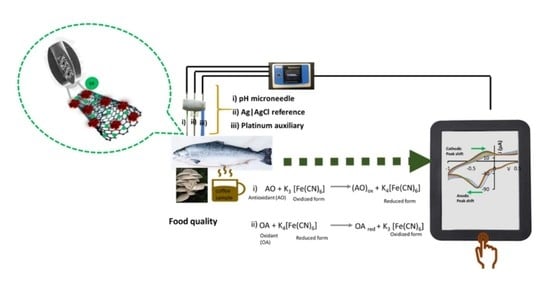
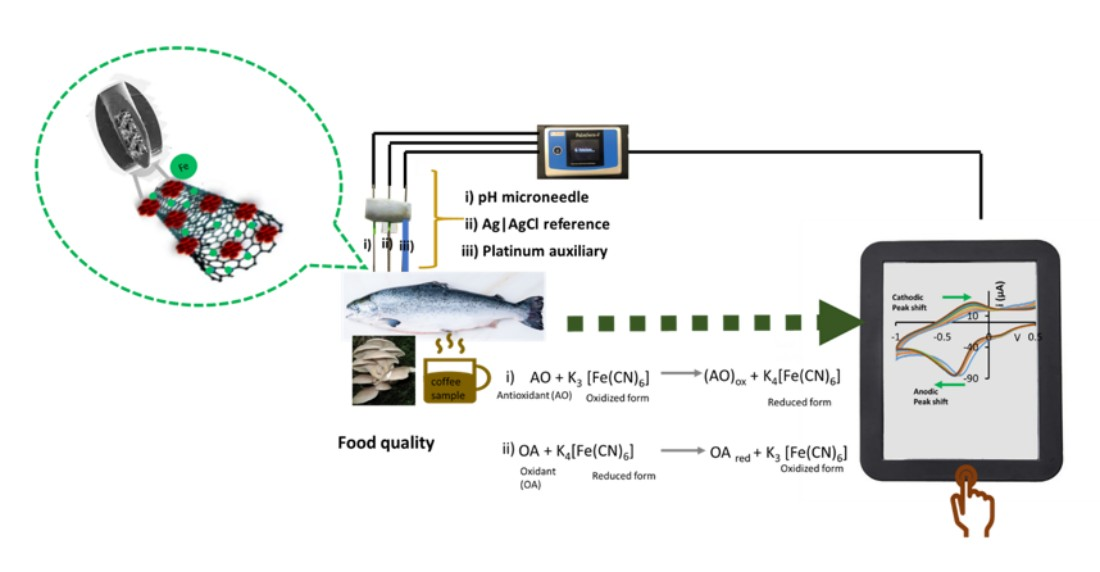
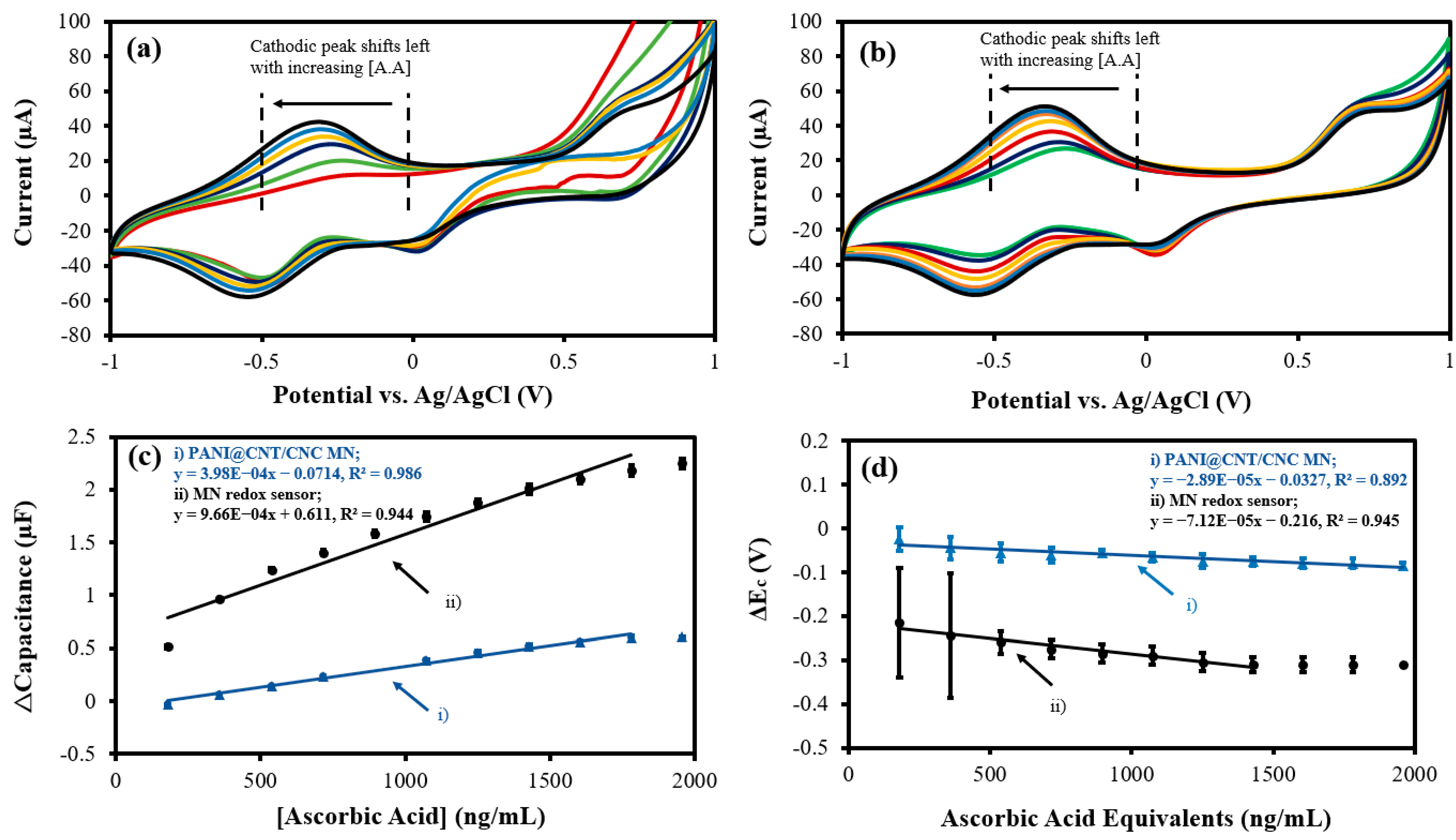
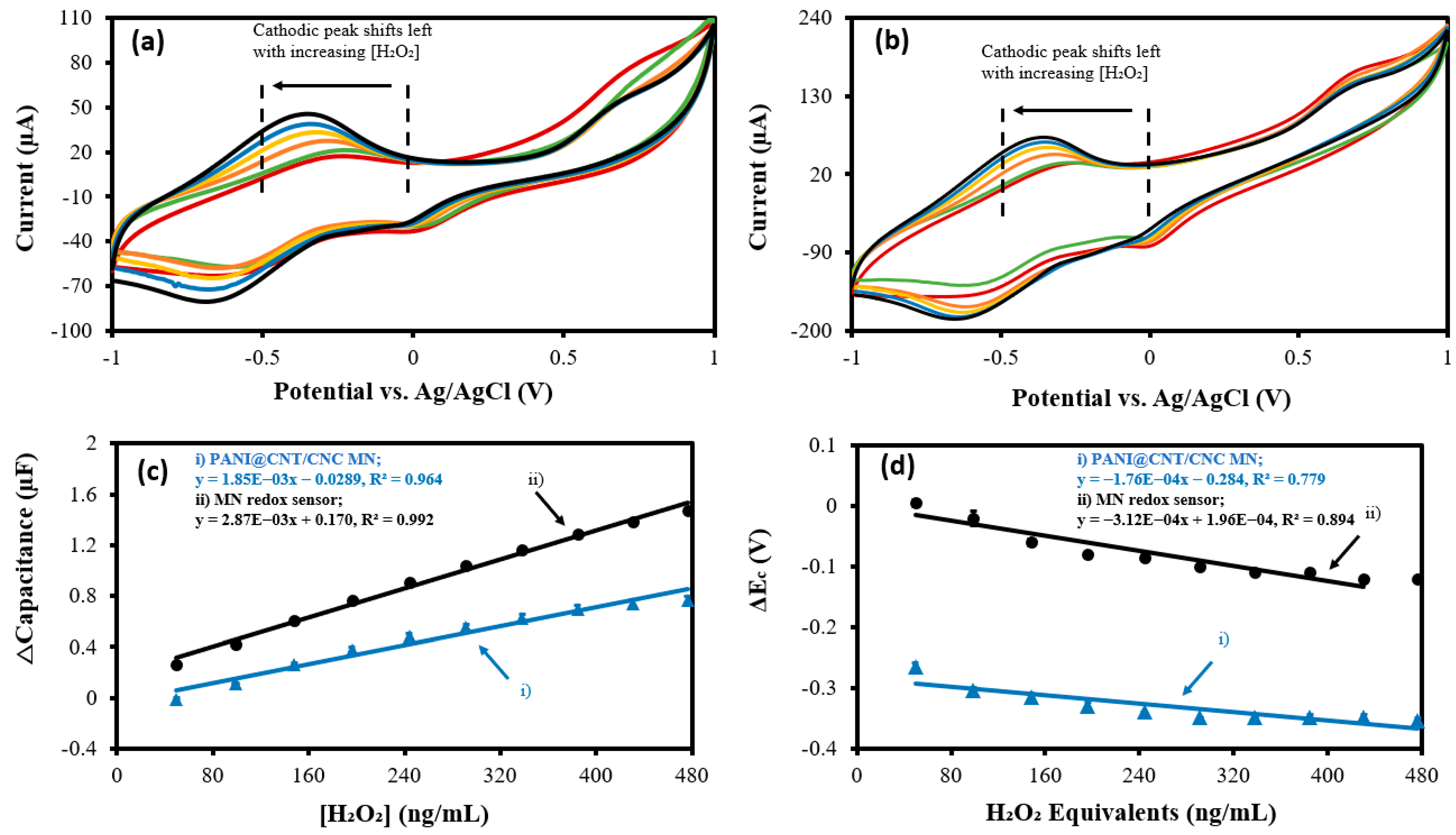
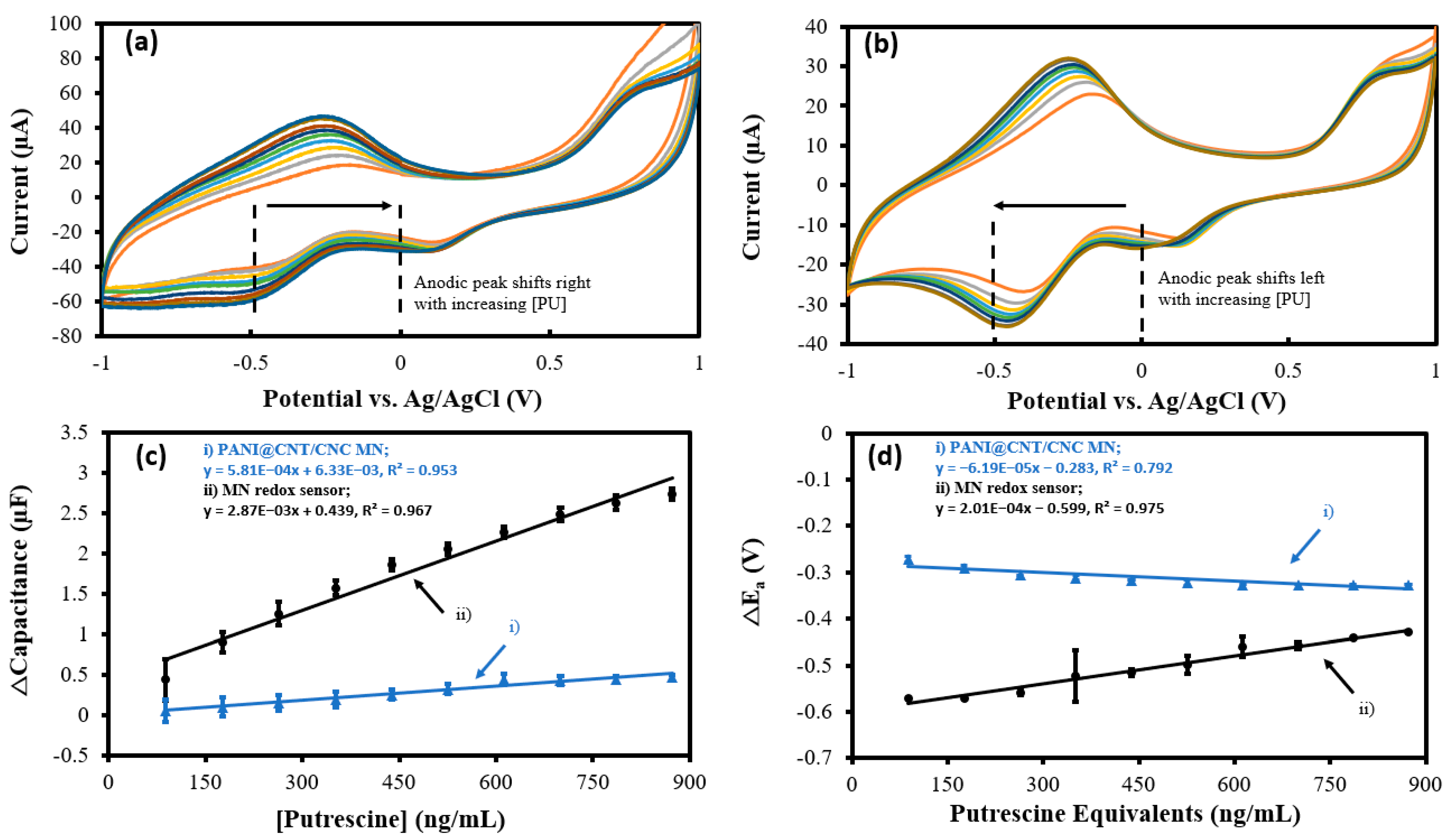
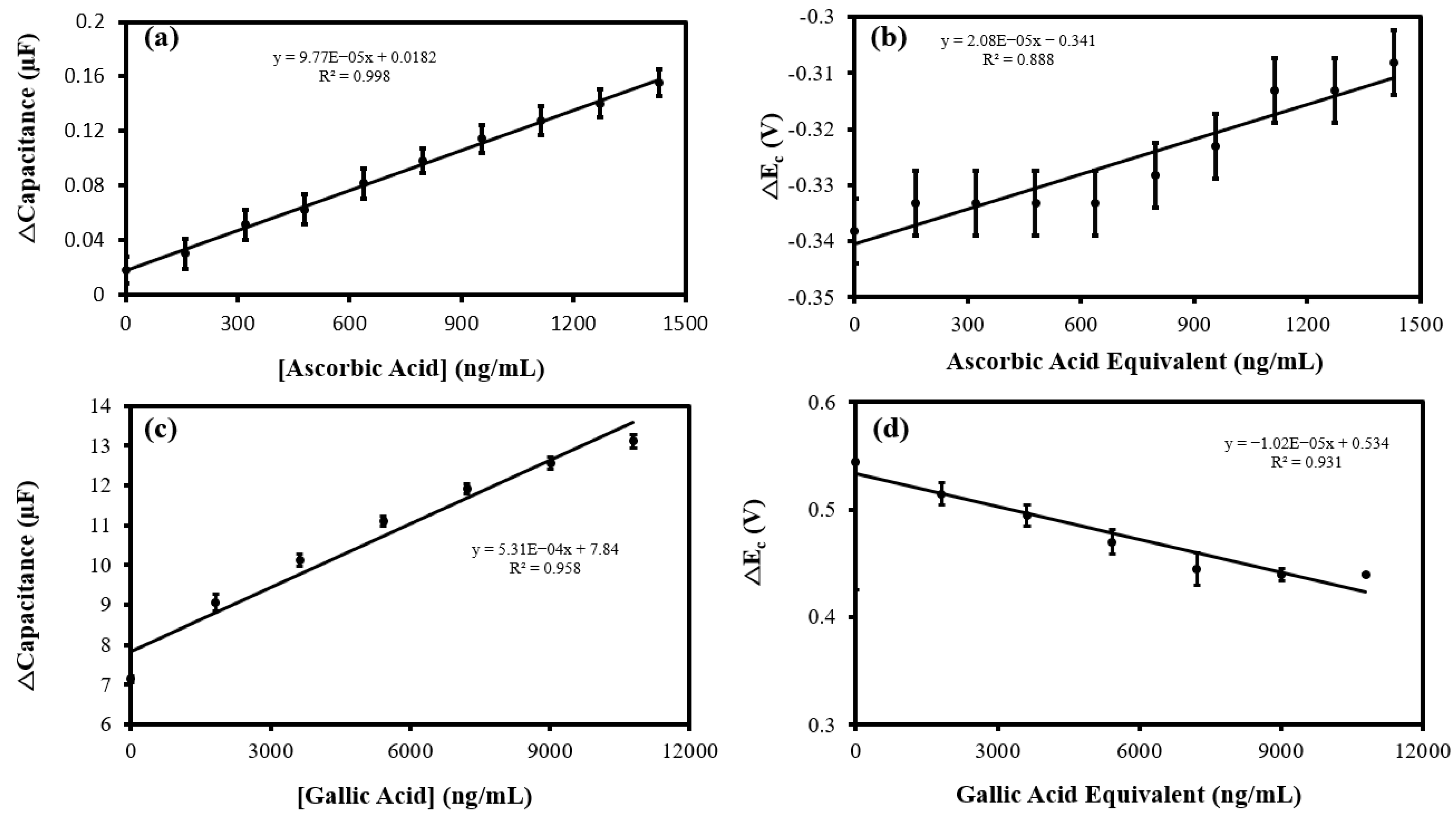
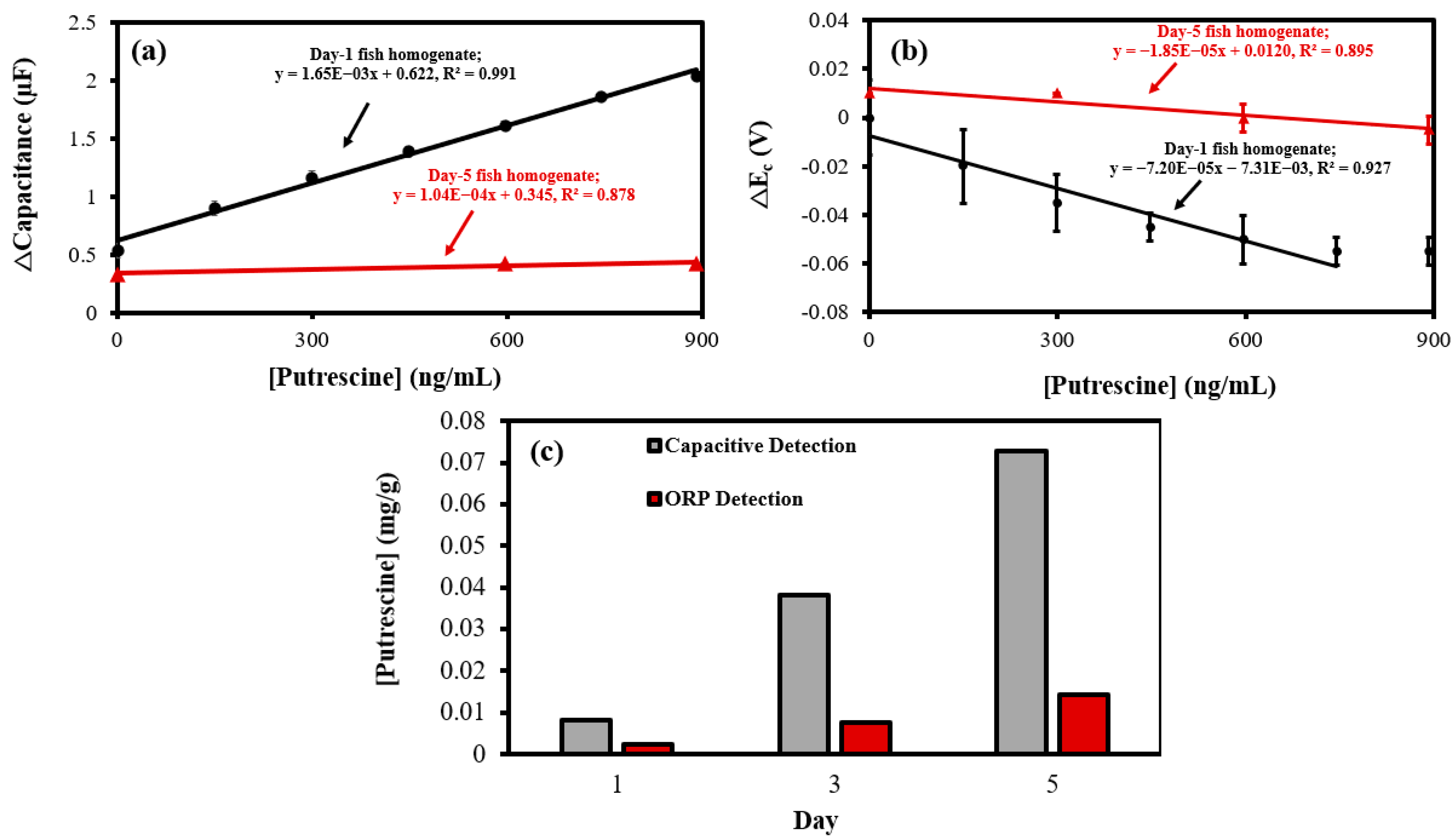
This work presents a multipurpose and multilayered stainless steel microneedle sensor for the in situ redox potential monitoring in food and drink samples, termed MN redox sensor. The MN redox sensor was fabricated by layer-by-layer (LbL) approach. The in-tube multilayer coating comprised carbon nanotubes (CNTs)/cellulose nanocrystals (CNCs) as the first layer, polyaniline (PANI) as the second layer, and the ferrocyanide redox couple as the third layer. Using cyclic voltammetry (CV) as a transduction method, the MN redox sensor showed facile electron transfer for probing both electrical capacitance and redox potential, useful for both analyte specific and bulk quantification of redox species in various food and drink samples. The bulk redox species were quantified based on the anodic/cathodic redox peak shifts (Ea/Ec) on the voltammograms resulting from the presence of redox-active species. The MN redox sensor was applied to detect selected redox species including ascorbic acid, H2O2, and putrescine, with capacitive limits of detection (LOD) of 49.9, 17.8, and 263 ng/mL for each species, respectively. For the bulk determination of redox species, the MN redox sensor displayed LOD of 5.27 × 10³, 55.4, and 25.8 ng/mL in ascorbic acid, H2O2, and putrescine equivalents, respectively. The sensor exhibited reproducibility of ~1.8% relative standard deviation (%RSD). The MN redox sensor was successfully employed for the detection of fish spoilage and antioxidant quantification in king mushroom and brewed coffee samples, thereby justifying its potential for food quality and food safety applications. Lastly, the portability, reusability, rapid sampling time, and capability of in situ analysis of food and drink samples makes it amenable for real-time sensing applications.
Keywords: electrochemical microneedle sensor; MN redox sensor; food safety; H2O2; putrescine; food quality monitoring electrochemical microneedle sensor; MN redox sensor; food safety; H2O2; putrescine; food quality monitoring
Graphical Abstract