Research Progress on Nanomaterials in SPR Sensors

 ,
,
Abstract
1. Introduction
2. Fundamentals of SPR Sensors
2.1. Evolution of SPR Sensors
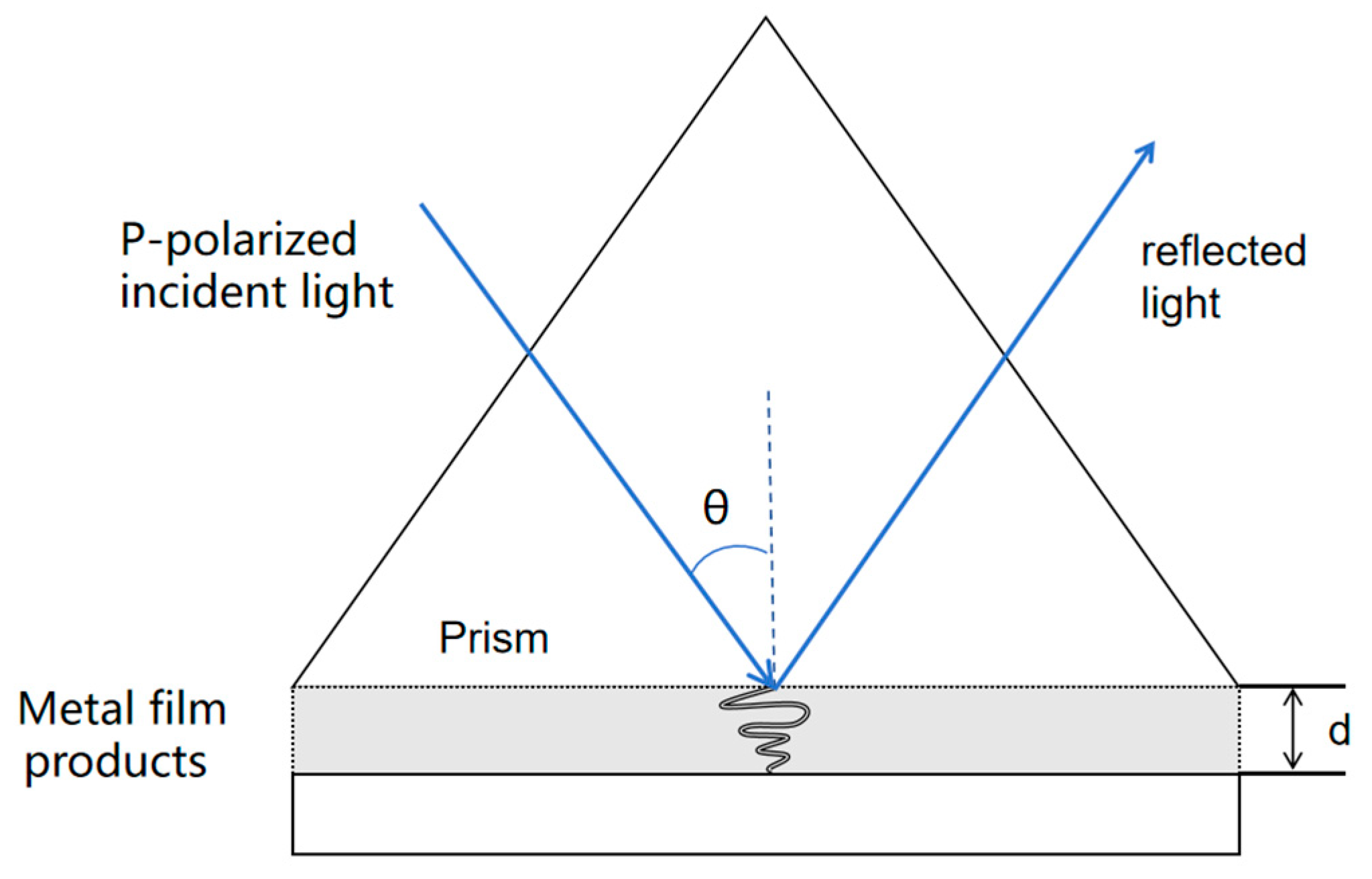
2.2. Basic Principles of SPR
2.3. Signal Modulation of SPR Sensors
2.3.1. Angular Modulation
2.3.2. Amplitude Modulation
2.3.3. Wavelength Modulation
2.3.4. Phase Modulation
2.3.5. Goos-Hänchen Displacement Modulation
3. Nanomaterial-Enhanced SPR Sensors
3.1. Noble Metal Nanoparticles
3.1.1. Gold Nanoparticles (AuNPs)
Low-Molecular-Weight (LMW) Analyte Detection
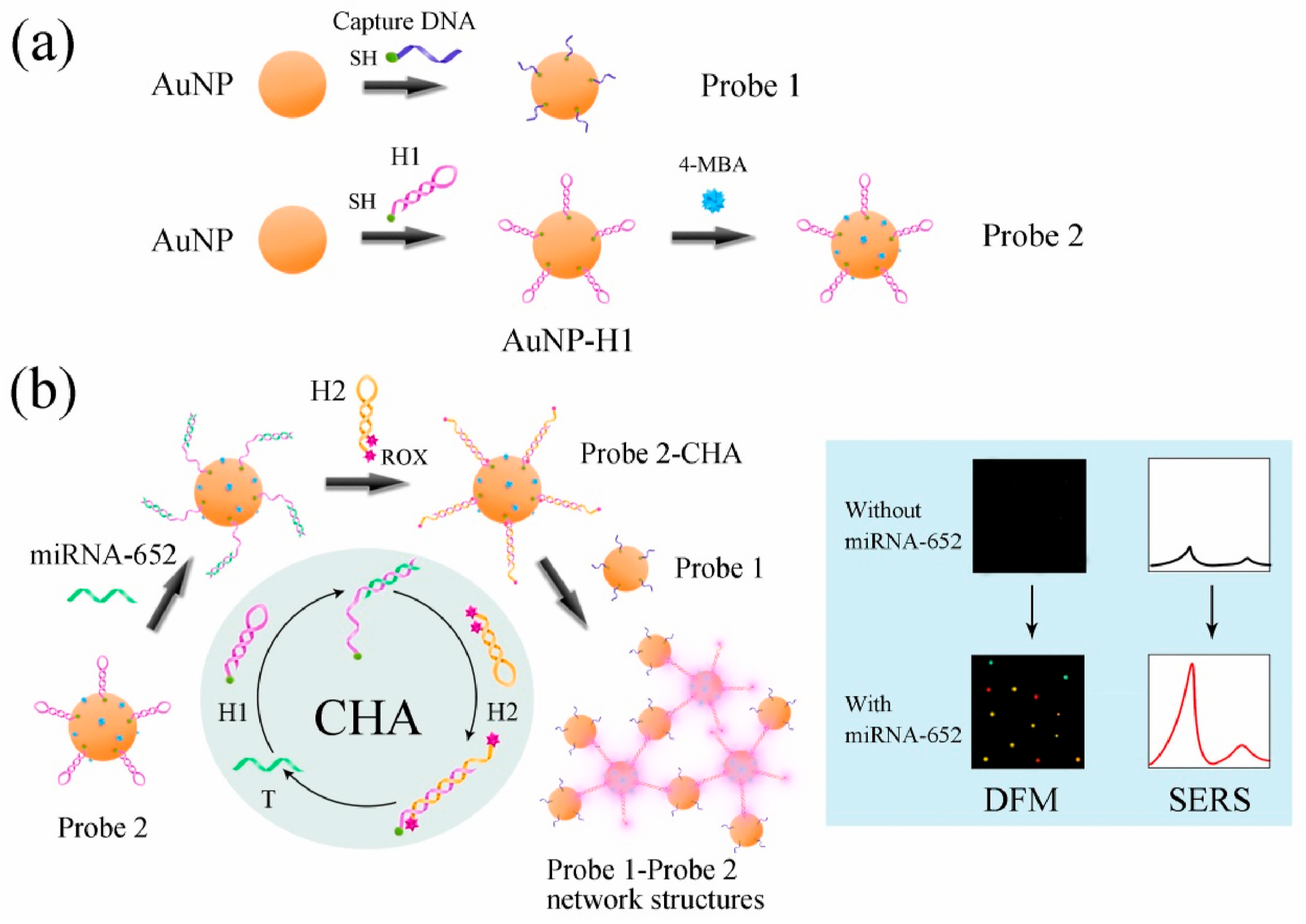
Nucleic Acid Detection
Biomacromolecule Detection
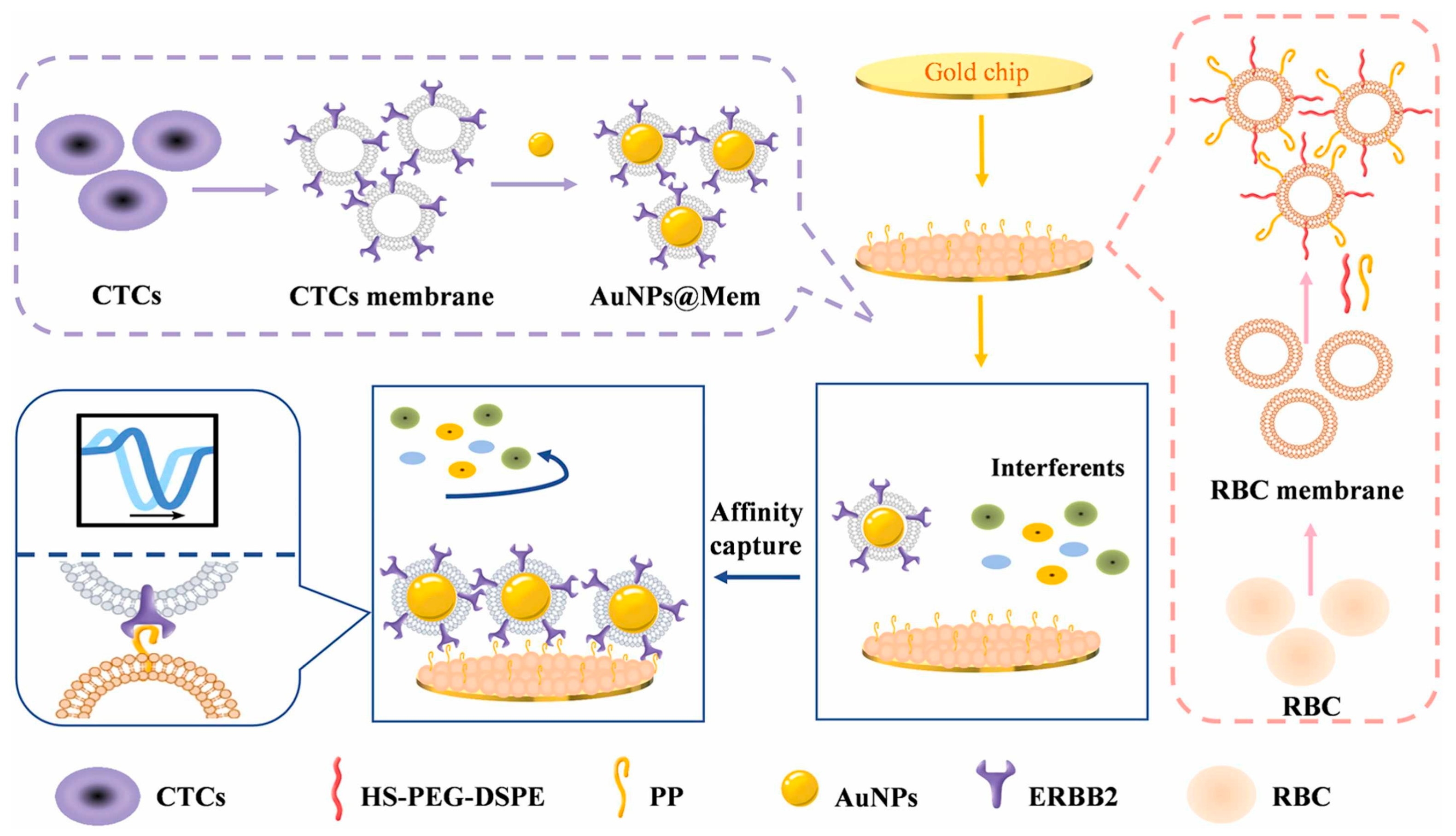
Circulating Tumor Cell (CTC) Detection
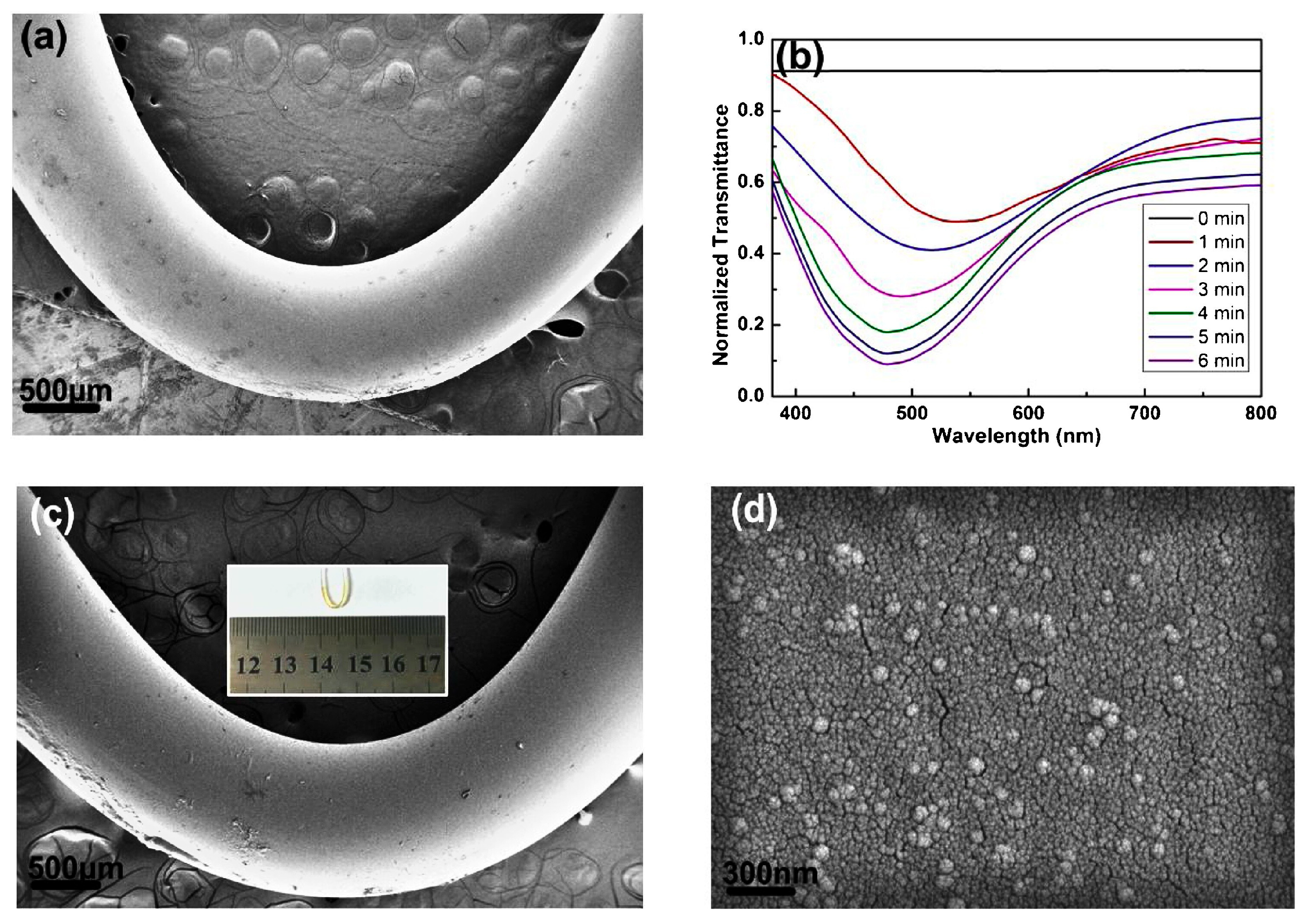
3.1.2. Silver Nanoparticles (AgNPs)
Environmental Small-Molecule Monitoring
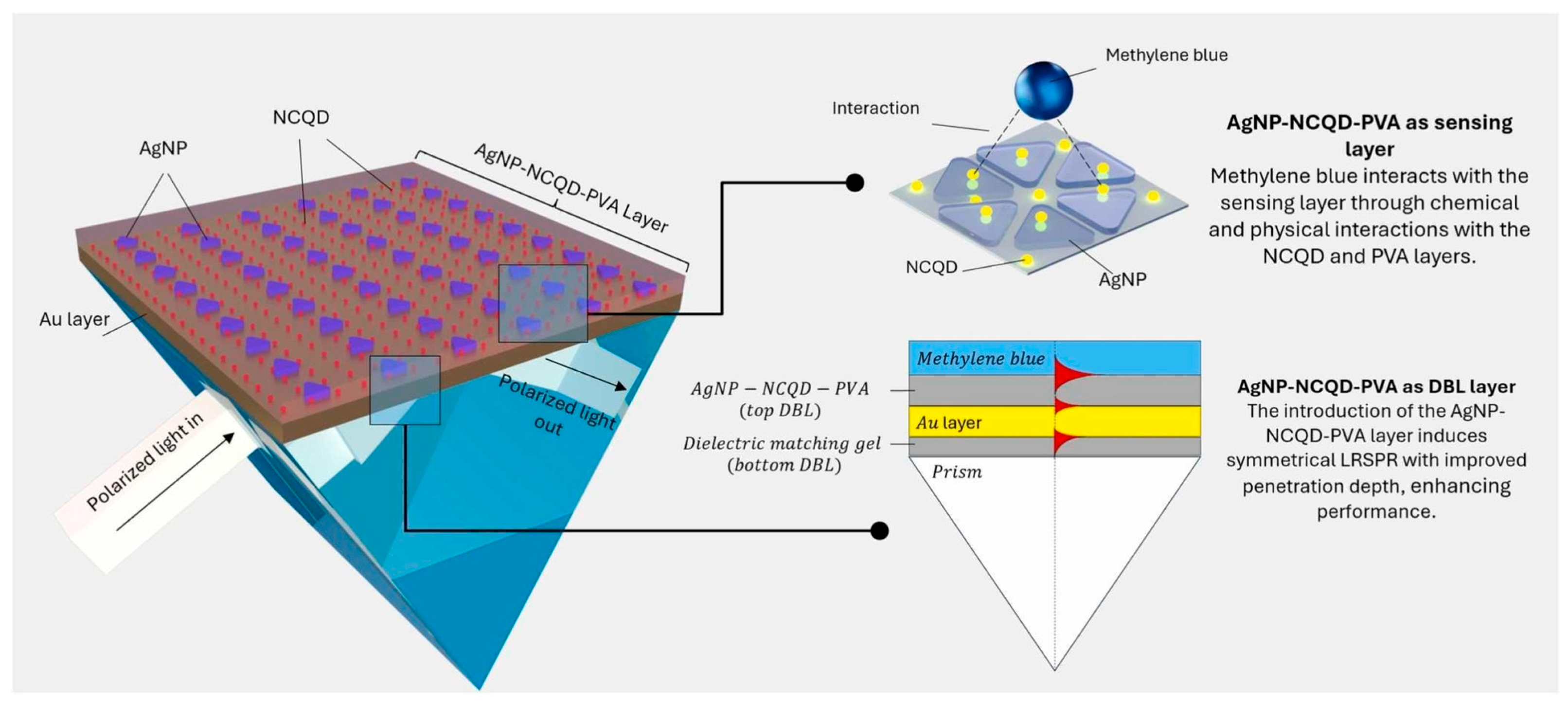
Industrial Pollutant Detection
Biological Detection
3.1.3. Advanced 1D and 2D Plasmonic Nanostructures
3.2. Magnetic Nanoparticles (MNPs)
- Targeted enrichment: Using external magnetic fields, MNPs enable rapid separation and enrichment of target analytes from complex matrices (e.g., serum, food extracts, soil solutions), reducing interference from non-specific adsorption [42].
- Interface optimization: MNP surfaces can be easily modified with recognition molecules (e.g., antibodies, enzymes, nucleic acids), enhancing target binding stability.
3.2.1. Food Safety Testing
3.2.2. Pesticide Residue Testing
3.2.3. Bioenzyme Sensing Bioenzyme
3.3. Two-Dimensional (2D) Nanomaterials
3.3.1. Graphene-Based Nanomaterials
Mid-Infrared (MIR) Band Biological Detection
Heavy Metal Ion Detection
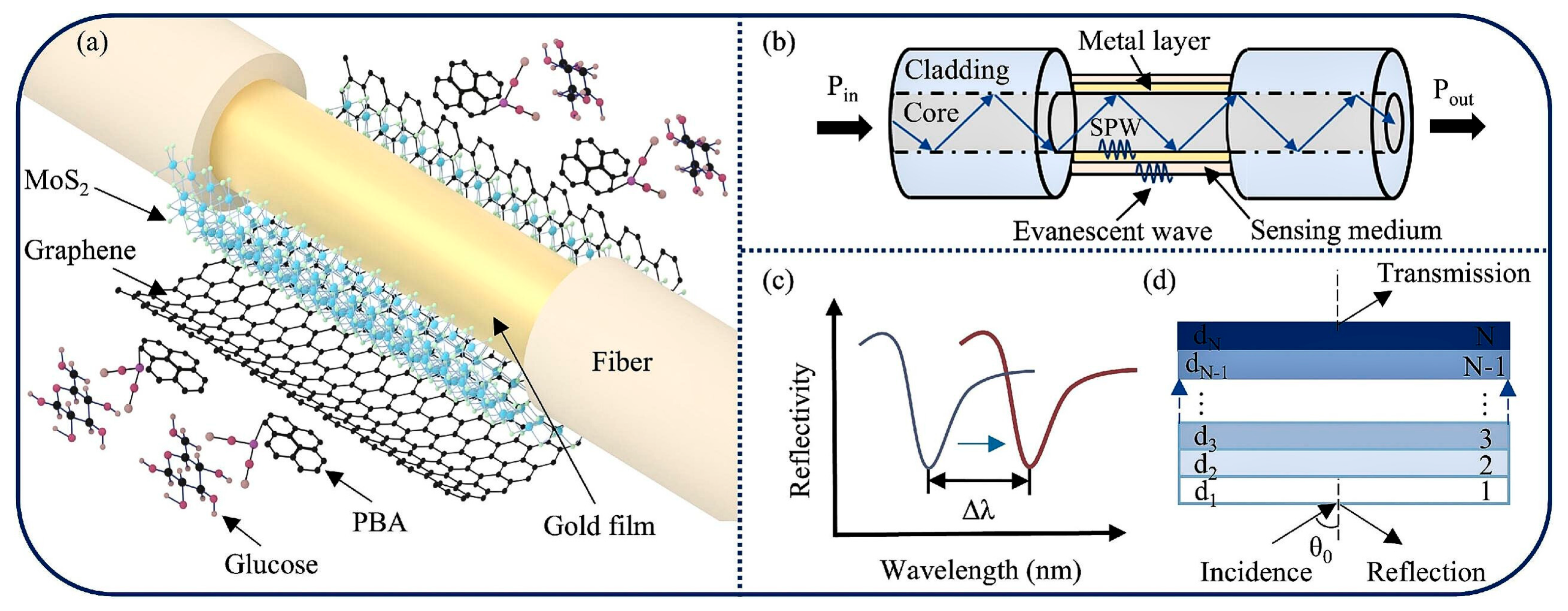
Glucose Detection
3.3.2. Non-Carbon 2D Nanomaterials
Food Component Detection
Mid-Infrared (MIR) SPR Fiber Optic Sensing
3.4. Comparative Analysis of Nanomaterial Enhancement Strategies
4. Advances in Nanomaterial-Integrated SPR Sensors with Multi-Technology Convergence
4.1. Nanomaterials and Intelligent Algorithms
4.2. Nanomaterials and Multimodal Detection
4.3. Nanomaterials and Microfluidics: Enabling Point-of-Care (POC) Diagnostics
5. Challenges and Future Outlook
5.1. Challenges
- Environmental Cross-Sensitivity and Thermal Stability: SPR sensors are inherently sensitive to temperature fluctuations, which alter both the refractive index of the bulk buffer (dn/dT) and the electron collision frequency in the metal film [48]. A fluctuation of just 1 °C can induce a baseline drift comparable to the signal of low-abundance analytes, leading to false positives [105]. Most nanomaterial-based designs currently lack integrated temperature compensation mechanisms (such as dual-channel self-referencing or thermo-optic compensating materials like ZnO), limiting their reliability in uncontrolled field environments.
- Chemical Stability and Oxidation: For non-gold plasmonic materials (e.g., AgNPs, CuNPs, and MXenes), chemical instability is a major barrier. As noted in recent studies, silver and copper nanoparticles are prone to rapid oxidation in aqueous physiological buffers [58]. This oxidation dampens the LSPR peak intensity and causes a blue shift in the resonance wavelength, degrading sensor accuracy within minutes of operation. While core–shell strategies (e.g., Ag@SiO2 Ag@Au) offer partial mitigation, they often increase the distance between the analyte and the evanescent field, creating a trade-off between stability and sensitivity [4].
- Reproducibility and Standardization: Laboratory-fabricated nanocomposites often exhibit batch-to-batch variations in morphology and surface coverage. This inconsistency makes it difficult to establish a universal calibration curve, which is fatal for quantitative clinical diagnostics. Furthermore, the lack of standardized interfaces compatible with medical Laboratory Information Systems (LIS) delays regulatory approval [4].
5.2. Future Outlook
- Novel Nanomaterial Development: The MIR compatibility of MXenes such as Ti3C2Tx stems from their tunable dielectric constant [106]. By adjusting the content of surface -OH and -F functional groups, the real part of the dielectric constant can be tuned to the 10–20 range, matching the excitation requirements of MIR SPPs and overcoming the application limitations of traditional noble metals in the MIR band [94].
- Low-Cost Alternative Exploration: Low-cost copper nanoparticles (CuNPs) can be synthesized using simple methods such as electrodeposition or green synthesis with ascorbic acid [107,108]. Compared to gold nanoparticles (AuNPs),copper nanoparticles (CuNPs) exhibit a significantly more economical real part of the dielectric constant, and coating them with silica (SiO2) effectively enhances their stability [45,109,110].
- Flexible Wearable SPR Sensor Development: Sensors require integrated solutions for continuous power supply such as Near Field Communication and piezoelectric nanogenerators [111,112], as well as long-term stability achieved through protective coatings to function reliably in complex physiological environments like sweat [27,112,113,114].
- AI-Driven Nano-Enhanced SPR Sensing Networks: The collaborative architecture of “edge nodes + cloud AI” enables efficient data processing and intelligent analysis. At the edge, deployed devices such as LSPR biosensors collect physiological data like sweat and cortisol in real time [115]. Implementing a collaborative architecture of edge nodes and cloud AI enables efficient data processing, dynamic early warning systems, and global model optimization [100,101].
- Global Safety Regulation and Standardization: The global regulatory environment is actively addressing biosafety demands, yet establishing unified standards remains a critical challenge. The primary obstacle to uniform standardization lies in the physicochemical diversity of nanomaterials, which often interferes with traditional toxicity assays, leading to inconsistent results. Future advancements must focus on international harmonization to develop robust test methods, shifting the industry toward a mandatory and systematic global regulatory framework [116].
6. Conclusions
Funding
Data Availability Statement
Conflicts of Interest
References
- Yesudasu, V.; Pradhan, H.S.; Pandya, R.J. Recent progress in surface plasmon resonance based sensors: A comprehensive review. Heliyon 2021, 7, e06321. [Google Scholar] [CrossRef] [PubMed]
- Svirelis, J.; Andersson, J.; Stradner, A.; Dahlin, A. Accurate Correction of the “Bulk Response” in Surface Plasmon Resonance Sensing Provides New Insights on Interactions Involving Lysozyme and Poly(ethylene glycol). ACS Sens. 2022, 7, 1175–1182. [Google Scholar] [CrossRef] [PubMed]
- Nguyen, H.H.; Park, J.; Kang, S.; Kim, M. Surface Plasmon Resonance: A Versatile Technique for Biosensor Applications. Sensors 2015, 15, 10481–10510. [Google Scholar] [CrossRef] [PubMed]
- Ashrafi, T.M.S.; Mohanty, G. Surface plasmon resonance sensors: A critical review of recent advances, market analysis, and future directions. Plasmonics 2025, 20, 6825–6845. [Google Scholar] [CrossRef]
- Mauriz, E. Trends and Challenges of SPR Aptasensors in Viral Diagnostics: A Systematic Review and Meta-Analysis. Biosensors 2025, 15, 245. [Google Scholar] [CrossRef]
- Wood, R.W. XLII. On a remarkable case of uneven distribution of light in a diffraction grating spectrum. Lond. Edinb. Dublin Philos. Mag. J. Sci. 1902, 4, 396–402. [Google Scholar] [CrossRef]
- Fano, U. The theory of anomalous diffraction gratings and of quasi-stationary waves on metallic surfaces (Sommerfeld’s waves). J. Opt. Soc. Am. 1941, 31, 213–222. [Google Scholar] [CrossRef]
- Powell, C.J.; Swan, J.B. Origin of the characteristic electron energy losses in aluminum. Phys. Rev. 1959, 115, 869. [Google Scholar] [CrossRef]
- Kretschmann, E.; Raether, H. Radiative decay of non radiative surface plasmons excited by light. Z. Für Naturforschung A 1968, 23, 2135–2136. [Google Scholar] [CrossRef]
- Kravets, V.G.; Kabashin, A.V.; Barnes, W.L.; Grigorenko, A.N. Plasmonic surface lattice resonances: A review of properties and applications. Chem. Rev. 2018, 118, 5912–5951. [Google Scholar] [CrossRef]
- Cennamo, N.; Massarotti, D.; Conte, L.; Zeni, L. Low Cost Sensors Based on SPR in a Plastic Optical Fiber for Biosensor Implementation. Sensors 2011, 11, 11752–11760. [Google Scholar] [CrossRef]
- Saad, Y.; Selmi, M.; Gazzah, M.H.; Belmabrouk, H. Graphene Effect on the Improvement of the Response of Optical Fiber SPR Sensor. IEEE Sens. J. 2017, 17, 7440–7447. [Google Scholar] [CrossRef]
- Wei, W.; Nong, J.; Zhu, Y.; Zhang, G.; Wang, N.; Luo, S.; Chen, N.; Lan, G.; Chuang, C.; Huang, Y. Graphene/Au-Enhanced Plastic Clad Silica Fiber Optic Surface Plasmon Resonance Sensor. Plasmonics 2018, 13, 483–491. [Google Scholar] [CrossRef]
- Kumar, S.; Yadav, A.; Malomed, B.A. Bimetal Thin Film, Semiconductors, and 2D Nanomaterials in SPR Biosensors: An Approach to Enhanced Urine Glucose Sensing. IEEE Trans. Nanobiosci. 2024, 23, 336–343. [Google Scholar] [CrossRef] [PubMed]
- El Barghouti, M.; Akjouj, A.; Mir, A. Performance evaluation of multifunctional SPR bimetallic sensor using hybrid 2D-nanomaterials layers. Optik 2022, 269, 169857. [Google Scholar] [CrossRef]
- Guo, Y.; Tian, X.; Li, S.; Li, J.; Qi, Y. Simulation and experiment of enhanced SPR sensing in silver/graphene-modified microstructured fiber. Photonics Nanostructures Fundam. Appl. 2025, 63, 101342. [Google Scholar] [CrossRef]
- Khatun, M.R.; Islam, M.S. Design optimization of high-sensitivity PCF-SPR biosensor using machine learning and explainable AI. PLoS ONE 2025, 20, e330944. [Google Scholar] [CrossRef]
- Topor, C.; Puiu, M.; Bala, C. Strategies for Surface Design in Surface Plasmon Resonance (SPR) Sensing. Biosensors 2023, 13, 465. [Google Scholar] [CrossRef]
- Zhou, X.; Chen, K.; Li, L.; Peng, W.; Yu, Q. Angle modulated surface plasmon resonance spectrometer for refractive index sensing with enhanced detection resolution. Opt. Commun. 2017, 382, 610–614. [Google Scholar] [CrossRef]
- Tong, X.; Hou, Z.; Gao, Z.; Zhang, P.; Xing, W.; Xu, D.; Shen, J.; Li, C. High-Sensitivity Angle Modulation Biosensor Based on Surface Plasmon Resonance of Metasurface. IEEE Photonics J. 2022, 14, 1–5. [Google Scholar] [CrossRef]
- Mias, S.; Camon, H. A review of active optical devices: I. Amplitude modulation. J. Micromech. Microeng. 2008, 18, 83001. [Google Scholar] [CrossRef]
- Laplatine, L.I.C.; Leroy, L.I.C.; Calemczuk, R.; Baganizi, D.E.; Marche, P.N.; Roupioz, Y.; Livache, T. Spatial resolution in prism-based surface plasmon resonance microscopy. Opt. Express 2014, 22, 22771–22785. [Google Scholar] [CrossRef]
- Baganizi, D.E.R.; Leroy, L.I.C.; Laplatine, L.I.C.; Fairley, S.J.; Heidmann, S.; Menad, S.; Livache, T.; Marche, P.N.; Roupioz, Y. A Simple microfluidic platform for long-term analysis and continuous dual-imaging detection of T-Cell secreted IFN-$\gamma$ and IL-2 on antibody-based biochip. Biosensors 2015, 5, 750–767. [Google Scholar] [CrossRef]
- Zeng, Y.; Zhou, J.; Sang, W.; Kong, W.; Qu, J.; Ho, H.; Zhou, K.; Gao, B.Z.; Chen, J.; Shao, Y. High-sensitive surface plasmon resonance imaging biosensor based on dual-wavelength differential method. Front. Chem. 2021, 9, 801355. [Google Scholar] [CrossRef]
- Zeng, Y.; Zhou, J.; Wang, X.; Cai, Z.; Shao, Y. Wavelength-scanning surface plasmon resonance microscopy: A novel tool for real time sensing of cell-substrate interactions. Biosens. Bioelectron. 2019, 145, 111717. [Google Scholar] [CrossRef]
- Otsuki, S.; Tamada, K.; Wakida, S. Wavelength-scanning surface plasmon resonance imaging. Appl. Opt. 2005, 44, 3468–3472. [Google Scholar] [CrossRef] [PubMed]
- Choudhary, S.; Altintas, Z. Development of a point-of-care SPR sensor for the diagnosis of acute myocardial infarction. Biosensors 2023, 13, 229. [Google Scholar] [CrossRef] [PubMed]
- Chen, S.; Liu, Y.; Yu, Q.; Peng, W. Self-referencing SPR biosensing with an ultralow limit-of-detection using long-wavelength excitation. Sens. Actuators B Chem. 2021, 327, 128935. [Google Scholar] [CrossRef]
- Hu, L.; Yin, Z.; Zhang, Z.; Ullah, S.; Li, S.; Li, J. The ZnO Wavelength-Modulated Cascaded SPR Fiber Optic Sensor for High-Sensitivity Detection of RI and Temperature in the Visible-NIR Band. IEEE Sens. J. 2024, 24, 40890–40895. [Google Scholar] [CrossRef]
- Mostufa, S.; Rezaei, B.; Ciannella, S.; Yari, P.; Gómez-Pastora, J.; He, R.; Wu, K. Advancements and Perspectives in Optical Biosensors. ACS Omega 2024, 9, 24181–24202. [Google Scholar] [CrossRef] [PubMed]
- Kaňok, R.; Ciprian, D.; Hlubina, P. Surface Plasmon Resonance-Based Sensing Utilizing Spatial Phase Modulation in an Imaging Interferometer. Sensors 2020, 20, 1616. [Google Scholar] [CrossRef] [PubMed]
- Goos, F.; Hänchen, H. Ein neuer und fundamentaler Versuch zur Totalreflexion. Ann. Phys. 1947, 436, 333–346. [Google Scholar] [CrossRef]
- Jiang, L.; Zeng, S.; Xu, Z.; Ouyang, Q.; Zhang, D.; Chong, P.H.J.; Coquet, P.; He, S.; Yong, K. Multifunctional hyperbolic nanogroove metasurface for submolecular detection. Small 2017, 13, 1700600. [Google Scholar] [CrossRef] [PubMed]
- Rahman, M.S.; Anower, M.S.; Hasan, M.R.; Hossain, M.B.; Haque, M.I. Design and numerical analysis of highly sensitive Au-MoS2-graphene based hybrid surface plasmon resonance biosensor. Opt. Commun. 2017, 396, 36–43. [Google Scholar] [CrossRef]
- Barnes, W.L. Particle plasmons: Why shape matters. Am. J. Phys. 2016, 84, 593–601. [Google Scholar] [CrossRef]
- Nandee, R.; Chowdhury, M.A.; Shahid, A.; Hossain, N.; Rana, M. Band gap formation of 2D materialin graphene: Future prospect and challenges. Results Eng. 2022, 15, 100474. [Google Scholar] [CrossRef]
- Castro Neto, A.H.; Guinea, F.; Peres, N.M.R.; Novoselov, K.S.; Geim, A.K. The electronic properties of graphene. Rev. Mod. Phys. 2009, 81, 109–162. [Google Scholar] [CrossRef]
- Dien, V.K.; Li, W.; Lin, K.; Han, N.T.; Lin, M. Electronic and optical properties of graphene, silicene, germanene, and their semi-hydrogenated systems. RSC Adv. 2022, 12, 34851–34865. [Google Scholar] [CrossRef]
- Farinha, P.; Coelho, J.A.O.M.; Reis, C.P.; Gaspar, M.M. A comprehensive updated review on magnetic nanoparticles in diagnostics. Nanomaterials 2021, 11, 3432. [Google Scholar] [CrossRef]
- Liu, P.; Jonkheijm, P.; Terstappen, L.W.; Stevens, M. Magnetic particles for ctc enrichment. Cancers 2020, 12, 3525. [Google Scholar] [CrossRef] [PubMed]
- Nisha, A.; Maheswari, P.; Anbarasan, P.M.; Rajesh, K.B.; Jaroszewicz, Z. Sensitivity enhancement of surface plasmon resonance sensor with 2D material covered noble and magnetic material (Ni). Opt. Quantum Electron. 2019, 51, 19. [Google Scholar] [CrossRef]
- Darwish, M.A.; Abd-Elaziem, W.; Elsheikh, A.; Zayed, A.A. Advancements in nanomaterials for nanosensors: A comprehensive review. Nanoscale Adv. 2024, 6, 4015–4046. [Google Scholar] [CrossRef] [PubMed]
- Homola, J. On the sensitivity of surface plasmon resonance sensors with spectral interrogation. Sens. Actuators B Chem. 1997, 41, 207–211. [Google Scholar] [CrossRef]
- Zou, J.; Li, Z.; Kang, H.; Zhao, W.; Liu, J.; Chen, Y.; Ma, L.; Hou, H.; Ding, S. Strong Visible Light Absorption and Abundant Hotspots in Au-Decorated WO3 Nanobricks for Efficient SERS and Photocatalysis. ACS Omega 2021, 6, 28347–28355. [Google Scholar] [CrossRef] [PubMed]
- Yuan, H.; Sun, G.; Peng, W.; Ji, W.; Chu, S.; Liu, Q.; Liang, Y. Thymine-Functionalized Gold Nanoparticles (Au NPs) for a Highly Sensitive Fiber-Optic Surface Plasmon Resonance Mercury Ion Nanosensor. Nanomaterials 2021, 11, 397. [Google Scholar] [CrossRef]
- Hashim, H.S.; Fen, Y.W.; Omar, N.A.S.; Daniyal, W.M.E.M.; Fauzi, N.I.M.; Abdullah, J.; Mahdi, M.A. Surface plasmon resonance sensor based on gold-graphene quantum dots thin film as a sensing nanomatrix for phenol detection. Opt. Laser Technol. 2024, 168, 109816. [Google Scholar] [CrossRef]
- Luo, Z.; Zhang, J.; Wang, Y.; Chen, J.; Li, Y.; Duan, Y. An aptamer based method for small molecules detection through monitoring salt-induced AuNPs aggregation and surface plasmon resonance (SPR) detection. Sens. Actuators B Chem. 2016, 236, 474–479. [Google Scholar] [CrossRef]
- Dobbins, H.M.; Peck, E.R. Change of refractive index of water as a function of temperature. J. Opt. Soc. Am. 1973, 63, 318–320. [Google Scholar] [CrossRef]
- Loiko, A.I. Philosophy of Digital Technology; БHTУ: Minsk, Belarus, 2022. [Google Scholar]
- Lichtenberg, J.Y.; Ling, Y.; Kim, S. Non-Specific Adsorption Reduction Methods in Biosensing. Sensors 2019, 19, 2488. [Google Scholar] [CrossRef]
- Matsishin, M.; Rachkov, A.; Lopatynskyi, A.; Chegel, V.; Soldatkin, A.; El Skaya, A. Selective Amplification of SPR Biosensor Signal for Recognition of rpoB Gene Fragments by Use of Gold Nanoparticles Modified by Thiolated DNA. Nanoscale Res. Lett. 2017, 12, 252. [Google Scholar] [CrossRef]
- Yano, T.; Kajisa, T.; Ono, M.; Miyasaka, Y.; Hasegawa, Y.; Saito, A.; Otsuka, K.; Sakane, A.; Sasaki, T.; Yasutomo, K.; et al. Ultrasensitive detection of SARS-CoV-2 nucleocapsid protein using large gold nanoparticle-enhanced surface plasmon resonance. Sci. Rep. 2022, 12, 1060. [Google Scholar] [CrossRef] [PubMed]
- Song, C.; Zhang, J.; Jiang, X.; Gan, H.; Zhu, Y.; Peng, Q.; Fang, X.; Guo, Y.; Wang, L. SPR/SERS dual-mode plasmonic biosensor via catalytic hairpin assembly-induced AuNP network. Biosens. Bioelectron. 2021, 190, 113376. [Google Scholar] [CrossRef]
- Tan, X.; Wang, L.; Cheng, C.; Yan, X.; Shen, B.; Zhang, J. Plasmonic MoO3−x@MoO3 nanosheets for highly sensitive SERS detection through nanoshell-isolated electromagnetic enhancement. Chem. Commun. 2016, 52, 2893–2896. [Google Scholar] [CrossRef] [PubMed]
- Farooq, S.; Wali, F.; Zezell, D.M.; de Araujo, R.E.; Rativa, D. Optimizing and quantifying gold nanospheres based on LSPR label-free biosensor for dengue diagnosis. Polymers 2022, 14, 1592. [Google Scholar] [CrossRef]
- Farooq, S.; Neves, W.W.; Pandoli, O.; Del Rosso, T.; de Lima, L.M.; Dutra, R.F.; de Araujo, R.E. Engineering a plasmonic sensing platform for Candida albicans antigen identification. J. Nanophotonics 2018, 12, 33003. [Google Scholar] [CrossRef]
- Wang, Z.; Zhang, A.; Chang, P.; Shi, Y.; Li, Z. Sensitivity enhanced SPR/LSPR biosensor based on Au/PDA/AuNps co-modified PCF for rabbit IgG detection. Opt. Fiber Technol. 2025, 91, 104148. [Google Scholar] [CrossRef]
- Wijaya, E.; Lenaerts, C.E.D.; Maricot, S.; Hastanin, J.; Habraken, S.; Vilcot, J.; Boukherroub, R.; Szunerits, S. Surface plasmon resonance-based biosensors: From the development of different SPR structures to novel surface functionalization strategies. Curr. Opin. Solid State Mater. Sci. 2011, 15, 208–224. [Google Scholar] [CrossRef]
- Drozd, M.; Karoń, S.; Malinowska, E. Recent Advancements in Receptor Layer Engineering for Applications in SPR-Based Immunodiagnostics. Sensors 2021, 21, 3781. [Google Scholar] [CrossRef]
- Erol, K.; Hasabnis, G.; Altintas, Z. A Novel NanoMIP–SPR Sensor for the Point-of-Care Diagnosis of Breast Cancer. Micromachines 2023, 14, 1086. [Google Scholar] [CrossRef] [PubMed]
- Upadhyay, A.; Singh, S.; Chaudhary, B.; Kumar, R.; Singh, P.P.; Daher, M.G.; Bhardwaj, P.; Eid, M.M.A.; Rashed, A.N.Z. Biosensor Performance Signature Enhancement with Silver-MXene-Graphene for Brain Tumor Diagnosis Through the Employment of Surface Plasmon Resonance. Plasmonics 2025, 20, 2481–2492. [Google Scholar] [CrossRef]
- Dai, S.; Mi, J.; Dou, J.; Shi, W.; Zhang, J.; Zhao, J. Label-free and dynamic monitoring of cell evolutions using wavelength-multiplexing surface plasmon resonance holographic microscopy. Biomed. Opt. Express 2023, 14, 2028–2039. [Google Scholar] [CrossRef]
- Liu, Y.; Liu, H.; Yang, W.; Xu, C.; Xie, Q.; Song, H.; Hu, X.; Chen, H. Cell membrane biomimetic nanoparticle-enhanced SPR biosensor for facile and sensitive detection of circulating tumor cells. Sens. Actuators B Chem. 2025, 440, 137872. [Google Scholar] [CrossRef]
- Zhang, C.; Li, Z.; Jiang, S.Z.; Li, C.H.; Xu, S.C.; Yu, J.; Li, Z.; Wang, M.H.; Liu, A.H.; Man, B.Y. U-bent fiber optic SPR sensor based on graphene/AgNPs. Sens. Actuators B Chem. 2017, 251, 127–133. [Google Scholar] [CrossRef]
- Bakar, M.H.A.; Othman, M.Q.; Azeman, N.H.; Mobarak, N.N.; Daniyal, W.M.E.M.; Khushaini, M.A.A.; Apsari, R.; Abdullah, F.; Bakar, A.A.A. Augmenting long range SPR sensitivity with quantum dots-AgNP-PVA layer for methylene blue detection. Sens. Actuators A Phys. 2025, 383, 116249. [Google Scholar]
- Wu, W.; Yu, X.; Wu, J.; Wu, T.; Fan, Y.; Chen, W.; Zhao, M.; Wu, H.; Li, X.; Ding, S. Surface plasmon resonance imaging-based biosensor for multiplex and ultrasensitive detection of NSCLC-associated exosomal miRNAs using DNA programmed heterostructure of Au-on-Ag. Biosens. Bioelectron. 2021, 175, 112835. [Google Scholar] [CrossRef] [PubMed]
- Song, M.; Dellinger, J.; Demichel, O.; Buret, M.E.L.; Colas Des Francs, G.E.R.; Zhang, D.; Dujardin, E.; Bouhelier, A. Selective excitation of surface plasmon modes propagating in Ag nanowires. Opt. Express 2017, 25, 9138–9149. [Google Scholar] [CrossRef] [PubMed]
- Alwahib, A.A.; Muttlak, W.H.; Abdulhadi, A.H. Multi-response nanowire grating-coupled surface plasmon resonance by finite element method. Int. J. Nanoelectron. Mater. 2019, 12, 145–156. [Google Scholar]
- Ansari, G.; Pal, A.; Srivastava, A.K.; Verma, G. Detection of hemoglobin concentration in human blood samples using a zinc oxide nanowire and graphene layer heterostructure based refractive index biosensor. Opt. Laser Technol. 2023, 164, 109495. [Google Scholar] [CrossRef]
- Liu, C.; Gao, Y.; Gao, Y.; Wei, Y.; Wu, P.; Su, Y. Enhanced sensitivity of fiber SPR sensor by metal nanoparticle. Sens. Rev. 2020, 40, 355–361. [Google Scholar] [CrossRef]
- Semwal, V.; Jensen, O.R.O.J.; Bang, O.; Janting, J. Investigation of performance parameters of spherical gold nanoparticles in localized surface plasmon resonance biosensing. Micromachines 2023, 14, 1717. [Google Scholar] [CrossRef]
- Majhi, J.K.; Kuiri, P.K. Enhancement of spectral shift of plasmon resonances in bimetallic noble metal nanoparticles in core–shell structure. J. Nanopart. Res. 2020, 22, 86. [Google Scholar] [CrossRef]
- Farooq, S.; Zezell, D.M. Advances in metallic-based localized surface plasmon sensors for enhanced tropical disease detection: A comprehensive review. Plasmonics 2024, 19, 1721–1742. [Google Scholar] [CrossRef]
- Rodriguez, S.; Schaafsma, M.C.; Berrier, A.; Rivas, J.G.O.M. Collective resonances in plasmonic crystals: Size matters. Phys. B Condens. Matter 2012, 407, 4081–4085. [Google Scholar] [CrossRef]
- Peng, H.; Chang, C.; Gupta, R.; Huang, J. Monitoring levodopa oxidation and reduction reactions using surface plasmon resonance on a nanohole array electrode. Discov. Nano 2023, 18, 145. [Google Scholar] [CrossRef]
- Duan, Q.; Liu, Y.; Chang, S.; Chen, H.; Chen, J. Surface plasmonic sensors: Sensing mechanism and recent applications. Sensors 2021, 21, 5262. [Google Scholar] [CrossRef]
- Gutha, R.R.; Sadeghi, S.M.; Sharp, C.; Wing, W.J. Biological sensing using hybridization phase of plasmonic resonances with photonic lattice modes in arrays of gold nanoantennas. Nanotechnology 2017, 28, 355504. [Google Scholar] [CrossRef]
- Prasad, A.; Choi, J.; Jia, Z.; Park, S.; Gartia, M.R. Nanohole array plasmonic biosensors: Emerging point-of-care applications. Biosens. Bioelectron. 2019, 130, 185–203. [Google Scholar] [CrossRef] [PubMed]
- Ma, S.; Gupta, R.; Ondevilla, N.A.P.; Barman, K.; Lee, L.; Chang, H.; Huang, J. Voltage-modulated surface plasmon resonance biosensors integrated with gold nanohole arrays. Biomed. Opt. Express 2022, 14, 182–193. [Google Scholar] [CrossRef] [PubMed]
- Genslein, C.; Hausler, P.; Kirchner, E.; Bierl, R.; Baeumner, A.J.; Hirsch, T. Graphene-enhanced plasmonic nanohole arrays for environmental sensing in aqueous samples. Beilstein J. Nanotechnol. 2016, 7, 1564–1573. [Google Scholar] [CrossRef] [PubMed]
- Zamfir, L.-G.; Geana, I.; Bourigua, S.; Rotariu, L.; Bala, C.; Errachid, A.; Jaffrezic-Renault, N. Highly sensitive label-free immunosensor for ochratoxin A based on functionalized magnetic nanoparticles and EIS/SPR detection. Sens. Actuators B Chem. 2011, 159, 178–184. [Google Scholar] [CrossRef]
- Zhang, B.; Li, Y.; Wang, L.; Cai, H. Magnetic Fe3O4@Au@PDA core-shell nanoparticle-enhanced SPR detection of tebuconazole. Microchem. J. 2025, 212, 113472. [Google Scholar] [CrossRef]
- Nasiri, H.; Abbasian, K.; Baghban, H. Sensing of lactose by graphitic carbon nitride/magnetic chitosan composites with surface plasmon resonance method. Food Biosci. 2024, 61, 104718. [Google Scholar] [CrossRef]
- Khalil, I.; Julkapli, N.M.; Yehye, W.A.; Basirun, W.J.; Bhargava, S.K. Graphene–gold nanoparticles hybrid—Synthesis, functionalization, and application in a electrochemical and surface-enhanced raman scattering biosensor. Materials 2016, 9, 406. [Google Scholar] [CrossRef] [PubMed]
- Rahman, M.S.; Rikta, K.A.; Abdulrazak, L.F.; Anower, M.S. Enhanced performance of SnSe-Graphene hybrid photonic surface plasmon refractive sensor for biosensing applications. Photonics Nanostruct. 2020, 39, 100779. [Google Scholar] [CrossRef]
- El Barghouti, M.; Akjouj, A.; Mir, A. Design of silver nanoparticles with graphene coatings layers used for LSPR biosensor applications. Vacuum 2020, 180, 109497. [Google Scholar] [CrossRef]
- Karki, B.; Jha, A.; Pal, A.; Srivastava, V. Sensitivity enhancement of refractive index-based surface plasmon resonance sensor for glucose detection. Opt. Quantum Electron. 2022, 54, 595. [Google Scholar] [CrossRef]
- Farooq, S.; Rativa, D.; de Araujo, R.E. Quantitative analysis of high performance plasmonic metamolecules for targeted deep tissues applications. Plasmonics 2023, 18, 2475–2482. [Google Scholar] [CrossRef]
- Lu, M.; Zhou, H.; Peng, W.; Wang, F.; Lin, M.; Zhang, Y.; Zhao, J.; Masson, J. Dithiol self-assembled monolayer based electrochemical surface plasmon resonance optical fiber sensor for selective heavy metal ions detection. J. Light. Technol. 2021, 39, 4034–4040. [Google Scholar] [CrossRef]
- Miandoab, S.A.; Talebzadeh, R. Ultra-sensitive and selective 2D hybrid highly doped semiconductor-graphene biosensor based on SPR and SEIRA effects in the wide range of infrared spectral. Opt. Mater. 2022, 129, 112572. [Google Scholar] [CrossRef]
- Zhao, Y.; Gan, S.; Wu, L.; Zhu, J.; Xiang, Y.; Dai, X. GeSe nanosheets modified surface plasmon resonance sensors for enhancing sensitivity. Nanophotonics 2020, 9, 327–336. [Google Scholar] [CrossRef]
- Li, L.; Huang, Y.; Wu, S.; Jin, M.; Zhao, J.; Liu, F.; Shen, Y.; Feng, N.; Liu, Y. Metal-organic frameworks/graphene oxide synergistic enhanced optical fiber SPR sensor for ultra-trace lead ions detection. Opt. Lasers Eng. 2025, 193, 109115. [Google Scholar] [CrossRef]
- Ma, J.; Wang, R.; Li, D.; Xu, K. MoS2-Graphene heterostructure enhanced fiber optic SPR sensor for highly sensitive glucose detection. Microchem. J. 2025, 213, 113753. [Google Scholar] [CrossRef]
- Kumbhakar, P.; Chowde Gowda, C.; Tiwary, C.S. Advance optical properties and emerging applications of 2D materials. Front. Mater. 2021, 8, 721514. [Google Scholar] [CrossRef]
- Karki, B.; Trabelsi, Y.; Uniyal, A.; Pal, A.; Bharos Yadav, R. Detection of fat concentration milk using TMDC-based surface plasmon resonance sensor. Mod. Phys. Lett. B 2024, 38, 2450253. [Google Scholar] [CrossRef]
- Fatolahi, L.; Addulrahman, T.S.; Alemi, S.; Al-Delfi, M.N.; Athab, A.H.; Janani, B.J. Optical detection of fat and adulterants concentration milk using TMDC (WS2 and MoS2)-surface plasmon resonance sensor via high sensitivity and detection accuracy. Opt. Mater. 2024, 147, 114723. [Google Scholar] [CrossRef]
- Kolobov, A.V.; Tominaga, J. Two-Dimensional Transition-Metal Dichalcogenides; Springer: Berlin/Heidelberg, Germany, 2016. [Google Scholar]
- Lin, W.; Bang, O.; Woyessa, G. Mid-infrared surface plasmon resonance fiber optic sensors. Opt. Express 2025, 33, 1962–1968. [Google Scholar] [CrossRef]
- Milosevic, M. Internal reflection and ATR spectroscopy. Appl. Spectrosc. Rev. 2004, 39, 365–384. [Google Scholar] [CrossRef]
- Lin, Z.; Chen, S.; Lin, C. Sensitivity improvement of a surface plasmon resonance sensor based on two-dimensional materials hybrid structure in visible region: A theoretical study. Sensors 2020, 20, 2445. [Google Scholar] [CrossRef]
- Han, L.; Xu, C.; Huang, T.; Dang, X. Improved particle swarm optimization algorithm for high performance SPR sensor design. Appl. Opt. 2021, 60, 1753–1760. [Google Scholar] [CrossRef]
- Stuart, D.D.; Ebel, C.P.; Cheng, Q. Biosensing empowered by molecular identification: Advances in surface plasmon resonance techniques coupled with mass spectrometry and Raman spectroscopy. Sens. Actuator Rep. 2022, 4, 100129. [Google Scholar] [CrossRef]
- Li, L.; Zhao, J.; Jin, M.; Wu, S.; Liu, F.; Huang, Y.; Feng, N.; Liu, Y. Dual-mode SPR/SERS optical fiber sensor for ultra-trace mercury ions detection. Opt. Express 2025, 33, 2247–2260. [Google Scholar] [CrossRef]
- Liu, X.; Zhou, X.; Li, X.; Wei, Y.; Wang, T.; Liu, S.; Yang, H.; Sun, X. Saliva Analysis Based on Microfluidics: Focusing the Wide Spectrum of Target Analyte. Crit. Rev. Anal. Chem. 2025, 55, 330–352. [Google Scholar] [CrossRef]
- Guo, P.; Du, H.; Li, J.; Yin, Z.; Li, Y.; Li, H.; Zhang, L.; Li, S. Study on SPR sensors modulated by ZnO films of different thicknesses for dual-parameter measurement of ocean salinity and temperature. Measurement 2025, 251, 117331. [Google Scholar] [CrossRef]
- Zeng, Y.; Tang, L. Significantly enhanced dielectric properties of Ti3C2Tx MXene/MoS2/methylvinyl silicone rubber ternary composites by tuning the particle size of MoS2. Polym. Eng. Sci. 2024, 64, 5108–5119. [Google Scholar] [CrossRef]
- Antonio-Pérez, A.; Durán-Armenta, L.F.; Pérez-Loredo, M.G.; Torres-Huerta, A.L. Biosynthesis of copper nanoparticles with medicinal plants extracts: From extraction methods to applications. Micromachines 2023, 14, 1882. [Google Scholar] [CrossRef] [PubMed]
- Simionescu-Bogatu, N.; Benea, L. Effect of the applied current density and deposition time on electro-codeposition process of cobalt matrix reinforced with nano-CeO2. Arch. Metall. Mater. 2022, 67, 615–622. [Google Scholar] [CrossRef]
- Chiu, P.; Chen, K.; Huang, C.; Tsai, J.; Yang, C.; Wang, Y. The Silica-Coated Gold Nanoparticles Encapsulation of Plastic Polymer Light-Emitting Devices. ECS Trans. 2009, 19, 9. [Google Scholar] [CrossRef]
- Carreón González, J.L.; García Casillas, P.E.; Chapa González, C. Gold nanoparticles as drug carriers: The role of silica and peg as surface coatings in optimizing drug loading. Micromachines 2023, 14, 451. [Google Scholar] [CrossRef]
- Xing, Z.; Hui, J.; Lin, B.; Wu, Z.; Mao, H. Recent advances in wearable sensors for the monitoring of sweat: A comprehensive tendency summary. Chemosensors 2023, 11, 470. [Google Scholar] [CrossRef]
- Zhang, J.; Chen, M.; Peng, Y.; Li, S.; Han, D.; Ren, S.; Qin, K.; Li, S.; Han, T.; Wang, Y.; et al. Wearable biosensors for human fatigue diagnosis: A review. Bioeng. Transl. Med. 2023, 8, e10318. [Google Scholar] [CrossRef]
- Jiang, S.; Qian, S.; Zhu, S.; Lu, J.; Hu, Y.; Zhang, C.; Geng, Y.; Chen, X.; Guo, Y.; Chen, Z.; et al. A point-of-care testing device utilizing graphene-enhanced fiber optic SPR sensor for real-time detection of infectious pathogens. Biosensors 2023, 13, 1029. [Google Scholar] [CrossRef] [PubMed]
- Wang, D.; Fan, S. Microfluidic surface plasmon resonance sensors: From principles to point-of-care applications. Sensors 2016, 16, 1175. [Google Scholar] [CrossRef] [PubMed]
- Nan, M.; Darmawan, B.A.; Go, G.; Zheng, S.; Lee, J.; Kim, S.; Lee, T.; Choi, E.; Park, J.; Bang, D. Wearable localized surface plasmon resonance-based biosensor with highly sensitive and direct detection of cortisol in human sweat. Biosensors 2023, 13, 184. [Google Scholar] [CrossRef] [PubMed]
- Alfaro-Moreno, E.; Murphy, F. Nanosafety: A Comprehensive Approach to Assess Nanomaterial Exposure on the Environment and Health; Springer Nature: Berlin/Heidelberg, Germany, 2025. [Google Scholar]





| Material Class | Enhancement Mechanism | Sensitivity Potential | Environmental Stability (Oxidation/Thermal) | Cost | Primary Limitation |
|---|---|---|---|---|---|
| AuNPs (0D) | LSPR field amplification | Medium | High (Inert) | High | Fixed resonance peak; limited field confinement compared to anisotropic shapes. |
| AgNPs (0D) | Strong LSPR & scattering | High | Low (Prone to oxidation) | Medium | Poor chemical stability in physiological buffers requires passivation layers (SiO2/Graphene). |
| 1D/2D Noble Metals | Tunable LSPR & Hot spots | Very High | Medium/High (depends on capping) | High | Complex synthesis; challenging to fabricate uniform large-area arrays for reproducible sensing. |
| Graphene | Charge transfer & Surface area | Medium | High | Medium | Zero bandgap limits optical absorption; primarily serves as a functionalization interface rather than a plasmonic exciter. |
| MXenes | Tunable optoelectronic properties | High | Low/Medium (Oxidizes in water) | Medium | Prone to degradation in aqueous solutions; synthesis maturity is currently lower than graphene. |
| MNPs (Fe3O4) | Magnetic enrichment | N/A * | High | Low | Mainly used for analyte separation/enrichment; offers minimal direct SPR enhancement without metallic coating. |
| Research Direction | Core Technology/Platform | Type of Performance Indicator | Representative Quantitative Breakthrough | Key Advantages |
|---|---|---|---|---|
| Intelligent Design Optimization | PCF-SPR/XAI | Maximum Wavelength Sensitivity | Beyond traditional limits; millisecond-level design | Design acceleration; parameter interpretability |
| Trace Biomarker Detection | SPR/SERS Dual-Mode, RBCM-AuNP System | Limit of Detection (LOD) | fM-level | Ultra-trace detection; high selectivity |
| Clinical Multiplex Diagnosis | SPRi Multi-Array | Average Accuracy in Real Samples | ≥95% | Real-time; simultaneous multi-marker detection |
| On-Site Rapid Detection | LFS-POC/Microfluidics | Sample-to-Result Time/Accuracy | 15 min/98% (SARS-CoV-2 detection) | Rapid; portable; automated |
| Environmental Pollutant Detection | SPR/SERS Dual-Mode, LRSPR-AgNP System | SERS LOD/Dynamic Range | nM-level LOD; 0.5–50 ppm (methylene blue) | Wide dynamic range; result cross-validation |
Disclaimer/Publisher’s Note: The statements, opinions and data contained in all publications are solely those of the individual author(s) and contributor(s) and not of MDPI and/or the editor(s). MDPI and/or the editor(s) disclaim responsibility for any injury to people or property resulting from any ideas, methods, instructions or products referred to in the content. |
© 2025 by the authors. Licensee MDPI, Basel, Switzerland. This article is an open access article distributed under the terms and conditions of the Creative Commons Attribution (CC BY) license (https://creativecommons.org/licenses/by/4.0/).
Share and Cite
Zhang, H.; Gao, Z.; Zhang, Y.; Hou, R.; Zhang, H.; Yan, Z.; Tian, J.; Tao, P.; Zhou, X. Research Progress on Nanomaterials in SPR Sensors. Nanomaterials 2025, 15, 1847. https://doi.org/10.3390/nano15241847
Zhang H, Gao Z, Zhang Y, Hou R, Zhang H, Yan Z, Tian J, Tao P, Zhou X. Research Progress on Nanomaterials in SPR Sensors. Nanomaterials. 2025; 15(24):1847. https://doi.org/10.3390/nano15241847
Chicago/Turabian StyleZhang, Hongji, Zhe Gao, Yulin Zhang, Runze Hou, Haoran Zhang, Ziqi Yan, Jiazhen Tian, Pengcheng Tao, and Xinlei Zhou. 2025. "Research Progress on Nanomaterials in SPR Sensors" Nanomaterials 15, no. 24: 1847. https://doi.org/10.3390/nano15241847
APA StyleZhang, H., Gao, Z., Zhang, Y., Hou, R., Zhang, H., Yan, Z., Tian, J., Tao, P., & Zhou, X. (2025). Research Progress on Nanomaterials in SPR Sensors. Nanomaterials, 15(24), 1847. https://doi.org/10.3390/nano15241847