Article

Fabrication and Electrical Characterization of MgZnO/ZTO Thin-Film Transistors

1
Department of Equipment Manufacturing and Intelligent Control, Yanbian Vocational & Technical College, Yanji 133000, China
2
Key Laboratory of Architectural Cold Climate Energy Management, Ministry of Education, Jilin Jianzhu University, Changchun 130118, China
3
Jilin Provincial Key Laboratory of Architectural Electricity & Comprehensive Energy Saving, Jilin Jianzhu University, Changchun 130118, China
*
Author to whom correspondence should be addressed.
Nanomaterials 2025, 15(23), 1809; https://doi.org/10.3390/nano15231809 (registering DOI)
Submission received: 27 October 2025 / Revised: 24 November 2025 / Accepted: 26 November 2025 / Published: 29 November 2025
(This article belongs to the Section Nanoelectronics, Nanosensors and Devices)

Abstract

To enhance the electrical performance of MgZnO-TFTs, this study employed radio-frequency (RF) magnetron sputtering to fabricate MgZnO/ZTO thin films. Using these films as the channel layer, bottom-gate top-contact MgZnO/ZTO-TFT devices were constructed. The thin films were characterized using atomic force microscopy (AFM) and X-ray photoelectron spectroscopy (XPS). After optimization, the MgZnO/ZTO-TFT exhibited a high field-effect mobility of 16.80 cm2·V−1·s−1, high Ion/off of 7.63 × 10⁸, threshold voltage of −1.60 V, and subthreshold swing as low as 0.74 V·dec−1. Bias stress stability tests were conducted under positive bias stress (PBS) and negative bias stress (NBS) conditions with a source-drain voltage of 20 V and gate bias stresses (VGS) of +10 V and −10 V, respectively, for a duration of 1000 s. The resulting threshold voltage shifts were only +0.58 V and −0.15 V, respectively, indicating excellent bias stability. These results suggest that the ZTO film, serving as the lower channel layer, effectively enhances carrier transport at the MgZnO/ZTO interface, thereby improving the field-effect mobility and on/off current ratio. Meanwhile, the MgZnO film as the upper channel layer adjusts the device’s threshold voltage and enhances its bias stability.

1. Introduction

In recent years, zinc oxide (ZnO) has gained significant attention as a third-generation semiconductor material owing to its excellent electrical properties. Utilizing ZnO-based active layers in thin-film transistors (TFTs) allows devices to achieve superior electrical performance. However, intrinsic defects in ZnO, such as oxygen vacancies and zinc interstitials, significantly degrade TFT performance [1].
Based on ZnO semiconductor materials, doping ZnO with metal elements such as In [2], Ga [3], Sn [4], and Mg [5] to prepare the active layer exerts varying effects on the performance of TFTs devices. Owing to its exceptional performance, IGZO-TFT has emerged as the core upgrade path from conventional amorphous silicon (a-Si) technology, establishing a strong competitive position in specific applications such as high-end televisions and professional monitors [6,7]. However, the In and Ga used in IGZO films are rare metals and are expensive. Moreover, In poses potential toxicity issues. These drawbacks somewhat constrain the sustainable development of the industry. Therefore, researchers are actively exploring alternative elements to reduce reliance on these two metals. In recent years, multiple studies have shown that doping zinc oxide with Mg to form MgZnO films and using them as the active layer in TFTs can, to some extent, improve the electrical performance of zinc oxide-based TFT devices. This improvement is attributed to the similar ionic radii of magnesium and zinc ions (Mg2+: 0.57 Å, Zn2+: 0.60 Å), which minimizes significant lattice distortion upon Mg doping. Additionally, introducing Mg shifts the conduction band edge upward and may distance it from inherent shallow donor states, thereby increasing the activation energy of defect donors [8,9]. However, Mg doping also affects the field-effect mobility of the devices. In previous studies, MgZnO-TFTs exhibited a carrier mobility of only 0.29 cm2·V−1·s−1 and an on/off current ratio of 1.68 × 10⁶ [10]. The underlying reasons are hypothesized to include grain boundary scattering caused by reduced grain size, impurity scattering resulting from higher Mg concentrations, and widened bandgaps leading to an increased electron effective mass [11]. Nevertheless, TFTs with MgZnO active layers demonstrate better stability compared to those with undoped ZnO active layers [12,13].
To enhance the performance of MgZnO-TFTs, numerous researchers have adopted a dual-channel layer structure by introducing a ZnO film beneath the MgZnO layer, As shown in Table 1. For instance, Jong Hoon Lee et al. [14] fabricated polycrystalline MgZnO/ZnO-TFTs on thermally oxidized silicon substrates using radio-frequency (RF) magnetron sputtering and achieved a field-effect mobility of 7.56 cm2·V−1·s−1. Similarly, Dewu Yue et al. [15] optimized the film synthesis conditions and produced MgZnO/ZnO-TFTs with a field-effect mobility of 21.1 cm2·V−1·s−1 and an Ion/off of 1.5 × 10⁸. Although MgZnO/ZnO structures demonstrate potential for practical applications, previous studies have indicated that improvements in field-effect mobility or on/off current ratio often come at the expense of the device’s bias stability.
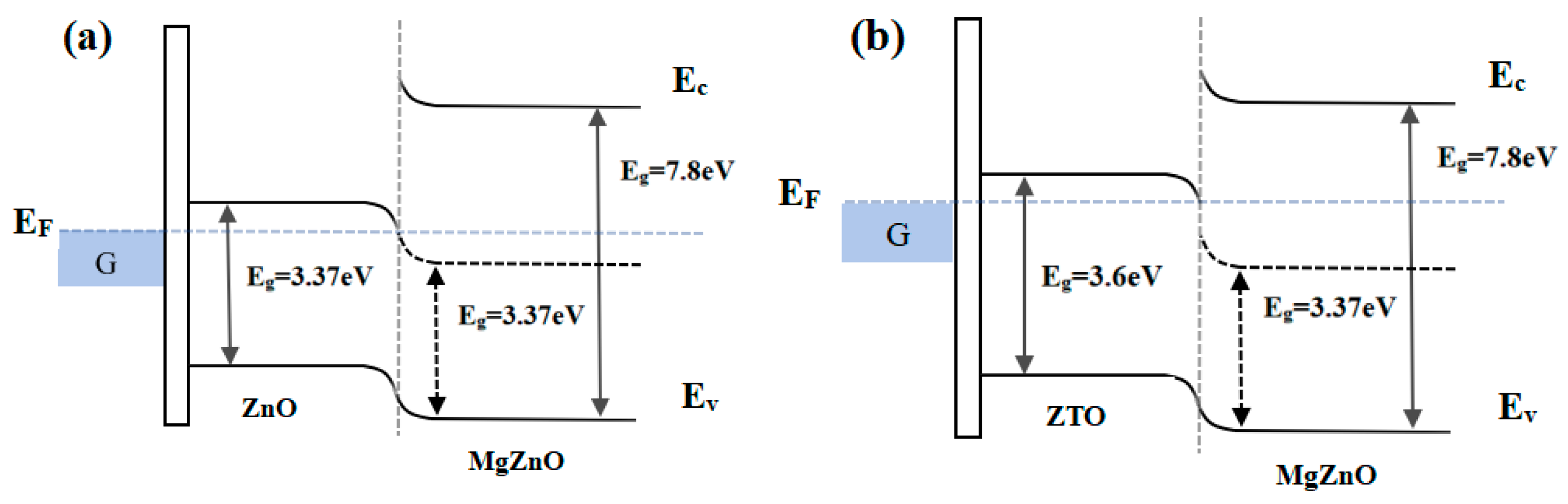
According to previous reports, ZTO-TFTs exhibit superior electrical performance and enhanced bias stress stability compared to ZnO-TFTs [16,17]. This improvement can be attributed to the broader bandgap of ZTO material (Eg = 3.6 eV at room temperature) [18] relative to ZnO (Eg = 3.37 eV at room temperature) [19]. When ZTO is combined with MgZnO—whose bandgap is continuously tunable from 3.37 eV to 7.8 eV [20] based on the Mg doping ratio—to form a dual-active-layer device, the energy barrier during operation is reduced, leading to higher carrier transport rates and more efficient injection [21], as shown in Figure 1. To enhance electrical performance while maintaining good bias stability, this study selects ZTO thin film as the bottom channel layer. A MgZnO/ZTO-TFTs was fabricated using magnetron sputtering, and the influence of ZTO film growth conditions on the electrical characteristics of the MgZnO/ZTO-TFT was investigated, along with an evaluation of its bias stress stability.

2. Experiment Section

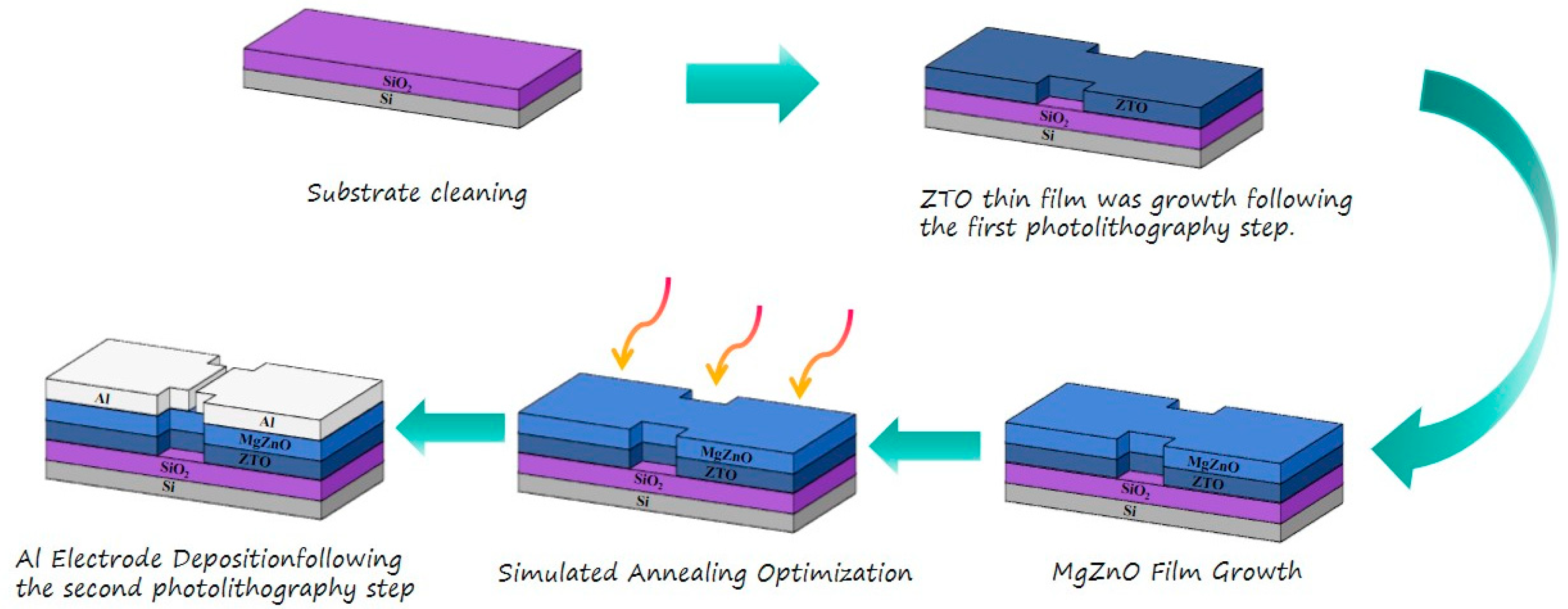
This experiment primarily employed the magnetron sputtering method for device fabrication. p-Si substrates were selected for device construction, and a silicon dioxide insulating layer with a thickness of 285 nm was prepared via thermal oxidation. Initially, the substrates were ultrasonically cleaned in acetone, ethanol, and deionized water to remove surface contaminants and mitigate the impact of surface defects on device performance. Following the first photolithography step to pattern the active layer, ZTO thin films were deposited at room temperature using a PVD75 Magnetron Sputtering System Kurt J. Lesker, USA. A 99.99% ZTO target with a ZnO:SnO2 ratio of 7:3 was used, with a sputtering power of 100 W and a sputtering pressure of 8 Torr. The argon-to-oxygen ratio and sputtering time were adjusted accordingly. Subsequently, MgZnO thin films were prepared by co-sputtering deposition at room temperature using 99.99% ZnO and Mg targets. The sputtering powers for the ZnO and Mg targets were set at 80 W and 15 W, respectively, with an argon-to-oxygen ratio of 85%:15% and a sputtering pressure of 8 Torr during the process. The thickness of the active layer was 30 nm. After the deposition of the active layer, the samples were annealed in an air atmosphere at 600 °C for 1 h using a German-made RTP-100 rapid thermal processor to optimize their properties. Following the second photolithography step to define the channel layer, 50 nm-thick Al electrodes were deposited using an China Taiwan Liangjie Technology Company electron beam evaporation equipment, completing the device fabrication. The channel length and width were 300 μm and 10 μm, respectively. The device fabrication process is illustrated in Figure 2 below.

3. Effect of Sputtering Ar:O2 Ratio in the Bottom Channel Layer on Device Performance

3.1. Surface Morphology Analysis of Double-Active-Layer Thin Films

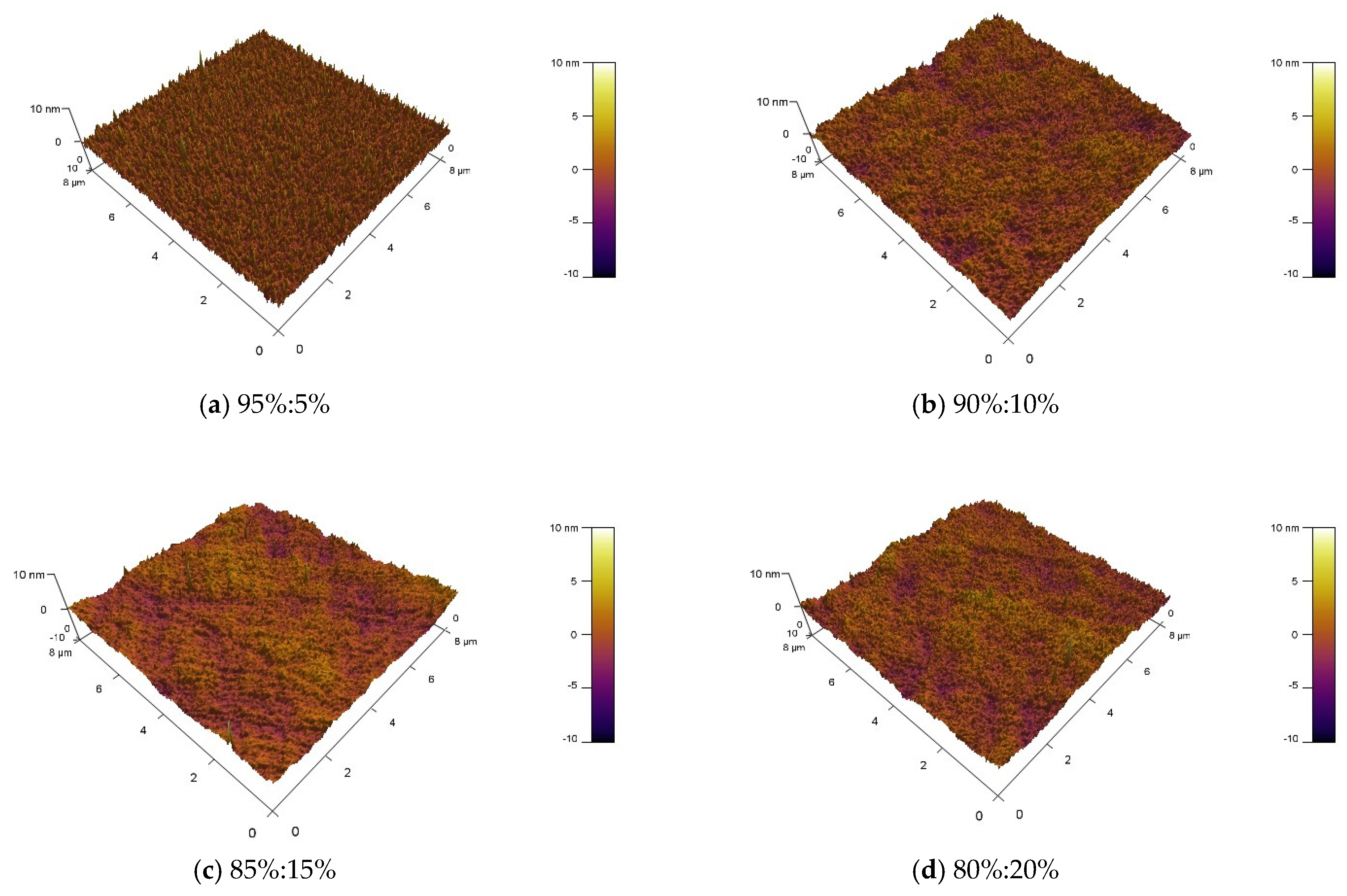
The surface roughness of the thin film was analyzed using a MFP-3D Origin+ Atomic Force Microscope produced by Oxford Instruments with scanning performed over an 8 μm2 area, as shown in Figure 3. The overall root-mean-square (RMS) roughness of the ZTO film was measured as follows: 0.895 nm at an argon-to-oxygen ratio of 95%:5%; 0.842 nm at 90%:10%; 0.88 nm at 85%:15%; and 0.913 nm at 80%:20%. This indicates that the overall surface roughness initially decreased and then increased, remaining below 1 nm in all cases. The lowest surface roughness of 0.84 nm was observed at an argon-to-oxygen ratio of 90:10. This phenomenon can be attributed to the following: At an oxygen flow rate of 5%, the excessively low oxygen content resulted in increased defects in the underlying active layer, thereby elevating the overall surface roughness. When the oxygen flow rate exceeded 10%, excess oxygen led to an increase in grain size within the film, subsequently increasing the overall surface roughness [22,23].
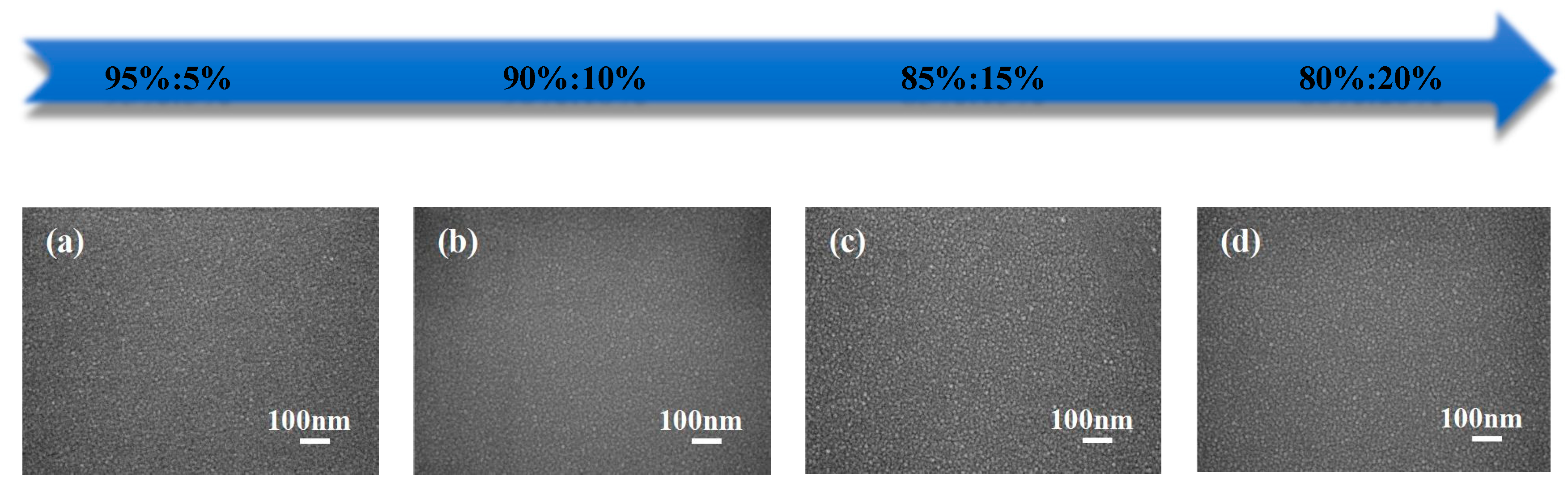
Figure 4 shows representative SEM images of the ZTO film deposited under different sputtering argon-to-oxygen ratios. Consistent with the AFM analysis, the surface was rougher at an oxygen flow rate of 5%. Upon increasing the oxygen flow rate to 10%, the film surface exhibited finer and more uniform grains. However, with further increases in the oxygen flow rate, the grain size on the film surface increased, accompanied by the formation of microscopic voids.

3.2. XPS Analysis of ZTO Thin Films

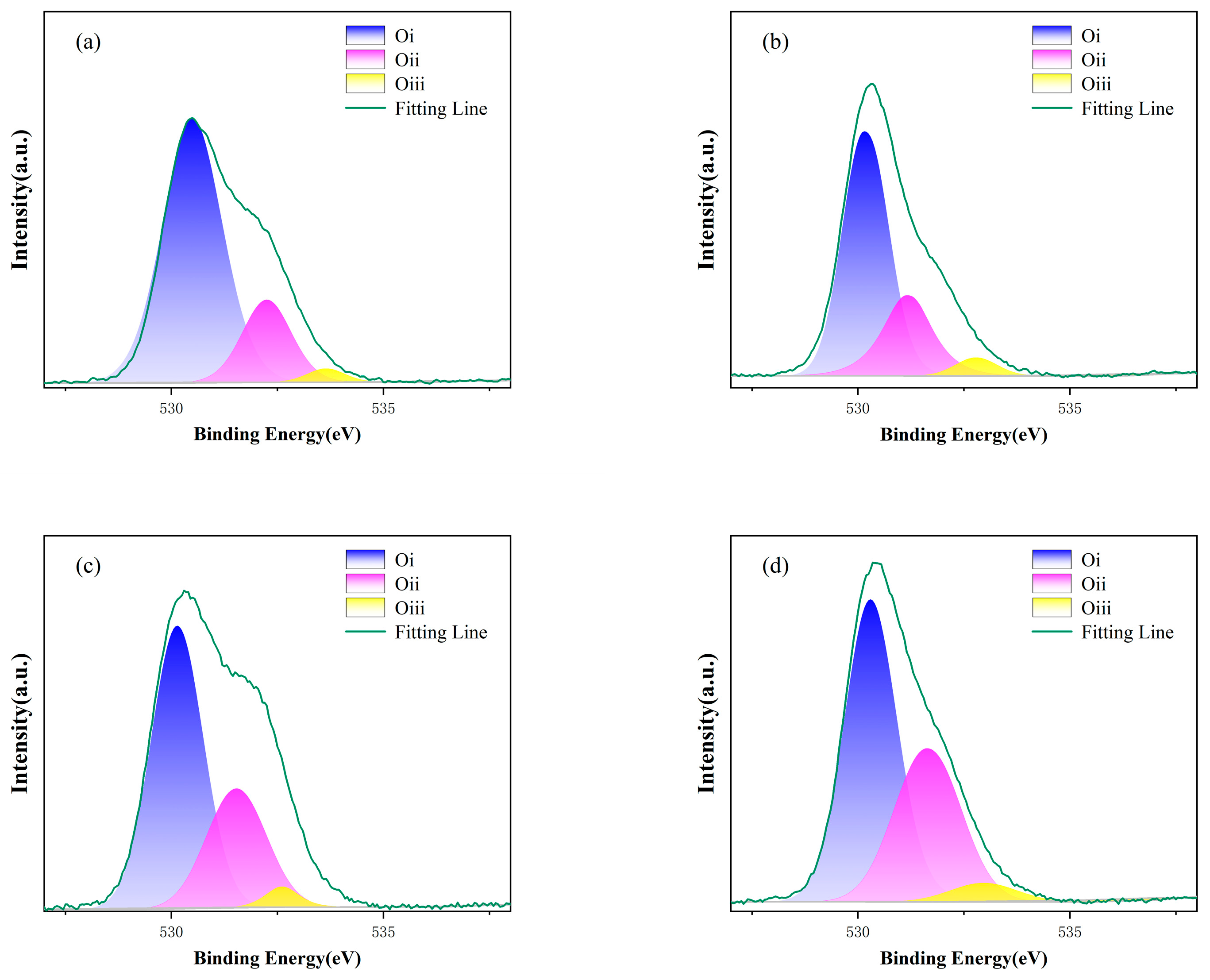
Figure 5 presents the O-1s XPS spectra of ZTO thin films annealed under different atmospheres. The spectra reveal three distinct chemical states: Oi (530.3 ± 0.2 eV), Oii (531.4 ± 0.25 eV), and Oiii (532.8 ± 0.2 eV). Oi corresponds to lattice oxygen, Oii represents the oxygen vacancy (Vo) concentration within the film, and Oiii is attributed to surface-adsorbed oxygen-containing species, such as hydroxyl groups (-OH). The relative proportions of Oi, Oii, and Oiii derived from the O-1s spectra are summarized in Table 2. Under the four annealing atmospheres investigated, the proportion of Oi was 77.6%, 69.1%, 65.3%, and 58.6%, respectively. This indicates that during annealing, the majority of oxygen atoms bonded with metal atoms to form metal oxides, exhibiting high binding energy. As the oxygen flow rate increased during annealing, the Vo content in the films progressively increased. However, excessive Vo concentrations can introduce detrimental defects, degrading device performance [24].

3.3. Analysis of Electrical Properties

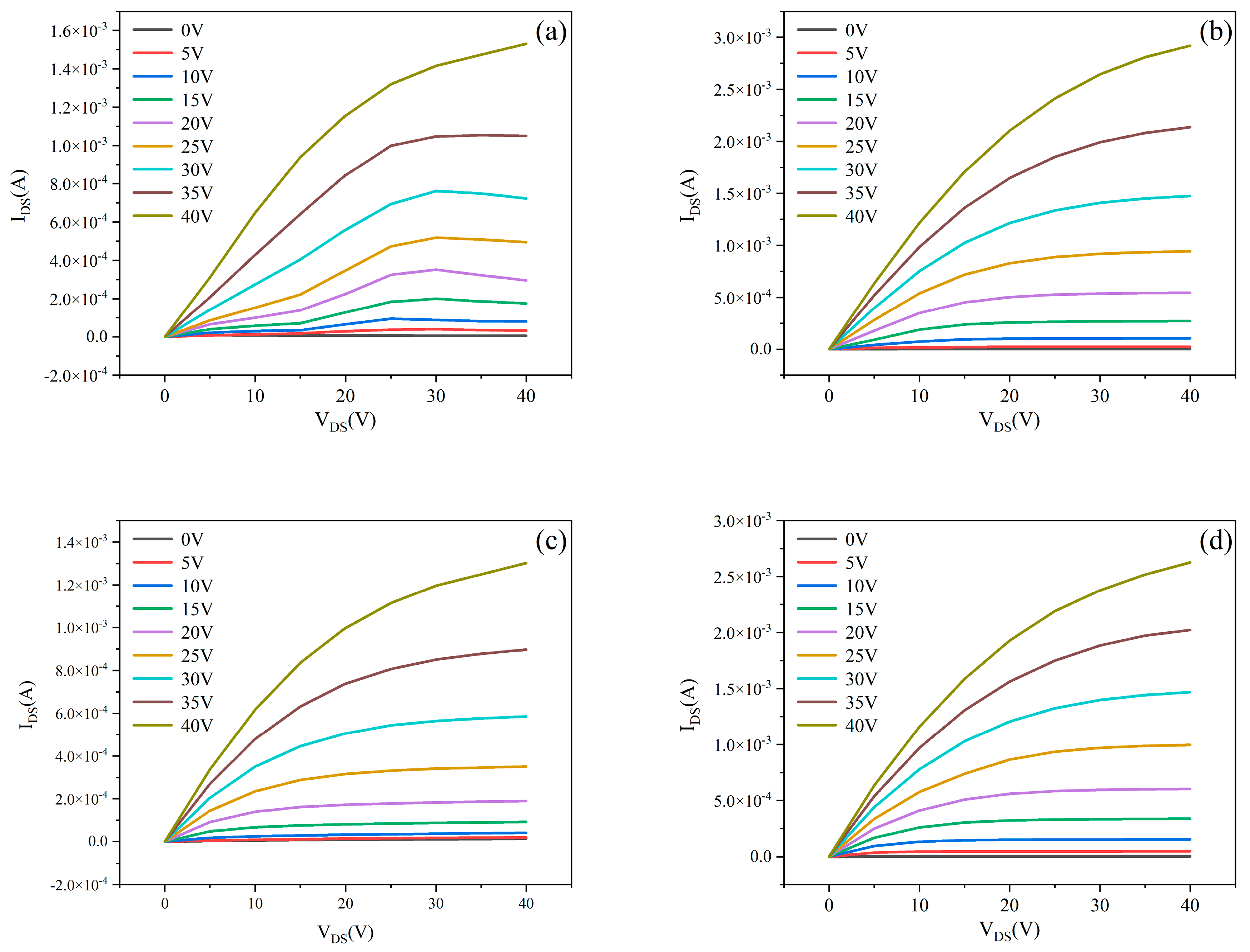
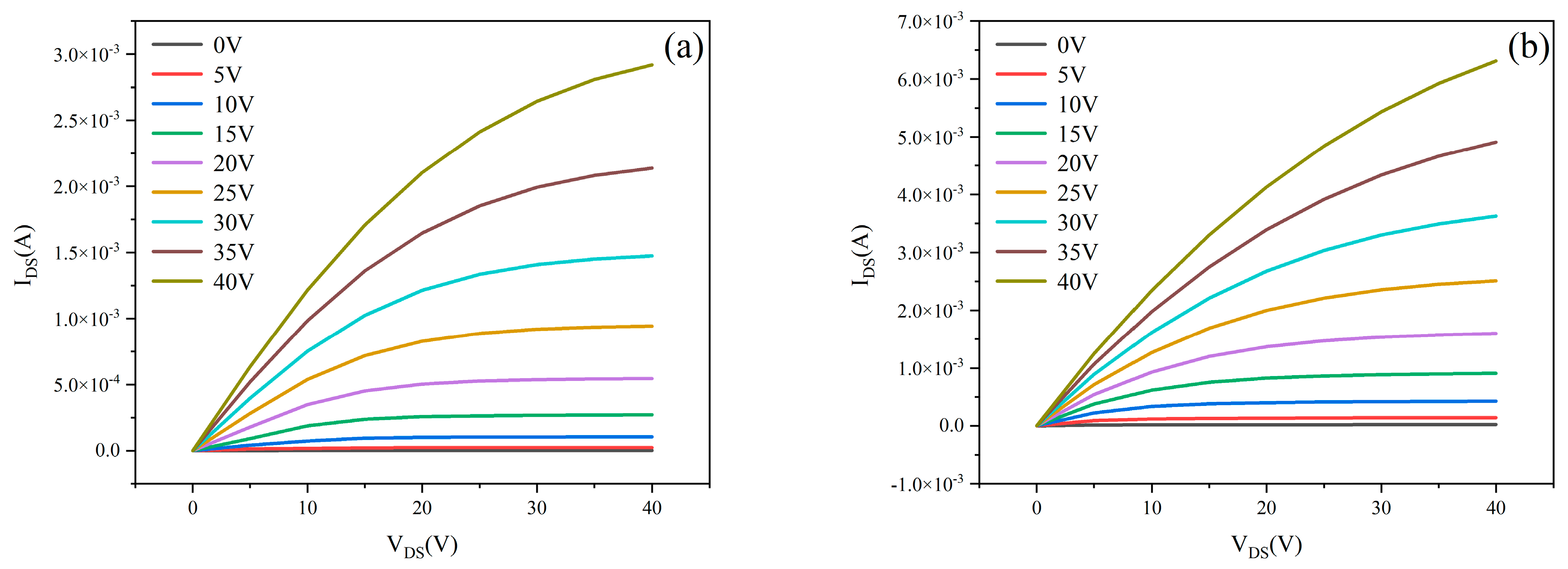
The electrical performance of MgZnO/ZTO-TFT devices—fabricated by modulating the sputtering Ar/O2 ratio during ZTO thin-film deposition—was characterized using a semiconductor parameter analyzer. For output characteristics, the gate voltage (VGS) was scanned from 0 to 40 V in 5 V increments, while the VDS was swept from 0 to 40 V. Figure 6 displays the output characteristic curves of MgZnO/ZTO-TFTs prepared with varying ZTO sputtering Ar/O2 ratios. As observed, the drain-source current (IDS) scales proportionally with increasing VGS across all devices. At VGS = 40 V, all four samples achieved currents in the milliampere range (10−3 A).
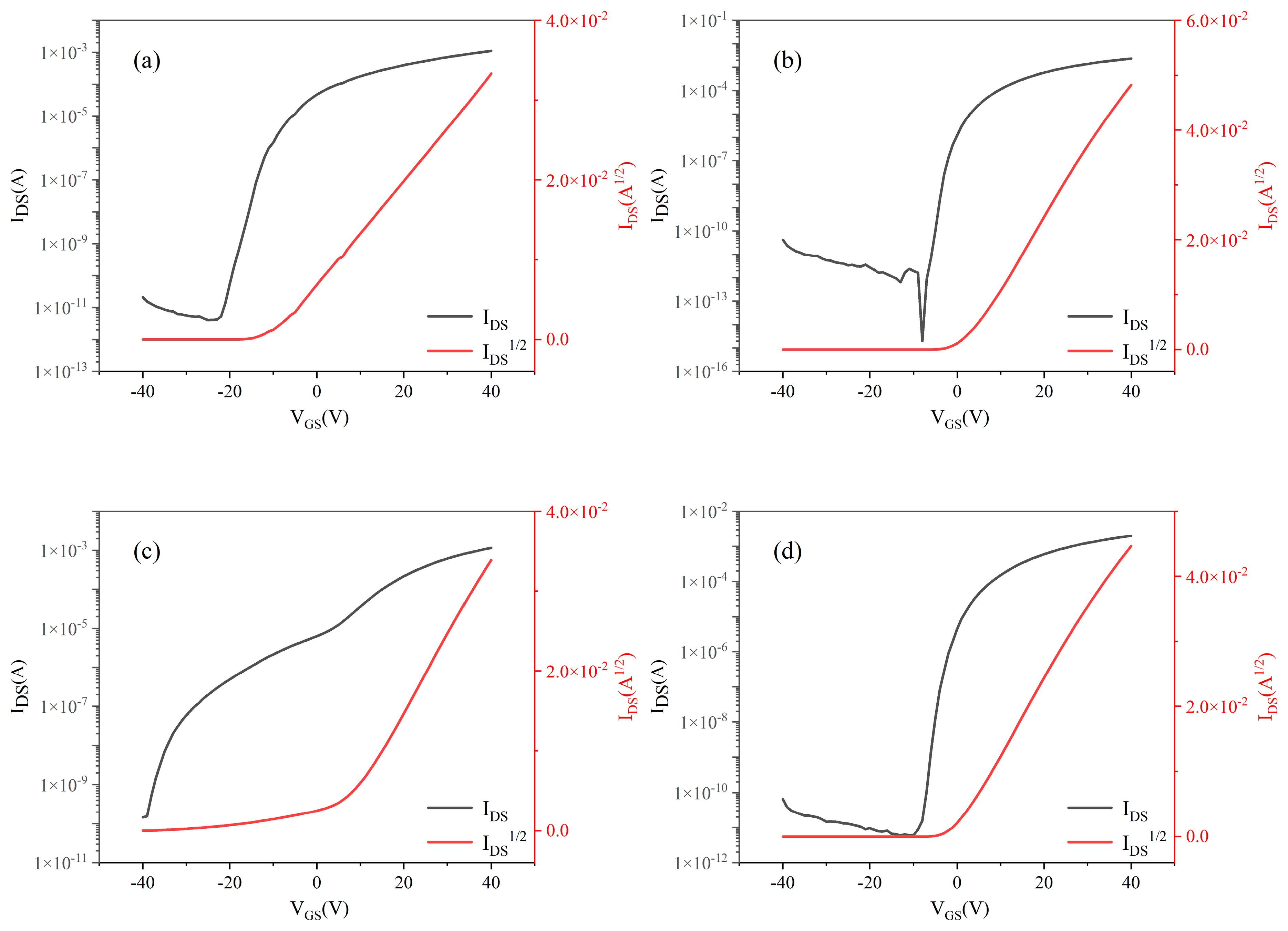
Figure 7 displays the transfer characteristics of MgZnO/ZTO-TFTs fabricated with ZTO thin films deposited at varying sputtering Ar/O2 ratios. With the drain-source voltage fixed at 20 V, the gate voltage was scanned from −40 to 40 V. As observed, all devices exhibit well-defined switching characteristics across the tested Ar/O2 ratios.
Table 2 summarizes the electrical performance parameters of MgZnO/ZTO-TFTs fabricated using ZTO thin films deposited at varying sputtering Ar/O2 ratios. The field-effect mobility (μsat), subthreshold swing (SS), and current Ion/off were derived from Equations (1)–(3).
μ s a t = 2 L W C i I D S V G S 2  
S S = d V G S d log I D S
I o n I o f f = I D S m a x I D S m i n
Here, IDS denotes the current between the source and drain; VGS denotes the voltage between the gate and source, and L and W are the length and width of the device channel, respectively, Ci is the unit capacitance of the gate insulator, IDS(max) is the maximum drain-source current, and IDS(min) is the minimum drain-source current.
Table 3 presents the electrical performance parameters of MgZnO/ZTO-TFTs fabricated using ZTO thin films deposited under different sputtering argon-oxygen ratios. As shown in the table, the field-effect mobility of the experimentally prepared MgZnO/ZTO-TFTs shows significant improvement over that of MgZnO-TFTs. This enhancement stems from the dual-active-layer structure, which separates the carrier generation layer (with high defect density) from the highly conductive layer (with low defect density). This separation improves mobility and helps reduce the subthreshold swing [25]. The subthreshold swings measured for samples prepared under all four conditions are relatively small, indicating effective gate control over the devices. Specifically, for the ZTO film sputtered with an Ar:O2 ratio of 90%:10%, the subthreshold swing is only 0.02 V/dec, and the field-effect mobility reaches 10.46 cm2·V−1·s−1.Regarding the current on/off ratio, the on-state currents for all four samples are on the order of 10−3 A, while the off-state currents remain below 10−10 A. Notably, for the device with the ZTO film deposited at an Ar:O2 ratio of 90%:10%, the off-state current decreases to the order of 10−13 A, achieving an on/off current ratio of 2.69 × 10⁹, which demonstrates excellent switching performance. However, device performance deteriorates as the oxygen flow rate increases during sputtering. This occurs because the oxygen vacancy concentration in the ZTO film varies with the oxygen flow rate, affecting charge transport between the active layers. Increased oxygen flow rate raises the oxygen vacancy concentration, leading to oxygen ions escaping from the lattice which hinders charge propagation in the lower active layer and consequently reduces the overall carrier mobility of the device [26]. Additionally, MgZnO/ZTO-TFTs fabricated with sputtering Ar:O2 ratios of 95%:5% and 80%:20% exhibit depletion-mode characteristics. Both excessive and insufficient oxygen vacancy concentrations result in a pronounced negative shift in threshold voltage compared to the other samples. Based on the above analysis, the MgZnO/ZTO-TFT fabricated with a ZTO film deposited at a sputtering Ar:O2 ratio of 90%:10% demonstrates optimal performance, characterized by: field-effect mobility of 10.46 cm2·V−1·s−1, threshold voltage of 2.44 V, subthreshold swing of 0.02 V/dec, Ion/off of 2.69 × 10⁹,on-state current of 2.33 × 10⁻³ A, ultralow off-state current of 8.66 × 10⁻¹³ A.

4. The Effect of ZTO Thin Film Thickness on the Electrical Properties of MgZnO/ZTO-TFT

4.1. Surface Morphology Analysis of Double-Active-Layer Thin Films

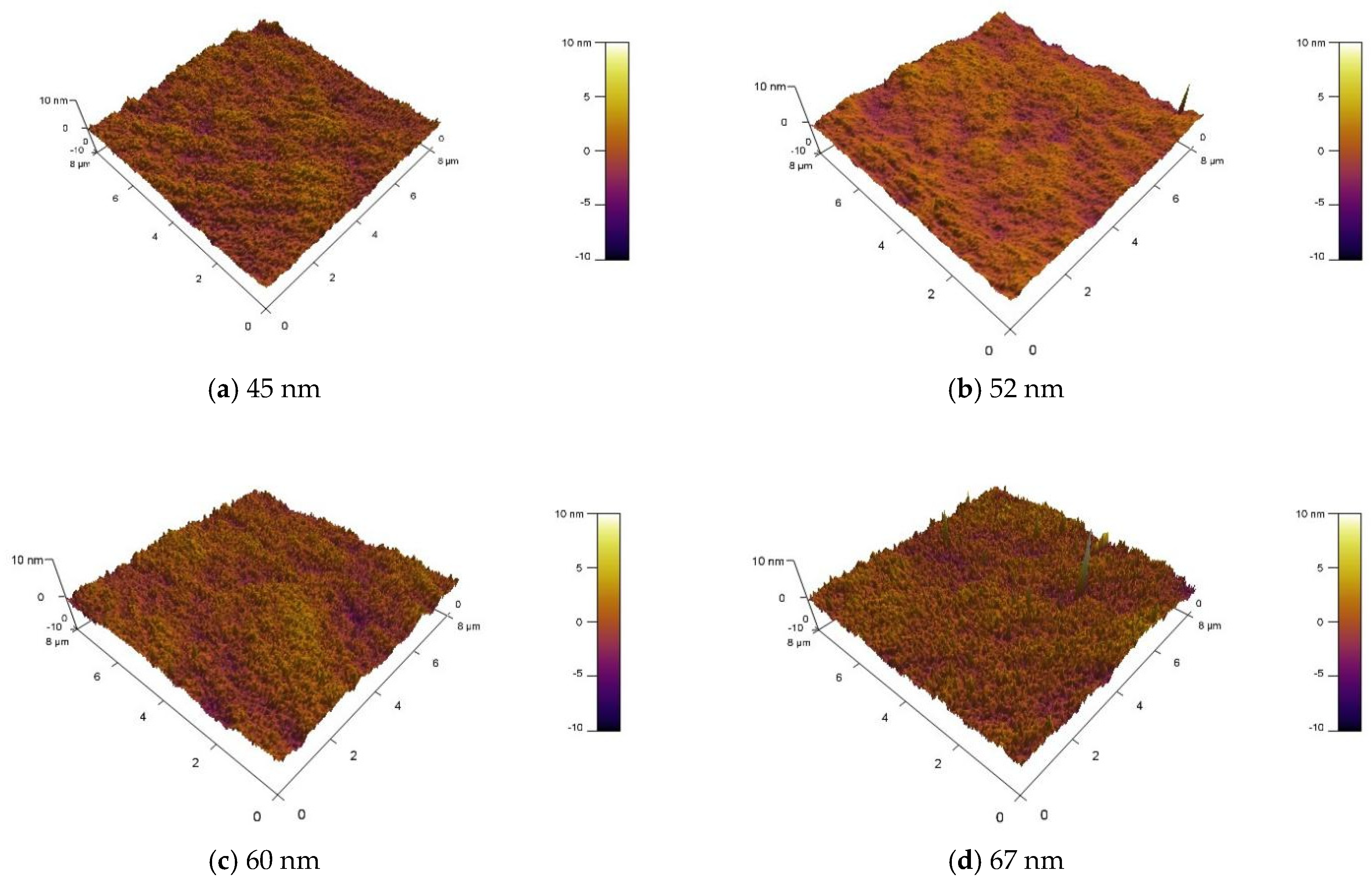
Figure 8 presents atomic force microscopy (AFM) analysis of the surface morphology of MgZnO/ZTO thin films prepared under different sputtering argon-oxygen ratios. For a ZTO film thickness of 45 nm, the root-mean-square (RMS) roughness of the MgZnO/ZTO film, scanned over an 8 μm2 area, is 0.84 nm. At thicknesses of 52 nm, 60 nm, and 67 nm, the RMS roughness decreases to 0.75 nm, increases to 0.97 nm, and further increases to 1.02 nm, respectively. The variation in the thickness of the underlying active layer influences the surface roughness of the MgZnO/ZTO film. As the thickness increases, the overall RMS roughness initially decreases and then increases, reaching a minimum value of 0.75 nm at a thickness of 52 nm. This relatively low surface roughness satisfies the requirements for large-area device fabrication.

4.2. Analysis of Electrical Properties

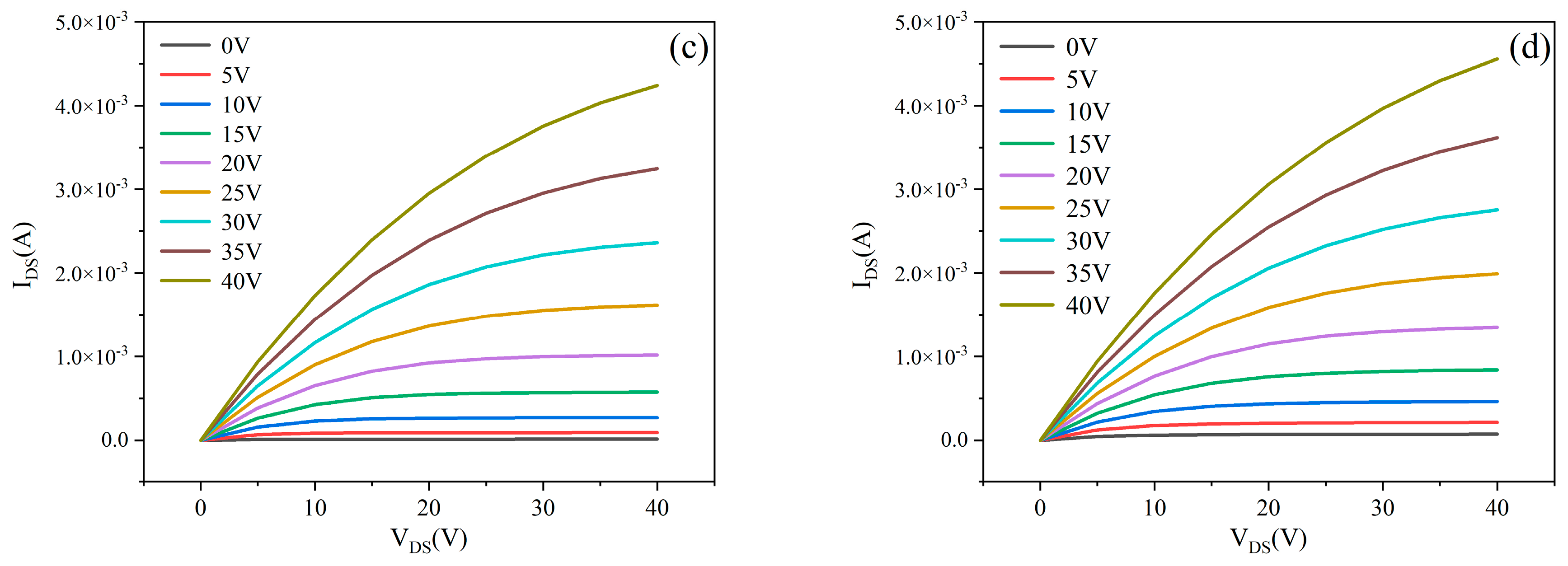
The Figure 9 Vbelow shows the output characteristic curves of MgZnO/ZTO-TFTs fabricated with ZTO films of varying thicknesses, scanned under the same conditions as described above. At VGS = 40 V, the saturation current of MgZnO/ZTO-TFTs consistently remains on the order of 10−3 A as the ZTO thickness increases. Notably, for a 52 nm ZTO film, IDS sat reaches 6.31 × 10⁻³ A.
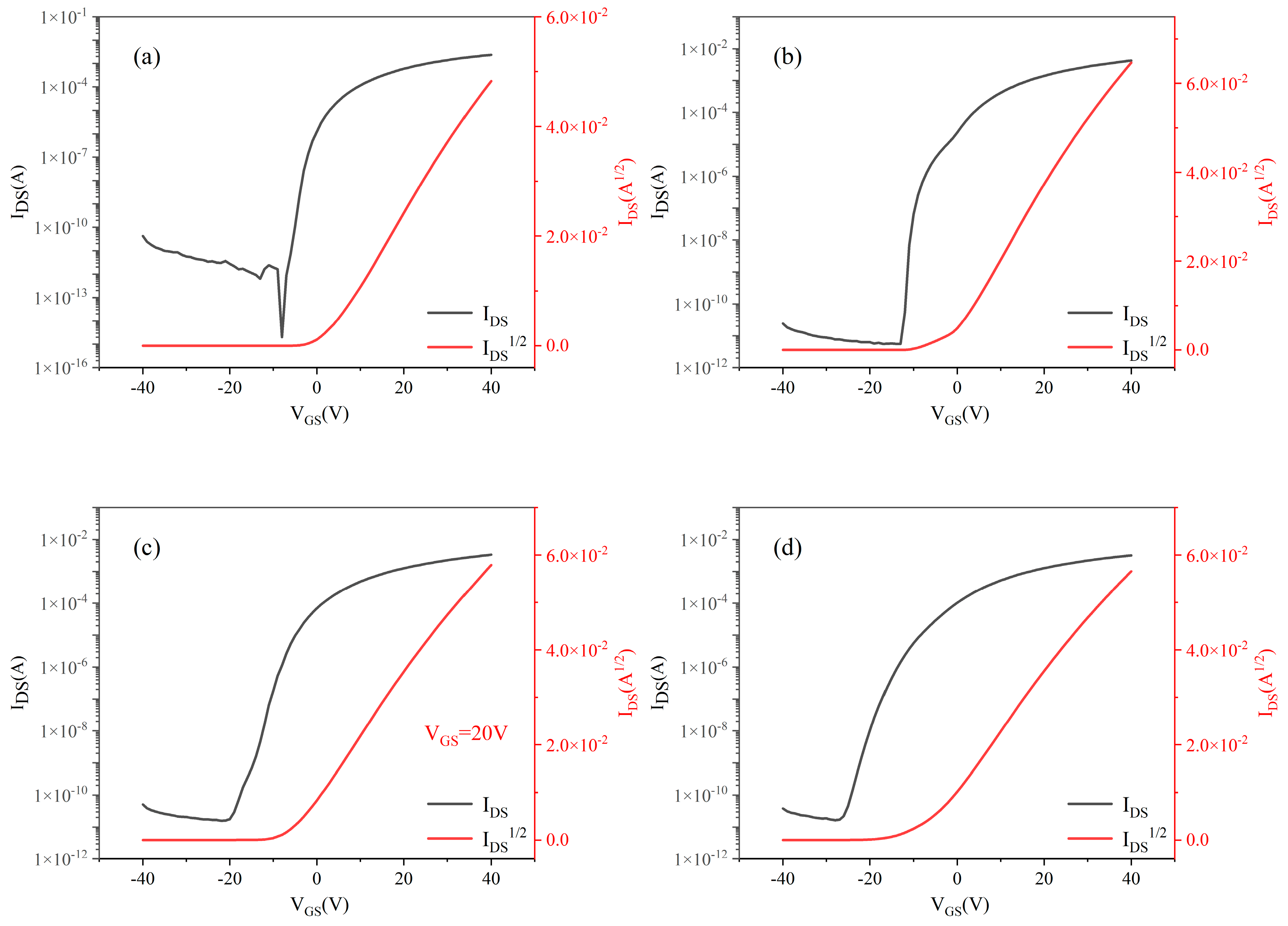
Figure 10 displays the transfer characteristics of MgZnO/ZTO-TFTs annealed at different thickness. Measurements were performed with VDS of 20 V, while VGS was scanned from −40 V to 40 V. As shown, all devices—regardless of ZTO film thickness—exhibit excellent switching performance.
Table 4 shows the electrical performance parameters of MgZnO/ZTO-TFTs fabricated with different thicknesses of ZTO thin films. The data in the table indicate that varying the thickness of the ZTO layer significantly affects the device performance. Under all four conditions, the fabricated MgZnO/ZTO-TFTs still exhibit strong gate modulation capability. The change in ZTO film thickness has a considerable impact on the carrier mobility of the devices. This is because, as the thickness increases, the concentration of oxygen vacancies in the ZTO film also changes. When the oxygen vacancies continue to increase, the total density of defect states in the bottom active layer rises, leading to an increase in the number of carrier-trapping regions. This results in a reduction of carriers in the bottom active layer, degrading its conductivity and limiting the supply of sufficient free electrons to the top active layer [27,28]. Furthermore, when the lower active layer exhibits high conductivity, the elevated carrier concentration at the dual-active-layer interface effectively screens grain boundary potential barriers, reducing carrier scattering. Consequently, carrier transport efficiency improves, significantly enhancing field-effect mobility [29,30]. Thus, mobility initially increases but subsequently decreases with increasing lower active layer thickness. The Ion/off current ratio also varies with lower active layer thickness during switching operations. Under negative gate bias, carriers accumulate predominantly at the interface between the two active layers. In contrast, positive gate bias induces carrier accumulation both at the inter-layer interface and near the lower active layer/insulator interface. For the MgZnO/ZTO-TFTs with a 52 nm ZTO layer, the channel’s low turn-on voltage enables substantial carrier accumulation under maximum positive bias, increasing the on-state current. However, under negative bias, carrier accumulation near the upper/lower active layer interface creates a low-resistance path, elevating off-state leakage current [27,31]. Compared to the 45-nm device, the 52-nm TFT exhibits a marginally lower Ion/off yet maintains a ratio >108. Collectively, the MgZnO/ZTO-TFT with a 52 nm ZTO layer delivers optimal performance: field-effect mobility of 16.80 cm2·V−1·s−1, threshold voltage of −1.60 V, subthreshold swing of 0.74 V/dec, Ion/off of 7.63 × 10⁸, on-state current of 4.18 mA and ultralow off-state current of 5.48 × 10⁻¹² A.

5. Stability Study of MgZnO/ZTO-TFTs

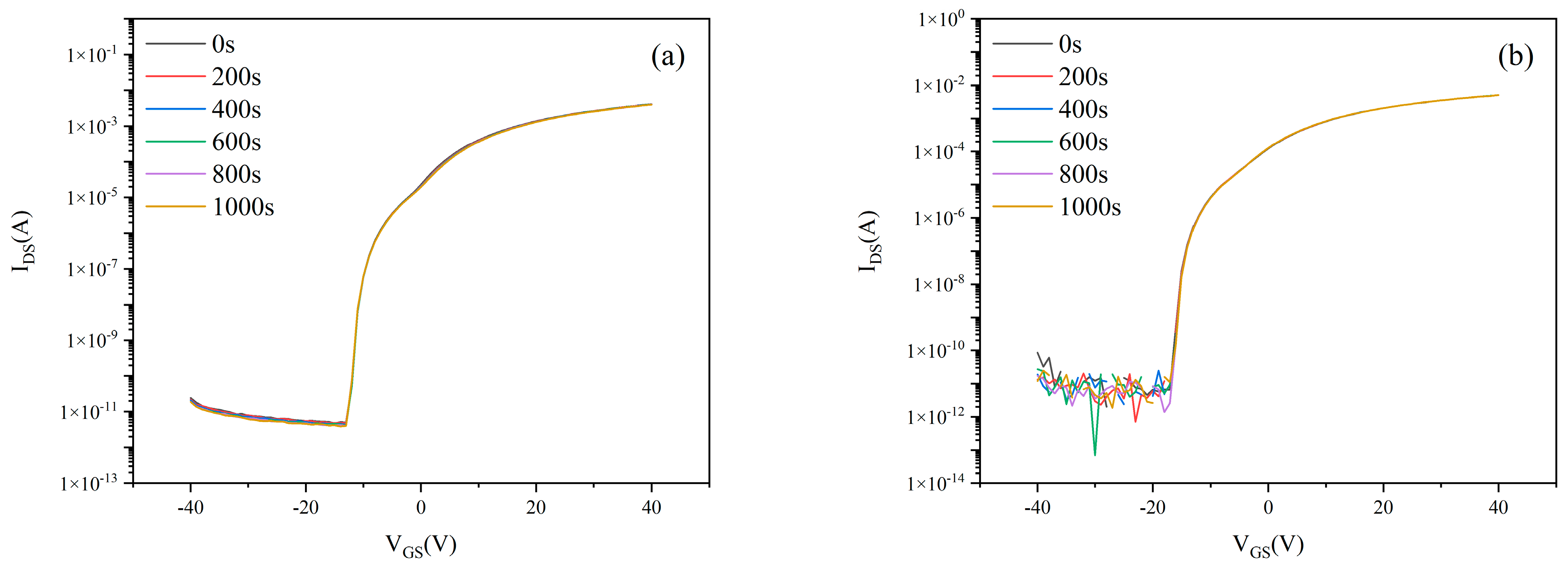
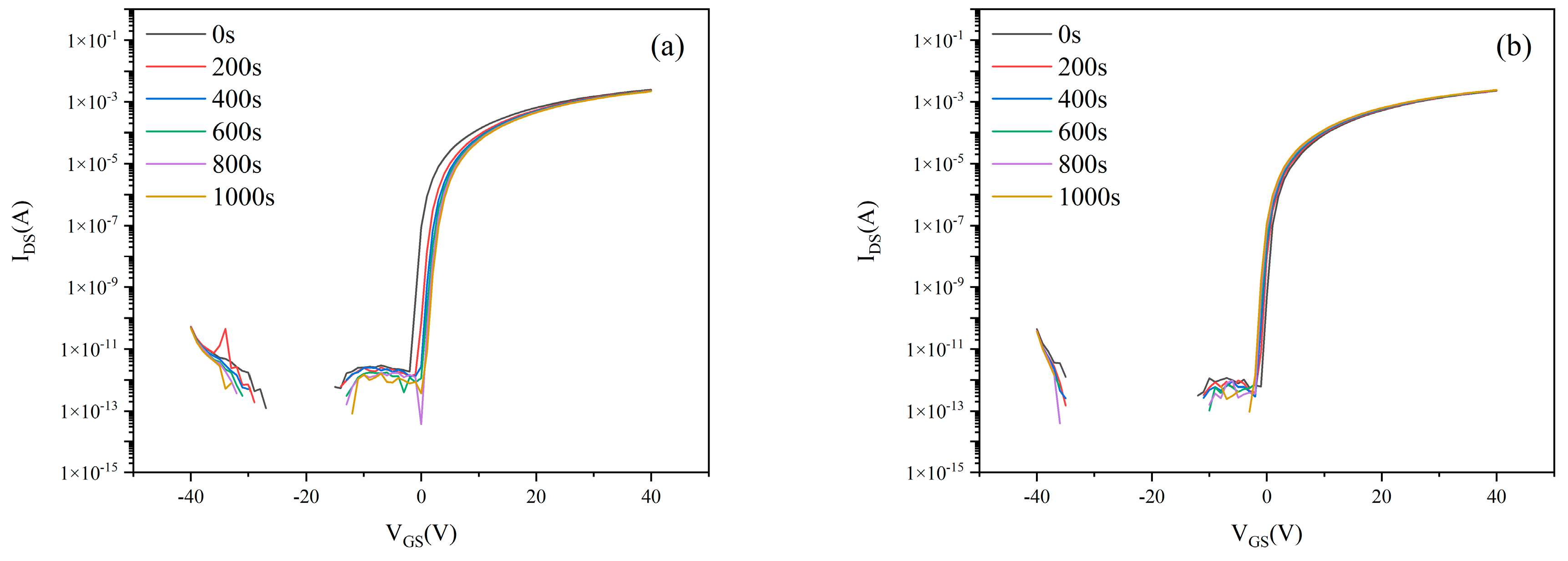
The preceding section optimized the growth conditions of the lower active layer, culminating in peak performance for MgZnO/ZTO-TFTs fabricated under specific parameters: ZTO sputtering power of 100 W, Ar:O2 ratio of 90%:10%, and thickness of 52 nm—all tested after 180-day ambient exposure without encapsulation. This subsection analyzes the bias stability of MgZnO/ZTO-TFTs prepared under these optimal conditions. Figure 11 show transfer characteristics under varying stress durations with VDS = 20 V and gate biases of +10 V and –10 V. Table 5 below shows the stability data, after 1000 s of stress, threshold voltage shifts (ΔVTH) was: +0.58 V at VGS = +10, –0.15 V at VGS = −10 V. For comparison, conventionally fabricated ZTO-TFTs underwent identical bias stress testing. Figure 12 present their transfer characteristics under equivalent conditions. After 1000 s stress, ΔVTH was +4.38 V at VGS = +10 V, –3.32 V at VGS = −10 V.
Electrical testing confirmed that under +10 V gate bias stress for 1000 s, the ΔVth of MgZnO/ZTO-TFTs was reduced to 0.58 V, significantly lower than the 4.38 V shift observed in conventional ZTO-TFTs. Similarly, under −10 V bias, ΔVth decreased from −3.32 V to −0.15 V, demonstrating superior bias stability. The relatively poor bias stability of ZTO-TFT may be attributed to defects in the deep gap states between the insulating layer and the semiconductor layer [4]. During current transport, these defects extensively trap free electrons, leading to a significant shift in the threshold voltage [32]. Under bias conditions, when a drain-source current is applied to the device, the current preferentially flows through the MgZnO/ZTO interface during transmission, rather than the ZTO/SiO2 interface. The formation of the MgZnO/ZnO heterojunction can generate a higher electron density at the interface, reducing interface scattering and thereby creating a more stable electron transport path [14,33]. Furthermore, the MgZnO upper active layer suppresses interface trap state density, minimizing charge trapping under bias stress and thereby improving stability [34,35].

6. Conclusions

In summary, we have successfully fabricated MgZnO/ZTO-TFTs exhibiting excellent performance. While significantly enhancing the electrical properties of the MgZnO-TFTs, the devices maintained excellent bias stability. This improvement is attributed to the bilayer structure: the ZTO film serves as the lower active layer, supplying sufficient carriers, while the MgZnO film acts as the upper active layer, establishing a more stable electron transport pathway through its polarization effects. The fabricated devices achieved a field-effect mobility of 16.80 cm2·V−1·s−1 and Ion/off up to 108. Under a gate bias stress of VGS = ±10 V for 1000 s, the threshold voltage exhibited minimal shifts of +0.58 V and −0.15 V, respectively. Our work provides valuable insights for the subsequent development of high-performance TFTs devices.

Author Contributions

Conceptualization, Y.H. (Yunpeng Hao) and C.W.; methodology, Y.H. (Yunpeng Hao) and C.W.; validation, Y.H. (Ying Huang), C.W. and L.G.; resources, C.W., Y.H. (Yunpeng Hao) and L.G.; data curation, C.W., Y.H. (Yunpeng Hao) and L.G.; investigation, M.J. and Y.S.; writing—original draft, Y.H. (Yunpeng Hao); writing—review & editing, Y.H. (Ying Huang) and C.W.; project administration, Y.H. (Yunpeng Hao), C.W., L.G., M.J., Y.S., L.X., Y.H. (Ying Huang), Y.Z., X.X. and J.Z.; funding acquisition, Y.H. (Ying Huang) and C.W. All authors have read and agreed to the published version of the manuscript.

Funding

This work was supported by the Science and Technology Development Project of Jilin Province, China (No. YDZJ202301ZYTS489).

Data Availability Statement

The original contributions presented in this study are included in the article. Further inquiries can be directed to the corresponding authors.

Conflicts of Interest

The authors declare that they have no known competing financial interests or personal relationships that could have appeared to influence the work reported in this paper.

References

  1. Ahmad, I.; Bousbih, R.; Mahal, A.; Khan, W.Q.; Aljohani, M.; Amin, M.A.; Jafar, N.N.; Jabir, M.S.; Majdi, H.; Alshomrany, A.S.; et al. Recent progress in ZnO-based heterostructured photocatalysts: A review. Mater. Sci. Semicond. Process. 2024, 180, 108578. [Google Scholar] [CrossRef]
  2. Ajayan, J.; Sreejith, S.; Kumari, N.A.; Manikandan, M.; Sen, S.; Kumar, M. Amorphous indium gallium zinc oxide thin film transistors (a-IGZO-TFTs): Exciting prospects and fabrication challenges. Microelectron. Eng. 2025, 298, 112327. [Google Scholar] [CrossRef]
  3. Gui, Z.; Zou, K.; Xu, M.; Chen, L.; Peng, C.; Li, X.; Zhang, J. High Mobility and Excellent Stability of Solution-Processed Heterojunction-Channel IGO/AIGO TFT. ACS Appl. Electron. Mater. 2025, 7, 3372–3381. [Google Scholar] [CrossRef]
  4. Choi, J.; Choi, J.; Kim, T.K.; Lee, Y.; Kang, S.; Mun, S.A.; Ham, J.; Kim, H.; Hwang, C.S. Enhanced Performance and Gate Bias Stress Stability of Atomic-Layer-Deposited Amorphous Zn–Sn–O Thin-Film Transistors with HfO2 and Al-Doped TiO2 Interlayers on SiO2 Gate Oxide. ACS Appl. Electron. Mater. 2025, 7, 215–224. [Google Scholar] [CrossRef]
  5. Ohtomo, A.; Kawasaki, M.; Koida, T.; Masubuchi, K.; Koinuma, H.; Sakurai, Y.; Yoshida, Y.; Yasuda, T.; Segawa, Y. MgxZn1−xO as a II–VI widegap semiconductor alloy. Appl. Phys. Lett. 1998, 72, 2466–2468. [Google Scholar] [CrossRef]
  6. Pan, Z.; Hu, Y.; Chen, J.; Wang, F.; Jeong, Y.; Pham, D.P.; Yi, J. Approaches to improve mobility and stability of IGZO TFTs: A brief review. Trans. Electr. Electron. Mater. 2024, 25, 371–379. [Google Scholar] [CrossRef]
  7. Hara, Y.; Kikuchi, T.; Kitagawa, H.; Morinaga, J.; Ohgami, H.; Imai, H.; Daitoh, T.; Matsuo, T. IGZO-TFT technology for large-screen 8K display. J. Soc. Inf. Disp. 2018, 26, 169–177. [Google Scholar] [CrossRef]
  8. Lee, J.H.; Kim, C.H.; Kim, H.S.; Jang, N.W.; Yun, Y.; Do, L.M.; Baek, K.H. Effects of Mg incorporation by co-sputtering into the ZnO channel layer of thin-film transistors. J. Korean Phys. Soc. 2013, 62, 937–941. [Google Scholar] [CrossRef]
  9. Heo, Y.W.; Kwon, Y.W.; Li, Y.; Pearton, S.J.; Norton, D.P. p-type behavior in phosphorus-doped (Zn, Mg) O device structures. Appl. Phys. Lett. 2004, 84, 3474–3476. [Google Scholar] [CrossRef]
  10. Wang, C.; Hao, Y.; Guo, L.; Fan, Y. Effect of atmosphere dependent annealing on the preparation and properties of MgZnO thin-film transistors. Chin. J. Liq. Cryst. Disp. 2024, 39, 1295–1303. [Google Scholar]
  11. Matsubara, K.; Tampo, H.; Shibata, H.; Yamada, A.; Fons, P.; Iwata, K.; Niki, S. Band-gap modified Al-doped Zn1−xMgxO transparent conducting films deposited by pulsed laser deposition. Appl. Phys. Lett. 2004, 85, 1374–1376. [Google Scholar] [CrossRef]
  12. Tsai, Y.S.; Chen, J.Z. Positive Gate-Bias Temperature Stability of RF-Sputtered Mg0.05ZnO0.95 Active-Layer Thin-Film Transistors. IEEE Trans. Electron Devices 2011, 59, 151–158. [Google Scholar] [CrossRef]
  13. Ku, C.J.; Duan, Z.; Reyes, P.I.; Lu, Y.; Xu, Y.; Hsueh, C.L.; Garfunkel, E. Effects of Mg on the electrical characteristics and thermal stability of MgxZn1− xO thin film transistors. Appl. Phys. Lett. 2011, 98, 123511. [Google Scholar] [CrossRef]
  14. Lee, J.H.; Jang, N.W.; Yun, Y.; Kim, C.Y.; Lee, J.H.; Kim, J.G.; Kim, H.S. A study of electrical enhancement of polycrystalline MgZnO/ZnO bi-layer thin film transistors dependence on the thickness of ZnO layer. Curr. Appl. Phys. 2015, 15, 1010–1014. [Google Scholar] [CrossRef]
  15. Yue, D.; Guo, S.; Han, S.; Cao, P.; Zeng, Y.; Xu, W.; Fang, M.; Liu, W.; Zhu, D.; Lu, Y.; et al. Facile fabrication of MgZnO/ZnO composites for high performance thin film transistor. J. Alloys Compd. 2021, 873, 159840. [Google Scholar] [CrossRef]
  16. Wang, C.; Guo, L.; Lei, M.; Wang, C.; Chu, X.; Yang, F.; Gao, X.; Wamg, H.; Chi, Y.; Yang, X. Effect of annealing temperature on electrical properties of ZTO thin-film transistors. Nanomaterials 2022, 12, 2397. [Google Scholar] [CrossRef]
  17. Dai, S.; Wang, T.; Li, R.; Wang, Q.; Ma, Y.; Tian, L.; Su, J.; Wang, Y.; Zhou, D.; Zhang, X.; et al. Preparation and electrical properties of N-doped ZnSnO thin film transistors. J. Alloys Compd. 2018, 745, 256–261. [Google Scholar] [CrossRef]
  18. Pang, C.; Yan, B.; Liao, L.; Liu, B.; Zheng, Z.; Wu, T.; Sun, H.; Yu, T. Synthesis, characterization and opto-electrical properties of ternaryZn2SnO4 nanowires. Nanotechnology 2010, 21, 465706. [Google Scholar] [CrossRef]
  19. Kamarulzaman, N.; Kasim, M.F.; Rusdi, R. Band gap narrowing and widening of ZnO nanostructures and doped materials. Nanoscale Res. Lett. 2015, 10, 346. [Google Scholar] [CrossRef] [PubMed]
  20. Salman, K.M.; Zikriya, M.; Renuka, C.G. Wide band gap tuning of Mg doped ZnO thin films for optoelectronic applications. In IOP Conference Series: Materials Science and Engineering; IOP Publishing: Bristol, UK, 2024; Volume 1300, p. 012026. [Google Scholar]
  21. Smith, A.M.; Nie, S. Semiconductor nanocrystals: Structure, properties, and band gap engineering. Acc. Chem. Res. 2010, 43, 190–200. [Google Scholar] [CrossRef]
  22. Zhang, S.; Zhang, L.; Xiao, X.; Zhang, S. Influence of O2 on Al-Zn-Sn-O TFTs in the active layer deposition and annealing process. In Proceedings of the 2014 IEEE International Conference on Electron Devices and Solid-State Circuits, Chengdu, China, 18–20 June 2014; IEEE: Piscataway, NJ, USA, 2014; pp. 1–2. [Google Scholar]
  23. Hong, R.; Qi, H.; Huang, J.; He, H.; Fan, Z.; Shao, J. Influence of oxygen partial pressure on the structure and photoluminescence of direct current reactive magnetron sputtering ZnO thin films. Thin Solid Film 2005, 473, 58–62. [Google Scholar] [CrossRef]
  24. Li, J.Y.; Chang, S.P.; Chang, S.J.; Lin, H.H.; Hsu, M.H. The effect of the thickness and oxygen ratio control of radio-frequency magnetron sputtering on MgZnO thin-film transistors. J. Nanosci. Nanotechnol. 2017, 17, 2037–2040. [Google Scholar] [CrossRef]
  25. Kim, Y.G.; Yoon, S.; Hong, S.; Choi, J.S.; Kim, H.J. Enhancement in positive bias stress stability of In-Ga-Zn-O thin-film transistors with vertically graded-oxygen-vacancy active layer. Dig. Tech. Pap.-SID Int. Symp. 2015, 46, 1209–1212. [Google Scholar] [CrossRef]
  26. Lim, Y.; Hwang, N.; Yi, M. Effect of double-stacked active layer on stability of Si-IZO thin-film transistor. Microelectron. Eng. 2017, 178, 221–224. [Google Scholar] [CrossRef]
  27. Li, X.; Yin, S.; Xu, D. Simulation study on the active layer thickness and the interface of a-IGZO-TFT with double active layers. Front. Optoelectron. 2015, 8, 445–450. [Google Scholar] [CrossRef]
  28. Guo, L.; Wang, S.; Chu, X.; Wang, C.; Chi, Y.; Yang, X. Improving TFT Device Performance by Changing the Thickness of the LZTO/ZTO Dual Active Layer. Micromachines 2024, 15, 1235. [Google Scholar] [CrossRef]
  29. Krausmann, J.; Sanctis, S.; Engstler, J.; Luysberg, M.; Bruns, M.; Schneider, J.J. Charge transport in low-temperature processed thin-film transistors based on indium oxide/zinc oxide heterostructures. ACS Appl. Mater. Interfaces 2018, 10, 20661–20671. [Google Scholar] [CrossRef]
  30. Yadav, H.; Sinha, N.; Goel, S.; Kumar, B. Eu-doped ZnO nanoparticles for dielectric, ferroelectric and piezoelectric applications. J. Alloys Compd. 2016, 689, 333–341. [Google Scholar] [CrossRef]
  31. Son, K.S.; Kim, H.S.; Maeng, W.J.; Jung, J.S.; Lee, K.H.; Kim, T.S.; Park, J.S.; Kwon, J.Y.; Koo, B.; Lee, S.Y. The effect of dynamic bias stress on the photon-enhanced threshold voltage instability of amorphous HfInZnO thin-film transistors. IEEE Electron Device Lett. 2011, 32, 164–166. [Google Scholar] [CrossRef]
  32. Chu, X.; Hu, X.; Zhang, Q.; Huang, L.; Xie, Y. Performances and preparation of zinc-tin oxide thin-film transistors. Chin. J. Liq. Cryst. Disp. 2024, 39, 40–47. [Google Scholar] [CrossRef]
  33. Wang, Z.; Yue, X.; Xiang, Q. MOFs-based S-scheme heterojunction photocatalysts. Coord. Chem. Rev. 2024, 504, 215674. [Google Scholar] [CrossRef]
  34. Park, J.C.; Kim, S.; Kim, S.; Kim, C.; Song, I.; Park, Y.; Jung, U.I.; Kim, D.H.; Lee, J.S. Highly stable transparent amorphous oxide semiconductor thin-film transistors having double-stacked active layers. Adv. Mater. 2010, 22, 5512–5516. [Google Scholar] [CrossRef] [PubMed]
  35. Bowen, W.E. Thin Film Electronics Based on ZnO and ZnO/MgZnO Heterojunctions. Ph.D. Dissertation, University of Michigan Library, Ann Arbor, MI, USA, 2010. [Google Scholar]
Figure 1. Schematic diagram of the band gap (a) ZnO and MgZnO (b) ZTO and MgZnO.
Nanomaterials 15 01809 g001
Figure 2. Fabrication process flow of MgZnO/ZTO-TFTs.
Nanomaterials 15 01809 g002
Figure 3. AFM images of MgZnO/ZTO films deposited at Ar/O2 ratios of (a) 95%:5% (b) 90%:10% (c) 85%:15% (d) 80%:20%.
Nanomaterials 15 01809 g003
Figure 4. SEM images of ZTO films deposited at various Ar/O2 sputtering ratios (a) 95%:5% (b) 90%:10% (c) 85%:15% (d) 80%:20%.
Nanomaterials 15 01809 g004
Figure 5. The XPS spectra of ZTO thin films in (a) 95%:5% (b) 90%:10% (c) 85%:15% (d) 80%:20% sputtered argon-oxygen ratios.
Nanomaterials 15 01809 g005
Figure 6. The output curve of MgZnO/ZTO-TFTs at (a) 95%:5% (b) 90%:10% (c) 85%:15% (d) 80%:20% sputtered argon-oxygen ratios.
Nanomaterials 15 01809 g006
Figure 7. The transfert curve of MgZnO/ZTO-TFTs at (a) 95%:5% (b) 90%:10% (c) 85%:15% (d) 80%:20% puttered argon-oxygen ratios.
Nanomaterials 15 01809 g007
Figure 8. AFM images of MgZnO/ZTO films at (a) 45 nm (b) 52 nm (c) 60 nm (d) 67 nm.
Nanomaterials 15 01809 g008
Figure 9. The toutput curve of MgZnO/ZTO-TFTs at ZTO film thickness (a) 45 nm (b) 52 nm. (c) 60 nm (d) 67 nm.
Nanomaterials 15 01809 g009aNanomaterials 15 01809 g009b
Figure 10. The ransfert curve of MgZnO/ZTO-TFTs at ZTO film thickness (a) 45 nm (b) 52 nm. (c) 60 nm (d) 67 nm.
Nanomaterials 15 01809 g010
Figure 11. Transfer characteristics of MgZnO/ZTO-TFTs under different stress durations at gate bias stress of (a) +10 V (b) −10 V.
Nanomaterials 15 01809 g011
Figure 12. Transfer Characteristics of Conventionally Fabricated ZTO-TFTs under Different Stress Durations at gate bias stress of (a) +10 V (b) −10 V.
Nanomaterials 15 01809 g012
Table 1. Performance of MgZnO-Based Thin-Film Transistors.
μsat
(cm2 V−1 s−1)
VTH
(V)
SS
(V/dec)
Ion/Ioff
MgZnO-TFTs [10]0.32.283.601.68 × 106
MgZnO/ZnO-TFTs [14]7.563.10.86105
MgZnO/ZnO-TFTs [15]21.1----1.5 × 10⁸
Table 2. Composition of O-1s XPS profile of ZTO film in different sputtered argon-oxygen ratios.
Sputtering Ar/O2 RatioOiOiiOiii
95%:5%74.57%22.42%2.83%
90%:10%69.08%26.03%4.89%
85%:15%65.25%31.38%3.37%
80%:20%58.89%36.61%4.51%
Table 3. Electrical performance parameters of MgZnO/ZTO-TFT prepared by ZTO filmnder different sputtering argon-oxygen ratios.
Sputtering Ar/O2 Ratioμsat
(cm2·V−1·s−1)
VTH
(V)
SS
(V/dec)
IonIoffIon/Ioff
95%:5%3.26−7.601.741.11 × 10−34.07 × 10−122.73 × 10⁸
90%:10%10.462.440.0182.33 × 10−38.66 × 10−132.69 × 10⁹
85%:15%5.535.342.591.15 × 10−31.45 × 10−107.92 × 10⁶
80%:20%8.156−0.080.981.99 × 10−35.89 × 10−123.38 × 10⁸
Table 4. Electrical performance parameters of MgZnO/ZTO-TFTs devices with different thicknesses of ZTO films.
ZTO Film Thicknessμsat
(cm2·V−1·s−1)
VTH
(V)
SS
(V/dec)
IonIoffIon/Ioff
45 nm10.462.440.022.33 × 10−38.66 × 10−132.69 × 10⁹
52 nm16.80−1.600.744.18 × 10−35.48 × 10−127.63 × 10⁸
60 nm10.95−5.471.723.35 × 10−31.58 × 10−112.12 × 10⁸
67 nm9.66−7.21.993.2 × 10−31.65 × 10−111.94 × 10⁸
Table 5. Stability data.
ΔVTHZTO-TFTsMgZnO/ZTO-TFTs
10 V+4.38 V+0.58 V
−10 V−3.32 V−0.15 V
Disclaimer/Publisher’s Note: The statements, opinions and data contained in all publications are solely those of the individual author(s) and contributor(s) and not of MDPI and/or the editor(s). MDPI and/or the editor(s) disclaim responsibility for any injury to people or property resulting from any ideas, methods, instructions or products referred to in the content.