Article

High-Throughput Calculations on the Decomposition Reactions of Off-Stoichiometry GeSbTe Alloys for Embedded Memories

by
Omar Abou El Kheir
and
Marco Bernasconi
*
Dipartimento di Scienza dei Materiali, Università di Milano-Bicocca, Via R. Cozzi 55, I-20125 Milano, Italy
*
Author to whom correspondence should be addressed.
Nanomaterials 2021, 11(9), 2382; https://doi.org/10.3390/nano11092382
Submission received: 17 August 2021 / Revised: 3 September 2021 / Accepted: 6 September 2021 / Published: 13 September 2021
(This article belongs to the Special Issue Synthesis, Properties and Applications of Germanium Chalcogenides)

Abstract

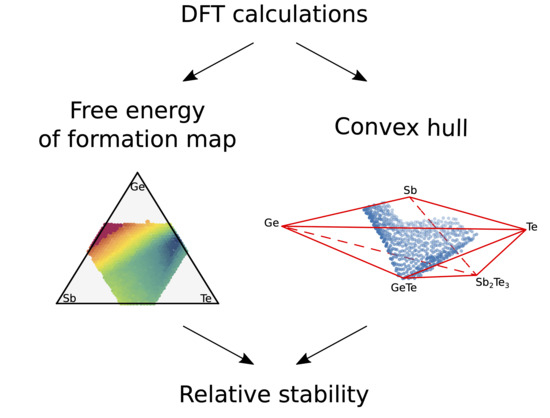
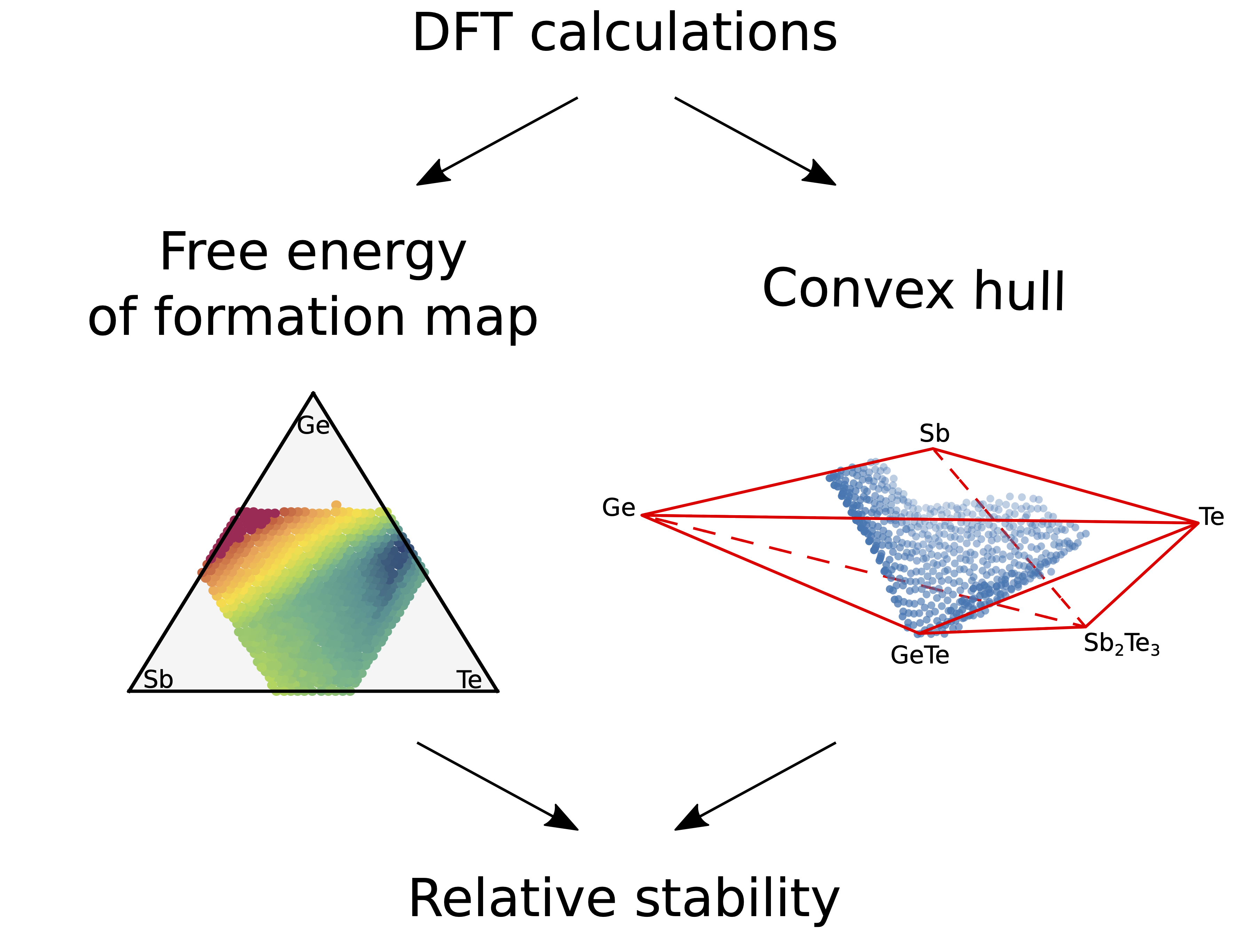
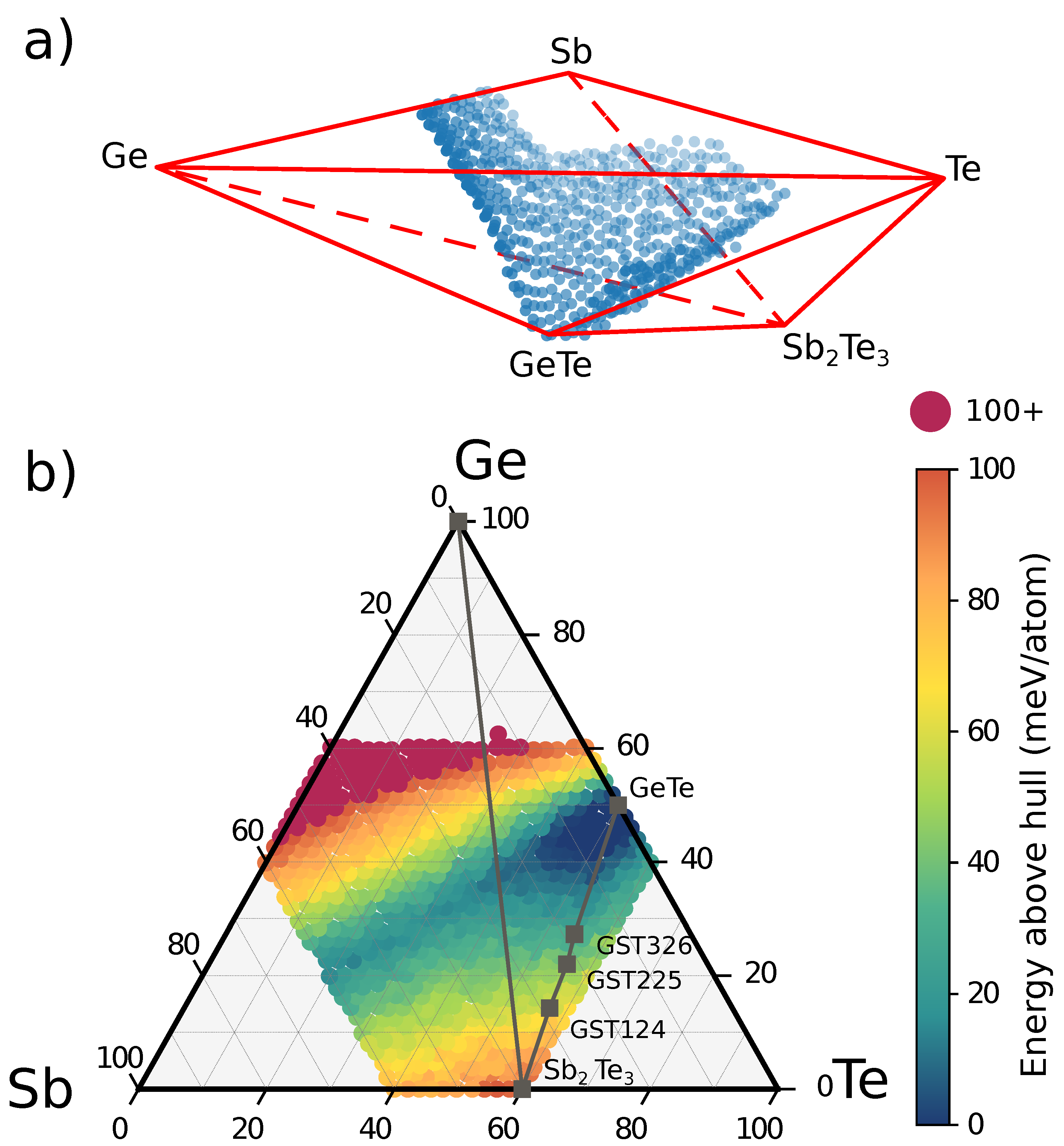
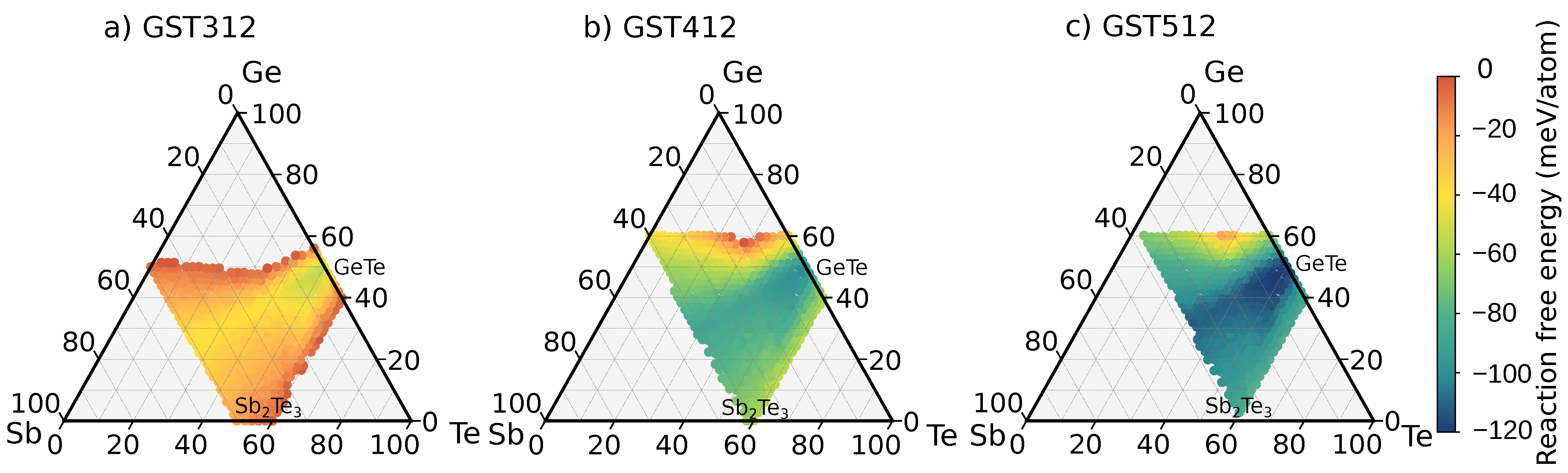
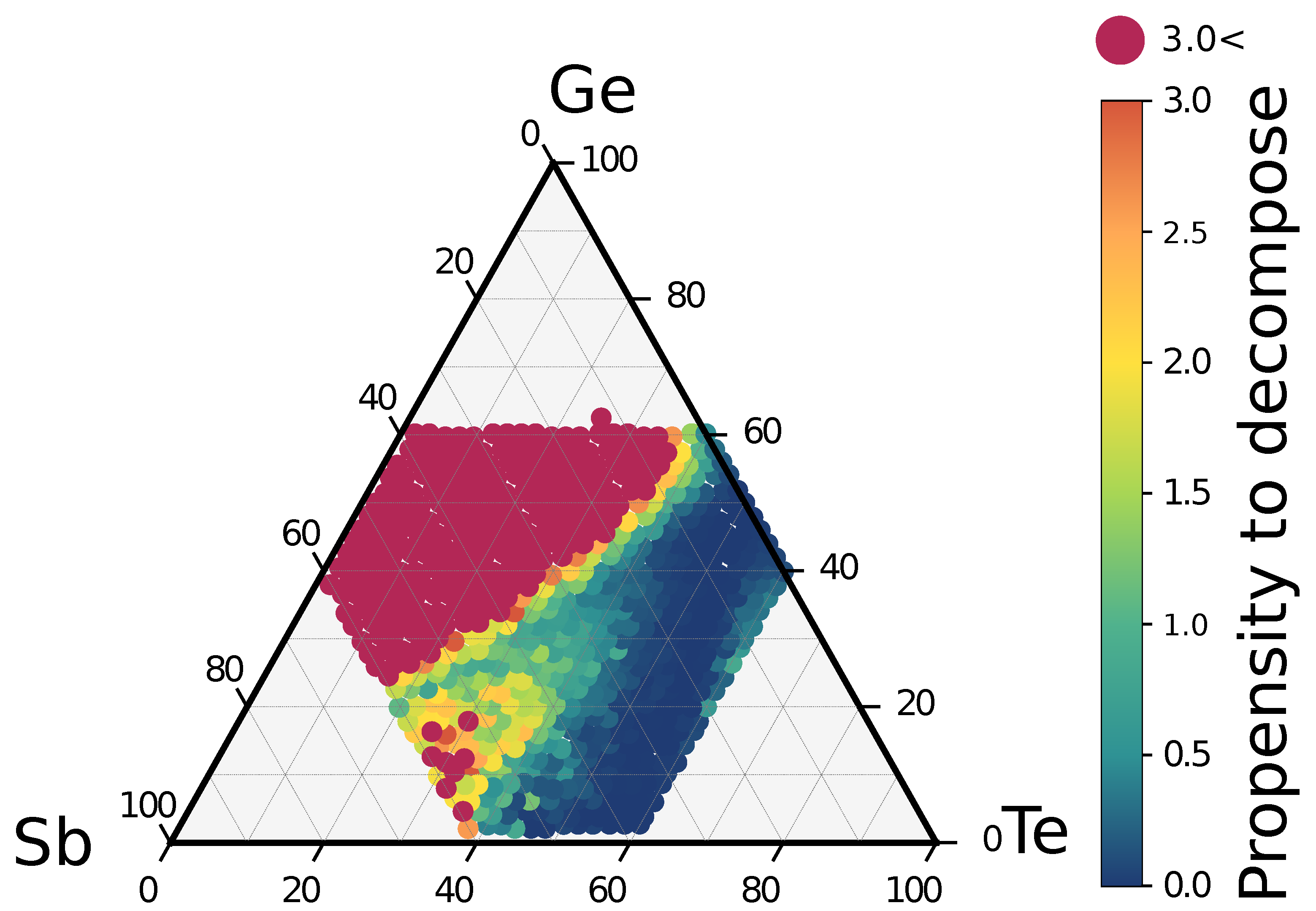
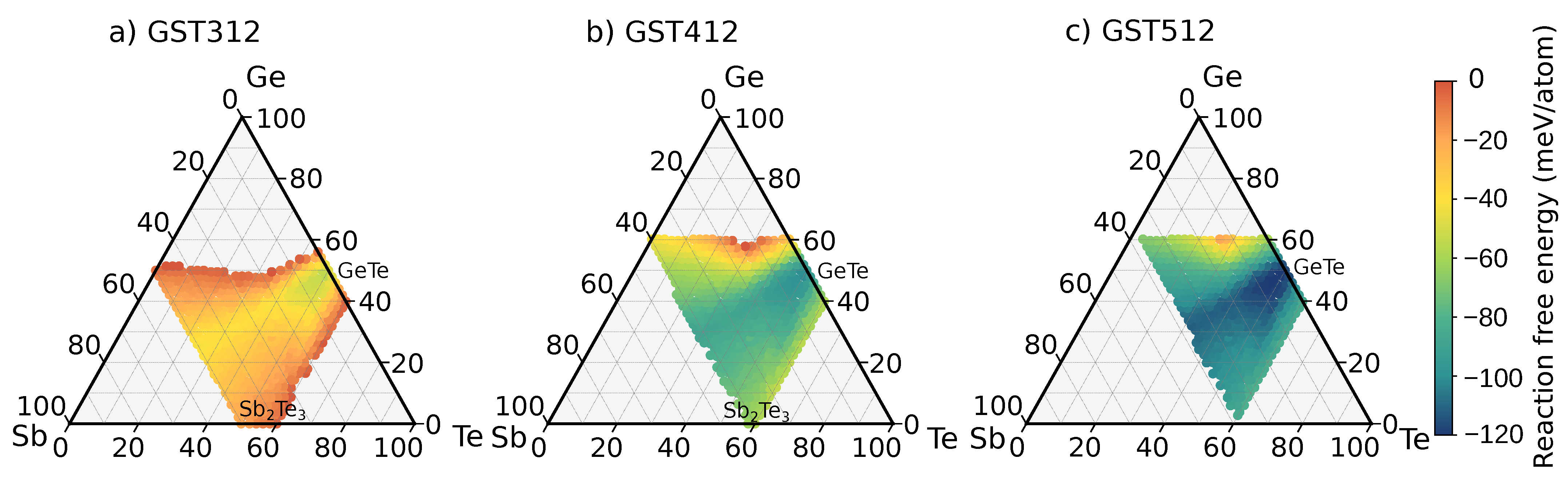
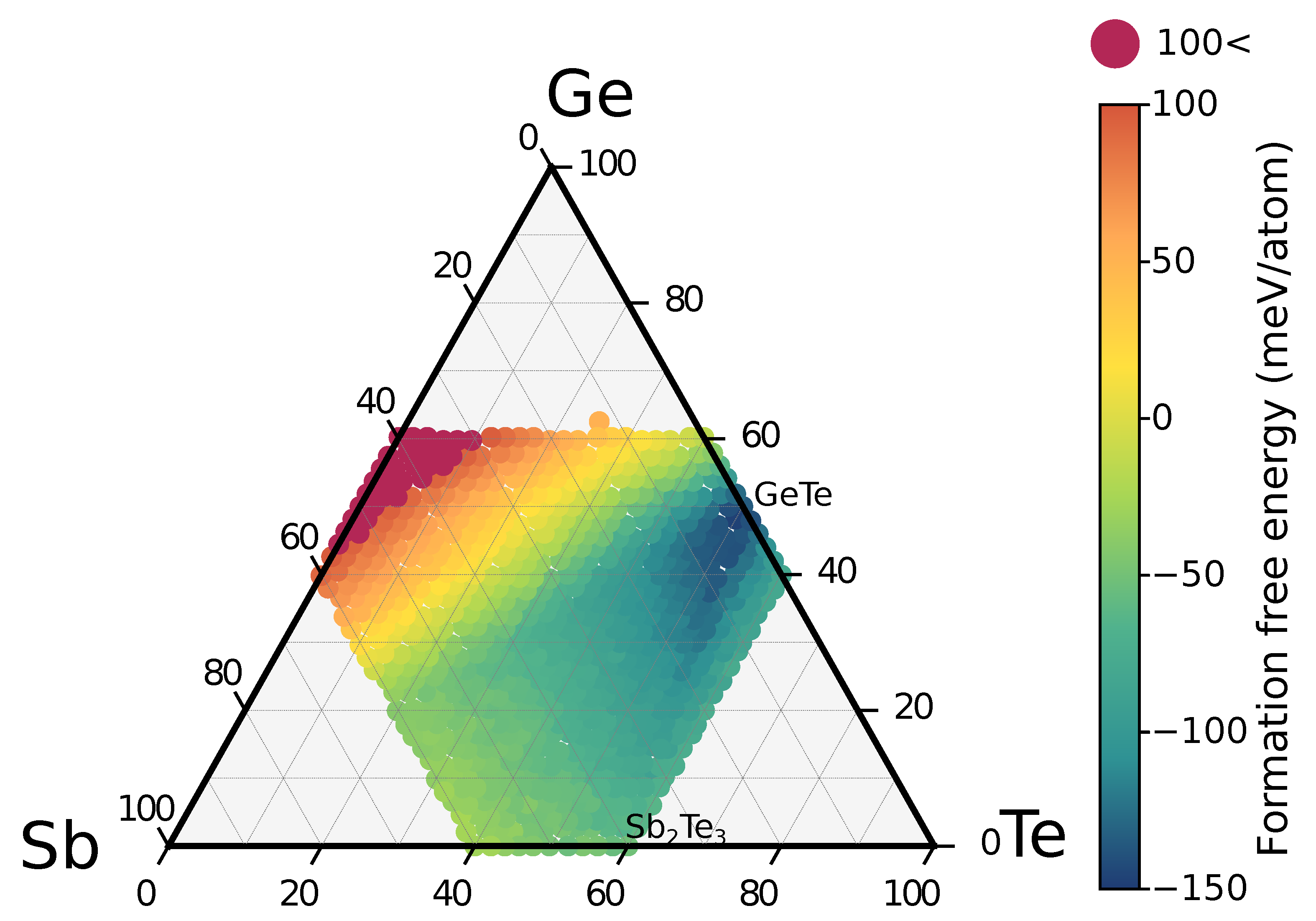
Chalcogenide GeSbTe (GST) alloys are exploited as phase change materials in a variety of applications ranging from electronic non-volatile memories to neuromorphic and photonic devices. In most applications, the prototypical Ge2Sb2Te5 compound along the GeTe-Sb2Te3 pseudobinary line is used. Ge-rich GST alloys, off the pseudobinary tie-line with a crystallization temperature higher than that of Ge2Sb2Te5, are currently explored for embedded phase-change memories of interest for automotive applications. During crystallization, Ge-rich GST alloys undergo a phase separation into pure Ge and less Ge-rich alloys. The detailed mechanisms underlying this transformation are, however, largely unknown. In this work, we performed high-throughput calculations based on Density Functional Theory (DFT) to uncover the most favorable decomposition pathways of Ge-rich GST alloys. The knowledge of the DFT formation energy of all GST alloys in the central part of the Ge-Sb-Te ternary phase diagram allowed us to identify the cubic crystalline phases that are more likely to form during the crystallization of a generic GST alloy. This scheme is exemplified by drawing a decomposition map for alloys on the Ge-Ge1Sb2Te4 tie-line. A map of decomposition propensity is also constructed, which suggests a possible strategy to minimize phase separation by still keeping a high crystallization temperature.
Keywords: phase change materials; embedded electronic memories; Density Functional Theory; high-throughput calculations phase change materials; embedded electronic memories; Density Functional Theory; high-throughput calculations
Graphical Abstract