Article

Thermal Convection of Nanoliquid in a Double-Connected Chamber

1
Department of Applied Mathematics, Babeş-Bolyai University, Cluj-Napoca 400084, Romania
2
Laboratory on Convective Heat and Mass Transfer, Tomsk State University, Tomsk 634050, Russia
*
Author to whom correspondence should be addressed.
Nanomaterials 2020, 10(3), 588; https://doi.org/10.3390/nano10030588
Submission received: 19 February 2020 / Revised: 16 March 2020 / Accepted: 16 March 2020 / Published: 23 March 2020
(This article belongs to the Special Issue Applications of Nanofluids)

Abstract

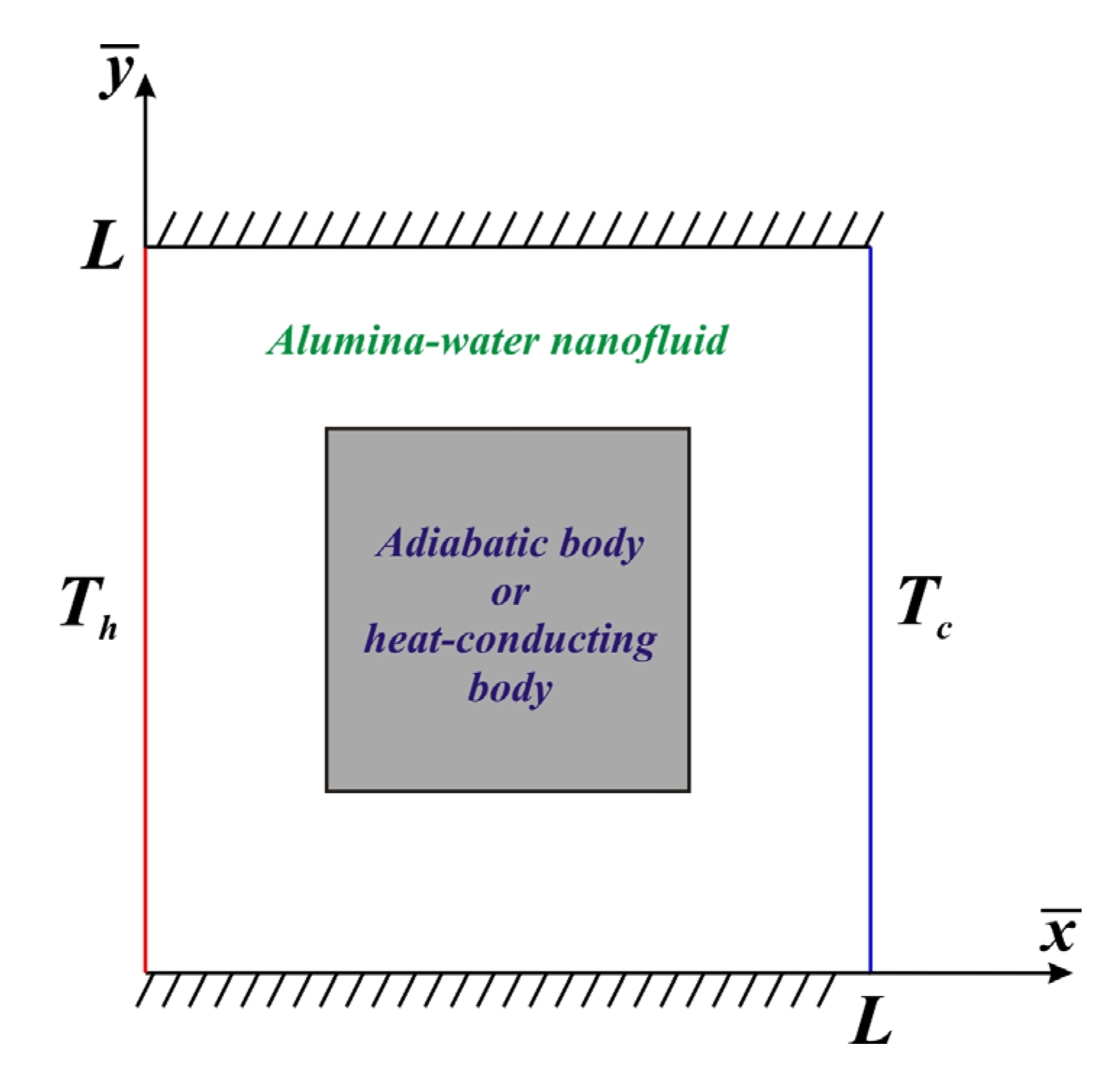
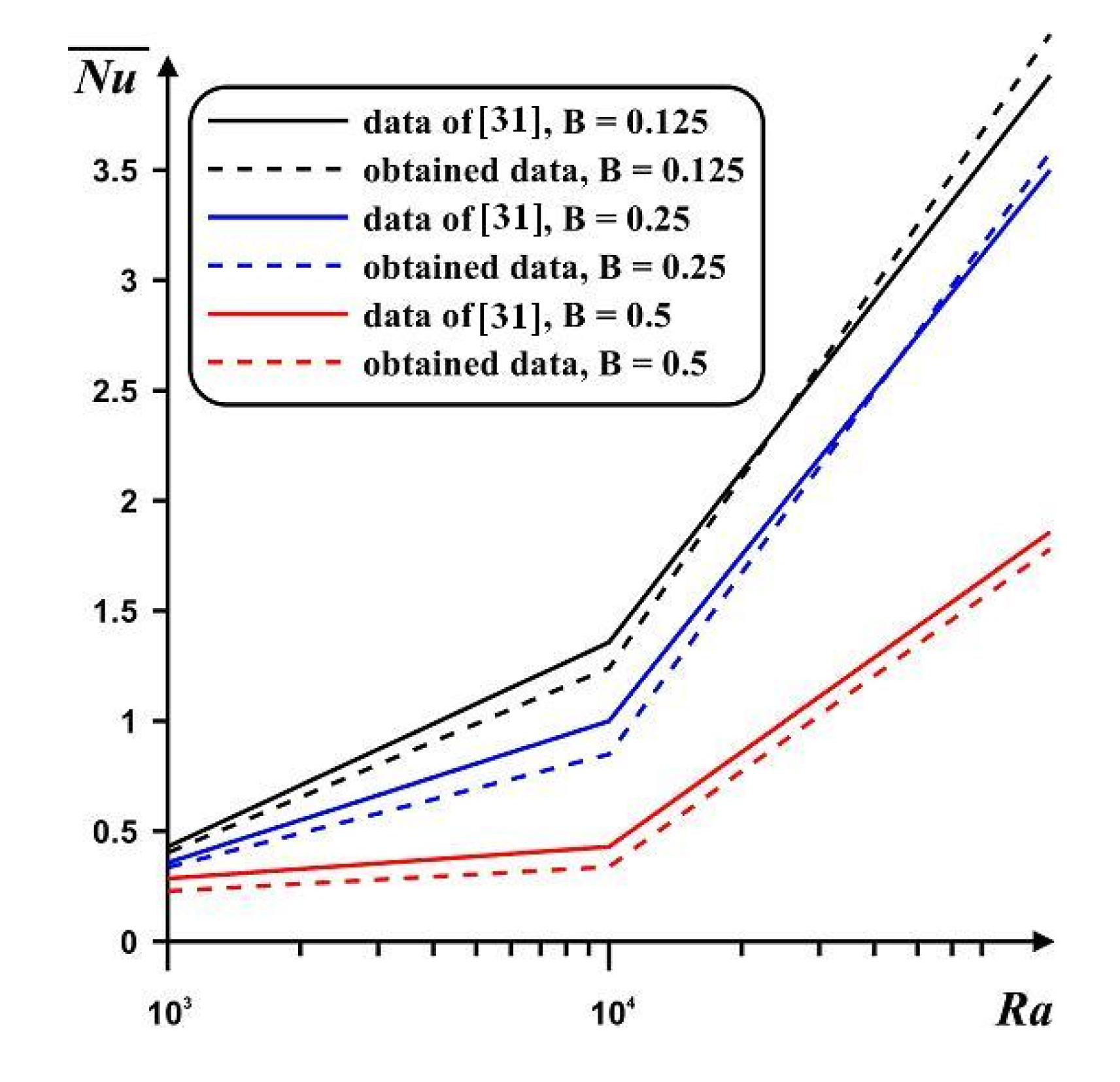
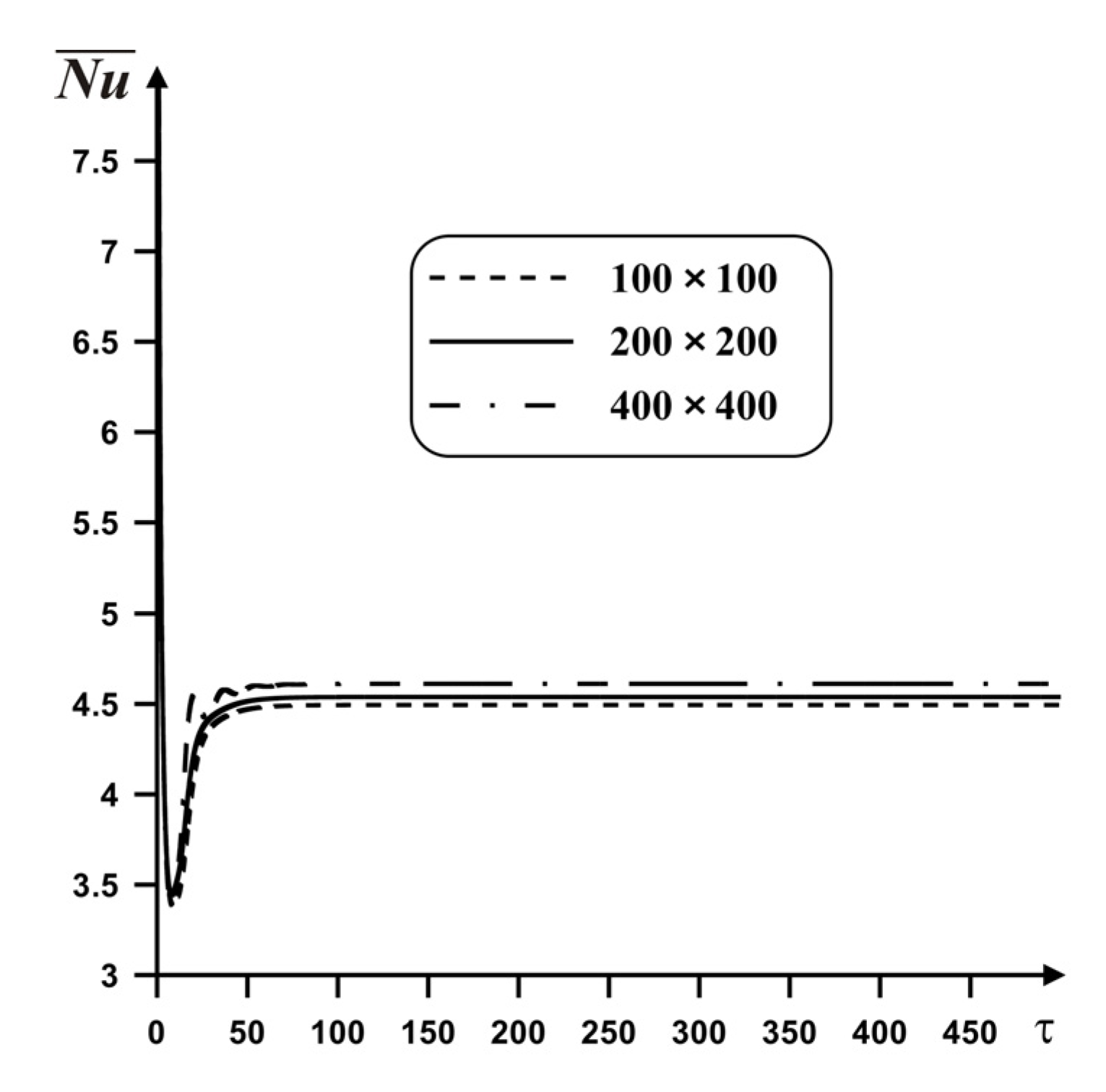
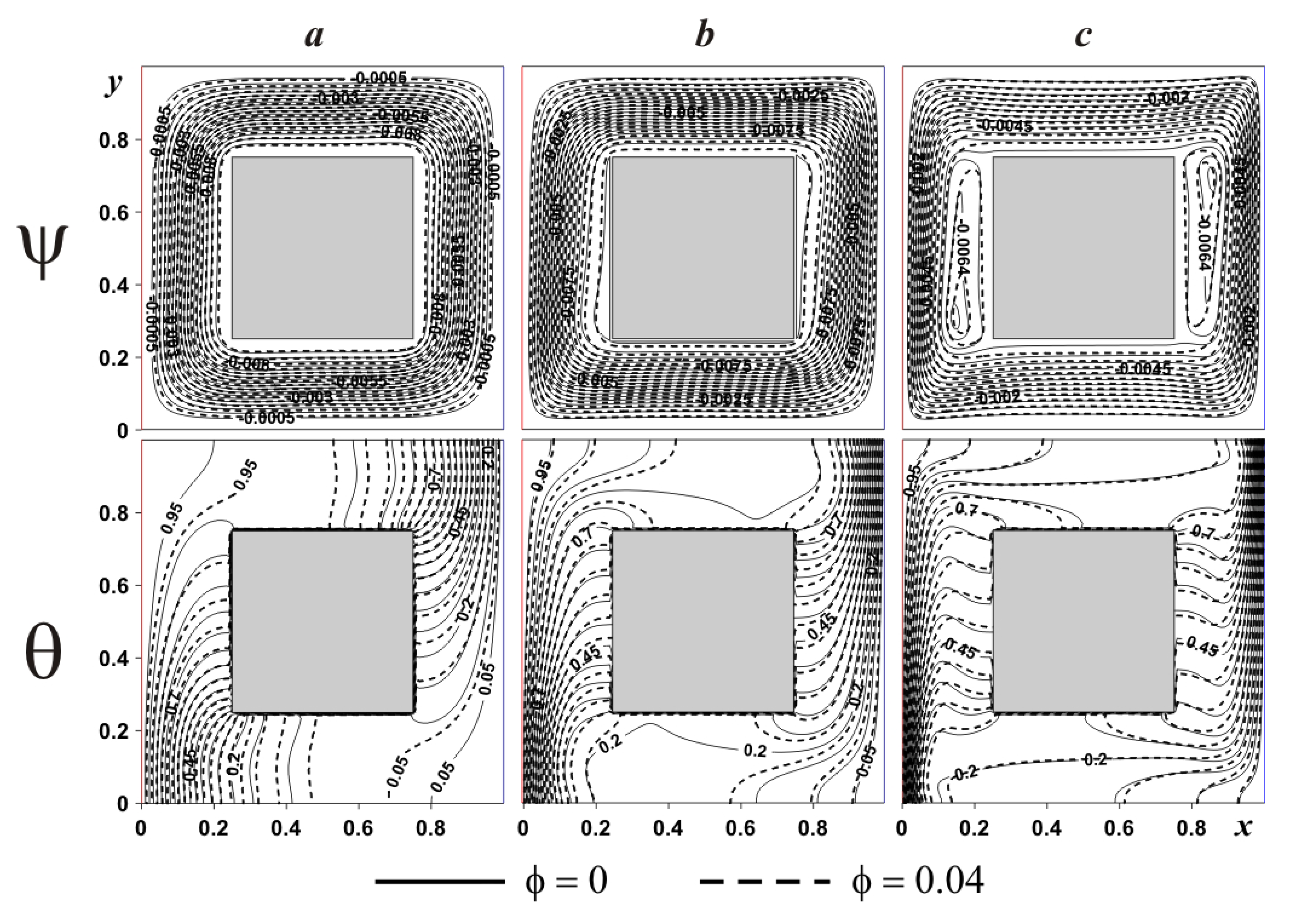
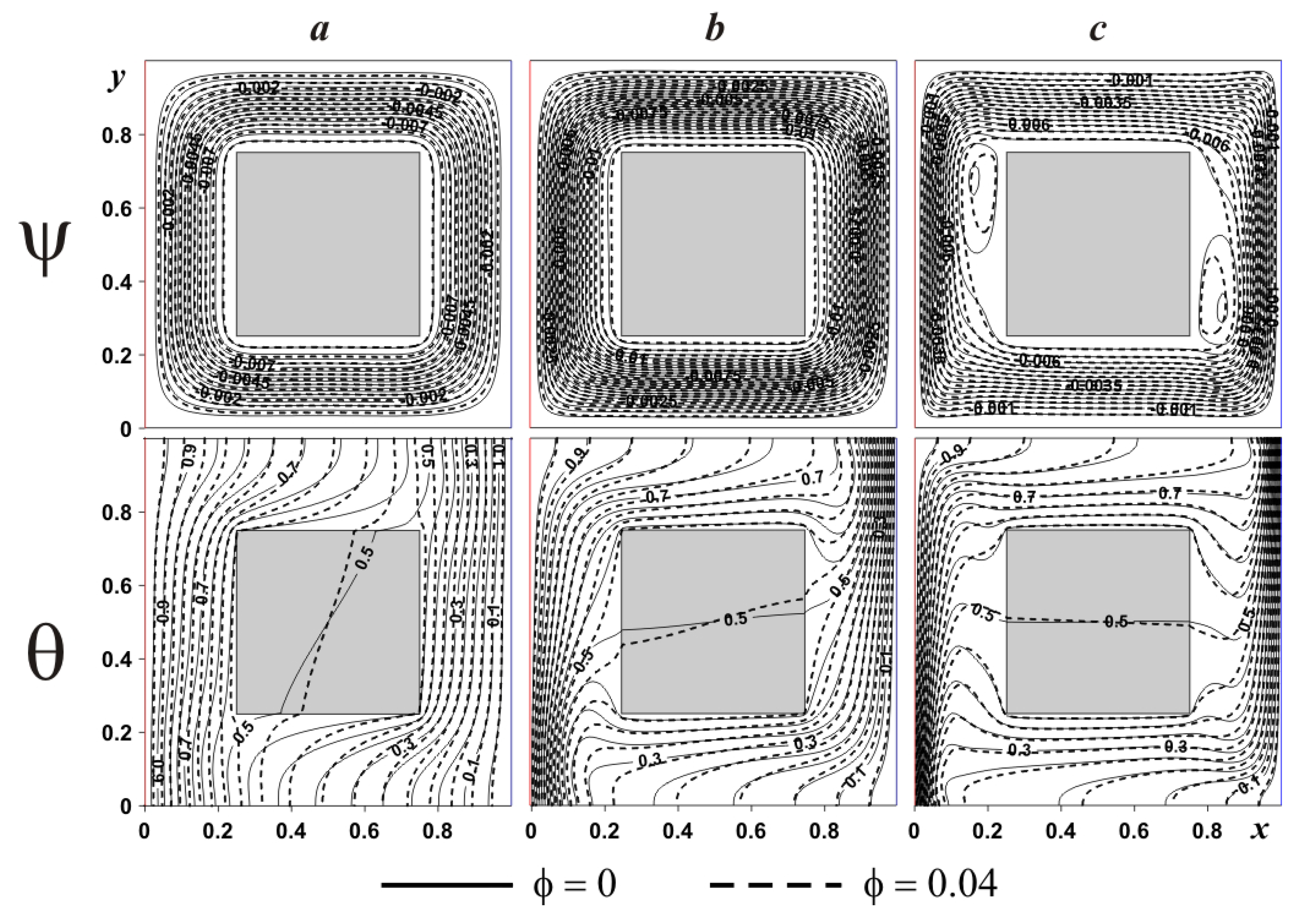
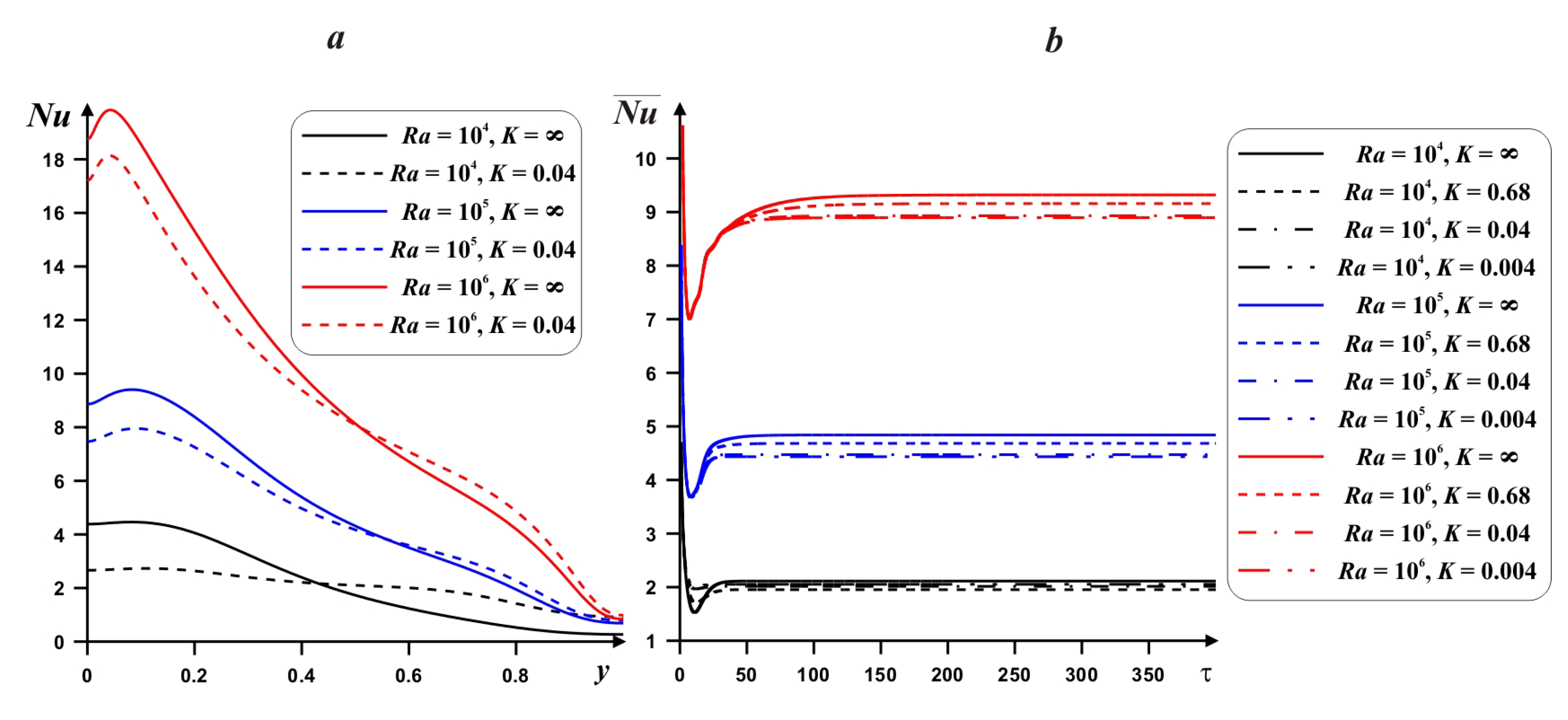
Thermogravitational convective thermal transmission, inside a square differentially-heated chamber with a nanoliquid, has been examined in the presence of internal adiabatic or a thermally-conducting solid body. A single-phase nanoliquid approach is employed, based on the experimentally-extracted relations for nanofluid heat conductivity and dynamic viscosity. The governing equations have been written using non-primitive parameters such as stream function and vorticity. Such approach allows a decrease in computational time due to a reduction of equation numbers. One of the main challenges in such a technique is a determining the stream function magnitude at the inner body walls. A solution of this problem has been described in detail in this paper. Computational scrutinizing has been performed by employing the finite difference technique. The mesh sensitivity analysis and comparison with theoretical and experimental results of other researchers have been included. An influence of the Rayleigh number, nanoparticles concentration, internal block size, heat conductivity ratio and non-dimensional time on nanofluid motion and energy transport has been studied.
Keywords: nanoparticles; natural convection; conjugate heat transfer; heat-conducting block nanoparticles; natural convection; conjugate heat transfer; heat-conducting block