Article

Transformation Mechanism of a Fault and Its Associated Microstructures in Low-Porosity Rocks: A Case Study of the Tanan Depression in the Hailar-Tamtsag Basin

1
Key Laboratory of Continental Shale Hydrocarbon Accumulation and Efficient Development (Northeast Petroleum University), Ministry of Education, Northeast Petroleum University, Daqing 163318, China
2
Laboratory of CNPC Fault Controlling Reservoir, Northeast Petroleum University, Daqing 163318, China
3
Science and Technology Innovation Team in Heilongjiang Province “Fault Deformation, Sealing and Fluid Migration”, Northeast Petroleum University, Daqing 163318, China
*
Author to whom correspondence should be addressed.
J. Mar. Sci. Eng. 2019, 7(9), 286; https://doi.org/10.3390/jmse7090286
Submission received: 1 August 2019 / Revised: 20 August 2019 / Accepted: 21 August 2019 / Published: 24 August 2019
(This article belongs to the Special Issue Marine Mineral Resource Mining)

Abstract

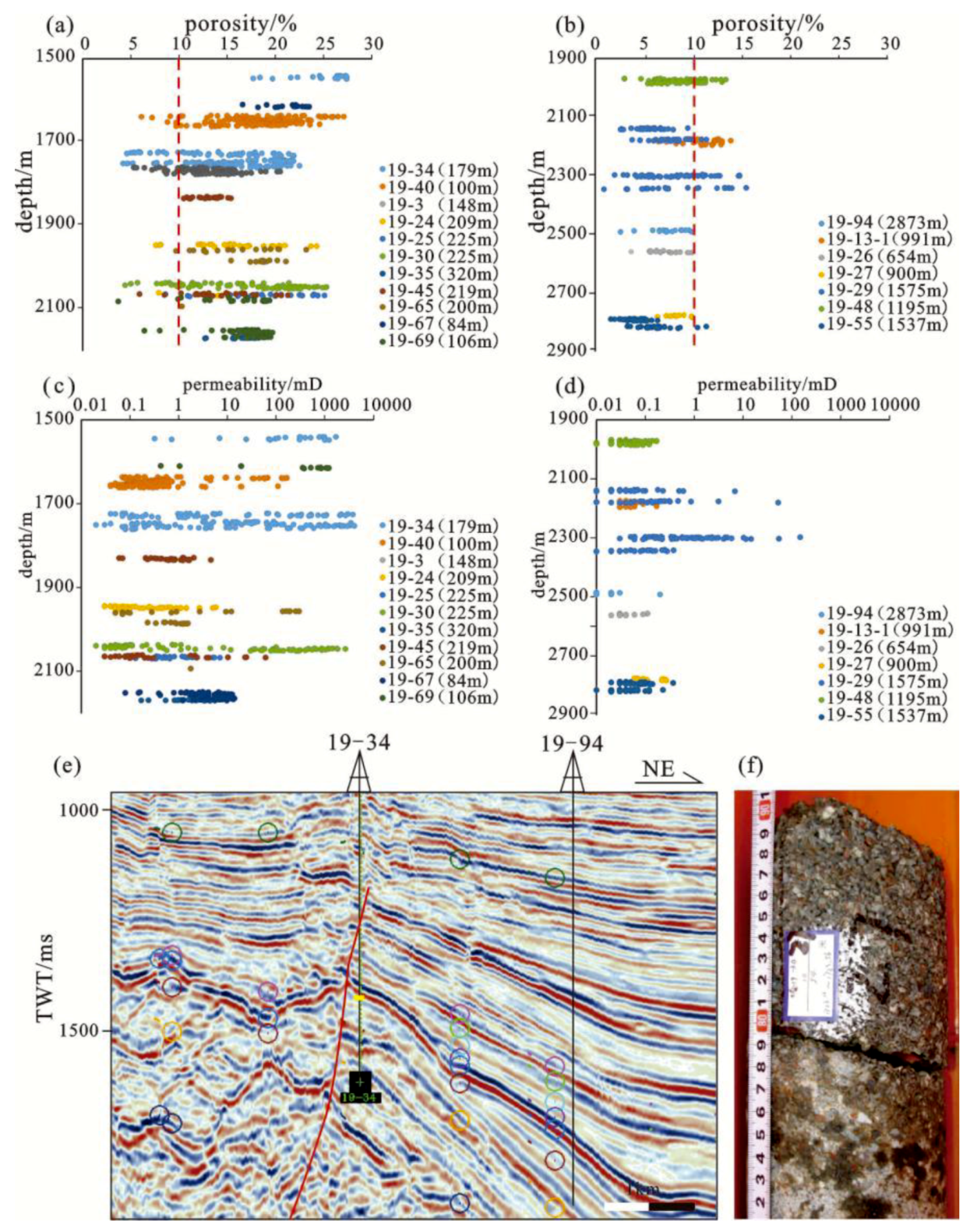
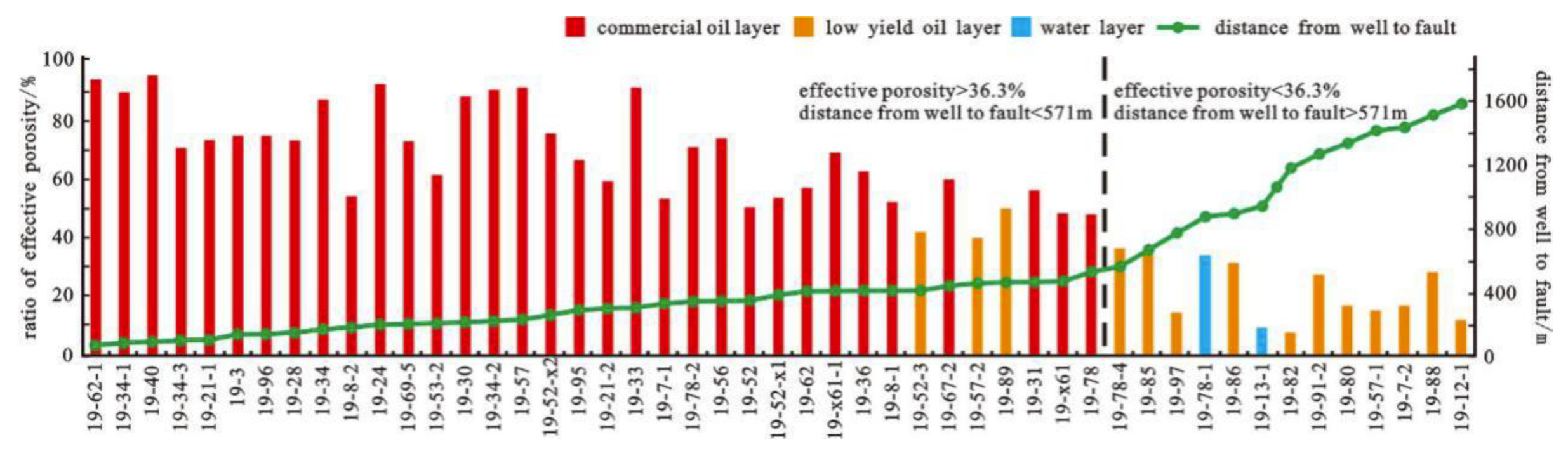
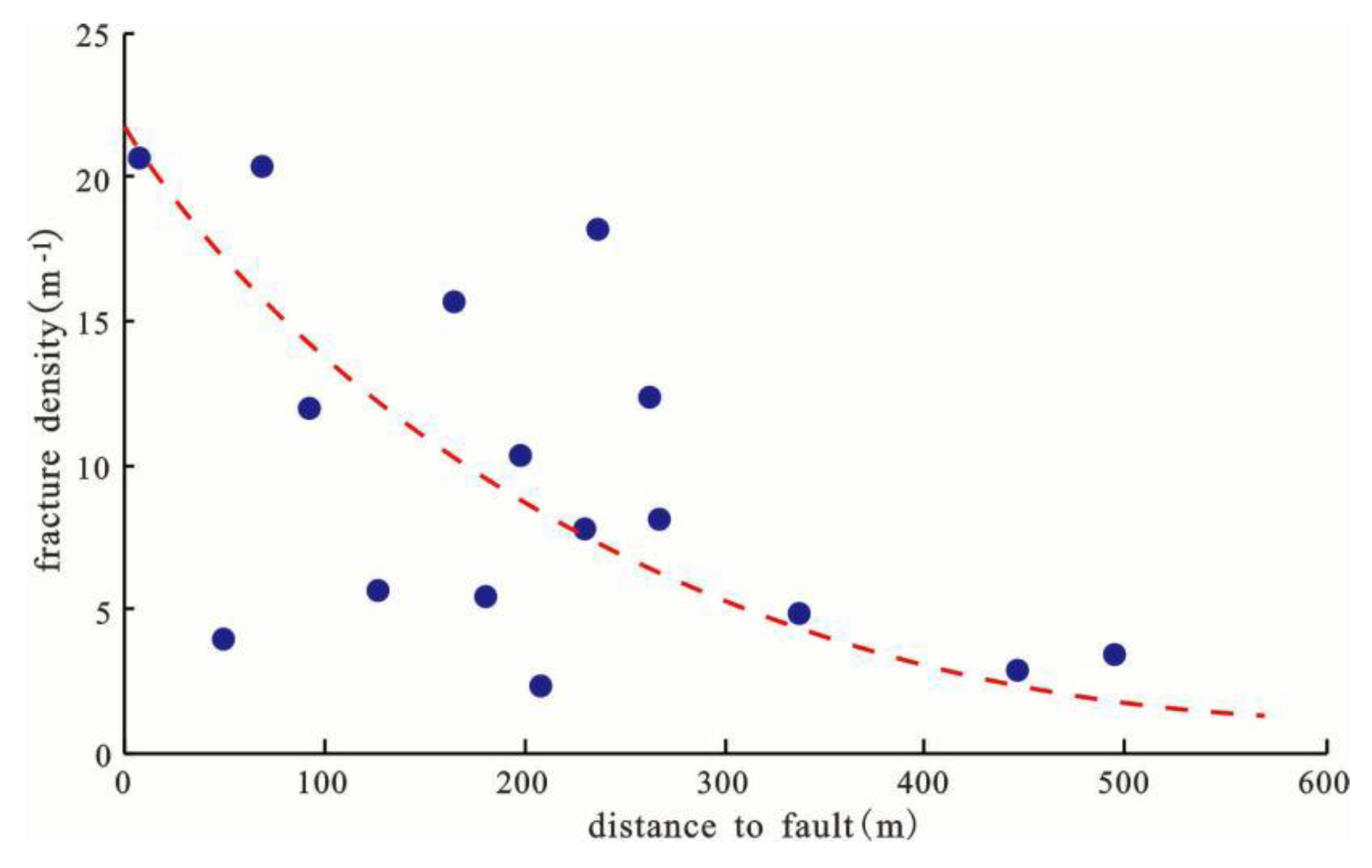
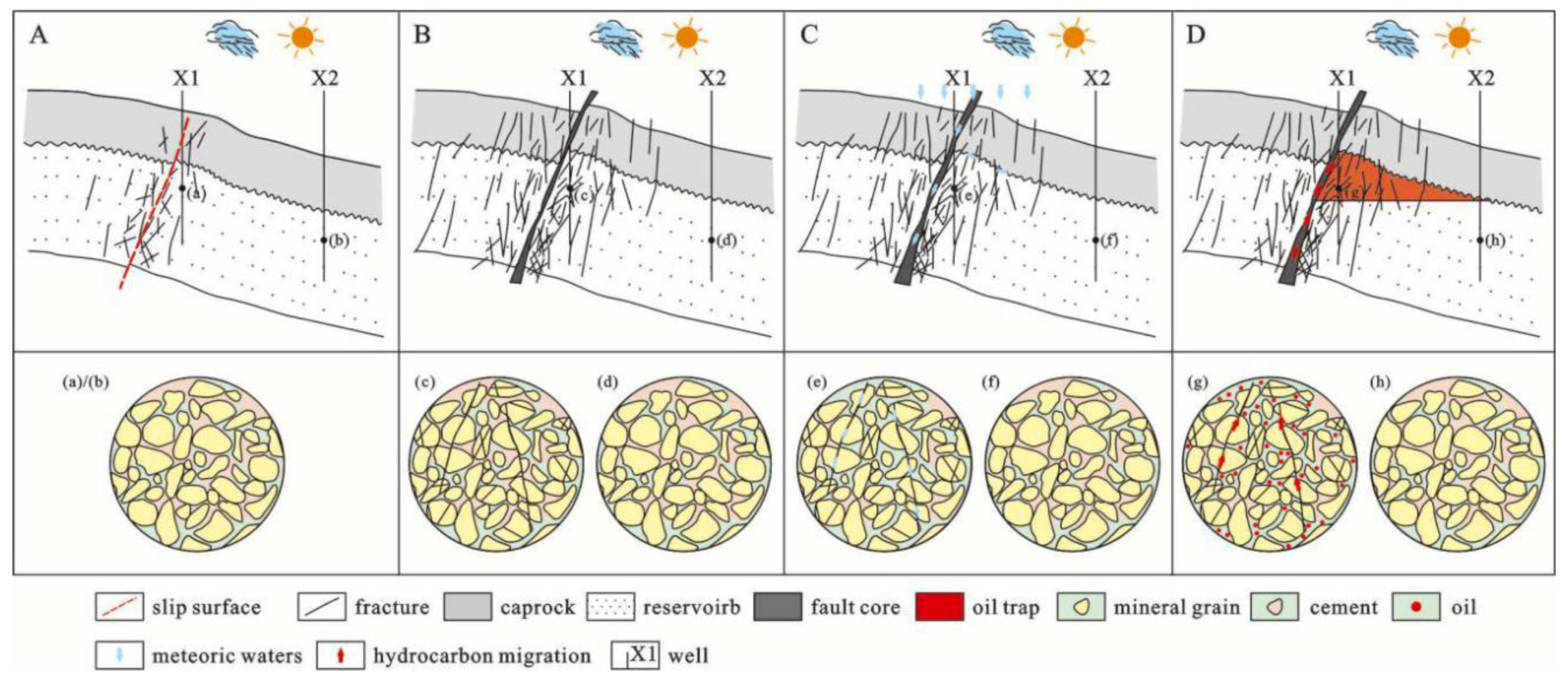
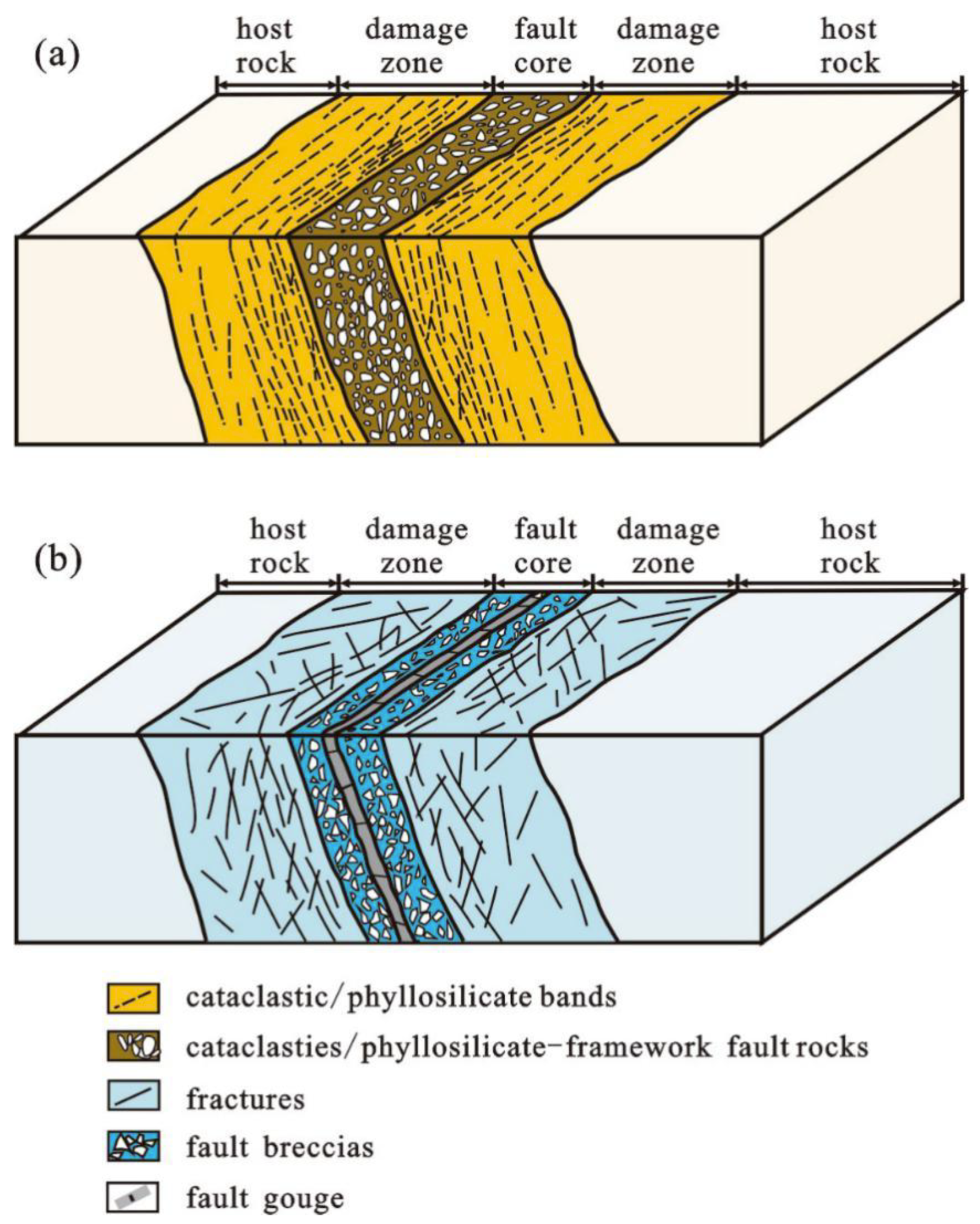
Faults have complex internal structures, which can be divided into the fault core and the damaged zone. During the fault formation process, the damaged zone will develop a large number of fractures cross cutting the adjacent host rocks, where the size and density of fractures would decrease as a function of distance from the fault core. Statistics show that compared with the host rocks, the rock’s secondary porosity may significantly get improved until it is 5%–10% higher than the host rock’s, and the permeability could be increased from zero to six orders of magnitude higher where fractures are developed. Based on the distribution of the fault core and damaged zone, we established an idealized geologic model to analyze the influence of the fault associated microstructures on the fluid flow efficiency. The results demonstrated that the reservoir property will be effectively improved when the fractures are developed to a certain magnitude, which will provide an advantageous conduit for fluid flow. The physical properties of wells are significantly different between the reservoirs transformed by the fractures and the reservoirs that have not been affected. The reservoir unit near faults has been modified by the associated fractures improving the reservoir quality. In addition, the portions of the reservoir farther from the fault core are less influenced and retain their initial poor characteristics. In order to evaluate the enhanced reservoir properties caused by faults and associated fractures, we performed statistical analysis of valid porosity ratio of the Nantun reservoirs as a function of the distance from 49 wells to faults in the research area. The results of this study demonstrated that connected fractures enhance the properties of the reservoirs and there is a distinct range that separates oil producing wells and water producing ones. This phenomenon verifies that faults are important and must be considered carefully during the exploration and production for hydrocarbon to provide higher quality reservoirs.
Keywords: low porosity rock; fault deformation; damage zone; fracture; fluid flow low porosity rock; fault deformation; damage zone; fracture; fluid flow