Article

Experimental Investigation of the Performance of an Artificial Backfill Rock Layer Against Anchor Impacts for Submarine Pipelines

1
Offshore Oil Engineering Co., Ltd., Tianjin 300451, China
2
State Key Laboratory of Coastal and Offshore Engineering, Dalian University of Technology, Dalian 116024, China
*
Author to whom correspondence should be addressed.
J. Mar. Sci. Eng. 2026, 14(2), 228; https://doi.org/10.3390/jmse14020228
Submission received: 22 December 2025 / Revised: 14 January 2026 / Accepted: 15 January 2026 / Published: 21 January 2026

Abstract

Subsea pipelines are critical lifelines for marine resource development, yet they face severe threats from accidental ship anchor impacts. This study addresses the scientific challenge of quantifying the “protection margin” of artificial rock-dumping layers, moving beyond traditional passive structural response to a “Critical Failure Intervention” logic. Based on the energy criteria of DNV-RP-F107, a critical velocity required to trigger Concrete Weight Coating (CWC) failure for a bare pipe was derived and established as the Safety Factor baseline (S = 1). Two groups of scaled model tests (1:15) were conducted using a Hall anchor to simulate impact scenarios, where impact forces were measured via force sensors beneath the pipeline under varying backfill thicknesses and configurations. Results show that artificial backfill provides a significant protective redundancy; a 10 cm coarse rock layer increases the safety factor to 3.69 relative to the H0 baseline, while a multi-layer configuration (sand bedding plus coarse rock) elevates S to 27. Analysis reveals a non-linear relationship between backfill thickness and cushioning efficiency, characterized by diminishing marginal utility once a specific thickness threshold is reached. These findings indicate that while thickness is critical for extreme impacts, the protection efficiency optimizes at specific depths, providing a quantifiable framework to reduce small-particle layers in engineering projects without compromising safety.

1. Introduction

Subsea pipelines are the essential lifelines of modern marine resource development owing to their structural reliability and cost-effectiveness. However, their operational integrity is severely threatened by complex seabed environments, fishing activities, and most critically, accidental anchor damage from vessels. Comprehensive statistical analyses of long-distance pipeline failures across the United States (PHMSA), Europe (EGIG), and the UK (UKOPA) demonstrate that “External Interference” is consistently the primary cause of pipeline rupture and leakage [1]. Within this category, anchor-related incidents—including dropping, dragging, and hooking—account for a significant proportion of catastrophic damage. To manage these risks, Bayesian network (BN) models have been developed to quantify the conditional probability of damage, revealing that vessel density, anchoring frequency, and human factors are direct drivers of pipeline failure risk [2]. As the global shipping industry moves toward ultra-large vessels, the kinetic energy involved in accidental anchoring events has escalated to megajoule levels, rendering traditional natural burial insufficient for safety [3,4]. Therefore, implementing advanced reinforcement and protection measures, such as trenching with artificial rock dumping [5] or concrete mattresses [6,7], has become a critical requirement for offshore engineering. Furthermore, beyond physical protection, the implementation of reliable routine inspection and monitoring technologies, such as transient-test-based techniques [8,9], is essential for ensuring long-term operational integrity and effective fault detection for subsea pipelines.
In response to these threats, the dynamic behavior of pipelines under various accidental loads has been extensively investigated. Beyond vertical impacts, pipelines are frequently subjected to transverse loads from trawl gear or dragging anchors. Longva et al. [10] developed a finite element strategy to predict interaction loads during trawl board pull-over, while Jiang et al. [11] combined experimental and numerical methods to quantify the failure mechanisms of pipelines under hooking loads. The influence of internal fluid pressure and seabed flexibility on the transverse impact response has also been highlighted, showing that these factors significantly alter localized denting and global deformation [12]. Furthermore, the complexity of pipeline–backfill–trench interaction, especially the difference in shear strength between remolded backfill and native soil, has been shown to critically affect lateral soil resistance [13].
In the research field of rock backfilling for pipeline protection, significant efforts have been made to understand the interaction between anchors and protective layers. Zhang Yiping [14] and Wang Yi [15] conducted large-scale model tests to identify optimal buffering materials and investigated the influence of rock shape and layer thickness on pipeline response. Recent studies have further explored the hydrodynamic behavior of the rock-fall process [16] and the dynamic reliability of buried corroded pipelines under rockfall impact [17]. Numerical simulations have also provided deep insights: Qiu Changlin [18] utilized FEM–DEM coupled simulations to evaluate protective effects, which showed consistency with the energy-based formulas in DNV-RP-F107 [19]; Mun-Beom Shin [20] applied SPH–FEM simulations to study the strain response of pipeline–rock–clay systems. Ciheng Zhang [21] analyzed the effectiveness of composite schemes, such as combining concrete mattresses with rock layers. Furthermore, Jiang Fengyuan et al. [22,23]. conducted numerical simulations to investigate pipelines buried in soils with spatially random strength distributions, as well as pipelines containing structural defects. Meanwhile, Jiang Fengyuan et al. [24] developed a prediction model based on a convolutional neural network (CNN) to analyze pipeline damage in spatially variable soils. Mingjiu Zuo et al. [25] and Wenqi Si et al. [26] examined the flow fields and hydrodynamic forces around rock-dumped pipelines using CFD and DEM approaches.
Despite this extensive body of literature, several critical gaps remain in evaluating the true “protection margin” of rock layers:
Measurement and Scaling Constraints: Most physical experiments rely on localized strain gauges [21,27] However, in reduced-scale models (e.g., 1:15), strain data are highly sensitive to scale effects and sensor-induced interference, which often leads to distorted or unrepresentative results when evaluating the global cushioning efficiency.
Incomplete Failure Criteria: Prevailing research often focuses on the plastic deformation of the steel pipe [4] However, subsea pipelines are typically protected by a concrete weight coating (CWC). Damage assessment solely based on steel strain is incomplete because CWC cracking and spalling often occur well before steel yielding, leading to the exposure and rapid corrosion of the anti-corrosion layer.
Lack of Limit-State Analysis: Few studies investigate the buffering mechanism by intervening at the critical failure threshold. Most tests are performed under arbitrary impact energies, failing to quantify the probabilistic safety gain provided by the rock layer when the system operates at its structural limit state. This study addresses these gaps by shifting the focus from passive structural response to active cushioning efficiency under extreme scenarios.
This study addresses these gaps by shifting the research focus from localized structural response to the “Cushioning Performance” of the rock layer under extreme conditions. We adopt a “Critical Failure Intervention” logic based on the energy criteria of DNV-RP-F107 [6] By first deriving the critical velocity required to trigger CWC failure, we conduct experimental tests at this precise threshold to quantify the rock layer’s protective efficiency. The novelty lies in establishing a Safety Factor (S) evaluation system and analyzing the Peak Impact Force attenuation. This methodology overcomes the limitations of scale-affected strain measurements and provides a robust, quantifiable safety margin assessment for major engineering projects like the Kenli 6-1.

2. Methods

2.1. Theoretical Basis and Similarity Relations of Model Tests

2.1.1. Standards for Assessing the Impact Resistance of Concrete-Weight-Coated Pipelines

Rock backfilling and ship anchoring refer to the dynamic process in which rocks or anchors are released and freely fall into the water under gravity before impacting the pipeline. According to DNV-RP-F107, pipeline integrity is assessed by comparing the maximum impact energy of falling rocks or anchors in water with the allowable impact energy that concrete-weight-coated pipelines can withstand.
(1)
Water entry velocity of rock or anchor
Since the weight of impacting objects such as rocks or ship anchors is generally large, the effect of air resistance can be neglected. Therefore, only the self-weight of the object is considered. Based on the law of conservation of mechanical energy, the motion of the impacting object can be modeled as follows:
m g h 1 = 1 2 m v 1 2 1 2 m v 0 2 ,
v 1 = 2 g h 1 ,
where m is the mass of the impacting object; v0 is the initial velocity of the object at release, which is taken as 0 in this study; v1 is the velocity of the object when its bottom just contacts the water surface; and h is the falling distance of the object in air.
(2)
Terminal velocity of rock or anchor in water
When an object moves in water, it is subjected to its own weight, the buoyancy of water, and the hydrodynamic drag force. According to Newton’s second law, the falling motion of the object in water can be modeled as follows:
m + m a a = m g F F B ,
where F is the buoyant force exerted by water on the anchor, given by   F   =   ρ V a g , where Va is the volume of the object. FB is the hydrodynamic drag force, calculated as follows:
F B = 1 2 ρ A r C d v 2 2 ,
where ρ is the density of seawater, which is assumed to be constant in this study. Given the relatively shallow water depth considered, the influence of temperature and pressure gradients on density variation is neglected, consistent with the simplifications in DNV-RP-F107. Taken as 1025 kg/m3; Cd is the drag coefficient of the object, Drag coefficients for objects of different shapes are shown in Table 1; Ar is the projected cross-sectional area of the object; and v2 is the velocity of the object in water.
By substituting Equation (4) into Equation (3), we obtain
m g ρ V a g 1 2 ρ A r C d v 2 2 = m a ,
Due to the complex shapes of rocks or anchors, their drag coefficients range from 0.6 to 2.0. In this study, a uniform drag coefficient of Cd = 1 is adopted. To conservatively consider the pipeline’s resistance to failure, it is assumed that the anchor reaches its maximum falling velocity in water upon impacting the pipeline. Under this assumption, the above equation can be rewritten as follows:
m g ρ V a g 1 2 ρ A r v m a x 2 = 0 ,
where Va is the volume of the object, and vmax is the maximum falling velocity of the rock or anchor in water.
(3)
Impact kinetic energy of the object on the pipeline
According to DNV-RP-F107, the energy of the falling rock or anchor upon reaching the pipeline surface is given by EE, which can be expressed by Equation (7).
E E = E T + E A = 1 2 m + m a v 2 ,
where ET is the kinetic energy of the anchor, and EA is the kinetic energy due to the added mass of the anchor. The added mass of the anchor can be expressed by Equation (8).
m a = ρ w C a Θ ,
where Ca is the added mass coefficient, ρ is the density of water, and Θ is the volume of the anchor. DNV-RP-F107 specifies the drag coefficients and added mass coefficients for falling objects of different shapes, as shown in Table 2.
In actual complex flow fields, the drag coefficient (Cd) and the added mass (ma) are closely related to the anchor’s geometry and the instantaneous Reynolds number, exhibiting highly nonlinear and coupled characteristics. In this study, to ensure the conservatism of engineering applications and computational feasibility, representative constant values were selected with reference to DNV standards.
(4)
Impact resistance of the concrete weight layer
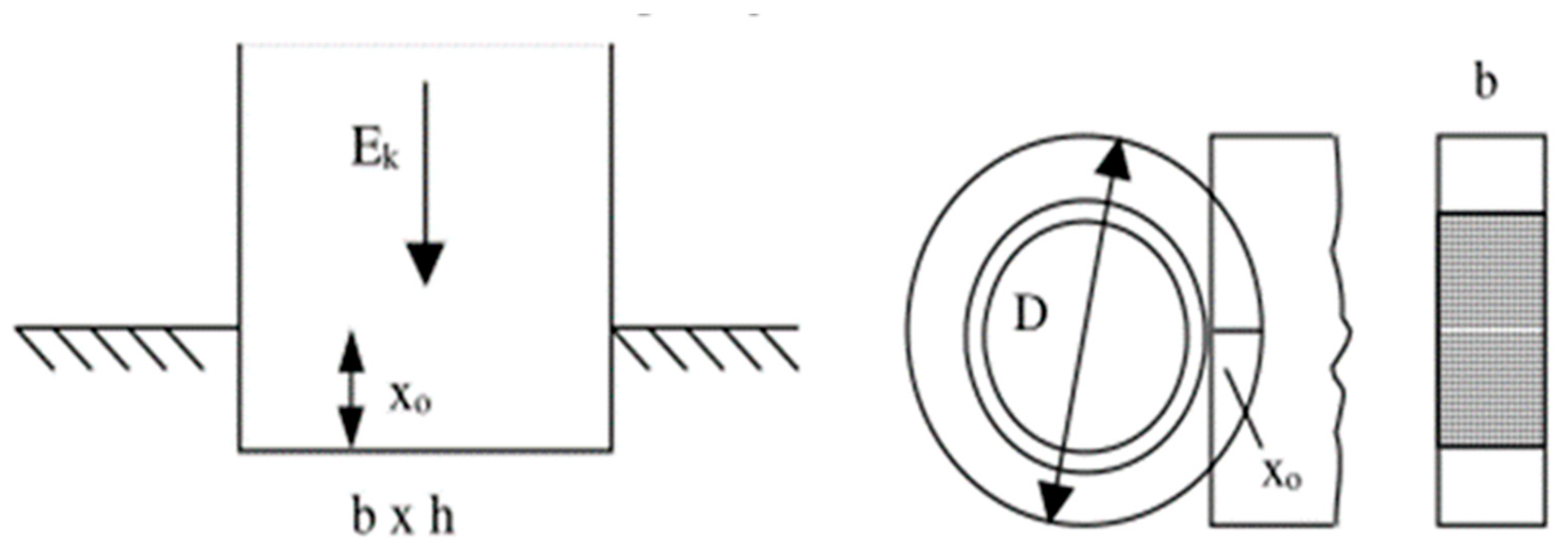
Concrete weight layers can be used to resist potential impact damage, such as from falling rocks or anchors. The impact energy that a concrete weight layer can absorb can be expressed as a function of the embedded volume of the impacting object and the compressive strength (Y) of the concrete. According to [28], Y represents 3–5 times the cube strength of normal-density concrete and 5–7 times that of lightweight concrete; in this study, the lower bound of 3 times is adopted. The cube strength of normal-density concrete typically ranges from 35 to 45 MPa, and the lower bound of 35 MPa is used here. The resistance of the concrete coating to object impact is shown in Figure 1.
The energy that can be absorbed by the concrete ballast layer can be expressed by Equations (9) and (10).
E k = Y b h x 0 ,
E k = Y b 4 3 D x 0 3 ,
where x0 is the penetration depth; b is the width of the impactor; h is the length of the impactor; and D is the pipeline diameter.
The two equations indicate that the impact resistance of the concrete weight layer depends on the compressive strength of the concrete, the thickness of the weight layer, the pipeline diameter D, and the contact surface dimensions b and h between the impactor and the concrete weight layer. Equation (9) shows that a smaller b leads to greater cutting damage of the impactor to the concrete weight layer.

2.1.2. Similarity Relations of the Model Test

The dumping process of the backfill material relies on gravitational potential energy and the kinetic energy gained during its descent through the water to impact the area around the submarine pipeline or cable. Throughout the process, the primary driving force is the self-weight of the backfill material. Therefore, the model test was scaled according to the Froude similarity criterion (gravity similarity criterion).
Principle: It characterizes the ratio between inertial force and gravitational force, ensuring that the Froude number remains constant between the prototype and the model, i.e.,
F r = v g h ,
In the equation, v is the velocity (m/s), and g is the gravitational acceleration (m/s2). The geometric scale ratio is λL. According to Equation (11), the velocity scale ratio is λ v = λ L . The time scale ratio λt can be derived from the velocity scale ratio λv and the length scale ratio λL.
The embedment depth of the anchor in soil is mainly related to the soil resistance and frictional resistance, that is, to the undrained shear strength su of the soil. To ensure that the soil flow mechanism during penetration is the same in both the prototype and the model tests, the stress ratio γsz/su (the ratio of the soil effective stress γsz to the soil strength su) must be kept equal, i.e.,
γ s p Z p / s u , p γ s m Z m / s u , m = 1 ,
Therefore, the scale ratio of soil strength is calculated as follows:
s u , p s u , m = γ s p Z p γ s m Z m = λ L ρ p ρ m = λ ρ λ L ,
Further, when the soil strength is scaled dimensionally, the unit of su is Pa, i.e.,
P a = N m 2 = k g m / s 2 m 2 = k g m s 2 ,
s u , p s u , m = m p z p t p 2 m m Z m t m 2 = V p ρ p Z p t p 2 V m ρ m Z m t m 2 = λ L ρ p ρ m = λ ρ λ L ,
During the sinking process of the backfilling material, its kinetic energy and gravitational potential energy are transformed into the work performed to overcome the resistance of water and soil, as well as the impact on the pipeline. This process can be expressed by Equation (16).
E t o t a l = E p + E e = 1 2 m + m a v t 2 + W z ,
where m is the mass of the backfilling material, vt is the final velocity before impacting the pipeline, W is the submerged weight of the backfilling material in water, z is the distance from the initial dropping position to the top of the pipeline, and ma is the added mass of water associated with the object. Assuming that the ratio of zp in the model test to that in the prototype test is the same as the geometric scale ratio, the scale ratio of gravitational potential energy can then be derived as follows:
λ p = E p , p E p , m = m p g p z p m m g m z m ,
According to Equation (17), the mass scale ratio is λ L 3 , and since the gravitational acceleration scale ratio is 1, the gravitational potential energy scale ratio is λ L 4 ; similarly, the kinetic energy scale ratio is λ L 4 .
All the scale ratios of the model test are listed in Table 3 below:

2.2. Model Preparation

2.2.1. Model Anchor

The geometric characteristics of the physical models, including the anchor and pipeline dimensions, were determined based on an engineering investigation of the Kenli 6-1 Project. The model represents the most common pipeline specifications used in the project area and the typical ship anchors used by vessels navigating within the project’s waters. Specifically, the prototype Hall anchor (2280 kg) and the pipeline diameter were selected to reflect these real-world engineering conditions.
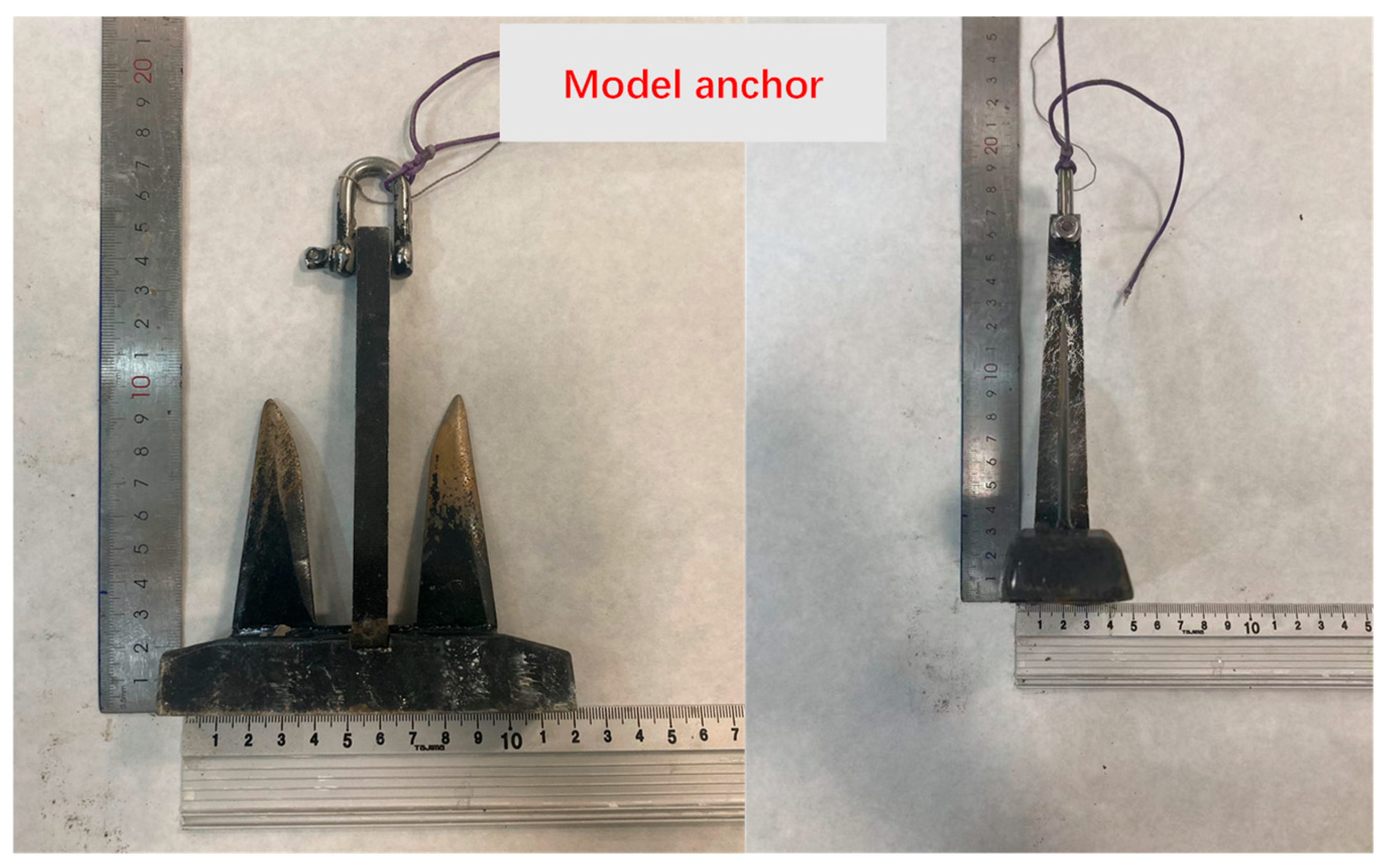
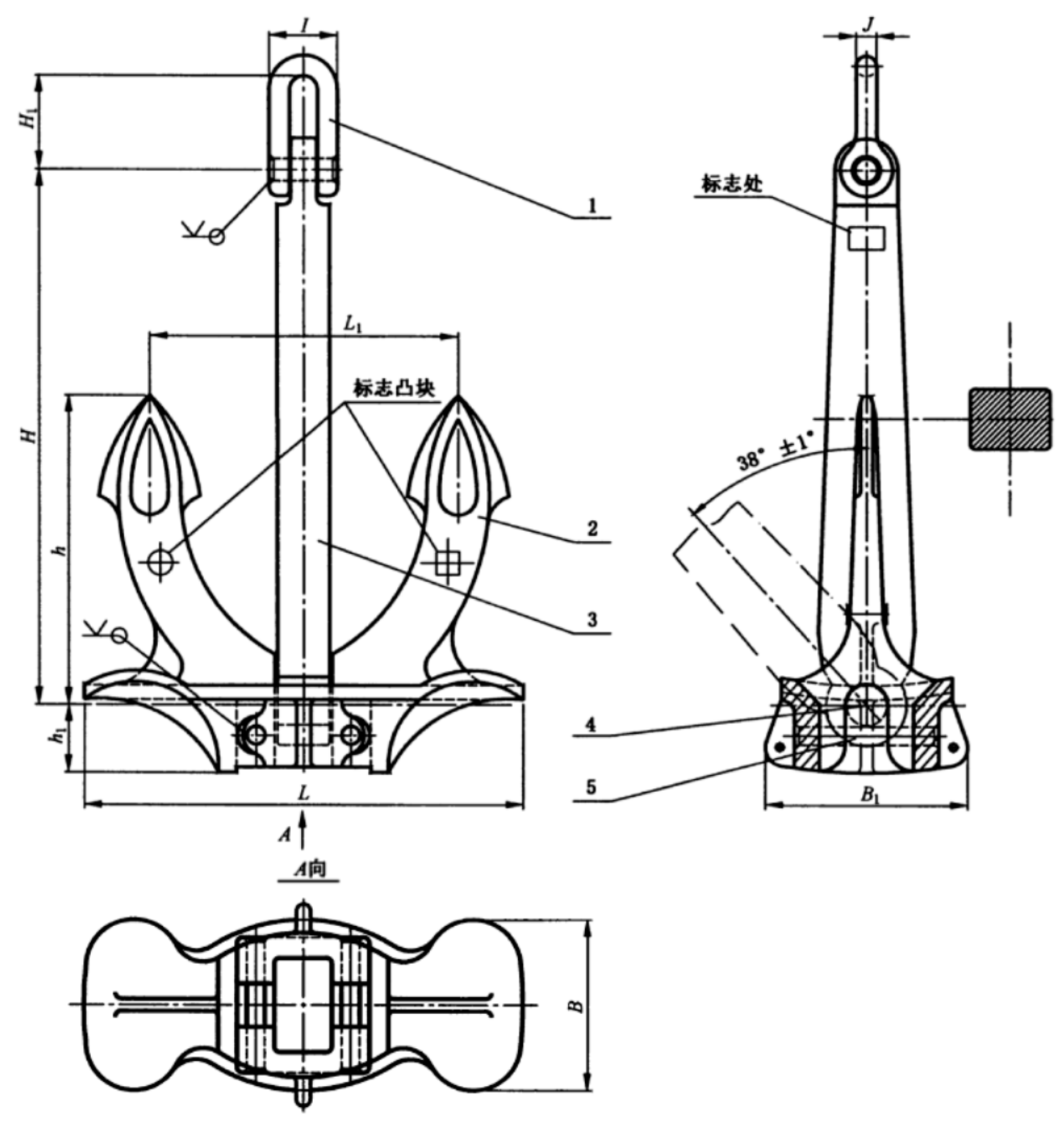
According to GB/T 546-2016 [29], Figure 2 shows the structural diagram of the prototype Hall anchor, and its dimensional parameters are listed in Table 4. The geometric scale ratio used in the test is λL = 15, and the mass of the Hall anchor model is 0.675 kg. The specific parameters of the model anchor, obtained through scale conversion, are presented in Table 5. The physical model of the anchor is shown in Figure 3.

2.2.2. Model Pipeline and Total Force Sensor

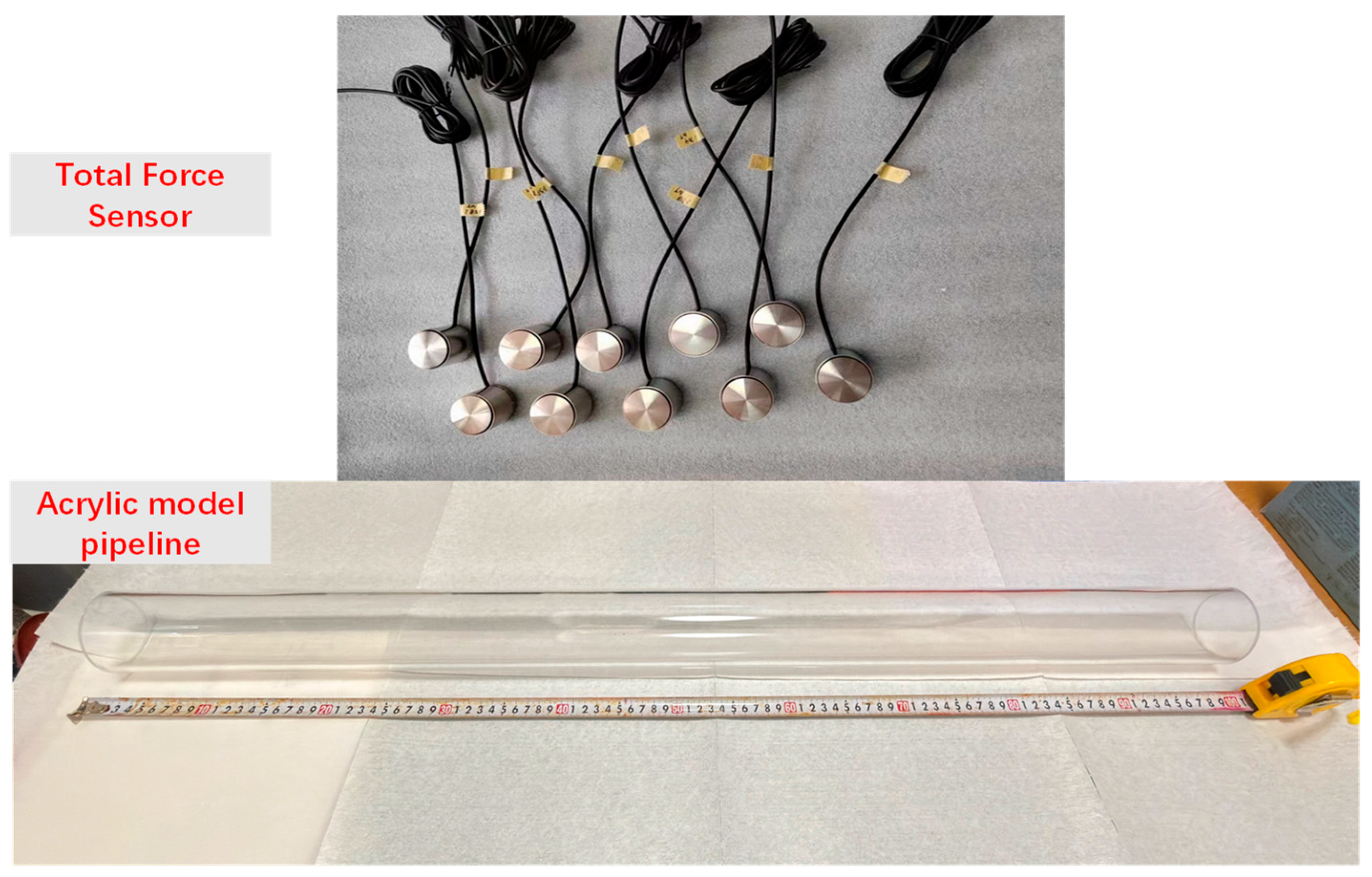
Based on the in-service conditions of the prototype pipeline and the installation constraints of the model setup, a model pipeline with a length of 28 cm and a diameter of 5 cm was adopted as the target for anchor impact tests. The model pipeline and the total force sensor used in this study are shown in Figure 4.

2.3. Experimental Design and Test Conditions

2.3.1. Theoretical Analysis

Based on Equations (3)–(8), the maximum falling velocity v of the model anchor in water can be calculated. Using Equation (2), the required drop height can then be determined. By varying the drop height H, different impact velocities v can be achieved when the anchor strikes the pipeline. In this study, two different drop heights were adopted for the tests: H, corresponding to the maximum falling velocity v attainable by the anchor in water, and Hc, corresponding to the critical impact velocity vc that causes pipeline failure.
(1)
Calculation of the Maximum Impact Energy the Pipeline Can Withstand
Based on Equations (9) and (10), the maximum impact energy that a pipeline with a 40 mm thick concrete weighting layer can withstand under a direct impact from a 2280 kg Hall anchor is calculated to be 560 kJ. In the calculation, the side length b of the contact area between the impacting object and the concrete weighting layer is taken as the smaller value between the anchor base width and the pipeline width, i.e., 0.5 m, while ℎ is taken as the base side length of 0.6 m. The detailed calculation results are presented in Table 6.
(2)
Calculation of the maximum Anchor Drop Height for Pipeline Failure
At the moment the anchor contacts the pipeline after falling, its kinetic energy is entirely converted into impact internal energy. If this energy exceeds the maximum energy that the pipeline can withstand, the pipeline is considered to be damaged. By substituting the maximum impact energy Ek that the pipeline can endure into Equation (7), the critical failure velocity of the anchor vc upon impacting the pipeline can be determined. This, in turn, allows the critical drop height Hc for the model test to be inferred. According to Han Congcong [30]’s study on the drop depth of Hall anchors, the drag coefficient CD of the Hall anchor is taken as 1, and the added mass coefficient Ca is taken as 5 for shallow penetration depths. The detailed calculation process is presented in Table 7.
As shown in the table above, when a 2280 kg Hall anchor directly impacts the weighted pipeline, a velocity of 17.22 m/s will cause pipeline failure. This velocity corresponds to a critical drop height Hc of 0.988 m in the model test.
(3)
Calculation of the Model Drop Height for the Maximum Anchor Falling Velocity in Water
The maximum falling velocity of a 2280 kg Hall anchor in water (i.e., the maximum velocity attainable by an anchor or rock freely falling through water in the prototype) was calculated using Equations (3)–(8); the results are summarized in Table 8 below. The model drop height H for the experimental tests was then determined by scale conversion.
In summary, the 0.988 m height (Hc) represents the energy limit for pipeline failure, while the 0.128 m height (H) represents the physical velocity limit of the anchor’s movement in water. Both are critical for evaluating the protective performance under theoretical and realistic scenarios.

2.3.2. Test Procedures

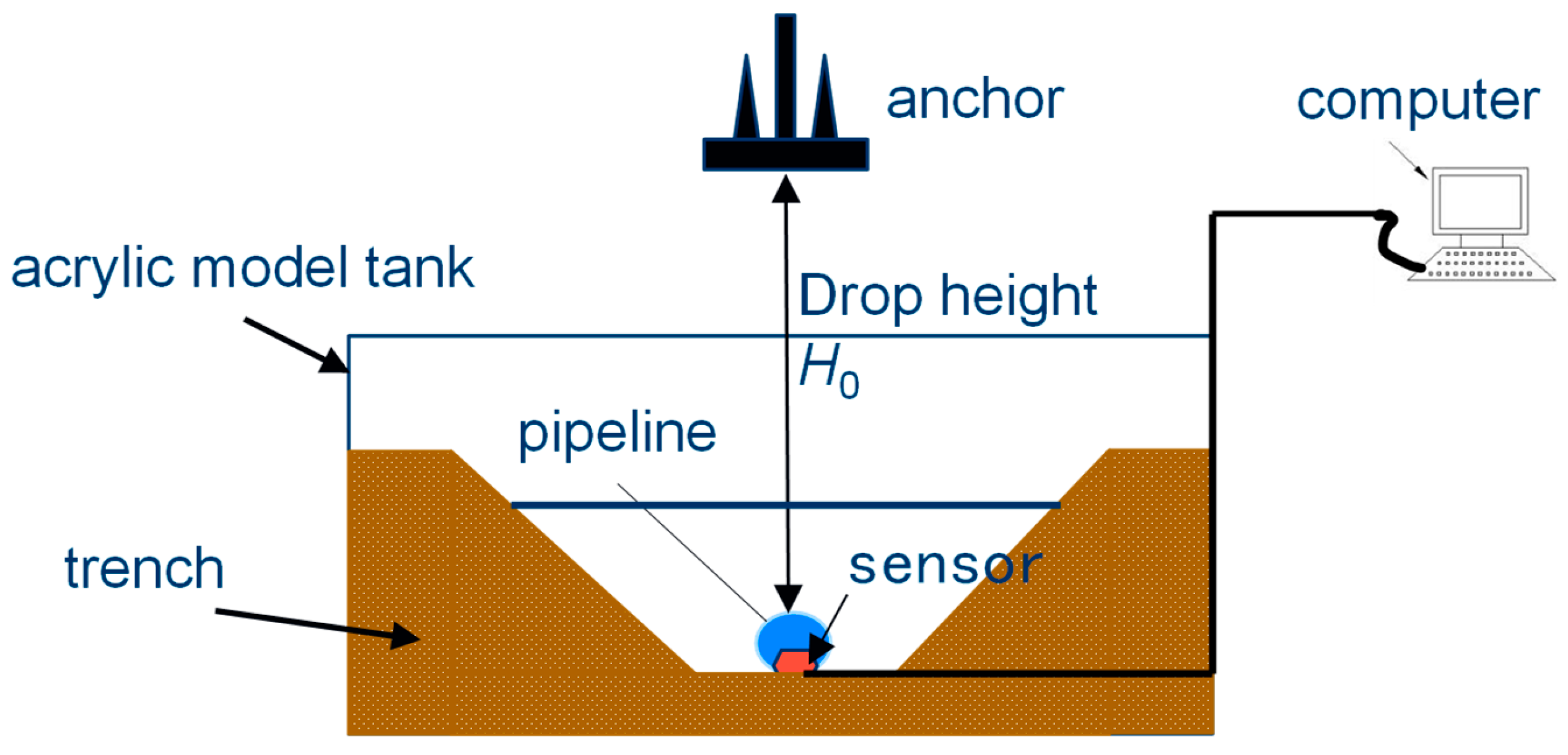
The model anchor was suspended above the soil at a predetermined height. Once the anchor came to rest, the fine cord was cut, allowing the anchor to undergo free fall through the air. At the moment of impact, the anchor’s kinetic energy was entirely converted into impact internal energy. By placing force sensors beneath the model pipeline, the impact force exerted by the anchor on the pipeline can be measured. The experimental setup is shown in Figure 5.
The procedures for the anchor drop test are as follows:
(1)
Prepare the model anchor required for the test: a Hall anchor scaled at 1:15.
(2)
Place the pipeline and force sensors at the bottom of the acrylic test tank. Simulate trenching on both sides of the pipeline using sand, and cover the pipeline with protective layers of artificial backfill materials of varying particle sizes.
(3)
Suspend the model anchor above the soil sample at a predetermined height H using a fishing line (The height varies for different test conditions and is determined from calculations).
(4)
Cut the fishing line to allow the model anchor to free fall, and record the impact force exerted on the pipeline.

2.3.3. Test Condition Setup

Four different trench and overlying protective layer conditions were considered for the anchor drop tests:
(1)
Trench without any overlying rock layer, as shown in Figure 6;
(2)
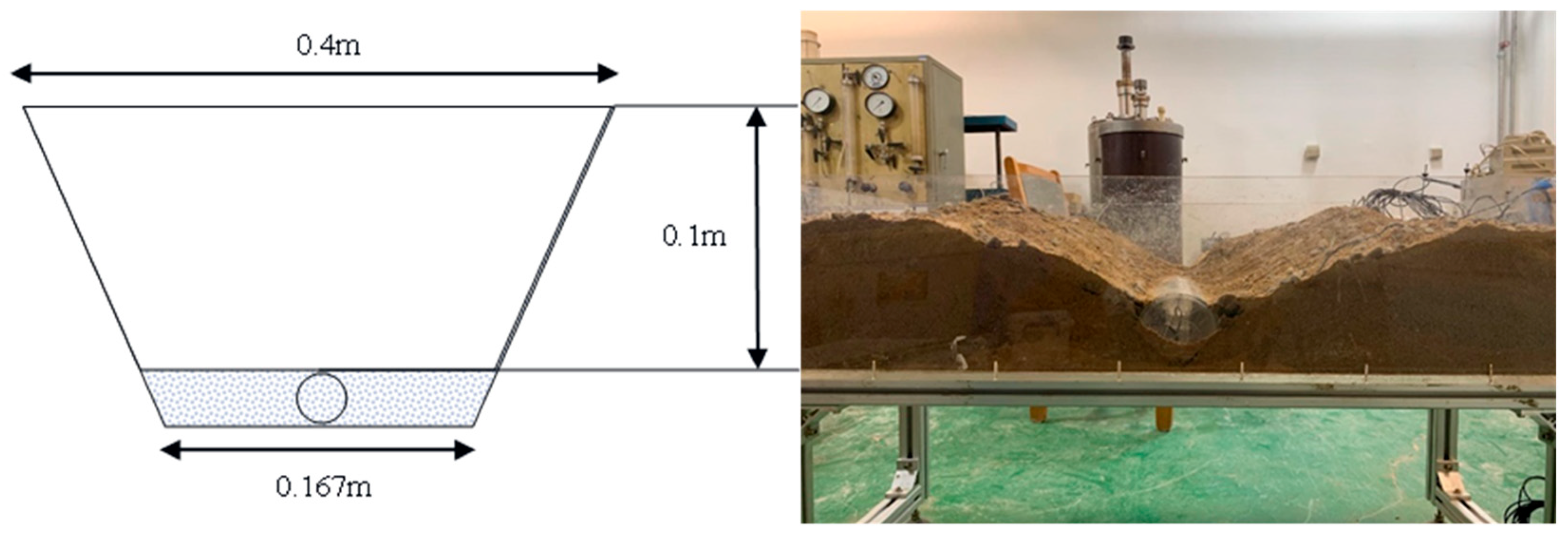
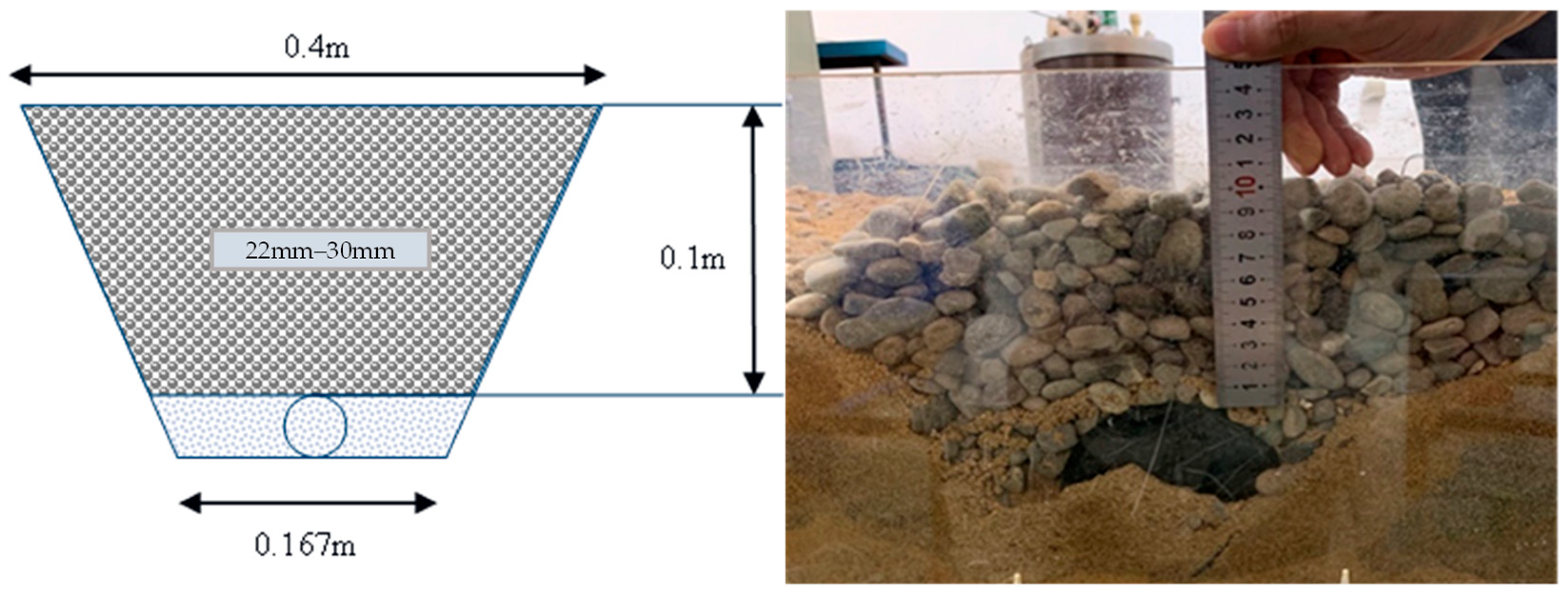
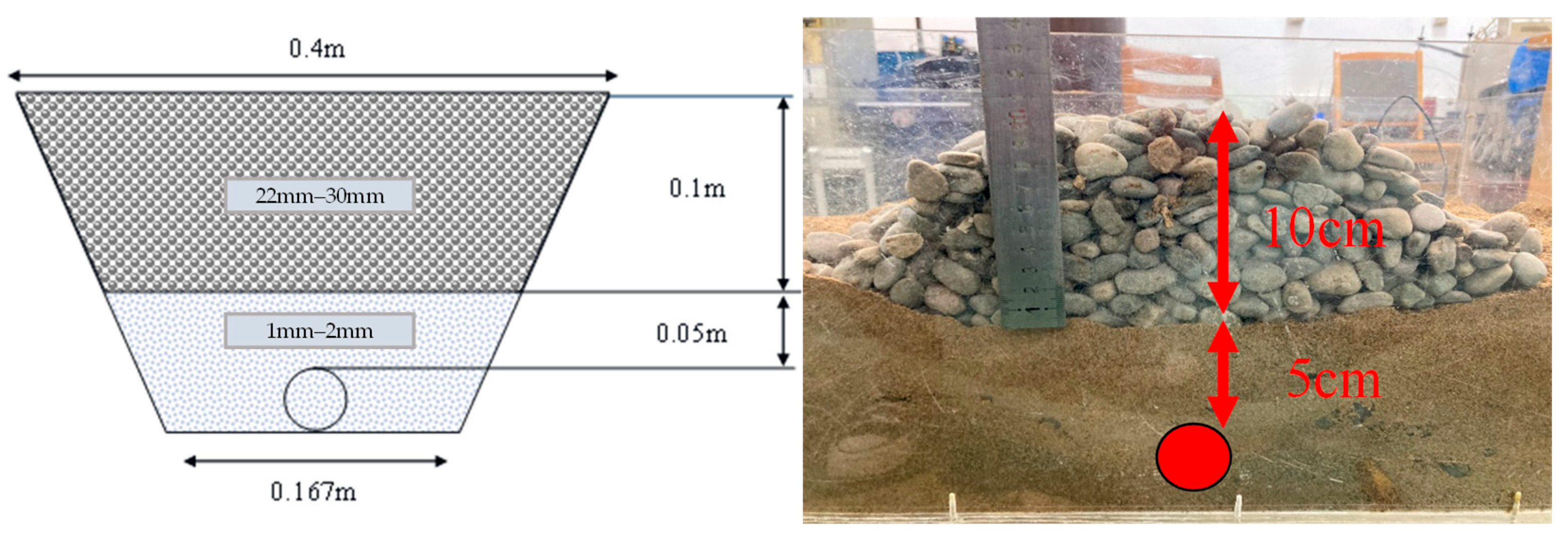
Trench with a 0.1 m thick large particle size stone protective layer, as shown in Figure 7;
(3)
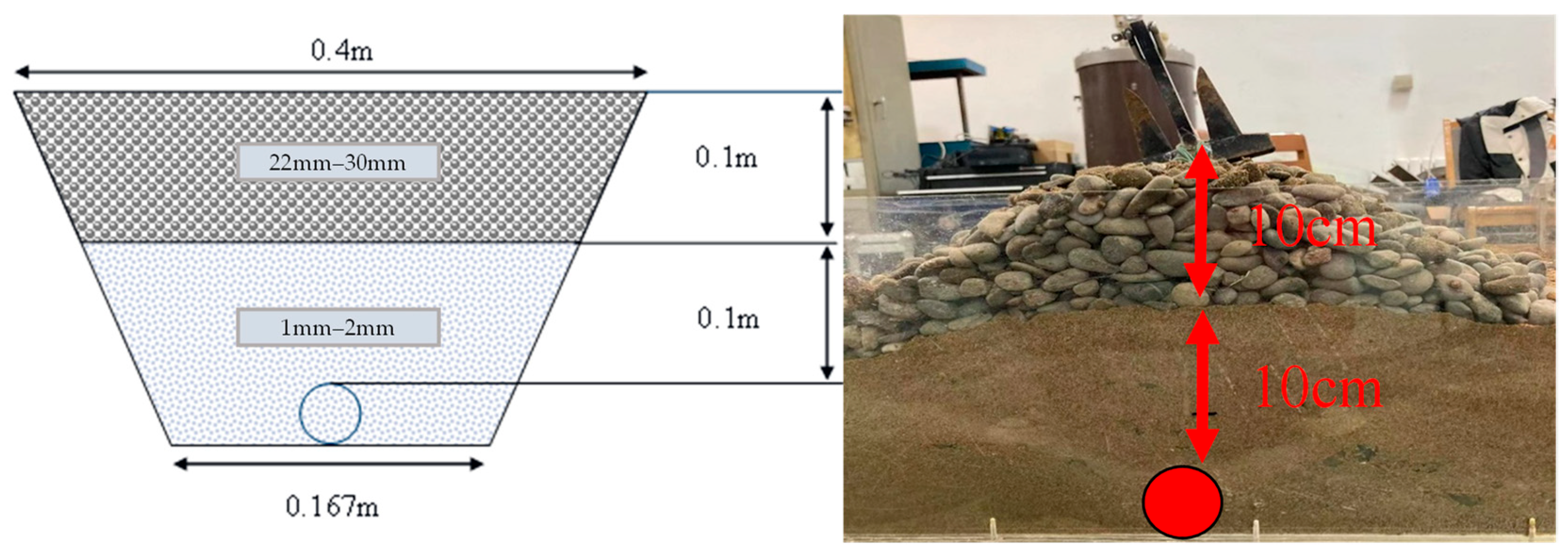
Trench with a 0.05 m thick sand layer topped by a 0.1 m thick large particle size stone protective layer, as shown in Figure 8;
(4)
Trench with a 0.1 m thick sand layer topped by a 0.1 m thick layer, as shown in Figure 9.
The primary objective of this study is to evaluate the cushioning performance of the artificial backfill protective layer. Accordingly, four groups of physical model tests with an anchor drop height of Hc were conducted under the four trench conditions, along with an additional comparative case with a drop height of H. The parameters of the test conditions are summarized in Table 9.
In addition, to comparatively analyze the effect of the thickness of the overlying rock layer on the protective performance, comparative tests with different protective layer thicknesses were conducted under the theoretical failure impact velocity. The specific test conditions are listed in Table 10.
The selection of protective layer thicknesses (3 cm to 10 cm) was designed to evaluate the mitigation effect against a critical failure scenario. The 0 cm case (unprotected) was used as the benchmark, representing the threshold condition where the anchor impacts the pipeline at the critical velocity (vc = 17.22 m/s) likely to cause concrete coating damage. The 3–10 cm range (equivalent to 45–150 cm in prototype) was then chosen to observe how varying backfill thicknesses reduce the impact force from this critical failure level to a safe state.

3. Results and Discussion

3.1. Results of Sensor Measurements

The anchor drop tests were divided into two groups: the first group investigated the force response of the pipeline under Hall anchor impact, while the second group focused on a comparative analysis of the cushioning effect of coarse rock layers with different thicknesses on the impact load. Each test in both groups was repeated multiple times to ensure reproducibility.
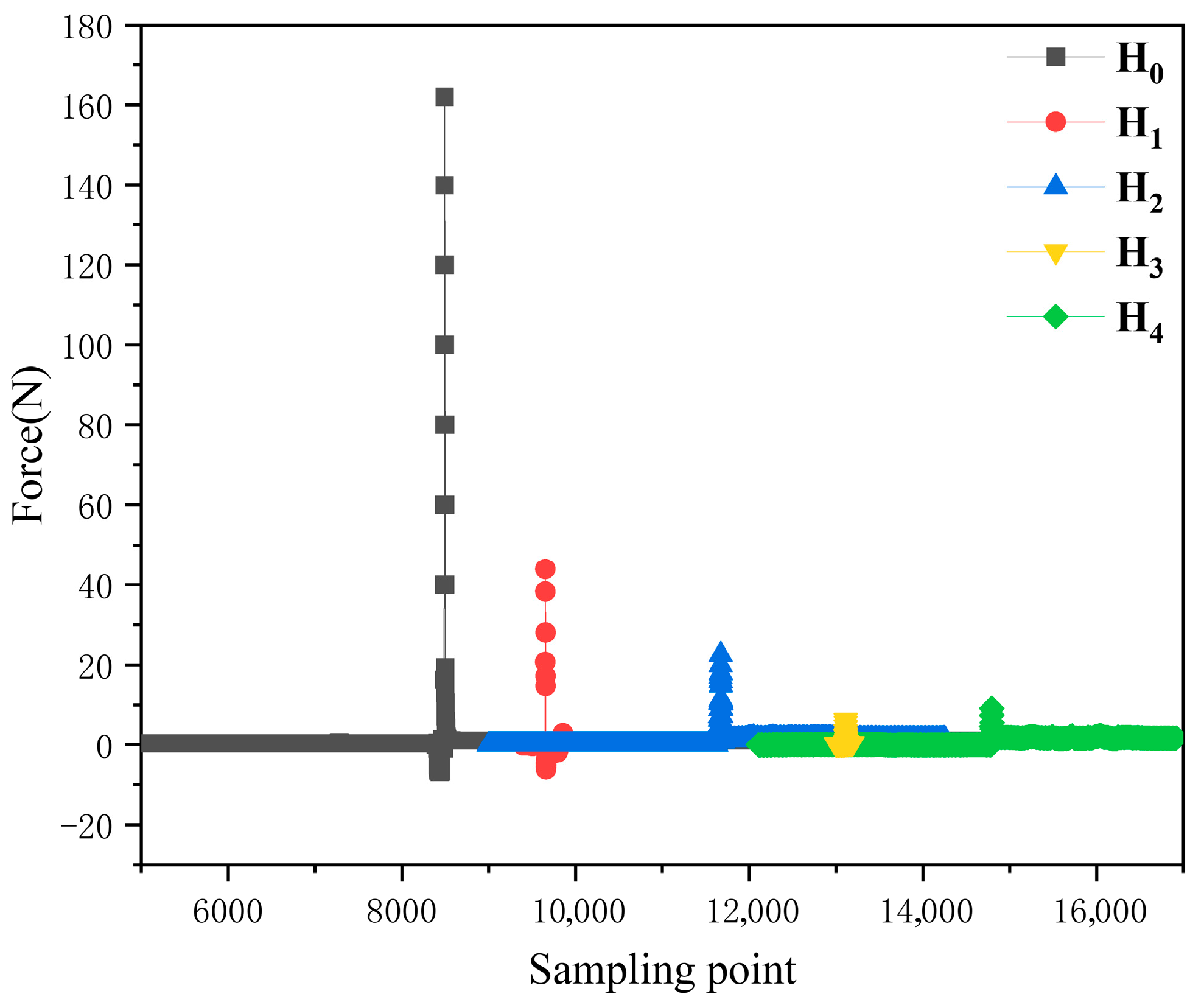
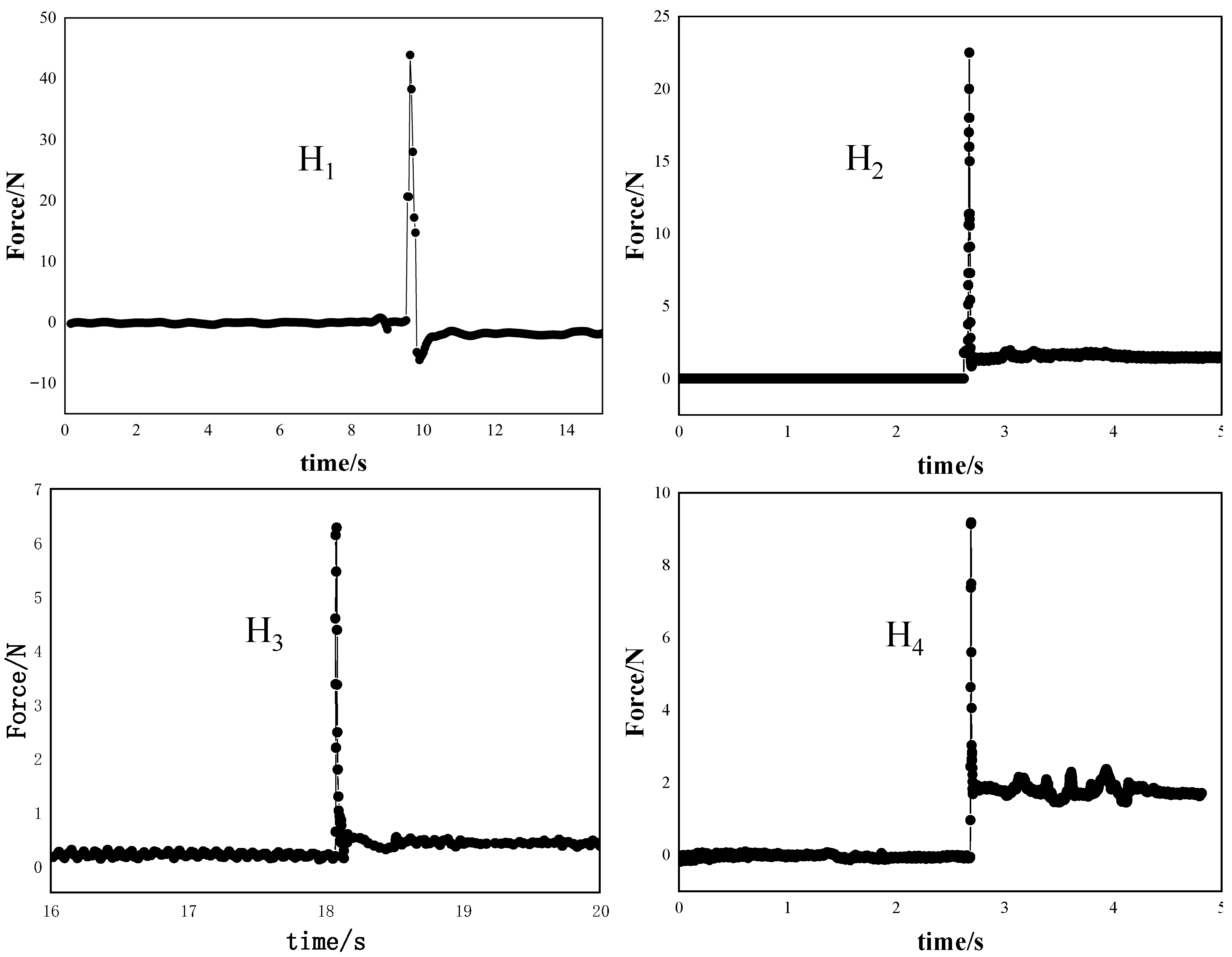
The experimental results are primarily presented in the form of force time-history curves recorded by sensors, as shown in Figure 10 and Figure 11 below:

3.2. Discussion

The results from the various test conditions in the first phase were consolidated into the following Table 11 for comparison.
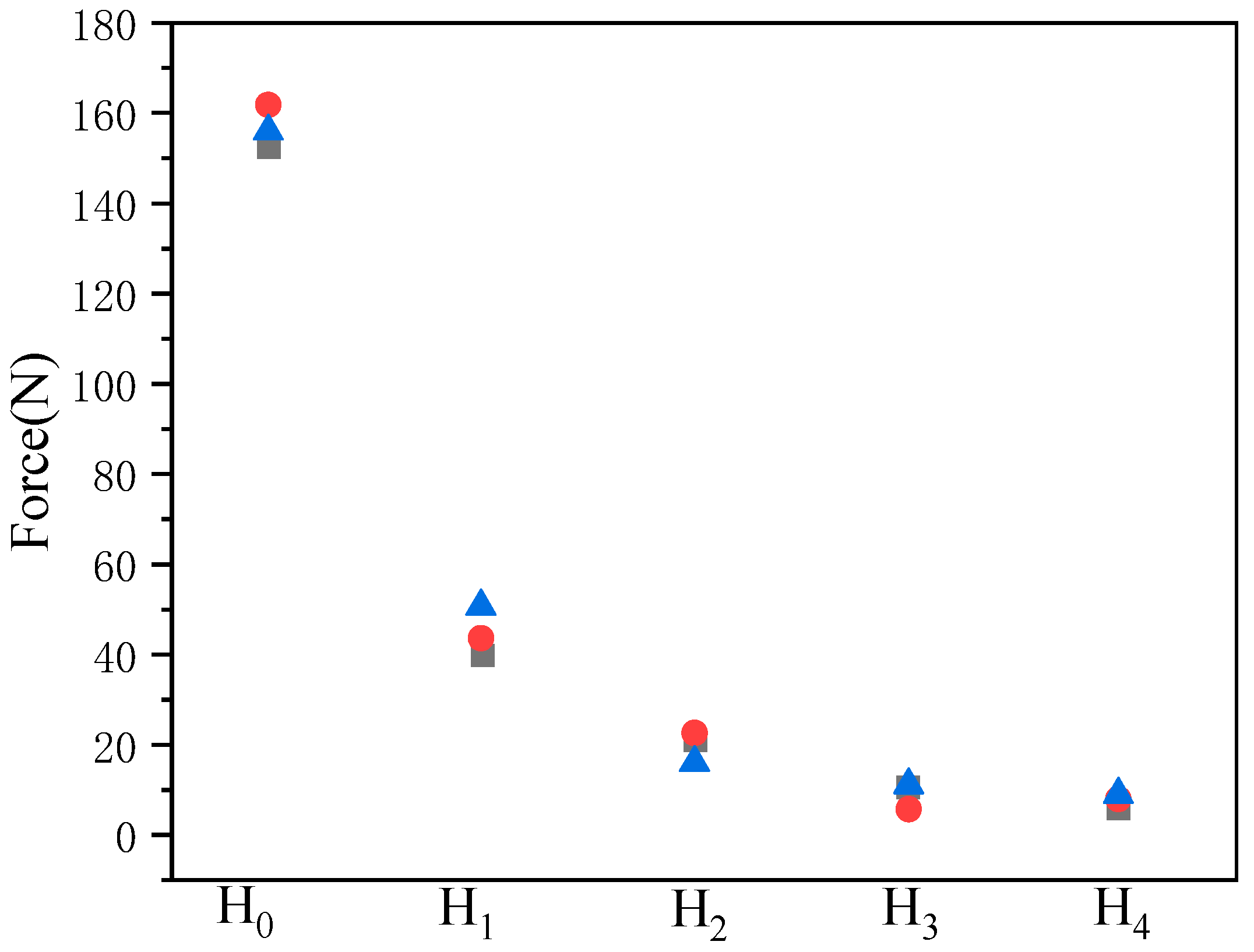
The experiment included total force measurements and analyses, covering the pipeline failure limit condition, the attainable limit condition by engineering, and other comparative conditions. Each condition was tested repeatedly; the time-history curve represents one typical test result for that condition, while the statistical Table 11 presents the mean values of the repeated tests.
The low coefficient of variation observed in repeated tests (as shown by the tight clusters in Figure 12) demonstrates the stability of the protective performance of the artificial rock layers.
The experimental data across Conditions H1–H4 provide a quantitative basis for evaluating the “protection margin” of artificial rock layers. The underlying cushioning mechanisms and their scientific implications are analyzed as follows:

3.2.1. Evaluation Metric: Definition of the Safety Factor (S)

To transition from raw force measurements to a safety-oriented assessment, the Safety Factor (S) is defined as the ratio of the critical failure threshold (FH0) to the measured peak impact force (Fimpact):
S = F H 0 F i m p a c t ,
where FH0 is the peak impact force measured under the H0 condition (the most critical state without protection), and Fimpact is the force measured in other protected conditions. This definition allows S to serve as a direct indicator of the “safety gain” or “cushioning multiplier” provided by different backfill configurations relative to an unprotected pipeline.

3.2.2. Mechanistic Analysis of Impact Attenuation

As summarized in Table 11, the mean impact force under Condition H0 (bare pipe) is approximately four times greater than that with a 10 cm coarse rock protective layer (Condition H1). This significant reduction from 162 N to 41 N is driven by two primary mechanisms:
  • Stress Redistribution: The rock layer transforms the concentrated “point-to-point” impact of the anchor fluke into a distributed load across the Concrete Weight Coating (CWC).
  • Energy Conversion: Kinetic energy is dissipated through the dynamic friction and micro-sliding between angular rock particles.
Furthermore, when a sand bedding layer is combined with coarse rocks (Conditions H2 and H3), the safety factor (S) increases exponentially to 7.2 and 27. This suggests that the multi-layer configuration acts as a secondary buffer, absorbing residual vibrations and preventing localized stress concentrations that lead to CWC spalling.
In Condition H4, the impact of a 2280 kg Hall anchor at its maximum theoretical terminal velocity was simulated to evaluate the protection layer’s performance at its physical limit. The results indicate that with a 10 cm coarse rock layer, the system maintains a Safety Factor (S) of 18. Although this value is lower than the S = 27 observed in the sand-and-rock composite configuration (H3), it remains significantly above the critical failure threshold (S = 1). This high safety margin suggests that the single-layer rock backfill provides considerable protective redundancy against extreme anchoring events.
From an engineering perspective, while no protection system can claim absolute immunity to all accidental loads, the observed performance in H4 demonstrates that the current design for the Kenli 6-1 project offers a substantial safety buffer capable of mitigating the risks associated with high-velocity impacts under severe sea conditions.

3.2.3. Limit-State Analysis: The Role of Layer Thickness Under Extreme Conditions

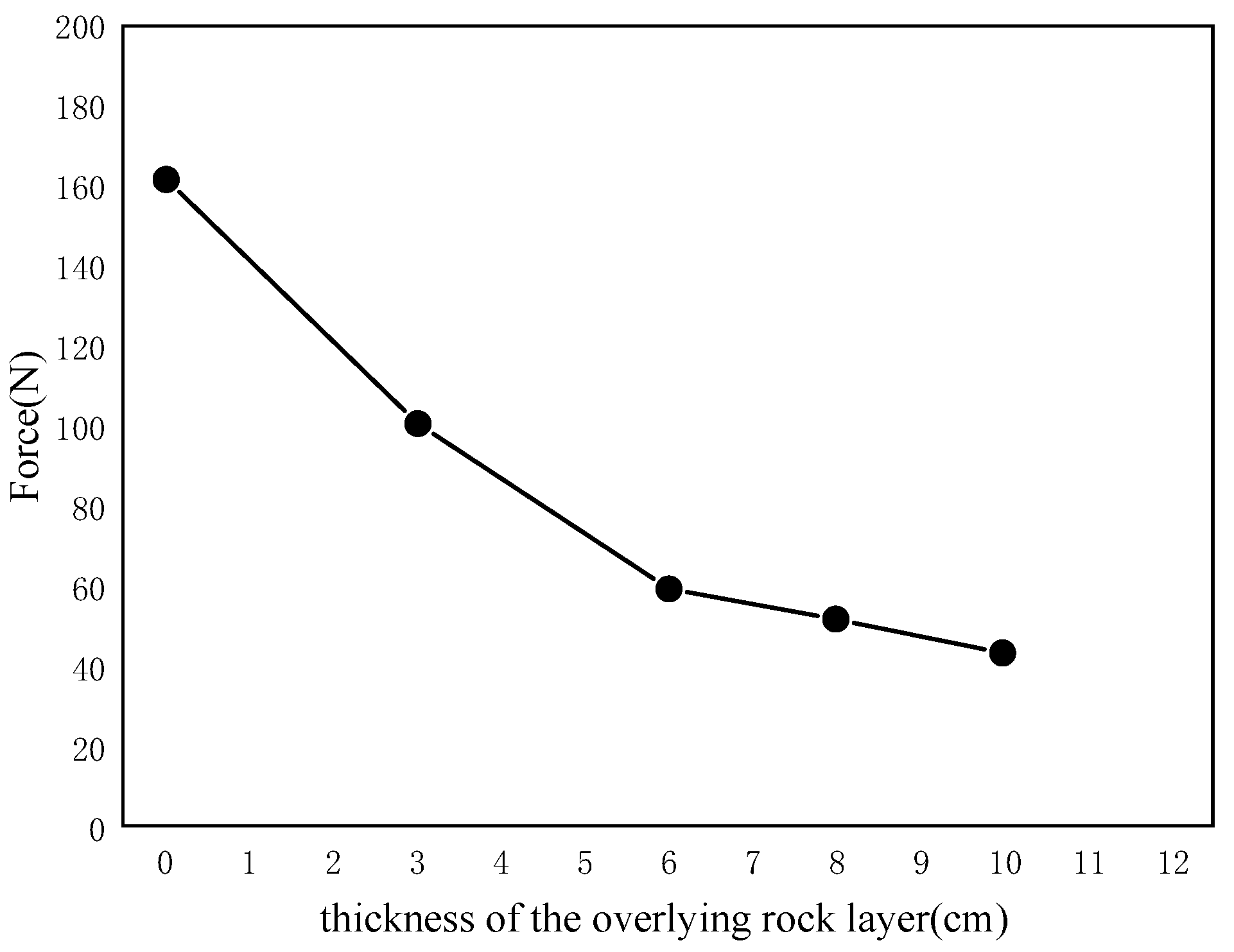
This section specifically examines how varying the protective layer thickness mitigates risk when the pipeline is subjected to the extreme impact velocity—the velocity at which an unprotected pipe (H0) would reach its failure limit. The statistical data in Table 12 and the safety factor distribution in Figure 13 reveal the following:
Thickness-Driven Safety Recovery: Figure 13 clearly demonstrates that the safety factor (S) grows non-linearly with the increase in protective material thickness. Under the extreme impact velocity, increasing the thickness of the rock layer acts as a critical intervention, transforming a certain-failure scenario (S = 1) into a high-redundancy scenario (S  1).
Non-linear Protection Efficiency: The distribution in Figure 13 highlights that the incremental safety gain is most dramatic in the initial thickness range. As the thickness increases, the curve exhibits diminishing marginal efficiency, suggesting that the rock matrix rapidly dissipates the bulk of the kinetic energy at specific depth thresholds.
Engineering Optimum: The relationship between thickness and S provides a scientific basis for identifying an “economic optimum thickness.” It proves that thickness is the primary variable in regulating the balance between construction costs and structural safety when facing extreme accidental loads.

3.2.4. Comparison and Engineering Implications

Compared with the simplified energy formulas in DNV-RP-F107, our results suggest that the interlocking effect of rocks provides higher buffer capacity than theoretical predictions. For the Kenli 6-1 Project, the findings from Table 11 and Table 12 provide a scientific basis for optimizing backfill thickness, ensuring structural reliability while improving construction cost-effectiveness.

4. Conclusions

This study investigated the cushioning performance of multi-layer rock protection for subsea pipelines through two systematic experimental groups. By shifting the evaluation baseline to the critical failure condition of the bare pipe (H0), we have quantified the protective margin of various backfill configurations. The major scientific findings are summarized as follows.
Definition of a New Safety Metric: This study successfully established a Safety Factor (S) evaluation system based on the critical impact velocity of an unprotected pipe. This fills the gap in traditional research, which often lacks a unified limit-state baseline, allowing for a quantifiable assessment of “safety gain” in complex seabed environments.
Non-linear Protection Efficiency: It was discovered that while the safety factor increases with the thickness of the rock layer, the protection efficiency exhibits a clear law of diminishing marginal utility. Once the rock matrix reaches a specific depth threshold, the interlocking particles already dissipate the bulk of the kinetic energy, meaning further thickness increments yield limited additional safety benefits. This provides a scientific basis for the “economic optimum thickness” in offshore engineering.
Synergistic Effect of Multi-layer Backfill: The study highlights that the fine rock layer is not merely a filler but a critical component for protecting the Concrete Weight Coating (CWC). While coarse rocks provide the primary energy dissipation, the fine rock layer prevents localized “point-loading” damage to the CWC, a finding that addresses the previously overlooked risk of premature coating spalling and subsequent corrosion.
Engineering Optimization for Extreme Scenarios: Under extreme impact velocities, the multi-layer system achieved a safety factor of S = 27, proving that current designs for the Kenli 6-1 project offer significant redundancy. This suggests that for small-scale anchor risks, the thickness of fine rock layers can be strategically reduced to balance structural integrity with construction cost-effectiveness.

Author Contributions

Conceptualization, Y.H. (Yang He); Methodology, L.Y.; Software, G.J.; Validation, Y.H. (Yang He), C.H., and K.M.; Formal analysis, G.J.; Investigation, Y.H. (Yunrui Han); Resources, Y.H. (Yunrui Han); Data curation, Y.H. (Yang He) and C.H.; Writing—original draft, G.J.; Writing—review and editing, L.Y.; Visualization, G.J.; Supervision, K.M. and C.H.; Project administration, L.Y. and C.H.; Funding acquisition, L.Y. All authors have read and agreed to the published version of the manuscript.

Funding

This research was funded by the National Natural Science Foundation of China (Grant Nos. 52171252, 52531010, 52571282, and 52331010).

Data Availability Statement

The original contributions presented in this study are included in the article. Further inquiries can be directed to the corresponding author.

Conflicts of Interest

Authors Yang He, Chunhong Hu and Kunming Ma were employed by the company Offshore Oil Engineering Co., Ltd. The remaining authors declare that the research was conducted in the absence of any commercial or financial relationships that could be construed as a potential conflict of interest.

References

  1. Dai, L.; Wang, D.; Wang, T.; Feng, Q.; Yang, X. Analysis and Comparison of Long-Distance Pipeline Failures. J. Pet. Eng. 2017, 2017, 1–7. [Google Scholar] [CrossRef]
  2. Liu, Y.; Hu, H.; Zhang, D. Probability Analysis of Damage to Offshore Pipeline by Ship Factors. Transp. Res. Rec. J. Transp. Res. Board 2013, 2326, 24–31. [Google Scholar] [CrossRef]
  3. Zhou, J.; Wang, H.; Yang, S.; Liu, Y. Numerical Study on Response of Subsea Pipeline Subjected to Anchor Damage. Ocean Eng. 2025, 318, 120179. [Google Scholar] [CrossRef]
  4. Ravaliya, N.R.; Gupta, P.K. Evaluating Impact Response of X65 Pipelines under Diverse Impactor Shapes: A Numerical Investigation. Eng. Fail. Anal. 2025, 182, 109997. [Google Scholar] [CrossRef]
  5. Xie, R.; Lin, P. Numerical Modeling of Sediment Dumping in Deep Water through a Rock-Fall Pipe for Subsea Pipeline Burial. Appl. Ocean Res. 2025, 154, 104328. [Google Scholar] [CrossRef]
  6. Zang, Z.P.; Xu, Z.; Zou, X.; Hou, J. Numerical Simulation Study on the Degree of Submarine Cable Protection by Rockfill Against Anchor. Ocean Eng. 2023, 41, 114–126. [Google Scholar]
  7. Hamzah, H. Study on The Application of The Articulated Concrete Block Mattresses Method as Subsea Pipeline Protection. Collab. Eng. Dly. Book Ser. 2023, 1, 37–44. [Google Scholar] [CrossRef]
  8. Meniconi, S.; Brunone, B.; Tirello, L.; Rubin, A.; Cifrodelli, M.; Capponi, C. Transient Tests for Checking the Trieste Subsea Pipeline: Toward Field Tests. J. Mar. Sci. Eng. 2024, 12, 374. [Google Scholar] [CrossRef]
  9. Meniconi, S.; Brunone, B.; Tirello, L.; Rubin, A.; Cifrodelli, M.; Capponi, C. Transient Tests for Checking the Trieste Subsea Pipeline: Diving into Fault Detection. J. Mar. Sci. Eng. 2024, 12, 391. [Google Scholar] [CrossRef]
  10. Longva, V.; Sævik, S.; Levold, E.; Ilstad, H. Dynamic Simulation of Subsea Pipeline and Trawl Board Pull-over Interaction. Mar. Struct. 2013, 34, 156–184. [Google Scholar] [CrossRef]
  11. Jiang, F.; Dong, S.; Zhao, Y.; Guedes Soares, C. Experimental and Numerical Study of Submarine Pipeline Response to Hooking Loads. Ocean Eng. 2020, 207, 107392. [Google Scholar] [CrossRef]
  12. Arabzadeh, H.; Zeinoddini, M. Dynamic Response of Pressurized Submarine Pipelines Subjected to Transverse Impact Loads. Procedia Eng. 2011, 14, 648–655. [Google Scholar] [CrossRef]
  13. Dong, X.; Shiri, H.; Zhang, W.; Randolph, M.F. The Influence of Pipeline-Backfill-Trench Interaction on the Lateral Soil Resistance: A Numerical Investigation. Comput. Geotech. 2021, 137, 104307. [Google Scholar] [CrossRef]
  14. Zhang, Y.P.; Zhang, C.H.; Zang, Z.P.; Xu, Y.J.; Li, Q.W.; Xu, Z. Experimental study on the performance of different cover layers for protecting a submarine pipeline from a dropped anchor of the article. Water. Harbor 2020, 41, 140–147. [Google Scholar]
  15. Wang, Y.; Huang, J.; Li, L.W.; Deng, Z.Y.; Gu, Y.C. Study on the protection effect of the gravel layer in the channel area on sub-marine pipelines under hall anchor dropping conditions. Ocean. Eng. 2024, 42, 179–189. [Google Scholar]
  16. Li, T.; Xie, P.; Chang, J.; Chen, X. Rock-Pipeline Impact Force and Pipeline Response during Deep-Water Rock Dumping Operation. Mar. Struct. 2022, 84, 103235. [Google Scholar] [CrossRef]
  17. Wang, Y.; Xie, M.; Su, C. Dynamic Reliability Evaluation of Buried Corroded Pipeline under Rockfall Impact. Eksploat. Niezawodn. Maint. Reliab. 2022, 24, 275–288. [Google Scholar] [CrossRef]
  18. Qiu, C.L.; Wang, J.; Yan, S.W. Coupled DEM-FEM analysis of submarine pipelines with rock armor berm under impact load. Chin. J. Geotech. Eng. 2015, 37, 2088–2093. [Google Scholar]
  19. DNV-RP-F107; Risk Assessment of Pipeline Protection. Det Norske Veritas (DNV): Høvik, Norway, 2019.
  20. Shin, M.-B.; Park, D.-S.; Seo, Y.-K. Response of Subsea Pipelines to Anchor Impacts Considering Pipe–Soil–Rock Interactions. Int. J. Impact Eng. 2020, 143, 103590. [Google Scholar] [CrossRef]
  21. Zhang, C.; Zang, Z.; Zhao, M.; Chen, Y.; Zhang, J. Investigations on the Effectiveness of Protection Methods for a Submarine Pipeline Exposed to the Impact of a Falling Anchor. J. Mar. Sci. Eng. 2022, 10, 1159. [Google Scholar] [CrossRef]
  22. Jiang, F.; Zhao, E. A Study on the Failure Mechanism of Offshore Pipelines with Corrosion Defects Subjected to Impact Loads from Falling Objects. Ocean Eng. 2025, 318, 120119. [Google Scholar] [CrossRef]
  23. Jiang, F.; Zhao, E. Damage Mechanism and Failure Risk Analysis of Offshore Pipelines Subjected to Impact Loads from Falling Object, Considering the Soil Variability. Mar. Struct. 2024, 93, 103544. [Google Scholar] [CrossRef]
  24. Jiang, F.; Dong, S. Development of a CNN-Based Integrated Surrogate Model in Evaluating the Damage of Buried Pipeline under Impact Loads, Considering the Soil Spatial Variability. Reliab. Eng. Syst. Saf. 2025, 257, 110801. [Google Scholar] [CrossRef]
  25. Zuo, M.; Zhou, X.; Tu, H.; Liang, Z.; Wei, Y.; Xia, K.; Zhu, H.; Han, H.; Su, J.; Qu, F. Hydrodynamic Study of a Fall Pipe Rock Dumping System. J. Mar. Sci. Eng. 2025, 13, 837. [Google Scholar] [CrossRef]
  26. Si, W.; Wang, M.; Gao, Y.; Sun, K.; Chen, B.; Wang, R.; Cui, L.; Jeng, D.-S.; Zhao, H. Experimental Study of Submarine Pipeline with Geotextile and Stone Cover Protection Under the Superposition of Waves and Currents. J. Mar. Sci. Eng. 2024, 12, 2218. [Google Scholar] [CrossRef]
  27. Tian, Y.; Chai, W.; Borgi, S.E.; Zhang, C.; Sun, L.; Xiao, Z.; Fu, D. Assessment of Submarine Pipeline Damages Subjected to Falling Object Impact Considering the Effect of Seabed. Mar. Struct. 2021, 78, 102963. [Google Scholar] [CrossRef]
  28. Jensen, J. Impact Strength of Concrete Coating on Pipelines; SINTEF: Trondheim, Norway, 1996. [Google Scholar]
  29. GB/T 546 2016; Hall Anchors. Standards Press of China: Beijing, China, 2016.
  30. Han, C.C.; Chen, X.J.; Liu, J. Model tests on penetration depth of hall anchor. Ocean. Eng. 2018, 36, 90–98. [Google Scholar]
Figure 1. Concrete coating resists the impact of objects (image from DNV-RP-F107).
Jmse 14 00228 g001
Figure 2. Hall anchor structure (image taken from GB/T 546-2016, Hall an-chor [29], “标志凸块&标志处” means “raised marker”; “A向” means “A direction”). Note: 1, anchor shackle; 2, anchor fluke; 3, anchor shank; 4, small shaft; 5, cross pin.
Jmse 14 00228 g002
Figure 3. Photo of Hall anchor model.
Jmse 14 00228 g003
Figure 4. Model pipeline and total force sensor.
Jmse 14 00228 g004
Figure 5. Anchor drop test layout.
Jmse 14 00228 g005
Figure 6. Trench type without protective layer.
Jmse 14 00228 g006
Figure 7. Covered with 0.1 m-diameter rock protective layer trench type.
Jmse 14 00228 g007
Figure 8. Covered with 0.05 m sand layer +0.1 m particle size rock protective layer trench type. Note: The red circle indicates the position of the pipeline.
Jmse 14 00228 g008
Figure 9. Covered with 0.1 m sand layer +0.1 m particle size stone protective layer trench type. Note: The red circle indicates the position of the pipeline.
Jmse 14 00228 g009
Figure 10. Comparison of force time histories for Conditions H0–H4.
Jmse 14 00228 g010
Figure 11. Force time-history details for Conditions H1–H4.
Jmse 14 00228 g011
Figure 12. Hall anchor drop data comparison chart (scatter indicates repeated tests).
Jmse 14 00228 g012
Figure 13. Curve of cushioning effect of different protective layer thicknesses on the impact force of falling anchor.
Jmse 14 00228 g013
Table 1. Fluid resistance coefficients corresponding to objects of different shapes.
Object ShapeFlat Shape/Slender ShapeBoxComplex Shape (Spherical or Irregular Body)
Drag coefficient Cd0.7~1.51.2~1.30.6~2.0
Table 2. Drag coefficient and additional mass coefficient of objects with different shapes in water.
Object TypeDrag Coefficient, CdAdded Mass Coefficient, Ca
Flat shape/Slender shape0.7~1.50.1~1.0
Box1.2~1.30.6~1.5
Complex shape (spherical or irregular body)0.6~2.01.0~2.0
Table 3. Scale relationship between model experiment and prototype physical quantity.
Physical QuantityDistance
z
Soil Density
ρ
Time
t
Area
A
Gravity
W
Velocity
v
Soil Strength
su
Kinetic Energy
Ee
Potential Energy
Ep
Unitmkg/m3sm2Nm/skPaJJ
Symbol λ L λ ρ λ t λ A λ W λ v λ s λ e λ p
Relationship with the geometric scale ratio λ L λ L λ L λ L 3 λ L λ ρ λ L λ L 4 λ L 4
Table 4. Main dimensions and parameters of prototype anchor.
Anchor WeightDimensions of the Hall Anchor (mm)
(kg)Hhh1LL1BB1H1IJ
2280171611652551657116564576334025674
Table 5. Main dimensions and parameters of model anchor.
Anchor WeightDimensions of the Model Hall Anchor (mm)
(kg)Hhh1LL1BB1H1IJ
0.675114.477.6717110.4677.674350.8622.6717.064.93
Table 6. Model maximum impact resistance capacity of pipeline.
Anchor TypeAnchor Weight (kg)3 Times the Cube Strength of Concrete Y (MPa)Contact Surface Width b (m)Contact Surface Length h (m)Thickness of the Concrete Weighting Layer x0 (m)Maximum Energy That Can Be Withstood Ek (KJ)
Hall anchor22801050.50.60.04560
Table 7. Critical anchorage height for failure of pipeline with concrete coating.
Maximum Energy That Can Be Withstood Ek (KJ)Added Mass ma
(kg)
Prototype Critical Velocity vc (m/s)Critical Drop Height for Prototype Failure Hcp (m)Scale Ratio λ L Critical Drop Height for Model Failure Hc (m)
560149817.2214.82150.988
Table 8. Model drop height for the maximum anchor falling velocity in water.
Prototype Maximum Falling Velocity v (m/s)Scale Ratio λ L Velocity Scale Ratio λ v Model Maximum Falling Velocity v (m/s)Model Test Drop Height H (m)
6.206153.8731.600.128
Table 9. Model test condition.
Work ConditionProtective Layer ConditionsAnchor Drop Height (m)Anchor Weight (g)Comments
H0 Reference failure conditionWithout protective layer0.988675To reflect the maximum impact force that the concrete weighting layer can withstand under the anchor impact in the model test.
H1 comparative condition10 cm rock protective layer0.988675Comparative study of the cushioning performance of various overlying protective layers
H2 comparative condition5 cm sand layer + 10 cm rock layer0.988675Comparative study of the cushioning performance of various overlying protective layers
H3 comparative condition10 cm sand layer + 10 cm rock layer0.988675Comparative study of the cushioning performance of various overlying protective layers
H4 comparative condition10 cm rock protective layer0.128675Impact force on the pipeline caused by the anchor falling at its maximum velocity in water
Table 10. Test of effects of protective layer thickness.
Protective Layer ConditionsAnchor Drop Height (m)Anchor Weight (g)Comments
Without protective layer0.988675 gTo reflect the cushioning effect of anchor impact under different overlying rock layer thicknesses
10 cm rock protective layer0.988675 g
8 cm rock protective layer0.988675 g
6 cm rock protective layer0.988675 g
3 cm rock protective layer0.988675 g
Table 11. Comparison of results of Hall anchor drop test.
Work ConditionProtective Layer ConditionsAnchor Drop Height (m)Anchor Weight (g)Impact Force (N)Safety Factor
Reference failure condition (H0)Without protective layer0.9886751621
H1 comparative condition10 cm rock protective layer0.98867543.93.69
H2 comparative condition5 cm sand layer + 10 cm rock layer0.98867522.57.2
H3 comparative condition10 cm sand layer + 10 cm rock layer0.988675627
H4 comparative condition10 cm rock protective layer0.128675918
Table 12. Comparison of results of different protective layer thicknesses with large particle size rock.
Protective Layer ConditionsAnchor Drop Height (m)Anchor Weight (g)Impact Force (N)Safety Factor
Without protective layer0.988675 g1621
10 cm rock protective layer0.988675 g43.93.7
8 cm rock protective layer0.988675 g552.9
6 cm rock protective layer0.988675 g602.7
3 cm rock protective layer0.988675 g1001.6
Disclaimer/Publisher’s Note: The statements, opinions and data contained in all publications are solely those of the individual author(s) and contributor(s) and not of MDPI and/or the editor(s). MDPI and/or the editor(s) disclaim responsibility for any injury to people or property resulting from any ideas, methods, instructions or products referred to in the content.