1. Introduction
Risk assessment in the shipping industry is a key challenge for ensuring shipping safety, with a particular focus on vessel inspections under the port state control (PSC) system. The PSC system aims to enforce compliance with international safety and environmental standards by inspecting vessels entering ports. Optimising this process requires precision and efficiency in predicting the likelihood of vessels being detained during inspections, which is crucial in improving safety and reducing operational costs.
Traditional risk analysis methods in this context rely on statistical techniques and expertise based on experience. However, with the increasing complexity of data and the growing number of factors influencing the outcome of inspections, the need for advanced approaches is becoming increasingly apparent. In this regard, developing and applying artificial intelligence (AI) methods, particularly neural network (NN) models, represent a significant step towards more accurate and efficient risk assessments.
This research investigates the application of different NN models to predict the probability of detention of offshore vessels during PSC inspections. In particular, it focuses on the use of NN models such as “nnet”, “mlp” (multilayer perceptron), “neuralnet”, and “rsnns” (R package for self–organising maps and neural networks), which are widely known for their ability to analyse complex and non-linear relationships in large datasets. Using these models, the study aims to identify key risk factors that can help anticipate potential inspection problems, such as vessel characteristics, previous inspection reports, flags, number and type of deficiencies, vessel age, and other relevant factors.
The application of these models not only enables more accurate predictions, but also better resource optimisation within the inspection teams. Through the use of methods such as “nnet”, “mlp”, “neuralnet”, and “rsnns”, critical patterns and interactions between variables can be identified that may be overlooked by conventional methods. This makes the goal of increasing maritime safety and reducing operating costs achievable and contributes significantly to the efficiency of the PSC system.
This study provides valuable insights into how advanced machine learning (ML) methods, especially NNs, can be used to analyse risk in the maritime industry. Their application can optimise decision-making, improve safety, and increase the efficiency of inspections globally.
The structure of this research study is designed to provide a systematic and clear presentation of the research process, results, and conclusions while maintaining a high scientific and professional standard. The paper is divided into seven main sections. The introductory section defines the research problem, sets out the research objectives, and emphasises the topic’s relevance to current challenges in the maritime industry. This section emphasises the need to improve the efficiency and accuracy of risk assessment for the detention of vessels under PSC.
The second section reviews previous research and existing studies on applying ML, particularly NNs, in maritime safety management. It provides a detailed literature review and analyses the main contributions, shortcomings, and open questions that are a starting point for further research.
The third section analyses the significance and importance of PSC inspections, focusing on their role in improving maritime safety. This section also analyses the concept and structure of NNs, explains their operating mechanisms, and examines their different types and specific applications for predicting complex patterns.
The fourth section describes the methodological approach used in this study. In this section, the stages of data collection, processing, and analysis are systematically presented, the evaluation measures used are explained in detail, and the technical specifications of the NN models used, including details of design, training, and performance evaluation, are outlined.
The fifth section analyses the obtained results and highlights the main research findings. The results are interpreted in terms of accuracy, sensitivity, specificity, and other relevant metrics used to evaluate model performance.
The sixth section provides a discussion contextualising the research findings within the existing literature, highlighting their implications and limitations and making recommendations for future research. The seventh section concludes the paper by summarising the key findings and outlining potential directions for further advancements in the application of advanced machine learning models in maritime security.
This structured approach enables a coherent and comprehensive examination of the research problem. It provides the reader with a clear understanding of all relevant aspects of the study and its contribution to science and practice.
2. Recent Research on the Application of Machine Learning Methods in Port State Control Inspections
Maritime safety is a critical component of global logistics and international trade, and its importance continues to grow, given the increasing density of marine traffic and the ever-more demanding requirements for compliance with international maritime standards. In this context, vessel inspections carried out by naval authorities as part of PSC have become essential to ensure safety, prevent accidents, and protect the environment. PSC inspections make it possible to identify deficiencies in vessel operations, comply with applicable regulations, and ensure that foreign-flagged vessels fulfil international safety and environmental standards.
However, given the dynamic nature of maritime transport, the challenges associated with risk assessment and identifying potential hazards require introducing advanced technological solutions that can significantly improve the efficiency of inspections. In this regard, NN models represent a promising approach to improving risk assessment processes, as they allow for the analysis of large datasets and the identification of hidden patterns that are not immediately recognisable using traditional analysis methods. As a fundamental component of AI, NNs can predict events based on complex relationships between variables, making them a valuable tool for predicting the likelihood of vessels being detained in ports.
The advantage of using NNs in this context is their ability to process data from multiple sources, including information on previous inspections, vessel characteristics, weather conditions, and the specifics of ports and maritime authorities. Such modelling can enable more accurate and faster decision-making regarding the need for further inspections, vessel detention, or other corrective actions, ultimately increasing safety and reducing the risk of accidents.
The following section examines recent research examining the relationship between the applications of various ML techniques, in particular NN models, and PSC inspections. The analysis includes recent studies that focus on implementing advanced ML models, deep learning (DL), and NNs to improve risk assessment accuracy and optimise prediction related to vessel detention probability. These studies aim to contribute to the efficiency, safety, and transparency of the inspection process in the global maritime sector.
The research [
1] investigated the application of NNs in traffic safety modelling. The research aimed to develop an NN-based model capable of effectively analysing and predicting safety risks in different traffic scenarios. The authors demonstrated that NNs offer advantages over traditional statistical methods, especially in non-linear relationships between variables that influence safety. The experimental results highlighted the ability of NNs to detect patterns in complex datasets, making them suitable for analysing security incidents and identifying key risk factors. The research also emphasised the flexibility of NNs in processing different types of data and their applicability to a wide range of traffic safety problems. The authors concluded that such models could significantly improve decision-making processes and implement preventive measures in transport systems. The study results suggest that NNs are a valuable tool for modelling safety risks and supporting the development of strategies to improve safety in transport systems. While the research results are promising in detecting structures in maritime transport, it is essential to note that this paper is not explicitly focused on PSC inspections, particularly PSC inspections of offshore vessels.
Researchers [
2,
3,
4] analyse the application of Bayesian networks (BNs) in the context of PSC inspections but differ in their specific objectives and analytical approaches. All three use BNs to model different aspects of PSC inspections and emphasise their ability to use probabilistic reasoning and decision-making under uncertainty. The main objective of these investigations is to increase the efficiency of PSC inspections by improving the prediction and analysis of factors influencing vessel detention. In addition, all three researchers emphasise the importance of PSC inspections for improving maritime safety and reducing operational risks. However, paper [
2] focuses on evaluating the effectiveness of PSC inspections through BN modelling, analysing the probabilities of detecting violations and their causes. The main contribution of this paper is to show how a BN can improve decision-making through probabilistic analyses of inspection data. Secondly, paper [
3] integrates the BN with machine learning (ML) methods the duration of vessel detention following a PSC inspection. In contrast to the first paper, which primarily analyses the results of the inspections, this second paper focuses on the factors that influence the duration of detention, allowing for more accurate planning and resource allocation. Paper [
4] examines the dynamic evolution of PSC inspections by analysing the changes in inspection patterns over time using the BN. The paper differs from the previous two in that it does not consider PSC inspections as a static process but analyses how inspection strategies and the detection of violations evolve under the influence of various factors. Nevertheless, all three papers mentioned contribute to understanding how BNs can improve PSC inspections by analysing inspection efficiency, predicting the duration of detention of vessels, or observing changes in inspection strategies over time.
The papers [
5,
6] investigate the application of convolutional neural networks (CNNs) in the maritime sector, focusing on recognising vessel types and identifying vessel structures. Both papers use CNN architectures to improve automated recognition processes and emphasise the benefits of DL in feature extraction and classification in complex maritime environments. Although they share a common methodological basis, these papers differ in their specific objectives and approaches. In contrast to research focusing on PSC inspections, paper [
5] does not analyse the regulatory aspects of maritime safety but is primarily concerned with the automatic detection of vessels and their structural components. Paper [
5] proposes a cascaded CNN model with coarse to delicate processing stages for recognising vessel types to improve classification accuracy through progressively refined feature extraction. The main contribution of this paper lies in its hierarchical approach, which enables more accurate discrimination between vessel types by integrating global and detailed feature representations. This method improves recognition performance in complex maritime scenarios where vessels often exhibit significant class differences. Paper [
6] applies CNNs for vessel structure recognition, focusing on identifying specific vessel components rather than classifying entire vessels. This paper emphasises the potential of DL for structural analysis, which could play a crucial role in automated inspection, maintenance, and safety monitoring. In contrast to the first paper [
6], primarily concerned with the differentiation of vessel types, this work investigates the recognition and classification of vessel structures based on visual input, thus contributing to the broader field of vessel integrity assessment.
The articles [
7,
8] investigate the application of ML techniques in the context of PSC to improve the processes of prediction and optimisation of vessel detentions in ports. Still, they differ in their methodological approaches and the ML techniques applied. Article [
7] utilises anomaly detection as the primary technique, which enables the identification of unusual patterns in vessel data and operations. Anomaly detection helps recognise potential risks that are not immediately obvious and may indicate vessels with a high-security risk, thereby contributing to more accurate predictions of vessel detentions. Paper [
8] employs K-means clustering as a methodology for grouping vessels based on similarities in performance characteristics. K-means clustering allows for segmenting vessels into groups, thus facilitating better analysis of vessel behaviour patterns and optimising resources in the inspection process. This technique helps identify vessels that pose a greater risk, enabling more efficient resource allocation for inspections and thereby increasing the overall efficiency of the PSC systems; paper [
7] contributes to developing an anomaly detection model that can predict the accuracy and recognition of unexpected but potentially dangerous events leading to vessel detentions. This approach enables the rapid detection of accidents or irregularities that traditional methods may overlook. In contrast, article [
8] optimises inspection strategies by utilising clustering techniques, allowing for selective and targeted vessel inspections based on their specific characteristics, thus reducing inspector workload and focusing on potentially high-risk segments of vessels. While both works address similar themes within PSC, the differences lie in the applied ML techniques: anomaly detection in the first work facilitates the identification of unusual and high-risk situations. In contrast, K-means clustering optimises the distribution of inspection resources, thereby improving the system’s overall efficiency.
The articles [
9,
10,
11,
12] deal with the application of ML in the maritime industry, with a particular focus on PSC. Although all papers deal with the improvement of PSC processes by ML, they use different techniques and approaches. The commonality of all papers lies in the shared goal of improving vessel inspection processes and optimising resources through ML techniques. All the papers cited take a data-driven approach, analysing large datasets to identify patterns that enable better assessment of vessel safety risks. The paper [
9] uses a wide range of ML techniques to analyse data from the maritime industry, but with a broader scope that includes other sectors of the maritime industry, while the other papers focus exclusively on PSC. In [
10], the authors apply data mining techniques to analyse vessel deficiencies within PSC and identify patterns that may indicate a higher risk of vessel detention. Paper [
11] provides a broader frame for applying ML in the maritime industry, but without specific application to individual ML models. At the same time, in [
12] the authors focus on analysing vessel inspection reports using natural language processing (NLP) in combination with DL and artificial neural networks (ANN), which enables the analysis of unstructured data. The contribution of [
9] lies in its holistic approach to the application of ML in the maritime industry, which provides a broader perspective on how different techniques can improve the safety and efficiency of PSC processes. The authors in [
10] make a specific contribution through the data mining of defects, which enables better prioritisation of inspections and prediction of vessels with a higher risk of detention. The research in [
11] contributes to the development of a theoretical framework for the application of ML in PSC and shows how different models can improve the inspection process and safety in vessel operations. The authors in [
12] integrate NLP with ANN to analyse unstructured text data from inspection reports, enabling a deeper understanding of inspection results and more accurate risk assessments.
The authors of article [
13] investigate the application of advanced algorithms in PSC, specifically for offshore vessels, using classification trees and multi-criteria decision-making (MCDM). Their research aims to develop a methodology that enables more efficient data analysis on offshore vessels while identifying the key risk factors that influence inspection decisions and the possible detention of vessels. Classification trees allow precise categorisation of vessels based on risk, while MCDM techniques facilitate the weighting of the different criteria in decision-making. That article’s contribution lies in optimising the vessel inspection process within PSC by applying sophisticated algorithms that can improve the accuracy of risk prediction and resource optimisation.
The detention of offshore vessels in ports under PSC can significantly negatively impact the operational efficiency of vessel operators and all stakeholders, including vessel owners, crew members, and regulators. Although these vessels typically do not carry cargo, their detention due to non-compliance with regulatory standards or the need for additional inspections can lead to significant delays in the completion of maritime tasks, a reduction in the time a vessel can spend at sea, and the incurrence of additional operational costs. This detention can further affect the operator’s competitiveness in the market and have a negative impact on its reputation. In addition, such deployments can increase the vessel’s maintenance costs and lead to complications with safety protocols and compliance with international laws.
To improve operational efficiency and mitigate the negative effects of vessel detention, this paper explores the application of AI-based models, specifically NNs. These models have the potential to predict better and identify the key factors that can lead to vessel detention and improve the accuracy of predictions related to future risks, such as non-compliance with regulations or unplanned inspections. Using NNs makes it possible to analyse complex patterns in large datasets automatically. This enables more accurate decision-making, faster identification of critical factors, and optimisation of strategies to reduce costs, speed up the inspection process, and improve the overall competitiveness of vessel operators. Therefore, this approach is crucial to enhancing predictive capabilities in fleet safety management and operational efficiency.
In contrast to previous studies, which are relatively scarce and rely predominantly on basic ML methods without incorporating NN architectures for analysing ship inspection data in the context of PSC, this research introduces their application. However, given the specific requirements of the task, we utilise simpler NN models that provide an optimal trade-off between accuracy, computational efficiency, and practical applicability. This paper’s unique contribution lies in examining the optimisation of the PSC process from multiple perspectives, including inspectors, vessel owners, crew members, and other stakeholders involved in the process.
The implementation of NNs, unlike traditional data analysis approaches, utilises advanced architectures to predict inspection durations and outcomes with a high degree of accuracy and efficiency. The diversity of models is reflected in the paper of four different NN models, each thoroughly evaluated based on relevant performance metrics. The processing of offshore vessel inspection data based on historical records enables the identification of patterns related to past deficiencies, flag states, and other risk factors that significantly influence vessel detention decisions.
The comparative analysis of the models provides a detailed overview of the performance of four different NN models. Parameters such as precision, accuracy, sensitivity, specificity, and AUC (Area Under Curve) are carefully analysed, and the results are presented graphically to illustrate the performance of each model. This analysis aims to find the optimal model to integrate large and heterogeneous datasets effectively, enabling accurate and efficient decision-making in PSC inspections.
Another research focus is implementing a system for automatic risk detection and preventive management. Such a system helps reduce human error, increase the efficiency of inspection procedures, and optimise the safety of offshore vessels. This paper’s comprehensive application of advanced NN techniques represents a significant advance in the PSC inspection data analysis field, focusing on improving process safety and efficiency.
The ultimate goal is to optimise the inspection process, reduce the costs associated with vessel detention, and innovate by applying advanced technologies to achieve better resource allocation, more accurate risk assessment, and fewer procedural delays.
3. The Application of Neural Networks in Optimising Port State Control Inspection Process
3.1. PSC
PSC [
14] plays a crucial role in the international oversight of maritime safety and makes it possible to ensure the safety and protection of life at sea and the environment from potentially harmful accidents at sea. Based on binding international conventions such as SOLAS (Safety of Life at Sea), MARPOL (Marine Pollution) and STCW (Standards of Training, Certification and Watchkeeping), PSC enables inspectors to inspect vessels in port, regardless of which flag the ship flies, to check compliance with international standards.
The main objective of PSC inspections is to identify and mitigate safety risks and potential non-compliance that could jeopardise the safety of the vessel, its crew, and the environment. These inspections cover various operational aspects of the vessel, with inspectors assessing the condition of structural components, safety equipment, environmental protection systems, and crew qualifications. In cases where irregularities are found, the authorities may decide to detain the vessel in port, significantly impacting shipowners and the vessel’s operation.
PSC is a global process and part of the international strategy to reduce the risk of accidents in maritime transport. It is linked to regional PSC agreements (e.g., Paris Memorandum of Understanding (MoU) [
15], Tokyo MoU [
16]) that facilitate the exchange of information and best practices between signatory countries. The data collected during PSC inspections form the basis for improving safety in the shipping industry and enables the development of strategies to improve inspection processes and predict potential risks on vessels.
Modern approaches utilise new technologies, including AI and ML methods, to improve the efficiency of PSC inspections. This includes optimising methods to identify potential risks based on historical data on vessel violations and deficiencies. This approach enables a better assessment of the likelihood of a vessel having defects or other malfunctions. This improves the efficiency of inspections and reduces the number of accidents caused by technical problems on vessels.
In this context, modern researchers are focusing on developing ML-based models that can help automatically recognise patterns in data from previous inspections and predict future violations or risks. Increasing the accuracy of predictions and improving the robustness of the models are key challenges in the field of PSC.
3.2. Neural Networks: Fundamentals and Application in PSC Data Analysis
NNs are advanced ML models inspired by the functions of the human brain. They are used for pattern recognition and learning relationships between input data and the target variable [
17,
18].
This paper uses NNs to analyse large and diverse datasets in the context of PSC data. The aim is to predict vessel detention in harbours, assess the level of risk, and monitor compliance with international standards.
The essential components of NNs are neurons organised in layers. The NN layers include an input layer, one or more hidden layers and an output layer. The neurons in each layer are connected to the neurons in the neighbouring layers by weight coefficients representing the strength of the connections between the neurons. Each neuron receives input values, multiplies them by the weighting coefficients, adds a bias term, and applies an activation function, such as a Rectified Linear Unit (ReLU) or the sigmoid function. These activation functions allow the model to learn non-linear relationships within the data.
During training, the NN applies the backpropagation algorithm to adjust the weights and minimise the difference between the predictions and the actual values. Through this optimisation process, the NN can learn patterns from the data and generalise them to unseen examples [
19].
In NNs, the weighting values are determined randomly or according to predefined rules and then adjusted iteratively during training. The model calculates the output value by combining input values with weighting coefficients. The bias term serves as an additional component with which the function’s output can be shifted and is normally initialised with zero. After the first iteration, the model calculates the error by comparing the prediction with the output value. Based on this error, the backpropagation algorithm updates the weights. The new weighting values enable more accurate predictions in the subsequent iterations.
When training an NN, historical data adjust the model’s parameters. The learning process optimises the weights and distortions in the network by minimising the error between the predictions and the actual values. The backpropagation algorithm and optimisers, such as the Adam algorithm [
20,
21,
22], are used to achieve optimal parameter values. Once training is complete, the model is validated and tested on separate datasets to assess its generalisation ability on unseen data.
The application of NNs in analysing PSC inspection data offers significant advantages. These models can recognise latent patterns and relationships not immediately apparent in the raw data, such as correlations between geographical regions, vessel flags, and risk levels. They can also predict how likely vessels are to be detained, enabling more efficient resource allocation and increasing safety in the harbour.
However, using NNs presents some challenges. These models require large amounts of high-quality training data, and their complexity makes interpretability difficult. Despite these challenges, implementing NN models can significantly improve the PSC’s inspection procedures, facilitate data-driven decisions, and improve compliance with international standards.
In this paper, the NN models “nnet”, “mlp”, “neuralnet”, and “rsnns” were implemented using appropriate packages in the R [
23] programming language. The “nnet” model uses basic functionalities to implement multilayer perceptrons with standard optimisation algorithms. The “mlp” package enables the efficient application of multilayer perceptrons with additional options for regularisation and hyperparameter optimisation. The “neuralnet” model offers flexibility in designing and training complex NNs with various activation functions. Finally, the “rsnns” package facilitates the implementation of advanced recurrent NNs designed explicitly for dynamic systems. The following sections provide a brief overview of how the individual models work.
3.2.1. Nnet
The package “nnet” [
24] in the programming language R represents the basic implementation of simple NNs, primarily focused on classification and regression problems [
25]. It allows the creation of multilayer perceptron networks (“mlp”) with a single hidden layer that uses an activation function similar to the logarithmic function. The network is trained using the backpropagation algorithm, which optimises the weights to minimise the error in the network. This package is characterised by its ease of use and quick application for simple models. However, it is limited in optimisation and hyperparameter tuning compared to more advanced tools. Due to its simplicity, “nnet” is often used for educational purposes and less complex experiments.
3.2.2. Mlp
The multilayer perceptron (mlp) [
26] is one of the best-known types of NNs in the field of DL. It consists of an input layer, one or more hidden layers, and an output layer, where all neurons between the layers are connected by weights that are optimised during the training process. “Mlp” uses activation functions such as sigmoid, tanh, or ReLU, which enable the learning of non-linear functions. ReLU, for example, is one of the most commonly used activation functions in deep neural networks (DNNs), especially in the context of the working layers of networks. The ReLU function transforms input values according to a simple rule: all negative numbers are set to zero, while other (positive) values remain unchanged. Mathematically, the ReLU function is defined as
, where
is the input value that the function receives. This simple form allows the network to learn quickly while avoiding the saturation problem that can occur with other activation functions, such as sigmoid or tanh. ReLU enables faster network training and better generalisation by reducing the vanishing gradient problem often occurring with deeper networks.
One of the most essential features of “mlp” is the ability to adjust the number of layers and neurons, contributing to the model’s high flexibility. “Mlp” is used for problems where the data are complex and non-linear, such as pattern recognition, classification, and time series. This type of NN is advantageous in situations where traditional linear models are insufficient to achieve the desired results.
3.2.3. Neuralnet
The package “neuralnet” [
27] in R is an alternative to the package “nnet”. It enables the implementation of NNs with multiple hidden layers, which makes it possible to work with deeper architectures. This package is characterised by greater flexibility than “nnet” as it allows the user to select the number of hidden layers and the number of neurons in each layer, enabling the creation of more complex models. In addition, the package supports various activation functions, including log-sigmoid, tanh, and ReLU, and provides optimisation via the backpropagation algorithm, which is the basic method for training networks. One of the advantages of this package is that it allows detailed tuning of hyperparameters, such as the learning rate and the number of iterations. Although “neuralnet” offers more flexibility compared to more advanced tools such as “keras” or “tensorflow”, its application is somewhat slower.
3.2.4. Rsnns
The package “rsnns” [
28] is one of the most comprehensive tools for implementing NNs in the R environment. This package offers a wide range of possibilities for working with different types of NNs, including “mlp”, radial basis function (RBF) networks, and self-organising maps (SOMs). In addition to standard techniques, “rsnns” enables advanced optimisation algorithms such as stochastic optimisation, adaptive training algorithms, error analysis, and result visualisation. The package offers a comprehensive set of functionalities for implementing complex models and is therefore suitable for research projects that require precise control over network architectures and optimisation. Compared to more straightforward packages, “rsnns” offers more power in analysing and modelling complex tasks in pattern recognition, prediction, and data analysis.
RBF is a function that is often used in NNs, especially in layers with radial basis function networks (RBFNs). The RBF is a non-linear activation function used in many applications such as classification, regression, and interpolation. The main feature of the RBF is its dependence on the distance between the input and the centres in the network. Mathematically, the RBF is usually represented as , where is the input vector, is the centre of the function, ∥x − c∥ is the Euclidean distance between the input and the centre, and σ is a parameter to control the width of the function.
RBFNs use this function to transform data into a higher dimensional space so that the models can better capture non-linear patterns. RBFNs are particularly popular in the context of interpolation and for classification tasks in situations where the data are complex and linear models are challenging to apply. In practice, the RBF is used in NN layers that contain radial basis functions as activation functions so that the models can handle complex problems efficiently. The advantages of RBFs include their ability to generalise new data well and their efficiency in pattern recognition in non-linear spaces.
Each of the NNs packages and techniques used in this research offers specific advantages and capabilities depending on the problem’s complexity and the researcher’s or engineer’s particular needs. While “nnet” and “neuralnet” enable the rapid implementation of basic models, “rsnns” offers advanced features useful for more complex projects. “Mlp” is considered the basic model for many deep learning tasks and is the standard technique for prediction and classification in many areas. The choice of the package depends on the specific requirements, the size of the data, the complexity of the model, and the available computing resources.
4. Methodology
The research in this paper uses a methodology consisting of several key steps, including the description, preparation, and normalisation of the data, the splitting of the data into training and test datasets, the training of four different NN models on the same training dataset, identifying the key input variables of each NN model in the training dataset, testing or predicting on the test dataset, graphing the trained NNs, analysing the results, comparing the predictive performance of the obtained NN results, and evaluating and discussing the results.
After data collection, the data are subjected to detailed processing, which includes cleaning and preparation for further analysis. This process includes normalising numerical values, coding categorical data using methods such as one-hot coding, and correcting missing values by imputation or eliminating unreliable datasets [
29]. After these transformations, the data are fully organised, cleaned, and free of not-available (NA) values, which ensures its consistency and reliability for further analysis and modelling.
The input dataset is represented by the matrix where is the number of observed instances (offshore vessel inspections) and is the number of observed variables.
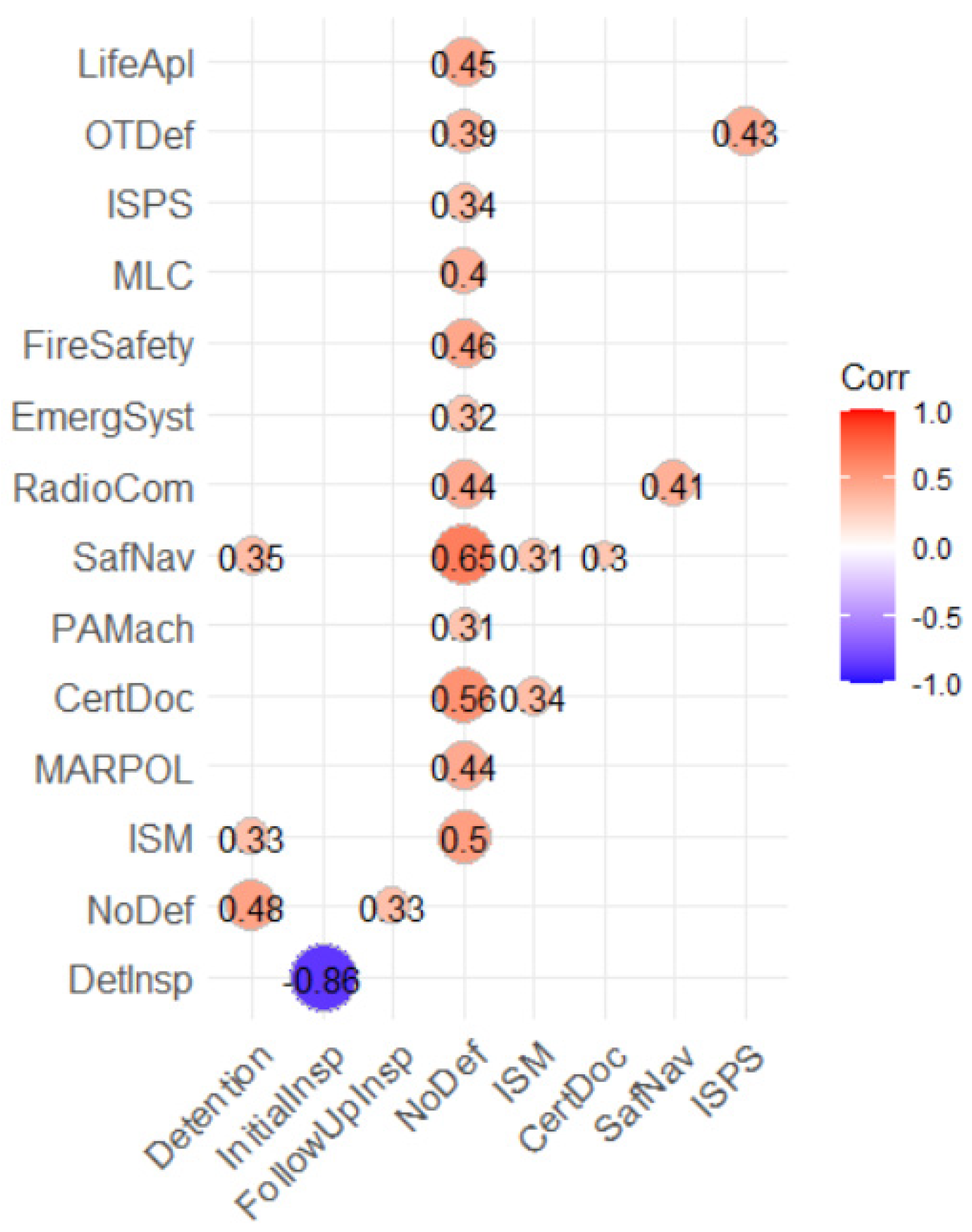
At the beginning of the paper, before normalisation, a graphical representation of the correlation between all input variables was displayed, highlighting only correlations greater than ±0.3. A correlation greater than 0 indicates a positive correlation, meaning that the variables are associated in the same direction, while a correlation less than 0 indicates a negative correlation, where the variables are associated in the opposite direction.
The normalisation of data [
30] is crucial to preparing data for applying machine learning (ML) methods for several reasons. Firstly, different variables in the dataset may have different units of measurement, which can lead to one variable dominating another during model training. Normalisation ensures that all variables have the same units of measurement and that the contribution of each variable to the model is balanced. Another reason is that many ML algorithms assume that the data are in a particular range and will not perform well if the data have different scales. Normalisation can also help to speed up the convergence process during model training. In this case, a normalisation technique called “centring” and “scaling” was used, where each variable is first centred so that its mean becomes zero and then scaled to have a standard deviation of 1. This technique ensures that all variables have the same influence on the NN model, which contributes to better model efficiency and accuracy during training.
After data preparation, the paper applies four different NN models: “nnet”, “mlp”, “neuralnet”, and “rsnns”. These models are used to predict the probability of vessel detention, with particular attention paid to optimising the parameters of each model to achieve the highest possible accuracy and robustness.
Each NN model is presented graphically to explain its structure based on the training dataset and its performance. Finally, a comparative plot is provided for all four NN models regarding key metrics, including accuracy, precision, sensitivity, F1 score, and others.
The discussion analyses the results obtained using the four NN models and compares their key performance metrics. The discussion focuses on processing and describing each model’s advantages and weaknesses in predicting vessel detections during PSC inspections, emphasising the factors affecting model performance. This section also addresses each NN model’s computational and time complexity, which is critical for evaluating the model’s efficiency under real-world conditions. Considering the modelling specifics, special attention has been paid to the computational cost of training and testing the model and the time required to implement each model.
Finally, the conclusion gives an overview of the paper’s limitations and potential areas for improvement, such as using other techniques, improving the results, or optimising the existing models.
The R programming language, which specialises in statistical analysis and data processing, was used to implement the NN models. Relevant R libraries for NNs were used, briefly described in the previous chapter.
Table 1 provides an overview of the methodology used.
4.1. Dataset Description
The input dataset is represented as a matrix consisting of data from 421 inspections, each described by 26 variable values relating to the country of inspection, memorandum, flag, and other data such as inspection status, number, and type of defects and operational factors that may affect the vessel’s safety.
The PSC input data used in this paper are available on the Equasis website [
31] and relates to inspections carried out by the competent authorities in ports to verify vessels’ compliance with international safety, environmental, and technical standards. The recorded inspection data are essential for assessing vessel safety and reducing the risk of accidents at sea. The website contains detailed information on the number of inspections carried out throughout a vessel’s life cycle, including the results of these inspections, which may indicate irregularities or deficiencies in the vessel’s equipment and maintenance. In cases where serious problems are identified, a vessel may be detained in port until the irregularities are rectified or the required safety standards are met. In addition, the website provides insight into the sanctions that can be imposed for non-compliance, including a possible ban on further voyages or mandatory repairs. Equasis also provides an analysis of inspections by vessel flag and port state, enabling a global assessment of the frequency and effectiveness of PSC measures. This is a valuable tool for researching trends and assessing safety factors in international maritime transport.
The input data refer exclusively to offshore vessels built in 1997 or later with a gross tonnage (GT) between 3000 and 13,000. The observation period extends from 2005 to the present.
The target variable “Detention” can have a numerical value of 0 or 1. If a vessel is detained, “Detention” takes the value 1; otherwise, it takes the value 0. The total number of recorded inspections in the input dataset is 421, with 56 vessels detained (13.30%).
Three of the 26 input variables in the dataset are text variables (CountryOfInsp, Memo, and Flag), which were converted to factors so that they could be used in learning models as NNs can only process numerical values.
During data preparation, the input dataset was randomly split into a training and a test dataset, with a ratio of 80% (337) for training and 20% (84) for testing. This split allows for efficient validation, i.e., testing the model on unseen data, which increases the accuracy of the predictions.
Table 2,
Table 3 and
Table 4 describe all variables, define their type, the cut-off or mean values, and the frequency of their occurrence.
The variables “CountryOfInsp” (36 options), “Flag” (32 options), and “Memo” (12 options) are categorical variables.
Table 3 shows a tabular representation of the 10 most frequent values for these three variables in the input dataset (421).
The general descriptive statistics for the remaining 22 numerical independent variables can be found in
Table 4.
The descriptive statistics of the numerical variables grouped according to the outcome variable “Detention” are presented in
Table 5.
Figure 1 was created based on the correlation, i.e., the relationships between the different variables. The value in each cell of the matrix with dimensions
), where
stands for the model’s total number of variables (26) and represents the correlation coefficient between two variables. A correlation coefficient close to 1 indicates a strong positive correlation, while a coefficient close to −1 indicates a strong negative correlation. A coefficient close to 0 indicates a weak or no linear relationship between the variables. In
Figure 1, correlation values greater than ±0.3 are shown graphically and labelled as significant.
Figure 1 shows a positive correlation between “NoDef” and “ISM”, with a moderate positive correlation of 0.50. “NoDef” and “MARPOL” also show a positive correlation of 0.44, indicating a moderately positive relationship between these variables. “NoDef” and “CertDoc” show a relatively strong positive correlation of 0.56, which means that as one variable increases, the other also increases. “PAMach” and “SafNav” show a moderate positive correlation of 0.65, which means that higher values for “PAMach” generally go hand in hand with higher values for “SafNav”. “SafNav” and “RadioCom” show a moderate positive correlation of 0.41. “SafNav” and “NoDef” also show a moderate positive correlation of 0.65.
The variables “InitialInsp” and “DetInsp” have a strong negative correlation of −0.86. When “InitialInsp” increases, “DetInsp” decreases, and vice versa.
4.2. Metrics
Several key metrics are used to evaluate and compare the predictive performance of the four NN models. Based on the confusion matrix, precision, accuracy, sensitivity, F1 score, and other statistical measures are calculated.
In the confusion matrix (
Table 6), the values of True Positives (TPs), False Positives (FPs), True Negatives (TNs), and False Negatives (FNs) are arranged according to the actual (true) and predicted classes. In the binary classification, which was applied to all four NN models in this paper, the confusion matrix has a
structure.
In the confusion matrix, TP represents the number of correctly classified positive cases, i.e., the cases in which the actual value was 1, and the model predicted 1. FPs denote the number of negative cases incorrectly classified as positive, i.e., the cases in which the actual value was 0 but the model predicted 1. TNs denote the number of correctly classified negative cases, i.e., the cases in which the actual value was 0, and the model predicted 0. FNs denote the number of positive cases incorrectly classified as negative, i.e., cases where the actual value was 1 but the model predicted 0.
The most important metrics for the performance evaluation of NN models are shown in
Table 7.
The values listed and explained in
Table 7 are essential metrics for evaluating classification models, especially when misclassification or neglect of positive samples is undesirable.
All four NN models “nnet”, “mlp”, “neuralnet”, and “rsnns” were trained and tested on the same dataset. Based on the predictions of each model and the values obtained from the confusion matrix (TN, FP, FN, and TP), the corresponding performance indicators were calculated and presented. This comparison aims to determine which model shows the most effective approach in recognising the positive class, especially when dealing with unbalanced data.
A dataset is considered unbalanced when the frequency of one class significantly exceeds that of the others, which is the case for the present dataset as it contains only 56 (13.3%) positive instances. Consequently, the metrics described above provide a comprehensive framework for analysing the performance of classification models and can be used to interpret the results derived from the confusion matrix.
4.3. Implementation
The methodology in this paper was implemented using R 4.4.2 [
2], the latest stable version of the R statistical programming language, released on 31 October 2024. This version offers numerous improvements over previous versions, including improvements in features, packages, installation processes, compatibility, and development and documentation tools. R 4.4.2 offers advanced optimisation features for code execution and supports advanced features that improve statistical analysis and modelling efficiency and accuracy.
The following R packages and their functions were used to implement the four NN models in this methodology:
The “Nnet” package [
24] provides a basic implementation of feedforward NNs with one or more hidden layers. It uses the “nnet()” function for training models, including logistic regression, classification, and regression models. Due to its simplicity and efficiency, this package is beneficial for basic classification and regression tasks.
The “Mlp” package [
26] implements deep neural networks (DNNs) for classification and regression problems. It offers additional functionalities, such as optimising hyperparameters and training multilayer perceptron models (MLP). The “mlp” package is often used to model complex relationships between input and output data in various applications.
The “Neuralnet” package [
27] supports the implementation of complex feedforward NNs with multiple hidden layers and is suitable for regression and classification problems. It provides functions for optimising weights and evaluating model performance, which makes it very useful for analysing high-dimensional data.
The Rsnns package [
28] implements various types of NNs, including “mlp” and radial basis function (RBF) networks. It also facilitates model evaluation and optimisation using multiple techniques. It is particularly useful for advanced ML and predictive modelling applications and for processing large datasets.
Using these NN models in R enables precise data analysis, model training, and parameter optimisation, which is crucial for AI research applications.
5. Results
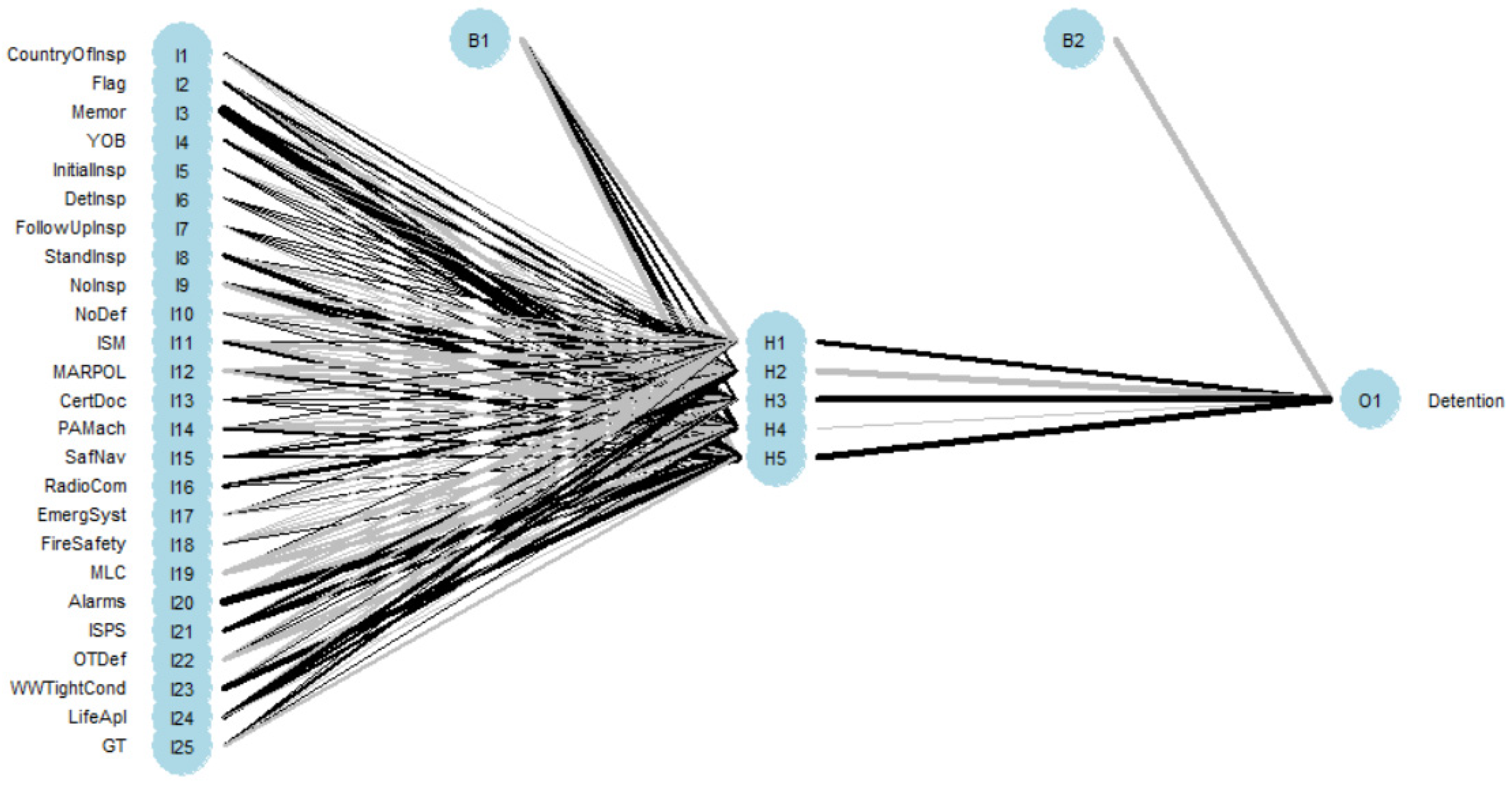
The results of the NN model “nnet” (
Figure 2) show the network’s training parameters, including the weights between the layers and the bias values. Like the others, this NN model was trained using functions of the R programming language.
The NN model “nnet” created for the training dataset consists of three layers (input, hidden, and output). The input layer comprises 25 variables the model uses as input data. The hidden layer contains five neurons that help model complex non-linear relationships between inputs and outputs. The weight matrix between the input layer and the hidden layer (hidden_weights) has 25 rows and 5 columns (the first eight are shown in
Table 8), i.e., each of the 25 input neurons is connected to each of the five hidden neurons (V1–V5). Each weight in the matrix determines how strongly a particular input neuron influences a particular hidden neuron. For example, the first input neuron weights −20.596 for the first hidden neuron, which means a strong negative influence. Similarly, the eighth input neuron weights 31.749 for the fifth hidden neuron, which is a strong positive influence. Large weights (either in the positive or negative direction) indicate that the corresponding input significantly influences the activation of the hidden neuron. Smaller weights indicate a weaker influence.
The weight matrix (vector) between the hidden and output layers (
Table 9) with dimensions (5 × 1) illustrates how each of the five hidden neurons contributes to the final output of the network. The output layer consists of a single output neuron that is orientated to the prediction task performed. Since hidden neuron 3 weighs 16.590, it has a significant positive impact on the output. Similarly, hidden neuron 2 has a weight of −11.743, which lowers the output value. Combining positive and negative weights allows the network to find optimal relationships between the hidden layers and the output.
The bias values for the hidden layer are listed in
Table 10. The vector hidden_biases with the dimensions (5 × 1) contains the bias values for the five hidden neurons. The bias is an additional constant that allows the NN to match the outputs of the hidden neurons better, regardless of the input weights. For example, the bias (B1) for the first hidden neuron is −16.236, which means that this neuron will only be activated if the combined input exceeds this value. Similarly, the bias for the fourth hidden neuron is 16.910, indicating a shift in activation of this neuron towards higher input values. This means that the bias works similarly to the intercept in linear models and helps the network to adapt optimally to the data.
The bias for the output neuron (B2) with the dimension (1 × 1) is 17.454 and acts as an additional parameter that controls the activation level of the output neuron. This means that even if all hidden neurons output zero, the output neuron will have an initial value of 17.454 before the activation function is applied.
The output of the NN is defined by Equation (1):
where
is the weight between the hidden layer and the output layer;
is the output of the hidden neuron;
is the bias (in this case, 17.454);
is the activation function, and the bias shifts the sum before activation.
These elements are important as they enable the model to approximate the data better. Without the bias, the NN would be limited to models that pass through the coordinate origin (0,0). The bias also improves the network’s ability to learn non-linear relationships, allowing the model to fit the transfer function flexibly. Finally, this method accelerates convergence during training, as the bias enables the network to adapt to optimal values more quickly.
In this case, the positive bias value of 17.454 indicates that the model generally predicts higher output values unless weights and activation functions neutralise them.
Figure 2 illustrates that the NN model “nnet” is designed to process 25 input variables, transform them through five hidden neurons and produce a single output. The weights and bias values structure shows that the network can model complex relationships within the data.
Further improvement of the model would require experimenting with increasing or decreasing the number of hidden neurons (e.g., testing the network with 10 or 3 hidden neurons) and applying weight regularisation to prevent overfitting. This analysis clearly shows that the NN has successfully learnt certain patterns in the data. However, for the final evaluation of its performance, additional analyses (e.g., accuracy tests) would be beneficial.
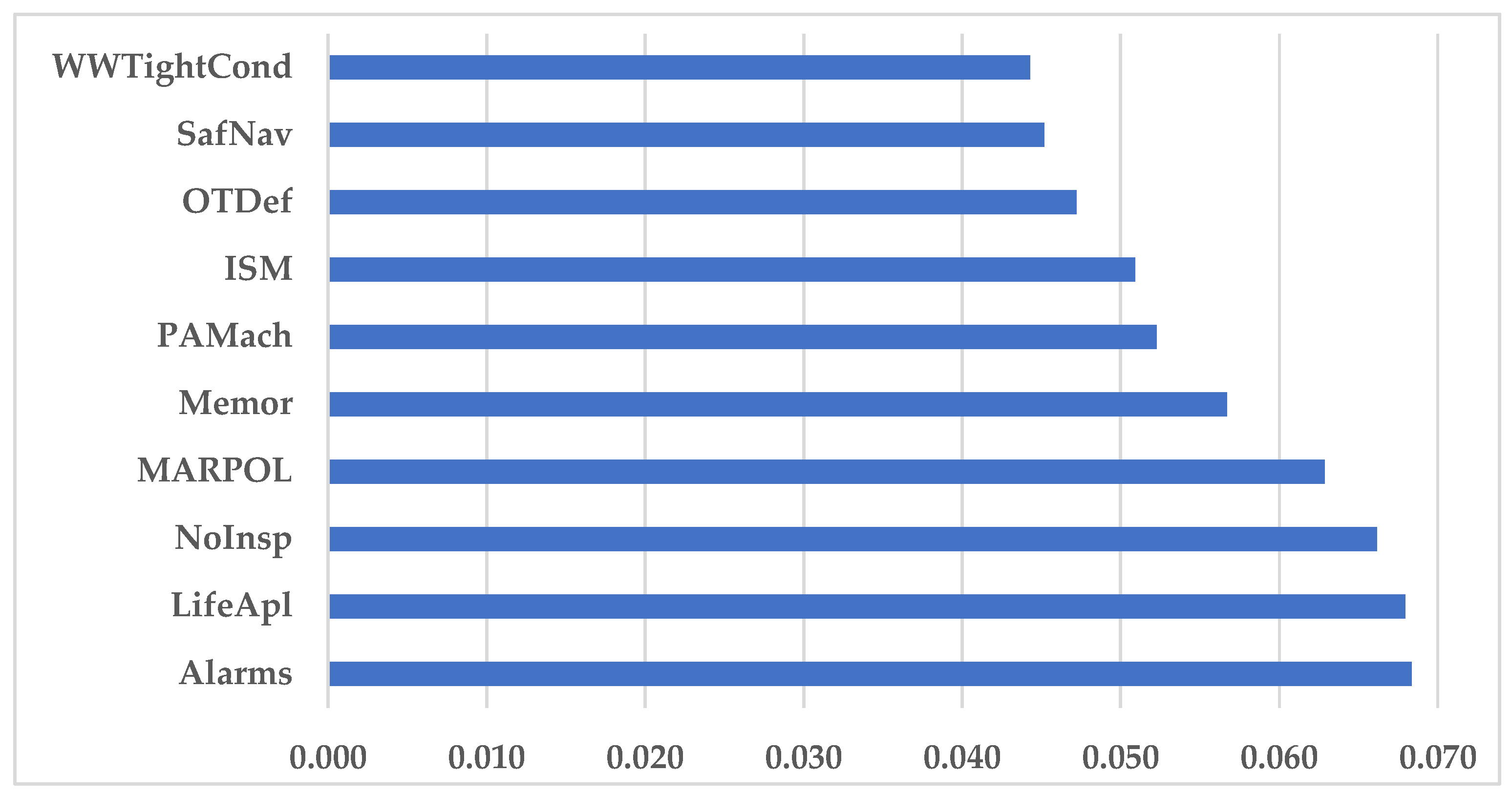
Figure 3 shows the ranking of the 10 most influential variables and illustrates the relative importance of each variable in the “nnet” model. According to the results, the most crucial variable is “Alarms” with a relative importance of 0.0683, which indicates the most substantial influence on the model’s prediction. The following most essential variables are “LifeApl” (0.0679) and “NoInsp” (0.0662), which also significantly influence the results of the model, albeit to a lesser extent. Other variables such as “MARPOL”, “Memor”, and “PAMach” play a lesser but still significant role. This visualisation improves the interpretability of the model, facilitates the identification of key factors, and directs further research to the most influential variables.
The evaluation results of the NN model “nnet” for the test dataset (84 instances) are shown in the confusion matrix (
Table 11).
The results of the NN model “mlp” show the performance of a multilayer perceptron (“mlp”) trained on a dataset with 337 samples and 25 predictors for a binary classification problem (classes “0” and “1”). The model was validated with a 10-fold cross-validation, increasing the reliability of the performance estimation (
Figure 4).
The model was tested with three sizes of hidden layers (size = 1, 3, and 5) and evaluated for accuracy. The best results were obtained with five neurons, as this configuration provided the highest accuracy (91.7%), shown graphically in
Figure 4.
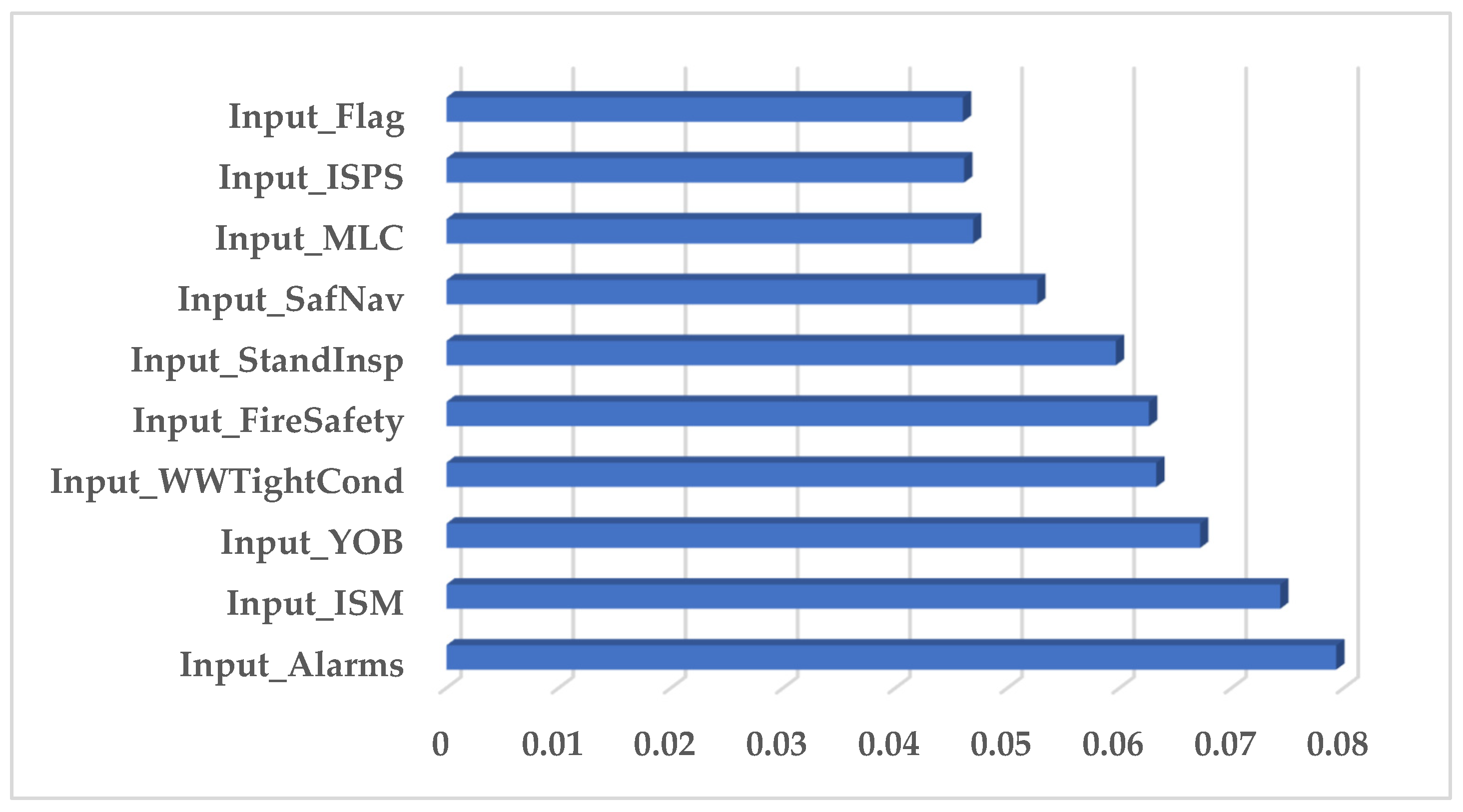
Figure 5 illustrates the relative importance of the 10 most influential variables in the “mlp” model, while the confusion matrix for the “mlp” model for the test dataset has the following values: TN = 70, TP = 7, FP = 5 and FN = 2 (
Table 12).
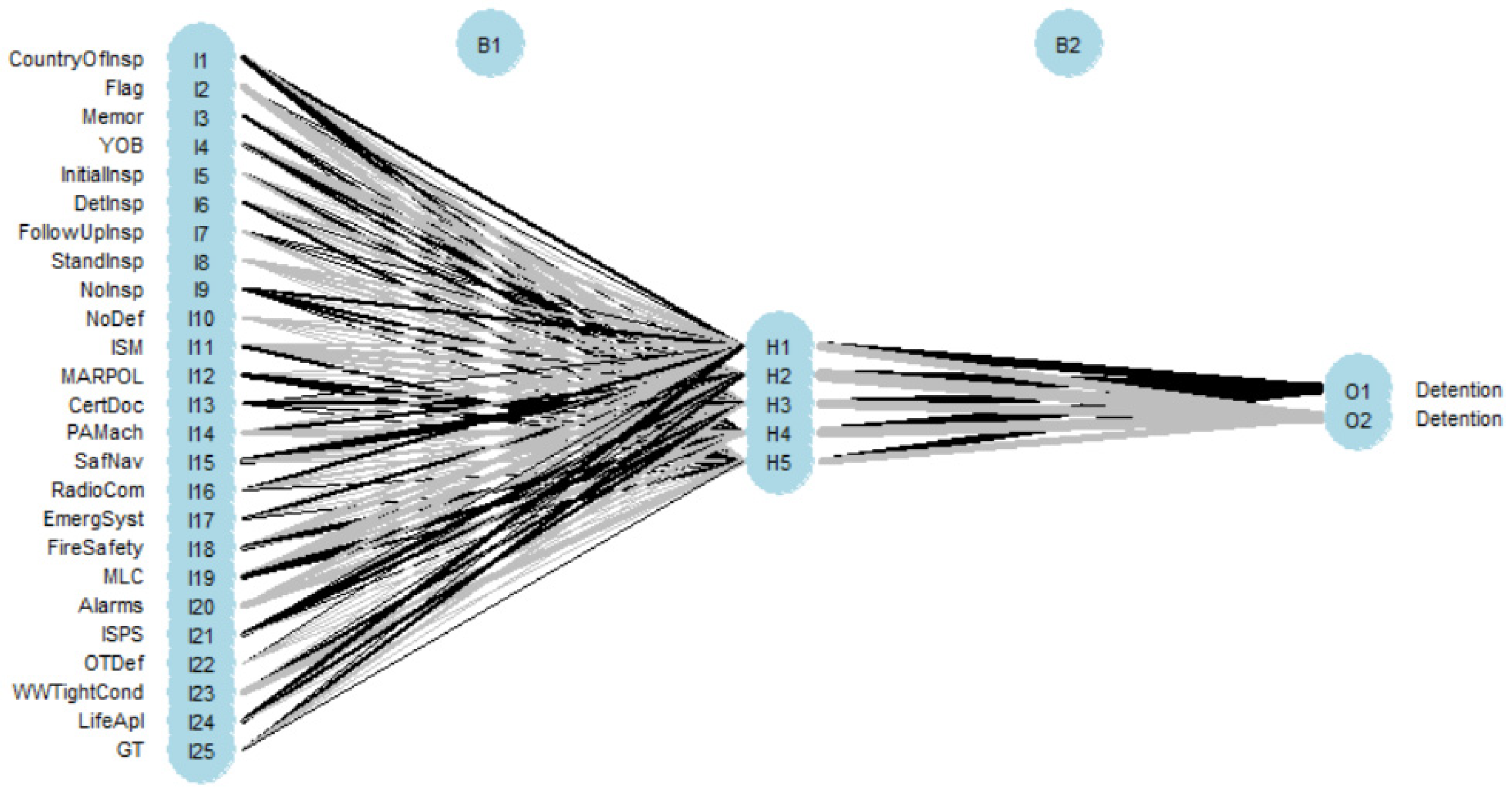
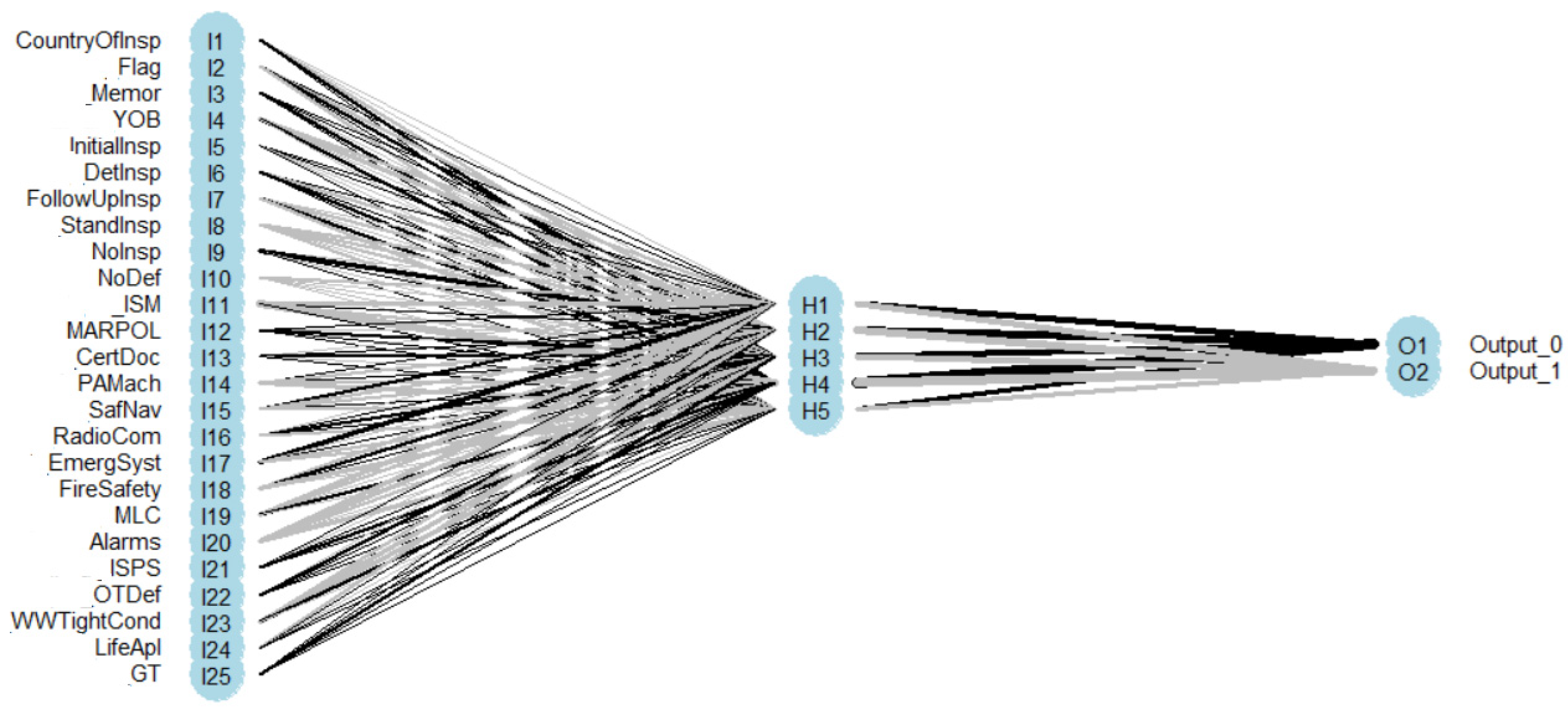
Figure 6 illustrates the NN model “neuralnet”, which consists of 25 input variables, a single hidden layer with five neural units, and an output layer with two neural units. The model architecture determines how the network transforms the input data to optimise the classification task. The input layer consists of 25 variables that represent key factors for analysing the detention of vessels in ports. These include attributes such as the country of inspection (CountryOfInsp), the flag of the vessel (Flag), the year of construction (YOB), the number of previous inspections (NoInsp), defects (NoDef), and various safety and regulatory parameters.
The hidden layer consists of five neural units (1layhid1 to 1layhid5) that extract and combine significant patterns from the input data. Each neuron in the hidden layer receives weighted input signals (B1), processes them through activation functions, and passes the outputs with the weighted output signal (B2) to the next layer. The weighting coefficients of the model determine the strength and significance of the connections between the individual input variables and the hidden neurons.
The output layer consists of two neural units (“0” and “1”) that represent a binary classification, i.e., the prediction of whether a vessel will be kept (1) or released (0). Each output unit receives input signals from all five hidden neurons, whose values are combined using the corresponding weights and then transformed by an activation function to obtain the final probability prediction.
The model was trained with 328 iterations (steps) and achieved a threshold error of 0.009, indicating high model convergence. The model error is 2.082, which suggests the network’s overall accuracy.
This NN structure enables the detection of complex non-linear relationships between the variables and optimises the decision-making process regarding the detention of vessels based on historical inspection data.
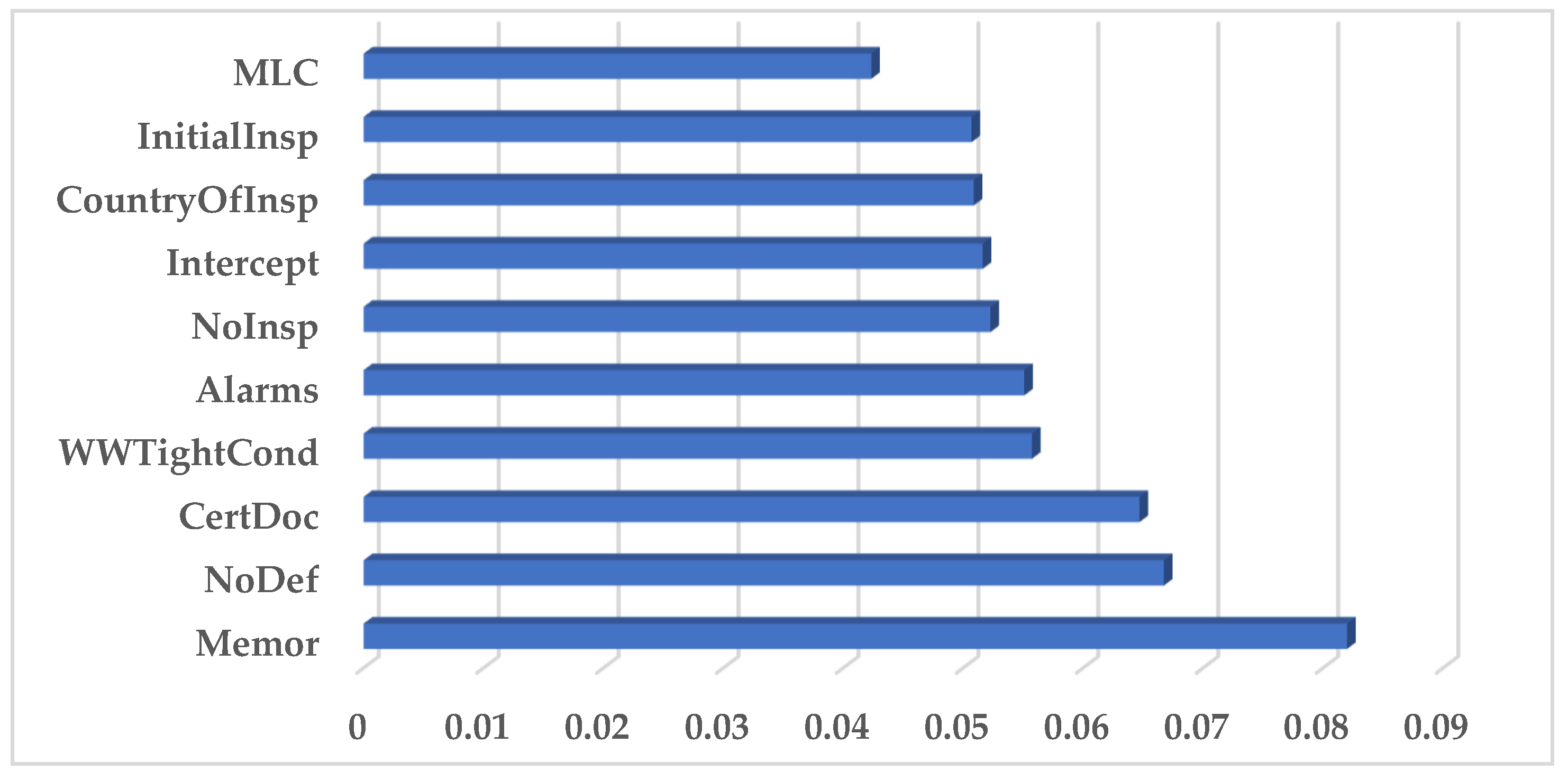
In addition to the 25 input variables in the model, there is an axis intercept, an additional component in analysing the variables’ importance. The intercept is a crucial component in models such as the NN as it defines the base prediction of the model before any input variables are applied. In other words, the intercept reflects the baseline output value, which is used as an output reference for the predictions regardless of the values of the input variables.
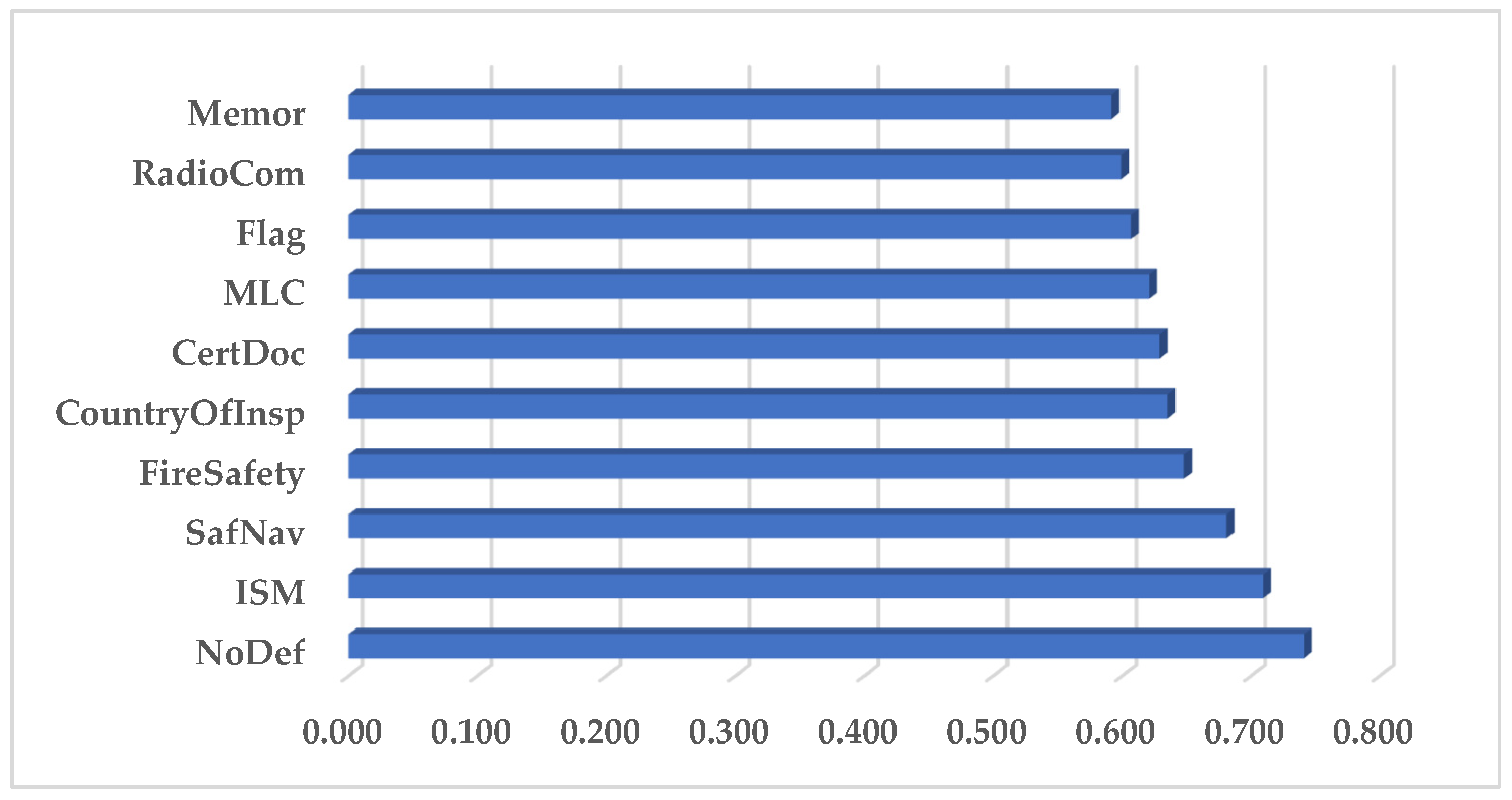
In the context of the NN, the intercept is a parameter that allows the network to “shift” or “adjust” its output value relative to a predefined reference point. This is particularly important as it allows the model to be better generalised and adapted to different data patterns. Without the intercept, the model would be forced to make predictions across all network layers that are fixed at zero, significantly limiting its flexibility and accuracy. Due to this fundamental role, the intercept is often treated as a separate variable when evaluating the importance of variables, as it affects the initial accuracy of the model. Thus, although the model may have 25 input variables, the intercept is often included in the analysis of variable importance, which explains the presence of 26 variables in the variable importance scores.
The importance of the top 10 input variables in the “neuralnet” model is shown in
Figure 7, while the confusion matrix of the “neuralnet” model can be seen in
Table 13.
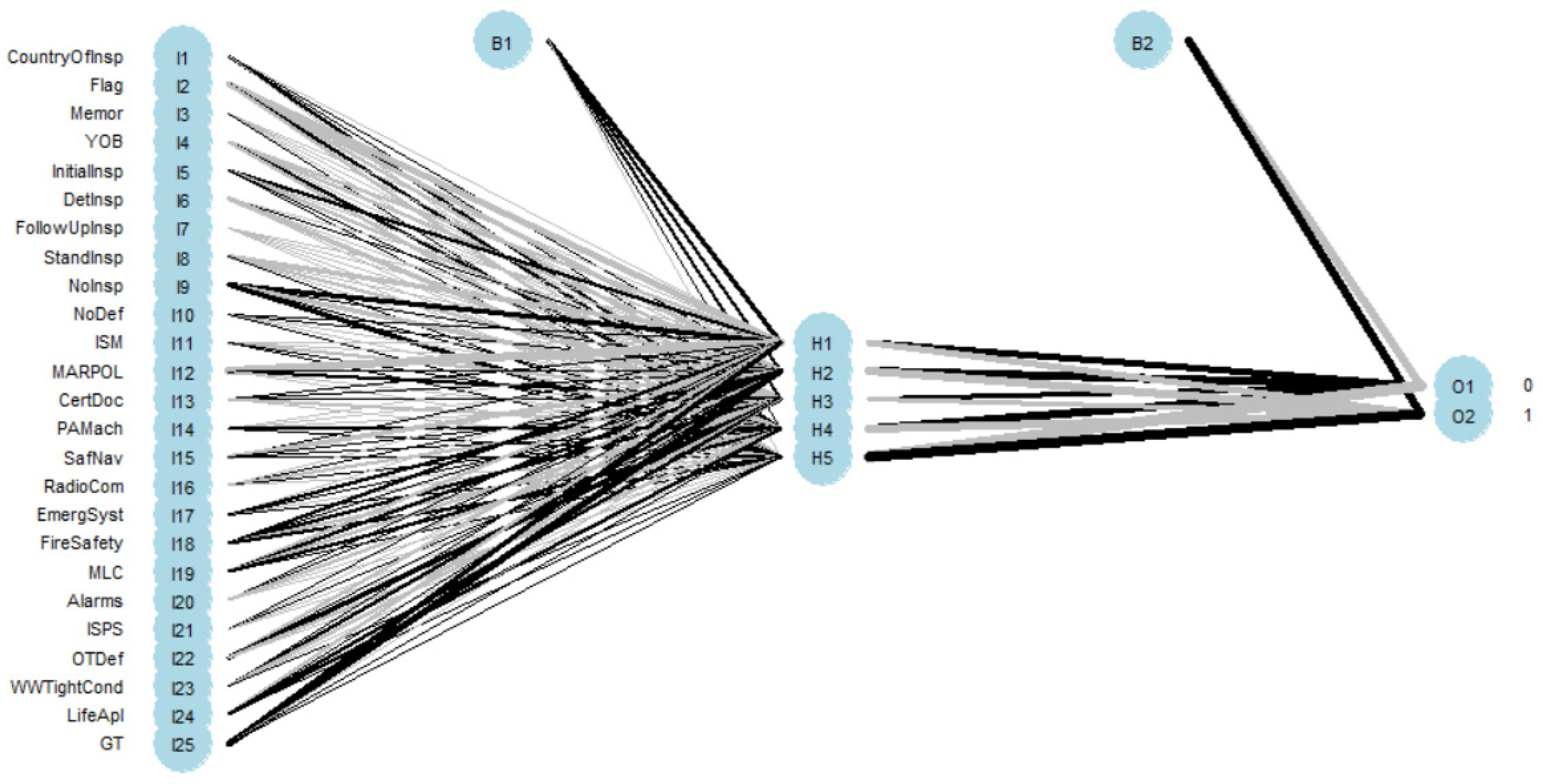
Figure 8 shows the structure of the NN model “rsnns”, which consists of 25 input units (representing different vessel and inspection features), five hidden units (using the same activation function as the input units), and two output units (one using a logistic activation function and the other using the same activation as the hidden units).
This network uses standard backpropagation for training and a topological order for updating the units. The connections between the units are defined by weights that are updated during the training process.
The meaning of the 10 most important variables in the “rsnns” model is shown in
Figure 9, while the confusion matrix for the “neuralnet” model is shown in
Table 14.
The NN model “nnet” consists of three layers: an input layer with 25 variables, a hidden layer with five neurons, and an output layer. The weight matrices of the model between the layers determine the influence of the individual inputs and hidden neurons on the final output. Bias values for the hidden neurons adjust the activation thresholds, improving the model’s ability to capture complex non-linear relationships. The output layer, guided by these weights and biases, predicts values based on the data, with the biases helping the network to adapt more quickly during training. The performance of the model was evaluated using accuracy metrics and a confusion matrix and showed reliable prediction for binary classification tasks. Further improvements could include adjusting the number of hidden neurons and adjusting the weights. The importance of the model’s variables was also analysed to identify the most important factors influencing the predictions. Similar NN models such as “mlp”, “neuralnet”, and “rsnns” were compared, each with different configurations and training parameters, which showed effective prediction and analysis of the importance of the variables.
Although all models (“nnet”, “mlp”, “neuralnet”, “rsnns”) were trained and tested on the same dataset, the differences in the results can be explained by variations in the optimisation techniques, the model parameters, and their ability to adapt to the specifics of the dataset.
Model complexity: Each of these models uses different architectures and methods to adjust the weights and activation functions. For example, “nnet” and “neuralnet” models may use different approaches in defining the number of layers and neurons, which affects their ability to adapt appropriately to the data.
Optimisation methods: Differences in optimisation methods (such as weight adjustment algorithms, learning rates, and regularisation) can lead to differences in the models’ ability to minimise the loss function. These factors can significantly affect the accuracy of the model in the test dataset.
Model complexity: Some models, such as “mlp” or “rsnns”, may use deeper or more complex architectures that are better able to model non-linearities in the data, while simpler models may have limited ability to capture all features of the dataset.
Although all models have been trained with the same data, their different architectures and optimisation approaches can lead to differences in performance. Understanding how each model processes the data and how their complexity and optimisation techniques are aligned can give you deeper insights into these results.
6. Discussion
The analysis of the confusion matrices for all four NN models “nnet”, “mlp”, “neuralnet”, and “rsnns” is shown in
Table 15. The results provide a deeper insight into the performance of the models based on the distribution of correct and incorrect classifications.
The models show similar values in terms of the number of TNs, with “mlp” (70) and “rsnns” (69) performing slightly better than “nnet” (63) and “neuralnet” (68). This indicates that “mlp” and “rsnns” are slightly more accurate in identifying negative cases. For FPs, all models except “rsnns” have the same value (5), while “rsnns” achieves the lowest number (2), which may be advantageous in contexts where minimising FPs is crucial.
The number of FN instances shows clear differences between the models, with “mlp” achieving the best result with only two FN instances, while “nnet” has the highest number (9), which reduces its sensitivity and increases the probability of missing TP instances. All models have the same number of TP instances (7), meaning they recognise equally positive instances.
From these results, it can be concluded that the “mlp” model is the most efficient, as it achieves the lowest number of FN instances at a relatively low FN rate. The “rsnns” model is more accurate in avoiding FP classifications, but it misses more positive instances, which can be critical in contexts where identifying positive instances is crucial. The “nnet” model shows the weakest performance as it has the highest number of FN classifications, which reduces its reliability and limits its practical usability.
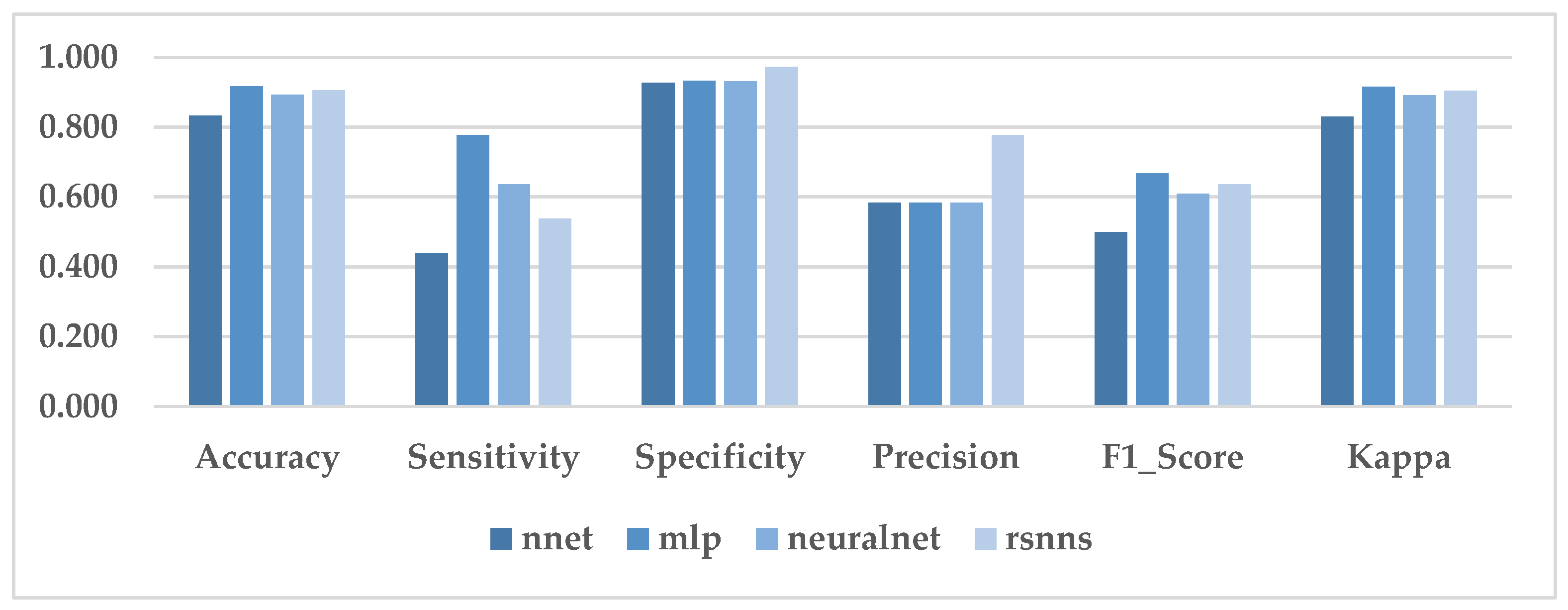
The comparative analysis of the models “nnet”, “mlp”, “neuralnet”, and “rsnns” (
Table 16) reveals significant performance differences based on various metrics.
Regarding accuracy, the “mlp” model stands out with a value of 0.917, while “rsnns” is close at 0.905, indicating superior classification ability compared to “nnet” (0.833) and “neuralnet” (0.893). This trend is further supported by the Kappa coefficient, where “mlp” (0.916) and “rsnns” (0.904) show better agreement with actual data compared to the other models. The AUC confirms this conclusion, with the “rsnns” model achieving the highest AUC value (0.849), suggesting its superior ability to differentiate between positive and negative cases. In contrast, the “nnet” model exhibits the lowest AUC value (0.729), indicating its weaker ability to separate classes.
In terms of sensitivity, the “mlp” model performs the best with a value of 0.778, significantly higher than “nnet” (0.438), meaning that “mlp” is more effective at identifying positive cases. Specificity is high across all models, with “rsnns” achieving the highest specificity (0.972), indicating superior efficiency in recognising negative cases.
Precision is the same for the “nnet”, “mlp”, and “neuralnet” models (all at 0.583), while “rsnns” achieves a better precision of 0.778, suggesting its capability to avoid false positives. NPV is also higher in the “mlp” (0.972) and “neuralnet” (0.944) models, suggesting that these models are more reliable in predicting negative outcomes.
The balanced accuracy metric, which considers both sensitivity and specificity, shows that the “mlp” model is the most balanced with a value of 0.856, while “neuralnet” (0.784), “rsnns” (0.755), and “nnet” (0.682) are comparatively lower, further confirming the superiority of “mlp” in maintaining a balance between recognising positive and negative cases.
Finally, the F1 score, which reflects the balance between precision and sensitivity, is highest for the “mlp” model (0.667), with “rsnns” following closely at 0.636, indicating that it is also effective in balancing these metrics.
In conclusion, the “mlp” model stands out as the most balanced and accurate model, with superior sensitivity, balanced accuracy, and overall performance. The “rsnns” model excels in specificity and AUC values, making it the most efficient in distinguishing between positive and negative cases. While each model has its strengths and weaknesses, the choice depends on the specific priorities of the task.
Figure 10 shows the ROC graphical representation of the performance of the binary classification models (“nnet”, “mlp”, “neuralnet”, and “rsnns”) at different decision thresholds. The primary purpose of the ROC curve is to analyse the model’s ability to distinguish between positive and negative instances. This metric is particularly useful when there is an imbalance between the classes, as it allows the evaluation of the trade-off between the correct detection of positive instances and false alarms.
An important measure derived from the ROC curve is the AUC, which quantifies the model’s overall performance. An AUC value of 0.5 indicates a model with no predictive power, while values between 0.5 and 0.7 indicate a weak or moderate model, values between 0.7 and 0.9 indicate a good model, and values above 0.9 indicate an exceptionally accurate model.
The model “rsnns” achieves the highest AUC value (0.849), indicating its superior ability to distinguish positive and negative cases. It is followed by “mlp” with an AUC value of 0.778, indicating a solid but slightly weaker precision than “rsnns”. The “neuralnet” model achieves an AUC value of 0.764, close to the value of “mlp” but indicates a slightly weaker performance in class separation. “Nnet” has the lowest AUC value (0.729), indicating the lowest efficiency in class separation and a greater tendency to overlap between positive and negative instances. From these results, it can be concluded that the “rsnns” model has the best overall classification ability, while “nnet” shows the weakest discriminatory power among the models analysed.
Relatively low AUC values can be explained by a significant imbalance in the data, with a low percentage of truly detained vessels in the dataset (about 13.3%). When the positive class (detained vessels) represents a tiny proportion of the total dataset, the model tends to favour the negative class to maximise accuracy, which has a negative impact on sensitivity. This data distribution makes it more difficult for the models to recognise the rare detention cases, directly reducing the AUC value.
Based on all metrics presented, the “mlp” model can be considered the most efficient model due to its superior accuracy, balance between sensitivity and specificity, and overall reliability as measured by the kappa coefficient and AUC value.
Figure 11 shows that the “mlp” model has the best accuracy and the best F1 score and is therefore the most balanced model in terms of precision and sensitivity. The model “rsnns” has the best specificity and precision, indicating that it is the most accurate in identifying negative cases. The “nnet” model has a significantly lower sensitivity, suggesting that it misses many positive cases. The Kappa values confirm that all models are sound in terms of fit to the actual data, but “mlp” stands out as the best model in all key metrics.
The complexity of algorithms for NNs depends on the number of layers, the number of neurons per layer, the number of epochs, and the optimisation method. The package “nnet” in R allows the implementation of simple NNs for classification and regression tasks based on gradient descent for training. Its time complexity is , while the required memory is . These networks are limited by their simple architecture.
“Mlp” is the most commonly used NN type, consisting of an input layer, one or more hidden layers, and an output layer. Training is performed using the backpropagation algorithm, which has a time complexity of and a memory complexity of This makes “mlp” flexible, but computationally intensive for complex problems.
The “neuralnet” package facilitates the implementation of feedforward networks with one or more hidden layers, which rely on gradient descent for training. Its time complexity remains and the memory complexity is . This package is particularly suitable for visualisation and simpler architectures.
The package “rsnns” offers advanced options for implementing different types of networks, including “mlp” and radial-based networks. It uses optimisation techniques such as “quickprop” and “rprop”, which can reduce the time complexity, although the fundamental estimation remains the same . The memory complexity is However, this package includes better memory management features, improving performance for more extensive networks.
Therefore, all four NN models (
Table 17) have similar computational complexity but differ in flexibility, optimisation capabilities, and scalability. More extensive models require significant computational resources while choosing a suitable algorithm and optimisation method can improve performance in practical applications.
The selection of relatively simple ANN models in this study was justified by a combination of computational constraints, domain-specific requirements, and the structure of the dataset. While the DNN and more complex architectures have demonstrated remarkable capabilities in various domains, their advantages must be weighed against practical considerations such as interpretability, training complexity, and resource requirements. In the context of PSC, where regulators need to make transparent and explainable decisions, simpler models offer a more practical solution.
More comprehensive ANN architectures, including deep learning models with multiple hidden layers, are usually characterised by high-dimensional feature spaces or unstructured data formats. However, the dataset used in this study consists of structured tabular data, where conventional ANN models often perform comparably to more complex architectures while being more interpretable. Furthermore, the implementation of highly complex models would require significantly higher computing power, making them less feasible within the operational constraints of the maritime regulatory framework.
While small language models and other advanced deep learning techniques have revolutionised many fields, their application in PSC is still largely unexplored. As their main strength lies in the processing of unstructured text data, their direct integration into structured maritime datasets poses a challenge. However, future research could explore hybrid approaches that combine classical ANN architectures with advanced representation learning techniques to evaluate their potential to improve prediction accuracy while maintaining transparency and efficiency of decision-making.
When implementing NN models, it is important to realise that these models can require significant computational power, especially when working with large datasets. We have explored various strategies to optimise resources and reduce computational costs. In addition, access to high-quality, up-to-date data is essential for the effective application of these models. In our work, we have emphasised the importance of continuous data collection and the development of robust databases that facilitate the training of models with real data.
Another consideration is the regulatory framework, which can limit the implementation of models. Regulatory requirements often demand transparency and explainability, which is a particular challenge when applying deep neural networks in complex environments. In addition, challenges can arise in real-world applications, as the need for fast data processing and real-time model integration can complicate their use. These issues require the integration of additional tools aimed at optimising performance and reducing latency, which is crucial for effective real-time prediction.
7. Conclusions
The application of NN models to predict the detention of vessels is an advanced and innovative approach in the context of PSC. This approach enables more efficient targeting of inspections of vessels with a high risk of non-compliance with international safety and environmental standards. Compared to alternative methods, the NN approach offers better adaptability, higher prediction accuracy and a better ability to model complex, non-linear relationships.
One of the main limitations of using NNs in PSC inspections is the quality and reliability of the data. The data collected from various sources, such as previous inspections, vessel characteristics and other technical parameters, may be incomplete or inaccurate, affecting the model’s performance. In addition, the heterogeneity of data from different systems and sources can make it difficult to integrate and analyse.
Social and regulatory complexity also poses a challenge. NN-based models must be harmonised with the legal framework and ethical standards for maritime safety. The use of automated decision-making systems in the context of inspections must be carefully balanced with human oversight to avoid the possibility of errors in the process. One of the limitations of this research relates to the need to train inspectors and other relevant stakeholders in using NN modelling in PSC inspections.
This requires significant investment in training and adapting existing workflows to ensure the efficient and accurate application of these models in real-world conditions. In addition, the limited interpretability of NN models can pose a challenge when explaining or justifying the decisions of inspectors or regulators.
While NNs can achieve high performance in pattern recognition, their “black box” nature can make it challenging to understand the rationale behind certain predictions, which is crucial for safety-related decisions. Therefore, future research needs to focus on improving the interpretability of models through model explanation methods (e.g., LIME (Local Interpretable Model-agnostic Explanations) or SHAP (Shapley Additive Explanations)) that enable a better understanding of modelling decisions. In addition, research into new techniques for dealing with imperfect and unbalanced data is crucial for improving prediction accuracy.
Further research into developing hybrid models that combine NNs with traditional statistical methods can help reduce the risk of error and increase the system’s robustness. In addition, models need to be developed that allow for continuous learning and adaptation to new data and regulatory changes, which could significantly improve the long-term applicability of these systems in the context of PSC inspections.