Salinity Distribution as a Hydrogeological Limit in a Karstic Watershed in Yucatan

 , , , , and
Abstract

1. Introduction
2. Materials and Methods
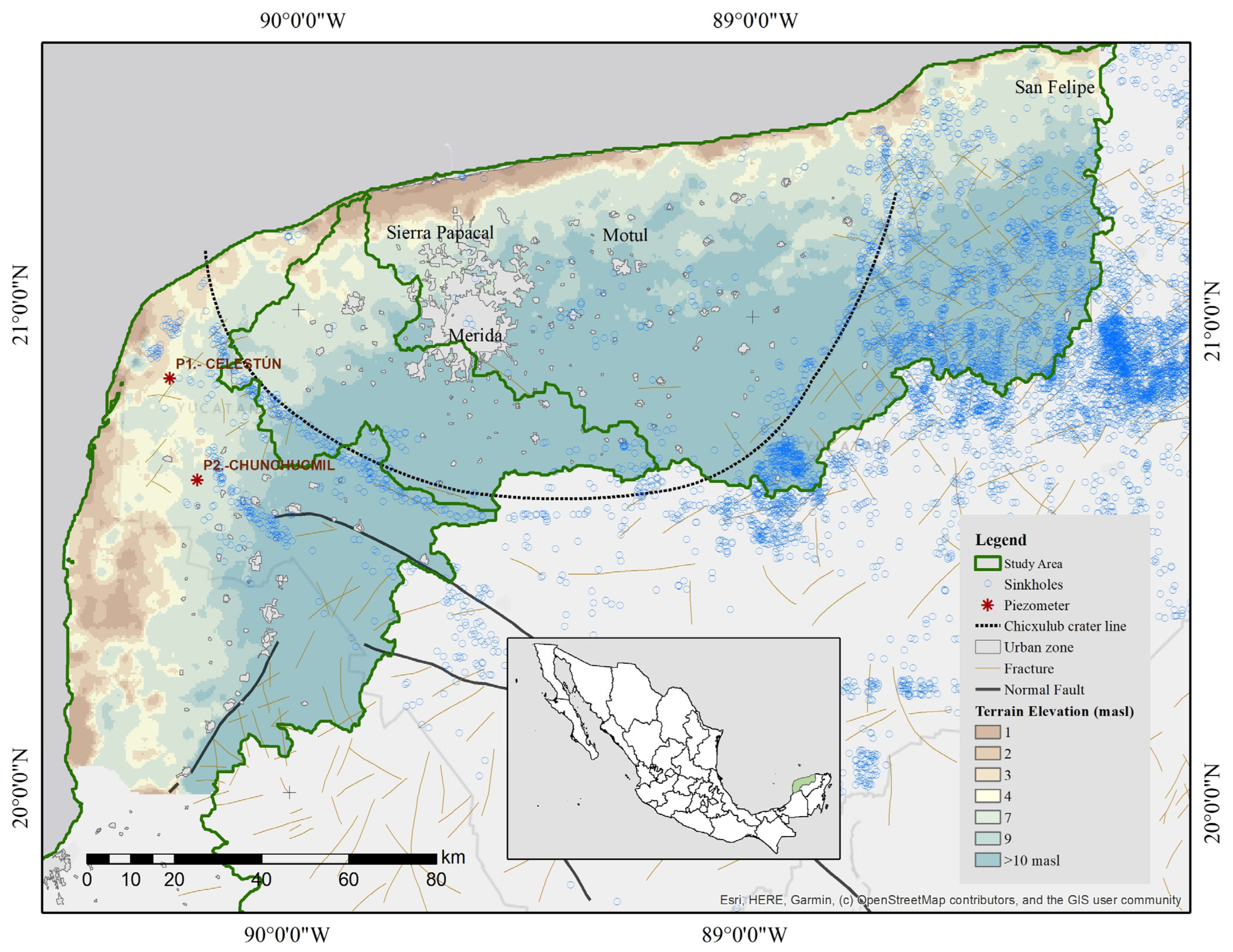
2.1. Study Area
- Aquifer: “A geological formation or a group of hydraulically interconnected geological formations through which water flows or is stored with the possibility of its use for development, consumption, or extraction, and the lateral and vertical limits of which are conventionally specified for evaluation, management, and administration of the national groundwater resources” [35].
- Hydrographic watershed: “It is the unit of the territory, which is separate from other areas, which are usually delimited by a watershed line; a polygonal line formed by the points of highest elevation, where water occurs in different forms, which are stored or flow to an outlet point that may be the sea or another inland receiving body, through a hydrographic network of channels that converge in a main one, or the territory where waters form an autonomous system or are distinguishable from other areas even if they do not flow into the sea. Water, soil, flora, fauna, and other resources can be found together in this space: topographic diversity defines the delimiting space” [35].
2.2. Hydrogeological Data
2.3. Field Methodology
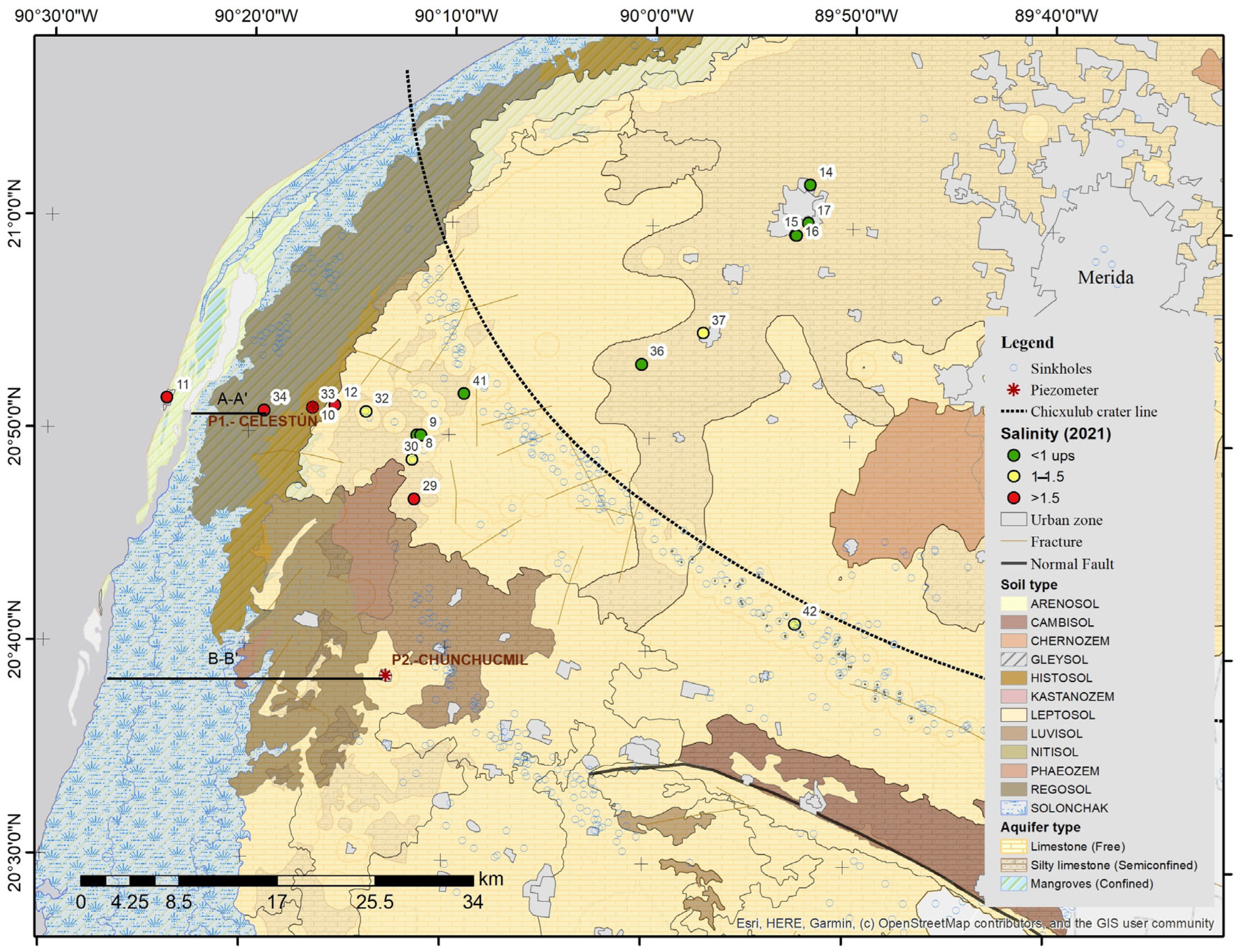
- A field survey was conducted along a transect from Mérida to Celestun in 2021 to record salinity levels using a Hanna HI9828 multiparametric system, previously calibrated according to the manufacturer’s specifications.
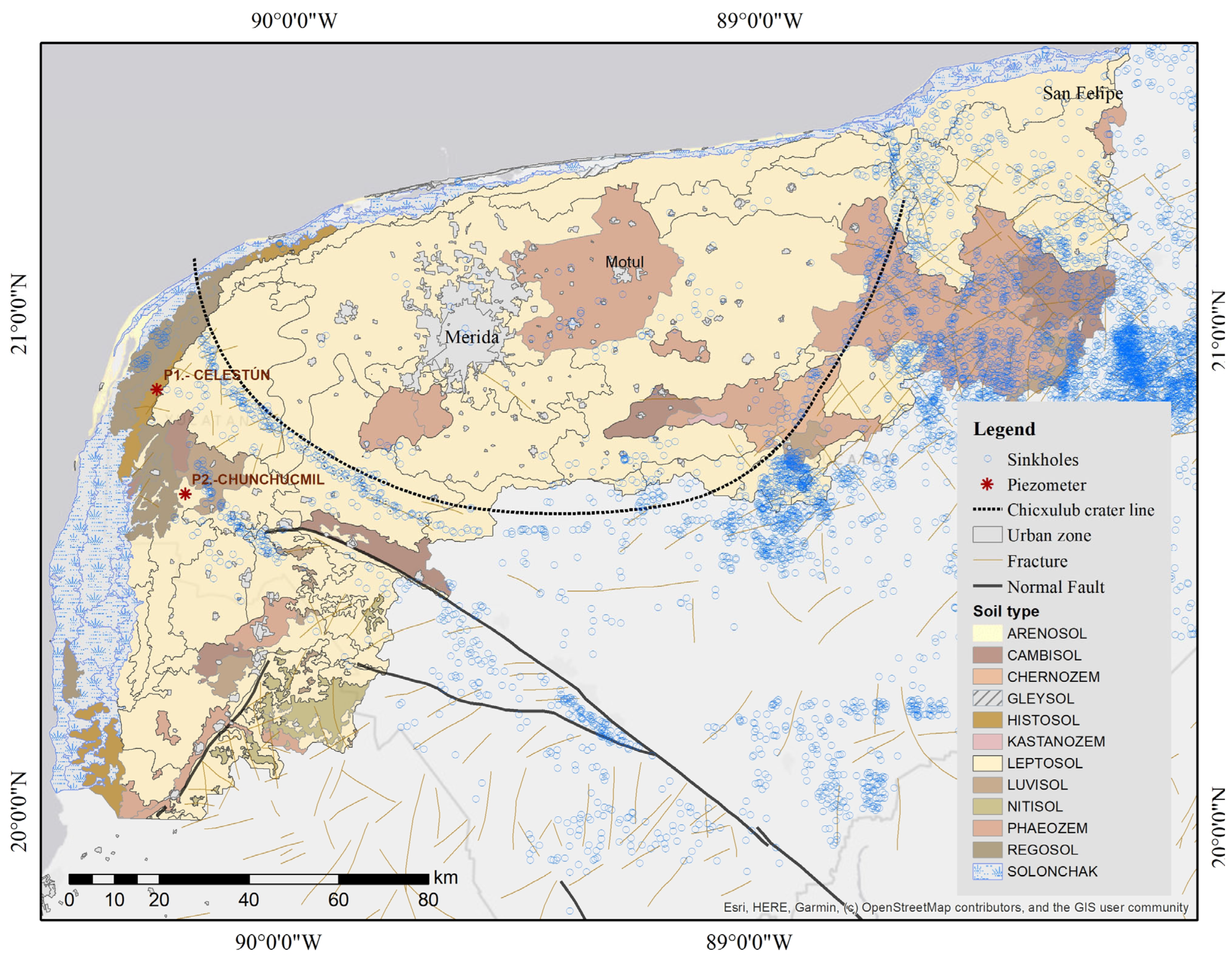
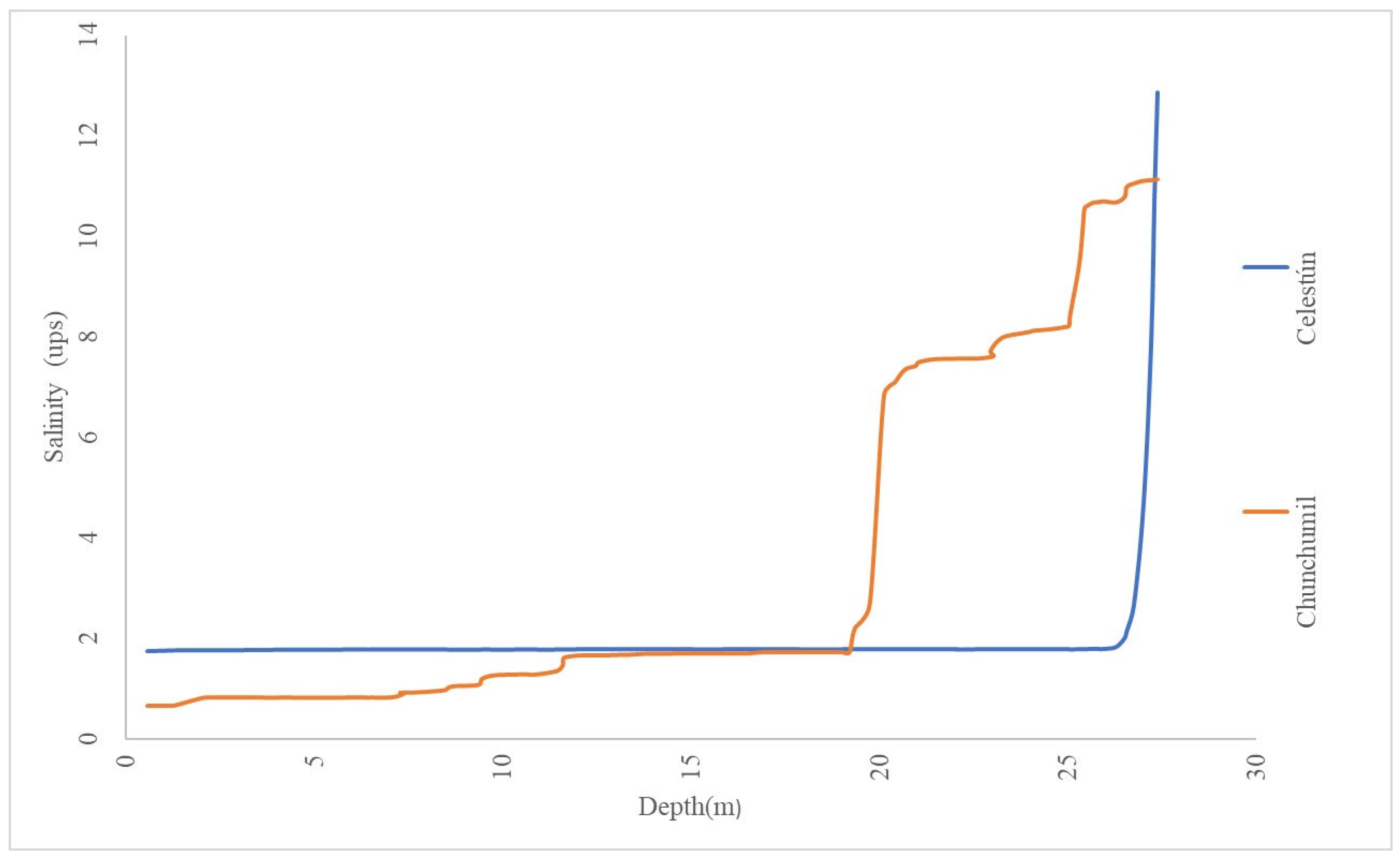
- Monitoring of the freshwater–saltwater interface was performed by measuring conductivity, temperature, and depth using a CTD Diver (VanEssen), with readings ranging from 0 to 120 mS/cm in two piezometers located in Celestun and Chunchumil (see Figure 1).
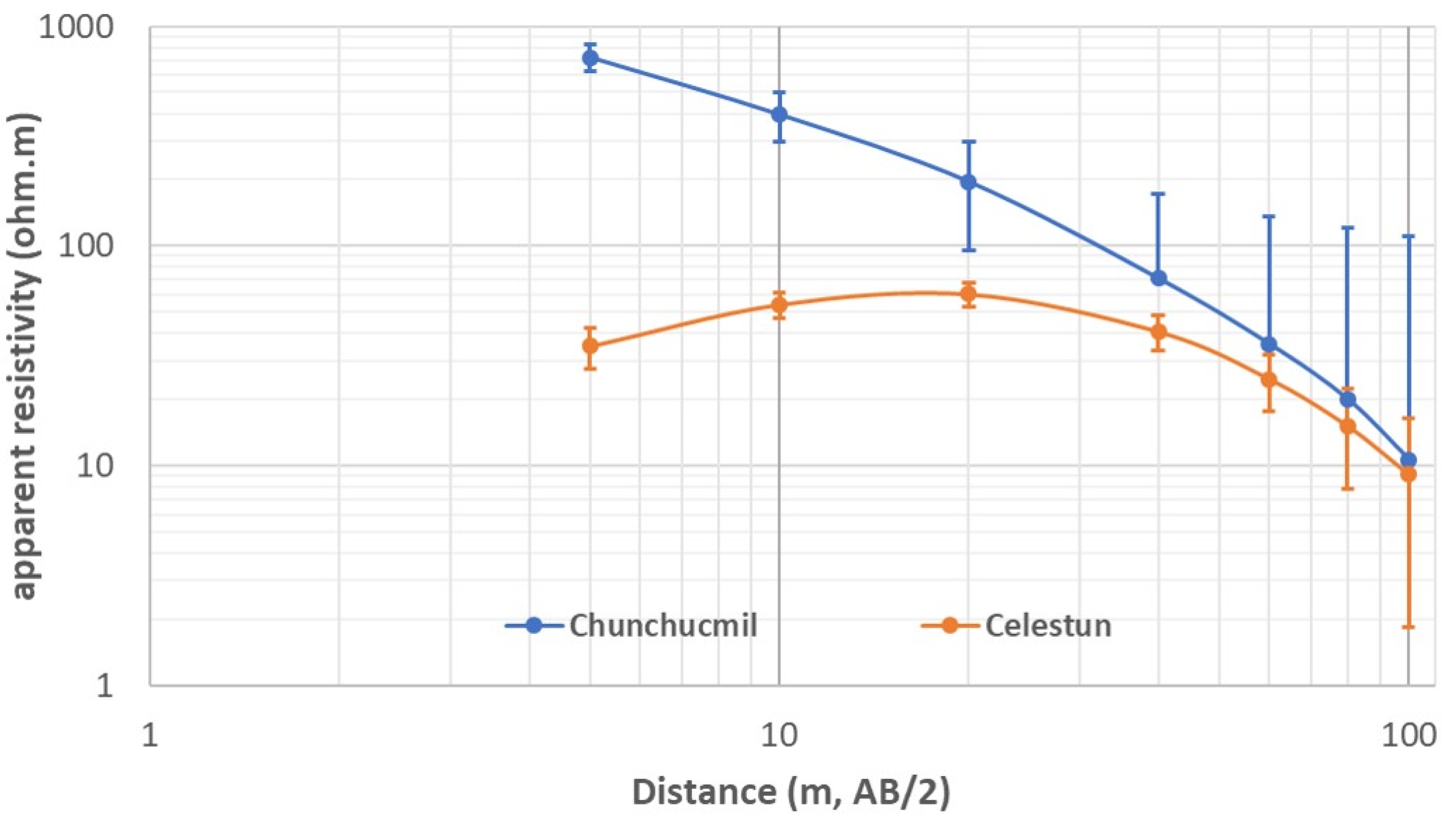
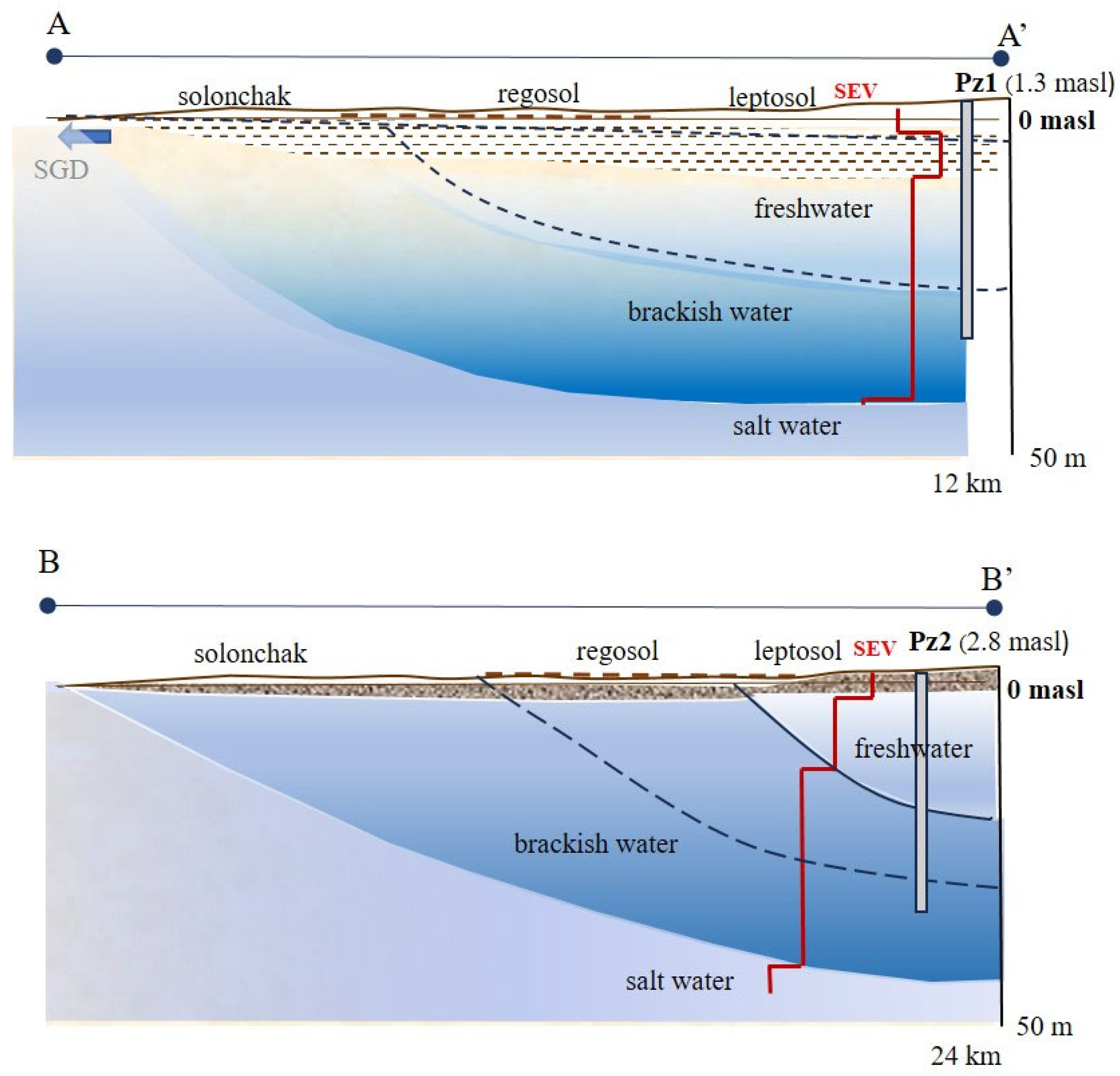
- Vertical Electrical Sounding (VES) was carried out using the SuperSting R8 system (Advanced Geosciences) with a Schlumberger array configuration (AB/2 = 100 m). Data was processed using the Ipi2Win software (free version 3.01) for both piezometers.
3. Results
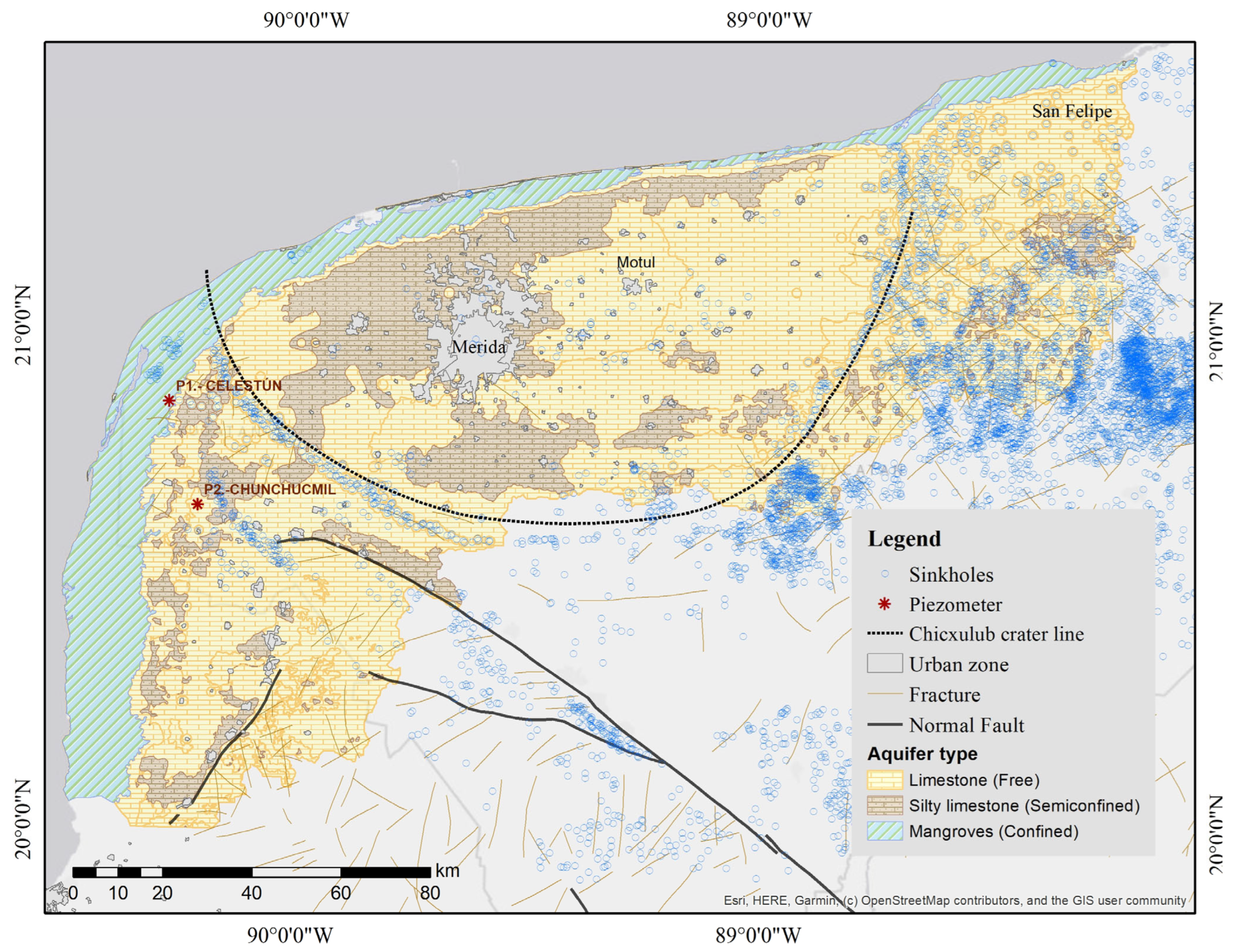
3.1. Aquifer Type
3.2. Soil Type
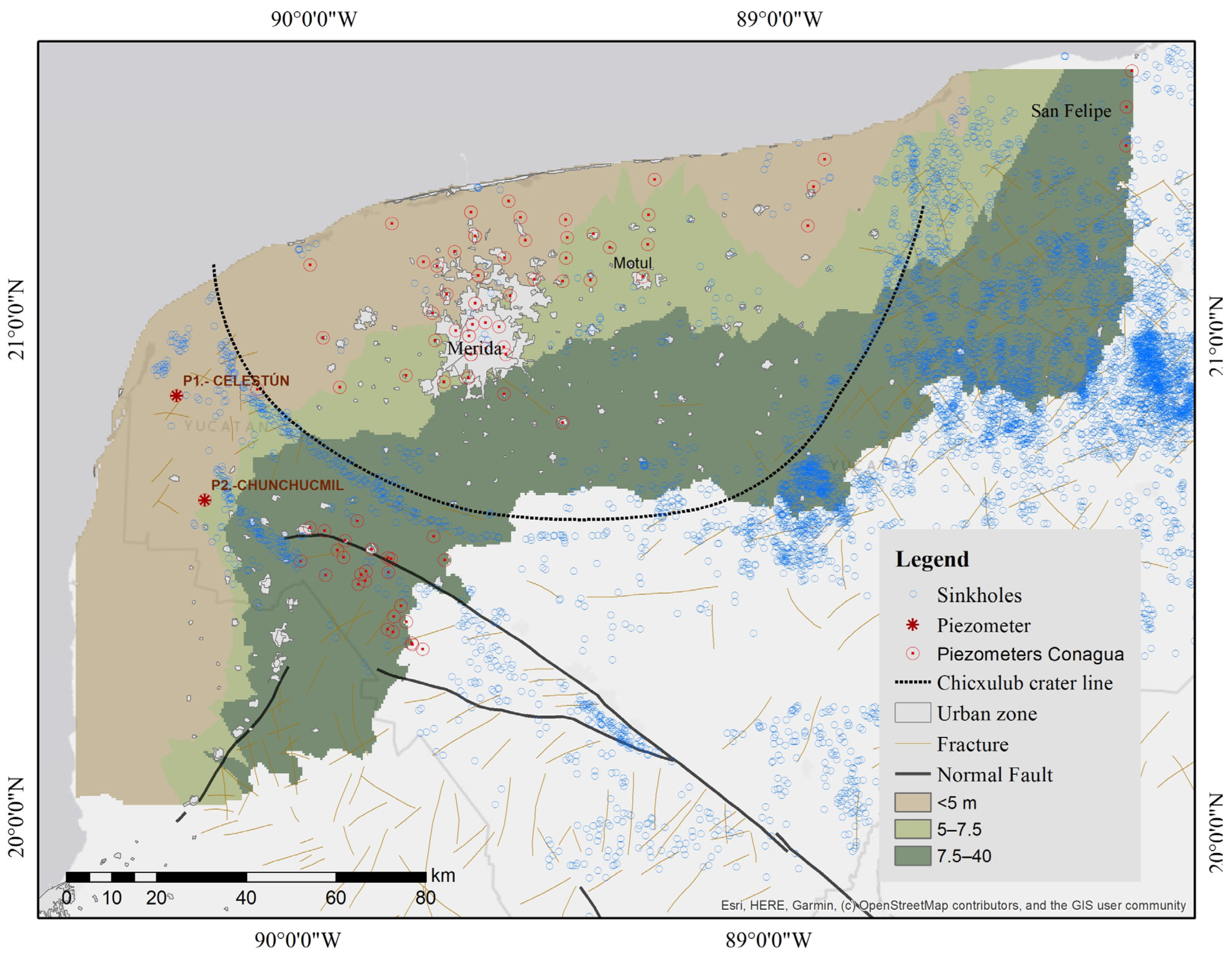
3.3. Thickness of the Vadose Zone
- In the Opichén network, the average water table depth is 28.5 m, with a minimum of 8.6 m and a maximum of 51.1 m.
- In the Metropolitana network, the average depth is 5.3 m (range: 0.05–13.56 m).
- In the Costera network, the average depth is 4.4 m (range: 0.10–9.11 m).
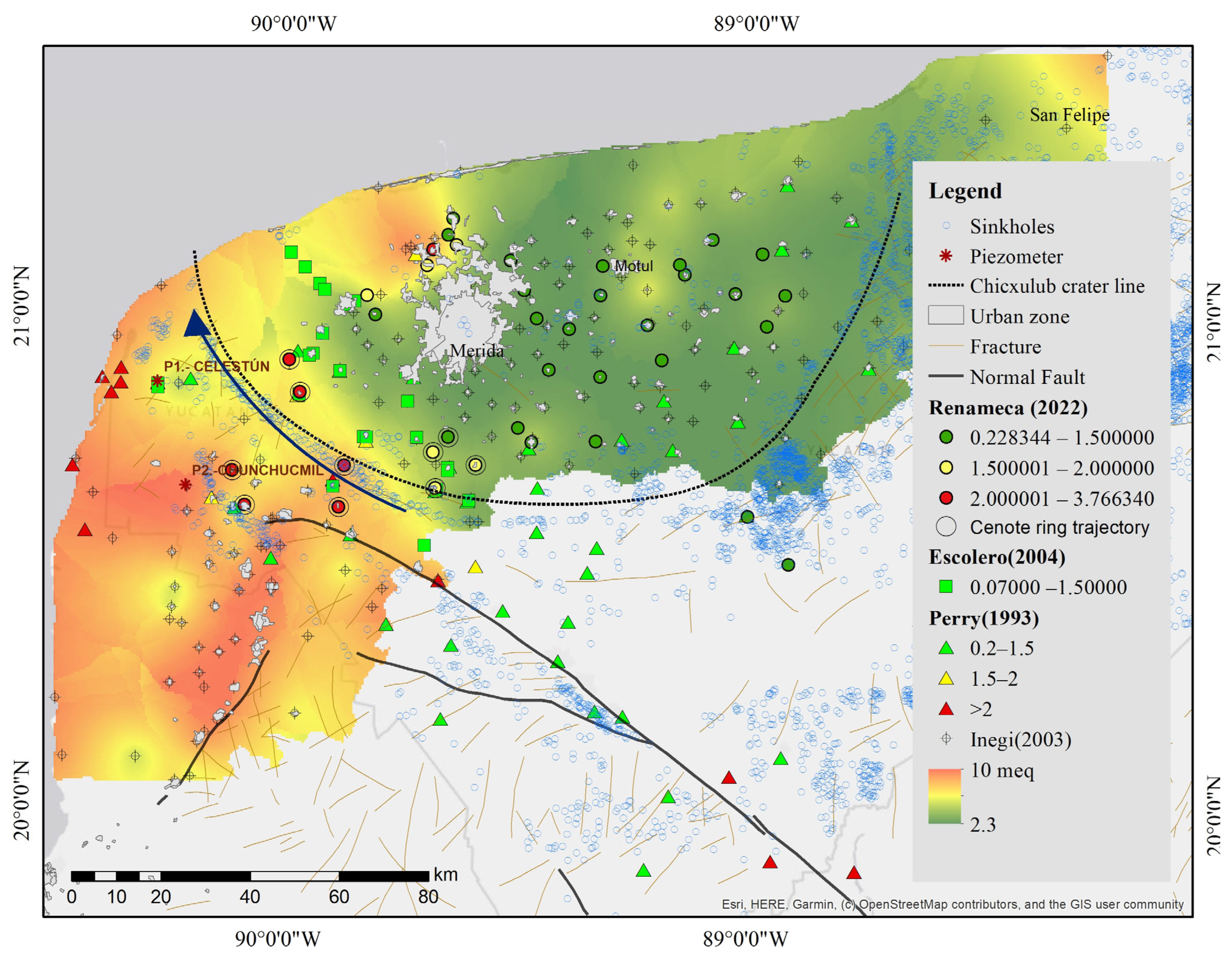
3.4. Ratio Cl/HCO3
- <1.5 epm (meq/L) indicates freshwater;
- 1.5–2 epm indicates brackish water;
- >2 epm indicates saltwater.
3.5. Seawater Fraction (Fsea%)
3.6. Freshwater–Seawater Interface
3.7. Horizontal and Vertical Distribution of Salinity
4. Discussion
5. Conclusions
Author Contributions
Funding
Data Availability Statement
Acknowledgments
Conflicts of Interest
References
- Fitts, C.R. Groundwater Science, 2nd ed.; Academic Press: New York, NY, USA, 2013; ISBN 978-0-12-384705-8. [Google Scholar]
- Werner, A.D.; Bakker, M.; Post, V.E.A.; Vandenbohede, A.; Lu, C.; Ataie-Ashtiani, B.; Simmons, C.T.; Barry, D.A. Seawater Intrusion Processes, Investigation and Management: Recent Advances and Future Challenges. Adv. Water Resour. 2013, 51, 3–26. [Google Scholar] [CrossRef]
- Aguilar-Duarte, Y.; Bautista, F.; Mendoza, M.E.; Frausto, O.; Ihl, T.; Delgado, C. Ivaky: Índice De La Vulnerabilidad Del Acuífero Kárstico Yucateco a La Contaminación. Rev. Mex. De Ing. Química 2016, 15, 913–933. [Google Scholar] [CrossRef]
- Arcega-Cabrera, F.; León-Aguirre, K.; Enseñat-Soberanis, F.; Gíacoman-Vallejos, G.; Rodríguez-Fuentes, G.; Oceguera-Vargas, I.; Lamas-Cosío, E.; Simoes, N.D. Use of Microbiological and Chemical Data to Evaluate the Effects of Tourism on Water Quality in Karstic Cenotes in Yucatan, Mexico. Bull. Environ. Contam. Toxicol. 2023, 111, 6. [Google Scholar] [CrossRef]
- Arcega-Cabrera, F.; Reyes-Larriva, D.; Casillas, T.A.D.; Vadillo, I. Overview on the impacts of CO2 acidification in a very sensible and complex system: The cenotes, Yucatan, Mexico. In CO2 Acidification in Aquatic Ecosystems; Elsevier: Amsterdam, The Netherlands, 2022; pp. 199–234. [Google Scholar] [CrossRef]
- Arcega-Cabrera, F.; Sickman, J.O.; Fargher, L.; Herrera-Silveira, J.; Lucero, D.; Oceguera-Vargas, I.; Lamas-Cosío, E.; Robledo-Ardila, P.A. Groundwater Quality in the Yucatan Peninsula: Insights from Stable Isotope and Metals Analysis. Groundwater 2021, 59, 878–891. [Google Scholar] [CrossRef]
- Abd-Elhamid, H.; Abdelaty, I.; Sherif, M. Evaluation of potential impact of Grand Ethiopian Renaissance Dam on Seawater Intrusion in the Nile Delta Aquifer. Int. J. Environ. Sci. Technol. 2019, 16, 2321–2332. [Google Scholar] [CrossRef]
- Freeze Allen, R.; Cherry, J.A. Grounwater; Prentice-Hall: Upper Saddle River, NJ, USA, 1979; ISBN 978-0-13-365312-0. [Google Scholar]
- Saqr, A.M.; Abd-Elmaboud, M.E. Management of Saltwater Intrusion in Coastal Aquifers: A Review and Case Studies from Egypt. Online J. Eng. Sci. 2024, 3, 1–17. [Google Scholar] [CrossRef]
- Lu, C.; Chen, Y.; Zhang, C.; Luo, J. Steady-state freshwater–seawater mixing zone in stratified coastal aquifers. J. Hydrol. 2013, 505, 24–34. [Google Scholar] [CrossRef]
- Mylroie, J.R.; Mylroie, J.E. Development of the carbonate island karst model. J. Cave Karst Stud. 2007, 69, 59–75. [Google Scholar]
- Moreno-Gómez, M.; Kavousi, A.; Martínez-Salvador, C.; Reimann, T. Evaluation of inferred conduit configurations in the Yucatan karst system (Mexico) from gravity and aeromagnetic anomalies, using MODFLOW-CFPv2. Hydrogeol. J. 2024, 32, 1363–1375. [Google Scholar] [CrossRef]
- Hartmann, A.; Goldscheider, N.; Wagener, T.; Lange, J.; Weiler, M. Karst water resources in a changing world: Review of hydrological modeling approaches. Rev. Geophys. 2014, 52, 218–242. [Google Scholar] [CrossRef]
- Parizi, E.; Hosseini, S.M.; Ataie-Ashtiani, B.; Simmons, C.T. Vulnerability mapping of coastal aquifers to seawater intrusion: Review, development and application. J. Hydrol. 2019, 570, 555–573. [Google Scholar] [CrossRef]
- United Nations. The United Nations World Water Development Report 2021: Valuing Water; UNESCO: Paris, France, 2021; Available online: https://unesdoc.unesco.org/ark:/48223/pf0000375724 (accessed on 5 October 2025).
- Li, M.; Najjar, R.G.; Kaushal, S.; Mejia, A.; Chant, R.J.; Ralston, D.K.; Burchard, H.; Hadjimichael, A.; Lassiter, A.; Wang, X. The Emerging Global Threat of Salt Contamination of Water Supplies in Tidal Rivers. Environ. Sci. Technol. Lett. 2025, 12, 881–892. [Google Scholar] [CrossRef]
- Narvaez-Montoya, C.; Bonilla, R.M.; Goldscheider, N.; Mahlknecht, J. Groundwater salinization patterns in the Yucatan Peninsula reveal contamination and vulnerability of the karst aquifer. Commun. Earth Environ. 2025, 6, 468. [Google Scholar] [CrossRef]
- Trejo-Albuerne, A.; Canul-Macario, C. Saline intrusion assessment using the GALDIT index on the northern coast of Quintana Roo, Yucatan Peninsula, Mexico. AQUA Water Infrastruct. Ecosyst. Soc. 2024, 73, 1683–1697. [Google Scholar] [CrossRef]
- Frollini, E.; Parrone, D.; Ghergo, S.; Masciale, R.; Passarella, G.; Pennisi, M.; Salvadori, M.; Preziosi, E. An Integrated Approach for Investigating the Salinity Evolution in a Mediterranean Coastal Karst Aquifer. Water 2022, 14, 1725. [Google Scholar] [CrossRef]
- Stein, S.; Shalev, E.; Sivan, O.; Yechieli, Y. Correction: Challenges and approaches for management of seawater intrusion in coastal aquifers. Hydrogeol. J. 2023, 31, 187. [Google Scholar] [CrossRef]
- Perez-Ceballos, R.; Pacheco-Avila, J.; Euan-Avila, J.; Hernandez-Arana, H. Regionalization based on water chemistry and physicochemical traits in the ring of cenotes, Yucatan, Mexico. J. Cave Karst Stud. 2012, 74, 90–102. [Google Scholar] [CrossRef]
- Pérez-Ceballos, R.; Canul-Macario, C.; Pacheco-Castro, R.; Pacheco-Ávila, J.; Euán-Ávila, J.; Merino-Ibarra, M. Regional Hydrogeochemical Evolution of Groundwater in the Ring of Cenotes, Yucatán (Mexico): An Inverse Modelling Approach. Water 2021, 13, 614. [Google Scholar] [CrossRef]
- Zha, X.; Anguiano, J.H.H.; Benítez, F.P.; Cruz-Falcón, A.; Miranda-Avilés, R.; Cantú, M.E.M.; Li, Y. Status of seawater intrusion in Mexico: A review. J. Hydrol. Reg. Stud. 2025, 57, 102189. [Google Scholar] [CrossRef]
- Bosserelle, A.L.; Morgan, L.K.; Hughes, M.W. Groundwater rise and associated flooding in coastal settlements due to sea-level rise: A review of processes and methods. Earth’s Futur. 2022, 10, e2021EF002580. [Google Scholar] [CrossRef]
- Zamrsky, D.; Essink, G.H.P.O.; Bierkens, M.F.P. Global impact of sea level rise on coastal fresh groundwater resources. Earth’s Futur. 2024, 12, e2023EF003581. [Google Scholar] [CrossRef]
- Perera-Burgos, J.A.; Alvarado-Izarraras, L.G.; Mixteco-Sánchez, J.C.; Canul-Macario, C.; Acosta-González, G.; González-Calderón, A.; Hernández-Anguiano, J.H.; Li, Y. Hydrogeophysical Evaluation of the Karst Aquifer near the Western Edge of the Ring of Cenotes, Yucatán Peninsula. Water 2024, 16, 2021. [Google Scholar] [CrossRef]
- Leal-Bautista, R.M.; Lenczewski, M.; Morgan, C.; Gahala, A.; McLain, J.E. Assessing Fecal Contamination in Groundwater from the Tulum Region, Quintana Roo, Mexico. J. Environ. Prot. 2013, 4, 1272–1279. [Google Scholar] [CrossRef][Green Version]
- Perry, E.; Velazquez-Oliman, G.; Marin, L. The hydrogeochemistry of the karst aquifer system of the northern yucatan peninsula, Mexico. Int. Geol. Rev. 2002, 44, 191–221. [Google Scholar] [CrossRef]
- Bauer-Gottwein, P.; Gondwe, B.R.N.; Charvet, G.; Marín, L.E.; Rebolledo-Vieyra, M.; Merediz-Alonso, G. Review: The Yucatán Peninsula karst aquifer. Hydrogeol. J. 2011, 19, 507–524. [Google Scholar] [CrossRef]
- Medina, H.E.; Osornio, J.J.J.; Álvarez-Rivera, O.; Medina, R.C.B. El karst de Yucatán: Su origen, morfología y biología. Acta Univ. 2019, 29. [Google Scholar] [CrossRef]
- León-Borges, J.A.; Viveros-Jiménez, F.; Rodríguez-Mata, A.E.; Lizardi-Jiménez, M.A. Hydrocarbon Contamination Patterns in the Cenotes of the Mexican Caribbean: The Application of Principal Component Analysis. Bull. Environ. Contam. Toxicol. 2020, 105, 758–763. [Google Scholar] [CrossRef]
- Romero, D.; Alfaro, E.J. Spatiotemporal variability of the rainy season in the Yucatan Peninsula. Int. J. Clim. 2024, 44, 2561–2574. [Google Scholar] [CrossRef]
- Uuh-Sonda, J.M.; Gutiérrez-Jurado, H.A.; Figueroa-Espinoza, B.; Méndez-Barroso, L.A. On the ecohydrology of the Yucatan Peninsula: Evapotranspiration and carbon intake dynamics across an eco-climatic gradient. Hydrol. Process. 2018, 32, 2806–2828. [Google Scholar] [CrossRef]
- Grill, G.; Lehner, B.; Thieme, M.; Geenen, B.; Tickner, D.; Antonelli, F.; Babu, S.; Borrelli, P.; Cheng, L.; Crochetiere, H.; et al. Mapping the world’s free-flowing rivers. Nature 2019, 569, 215–221. [Google Scholar] [CrossRef]
- DOF. Ley de Aguas Nacionales Cámara de Diputados del H. Congreso de la Unión Ultima Reforma; DOF: Mexico City, Mexico, 2023; pp. 1–91. [Google Scholar]
- Batllori-Sampedro, E.; Canto-Mendiburu, S.A. Water Balance by Planning Units in the Yucatán Peninsula. J. Earth Environ. Sci. 2024, 3, 1–15. [Google Scholar]
- INEGI. Conjunto de Datos Vectoriales Geológicos. Continuo Nacional. Fallas Fracturas. Available online: https://www.inegi.org.mx/app/biblioteca/ficha.html?upc=702825267605 (accessed on 5 October 2025).
- INEGI. Continuo de Elevaciones Mexicano y Modelos Digitales de Elevación. Available online: https://www.inegi.org.mx/app/geo2/elevacionesmex/ (accessed on 5 October 2025).
- CONAGUA. Resultados de la Red Nacional de Medición de Calidad del Agua (RENAMECA). Available online: http://www.gob.mx/conagua/articulos/resultados-de-la-red-nacional-de-medicion-de-calidad-del-agua-renameca?idiom=es (accessed on 5 October 2025).
- Vizcaino-Rodriguez, L.A.; Ravelero-Vazquez, V.; Lujan-Godinez, R.; Canul-Garrido, D.M. Cenote Chen ha, and water quality indicators. Ecorfan J. Repub. Nicar. 2022, 8, 22–29. [Google Scholar] [CrossRef]
- Gogu, R.; Carabin, G.; Hallet, V.; Peters, V.; Dassargues, A. GIS-based hydrogeological databases and groundwater modelling. Hydrogeol. J. 2001, 9, 555–569. [Google Scholar] [CrossRef]
- Kachadourian-Marras, A.; Alconada-Magliano, M.M.; Carrillo-Rivera, J.J.; Mendoza, E.; Herrerías-Azcue, F.; Silva, R. Characterization of Surface Evidence of Groundwater Flow Systems in Continental Mexico. Water 2020, 12, 2459. [Google Scholar] [CrossRef]
- Villasuso-Pino, M.J.; Sánchez y Pinto, I.A.; Canul-Macario, C.; Casares-Salazar, R.; Baldazo-Escobedo, G.; Souza-Cetina, J.; Poot Euán, P.; Pech Argüelles, C. Hydrogeology and conceptual model of the karstic coastal aquifer in Northern Yucatan State, Mexico. Trop. Subtrop. Agroecosystems 2011, 13, 243–260. [Google Scholar]
- Palma-López, D.J.; Bautista, F. Technology and local wisdom: The Maya soil classification app. Bol. Soc. Geol. Mex. 2019, 71, 249–260. [Google Scholar] [CrossRef]
- Chachadi, A.G.; Ferreira, J.P.L. Assessing aquifer vulnerability to seawater intrusion using GALDIT method: Part 2—GALDIT Indicators Description. IAHS-AISH Publ. 2007, 310, 172–180. [Google Scholar]
- INEGI. Edafología. Available online: https://www.inegi.org.mx/temas/edafologia/ (accessed on 5 October 2025).
- FAO. 2009. Available online: https://www.fao.org/4/as360s/as360s.pdf (accessed on 5 October 2025).
- INEGI. Continuo Nacional de Aguas Subterráneas; Escala 1:250 000 Serie II; INEGI: Aguascalientes, Mexico, 2003; Available online: https://www.inegi.org.mx/app/biblioteca/ficha.html?upc=889463598411 (accessed on 5 October 2025).
- Escolero, O.A.; Marin, L.E.; Steinich, B.; Pacheco, A.J.; Cabrera, S.A.; Alcocer, J. Development of a Protection Strategy of Karst Limestone Aquifers: The Merida Yucatan, Mexico Case Study. Water Resour. Manag. 2002, 16, 351–367. [Google Scholar] [CrossRef]
- Valle-Levinson, A.; Mariño-Tapia, I.; Enriquez, C.; Waterhouse, A.F. Tidal variability of salinity and velocity fields related to intense point-source submarine groundwater discharges into the Coastal Ocean. Limnol. Oceanogr. 2011, 56, 1213–1224. [Google Scholar] [CrossRef]
- López Ramos, E. Estudio Geológico de la Península de Yucatán; Superintendencia de Geología Regional: Mexico City, Mexico, 1970. [Google Scholar]
- Canul-Macario, C.A. Dinámica de la Interfase Salina del Acuífero de la Costa Noroeste de Yucatán y Escenarios Frente al Incremento del Nivel Medio del Mar. Posgrado en Ingeniería Civil-Ingeniería de Costas y Ríos. Ph.D. Thesis, Universidad Nacional Autónoma de México (UNAM), Mexico City, Mexico, 2020. [Google Scholar]
- Rocha, H.; Cardona, A.; Graniel, E.; Alfaro, C.; Castro, J.; Rüde, T.; Herrera, E.; Heise, L. Interfases de agua dulce y agua salobre en la región Mérida-Progreso, Yucatán. Tecnol. Cienc. Agua 2015, 6, 89–112. [Google Scholar]
- Stalker, J.C.; Price, R.M.; Rivera-Monroy, V.H.; Herrera-Silveira, J.; Morales, S.; Benitez, J.A.; Alonzo-Parra, D. Hydrologic Dynamics of a Subtropical Estuary Using Geochemical Tracers, Celestún, Yucatan, Mexico. Estuaries Coasts 2014, 37, 1376–1387. [Google Scholar] [CrossRef]
- Gómez-Hernández, A.; Leyte-Vidal, J.J.P.; Romero-Guzmán, E.T.; Rios-Lugo, M.J.; Mondragón-Bonilla, R.; Martínez-Vargas, M.; Martínez-Villegas, N.; Hernández-Mendoza, H. Hydrogeochemical processes and groundwater vulnerability in Yucatán Peninsula cenotes: Insights from Rare Earth Elements and Yttrium (REY) and the DRASTIC model. Sci. Total. Environ. 2025, 995, 180072. [Google Scholar] [CrossRef] [PubMed]
- Andrade-Gómez, L.; Rebolledo-Vieyra, M.; Andrade, J.L.; López, Z.P.; Estrada-Contreras, J. Karstic aquifer structure from geoelectrical modeling in the Ring of Sinkholes, Mexico. Hydrogeol. J. 2019, 27, 2365–2376. [Google Scholar] [CrossRef]
- Ferguson, G.; Gleeson, T. Vulnerability of Coastal Aquifers to Groundwater Use and Climate Change. Nat. Clim. Change 2012, 2, 342–345. [Google Scholar] [CrossRef]
- CONAGUA. 2020–2024. In Diario Oficial de la Federación; DOF: Mexico City, Mexico, 2020. [Google Scholar]




| Chunchumil | Celestun | |||||
|---|---|---|---|---|---|---|
| Layer Number | r (ohm.m) | h | Depth (m) | r (ohm.m) | h (m) | Depth (m) |
| 1.0 | 1034.0 | 2.7 | 2.7 | 21.9 | 2.5 | 2.5 |
| 2.0 | 306.7 | 9.1 | 11.8 | 155.3 | 5.6 | 8.1 |
| 3.0 | 57.3 | 25.8 | 37.6 | 25.7 | 28.8 | 36.9 |
| 4.0 | 3.5 | 2.1 | ||||
| ID | Lat | Long | Type | Depth (m) | Water Table Depth (m) | pH | TDS (mg/L) | Sal (psu) | Date |
|---|---|---|---|---|---|---|---|---|---|
| 8 | 20.8326 | −90.1932 | Dug well | 2.5 | 1.13 | 6.7 | 1631 | 1.09 | 21 May 2021 |
| 9 | 20.8327 | −90.1900 | Pzs | 11.3 | 1.03 | 6.0 | 1036 | 1.05 | 27 May 2021 |
| 10 | 20.8528 | −90.2804 | Pzp | 32.1 | 0.10 | 6.9 | 1779 | 1.86 | 27 May 2021 |
| 11 | 20.8582 | −90.4013 | Dug well | 1.2 | 0.87 | 7.0 | 1521 | 1.57 | 27 May 2021 |
| 12 | 20.8548 | −90.2617 | Dug well | 1.5 | 0.24 | 6.6 | 1779 | 1.86 | 27 May 2021 |
| 14 | 21.0343 | −89.8695 | Dug well | NA | 2.40 | 7.3 | 867 | 0.87 | 1 July 2021 |
| 15 | 20.9947 | −89.8812 | Dug well | NA | 2.28 | 7.0 | 847 | 0.85 | 1 July 2021 |
| 16 | 20.9946 | −89.8805 | Dug well | NA | 2.25 | 7.0 | 892 | 0.90 | 1 July 2021 |
| 17 | 21.0043 | −89.8705 | Dug well | NA | 2.33 | 7.0 | 836 | 0.84 | 1 July 2021 |
| 29 | 20.7826 | −90.1942 | Lake | 6.8 | 1473 | 1.51 | 27 May 2021 | ||
| 30 | 20.8133 | −90.1965 | Sinkhole | 6.9 | 1258 | 1.30 | 27 May 2021 | ||
| 32 | 20.8503 | −90.2356 | Sinkhole | 7.1 | 1150 | 1.17 | 27 May 2021 | ||
| 33 | 20.8528 | −90.2804 | Sinkhole | 6.4 | 1912 | 2.00 | 27 May 2021 | ||
| 34 | 20.8499 | −90.3206 | Sinkhole | 6.1 | 2004 | 2.11 | 27 May 2021 | ||
| 36 | 20.8915 | −90.0073 | Dug well | 3.7 | 2.46 | 8.0 | 927 | 0.93 | 10 September 2021 |
| 37 | 20.9167 | −89.9565 | Dug well | 5.4 | 3.93 | 7.8 | 1316 | 1.36 | 10 September 2021 |
| 40 | 20.6628 | −89.3610 | Sinkhole | NA | 11.40 | 7.9 | 443 | 0.43 | 11 September 2021 |
| 41 | 20.8656 | −90.1544 | Sinkhole | 8.1 | 737 | 0.74 | 10 September 2021 | ||
| 42 | 20.6896 | −89.8763 | Sinkhole | 7.9 | 1454 | 1.49 | 10 September 2021 | ||
| Mín | 0.10 | 6.0 | 443.0 | 0.4 | |||||
| Max | 11.40 | 8.1 | 2004.0 | 2.1 | |||||
| Av | 2.54 | 7.1 | 1255.9 | 1.3 | |||||
| StdD | 3.00 | 0.62 | 444.93 | 0.47 |
Disclaimer/Publisher’s Note: The statements, opinions and data contained in all publications are solely those of the individual author(s) and contributor(s) and not of MDPI and/or the editor(s). MDPI and/or the editor(s) disclaim responsibility for any injury to people or property resulting from any ideas, methods, instructions or products referred to in the content. |
© 2025 by the authors. Licensee MDPI, Basel, Switzerland. This article is an open access article distributed under the terms and conditions of the Creative Commons Attribution (CC BY) license (https://creativecommons.org/licenses/by/4.0/).
Share and Cite
Neri-Flores, I.; Medrano-Pérez, O.R.; Arcega-Cabrera, F.; Mariño-Tapia, I.; Canul-Macario, C.; Robledo-Ardila, P.A. Salinity Distribution as a Hydrogeological Limit in a Karstic Watershed in Yucatan. J. Mar. Sci. Eng. 2025, 13, 2317. https://doi.org/10.3390/jmse13122317
Neri-Flores I, Medrano-Pérez OR, Arcega-Cabrera F, Mariño-Tapia I, Canul-Macario C, Robledo-Ardila PA. Salinity Distribution as a Hydrogeological Limit in a Karstic Watershed in Yucatan. Journal of Marine Science and Engineering. 2025; 13(12):2317. https://doi.org/10.3390/jmse13122317
Chicago/Turabian StyleNeri-Flores, Iris, Ojilve Ramón Medrano-Pérez, Flor Arcega-Cabrera, Ismael Mariño-Tapia, César Canul-Macario, and Pedro Agustín Robledo-Ardila. 2025. "Salinity Distribution as a Hydrogeological Limit in a Karstic Watershed in Yucatan" Journal of Marine Science and Engineering 13, no. 12: 2317. https://doi.org/10.3390/jmse13122317
APA StyleNeri-Flores, I., Medrano-Pérez, O. R., Arcega-Cabrera, F., Mariño-Tapia, I., Canul-Macario, C., & Robledo-Ardila, P. A. (2025). Salinity Distribution as a Hydrogeological Limit in a Karstic Watershed in Yucatan. Journal of Marine Science and Engineering, 13(12), 2317. https://doi.org/10.3390/jmse13122317