Article

Maximizing Efficiency in the Suez Canal: A New Approach to Evaluate the Impact of Optimal Time-Varying Tolls on Ship Arrival Times

Department of Merchant Marine, National Taiwan Ocean University, No.2 Beining Rd., Keelung 202, Taiwan
J. Mar. Sci. Eng. 2024, 12(1), 76; https://doi.org/10.3390/jmse12010076
Submission received: 16 November 2023 / Revised: 14 December 2023 / Accepted: 26 December 2023 / Published: 28 December 2023
(This article belongs to the Special Issue Safety and Efficiency of Maritime Transportation and Ship Operations)

Abstract

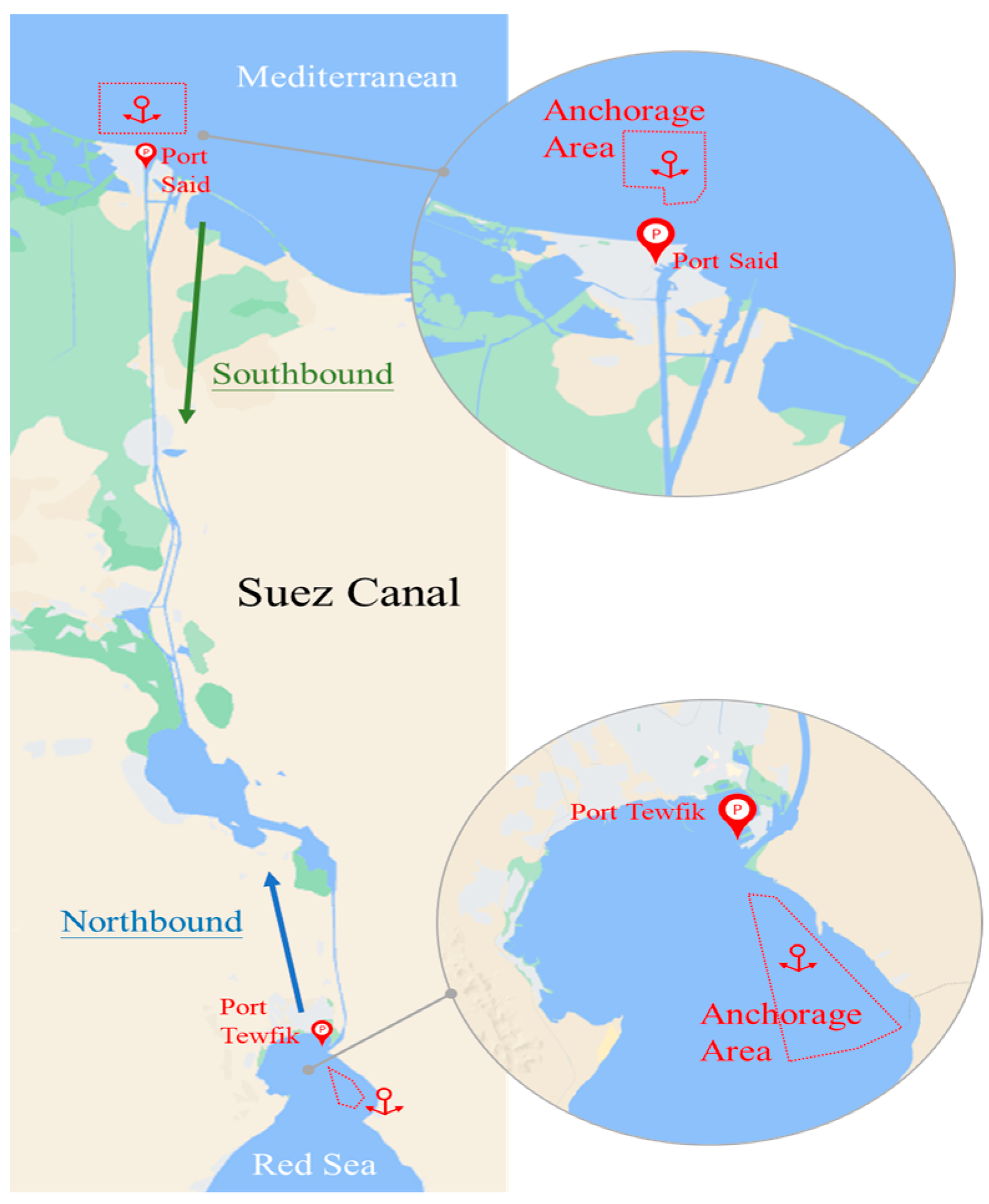
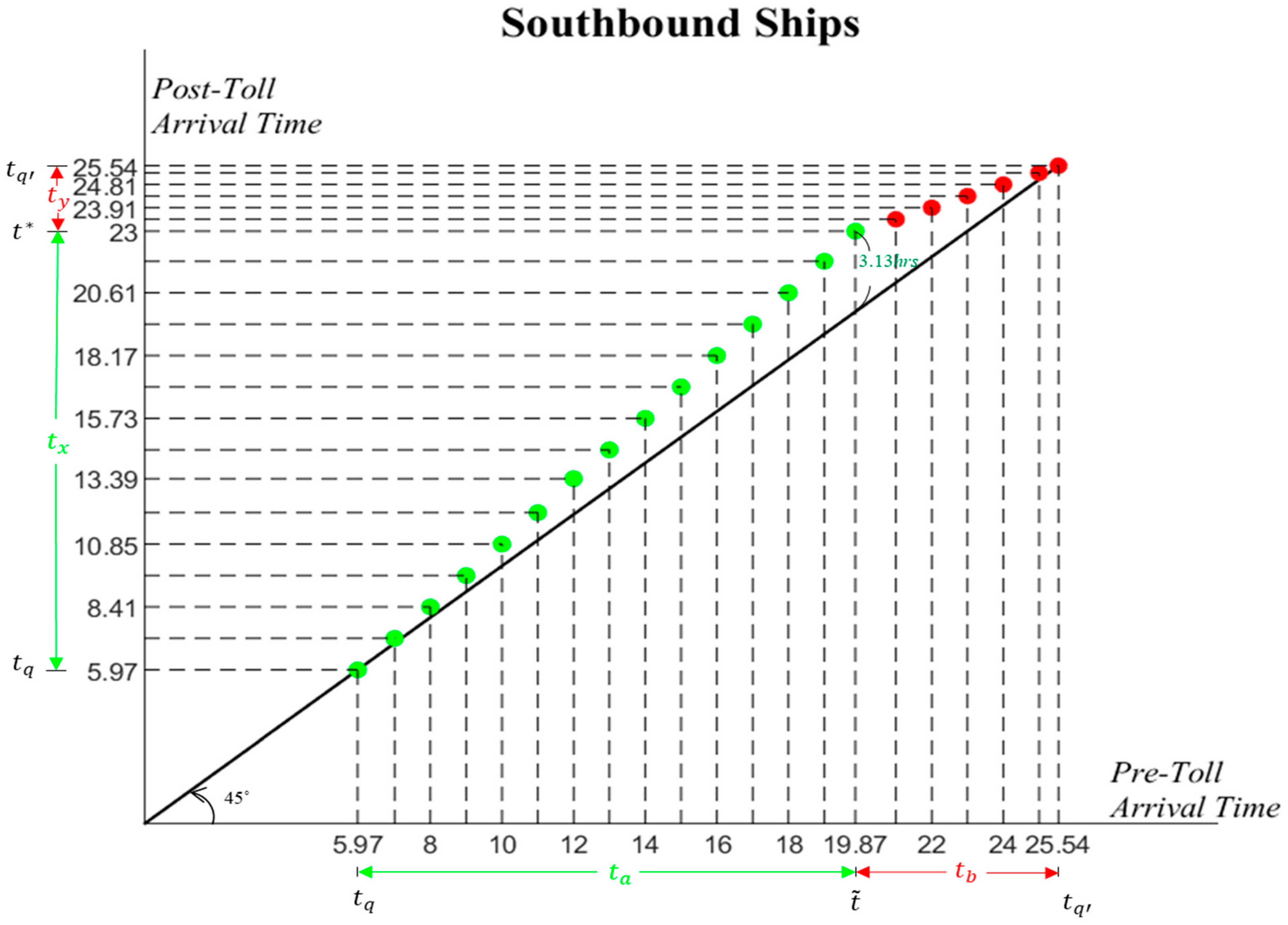
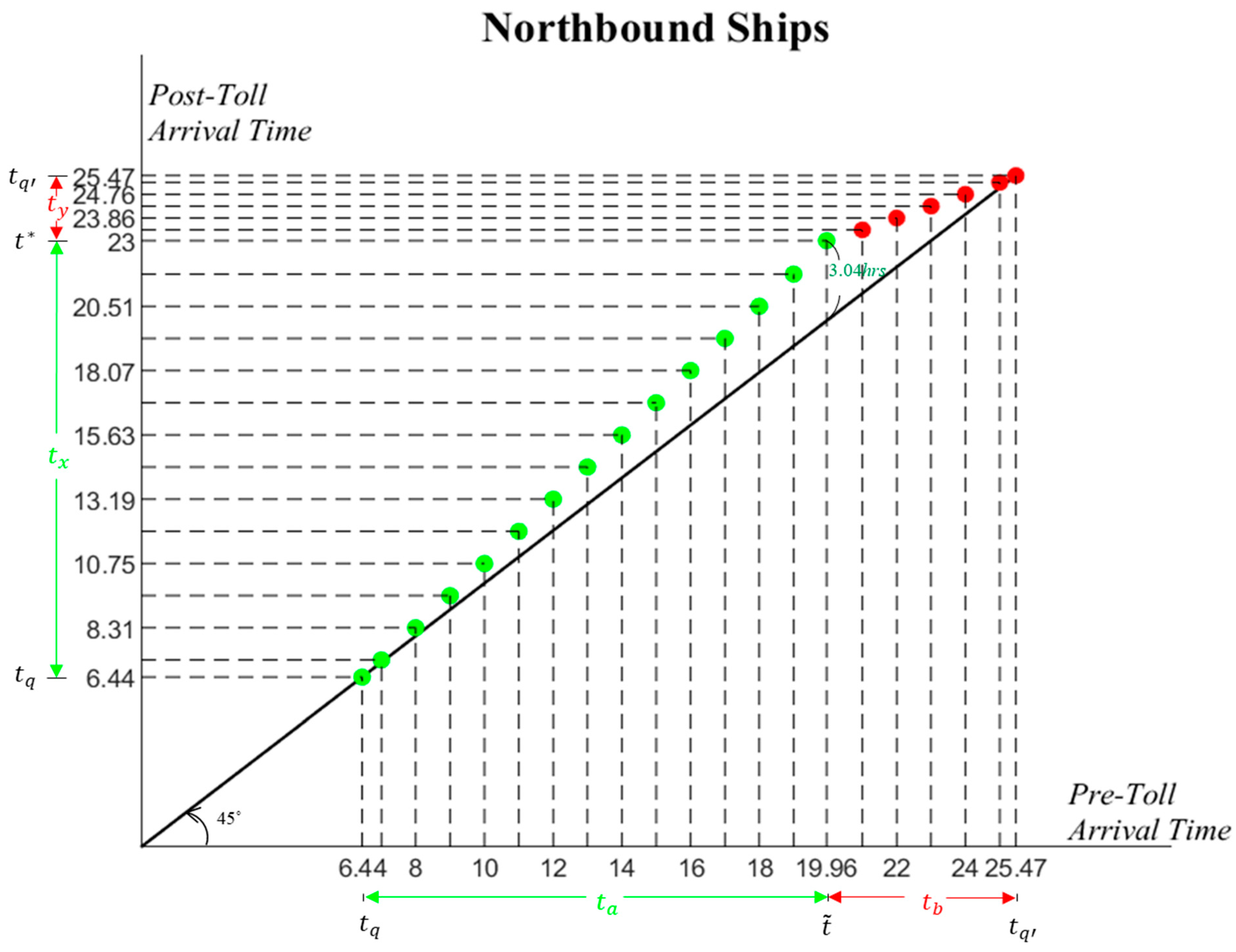
In the existing literature, an optimal time-varying toll scheme has been proposed for the Suez Canal to address the inefficiency of numerous ships queuing and waiting at the anchorage area to enter the canal. The primary objective of this tolling strategy is to alleviate the significant issue of ships queuing at the canal’s anchorage area. This stands in contrast to the current tolling system employed by the Suez Canal, which primarily aims to recover the management and operational costs associated with ship passage through the canal. However, the existing literature has yet to explore how the arrival times of ships at the anchorage area will change after implementing the optimal time-varying toll scheme. The goal is to ensure that the equilibrium cost of each tolled ship does not result in losses and achieve maximum efficiency in eliminating queueing at the anchorage area. To address this gap, this paper adopts the principle of cost equilibrium conservation and utilizes the Point-Slope Form to derive two mathematical formulas representing all ships’ post-toll arrival times at the anchorage area of the Suez Canal. These formulas are specifically derived for two categories of tolled ships: those that enter the canal earlier than the latest entry time regulated by the canal authorities and those that enter later. The derived formulas are concise and comparative, strengthening the theoretical underpinnings of the current pricing model for a queuing canal. Furthermore, they serve as valuable references for canal authorities in devising pertinent measures, such as organizing the scheduling of canal pilots, to facilitate the implementation of the optimal time-varying toll scheme.
Keywords: Suez Canal; queuing; optimal time-varying toll scheme; arrival time; point slope form Suez Canal; queuing; optimal time-varying toll scheme; arrival time; point slope form