Article

Distance Estimation Approach for Maritime Traffic Surveillance Using Instance Segmentation

Faculty of Maritime Studies, University of Split, Ruđera Boškovića 37, 21000 Split, Croatia
*
Author to whom correspondence should be addressed.
J. Mar. Sci. Eng. 2024, 12(1), 78; https://doi.org/10.3390/jmse12010078
Submission received: 14 November 2023 / Revised: 22 December 2023 / Accepted: 28 December 2023 / Published: 28 December 2023
(This article belongs to the Special Issue Safety and Efficiency of Maritime Transportation and Ship Operations)

Abstract

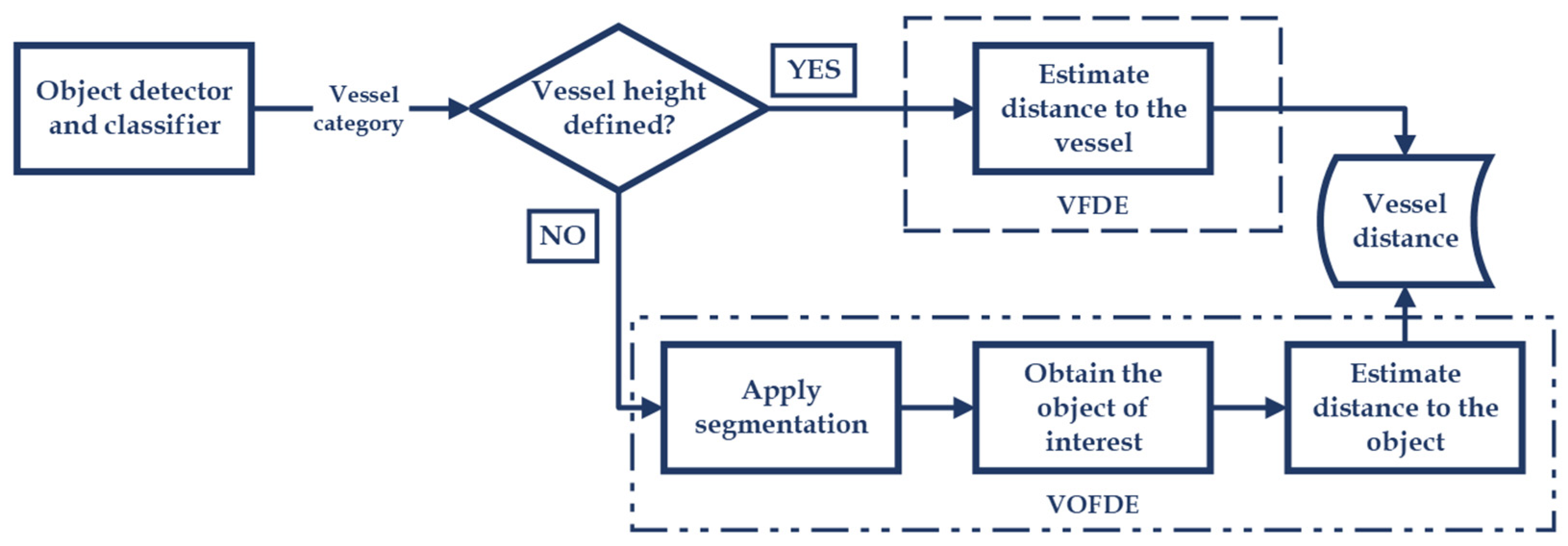
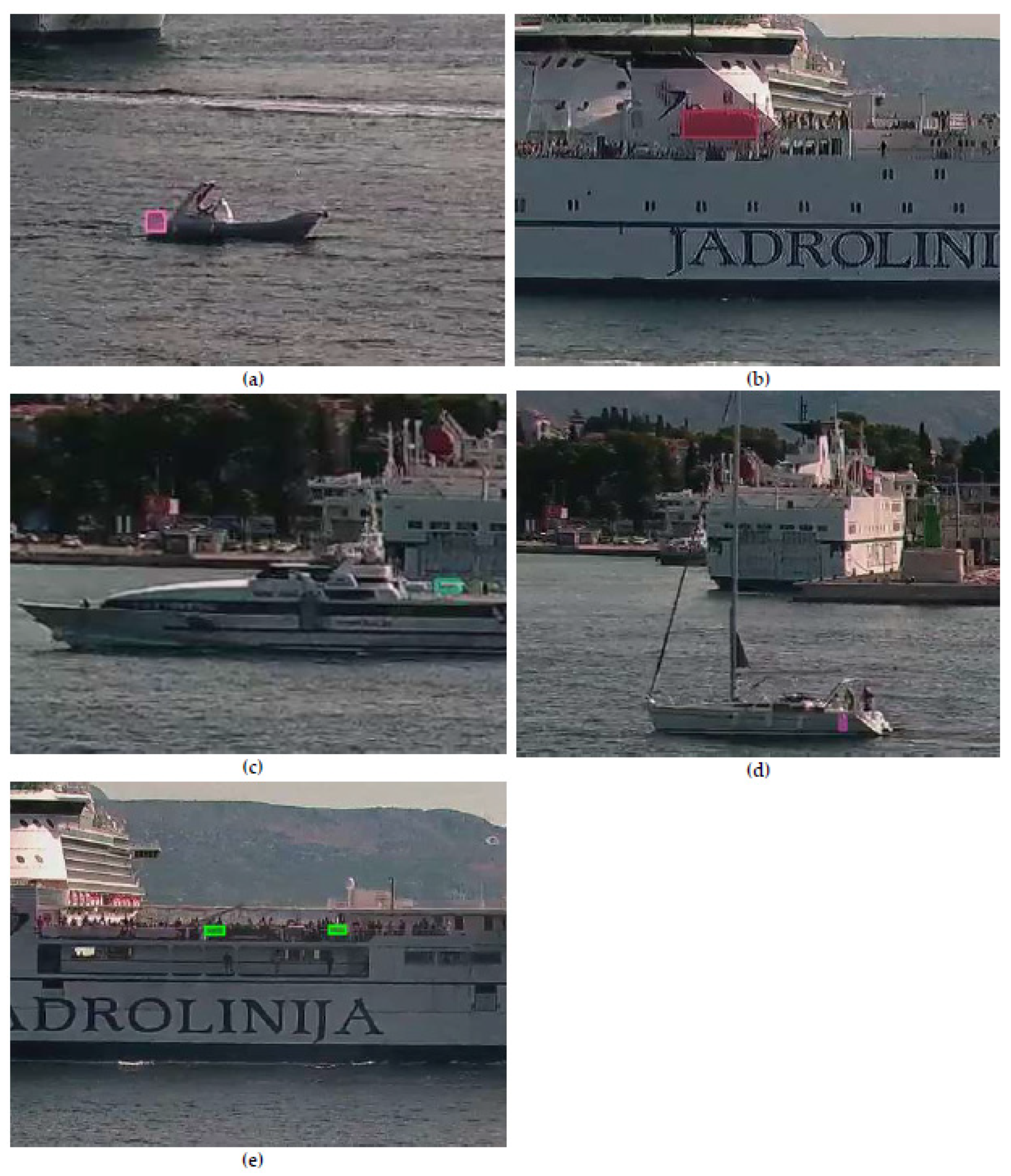
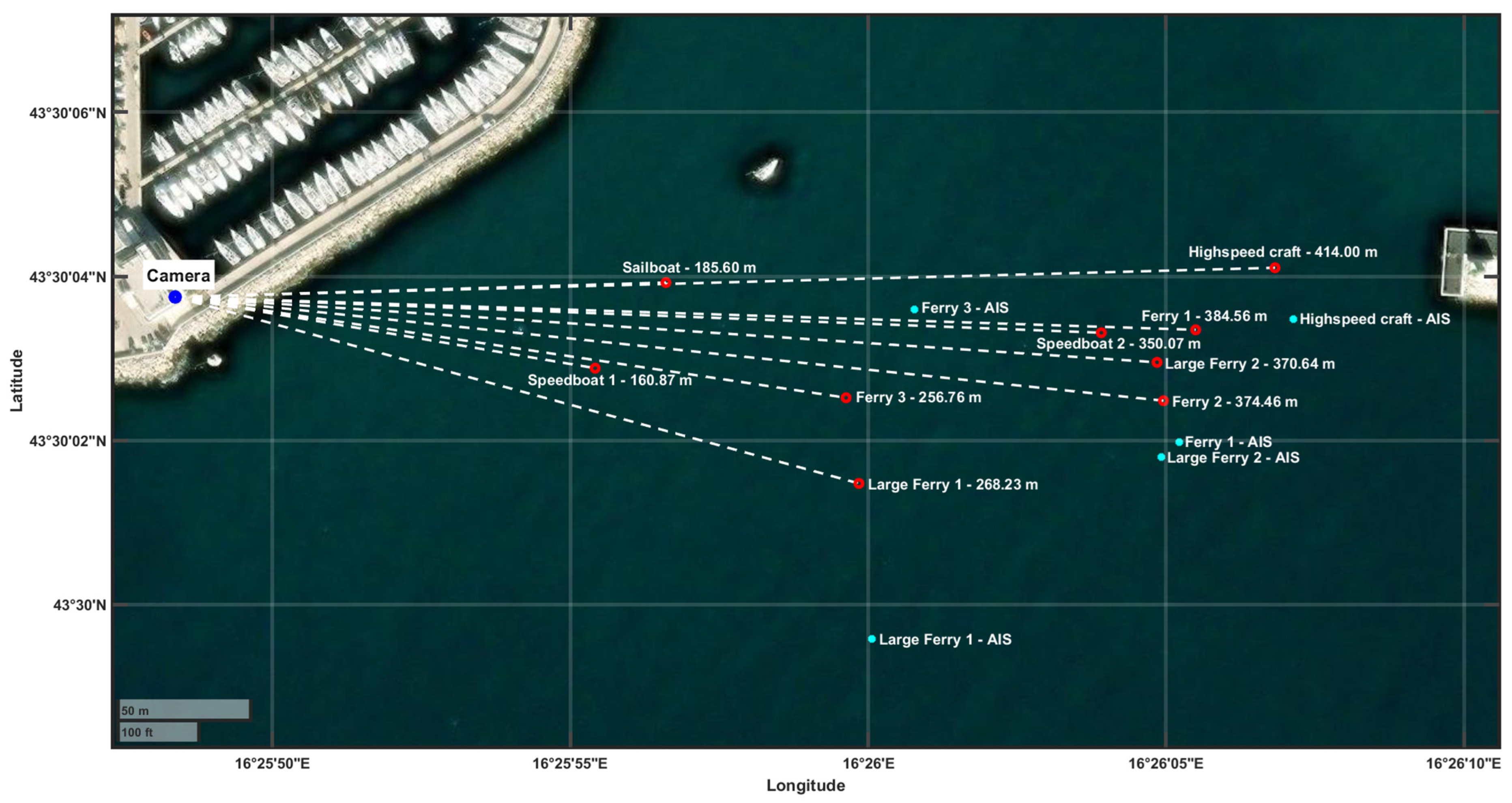
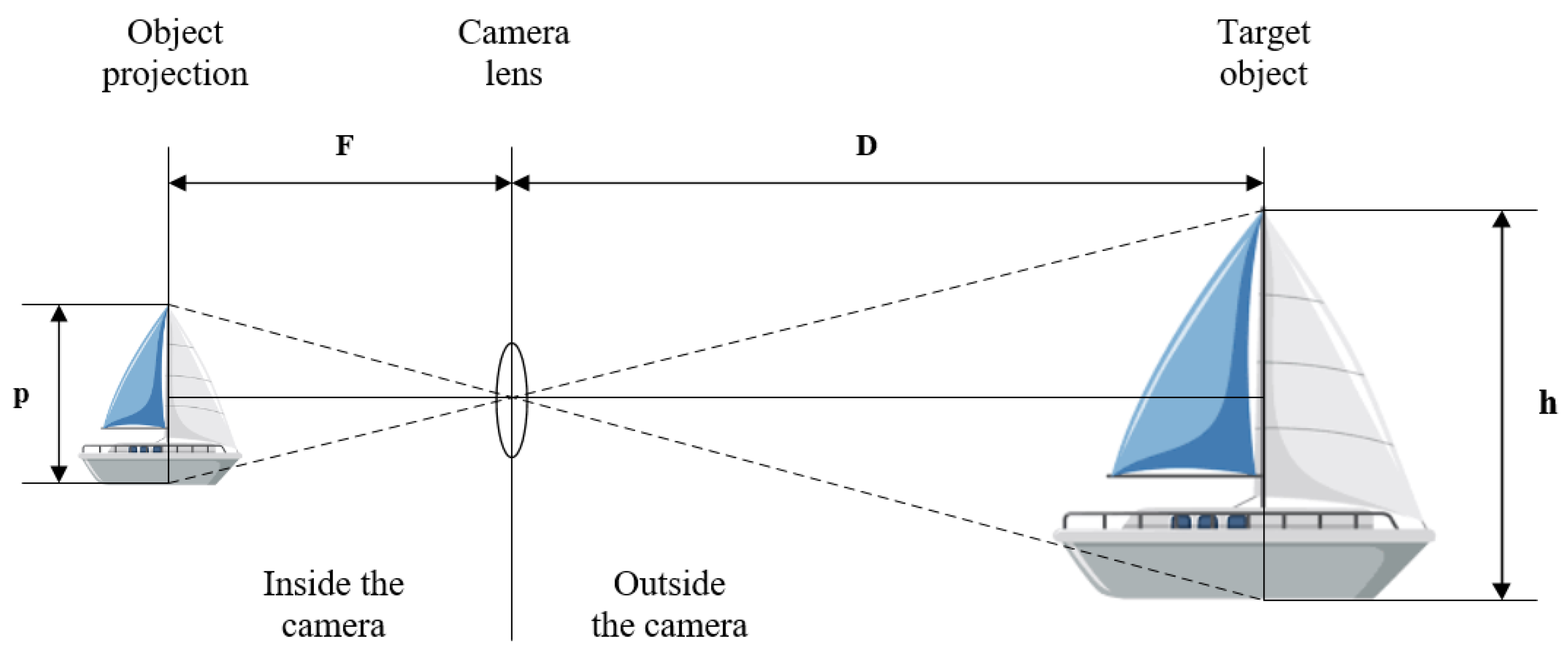
Maritime traffic monitoring systems are particularly important in Mediterranean ports, as they provide more comprehensive data collection compared to traditional systems such as the Automatic Identification System (AIS), which is not mandatory for all vessels. This paper improves the existing real-time maritime traffic monitoring systems by introducing a distance estimation algorithm for monocular cameras, which aims to provide high quality maritime traffic metadata collection for traffic density analysis. Two distance estimation methods based on a pinhole camera model are presented: the Vessel-Focused Distance Estimation (VFDE) and the novel Vessel Object-Focused Distance Estimation (VOFDE). While VFDE uses the predefined height of a vessel for distance estimation, VOFDE uses standardized dimensions of objects on the vessel, detected with a Convolutional Neural Network (CNN) for instance segmentation to enhance estimation accuracy. Our evaluation covers distances up to 414 m, which is significantly beyond the scope of previous studies. When compared to the distances measured with a precise instrument, VOFDE achieves a Percentage Deviation Index (PDI) of 1.34% to 9.45%. This advance holds significant potential for improving maritime surveillance with monocular cameras and is also applicable in other areas, such as low-cost maritime vehicles equipped with single cameras.
Keywords: maritime surveillance; distance estimation; pinhole camera model; instance segmentation maritime surveillance; distance estimation; pinhole camera model; instance segmentation