Article

A Fuzzy Dempster–Shafer Evidence Theory Method with Belief Divergence for Unmanned Surface Vehicle Multi-Sensor Data Fusion


1
College of Marine Electrical Engineering, Dalian Maritime University, Dalian 116026, China
2
Key Laboratory of Technology and System for Intelligent Ships of Liaoning Province, Dalian 116026, China
*
Author to whom correspondence should be addressed.
J. Mar. Sci. Eng. 2023, 11(8), 1596; https://doi.org/10.3390/jmse11081596
Submission received: 19 July 2023 / Revised: 11 August 2023 / Accepted: 12 August 2023 / Published: 15 August 2023
(This article belongs to the Special Issue Advances in Sensor Technology in Smart Ships and Offshore Facilities)

Abstract

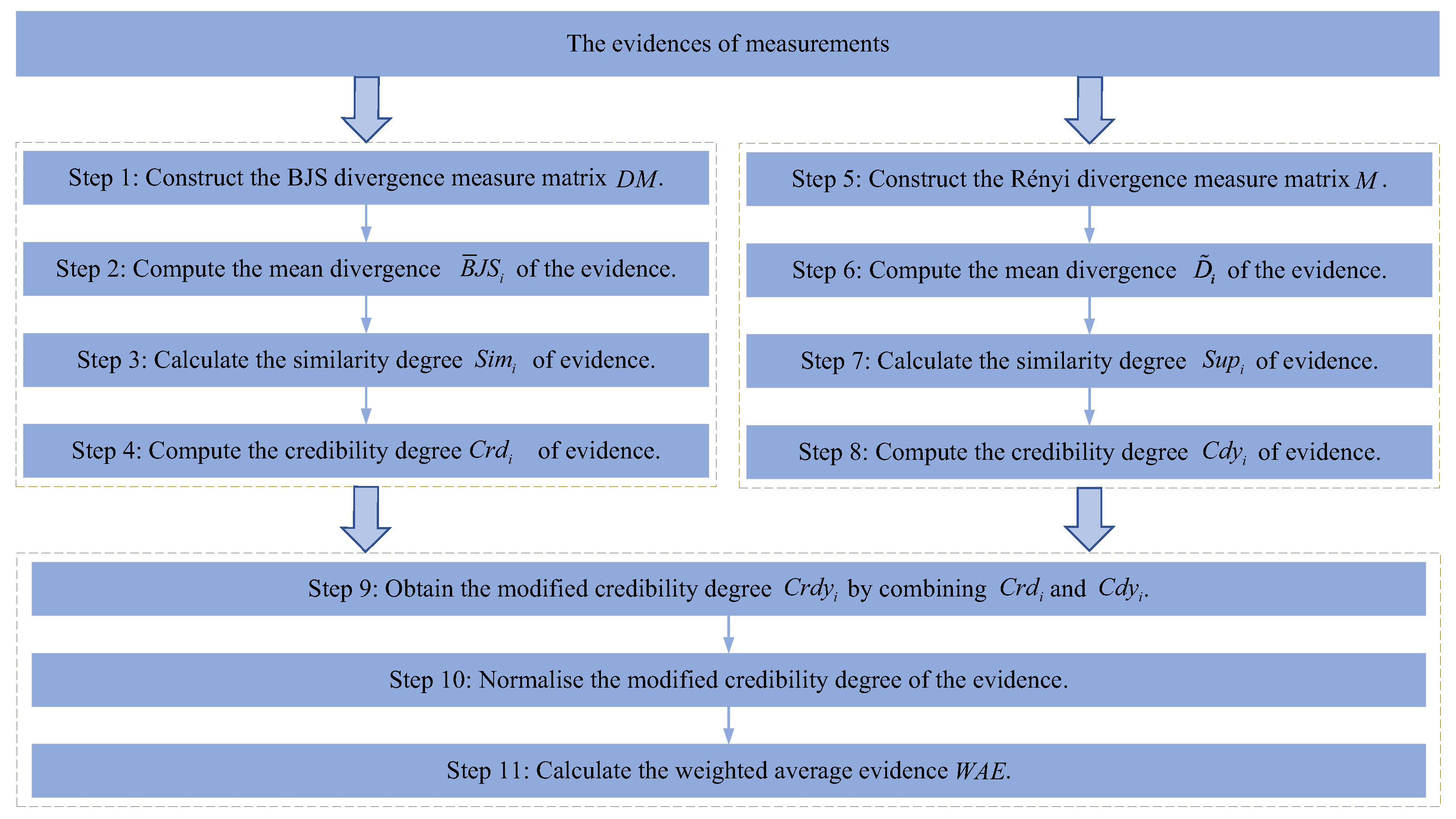
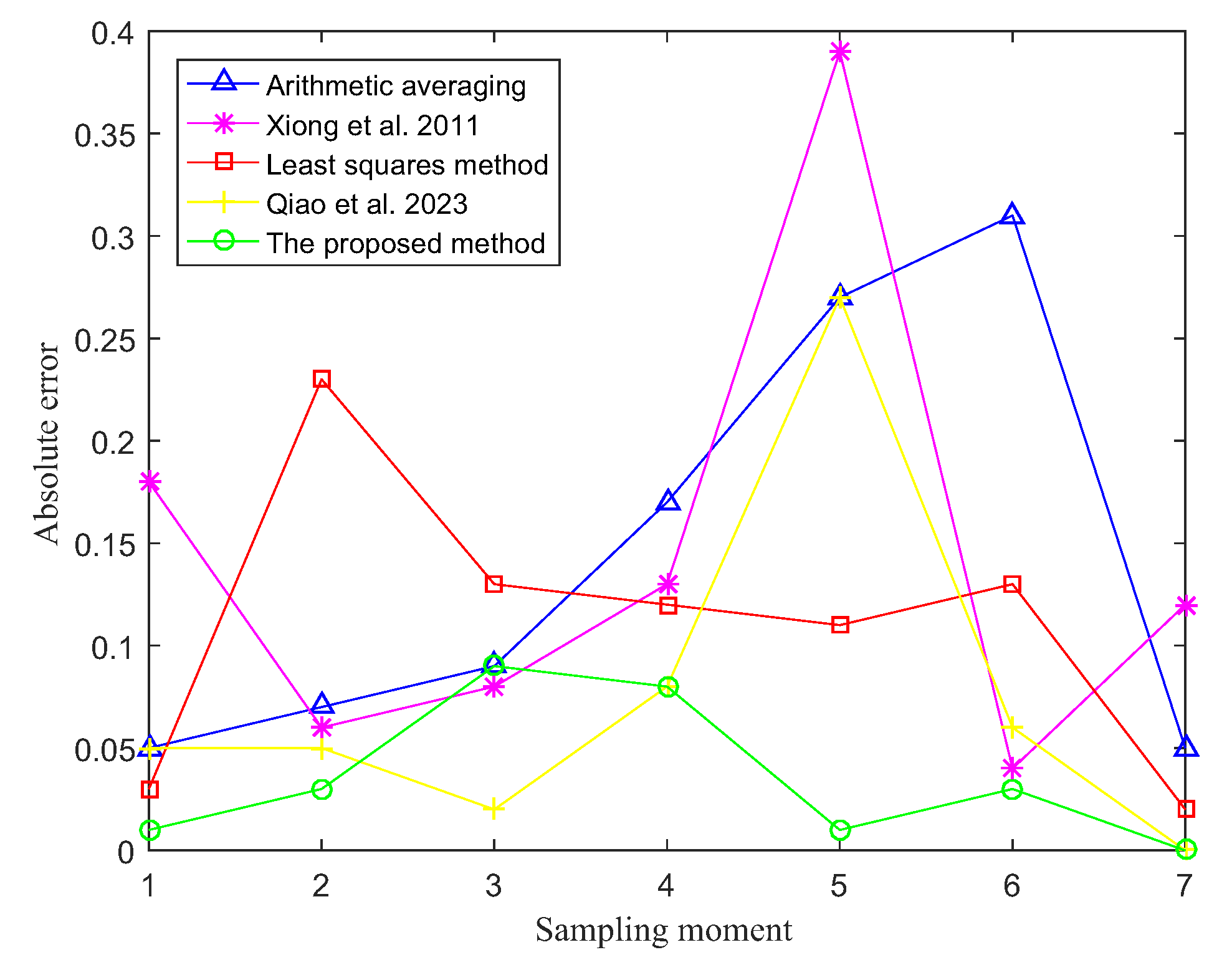
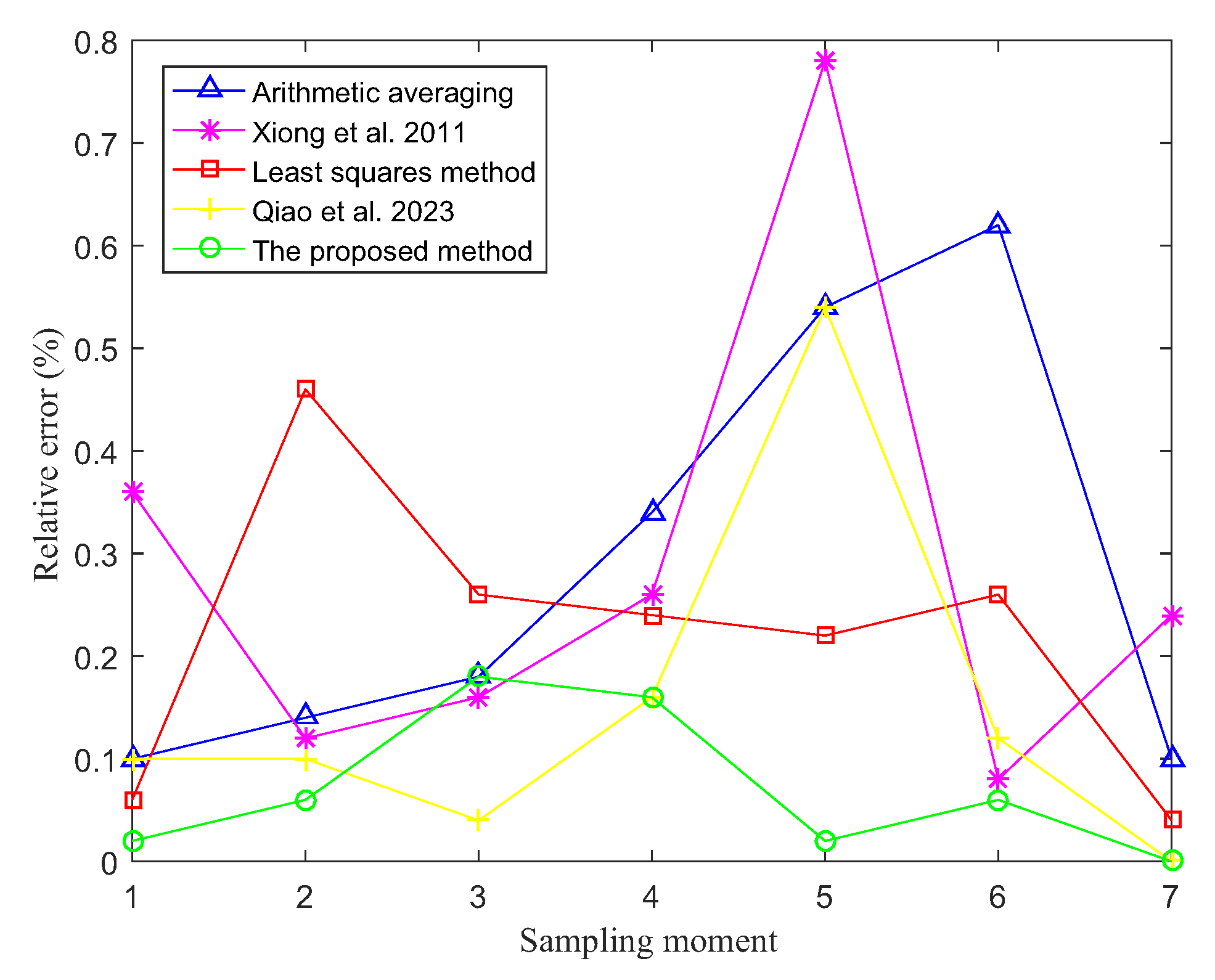
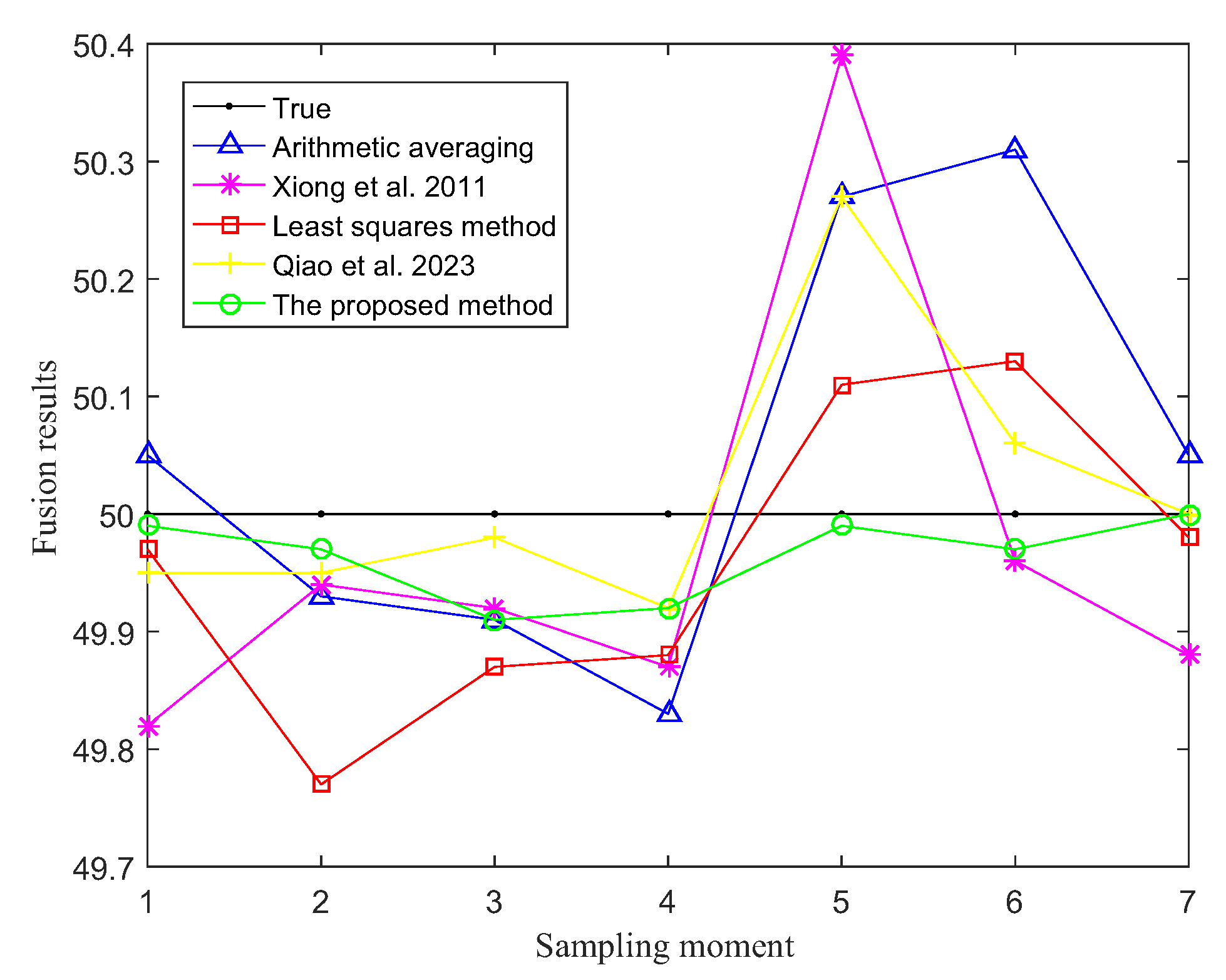
The safe navigation of unmanned surface vehicles in the marine environment requires multi-sensor collaborative perception, and multi-sensor data fusion technology is a prerequisite for realizing the collaborative perception of different sensors. To address the problem of poor fusion accuracy for existing multi-sensor fusion methods without prior knowledge, a fuzzy evidence theory multi-sensor data fusion method with belief divergence is proposed in this paper. First of all, an adjustable distance for measuring discrepancies between measurements is devised to evaluate the degree of measurement closeness to the true value, which improves the adaptability of the method to different classes of sensor data. Furthermore, an adaptive multi-sensor measurement fusion strategy is designed for the case where the sensor accuracy is known in advance. Secondly, the affiliation function of the fuzzy theory is introduced into the evidence theory approach to assign initial evidence of measurements in terms of defining the degree of fuzzy support between measurements, which improves the fusion accuracy of the method. Finally, the belief Jensen–Shannon divergence and the Rényi divergence are combined for measuring the conflict between the evidence pieces to obtain the credibility degree as the reliability of the evidence, which solves the problem of high conflict between evidence pieces. Three examples of multi-sensor data fusion in different domains are employed to validate the adaptability of the proposed method to different kinds of multi-sensors. The maximum relative error of the proposed method for multiple sensor experiments is greater than or equal to 0.18%, and its error accuracy is much higher than the best result of 0.46% among other comparative methods. The experimental results verify that the proposed data fusion method is more accurate than other existing methods.
Keywords: evidence theory; multi-sensor data fusion; belief Jensen–Shannon divergence; evidence conflict evidence theory; multi-sensor data fusion; belief Jensen–Shannon divergence; evidence conflict