Article

Field Testing of a Biomass-Fueled Flamer for In-Row Weed Control in the Vineyard


Department of Agricultural, Food, Environmental and Animal Sciences, University of Udine. Via delle Scienze 208, 33100 Udine, Italy
*
Author to whom correspondence should be addressed.
Agriculture 2019, 9(10), 210; https://doi.org/10.3390/agriculture9100210

Submission received: 27 August 2019 / Revised: 19 September 2019 / Accepted: 20 September 2019 / Published: 24 September 2019
(This article belongs to the Special Issue Sustainable Viticulture)

Abstract

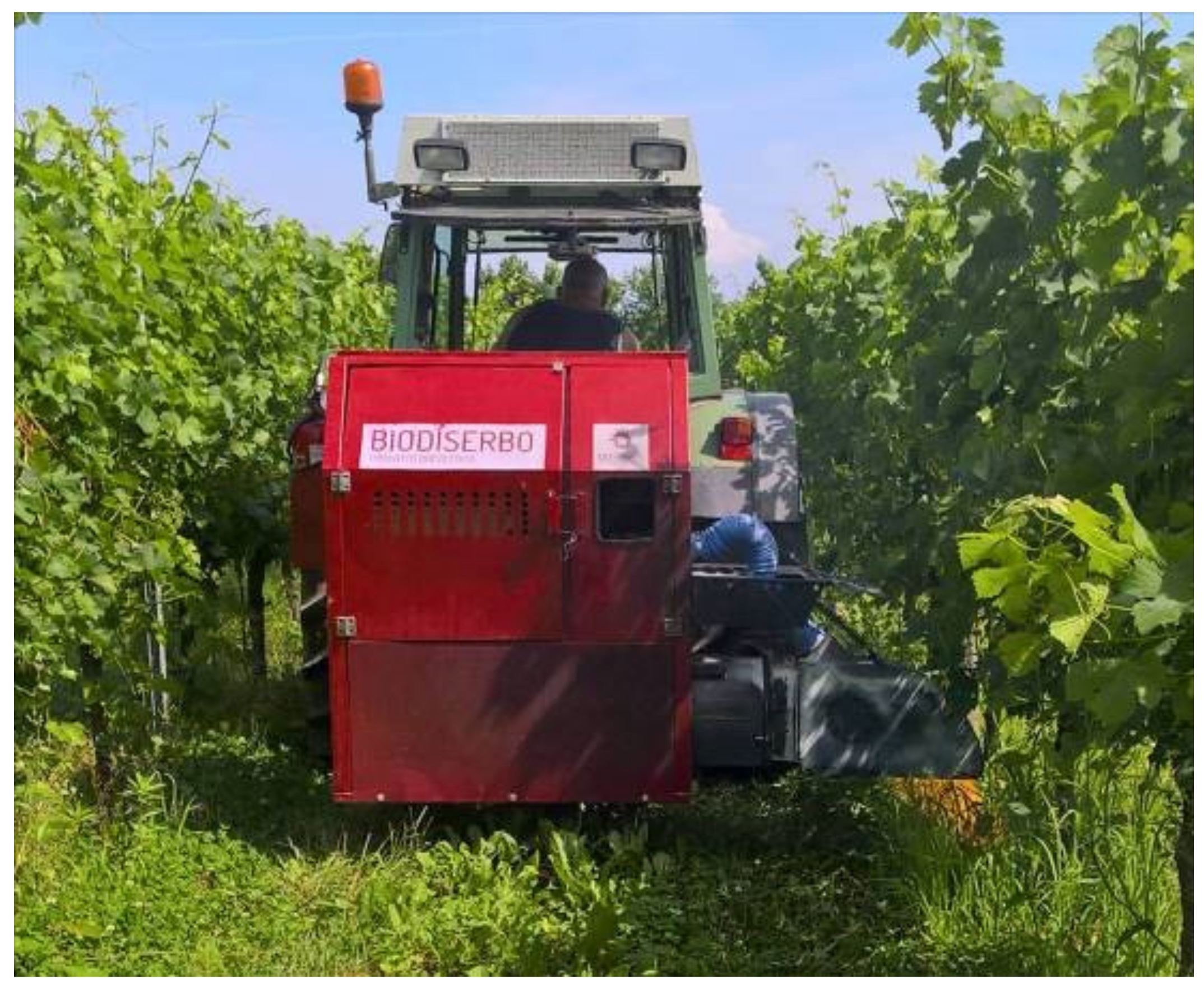
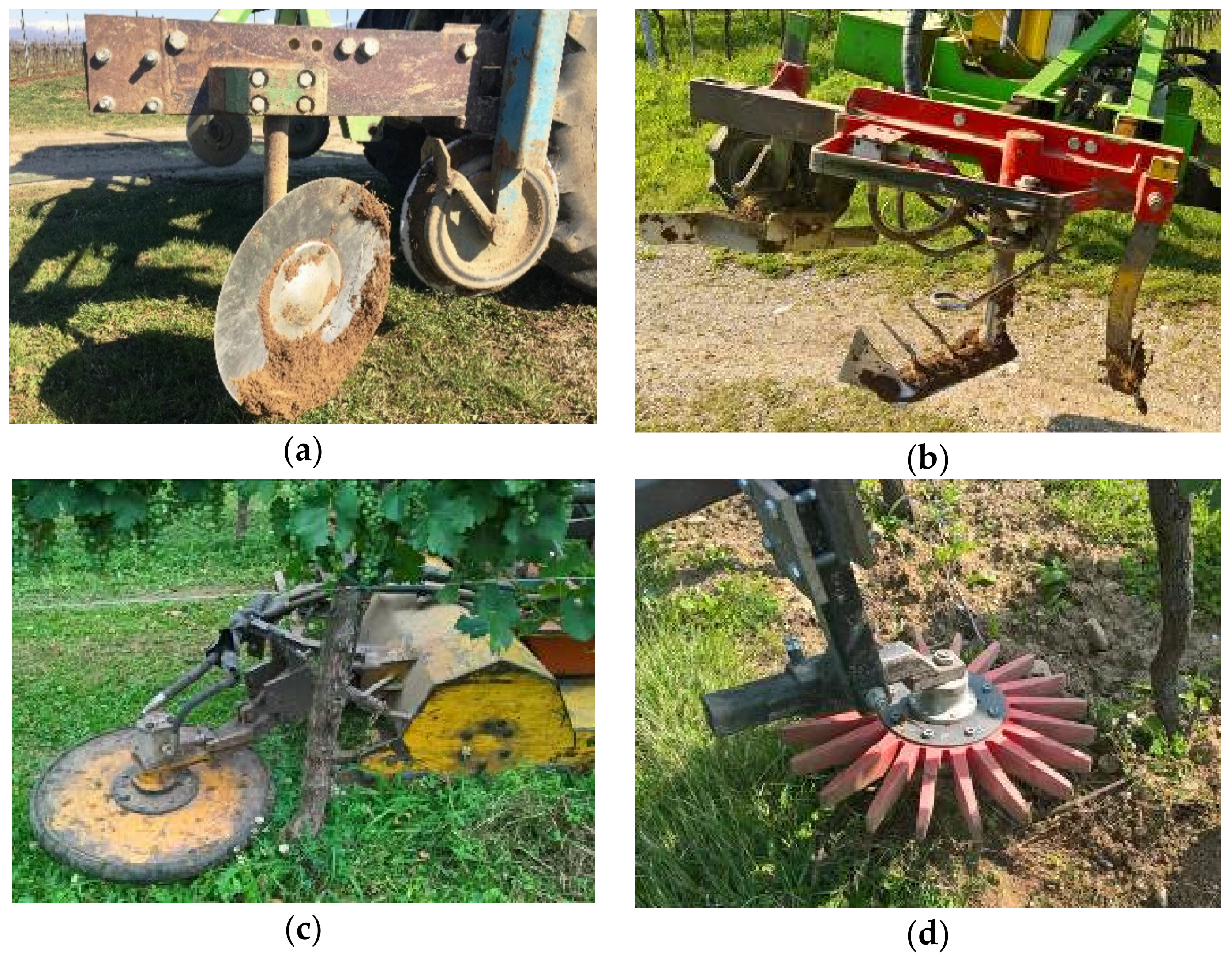
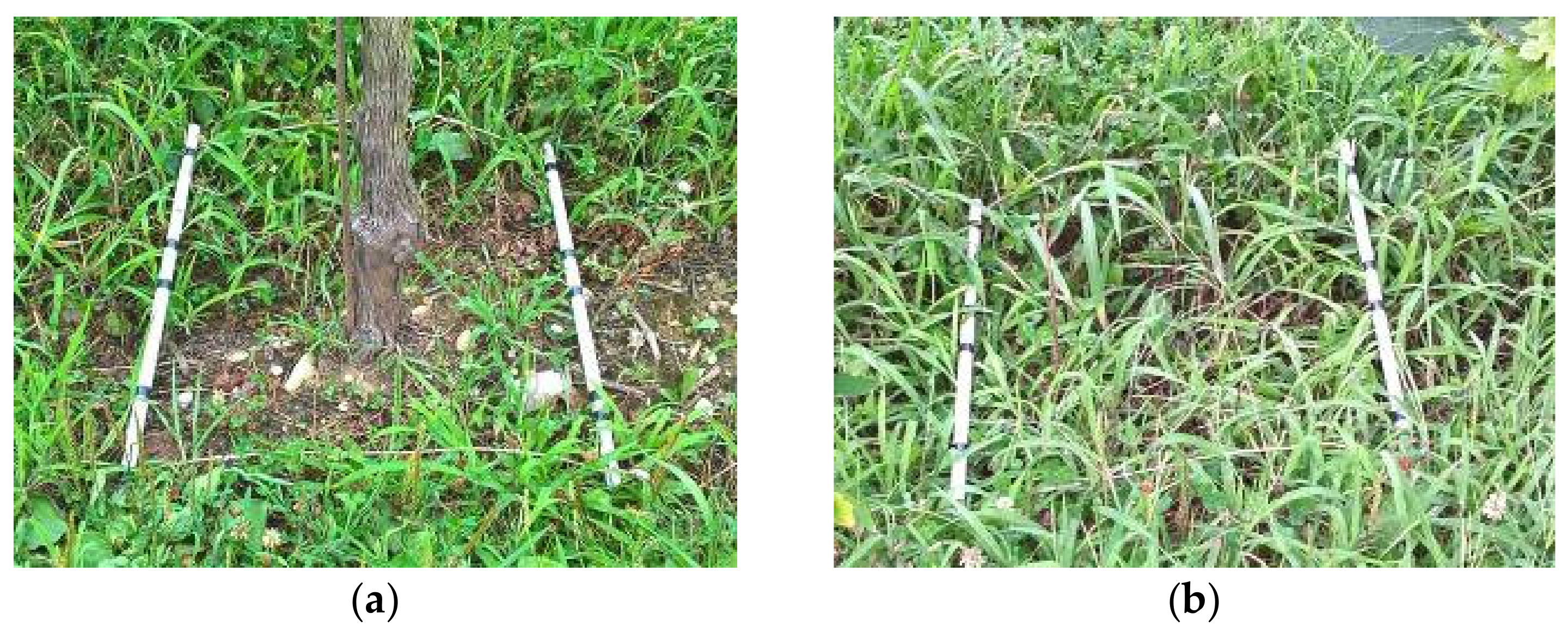
Concern about the adverse effects of chemicals on the environment and on human health, and increasing restrictions of herbicide use, have led to a renewed interest in non-chemical weed control, particularly under the row of vineyards. A new, biomass-fueled (wood pellet), flaming prototype (CS Thermos, San Vendemiano, TV) was tested in the vineyard during Spring–Summer 2018, and compared with tillage (disc cultivator, weeder blade, and finger blade) and mowing (in-row, vine-skipping mower). Efficacy (in % of weed biomass removed or killed) and re-growth between two applications (in g dry biomass/m2) were assessed for each treatment at two sampling locations (between the vines, and around the vines). Flaming resulted in greater efficacy of weed removal in comparison to tillage (blade weeder) and mowing, both between the vines (64%–75% versus 44%–68%, and 40%–68%, respectively) and around the vines (56%–78%, 39%–46%, and 37%–48%, respectively). However, five applications of tillage significantly reduced total weed growth until 27 July (by 26%) between vines in comparison to three applications of flaming, while no significant differences were found around vines. Such findings suggest that more frequent applications of flaming may be needed to give average weed control comparable to that of tillage, while improving it close to the vine trunks. Advantages and disadvantages of the prototype versus tillage and mowing, and versus conventional, LPG-fueled flamers are discussed in the paper.
Keywords: vineyard; weed control; flaming; tillage; mowing; agricultural machinery vineyard; weed control; flaming; tillage; mowing; agricultural machinery