Biological Function of Melatonin in the Gut and Its Systemic Effects in Swine Production: A Review
 ,
,
Abstract
1. Introduction
2. Localization and Synthesis of Melatonin in the Gut
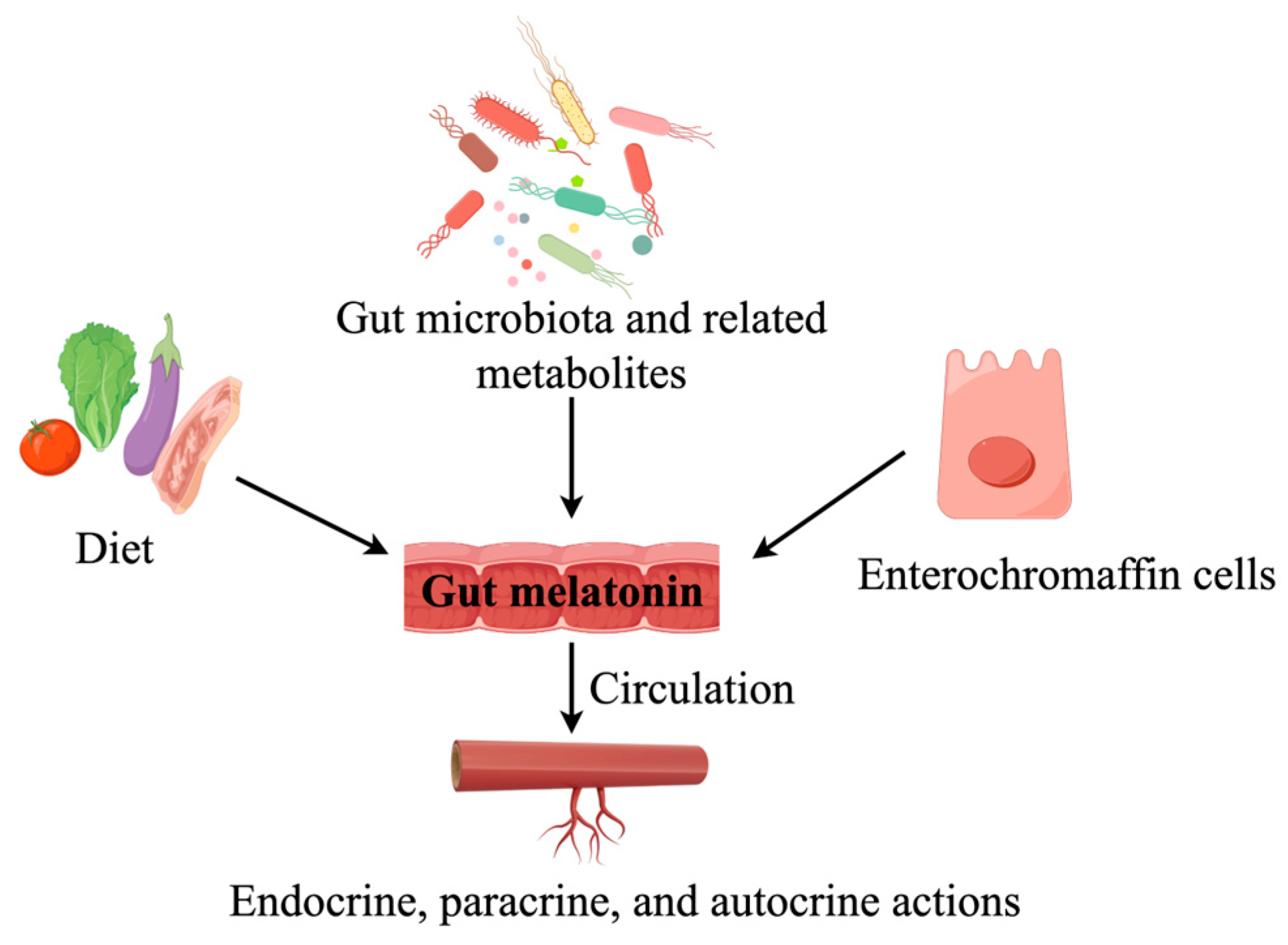
2.1. Melatonin Localization
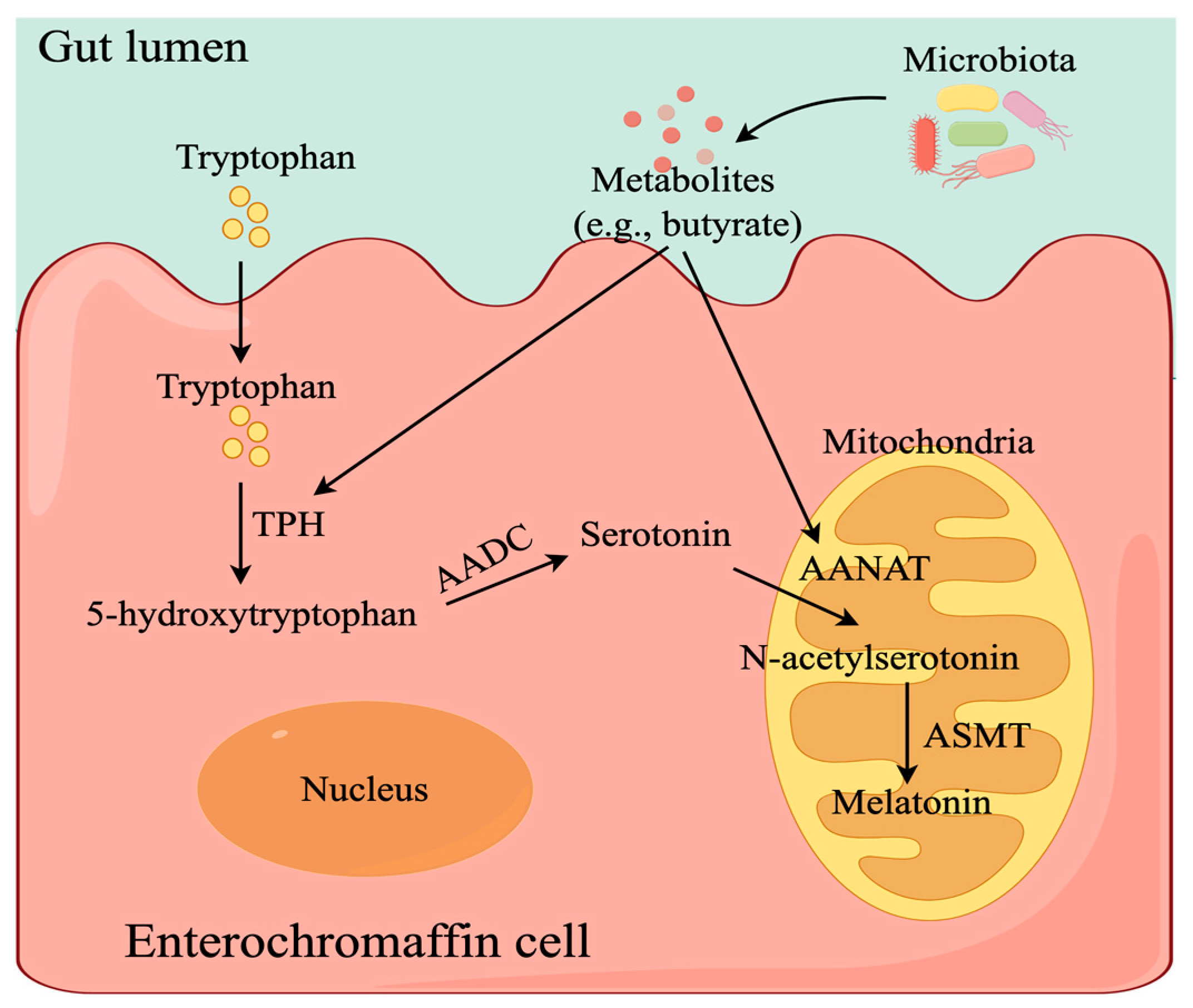
2.2. Melatonin Synthesis
2.3. Regulatory Effects of Gut Microbiota on Melatonin Production
3. Melatonin Receptors in the Gut
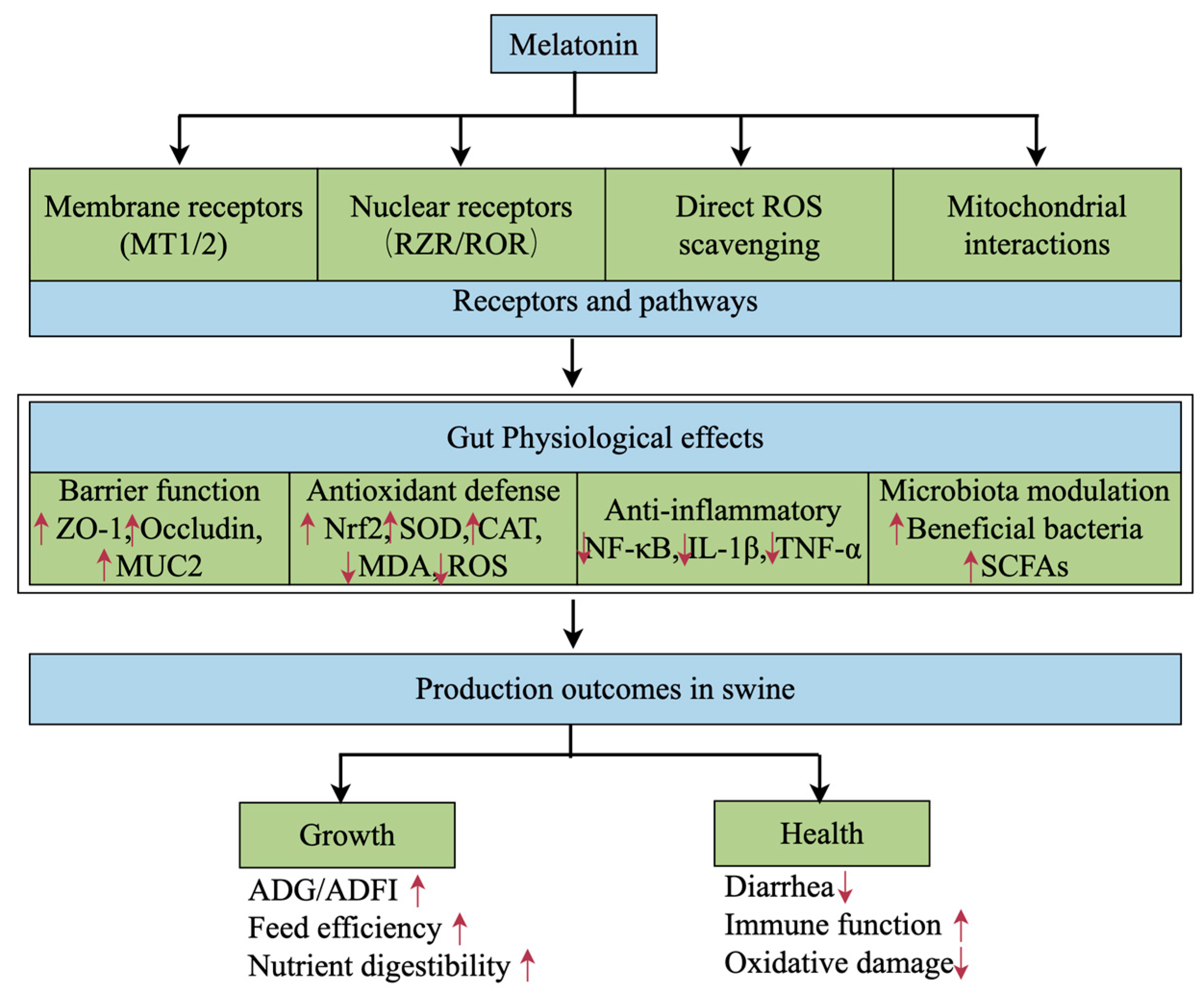
4. Biological Functions of Melatonin in the Gut
4.1. Antioxidant Properties of Melatonin
4.2. Anti-Inflammatory Properties of Melatonin
4.3. Microbial Regulation
4.4. Mitochondrial Regulation
4.5. Other Biological Functions
5. Application of Melatonin in Swine Production
5.1. Growth Performance
5.2. Gut Physiology and Microbiota
5.3. Antioxidant Capacity and Immune Status
5.4. Reproductive Performance
6. Conclusions and Perspectives
Author Contributions
Funding
Institutional Review Board Statement
Informed Consent Statement
Data Availability Statement
Conflicts of Interest
Abbreviations
| ROS | reactive oxygen species |
| FDA | food and drug administration |
| GIT | gastrointestinal tract |
| TPH | tryptophan hydroxylase |
| 5-HTP | 5-hydroxytryptophan |
| AADC | aromatic L-amino acid decarboxylase |
| 5-HT | 5-hydroxytryptamine |
| ATP | adenosine triphosphate |
| AANAT | arylalkylamine N-acetyltransferase |
| NAS | N-acetylserotonin |
| ASMT | acetylserotonin O-methyltransferase |
| MT | melatonin receptors |
| RZR | retinoid Z receptor |
| ROR | retinoid-related orphan receptor |
| SCFAs | short-chain fatty acids |
| mtDNA | mitochondrial DNA |
| AFMK | N-acetyl-N-formyl-5-methoxykynuramine |
| AMK | N-acetyl-5-methoxykynuramine |
| Nrf2 | nuclear factor-erythroid 2-related factor 2 |
| COX | cyclooxygenase |
| PGE2 | prostaglandin E2 |
| NO | nitric oxide |
| iNOS | inducible nitric oxide synthase |
| MMP | metalloproteinases |
| TMAO | trimethylamine N-oxide |
| ADG | average daily gain |
| ADFI | average daily feed intake |
| F/G | feed-to-gain ratio |
| BW | body weight |
| PCV2 | porcine circovirus type 2 |
| P450scc | cholesterol side-chain cleavage enzyme |
| StAR | steroidogenic acute regulatory protein |
| ZO-1 | zonula occludens-1 |
| MUC2 | mucin 2 |
| SOD | superoxide dismutase |
| CAT | catalase |
| MDA | malondialdehyde |
| NF-κB | nuclear factor kappa-B |
| IL-1β | interleukin-1β |
| TNF-α | tumor necrosis factor-α |
| CCK | cholecystokinin |
| IBD | inflammatory bowel disease |
| IBS | irritable bowel syndrome |
References
- Zimmermann, P.; Kurth, S.; Pugin, B.; Bokulich, N.A. Microbial melatonin metabolism in the human intestine as a therapeutic target for dysbiosis and rhythm disorders. NPJ Biofilms Microbiomes 2024, 10, 139. [Google Scholar] [CrossRef]
- Lerner, A.B.; Case, J.D.; Takahashi, Y.; Lee, T.H.; Mori, W. Isolation of melatonin, the pineal gland factor that lightens melanocytes. J. Am. Chem. Soc. 1958, 80, 2587. [Google Scholar] [CrossRef]
- Zawilska, J.B.; Skene, D.J.; Arendt, J. Physiology and pharmacology of melatonin in relation to biological rhythms. Pharmacol. Rep. 2009, 61, 383–410. [Google Scholar] [CrossRef] [PubMed]
- Pevet, P. Melatonin and biological rhythms. Neurosignals 2000, 9, 203–212. [Google Scholar] [CrossRef] [PubMed]
- Ma, N.; Zhang, J.; Reiter, R.J.; Ma, X. Melatonin mediates mucosal immune cells, microbial metabolism, and rhythm crosstalk: A therapeutic target to reduce intestinal inflammation. Med. Res. Rev. 2020, 40, 606–632. [Google Scholar] [CrossRef]
- Mannino, G.; Caradonna, F.; Cruciata, I.; Lauria, A.; Perrone, A.; Gentile, C. Melatonin reduces inflammatory response in human intestinal epithelial cells stimulated by interleukin-1β. J. Pineal Res. 2019, 67, e12598. [Google Scholar] [CrossRef]
- Zang, L.Y.; Cosma, G.; Gardner, H.; Vallyathan, V. Scavenging of reactive oxygen species by melatonin. Biochim. Biophys. Acta 1998, 1425, 469–477. [Google Scholar] [CrossRef] [PubMed]
- Zhao, S.; Wang, Y.; Zhang, X.; Zheng, L.; Zhu, B.; Yao, S.; Yang, L.; Du, J. Melatonin protects against hypoxia/reoxygenation-induced dysfunction of human umbilical vein endothelial cells through inhibiting reactive oxygen species generation. Acta Cardiol. Sin. 2018, 34, 424–431. [Google Scholar]
- Owino, S.; Buonfiglio, D.D.; Tchio, C.; Tosini, G. Melatonin signaling a key regulator of glucose homeostasis and energy metabolism. Front. Endocrinol. 2019, 10, 488. [Google Scholar] [CrossRef]
- Ahmad, S.B.; Ali, A.; Bilal, M.; Rashid, S.M.; Wani, A.B.; Bhat, R.R.; Rehman, M.U. Melatonin and health: Insights of melatonin action, biological functions, and associated disorders. Cell. Mol. Neurobiol. 2023, 43, 2437–2458. [Google Scholar] [CrossRef]
- Nabavi, S.M.; Nabavi, S.F.; Sureda, A.; Xiao, J.; Dehpour, A.R.; Shirooie, S.; Silva, A.S.; Baldi, A.; Khan, H.; Daglia, M. Anti-inflammatory effects of Melatonin: A mechanistic review. Crit. Rev. Food Sci. Nutr. 2019, 59, S4–S16. [Google Scholar] [CrossRef]
- Wiechmann, A.F.; Sherry, D.M. Role of melatonin and its receptors in the vertebrate retina. Int. Rev. Cell Mol. Biol. 2013, 300, 211–242. [Google Scholar] [PubMed]
- Rusanova, I.; Martínez-Ruiz, L.; Florido, J.; Rodríguez-Santana, C.; Guerra-Librero, A.; Acuña-Castroviejo, D.; Escames, G. Protective effects of melatonin on the skin: Future perspectives. Int. J. Mol. Sci. 2019, 20, 4948. [Google Scholar] [CrossRef] [PubMed]
- Soliman, A.; Lacasse, A.A.; Lanoix, D.; Sagrillo-Fagundes, L.; Boulard, V.; Vaillancourt, C. Placental melatonin system is present throughout pregnancy and regulates villous trophoblast differentiation. J. Pineal Res. 2015, 59, 38–46. [Google Scholar] [CrossRef]
- Naranjo, M.; Guerrero, J.; Rubio, A.; Lardone, P.; Carrillo-Vico, A.; Carrascosa-Salmoral, M.; Jiménez-Jorge, S.; Arellano, M.; Leal-Noval, S.; Leal, M. Melatonin biosynthesis in the thymus of humans and rats. Cell. Mol. Life Sci. 2007, 64, 781–790. [Google Scholar] [CrossRef]
- Chen, C.-Q.; Fichna, J.; Bashashati, M.; Li, Y.-Y.; Storr, M. Distribution, function and physiological role of melatonin in the lower gut. World J. Gastroenterol. 2011, 17, 3888. [Google Scholar] [CrossRef]
- Bubenik, G.A.; Brown, G.M. Pinealectomy reduces melatonin levels in the serum but not in the gastrointestinal tract of rats. Biol. Signals 1997, 6, 40–44. [Google Scholar] [CrossRef]
- Tang, Q.; Lan, T.; Zhou, C.; Gao, J.; Wu, L.; Wei, H.; Li, W.; Tang, Z.; Tang, W.; Diao, H.; et al. Nutrition strategies to control post-weaning diarrhea of piglets: From the perspective of feeds. Anim. Nutr. 2024, 17, 297–311. [Google Scholar] [CrossRef]
- Huether, G. Melatonin synthesis in the gastrointestinal tract and the impact of nutritional factors on circulating melatonin. Ann. N. Y. Acad. Sci. 1994, 719, 146–158. [Google Scholar] [CrossRef]
- Gao, T.; Wang, Z.; Dong, Y.; Cao, J.; Lin, R.; Wang, X.; Yu, Z.; Chen, Y. Role of melatonin in sleep deprivation-induced intestinal barrier dysfunction in mice. J. Pineal Res. 2019, 67, e12574. [Google Scholar] [CrossRef] [PubMed]
- Gong, Y.Q.; Hou, F.T.; Xiang, C.L.; Li, C.L.; Hu, G.H.; Chen, C.W. The mechanisms and roles of melatonin in gastrointestinal cancer. Front. Oncol. 2022, 12, 1066698. [Google Scholar] [CrossRef]
- Wu, Y.; Xiao, W.; Xiao, B.; Wang, Y.; Li, Y.; Wu, A.; Zhang, Q.; Liu, X.; Liu, S.; Yuan, Z.; et al. Melatonin alleviates T-2 toxin-induced intestinal injury by enhancing gut barrier function and modulating microbiota in weaned piglets. J. Agric. Food Chem. 2025, 73, 6903–6916. [Google Scholar] [CrossRef] [PubMed]
- Peng, X.; Cai, X.; Li, J.; Huang, Y.; Liu, H.; He, J.; Fang, Z.; Feng, B.; Tang, J.; Lin, Y. Effects of melatonin supplementation during pregnancy on reproductive performance, maternal–placental–fetal redox status, and placental mitochondrial function in a sow model. Antioxidants 2021, 10, 1867. [Google Scholar]
- Zha, A.; Yan, J.; Li, J.; Wang, J.; Qi, M.; Liao, P.; Chun, G.; Yin, Y. Melatonin increased antioxidant capacity to ameliorate growth retardation and intestinal epithelial barrier dysfunction in diquat-challenged piglets. J. Sci. Food Agric. 2024, 104, 2262–2271. [Google Scholar]
- Liu, L.; Zhang, S.; Bao, J.; He, X.; Tong, D.; Chen, C.; Ying, Q.; Zhang, Q.; Zhang, C.; Li, J. Melatonin improves laying performance by enhancing intestinal amino acids transport in hens. Front. Endocrinol. 2018, 9, 426. [Google Scholar] [CrossRef]
- Li, J.; Li, R.; Liu, G.; Lv, C.; Mi, Y.; Zhang, C. Effect of melatonin on renewal of chicken small intestinal mucosa. Poult. Sci. 2017, 96, 2942–2949. [Google Scholar] [CrossRef]
- Flinn, T.; McCarthy, N.L.; Swinbourne, A.M.; Gatford, K.L.; Weaver, A.C.; McGrice, H.A.; Kelly, J.M.; Walker, S.K.; Kind, K.L.; Kleemann, D.O. Supplementing Merino ewes with melatonin during the last half of pregnancy improves tolerance of prolonged parturition and survival of second-born twin lambs. J. Anim. Sci. 2020, 98, skaa372. [Google Scholar] [CrossRef]
- Rani, N.F.; Abduh, M.Y.; Norazmi-Lokman, N.H.; Aripin, S.A. Data on growth performance, glucose concentration and testosterone level of Asian seabass, Lates calcarifer juveniles fed with exogenous melatonin at different concentration. Data Brief 2022, 44, 108495. [Google Scholar] [CrossRef] [PubMed]
- Amri, A.; Kessabi, K.; Bouraoui, Z.; Sakli, S.; Gharred, T.; Guerbej, H.; Messaoudi, I.; Jebali, J. Effect of melatonin and folic acid supplementation on the growth performance, antioxidant status, and liver histology of the farmed gilthead sea bream (Sparus aurata L.) under standard rearing conditions. Fish Physiol. Biochem. 2020, 46, 2265–2280. [Google Scholar] [CrossRef]
- Wang, L.; Yan, L.; Han, Q.; Li, G.; Wu, H.; Ma, X.; Zhao, M.; Ma, W.; Ji, P.; Zhang, R. Melatonin supplementation during the late gestational stage enhances reproductive performance of sows by regulating fluid shear stress and improving placental antioxidant capacity. Antioxidants 2023, 12, 688. [Google Scholar] [CrossRef] [PubMed]
- Du, L.; Liu, B.; Han, Z.; Xia, Y.; Wu, M.; Liu, S. Melatonin shapes bacterial clearance function of porcine macrophages during enterotoxigenic Escherichia coli infection. Anim. Nutr. 2022, 11, 242–251. [Google Scholar] [CrossRef]
- Lee, P.; Shiu, S.; Chow, P.; Pang, S. Regional and diurnal studies of melatonin and melatonin binding sites in the duck gastro-intestinal tract. Biol. Signals 1995, 4, 212–224. [Google Scholar] [CrossRef]
- Menendez-Pelaez, A.; Poeggeler, B.; Reiter, R.J.; Barlow-Walden, L.; Pablos, M.I.; Tan, D.X. Nuclear localization of melatonin in different mammalian tissues: Immunocytochemical and radioimmunoassay evidence. J. Cell. Biochem. 1993, 53, 373–382. [Google Scholar] [CrossRef]
- Bubenik, G.A. Gastrointestinal melatonin: Localization, function, and clinical relevance. Dig. Dis. Sci. 2002, 47, 2336–2348. [Google Scholar] [CrossRef]
- Raikhlin, N.T.; Kvetnoy, I.M. Melatonin and enterochromaffine cells. Acta Histochem. 1976, 55, 19–24. [Google Scholar] [CrossRef]
- Bubenik, G.A.; Hacker, R.R.; Brown, G.M.; Bartos, L. Melatonin concentrations in the luminal fluid, mucosa, and muscularis of the bovine and porcine gastrointestinal tract. J. Pineal Res. 1999, 26, 56–63. [Google Scholar] [CrossRef] [PubMed]
- Mukherjee, S.; Maitra, S.K. Gut melatonin in vertebrates: Chronobiology and physiology. Front. Endocrinol. 2015, 6, 112. [Google Scholar] [CrossRef] [PubMed]
- Zheng, J.; Zhou, Y.; Zhang, D.; Ma, K.; Gong, Y.; Luo, X.; Liu, J.; Cui, S. Intestinal melatonin levels and gut microbiota homeostasis are independent of the pineal gland in pigs. Front. Microbiol. 2024, 15, 1352586. [Google Scholar] [CrossRef] [PubMed]
- Stefulj, J.; Hörtner, M.; Ghosh, M.; Schauenstein, K.; Rinner, I.; Wölfler, A.; Semmler, J.; Liebmann, P.M. Gene expression of the key enzymes of melatonin synthesis in extrapineal tissues of the rat. J. Pineal Res. 2001, 30, 243–247. [Google Scholar] [CrossRef]
- Rao, Z.; Li, J.; Shi, B.; Zeng, Y.; Liu, Y.; Sun, Z.; Wu, L.; Sun, W.; Tang, Z. Dietary tryptophan levels impact growth performance and intestinal microbial ecology in weaned piglets via tryptophan metabolites and intestinal antimicrobial peptides. Animals 2021, 11, 817. [Google Scholar] [CrossRef]
- Lepage, O.; Larson, E.T.; Mayer, I.; Winberg, S. Tryptophan affects both gastrointestinal melatonin production and interrenal activity in stressed and nonstressed rainbow trout. J. Pineal Res. 2005, 38, 264–271. [Google Scholar] [CrossRef]
- Huether, G.; Poeggeler, B.; Reimer, A.; George, A. Effect of tryptophan administration on circulating melatonin levels in chicks and rats: Evidence for stimulation of melatonin synthesis and release in the gastrointestinal tract. Life Sci. 1992, 51, 945–953. [Google Scholar] [CrossRef]
- Pal, P.K.; Sarkar, S.; Chattopadhyay, A.; Tan, D.X.; Bandyopadhyay, D. Enterochromaffin cells as the source of melatonin: Key findings and functional relevance in mammals. Melatonin Res. 2019, 2, 61–82. [Google Scholar] [CrossRef]
- Tan, D.X.; Reiter, R.J. Mitochondria: The birth place, battle ground and the site of melatonin metabolism in cells. Melatonin Res. 2019, 2, 44–66. [Google Scholar] [CrossRef]
- Reiter, R.J.; Sharma, R.; Tan, D.X.; Chuffa, L.G.d.A.; da Silva, D.G.H.; Slominski, A.T.; Steinbrink, K.; Kleszczynski, K. Dual sources of melatonin and evidence for different primary functions. Front. Endocrinol. 2024, 15, 1414463. [Google Scholar] [CrossRef]
- Suofu, Y.; Li, W.; Jean-Alphonse, F.G.; Jia, J.; Khattar, N.K.; Li, J.; Baranov, S.V.; Leronni, D.; Mihalik, A.C.; He, Y. Dual role of mitochondria in producing melatonin and driving GPCR signaling to block cytochrome c release. Proc. Natl. Acad. Sci. USA 2017, 114, E7997–E8006. [Google Scholar] [CrossRef] [PubMed]
- Lei, X.; Xu, Z.; Huang, L.; Huang, Y.; Tu, S.; Xu, L.; Liu, D. The potential influence of melatonin on mitochondrial quality control: A review. Front. Pharmacol. 2024, 14, 1332567. [Google Scholar] [CrossRef] [PubMed]
- Reiter, R.J.; Sharma, R.; Pires de Campos Zuccari, D.A.; de Almeida Chuffa, L.G.; Manucha, W.; Rodriguez, C. Melatonin synthesis in and uptake by mitochondria: Implications for diseased cells with dysfunctional mitochondria. Future Med. Chem. 2021, 13, 335–339. [Google Scholar] [CrossRef] [PubMed]
- Cucielo, M.S.; Cesário, R.C.; Silveira, H.S.; Gaiotte, L.B.; Dos Santos, S.A.A.; de Campos Zuccari, D.A.P.; Seiva, F.R.F.; Reiter, R.J.; de Almeida Chuffa, L.G. Melatonin reverses the warburg-type metabolism and reduces mitochondrial membrane potential of ovarian cancer cells independent of MT1 receptor activation. Molecules 2022, 27, 4350. [Google Scholar] [CrossRef]
- Tan, D.X.; Reiter, R.J.; Zimmerman, S.; Hardeland, R. Melatonin: Both a messenger of darkness and a participant in the cellular actions of non-visible solar radiation of near infrared light. Biology 2023, 12, 89. [Google Scholar] [CrossRef]
- Bonmatí-Carrión, M.-Á.; Rol, M.-A. Melatonin as a mediator of the gut microbiota–host interaction: Implications for health and disease. Antioxidants 2023, 13, 34. [Google Scholar] [CrossRef]
- Gao, T.; Wang, Z.; Cao, J.; Dong, Y.; Chen, Y. Melatonin attenuates microbiota dysbiosis of jejunum in short-term sleep deprived mice. J. Microbiol. 2020, 58, 588–597. [Google Scholar] [CrossRef]
- Lian, Z.; Xu, Y.; Wang, C.; Chen, Y.; Yuan, L.; Liu, Z.; Liu, Y.; He, P.; Cai, Z.; Zhao, J. Gut microbiota-derived melatonin from Puerariae Lobatae Radix-resistant starch supplementation attenuates ischemic stroke injury via a positive microbial co-occurrence pattern. Pharmacol. Res. 2023, 190, 106714. [Google Scholar] [CrossRef]
- Song, L.; He, M.; Sun, Q.; Wang, Y.; Zhang, J.; Fang, Y.; Liu, S.; Duan, L. Roseburia hominis increases intestinal melatonin level by activating p-CREB-AANAT pathway. Nutrients 2021, 14, 117. [Google Scholar] [CrossRef] [PubMed]
- Liu, B.; Fan, L.; Wang, Y.; Wang, H.; Yan, Y.; Chen, S.; Hung, I.; Liu, C.; Wei, H.; Ge, L. Gut microbiota regulates host melatonin production through epithelial cell MyD88. Gut Microbes 2024, 16, 2313769. [Google Scholar] [CrossRef] [PubMed]
- Gao, J.; Xu, K.; Liu, H.; Liu, G.; Bai, M.; Peng, C.; Li, T.; Yin, Y. Impact of the gut microbiota on intestinal immunity mediated by tryptophan metabolism. Front. Cell. Infect. Microbiol. 2018, 8, 13. [Google Scholar] [CrossRef]
- Zhuo, Y.; Cao, M.; Gong, Y.; Tang, L.; Jiang, X.; Li, Y.; Yang, M.; Xu, S.; Li, J.; Che, L.; et al. Gut microbial metabolism of dietary fibre protects against high energy feeding induced ovarian follicular atresia in a pig model. Br. J. Nutr. 2021, 125, 38–49. [Google Scholar] [CrossRef]
- Wang, B.; Zhu, S.; Liu, Z.; Wei, H.; Zhang, L.; He, M.; Pei, F.; Zhang, J.; Sun, Q.; Duan, L. Increased expression of colonic mucosal melatonin in patients with irritable bowel syndrome correlated with gut dysbiosis. Genom. Proteom. Bioinform. 2020, 18, 708–720. [Google Scholar] [CrossRef] [PubMed]
- Nosjean, O.; Ferro, M.; Cogé, F.; Beauverger, P.; Henlin, J.-M.; Lefoulon, F.; Fauchere, J.-L.; Delagrange, P.; Canet, E.; Boutin, J.A. Identification of the Melatonin-binding SiteMT 3 as the Quinone Reductase 2. J. Biol. Chem. 2000, 275, 31311–31317. [Google Scholar] [CrossRef] [PubMed]
- Ma, H.; Kang, J.; Fan, W.; He, H.; Huang, F. ROR: Nuclear receptor for melatonin or not? Molecules 2021, 26, 2693. [Google Scholar] [CrossRef]
- Panmanee, J.; Charoensutthivarakul, S.; Cheng, C.W.; Promthep, K.; Mukda, S.; Prasertporn, T.; Nopparat, C.; Teerapo, K.; Supcharoen, P.; Petchyam, N.; et al. A complex interplay between melatonin and RORβ: RORβ is unlikely a putative receptor for melatonin as revealed by biophysical assays. Mol. Neurobiol. 2025, 62, 2333–2347. [Google Scholar]
- Winczyk, K.; Pawlikowski, M.; Guerrero, J.M.; Karasek, M. Possible involvement of the nuclear RZR/ROR-alpha receptor in the antitumor action of melatonin on murine colon 38 cancer. Tumour Biol. 2003, 23, 298–302. [Google Scholar]
- Stebelová, K.; Anttila, K.; Mänttäri, S.; Saarela, S.; Zeman, M. Immunohistochemical definition of MT2 receptors and melatonin in the gastrointestinal tissues of rat. Acta Histochem. 2010, 112, 26–33. [Google Scholar] [CrossRef]
- Soták, M.; Mrnka, L.; Pácha, J. Heterogeneous expression of melatonin receptor MT1 mRNA in the rat intestine under control and fasting conditions. J. Pineal Res. 2006, 41, 183–188. [Google Scholar] [CrossRef]
- Wang, B.; Zhang, L.; Zhu, S.; Zhang, J.; Duan, L. Short chain fatty acids contribute to gut microbiota-induced promotion of colonic melatonin receptor expression. J. Biol. Regul. Homeost. Agents 2019, 33, 763–771. [Google Scholar]
- Lutfi, E.; Basili, D.; Falcinelli, S.; Morillas, L.; Carnevali, O.; Capilla, E.; Navarro, I. The probiotic Lactobacillus rhamnosus mimics the dark-driven regulation of appetite markers and melatonin receptors’ expression in zebrafish (Danio rerio) larvae: Understanding the role of the gut microbiome. Comp. Biochem. Physiol. Part B Biochem. Mol. Biol. 2021, 256, 110634. [Google Scholar] [CrossRef] [PubMed]
- Pal, P.K.; Bhattacharjee, B.; Chattopadhyay, A.; Bandyopadhyay, D. Pleiotropic roles of melatonin against oxidative stress mediated tissue injury in the gastrointestinal tract: An overview. Melatonin Res. 2019, 2, 158–184. [Google Scholar] [CrossRef]
- Kehrer, J.P.; Klotz, L.-O. Free radicals and related reactive species as mediators of tissue injury and disease: Implications for Health. Crit. Rev. Toxicol. 2015, 45, 765–798. [Google Scholar] [CrossRef] [PubMed]
- Novak, E.A.; Mollen, K.P. Mitochondrial dysfunction in inflammatory bowel disease. Front. Cell Dev. Biol. 2015, 3, 62. [Google Scholar] [CrossRef]
- Reiter, R.J.; Mayo, J.C.; Tan, D.X.; Sainz, R.M.; Alatorre-Jimenez, M.; Qin, L. Melatonin as an antioxidant: Under promises but over delivers. J. Pineal Res. 2016, 61, 253–278. [Google Scholar] [CrossRef]
- Tan, D.X.; Manchester, L.C.; Reiter, R.J.; Plummer, B.F.; Limson, J.; Weintraub, S.T.; Qi, W. Melatonin directly scavenges hydrogen peroxide: A potentially new metabolic pathway of melatonin biotransformation. Free Radic. Biol. Med. 2000, 29, 1177–1185. [Google Scholar] [CrossRef]
- Zhang, H.; Yan, A.; Liu, X.; Ma, Y.; Zhao, F.; Wang, M.; Loor, J.J.; Wang, H. Melatonin ameliorates ochratoxin A induced liver inflammation, oxidative stress and mitophagy in mice involving in intestinal microbiota and restoring the intestinal barrier function. J. Hazard. Mater. 2021, 407, 124489. [Google Scholar] [CrossRef]
- Kolli, V.K.; Abraham, P.; Isaac, B.; Kasthuri, N. Preclinical efficacy of melatonin to reduce methotrexate-induced oxidative stress and small intestinal damage in rats. Dig. Dis. Sci. 2013, 58, 959–969. [Google Scholar] [CrossRef]
- Gao, T.; Wang, T.; Wang, Z.; Cao, J.; Dong, Y.; Chen, Y. Melatonin-mediated MT2 attenuates colitis induced by dextran sodium sulfate via PI3K/AKT/Nrf2/SIRT1/RORα/NF-κB signaling pathways. Int. Immunopharmacol. 2021, 96, 107779. [Google Scholar] [CrossRef]
- Monteiro, K.K.A.C.; Shiroma, M.E.; Damous, L.L.; Simões, M.d.J.; Simões, R.d.S.; Cipolla-Neto, J.; Baracat, E.C.; Soares, J.M., Jr. Antioxidant actions of melatonin: A systematic review of animal studies. Antioxidants 2024, 13, 439. [Google Scholar] [CrossRef]
- Dong, W.G.; Mei, Q.; Yu, J.P.; Xu, J.M.; Xiang, L.; Xu, Y. Effects of melatonin on the expression of iNOS and COX-2 in rat models of colitis. World J. Gastroenterol. 2003, 9, 1307. [Google Scholar] [CrossRef] [PubMed]
- Ma, F.; Hao, H.; Gao, X.; Cai, Y.; Zhou, J.; Liang, P.; Lv, J.; He, Q.; Shi, C.; Hu, D. Melatonin ameliorates necrotizing enterocolitis by preventing Th17/Treg imbalance through activation of the AMPK/SIRT1 pathway. Theranostics 2020, 10, 7730. [Google Scholar] [CrossRef] [PubMed]
- Esposito, E.; Mazzon, E.; Riccardi, L.; Caminiti, R.; Meli, R.; Cuzzocrea, S. Matrix metalloproteinase-9 and metalloproteinase-2 activity and expression is reduced by melatonin during experimental colitis. J. Pineal Res. 2008, 45, 166–173. [Google Scholar] [CrossRef]
- Xiong, X.; Bao, Z.; Mi, Y.; Wang, X.; Zhu, J. Melatonin alleviates neonatal necrotizing enterocolitis by repressing the activation of the NLRP3 inflammasome. Gastroenterol. Res. Pract. 2022, 2022, 6920577. [Google Scholar] [CrossRef]
- Ilott, N.E.; Bollrath, J.; Danne, C.; Schiering, C.; Shale, M.; Adelmann, K.; Krausgruber, T.; Heger, A.; Sims, D.; Powrie, F. Defining the microbial transcriptional response to colitis through integrated host and microbiome profiling. ISME J. 2016, 10, 2389–2404. [Google Scholar] [CrossRef] [PubMed]
- Forbes, J.D.; Van Domselaar, G.; Bernstein, C.N. The gut microbiota in immune-mediated inflammatory diseases. Front. Microbiol. 2016, 7, 1081. [Google Scholar] [CrossRef]
- Shen, Z.-H.; Zhu, C.-X.; Quan, Y.-S.; Yang, Z.-Y.; Wu, S.; Luo, W.-W.; Tan, B.; Wang, X.-Y. Relationship between intestinal microbiota and ulcerative colitis: Mechanisms and clinical application of probiotics and fecal microbiota transplantation. World J. Gastroenterol. 2018, 24, 5–14. [Google Scholar] [CrossRef]
- Zeng, M.; Inohara, N.; Nuñez, G. Mechanisms of inflammation-driven bacterial dysbiosis in the gut. Mucosal Immunol. 2017, 10, 18–26. [Google Scholar] [CrossRef] [PubMed]
- He, F.; Wu, X.; Zhang, Q.; Li, Y.; Ye, Y.; Li, P.; Chen, S.; Peng, Y.; Hardeland, R.; Xia, Y. Bacteriostatic potential of melatonin: Therapeutic standing and mechanistic insights. Front. Immunol. 2021, 12, 683879. [Google Scholar] [CrossRef]
- Iesanu, M.I.; Zahiu, C.D.M.; Dogaru, I.-A.; Chitimus, D.M.; Pircalabioru, G.G.; Voiculescu, S.E.; Isac, S.; Galos, F.; Pavel, B.; O’Mahony, S.M. Melatonin–microbiome two-sided interaction in dysbiosis-associated conditions. Antioxidants 2022, 11, 2244. [Google Scholar] [CrossRef] [PubMed]
- Yin, J.; Li, Y.; Han, H.; Chen, S.; Gao, J.; Liu, G.; Wu, X.; Deng, J.; Yu, Q.; Huang, X. Melatonin reprogramming of gut microbiota improves lipid dysmetabolism in high-fat diet-fed mice. J. Pineal Res. 2018, 65, e12524. [Google Scholar] [CrossRef] [PubMed]
- Xu, P.; Wang, J.; Hong, F.; Wang, S.; Jin, X.; Xue, T.; Jia, L.; Zhai, Y. Melatonin prevents obesity through modulation of gut microbiota in mice. J. Pineal Res. 2017, 62, e12399. [Google Scholar] [CrossRef]
- Liu, S.; Kang, W.; Mao, X.; Ge, L.; Du, H.; Li, J.; Hou, L.; Liu, D.; Yin, Y.; Liu, Y. Melatonin mitigates aflatoxin B1-induced liver injury via modulation of gut microbiota/intestinal FXR/liver TLR4 signaling axis in mice. J. Pineal Res. 2022, 73, e12812. [Google Scholar]
- Ren, W.; Wang, P.; Yan, J.; Liu, G.; Zeng, B.; Hussain, T.; Peng, C.; Yin, J.; Li, T.; Wei, H. Melatonin alleviates weanling stress in mice: Involvement of intestinal microbiota. J. Pineal Res. 2018, 64, e12448. [Google Scholar] [CrossRef]
- Wu, J.J.; Zheng, X.; Wu, C.; Ma, W.; Wang, Y.; Wang, J.; Wei, Y.; Zeng, X.; Zhang, S.; Guan, W. Melatonin alleviates high temperature exposure induced fetal growth restriction via the gut-placenta-fetus axis in pregnant mice. J. Adv. Res. 2025, 68, 131–146. [Google Scholar] [CrossRef]
- Li, G.; Lv, D.; Yao, Y.; Wu, H.; Wang, J.; Deng, S.; Song, Y.; Guan, S.; Wang, L.; Ma, W. Overexpression of ASMT likely enhances the resistance of transgenic sheep to brucellosis by influencing immune-related signaling pathways and gut microbiota. FASEB J. 2021, 35, e21783. [Google Scholar] [CrossRef]
- Zhang, B.; Chen, T.; Cao, M.; Yuan, C.; Reiter, R.J.; Zhao, Z.; Zhao, Y.; Chen, L.; Fan, W.; Wang, X. Gut microbiota dysbiosis induced by decreasing endogenous melatonin mediates the pathogenesis of Alzheimer’s disease and obesity. Front. Immunol. 2022, 13, 900132. [Google Scholar] [CrossRef]
- Paulose, J.K.; Cassone, V.M. The melatonin-sensitive circadian clock of the enteric bacterium Enterobacter aerogenes. Gut Microbes 2016, 7, 424–427. [Google Scholar] [CrossRef]
- Yin, J.; Li, Y.; Han, H.; Ma, J.; Liu, G.; Wu, X.; Huang, X.; Fang, R.; Baba, K.; Bin, P. Administration of exogenous melatonin improves the diurnal rhythms of the gut microbiota in mice fed a high-fat diet. Msystems 2020, 5, e00002-20. [Google Scholar] [CrossRef]
- Qiao, L.; Dou, X.; Song, X.; Chang, J.; Yi, H.; Xu, C. Targeting mitochondria with antioxidant nutrients for the prevention and treatment of postweaning diarrhea in piglets. Anim. Nutr. 2023, 15, 275–287. [Google Scholar] [CrossRef] [PubMed]
- Haque, P.S.; Kapur, N.; Barrett, T.A.; Theiss, A.L. Mitochondrial function and gastrointestinal diseases. Nat. Rev. Gastroenterol. Hepatol. 2024, 21, 537–555. [Google Scholar] [CrossRef] [PubMed]
- Reiter, R.J.; Sharma, R.; Rosales-Corral, S.; de Campos Zuccari, D.A.P.; de Almeida Chuffa, L.G. Melatonin: A mitochondrial resident with a diverse skill set. Life Sci. 2022, 301, 120612. [Google Scholar] [CrossRef]
- Yao, Y.; Chen, T.; Wu, H.; Yang, N.; Xu, S. Melatonin attenuates bisphenol A-induced colon injury by dual targeting mitochondrial dynamics and Nrf2 antioxidant system via activation of SIRT1/PGC-1α signaling pathway. Free Radic. Biol. Med. 2023, 195, 13–22. [Google Scholar] [CrossRef]
- Xu, S.; Li, L.; Wu, J.; An, S.; Fang, H.; Han, Y.; Huang, Q.; Chen, Z.; Zeng, Z. Melatonin attenuates sepsis-induced small-intestine injury by upregulating SIRT3-mediated oxidative-stress inhibition, mitochondrial protection, and autophagy induction. Front. Immunol. 2021, 12, 625627. [Google Scholar] [CrossRef]
- Tan, D.X.; Manchester, L.C.; Qin, L.; Reiter, R.J. Melatonin: A mitochondrial targeting molecule involving mitochondrial protection and dynamics. Int. J. Mol. Sci. 2016, 17, 2124. [Google Scholar] [CrossRef] [PubMed]
- Mei, Q.; Diao, L.; Xu, J.M.; Liu, X.C.; Jin, J. A protective effect of melatonin on intestinal permeability is induced by diclofenac via regulation of mitochondrial function in mice. Acta Pharmacol. Sin. 2011, 32, 495–502. [Google Scholar] [CrossRef]
- Quan, T.; Li, R.; Chen, Y.; Gao, T. Pineal melatonin improves bisphenol A-induced enterotoxicity via tryptophan/AhR/mitochondria signaling in pregnant mice. Sci. Total Environ. 2025, 1005, 180867. [Google Scholar] [CrossRef]
- Chan, H.; Lui, K.; Wong, W.; Poon, A. Effect of melatonin on chloride secretion by human colonic T84 cells. Life Sci. 1998, 62, 2151–2158. [Google Scholar] [CrossRef]
- Drago, F.; Macauda, S.; Salehi, S. Small doses of melatonin increase intestinal motility in rats. Dig. Dis. Sci. 2002, 47, 1969–1974. [Google Scholar] [CrossRef]
- Bonouali-Pellissier, S. Melatonin is involved in cholecystokinin-induced changes of ileal motility in rats. J. Pineal Res. 1994, 17, 79–85. [Google Scholar] [CrossRef] [PubMed]
- Merle, A.; Faucheron, J.L.; Delagrange, P.; Renard, P.; Roche, M.; Pellissier, S. Nycthemeral variations of cholecystokinin action on intestinal motility in rats: Effects of melatonin and S 20928, a melatonin receptor antagonist. Neuropeptides 2000, 34, 385–391. [Google Scholar] [CrossRef] [PubMed]
- Yang, B.; Zhang, L.Y.; Chen, Y.; Bai, Y.P.; Jia, J.; Feng, J.G.; Liu, K.X.; Zhou, J. Melatonin alleviates intestinal injury, neuroinflammation and cognitive dysfunction caused by intestinal ischemia/reperfusion. Int. Immunopharmacol. 2020, 85, 106596. [Google Scholar] [CrossRef]
- Sun, X.; Shao, Y.; Jin, Y.; Huai, J.; Zhou, Q.; Huang, Z.; Wu, J. Melatonin reduces bacterial translocation by preventing damage to the intestinal mucosa in an experimental severe acute pancreatitis rat model. Exp. Ther. Med. 2013, 6, 1343–1349. [Google Scholar] [CrossRef] [PubMed]
- Zhang, H.; Liu, X.; Elsabagh, M.; Zhang, Y.; Ma, Y.; Jin, Y.; Wang, M.; Wang, H.; Jiang, H. Effects of the gut microbiota and barrier function on melatonin efficacy in alleviating liver injury. Antioxidants 2022, 11, 1727. [Google Scholar] [CrossRef]
- Wei, D.; Li, Y.; Che, M.; Li, C.; Wu, Q.; Sun, C. Melatonin relieves hepatic lipid dysmetabolism caused by aging via modifying the secondary bile acid pattern of gut microbes. Cell. Mol. Life Sci. 2022, 79, 527. [Google Scholar] [CrossRef]
- Xia, S.; Gao, W.; Li, Y.; Ma, J.; Gong, S.; Gao, Z.; Tang, W.; Tian, W.; Tang, S. Effects of melatonin on intestinal function and bacterial compositions in sucking piglets. J. Anim. Physiol. Anim. Nutr. 2022, 106, 1139–1148. [Google Scholar] [CrossRef] [PubMed]
- Kwak, M.J.; Chae, K.S.; Kim, J.N.; Whang, K.Y.; Kim, Y. Dietary effects of melatonin on growth performance by modulation of protein bioavailability and behavior in early weaned rats and pigs. J. Anim. Sci. Technol. 2023, 65, 1053–1064. [Google Scholar] [CrossRef] [PubMed]
- Chen, W.; Tu, Y.; Cai, P.; Wang, L.; Zhou, Y.; Liu, S.; Huang, Y.; Zhang, S.; Gu, X.; Yi, W. Melatonin supplementation promotes muscle fiber hypertrophy and regulates lipid metabolism of skeletal muscle in weaned piglets. J. Anim. Sci. 2023, 101, skad256. [Google Scholar] [CrossRef] [PubMed]
- Ning, C.; Xiao, W.; Liang, Z.; Wu, Y.; Fan, H.; Wang, S.; Kong, X.; Wang, Y.; Wu, A.; Li, Y. Melatonin alleviates T-2 toxin-induced oxidative damage, inflammatory response, and apoptosis in piglet spleen and thymus. Int. Immunopharmacol. 2024, 129, 111653. [Google Scholar] [CrossRef]
- Grupp, K.; Erbes, J.; Poppe, A.; Wodack, K.; Gocht, A.; Trepte, C.; Havel, J.; Mann, O.; Izbicki, J.R.; Bachmann, K. Melatonin treatment of pigs with acute pancreatitis reduces inflammatory reaction of pancreatic tissue and enhances fitness score of pigs: Experimental research. World J. Emerg. Surg. 2019, 14, 18. [Google Scholar] [CrossRef]
- Ayles, H.; Ball, R.; Friendship, R.; Bubenik, G. The effect of graded levels of melatonin on performance and gastric ulcers in pigs. Can. J. Anim. Sci. 1996, 76, 607–611. [Google Scholar] [CrossRef]
- Ayles, H.; Friendship, R.; Bubenik, G.; Ball, R. Effect of feed particle size and dietary melatonin supplementation on gastric ulcers in swine. Can. J. Anim. Sci. 1999, 79, 179–185. [Google Scholar] [CrossRef]
- Wang, J.; Zhu, T.; Ma, X.; Wang, Y.; Liu, J.; Li, G.; Liu, Y.; Ji, P.; Zhang, Z.; Zhang, L. Melatonergic systems of AANAT, melatonin, and its receptor MT2 in the corpus luteum are essential for reproductive success in mammals. Biol. Reprod. 2021, 104, 430–444. [Google Scholar] [CrossRef]
- Dobbins, T.W.; Swanson, R.M.; Dennis, A.A.; Rivera, J.D.; Dinh, T.T.; Lemley, C.O.; Burnett, D.D. Melatonin supplementation to sows in mid to late gestation affects offspring circadian, myogenic, and growth factor transcript abundance in pre and postnatal skeletal muscle. J. Anim. Sci. 2024, 102, skae377. [Google Scholar] [CrossRef]
- Dearlove, B.; Kind, K.; Gatford, K.; van Wettere, W. Melatonin fed in early gestation increases fetal weight. Anim. Prod. Sci. 2017, 57, 2478. [Google Scholar] [CrossRef]
- Arend, L.S.; Knox, R.V. Fertility responses of melatonin-treated gilts before and during the follicular and early luteal phases when there are different temperatures and lighting conditions in the housing area. Anim. Reprod. Sci. 2021, 230, 106769. [Google Scholar] [CrossRef]
- Arend, L.S.; Knox, R.V.; Greiner, L.L.; Graham, A.B.; Connor, J.F. Effects of feeding melatonin during proestrus and early gestation to gilts and parity 1 sows to minimize effects of seasonal infertility. J. Anim. Sci. 2019, 97, 4635–4646. [Google Scholar] [CrossRef]
- Peng, X.; Wang, R.; Hu, L.; Zhou, Q.; Liu, Y.; Yang, M.; Fang, Z.; Lin, Y.; Xu, S.; Feng, B. Enterococcus faecium NCIMB 10415 administration improves the intestinal health and immunity in neonatal piglets infected by enterotoxigenic Escherichia coli K88. J. Anim. Sci. Biotechnol. 2019, 10, 72. [Google Scholar] [CrossRef]
- Zhao, P.; Jiang, W.D.; Wu, P.; Liu, Y.; Ren, H.M.; Jin, X.W.; Feng, L.; Zhou, X.Q. Dietary curcumin alleviates intestinal damage induced by ochratoxin A in juvenile grass carp (Ctenopharyngodon idella): Necroptosis and inflammatory responses. Anim. Nutr. 2024, 18, 119–132. [Google Scholar] [CrossRef]
- Lai, X.; Wu, A.; Yu, B.; Yan, H.; Luo, J.; Zheng, P.; Yu, J.; Chen, D. Retinoic acid alleviates rotavirus-induced intestinal damage by regulating redox homeostasis and autophagic flux in piglets. Anim. Nutr. 2024, 16, 409–421. [Google Scholar] [CrossRef]
- Wang, P.; Sun, L.H.; Wang, X.; Wu, Q.; Liu, A. Effective protective agents against the organ toxicity of T-2 toxin and corresponding detoxification mechanisms: A narrative review. Anim. Nutr. 2024, 16, 251–266. [Google Scholar] [CrossRef]
- Lallès, J.P.; Boudry, G.; Favier, C.; Le Floc’h, N.; Luron, I.; Montagne, L.; Oswald, I.P.; Pié, S.; Piel, C.; Sève, B. Gut function and dysfunction in young pigs: Physiology. Anim. Res. 2004, 53, 301–316. [Google Scholar] [CrossRef]
- Wang, M.; Wang, L.; Tan, X.; Wang, L.; Xiong, X.; Wang, Y.; Wang, Q.; Yang, H.; Yin, Y. The developmental changes in intestinal epithelial cell proliferation, differentiation, and shedding in weaning piglets. Anim. Nutr. 2022, 9, 214–222. [Google Scholar] [CrossRef] [PubMed]
- Xu, Y.; Xie, Y.; Wu, Z.; Wang, H.; Chen, Z.; Wang, J.; Bao, W. Protective effects of melatonin on deoxynivalenol-induced oxidative stress and autophagy in IPEC-J2 cells. Food Chem. Toxicol. 2023, 177, 113803. [Google Scholar] [CrossRef] [PubMed]
- Duarte, M.E.; Kim, S.W. Intestinal microbiota and its interaction to intestinal health in nursery pigs. Anim. Nutr. 2022, 8, 169–184. [Google Scholar] [CrossRef]
- Wang, C.R.; Ji, H.W.; He, S.Y.; Liu, R.P.; Wang, X.Q.; Wang, J.; Huang, C.M.; Xu, Y.N.; Li, Y.H.; Kim, N.H. Chrysoeriol improves in vitro porcine embryo development by reducing oxidative stress and autophagy. Vet. Sci. 2023, 10, 143. [Google Scholar] [CrossRef]
- Yao, X.; Jiang, H.; Gao, Q.; Li, Y.H.; Xu, Y.N.; Kim, N.H. Melatonin alleviates defects induced by zearalenone during porcine embryo development. Theriogenology 2020, 151, 66–73. [Google Scholar] [CrossRef] [PubMed]
- Niu, Y.J.; Zhou, W.; Nie, Z.W.; Shin, K.T.; Cui, X.S. Melatonin enhances mitochondrial biogenesis and protects against rotenone-induced mitochondrial deficiency in early porcine embryos. J. Pineal Res. 2020, 68, e12627. [Google Scholar] [PubMed]
- Tang, X.; Xiong, K.; Fang, R.; Li, M. Weaning stress and intestinal health of piglets: A review. Front. Immunol. 2022, 13, 1042778. [Google Scholar] [CrossRef]
- Bae, H.; Yang, C.; Lee, J.Y.; Park, S.; Bazer, F.W.; Song, G.; Lim, W. Melatonin improves uterine-conceptus interaction via regulation of SIRT1 during early pregnancy. J. Pineal Res. 2020, 69, e12670. [Google Scholar]
- Qin, X.; Yang, M.; Yu, Y.; Wang, X.; Zheng, Y.; Cai, R.; Pang, W. Melatonin improves endometrial receptivity and embryo implantation via MT2/PI3K/LIF signaling pathway in sows. J. Anim. Sci. Biotechnol. 2025, 16, 4. [Google Scholar] [PubMed]
- Zhang, W.; Wang, Z.; Zhang, L.; Zhang, Z.; Chen, J.; Chen, W.; Tong, D. Melatonin stimulates the secretion of progesterone along with the expression of cholesterol side-chain cleavage enzyme (P450scc) and steroidogenic acute regulatory protein (StAR) in corpus luteum of pregnant sows. Theriogenology 2018, 108, 297–305. [Google Scholar]
- Joseph, T.T.; Schuch, V.; Hossack, D.J.; Chakraborty, R.; Johnson, E.L. Melatonin: The placental antioxidant and anti-inflammatory. Front. Immunol. 2024, 15, 1339304. [Google Scholar] [CrossRef]
- Verteramo, R.; Pierdomenico, M.; Greco, P.; Milano, C. The role of melatonin in pregnancy and the health benefits for the newborn. Biomedicines 2022, 10, 3252. [Google Scholar] [CrossRef]
- Zhao, S.; Dong, Y.; Li, Y.; Wang, Z.; Chen, Y.; Dong, Y. Melatonin alleviates lipopolysaccharide-induced abnormal pregnancy through MTNR1B regulation of m6A. Int. J. Mol. Sci. 2024, 25, 733. [Google Scholar] [CrossRef]
- Fu, Y.; Chen, Y.; Jin, Z.; Gao, H.; Song, G.; Wang, Q.; Xu, K. Melatonin alleviates oxidative stress induced by H2O2 in porcine trophectoderm cells. Antioxidants 2022, 11, 1047. [Google Scholar] [CrossRef]
- Iida, R.; Koketsu, Y. Delayed age of gilts at first mating associated with photoperiod and number of hot days in humid subtropical areas. Anim. Reprod. Sci. 2013, 139, 115–120. [Google Scholar] [CrossRef] [PubMed]
- Xue, J.L.; Dial, G.D.; Marsh, W.E.; Davies, P.R. Multiple manifestations of season on reproductive performance of commercial swine. J. Am. Vet. Med. Assoc. 1994, 204, 1486–1489. [Google Scholar] [CrossRef] [PubMed]
- Ramírez, O.; Tomàs, A.; Barragán, C.; Noguera, J.L.; Amills, M.; Varona, L. Pig melatonin receptor 1a (MTNR1A) genotype is associated with seasonal variation of sow litter size. Anim. Reprod. Sci. 2009, 115, 317–322. [Google Scholar] [CrossRef] [PubMed]



| Animal | Experimental Context | Melatonin Dose | Duration & Route | Main Outcomes | Proposed Mechanisms | References |
|---|---|---|---|---|---|---|
| Suckling piglets | Normal physiological conditions | 10 mg/day | 21 days, oral administration | No effect on growth performance; increased jejunal nNOS and Claudin-1 expression; increased serum proline concentration. | Improved intestinal neural development and barrier integrity. | [111] |
| Weaned piglets | Normal physiological conditions | 50 mg/kg diet | 35 days, dietary | Increased BW; reduced roaming/fighting behavior; increased resting and feeding time. | Reduced energy expenditure on non-productive activities. | [112] |
| Weaned piglets | Normal physiological conditions | 5 mg/kg BW | 23 days, dietary | No effect on growth performance; increased skeletal muscle fiber hypertrophy; improve mitochondrial function and decrease fat deposition in muscle. | Improved mitochondrial function; regulated lipid metabolism. | [113] |
| Pigs (5–6 months old) | stereotaxic surgery with the removal of the pineal gland | 10 mg/kg BW | 4 months, in drinking water | No effect on growth performance, intestinal morphology or intestinal mucosal barrier function; increased melatonin levels in the GIT and intestinal contents, altered the structure of the gut microbiota. | Melatonin synthesis in the GIT is independent of the pineal gland in pigs. | [38] |
| Weaned piglets | T-2 toxin challenge | 5 mg/kg diet | 14 days, dietary | Improved growth performance; enhanced intestinal barrier function; reduced colonic oxidative stress and inflammation. | Nrf2 pathway activation; NF-κB inhibition; SCFA synthesis promotion; microbiota remodeling. | [22] |
| Weaned piglets | Diquat-induced oxidative stress | 2 mg/kg diet | 21 days, dietary | Increased ADG and ADFI; reversed diquat-induced barrier disruption; decreased serum MDA; increased serum CAT and SOD; increased colonic IL-17, IL-10 mRNA expression. | Antioxidant enzyme enhancement; anti-inflammatory effects. | [24] |
| Weaned piglets | T-2 toxin challenge | 5 mg/kg diet | 14 days, dietary | Increased serum immunoglobulin and PCV2 antibody concentrations; alleviated spleen and thymus oxidative damage. | Enhanced immune function; reduced apoptosis. | [114] |
| Pigs (approximately 30 kg) | Acute pancreatitis | 10 mg/kg BW | 2 h after pancreatitis induction, intravenous bolus | Reduced acinar necrosis, fat tissue necrosis, and edema of pancreatic tissue. | Anti-inflammatory effects. | [115] |
| Growing-finishing pigs | Gastric ulcer condition | 10 mg/kg diet | 20 kg to market weight, dietary | Decreased severity of ulcers and feed intake. | Reduced bile acid concentration in the stomach digesta. | [116] |
| Growing pigs | Normal physiological conditions | 5 mg/kg diet | 28 days, dietary | Increased apparent digestibility of crude protein and dry matter. | Modulated gastrointestinal motility. | [117] |
| Sows | Heat stress | 1 mg/kg/day | From weaning to day 10 post-mating, dietary | Increased litter size and litter weight; improved serum progesterone level. | Improved luteal function. | [118] |
| Sows | Normal physiological conditions | 2 mg/kg diet | Day 90 of gestation to farrowing, dietary | Increased litter size, birth survival rate, birth weight, weaning weight and weaning survival rate. | Nrf2 pathway activation; suppressed placental oxidative stress. | [30] |
| Sows | Normal physiological conditions | 36 mg/day | From mating to farrowing, dietary | Increased placental weight, decreased the percentage of piglets born with weight < 900 g. | Improved placental antioxidant status; reduced inflammation; enhanced mitochondrial function. | [23] |
| Sows | Normal physiological conditions | 20 mg/day | Mid to late gestation, dietary | Enhanced myoblast differentiation; improved postnatal performance. | Modulated circadian-related genes and myogenic genes in offspring muscle. | [119] |
| Gilts | Normal physiological conditions | 36 mg/day | Day 25–50 of gestation, dietary | Increased fetal weight at day 50 of gestation. | - | [120] |
| Gilts | Different housing temperature and lighting conditions | 5 mg/day | Follicular and early luteal developmental phases, dietary | Improved estrus duration and embryo survival. | Modulated follicle functions and estrogen production; anti-oxidant effects. | [121] |
| Gilts & parity 1 sows | Seasonal infertility | 3 mg/day | Gilts: 21 days, starting before insemination at third estrus, oral; Parity 1 sows: 21 days, starting 2 d before weaning, oral | Gilts: Increased follicle number, no effect on conception, farrowing, or litter size. Parity 1 sows: reduced estrus. | Responses to melatonin in pigs influenced by parity, duration of administration and environmental factors before breeding. | [122] |
Disclaimer/Publisher’s Note: The statements, opinions and data contained in all publications are solely those of the individual author(s) and contributor(s) and not of MDPI and/or the editor(s). MDPI and/or the editor(s) disclaim responsibility for any injury to people or property resulting from any ideas, methods, instructions or products referred to in the content. |
© 2026 by the authors. Licensee MDPI, Basel, Switzerland. This article is an open access article distributed under the terms and conditions of the Creative Commons Attribution (CC BY) license.
Share and Cite
Peng, X.; Ai, Z.; Liu, H.; Tan, W.; Cui, Z.; Pang, J.; Xu, Y.; Yang, Z.; Sun, Z. Biological Function of Melatonin in the Gut and Its Systemic Effects in Swine Production: A Review. Agriculture 2026, 16, 632. https://doi.org/10.3390/agriculture16060632
Peng X, Ai Z, Liu H, Tan W, Cui Z, Pang J, Xu Y, Yang Z, Sun Z. Biological Function of Melatonin in the Gut and Its Systemic Effects in Swine Production: A Review. Agriculture. 2026; 16(6):632. https://doi.org/10.3390/agriculture16060632
Chicago/Turabian StylePeng, Xie, Zhengfen Ai, Huiyu Liu, Weihuang Tan, Zhifu Cui, Jiaman Pang, Yetong Xu, Zhenguo Yang, and Zhihong Sun. 2026. "Biological Function of Melatonin in the Gut and Its Systemic Effects in Swine Production: A Review" Agriculture 16, no. 6: 632. https://doi.org/10.3390/agriculture16060632
APA StylePeng, X., Ai, Z., Liu, H., Tan, W., Cui, Z., Pang, J., Xu, Y., Yang, Z., & Sun, Z. (2026). Biological Function of Melatonin in the Gut and Its Systemic Effects in Swine Production: A Review. Agriculture, 16(6), 632. https://doi.org/10.3390/agriculture16060632