Article

Dynamic Changes in Milk Production, Nutritional Composition, and Bioactive Substances of Milk from Yili Horses Across Different Lactation Stages

by
Long Sun
,
Yingying Yu
,
Mengfei Li
,
Zihao Xu
,
Zhiqiang Cheng
,
Yong Chen
,
Fengming Li
and
Changjiang Zang
*
Xinjiang Herbivore Nutrition Laboratory for Meat & Milk, College of Animal Science, Xinjiang Agricultural University, Urumqi 830052, China
*
Author to whom correspondence should be addressed.
These authors contributed equally to this work.
Agriculture 2026, 16(12), 1314; https://doi.org/10.3390/agriculture16121314 (registering DOI)
Submission received: 22 April 2026 / Revised: 11 June 2026 / Accepted: 12 June 2026 / Published: 14 June 2026
(This article belongs to the Special Issue Dairy Animal Nutrition and Milk Quality)

Abstract

Mare milk is rich in nutrients and bioactive compounds, and its composition changes throughout lactation. This study investigated variations in the production, nutritional composition, and bioactive components of Yili mare milk across lactation stages. Twenty-six healthy grazing Yili mares were sampled on days 1, 10, 30, 60, 90, and 120 of lactation. Milk production, nutritional components, amino acids, fatty acids, minerals, vitamins, and immunologically active proteins were analyzed. Milk production peaked on day 30 and then declined. Colostrum contained significantly higher fat, protein, solids-not-fat, total solids, minerals, lactoferrin, lysozyme, and immunoglobulins than mature milk (p < 0.05), whereas lactose increased and stabilized after day 30. Essential amino acids peaked on day 30. As lactation progressed, saturated fatty acids decreased while polyunsaturated fatty acids increased. Vitamin profiles also varied across lactation, with ascorbic acid increasing during late lactation. β-casein content was higher during mid-lactation. In summary, colostrum is enriched in immunoactive proteins and minerals, whereas mature milk exhibits a more balanced amino acid and fatty acid profile. While these observed variations likely reflect the combined effect of lactation stage and seasonal pasture fluctuations under natural grazing, these findings provide practical insights into changes in milk composition in grazing Yili mares and may support the development of mare milk products under similar grazing systems.

1. Introduction

In recent years, mare milk has attracted increasing attention in the dairy and functional food industries due to its distinctive nutritional composition and physiological properties [1]. Compared with bovine milk, mare milk exhibits significant differences in protein composition, lipid structure, and carbohydrate content. Notably, it has a casein-to-whey protein ratio of approximately 55:45 and relatively elevated lactose levels, rendering its overall nutritional profile more similar to that of human milk [2]. Furthermore, mare milk contains a higher proportion of polyunsaturated fatty acids (PUFAs) and a lipid profile that partially resembles that of human milk. In addition, mare milk is rich in essential fatty acids [3,4] and abundant in vitamins [5] and minerals. It also contains a variety of bioactive components, including lactoferrin (LF), lysozyme (LYZ), and immunoglobulins, which exhibit potential antibacterial, anti-inflammatory, and immunomodulatory functions [6]. Owing to these nutritional and functional attributes, mare milk demonstrates considerable potential for applications in functional foods, nutritional health products, and the development of bioactive substances [3].
Milk production and the composition of nutrients and bioactive compounds in mare milk are jointly regulated by genetic background, dietary nutrient status, and lactation stage. With respect to genetic factors, significant differences in milk protein content, milk fat content, and fatty acid profiles have been observed among horse breeds, and these traits are closely associated with parity [2]. In addition, polymorphisms in functional genes may influence milk protein composition and the expression levels of bioactive components such as LF [7]. Regarding dietary nutrition, different feeding systems, such as grazing and stable feeding, can markedly alter the lipidomic characteristics of mare milk, particularly the relative abundance of functional lipids including triacylglycerols and phosphatidylcholines [8]. Nutritional interventions, such as branched-chain amino acid supplementation, may also interact with the lactation stage to affect milk fat synthesis [9]. Against this background, the lactation stage represents a central dynamic factor shaping the composition of mare milk, with particularly pronounced effects. As lactation progresses, the secretory function and metabolic status of the mammary gland undergo stage-specific regulation, resulting in systematic fluctuations in various nutritional components of milk. Previous studies have indicated that the concentrations of milk fat and protein in mare milk decrease over the course of lactation, whereas lactose content gradually increases [10]. Amino acids in mare milk are primarily composed of glutamic acid (Glu), aspartic acid (Asp), and proline (Pro), with significant differences in total amino acid content and compositional profiles observed across different lactation stages [11,12]. Studies on fatty acid composition have shown that mare milk contains higher levels of unsaturated fatty acids compared with common dairy products such as bovine milk, and is particularly rich in medium-chain fatty acids as well as odd- and branched-chain fatty acids, especially in colostrum [10]. Blanco-Doval et al. [13] reported that mare milk contains, on average, 47.5% saturated fatty acids (SFAs), 25.3% monounsaturated fatty acids (MUFA), and 26.5% PUFA, and identified seven branched-chain fatty acids. Moreover, the lactation stage significantly affects the concentration of most individual fatty acids. Regarding mineral elements, previous studies have shown that macrominerals such as calcium (Ca), phosphorus (P), and magnesium (Mg) decline during late lactation, whereas certain trace elements, including iron (Fe), zinc (Zn), and copper (Cu), exhibit stage fluctuations [14]. Additionally, Blanco-Doval et al. [15] conducted a longitudinal analysis of the vitamin profile of mare milk throughout the entire lactation period. They found that most vitamins tend to decrease as lactation progresses.
However, existing studies have predominantly focused on single nutritional components or isolated time points. In contrast, systematic dynamic monitoring and comprehensive evaluation of milk production alongside multiple nutritional indicators—such as milk composition, amino acids, fatty acids, vitamins, and mineral elements—remain relatively limited. Moreover, China possesses abundant indigenous horse genetic resources. The Yili horse, an important dairy breed in Xinjiang, exhibits favorable lactation performance and strong regional adaptability. Nevertheless, comprehensive studies on the dynamic changes in milk production and multidimensional nutritional composition throughout its lactation period are still scarce. Therefore, this study aims to systematically investigate the dynamic variations in milk production, conventional components, amino acids, fatty acids, minerals, vitamins, and immunologically active substances across different lactation stages in Yili horses, to elucidate their temporal patterns and provide a scientific basis for the efficient utilization of milk from Yili horses.

2. Materials and Methods

2.1. Ethical Considerations

All animal care and handling procedures adhered to the Guidance of the Care and Use of Laboratory Animals in China and were approved by the Animal Care Committee of Xinjiang Agricultural University (Animal protocol number: 2023059).

2.2. Experimental Animals and Design

This experiment was conducted from 15 April to 15 September 2024, in the Kuder pastoral area of Zhaosu County, Yili Kazakh Autonomous Prefecture, Xinjiang Uygur Autonomous Region. During the experimental period, the average ambient temperature in the pastoral area was 12.6 °C, and total precipitation was approximately 189.9 mm, with no evident extreme weather events recorded. Twenty-six healthy Yili mares with similar body condition were selected for the study. The mares were 8–9 years old, had a parity of 4–5, and foaled within a similar period, with foaling dates differing by no more than 7 days. Throughout the experiment, the mares consumed only natural pasture, received no supplementary feed, and moved freely within the grazing area. Although this unmanipulated grazing design precludes the complete separation of lactation effects from seasonal pasture variations and prevents strict standardization of diet composition, this approach is of great significance for capturing the dynamics of milk composition in grazing Yili mares and providing practical data for the local industry. Pasture and milk samples were collected within 12 h postpartum (Day 1, colostrum) and on days 10, 30, 60, 90, and 120 after foaling (mature milk). The nutritional composition of the pasture is presented in Table 1.

2.3. Sample Collection

2.3.1. Pasture Samples

To collect pasture samples, five grazing cages were uniformly placed along the grazing routes using the grazing cage method. Pasture species selectively consumed by the mares within the cages were harvested at ground level. A 500 g composite sample was obtained after mixing and shade-dried in a cool, well-ventilated area before storage. Upon arrival at the laboratory, the pasture was oven-dried and pulverized. The resulting powder was passed through a 40-mesh sieve and subsequently stored in self-sealing plastic bags for further analysis.

2.3.2. Milk Samples

Throughout the experimental period, milk samples were collected following a standardized protocol. On each sampling day, collection commenced at 08:00. Milk was collected 5 times consecutively, with each milking lasting 5–6 min and conducted approximately every 2 h. Before milking, mares were led near the foal enclosure, and milk letdown was stimulated by allowing the foal to suckle for 2–5 s. To minimize stress, close contact between the mare and foal was maintained during sampling, and milking was performed by trained personnel. The collected milk was subsequently filtered through double-layer gauze to remove impurities, aliquoted into 10 mL cryogenic tubes, and stored at −20 °C for subsequent analyses.

2.4. Sample Determination and Analysis

2.4.1. Nutrients in Pasture

The proximate nutritional levels of the pasture were determined according to AOAC methods [16] and the Van Soest method [17].

2.4.2. Milk Production

At each milking session, milk production was measured and recorded using an electronic balance with an accuracy of 0.01 kg. Daily milk production was calculated by summing the production from all milking sessions conducted on the same day [18]. Colostrum was excluded from milk production determination. The daily milk production was calculated using the following formula:
Milk   production   kg = Total   daily   milk   collected   ( kg ) Total   daily   milking   duration   ( h ) × 24   ( h )

2.4.3. Milk Composition

Milk composition was analyzed using Fourier transform infrared spectroscopy (FTIR). Before analysis, frozen mare milk samples were thawed and preheated in a 37 °C water bath, then cooled to room temperature (20–25 °C). The samples were gently inverted 20 times to ensure homogeneity. Subsequently, milk fat, protein, lactose, solids-not-fat (SNF), and total solids (TS) were determined using a calibrated automatic milk analyzer (MilkoScan™ FT3, FOSS, Hillerød, Denmark). Each sample was analyzed in triplicate, and the average value was used for subsequent analysis.

2.4.4. Amino Acid Composition

Amino acid content in milk was determined according to GB 5009.124-2016 [19]. Amino acid standards were purchased from Agilent Technologies, Inc. (Santa Clara, CA, USA). Hydrochloric acid, sodium hydroxide, and phenol were purchased from Merck KGaA (Darmstadt, Germany). Milk samples were thawed at 4 °C and thoroughly homogenized. A 2 mL aliquot of the sample was transferred into a hydrolysis tube, followed by the addition of 10 mL of 6 mol/L hydrochloric acid and three drops of phenol. The mixture was vacuum-sealed using an SHZ-D vacuum pump (Kerui Instruments Co., Ltd., Gongyi, China) and purged with nitrogen. Hydrolysis was carried out at 110 ± 1 °C for 22 h. After cooling, the hydrolysate was diluted to 50 mL with 1 mol/L hydrochloric acid. A 1.0 mL aliquot of the filtrate was concentrated at 40–50 °C using a concentrator, reconstituted with sodium citrate buffer (pH 2.2), and filtered through a 0.22 μm microporous membrane (polyvinylidene fluoride (PVDF) material, Yeasen Biotechnology (Shanghai) Co., Ltd., Shanghai, China) before analysis. Amino acids were quantified using an automatic amino acid analyzer (Biochrom 30+, Biochrom Ltd., Cambridge, UK). Separation was performed on a sulfonated cation-exchange resin column, with detection wavelengths set at 570 nm and 440 nm. The system maximum pump pressure was 45 MPa, with a buffer flow rate of 0.45 mL/min and a ninhydrin flow rate of 0.25 mL/min. Column temperature was maintained within 55–75 °C, and the ninhydrin derivatization temperature was set at 145 °C.

2.4.5. Fatty Acid Composition

Fatty acid composition in milk was determined in accordance with GB 5009.168-2016 [20] using a gas chromatograph (GC-2010, Shimadzu Corporation, Kyoto, Japan) equipped with an SH-2560 capillary column. The relative content of each fatty acid component was calculated using the area normalization method. Fatty acids were extracted using a hexane–isopropanol solution (3:2), followed by sequential saponification and methylation with 2% sodium hydroxide–methanol solution and 10% hydrochloric acid–methanol solution. The gas chromatographic conditions were as follows: injector temperature at 250 °C, column flow rate of 1.5 mL/min, injection volume of 1 μL, and split ratio of 10:1. The initial oven temperature was set at 100 °C and held for 5 min, then increased to 150 °C at 6 °C/min, followed by a further increase to 240 °C at 2 °C/min and held for 8 min. The flame ionization detector temperature was maintained at 260 °C, with makeup gas flow rates of 20 mL/min, air flow rate of 400 mL/min, and hydrogen flow rate of 30 mL/min.

2.4.6. Mineral Element Content

Milk samples from 8 mares were randomly selected from the 26 mares, and their mineral element contents were determined in accordance with GB 5009.268-2016 [21]. Mineral element standard solutions (1000 mg/L) were purchased from the National Analysis and Testing Center for Nonferrous Metals and Electronic Materials (Beijing, China), and nitric acid was purchased from Chengdu Kelong Chemical Co., Ltd. (Chengdu, China). Milk samples were thawed at 4 °C and thoroughly homogenized. A 0.5 g aliquot of the sample was weighed and mixed with 6 mL of nitric acid, then allowed to stand for 1 h with the vessel sealed. Subsequently, microwave digestion was performed using a microwave digestion system (MID14, Shanghai Zhuoguang Instrument Technology Co., Ltd., Shanghai, China) under a gradient program (120 °C for 5 min; 150 °C for 5 min; 190 °C for 20 min). After cooling, the digest was degassed in an ultrasonic water bath (SCQ-HD300A, Shanghai Shengyan Ultrasonic Instrument Co., Ltd., Shanghai, China) for 5 min, diluted to 25 mL with ultrapure water, and thoroughly mixed before analysis. Elemental concentrations were determined using inductively coupled plasma mass spectrometry (ICP-MS). The ICP-MS operating conditions were as follows: radio frequency power 1500 W; plasma gas flow rate 15 L/min; carrier gas flow rate 0.80 L/min; auxiliary gas flow rate 0.40 L/min; helium gas flow rate 4–5 mL/min; sampling depth 8–10 mm; spray chamber temperature 2 °C; sample uptake rate 0.3 r/s; 1–3 measurement points per peak; and 2–3 replicate measurements.

2.4.7. Vitamin Content

Water-soluble vitamins in mare milk were determined according to the method described by Dong et al. [22]. The corresponding vitamin standards were purchased from Manhage (Shanghai) Biotechnology Co., Ltd. (Shanghai, China). Acetonitrile and potassium dihydrogen phosphate of chromatographic grade were purchased from Shanghai ANPEL Laboratory Technologies Inc. (Shanghai, China). Milk samples were thawed at 4 °C and centrifuged at 475× g for 10 min to remove fat. A 1 mL aliquot of skimmed milk was mixed with an equal volume of 7.2% perchloric acid, then centrifuged at 4 °C and 1216× g for 15 min. The supernatant was filtered through a 0.45 μm PVDF membrane (Yeasen Biotechnology (Shanghai) Co., Ltd., Shanghai, China) and transferred to vials for analysis. Quantitative analysis of vitamins was performed using a Shimadzu high-performance liquid chromatograph (Nexera LC-40, Shimadzu Corporation, Kyoto, Japan). Chromatographic separation was achieved using a Shim-pack GIST C18-AQ column (4.6 mm × 250 mm, 5 μm). The mobile phase consisted of solvent A (25 mmol/L potassium dihydrogen phosphate buffer, pH 2.5) and solvent B (acetonitrile, HPLC grade; ANPEL Laboratory Technologies Inc., Shanghai, China). Gradient elution was employed as follows: 0–5 min, 99% A; 5–25 min, A decreased to 75% and maintained for 5 min; subsequently increased to 99% within 2 min and equilibrated for 10 min. The flow rate was set to 1 mL/min, the column temperature to 30 °C, and the injection volume to 20 μL. Detection (SPD-40 UV–visible detector, Shimadzu Corporation, Kyoto, Japan) was conducted using a time-programmed wavelength-switching mode to optimize the response of each component: 0–5.83 min at 246 nm; 5.83–18.00 min at 261 nm; 18.00–19.83 min at 205 nm; 19.83–25.00 min at 283 nm; and 25.00–36.00 min at 267 nm.

2.4.8. Bioactive Protein Content

Milk samples from 14 mares were randomly selected from the 26 mares and submitted to Shanghai Keshun Science and Technology Co., Ltd. (Shanghai, China) for the determination of LYZ (KS20455), LF (KS20450), immunoglobulin G (IgG, KS16110), immunoglobulin A (IgA, KS20468), immunoglobulin M (IgM, KS20469), and β-casein (β-CN, KS20467) concentrations using the corresponding ELISA kits. All experimental procedures and data processing were conducted strictly in accordance with the manufacturer’s instructions.

2.5. Statistical Analysis

Experimental data were preliminarily organized using Excel 2024. Milk production, milk composition, amino acids, fatty acids, minerals, vitamins, and immunoproteins were analyzed using SPSS 27.0.1 (IBM Corp., Armonk, NY, USA) by repeated-measures analysis of variance followed by Bonferroni post hoc comparisons. Results are presented as mean values (Mean) with variability expressed as the standard error of the mean (SEM). Pearson correlation analysis of milk production and milk composition indices was performed in R 4.4.2 (R Foundation for Statistical Computing, Vienna, Austria), and the results were visualized as a correlation heatmap. p ≤ 0.05 was considered statistically significant, whereas p > 0.05 indicated no significant difference.

3. Results

3.1. Changes in Milk Production and Composition of Yili Horses Across Different Lactation Stages

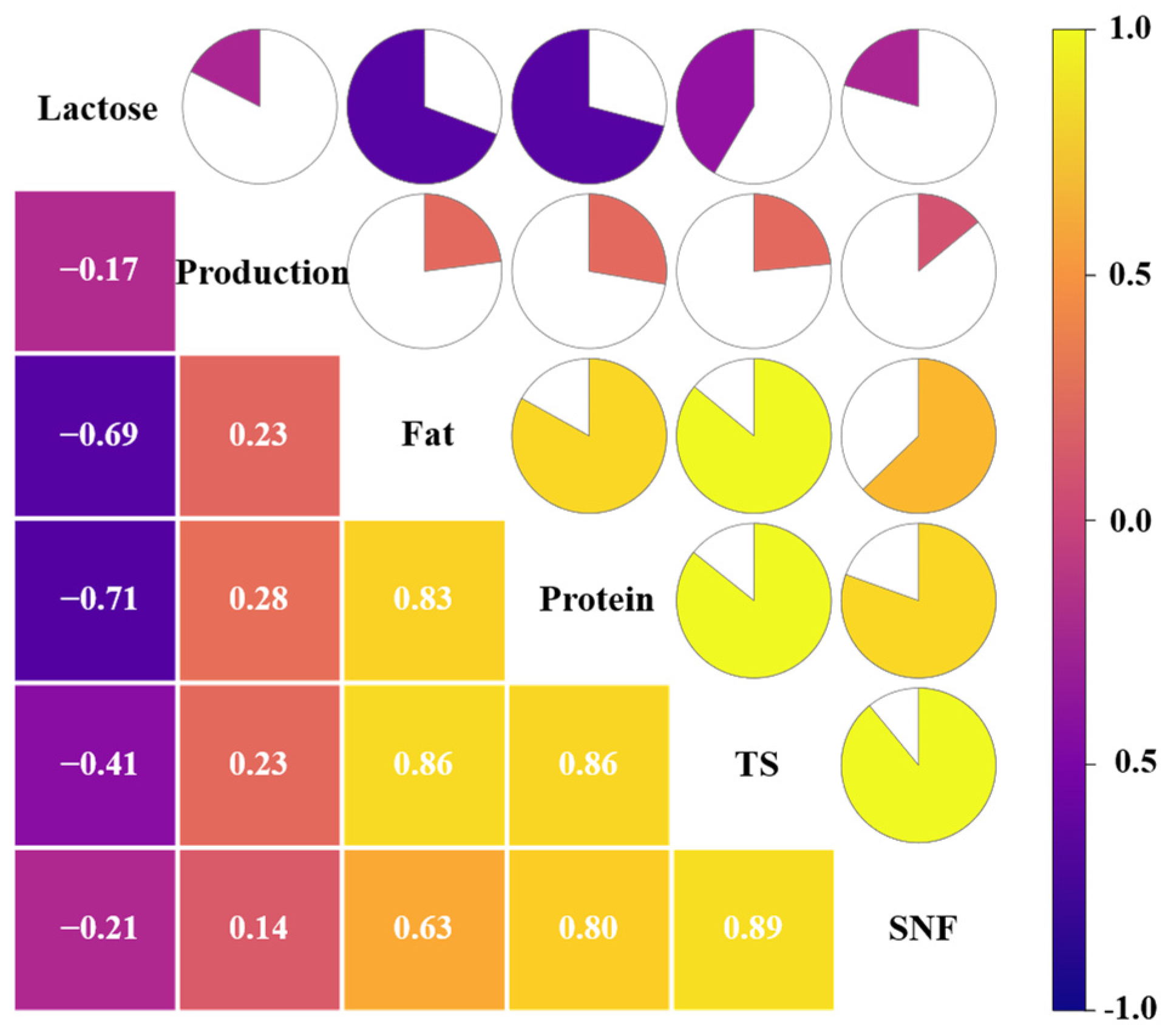
Variations in milk production and composition of Yili horses across different lactation stages are illustrated in Table 2. A repeated-measures analysis of variance showed that lactation stage significantly affected milk production and the composition of the major milk constituents in mare milk (p < 0.01). Milk production gradually increased during early lactation, reaching a peak on Day 30, and subsequently declined as lactation progressed. In particular, milk production on Days 90 and 120 was significantly lower than the peak level (p < 0.05). Milk composition exhibited marked stage changes throughout lactation, with fat and protein decreasing overall, whereas lactose increased. Fat and protein contents were highest in colostrum (Day 1), significantly exceeding those in mature milk (Days 10–120) (p < 0.05), and declined to relatively low levels by Day 120. In contrast, lactose content increased with advancing lactation, being significantly higher in mature milk than in colostrum (p < 0.05), and remained largely stable after Day 30 (p > 0.05). The contents of SNF and TS generally decreased as lactation progressed, with both values being significantly higher in colostrum than in mature milk (p < 0.05). After Day 10, SNF content showed no significant differences (p > 0.05), whereas TS content continued to decline. The correlation analysis between milk production and milk composition is depicted in Figure 1. Lactose level was negatively correlated with milk production, whereas milk fat, protein, TS, and SNF were positively correlated with milk production. Lactose exhibited strong negative correlations with both fat and protein. Furthermore, fat, protein, TS, and SNF were all positively correlated with one another, with the correlation between TS and SNF being the strongest.

3.2. Changes in the Amino Acid Composition of Milk from Yili Horses Across Different Lactation Stages

The changes in the amino acid composition of mare milk across different lactation stages are presented in Table 3. The results showed that the lactation stage significantly affected the composition of individual amino acids in mare milk (p ≤ 0.01). In terms of amino acid composition, most essential amino acids (EAA) exhibited pronounced stage fluctuations throughout lactation. Among them, branched-chain amino acids showed a relatively consistent increase during mid-to-late lactation. Valine (Val) and isoleucine (Ile) were present at higher levels on Days 30 and 90, significantly exceeding those at other lactation stages (p < 0.05), whereas leucine (Leu) reached its highest level on Day 90 and was significantly higher than at the other stages (p < 0.05). In addition, lysine (Lys) content fluctuated throughout lactation, with relatively higher levels observed on Days 30 and 90. Histidine (His) content generally decreased initially and then increased, remaining at higher levels on Days 1 and 120; notably, the level on Day 120 was significantly higher than those at the other mature-milk stages (p < 0.05). Threonine (Thr) also displayed stage variation, with significantly higher levels on Days 1, 30, and 120 than at the other lactation stages (p < 0.05). Phenylalanine (Phe) and methionine (Met) contents likewise varied significantly across lactation stages, both reaching significantly higher levels on Day 120 than at the other stages (p < 0.05).
With respect to non-essential amino acids (NEAA), Glu, Asp, and Pro were the relatively abundant amino acids in mare milk, and their contents fluctuated across lactation stages. Glu content was higher on Days 10 and 60, reaching its maximum on Day 60 and significantly exceeding that at the other lactation stages (p < 0.05). Asp content increased significantly on Day 90, reaching its peak (p < 0.05). Pro content remained relatively high on Days 30, 60, and 90. By contrast, serine (Ser) and glycine (Gly) generally showed downward trends, though their levels rebounded to varying degrees during late lactation. Alanine (Ala) remained relatively stable throughout lactation, with only a transient decrease observed on day 10. Arginine (Arg) and tyrosine (Tyr) showed distinct stage changes, both reaching their highest levels on Day 120 and significantly exceeding those at the other lactation stages (p < 0.05).
Overall, EAA content exhibited significant fluctuations across lactation stages. EAA content increased significantly and peaked on Day 30 (p < 0.05), then declined to its lowest level on Day 60, and then increased again on Days 90 and 120. In contrast to the trend observed for EAA, NEAA content reached its highest level on Day 60, significantly exceeding that at the other lactation stages (p < 0.05). In contrast, it remained relatively low on Days 30 and 120. The EAA/NEAA ratio ranged from 64.08% to 79.54%, broadly consistent with the pattern of EAA content; it reached its maximum on Day 30 and remained relatively high during late lactation.

3.3. Changes in the Fatty Acid Composition of Milk from Yili Horses Across Different Lactation Stages

The changes in the fatty acid composition of milk from Yili horses across different lactation stages are presented in Table 4. The results showed that, except for butyric acid (C4:0), the lactation stage significantly affected most fatty acids in mare milk (p < 0.05). In terms of fatty acid classes, SFAs, MUFAs, and PUFAs exhibited distinct patterns of variation throughout lactation. Overall, SFA content showed a fluctuating downward trend as lactation progressed, remaining relatively high in colostrum and declining to its lowest level on Day 120. This change was mainly associated with reductions in medium- and long-chain SFAs, particularly palmitic acid (C16:0) and myristic acid (C14:0). Palmitic acid was the most abundant saturated fatty acid in mare milk, with the highest level observed in colostrum; thereafter, it declined in a fluctuating manner and reached its minimum on Day 120, where it was significantly lower than at the other lactation stages (p < 0.05). Myristic acid reached a relatively high level on Day 10 and declined to its lowest level on Day 120. In addition, several medium-chain SFAs, such as lauric acid (C12:0) and capric acid (C10:0), also exhibited fluctuating downward trends, with their lowest values observed on Day 120.
MUFA content remained relatively high on Days 1 and 60, significantly exceeding that at the other lactation stages, whereas it declined to its lowest level on Day 30 (p < 0.05). Oleic acid (C18:1n9c), the most abundant MUFAs in mare milk, showed a pattern consistent with the overall MUFA trend, with higher levels on Days 1 and 60 and a relatively lower level on Day 30. In addition, palmitoleic acid (C16:1) reached its highest level on Day 60, further contributing to the increase in total MUFA content at this stage.
PUFA content generally showed a fluctuating upward trend as lactation progressed, remaining relatively high on Days 30 and 120 and reaching its maximum on Day 120. This trend was mainly attributable to increases in α-linolenic acid (C18:3n3) and linoleic acid (C18:2n6c). Among them, α-linolenic acid, the most abundant PUFA component, remained at relatively high levels on Days 30 and 120. Linoleic acid increased markedly during late lactation and peaked on Day 120, where it was significantly higher than at the other lactation stages (p < 0.05). Among trans fatty acids, only trans-linoleic acid (C18:2n9t) was detected; its content was higher on Days 60, 90, and 120 than at the other lactation stages (p < 0.05), although its overall level remained low.

3.4. Changes in the Mineral Content of Milk from Yili Horses Across Different Lactation Stages

The changes in the mineral element content of milk from Yili horses across different lactation stages are detailed in Table 5. The lactation stage significantly affected the contents of 10 mineral elements (p < 0.05). Overall, Ca content was highest on Day 30 and subsequently decreased significantly (p < 0.05). P and potassium (K) contents were highest in colostrum, significantly exceeding those during the mature-milk stages (p < 0.05), and generally declined as lactation progressed, remaining at relatively low levels from Days 60 to 120. Sodium (Na) and Mg contents were also highest in colostrum and were significantly higher than those in mature milk (p < 0.05); however, after the transition to mature milk, no significant differences were observed among time points (p > 0.05). Fe content exhibited pronounced stage fluctuations, decreasing during early lactation before increasing significantly to its highest level on Day 60 (p < 0.05), followed by a subsequent decline during late lactation. Zn and aluminum (Al) contents generally showed an initial increase followed by a decrease, with both remaining at relatively high levels on Days 60 and 90. Cu content followed a pattern similar to that of Na, being highest in colostrum and exhibiting an overall fluctuating downward trend. Chromium (Cr) content varied only slightly throughout lactation, reaching its highest level on Day 60.

3.5. Changes in the Vitamin Content of Milk from Yili Horses Across Different Lactation Stages

Table 6 illustrates the dynamic changes in the vitamin profile of Yili mare milk across distinct lactation stages. The results showed that the lactation stage significantly affected the contents of 5 vitamins (p < 0.01). Ascorbic acid content exhibited a fluctuating upward trend with advancing lactation and reached its peak on Day 120, where it was significantly higher than at the other lactation stages (p < 0.05). Its contents in colostrum and on Day 10 were relatively low and significantly lower than those observed at subsequent lactation stages (p < 0.05). Niacin content reached its highest level on Day 30, followed by a gradual decline, with significantly lower levels observed on Days 90 and 120 (p < 0.05). Pantothenic acid and folic acid contents generally showed fluctuating downward trends, with both being highest in colostrum and significantly higher than those during the mature-milk stages (p < 0.05). Notably, folic acid was not detected on Days 90 and 120. Riboflavin content increased initially, then decreased, reaching its peak on Day 30, when it was significantly higher than in colostrum and on Days 10 and 90 (p < 0.05), and was not detected on Day 120.

3.6. Changes in the Bioactive Protein Content of Milk from Yili Horses Across Different Lactation Stages

Table 7 illustrates the variations in bioactive protein concentrations of mare milk across distinct lactation stages. The lactation stage had a significant effect on the contents of bioactive proteins in mare milk (p < 0.01). Specifically, LF, LYZ, and immunoglobulin components reached their highest levels in colostrum, significantly exceeding those in mature milk (p < 0.05), and subsequently declined rapidly as lactation progressed. LF, LYZ, and IgG exhibited a continuous decreasing trend throughout lactation, with LYZ and IgG gradually declining from their peak levels in colostrum to their lowest levels by Day 120. IgA and IgM were predominantly present during early lactation, both peaking in colostrum and declining rapidly thereafter; notably, IgA was not detected on Days 90 and 120, and IgM was not detected from Day 60 onwards. In contrast, β-CN showed an initial increase followed by a decrease. Its content was lowest in colostrum, significantly lower than in mature milk (p < 0.05), then gradually increased, remaining relatively high from Days 60 to 90, before declining significantly by Day 120 (p < 0.05).

4. Discussion

4.1. Effects of Different Lactation Stages on Milk Production and Composition of Yili Horses

Milk production and routine nutritional components (such as fat, protein, and lactose) are core indicators for evaluating the production performance and milk quality of lactating dams. The results of this study indicate that the lactation stage significantly affects both milk production and routine milk composition in Yili horses. Milk production peaked on day 30 of lactation. It then gradually declined, which is consistent with the typical lactation curve of equids, in which peak lactation generally occurs at 30–60 days postpartum and subsequently decreases as mammary secretory activity diminishes [23]. Compared with high-producing ruminants such as dairy cows, equids exhibit a relatively flatter lactation curve, which may be attributable to species-specific differences in mammary tissue structure and the physiological regulation of lactation [3]. Changes in milk composition further reflect shifts in maternal nutrient allocation strategies and mammary metabolic function across lactation stages. Colostrum is rich in lipids and proteins, particularly immune-related proteins and energy-providing nutrients, and is considered essential for early immune establishment and energy supply in neonatal foals. In the present study, milk fat and milk protein contents were highest in colostrum and then decreased significantly, consistent with the findings reported by Reiter et al. [24]. This suggests that during early lactation, mares prioritize increasing milk nutrients to meet the requirements of rapid foal growth and immune protection. As foal digestive function gradually matures and feeding behavior develops, milk composition undergoes corresponding adaptive changes. By contrast, lactose showed an opposite trend to milk fat and milk protein. Lactose content was significantly higher in mature milk than in colostrum and remained relatively stable after day 30. Lactose is not only an important energy source for foals but also a major regulator of milk osmotic pressure [25], and its synthesis directly influences water transport into milk and milk production. Maintaining stable lactose levels during mid- and late lactation may help sustain milk secretion and stabilize milk’s physicochemical properties, thereby ensuring a continuous and reliable nutrient supply for foals during growth and the transition to weaning.
Notably, seasonal fluctuations in pasture quality under grazing conditions may have been an important factor influencing the observed changes in milk composition. Previous studies have demonstrated that pasture nutritional quality is not constant throughout the grazing season. Still, it exhibits pronounced seasonal variation, with CP reaching peak levels in spring and autumn, whereas NDF and ADF tend to peak in summer and winter [26]. Such changes directly affect the nutrient intake of lactating mares. In the present study, the marked decline in CP and concomitant increase in NDF after day 30 of lactation suggest a reduction in the intake of digestible energy and available protein, which closely coincided with the observed decline in milk production and the progressive reduction in milk fat and protein concentrations. Furthermore, Lu et al. [27] reported that concentrate supplementation under grazing conditions significantly increased milk production and prolonged the duration of peak lactation in Yili mares. Therefore, the effects of the lactation stage on milk composition observed in this study may have been partially confounded by concurrent changes in pasture quality.
In addition, this study found that milk production was positively correlated with milk fat, milk protein, SNF, and TS, whereas lactose was negatively correlated with these components. These findings indicate that the components of Yili mare milk do not vary independently but are jointly regulated by mammary secretion and nutrient metabolism. As the principal osmotic molecule in milk, lactose synthesis in mammary epithelial cells affects milk volume formation through osmotic mechanisms. Moreover, previous studies have shown that lactose accumulation on the basal side of mammary epithelial cells can exert negative feedback on milk secretion by inhibiting STAT5 signaling [28]. When lactose synthesis increases, more water is transported into milk, thereby diluting solid components such as milk fat and milk protein to some extent; this may explain the negative correlations between lactose and fat, protein, and related milk solids. In addition, these correlation patterns reflect dynamic changes in mammary secretory function across lactation stages. The milk fat, milk protein, TS, and SNF were positively correlated with one another, indicating a high degree of coordination among these components during mammary metabolism. The strongest correlation was observed between TS and SNF, which is consistent with the fact that SNF constitutes a major fraction of TS. Overall, these correlation results suggest coordinated variation among mare milk components, reflecting the integrated regulation of milk nutritional composition by the mammary gland and providing a theoretical basis for evaluating milk quality and lactation performance through milk composition indicators.

4.2. Effects of Different Lactation Stages on the Amino Acid Composition of Milk from Yili Horses

The amino acid composition of milk not only determines the nutritional value of milk protein but is also closely associated with foal growth and development, energy metabolism, and immune regulation. Therefore, lactation stage-induced dynamic changes in amino acids reflect, to some extent, the adaptive regulation of the mammary gland in response to the nutritional requirements of foals at different developmental stages. The results of this study show that the amino acid composition of Yili mare milk was significantly affected by the lactation stage. Glu, Asp, Pro, Leu, and Lys were the predominant amino acids in Yili mare milk, which is broadly consistent with the findings of Mazhitova et al. [29] on the amino acid composition of mare milk. Among them, NEAA such as Glu, Asp, and Pro accounted for relatively high proportions, suggesting that they may play important roles in maintaining intestinal development and metabolic homeostasis in foals. Glu is not only an important free amino acid in milk but also a major energy substrate for intestinal epithelial cells, participating in the maintenance of intestinal barrier function and the regulation of nitrogen metabolism [30]. Asp is associated with amino acid transport and nucleotide synthesis [31], whereas Pro is closely involved in collagen synthesis and tissue growth [32]. In the present study, Glu reached a relatively high level on day 60, which may reflect the increased demand for amino acid metabolism during mid-lactation, when foal intestinal function rapidly matures and nutrient absorption capacity improves.
By contrast, branched-chain amino acids such as Leu, Val, and Ile increased relatively during mid- and late lactation, with Leu reaching its highest level on day 90. This change may be associated with increased demand for protein synthesis and energy metabolism during foals’ rapid growth stage. Previous studies have shown that Leu can promote protein synthesis and muscle growth by activating the mTOR signaling pathway [33]. Therefore, the elevation of branched-chain amino acids during late lactation may reflect maternal adjustment of milk composition to meet the requirements of tissue growth and metabolic development in foals. Meanwhile, Lys remained at relatively high levels on days 30 and 90. As an important limiting amino acid for animal growth, Lys participates in fatty acid transport and energy metabolism [34], and its high abundance further suggests that milk during mid- and late lactation is more oriented toward supporting rapid foal growth. In addition, this study found that EAA, including His, Thr, Met, and Phe, also showed marked fluctuations across lactation stages. His and Thr remained at relatively high levels during the colostrum stage, which may reflect the early immune regulatory and tissue repair needs of neonatal foals [35]. The increase in Met and Phe during late lactation indicates that the milk amino acid composition undergoes adaptive adjustment in accordance with the foal’s developmental stage. From the perspective of overall amino acid composition, the EAA/NEAA ratio in this study remained above 60%, indicating that Yili mare milk possesses high protein nutritional value and that its amino acid profile is relatively close to the ideal protein pattern proposed by FAO/WHO [36]. Notably, the EAA/NEAA ratio reached a relatively high level on day 30, decreased on day 60, and increased again during late lactation. This trend is broadly consistent with the findings of Csapó et al. [37] in mare milk, in which most EAA declined during mid-lactation and then recovered later. This phenomenon reflects the dynamic maternal adaptation to foals’ nutritional requirements at different lactation stages. Furthermore, seasonal variations in pasture quality, particularly fluctuations in CP availability, may have influenced amino acid metabolism and mammary protein synthesis. Mazhitova et al. [38] reported that the EAA content of Kazakh mare milk reached its highest level in May, when pasture quality was optimal, and declined to its lowest level in July as pasture quality deteriorated. Therefore, the changes observed in the amino acid composition of mare milk in the present study may reflect the combined effects of lactation stage and concurrent alterations in pasture nutritional composition.

4.3. Effects of Different Lactation Stages on the Fatty Acid Composition of Milk from Yili Horses

Fatty acid composition is an important indicator for evaluating the nutritional value and functional properties of milk fat. Its variation not only affects milk energy supply but is also closely related to foal growth, development, and metabolic regulation. In the present study, the lactation stage significantly affected the composition of most fatty acids in Yili mare milk, except for butyric acid. The major fatty acids in Yili mare milk were palmitic, oleic, α-linolenic, linoleic, and myristic acids, which are consistent with previous reports on the fatty acid composition of mare milk [14].
With respect to fatty acid classes, SFA content showed an overall decreasing trend as lactation progressed, particularly for palmitic acid, myristic acid, and several medium-chain SFAs, which declined more markedly during late lactation. This change may be related to stage-specific adjustments in mammary fatty acid synthesis and maternal energy metabolism. During early lactation, mares face high energy demands, and the mammary gland may synthesize milk fat by taking up fatty acids from the blood or using products derived from body fat mobilization [39], thereby ensuring an adequate energy supply for neonatal foals. As lactation progresses and maternal energy balance gradually recovers, the synthesis and secretion of SFAs by the mammary gland may decrease proportionally.
Among MUFAs, oleic acid was the most abundant. Its content remained relatively high in colostrum and on day 60 of lactation, but was comparatively low on day 30. As one of the main fatty acids released from adipose tissue during lipolysis, oleic acid can increase markedly in milk under conditions of negative energy balance [40]. The elevated oleic acid level observed during the colostrum stage in this study may reflect fat mobilization in mares under postpartum negative energy balance. The relative decrease in oleic acid on day 30 suggests a stage-specific adjustment in maternal energy metabolism. The subsequent increase in oleic acid on day 60 may be associated with the involvement of intrinsic mammary regulatory mechanisms, as oleic acid not only serves as an energy substrate but may also directly affect mammary function by modulating insulin signaling and lipid metabolic pathways [40]. PUFAs showed an overall fluctuating upward trend during lactation, with α-linolenic acid and linoleic acid remaining at relatively high levels during late lactation. When the diet is rich in fresh pasture, the intake of PUFAs such as α-linolenic acid increases; these fatty acids undergo limited hydrogenation by intestinal microorganisms [24], are absorbed in the small intestine, and are transported to the mammary gland for milk fat synthesis.
The shift in fatty acid composition from higher SFA levels during early lactation to higher PUFA levels during mid- and late lactation may reflect stage-specific adjustments in nutritional function. The higher SFA content during early lactation contributes to greater energy, meeting the thermoregulatory and rapid-growth needs of neonatal foals. In contrast, the increased proportion of PUFAs during mid- and late lactation may improve the nutritional quality of milk fat and provide essential fatty acid support for tissue development and immune maturation in foals. Furthermore, because the Yili mares in this study were maintained under grazing conditions, pasture composition and seasonal variation may also have been important factors influencing milk fat fatty acid composition. Studies have shown that grazing intensity, pasture source, and dietary structure can alter the fatty acid profile of mare milk [14], particularly the contents of PUFAs and essential fatty acids. Therefore, the increase in PUFAs during mid- and late lactation in this study may be associated with increased abundance of PUFA precursors in pasture during the grazing season, together with adequate pasture intake by mares.

4.4. Effects of Different Lactation Stages on the Mineral Element Content of Milk from Yili Horses

Minerals are important indicators for evaluating the nutritional quality of dairy products. They not only reflect maternal mineral metabolic status but also provide essential nutritional support for foal growth and development [41]. The present study found that the lactation stage significantly affected the mineral composition of mare milk, indicating that it also dynamically adjusts in response to changes in mammary function and foal nutritional requirements. K, Na, Mg, and P were present at higher levels in colostrum and then decreased significantly. This trend is consistent with the findings of Fišera et al. [42]. The higher contents of Na, K, and Mg in colostrum may provide a foundation for electrolyte balance and body fluid regulation in neonatal foals [43]. After birth, foals must rapidly adapt to the environment and maintain fluid balance, neuromuscular function, and basal metabolic activity. Therefore, elevated electrolyte and mineral levels in colostrum may facilitate the establishment of early physiological homeostasis. Ca and P are major minerals essential for skeletal mineralization, growth, and development [44]. Foals enter a rapid growth phase after birth and consequently have high requirements for Ca and P. Previous studies have suggested that mare milk can provide foals with various essential minerals, including Ca, P, Mg, Na, and K, to support early growth and development. In the present study, Ca levels were relatively high during early lactation. Then they declined, which may be associated with rapid early skeletal development in foals and increased mineral demand during peak milk production. As foals gradually begin to consume pasture, the mineral supply from milk may decrease, leading to corresponding reductions in elements such as Ca and P. Among trace elements, Fe is involved in hemoglobin synthesis and oxygen transport, Zn is associated with the activity of multiple enzymes, immune function, and tissue growth, and Cu participates in connective tissue formation and antioxidant processes. In this study, Fe and Zn were relatively higher during mid-lactation, which may be related to increased requirements for hematopoiesis, immunity, and tissue development during the rapid growth phase of foals [45]. Al is widely present in foods, and long-term excessive intake may pose potential health risks [46]. However, several risk assessment studies have shown that Al levels in dairy products are generally low and do not pose a significant health risk to consumers [47]. It should be noted that seasonal fluctuations in the mineral composition of pasture under grazing conditions may also have contributed to the observed changes in milk mineral concentrations in the present study. Xu et al. [48] reported that concentrate supplementation under grazing conditions significantly decreased K content while significantly increasing Fe, Co, and Cr concentrations in Yili mare milk. These findings indicate that dietary nutrient composition significantly influences the mineral profile of milk. Therefore, the variations in milk mineral concentrations observed in this study may have been influenced not only by lactation stage but also, at least in part, by seasonal changes in pasture composition.

4.5. Effects of Different Lactation Stages on the Vitamin Content of Milk from Yili Horses

Vitamins are important bioactive nutrients in milk and play critical roles in foal growth and development, energy metabolism, antioxidant status and immune regulation [49]. In the present study, ascorbic acid content gradually increased from a relatively low level in early lactation, reaching a peak on day 120. This trend is consistent with the findings of Markiewicz et al. [50]. Ascorbic acid is an important water-soluble antioxidant involved in free radical scavenging, maintenance of cellular redox homeostasis [51], collagen synthesis, and immune regulation. The higher ascorbic acid levels observed during mid- and late lactation may support foal development by scavenging free radicals and protecting cell membrane integrity, thereby meeting the antioxidant and immunomodulatory demands associated with rapid growth [52].
Niacin and riboflavin are both closely related to cellular energy metabolism. Niacin is a precursor of NAD+ and NADP+ and participates in the tricarboxylic acid cycle, oxidative phosphorylation, and antioxidant reactions [53,54,55]. Riboflavin is a precursor of flavin mononucleotide and flavin adenine dinucleotide, which are important coenzymes in mitochondrial energy metabolism and redox reactions [56]. The relatively high levels of niacin and riboflavin from early to mid-lactation may promote rapid tissue growth, organ development, and energy metabolism in foals. Pantothenic acid, as a precursor of coenzyme A (CoA), plays a key role in energy metabolism and intestinal development [57]. The high pantothenic acid content in early lactation may contribute to energy supply in foals by providing CoA, which participates in the tricarboxylic acid cycle and fatty acid oxidation [58]. Folate is involved in one-carbon metabolism, nucleotide synthesis, and cell proliferation and is particularly important for hematopoiesis, intestinal epithelial renewal, and the development of growing tissues [59]. Therefore, the higher folate level in early lactation may be associated with cell proliferation, rapid tissue and organ development, and the establishment of intestinal function in neonatal foals. The marked decline or even non-detectable level of folate during late lactation suggests that, as foals grow, their dependence on direct folate supply from maternal milk gradually decreases. Concurrently, a study by Mady et al. [60] revealed a close association between mare milk components and the development of the foal’s gut microbiota, suggesting that B vitamins in milk may improve intestinal development by regulating the intestinal microecological environment, promoting the colonization of probiotics, and inhibiting pathogenic bacteria. As foals grow, their own gut microbiota gradually acquires the ability to synthesize B vitamins, and their reliance on vitamins from maternal milk correspondingly decreases [61]. In addition, changes in pasture quality may have influenced the vitamin composition of mare milk. Blanco-Doval et al. [62] reported that different grazing management systems significantly affected niacin concentrations in mare milk, suggesting that pasture management practices and variations in pasture quality are potential determinants of milk vitamin composition. Therefore, the variations in milk vitamin concentrations observed in the present study may reflect not only physiological regulation associated with lactation stage but also, to some extent, changes in the nutritional characteristics of the pasture.

4.6. Effects of Different Lactation Stages on the Bioactive Protein Content of Milk from Yili Horses

Bioactive proteins in milk are important functional components linking maternal immune protection with early foal development. Compared with routine nutritional components, bioactive proteins such as LF, LYZ, and immunoglobulins not only contribute to nutritional supply but also play key roles in antibacterial activity, intestinal barrier formation, and immune regulation. The immune system of neonatal foals is not yet fully mature, and foals are highly dependent on maternal antibodies during the early postnatal period [63]. LYZ exerts antibacterial effect by disrupting bacterial cytoplasmic membrane integrity via surface antimicrobial peptides and by hydrolyzing glycosidic bonds [64]. LF is an iron-binding glycoprotein that exerts bacteriostatic effects by chelating iron ions and depriving microorganisms of essential nutrients required for growth; it also regulates immune responses and modulates oxidative stress [65,66]. The relatively high levels of both proteins in Yili mare colostrum indicate that it may enhance intestinal and mucosal barrier defense in foals through non-specific antibacterial factors, such as LF and LYZ. The subsequent decline in these components may be associated with the gradual establishment of the foal’s intestinal microbiota, enhanced barrier function, and reduced need for exogenous immune protection. Immunoglobulins are central to the passive immune function of colostrum. Among them, IgG primarily contributes to systemic passive immune protection, IgA is more closely associated with mucosal immunity and local intestinal defense, and IgM plays an important role in early immune responses. The high levels of immunoglobulins in colostrum help protect foals before their own immune function is fully developed, thereby reducing the risk of early infection [67]. β-CN exhibited a pattern distinct from that of immune-related proteins. During early lactation, the mammary gland primarily secretes colostrum rich in immune-protective factors to meet the needs of immunomodulation and intestinal protection in neonatal foals. After the transition to mature milk, the proportion of immune proteins decreases, whereas the synthesis of nutritional proteins, represented by caseins, increases. β-CN is an important component of mare milk casein and can serve as a source of bioactive peptides for foals [68]. Its relatively high level during mid-lactation may help support rapid growth, skeletal development, and protein deposition in foals. The decline in β-CN during late lactation may be related to decreased milk production, reduced mammary synthetic activity, increased pasture intake by foals, and a corresponding reduction in their dependence on maternal milk [69]. Furthermore, variations in pasture quality may also influence the synthesis and secretion of bioactive proteins in mare milk. Previous studies have shown that dietary energy intake during pregnancy can affect colostrum IgG concentrations, with mares fed high-energy diets tending to produce colostrum with lower IgG concentrations [70]. These findings suggest that nutritional status is an important factor influencing the immunologically active components of colostrum. In the present study, pasture CP content was relatively high during early lactation (colostrum and day 10), which may have supported the synthesis of LF, LYZ, and immunoglobulins. Therefore, the observed changes in milk bioactive proteins may be attributable not only to lactation-stage-related physiological regulation but also, in part, to concurrent changes in dietary nutrient supply.

4.7. Limitations

A limitation of this study is that the effects of lactation stage cannot be completely disentangled from the influences of seasonal variations in pasture nutrient composition and climatic conditions. Since Yili horses typically foal within a relatively concentrated period under natural grazing systems [71], and the mares in this study foaled at similar times, the progression of lactation coincided with seasonal changes in pasture quality and environmental conditions. Consequently, the observed variations in milk production and the composition of nutrients, amino acids, fatty acids, minerals, vitamins, and bioactive proteins may reflect a combined effect of lactation-related physiological changes and seasonally driven fluctuations in nutrient availability. Moreover, all mares were managed under natural grazing conditions without controlled or standardized feeding regimes. As a result, the differences observed between lactation stages cannot be attributed solely to physiological changes associated with lactation. Accordingly, caution should be exercised when generalizing these findings or making broad deductions beyond this particular environment and natural grazing management system. Future studies should implement controlled feeding strategies, standardized dietary supplementation, or experimental designs that better account for seasonal variations to distinguish the independent effects of lactation stage, diet, and environmental conditions on mare milk composition.

5. Conclusions

This study systematically analyzed the dynamic changes in milk production and various nutritional components of milk from Yili horses across different lactation stages. The results indicate that milk production peaked on day 30 and subsequently declined as lactation advanced. Colostrum contained higher levels of milk fat, milk protein, SNF, TF, various mineral elements, LF, LYZ, and immunoglobulins, indicating that Yili horse colostrum plays an important role in early energy supply, immunomodulation, antimicrobial effect, and physiological adaptation in neonatal foals. In contrast, lactose content was relatively higher and more stable during the mature milk stage, which may help maintain osmotic balance and provide a continuous energy supply to support foal growth and development. The amino acid and fatty acid compositions of Yili horse milk also changed significantly throughout lactation. The EAA/NEAA ratio remained above 60% during the entire lactation period, indicating the high protein nutritional value of Yili horse milk. Notably, the proportion of EAA was relatively higher on day 30, suggesting that milk during the early-to-mid lactation stages may play a critical role in protein deposition and tissue growth in foals. Regarding fatty acid composition, SFA content generally decreased as lactation progressed. In contrast, PUFA content increased during the mid-to-late lactation stages, indicating improved nutritional quality of milk fat in later lactation. Stage-specific variations in minerals, vitamins, and bioactive proteins further demonstrated that the composition of mare milk adapts to the physiological requirements of foals at different growth stages. Overall, Yili horse milk exhibits distinct nutritional and functional characteristics across lactation stages. Colostrum is rich in immunomodulatory substances and certain minerals, and it possesses robust biological defense functions. Conversely, mature milk, particularly in the mid-to-late lactation stages, exhibits a superior fatty acid composition and higher protein nutritional value. This study provides a data foundation for the stage-specific nutritional evaluation and product development of milk from Yili horses.

Author Contributions

Conceptualization, L.S., Y.Y. and M.L.; methodology, L.S., M.L. and Z.X.; validation, Y.Y., Z.C. and L.S.; formal analysis, L.S., Y.Y. and M.L.; investigation, L.S., Y.Y. and M.L.; resources, C.Z.; data curation, Z.X., Z.C. and L.S.; writing—original draft preparation, L.S. and Y.Y.; writing—review and editing, L.S., Y.Y., F.L. and Y.C.; visualization, Y.Y. and M.L.; supervision, F.L., Y.C. and C.Z.; project administration, C.Z. and Y.C.; funding acquisition, C.Z. All authors have read and agreed to the published version of the manuscript.

Funding

This research was funded by the National Key R&D Program Special Project (2022YFD1600103).

Institutional Review Board Statement

All procedures in this study were approved by the Animal Experiment Ethics Committee of Xinjiang Agricultural University (Animal protocol number: 22023059, approval date: 1 February 2023).

Data Availability Statement

The original data presented in this study are openly available in FigShare at https://doi.org/10.6084/m9.figshare.32084103.

Acknowledgments

We acknowledge the support of the College of Animal Science, Xinjiang Agricultural University.

Conflicts of Interest

The authors declare no conflicts of interest.

References

  1. Blanco-Doval, A.; Azkargorta, M.; Iloro, I.; Beaskoetxea, J.; Elortza, F.; Barron, L.J.R.; Aldai, N. Comparative proteomic analysis of the changes in mare milk associated with different lactation stages and management systems. Food Chem. 2024, 445, 138766. [Google Scholar] [CrossRef]
  2. Toishimanov, M.; Zhanten, O.; Kanat, R.; Beishova, I.; Ulyanov, V.; Assanbayev, T.; Sharapatov, T.; Daurov, D.; Daurova, A.; Sapakhova, Z.; et al. The effects of the lactation period, mare age, and foaling on the chemical and physical composition of milk from Kazakh mares kept under natural pasture conditions. Animals 2025, 15, 1817. [Google Scholar] [CrossRef]
  3. Pânzaru, C.; Davidescu, M.A.; Simeanu, C.; Pascal, C.; Usturoi, A.; Doliș, M.G. A Comprehensive Review on Equine Milk: Composition, Functional Properties, Technological Applications, and Future Perspectives. Agriculture 2026, 16, 120. [Google Scholar] [CrossRef]
  4. Navrátilová, P.; Pospíil, J.; Borkovcová, I.; Kaniová, L.; Dluhoová, S.; Horáková, S. Content of nutritionally important components in mare milk fat. Mljekarstvo 2018, 68, 282–294. [Google Scholar] [CrossRef]
  5. Mazhitova, A.; Kulmyrzaev, A. Relations between physicochemical properties, nutritional composition and fluorescence properties of mare’s milk produced on pastures at different altitudes. J. Food Compos. Anal. 2025, 148, 108655. [Google Scholar] [CrossRef]
  6. Kossaliyeva, G.; Rysbekuly, K.; Zhaparkulova, K.; Kozykan, S.; Li, J.; Serikbayeva, A.; Shynykul, Z.; Zhaparkulova, M.; Yessimsiitova, Z. Chemical composition, physical properties, and immunomodulating study of mare’s milk of the Adaev horse breed from Kazakhstan. Front. Nutr. 2025, 12, 1443031. [Google Scholar] [CrossRef]
  7. Yue, L.; Tang, W.; Li, C.; Yue, X.; He, X.; Zaitsev, A.M.; Zhang, M.; Kalaschnikov, V.V.; Li, J.; Wang, Q. Dynamic DIA proteomics of mare’s milk reveals distinct colostrum signatures and stage-specific lactation profiles. Food Chem. 2025, 496, 146806. [Google Scholar] [CrossRef]
  8. Deng, L.; Yang, Y.; Li, Z.; Li, J.; Zhu, Y.; Meng, Q.; Liu, J.; Wang, X. Impact of different dietary regimens on the lipidomic profile of mare’s milk. Food Res. Int. 2022, 156, 111305. [Google Scholar] [CrossRef] [PubMed]
  9. Meng, C.; Zeng, Y.; Wang, J.; Yao, X.; Meng, J. BCAA supplementation enhances milk fat synthesis in Yili mares and promotes foal growth through remodeling of intestinal amino acid metabolism. Front. Microbiol. 2025, 16, 1699614. [Google Scholar] [CrossRef]
  10. Santos, A.S.; Silvestre, A.M. A Study of Lusitano Mare Lactation Curve with Wood’s Model. J. Dairy Sci. 2008, 91, 760–766. [Google Scholar] [CrossRef]
  11. Yao, X. Preliminary Study on Chemical-Physical Indicators of Mare’s Milk, Lactation Character of Yili Horse and Hybrid Horse. Ph.D. Thesis, Xinjiang Agricultural University, Urumqi, China, 2011. (In Chinese) Available online: https://kns.cnki.net/kcms2/article/abstract?v=A2Z-m-A1gcmYjlrJRg3C684x1FIgw-4PA7FO4LIKC_-yYr1Yh9KT6AP6wVTIAixMcbmjytRVVrsK7pmHbqfHSpoR_OZf9EgzQ-CW611C9triJvUvTQWLongma9uXjYMIivKdTir19cppKVFkoPxNe6MMLdkvWV00Cjp_pBZ7oQC6bnsGYURsgg==&uniplatform=NZKPT&language=CHS (accessed on 17 May 2026).
  12. Boranbayeva, T.; Dossimova, Z.; Zhalelov, D.; Zhunisbek, A.; Bolat, A.; Toishimanov, M. Influence of lactation, age and foaling factors on the quality composition, fatty and amino acid profile of mare’s milk under pasture conditions. Foods 2025, 14, 2880. [Google Scholar] [CrossRef] [PubMed]
  13. Mazhitova, A.T.; Kulmyrzaev, A.A. Determination of amino acid profile of mare milk produced in the highlands of the Kyrgyz Republic during the milking season. J. Dairy Sci. 2016, 99, 2480–2487. [Google Scholar] [CrossRef]
  14. Blanco-Doval, A.; Barron, L.J.R.; Kramer, J.K.; Aldai, N. Complete characterization of the fatty acid profile of mare milk from commercial semi-extensive farms during lactation. J. Food Compos. Anal. 2024, 134, 106495. [Google Scholar] [CrossRef]
  15. Blanco-Doval, A.; Barron, L.J.R.; Aldai, N. Changes during lactation in the mineral element content of mare milk produced in semi-extensive rural farms. J. Food Compos. Anal. 2023, 123, 105629. [Google Scholar] [CrossRef]
  16. AOAC. Official Methods of Analysis, 18th ed.; Association of Official Analytical Chemists International: Washington, DC, USA, 2010. [Google Scholar]
  17. Van Soest, P.J.; Robertson, J.B.; Lewis, B.A. Methods for Dietary Fiber, Neutral Detergent Fiber, and Nonstarch Polysaccha-rides in Relation to Animal Nutrition. J. Dairy Sci. 1991, 74, 3583–3597. [Google Scholar] [CrossRef]
  18. Jia, Y.X.; Zeng, Y.Q.; Li, X.B.; Liu, X.T.; Gao, F.; Meng, J. Effects of dietary supplementation of branched-chain amino acids on milk yield and milk composition of Yili horses. China Feed. 2025, 7, 89–94. (In Chinese) [Google Scholar] [CrossRef]
  19. GB 5009.124-2016; National Food Safety Standard—Determination of Amino Acids in Foods. National Health and Family Planning Commission of the People’s Republic of China: Beijing, China; China Food and Drug Administration: Beijing, China, 2016.
  20. GB 5009.168-2016; National Food Safety Standard—Determination of Fatty Acids in Foods. National Health and Family Planning Commission of the People’s Republic of China: Beijing, China; China Food and Drug Administration: Beijing, China, 2016.
  21. GB 5009.268-2016; National Food Safety Standard—Determination of Multi-Elements in Foods. National Health and Family Planning Commission of the People’s Republic of China: Beijing, China; China Food and Drug Administration: Beijing, China, 2016.
  22. Dong, A.; Yang, X.; Zhang, Y.; Zhang, H.; Jing, J. Determination of vitamin B in yak milk by reversed phase high performance liquid chromatography method. Sci. Technol. Food Ind. 2017, 38, 314–316+321. (In Chinese) [Google Scholar] [CrossRef]
  23. Rosero-Noguera, R.; Posada-Ochoa, S.L.; Martínez-Aranzales, J.R.; Rosero-Noguera, R.; Posada-Ochoa, S.L.; Martínez-Aranzales, J.R. Comparison of mathematical models to describe the lactation curve in mares. Rev. Investig. Vet. Perú 2024, 35, 25463. [Google Scholar] [CrossRef]
  24. Reiter, A.S.; Reed, S.A. Lactation in horses. Anim. Front. 2023, 13, 103–107. [Google Scholar] [CrossRef] [PubMed]
  25. Hunka, M.M.; Souza, L.A.; da Silva, E.R.R.; da Costa Cordeiro, H.E.C.; Manso Filho, H.C. Characterization of the development of foals in natural mating and embryo transfer. Acta Sci. Vet. 2017, 45, 1445. [Google Scholar] [CrossRef]
  26. Cubitt, T.A.; Staniar, W.B.; Kronfeld, D.S.; Byrd, B.M.; Harris, P.A. Environmental effects on nutritive value of equine pastures. Pferdeheilkunde 2005, 21, 13–14. [Google Scholar] [CrossRef]
  27. Lu, H.; Zhang, W.; Sun, S.; Mei, Y.; Zhao, G.; Yang, K. Effect of Supplementary Feeding on Milk Volume, Milk Composition, Blood Biochemical Index, and Fecal Microflora Diversity in Grazing Yili Mares. Animals 2023, 13, 2415. [Google Scholar] [CrossRef] [PubMed]
  28. Kobayashi, K.; Wakasa, H.; Han, L.; Koyama, T.; Tsugami, Y.; Nishimura, T. Lactose on the basolateral side of mammary epithelial cells inhibits milk production concomitantly with signal transducer and activator of transcription 5 inactivation. Cell Tissue Res. 2022, 389, 501–515. [Google Scholar] [CrossRef] [PubMed]
  29. Mazhitova, A.T.; Kulmyrzaev, A.A.; Ozbekova, Z.E.; Bodoshev, A. Amino Acid and Fatty Acid Profile of the Mare’s Milk Produced on Suusamyr Pastures of the Kyrgyz Republic During Lactation Period. Procedia Soc. Behav. Sci. 2015, 195, 2683–2688. [Google Scholar] [CrossRef]
  30. Deters, B.J.; Saleem, M. The role of glutamine in supporting gut health and neuropsychiatric factors. Food Sci. Hum. Wellness 2021, 10, 149–154. [Google Scholar] [CrossRef]
  31. Rabinovich, S.; Adler, L.; Yizhak, K.; Sarver, A.; Silberman, A.; Agron, S.; Stettner, N.; Sun, Q.; Brandis, A.; Helbling, D.; et al. Diversion of aspartate in ASS1-deficient tum ours fosters de novo pyrimidine synthesis. Nature 2015, 527, 379–383. [Google Scholar] [CrossRef] [PubMed]
  32. Szoka, L.; Karna, E.; Hlebowicz-Sarat, K.; Karaszewski, J.; Palka, J.A. Exogenous proline stimulates type I collagen and HIF-1α expression, and the process is attenuated by glutamine in human skin fibroblasts. Mol. Cell. Biochem. 2017, 435, 197–206. [Google Scholar] [CrossRef]
  33. Zhang, S.; Zeng, X.; Ren, M.; Mao, X.; Qiao, S. Novel metabolic and physiological functions of branched chain amino acids: A review. J. Anim. Sci. Biotechnol. 2017, 8, 10. [Google Scholar] [CrossRef]
  34. Hashim, M.; Alam, I.; Ahmad, M.; Badruddeen; Akhtar, J.; Khan, M.I.; Islam, A.; Parveen, S. Comprehensive review of L-lysine: Chemistry, occurrence, and physiological roles. Curr. Protein Pept. Sci. 2025, 27, 150–162. [Google Scholar] [CrossRef]
  35. Puiman, P.J.; Jensen, M.; Stoll, B.; Renes, I.B.; de Bruijn, A.C.; Dorst, K.; Schierbeek, H.; Schmidt, M.; Boehm, G.; Burrin, D.G.; et al. Intestinal threonine utilization for protein and mucin synthesis is decreased in formula-fed preterm pigs. J. Nutr. 2011, 141, 1306–1311. [Google Scholar] [CrossRef]
  36. FAO; WHO; UNU. Protein and Amino Acid Requirements in Human Nutrition; WHO Technical Report Series; WHO: Geneva, Switzerland, 2007. [Google Scholar]
  37. Csapó-Kiss, Z.; Stefler, J.; Martin, T.G.; Makray, S.; Csapó, J. Composition of mares’ colostrum and milk. Protein content, amino acid composition and contents of macro and micro-elements. Int. Dairy J. 1995, 5, 403–415. [Google Scholar] [CrossRef]
  38. Macitova, A.; Kulmirzayev, A. Composition, Nitrogen Fraction, and Amino Acid Profile of Mare’s Milk Produced in the Mountains and Highlands; ADSA Annual Meeting, OH, USA; Elsevier: Amsterdam, The Netherlands, 2019. [Google Scholar]
  39. Ospina, P.A.; Nydam, D.V.; Stokol, T.; Overton, T.R. Associations of elevated nonesterified fatty acids and β-hydroxybutyrate concentrations with early lactation reproductive performance and milk production in transition dairy cattle in the northeastern United States. J. Dairy Sci. 2010, 93, 1596–1603. [Google Scholar] [CrossRef]
  40. Abou-Rjeileh, U.; Gouveia, K.; Lock, A.L.; Contreras, G.A. Graduate Student Literature Review: Precision nutrition meets cellular insight-The mechanistic role of oleic acid in dairy cow metabolism. J. Dairy Sci. 2025, 108, 12678–12688. [Google Scholar] [CrossRef]
  41. Hossain, Z.; Qasem, W.A.; Friel, J.K.; Omri, A. Effects of Total Enteral Nutrition on Early Growth, Immunity, and Neuronal Development of Preterm Infants. Nutrients 2021, 13, 2755. [Google Scholar] [CrossRef]
  42. Fišera, M.; Valášek, P.; Kráčmar, S.; Kubáň, V.; Burešová, P.; Velichová, H.; Fišerová, L. Influence of composition of feed and lactation period on mineral composition of Mare’s. Potravin. Slovak J. Food Sci. 2018, 12, 216–225. [Google Scholar] [CrossRef]
  43. Summer, A.; Sabbioni, A.; Formaggioni, P.; Ariani, P. Trend in ash and mineral element content of milk from Haflinger nursing mares throughout six lactation months. Livest. Prod. Sci. 2004, 88, 55–62. [Google Scholar] [CrossRef]
  44. Wilkens, M.R.; Nelson, C.D.; Hernandez, L.L.; McArt, J.A.A. Symposium review: Transition cow calcium homeostasis-Health effects of hypocalcemia and strategies for prevention. J. Dairy Sci. 2020, 10, 2909–2927. [Google Scholar] [CrossRef] [PubMed]
  45. Weiss, W.P.; Pinos-Rodriguez, J.M.; Socha, M.T. Effects of feeding supplemental organic iron to late gestation and early lactation dairy cows. J. Dairy Sci. 2010, 93, 2153–2160. [Google Scholar] [CrossRef]
  46. Fernandez-Lorenzo, J.R.; Cocho, J.A.; Rey-Goldar, M.L.; Couce, M.; Fraga, J.M. Aluminum contents of human milk, cow’s milk, and infant formulas. J. Pediatr. Gastroenterol. Nutr. 1999, 28, 270–275. [Google Scholar] [CrossRef]
  47. Jahan, I.; Noman, K.; Ahmed, S.; Habiba, M.; Hoque, S.; Selim, A.; Rahman, M. Assessment of aluminum level in commercial pasteurized and UHT milk in Bangladesh and their potential health risks. J. Adv. Biotechnol. Exp. Ther. 2025, 8, 105. [Google Scholar] [CrossRef]
  48. Xu, Z.; Li, M.; Sun, L.; Cheng, Z.; Yu, Y.; Chen, Y.; Li, F.; Zang, C. Effects of Concentrate Supplementation Under Grazing Conditions on Milk Yield and Milk Nutritional Composition in Yili Mares. Agriculture 2026, 16, 1071. [Google Scholar] [CrossRef]
  49. Woźniak, D.; Cichy, W.; Dobrzyńska, M.; Przysławski, J.; Drzymała-Czyż, S. Reasonableness of enriching cow’s milk with vitamins and minerals. Foods 2022, 11, 1079. [Google Scholar] [CrossRef] [PubMed]
  50. Markiewicz Kęszycka, M.; Czyżak Runowska, G.; Wójtowski, J.; Jóźwik, A.; Pankiewicz, R.; Łęska, B.; Krzyżewski, J.; Strzałkowska, N.; Marchewka, J.; Bagnicka, E. Influence of stage of lactation and year season on composition of mares’ colostrum and milk and method and time of storage on vitamin C content in mares’ milk. J. Sci. Food Agr. 2015, 95, 2279–2286. [Google Scholar] [CrossRef]
  51. Ponnampalam, E.N.; Kiani, A.; Santhiravel, S.; Holman, B.W.B.; Lauridsen, C.; Dunshea, F.R. The Importance of Dietary Antioxidants on Oxidative Stress, Meat and Milk Production, and Their Preservative Aspects in Farm Animals: Antioxidant Action, Animal Health, and Product Quality-Invited Review. Animals 2022, 12, 3279. [Google Scholar] [CrossRef]
  52. Pieszka, M.; Luszczynski, J.; Zamachowska, M.; Augustyn, R.; Dlugosz, B.; Hedrzak, M. Is mare milk an appropriate food for people?—A review. Ann. Anim. Sci. 2016, 16, 33–51. [Google Scholar] [CrossRef]
  53. Yang, Y.; Sauve, A.A. NAD+ metabolism: Bioenergetics, signaling and manipulation for therapy. BBA—Proteins Proteom. 2016, 1864, 1787–1800. [Google Scholar] [CrossRef]
  54. Janssen, J.J.; Grefte, S.; Keijer, J.; De Boer, V.C. Mito-nuclear communication by mitochondrial metabolites and its regulation by B-vitamins. Front. Physiol. 2019, 10, 78. [Google Scholar] [CrossRef]
  55. Lu, D.; Grant, M.; Lim, B.L. NAD (H) and NADP (H) in plants and mammals. Mol. Plant 2025, 18, 938–959. [Google Scholar] [CrossRef]
  56. Shastak, Y.; Pelletier, W. Exploring the role of riboflavin in swine well-being: A literature review. Porc. Health Manag. 2024, 10, 46. [Google Scholar] [CrossRef]
  57. Hong, L.; Huang, Y.; Han, J.; Li, S.; Zhang, L.; Jiang, S.; Zhou, Q.; Cao, X.; Yu, W.; Yang, Y.; et al. Dynamics and crosstalk between gut microbiota, metabolome, and fecal calprotectin in very preterm infants: Insights into feeding intolerance. Nutrients 2023, 15, 4849. [Google Scholar] [CrossRef] [PubMed]
  58. Depeint, F.; Bruce, W.R.; Shangari, N.; Mehta, R.; O Brien, P.J. Mitochondrial function and toxicity: Role of the B vitamin family on mitochondrial energy metabolism. Chem.-Biol. Interact. 2006, 163, 94–112. [Google Scholar] [CrossRef] [PubMed]
  59. Lyon, P.; Strippoli, V.; Fang, B.; Cimmino, L. B Vitamins and One-Carbon Metabolism: Implications in Human Health and Disease. Nutrients 2020, 12, 2867. [Google Scholar] [CrossRef]
  60. Mady, E.A.; Osuga, H.; Toyama, H.; El-Husseiny, H.M.; Inoue, R.; Murase, H.; Yamamoto, Y.; Nagaoka, K. Relationship between the components of mare breast milk and foal gut microbiome: Shaping gut microbiome development after birth. Vet. Q. 2024, 44, 1–9. [Google Scholar] [CrossRef]
  61. Wan, Z.; Zheng, J.; Zhu, Z.; Sang, L.; Zhu, J.; Luo, S.; Zhao, Y.; Wang, R.; Zhang, Y.; Hao, K.; et al. Intermediate role of gut microbiota in vitamin B nutrition and its influences on human health. Front. Nutr. 2022, 9, 1031502. [Google Scholar] [CrossRef]
  62. Blanco-Doval, A.; Barron, L.J.R.; Bustamante, M.Á.; Aldai, N. Characterization and monitoring of changes during lactation in the profile of multiple bioactive compounds of milk from grazing mares. J. Sci. Food Agric. 2025, 105, 1894–1903. [Google Scholar] [CrossRef]
  63. Garofoli, F.; Civardi, E.; Pisoni, C.; Angelini, M.; Ghirardello, S. Anti-inflammatory and anti-allergic properties of colostrum from mothers of full-term and preterm babies: The importance of maternal lactation in the first days. Nutrients 2023, 15, 4249. [Google Scholar] [CrossRef]
  64. Nawaz, N.; Wen, S.; Wang, F.; Nawaz, S.; Raza, J.; Iftikhar, M.; Usman, M. Lysozyme and its application as antibacterial agent in food industry. Molecules 2022, 27, 6305. [Google Scholar] [CrossRef]
  65. Wang, B.; Timilsena, Y.P.; Blanch, E.; Adhikari, B. Lactoferrin: Structure, Function, Denaturation and Digestion. Crit. Rev. Food Sci. Nutr. 2019, 59, 580–596. [Google Scholar] [CrossRef] [PubMed]
  66. Kim, J.W.; Lee, J.S.; Choi, Y.J.; Kim, C. The Multifaceted Functions of Lactoferrin in Antimicrobial Defense and Inflammation. Biomolecules 2025, 15, 1174. [Google Scholar] [CrossRef]
  67. Gallacher, K.; Champion, K.; Denholm, K.S. Mare colostrum quality and relationship with foal serum immunoglobulin G concentrations and average daily weight gains. Equine Vet. J. 2025, 57, 904–914. [Google Scholar] [CrossRef] [PubMed]
  68. Ganzorig, K.; Urashima, T.; Fukuda, K. Exploring Potential Bioactive Peptides in Fermented Bactrian Camel’s Milk and Mare’s Milk Made by Mongolian Nomads. Foods 2020, 9, 1817. [Google Scholar] [CrossRef] [PubMed]
  69. Hachana, Y.; Nasraoui, C.; Frija, I.; Fortina, R. Arabian mare’s milk characterisation and clotting ability. J. Food Sci. Technol. 2022, 59, 1840–1846. [Google Scholar] [CrossRef] [PubMed]
  70. Hammer, C.J.; Winsco, K.N.; Lucia, J.L.; Coverdale, J.A. Effect of dietary energy manipulation on mares and their foals: Colostrum and IgG. Equine Vet. Sci. 2011, 31, 308–309. [Google Scholar] [CrossRef]
  71. Huang, X.; He, L.; Ma, J.; Li, Y.; Li, J.; Zang, C.; Hou, M.; Li, X. Ellagic acid on milk production performance, blood and milk hormones, antioxidant capacity and fecal microbial communities in lactating Yili mares. Front. Microbiol. 2025, 16, 1656100. [Google Scholar] [CrossRef]
Figure 1. Correlations in milk production and composition at different lactation stages.
Agriculture 16 01314 g001
Table 1. Nutrient levels of pasture at different stages (DM-based, %).
ItemsDay 1Day 10Day 30Day 60Day 90Day 120
CP16.5716.7812.8510.099.318.19
EE3.224.535.083.482.533.34
NDF55.9857.2061.9463.3565.3469.96
ADF27.6529.6929.9627.4132.2934.39
Ash8.388.308.327.176.647.15
Note: CP, crude protein; EE, ether extract (crude fat); NDF, neutral detergent fiber; ADF, acid detergent fiber; Ash, crude ash. All values presented in the table represent the mean of three replicate determinations performed on the composite sample collected at each corresponding sampling time point.
Table 2. Variations in milk production and composition across different lactation stages (n = 26).
ItemsLactation StageSEMF-Valuep-Value
Day 1Day 10Day 30Day 60Day 90Day 120
Production (kg/d)8.14 ab8.69 a7.54 ab6.91 bc5.68 c0.18213.357<0.01
Fat (%)3.02 a2.03 b1.76 b1.29 c1.18 c1.08 c0.04183.401<0.01
Protein (%)3.95 a2.71 b2.23 c2.06 cd1.90 d1.90 d0.032117.063<0.01
Lactose (%)5.03 c5.81 b6.28 a6.43 a6.67 a6.51 a0.03549.387<0.01
SNF (%)10.37 a9.14 b9.15 b8.89 b8.88 b8.65 b0.04221.634<0.01
TS (%)12.86 a11.27 b11.05 bc10.55 c10.27 cd9.80 d0.07340.608<0.01
Note: Different lowercase letters within the same row indicate significant differences (p < 0.05), whereas identical letters indicate no significant differences (p > 0.05). “–” indicates that colostrum (Day 1) was excluded from milk production determination. SNF, solids-not-fat; TS, total solids.
Table 3. Variations in the amino acid composition of mare milk across different lactation stages. (%) (n = 26).
ItemsLactation StageSEMF-Valuep-Value
Day 1Day 10Day 30Day 60Day 90Day 120
Leu8.70 d9.13 c9.08 c9.25 b9.85 a8.42 d0.049109.590<0.01
Lys7.29 bc7.43 b7.56 ab6.95 c7.78 a6.92 c0.09711.550<0.01
His5.04 ab4.80 b4.81 b4.46 c4.13 d5.05 a0.06440.856<0.01
Thr4.99 a4.09 b4.67 a3.79 c4.07 b4.79 a0.06843.281<0.01
Val4.66 c4.53 c5.74 a4.52 c5.81 a5.08 b0.05793.731<0.01
Phe4.33 cd4.26 d5.01 b4.20 d4.47 c5.26 a0.033200.607<0.01
Ile3.51 c3.80 c5.09 a3.71 c4.89 a4.53 b0.06389.092<0.01
Met2.03 bc2.21 b2.35 b2.17 b1.55 c3.32 a0.06969.932<0.01
Glu19.76 c22.45 b18.07 d22.84 a20.80 c17.81 d0.130115.290<0.01
Asp9.28 b9.23 bc9.24 bc8.98 c10.31 a8.27 d0.059130.352<0.01
Pro8.16 cd7.81 d8.72 ab9.07 abc9.01 a8.49 bc0.15313.985<0.01
Ser6.73 a5.84 b5.58 bc5.82 b5.50 c5.71 bc0.10121.197<0.01
Arg5.00 cd4.94 bcd5.27 b5.05 c4.79 d5.86 a0.03142.832<0.01
Tyr4.21 b3.87 bc3.07 d3.79 c1.65 e4.67 a0.054343.775<0.01
Ala3.90 a3.60 b3.68 ab3.64 ab3.70 ab3.73 ab0.0464.8150.01
Gly2.40 a1.95 b2.06 abc1.78 c1.66 bc2.22 abc0.1135.328<0.01
EAA40.55 de40.23 d44.31 a39.05 e42.56 c43.35 b0.47448.514<0.01
NEAA59.45 abc59.71 b55.69 e60.96 a57.40 cd56.76 d0.63534.745<0.01
EAA/NEAA68.21 d67.37 d79.54 a64.08 e74.16 c76.41 b0.171216.858<0.01
Note: Different lowercase letters within the same row indicate significant differences (p < 0.05), whereas identical letters indicate no significant differences (p > 0.05). Leu, Leucine; Lys, Lysine; His, Histidine; Thr, Threonine; Val, Valine; Phe, Phenylalanine; Ile, Isoleucine; Met, Methionine; Glu, Glutamic Acid; Asp, Aspartic Acid; Pro, Proline; Ser, Serine; Arg, Arginine; Tyr, Tyrosine; Ala, Alanine; Gly, Glycine; EAA, Essential Amino Acids; NEAA, Non-Essential Amino Acids.
Table 4. Variations in the fatty acid composition of mare milk across different lactation stages. (%) (n = 26).
ItemsLactation StageSEMF-Valuep-Value
Day 1Day 10Day 30Day 60Day 90Day 120
C4:00.010.010.0010.0280.87
C6:00.05 c0.19 ab0.21 a0.16 b0.21 a0.21 ab0.00746.429<0.01
C8:01.51 b2.21 ab2.64 a1.95 ab2.23 a2.23 ab0.1146.284<0.01
C10:05.58 abc6.5 a6.33 ab4.64 c5.43 b3.98 c0.20615.364<0.01
C11:00.05 bc0.11 a0.05 b0.03 c0.03 c0.03 bc0.00427.895<0.01
C12:06.09 ab6.89 ab7.24 a5.59 b6.41 ab5.17 b0.3313.2710.02
C13:00.03 a0.03 a0.03 a0.01 b0.02 ab0.02 ab0.0028.682<0.01
C14:06.62 abc7.44 a7.23 ab6.24 bc7.31 ab5.83 c0.2355.4860.01
C15:00.36 a0.27 b0.26 b0.28 b0.28 b0.33 a0.01112.790<0.01
C16:027.17 a24.19 b22.56 c23.54 bc25.05 ab20.16 d0.71224.326<0.01
C17:00.33 a0.21 b0.20 b0.20 b0.22 b0.22 b0.01115.346<0.01
C18:02.33 a1.39 b1.25 b1.06 b1.19 b1.14 b0.09624.676<0.01
C20:00.14 a0.03 cd0.03 d0.02 d0.05 b0.04 bc0.00545.653<0.01
C22:00.08 cd0.02 e0.22 a0.13 b0.09 c0.07 d0.00733.002<0.01
C23:00.05 ab0.04 abc0.05 a0.06 abc0.03 c0.04 bc0.0038.516<0.01
C24:00.09 a0.02 b0.03 b0.02 b0.02 b0.02 b0.02525.898<0.01
C14:10.24 c0.34 bc0.41 abc0.45 ab0.51 a0.44 ab0.02511.303<0.01
C16:14.40 d5.18 bcd4.74 cd7.25 a5.89 ab5.94 abc0.36511.303<0.01
C17:10.11 c0.31 a0.21 b0.02 d0.07 c0.03 d0.01351.591<0.01
C18:1n9c24.14 a18.87 b16.10 c24.46 a19.36 b18.75 b1.21481.311<0.01
C20:1n90.58 a0.15 c0.15 c0.20 b0.20 b0.21 b0.01928.509<0.01
C22:1n90.13 a0.03 d0.04 bcd0.03 cd0.05 b0.04 bc0.05231.667<0.01
C24:10.14 a0.02 c0.02 bc0.02 c0.03 b0.02 b0.00451.041<0.01
C18:2n6c7.04 bc6.47 c6.99 bc7.14 bc7.54 b9.95 a0.27020.655<0.01
C18:3n60.01 c0.03 b0.02 bc0.03 b0.05 a0.04 ab0.00314.461<0.01
C18:3n313.11 c20.88 ab23.12 a15.78 c16.96 bc24.43 a1.13115.375<0.01
C20:20.21 a0.11 c0.13 c0.13 bc0.16 ab0.18 a0.00818.181<0.01
C20:3n60.05 a0.03 c0.03 c0.04 abc0.05 a0.05 ab0.0045.8110.01
C20:3n30.47 a0.39 ab0.43 ab0.36 b0.40 ab0.49 a0.0214.348<0.01
C20:4n60.05 ab0.01 c0.03 ab0.03 b0.05 a0.02 b0.0039.261<0.01
C22:20.03 a0.01 c0.02 ab0.01 bc0.02 ab0.03 a0.0029.407<0.01
C20:50.030.040.030.030.030.040.0023.235<0.01
C22:6n30.02 ab0.02 ab0.02 ab0.02 a0.01 b0.02 ab0.0013.607<0.01
C18:2n9t0.03 b0.03 b0.03 b0.05 a0.04 a0.05 a0.00214.923<0.01
SFAs50.48 ab49.53 a48.31 ab43.88 bc48.57 ab39.50 c1.6689.583<0.01
MUFAs29.60 a24.88 b21.64 c32.40 a26.09 b25.42 b1.61748.818<0.01
PUFAs20.95 c27.95 ab30.78 a23.53 bc25.22 bc35.20 a1.43014.291<0.01
Note: Different lowercase letters within the same row indicate significant differences (p < 0.05), whereas identical letters indicate no significant differences (p > 0.05). “–” indicates that C4:0 was not detected at a given lactation stage (<0.01%). Repeated-measures ANOVA revealed a significant main effect of time on C20:5 (p < 0.01). However, Bonferroni-adjusted pairwise comparisons showed no significant differences between any two time points (all p > 0.05). Therefore, no superscript letters indicating significant differences were assigned to this variable. SFAs, saturated fatty acids; MUFAs, monounsaturated fatty acids; PUFAs, polyunsaturated fatty acids.
Table 5. Variations in the mineral element content of mare milk across different lactation stages. (mg/kg) (n = 8).
ItemsLactation StageSEMF-Valuep-Value
Day 1Day 30Day 60Day 90Day 120
Ca1061.50 ab1210.88 a1076.75 b982.38 bc822.18 c24.26817.575<0.01
P848.65 a646.50 b499.13 c468.88 c418.87 c10.913133.436<0.01
K1388.00 a786.38 b643.88 c641.88 bc560.50 c12.623117.083<0.01
Na429.13 a166.38 b193.25 b177.00 b161.63 b4.184298.765<0.01
Mg186.24 a91.01 b90.19 b92.45 b70.46 b4.031101.934<0.01
Fe10.65 cd8.35 d36.09 a25.61 b12.87 c1.18356.271<0.01
Zn2.72 b3.13 b4.22 a3.40 ab3.12 b0.1079.209<0.01
Cu1.02 a0.48 ab0.52 abc0.29 bc0.24 c0.02912.205<0.01
Cr0.360.420.680.410.380.0217.7230.01
Al5.86 b7.20 b11.16 a11.22 a7.32 b0.28829.120<0.01
Note: Different lowercase letters within the same row indicate significant differences (p < 0.05), whereas identical letters indicate no significant differences (p > 0.05). Repeated-measures ANOVA revealed a significant overall effect of time on Cr (p = 0.01). However, Bonferroni-adjusted pairwise comparisons showed no significant differences between any two time points (all p > 0.05). Therefore, no superscript letters indicating significant differences were assigned to this variable. Ca, Calcium; P, Phosphorus; K, Potassium; Na, Sodium; Mg, Magnesium; Fe, Iron; Zn, Zinc; Cu, Copper; Cr, Chromium; Al, Aluminum.
Table 6. Variations in the concentrations of vitamins in mare milk across distinct lactation stages. (mg/L) (n = 26).
ItemsLactation StageSEMF-Valuep-Value
Day 1Day 10Day 30Day 60Day 90Day 120
Ascorbic acid8.90 c11.28 c19.64 b19.29 b18.78 b23.69 a0.786130.450<0.01
Niacin1.65 ab1.02 b2.18 a1.84 a0.15 c0.11 c0.04174.795<0.01
Pantothenic acid3.28 a2.00 b1.24 d1.84 bc1.55 c0.94 e0.03864.643<0.01
Folic acid0.11 a0.03 b0.01 c0.01 c0.002148.661<0.01
Riboflavin0.04 b0.05 b0.07 a0.06 ab0.01 c0.00136.601<0.01
Note: Different lowercase letters within the same row indicate significant differences (p < 0.05), whereas identical letters indicate no significant differences (p > 0.05). “–” indicates not detected.
Table 7. Variations in the concentrations of bioactive proteins in mare milk across distinct lactation stages. (g/L) (n = 14).
ItemsLactation StageSEMF-Valuep-Value
Day 1Day 10Day 30Day 60Day 90Day 120
LF5.37 a2.85 b1.58 c0.84 d0.40 e0.48 e0.046650.458<0.01
LYZ2.92 a1.27 b1.04 b0.82 b0.70 bc0.57 c0.07353.283<0.01
β-CN2.56 d4.15 c7.34 b10.96 a9.83 a4.06 c0.151303.176<0.01
IgG11.57 a3.22 b1.78 c0.72 d0.52 e0.38 f0.061851.597<0.01
IgA4.05 a2.39 b1.24 c0.21 d0.081307.320<0.01
IgM2.58 a0.79 b0.37 c0.035507.569<0.01
Note: Different lowercase letters within the same row indicate significant differences (p < 0.05), whereas identical letters indicate no significant differences (p > 0.05). LF, lactoferrin; LYZ, lysozyme; β-CN, β-casein; IgG, immunoglobulin G; IgA, immunoglobulin A; IgM, immunoglobulin M. “–” indicates not detected.
Disclaimer/Publisher’s Note: The statements, opinions and data contained in all publications are solely those of the individual author(s) and contributor(s) and not of MDPI and/or the editor(s). MDPI and/or the editor(s) disclaim responsibility for any injury to people or property resulting from any ideas, methods, instructions or products referred to in the content.