Review

Sensors in Combine Harvesters for Process Monitoring and Control

1
School of Agricultural Engineering, Jiangsu University, Zhenjiang 212013, China
2
School of Mechanical Engineering, Jiangsu University, Zhenjiang 212013, China
*
Author to whom correspondence should be addressed.
Agriculture 2026, 16(12), 1315; https://doi.org/10.3390/agriculture16121315 (registering DOI)
Submission received: 7 May 2026 / Revised: 11 June 2026 / Accepted: 11 June 2026 / Published: 14 June 2026
(This article belongs to the Section Agricultural Technology)

Abstract

Combine harvesters are evolving from machines equipped with isolated monitoring devices into distributed sensing platforms for process supervision, machine diagnosis, and adaptive control. This review summarizes representative research on six major sensing tasks in combine harvesters: grain loss, grain breakage, cleaning load, feed rate, grain-bin state, and grain quality. The reviewed studies are compared within a unified engineering framework that considers sensing target, installation position, signal path, disturbance source, calibration transferability, field robustness, and control relevance. Rather than evaluating sensors only as individual devices, this review emphasizes the coupled design of transducers, structural anti-interference measures, sampling paths, signal processing, and field-oriented validation under vibration-dominated and dust-laden harvesting conditions. The analysis shows that loss-rate and feed-rate sensing are currently the most mature and control-relevant categories, whereas breakage-rate, grain-bin, and integrated quality sensing remain constrained by representative sampling, disturbance resistance, and cross-condition generalization. Future progress will depend on multi-sensor fusion, realistic benchmark protocols, crop-aware calibration transfer, and tighter integration among onboard sensing, machine control, and digital harvesting systems. By clarifying the engineering value of these sensing routes, the review also supports loss reduction, quality preservation, labor-saving operation, and more reliable adaptive control in commercial grain harvesting.

1. Introduction

1.1. Conceptual Scope of Combine-Harvester Sensing

Combine harvesters are increasingly operated as distributed sensing platforms rather than machines with only isolated monitoring devices. Onboard sensing now connects external perception, crop-flow monitoring, machine-state diagnosis, and control-oriented decision support, extending earlier alarm and yield-monitoring functions into reliability assessment and integrated machine instrumentation [1,2,3,4]. From an engineering perspective, sensor value is determined by the measured target, installation environment, and use context. In this review, the main targets include grain loss, breakage, cleaning load, feed rate, grain-tank state, and grain quality, and their signals are assessed according to stability, interpretability, and actionability under field conditions. These sensors operate in a disturbed electromechanical environment where crop density, moisture, impurity composition, vibration, dust, structural resonance, and parameter changes degrade signal quality. Reliable solutions therefore require coordinated design of transducers, mounting positions, sampling paths, signal conditioning, calibration, and control interfaces. Combine sensing can be organized into three interacting layers: external perception, internal process sensing, and machine-state sensing. Because field perception influences crop intake, crop-flow instability affects threshing, separation, and cleaning, and vibration interferes with many onboard signals, this review compares individual sensing categories together with their subsystem interactions.

1.2. Expansion from Internal Monitoring to Integrated Perception

Recent studies illustrate that combine-harvester sensing is expanding both outside and inside the machine. Machine-vision methods for lodging-direction recognition, boundary-line identification, and crop-free-ridge navigation show that harvesting intelligence increasingly begins before crop material enters the header [5,6,7]. At the same time, research on frame damping and vibration optimization indicates that the mechanical environment of the combine is itself an important factor affecting sensor reliability [8]. These studies suggest that sensing performance should be evaluated not only by the sensor principle, but also by the field, structural, and operational conditions in which the sensor is embedded.
Another important trend is the transition from isolated transducers to connected monitoring systems. Multi-source remote monitoring platforms can combine machine status, process variables, positioning information, and communication interfaces for operator support and fleet management [9]. More localized studies, such as profiling-control systems, structural fault-diagnosis methods, and yield-monitoring sensors, further show that useful sensing depends on how measurements are linked to specific machine subsystems and agronomic outcomes [10,11,12]. Yield-monitoring systems also demonstrate this integration trend by combining grain-flow signals, moisture measurements, ground speed, and positioning data for spatial yield reconstruction [13].
Feed-rate and throughput monitoring provide another example of this shift. Recent work based on reel force, machine operating signals, and multi-source monitoring shows that combine performance is increasingly interpreted through multiple coupled variables rather than through a single direct measurement [14,15]. Similarly, CAN-bus-based monitoring architectures and full-condition decision-support systems integrate fuel consumption, shaft speed, yield-related signals, and operating-state alarms into field-oriented sensing frameworks [16]. These studies indicate that modern combine sensors increasingly serve as the information front end of control and decision-making systems.
Control-oriented sensing also changes evaluation criteria. Beyond static accuracy, field deployment requires attention to latency, update rate, anti-vibration ability, dust and moisture resistance, calibration transferability, long-term stability, maintenance demand, and usefulness for warnings, parameter adjustment, or closed-loop control [17,18]. Therefore, combine-mounted sensors should also be evaluated using field-oriented indicators such as response latency, update rate, calibration transferability across crops and machines, anti-vibration capability, dust and moisture resistance, long-term signal stability, maintenance demand, and effectiveness in operator warning, parameter adjustment, or closed-loop control.
Recent reviews on intelligent harvesting machinery and precision harvesting also support this broader interpretation. They indicate that future harvesting systems will increasingly combine onboard sensing, navigation, machine-health monitoring, geospatial information, and adaptive operation management within unified data architectures [19,20]. Therefore, combine-harvester sensing should be understood as a distributed information network that links field perception, internal process monitoring, machine-state diagnosis, and control-oriented decision support.
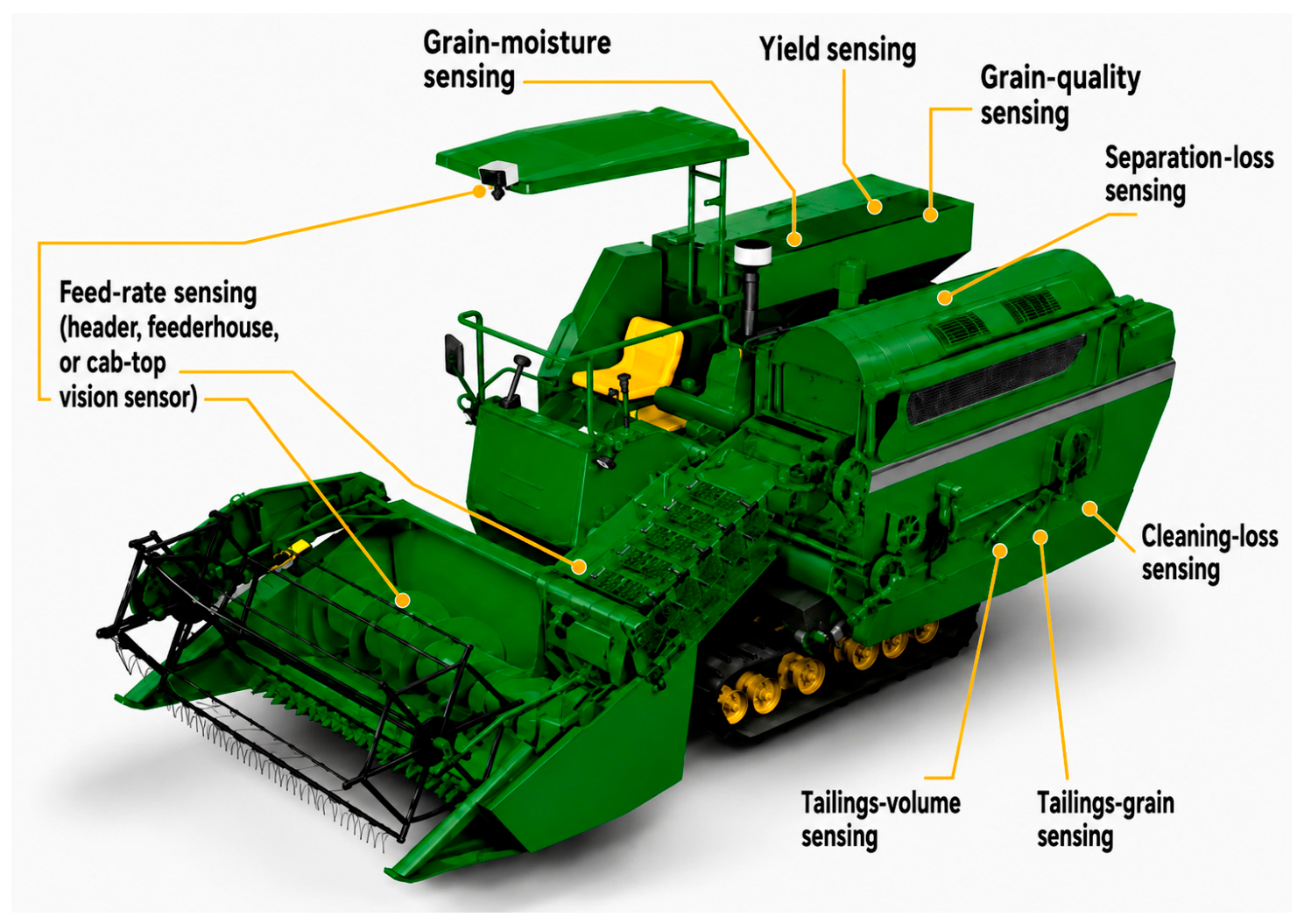
To provide a visual overview of this sensing architecture, Figure 1 summarizes the typical distribution of major combine-harvester sensors across the machine.
The figure maps the major sensing tasks to their typical machine locations. This spatial organization guides the following review, and Table 1 further summarizes the six sensor categories, installation positions, sensing routes, control roles, and key references.

1.3. Objectives and Organization of This Review

This review covers six control-relevant sensing tasks in combine harvesters: grain loss, grain breakage, cleaning load, feed rate, grain-bin state, and grain quality. They are compared by sensing principle, installation position, signal path, disturbance source, calibration transferability, and control relevance.
The objective is to clarify not only what each sensor measures, but also how each sensing route contributes to process monitoring and adaptive control. Emphasis is placed on the links among hardware design, sampling, signal interpretation, field robustness, and practical machine use.
The six categories are arranged by their functional role in the harvesting process: grain-loss and cleaning-load sensors indicate separation and cleaning performance; feed-rate sensors provide upstream load information; breakage and quality sensors support quality preservation; and grain-bin sensors support yield accounting and logistics.
To avoid a purely descriptive listing of sensor studies, this review further emphasizes cross-category synthesis. Representative studies are selected and interpreted according to sensing route, installation environment, disturbance mechanism, validation condition, calibration transferability, and control relevance. The aim is to identify not only what has been reported, but also which sensing routes are mature, which bottlenecks remain unresolved, and how different sensor categories can be integrated into real-time harvesting control.

2. Materials and Methods

2.1. Literature Search and Selection

This review was conducted as a narrative engineering review with structured literature screening. The objective was to synthesize representative studies on combine-harvester sensing for process monitoring and control, with emphasis on sensing targets, installation positions, disturbance sources, field applicability, and control relevance.
The literature was collected mainly from Web of Science Core Collection, Scopus, and CNKI, supplemented by backward citation tracing from highly relevant review articles and research papers. Search terms combined “combine harvester” with task-specific keywords, including “grain loss,” “breakage,” “cleaning load,” “feed rate,” “grain flow,” “grain tank,” “yield monitoring,” “grain quality,” “machine vision,” “vibration,” and “intelligent control.” Synonymous or related terms such as “mass flow,” “throughput,” “impurity,” “moisture,” “optical sensing,” and “fault diagnosis” were also used to improve coverage within specific sensing categories.
Studies were included when they met at least one of the following criteria: they addressed onboard sensing, state estimation, or control-relevant monitoring in combine harvesters; they provided bench, field, or system-level evidence related to sensor design or deployment; or they offered useful engineering insight into sampling, disturbance rejection, calibration, or machine-control integration. Studies were excluded when they focused only on general agricultural sensing, postharvest laboratory inspection, unrelated mobile machinery, or sensor applications without clear relevance to combine-harvester operation.
The final literature set was organized around six sensing themes: grain loss, grain breakage, cleaning load, feed rate, grain-bin state, and grain quality. These categories were selected because they represent the main process variables linking harvesting performance, machine adjustment, economic output, and quality-oriented operation.
The literature search covered studies available up to May 2026. Both English- and Chinese-language publications were considered when they provided clear relevance to combine-harvester sensing, process monitoring, or control. The publication years of the reviewed literature span from 1993 to 2026, allowing the review to capture both early technical developments and recent advances. After screening, 157 references were retained for detailed discussion. The six thematic categories were determined according to the measured variable, installation subsystem, and functional role in process monitoring, adaptive control, quality preservation, or harvest logistics, as summarized in Table 2.
In the detailed review sections, priority was given to studies that met one or more of the following criteria: direct combine-mounted sensing, field or machine-level validation, clear relevance to process monitoring or control, representative sensing principles, explicit treatment of disturbance or calibration issues, and recent methodological advances such as machine vision, sensor fusion, or edge-oriented implementation. Studies with similar technical routes were grouped and synthesized rather than described individually, so that the review could focus on engineering trends and unresolved bottlenecks.
Studies on navigation, vibration, structural reliability, electric actuation, harvesting logistics, and digital systems are used as supporting evidence only when they clarify the operating environment, disturbance pathway, control interface, or system-level application of combine-mounted sensors. They are therefore interpreted as context for sensing deployment and sensing-to-control integration, not as independent topics outside the scope of this review.

2.2. Comparative Framework

To ensure consistency across different sensor categories, the reviewed studies were compared using a unified engineering framework. Five dimensions were considered:
(1)
Target variable and sensing principle;
(2)
Installation position and sampling path;
(3)
Major disturbance sources, including vibration, dust, impurity mixing, crop heterogeneity, and throughput fluctuation;
(4)
Robustness and calibration transferability across crops, machines, and operating conditions;
(5)
Practical relevance for diagnosis, operator support, adaptive control, or harvest logistics.
This framework is particularly important for combine-mounted sensors because their performance is strongly affected by the operating environment. A sensor that performs well in a controlled bench test may become unreliable when exposed to field vibration, dust, variable crop moisture, changing material flow, or structural resonance. Therefore, this review evaluates sensing methods not only by nominal measurement accuracy but also by their installation logic, signal interpretability, field robustness, and usefulness for real-time decision making.
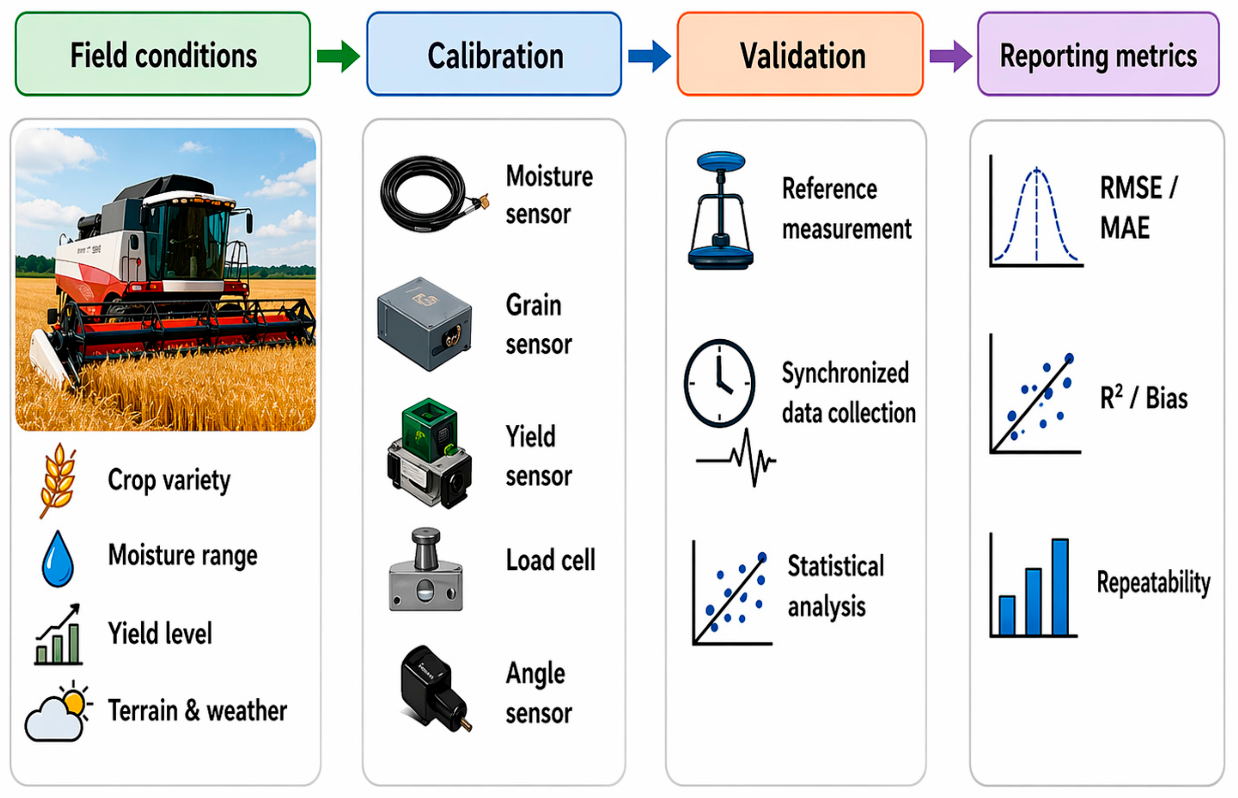
As summarized in Figure 2, a complete validation route for combine-harvester sensing should include representative operating conditions, sensor installation, calibration, signal preprocessing, reference measurement, performance evaluation, and reporting of both accuracy and field-robustness indicators. This workflow provides the methodological basis for comparing the six sensing categories discussed in the following sections.
To improve the reproducibility of the narrative comparison, the five dimensions used in this review are further defined in Table 3 with representative indicators and application examples.
To make the manuscript structure clearer and to summarize the main contents before the detailed review sections, the six sensing categories are organized according to their measurement target, installation position, sensing route, disturbance environment, control relevance, and representative references. Table 1 provides a structural map for the following sections and shows how the individual sensor discussions are linked to the overall engineering framework of combine-harvester process monitoring and control.
This organization is used consistently in the following review: each sensor category is interpreted not only as a device-level measurement problem, but also as a subsystem-level sensing task connected with field disturbance, calibration transfer, and machine-control value.

3. Grain Loss Monitoring Sensors

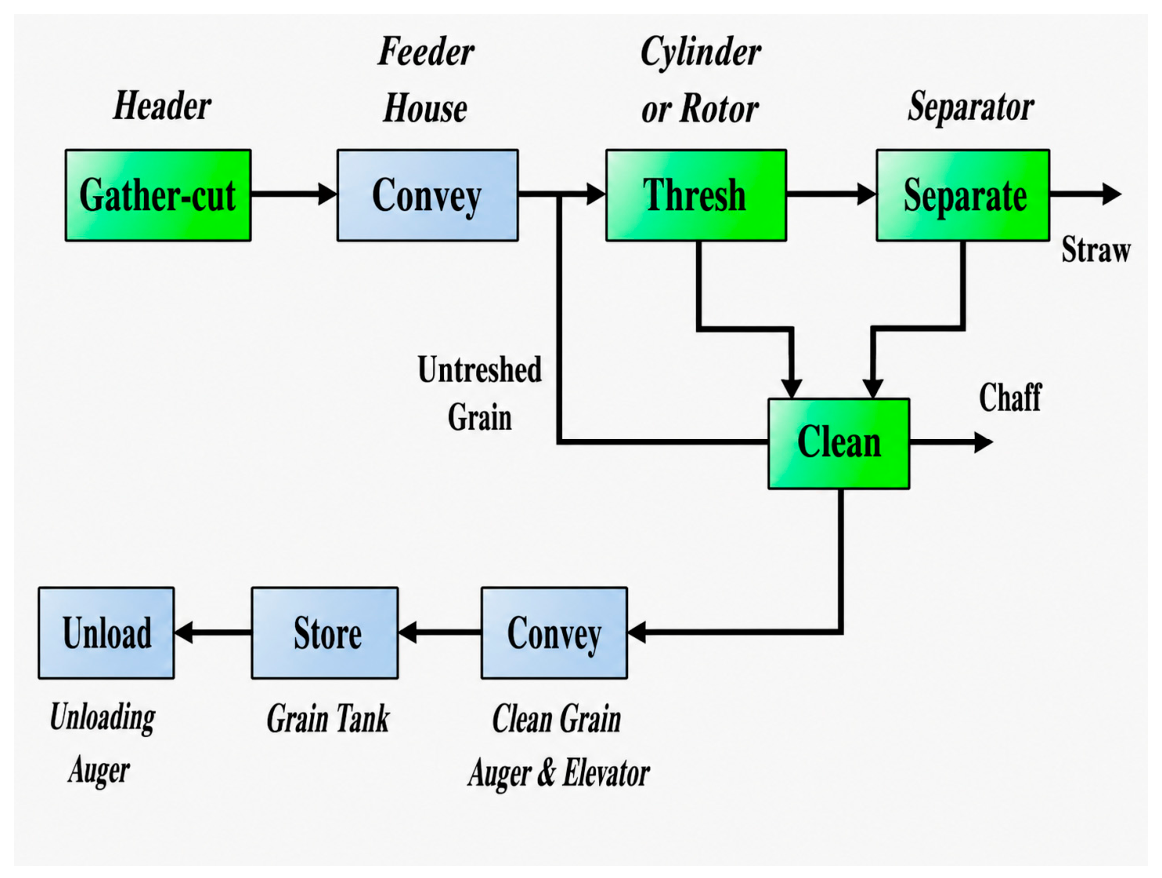
Grain loss is a direct indicator of harvesting performance because it links crop condition, machine adjustment, economic output, and operator action. The main sensing routes include impact, piezoelectric, acoustic, pressure, vision-based, and model-based detection. These routes differ in sensitivity, selectivity, disturbance resistance, and suitability for closed-loop adjustment. Table 4 summarizes typical grain-loss monitoring principles and their engineering characteristics. Before comparing individual sensors, it is necessary to clarify where grain losses are generated. As shown in Figure 3, losses may occur at the header, threshing–separation unit, cleaning shoe, and discharge outlet. These locations differ in material composition, impact form, vibration background, and controllable machine parameters. Therefore, grain-loss monitoring should not be treated as a single measurement problem. Sensor placement and signal interpretation must be matched to the physical origin of the loss.
Overall, piezoelectric and impact-based sensors remain the most practical routes for real-time loss monitoring because of their simple structure, fast response, and clear installation positions. Acoustic and vision-based methods provide richer or more intuitive information, but they require stronger denoising, occlusion handling, vibration compensation, and crop-specific calibration for stable field use.

3.1. Monitoring Targets and Evaluation Criteria

Loss monitoring can be divided into event-level and state-level approaches. Event-level systems attempt to recognize individual grain impacts, acoustic signatures, or visual targets and then aggregate them over time. These methods are physically intuitive, but they become less reliable when grain impacts overlap with straw, chaff, vibration, or repeated collisions. State-level systems infer loss tendency from broader process variables such as vibration pattern, crop condition, subsystem load, or machine operating state. They may be more robust under disturbed conditions, but they usually require stronger calibration and are less directly interpretable.
A practical loss sensor should therefore be evaluated not only by nominal accuracy, but also by signal stability, latency, crop adaptability, mounting sensitivity, and ability to distinguish different loss sources. Aggregate loss values are useful for economic accounting, but engineering intervention usually depends on identifying whether the dominant loss originates from the header, separation unit, or cleaning shoe. Header loss may require adjustment of cutterbar height, reel kinematics, or crop-entry behavior; separation loss may involve threshing and concave settings; cleaning loss is more closely related to airflow, sieve motion, residue load, and feed distribution.
For field deployment, validation should also extend beyond short manual sampling intervals. Useful studies should report performance under changes in crop density, moisture content, forward speed, feed rate, machine vibration, and operating-parameter adjustment. These indicators determine whether a loss sensor can support real-time control rather than only post hoc documentation.

3.2. Sensing Principles and Representative Routes

The technical development of grain-loss sensing can be understood as a coupled process involving transduction, structural mounting, signal processing, and agronomic interpretation. Impact, piezoelectric, acoustic, pressure, and vision-based sensors provide different forms of raw information, but their field performance depends strongly on how the sensor is installed and how mixed-material signals are separated.
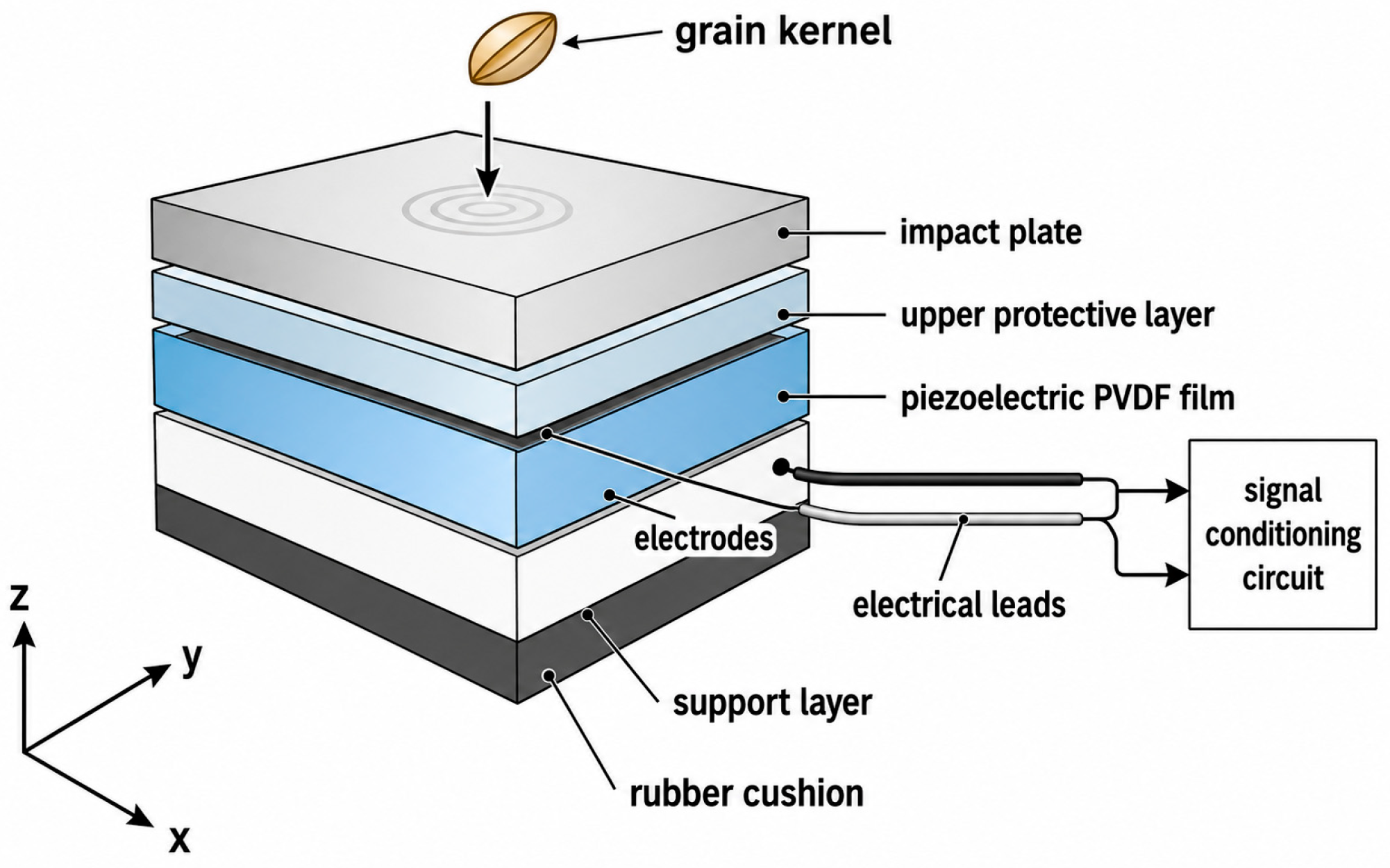
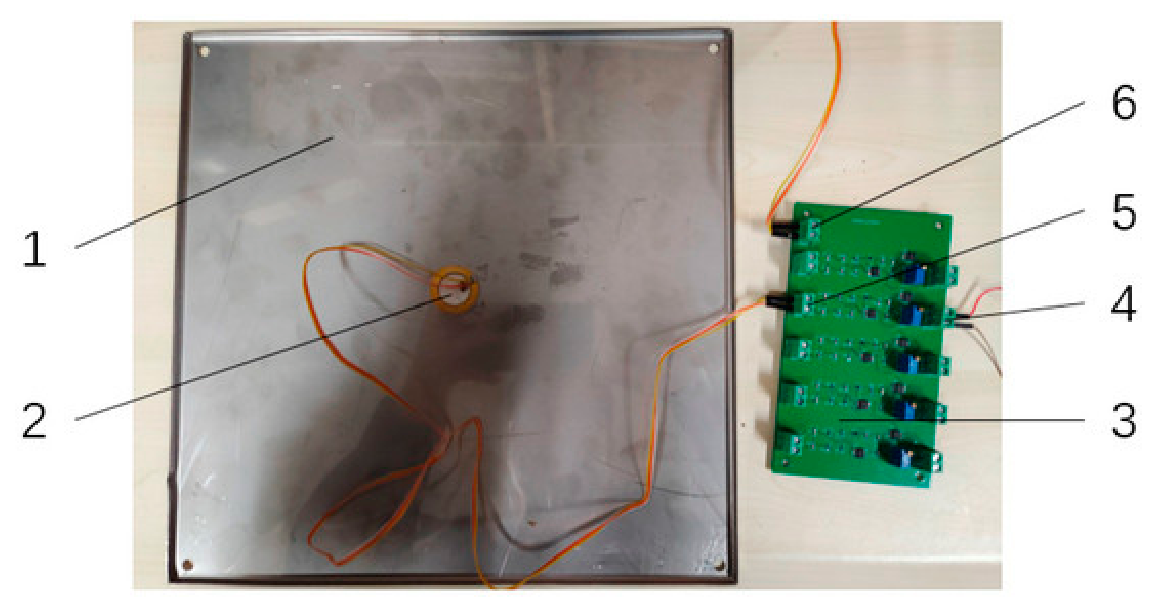
Classic real-time loss monitoring established the feasibility of estimating grain loss through acoustic and impact responses beneath the separating grate [21]. Later studies on separation-process monitoring further showed that signal interpretation must consider machine dynamics and operating regime rather than relying only on simple event counting [22]. Piezoelectric sensing has become one of the most widely studied routes because grain impacts can be converted into measurable charge or voltage signals with relatively high dynamic response. As shown in Figure 4, PVDF-based grain-loss sensors illustrate how flexible piezoelectric materials can be embedded into impact-sensitive structures for grain-flow monitoring [23].
Recent reviews confirm that the principal technical difficulty in loss sensing is still selectivity. The transducer must respond strongly to grain impacts while rejecting vibration, straw fragments, chaff, and compounded collisions [24]. Decision-tree monitoring of paddy-rice loss provides one example of how signal features can be combined with classification logic to improve discrimination under field conditions [25]. Adaptive neuro-fuzzy inference and WOA-BP-based rice seed-loss monitoring further demonstrate that nonlinear estimation can be useful when loss signals are affected by crop state, machine vibration, and operating parameters [26,27]. Earlier and later PVDF-based studies also confirmed that sensitive-material selection, damping design, plate structure, and signal conditioning jointly affect measurement stability [28,29]. For corn harvesting, EMD-based monitoring work indicates that crop-specific denoising and impact-signal interpretation are needed when grain and residue impacts are strongly mixed [30].
Acoustic sensing provides another important route because grain and residue impacts can generate distinguishable waveform information. However, acoustic sensors are highly sensitive to background noise, structural vibration, and overlapping impact events. Figure 5 shows a representative acoustic loss-sensing test bench and its installation on a combine harvester. This type of system demonstrates the potential of sound-based recognition, while also showing why denoising, mounting design, and feature extraction are essential for field use [31].

3.3. Crop-Specific Adaptation and Structural Optimization

A major reason grain-loss sensors cannot be transferred directly across machines or crops is that the discharge material stream changes with crop morphology, moisture content, threshing condition, and cleaning behavior. Wheat, rice, maize, rapeseed, and other crops generate different impact forms and residue mixtures, which means that sensor geometry, mounting position, and signal thresholds often need crop-specific adaptation.
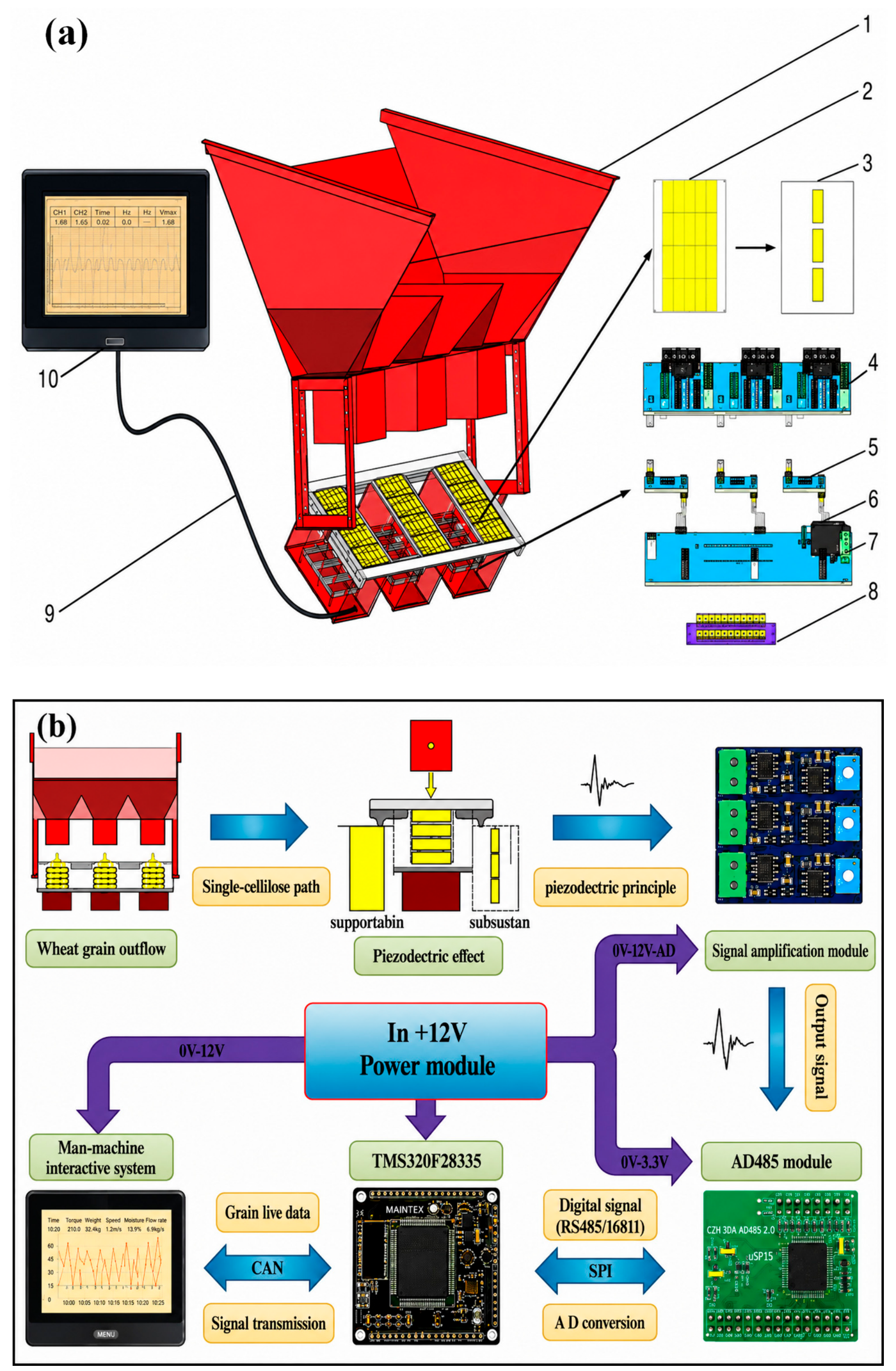
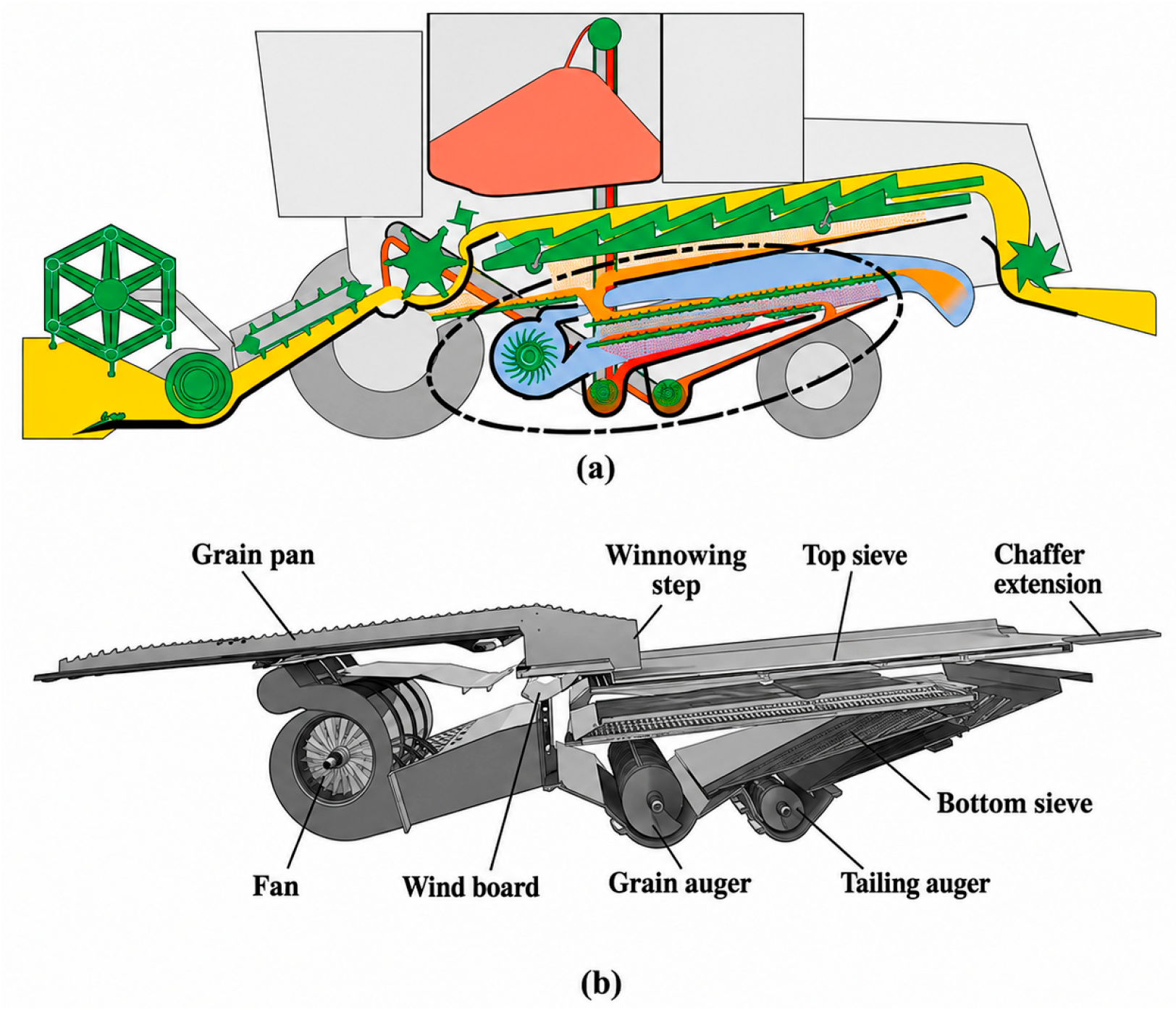
For wheat cleaning-loss monitoring, integrated sensing devices have combined collection hoppers, piezoelectric sensor arrays, vibration compensation, signal amplification, analog-to-digital conversion, and CAN communication to form complete monitoring chains. Figure 6 illustrates such a wheat loss-monitoring device and its operating principle [32]. This type of design shows that field-ready loss sensing requires more than a sensitive element; it also requires vibration compensation, signal transmission, and installation logic adapted to the cleaning outlet.
Structural optimization is equally important. Studies on vibration characteristics of grain-loss detection sensors show that the modal behavior of the sensitive plate and mechanical transmission path can directly affect signal quality [33]. Related subsystem studies further demonstrate that material distribution inside the threshing and cleaning units influences where losses occur and how they should be sensed [34]. Header-loss studies in rapeseed and cutter-excitation identification using triaxial accelerometers also indicate that some losses originate before crop material enters the threshing pathway, making sensor placement and subsystem attribution essential [35,36]. A recent wheat-oriented overview on loss-reduction technologies also indicates that sensor monitoring, operating-parameter selection, and machine-structure optimization should be interpreted together [37].
Crop-specific studies reinforce this point. Rapeseed cleaning-loss monitoring showed that crop mechanical properties and ejecting behavior influence sensor-plate response [38]. Maize kernel-loss monitoring based on signal interval duration showed that signal-processing logic must be redesigned for high-frequency impact conditions [39]. Corn cleaning-loss monitoring further illustrates the need to match sensor structure with crop-specific impact characteristics. As shown in Figure 7, a corn cleaning-loss monitoring sensor can integrate an impact-sensitive detection structure, piezoelectric signal acquisition, signal conditioning, and loss-event identification to distinguish grain impacts from cob, stalk, and other cleaning residues [40].
Recent grain-loss monitoring research also makes increasing use of learning-based detection. Reviews of grain-loss sensor technology emphasize that sensitive materials, impact structures, and recognition algorithms should be designed as an integrated sensing chain [41]. A VS-1D-CNN cleaning-loss detection system for corn kernel direct harvesters showed that waveform classification can improve discrimination when crop-specific signal features are considered [42]. In maize grain cleaning-loss detection, integrated systems have combined the cleaning device, grain-leaking and impurity-discharging path, piezoceramic transducer, vibro-guiding plate, charge amplifier, signal-acquisition card, and upper-computer analysis platform to improve loss-event recognition under mixed-material conditions [43].
A recent study on cleaning-loss prediction for rice–wheat combine harvesters reaches a similar conclusion from the systems perspective, showing that operating-parameter selection, cleaning-loss evaluation, and intelligent prediction models need to be interpreted together rather than as separate improvement paths [44]. A newer maize study based on sound-signal recognition reached a similar conclusion from an acoustic route, showing that crop-specific kernels, impurities, and impact signatures can be differentiated more effectively when the monitoring logic is redesigned around maize rather than transferred unchanged from rice or wheat systems [45].
Existing studies show that grain-loss sensing has moved from simple impact counting toward disturbance-aware event recognition. Piezoelectric and impact-based methods remain the most practical for real-time use, whereas acoustic and vision-based methods provide richer information but require stronger denoising and occlusion handling. The key research gap is no longer basic loss detection alone, but reliable loss-source localization and control-oriented interpretation under crop and machine variability.

3.4. Challenges and Research Priorities for Grain-Loss Sensing

Overall, grain-loss sensing is the most mature and control-relevant category, but its field value still depends on selectivity, vibration rejection, loss-source localization, and crop-specific calibration. Future systems should move beyond simple impact counting by combining event-level detection with subsystem-aware state estimation, so that header, separation, and cleaning losses can be converted into actionable control information under changing feed rate, crop moisture, and residue conditions.

4. Grain Breakage Rate Sensors

Grain breakage sensing is a quality-preservation task because visible fracture and hidden internal damage reduce market value, storage safety, and processing performance. Compared with loss sensing, it depends more strongly on representative sampling, stable sample presentation, and the link between observed kernel damage and upstream threshing, conveying, and cleaning conditions.

4.1. Measurement Logic and Engineering Challenges

Breakage sensing differs from loss sensing because it evaluates grain condition after mechanical processing. Its core workflow is sample extraction, presentation, damage representation, and interpretation; therefore, reliable monitoring must address sampling bias, response delay, dust, vibration, and hidden cracks rather than only image-classification accuracy.
Direct visual or morphological methods provide interpretable damage evidence but are delayed by sampling, whereas indirect load or vibration indicators respond earlier but require stronger calibration. A practical breakage-monitoring system should therefore combine direct confirmation with faster process-state warning.
Table 5 summarizes the main grain-breakage sensing routes and their control relevance, clarifying how direct damage detection and indirect process-state indicators can jointly support quality-aware threshing control.
Another important challenge is hidden damage. Some kernels may suffer internal cracks or subvisible injury under threshing force even when their external appearance seems acceptable. Measurement of rice grain internal damage under threshing force shows that breakage should be interpreted broadly, including both visible fracture and internal quality deterioration [46]. This means that future breakage sensors should not be evaluated only as image classifiers but also as tools for quality-aware process monitoring.

4.2. Direct Sensing and Vision-Based Approaches

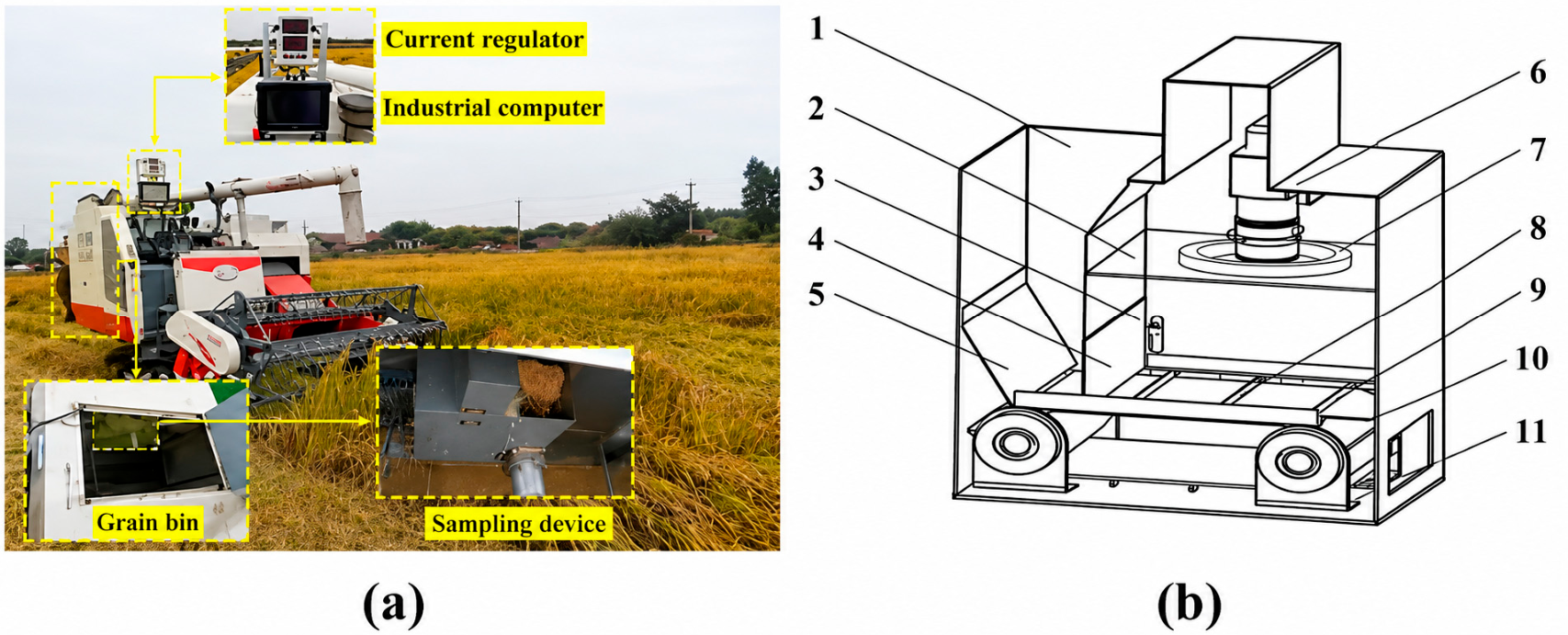
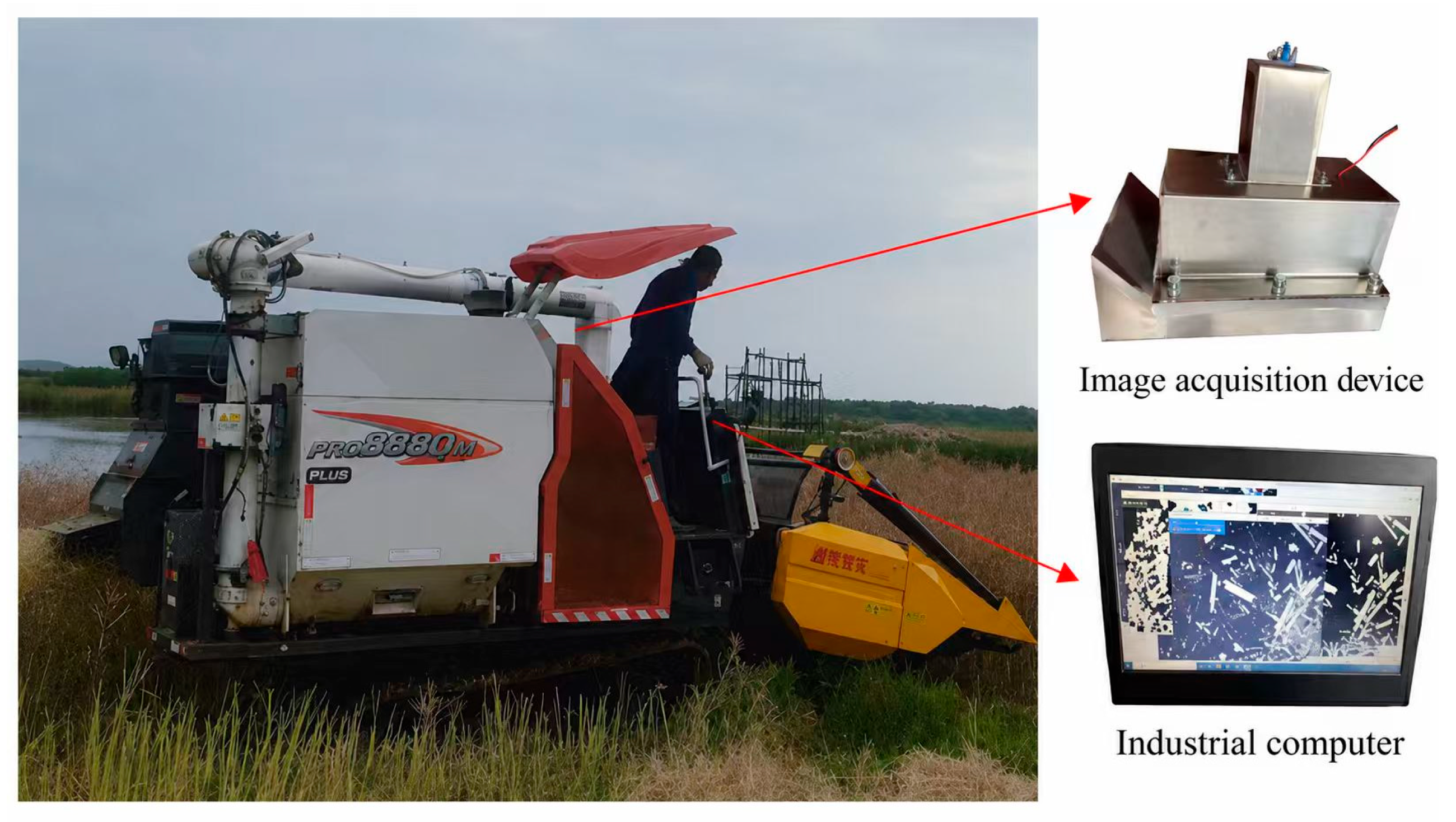
Machine vision is the most representative direct route for online breakage monitoring. For combine-mounted applications, the key difficulty is not only image recognition but also whether representative grain samples can be extracted, stabilized, illuminated, and presented to the camera under vibration and variable grain flow. As shown in Figure 8, a breakage-detection system for a crawler-type rice combine harvester integrates a field sampling device, an industrial computer, a grain bin connection, and an infusion-type sampling unit with airflow control, dust shielding, a camera, a light source, a conveyor belt, a transparent plate, and an outlet [47].
Therefore, direct imaging should be interpreted as sampled confirmation of breakage rather than a complete description of all damage states, especially when internal cracks or subvisible injury may remain undetected [46].

4.3. Relationship with Quality Monitoring

Breakage monitoring increasingly overlaps with grain-quality sensing because both require representative sampling, particle separation, stable illumination, and reliable classification. Rice impurity sensing and wheat segmentation studies show that image preprocessing, feature extraction, and semantic segmentation can jointly support recognition of whole grains, broken kernels, and impurities [48,49,50].
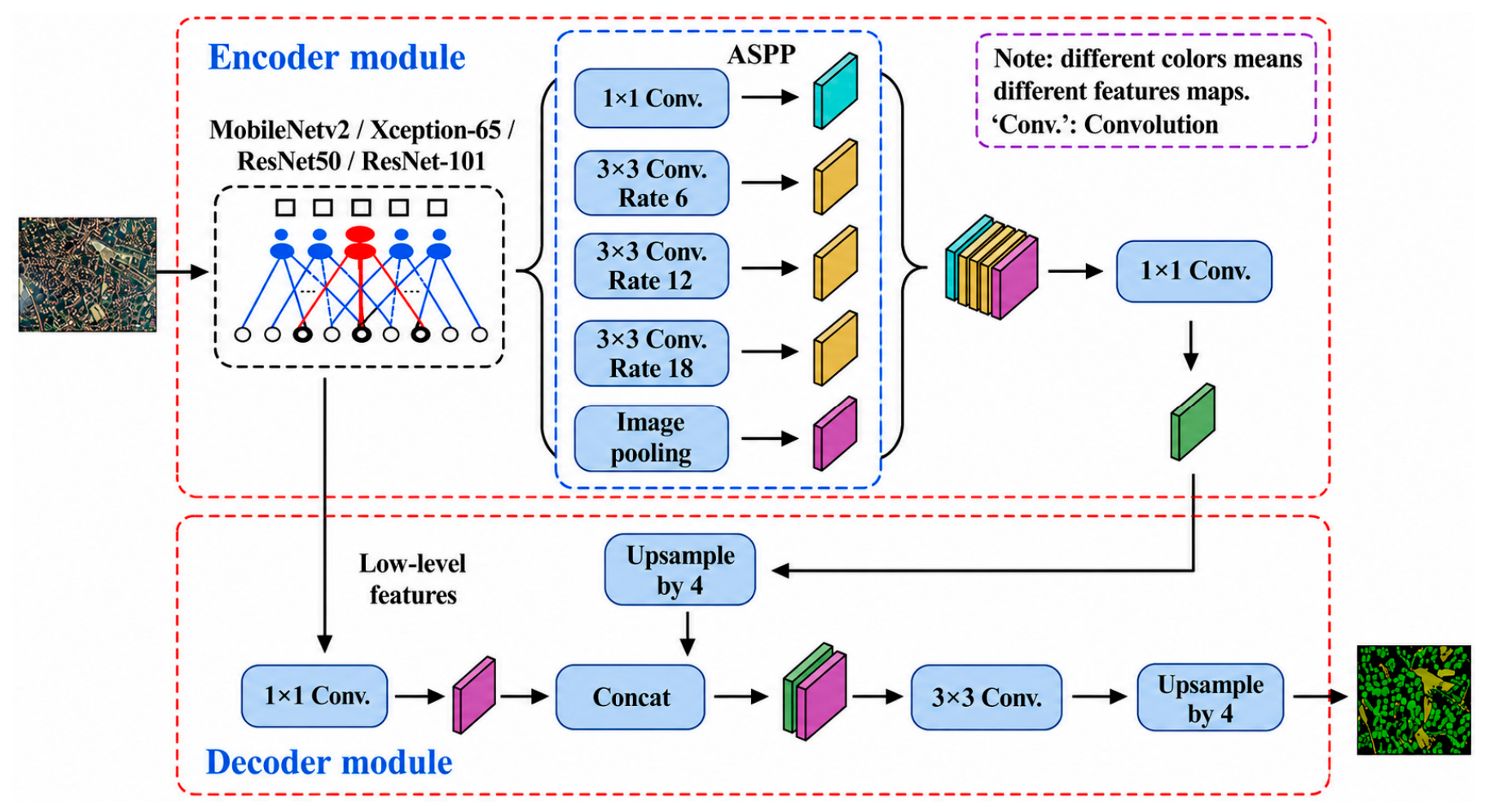
Recent broken-rate and impurity-rate systems further indicate that field-ready breakage sensing is likely to be implemented as part of integrated quality-monitoring modules rather than as isolated breakage detectors. As shown in Figure 9, deep segmentation provides a representative route for this integrated online inspection workflow [49,51,52,53].
Together, these studies show that breakage sensing should combine direct imaging, impurity discrimination, and process-state information so that kernel damage can be linked to threshing and cleaning control.

4.4. Limitations and Future Pathways

Breakage-rate sensing remains less mature than loss sensing because the measured target depends on representative sampling, delayed observation, hidden damage, and resistance to dust and vibration. Future systems should report sampling frequency, batch size, delay from threshing to imaging, agreement with manual counting, and performance across moisture, impurity, feed-rate, and vibration conditions.

5. Cleaning-Load Sensors

Cleaning-load sensing supports process control and fault diagnosis because the cleaning shoe couples material burden, airflow, sieve oscillation, residue transport, vibration, tailings return, and local blockage. It should therefore be treated as subsystem state estimation rather than as a single material-mass measurement.
The major routes—pressure, airflow, strain, vibration, tailings-return, and structural-state sensing—observe different physical aspects of the same cleaning process. Their value depends on whether they separate material burden from structural disturbance and whether their outputs can support fan-speed, sieve-opening, feed-rate, or diagnostic decisions.
Table 6 summarizes the major cleaning-load sensing routes, while Table 7 separates the main sub-signals and their diagnostic meanings. This distinction helps prevent pressure, airflow, vibration, tailings-return, and structural-health signals from being interpreted as equivalent measurements.

5.1. Cleaning Load as a Dynamic Process State

Cleaning-load measurement must account for both material redistribution and structural dynamics. Because crop material pulses, stratifies, moves laterally, and interacts with airflow and sieve oscillation, a single local sensor may represent only part of the cleaning state. Increases in pressure or vibration may indicate either material burden or mechanical abnormality, so multi-point sensing is needed to separate process load from resonance, blockage, imbalance, or bolt loosening. Figure 10 illustrates why the cleaning unit should be treated as a subsystem-level state-estimation problem.

5.2. Structural-State and Fault-Related Sensing

Structural-state sensing is part of cleaning-load monitoring because the cleaning shoe is a vibrating assembly. Strain, vibration, fastening state, and local deformation reveal both mechanical health and whether a load-related signal remains trustworthy under resonance, blockage, imbalance, or bolt loosening [54,55,56,57,58].
Cleaning-load interpretation also depends on upstream machine state. Blockage diagnosis in axial-flow threshing and separation devices shows that feed variation can propagate into downstream load states that are only partly visible if the cleaning unit is treated in isolation [58]. Noise and vibration measurement systems further indicate that the cleaning subsystem operates within a broad mechanical excitation environment, so sensor mounting, filtering, and vibration compensation are essential for reliable signal interpretation [59]. Even studies from other harvesting contexts support the same methodological point: cleaning- or loss-related signals must be interpreted together with material flow, vibration, and machine structure [60].

5.3. Load Monitoring and Control-Oriented Studies

Recent studies have expanded cleaning-load sensing from local monitoring toward control-oriented state estimation. Airflow velocity evaluation in the cleaning fan shows that aerodynamic information can improve cleaning-state assessment when airflow structure is measured systematically rather than inferred only from final loss or impurity outcomes [61]. Fuzzy-control studies of cleaning-device operating parameters further show that cleaning-related measurements become more valuable when they are connected with fan speed, sieve opening, and other adjustable parameters [62].
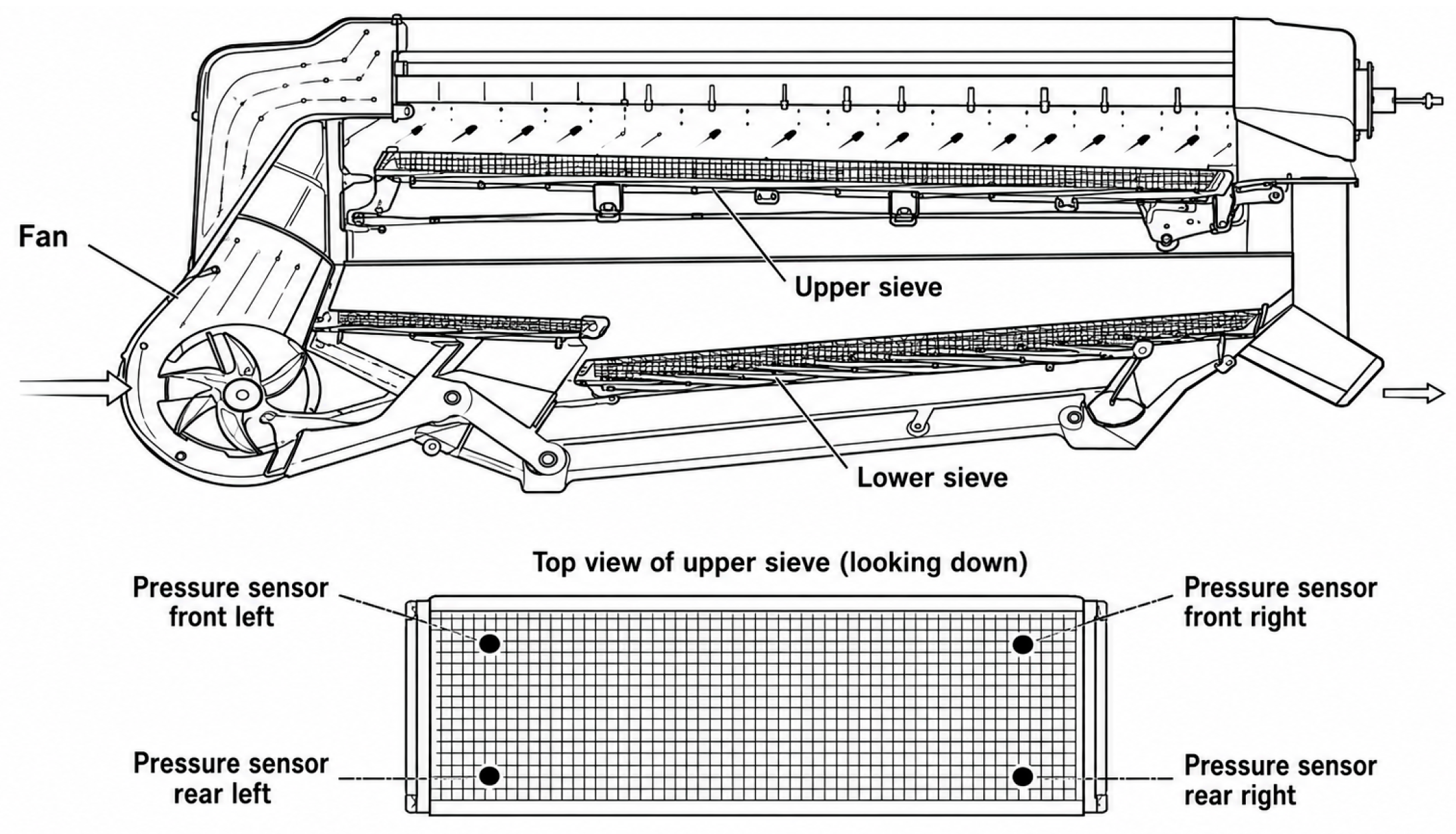
Pressure-based sensing provides a relatively direct route for estimating local cleaning burden. As shown in Figure 11, multiple pressure sensors can be installed beneath the upper sieve to capture local pressure responses associated with material burden, airflow distribution, and sieve-loss tendency [63]. This type of configuration shows that sensor location strongly affects interpretability and prediction quality.
Control-oriented studies also support the need to interpret cleaning load within a wider process model. A fuzzy logic control system for combine harvesters showed that cleaning-related settings can be adjusted automatically when expert rules are formalized around loss-sensitive variables [64]. A multi-parameter control-system model for grain combines further demonstrated that cleaning states should be interpreted together with threshing variables and control objectives [65]. Earlier identification studies also showed that variable selection is important when estimating sieve losses and material other than grain in the grain bin [66,67]. More recent data-driven predictive control of electric cleaning systems indicates that fan speed and vibrating-sieve frequency can be coordinated in real time to reduce both loss and impurity [68].

5.4. Tailings-Return and Secondary-Impurity Monitoring

Monitoring the grain content of the secondary-impurity auger, or tailings-return stream, can also be regarded as part of cleaning-load sensing. Although this signal is not always described as “cleaning load” in the literature, it reflects how much recoverable grain remains in the recirculating cleaning loop. A high grain-richness or return-flow signal may indicate unsuitable fan speed, sieve opening, feed distribution, or separation state.
Earlier reviews of combine sensors identified return-flow sensing as a useful internal process measurement for machine adjustment [1]. Modeling of grain return flow in head-feeding combines clarified that the return stream is a dynamic state influenced by sieve settings, transport delay, and recirculation intensity [69]. Control-oriented work using impact-type flow-rate sensing further showed that grain return flow can be regulated by adjusting chaff-sieve clearance while maintaining acceptable clean-grain quality and limiting suction-fan loss [70]. These studies suggest that tailings-return monitoring can complement pressure, airflow, and vibration sensing in the cleaning subsystem.
Recent work by Liang and co-workers also supports this broader interpretation. Reviews and experimental studies of combine cleaning systems show that cleaning performance depends on the coupled design of airflow organization, sieve structure, monitoring, and control rather than on a single operating parameter [71,72,73]. Therefore, secondary-impurity-auger sensing can be used together with cleaning-load indicators to support coordinated adjustment of fan speed, sieve opening, and material-flow distribution.
Cleaning-load sensing should be understood as subsystem state estimation rather than single-variable measurement. Pressure, airflow, vibration, strain, and tailings-return signals describe different aspects of the cleaning process. Therefore, the main challenge is to separate material burden from structural disturbance and convert these coupled signals into fan, sieve, and feed-rate control decisions.

5.5. Challenges and Research Priorities for Cleaning-Load Sensing

Cleaning-load sensing remains a subsystem-level state-estimation problem because material burden, airflow, sieve vibration, tailings return, and structural health may contribute simultaneously to the measured signal. Future studies should clearly define the measured component and fuse pressure, airflow, strain, vibration, tailings-return, feed-rate, and loss signals for reliable fan, sieve, and feed-rate control.

6. Feed-Rate Sensors

Feed-rate sensing is highly control-relevant because it detects incoming crop load before downstream symptoms appear. Rapid feed increases can cause overload, unstable threshing, higher loss, breakage, and cleaning deterioration; therefore, feed-rate information is useful for throughput estimation and anticipatory adjustment of forward speed, reel operation, threshing intensity, and cleaning parameters.
Major routes include upstream vision, force or pressure sensing in feeding components, torque monitoring, grain-flow or mass-flow reconstruction, and multi-source fusion. Upstream vision offers earlier prediction, mechanical sensors reflect actual load, and fusion-based estimators improve robustness, but all require attention to crop adaptability, vibration, time delay, and calibration.
To make the control value of these routes more explicit, Table 8 compares feed-rate sensing methods according to response timing, dominant disturbances, advantages, limitations, and control use.

6.1. Feed Rate as an Upstream Control Variable

Feed rate defines the operating envelope of several downstream subsystems. Many losses, breakage, and cleaning disturbances are not independent faults, but consequences of an upstream feeding state that has moved outside a stable range. If the incoming crop load can be estimated before downstream deterioration occurs, speed regulation, reel adjustment, threshing adaptation, or cleaning compensation can be initiated proactively.
However, feed-rate measurement is strongly crop-dependent. Standing cereals, lodged crops, rice, maize, rapeseed, and other crops differ in plant architecture, cutting behavior, header interaction, conveyor loading, and pulse structure in the feeding channel. A feed estimator that works well in one crop or machine configuration may transfer poorly to another. Therefore, robust feed-rate research should report not only average estimation accuracy, but also its response to crop density, lodging severity, moisture content, travel speed, and abrupt header-engagement changes.
Feed-rate sensing also benefits from multi-source estimation. A single local sensor may capture only one manifestation of feed, such as force, optical occlusion, torque, or pressure at a specific position. In contrast, the real feed state is shaped by crop density, travel speed, header capture behavior, conveyor dynamics, threshing resistance, and engine load. Combining local measurements with machine-operating variables can improve robustness and provide a more meaningful estimate for control-oriented harvesting.

6.2. Major Sensing Routes and Representative Studies

Feed-rate sensing is closely related to yield monitoring and throughput reconstruction. Commercial yield-monitoring systems have used impact, optical, weighing, and hybrid principles to estimate harvested grain flow. Table 9 summarizes representative commercial systems and their measurement principles. Although these systems are usually described as yield monitors, their sensing principles are relevant to feed-rate and throughput estimation because they convert crop or grain flow into machine-readable signals.
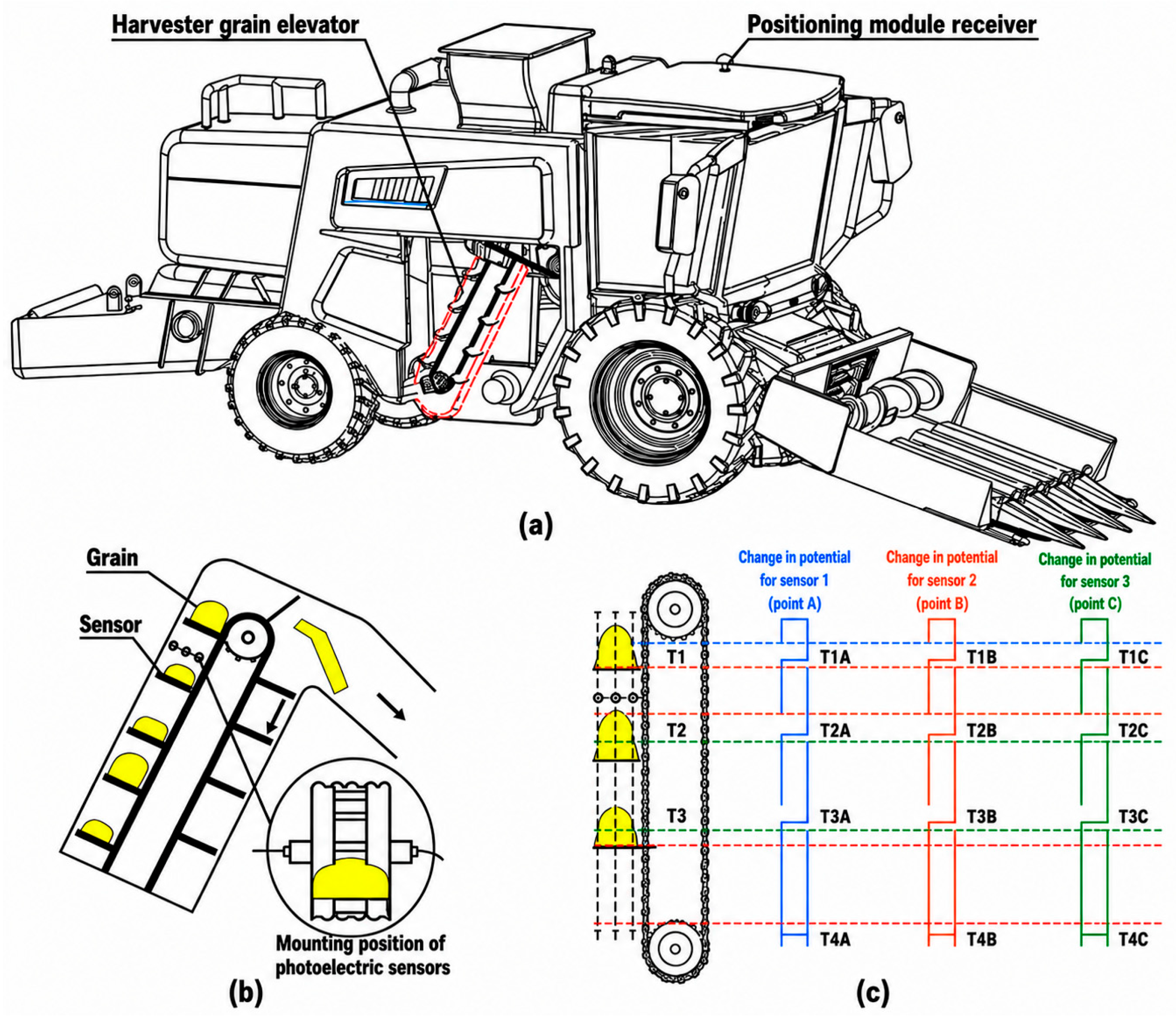
Optical and photoelectric routes provide one important approach. As shown in Figure 12, a photoelectric yield-monitoring system can detect grain-flow variation by arranging optical sensors in the clean-grain conveying path and converting light-blocking or transmission changes into electrical signals. Real-time grain-yield monitoring systems also show that grain-flow sensing can be combined with positioning and moisture information to reconstruct spatial productivity [74].
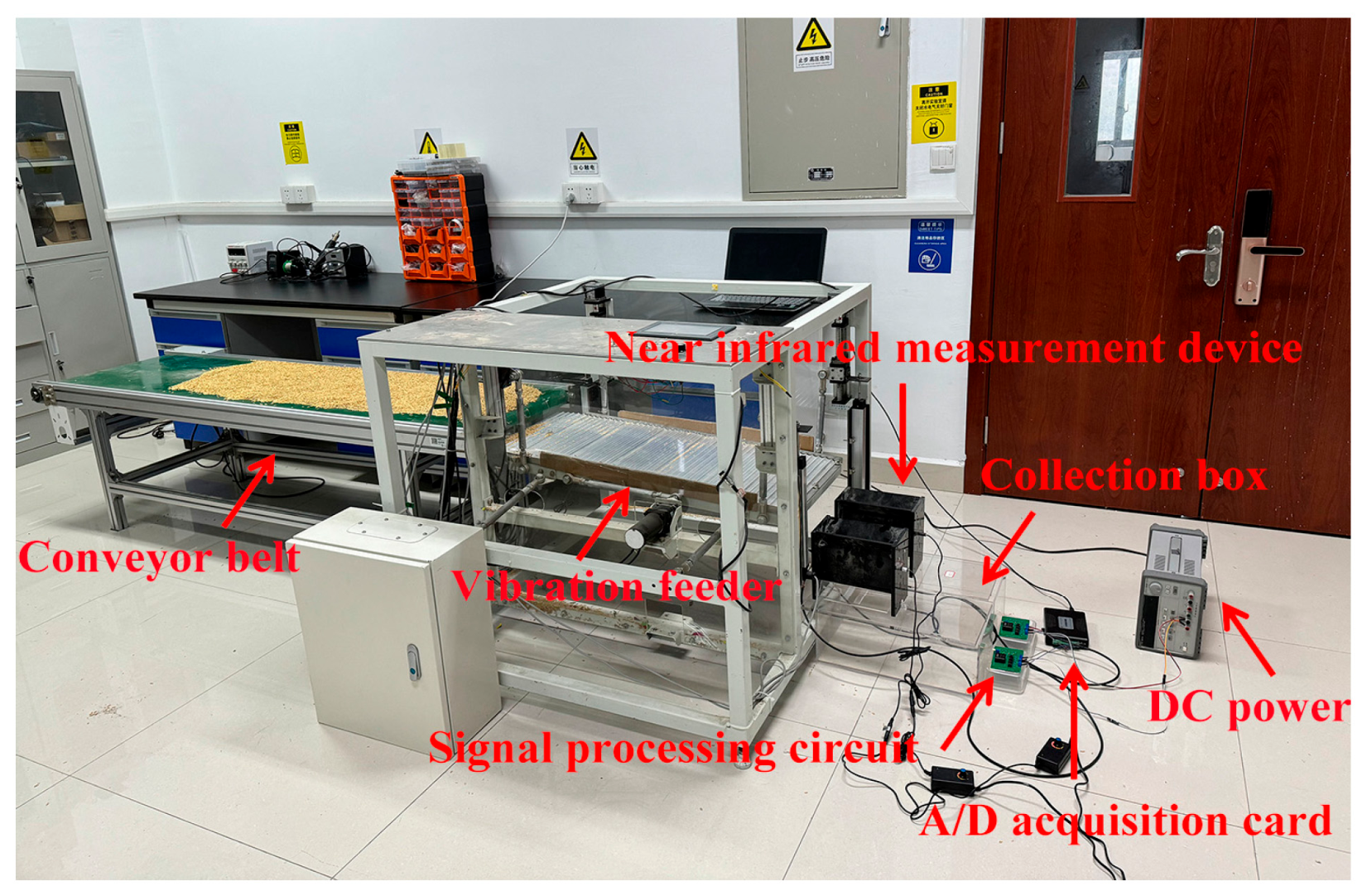
Near-infrared sensing provides another optical route for mass-flow estimation. As shown in Figure 13, near-infrared-based measurement can estimate material flow in a vibration feeding system through spectral response and calibration. This approach suggests that optical sensing may supplement or replace purely mechanical routes in some feed or flow-monitoring applications [75]. Universal grain-flow sensors for auger outlets further extend this logic into post-separation transport [76].
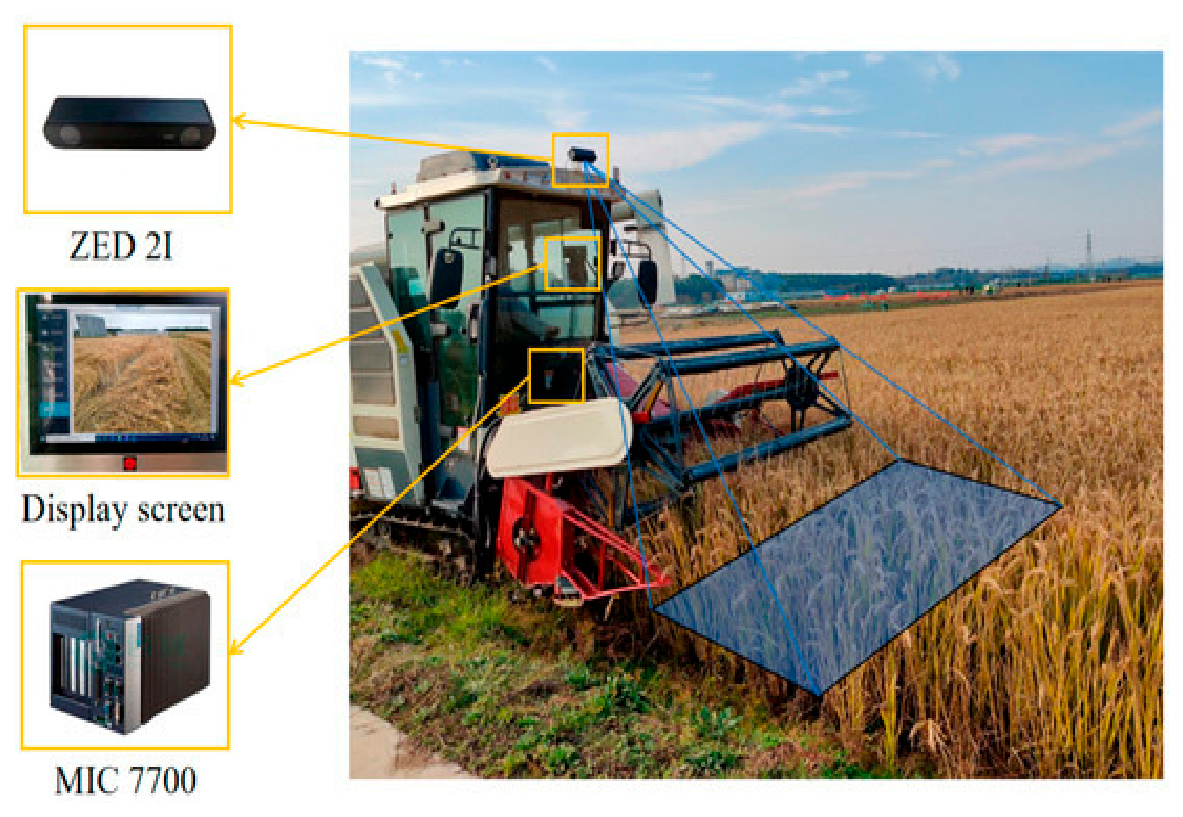
Visual estimation before crop entry is especially attractive because it provides earlier information than sensors located inside the machine. As shown in Figure 14, a visual data-acquisition system can capture wheat canopy and plant-state information for feed-quantity prediction. Prediction of wheat feed quantity using improved YOLOv5s and single-plant weight information demonstrates how pre-entry visual cues can be converted into forward-looking feed estimates before material fully enters the threshing pathway [77].

6.3. Disturbance Sources and System Integration

Feed-rate and grain-flow measurements are strongly affected by vibration, mounting position, crop-flow trajectory, and machine operating state. Studies on vibration influence and difference-elimination methods for grain-flow sensing show that the same raw flow signal may vary substantially under different vibratory conditions [78]. This finding indicates that feed-rate measurement is not only a crop-flow problem but also a crop-flow–machine-dynamics problem.
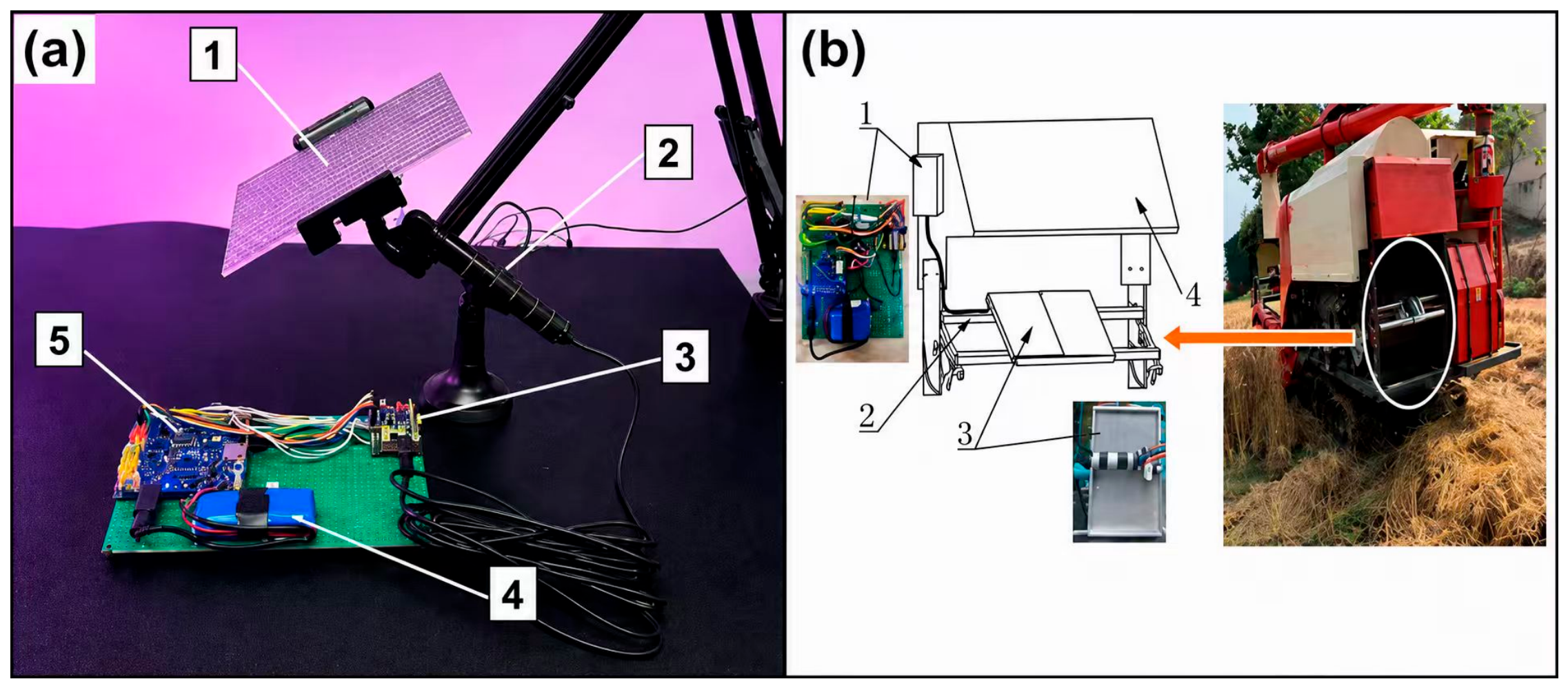
Mechanical load sensing provides another practical route for feed-rate estimation. In this approach, sensing structures, signal-acquisition units, and data-processing modules are integrated into the feeding or transmission path to capture load-related responses during crop intake and transport [79]. Torque-based methods further infer feeding state from load variations in key transmission components. For example, drum torque, feeding screw torque, and conveyor belt torque can be used to predict feed rate by converting mechanical resistance changes into measurable electrical signals [80]. These methods are structurally practical and closely related to actual machine load, but their accuracy may be affected by vibration, nonlinear load transfer, sensor mounting position, and crop-specific flow characteristics.
Multi-sensor fusion can improve feed-rate estimation by integrating feeding, threshing, travel, and engine variables. Multi-sensor data monitoring and acquisition systems using torque–rotating-speed–power integrated sensors at key transmission positions can reconstruct the combined operating state [81]. DNN-based corn-yield monitoring similarly indicates that machine-learning approaches are useful when the target variable is shaped by many coupled factors rather than by one dominant transducer [82].
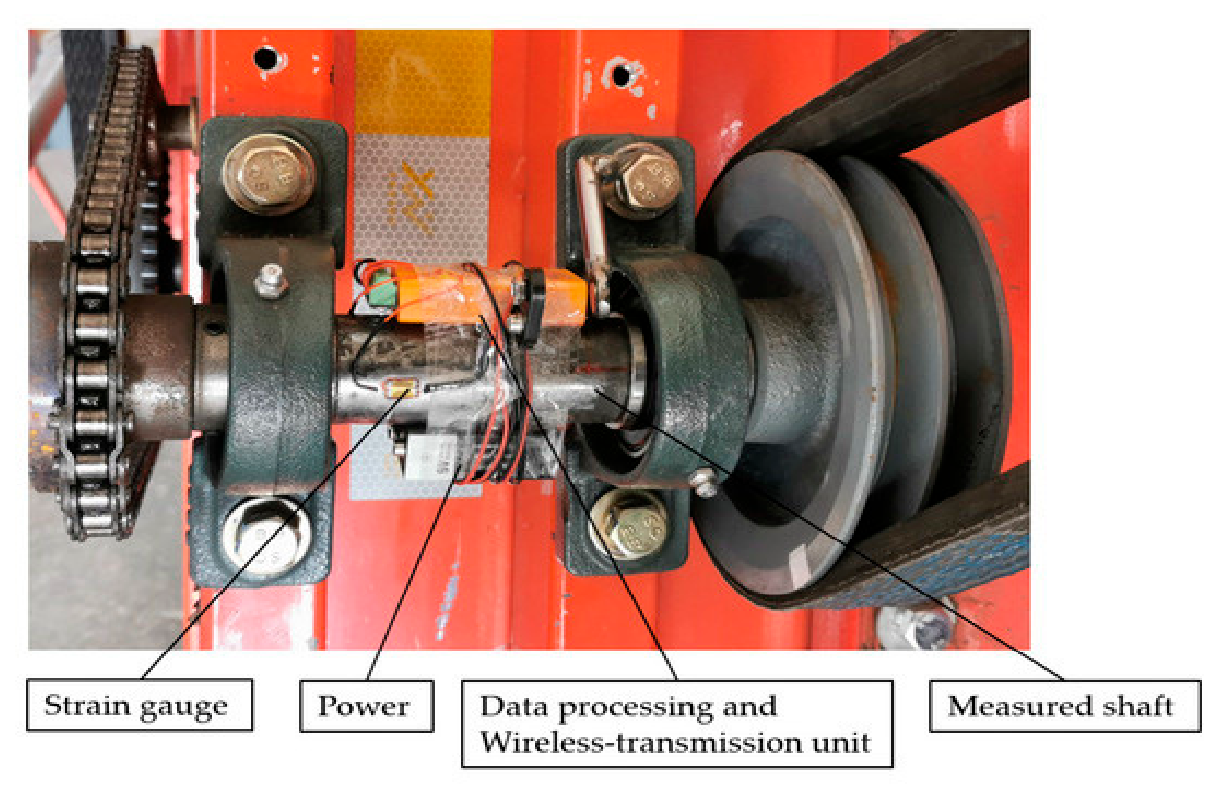
Wireless and distributed sensing architectures are also emerging. A bottom-plate-pressure-based wireless monitoring system for chain-rake-conveyor feed rate showed that distributed acquisition can support feed estimation while reducing wiring complexity [83]. Other studies have inferred feeding quantity from machine-operating signals for intelligent control applications. As shown in Figure 15, a torque-based feed-rate monitoring device can integrate a strain gauge, power module, data-processing and wireless-transmission unit, and measured shaft into a compact shaft-mounted acquisition system, showing how rotational load information can be collected from the transmission path and converted into a feed-rate-related signal [84]. Ultrasonic grain-flow sensing for a full-feed multipurpose combine also showed that flow estimation can be applied across rice, soybean, and barley, although crop adaptability remains a key challenge [85].
Control-oriented feed-rate studies further extend this route from measurement to actuator adjustment and performance evaluation. Adaptive monitoring of variable-diameter threshing drums, feed-rate-based crop-flow control in axial threshing units, soybean conveyor-trough-based adaptive threshing-gap adjustment, and online field-performance evaluation all show that feed-rate signals can support coordinated threshing-intensity regulation, gap control, and whole-machine operating assessment [86,87,88,89].
Feed-rate sensing has high control value because it provides upstream warning before loss, breakage, and cleaning instability occur. Vision, torque, pressure, grain-flow, and machine-state signals are complementary rather than competing routes. The most promising direction is staged sensing that combines pre-entry prediction with in-machine load feedback and delayed grain-flow confirmation.

6.4. Control Value and Future Development

The strongest value of feed-rate sensing lies in anticipatory control because feed changes occur before downstream symptoms such as loss, breakage, or cleaning instability become visible. Future feed-rate monitoring should combine upstream visual prediction, in-machine force or torque sensing, grain-flow reconstruction, and multi-source machine-state fusion, with attention to time-delay compensation and cross-crop generalization, so that forward speed, threshing intensity, guide-vane settings, concave clearance, and cleaning parameters can be adjusted before overload develops.

7. Grain Tank Sensors

Grain-tank sensing turns the tank from a passive storage space into an information node for yield accounting, unloading timing, and harvest logistics. Beyond local-level measurement, tank-state estimation should describe occupancy, filling rate, unloading state, and coordination with grain trucks.
Main routes include inflow accumulation, direct level or vision-based observation, and fused state estimation. Inflow integration provides continuity but can drift, direct observation is intuitive but sensitive to dust, uneven filling, geometry, and machine attitude, and fusion can improve robustness for unloading coordination.

7.1. Operational Meaning of Grain-Bin Sensing

The grain tank is the convergence point of the harvesting process. Unlike sensors mounted near the header, threshing unit, or cleaning shoe, tank-related measurements accumulate the effects of upstream threshing, separation, cleaning, conveying, and field progress. This gives grain-tank sensing a special role in machine management. Tank-state estimates can support route planning, unloading decisions, grain-cart coordination, yield accounting, and fleet-level scheduling.
A key challenge is that no single observation principle is usually sufficient. Flow integration may drift, point-level sensing captures only local surface height, vision can be affected by dust and shadows, and load-based readings may be disturbed by terrain and machine attitude.
For this reason, future grain-tank sensing will likely rely on state fusion. In such a framework, grain-flow or yield-monitoring signals provide continuous inflow information, direct level or visual observations provide drift correction, and machine-context variables such as pitch, roll, speed, and unloading state provide disturbance compensation. This is consistent with the broader trend in combine sensing: robust onboard information is usually reconstructed from several imperfect but complementary measurements rather than obtained from one isolated sensor.

7.2. Inflow Sensing, Accumulation Estimation, and Links to Yield Monitoring

One important route for grain-tank estimation is inflow sensing in the clean-grain path. Grain-flow sensors can provide continuous information about the amount of material entering the tank, but their errors may accumulate if the signal is integrated over time. Vibration bias, calibration drift, delay compensation, and synchronization with machine motion are therefore central problems for indirect tank-state estimation [80].
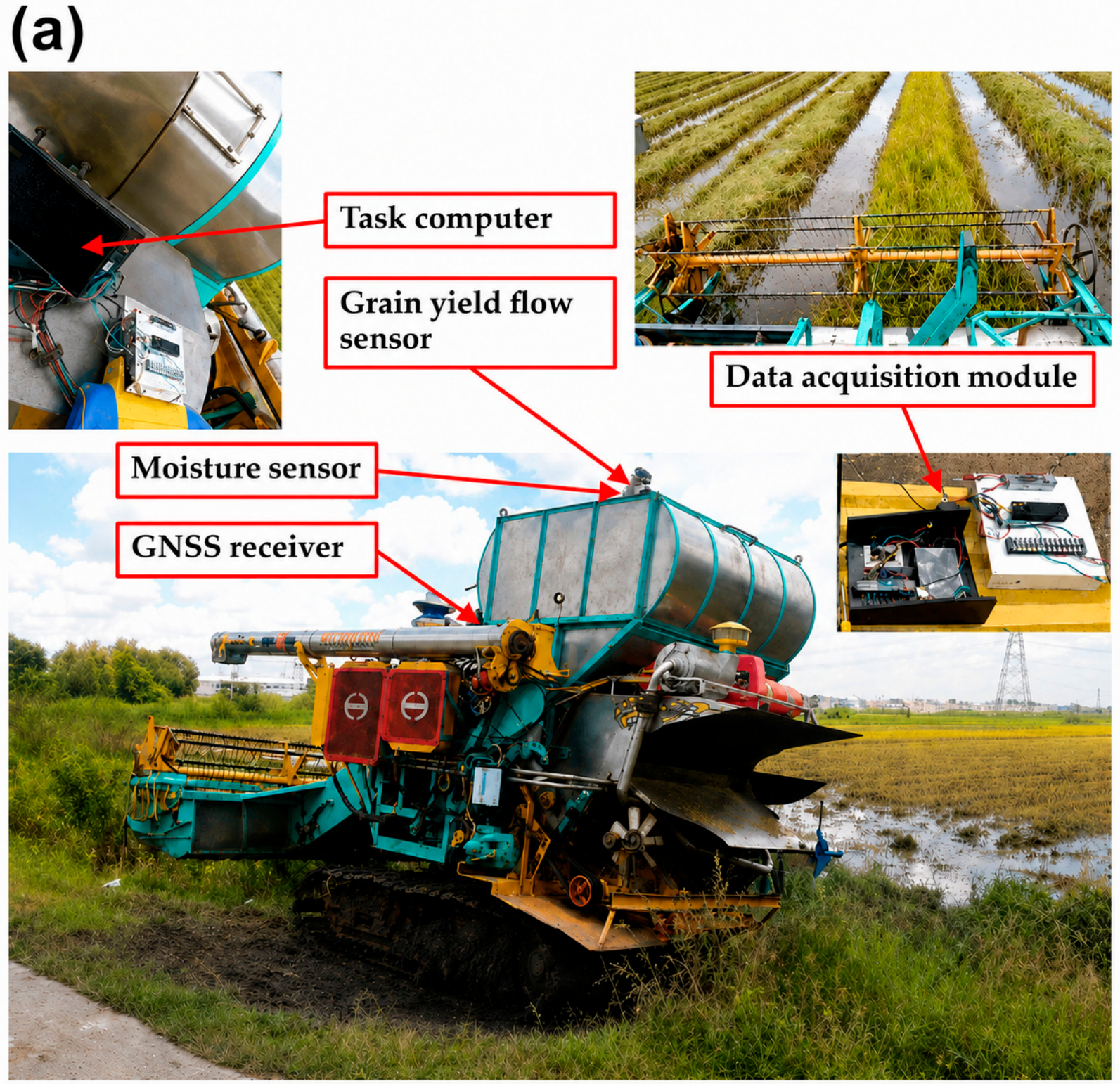
Grain-yield monitoring studies are highly relevant because they address many of the same sensing problems. A grain-yield sensor designed for local rice combines showed that field-scale yield reconstruction is feasible when flow sensing is stabilized and georeferenced [12]. Development and application experiments on grain-yield monitoring systems further extended this logic by integrating grain-flow signals with speed, machine progress, and mapping functions [13]. As shown in Figure 16, combine-mounted yield sensing can connect field measurements with spatial productivity and moisture mapping, transforming grain-flow signals into agronomic and operational information.
Feed-rate-oriented yield-distribution estimation provides a related perspective. Once temporal delay and machine travel are considered, the distinction between inflow sensing, feed-rate estimation, and accumulated-output sensing becomes partly practical rather than absolute [80]. These sensing routes all contribute to reconstructing how much material has entered the machine, where it was harvested, and how much is currently available for storage or unloading.
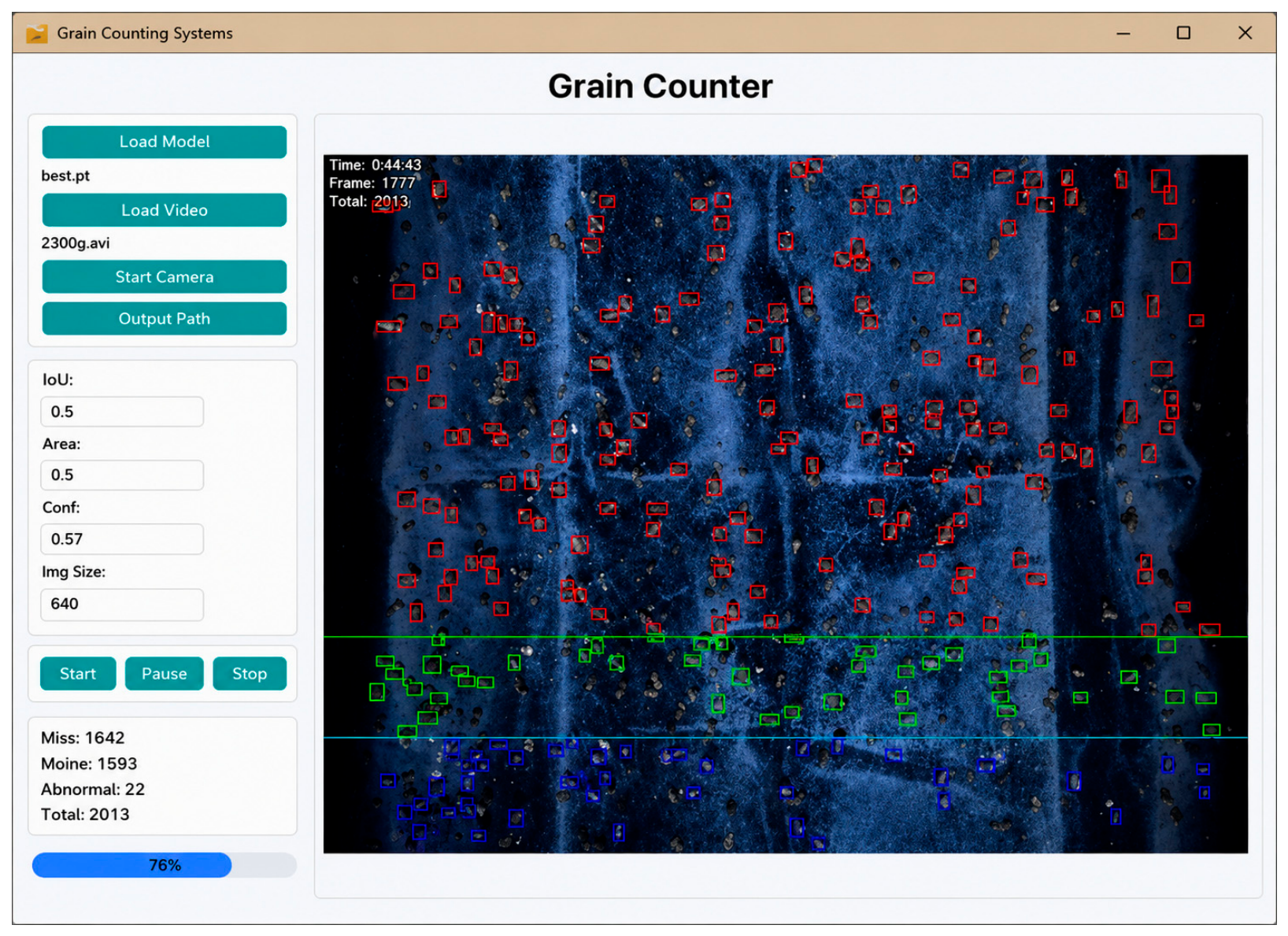
Vision-based grain-flow detection is beginning to expand grain-tank sensing beyond traditional impact, optical, or weighing concepts. Improved YOLOv8n-based grain-flow detection with dual-line counting showed that non-contact visual counting can support dynamic grain-flow estimation under harvesting conditions [90]. This approach is relevant to future tank-state reconstruction because it may provide a direct correction signal for inflow accumulation, especially when combined with conventional yield-monitoring or grain-flow sensors.
Model-based studies of grain-bin outputs also support this direction. A fuzzy model for predicting material other than grain in the grain bin showed that upstream combine states can be used to estimate grain-bin quality before direct sampling [91]. In this sense, the grain tank is not only a storage space but also a point where quantity, quality, and cleaning performance converge.
As shown in Figure 17, vision-based grain-flow observation is also beginning to extend bin-related sensing beyond traditional impact and weighing concepts. A recent grain-flow detection method based on an improved YOLOv8n model and dual-line counting showed that non-contact visual counting can support dynamic grain-flow estimation under realistic harvesting conditions, which is highly relevant to future tank-state reconstruction and unloading coordination [90].

7.3. Direct Tank-State Observation and Drift Correction

Direct tank-state observation provides a complementary route to inflow integration. Level sensing, visual observation, and potentially distributed load or geometry-based estimation can indicate the amount and spatial distribution of grain already inside the tank. Compared with inflow integration, drift compensation is also important for compact grain-yield sensing because accumulated output drift can affect tank-state and yield reconstruction [92]. However, direct methods face their own difficulties, including dust contamination, uneven grain surfaces, shadows, internal tank structure, and machine pitch or roll.
In practice, direct and indirect routes should not be treated as competitors. Indirect inflow estimation offers high temporal continuity, while direct tank observation provides state correction. A robust grain-tank estimator can therefore integrate both: flow or yield sensors estimate filling rate, direct observations correct accumulated error, and unloading detection resets or updates the tank-state model. This combined route is especially important for connected harvest operations, where tank-state information must support decisions about when and where unloading should occur.

7.4. Unloading-Oriented and Logistics-Oriented Sensing

Grain-tank sensing becomes more valuable when connected with unloading and logistics. On-combine moisture measurement, for example, supports not only yield correction but also harvesting strategy, storage planning, and postharvest capacity management [93]. Therefore, tank-related sensing should include not only fill level but also grain condition and unloading readiness.
Automatic unloading studies show how tank-state awareness can be extended into the unloading scene. Stereo-vision-based unloading research demonstrated that grain accumulation inside the receiving vehicle can be estimated and used to regulate unloading position and timing [94]. Binocular-vision methods for measuring pile height in grain trucks further indicate that transport-vehicle state can be estimated geometrically rather than inferred only from unloading time or operator judgment [95].
Logistics-oriented studies reinforce this systems view. Collaborative scheduling and task allocation for harvesters and grain trucks show that unloading-point generation, truck coordination, and path planning depend on reliable tank-state and unloading-timing information [96,97]. Therefore, grain-tank sensing is strategically important because it links onboard process monitoring with field-scale harvest logistics.
Grain-bin sensing is shifting from simple level monitoring to logistics-oriented state estimation. Flow integration, direct level observation, attitude compensation, moisture sensing, and unloading-event detection should be fused to support yield accounting and grain-truck coordination. The main limitation is that uneven filling and machine motion make single-point tank measurements unreliable.

7.5. Challenges and Research Priorities for Grain-Bin Sensing

Grain-bin sensing is becoming increasingly important for yield accounting, unloading coordination, and harvest logistics, although it remains affected by inflow-integration drift, uneven tank filling, dust, machine attitude, and unloading-event uncertainty. Future systems should fuse inflow measurement, direct level or vision-based tank observation, pitch/roll compensation, moisture information, and unloading-state detection so that tank status can support both onboard operator assistance and field-scale truck scheduling.

8. Quality Sensors

Quality sensing enables combine harvesters to evaluate the condition of harvested grain rather than only throughput or visible loss. Impurity, breakage, moisture, appearance, protein, and straw/output quality affect market grade, storage safety, processing value, and in-field adjustment decisions.
Grain breakage sensing is treated above as a specific damage-monitoring task, whereas this section covers broader grain-quality attributes and the integrated sampling, imaging, moisture, spectral, and multimodal routes needed for output-aware harvesting.
For onboard use, the central constraints are representative sampling, dust and vibration robustness, optical-window protection, calibration transferability, and maintainability under real harvesting conditions.

8.1. Quality Variables and Sampling Challenges

Quality measurement depends strongly on representative sampling. The sampling path must extract, condition, and present heterogeneous grain streams without introducing systematic bias or excessive maintenance burden, especially when impurity fraction, throughput, and machine attitude change rapidly.
Table 10 summarizes the main grain-quality sensing routes and explains why field deployment requires both stable sampling hardware and transferable calibration models.
Quality information is useful only when linked to action. Impurity can guide cleaning adjustment, breakage can indicate excessive threshing intensity, and moisture can support harvesting strategy, storage planning, and interpretation of other sensor signals.
In this sense, quality sensing is increasingly converging with process-state sensing. Grain quality at harvest includes impurity content, moisture, external appearance, breakage, hidden damage, and compositional traits accessible through spectral methods. These variables reflect the combined effects of threshing intensity, cleaning effectiveness, crop condition, and sampling-path design. Recent onboard and near-onboard studies support this trend: machine-vision quality-control work during grain separation showed that image-based inspection can identify grain condition and impurity features in a process-oriented monitoring context [98], while terahertz spectral-imaging work on wheat impurity detection suggests that future combine-compatible quality stations may combine vision with compact spectral channels rather than relying on one modality alone [99].

8.2. Imaging-Based Impurity and Breakage Monitoring

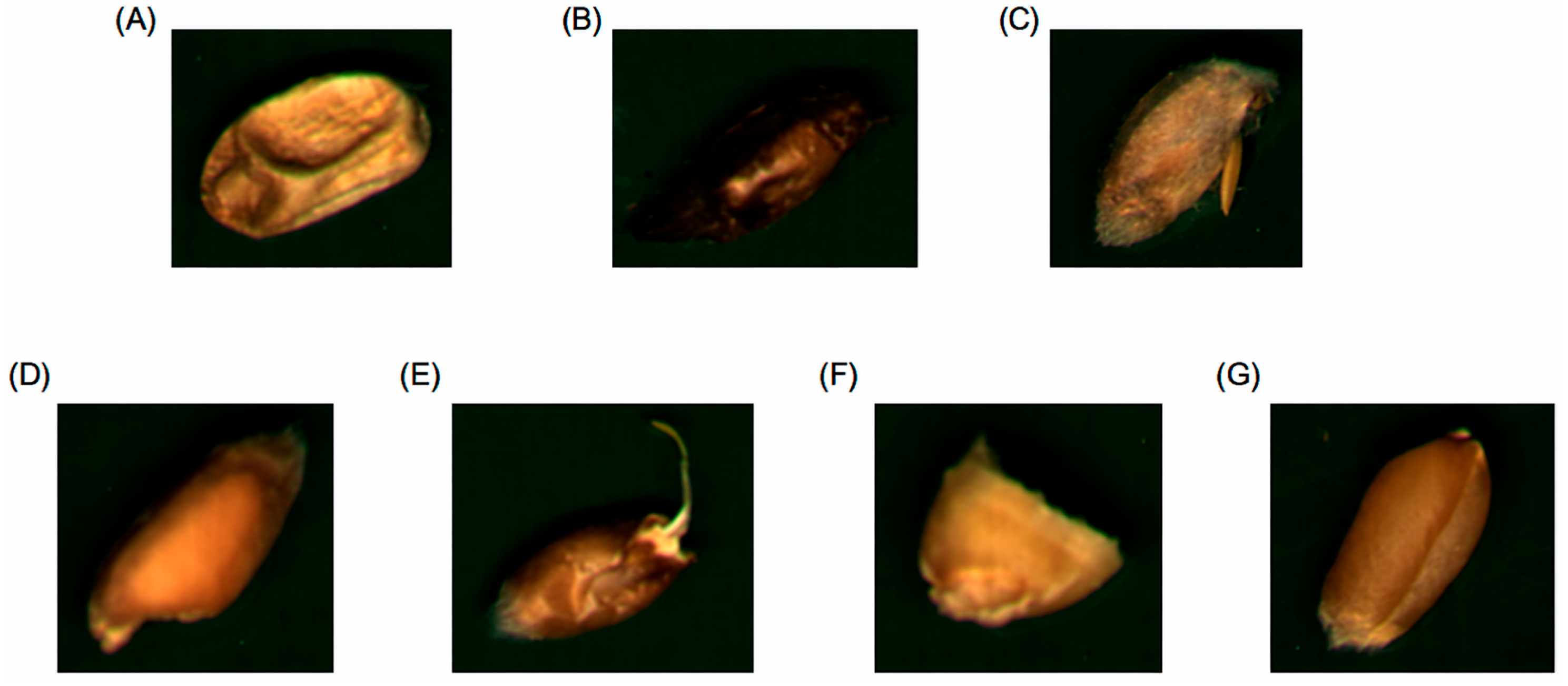
Impurity sensing is one of the most developed branches of combine-mounted quality monitoring because impurity content directly reflects cleaning performance and affects grain grade. As shown in Figure 18, image-based wheat-quality inspection can distinguish multiple appearance categories, including diseased, moldy, insect-damaged, sprouted, broken, and sound kernels, which demonstrates the potential of machine vision for multi-class grain-quality assessment rather than simple impurity detection only [100,101], and more recent work has expanded this logic to online segmentation and multi-indicator quality detection.
More recent machine-vision work turned this basic logic into a more practical combine-mounted architecture. Image-processing and decision-tree-based impurity sensing for rice combines demonstrated that grain samples could be extracted during operation, imaged in a controlled chamber, segmented into grain and non-grain particles, and classified with useful field relevance [48]. An online wheat-harvesting-quality detection system based on DeepLabV3+ then showed that semantic segmentation could operate on moving grain samples under harvesting conditions rather than only in laboratory inspection [49]. Development of an impurity-detection system for a tracked rice combine harvester based on DEM and Mask R-CNN further strengthened this route by coupling mechanical sampling design with image interpretation, thereby improving the representativeness of the observed material stream [50]. Recent journal literature also shows that combine-mounted quality sensing is moving toward integrated multi-indicator stations rather than single-purpose devices. A lightweight online detection system for impurity content and broken rate in rice demonstrated that a single platform can support simultaneous estimation of two quality indicators under field operation [102]. Related work on wheat broken-rate and impurity-rate detection based on a DeepLab-EDA model further showed that robust online segmentation can be combined with a purpose-built image-acquisition module and embedded deployment for real harvesting conditions [51]. More recently, an online detection system for impurity content in wheat based on object-detection-oriented model design reinforced the practical importance of sampling-path engineering, real-time inference speed, and field robustness for commercial combine applications [52].

8.3. Moisture, Spectral, and Multimodal Quality Sensing

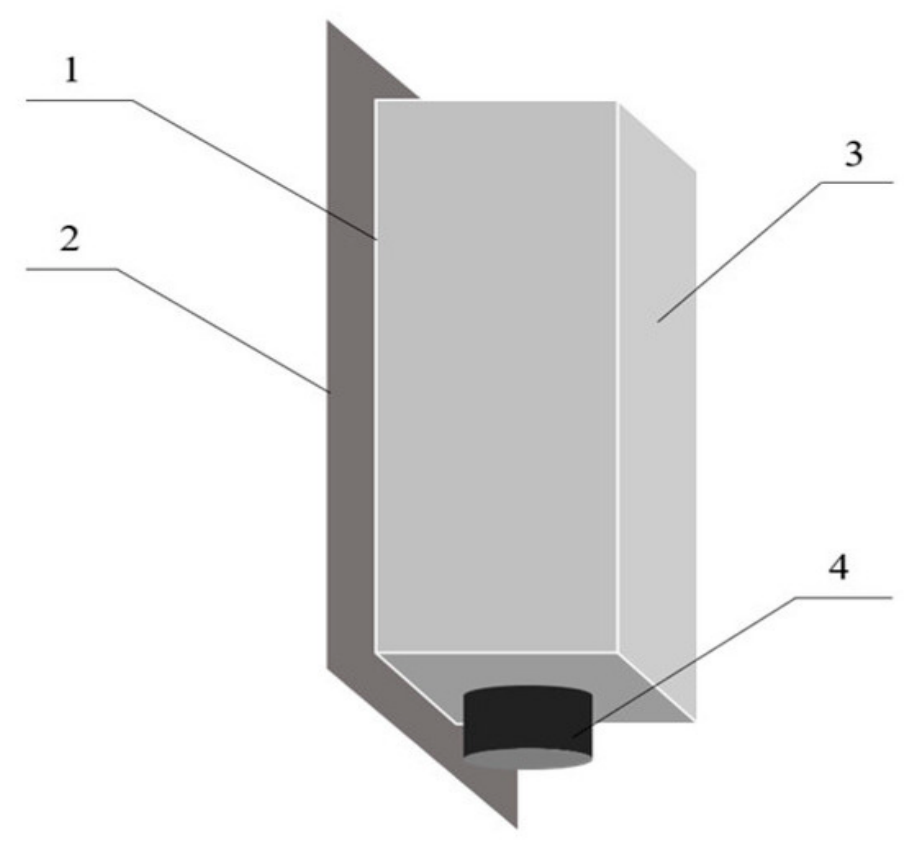
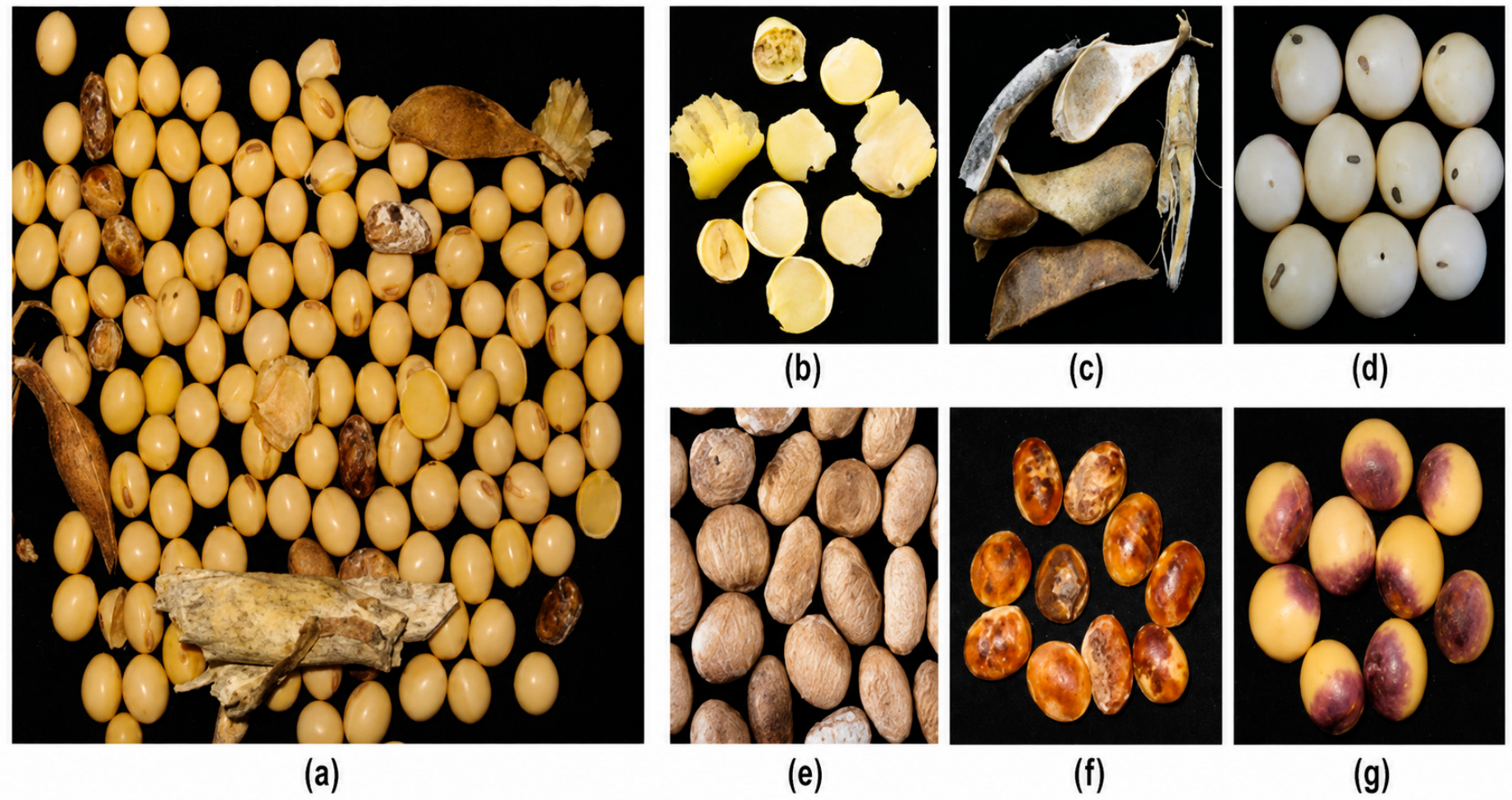
Combine-mounted moisture and multimodal quality sensing should be treated as a compensated estimation rather than a direct single-sensor reading. As shown in Figure 19, practical moisture devices must combine grain electrical response with temperature compensation, shielding, sealing, and field durability [103]. Machine-vision and hyperspectral studies on paddy and soybean further show that damaged grains, impurities, split beans, stems/pods, contaminated beans, and other visually similar fractions require controlled sampling and robust feature extraction under variable harvest conditions, as illustrated in Figure 20 [104,105,106].
Hyperspectral and near-infrared studies further indicate that spectral channels can estimate moisture, discriminate rice or maize varieties, and extract hidden compositional features when combined with feature reduction, feature fusion, or deep learning [107,108,109,110,111].
However, transferring these methods to combine harvesters requires compact optical paths, dust-resistant windows, stable sampling, temperature/moisture compensation, and calibration transfer; compact NIR phenotypic sensors and hyperspectral detection of fungal or mycotoxin contamination provide useful hardware and risk-detection references for this transition [112,113].
These studies collectively indicate that spectral channels and learning-based feature extraction can support future combine-compatible quality sensing. However, direct transfer from laboratory or stationary platforms to combine harvesters remains difficult. For onboard use, spectral quality sensors must be redesigned around representative grain sampling, stable optical-window protection, vibration suppression, dust resistance, variable grain-flow thickness, temperature and moisture compensation, and calibration transfer across crops, cultivars, regions, and seasons. Therefore, future combine-mounted quality modules should not simply transplant laboratory hyperspectral models, but should integrate robust sampling structures, compact optical hardware, adaptive preprocessing, and field-oriented calibration strategies.
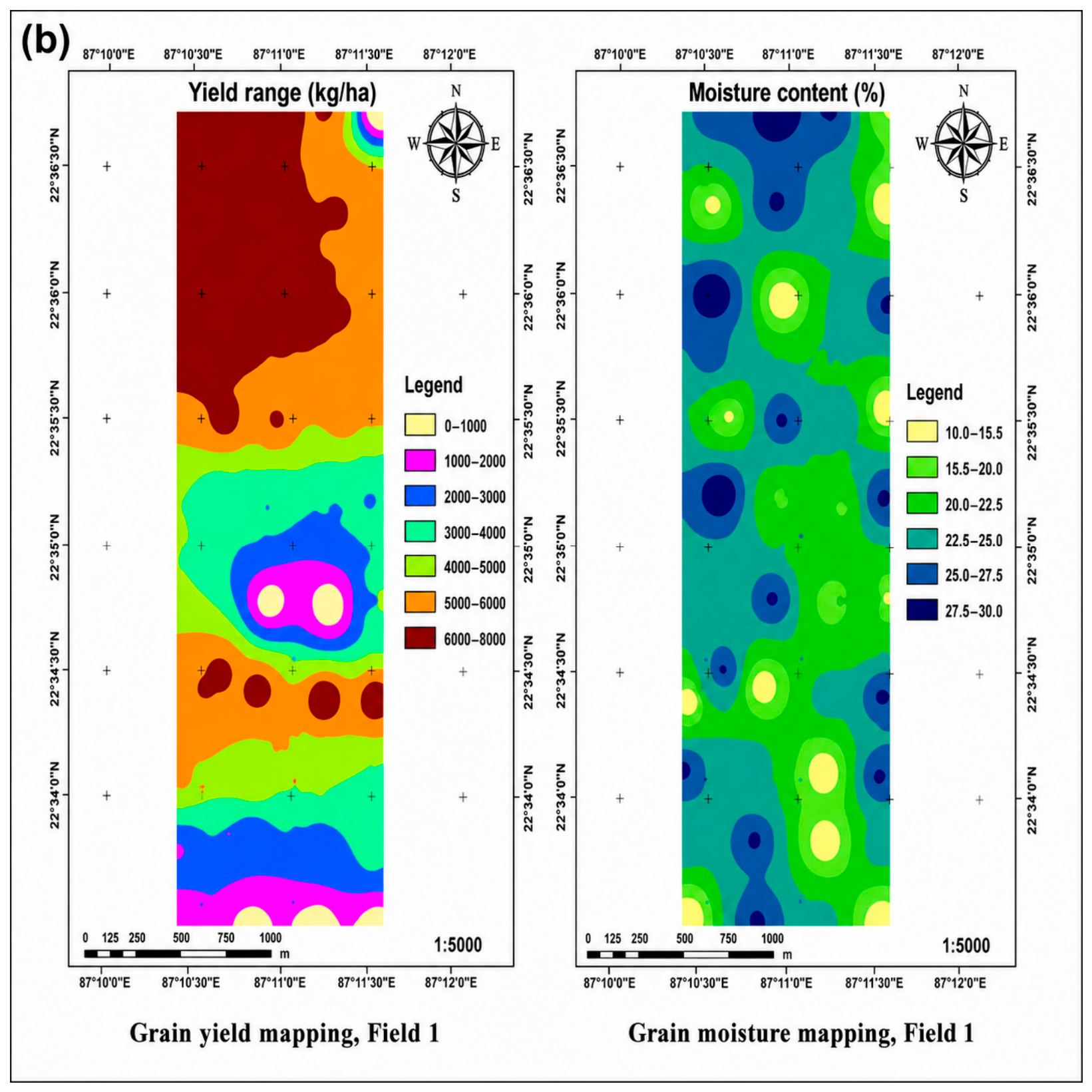
Quality sensing is also expanding toward crop-specific deployment and tank-level observation. As shown in Figure 21, machine-vision impurity detection in rapeseed inside the grain tank showed that visual quality estimation can be performed under actual combine-mounted storage conditions [114], while an earlier double-lighting machine-vision system for head-feeding combine harvesters demonstrated that structured illumination could improve harvested-paddy quality observation during machine operation [115]. Recent wheat and rice studies further support this trend, showing that field-ready imaging and combine-oriented segmentation architectures can improve practical impurity and grain-quality detection under harvesting conditions [52,116]. Beyond clean-grain appearance, LiDAR-based monitoring of straw output quality indicates that harvest-quality sensing can also extend to by-product morphology, broadening quality monitoring from grain-only indicators to overall crop-processing quality [117].

8.4. Protein-Content Sensing Based on Near-Infrared Spectroscopy

Protein content is an important intrinsic quality trait because it reflects nutritional and processing value and can support quality-based harvesting and postharvest grading. Near-infrared spectroscopy is the most practical on-machine route because it can obtain compositional information from flowing grain without destructive chemical analysis [112,118].
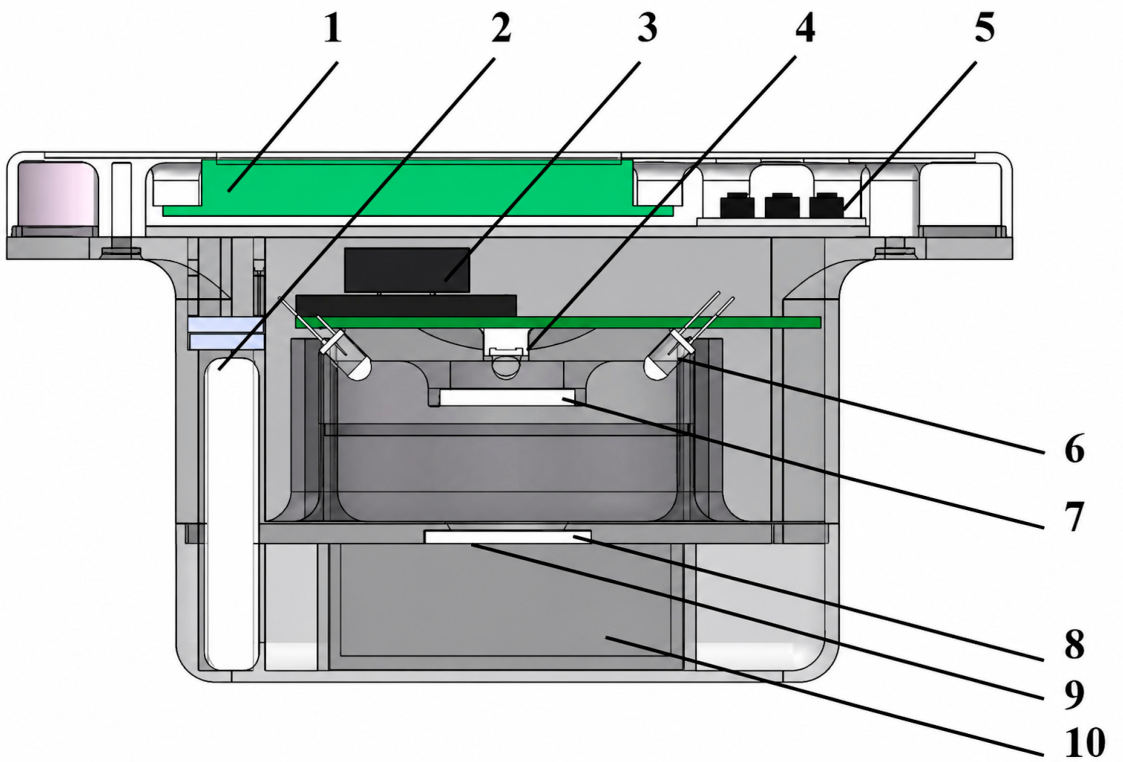
As shown in Figure 22, compact NIR hardware integrates light-source design, optical-path shaping, photoelectric detection, sample presentation, data display, and user interaction, indicating that protein sensing is both a calibration problem and a system-integration problem [112].
Although this device was not specifically designed for combine-mounted application, it provides a useful technical basis for future onboard grain-quality sensors because protein and moisture can be detected through a shared near-infrared optical pathway. For combine-harvester deployment, this sensing principle would still need to be adapted to vibration, dust, temperature fluctuation, changing grain-flow thickness, and unstable sample presentation during harvesting.
In contrast to this portable phenotypic sensing route, Hidaka et al. investigated a near-infrared spectrometer installed on a head-feeding combine for measuring rice protein content [118]. This study demonstrates that near-infrared protein sensing can be extended from controlled detection devices to real harvesting conditions. Compared with stationary or handheld phenotypic sensors, combine-mounted protein sensing places higher demands on sampling stability, optical-window protection, vibration suppression, dust resistance, and calibration transfer. In rice harvesting, additional optical interference may arise from husk-covered grains, high grain moisture, variable grain-flow thickness, and uneven sample presentation. Therefore, combine-mounted near-infrared protein sensing should be regarded not only as a spectral-modeling problem, but also as a field-adapted system-integration problem involving sampling, optical-path protection, signal preprocessing, and crop-specific calibration.
Portable and combine-mounted NIR studies jointly show that onboard protein sensing must address representative sampling, optical-window protection, vibration and dust resistance, grain-flow thickness, moisture/temperature effects, and crop-specific calibration transfer before it can reliably support quality zoning, differentiated storage, and market-oriented harvesting [112,118].
Grain-quality sensing is moving toward integrated quality stations that combine imaging, moisture measurement, and spectral information. The central bottleneck is not only algorithm accuracy but also representative sampling, optical-window protection, calibration transfer, and real-time deployment. Future quality sensors should connect measured quality traits with actionable machine settings and postharvest decisions.

8.5. Integration Trends and Remaining Challenges

Future grain-quality sensing should move from isolated detectors toward compact integrated stations that share one representative sampling path for imaging, moisture measurement, and spectral analysis. The main research need is to connect quality traits with machine settings and postharvest decisions while maintaining robustness across crop varieties, seasons, machines, dust levels, and sample-presentation conditions.

9. Cross-Cutting Engineering Challenges and Future Trends

The reviewed studies show a clear shift from isolated devices to integrated sensing and control architectures. Future progress will depend on coordinated sensor installation, anti-interference design, sampling-path engineering, calibration transfer, multi-source fusion, edge deployment, and control-oriented validation.

9.1. Integrated Synthesis of Key Findings

Across the six sensing categories, the reviewed literature indicates that practical value is determined less by nominal sensor accuracy alone than by the coupling among sensing principle, installation position, disturbance rejection, calibration transferability, and control relevance. Mature routes, such as impact-based loss sensing and feed-rate estimation, already support real-time warning and operator assistance. Less mature routes, including breakage, grain-bin, and integrated quality sensing, require more representative sampling, field-adapted validation, and multi-source state estimation. This synthesis shifts the discussion from individual devices toward the sensing architectures needed for adaptive harvesting control.
Table 11 condenses the detailed literature review into a cross-category comparison of maturity, advantages, limitations, and development needs.
Although the six sensing categories share common challenges such as vibration interference, calibration transfer, representative sampling, and field robustness, their future research priorities are not identical. Grain-loss sensing should move from impact-event detection toward loss-source localization and subsystem-aware control; breakage-rate sensing requires more representative sampling and hybrid estimation; cleaning-load sensing should decouple material burden from airflow, vibration, and structural fault signals; feed-rate sensing should emphasize earlier prediction and time-delay compensation; grain-bin sensing should combine inflow accumulation, direct tank observation, machine-attitude compensation, and unloading detection; and grain-quality sensing should focus on robust sampling paths, optical or spectral stability, and domain adaptation for field deployment.

9.2. From Single Sensors to Multi-Sensor Fusion

A major future direction is multi-sensor fusion. Most combine sensing targets are not measured directly; they are inferred from force, vibration, acoustic, optical, pressure, torque, flow, moisture, or machine-state signals. A single sensor may perform well under controlled conditions, but its reliability often decreases when crop variety, moisture content, feed rate, vibration, or machine configuration changes. Fusion of multiple signals can improve robustness by allowing one sensor channel to compensate for the limitations of another.
For example, loss sensing can be strengthened by combining impact or piezoelectric signals with machine vibration and feed-rate information. Breakage sensing can combine direct image-based kernel observation with faster process-state indicators such as threshing load or vibration. Cleaning-load sensing can integrate pressure, airflow, strain, vibration, tailings-return, and loss signals. Feed-rate sensing can combine upstream visual prediction, torque or pressure sensing, grain-flow reconstruction, and machine-operating variables. Grain-bin and quality sensing can also benefit from combining flow integration, direct observation, moisture sensing, spectral measurement, and position information. Therefore, future research should focus on how different sensor families can be fused into physically meaningful state estimates rather than simply adding more independent sensors.

9.3. AI-Enabled Sensor Fusion and Edge Computing for Real-Time Harvesting Control

AI-enabled sensor fusion and edge computing provide a practical route for converting heterogeneous sensor signals into real-time harvesting control actions. In combine harvesters, loss, feed rate, cleaning load, grain-bin state, and quality indicators are affected by coupled crop-flow dynamics, vibration, dust, machine settings, and field conditions. AI models can integrate multi-rate signals from impact, vibration, optical, pressure, torque, moisture, spectral, positioning, and machine-state sensors to estimate latent process states that cannot be measured directly by a single transducer. Compared with purely rule-based monitoring, learning-based fusion can support nonlinear feature extraction, abnormal-state detection, calibration transfer, uncertainty estimation, and crop-aware state prediction.
For real-time harvesting control, these functions should preferably be deployed on edge-computing units mounted on the machine. Edge computing can reduce communication latency, preprocess noisy signals close to the sensor, execute lightweight inference models, and generate control-relevant outputs even when network connectivity is unstable. A typical loop may include sensor acquisition, edge-side filtering and synchronization, AI-based state estimation, decision generation, and actuator adjustment for forward speed, fan speed, sieve opening, concave clearance, threshing intensity, or unloading coordination. Field deployment still requires attention to model interpretability, computational cost, fail-safe operation, sensor synchronization, and robustness across crops, seasons, and machine platforms.

9.4. Structural Vibration and Mechanical Interference

Across all sensing categories, the recurring engineering challenges are integration, vibration interference, calibration transfer, and field robustness. Multi-source monitoring and connected supervision require reliable synchronization, timestamp integrity, communication stability, and clear operator interfaces in addition to accurate local transducers [9].
Vibration and structural interference are especially important because excitation from the header, threshing unit, cleaning shoe, engine, chassis, and terrain can distort impact, torque, pressure, optical, and grain-flow signals. Therefore, mounting position, damping design, signal preprocessing, and vibration-aware validation should be treated as part of sensor design rather than as post-installation filtering [36,119,120,121,122]. These structural studies are retained here because they explain why combine-mounted impact, torque, pressure, optical, and grain-flow sensors require vibration-aware placement and anti-interference design.
Recent studies extend this issue from passive interference analysis to structural diagnosis and regulation. Adaptive leveling chassis development, bolt-response modeling, conveyor-trough vibration-noise prediction, threshing-drum vibration balancing, and gearbox fault diagnosis collectively show that vibration information can be used not only to explain sensing interference but also to support active balancing, subsystem health diagnosis, and machine-state-aware sensing [123,124,125,126,127,128]. These references are interpreted as supporting evidence for sensor reliability and disturbance-aware monitoring rather than as a separate review of mechanical-structure design. Therefore, structural dynamics should be treated as part of combine-sensor design rather than as a secondary disturbance to be filtered after installation.

9.5. From Monitoring to Control-Oriented Sensing

A third challenge is the transition from measurement to control. Reviews on artificial intelligence in agricultural equipment show that sensing is increasingly expected to supply adaptive and predictive functions rather than merely report state after the fact [129]. Work on deep reinforcement learning for intelligent agricultural machinery makes a related point at the algorithmic level by framing farm-machine perception and decision making as a coupled optimization problem [130].
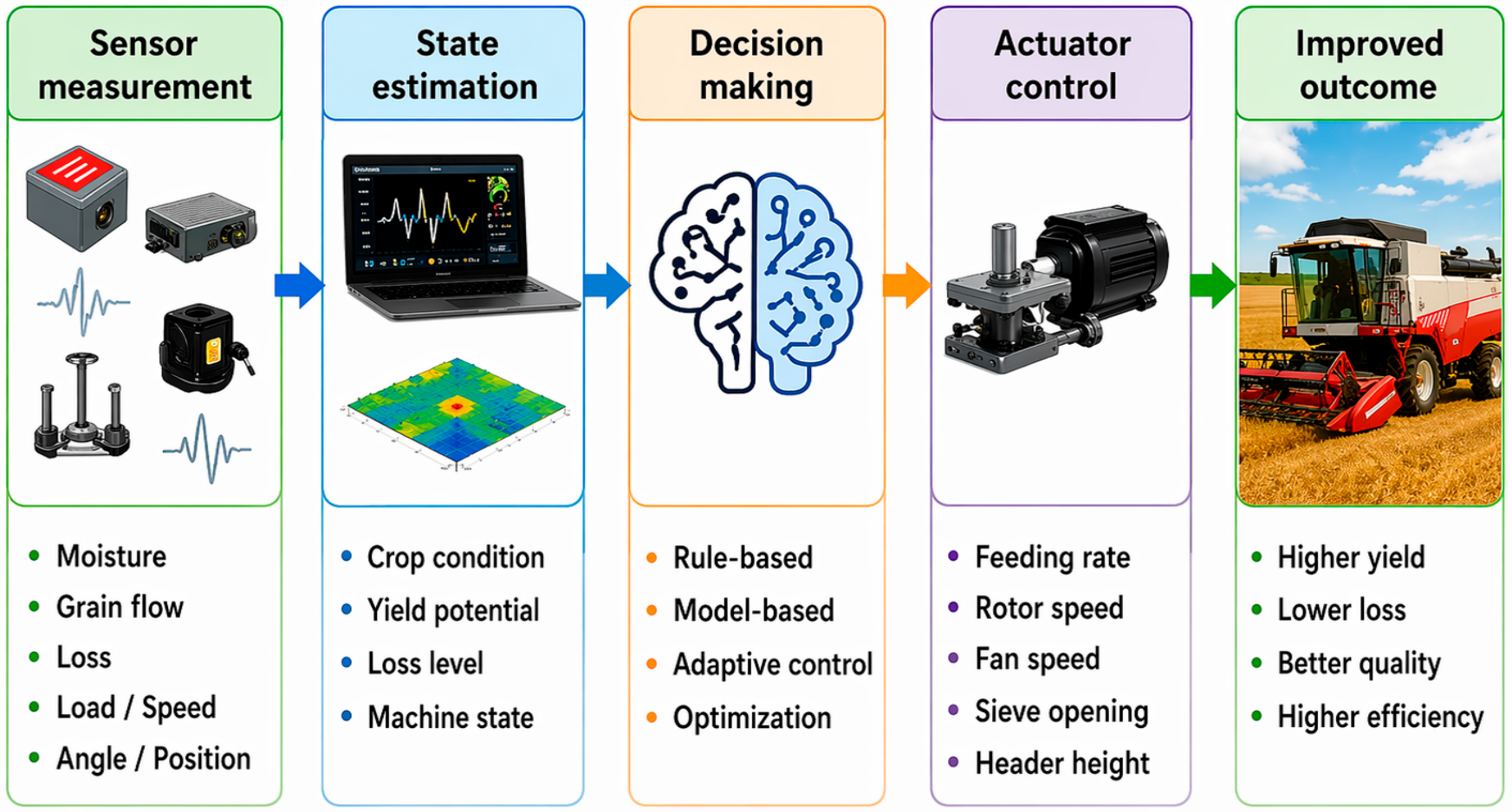
In combine harvesters specifically, deep-learning-driven predictive control of operation speed demonstrates that sensed variables can be used directly for control-oriented optimization rather than post hoc evaluation alone [131]. Design and performance studies of series-hybrid distributed electric-drive combines, together with cooperative multi-component speed control in distributed electric-drive platforms, are relevant here as examples of the actuation layer that receives sensor-derived state estimates [132,133]. Hydraulic variable-diameter threshing-drum control provides an especially concrete example because it links adaptive monitoring, control design, and field performance in one combined engineering chain [134]. As summarized in Figure 23, the transition from monitoring to control-oriented sensing can be interpreted as a closed information loop in which sensor measurement supports state estimation, state estimation guides decision making, decisions are translated into actuator control, and the resulting machine response is evaluated through improved harvesting outcomes.

9.6. Integration with Field Perception and Digital Harvesting Systems

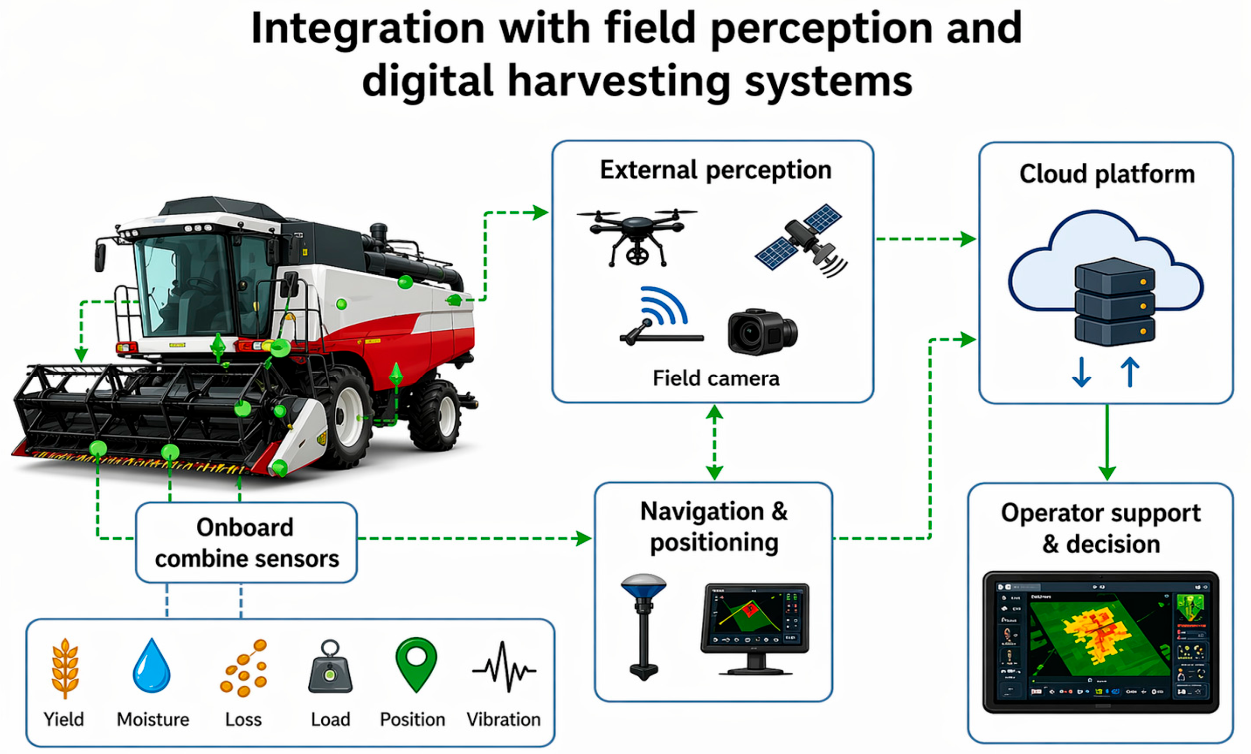
Control-oriented sensing now requires subsystem coordination rather than isolated monitoring. Studies on distributed electric drives, hydraulic threshing drums, visual-SLAM navigation, and vibration-based fault diagnosis show that sensor outputs are increasingly used to coordinate speeds, actuators, navigation context, and abnormal-state recognition [133,134,135,136].
Process-control studies on variable-diameter threshing drums, load-feedback drum-speed control, rear-wheel steering path tracking, and digital agriculture platforms further indicate that future combine intelligence must connect propulsion, navigation, feeding, threshing, separation, and energy-use decisions. Figure 24 summarizes this integrated digital architecture linking onboard sensors, machine-state monitoring, external perception, communication, analytics, decision support, and logistics coordination [137,138,139,140].
Broader precision-harvesting work shows that perception, localization, crop-state monitoring, path planning, and decision support provide the external context for interpreting onboard process sensors [141,142,143]. At the instrumentation level, mass-flow sensors, multi-sensor throughput estimation, digital twins, and reel-force sensing indicate that future combines will rely increasingly on fused state estimation and model-supported decision making [14,82,144,145].
Field-perception and supervision studies—including boundary or crop-row recognition, UAV-based biomass/yield estimation, crop-height estimation, coverage-path planning, stereo-vision harvesting-edge detection, header profiling control, resonance filtering, grain-flow/quality fusion, working-progress monitoring, boundary-distance measurement, and control-oriented syntheses—collectively support coordinated perception, process monitoring, and machine-control layers rather than isolated sensing modules [6,7,10,83,146,147,148,149,150,151,152,153,154,155].
Taken together, future combine sensing should be developed through category-specific priorities and system-level integration. The six sensing categories differ in maturity and control value, but they all require stronger field validation, calibration transfer, disturbance suppression, and sensing-to-control linkage. The comparative priorities summarized in Table 12 therefore complement the broader trends of multi-sensor fusion, vibration-aware design, and digital harvesting coordination.
In summary, the reviewed future trends indicate that combine sensors should be developed as coordinated information layers rather than isolated instruments. Multi-sensor fusion, vibration-aware design, calibration transfer, and sensing-to-control integration will determine whether onboard measurements can become reliable inputs for adaptive, quality-aware, and digitally coordinated harvesting.
To further improve the comparative structure of the review, Table 13 summarizes the representative evidence and synthesized findings for each sensing category, while Table 14 compares major sensing routes according to field readiness, control value, and key limitations.

10. Conclusions

This concluding section summarizes the main findings and identifies practical research priorities for next-generation combine-harvester sensing. The review emphasizes a process- and control-oriented framework based on sensing target, installation position, disturbance environment, calibration transferability, and control relevance.

10.1. Overall Conclusions

This review synthesized six combine-harvester sensing tasks—grain loss, grain breakage, cleaning load, feed rate, grain-bin state, and grain quality—within one engineering framework. The collected information shows that combine sensing has evolved from isolated monitoring devices into a layered information system linking field perception, internal crop-flow state, machine condition, product quality, and adaptive control.
The main synthesis is that sensor usefulness is determined not by nominal accuracy alone, but by the coupling among sensing principle, installation position, material-flow path, disturbance rejection, calibration transferability, and control relevance. Loss-rate and feed-rate sensing are the most mature because their outputs are closely linked to immediate operational decisions. Cleaning-load sensing has high control value but requires clearer separation of material burden, airflow, sieve motion, vibration, tailings return, and structural-health signals. Breakage-rate and grain-quality sensing remain constrained mainly by representative sampling, delayed observation, hidden damage, optical stability, and cross-condition calibration. Grain-bin sensing becomes strategically important when yield accounting, unloading coordination, and harvest logistics are considered together.
Overall, the review indicates that the next stage of combine-harvester sensing should be developed as a coordinated information network rather than as independent sensors. Such a network should integrate external perception, crop-flow monitoring, structural-state diagnosis, grain-quality evaluation, tank/logistics information, and actuator-level control so that onboard measurements remain interpretable under vibration, dust, non-uniform material flow, and changing crop properties.

10.2. Future Research

Future research should focus on realistic field validation, subsystem-aware anti-interference design, multi-sensor fusion, calibration transfer, and sensing-to-control integration. Long-duration tests under variable crop density, moisture content, feed rate, dust, vibration, and machine adjustment are needed to verify whether sensor outputs remain stable, interpretable, and useful in real harvesting conditions. Field validation should report not only accuracy but also latency, repeatability, crop transferability, sensor durability, and sensitivity to disturbance. In addition, sensor installation, structural dynamics, mounting position, and anti-interference design should be developed together with the material-flow path so that each measured signal has clear physical meaning.
Multi-sensor fusion will be essential for the next generation of combine-harvester sensing because loss, feed rate, cleaning load, grain-bin state, and grain-quality variables are all affected by multiple interacting factors. Robust estimation will require the integration of optical, mechanical, vibration, flow, moisture, spectral, and machine-state signals. AI-enabled fusion and edge-side inference can serve as an implementation layer for real-time harvesting control by synchronizing multi-source signals, estimating hidden process states, and providing low-latency control recommendations. However, fail-safe mechanisms, interpretable outputs, and calibration-transfer strategies across crops, cultivars, seasons, regions, and machine platforms remain necessary, especially for vision-based, spectral, acoustic, and learning-based methods.
Crop-property-aware sensor design is another important direction. Recent studies on soybean-particle collision behavior on cleaning screens and low-loss mechanized harvesting traits in oilseed rape show that crop mechanical and morphological properties can influence sensing interpretation and control strategy [156,157]. Therefore, future sensor systems should be designed with crop-specific impact behavior, residue morphology, grain-flow characteristics, and quality-preservation requirements rather than calibrated only after machine installation. Overall, future combine harvesters will likely rely not on one dominant sensor, but on coordinated sensing architectures that connect external perception, internal crop-flow monitoring, structural-state awareness, quality evaluation, logistics information, and control-oriented decision support. These priorities provide a practical roadmap for developing more robust, adaptive, quality-aware, and digitally coordinated sensing systems in combine harvesters.

Author Contributions

Methodology, Software, Data curation, Funding acquisition, Writing—original draft, Investigation, Q.J.; Writing—review and editing, Data curation, Z.L.; Supervision, Z.L.; Funding acquisition, Z.L. All authors have read and agreed to the published version of the manuscript.

Funding

This research was funded by the National Natural Science Foundation of China (52275251) and the Priority Academic Program Development of Jiangsu Higher Education Institutions (PAPD-2023-87).

Institutional Review Board Statement

Not applicable.

Data Availability Statement

The data presented in this study are available on request from the corresponding author.

Conflicts of Interest

The authors declare no conflicts of interest.

References

  1. Reyns, P.; Missotten, B.; Ramon, H.; De Baerdemaeker, J. A review of combine sensors for precision farming. Precis. Agric. 2002, 3, 169–182. [Google Scholar] [CrossRef]
  2. Chung, S.O.; Choi, M.C.; Lee, K.H.; Kim, Y.J.; Hong, S.J.; Li, M. Sensing technologies for grain crop yield monitoring systems: A review. J. Biosyst. Eng. 2016, 41, 408–417. [Google Scholar] [CrossRef]
  3. Gu, X.; Tang, Z.; Wang, B. Sensor-centric intelligent systems for soybean harvest mechanization in challenging agro-environments of China: A review. Sensors 2025, 25, 6695. [Google Scholar] [CrossRef] [PubMed]
  4. Tang, Z.; Wang, H.; Tian, L.; Lao, L.; Sun, H. Enhancing grain harvester fatigue reliability to support sustainable agriculture: A review of research status and prospects. Sci. Prog. 2025, 108, 1–35. [Google Scholar] [CrossRef]
  5. Zhang, Q.; Chen, Q.S.; Xu, L.Z.; Xu, X.Q. Wheat lodging direction detection for combine harvesters based on improved K-means and bag of visual words. Agronomy 2023, 13, 2227. [Google Scholar] [CrossRef]
  6. Wang, Q.; Qin, W.C.; Liu, M.N.; Zhao, J.J.; Zhu, Q.Z.; Yin, Y.X. Semantic segmentation model-based boundary line recognition method for wheat harvesting. Agriculture 2024, 14, 1846. [Google Scholar] [CrossRef]
  7. Lv, R.Y.; Hu, J.P.; Zhang, T.F.; Chen, X.X.; Liu, W. Crop-free-ridge navigation line recognition based on the lightweight structure improvement of YOLOv8. Agriculture 2025, 15, 942. [Google Scholar] [CrossRef]
  8. Wang, B.Z.; Chen, S.R.; Wang, G.Q.; Tang, Z.; Ding, H.T. Damping optimization method of combine harvester frame undergoing multi-source excitation. Agriculture 2024, 14, 815. [Google Scholar] [CrossRef]
  9. Qiu, Z.; Shi, G.; Zhao, B.; Jin, X.; Zhou, L. Combine harvester remote monitoring system based on multi-source information fusion. Comput. Electron. Agric. 2022, 194, 106771. [Google Scholar] [CrossRef]
  10. Wang, Q.; Meng, Z.; Wen, C.; Qin, W.; Wang, F.; Zhang, A.; Zhao, C.; Yin, Y. Grain combine harvester header profiling control system development and testing. Comput. Electron. Agric. 2024, 223, 109082. [Google Scholar] [CrossRef]
  11. Wang, H.; Lao, L.; Zhang, H.; Tang, Z.; Qian, P.; He, Q. Structural fault detection and diagnosis for combine harvesters: A critical review. Sensors 2025, 25, 3851. [Google Scholar] [CrossRef]
  12. Sirikun, C.; Samseemoung, G.; Soni, P.; Langkapin, J.; Srinonchat, J. A grain yield sensor for yield mapping with local rice combine harvester. Agriculture 2021, 11, 897. [Google Scholar] [CrossRef]
  13. Liu, R.; Sun, Y.; Li, M.; Zhang, M.; Zhang, Z.; Li, H.; Yang, W. Development and application experiments of a grain yield monitoring system. Comput. Electron. Agric. 2022, 195, 106851. [Google Scholar] [CrossRef]
  14. Chen, X.; Wu, S.; Li, C.; Liu, F.; Yuan, L.; Wang, W. Design and experiment of feed rate monitoring system based on the action force of grain combine harvester reel. Comput. Electron. Agric. 2025, 230, 109837. [Google Scholar] [CrossRef]
  15. Zhang, W.; Guo, H.; Zhao, B.; Zhou, L.; Wang, F.; Wang, D.; Liu, Y. Full-condition monitoring and intelligent yield prediction and decision-making technology for wheat combine harvesters. Int. J. Agric. Biol. Eng. 2025, 18, 202–211. [Google Scholar]
  16. Zhang, W.; Guo, H.; Bo, Z.; Liu, S.; Zhou, L.; Wang, F.; Li, Z.; Liu, Y. Integrated operational monitoring and fault early warning system for wheat combine harvesters based on CAN bus. Int. J. Agric. Biol. Eng. 2026, 19, 170–178. [Google Scholar] [CrossRef]
  17. Chen, J.; Ning, X.; Li, Y.; Yang, G.; Wu, P.; Chen, S. A fuzzy control strategy for the forward speed of a combine harvester based on KDD. Appl. Eng. Agric. 2017, 33, 15–22. [Google Scholar] [CrossRef]
  18. Chen, Z.; Qian, Z.; Jin, C.; Yang, T. Research progress on control algorithms for grain combine harvesters. Appl. Sci. 2025, 15, 9176. [Google Scholar] [CrossRef]
  19. Liakos, V.; Busato, P.; Moshou, D.; Pearson, S.; Bochtis, D. Machine learning in agriculture: A review focused on intelligent harvesting systems and perception pipelines. Sensors 2018, 18, 2674. [Google Scholar] [CrossRef]
  20. Hu, X.; Sun, L.; Zhou, Y.; Ruan, J. Review of operational management in intelligent agriculture based on the Internet of Things. Front. Eng. Manag. 2020, 7, 309–322. [Google Scholar] [CrossRef]
  21. Liu, C.; Leonard, J. Monitoring actual grain loss from an axial flow combine in real time. Comput. Electron. Agric. 1993, 9, 231–242. [Google Scholar] [CrossRef]
  22. Maertens, K.; Ramon, H.; De Baerdemaeker, J. An on-the-go monitoring algorithm for separation processes in combine harvesters. Comput. Electron. Agric. 2004, 43, 197–207. [Google Scholar] [CrossRef]
  23. Zhao, Z.; Li, Y.; Chen, J.; Xu, J. Grain separation loss monitoring system in combine harvester. Comput. Electron. Agric. 2011, 75, 183–189. [Google Scholar] [CrossRef]
  24. Bomoi, M.I.; Yule, I.J.; Ma, X.; Arslan, M.; Nyaaba, A.A.; Khampheng, B. Sensing technologies for measuring grain loss during harvest in paddy field: A review. AgriEngineering 2022, 4, 292–310. [Google Scholar] [CrossRef]
  25. Lian, Y.; Chen, J.; Guan, Z.; Song, J. Development of a monitoring system for grain loss of paddy rice based on a decision tree algorithm. Int. J. Agric. Biol. Eng. 2021, 14, 224–229. [Google Scholar] [CrossRef]
  26. Jin, M.; Zhao, Z.; Chen, S.; Chen, J. Improved piezoelectric grain cleaning loss sensor based on adaptive neuro-fuzzy inference system. Precis. Agric. 2022, 23, 1174–1188. [Google Scholar] [CrossRef]
  27. Chen, J.; Shi, T.; Li, Y.; Zhu, Y.; Niu, C. A method for monitoring rice seed loss based on WOA-BP algorithm. Eng. Agric. 2025, 45, e20240064. [Google Scholar] [CrossRef]
  28. Xu, J.; Li, Y. A PVDF sensor for monitoring grain loss in combine harvester. In Computer and Computing Technologies in Agriculture III; Li, D., Zhao, C., Eds.; IFIP Advances in Information and Communication Technology; Springer: Berlin/Heidelberg, Germany, 2010; Volume 317, pp. 499–505. [Google Scholar] [CrossRef]
  29. Zhou, L.; Yuan, Y.; Zhang, J.; Niu, K. Improving design of a PVDF grain loss sensor for combine harvester. In Computer and Computing Technologies in Agriculture XI; IFIP Advances in Information and Communication Technology; Springer: Cham, Switzerland, 2019; Volume 546, pp. 208–217. [Google Scholar] [CrossRef]
  30. Du, Y.; Zhang, L.; Mao, E.; Li, X.; Wang, H. Design and experiment of corn combine harvester grain loss monitoring sensor based on EMD. Trans. Chin. Soc. Agric. Mach. 2022, 53, 158–165. [Google Scholar] [CrossRef]
  31. Shen, Y.; Gao, J.; Jin, Z. Research on acoustic signal identification mechanism and denoising methods of combine harvesting loss. Agronomy 2024, 14, 1816. [Google Scholar] [CrossRef]
  32. Qu, Z.; Lu, Q.; Shao, H.; Le, J.; Wang, X.; Zhao, H.; Wang, W. Design and test of a grain cleaning loss monitoring device for wheat combine harvester. Agriculture 2024, 14, 671. [Google Scholar] [CrossRef]
  33. Zhang, G.; Yang, T.; Chen, M.; Wang, J.; Jin, C. Research on a combined harvester grain loss detection sensor based on vibration-characteristic optimization. Sensors 2025, 25, 6740. [Google Scholar] [CrossRef]
  34. Chai, X.; Zhou, Y.; Xu, L.; Li, Y.; Li, Y.; Lv, L. Effect of guide strips on the distribution of threshed outputs and cleaning losses for a tangential-longitudinal flow rice combine harvester. Biosyst. Eng. 2020, 198, 223–234. [Google Scholar] [CrossRef]
  35. Li, Y.; Xu, L.; Gao, Z.; Lu, E.; Li, Y. Effect of vibration on rapeseed header loss and optimization of header frame. Trans. ASABE 2021, 64, 1247–1258. [Google Scholar] [CrossRef]
  36. Pang, J.; Li, Y.; Ji, J.; Xu, L. Vibration excitation identification and control of the cutter of a combine harvester using triaxial accelerometers and partial coherence sorting. Biosyst. Eng. 2019, 185, 25–34. [Google Scholar] [CrossRef]
  37. Chen, X.; He, X.; Wang, W.; Qu, Z.; Liu, Y. Study on the technologies of loss reduction in wheat combine harvesters. Agriculture 2022, 12, 1935. [Google Scholar] [CrossRef]
  38. Xu, L.; Wei, C.; Liang, Z.; Chai, X.; Li, Y.; Liu, Q. Development of rapeseed cleaning loss monitoring system and experiments in a combine harvester. Biosyst. Eng. 2019, 178, 118–130. [Google Scholar] [CrossRef]
  39. Dong, J.; Zhang, D.; Li, Y.; Cui, T.; He, X.; Ma, R.; Zhao, H.; Li, C.; Xing, S. Design and experiment of maize kernel loss monitoring system based on signal interval duration. Comput. Electron. Agric. 2023, 213, 108230. [Google Scholar] [CrossRef]
  40. Wei, D.; Wu, C.; Jiang, L.; Wang, G.; Chen, H. Design and Test of Sensor for Monitoring Corn Cleaning Loss. Agriculture 2023, 13, 663. [Google Scholar] [CrossRef]
  41. Dong, J.; Zhang, D.; He, X.; Li, C.; Zhao, S. Research status and trend of grain loss monitoring sensor technology. INMATEH Agric. Eng. 2025, 77, 238–250. [Google Scholar] [CrossRef]
  42. Xing, G.; Ge, S.; Lu, C.; Zhao, B.; Liu, Y.; Zhou, L. Design and experiment of cleaning loss detection system for corn grain direct harvesting machine based on VS-1D CNN. Trans. Chin. Soc. Agric. Mach. 2025, 56, 206–216. [Google Scholar]
  43. Li, Y.; Tan, D.S.; Cui, T.; Fan, H.; Xu, Y.; Zhang, D.; Qiao, M.; Hou, Y.; Xiong, L. Design and validation of novel maize grain cleaning loss detection system based on classification models of particle time-domain signals. Comput. Electron. Agric. 2024, 221, 108908. [Google Scholar] [CrossRef]
  44. Zhang, Y.; Zhou, X.; Xu, X.; Jiang, Q. Prediction of cleaning loss of rice wheat combine harvester based on dynamic Bayesian network. Int. J. Pattern Recognit. Artif. Intell. 2024, 38, 2459002. [Google Scholar] [CrossRef]
  45. Cui, W.; Yu, W.; Zhao, F. A maize kernel loss monitoring system for combine harvesters based on sound signal recognition. Agronomy 2025, 15, 2906. [Google Scholar] [CrossRef]
  46. Ren, H.; Tang, Z.; Li, X.; Li, Y.; Liu, X.; Zhang, B.; Li, Y. Method for measuring rice grain internal damage degree undergoing threshing force. Int. J. Agric. Biol. Eng. 2021, 14, 63–73. [Google Scholar] [CrossRef]
  47. Guan, Z.; Li, H.; Chen, X.; Mu, S.; Jiang, T.; Zhang, M.; Wu, C. Development of impurity-detection system for tracked rice combine harvester based on DEM and Mask R-CNN. Sensors 2022, 22, 9550. [Google Scholar] [CrossRef]
  48. Chen, J.; Lian, Y.; Zou, R.; Zhang, S.; Ning, X.; Han, M. Real-time grain impurity sensing for rice combine harvesters using image processing and decision-tree algorithm. Comput. Electron. Agric. 2020, 175, 105591. [Google Scholar] [CrossRef]
  49. Chen, M.; Jin, C.; Ni, Y.; Xu, J.; Yang, T. Online detection system for wheat machine harvesting quality based on DeepLabV3+. Sensors 2022, 22, 7627. [Google Scholar]
  50. Chen, J.; Lian, Y.; Zou, R.; Zhang, S.; Ning, X.; Han, M. Real-time grain breakage sensing for rice combine harvesters using machine vision technology. Int. J. Agric. Biol. Eng. 2020, 13, 194–199. [Google Scholar] [CrossRef]
  51. Zhang, Q.; Wang, L.; Ni, X.; Wang, F.; Chen, D.; Wang, S. Research on wheat broken rate and impurity rate detection method based on DeepLab-EDA model and system construction. Comput. Electron. Agric. 2024, 226, 109375. [Google Scholar]
  52. Zhao, J.; Yin, Y.; Shao, M.; Wang, Q.; Wang, F.; Lu, L. Development and testing of an online detection system for impurity content in wheat for combine harvesters. Measurement 2025, 256, 117942. [Google Scholar] [CrossRef]
  53. Liu, Q.; Liu, W.; Liu, Y.; Zhe, T.; Ding, B.; Liang, Z. Rice grains and grain impurity segmentation method based on a deep learning algorithm-NAM-EfficientNetv2. Comput. Electron. Agric. 2023, 209, 107824. [Google Scholar] [CrossRef]
  54. Ma, Z.; Zhang, Z.; Zhang, Z.; Song, Z.; Liu, Y.; Li, Y.; Xu, L. Durable testing and analysis of a cleaning sieve based on vibration and strain signals. Agriculture 2023, 13, 2232. [Google Scholar] [CrossRef]
  55. Yuan, L.; Sun, M.; Yan, G.; Que, K.; Wang, B.; Xu, S.; Lian, Y.; Tang, Z. Experimental study on loosening and vibration characteristics of vibrating screen bolts of combine harvester. Agriculture 2025, 15, 749. [Google Scholar] [CrossRef]
  56. Xu, J.; Jing, T.; Fang, M.; Li, P.; Tang, Z. Failure state identification and fault diagnosis method of vibrating screen bolt under multiple excitation of combine harvester. Agriculture 2025, 15, 455. [Google Scholar] [CrossRef]
  57. Lian, Y.; Wang, B.; Sun, M.; Que, K.; Xu, S.; Tang, Z.; Huang, Z. The design and research of the bolt loosening monitoring system in combine harvesters based on Wheatstone bridge circuit sensor. Agriculture 2025, 15, 704. [Google Scholar] [CrossRef]
  58. Zhu, Y.; Ma, Z.; Wu, Z.; Zhang, Z.; Li, Y.; Wang, L.; Pan, Y. Monitoring and blockage diagnosis in axial flow threshing and separation device under variable feed conditions. Biosyst. Eng. 2025, 258, 104262. [Google Scholar] [CrossRef]
  59. Yilmaz, D.; Gokduman, M.E. Development of a measurement system for noise and vibration of combine harvester. Int. J. Agric. Biol. Eng. 2020, 13, 104–108. [Google Scholar] [CrossRef]
  60. Yilmaz, D.; Gokduman, M.E. Development of measurement system for grain loss of some chickpea varieties. Measurement 2015, 66, 73–79. [Google Scholar] [CrossRef]
  61. Dumbravă, I.A.; Cârlescu, P.-M.; Roșca, R.; Ţenu, I. Installation and advanced method for the evaluation of air velocity profile for the cleaning fan of a combine harvester. Agriculture 2025, 15, 2173. [Google Scholar] [CrossRef]
  62. Pang, J.; Tian, Y.; Dai, Z.; Du, Z.; Dang, F.; Chen, X.; Li, X. Modeling and experimental study of fuzzy control system for operating parameters of grain combine harvester cleaning device. Appl. Sci. 2026, 16, 3137. [Google Scholar] [CrossRef]
  63. Craessaerts, G.; Saeys, W.; Missotten, B.; De Baerdemaeker, J. Identification of the cleaning process on combine harvesters, Part II: A fuzzy model for prediction of the sieve losses. Biosyst. Eng. 2010, 106, 97–102. [Google Scholar] [CrossRef]
  64. Omid, M.; Lashgari, M.; Mobli, H.; Alimardani, R.; Mohtasebi, S.S.; Hesamifard, R. Design of fuzzy logic control system incorporating human expert knowledge for combine harvester. Expert Syst. Appl. 2010, 37, 7080–7085. [Google Scholar] [CrossRef]
  65. Li, Y.; Xu, L.; Lv, L.; Shi, Y.; Yu, X. Study on Modeling Method of a Multi-Parameter Control System for Threshing and Cleaning Devices in the Grain Combine Harvester. Agriculture 2022, 12, 1483. [Google Scholar] [CrossRef]
  66. Craessaerts, G.; Saeys, W.; Missotten, B.; De Baerdemaeker, J. A genetic input selection methodology for identification of the cleaning process on a combine harvester, Part I: Selection of relevant input variables for identification of the sieve losses. Biosyst. Eng. 2007, 98, 166–175. [Google Scholar] [CrossRef]
  67. Craessaerts, G.; Saeys, W.; Missotten, B.; De Baerdemaeker, J. A genetic input selection methodology for identification of the cleaning process on a combine harvester, Part II: Selection of relevant input variables for identification of material other than grain (MOG) content in the grain bin. Biosyst. Eng. 2007, 98, 297–303. [Google Scholar] [CrossRef]
  68. Zhu, Z.; Chai, X.; Xu, L.; Quan, L.; Yuan, C.; Weng, S.; Cao, G.; Wang, R. Research on predictive control of a novel electric cleaning system for combine harvester based on data-driven. Comput. Electron. Agric. 2025, 232, 110075. [Google Scholar] [CrossRef]
  69. Yao, Y.; Iida, M.; Nonami, K.; Kimura, A.; Nishikori, M. Model of grain return flow for separating section of head-feeding combine. J. Jpn. Soc. Agric. Mach. 2007, 69, 37–43. [Google Scholar]
  70. Iida, M.; Kimura, A.; Yao, Y.; Nishikori, M. Grain return flow control using a flow rate sensor. J. Jpn. Soc. Agric. Mach. 2008, 70, 69–75. [Google Scholar]
  71. Liang, Z.; Wada, M.E. Development of cleaning systems for combine harvesters: A review. Biosyst. Eng. 2023, 236, 79–102. [Google Scholar] [CrossRef]
  72. Liang, Z.; Xu, L.; De Baerdemaeker, J.; Li, Y.; Saeys, W. Development and testing of a multi-duct cleaning device for tangential-longitudinal flow rice combine harvesters. Biosyst. Eng. 2019, 182, 95–111. [Google Scholar] [CrossRef]
  73. Liang, Z.; Xu, L.; De Baerdemaeker, J.; Li, Y.; Saeys, W. Optimisation of a multi-duct cleaning device for rice combine harvesters utilising CFD and experiments. Biosyst. Eng. 2020, 190, 73–90. [Google Scholar] [CrossRef]
  74. Cheng, S.; Han, H.; Qi, J.; Ma, Q.; Liu, J.; An, D.; Yang, Y. Design and Experiment of Real-Time Grain Yield Monitoring System for Corn Kernel Harvester. Agriculture 2023, 13, 294. [Google Scholar] [CrossRef]
  75. Zhang, Y.; Li, X.; Xue, Z.; Jin, M.; Deng, B. Near-infrared-based measurement method of mass flow rate in grain vibration feeding system. Agriculture 2024, 14, 1476. [Google Scholar] [CrossRef]
  76. Chai, X.; Zhang, P.; Hu, J.; Xu, L.; Shi, M.; Wang, Y.; Zhang, M. Development and experimentation of a universal array-structure grain flow sensor for combine auger grain outlets. Electronics 2024, 13, 4791. [Google Scholar]
  77. Zhang, Q.; Chen, Q.; Xu, W.; Xu, L.; Lu, E. Prediction of feed quantity for wheat combine harvester based on improved YOLOv5s and weight of single wheat plant without stubble. Agriculture 2024, 14, 1251. [Google Scholar] [CrossRef]
  78. Qian, P.; Lu, T.; Shen, C.; Chen, S. Influence of vibration on the grain flow sensor during the harvest and the difference elimination method. Int. J. Agric. Biol. Eng. 2021, 14, 149–162. [Google Scholar] [CrossRef]
  79. Sun, Y.; Liu, R.; Zhang, M.; Li, M.; Zhang, Z.; Li, H. Design of feed rate monitoring system and estimation method for yield distribution information on combine harvester. Comput. Electron. Agric. 2022, 201, 107322. [Google Scholar] [CrossRef]
  80. Zhang, Y.; Yin, Y.; Meng, Z.; Chen, D.; Qin, W.; Wang, Q.; Dai, D. Development and testing of a grain combine harvester throughput monitoring system. Comput. Electron. Agric. 2022, 200, 107253. [Google Scholar] [CrossRef]
  81. Wang, F.; Ni, X.; Zhang, Q.; Guo, S.; Zhou, J.; Chen, D. Estimation of combine harvester throughput using multisensor data fusion. Comput. Electron. Agric. 2025, 237, 110713. [Google Scholar] [CrossRef]
  82. Yin, C.; Zhang, Q.; Mao, X.; Chen, D.; Huang, S.; Li, Y. Research of real-time corn yield monitoring system with DNN-based prediction model. Front. Plant Sci. 2024, 15, 1453823. [Google Scholar] [CrossRef]
  83. Zhang, C.; Li, Q.; Ye, S.; Zheng, D. Design and test of a wireless monitoring system for feed rate in combine harvester based on bottom plate pressure of chain-rake conveyor. INMATEH Agric. Eng. 2025, 77, 894–903. [Google Scholar] [CrossRef]
  84. Jiang, T.; Guan, Z.; Li, H.; Mu, S.; Wu, C.; Zhang, M.; Wang, G.; Chen, X. A feeding quantity monitoring system for a combine harvester: Design and experiment. Agriculture 2022, 12, 153. [Google Scholar] [CrossRef]
  85. Choi, M.C.; Lee, K.H.; Jang, B.E.; Kim, Y.J.; Chung, S.O.; Lee, J.S.; Kim, S.K. Grain flow rate sensing for a 55 kW full-feed type multi-purpose combine. Int. J. Agric. Biol. Eng. 2018, 11, 206–210. [Google Scholar] [CrossRef]
  86. Liu, Y.; Li, Y.; Ji, K.; Yu, Z.; Ma, Z.; Xu, L.; Niu, C. Development of a hydraulic variable-diameter threshing drum control system for combine harvester Part I: Adaptive monitoring method. Biosyst. Eng. 2025, 250, 174–182. [Google Scholar] [CrossRef]
  87. Milišauskas, M.; Petersen, N.; Milišauskienė, G.; Petrulis, M.; Savickas, D. Crop flow control in a longitudinal axial threshing unit based on material feed-rate estimation. Appl. Sci. 2025, 15, 6864. [Google Scholar] [CrossRef]
  88. Liu, A.; Li, P.; Xie, F.; Ashwehmbom, L.G.; Wang, X.; Zhu, L.; Ji, B. Design and experiment of adaptive adjustment of threshing gaps based on the feed rate monitoring of soybean combine harvester conveyor trough. Comput. Electron. Agric. 2025, 237, 110687. [Google Scholar] [CrossRef]
  89. Chen, M.; Jin, C.; Ni, Y.; Yang, T.; Zhang, G. Online field performance evaluation system of a grain combine harvester. Comput. Electron. Agric. 2022, 196, 107047. [Google Scholar] [CrossRef]
  90. Shi, J.; Zhang, X.; Zhao, Y.; Li, Z.; Yang, L.; Yang, W. A grain flow detection method based on an improved YOLOv8n model and dual-line counting with a multi-criterion discrimination mechanism. Smart Agric. Technol. 2025, 13, 101728. [Google Scholar] [CrossRef]
  91. Craessaerts, G.; Saeys, W.; Missotten, B.; De Baerdemaeker, J. Identification of the cleaning process on combine harvesters, Part I: A fuzzy model for prediction of the material other than grain (MOG) content in the grain bin. Biosyst. Eng. 2008, 101, 42–49. [Google Scholar] [CrossRef]
  92. Shoji, K.; Itoh, H.; Kawamura, T. A mini-grain yield sensor compensating for the drift of its own output. Eng. Agric. Environ. Food 2009, 2, 44–48. [Google Scholar] [CrossRef]
  93. Risius, H.; Prochnow, A.; Ammon, C.; Mellmann, J.; Hoffmann, T. Appropriateness of on-combine moisture measurement for the management of harvesting and postharvest operations and capacity planning in grain harvest. Eng. Agric. Environ. Food 2017, 10, 152–161. [Google Scholar] [CrossRef]
  94. Cui, Z.; Hu, J.; Yu, Y.; Cao, G.; Zhang, H.; Chai, X.; Chen, H.; Xu, L. Automatic grain unloading method for track-driven rice combine harvesters based on stereo vision. Comput. Electron. Agric. 2024, 223, 109107. [Google Scholar] [CrossRef]
  95. Wang, N.; Li, S.; Xiao, J.; Wang, T.; Han, Y.; Wang, H.; Zhang, M.; Li, H. A collaborative scheduling and planning method for multiple machines in harvesting and transportation operations—Part I: Harvester task allocation and sequence optimization. Comput. Electron. Agric. 2025, 232, 110060. [Google Scholar] [CrossRef]
  96. Qian, W.; Wang, P.; Wang, H.; Wu, S.; Hao, Y.; Zhang, X.; Wang, X.; Sun, W.; Guo, H.; Guo, X. Research on a method for measuring the pile height of grain in a grain truck under unloading conditions of a combine harvester. Sensors 2024, 24, 7204. [Google Scholar]
  97. Wang, N.; Li, S.; Xiao, J.; Wang, T.; Han, Y.; Wang, H.; Zhang, M.; Li, H. A collaborative scheduling and planning method for multiple machines in harvesting and transportation operations—Part II: Scheduling and planning of harvesters and grain trucks. Comput. Electron. Agric. 2025, 235, 110344. [Google Scholar] [CrossRef]
  98. Stepanenko, S.; Kuzmych, A.; Kharchenko, S.; Borys, A.; Dnes, V.; Volyk, D.; Kalinichenko, R. A machine vision approach for grain quality control during separation. J. Eng. Sci. 2025, 12, E9–E17. [Google Scholar] [CrossRef] [PubMed]
  99. Shen, Y.; Yin, Y.; Li, B.; Zhao, C.; Li, G. Detection of impurities in wheat using terahertz spectral imaging and convolutional neural networks. Comput. Electron. Agric. 2021, 181, 105931. [Google Scholar] [CrossRef]
  100. Chen, J.; Gu, Y.; Lian, Y.; Han, M. Online recognition method of impurities and broken paddy grains based on machine vision. Trans. Chin. Soc. Agric. Eng. 2018, 34, 187–194. [Google Scholar] [CrossRef]
  101. Zhu, J.; Cai, J.; Sun, B.; Xu, Y.; Lu, F.; Ma, H. Inspection and classification of wheat quality using image processing. Int. J. Agric. Biol. Eng. 2015, 8, 151–160. [Google Scholar] [CrossRef]
  102. Wu, Z.; Chen, J.; Ma, Z.; Li, Y.; Zhu, Y. Development of a lightweight online detection system for impurity content and broken rate in rice for combine harvesters. Comput. Electron. Agric. 2024, 218, 108689. [Google Scholar] [CrossRef]
  103. Liu, Z.; Yang, T.; Li, P.; Wang, J.; Xu, J.; Jin, C. The design and experimentation of a differential grain moisture detection device for a combined harvester. Sensors 2024, 24, 4551. [Google Scholar] [CrossRef]
  104. Mahirah, J.; Yamamoto, K.; Miyamoto, M.; Kondo, N.; Ogawa, Y.; Suzuki, T.; Habaragamuwa, H.; Ahmad, U. Monitoring harvested paddy during combine harvesting using a machine vision-double lighting system. Eng. Agric. Environ. Food 2017, 10, 140–149. [Google Scholar] [CrossRef]
  105. Momin, M.A.; Yamamoto, K.; Miyamoto, M.; Kondo, N.; Grift, T. Machine vision based soybean quality evaluation. Comput. Electron. Agric. 2017, 140, 452–460. [Google Scholar] [CrossRef]
  106. Ji, B.; Zhou, H.; Pan, L.; Xie, F.; Xie, Y.; Li, Y.; Bai, J.; Li, P.; Wang, X. Automated soybean quality detection system using deep learning and machine vision. Smart Agric. Technol. 2025, 12, 101473. [Google Scholar] [CrossRef]
  107. Zhong, Y.; Sun, J.; Yao, K.; Cheng, J.; Du, X. Detection of rice (with husk) moisture content based on hyperspectral imaging technology combined with MSLPP–ESMA–SVR model. J. Food Saf. 2024, 44, e13112. [Google Scholar] [CrossRef]
  108. Sun, J.; Zhang, L.; Zhou, X.; Yao, K.S.; Tian, Y.; Nirere, A. A method of information fusion for identification of rice seed varieties based on hyperspectral imaging technology. J. Food Process Eng. 2021, 44, e13797. [Google Scholar] [CrossRef]
  109. Fu, L.H.; Sun, J.; Wang, S.M.; Xu, M.; Yao, K.S.; Cao, Y.; Tang, N.Q. Identification of maize seed varieties based on stacked sparse autoencoder and near-infrared hyperspectral imaging technology. J. Food Process Eng. 2022, 45, e14120. [Google Scholar] [CrossRef]
  110. Caporaso, N.; Whitworth, M.B.; Fisk, I.D. Near-infrared spectroscopy and hyperspectral imaging for non-destructive quality assessment of cereal grains. Appl. Spectrosc. Rev. 2018, 53, 667–687. [Google Scholar] [CrossRef]
  111. Wang, C.; Li, X.; Zhang, Z.; Luo, X.; Cai, J.; Wang, A. Nondestructive Quality Detection of Characteristic Fruits Based on Vis/NIR Spectroscopy: Principles, Systems, and Applications. Agriculture 2025, 15, 2167. [Google Scholar] [CrossRef]
  112. Liu, Y.; Li, D.; Sun, J.; Zhu, J.; Li, G.; Ni, J. Design of a phenotypic sensor about protein and moisture in wheat grain. Front. Plant Sci. 2022, 13, 881560. [Google Scholar] [CrossRef]
  113. Femenias, A.; Gatius, F.; Ramos, A.J.; Teixido-Orries, I.; Marin, S. Hyperspectral imaging for the classification of individual cereal kernels according to fungal and mycotoxins contamination: A review. Food Res. Int. 2022, 155, 111102. [Google Scholar] [CrossRef] [PubMed]
  114. Chen, X.; Guan, Z.; Li, H.; Zhang, M. A machine vision-based method of impurity detection for rapeseed in the grain tank of a combine harvester. Processes 2024, 12, 2684. [Google Scholar] [CrossRef]
  115. Jahari, M.; Yamamoto, K.; Miyamoto, M.; Ahmad, U. Double lighting machine vision system to monitor harvested paddy grain quality during head-feeding combine harvester operation. Machines 2015, 3, 352–363. [Google Scholar] [CrossRef]
  116. Qiu, X.; Yao, H.; Liu, Q.; Liu, H.; Zhang, H.; Zhao, M. Advancing rice grain impurity segmentation with an enhanced YOLOv8-based method. Entropy 2025, 27, 70. [Google Scholar] [CrossRef]
  117. Lenaerts, B.; Missotten, B.; De Baerdemaeker, J.; Saeys, W. LiDaR sensing to monitor straw output quality of a combine harvester. Comput. Electron. Agric. 2012, 85, 40–44. [Google Scholar] [CrossRef]
  118. Hidaka, Y.; Kurihara, E.; Hayashi, K.; Noda, T.; Nishimura, Y.; Sugiyama, T.; Muramatsu, K.; Sashida, K. Near-infrared spectrometer for a head-feeding combine for measuring rice protein content. JARQ Jpn. Agric. Res. Q. 2011, 45, 63–68. [Google Scholar] [CrossRef]
  119. Ji, K.; Li, Y.; Liu, Y.; Yu, Z.; Cheng, J. Vibration signal extraction and analysis of combine harvester based on low-pass filter-EEMD combination. Eng. Agríc. 2024, 44, e20240006. [Google Scholar] [CrossRef]
  120. Chen, S.; Zhou, Y.; Tang, Z.; Lu, S. Modal vibration response of rice combine harvester frame under multi-source excitation. Biosyst. Eng. 2020, 194, 177–195. [Google Scholar] [CrossRef]
  121. He, Q.; Tian, L.; Qian, P.; Tang, Z.; Zhang, Z.; Lu, T. Vibration characteristics analysis of the header assembly of combine harvester under multi-source coupled excitation. Agriculture 2024, 14, 1954. [Google Scholar] [CrossRef]
  122. Tang, Z.; Zhang, B.; Wang, M.; Zhang, H. Damping behaviour of a prestressed composite beam designed for the thresher of a combine harvester. Biosyst. Eng. 2022, 214, 190–202. [Google Scholar] [CrossRef]
  123. Hu, J.; Pan, J.; Dai, B.; Chai, X.; Sun, Y.; Xu, L. Development of an attitude adjustment crawler chassis for combine harvester and experiment of adaptive leveling system. Agronomy 2022, 12, 717. [Google Scholar] [CrossRef]
  124. Wang, L.; Wang, G.; Zhai, X.; Tang, Z.; Wang, B.; Li, P. Response characteristics of harvester bolts and the establishment of the strongest response structure’s kinetic model. Agriculture 2024, 14, 1174. [Google Scholar] [CrossRef]
  125. Jing, J.; Sun, H.; Liang, R.; Chen, S.; Tang, Z.; He, X.; Chen, Y. Noise Testing of the Conveyor Trough Sprocket and Surface Noise Reduction Performance Evaluation of the Cavity Structure in a Combine Harvester. Agriculture 2025, 15, 1299. [Google Scholar] [CrossRef]
  126. Jing, J.; Yan, G.; Tang, Z.; Chen, S.; Liang, R.; Chen, Y.; He, X. Response prediction and experimental validation of vibration noise in the conveyor trough of a combine harvester. Agriculture 2025, 15, 1099. [Google Scholar] [CrossRef]
  127. Gu, X.; Wang, B.; Tang, Z.; Zhang, H.; Zhang, H. Automatic vibration balancing system for combine harvester threshing drums using signal conditioning and optimization algorithms. Agriculture 2025, 15, 1564. [Google Scholar] [CrossRef]
  128. Li, Y.; Liu, Y.; Ji, K.; Zhu, R. A fault diagnosis method for a differential inverse gearbox of a crawler combine harvester based on order analysis. Agriculture 2022, 12, 1300. [Google Scholar] [CrossRef]
  129. Zhu, Y.; Zhang, S.; Tang, S.; Gao, Q. Research progress and applications of artificial intelligence in agricultural equipment. Agriculture 2024, 14, 512. [Google Scholar] [CrossRef]
  130. Zhao, J.; Fan, S.; Zhang, B.; Wang, A.; Zhang, L.; Zhu, Q. Research status and development trends of deep reinforcement learning in the intelligent transformation of agricultural machinery. Agriculture 2024, 14, 1738. [Google Scholar] [CrossRef]
  131. Chen, J.; Ji, J.; Ji, K.; Chen, Y. Deep learning-driven predictive control method for optimizing combine harvester operation speed. Agriculture 2025, 15, 311. [Google Scholar] [CrossRef]
  132. Zhu, Z.; Chai, X.; Xu, L.; Quan, L.; Yuan, C.; Tian, S. Design and performance of a distributed electric drive system for a series hybrid electric combine harvester. Biosyst. Eng. 2023, 236, 160–174. [Google Scholar] [CrossRef]
  133. Qian, Y.; Quan, L. Cooperative control strategy of multi-component speed of distributed electric drive combine harvester. Comput. Electron. Agric. 2024, 223, 109002. [Google Scholar] [CrossRef]
  134. Liu, Y.; Li, Y.; Ji, K.; Yu, Z.; Ma, Z.; Xu, L.; Niu, C. Development of a hydraulic variable-diameter threshing drum control system for combine harvester Part II: Controller design and field performance. Biosyst. Eng. 2021, 205, 16–31. [Google Scholar] [CrossRef]
  135. Zhu, F.; Chen, J.; Guan, Z.; Zhu, Y.; Shi, H.; Cheng, K. Development of a combined harvester navigation control system based on visual simultaneous localization and mapping-inertial guidance fusion. Agriculture 2024, 14, 1430. [Google Scholar]
  136. Hao, S.; Tang, Z.; Guo, S.; Ding, Z.; Su, Z. Model and Method of Fault Signal Diagnosis for Blockage and Slippage of Rice Threshing Drum. Agriculture 2022, 12, 1968. [Google Scholar] [CrossRef]
  137. Wang, F.; Liu, Y.; Li, Y.; Ji, K. Research and experiment on variable-diameter threshing drum with movable radial plates for combine harvester. Agriculture 2023, 13, 1487. [Google Scholar] [CrossRef]
  138. Zhu, Z.; Chai, X.; Xu, L.; Quan, L.; Yuan, C.; Lu, E.; Weng, S. Design and performance analysis of an electric threshing drum and its speed control system for combine harvester. Biosyst. Eng. 2025, 260, 104313. [Google Scholar] [CrossRef]
  139. Zhang, S.; Liu, Q.; Xu, H.; Yang, Z.; Hu, X.; Song, Q.; Wei, X. Path tracking control of a large rear-wheel-steered combine harvester using feedforward PID and look-ahead Ackermann algorithms. Agriculture 2025, 15, 676. [Google Scholar] [CrossRef]
  140. Fountas, S.; Carli, G.; Sørensen, C.G.; Tsiropoulos, Z.; Cavalaris, C.; Vatsanidou, A.; Liakos, B.; Canavari, M.; Wiebensohn, J.; Tisserye, B. Farm management information systems and data-driven harvesting logistics: Current status and future perspectives. Comput. Electron. Agric. 2024, 220, 108828. [Google Scholar]
  141. Bechar, A.; Vigneault, C. Agricultural robots for field operations: Concepts and components. Biosyst. Eng. 2016, 149, 94–111. [Google Scholar] [CrossRef]
  142. Cheli, F.; Abdelaziz, A.K.M.; Arrigoni, S.; Paparazzo, F.; Pezzola, M. Precision Agriculture Applied to Harvesting Operations through the Exploitation of Numerical Simulation. Sensors 2024, 24, 1214. [Google Scholar] [CrossRef]
  143. Roshanianfard, A.; Noguchi, N.; Okamoto, H.; Ishii, K. A review of autonomous agricultural vehicles: The experience of Hokkaido University. J. Terramechanics 2020, 91, 155–183. [Google Scholar] [CrossRef]
  144. Fang, Y.; Chen, Z.; Wu, L.; Farhan, S.M.; Zhou, M.; Yin, J. Design and experiments of a convex curved surface type grain mass flow sensor for combine harvesters. Electronics 2024, 13, 254. [Google Scholar] [CrossRef]
  145. Guo, D.; Du, Y.; Wang, L.; Zhang, W.; Sun, T.; Wu, Z. Digital twin for monitoring threshing performance of combine harvesters. Measurement 2025, 242, 116149. [Google Scholar] [CrossRef]
  146. Wei, L.; Yang, H.; Niu, Y.; Zhang, Y.; Xu, L.; Chai, X. Wheat biomass, yield, and straw-grain ratio estimation from multi-temporal UAV-based RGB and multispectral images. Biosyst. Eng. 2023, 234, 187–205. [Google Scholar] [CrossRef]
  147. Sun, Y.; Luo, Y.; Zhang, Q.; Xu, L.; Wang, L.; Zhang, P. Estimation of crop height distribution for mature rice based on a moving surface and 3D point cloud elevation. Agronomy 2022, 12, 836. [Google Scholar] [CrossRef]
  148. Lu, E.; Xu, L.; Li, Y.; Tang, Z.; Ma, Z. Modeling of working environment and coverage path planning method of combine harvesters. Int. J. Agric. Biol. Eng. 2020, 13, 132–137. [Google Scholar] [CrossRef]
  149. Luo, Y.; Wei, L.; Xu, L.; Zhang, Q.; Liu, J.; Cai, Q.; Zhang, W. Stereo-vision-based multi-crop harvesting edge detection for precise automatic steering of combine harvester. Biosyst. Eng. 2022, 215, 115–128. [Google Scholar] [CrossRef]
  150. Maertens, K.; Reyns, P.; De Baerdemaeker, J. Double adaptive notch filter for mechanical grain flow sensors. J. Sound. Vib. 2003, 266, 645–654. [Google Scholar] [CrossRef]
  151. Wang, F.; Chen, L.; Wang, Q.; Qin, W.; Meng, Z.; Yin, Y. Design and experimental validation of a flow-guided weighing-based grain mass flow sensor for wheat combine harvester. Comput. Electron. Agric. 2026, 240, 111224. [Google Scholar] [CrossRef]
  152. Cui, Z.; Liu, P.; Hu, J.; Guo, E.; He, Z.; Chai, X.; Chen, H.; Song, Z.; Xu, L. An online precision estimation method for impurity mass in grain flow of rice combine harvesters based on multimodal data fusion. Comput. Electron. Agric. 2026, 242, 111308. [Google Scholar] [CrossRef]
  153. Cong, C.; Cao, G.; Zhang, J.; Hu, J. Dynamic monitoring of harvester working progress based on traveling trajectory and header status. Eng. Agric. 2023, 43, e20220196. [Google Scholar] [CrossRef]
  154. Chen, J.; Song, J.; Guan, Z.; Lian, Y. Measurement of the distance from grain divider to harvesting boundary based on dynamic regions of interest. Int. J. Agric. Biol. Eng. 2021, 14, 226–232. [Google Scholar] [CrossRef]
  155. Zhao, C.; Wu, F.; Gu, F.; Zhou, X.; Zhang, Y.; Chen, P.; Pei, J.; Yang, H. The status of intelligent control technology for combine harvesters. Sensors 2025, 25, 6367. [Google Scholar] [CrossRef] [PubMed]
  156. Guo, X.; Wang, S.; Chen, S.; Li, B.; Tang, Z.; Hu, Y. Impact of structural parameters on the collision characteristics and coefficient of restitution of soybean particles on harvester’s cleaning screens. Agriculture 2024, 14, 1201. [Google Scholar] [CrossRef]
  157. Qing, Y.; Li, Y.; Xu, L.; Ma, Z. Screen oilseed rape (Brassica napus) suitable for low-loss mechanized harvesting. Agriculture 2021, 11, 504. [Google Scholar] [CrossRef]
Figure 1. Schematic map of major sensor locations and sensing tasks in a combine harvester. Created by the authors.
Agriculture 16 01315 g001
Figure 2. Workflow for benchmarking and validating combine-harvester sensing studies (RMSE:root mean square error; MAE:mean absolute error; R2: coefficient of determination). Created by the authors.
Agriculture 16 01315 g002
Figure 3. Main combine-harvester process stages where grain losses may occur. Source: Ref. [24].
Agriculture 16 01315 g003
Figure 4. Embedded piezoelectric grain-loss sensor structure (The x-, y-, and z-axes indicate the sensor coordinate directions used for structural representation). Created by the authors.
Agriculture 16 01315 g004
Figure 5. Acoustic loss sensor: (a) sound monitoring test bench: 1. panel; 2. microphone; 3. audio decoder module; 4. power supply module; 5. storage module; (b) installation locations of sensors on the combine harvester: 1. circuit board assembly; 2. support rod; 3. plate; 4. discharge opening. Source: Ref. [31].
Agriculture 16 01315 g005
Figure 6. Wheat loss-monitoring sensor: (a) structure diagram of the wheat loss-monitoring device: 1. collection hopper; 2. bidirectional array piezoelectric sensor; 3. vibration signal compensation device; 4. signal amplification module; 5. AD7606 analog-to-digital conversion module; 6. power supply circuit; 7. CAN communication module; 8. TMS320F28335 core processor module; 9. CAN bus; and 10. aerial screen. (b) schematic diagram of the monitoring device’s operation. (AD7606: A 16-bit, 8-channel analog-to-digital data acquisition system; TMS320F28335: A 32-bit floating-point digital signal processor; CAN: A robust vehicle bus standard designed for microcontrollers and devices to communicate; SPI: Serial Peripheral Interface, a synchronous serial communication protocol for high-speed data exchange between microcontrollers and peripheral devices). Source: Ref. [32].
Agriculture 16 01315 g006
Figure 7. Corn cleaning-loss monitoring sensor and signal-processing route: 1—metal impact plate; 2—piezoelectric ceramics; 3—signal-processing circuit PCB; 4—signal output terminal; 5—signal input terminal; 6—power input terminal. Source: Ref. [40].
Agriculture 16 01315 g007
Figure 8. Breakage-detection and sampling system for a crawler-type rice combine harvester: (a) field installation of the detection system and sampling device; (b) schematic diagram of the infusion-type sampling device: (1) inlet, (2) dust baffle, (3) flow-rate-adjustment lever, (4) deflector, (5) baffle, (6) camera, (7) light source, (8) conveyor belt, (9) corrugation, (10) transparent platen, and (11) outlet. Source: Ref. [47].
Agriculture 16 01315 g008
Figure 9. DeepLabV3+ workflow for online wheat-quality image segmentation (ASPP:Atrous Spatial Pyramid Pooling; ResNet:Residual Network; Conv:convolution layer). Source: Ref. [49].
Agriculture 16 01315 g009
Figure 10. (a) Schematic diagram showing the installation position of the cleaning unit in a combine harvester. (b) Schematic diagram of the combine-harvester cleaning unit showing main components: grain pan, winnowing step, top sieve, chaffer extension, fan, wind board, grain auger, tailing auger, and bottom sieve. Source: Ref. [68].
Agriculture 16 01315 g010
Figure 11. Pressure-sensor layout in the combine-harvester cleaning section. Created by the authors.
Agriculture 16 01315 g011
Figure 12. Grain yield monitoring principle: (a) overall structure diagram of yield-monitoring system; (b) photoelectric sensors mounting position; (c) changes in sensor potentials (blue for sensor 1 (point A), red for sensor 2 (point B), and green for sensor 3 (point C). T1–T4 indicate different time events (T4A, T4B, T4C correspond to sensor-specific readings)). Source: Ref. [74].
Agriculture 16 01315 g012
Figure 13. Near-infrared-based mass-flow measurement setup. Source: Ref. [75].
Agriculture 16 01315 g013
Figure 14. Visual data-acquisition system for feed-quantity prediction. Source: Ref. [77].
Agriculture 16 01315 g014
Figure 15. Torque-based feed-rate monitoring device. Source: Ref. [84].
Agriculture 16 01315 g015
Figure 16. (a): Grain-bin-related yield monitoring, (b): left: Grain yield mapping, right: Grain moisture mapping. Source: Ref. [12].
Agriculture 16 01315 g016aAgriculture 16 01315 g016b
Figure 17. GrainCounter interface for vision-based grain-flow detection and counting. (Green squares: bounding boxes of grains that successfully cross the main counting line (L1); Blue squares: bounding boxes of grains that are missed by the main line but captured by the secondary counting line (L2); Red squares: detected objects that are filtered out by the multi-criteria decision mechanism; Green line: the main counting line (L1); Blue line: the secondary counting line (L2)). Source: Ref. [90].
Agriculture 16 01315 g017
Figure 18. Representative wheat kernel appearance categories for vision-based quality inspection: (A) fusarium gibberellic disease kernel; (B) black germs kernel; (C) moldy kernel; (D) insect erosion kernel; (E) sprouting kernel; (F) damaged kernel; (G) perfect kernel. Source: Ref. [101].
Agriculture 16 01315 g018
Figure 19. Structural design of a grain moisture-content detection device: 1. the temperature sensor, 2. the grounding-protective shield, 3. the sensor casing, 4. the waterproof connector. Source: Ref. [103].
Agriculture 16 01315 g019
Figure 20. Harvested soybean samples and representative dockage or defect categories: (a). various dockage fractions found in the harvested samples, (b) split beans, (c) stem/pods, (d) contaminated beans, (e) defected beans, in which Phomopsis causes fine cracks and mold, (f) heat-damaged beans, (g) purple stained beans caused by Cercospora Leaf Spot. Source: Ref. [105].
Agriculture 16 01315 g020
Figure 21. Monitoring device for the contamination rate of rapeseed grains in granaries. Source: Ref. [114].
Agriculture 16 01315 g021
Figure 22. Near-infrared phenotypic sensor for wheat-grain protein and moisture: 1. liquid crystal display (LCD); 2. battery; 3. voice broadcast module; 4. photoelectric detector; 5. button; 6. NIR LED; 7. Fresnel lens; 8. beam-shaping diffusion film; 9. detection window plane; 10. sample pool. Source: Ref. [112].
Agriculture 16 01315 g022
Figure 23. Control-oriented sensing loop from measurement to actuator adjustment. Created by the authors.
Agriculture 16 01315 g023
Figure 24. Integration of onboard sensing, field perception, and digital harvesting systems. Created by the authors.
Agriculture 16 01315 g024
Table 1. Overview of major combine-harvester sensing tasks and review focus.
Sensor CategoryTarget VariableTypical Installation PositionMain Sensing RoutesMain Disturbance and
Control Role
Key
References
Grain loss sensingHeader, separation, and cleaning loss eventsHeader, separator outlet, cleaning shoe, discharge outletImpact, piezoelectric, acoustic, pressure, vision, and learning-based classificationStraw/chaff impacts, vibration, crop moisture, and mixed-material collisions; high relevance for loss warning and adjustment[21,22,23,24,25,26,27,28,29,30,31,32,33,34,35,36,37,38,39,40,41,42,43,44,45]
Grain breakage sensingBroken kernels, internal damage, and damage-related quality lossClean-grain elevator, sampling box, visual inspection chamberSampling devices, machine vision, morphology analysis, deep segmentation, and process-state proxiesSampling bias, dust, vibration, hidden cracks, and delayed response; supports quality-aware threshing control[46,47,48,49,50,51,52,53]
Cleaning-load sensingMaterial burden, airflow state, sieve load, tailings return, and structural responseCleaning shoe, upper/lower sieve, fan, tailings-return pathPressure, airflow, strain, vibration, fault indicators, and tailings-flow sensingDynamic redistribution, airflow fluctuation, structural vibration, and blockage; supports fan/sieve adjustment and diagnosis[54,55,56,57,58,59,60,61,62,63,64,65,66,67,68,69,70,71,72,73]
Feed-rate sensingIncoming crop flow, throughput, and machine loadHeader, feederhouse, conveyor, threshing inlet, clean-grain pathVision, force/pressure, torque, optical or NIR flow sensing, and multi-sensor fusionCrop density, lodging, travel speed, vibration, and nonlinear flow; high relevance for anticipatory control[74,75,76,77,78,79,80,81,82,83,84,85,86,87,88,89,90]
Grain-bin sensingTank filling state, filling rate, unloading state, and logistics informationGrain tank, tank inlet, unloading auger, grain truck interfaceLevel sensing, vision, inflow accumulation, unloading control, and scheduling informationSlope, uneven accumulation, unloading dynamics, and grain-surface variation; supports yield accounting and logistics[91,92,93,94,95,96,97]
Grain-quality sensingImpurity, moisture, protein, broken rate, and straw/output qualityClean-grain elevator, sampling channel, grain-tank inlet, optical chamberMachine vision, NIR, hyperspectral/terahertz imaging, moisture sensing, and LiDARIllumination, dust, representative sampling, moisture/temperature effects, and calibration transfer; supports quality-oriented harvesting[98,99,100,101,102,103,104,105,106,107,108,109,110,111,112,113,114,115,116,117,118]
Table 2. Literature search, screening, and classification strategy.
ItemDescription
Search periodPublications available up to May 2026 were considered.
Databases and source tracingWeb of Science Core Collection, Scopus, and CNKI; backward citation tracing from relevant reviews and research articles.
Language coverageEnglish- and Chinese-language studies were included when directly relevant to combine-harvester sensing, monitoring, or control.
Screening outcomeAfter screening for relevance and engineering applicability, 159 references were retained for detailed discussion.
Classification logicSix themes were determined according to measured variable, installation subsystem, and functional role: grain loss, grain breakage, cleaning load, feed rate, grain-bin state, and grain quality.
Table 3. Comparison dimensions used to evaluate combine-harvester sensing studies.
Comparison DimensionDefinition in This ReviewExample Indicators or Applications
Target variable and sensing principleThe measured process or quality variable and the transduction or recognition route used to obtain it.Grain-impact events, feed rate, moisture, protein content, grain flow, vibration, pressure, torque, RGB/NIR/HSI signals.
Installation position and sampling pathWhere the sensor is mounted and how material, optical, acoustic, or mechanical signals are obtained.Header, feederhouse, threshing inlet, cleaning shoe, clean-grain elevator, grain tank, sampling chamber.
Disturbance environmentField and machine factors that affect signal quality and interpretation.Vibration, dust, straw/chaff mixing, crop moisture, crop density, slope, airflow fluctuation, throughput changes.
Robustness and calibration transferabilityWhether the method remains reliable across crops, machines, seasons, and operating conditions.Cross-crop validation, anti-vibration capability, calibration transfer, long-term stability, moisture/temperature compensation.
Control and logistics relevanceWhether the signal supports practical action rather than only offline measurement.Operator warning, forward-speed control, fan/sieve adjustment, threshing-gap adjustment, unloading scheduling, yield accounting.
Table 4. Typical principles and engineering characteristics of grain-loss monitoring sensors.
Monitoring Principle (Sensitive Element)MethodSummary
Acoustic
(high-sensitivity microphone) [21,31]
Collect impact sounds from discharged material with a microphone; sample, amplify and filter the signal to extract grain-impact events.Rich signal information, but combine noise is strong and complex; effective denoising and filtering remain difficult.
Vision
(industrial camera) [24,25]
Capture images near the discharge outlet; use grayscale conversion, filtering, binarization and area ratio to estimate grain loss.Intuitive and non-contact, but straw and chaff can occlude grains; measurement stability and real-time response are limited.
Pressure
(pressure sensor) [32,33]
Install a pressure sensor behind the sensitive plate; analyze pressure responses of different materials on the plate to identify grain signals.Simple structure, but dynamic response is weak and instantaneous impact-force measurement is easily affected by environment and fluctuation.
Piezoelectric
(piezoelectric crystal) [28,29]
Bond pretreated quartz to the back of the sensitive plate; grain impacts generate charge signals for amplification, filtering and counting.No external excitation is required; high conversion efficiency, accuracy, repeatability, linearity and dynamic response.
Piezoelectric
(piezoelectric ceramic) [40,41]
Use a ceramic sheet in a similar sensing path; signal conditioning separates grain impacts from mixed-material impacts.Mature and low-cost; can be formed into different shapes and polarized in different directions, with a larger piezoelectric coefficient than crystals.
Piezoelectric
(piezoelectric polymer) [23,28,29]
Use polymer film, especially PVDF, as both sensitive element and plate with a substrate and signal-conditioning circuit.Low density, high strength and good flexibility; easy to form complex or curved elements and useful for suppressing vibration interference.
Table 5. Summary of grain-breakage sensing routes and control relevance.
Sensing RouteMain TargetAdvantageMain LimitationControl Relevance
Controlled visual sampling [47]Broken kernels and external fractureDirect and interpretable damage evidenceSampling bias, dust, vibration, and delayed responseQuality-aware threshing and concave-clearance adjustment
Morphological or segmentation analysis [48,49,50,51,52,53]Broken/whole kernel separation and impurity overlapCan distinguish damage categories within a sampled streamNeeds stable illumination, separation, and embedded inferenceOnline grade estimation and quality warning
Internal-damage-oriented assessment [46]Cracks or latent injury after threshingExtends monitoring beyond visible fractureDifficult to implement rapidly on moving combinesPrevention of storage and processing quality loss
Process-state proxy sensing [54]Load, vibration, feed rate, and threshing intensityEarlier warning before sampled damage is confirmedRequires crop- and machine-specific calibrationAdaptive control of threshing intensity and feed load
Table 6. Summary of cleaning-load sensing routes and research priorities.
Sensing RouteObservable StateDominant DisturbancePractical ValueFuture Priority
Pressure/load sensing [61,62,63,64,65]Local material burden on sieve or shoeVibration, airflow redistribution, and local accumulationDirect load-related signal for fan/sieve adjustmentUse multi-point layouts and compensate for vibration
Airflow sensing [61,62]Fan output and air distributionDust, duct blockage, crop-flow changes, and sensor contaminationSupports cleaning-loss and impurity controlLink airflow maps with loss and impurity outcomes
Strain/vibration sensing [54,55,56,57,58,59,60]Sieve motion and structural responseResonance, bolt loosening, imbalance, and external excitationUseful for abnormal-state diagnosis and signal reliabilitySeparate process load from mechanical faults
Tailings-return sensing [69,70,71,72,73]Recirculated grain and residue flowTransport delay and changing chaff-sieve clearanceIndicates overload or unsuitable cleaning settingsFuse with feed rate, loss, and airflow for coordinated control
Table 7. Cleaning-load sub-signals and their control or diagnostic meanings.
Cleaning-Load Sub-SignalPhysical MeaningTypical Sensing RouteControl or Diagnostic Value
Material burden [63,66,68]Crop, grain, straw, and chaff load acting on the cleaning shoe or sieve surface.Pressure, strain, impact, or load-sensitive elements.Supports fan-speed, sieve-opening, and feed-rate adjustment.
Airflow state [61,62]Fan output and air-distribution condition across the cleaning region.Pressure or airflow sensing near the fan, ducts, or sieve.Supports airflow control and diagnosis of poor separation or cleaning losses.
Sieve dynamic state [54,55,57]Oscillation stability, amplitude/frequency response, and motion uniformity of the sieve mechanism.Acceleration, vibration, displacement, or strain sensing.Supports abnormal-motion warning and operating-state evaluation.
Tailings-return flow [69,70,71]Returned material flow from the tailings path, including unthreshed grain and residue.Flow, impact, optical, or material-return sensing.Supports threshing-cleaning coordination and overload prevention.
Structural-health indicators [56,58,60]Bolt loosening, blockage, fatigue, resonance, and other mechanical abnormal states.Vibration, strain, acoustic, or fault-diagnosis sensors.Supports maintenance warning, blockage diagnosis, and reliability improvement.
Table 8. Major feed-rate sensing routes for combine-harvester control.
Feed-Rate Sensing RouteResponse TimingMain Disturbance SourceAdvantageLimitationControl Use
Upstream vision prediction [77]Before crop enters the machine.Lodging, illumination variation, occlusion, crop-row irregularity.Provides anticipatory information before overload occurs.Model transfer across crops, fields, and lighting conditions is difficult.Forward-speed planning and proactive load control.
In-machine force/pressure/torque sensing [79,80,83,84]During feeding or threshing.Vibration, nonlinear load transfer, structural mounting effects.Closely related to actual machine load and power demand.Signal may be local and affected by mechanical structure.Forward-speed adjustment, threshing-gap or drum-load control.
Grain-flow or mass-flow reconstruction [74,75,76]After threshing and cleaning.Signal delay, elevator vibration, uneven grain flow.Directly linked with throughput and yield estimation.Not early enough for fully anticipatory control.Throughput monitoring, yield mapping, and performance evaluation.
Multi-source fusion [81,82]Across multiple machine stages.Sensor synchronization, calibration complexity, conflicting signals.Improves robustness by combining complementary signals.Requires more complex data processing and validation.Closed-loop control, overload warning, and adaptive operation.
Table 9. Representative commercial yield-monitoring systems and measurement principles.
Measurement PrincipleManufacturerYield Monitoring SystemLocation
Impact-basedCase IH; New HollandAdvanced Farming System (AFS)Racine, WI, USA
Impact + bin-scale calibrationJohn DeereGreen StarMoline, IL, USA
Impact-basedMicro-TrakGrain TrakEagle Lake, MN, USA
Impact-basedPrecision PlantingYieldSenseTremont, IL, USA
OpticalAg LeaderPF AdvantageAmes, IA, USA
OpticalRavenSmart Yield ProSioux Falls, SD, USA
OpticalLoup ElectronicsLoup EliteLincoln, NE, USA
Weighing-basedHarvest MasterH2 ClassicLogan, UT, USA
OpticalRDS TechnologyCeres 8000iStroud, Gloucestershire, UK
OpticalFarmTRXPrecision Yield Monitor and Automated Yield MapsSaskatoon, SK, Canada
OpticalTopconYieldTrakk SystemTokyo, Japan
Impact/opticalCLAASQuantimeterHarsewinkel, Germany
Table 10. Summary of grain-quality sensing routes and field-deployment constraints.
Quality AttributeMain Sensing RouteField ConstraintApplication ValueFuture Priority
Impurity and appearance [48,49,50,51,52,53]RGB imaging and semantic segmentationDust, lighting variation, particle overlap, and sampling biasCleaning adjustment and grade warningRobust chamber design and embedded segmentation
Moisture [93,98,99,100,101,102,103,104,105,106,107]Capacitive/electrical sensing, NIR, and hyperspectral imagingTemperature, grain-flow thickness, crop variety, and calibration driftHarvest timing, storage risk, and yield correctionMoisture/temperature compensation and cross-crop calibration
Breakage and mechanical damage [46,47,49,51]Controlled sampling with machine vision or morphology analysisHidden cracks, delayed sampling, and vibrationQuality-aware threshing and conveying controlCombine direct imaging with load and vibration proxies
Protein and composition [108,109,110,111,112,113,114,115,116,117,118]Near-infrared spectroscopyDust, optical-window fouling, husk condition, and cultivar transferQuality zoning and market-oriented harvestingCompact optical paths and adaptive spectral models
Straw/output or contamination traits [98,99,100,101,102,103,104,105,106,107,108,109,110,111,112,113,114,115,116,117,118]LiDAR, hyperspectral, or multimodal sensingComplex mixtures and limited onboard validationCleaning diagnosis and postharvest risk managementShared sampling stations and field benchmark datasets
Table 11. Cross-category comparison of combine-harvester sensors for process monitoring and control.
CategoryTypical PrincipleMain DisturbanceField MaturityPrimary Development NeedRepresentative References
Loss rateImpact, piezoelectric, acoustic, event classificationMachine vibration, straw/chaff interferenceHighBetter localization and calibration transfer[21,22,23,24,25,26,27,28,29,30,31,32,33,34,35,36,37,38,39,40,41,42,43,44,45]
Breakage rateMachine vision, sampled morphology, process proxiesSampling bias, hidden damage, dustLow-MediumRepresentative sampling and hybrid estimation[46,47,48,49,50,51,52,53]
Cleaning loadPressure, airflow, vibration, strain, fault indicatorsDynamic redistribution and structural couplingMediumProcess-structure decoupling for control[54,55,56,57,58,59,60,61,62,63,64,65,66,67,68,69,70,71,72,73]
Feed rateVision, force/pressure, flow sensing, data fusionCrop heterogeneity and time delayHighEarlier warning and cross-crop generalization[74,75,76,77,78,79,80,81,82,83,84,85,86,87,88,89,90]
Grain-bin stateFlow integration, level/vision sensing, unloading stateDrift, non-uniform filling, machine attitudeMediumFusion of direct and indirect state estimation[91,92,93,94,95,96,97]
QualityRGB imaging, moisture, spectral, multimodal sensingSample presentation, contamination, domain shiftMediumIntegrated sampling-path design and robustness[98,99,100,101,102,103,104,105,106,107,108,109,110,111,112,113,114,115,116,117,118]
Table 12. Comparative future research priorities across the six sensing categories.
Sensor CategoryCurrent MaturityMain Future PriorityControl or Application Value
Grain loss sensingHighLoss-source localization, vibration/chaff rejection, and crop-specific calibration transferReal-time loss warning and header/separation/cleaning adjustment
Grain breakage sensingLow-MediumRepresentative sampling, hidden-damage awareness, and hybrid imaging plus process-state estimationQuality-aware threshing and concave-clearance control
Cleaning-load sensingMediumSeparation of material burden, airflow state, vibration response, tailings return, and structural fault signalsFan/sieve adjustment and cleaning-subsystem diagnosis
Feed-rate sensingHighEarlier upstream prediction, time-delay compensation, and cross-crop generalizationForward-speed and throughput control before overload occurs
Grain-bin sensingMediumFusion of inflow integration, level/vision sensing, attitude compensation, and unloading detectionYield accounting, unloading coordination, and logistics scheduling
Grain-quality sensingMediumRobust sampling, illumination/spectral calibration, domain adaptation, and compact multimodal sensingQuality-oriented harvesting and storage or market decision support
Table 13. Representative studies and synthesized findings across six sensing categories.
Sensor CategoryRepresentative ReferencesMain Synthesized FindingRemaining Bottleneck
Grain loss sensing[21,22,23,24,25,26,27,28,29,30,31,32,33,34,35,36,37,38,39,40,41,42,43,44,45]Impact and piezoelectric sensing are most field-ready; acoustic, vision, and learning-based routes improve information richness.Loss-source localization, vibration/chaff rejection, and crop-specific calibration.
Grain breakage sensing[46,47,48,49,50,51,52,53]Vision-based sampling enables direct damage estimation and can be integrated with broader quality monitoring.Representative sampling, hidden damage, delayed response, and dust/vibration resistance.
Cleaning-load sensing[54,55,56,57,58,59,60,61,62,63,64,65,66,67,68,69,70,71,72,73]Cleaning load is a coupled subsystem state involving material burden, airflow, sieve dynamics, tailings return, and structural health.Separating material loading from structural disturbance and converting signals into control actions.
Feed-rate sensing[74,75,76,77,78,79,80,81,82,83,84,85,86,87,88,89,90]Upstream and in-machine feed sensing enables anticipatory control before downstream loss or overload appears.Time delay, cross-crop transferability, nonlinear load response, and sensor synchronization.
Grain-bin sensing[91,92,93,94,95,96,97]Tank sensing links yield accounting, filling-state estimation, unloading timing, and harvest logistics.Uneven filling, slope/machine attitude, inflow drift, and unloading-event detection.
Grain-quality sensing[98,99,100,101,102,103,104,105,106,107,108,109,110,111,112,113,114,115,116,117,118]Imaging, moisture, and spectral methods support quality-aware harvesting and postharvest decision making.Sampling robustness, optical stability, calibration transfer, and field deployment.
Table 14. Major sensing routes, field readiness, and control value across combine-harvester sensing tasks.
Sensing RouteSuitable CategoriesField ReadinessControl Value and Main Limitation
Impact/piezoelectricGrain loss, tailings return, grain flowHighFast event detection and warning; limited by mixed-material impacts and vibration.
RGB/visionBreakage, quality, grain flow, bin stateMediumDirect interpretation and classification; limited by dust, illumination, occlusion, and sampling stability.
Pressure/strain/vibrationCleaning load, feed rate, structural healthMediumUseful for load estimation and diagnosis; limited by structural coupling and vibration interference.
Torque/powerFeed rate and machine loadMedium-highUseful for forward-speed and overload control; limited by nonlinear load transfer and machine-specific calibration.
NIR/hyperspectralMoisture, protein, compositional qualityMediumSupports quality-aware decision making; limited by optical-window protection, sampling, and calibration transfer.
Multi-sensor fusionAll categoriesEmergingSupports closed-loop adaptive control; limited by synchronization, edge deployment, interpretability, and validation cost.
Disclaimer/Publisher’s Note: The statements, opinions and data contained in all publications are solely those of the individual author(s) and contributor(s) and not of MDPI and/or the editor(s). MDPI and/or the editor(s) disclaim responsibility for any injury to people or property resulting from any ideas, methods, instructions or products referred to in the content.