Article

Carry-Over Effects of Faba Bean Tillage–Sowing Systems on Yield Formation and Subsequent Wheat Under Contrasting Weather Conditions


by
Agnieszka Faligowska
*,
Katarzyna Panasiewicz
,
Grażyna Szymańska
,
Karolina Ratajczak
and
Anna Kolanoś
Department of Agronomy, Faculty of Agronomy, Horticulture and Biotechnology, Poznań University of Life Sciences, Dojazd 11 Street, 60-632 Poznań, Poland
*
Author to whom correspondence should be addressed.
Agriculture 2026, 16(12), 1279; https://doi.org/10.3390/agriculture16121279 (registering DOI)
Submission received: 6 May 2026 / Revised: 1 June 2026 / Accepted: 4 June 2026 / Published: 9 June 2026
(This article belongs to the Section Agricultural Systems and Management)

Abstract

This study evaluated the effects of tillage and sowing systems on faba bean productivity and subsequent wheat yield under variable weather conditions in western Poland. A field experiment conducted in 2017–2019 compared four systems: conventional tillage with row sowing (CRS), conventional tillage with strip-drill sowing (SD-C), reduced tillage with strip-drill sowing (SD-R), and zero tillage with strip-drill sowing (SD-Z). Weather conditions varied markedly between years and were the main factor influencing yield formation. Faba bean seed yield declined from 6.3 t ha−1 in 2017 to 1.0 t ha−1 in 2019 due to reduced pod and seed numbers. Yield was strongly correlated with seeds per plant (r = 0.95), pods per plant (r = 0.86), and rainfall (r = 0.91). Strip-drill systems generally produced higher seed and protein yields than CRS, particularly under favorable moisture conditions, while protein content remained relatively stable. The establishment system of the preceding faba bean crop also affected subsequent wheat yield, with higher yields observed after strip-drill systems. Overall, weather conditions, especially water availability, were the primary drivers of productivity, whereas strip-drill systems improved crop performance and rotational benefits under variable climatic conditions.

1. Introduction

Faba bean (Vicia faba L.) is one of the most important grain legumes cultivated in temperate regions due to its high protein content and its role in sustainable agricultural systems. As a nitrogen-fixing crop, it contributes significantly to soil fertility and reduces the need for mineral nitrogen fertilizers in crop rotations [1,2,3]. The inclusion of faba bean in cereal-based rotations is widely recognized as an effective strategy to improve soil quality, enhance nutrient cycling, and increase the productivity of subsequent crops. However, faba bean yield is highly variable and strongly dependent on environmental conditions, particularly water availability and temperature. Yield formation is largely determined by reproductive traits such as the number of pods and seeds per plant, which are highly sensitive to drought stress during critical developmental stages [4,5]. Increasing climate variability and the growing frequency of drought events have therefore intensified yield instability, posing a significant challenge for sustainable crop production [6]. Soil management practices, especially tillage and sowing systems, can modify soil physical and biological properties and thereby influence crop performance under stress conditions. Reduced and conservation-based systems, including strip-drill and no-till approaches, may improve soil structure, increase water retention, and enhance biological activity compared with conventional tillage, potentially increasing crop resilience under variable weather conditions [7,8]. However, evidence regarding their effectiveness in stabilizing faba bean yield across contrasting climatic years remains limited and inconsistent. Importantly, in legume-based rotations, tillage–sowing systems may also influence subsequent crops through residual (carry-over) effects. These effects are mainly associated with nitrogen availability, soil structural improvements, and changes in soil microbial activity [9]. Although previous studies have confirmed positive effects of legumes on subsequent cereal crops, little is known about how different establishment systems applied to faba bean modify these rotation effects, particularly under variable weather conditions. Moreover, recent evidence suggests that climatic factors may exert a stronger influence on faba bean productivity than agronomic practices, emphasizing the need to evaluate management systems under contrasting environmental scenarios.
The key research gap is therefore not the general effect of tillage on faba bean, but the lack of integrated assessments of combined tillage–sowing systems in faba bean and their residual effects on subsequent wheat performance under strongly contrasting weather conditions. Therefore, the aim of this study was to evaluate the effects of different tillage–sowing systems applied to faba bean on yield formation, selected physiological traits, and yield components under contrasting weather conditions. Additionally, the study assessed the carry-over effects of these systems on the yield of subsequent winter and spring wheat grown under uniform management conditions.
It was hypothesized that faba bean yield and yield components are primarily driven by weather conditions, particularly water availability, with agronomic factors playing a secondary role. It was further assumed that strip-drill-based systems, including reduced and zero tillage variants, may improve yield formation compared to conventional row sowing, especially under favorable environmental conditions. In addition, the response of yield components was expected to depend on the interaction between tillage–sowing systems and year-to-year weather variability. Finally, it was assumed that the establishment systems applied to faba bean may exert residual effects on the yield of subsequent wheat crops.

2. Materials and Methods

2.1. Field Experiment

The study was conducted in 2017–2019 at the Brody Experimental Station of Poznań University of Life Sciences (western Poland). The experimental soil is classified as an Albic Luvisol (WRB), corresponding to Typic Hapludalf (USDA Soil Taxonomy), developed from loamy sands overlying loamy material. The soil texture comprises approximately 69% sand, 19% silt, and 12% clay, with an organic matter content of about 1.4% and soil pH 6.5 [10,11]. Selected soil chemical properties are presented in Table 1.
Meteorological conditions during the growing seasons are summarized in Table 2 and Table 3. Weather conditions strongly influenced faba bean growth and yield during 2017–2019. The 2017 season provided the most favorable conditions due to adequate rainfall and moderate temperatures, whereas 2018 was characterized by high temperatures and uneven precipitation, accelerating plant development and reducing seed-filling duration.
In 2019, severe water deficits during flowering and pod development created drought stress, resulting in the least favorable conditions for faba bean productivity. During the winter wheat growing season in 2020, the average air temperature from April to August was 15.8 °C, while total precipitation during this period amounted to 271.9 mm, creating generally favorable conditions for plant growth and development. The 2021 growing season for spring wheat, extending from April to August, was marked by moderate thermal conditions (15.7 °C on average) and a total rainfall of 283.1 mm, which supported proper plant growth and development.
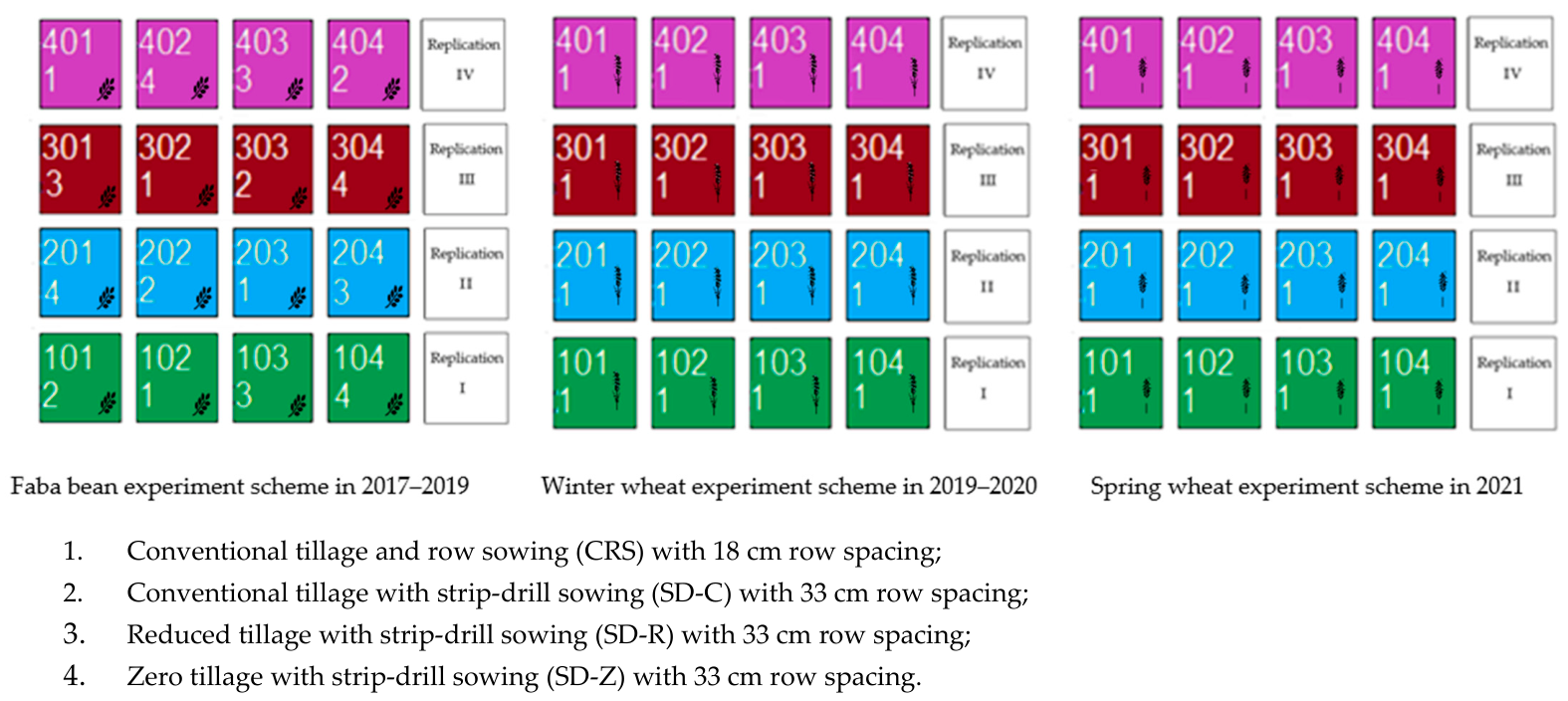
The experimental factor consisted of four tillage–sowing systems applied to faba bean is presented in Figure 1:
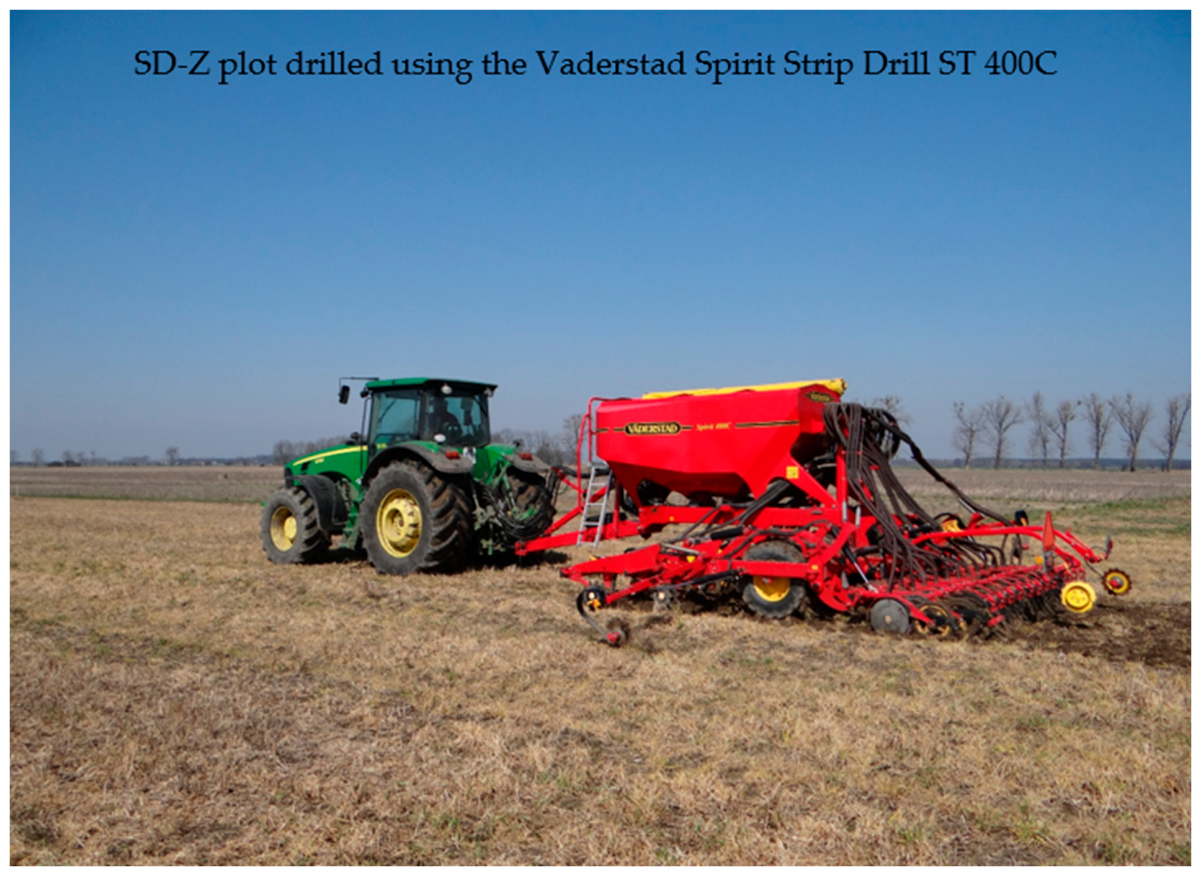
Faba bean (cultivar ‘Albus’) was sown after winter barley at a depth of 5–6 cm. Row spacing was 18 cm in CRS and 33 cm in strip-drill treatments, and each plot measured 500 m2 (10 × 50 m). Albus is one of the most popular traditional (indeterminate) faba bean (field bean) varieties developed by HR Strzelce. It is highly valued for its low tannin content, excellent lodging resistance, and uniform ripening. In CRS and SD-C systems, post-harvest tillage included shallow disking (8 cm), fertilization, and autumn plowing (30 cm). Spring operations included cultivation, harrowing, and rolling. In SD-R, shallow stubble cultivation replaced ploughing, while glyphosate (3 L ha−1) was applied after harvest. Spring operations included shallow cultivation and seedbed preparation. In SD-Z, glyphosate (3 L ha−1) was applied after forecrop harvesting and before sowing, and direct seeding was performed without soil disturbance. The N spring fertilization (40 kg P ha−1), autumn P (60 kg P ha−1), and K (90 kg K ha−1) fertilization rates applied in the experiment were within the range of regional and European recommendations for faba bean cultivation and were adjusted to soil fertility status and maintenance nutrient management principles [12,13,14]. Sowing was performed using a mechanical seeder (Great Plains Solid Stand) in CRS and a strip-drill seeder (Väderstad Spirit Strip Drill ST 400C) in the remaining treatments. Faba bean was sown each year at the beginning of April at a density of 60 seeds m−2 (Figure 2).
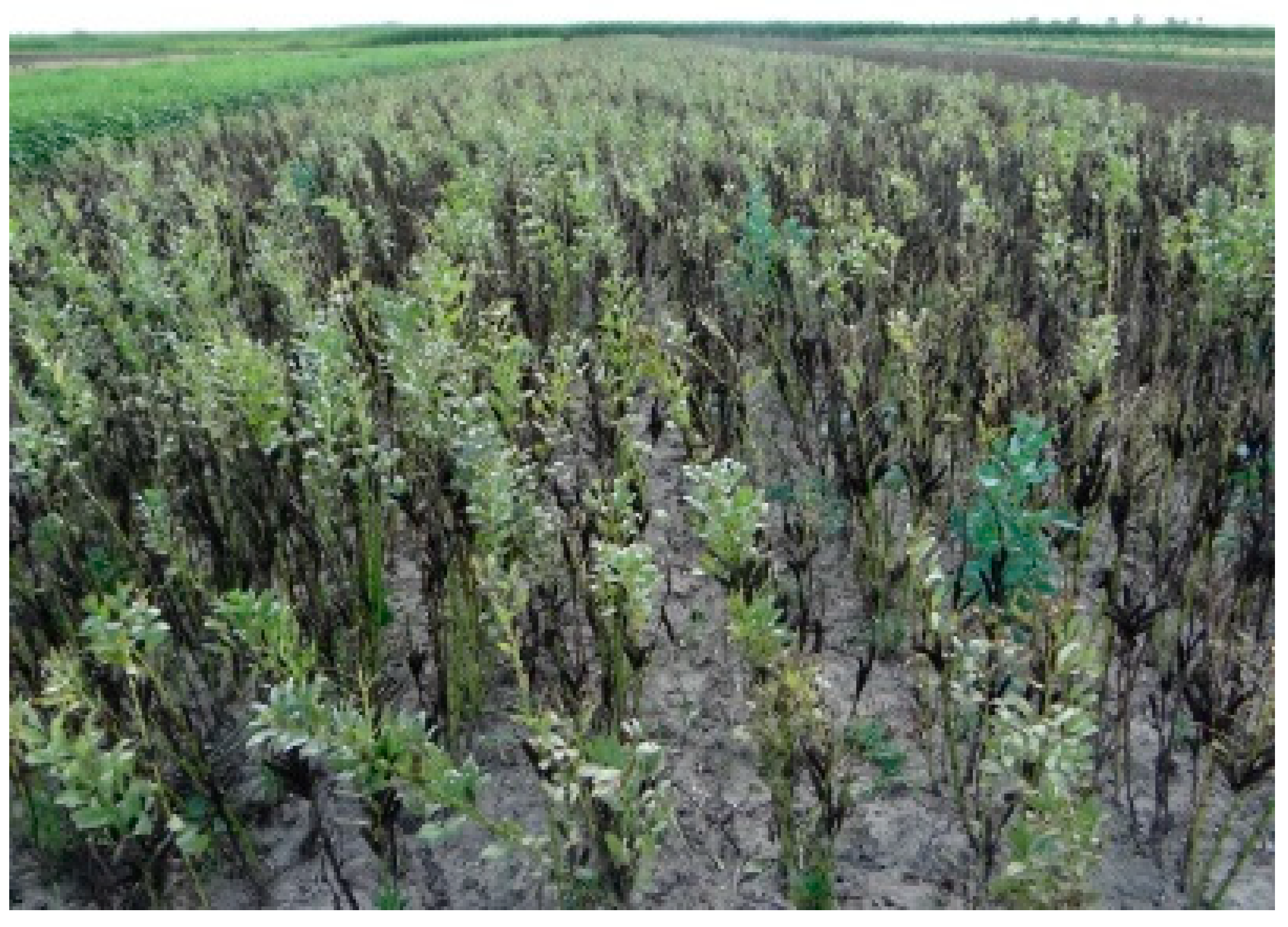
Following sowing, weed control was performed using Wing P 462.5 EC (4.0 L ha−1), whereas post-emergence weed management involved Corum 502.4 SL (1.25 L ha−1) applied with the adjuvant Dash HC (1.0 L ha−1). Glyphosate (Roundup 360 SL, 4.0 L ha−1) with the adjuvant AS 500 SL (1.5 L ha−1) was additionally applied after the harvest of the previous crop to control perennial weeds and volunteer cereals. During flowering and pod development, pest control treatments included Mospilan 20 SP (0.2 kg ha−1), Bulldock 025 EC (0.25 L ha−1), and Proteus 110 OD (0.75 L ha−1). One week prior to harvest, faba bean plants were desiccated with Dessicash 20 SL (3.0 L ha−1). Two control diseases, Gwarant 500 SC (2.0 L ha−1) and Amistar 250 EC (1.0 L ha−1), were applied in 2017. The plants were harvested at full maturity from entire plots with using a Wintersteiger plot combine equipped with an automatic weighing system in the third week of August in 2017 and in the first week of August in 2018 and 2019. All crops in rotation were harvested from 400 m2 of each plot area (Figure 3).
To assess the residual effect of faba bean tillage–sowing systems, winter wheat (2019; cultivated after faba bean harvesting in 2019) and spring wheat (2021; cultivated after winter wheat harvested in 2020) were grown under uniform conventional tillage conditions (Figure 1). Winter and spring wheat were cultivated according to the principles of Good Agricultural Practice (GAP), following standard agronomic recommendations for fertilization, crop protection, and field management widely described in the literature for the experimental station in Brody [15,16]. Winter wheat (Triticum aestivum L., cv. ‘Batuta’) was sown under a conventional tillage system, with the sum of nitrogen fertilization rates being 120 kg N ha−1. Before establishing the experiment, the soil was characterized by a pH of 6.0, very high phosphorus content, high potassium content, and medium magnesium content. Phosphorus and potassium fertilization were applied at rates of 60 kg P2O5 ha−1 and 60 kg K2O ha−1.In the conventional tillage system, post-harvest stubble cultivation was performed using a stubble cultivator, followed by mold board plowing to a depth of 25 cm. Sowing was performed using a disk coulter seeder with a row spacing of 17.8 cm across all treatments. During the growing season, weeds were controlled using the herbicide Komplet 560 SC at a dose of 1.5 L ha−1. Fungal diseases were controlled using Capallo 337.5 SE1.8 L ha−1 (first application) and Falcon 460 EC at 0.6 L ha−1 (second application). Insect pests were controlled using Decis Mega 50 EW at 0.6 L ha−1 and Moddus 250 EC at 0.4 L ha−1.The crop was sown in October 2019 and harvested in August 2020. Spring wheat (Triticum aestivum L., cv. ‘Telimena’) was sown at a seeding rate of 170 kg ha−1. The experiment was conducted on the same experimental plots as used in the main study. Before sowing, mineral fertilization was applied, consisting of Agrafoska at 250 kg ha−1 (0–50–75 kg ha−1 N–P–K) and ammonium nitrate at 150 kg ha−1 (47 kg N ha−1). Weed, disease, and pest control were carried out during the growing season using Mustang Forte 195 SE (0.8 L ha−1), Falcon 460 EC (0.6 L ha−1), and Cyperkill Max 500 EC (0.05 L ha−1). The crop was sown in April 2021 and harvested in August 2021 in conventional tillage. Grain yield was determined at maturity and expressed in t ha−1. Relative yield loss (%) was calculated as the reduction in yield under moisture-less conditions relative to favorable conditions, following established approaches for drought response assessment [17].

2.2. Plant and Seed Assessment

During the flowering stage, the leaf greenness (SPAD) was measured on fully developed leaves using N-Tester Hydro. Leaf area index (LAI) was determined nondestructively using the SunScan Canopy Analysis System, type SSI. During this time, 15 plants were collected to assess nodulation. Average total mass of root and separated nodules was measured in grams. Dry mass of nodules was calculated and presented as share of total root mass in %. At maturity, 15 plants per plot were randomly sampled to determine the following:
  • Number of pods per plant,
  • Number of seeds per plant,
  • Number of seeds per pod.
Plant density was measured before harvest using the frame method (1 m2). Thousand-seedweight was determined from two subsamples of 500 seeds per replication. Seed yield was calculated per hectare and adjusted to 15% moisture content. Seed chemical composition was determined using standard methods. The content of crude protein in dry matter was analyzed according to AOAC procedures [18], fiber content was determined using the Van Soest method [19], and fat content was determined by Soxhlet extraction. Results were expressed on a dry matter basis. Protein yield (kg ha−1) was calculated accordingly.

2.3. Statistical Analysis

Data were analyzed using two-way ANOVA, with year and tillage–sowing system as fixed factors, along with their interaction (Table 4). The experiment was arranged as a randomized complete block design with four replications. Mean comparisons were performed using Tukey’s HSD test at p ≤ 0.05. Statistical analyses were conducted using Statistica v.12.0 (StatSoft, Kraków, Poland). Relationships among variables were assessed using Pearson’s correlation coefficients. Correlation analysis was performed using Year × treatment (tillage–sowing systems) interaction means (n = 12 per trait) without adjusting for year effects; thus, the results represent the combined influence of environmental and agronomic factors on the studied traits. Data of succeeding crops (winter wheat in 2019 and spring wheat in 2021) were analyzed using one-way analysis of variance.

3. Results

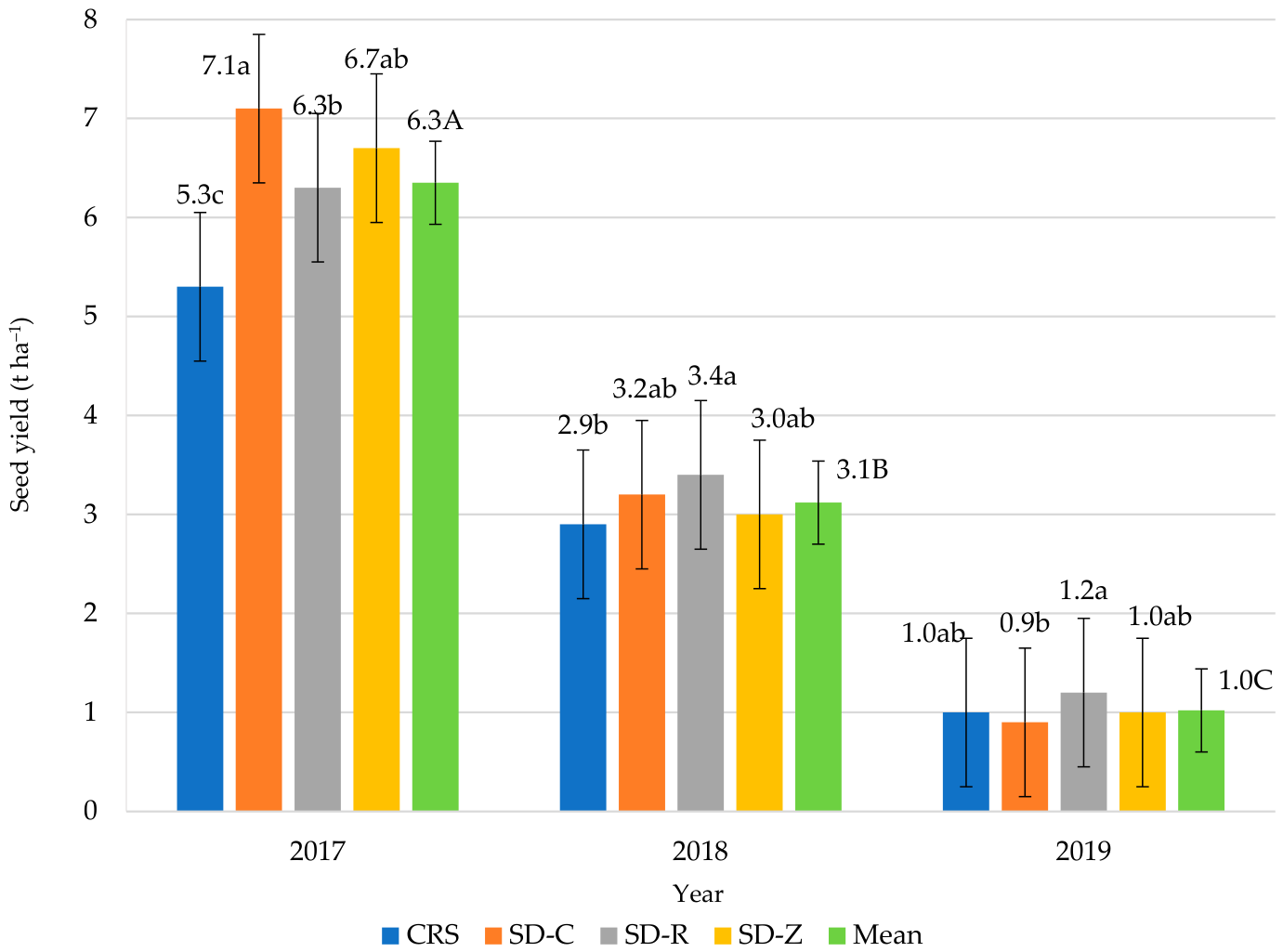
Weather conditions differed considerably among the study years and had a pronounced effect on faba bean productivity. Significant effects of both year and tillage–sowing system were recorded for seed yield, while the interaction between these factors was also significant. Seed yield declined substantially from 6.3 t ha−1 in 2017 to 1.0 t ha−1 in 2019, corresponding to an overall reduction of about 84% (Figure 4). Although the extent of yield reduction varied slightly between tillage–sowing systems, the decrease remained consistently severe across all treatments. Yield losses between 2017 and 2019 amounted to 81% in CRS and SD-R, 85% in SD-Z, and 87% in SD-C, demonstrating that adverse weather conditions similarly affected all cultivation systems.
The reduction in seed yield was closely associated with decreases in yield components, particularly the number of pods and seeds per plant. These parameters declined significantly from their highest values in 2017 to their lowest in 2019, decreasing by 62% and 77%, respectively, closely reflecting the decrease in seed yield (Table 5). This relationship suggests that reproductive processes were the main determinants of yield formation under stress conditions. The strong dependence of yield on seed number indicates that limitations occurring during flowering and pod development had a decisive effect on final productivity. In contrast, the number of seeds per pod decreased to a lesser extent, indicating that yield reduction was primarily driven by a decline in the number of reproductive structures rather than by impaired seed set within pods.
Changes in physiological parameters further explain the observed yield patterns. Leaf area index (LAI) decreased significantly from 3.6 in 2017 to 1.5 in 2018 and remained low in 2019, indicating reduced plant growth and canopy development under less favorable environmental conditions (Table 5). At the same time, nodulation intensity declined markedly from 15.2% to 3.9%, suggesting impaired biological nitrogen fixation. Reduced nodulation under limited soil moisture conditions likely restricted nitrogen availability and consequently contributed to lower seed formation. SPAD values remained relatively stable across the study years, indicating that chlorophyll concentration per unit leaf area was less sensitive to stress than overall plant development. Nevertheless, significant differences were observed, with the lowest SPAD values recorded in 2017.
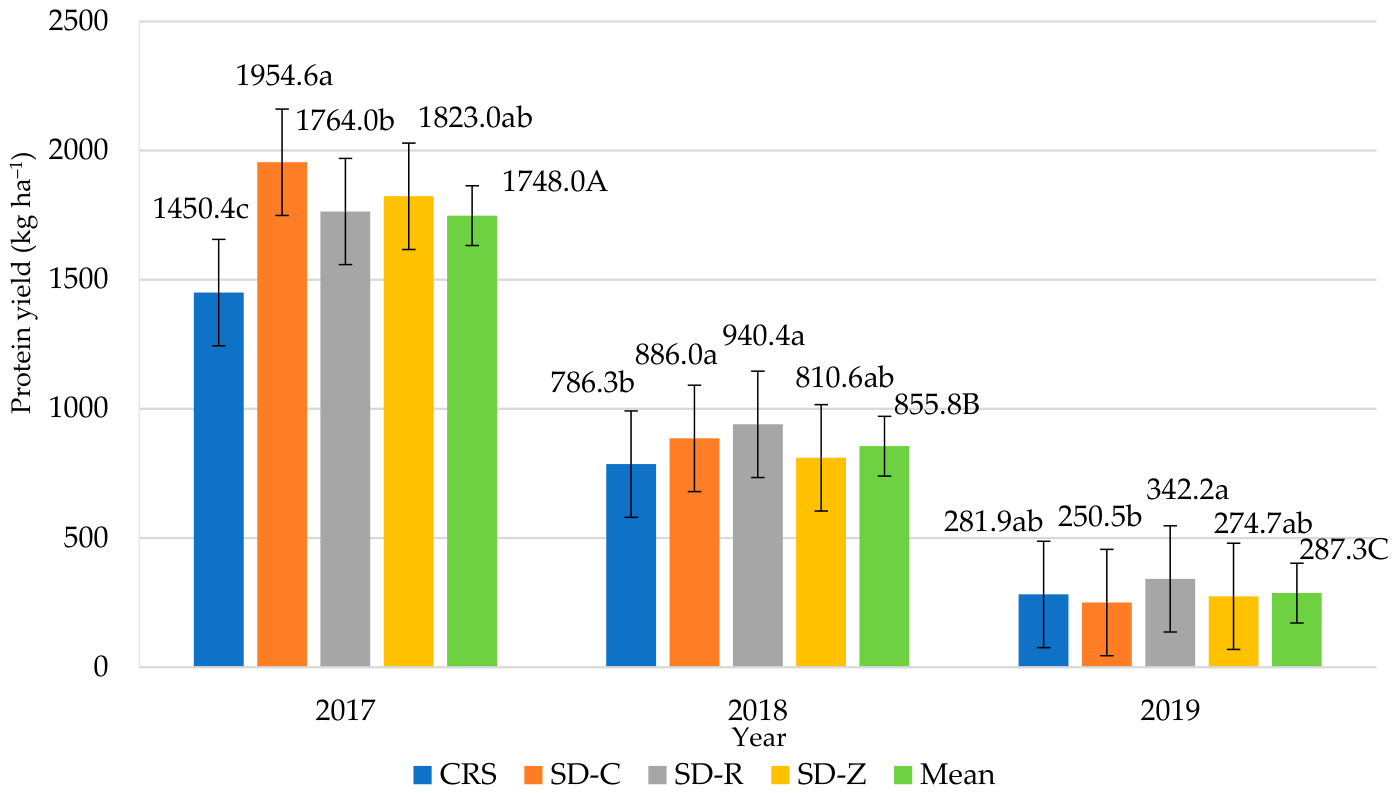
A pattern similar to that observed for seed yield was also recorded for protein yield (Figure 5). The interaction between year and tillage–sowing system significantly affected protein yield, indicating that the response of the cultivation systems depended on prevailing weather conditions. The highest protein yields were consistently obtained in 2017, exceeding 1700 kg ha−1 on average, whereas the lowest values were recorded in 2019. The variability observed between years reflected differences in weather conditions, particularly water availability, with more favorable moisture conditions contributing to higher protein productivity. Regression analysis demonstrated a very strong relationship between the mean values and the studied variables. Overall, weather conditions exerted a strong influence on both seed and protein yield, confirming the dominant role of environmental factors, especially temperature and precipitation, in shaping faba bean productivity.
Although the tillage–sowing system affected selected yield components and productivity parameters, its influence was less pronounced than that of weather conditions (Table 6). Both SD-R and SD-Z cultivation systems significantly increased the number of pods and seeds per plant by approximately 11% and 15%, respectively, compared with the CRS system. Strip-till systems (SD-C, SD-R, and SD-Z) also tended to produce slightly higher yields than conventional tillage (CRS) under favorable environmental conditions, and these differences were significant. Compared with CRS, seed yield in the remaining cultivation systems increased by approximately 0.5–0.6 t ha−1, while protein yield increased from about 130 kg ha−1 in SD-Z to 200 kg ha−1 in the other strip-till systems. No significant differences were observed in seed chemical composition, and total protein content ranged from 319.9 g kg−1 in CRS to 327.4 g kg−1 in SD-R. These findings suggest that conservation tillage practices were more effective in mitigating the negative effects of severe water-deficit conditions.
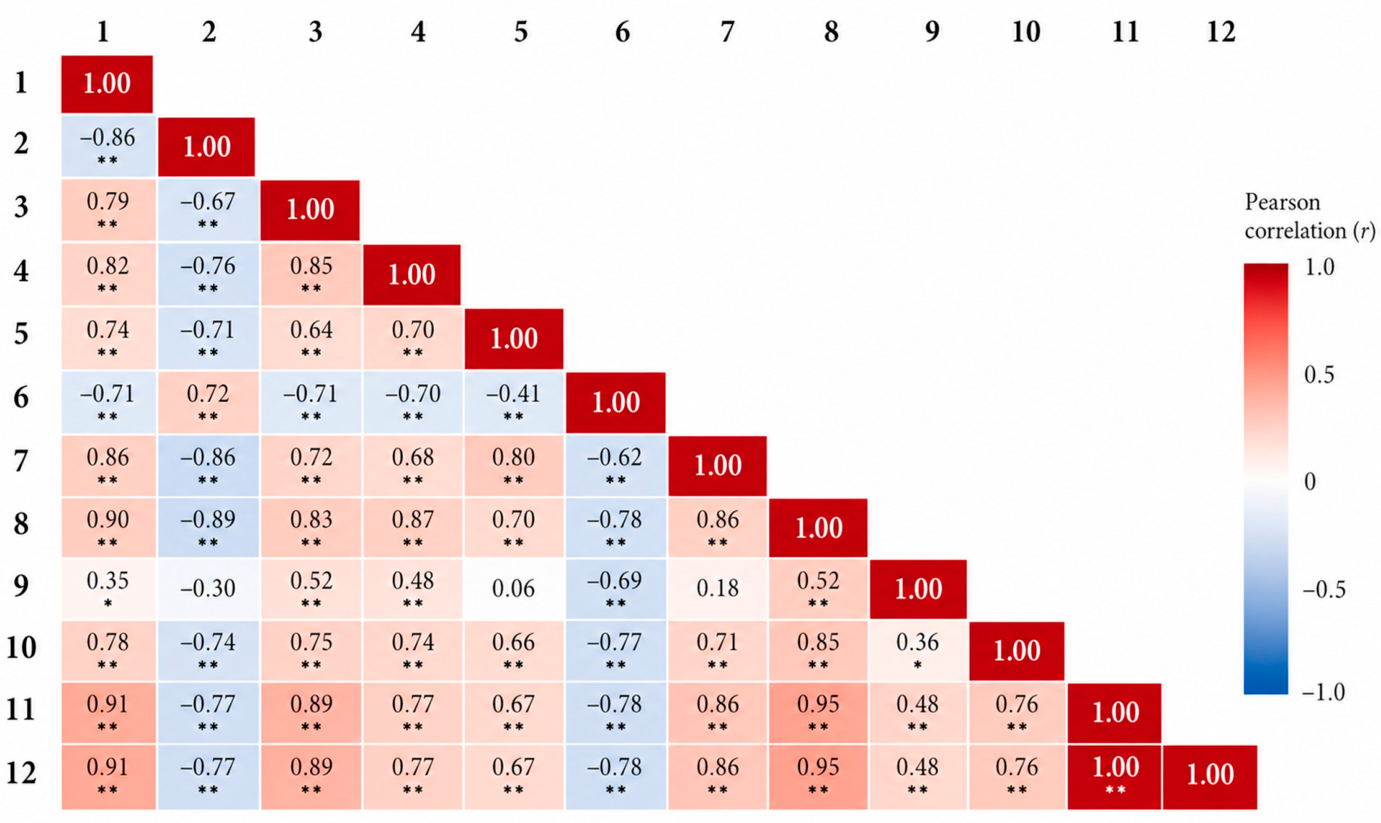
The correlation heatmap revealed strong positive relationships between seed yield and major yield components, particularly the number of seeds per plant (r = 0.95), pods per plant (r = 0.86), and root mass (r = 0.89). Seed yield was also positively correlated with rainfall (r = 0.91) and LAI (r = 0.67), highlighting the important role of water availability and plant canopy development in determining productivity (Figure 6).
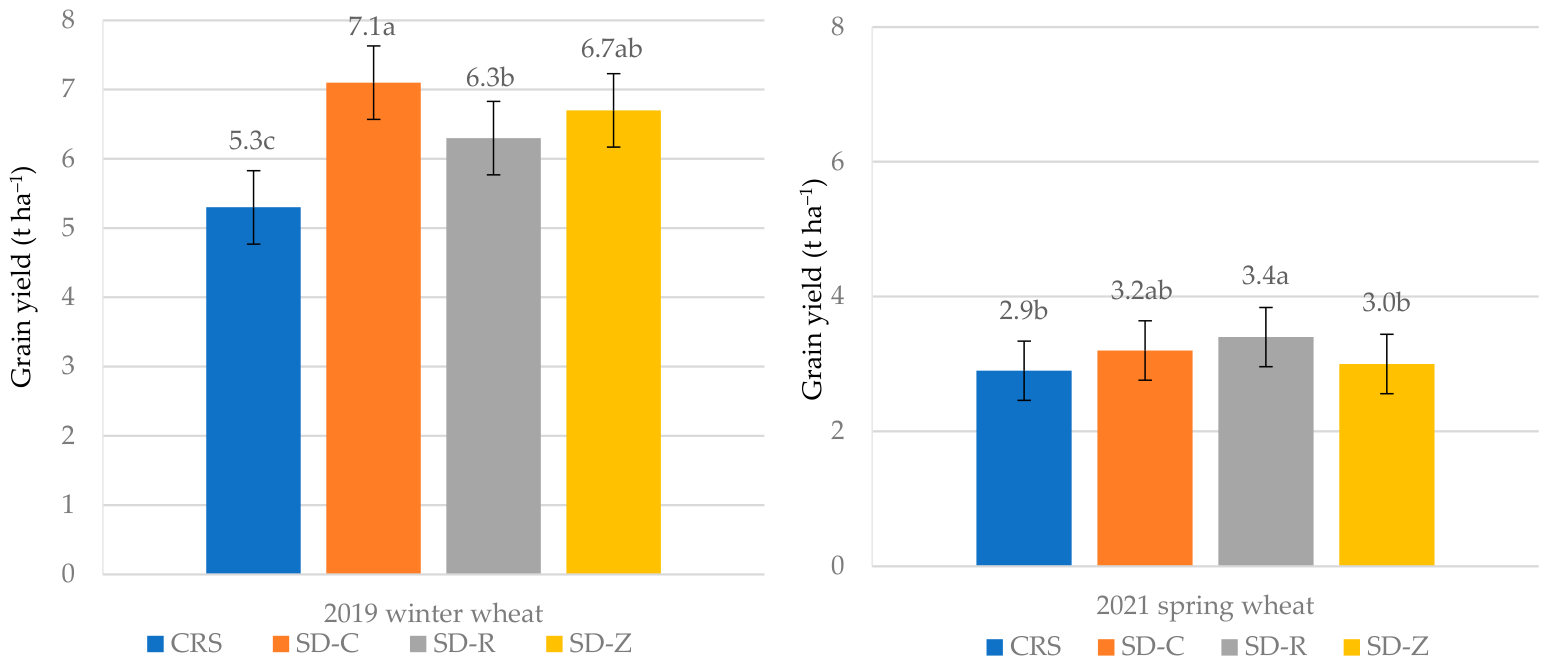
The tillage–sowing system applied to faba bean significantly affected the yield of subsequent cereal crops. In 2019, winter wheat grown after faba bean achieved the highest yield under strip-till with conventional tillage (SD-C; 7.1 t ha−1), whereas the lowest yield was recorded under conventional tillage with row sowing (CRS; 5.3 t ha−1). Intermediate yields were obtained for SD-Z (6.7 t ha−1) and SD-R (6.3 t ha−1), with all conservation-based systems differing significantly from CRS. A similar tendency was observed for spring wheat in 2021, although overall yields were lower (Figure 7). The highest yield was recorded following SD-R (3.4 t ha−1), followed by SD-C (3.2 t ha−1) and SD-Z (3.0 t ha−1), while the lowest yield was obtained after CRS (2.9 t ha−1). However, significant differences were observed only between CRS and SD-R. These findings indicate that the tillage–sowing system applied to the preceding faba bean crop influenced the productivity of subsequent wheat crops, with conservation-based systems generally promoting higher yields compared with conventional plow-based tillage.

4. Discussion

The results of this study clearly demonstrate that weather conditions were the primary factor determining variability in faba bean yield across the study years. The substantial yield reduction observed under limited moisture conditions is consistent with previous reports indicating that water deficit adversely affects reproductive processes, including flowering and pod development [6,20]. Although faba bean is characterized by high yield potential, with average yields reportedly reaching 7.12 t ha−1 under favorable conditions [21], its productivity remains highly sensitive to environmental stress. In the present study, yield reduction was mainly associated with decreases in key yield components, particularly the number of pods and seeds per plant. This finding confirms that reproductive traits are especially vulnerable to stress occurring during critical developmental stages such as flowering and seed filling. Furthermore, reduced plant growth likely limited photosynthetic capacity, while decreased nodulation may have restricted nitrogen availability, both of which are essential for efficient seed formation in legumes. These observations are supported by the strong positive correlations identified between seed yield and its major yield components and are consistent with previous studies emphasizing the crucial role of reproductive structures in determining productivity in grain legumes [9].
A similar trend was observed for protein yield, which was strongly influenced by weather conditions, although tillage–sowing systems also exerted a significant effect. Strip-drill systems consistently produced higher protein yields compared with the conventional tillage–sowing system (CRS), despite the absence of significant differences in seed protein concentration. Comparable values were reported by Kalembasa et al. [1], who recorded a protein content of 26.44% and a protein yield of 875 kg ha−1 in faba bean. Moreover, studies on soybean have shown that strip-drill systems combined with zero tillage can stabilize protein yield under variable environmental conditions [22], supporting their importance in conservation agriculture. Similarly, reduced tillage combined with the application of catch crop biomass as mulch has been reported to improve soil ecosystem functioning [23]. Although tillage–sowing systems affected yield and its components, their influence was less pronounced than that of weather conditions, which is consistent with previous findings indicating that environmental factors often override agronomic practices [8]. Nevertheless, conservation-based systems, particularly strip-till variants, generally promoted higher yields compared with conventional plow-based tillage. This effect may be associated with improved soil structure and enhanced soil water retention [7], both of which are especially important under water-limited conditions. As emphasized by Hobbs et al. [24], crop and soil management practices that improve soil health while reducing production costs are essential for the successful implementation of sustainable agricultural systems. The inclusion of legumes in crop rotations provides numerous agronomic benefits, including the production of high-quality plant protein [25], as well as improvements in biodiversity and the sustainability of cropping systems [26,27]. An important finding of the present study is the clear residual effect of faba bean management practices on the yield of subsequent wheat crops. Consistent with earlier reports [28], crop rotation significantly affected winter wheat productivity despite the application of uniform agronomic management to the cereal crop. This finding indicates that soil conditions developed during the faba bean growing season had a lasting influence on the performance of subsequent crops. These residual effects are mainly associated with enhanced nitrogen availability and improved soil properties [3]. Faba bean is capable of fixing substantial amounts of atmospheric nitrogen, exceeding 200 kg N ha−1 under favorable conditions [29], while values ranging from 118 to 193 kg N ha−1 have also been reported depending on the cultivar and cropping system [30]. The present results suggest that, in addition to the inclusion of a legume crop, the specific tillage–sowing system applied may alsoinfluence the magnitude of these beneficial effects. Interestingly, differences in wheat yield among treatments were more pronounced under favorable growing conditions than under stress conditions, suggesting that the positive effects of improved soil conditions may be partially masked under severe environmental constraints. This observation supports the concept that agronomic management practices become less effective under extreme stress, when climatic factors constitute the primary limitation to crop productivity. In this context, conservation tillage systems, particularly zero tillage, demonstrated greater resilience through improved soil moisture retention and reduced soil compaction [31].
From a practical perspective, strip-till systems may improve the long-term sustainability of crop production by reducing soil disturbance, limiting soil erosion, and enhancing soil water retention and organic carbon accumulation. Previous studies have shown that conservation tillage practices can reduce fuel consumption and labor requirements while maintaining stable crop yields under variable climatic conditions [24,32]. Strip-till systems may also decrease the number of field operations compared with conventional plow-based tillage, thereby lowering operational costs and greenhouse gas emissions [33,34]. However, the adoption of strip-till technology requires specialized machinery and relatively high initial investment costs, which may restrict its implementation, particularly on small and medium-sized farms. Operational feasibility additionally depends on soil type, farm size, residue management, and farmer experience. Therefore, despite the agronomic and environmental advantages of strip-till systems, their long-term economic profitability and sustainability should be further evaluated under diverse production conditions.
Overall, the findings highlight the importance of integrating appropriate soil management practices with crop rotation strategies to improve yield stability under increasing climatic variability. Although tillage–sowing systems alone cannot fully mitigate the negative effects of limited water availability, their role in improving soil properties and supporting the productivity of subsequent crops appears to be highly important. A limitation of the present study is the lack of direct measurements of soil moisture, nitrogen dynamics, and soil physical properties, which restricts a more detailed mechanistic interpretation of the effects of tillage–sowing systems. Therefore, continuation of the experiment is warranted in order to better explain the long-term interactions between soil management practices, environmental conditions, and crop productivity.

5. Conclusions

Faba bean yield was primarily driven by weather conditions, with limited water availability leading to a substantial reduction in productivity across all tillage–sowing systems. Yield variability was strongly associated with reproductive components, particularly the number of seeds and pods per plant, confirming their key role in yield formation under contrasting environmental conditions. Tillage–sowing systems had a secondary but significant effect on yield. Strip-drill-based establishment systems (SD-C, SD-R, SD-Z) were generally associated with higher seed yield compared with conventional row sowing (CRS), although the magnitude of the effect depended on weather conditions. A significant difference in subsequent wheat yield was observed depending on the preceding faba bean establishment system, indicating a carry-over effect of crop management within the rotation. However, the underlying mechanisms responsible for these differences remain unclear and require further investigation. Overall, the results indicate that weather conditions are the dominant driver of faba bean productivity, while strip-drill-based systems can improve yield levels relative to conventional row sowing and may influence the performance of subsequent crops. Nevertheless, the interaction between management practices and environmental conditions should be further examined to better explain rotation effects and improve system-level recommendations.

Author Contributions

Conceptualization, A.F.; methodology, K.P. and A.F.; software, K.R.; validation, A.F., G.S., and K.R.; formal analysis, K.R. and G.S.; investigation, A.F. and K.P.; resources, K.R. and A.K.; data curation, G.S. and A.K.; writing—original draft preparation, A.F.; writing—review and editing, A.F.; visualization, K.P.; supervision, A.F. and K.P.; project administration, A.F. All authors have read and agreed to the published version of the manuscript.

Funding

This research received no external funding.

Data Availability Statement

Data are available from the corresponding author.

Conflicts of Interest

The authors declare no conflicts of interest.

References

  1. Kalembasa, D.; Szukała, J.; Symanowicz, B.; Kalembasa, S.; Faligowska, A.; Becher, M. Amount of biologically fixed nitrogen by faba bean and its uptake by winter wheat determined by 15N ID method. Arch. Agron. Soil Sci. 2020, 67, 1875–1888. [Google Scholar] [CrossRef]
  2. Jensen, E.S.; Peoples, M.B.; Boddey, R.M.; Gresshoff, P.M.; Hauggaard-Nielsen, H.; Alves, B.J.R.; Morrison, M.J. Legumes for mitigation of climate change and the provision of feedstock for biofuels and biorefineries. Agron. Sustain. Dev. 2012, 32, 329–364. [Google Scholar] [CrossRef]
  3. Peoples, M.B.; Brockwell, J.; Herridge, D.F.; Rochester, I.J.; Alves, B.J.R.; Urquiaga, S.; Boddey, R.M.; Dakora, F.D.; Bhattarai, S.; Maskey, S.L.; et al. The contributions of nitrogen-fixing crop legumes to the productivity of agricultural systems. Symbiosis 2009, 48, 1–17. [Google Scholar] [CrossRef]
  4. Balko, C.; Torres, A.M.; Gutierrez, N. Variability in drought stress response in a panel of 100 faba bean genotypes. Front. Plant Sci. 2023, 14, 1236147. [Google Scholar] [CrossRef]
  5. Neal, J.R.; McVetty, P.B.E. Yield structure of faba beans (Vicia faba L.) grown in Manitoba. Field Crops Res. 1984, 8, 349–360. [Google Scholar] [CrossRef]
  6. Vicente-Serrano, S.M.; Beguería, S.; López-Moreno, J.I. A multiscalar drought index sensitive to global warming: The standardized precipitation evapotranspiration index. J. Clim. 2010, 23, 1696–1718. [Google Scholar] [CrossRef]
  7. Köpke, U.; Nemecek, T. Ecological services of faba bean. Field Crops Res. 2010, 115, 217–233. [Google Scholar] [CrossRef]
  8. Haddaway, N.R.; Hedlund, K.; Jackson, L.E.; Kätterer, T.; Lugato, E.; Thomsen, I.K.; Jørgensen, H.B.; Isberg, P.-E. How does tillage intensity affect soil organic carbon? A systematic review. Environ. Evid. 2017, 6, 30. [Google Scholar] [CrossRef]
  9. Lai, H.; Gao, F.; Su, H.; Zheng, P.; Li, Y.; Yao, H. Nitrogen distribution and soil microbial community characteristics in a legume–cereal intercropping system: A review. Agronomy 2022, 12, 1900. [Google Scholar] [CrossRef]
  10. Małecka, I.; Blecharczyk, A.; Sawińska, Z.; Dobrzeniecki, T. The Effect of Various Long-Term Tillage Systems on Soil Properties and Spring Barley Yield. Turk. J. Agric. For. 2012, 36, 217–226. [Google Scholar] [CrossRef]
  11. Blecharczyk, A.; Małecka, I.; Sierpowski, J. Wpływ wieloletniego oddziaływania systemów uprawy roli na fizyko-chemiczne właściwości gleby. Fragm. Agron. 2007, 24, 7–13. [Google Scholar]
  12. Małecka-Jankowiak, I.; Blecharczyk, A.; Sawińska, Z.; Piechota, T.; Idziak, R. The Effect of Sustainable Tillage Systems on Faba Bean Yield in a Long-Term Experiment in Poland. Sustainability 2025, 17, 4293. [Google Scholar] [CrossRef]
  13. Barłóg, P.; Łukowiak, R. Potassium and Elemental Sulfur as Factors Determining Nitrogen Management Indices of Soil and Faba Bean (Vicia faba L.). Agronomy 2021, 11, 1137. [Google Scholar] [CrossRef]
  14. Barłóg, P.; Grzebisz, W.; Łukowiak, R. Faba Bean Yield and Growth Dynamics in Response to Soil Potassium Availability and Sulfur Application. Field Crops Res. 2018, 219, 87–97. [Google Scholar] [CrossRef]
  15. Juszczak, R.; Sakowska, K.; Ziemblińska, K.; Uździcka, B.; Strożecki, M.; Polmańska, D.; Chojnicki, B.; Urbaniak, M.; Augustin, J.; Nęcki, J.; et al. The Full GHG Balance of Croplands under Seven-Year Rotation Scheme and Conventional Tillage Practices in Poland. In Proceedings of the EGU General Assembly 2014, Vienna, Austria, 27 April–2 May 2014; Available online: http://hdl.handle.net/10449/24468 (accessed on 28 May 2026).
  16. Majchrzak, L.; Skrzypczak, G. The Influence of Tillage System on Physical Soil Properties and Yielding of Spring Wheat. Agron. Sci. 2010, 65, 1–9. [Google Scholar] [CrossRef]
  17. Dwivedi, P.; Ramawat, N.; Raju, D.; Dhawan, G.; Gopala Krishnan, S.; Chinnusamy, V.; Bhowmick, P.K.; Vinod, K.K.; Pal, M.; Nagarajan, M.; et al. Drought tolerant near isogenic lines of Pusa 44 pyramided with qDTY2.1 and qDTY3.1 show accelerated recovery response. Front. Plant Sci. 2022, 12, 752730. [Google Scholar] [CrossRef]
  18. AOAC. Official Methods of Analysis, 18th ed.; AOAC International: Gaithersburg, MD, USA, 2011. [Google Scholar]
  19. Van Soest, P.J. Use of detergents in the analysis of fibrous feeds. II. A rapid method for determination of fibre and lignin. J. AOAC 1963, 46, 829–835. [Google Scholar]
  20. Blum, A. Drought resistance—Is it really a complex trait? Funct. Plant Biol. 2011, 38, 753–757. [Google Scholar] [CrossRef]
  21. Romaneckas, K.; Kimbirauskienė, R.; Adamavičienė, A.; Buragiene, S.; Sinkevičienė, A.; Sarauskis, E.; Jasinskas, A.; Minajeva, A. Impact of sustainable tillage on biophysical properties of Planosol and on faba bean yield. Agric. Food Sci. 2019, 28, 101–111. [Google Scholar] [CrossRef][Green Version]
  22. Faligowska, A.; Panasiewicz, K.; Szymańska, G.; Ratajczak, K. Optimizing soybean productivity: A comparative analysis of tillage and sowing methods. Agriculture 2025, 15, 626. [Google Scholar] [CrossRef]
  23. Długosz, J.; Dębska, B.; Piotrowska-Długosz, A. The effect of soil tillage systems on soil microbial and enzymatic properties under soybean cultivation—Implications for sustainable soil management. Sustainability 2024, 16, 11140. [Google Scholar] [CrossRef]
  24. Hobbs, P.R.; Sayre, K.; Gupta, R. The role of conservation agriculture in sustainable agriculture. Philos. Trans. R. Soc. B 2008, 363, 543–555. [Google Scholar] [CrossRef] [PubMed]
  25. Etemadi, F.; Hashemi, M.; Barker, A.V.; Zandvakili, O.R.; Liu, X. Agronomy, nutritional value, and medicinal application of faba bean (Vicia faba L.). Hortic. Plant J. 2019, 5, 170–182. [Google Scholar] [CrossRef]
  26. Singh, A.K.; Bharati, R.C.; Manibhushan, N.C.; Pedpati, A. An assessment of faba bean (Vicia faba L.) current status and future prospect. Afr. J. Agric. Res. 2013, 8, 6634–6641. [Google Scholar]
  27. Preissel, S.; Reckling, M.; Schläfke, N.; Zander, P. Magnitude and farm-economic value of grain pre-crop benefits in Europe: A review. Field Crops Res. 2015, 175, 64–79. [Google Scholar] [CrossRef]
  28. Montemurro, F. Different nitrogen fertilization sources, soil tillage, and crop rotations in winter wheat: Effect on yield, quality, and nitrogen utilization. J. Plant Nutr. 2009, 32, 1–18. [Google Scholar] [CrossRef]
  29. Karkanis, A.; Ntatsi, G.; Lepse, L.; Fernández, J.A.; Vågen, I.M.; Rewald, B.; Alsiņa, I.; Kronberga, A.; Balliu, A.; Olle, M.; et al. Faba bean cultivation—Revealing novel managing practices for more sustainable European cropping systems. Front. Plant Sci. 2018, 9, 1115. [Google Scholar] [CrossRef]
  30. Ntatsi, G.; Karkanis, A.; Yfantopoulos, D.; Olle, M.; Travlos, I.; Thanopoulos, R.; Bilalis, D.; Bebeli, P.; Savvas, D. Impact of variety and farming practices on growth, yield, weed flora and symbiotic nitrogen fixation in faba bean. Acta Agric. Scand. B Soil Plant Sci. 2018, 68, 619–630. [Google Scholar] [CrossRef]
  31. Govaerts, B.; Verhulst, N.; Castellanos-Navarrete, A.; Sayre, K.D.; Dixon, J.; Dendooven, L. Conservation agriculture and soil carbon sequestration: Between myth and farmer reality. Crit. Rev. Plant Sci. 2009, 28, 97–122. [Google Scholar] [CrossRef]
  32. Lal, R.A. System Approach to Conservation Agriculture. J. Soil Water Conserv. 2015, 70, 82A–88A. [Google Scholar] [CrossRef]
  33. Kassam, A.; Friedrich, T.; Derpsch, R. Global Spread of Conservation Agriculture. Int. J. Environ. Stud. 2019, 76, 29–51. [Google Scholar] [CrossRef]
  34. Lampurlanés, J.; Plaza-Bonilla, D.; Álvaro-Fuentes, J.; Cantero-Martínez, C. Long-Term Analysis of Soil Water Conservation and Crop Yield under Different Tillage Systems in Mediterranean Rainfed Conditions. Field Crops Res. 2016, 189, 59–67. [Google Scholar] [CrossRef]
Figure 1. Scheme of the experiment in 2017–2021.
Agriculture 16 01279 g001
Figure 2. Faba bean sowing in zero tillage with strip-drill (SD-Z).
Agriculture 16 01279 g002
Figure 3. Faba bean plot in reduced tillage with strip-drill (SD-R).
Agriculture 16 01279 g003
Figure 4. Climate variability vs tillage–sowing system on seed yield (t ha−1). Different letters indicate significant differences between experimental variants, as determined with Tukey’s HSD test (p < 0.05). Specifications: CRS, conventional tillage and row sowing; SD-C, conventional tillage with strip-drill sowing; SD-R, reduced tillage with strip-drill sowing; SD-Z, zero tillage with strip-drill sowing.
Agriculture 16 01279 g004
Figure 5. Climate variability vs tillage–sowing system on protein yield (kg ha−1). Different letters indicate significant differences between experimental variants, as determined with Tukey’s HSD test (p < 0.05). Specifications: CRS, conventional tillage and row sowing; SD-C, conventional tillage with strip-drill sowing; SD-R, reduced tillage with strip-drill sowing; SD-Z, zero tillage with strip-drill sowing.
Agriculture 16 01279 g005
Figure 6. Correlation heatmap among traits of faba bean across all tillage–sowing systems in different weather conditions. Specifications: 1, rainfall (mm); 2, plants (no. m−2); 3, total root mass (g); 4, share of nodules (%); 5, LAI; 6, SPAD; 7, pods/plant (no.); 8, seeds/plant (no.); 9, seeds/po (no.); 10, 1000 seeds mass (g); 11, seed yield (t ha−1); 12, protein yield (kg ha−1). * p < 0.05 and ** p < 0.01.
Agriculture 16 01279 g006
Figure 7. The yield of subsequent cereal crops winter wheat and spring wheat (t ha−1). Different letters indicate significant differences between experimental variants, as determined with Tukey’s HSD test (p < 0.05). Specifications: CRS, conventional tillage and row sowing; SD-C, conventional tillage with strip-drill sowing; SD-R, reduced tillage with strip-drill sowing; SD-Z, zero tillage with strip-drill sowing.
Agriculture 16 01279 g007
Table 1. Selected chemical properties of soil at the experimental site.
PropertyValue
Mg (available mg kg−1)39.9
K (available mg kg−1)102
P (available mg kg−1)126
N (g kg−1)0.76
C (g kg−1)7.91
Table 2. Mean monthly air temperature during vegetation periods in 2017–2019.
YearMean Monthly Air Temperature (°C)
AprMayJunJulAugSepMean
20177.714.017.718.418.913.615.0
201812.917.119.120.721.415.917.8
201910.412.022.319.320.714.316.5
20209.412.018.218.920.715.415.8
20218.912.218.819.920.515.315.7
Long-term mean8.213.316.718.317.713.514.6
Table 3. Mean monthly rainfall totals during vegetation periods in 2017–2019.
YearMonthly Rainfall Totals (mm)
AprMayJunJulAugSepTotal
201725.749.2106.0160.8150.654.8547.1
201865.319.231.5134.920.060.7331.6
201911.977.88.463.328.263.8253.4
20206.446.944.757.7116.240.9312.8
20217.550.234.171.671.947.8283.1
Long-term mean37.756.464.884.166.948.3358.2
Table 4. Results of two-way ANOVA.
SpecificationYearTillage–Sowing SystemsYear × Tillage–Sowing Systems
Plants (no. m−2)****ns
Total root mass (g)**nsns
Share of nodules (%)**ns*
LAI*****
SPAD*nsns
Pods/Plant (no.)*****
Seeds/Plant (no.)****
Seeds/Pod (no.)*nsns
1000 seeds mass (g)**nsns
Seed yield (t ha−1)****
Protein yield (kg ha−1)****
ns: not significant; * p < 0.05 and ** p < 0.01.
Table 5. The effects of weather conditions on the plant parameters before and after harvest.
SpecificationYear
201720182019
Plants (no. m−2)41.2 b53.7 a57.8 a
Total root mass (g)3.0 a2.7 b1.9 c
Share of nodules (%)15.2 a7.2 b3.9 b
LAI3.6 a1.5 c1.8 b
SPAD533.9 b602.0 a590.2 a
Pods/Plant (no.)10.7 a5.8 b4.1 c
Seeds/Plant (no.)31.6 a14.4 b7.2 b
Seeds/Pod (no.)2.9 a2.5 b1.7 c
1000 seeds mass (g)510.8 a460.1 b366.2 c
Different letters indicate significant differences between experimental variants, as determined with Tukey’s HSD test (p < 0.05). Specifications: LAI, leaf area index; SPAD, leaf greenness index.
Table 6. Effects of tillage–sowing system on plant parameters before/after harvest and yield of faba bean.
SpecificationTillage–Sowing System
CRSSD-CSD-RSD-Z
Plants (no. m−2)55.8 a46.6 b47.2 b54.0 a
Total root mass (g)2.6 a2.6 a2.4 a2.6 a
Share of nodules (%)8.1 a7.2 a8.4 a11.5 a
LAI2.5 a2.6 a2.3 b1.9 c
SPAD566.5 a557.0 a582.6 a595.4 a
Pods/Plant (no.)6.7 b6.2 c7.5 a7.2 a
Seeds/Plant (no.)17.0 b15.6 c20.1 a18.3 ab
Seeds/Pod (no.)2.5 a2.5 a2.7 a2.6 a
1000 seeds mass (g)436.4 a456.4 a444.7 a445.5 a
Seed yield (t ha−1)3.1 b3.7 a3.6 a3.6 a
Crude protein content (g kg−1)319.9 a323.7 a327.4 a321.1 a
Protein yield (kg ha−1)839.5 b1030.4 a1015.5 a969.4 ab
Different letters indicate significant differences between experimental variants, as determined with Tukey’s HSD test (p < 0.05). Specifications: CRS, conventional tillage and row sowing; SD-C, conventional tillage with strip-drill sowing; SD-R, reduced tillage with strip-drill sowing; SD-Z, zero tillage with strip-drill sowing; LAI, leaf area index; SPAD, leaf greenness index.
Disclaimer/Publisher’s Note: The statements, opinions and data contained in all publications are solely those of the individual author(s) and contributor(s) and not of MDPI and/or the editor(s). MDPI and/or the editor(s) disclaim responsibility for any injury to people or property resulting from any ideas, methods, instructions or products referred to in the content.