Article

A Survey of Biosecurity Measures on Large Commercial Hungarian Pig Farms

1
Department of Veterinary Forensics and Economics, University of Veterinary Medicine Budapest, H-1078 Budapest, Hungary
2
National Laboratory for Infectious Animal Diseases, Antimicrobial Resistance, Veterinary Public Health and Food Chain Safety, University of Veterinary Medicine Budapest, H-1078 Budapest, Hungary
3
Veterinary Practitioner, H-7630 Pécs, Hungary
4
Veterinary Practitioner, H-3885 Boldogkőváralja, Hungary
5
Department of Food Hygiene, University of Veterinary Medicine Budapest, H-1078 Budapest, Hungary
*
Author to whom correspondence should be addressed.
Agriculture 2026, 16(11), 1175; https://doi.org/10.3390/agriculture16111175
Submission received: 28 April 2026 / Revised: 22 May 2026 / Accepted: 23 May 2026 / Published: 27 May 2026
(This article belongs to the Special Issue Livestock Farming Biosecurity and Disease Prevention)

Abstract

Biosecurity is a key determinant of herd health, production efficiency, and disease prevention in modern pig farming under the continuing pressure of endemic and transboundary pathogens. The aim of this study was to assess external and internal biosecurity measures, together with selected disinfection-related practices, on 19 large commercial Hungarian pig farms representing farrowing, weaner, and fattening units. A convenience-sample, questionnaire-based survey was conducted between November 2020 and March 2021 among farm veterinarians, and the data were evaluated descriptively. Several external biosecurity elements were common, including perimeter fencing, careful animal sourcing, extended quarantine periods, and restrictive entry hygiene. However, weaknesses remained, particularly in feed-vehicle entry across the fence line, disinfection infrastructure, and feed storage protection. Internal biosecurity was more consistently implemented in farrowing, nursery, and fattening units than in sow units, while limitations in all-in/all-out management, airspace separation, inter-unit movement, hygiene barriers, and shared equipment management may increase within-farm pathogen transmission. These findings suggest that important biosecurity measures were widely applied, but their consistency and practical quality varied across key risk points. Owing to the small convenience sample, the results should be interpreted as descriptive findings for the surveyed farms.

1. Introduction

The health status of pig herds has a major impact on production efficiency, veterinary costs, animal welfare, and, in some cases, food safety and public health [1,2]. In modern large-scale pig production, the prevention of infectious diseases requires a complex biosecurity system, because pathogens may enter farms through live animals, semen, feed, water, aerosols, vehicles, personnel, wildlife, and other fomites [1,2,3,4]. The importance of farm biosecurity has become even more evident under the continuing pressure of both endemic and transboundary diseases [5]. Among these, African swine fever (ASF) remains a major threat to the European pig sector, and farm-level external biosecurity continues to represent a primary line of defense, especially with regard to fencing, vehicle control, food-item restrictions, and the exclusion of wildlife and other indirect transmission routes [6,7].
The practical importance of biosecurity is also reflected in the persistence of endemic respiratory, enteric, and reproductive diseases in pig production. Porcine Respiratory Disease Complex (PRDC) remains economically important, and internal biosecurity measures such as age-group separation, all-in/all-out management, the isolation of sick animals, and appropriate worker routines are particularly relevant for prevention [2,8,9]. Among the major pathogens involved, porcine reproductive and respiratory syndrome virus (PRRSV) is especially important because of its effects on both production and reproduction [10,11]. At the sector level, the production impact of PRRS eradication has also been demonstrated in Hungary [12,13,14]. Gastrointestinal diseases also highlight the practical importance of biosecurity. In the case of swine dysentery, the lack of all-in/all-out management can facilitate the persistence and resurgence of infection among groups, while the disease causes significant losses in terms of growth, mortality, and medication use [15]. These examples show that farm-level biosecurity is a key component of herd health management and economic sustainability [2,9,16]. In large-scale herds, pathogen circulation is more likely to persist because susceptible animals are continuously present, which further underlines the need for modern biosecurity systems [2,4].
Pig farm biosecurity is commonly divided into external and internal biosecurity. External biosecurity aims to prevent pathogen introduction, whereas internal biosecurity aims to reduce or slow pathogen spread within the farm [2]. The farm’s location, the density of surrounding pig farms, the quality of fencing, and the exclusion of wild animals are all important elements of external biosecurity [2,17]. In addition, vehicle movements, particularly the transport of live animals and feed, as well as people and objects entering the farm, pose significant risk factors [1,2,18]. Animal purchase and quarantine are especially critical because the introduction of replacement animals remains one of the most important pathways for pathogen entry [1,2]. Semen should likewise be considered a relevant external route, as several important swine pathogens may be transmitted in this way [1,2].
From the perspective of internal biosecurity, all-in/all-out management, the segregation of age groups and production units, the isolation of sick animals, and the organization of work processes with biosecurity in mind are all particularly important [2]. The consistent use of hygiene barriers, such as changing rooms, hand-wash stations, and boot disinfectants, is also essential [2]. In addition, unfavorable facility design, risky worker movement patterns, shared equipment, and inadequately segregated carcass storage may all contribute to pathogen spread within the farm [1,2]. Daily routine procedures, such as needle exchange, cleaning of shared guide boards, and the use of hygiene barriers between different age groups, also play a role in breaking the chain of infection [2,19,20].
Particular attention should also be paid to cleaning and disinfection, because their effectiveness depends not only on the disinfectant itself, but also on prior cleaning, the removal of organic matter, the treated surface, and the quality of practical implementation [2]. Thus, the mere presence of hygiene protocols does not necessarily guarantee effective disease prevention under field conditions [2,21].
Therefore, the evaluation of pig farm biosecurity should take into account not only the presence of individual measures, but also the farm environment, structural design, operational procedures, and daily hygiene practices [2]. However, detailed farm-level information on the combined assessment of external and internal biosecurity measures and disinfection-related practices on large-scale Hungarian pig farms remains limited. The aim of this questionnaire-based survey was to assess external and internal biosecurity measures, together with selected disinfection-related practices, on large commercial Hungarian pig farms, with particular focus on key risk points relevant to herd health, disease prevention, and the practical improvement of commercial swine production.

2. Materials and Methods

2.1. Study Design and Data Collection

This study was designed as a questionnaire-based survey of large commercial pig farms in Hungary. In the present study, this term was used as an operational study category rather than a strict legal classification. Although the Hungarian Animal Health Code classifies pig holdings with a capacity of at least 100 pigs as large-scale animal holdings [22], the present survey applied more restrictive inclusion criteria. Convenience sampling was applied. Farms were contacted by e-mail, telephone, and in person. A total of 32 farms were invited to participate, of which 21 agreed. Farms were included if they met the following criteria: (1) a minimum herd size of 500 breeding sows and their progeny or a comparably large finishing pig population; (2) availability of digital farm-level information on herd structure, production data, and biosecurity practices; and (3) willingness to participate in the survey. Farms that did not meet these criteria or had incomplete or inconsistent records were excluded (n = 2).
A structured questionnaire was used in combination with interviews conducted with the farm veterinarians. Written informed consent was obtained from the participants involved in this survey. Depending on the epidemiological situation, interviews were carried out either during on-farm visits or via online video calls to ensure accurate data recording and minimize possible misunderstandings. For consistency, only responses referring to the second half of 2020 were included in the analysis. No formal direct observation or independent verification of responses was performed during the on-farm visits, and the data relied on respondent reporting in both interview formats. Answers were not systematically validated by photographs or separate documentary evidence during the interview process. Because participation was voluntary and the sample was not randomly selected, some degree of selection bias cannot be excluded.

2.2. Questionnaire Structure and Study Variables

The questionnaire (Supplementary Materials) was developed specifically for this study as a structured descriptive farm-level assessment tool focusing on practical biosecurity and disinfection-related measures under commercial farm conditions. It was designed in collaboration with veterinary practitioners (n = 3) and university-based veterinary researchers (n = 3). A pilot version was pre-tested with additional veterinary practitioners (n = 3), and their feedback was used to improve the clarity, structure, and practical applicability of the questionnaire before final use. The final questionnaire consisted of three main sections: (1) general farm-level information, including farm type, herd size, herd health status and major production indicators; (2) external and internal biosecurity measures, including farm surroundings, fencing, animal and semen introduction, quarantine, vehicle and personnel movements, movements between production units, hygiene barriers, group separation, carcass handling, rodent occurrence, and shared equipment; and (3) disinfectants and hygiene-related infrastructure, including the types and applications of disinfectants, washing systems, vehicle-entry disinfection systems, and changing-room conditions. In total, the questionnaire contained 82 questions, primarily in closed-ended categorical format, supplemented by selected numerical and ordinal frequency-based questions. It was not developed as a validated composite scoring instrument. Accordingly, the analysis was primarily aimed at describing routine farm-level practices and identifying key biosecurity risk points, rather than constructing a composite biosecurity score or performing inferential comparisons.

2.3. Data Handling, Descriptive Statistical Analysis and Characteristics of the Surveyed Farms

Questionnaire data were entered into Microsoft Excel 365 (version 2604; Microsoft Corp., Redmond, WA, USA) and checked for completeness and internal consistency before analysis. Only farms fulfilling the predefined eligibility criteria and providing sufficiently complete and internally consistent responses were retained in the final dataset. Categorical variables were summarized as counts and percentages, whereas continuous variables were described by the number of farms with available data (N), mean, standard deviation (SD), median, minimum, and maximum values. Five variables were assessed using respondent-reported five-point ordinal scales: rodent occurrence (1 = minimal; 5 = high), use of boot washes (1 = never; 5 = every time), use of hand disinfectants (1 = never; 5 = every time), frequency of sorting-panel cleaning (1 = never; 5 = after each use), and shower condition (1 = bad, dirty, crowded; 5 = clean, tidy, comfortable). No separate objective assessment criteria were applied to these variables. For descriptive purposes, these ordinal-scale variables were also summarized by mean and standard deviation (SD). Percentages were calculated using the number of farms with relevant and available data for the given variable as the denominator; therefore, denominators varied across variables according to farm type, question applicability, and data availability. Because the questionnaire was designed for descriptive farm-level assessment, and given the relatively small convenience sample and the heterogeneity of the assessed variables, the analysis was limited to descriptive evaluation. No inferential statistical analyses were performed, and no composite biosecurity score or benchmarking system was constructed.
Data were collected from 19 farms between November 2020 and March 2021. Of the surveyed farms, 6/19 (31.6%) were located in the Northern Great Plain region, 5/19 (26.3%) in Southern Transdanubia, 4/19 (21.1%) in Central Transdanubia, 3/19 (15.8%) in Western Transdanubia, and 1/19 (5.3%) in the Southern Great Plain region. No farms were surveyed in Central Hungary or Northern Hungary. The study included farrow-to-finish, breeding, and finishing farms. Altogether, the surveyed farms accounted for 30,719 breeding sows, 103,152 weaned piglets, and 89,660 fattening pigs, corresponding to nearly 20% of the 163,600 breeding sows registered in Hungary on 1 December 2020 [23]. The herd-size characteristics and major production indicators of the surveyed farms are summarized in Table 1 and Table 2.
Regarding herd health status, all surveyed farms were free from Aujeszky’s disease and brucellosis (19/19, 100.0%); 89.5% were free from leptospirosis (17/19), and 10.5% had not yet achieved PRRS-free status at the time of the survey (2/19) (Table 3). The herd health status categories (“positive”, “negative”, and “not tested”) were based on farm-veterinarian-reported questionnaire data, reflecting the routinely available herd health records and testing information of the farms at the time of the survey.

3. Results

3.1. External Biosecurity on the Surveyed Farms

3.1.1. Farm Surroundings and Perimeter Protection

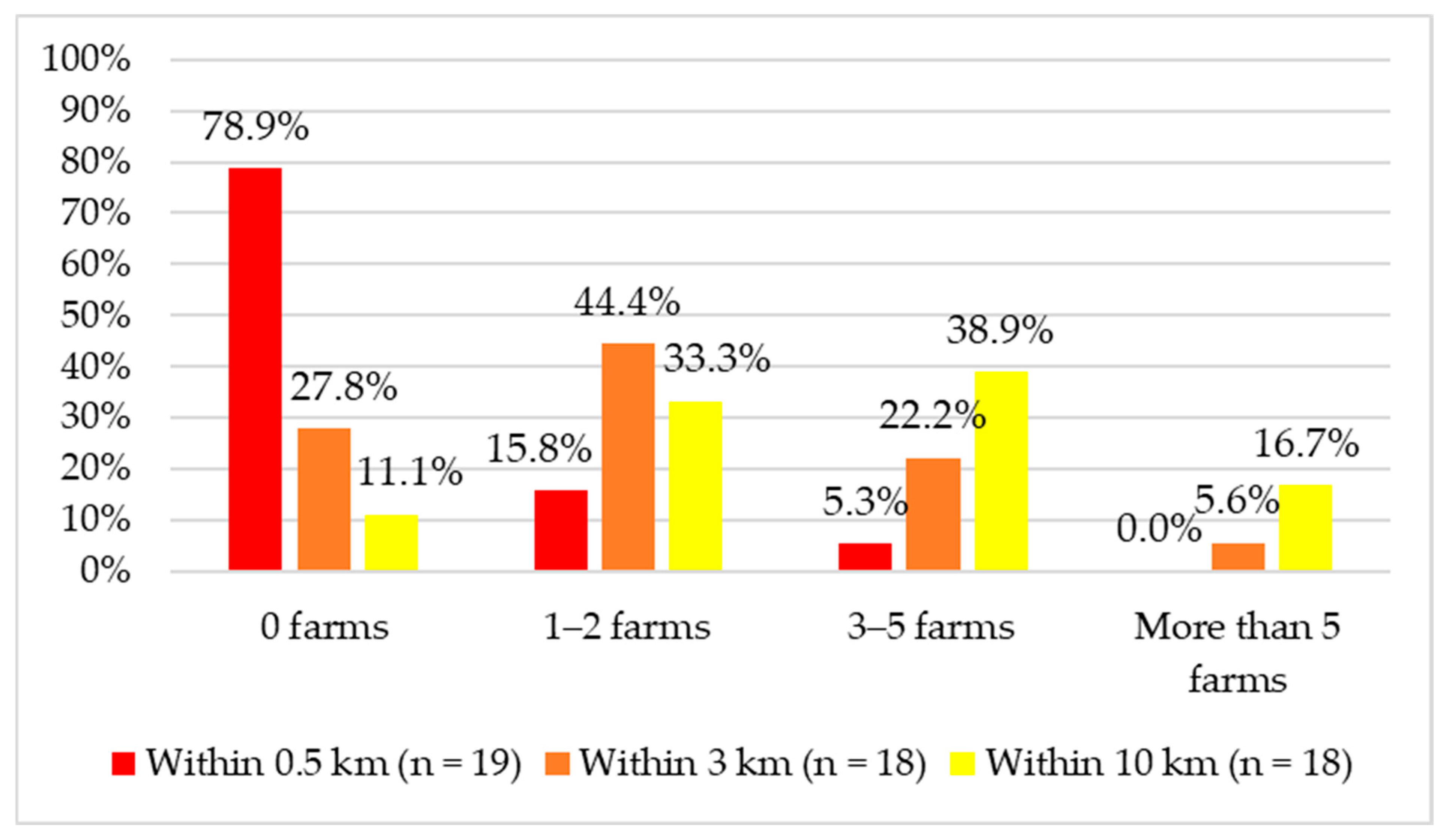
The number of pig farms located within a 10 km radius of the surveyed farms is shown in Figure 1. Backyard pig farms were also taken into account where such information was available. Within a 500 m radius, 15/19 (78.9%) of the farms had no other pig farms nearby. Within a 3 km radius, this proportion decreased to 5/18 (27.8%), while within a 10 km radius only 2/18 (11.1%) of the farms had no other pig farms in the surrounding area. The estimated average number of sows on neighboring farms ranged between 80 and 300. Among the surveyed farms, 1/19 (5.3%) was located directly next to a main road, 2/19 (10.5%) were situated less than 100 m from a main road, 5/19 (26.3%) were located 100–500 m away, and 11/19 (57.9%) were more than 500 m from the nearest main road.
All surveyed farms were fenced (19/19, 100.0%). Of these, 12/19 (63.2%) had a single continuous fence line, whereas 5/19 (26.3%) of the farms had double-line fencing. However, 2/19 (10.5%) of the farms lacked continuous perimeter fencing due to temporary factors, such as construction activities. Furthermore, 9/19 (47.4%) of the farms had a solid plinth, such as concrete or crushed stone, beneath the fence, while an additional 4/19 (21.1%) implemented weed control along a strip of at least 1 m. However, 6/19 (31.6%) of the farms did not use any specific protection against possible undermining.

3.1.2. Animal Purchase, Quarantine and Semen Supply

Of the surveyed farms, 5/19 (26.3%) did not purchase any live animals during the year. The most common frequency of animal purchase was 1–6 introductions per year (9/19, 47.4%). A further 1/19 (5.3%) of the farms introduced animals 7–12 times annually, while 4/19 (21.1%) reported animal introduction on more than 13 occasions per year. The most common practice was the purchase of breeding animals every few months, whereas fattening farms purchased animals weekly or every few weeks. Overall, 12/19 (63.2%) of the farms purchased animals from a single regular high-health-status partner, while 2/19 (10.5%) obtained animals from more than one regular source. None of the farms reported purchasing animals from occasional partners.
All farms that purchased animals applied quarantine in accordance with the relevant regulations, except in cases where animals were transferred between farms belonging to the same owner (multisite pig farming system). Of the surveyed farms, 5/19 (26.3%) operated as closed herds and did not purchase animals, while 4/19 (21.1%) introduced animals only from other farms under the same ownership. Among the farms purchasing livestock from farms with different owners (n = 10), the average quarantine period was 64 days, with 60 days being the shortest duration recorded. Of these 10 farms, 2/10 (20.0%) had geographically isolated quarantine facilities, while 6/10 (60.0%) used on-farm quarantine buildings with separate tools and separate staff social areas. In addition, on 1/10 (10.0%) of farms, workers were allowed to enter the rest of the farm only after changing clothes and disinfecting their hands. However, another 1/10 (10.0%) of the farms did not apply any of the above measures to separate quarantined animals from the resident herd.
Among the surveyed Hungarian swine farms with a breeding phase (n = 16), 10/16 (62.5%) purchased semen from a single, continuously monitored, high-health-status source, 5/16 (31.3%) from multiple sources, whereas 1/16 (6.3%) relied exclusively on semen collected from its own boars through an on-farm artificial insemination (AI) station system.

3.1.3. Vehicle Access, Feed Delivery and Protection of Feed and Water Sources

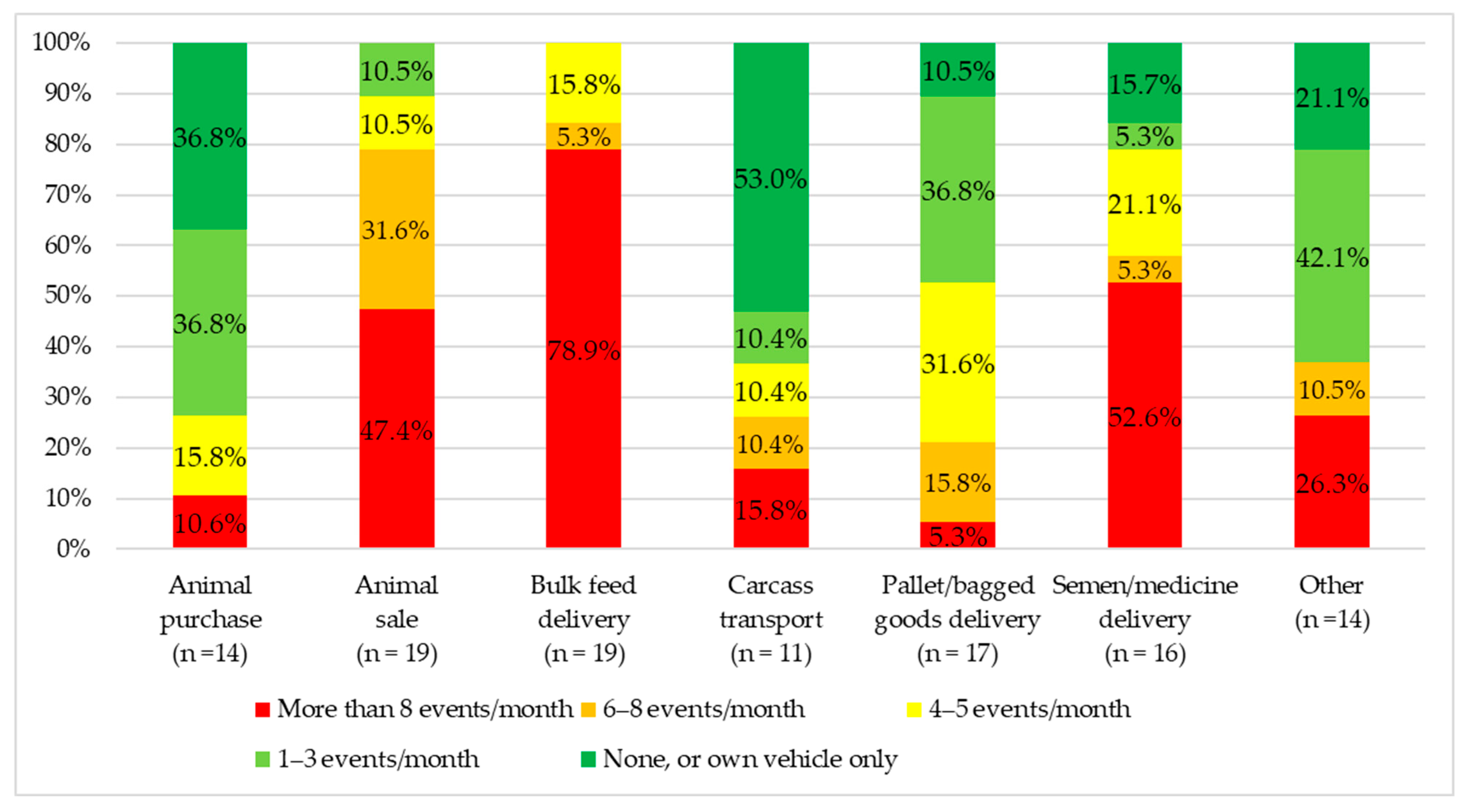
Vehicle traffic was dominated by bulk feed delivery, which occurred more than eight times per month on 15/19 (78.9%) farms (Figure 2). Semen/medicine deliveries occurred more than eight times per month on 10/19 (52.6%) farms, and animal sale-related vehicle entries on 9/19 (47.4%) farms. In contrast, carcass transport was absent or limited to the farm’s own vehicles on 10/19 (52.6%) farms, while pallet/bagged-goods delivery was absent or limited on 9/17 (52.9%) farms. Animal purchase-related vehicle entries were absent or limited to the farm’s own vehicles on 5/14 (35.7%) farms. Other vehicles entering the farms were mainly those used for rodent and pest control and maintenance; these were absent or limited to the farm’s own vehicles on 3/14 (21.4%) farms. Goods delivered on pallets or in bags were generally required only in smaller quantities and could be stored for longer periods; therefore, such vehicles entered the farms relatively rarely. Livestock transport was infrequent on most farms, occurring only every few months, except on fattening farms, where it took place weekly or even more frequently.
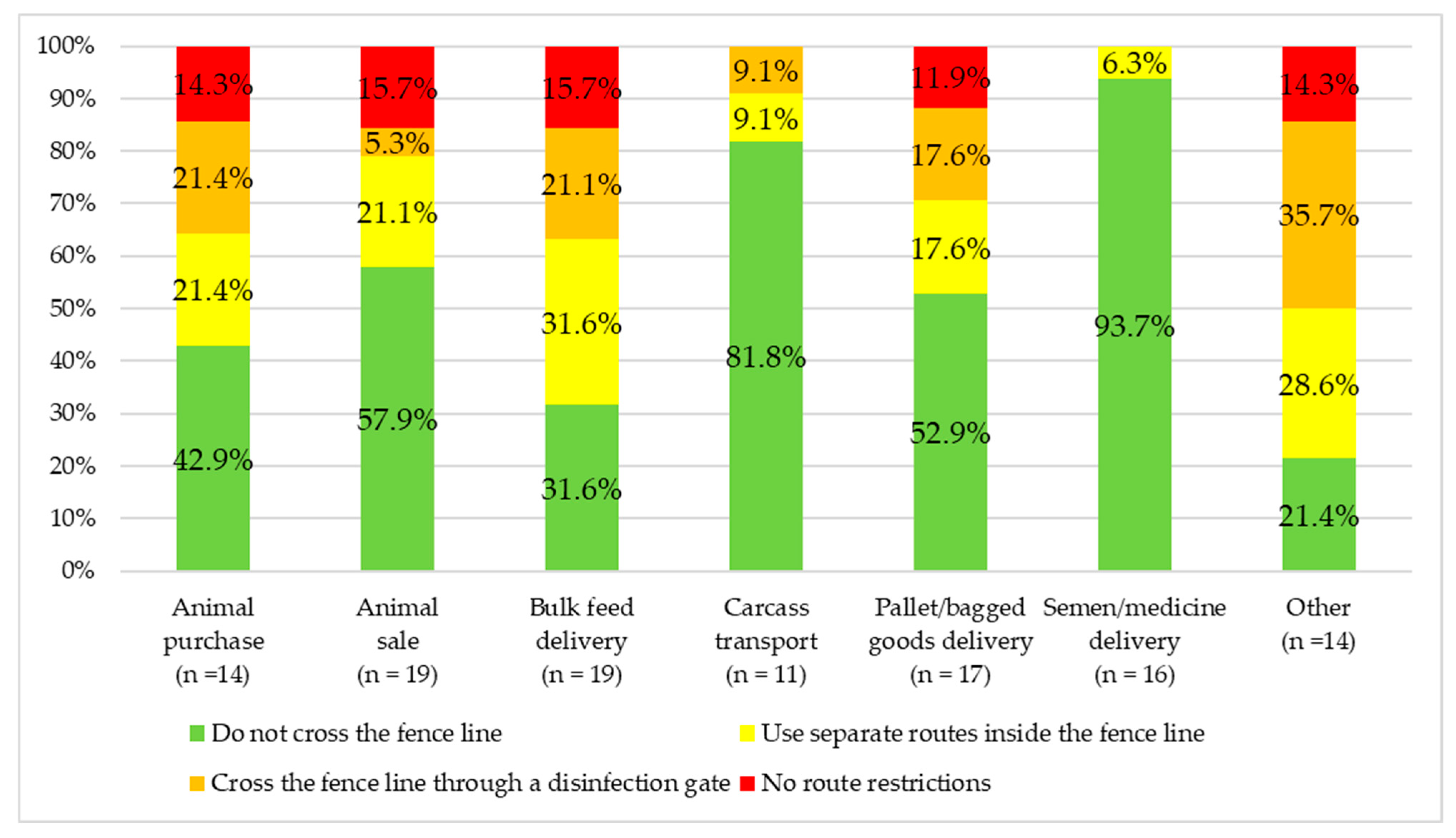
In most cases, semen/medicine deliveries did not cross the fence line (15/16, 93.7%), whereas bulk feed delivery crossed the fence line on 10/19 (52.7%) of the farms, either through a disinfection gate (4/19, 21.1%) or via separate routes within the fence line (6/19, 31.6%) (Figure 3). However, on 3/19 (15.7%) farms, no route restrictions were applied to feed delivery vehicles. Carcass transport vehicles crossed the fence line on 2/11 (18.2%) farms. The entry of maintenance and pest-control vehicles might have been avoidable in some cases (3/14, 21.4%). However, due to the urgency or importance of their tasks, the farms did not always insist on strict compliance with vehicle movement restrictions. Vehicles delivering goods on pallets or in bags crossed the fence line only rarely.
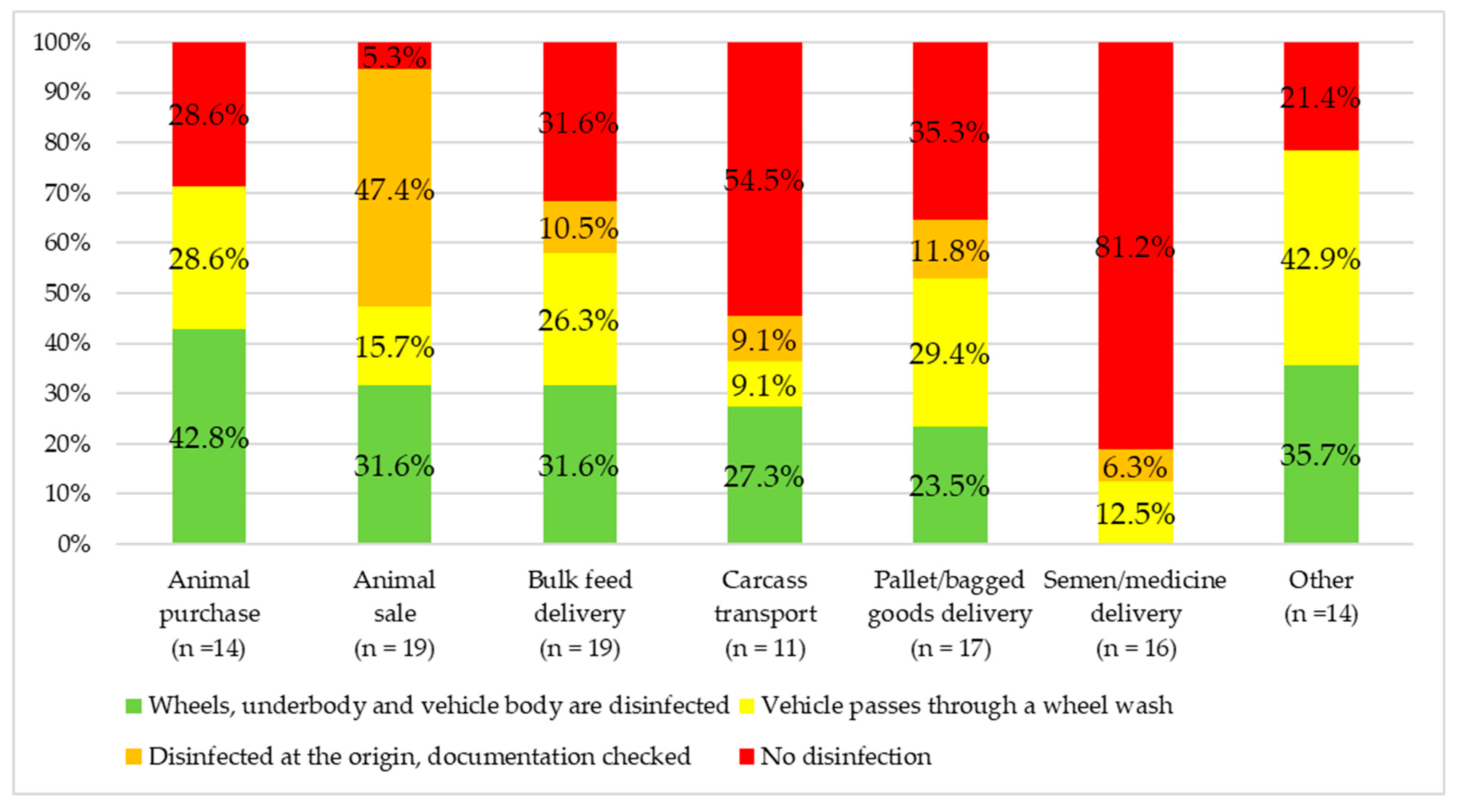
Regarding disinfection infrastructure, 4/19 (21.1%) of the surveyed farms did not implement a vehicle disinfection system at entry points, 2/19 (10.5%) disinfected vehicles manually without automated equipment, 5/19 (26.3%) used wheel-disinfection basins only, while 8/19 (42.1%) combined wheel basins with spraying frames. Vehicle disinfection practices varied by vehicle type (Figure 4). In several cases, vehicles were disinfected on arrival or passed through a wheel wash, whereas for some vehicle categories no disinfection was applied. Among vehicles transporting slaughter pigs, 9/19 (47.4%) arrived at the farms already cleaned and disinfected from the slaughterhouse, as confirmed by visual inspection and documentation, while 6/19 (31.6%) were fully disinfected on arrival, 3/19 (15.7%) passed through a wheel wash and only 1/19 (5.3%) was not disinfected. Compared with these vehicles, vehicles used for animal purchase more often underwent full on-arrival disinfection (6/14, 42.8%), although 4/14 (28.6%) passed through a wheel wash and another 4/14 (28.6%) were not disinfected.
Water and feed reached the troughs through completely closed systems on all surveyed farms (19/19, 100.0%). However, based on the questionnaire item on on-farm feed storage, 3/19 (15.7%) farms stored mixed feed and/or feed materials in a manner that was not fully closed; therefore, contact with birds or rodents/wild animals could not be excluded.

3.1.4. Personnel and Visitor Biosecurity Measures

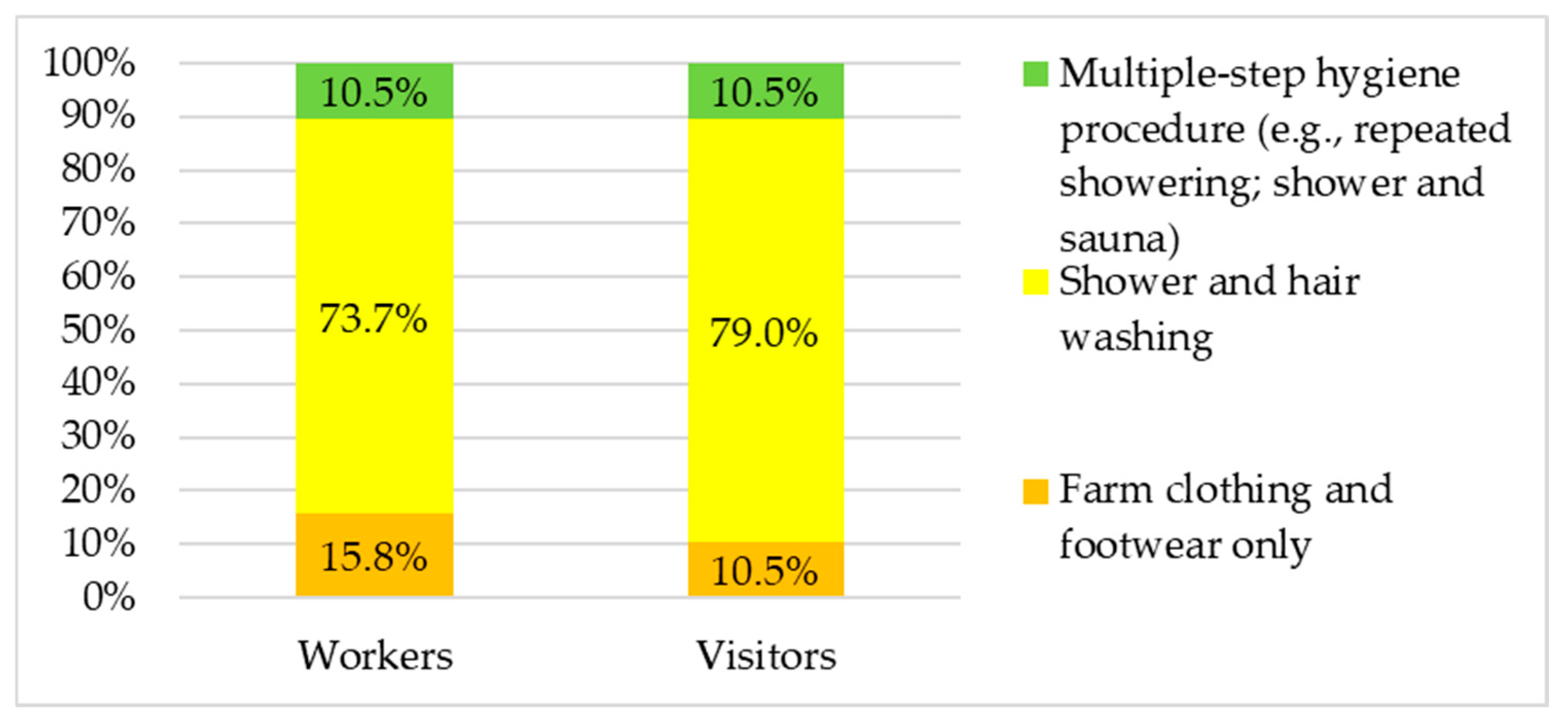
None of the surveyed Hungarian farms could be entered without changing clothes (0/19, 0.0%) (Figure 5). For workers, 14/19 (73.7%) of the farms required showering and hair washing before entry, 2/19 (10.5%) applied a multiple-step hygiene procedure, and 3/19 (15.8%) allowed entry after changing into farm clothing and footwear only. For visitors, the corresponding proportions were 15/19 (79.0%), 2/19 (10.5%), and 2/19 (10.5%), respectively.
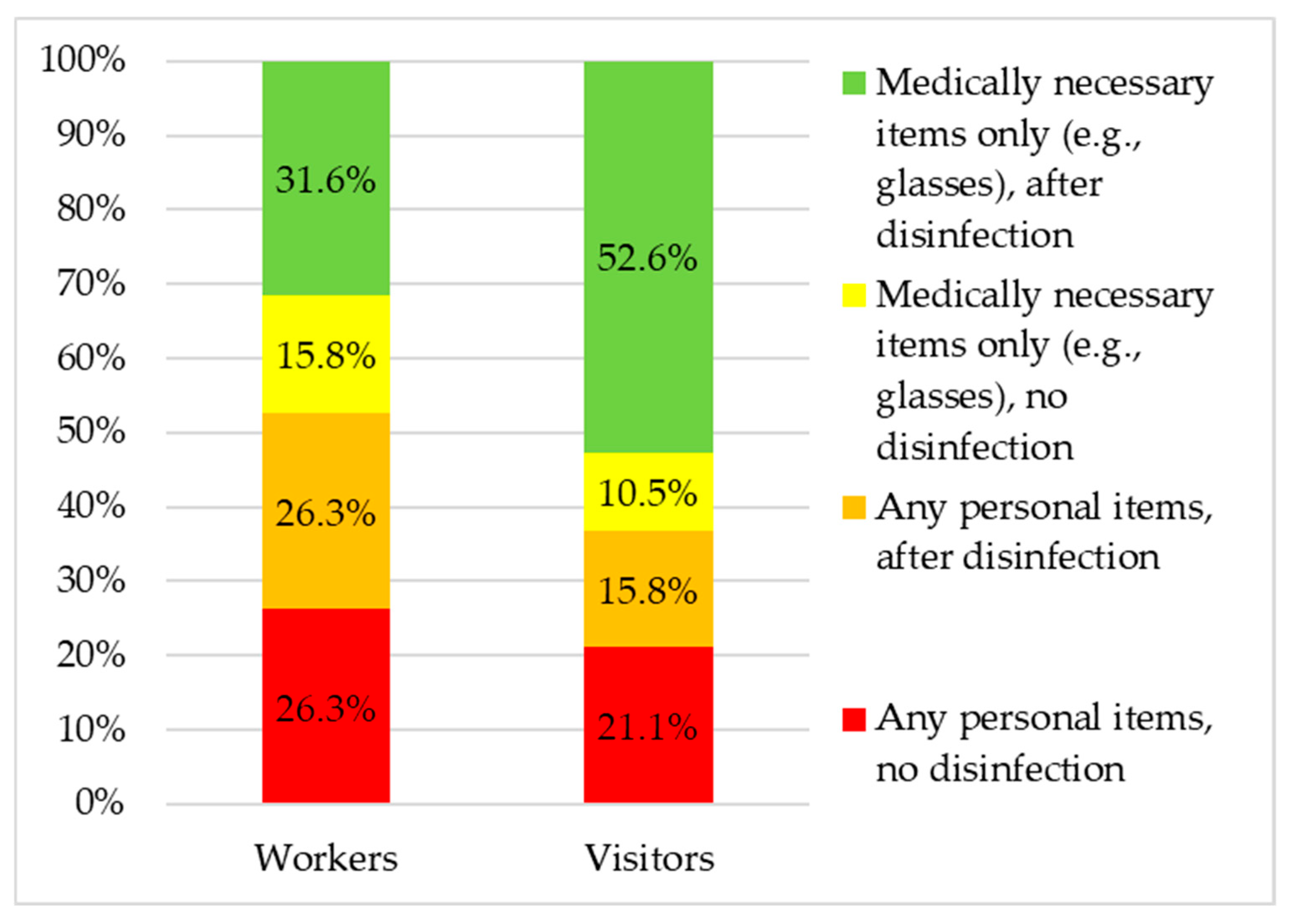
The entry of personal items was also regulated on the surveyed farms (Figure 6). Restrictions were generally stricter for visitors than for farm workers: 10/19 (52.6%) of the farms allowed visitors to bring only medically necessary items after disinfection, whereas this proportion was 6/19 (31.6%) for workers. In contrast, 5/19 (26.3%) of the farms allowed workers to bring in any personal items without disinfection, compared with 4/19 (21.1%) for visitors. The average number of workers per farm was 25 (range: 3–75).
During the studied period, visitor traffic was generally low on the surveyed farms. On 1/19 (5.3%) farms, no visitors were present, while 9/19 (47.4%) received a maximum of one to two visitors per month. In addition, 5/19 (26.3%) farms received three to four visitors per month, 3/19 (15.8%) reported five to six visitors per month, and only 1/19 (5.3%) farms had more than six visitors per month. Regarding the swine-free waiting period before entry, 14/19 (73.7%) farms required at least three nights (approximately 60 h), while 5/19 (26.3%) required at least two nights (approximately 36 h). No farm accepted a shorter waiting period.
Food brought onto the farms was also regulated to varying degrees. On 10/19 (52.6%) farms, food of porcine origin was prohibited, while on 7/19 (36.8%) farms no food could be brought onto the premises by workers, as food was provided by the farm itself. Among these farms, 4/19 (21.1%) purchased food from regular suppliers that could confirm no contact with pork during food preparation. However, 2/19 (10.5%) farms did not regulate what food items workers could bring onto the premises.
All surveyed farms had changing rooms and showers (19/19, 100.0%). On 18/19 (94.7%) farms, locker rooms were divided into functional zones located in separate airspaces as part of the farm-entry biosecurity protocol. The mean shower-condition score was 4.16 ± 1.07. Based on the respondent-reported assessment, shower condition was described as excellent on 9/19 (47.4%) farms, good on 6/19 (31.6%), fair on 3/19 (15.8%), bad on 0/19 (0.0%), and very bad on 1/19 (5.3%). Clean work clothes were provided daily on 10/19 (52.6%) farms, several times a week on 7/19 (36.8%), and once or twice weekly on 2/19 (10.5%). On some farms, work clothes were changed several times a day depending on the order and type of tasks performed.

3.2. Internal Biosecurity on the Surveyed Farms

3.2.1. Group Separation, All-In/All-Out Management and Cleaning Between Batches

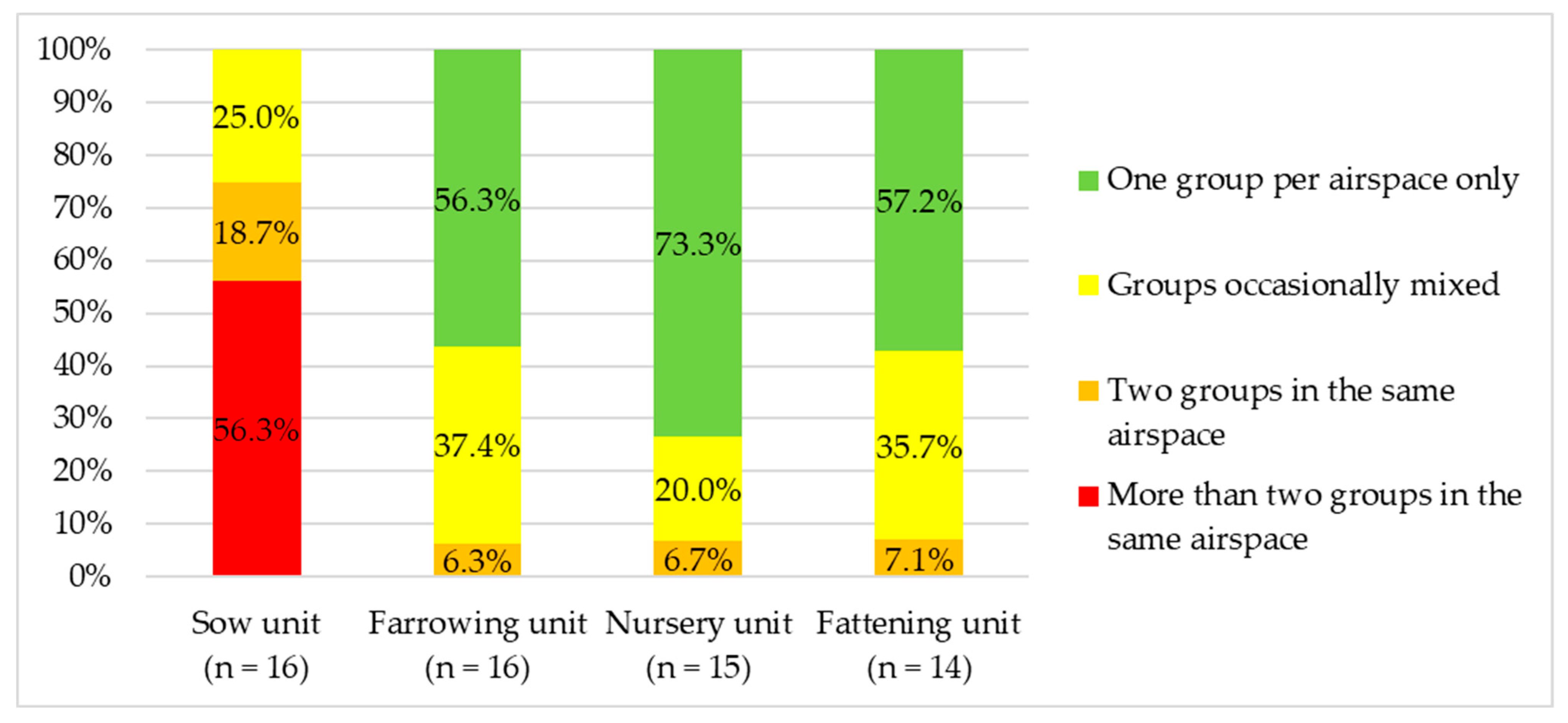
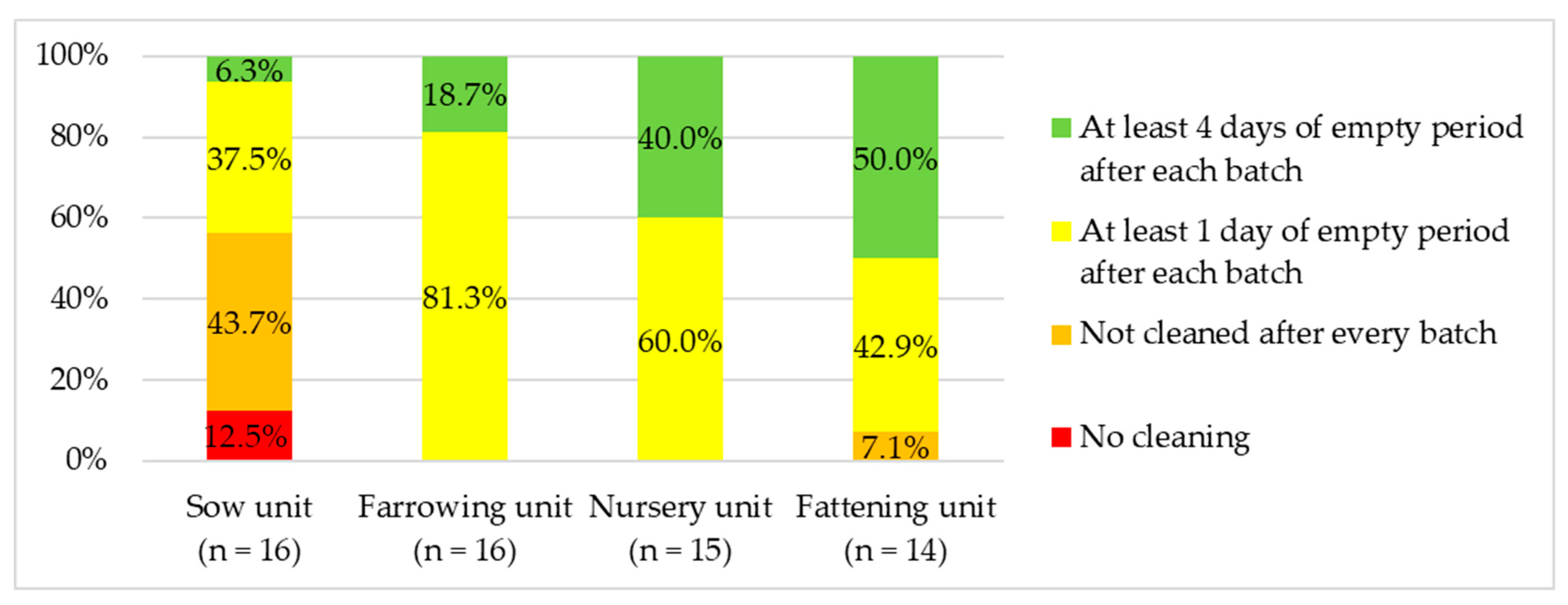
Almost all surveyed farms applied all-in/all-out management in the farrowing, nursery, and fattening units, either consistently applied or with only occasional mixing of groups (Figure 7). However, in the sow unit, complete separation of groups at the airspace level was not achieved on any farm (0/16, 0.0%). In this unit, 4/16 (25.0%) of the farms reported occasional mixing of groups, whereas 3/16 (18.7%) housed two groups and 9/16 (56.3%) housed more than two groups within the same airspace.
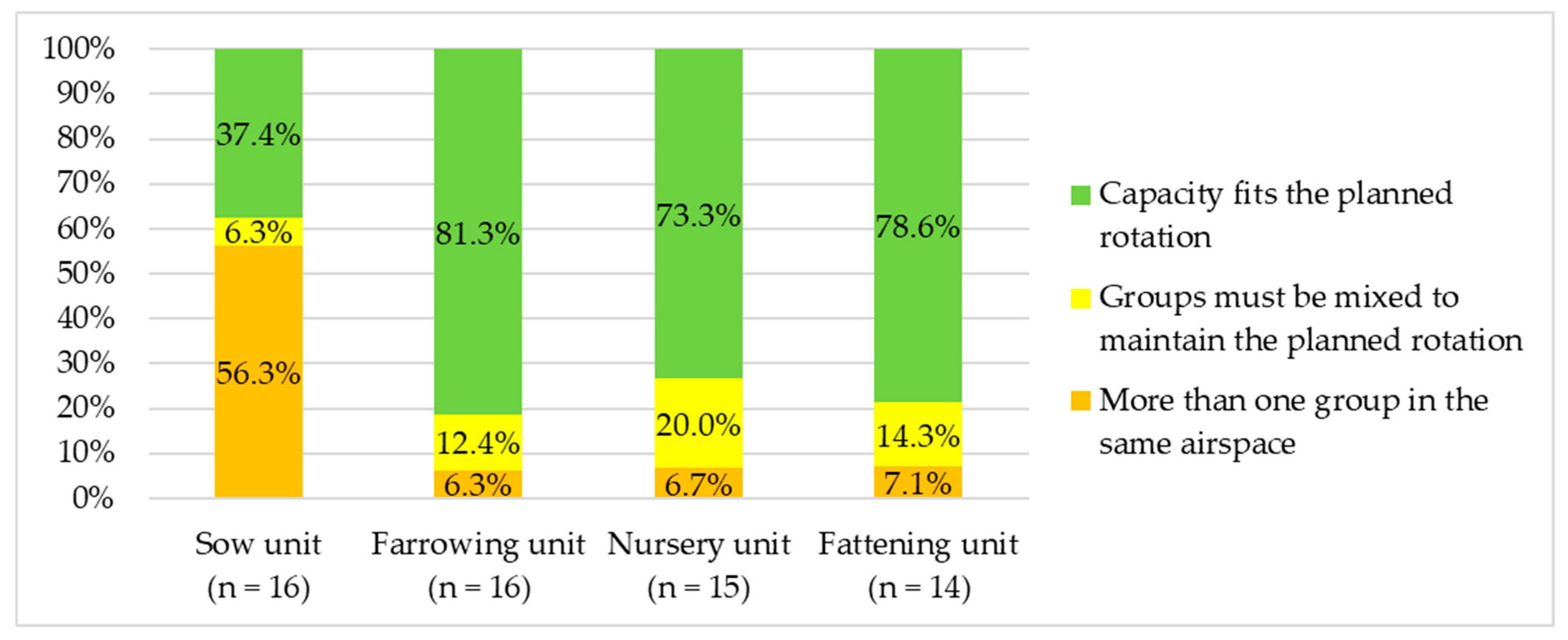
The implementation of all-in/all-out management varied according to the availability of separate rooms and airspaces in relation to the planned production flow (Figure 8). Capacity was sufficient to maintain the planned rotation in 13/16 (81.3%) farrowing units, 11/15 (73.3%) nursery units, and 11/14 (78.6%) fattening units, but in only 6/16 (37.4%) sow units. In the sow unit, 9/16 (56.3%) farms had to keep more than one group in the same airspace to maintain the planned rotation, while 1/16 (6.3%) required occasional group mixing. None of the surveyed farms were forced to house more than one group in the same pen (0/16, 0.0%).
Farrowing and nursery units were cleaned after every batch on all surveyed farms (16/16, 100.0% and 15/15, 100.0%, respectively), while 13/14 (92.9%) of the fattening units were also cleaned between batches. However, the empty period after cleaning was often short. In sow units, 2/16 (12.5%) farms did not clean the pens at all, and a further 7/16 (43.7%) did not clean them after every batch (Figure 9).
Most farms used mobile high-pressure cleaning units (13/19, 68.4%), while some also had built-in pressure washer systems (7/19, 36.8%). Only 6/19 (31.6%) farms had washers capable of using hot water. Automated soaking systems were available on 2/19 (10.5%) farms to facilitate the removal of dried organic contamination. A cleaning robot was used for facility washing on 1/19 (5.3%) farms, whereas none of the farms used a steam washer (0/19, 0.0%).

3.2.2. Separation of Sick Animals and Rodent Occurrence

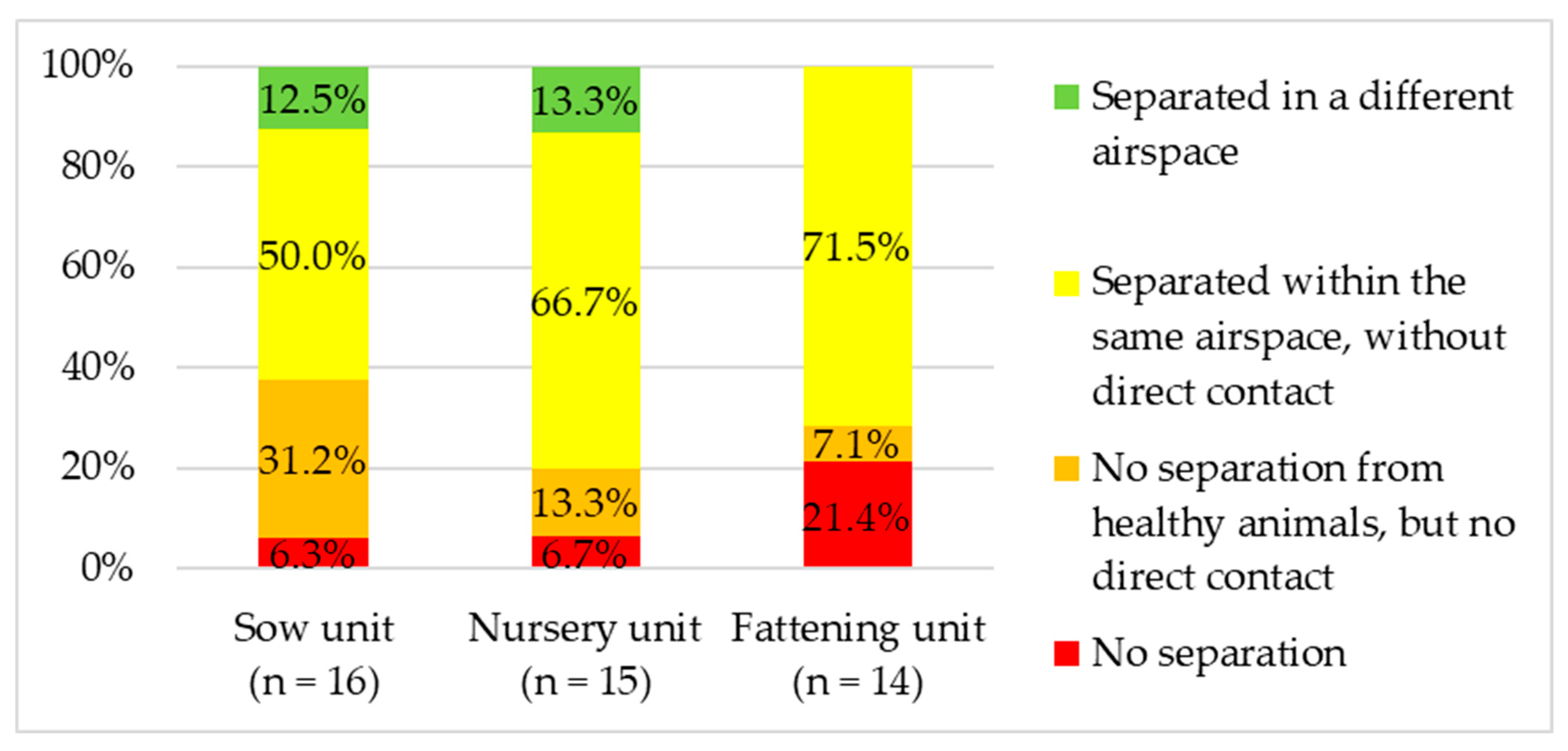
The separation of sick animals was assessed in the different production units, with particular attention to the possibility of contact with healthy animals (Figure 10). In the sow and nursery units, sick animals were usually separated in a way that prevented direct contact with the rest of the herd, most often within the same airspace (8/16, 50.0% and 10/15, 66.7%, respectively). Separation in a different airspace was possible only on 2/16 (12.5%) and 2/15 (13.3%) farms, respectively. In the fattening units, 10/14 (71.5%) farms separated sick animals within the same airspace without direct contact, whereas 3/14 (21.4%) did not apply any separation. The mean number of animals per pen was 35 (range: 7–120) in the sow units (n = 14), 46 (range: 12–110) in the nursery units (n = 14), and 26 (range: 9–55) in the fattening units (n = 12).
The perceived occurrence of rodents was also recorded on the basis of respondent reporting. The mean rodent-occurrence score was 2.21 ± 1.27. Among the surveyed farms, rodent occurrence was reported as very high on 2/19 (10.5%) farms, high on 0/19 (0.0%), moderate on 5/19 (26.3%), low on 5/19 (26.3%), and very low on 7/19 (36.8%). Rodent control programs, monitoring methods, and bait-station management were not assessed separately.

3.2.3. Movements Between Production Units and Internal Hygiene Barriers

Only 9/19 (47.4%) surveyed farms had a layout in which all areas could be accessed from within the buildings without passing through another unit. The most common limitation was movement through courtyards between buildings (8/19, 42.1%). In addition, 4/19 (21.1%) farms required movement through non-destination areas, and on 5/19 (26.3%) farms, animals were moved through areas used by another production group.
Movements between production units are shown in Table 4. The most frequent movements between production units were associated with management and maintenance staff, whereas caretaker movements were generally less frequent and visitor movements were mostly absent or infrequent. For example, daily movements from the sow unit to the farrowing unit were reported on 8/19 (42.1%) farms for management staff, compared with 4/19 (21.1%) for maintenance staff and 2/19 (10.5%) for caretakers. Similarly, daily movements from the farrowing unit to the sow unit occurred on 10/19 (52.6%) farms for management staff, but on only 3/19 (15.8%) for maintenance staff and 2/19 (10.5%) for caretakers. The highest movement frequencies were typically observed between the sow, farrowing, and nursery units. By contrast, movements toward the fattening units were generally less common, particularly for caretakers and visitors: for caretakers, such movements were absent on 16/19 to 18/19 (84.2–94.7%) farms, and for visitors on 11/19 to 12/19 (57.9–63.2%) farms. These results indicate that the main internal biosecurity risk related to staff movement was linked less to routine animal care personnel than to management and maintenance staff, whose work more often extended across multiple production units.
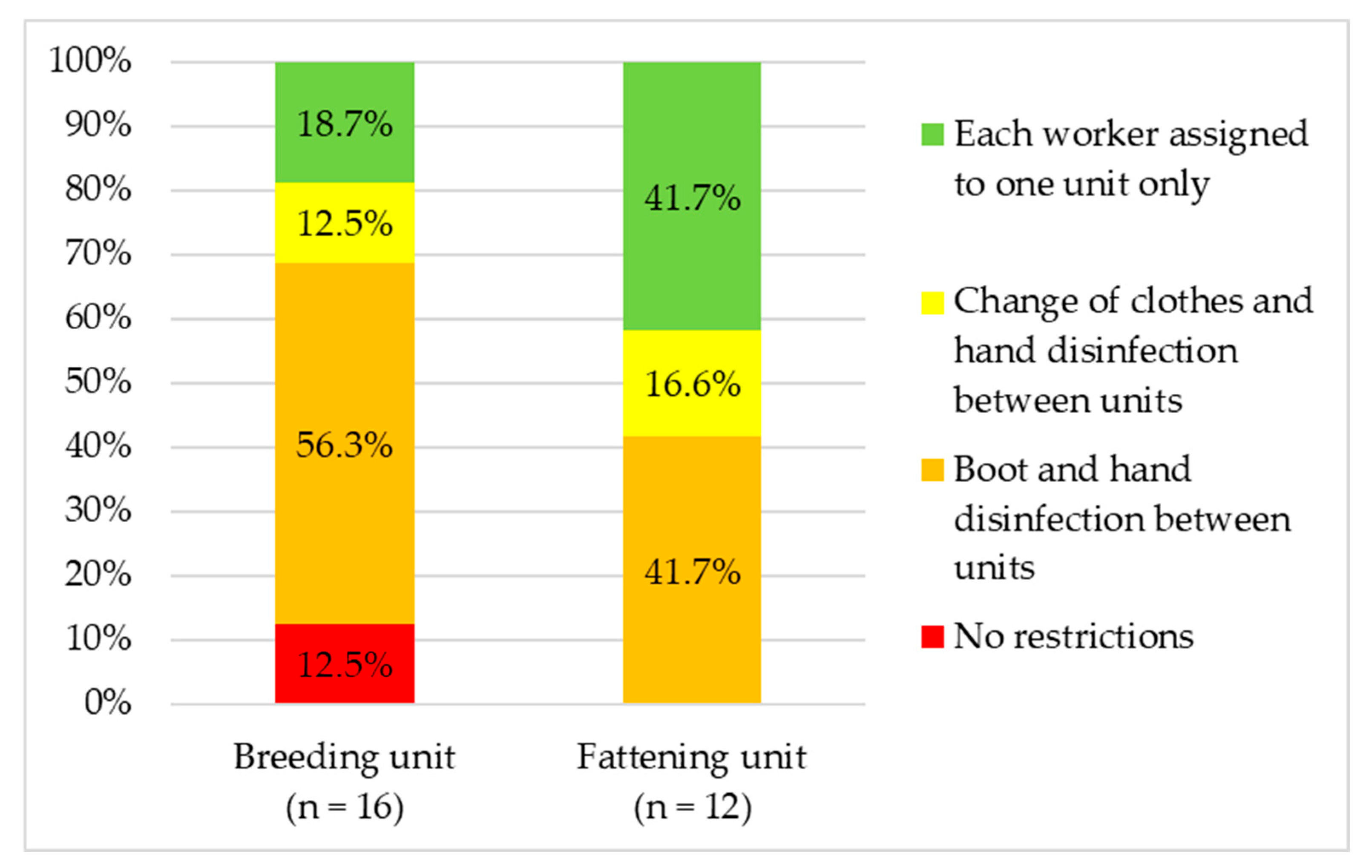
Movement between production units was commonly accompanied by hygiene procedures. On most farms, hand and boot disinfection was used between units, while some farms also required a complete change of clothes. In addition, caretakers worked exclusively in one production unit in 3/16 (18.7%) breeding units and 5/12 (41.7%) fattening units, suggesting that unit-specific caretaker assignment was more common in fattening units (Figure 11).
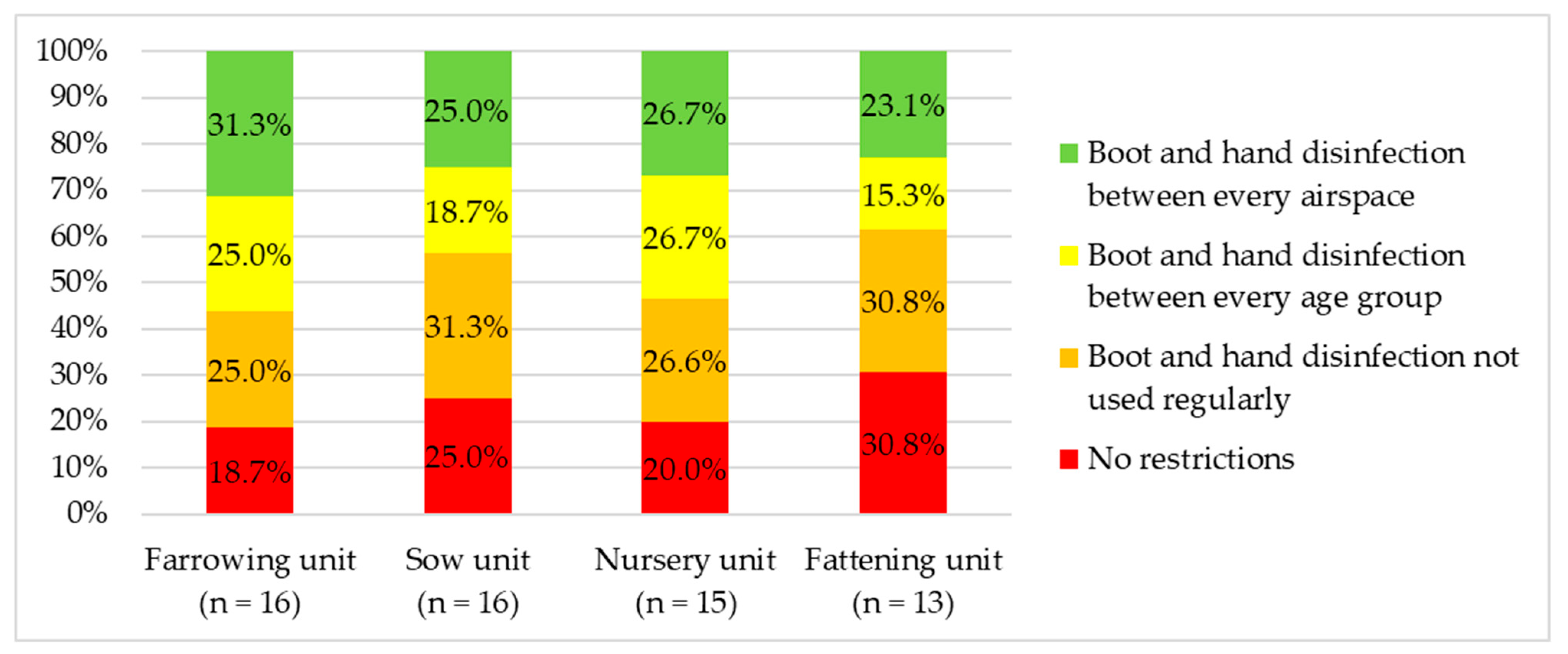
On approximately half of the surveyed farms, hygiene barriers were used consistently between all age groups within each production unit, and, where one age group was housed in several facilities, also between separate airspaces. On the remaining farms, these procedures were applied irregularly or were absent. Restrictions were absent most frequently in the sow (4/16, 25.0%) and fattening units (4/13, 30.8%). By contrast, hygiene barriers were applied more consistently in the nursery and farrowing units (Figure 12).
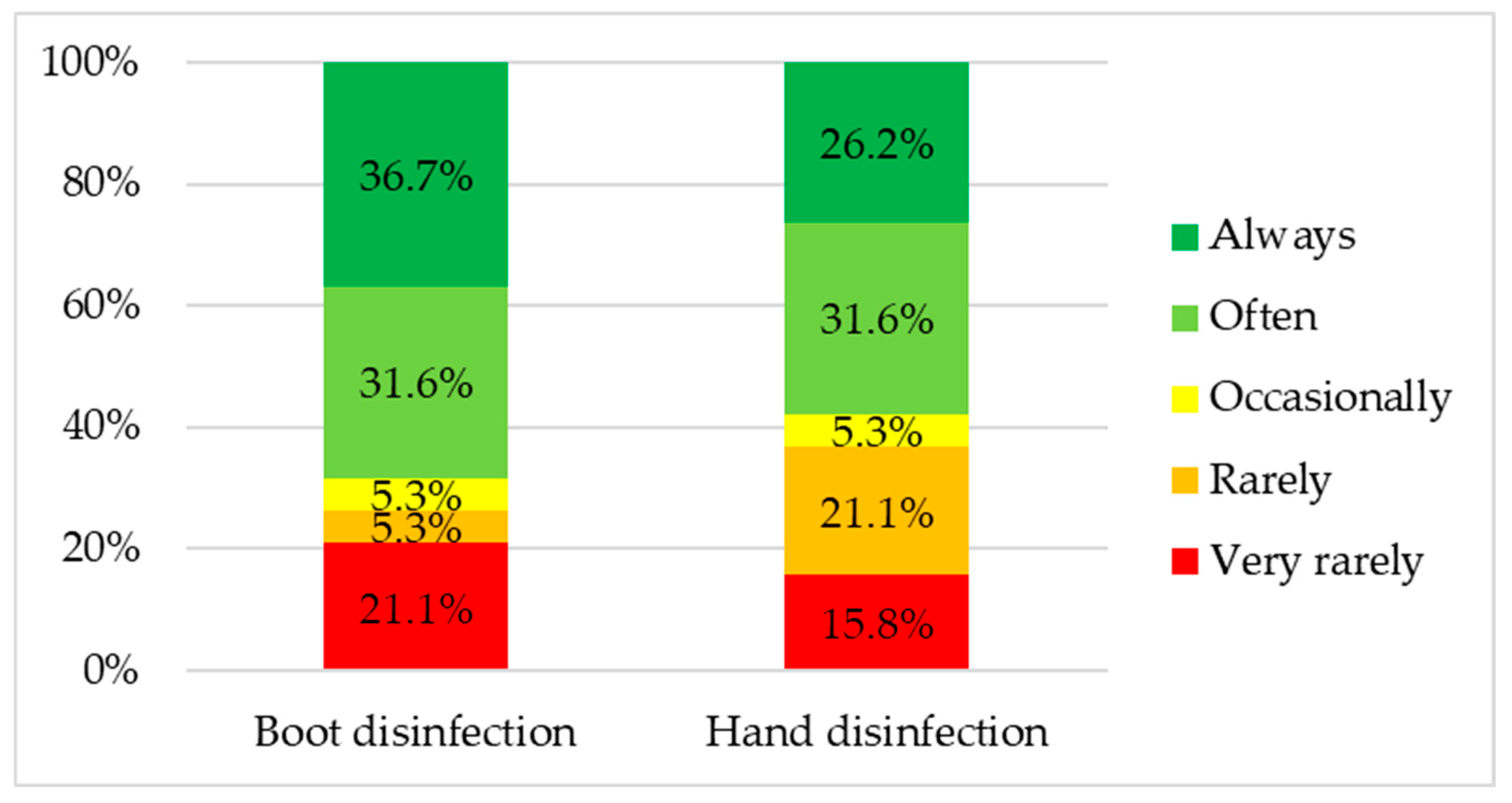
According to the respondents, boot disinfection was used more consistently than hand disinfection (7/19, 36.7% vs. 5/19, 26.2%), with mean scores of 3.58 ± 1.57 and 3.32 ± 1.49, respectively. However, the reported frequency of use varied considerably for both measures (Figure 13).
Carcass storage also played an important role in internal biosecurity. On 13/19 (68.4%) farms, workers who had entered the carcass storage area did not return to the stable on the same day. On 1/19 (5.3%) farms, a complete change of clothes and hand disinfection were required before re-entry, while on 3/19 (15.8%) farms, hand and boot disinfection were required. However, on 2/19 (10.5%) farms, insufficient physical and organizational separation of carcass storage areas represented a potential biosecurity risk.

3.2.4. Movement of Equipment and Other Fomites Between Units

Only 8/19 (42.1%) surveyed farms had dedicated equipment sets for each facility, and these were disinfected at least between different animal groups. The mean score for sorting-panel cleaning frequency was 3.16 ± 1.07. On 4/19 (21.1%) farms, tools were occasionally mixed between facilities, while on 7/19 (36.8%) farms, they were regularly used in more than one facility. Sorting panels were not dedicated to individual facilities but were typically used between different buildings and animal groups. Needle replacement practices were also assessed. None of the farms changed needles after each individual animal (0/19, 0.0%), although the study did not separately evaluate the handling of sows and their offspring. On 11/19 (57.9%) farms, needles or other blood-contaminated fomites were reportedly changed regularly between litters or pens. On 3/19 (15.8%) farms, they were changed after treating sick animals, and on 2/19 (10.5%) farms, they were always changed between facilities. However, on 3/19 (15.8%) farms, such tools were regularly shared between different areas. As these practices were not assessed separately by animal category, no distinction could be made between sows, piglets, nursery pigs, and fatteners.

4. Discussion

The results provide a detailed overview of the strengths and remaining weak points of external and internal biosecurity in the surveyed segment of large commercial Hungarian pig farms.

4.1. External Biosecurity: Farm Environment, Introduction Pathways, Vehicle Traffic, and Entry Hygiene

Farm surroundings are relevant because pathogens such as PRRSV and Mycoplasma hyopneumoniae may spread over several kilometers through air, reportedly up to 9 km [2]. In the present study, most farms had no neighboring pig holdings within 500 m, but this proportion decreased markedly at wider radii, indicating that the surveyed farms still operated within a broader pig-dense environment. Previous European surveys have shown that surrounding pig density varies considerably between countries, which may influence farm-level disease-control conditions [1].
All farms in our survey were fenced, compared with 85% of Spanish farms reported by Simon-Grifé et al. [24]. However, fence continuity and structural protection were not uniformly optimal, indicating that the presence of a fence alone does not necessarily ensure adequate perimeter protection. This is consistent with European evidence showing heterogeneity in biosecurity definitions, mandatory measures, and practical implementation across countries [25,26]. Thus, even in a regulatory context where perimeter fencing is required, the structural quality and practical continuity of the fence line remain relevant farm-level issues [22].
Direct contact between incoming animals and susceptible stock is one of the most important transmission routes of infectious diseases; therefore, minimizing live-animal introduction and using continuously monitored high-health-status sources are generally preferable [1,2]. Previous European surveys also indicate that source-farm health status and documentation are important elements of animal-introduction biosecurity [1,27]. In the present study, the predominance of single regular high-health-status suppliers and the absence of occasional suppliers suggest relatively cautious replacement practices. However, adequate quarantine duration did not always coincide with full spatial or operational isolation. Although the recorded quarantine periods were consistent with the Hungarian 60-day minimum requirement related to the PRRSV eradication program [28], quarantine effectiveness cannot be evaluated on the basis of duration alone. Ideally, quarantine facilities should be located at least 1 km from the main farm to reduce the risk of airborne transmission and indirect spread by rodents [2]. In the present survey, only a minority of farms purchasing animals from different owners had geographically isolated quarantine facilities, while others relied on on-farm quarantine buildings or more limited operational separation. Because exact quarantine-to-main-farm distances were not recorded, compliance with the ≥1 km isolation recommendation could not be determined. Similar variability has been reported in previous Spanish and Swedish surveys, where quarantine use, isolation level, and duration differed between farms [24,29].
Semen sourcing should also be interpreted cautiously, as several pathogens, including Leptospira spp., PRRSV, PCV-2, and PPV-1, may be transmitted through semen [1]. Although most surveyed breeding units used continuously monitored high-health-status semen sources, some farms used multiple semen sources, representing an additional external contact route. Therefore, semen sourcing appeared generally controlled, but not risk-free. This interpretation is consistent with recent evidence that biosecurity practices related to animal introduction and farm management are important for PRRS control and eradication [30].
Because vehicles may act as mechanical carriers of pathogens, the frequent crossing of the fence line by feed delivery vehicles represented one of the main practical weak points of external biosecurity in the present survey [18]. Similar weaknesses have been reported in several European countries. Filippitzi et al. [1] identified deficiencies in vehicle hygiene and traffic organization, including problems with feed and manure transport routes in Sweden, France, Belgium, and the Netherlands. Swedish data also showed weaknesses related to transport-vehicle hygiene, loading areas, and driver access to animal buildings [29]. Similar fence-line crossing by feed and carcass transport vehicles has also been reported in Spain [24]. In our survey, disinfection infrastructure and vehicle hygiene practices varied substantially, indicating inconsistent traffic control. Incompletely closed feed-storage containers may represent an additional weakness, because contact with birds and rodents cannot be fully excluded. These findings deserve attention because recent modelling work has shown that vehicle movements may maintain extensive indirect contact networks between pig farms even when routine cleaning and disinfection are applied [31].
Human entry hygiene appeared comparatively restrictive on the surveyed farms, although these findings are based on reported practices and should be interpreted with caution. Because humans may act as mechanical vectors of infectious agents, limiting human traffic and applying strict entry protocols remain important [2,32,33]. In the present study, entry hygiene requirements for workers and visitors were among the more consistently implemented entry-related biosecurity measures. Previous European surveys reported considerable variation in entry-control measures, including farm-specific clothing, showering requirements, and downtime rules for visitors and workers [29,34,35,36]. Food-entry rules are also relevant under continuing ASF pressure, because ASFV may remain infectious in frozen and dried meat for years [6,37]. Compared with a previous Spanish survey, where only 57% of farms reportedly prohibited pork from being brought onto the premises, the present findings suggest greater attention to this pathway [27].
The hygienic condition of showers and changing rooms is also important for the practical implementation of entry hygiene protocols. Previous Spanish and Belgian surveys reported variable or lower availability of changing rooms and showers, as well as limited functional separation of locker-room areas [24,27,35]. Recent ASF-oriented assessments similarly showed that even farms with generally favorable biosecurity may retain weaknesses in fencing, clean-dirty separation, cleaning and disinfection, pest control, hygiene locks, and traffic management [38,39].

4.2. Internal Biosecurity: Group Separation, Animal Flow, Hygiene Barriers and Fomites

Previous European surveys have shown considerable variation in all-in/all-out management and age-group separation between countries, production systems and unit types [24,27,29,34]. In the present study, all-in/all-out management was commonly observed in the farrowing, nursery, and fattening units, whereas sow units showed substantially weaker separation at the airspace level. This indicates that internal biosecurity was not equally strong across production units and may have reflected both management decisions and structural limitations [2,24,27,29].
Cleaning, disinfection, and an adequate empty period are important for interrupting the infection cycle, but their effectiveness depends strongly on proper pre-cleaning and removal of organic matter [2,40]. In the present study, the empty period after cleaning was often short, particularly in sow units, where pens were not always cleaned between batches. This likely reflects the constraints of continuous production and indicates that between-batch hygiene was not equally feasible across all unit types. The availability of hot water, soaking systems, suitable washing equipment, and drying time may therefore influence the practical effectiveness of hygiene procedures under farm conditions [2,21,40,41].
The separation of sick animals was common in the sow, nursery, and fattening units, and direct contact with the healthy herd was usually avoided. However, separation in different airspaces was only rarely possible, suggesting that isolation was often achieved within the same epidemiological environment rather than through full physical separation. This may still be relevant for within-barn transmission [2,29,42]. Previous French and Swedish surveys also indicate variability in the availability and use of sick-animal separation facilities [1,29]. Although the present study did not directly assess rodent-control measures, rodent occurrence remains relevant from a biosecurity perspective, particularly because pest-control protocols are widely reported in European pig-farm surveys [1,24,29,35]. In our data, rodent occurrence was generally reported as low to very low, but this potential internal transmission route cannot be considered negligible.
Inter-unit movement patterns also represented an important internal biosecurity issue. Farm layout should support workflows that minimize direct and indirect contact between age groups and production units [2]. From an internal biosecurity perspective, movement from more susceptible to less susceptible groups is preferred, whereas reverse movements represent an increased risk [2,29]. Similar age-related movement principles have also been described on Swedish farms [29]. In the present study, fewer than half of the farms had a layout in which all relevant areas could be accessed without crossing courtyards or non-destination areas. The most frequent inter-unit movements were associated with management and maintenance staff, whereas visitor-related movement appeared more limited. Thus, internal movement risk was linked mainly to staff categories whose work often extended across several production units rather than to visitors, whose frequency and movement were more restricted [2,43].
Internal hygiene barriers may reduce pathogen spread between units, but their effectiveness depends on correct and consistent implementation, including the proper use and pre-cleaning of boot disinfection points [19,32,33]. International studies have also identified deficiencies in hand and boot sanitation practices on farms in France, Sweden, Belgium, and Germany [1]. In the present study, hand and boot disinfection were commonly used between unit types, but sow and fattening units remained less protected than nursery and farrowing units [2,29]. This supports the view that biosecurity implementation is influenced not only by formal rules, but also by feasibility, perception, and daily practice [44].
Carcass-storage management and shared equipment also remained relevant internal biosecurity points. The lack of physical and workflow-related separation of carcass-storage areas has previously been identified as a problem on Hungarian pig farms [45]. In the present study, most farms applied at least some separation between carcass handling and re-entry into animal areas, but a minority still lacked adequate physical or organizational separation. Similarly, insufficient tool disinfection between animal groups has been identified as a widespread problem in Germany, Denmark, the Netherlands, Sweden, and Belgium [1]. Sorting panels are particularly relevant fomites because they are often used across facilities and age groups, and recent evidence indicates that more frequent and effective cleaning of pens and fomites may reduce within-farm spread [46]. In the present study, only a minority of farms had dedicated equipment sets for each facility, sorting-panel cleaning was often irregular, and needle replacement between individuals and animal groups was not fully implemented, although this is considered ideal [2]. These findings indicate that routine procedures, including shared-equipment management, sorting-panel cleaning, and needle replacement, may remain practical weak points even where broader structural biosecurity measures are present [1,30].

4.3. Strengths and Limitations

A strength of the present study is that it provides a detailed farm-level overview of external and internal biosecurity measures, together with selected disinfection-related practices, in the surveyed segment of large commercial Hungarian pig farms. The surveyed farms represented a considerable proportion of the national breeding sow population, and the dataset covered several biosecurity domains, including farm surroundings, animal introduction, vehicle and personnel movements, hygiene barriers, shared equipment, and routine disinfection practices.
Several limitations should be acknowledged. First, the survey was based on a relatively small convenience sample of 19 large commercial pig farms from selected regions of Hungary. Therefore, the findings cannot be considered representative of the Hungarian pig sector as a whole, particularly small- and medium-sized farms or backyard holdings. Voluntary participation may also have introduced selection bias, as farms with greater interest in biosecurity may have been more likely to participate.
Second, the study relied mainly on questionnaire data and interview-based reporting, which may have introduced reporting and social desirability bias, especially for human entry hygiene measures. Formal protocols may not always correspond fully to day-to-day compliance. The use of both on-farm and online interviews may also have influenced the level of detail obtained.
Third, the questionnaire was developed specifically for this descriptive survey and was pre-tested, but it was not formally validated as a standardized biosecurity assessment tool. No composite biosecurity index, formal score, benchmarking system, quantitative risk assessment, or transmission model was applied; therefore, the study can identify and qualitatively prioritize practical biosecurity weaknesses, but cannot estimate their relative contribution to pathogen transmission or predict the expected impact of specific interventions.
Fourth, the reported biosecurity and disinfection practices were not systematically validated by repeated on-farm observations, microbiological testing, or other objective methods. In particular, the effectiveness of cleaning and disinfection procedures was not confirmed microbiologically. Because the study was cross-sectional and focused on the second half of 2020, it does not allow conclusions regarding temporal changes or causal relationships between specific biosecurity measures and herd health outcomes. Farm-level practices may have changed since data collection; however, the dataset remains relevant because it reflects practices from an already ASF-aware period in Hungary.

5. Conclusions

The selected large commercial Hungarian pig farms surveyed in this study reported the presence of several important biosecurity measures, particularly in perimeter fencing, animal and semen sourcing, quarantine, and entry hygiene. However, practical risk points were also identified in vehicle traffic control, disinfection infrastructure, feed storage, sow-unit separation, inter-unit movement, shared equipment management, and carcass-related workflows. These results indicate that biosecurity assessment should consider not only whether control measures are formally present, but also how consistently and effectively they can be implemented under routine farm conditions. Based on the observed risk points, future farm-level improvements should focus on vehicle-route management, quarantine separation, feed protection, internal hygiene barriers, and the management of shared equipment and personnel movements.

Supplementary Materials

The following supporting information can be downloaded at: https://www.mdpi.com/article/10.3390/agriculture16111175/s1, File S1: Questionnaire used in the study.

Author Contributions

Conceptualization, G.S.-S., L.B. and L.Ó.; methodology, G.S.-S., L.B. and L.Ó.; validation, G.S.-S., L.B. and L.Ó.; formal analysis, G.S.-S., M.M., P.M. and I.M.; investigation, G.S.-S., P.M. and I.M.; resources, L.B. and L.Ó.; data curation, G.S.-S., M.M., P.M. and I.M.; writing—original draft preparation, G.S.-S., M.M. and L.Ó.; writing—review and editing, G.S.-S., M.M., P.M., I.M., L.B. and L.Ó.; visualization, M.M.; supervision, L.B. and L.Ó.; project administration, L.B. and L.Ó.; funding acquisition, L.Ó. All authors have read and agreed to the published version of the manuscript.

Funding

The research was funded by project no. RRF-2.3.1-21-2022-00001, which has been implemented with the support provided by the Recovery and Resilience Facility (RRF), financed under the National Recovery Fund budget estimate, RRF-2.3.1-21 funding scheme.

Institutional Review Board Statement

The study was submitted for institutional ethical assessment to the Scientific and Innovation Committee of the University of Veterinary Medicine Budapest. Formal ethical approval was not required because the study did not involve experimental animal procedures, animal interventions, biological sampling, or the collection of sensitive personal data. The analysis was based exclusively on retrospective questionnaire-derived herd management information and routine veterinary records collected at the farm level, in accordance with the ethical principles outlined in the Code of Ethics of the Hungarian Academy of Sciences.

Informed Consent Statement

Informed consent was obtained from all subjects involved in the study.

Data Availability Statement

The data presented in this study are available from the corresponding author on reasonable request.

Acknowledgments

The authors gratefully acknowledge the participating swine farms, farm managers, and veterinarians for providing the herd-level information used in this analysis.

Conflicts of Interest

The authors declare no conflicts of interest.

Abbreviations

The following abbreviations are used in this manuscript:
ASFAfrican swine fever
PRDCPorcine Respiratory Disease Complex
PRRSVPorcine reproductive and respiratory syndrome virus
PPV-1Porcine parvovirus 1
ADGAverage daily gain
FCRFeed conversion ratio
PRRSPorcine reproductive and respiratory syndrome
PCV-2Porcine circovirus type 2
SPFSpecific Pathogen Free
ASFVAfrican Swine Fever Virus

References

  1. Filippitzi, M.E.; Brinch Kruse, A.; Postma, M.; Sarrazin, S.; Maes, D.; Alban, L.; Nielsen, L.R.; Dewulf, J. Review of transmission routes of 24 infectious diseases preventable by biosecurity measures and comparison of the implementation of these measures in pig herds in six European countries. Transbound. Emerg. Dis. 2018, 65, 381–398. [Google Scholar] [CrossRef]
  2. Alarcón, L.V.; Allepuz, A.; Mateu, E. Biosecurity in pig farms: A review. Porc. Health Manag. 2021, 7, 5. [Google Scholar] [CrossRef]
  3. Desrosiers, R. Transmission of swine pathogens: Different means, different needs. Anim. Health Res. Rev. 2011, 12, 1–13. [Google Scholar] [CrossRef]
  4. Pileri, E.; Mateu, E. Review on the transmission of porcine reproductive and respiratory syndrome virus between pigs and farms and impact on vaccination. Vet. Res. 2016, 47, 119. [Google Scholar] [CrossRef]
  5. Antonopoulos, A.; Sweeney, S.; McCall, K.; Garcia Manzanilla, E.; Correia-Gomes, C.; Burrell, A.; Chenais, E.; Tamminen, L.-M.; Ózsvári, L.; Charlier, J.; et al. Veterinarians’ perception of livestock infectious disease: Results from a five-country cross-European survey. BMC Vet. Res. 2026, 22, 195. [Google Scholar] [CrossRef]
  6. European Food Safety Authority (EFSA); Ståhl, K.; Boklund, A.; Podgórski, T.; Vergne, T.; Aminalragia-Giamini, R.; Abrahantes, J.C.; Papaleo, S.; Mur, L. Epidemiological analysis of African swine fever in the European Union during 2024. EFSA J. 2025, 23, e9436. [Google Scholar] [CrossRef] [PubMed]
  7. European Commission. African Swine Fever. Available online: https://food.ec.europa.eu/animals/animal-diseases/diseases-and-control-measures/african-swine-fever_en (accessed on 18 March 2026).
  8. Assavacheep, P.; Thanawongnuwech, R. Porcine respiratory disease complex: Dynamics of polymicrobial infections and management strategies after the introduction of African swine fever. Front. Vet. Sci. 2022, 9, 1048861. [Google Scholar] [CrossRef]
  9. Boeters, M.; Garcia-Morante, B.; Van Schaik, G.; Segalés, J.; Rushton, J.; Steeneveld, W. The economic impact of endemic respiratory disease in pigs and related interventions: A systematic review. Porc. Health Manag. 2023, 9, 45. [Google Scholar] [CrossRef]
  10. Holtkamp, D.J.; Kliebenstein, J.B.; Neumann, E.J.; Zimmerman, J.J.; Rotto, H.F.; Yoder, T.K.; Wang, C.; Yeske, P.; Mowrer, C.R.; Haley, C.A. Assessment of the economic impact of porcine reproductive and respiratory syndrome virus on United States pork producers. J. Swine Health Prod. 2013, 21, 72–84. [Google Scholar] [CrossRef] [PubMed]
  11. Ózsvári, L.; Búza, L. Comparative study on technology level, major production parameters and management of porcine respiratory disease complex (PRDC) in fattening pig herds. Magy. Állatorvosok Lapja 2015, 137, 79–92. (In Hungarian) [Google Scholar]
  12. Szabó, I.; Nemes, I.; Búza, L.; Polyák, F.; Bálint, Á.; Fitos, G.; Holtkamp, D.J.; Ózsvári, L. The impact of PRRS eradication program on the production parameters of the Hungarian swine sector. Animals 2023, 13, 1565. [Google Scholar] [CrossRef]
  13. Szabó, I.; Nemes, I.; Ózsvári, L. The impact of complete depopulation-repopulation approach on slaughter pig production in Hungary during the PRRS eradication. Magy. Állatorvosok Lapja 2023, 145, 579–584. (In Hungarian) [Google Scholar] [CrossRef]
  14. Szabó, I.; Nemes, I.; Bognár, L.; Terjék, Z.; Molnár, T.; Abonyi, T.; Bálint, Á.; Horváth, D.G.; Balka, G. Eradication of PRRS from Hungarian Pig Herds between 2014 and 2022. Animals 2023, 13, 3747. [Google Scholar] [CrossRef] [PubMed]
  15. Szabó, I.; Makkai, I.; Máté, P.; Molnár, T.; Swam, H.; von Berg, S.; Holtkamp, D.J.; Glávits, R.; Szabó, I., Jr.; Ózsvári, L.; et al. Slaughterhouse visual and palpation method for estimating the economic damage of porcine proliferative enteropathy (PPE). Animals 2023, 13, 542. [Google Scholar] [CrossRef] [PubMed]
  16. Postma, M.; Backhans, A.; Collineau, L.; Loesken, S.; Sjölund, M.; Belloc, C.; Emanuelson, U.; Grosse Beilage, E.; Nielsen, E.O.; Stärk, K.D.C.; et al. Evaluation of the relationship between the biosecurity status, production parameters, herd characteristics and antimicrobial usage in farrow-to-finish pig production in four EU countries. Porc. Health Manag. 2016, 2, 9. [Google Scholar] [CrossRef]
  17. Torremorell, M. The Three Levels of Biosecurity of Animals. MSD Veterinary Manual. Available online: https://www.msdvetmanual.com/management-and-nutrition/biosecurity/the-three-levels-of-biosecurity-of-animals?query=biosecurity (accessed on 13 September 2025).
  18. Lambert, M.È.; D’Allaire, S. Biosecurity in swine production: Widespread concerns. Adv. Pork Prod. 2009, 20, 139–148. [Google Scholar]
  19. Amass, S.F.; Vyverberg, B.D.; Ragland, D.; Dowell, C.A.; Anderson, C.D.; Stover, J.H.; Beaudry, D.J. Evaluating the efficacy of boot baths in biosecurity protocols. J. Swine Health Prod. 2000, 8, 169–173. [Google Scholar]
  20. Alvarez, R.M.; Kelly, J.A.; Amass, S.F.; Schneider, J.; Ragland, D. Evaluating the efficacy of protocols for decontaminating tail-clipping instruments. J. Swine Health Prod. 2002, 10, 209–211. [Google Scholar] [CrossRef]
  21. Makovska, I.; Biebaut, E.; Dhaka, P.; Korniienko, L.; Jerab, J.G.; Courtens, L.; Chantziaras, I.; Dewulf, J. Methods for assessing efficacy of cleaning and disinfection in livestock farms: A narrative review. Front. Vet. Sci. 2025, 12, 1581217. [Google Scholar] [CrossRef]
  22. Ministry of Agriculture. 41/1997. (V. 28.) FM Rendelet az Állategészségügyi Szabályzat Kiadásáról [Decree No. 41/1997. (V. 28.) of the Ministry of Agriculture on the Issuance of the Animal Health Code]. Available online: https://njt.hu/jogszabaly/1997-41-20-11 (accessed on 18 March 2026).
  23. Hungarian Central Statistical Office. 19.2.2.2. Pig population by County and Region, Every Six Months [Thousands]. Available online: https://www.ksh.hu/stadat_files/mez/hu/mez0114.html (accessed on 18 March 2026).
  24. Simon-Grifé, M.; Martín-Valls, G.E.; Vilar, M.J.; García-Bocanegra, I.; Martín, M.; Mateu, E.; Casal, J. Biosecurity practices in Spanish pig herds: Perceptions of farmers and veterinarians of the most important biosecurity measures. Prev. Vet. Med. 2013, 110, 223–231. [Google Scholar] [CrossRef]
  25. Biebaut, E.; Štukelj, M.; Chantziaras, I.; Nunes, T.P.; Nedosekov, V.; Gomes, C.C.; Mehmedi, B.; Corrégé, I.; Ózsvári, L.; Svennesen, L.; et al. Large heterogeneity in biosecurity legislation in the intensive pig production across Europe. Prev. Vet. Med. 2025, 237, 106439. [Google Scholar] [CrossRef]
  26. Biebaut, E.; Piccirillo, A.; Galuppo, F.; Milovanović, B.; Prodanov-Radulović, J.; Viltrop, A.; Ózsvári, L.; Correia-Gomes, C.; De Nardi, M.; Graziosi, G.; et al. National definitions and legal requirements for biosecurity on small-scale livestock farms in Europe. Prev. Vet. Med. 2026, 252, 106854. [Google Scholar] [CrossRef]
  27. Casal, J.; De Manuel, A.; Mateu, E.; Martin, M. Biosecurity measures on swine farms in Spain: Perceptions by farmers and their relationship to current on-farm measures. Prev. Vet. Med. 2007, 82, 138–150. [Google Scholar] [CrossRef]
  28. Ministry of Rural Development. 3/2014. (I. 16.) VM Rendelet a Sertésállományoknak a Sertés Reprodukciós Zavarokkal és Légzőszervi Tünetekkel Járó Szindrómájától való Mentesítéséről [Decree No. 3/2014. (I. 16.) of the Ministry of Rural Development on the Eradication of Porcine Reproductive and Respiratory Syndrome from Pig Herds]. Available online: https://njt.hu/jogszabaly/2014-3-20-2Y (accessed on 18 March 2026).
  29. Backhans, A.; Sjölund, M.; Lindberg, A.; Emanuelson, U. Biosecurity level and health management practices in 60 Swedish farrow-to-finish herds. Acta Vet. Scand. 2015, 57, 14. [Google Scholar] [CrossRef]
  30. Akiyama, S.; Sasaki, Y. Biosecurity practices useful for porcine reproductive and respiratory syndrome control and eradication on commercial swine farms using machine learning models. Prev. Vet. Med. 2026, 247, 106764. [Google Scholar] [CrossRef]
  31. Galvis, J.A.; Machado, G. The role of vehicle movement in swine disease dissemination: Novel method accounting for pathogen stability and vehicle cleaning effectiveness uncertainties. Prev. Vet. Med. 2024, 226, 106168. [Google Scholar] [CrossRef]
  32. Amass, S.F.; Halbur, P.G.; Byrne, B.A.; Schneider, J.L.; Koons, C.W.; Cornick, N.A.; Ragland, D. Mechanical transmission of enterotoxigenic Escherichia coli to weaned pigs by people, and biosecurity procedures that prevented such transmission. J. Swine Health Prod. 2003, 11, 61. [Google Scholar] [CrossRef] [PubMed]
  33. Amass, S.F. Key principles of biosecurity. In Proceedings of the 3rd London Swine Conference Proceedings: Maintaining Your Competitive Edge, London, ON, Canada, 9–10 April 2003; pp. 17–21. [Google Scholar]
  34. Boklund, A.; Alban, L.; Mortensen, S.; Houe, H. Biosecurity in 116 Danish fattening swineherds: Descriptive results and factor analysis. Prev. Vet. Med. 2004, 66, 49–62. [Google Scholar] [CrossRef]
  35. Ribbens, S.; Dewulf, J.; Koenen, F.; Mintiens, K.; De Sadeleer, L.; de Kruif, A.; Maes, D. A survey on biosecurity and management practices in Belgian pig herds. Prev. Vet. Med. 2008, 83, 228–241. [Google Scholar] [CrossRef] [PubMed]
  36. Romagosa, A.; Davies, P. Evaluation of “downtime” recommendations to prevent introduction of selected swine pathogens into herds. In Proceedings of the Pre-Conference Seminar Implementing Biosecurity and Disease Elimination, 41st Annual Meeting of the American Association of Swine Veterinarians, Omaha, NE, USA, 6–10 March 2010; pp. 5–10. [Google Scholar]
  37. Olasz, F.; Mészáros, I.; Tamás, V.; Bálint, Á.; Bruczyńska, M.; Wozniakowski, G.; Zádori, Z. The epidemiological features of African swine fever and the possibilities of prevention. Magy. Állatorvosok Lapja 2019, 141, 101–115. (In Hungarian) [Google Scholar]
  38. Klein, L.; Gerdes, U.; Blome, S.; Campe, A.; Große Beilage, E. Biosecurity measures for the prevention of African swine fever on German pig farms: Comparison of farmers’ own appraisals and external veterinary experts’ evaluations. Porc. Health Manag. 2024, 10, 14. [Google Scholar] [CrossRef] [PubMed]
  39. Denzin, N.; Wieneke, N.; Gellermann, M.; Sauter-Louis, C.; Grabkowsky, B. Biosecurity versus African swine fever—Making, acceptance, and results of a German online assessment tool. Pathogens 2025, 14, 524. [Google Scholar] [CrossRef] [PubMed]
  40. Vangroenweghe, F.; Heylen, P.; Arijs, D.; Castryck, F. Hygienograms for evaluation of cleaning and disinfection protocols in pig facilities. In Proceedings of the Safe Pork 2009 Conference Proceedings, Quebec City, QC, Canada, 30 September–2 October 2009; pp. 220–223. [Google Scholar] [CrossRef]
  41. Ciuoderis-Aponte, K.; Diaz, A.; Muskus, C.; Peña, M.; Hernández-Ortiz, J.; Osorio, J. Farm management practices, biosecurity and influenza A virus detection in swine farms: A comprehensive study in Colombia. Porc. Health Manag. 2022, 8, 42. [Google Scholar] [CrossRef]
  42. Safari, M.; Fleming, C.; Galvis, J.A.; Deka, A.; Sanchez, F.; Machado, G.; Yeh, C.A. A CFD-informed barn-level swine disease dissemination model and its use for ventilation optimization. Epidemics 2025, 51, 100835. [Google Scholar] [CrossRef] [PubMed]
  43. Lambert, M.È.; Arsenault, J.; Cote, J.C.; D’Allaire, S. Contacts posing risks of disease introduction in swine breeding herds in Quebec, Canada: Is the frequency of contacts associated with biosecurity measures? Prev. Vet. Med. 2023, 217, 105966. [Google Scholar] [CrossRef]
  44. Chepkwony, M.C.; Makau, D.N.; Yoder, C.; Corzo, C.; Culhane, M.; Perez, A.; Perez Aguirreburualde, M.S.; Nault, A.J.; Mahero, M. A scoping review of knowledge, attitudes, and practices in swine farm biosecurity in North America. Front. Vet. Sci. 2025, 12, 1507704. [Google Scholar] [CrossRef]
  45. Tóth, C. Implementation of a Digital Disease Control System at Domestic Pig Farms. Master’s Thesis, University of Veterinary Medicine Budapest, Budapest, Hungary, 2018. (In Hungarian) [Google Scholar]
  46. Meester, M.; Tobias, T.J.; van den Broek, J.; Meulenbroek, C.B.; Bouwknegt, M.; van der Poel, W.H.; Stegeman, A. Farm biosecurity measures to prevent hepatitis E virus infection in finishing pigs on endemically infected pig farms. One Health 2023, 16, 100570. [Google Scholar] [CrossRef]
Figure 1. Number of neighboring pig farms within different distance ranges around the surveyed farms.
Agriculture 16 01175 g001
Figure 2. Monthly frequency of vehicle entries, by vehicle type, on the surveyed farms.
Agriculture 16 01175 g002
Figure 3. Entry routes of vehicles, by vehicle type, on the surveyed farms.
Agriculture 16 01175 g003
Figure 4. Disinfection practices for vehicles entering the surveyed farms. Note: Wheels, underbody and vehicle body are disinfected = full disinfection on arrival; vehicle passes through a wheel wash = wheel-only disinfection; disinfected at the origin, documentation checked = pre-arrival disinfection verified on entry; no disinfection = no disinfection applied.
Agriculture 16 01175 g004
Figure 5. Entry hygiene requirements for workers and visitors on the surveyed farms (n = 19).
Agriculture 16 01175 g005
Figure 6. Rules for bringing personal items onto the surveyed farms (n = 19).
Agriculture 16 01175 g006
Figure 7. Implementation of all-in/all-out management in different production units.
Agriculture 16 01175 g007
Figure 8. Relationship between housing capacity and planned group rotation.
Agriculture 16 01175 g008
Figure 9. Cleaning and disinfection practices across different production units.
Agriculture 16 01175 g009
Figure 10. Separation practices for sick animals across different production units.
Agriculture 16 01175 g010
Figure 11. Hygiene procedures applied between production units.
Agriculture 16 01175 g011
Figure 12. Hygiene procedures applied between age groups.
Agriculture 16 01175 g012
Figure 13. Reported frequency of use of internal hygiene barriers (n = 19).
Agriculture 16 01175 g013
Table 1. Herd-size characteristics of the surveyed pig farms (number of animals).
GroupNMean ± SDMedianMin.Max.
Sows161919.9 ± 1068.11616.5800.04500.0
Nursery pigs166447.0 ± 4227.15000.065.015,000.0
Finishers108966.0 ± 6167.87453.51200.020,500.0
Boars164.9 ± 3.75.02.010.0
N = number of farms.
Table 2. Production indicators of the surveyed pig farms.
Production IndicatorsNMean ± SDMedianMin.Max.
Liveborn piglets per sow per year1533.4 ± 4.933.424.043.3
Body weight (kg)
Birth weight91.2 ± 0.11.21.11.5
Weaning weight176.9 ± 0.56.96.07.9
Weight at the end of the nursery phase1731.6 ± 9.230.514.060.0
Slaughter weight11116.4 ± 6.7116.4108.0130.0
Length of production phases (days)
Length of suckling phase1626.1 ± 2.426.921.030.0
Length of nursery phase1652.8 ± 13.350.526.090.0
Length of fattening phase1098.6 ± 10.797.582.5113.8
Average daily gain (ADG) (g/day)
ADG in suckling phase15233.1 ± 29.9230.0185.0295.0
ADG in nursery phase16448.9 ± 76.0450.0300.0591.0
ADG in finishing phase10890.7 ± 91.3880.5758.11010.0
Feed conversion ratio (FCR)
FCR in nursery phase121.7 ± 0.21.81.42.1
FCR in fattening phase92.9 ± 0.32.92.43.3
Mortality (%)
Mortality in suckling phase1611.4 ± 3.610.66.518.3
Mortality in nursery phase163.0 ± 1.33.40.85.0
Mortality in finishing phase112.6 ± 1.52.40.75.5
Lean meat content (%)759.4 ± 0.559.758.960.0
N = number of farms.
Table 3. Herd health status of the surveyed pig farms (n = 19).
DiseasePositive
n/N (%)
Negative
n/N (%)
Not Tested
n/N (%)
Aujeszky’s disease0/19 (0.0%)19/19 (100.0%)0/19 (0.0%)
Brucellosis0/19 (0.0%)19/19 (100.0%)0/19 (0.0%)
Leptospirosis2/19 (10.5%)17/19 (89.5%)0/19 (0.0%)
PRRSV2/19 (10.5%)17/19 (89.5%)0/19 (0.0%)
Mycoplasma hyopneumoniae12/19 (63.2%)6/19 (31.6%)1/19 (5.3%)
Actinobacillus pleuropneumoniae11/19 (57.9%)7/19 (36.8%)1/19 (5.3%)
Brachyspira hyodysenteriae3/19 (15.8%)7/19 (36.8%)9/19 (47.4%)
Pasteurella multocida5/19 (26.3%)8/19 (42.1%)6/19 (31.6%)
Bordetella bronchiseptica10/19 (52.6%)5/19 (26.3%)4/19 (21.1%)
Table 4. Frequency of inter-unit movements on the surveyed farms, by destination unit, source unit and personnel type (% of farms; n = 19).
Destination UnitSource UnitMovement FrequencyCaretakersMaintenance StaffManagementVisitors
Farrowing unitSow unitDaily10.521.142.10.0
Weekly47.426.315.80.0
Monthly or less frequently0.015.85.331.6
None42.136.836.868.4
Nursery unitDaily10.510.526.30.0
Weekly21.126.321.10.0
Monthly or less frequently5.310.510.515.8
None63.152.742.184.2
Fattening unitDaily0.010.515.80.0
Weekly5.321.15.30.0
Monthly or less frequently10.510.510.510.5
None84.257.968.489.5
Sow unitFarrowing unitDaily10.515.852.50.0
Weekly15.836.821.115.8
Monthly or less frequently10.515.85.347.4
None63.231.621.136.8
Nursery unitDaily10.510.531.60.0
Weekly5.336.821.15.3
Monthly or less frequently0.010.510.526.3
None84.242.136.868.4
Fattening unitDaily5.310.515.80.0
Weekly5.326.45.30.0
Monthly or less frequently5.310.510.515.8
None84.152.668.484.2
Nursery unitFarrowing unitDaily10.521.136.80.0
Weekly26.326.321.115.8
Monthly or less frequently0.010.510.547.4
None63.242.131.636.8
Sow unitDaily5.315.826.30.0
Weekly15.826.315.85.3
Monthly or less frequently5.310.510.531.5
None73.647.447.463.2
Fattening unitDaily0.010.521.10.0
Weekly10.521.15.30.0
Monthly or less frequently5.310.510.510.5
None84.257.963.289.5
Fattening unitFarrowing unitDaily0.010.515.80.0
Weekly0.026.326.310.5
Monthly or less frequently5.315.810.526.3
None94.747.447.463.2
Sow unitDaily0.010.515.80.0
Weekly5.331.621.05.3
Monthly or less frequently10.510.515.831.6
None84.247.447.463.1
Nursery unitDaily0.010.526.30.0
Weekly5.331.621.121.1
Monthly or less frequently10.510.510.521.1
None84.247.442.157.8
Disclaimer/Publisher’s Note: The statements, opinions and data contained in all publications are solely those of the individual author(s) and contributor(s) and not of MDPI and/or the editor(s). MDPI and/or the editor(s) disclaim responsibility for any injury to people or property resulting from any ideas, methods, instructions or products referred to in the content.