Article

The Combination of Organic and Inorganic Nitrogen Accelerates Green Manure Residue Decomposition by Altering Bacterial Life-History Strategies

1
Hubei Key Laboratory of Resource Utilization and Quality Control of Characteristic Crops, College of Life Science and Technology, Hubei Engineering University, Xiaogan 432000, China
2
Rural Economic Development Service Center of Qihe County, Bureau of Agriculture and Rural Affairs, Dezhou 251100, China
3
Jingmen (China Valley) Academy of Agricultural Sciences, Jingmen 448000, China
4
Hubei Key Laboratory of Waterlogging Disaster and Agricultural Use of Wetland/Engineering Research Center of Ecology and Agricultural Use of Wetland, Ministry of Education, College of Agriculture, Yangtze University, Jingzhou 434025, China
*
Author to whom correspondence should be addressed.
Agriculture 2026, 16(10), 1077; https://doi.org/10.3390/agriculture16101077
Submission received: 14 April 2026 / Revised: 11 May 2026 / Accepted: 12 May 2026 / Published: 14 May 2026

Abstract

In southern China, Chinese milk vetch is used as green manure to substitute for inorganic nitrogen (N) fertilizers and improve soil fertility, but how different incorporation methods affect its decomposition and underlying microbial mechanisms is unclear. This study used four fertilization regimes (CK: no N; CF: sole chemical N; CM: sole vetch; CMCF: vetch + 40% reduced N) to evaluate bacterial diversity, community composition and life history strategies during early vetch decomposition, and the nylon bag method to compare decomposition and C/N release dynamics. The results show that vetch dry matter decomposition reached 81.9–85.2% in 34 days, slowing to 11.8–14.4% after 192 days. CMCF significantly accelerated early decomposition and N release compared with CM. While CMCF reduced the bacterial Ace and Chao indices compared to CK with similar community structure, CF/CM exhibited distinct community structures. Compared to CM, CMCF increased r-strategy bacteria (e.g., Proteobacteria, Bacteroidota) and decreased K-strategy ones (e.g., Chloroflexi). Furthermore, decomposition rate positively correlated with r-strategy and negatively with K-strategy bacteria, with soil temperature as the primary driver. Compared to CMCF, CM reduced bacterial network complexity, decreasing nodes by 63.6% and average degree by 68.5%. In conclusion, combining vetch with chemical N enhances vetch residue decomposition while preserving microbial network structure and functional diversity.

1. Introduction

It is widely acknowledged within the context of modern agriculture that crop residues represent a vital source of organic matter in soil [1]. Among various crop residue management strategies, the incorporation of leguminous green manure residues has been identified as an effective, sustainable, and environmentally friendly approach capable of increasing soil organic carbon (C) content and promoting nutrient cycling [2,3]. However, as straw return practices continue to expand, potential risks associated with straw return under improper fertilization regimes—including environmental pollution and resource wastage—are gradually emerging [4,5]. Given that straw return is frequently implemented alongside other agronomic practices, it is imperative to comprehend how different crop straw return methods influence straw decomposition and the underlying mechanisms.
As primary drivers of nutrient cycling in biogeochemical processes, the composition and functional activity of microorganisms are considered fundamental regulators of the fate of crop residue in soil. While bacteria dominate the initial stages of crop residue decomposition [6], studies indicate that bacterial communities exhibit significant variation during the decomposition process [7]. Recent studies have highlighted that the current understanding of microbial life-history strategies offers valuable insights into the mechanisms governing crop residue decomposition, particularly from a microbial ecology perspective [8,9]. Microorganisms involved in residue decomposition can be classified into two major groups based on their life-history strategies: eutrophic (r-strategies) and oligotrophic (K-strategies) types. Microorganisms dependent on nutrient availability, including specific bacterial species (e.g., Proteobacteria, Bacteroidota), typically thrive in nutrient-rich environments and often dominate the initial stages of the decomposition process, as readily available nutrients are abundant at this time. In contrast, oligotrophic microbes (e.g., Chloroflexi) are adapted to nutrient-poor environments, and their presence becomes more prevalent as decomposition progresses and resources gradually diminish [10,11]. Therefore, investigating the dynamic changes in microbial life-history strategies during straw degradation can help identify effective strategies for utilizing bacteria to promote straw degradation.
Fertilization practices that combine organic and inorganic nitrogen (N) inputs are also considered an important approach to promoting “green” agricultural development in China. A previous study indicates that the recalcitrance of cereal crop residues is typically characterized by a high carbon-to-nitrogen (C/N) ratio and a complex lignocellulosic structure, which results in slow decomposition rates [12]. Most studies have found that N application can modulate the C/N ratio, thereby significantly accelerating the early decomposition of crop residues and the release of C and N [13,14]. For example, the promoting effect of N fertilizer on residue decomposition primarily occurs during the early stages of the decomposition process [15]. Consequently, the combination of organic and inorganic N fertilizers can alter the composition of microbial communities, promoting a shift from nutrient-rich to nutrient-deprived microorganisms during straw decomposition [11,16]. Furthermore, studies have found that replacing N fertilizers with green manure can effectively promote bacterial community diversity; simultaneously, this shift can enhance nutrient mineralization and improve soil health over time [17,18]. Despite these findings, knowledge gaps remain regarding how various fertilization practices specifically influence microbial communities associated with crop straw decomposition. Currently, most studies focus on broader changes in community composition but do not delve deeply into the effects of different fertilization regimes on microbial life-history strategies and their functional roles in the decomposition process. Investigating these relationships is crucial for developing effective straw management strategies that can enhance soil fertility and the sustainability of agricultural systems.
Furthermore, interactions among microorganisms are also crucial for maintaining diverse microbial communities. Since decomposers live within complex multi-trophic food webs, the ecological co-occurrence networks and the ecological clusters within networks (i.e., ecological assemblages of species that strongly co-occur) should also be essential in regulating litter decomposition [19,20]. Co-occurrence networks allow for the identification of key species by calculating correlations between species abundances and topological characteristics [21,22,23]. Consequently, information can be obtained regarding the critical roles played by specific microbial species in the soil bacterial community during straw decomposition. The application of organic amendments significantly alters bacterial community networks compared to inorganic fertilizers, thus fertilization may influence interactions among species [16,24,25]. In addition to the biotic determinants, some abiotic factors, such as soil physical and chemical properties, can exert strong direct (e.g., soil moisture) [26] and indirect (e.g., regulating decomposer communities) [27] effects on litter decomposition. Thus, integrative investigations of diverse biological communities, environmental conditions, and their interactions are required to understand crop straw decomposition. However, current understanding of changes in bacterial co-occurrence networks under different straw management regimes remains limited.
As a predominant green manure resource in southern China, Chinese milk vetch (Astragalus sinicus L.) provides abundant organic nutrients, decreases the demand for synthetic nitrogen fertilizers, and promotes the sustainable improvement of soil quality [28,29]. However, the mechanisms by which different green manure incorporation regimes regulate residue decomposition, nutrient release, and soil bacterial communities remain unclear. In particular, the shifts in bacterial life-history strategies (r- vs. K-strategists) and co-occurrence network complexity under combined organic–inorganic nitrogen input have rarely been explored. We therefore conducted a field experiment with contrasting nitrogen management practices to address these gaps. Based on existing evidence that nitrogen availability modulates residue decomposition and microbial community assembly, we proposed the following explicit hypotheses: (a) Combined application of Chinese milk vetch and reduced synthetic nitrogen (CMCF) accelerates the early-stage decomposition rate of vetch residue and enhances carbon and nitrogen release efficiency, compared with vetch used as the sole nitrogen source (CM). (b) Compared with CM, CMCF reshapes soil bacterial community structure by increasing the relative abundance of r-strategic copiotrophic bacteria and decreasing K-strategic oligotrophic bacteria, which in turn promotes faster residue decomposition. (c) Compared with CM, CMCF supports higher complexity and stability of the soil bacterial co-occurrence network, which helps maintain functional stability during rapid decomposition.

2. Materials and Methods

2.1. Field Experiment

2.1.1. Study Site

The field trial began in 2020 and is located at the Experimental Base of Yangtze University in Jingzhou City, Hubei Province (30°22′ N, 112°18′ E). The study area is located in the Jianghan Plain, with an average altitude below 50 m. It features a subtropical humid monsoon climate, characterized by an annual mean temperature of 14.7–22.0 °C, a cumulative temperature ≥10 °C of 5276 °C, a frost-free period of 262 days, and an average annual precipitation of 1240 mm. During the ratoon rice growing season (from mid-March to late October), the precipitation in Jingzhou is approximately 951.3 mm, and the monthly average temperature ranges from 18.1 to 30.7 °C (Figure S1). The soil, derived from fluvial alluvium, exhibited a granulometric composition comprising 286 g kg−1 sand, 607 g kg−1 silt, and 107 g kg−1 clay [30]. Before the experiment, surface soil (0–20 cm) had a pH of 6.1, organic matter content of 25.6 g kg−1, alkali-hydrolyzable N of 0.125 g kg−1, total N of 1.1 g kg−1, available potassium of 0.011 g kg−1, and available phosphorus of 0.013 g kg−1.

2.1.2. Experimental Design

A randomized block design was adopted, with four treatments: (1) winter fallow, with no N fertilizer application (CK); (2) winter fallow, with N applied during the rice season according to farmer practice (CF); (3) milk vetch was planted during winter, and its biomass incorporation was used to substitute 40% of the synthetic N fertilizer (CMCF); and (4) winter cultivation of milk vetch with full incorporation of the straw to replace 100% chemical N fertilizer (CM). Plots consisted of 1 m2 (1 m × 1 m) concrete basins filled with in situ field soil (0–20 cm depth) at natural bulk density to a soil column height of 20 cm, with three replicates per treatment. In the treatment following farmers’ customary N application practices (winter fallow), both early and late rice crops received 200 kg N ha−1 as urea (the distribution ratio among basal, tillering and heading fertilizers was 5:2:3). Across all treatments, both early and late rice received a total of 75 kg P2O5 ha−1 as superphosphate as a one-time basal application, and 180 kg K2O ha−1 as potassium chloride with a basal-to-topdressing ratio of 5:5. In early April of the following year (approximately 15 days before early rice transplanting), we incorporated the milk vetch straw into the soil during its peak flowering period. During the winter fallow period, we removed weeds from the plots and then tilled the soil. Mid-season drainage was implemented, followed by alternate wetting and drying irrigation until water was withheld one week prior to harvest. Pests, diseases, and weeds were controlled in a timely manner based on field conditions. Milk vetch seeds were broadcast sown 15 days before the harvest of late rice.

2.1.3. Sampling and Analysis

Soil samples were collected in late April 2022 (15 days after the incorporation of milk vetch into the soil). Intact soil cores were collected from the 0–20 cm soil layer using the five-point sampling technique. After discarding stones and plant roots, the samples were passed through a 2 mm sieve. Each soil sample was divided into three subsamples, with one portion stored at 4 °C for subsequent analysis of ammonium nitrogen (NH4+-N), nitrate nitrogen (NO3-N), and dissolved organic carbon (DOC); the other was used for determining soil physicochemical properties. The remaining subsample was stored at −20 °C for a maximum of 2 weeks before subsequent microbial community analysis. NH4+-N was determined using the KCl extraction-indophenol blue method; NO3-N was quantified via the dual-wavelength ultraviolet spectrophotometry. Total carbon (TC) and total nitrogen (TN) were analyzed with an elemental analyzer (Costech ECS 4010, Costech Analytical Technologies, Valencia, Italy). Dissolved organic carbon (DOC) was determined by the potassium dichromate oxidation method with oil-bath heating, while soil water content (SWC) was measured using the oven-drying method. Soil pH was determined in situ with a portable pH meter, and soil temperature (ST) was monitored in situ using a thermometer (Leici TR-901, Shanghai Leici Instrument Co., Ltd., Shanghai, China).
Total genomic DNA from the soil microbial community at the early decomposition stage (15 days after vetch incorporation) was extracted using a commercial kit, and its integrity was verified by 1% agarose gel electrophoresis. A spectrophotometer was employed to determine the concentration and purity of the extracted DNA. The V3–V4 hypervariable region of the bacterial 16S rRNA gene was amplified via PCR with the barcode-labeled primer pair 338F/806R [31], followed by high-throughput sequencing on the Illumina Nextseq 2000 platform (Illumina, San Diego, CA, USA).

2.2. Litter Bag Installation and Sampling

The vetch straw decomposition experiment included two treatments: (1) 40% chemical N replaced with milk vetch (CMCF); (2) 100% chemical N replaced with milk vetch (CM). During the peak flowering period of milk vetch (mid-April), the aboveground parts were harvested and cut into 3–5 cm lengths. For each pot, the milk vetch straw was divided and placed into 13 nylon mesh bags (10 cm × 10 cm, 0.5 mm mesh size) and completely buried in the topsoil at a depth of 0–5 cm and gently covered with surface soil. Each plastic pot was filled with 6 kg of air-dried soil. A uniform total nitrogen application rate of 100 mg N kg−1 soil was applied across all treatments. The mass of milk vetch added to each pot was calculated based on the material’s moisture content and nitrogen concentration. Consequently, the application rates were 7.90 g pot−1 for the CM and 3.16 g pot−1 for the CMCF. Each pot received phosphorus-potassium fertilizer (18.3 g superphosphate and 6.3 g potassium chloride). The chemical fertilizers were applied in the form of urea (N, 46.4%), superphosphate (P2O5, 46%), and potassium chloride (K2O, 50%). All chemical N fertilizers were applied as a single basal application in late April. Each pot was transplanted with 8 rice hills, with 4 seedlings per hill. Mesh bags were removed from each pot at 0, 4, 8, 16, 32, 48, 64, 80, 96, 112, 128, and 144 days after trial setup. Bags were rinsed with distilled water and refrigerated for subsequent analysis.
Decomposition rates of residual C and N from milk vetch: TN and TC in residual material within mesh bags were measured using an elemental analyzer. Green manure decomposition rates and nutrient release rates were calculated based on dry matter weight and temporal variations in C and N. The modified exponential decay model was employed to analyze the decomposition process [31]:
Y = Y0 + ae − kx
In the equation, Y represents the residual weight on day t after green manure incorporation, Y0 represents the proportion of slowly decomposing dry matter or nutrients, while a stands for the fraction of readily decomposing dry matter or nutrients, and k signifies the corresponding decomposition rate constant, and Y0 + a = 100.

2.3. Data Analysis

Data obtained from high-throughput sequencing underwent optimization, noise removal, and OTU classification (similarity > 97%). Subsequently, taxonomic classification was conducted using the RDP Classifier by aligning sequences against the Silva 16S rRNA gene database (http://www.arb-silva.de/, accessed on 30 March 2026) as the reference database, with a minimum confidence threshold of 0.80. Microbial taxa were classified based on their ecological strategies into r-strategists (fast-growing, copiotrophic organisms) and K-strategists (slow-growing, oligotrophic organisms). Bacterial r-strategists included Proteobacteria, Bacteroidota, and Firmicutes, while Acidobacteriota, Chloroflexi, Actinobacteriota, and Gemmatimonadota were classified as K-strategists [32,33].
The colinearity network was analyzed using a cross-domain network [34]. First, all sample data were integrated to construct a global network (meta-network) that reflects the underlying interactions within the microbial community. Second, for each sample, the actually present microorganisms (i.e., nodes with an abundance greater than 0) were identified. Finally, these nodes and their associated edges in the meta-network are extracted to form an induced subgraph unique to each sample. Co-occurrence network analysis was carried out using the Hmisc package in R 4.3.1 and Gephi 0.9.2 software.
Experimental data were subjected to one-way analysis of variance (ANOVA) using SPSS 19.1. Correlation analyses were conducted between soil physicochemical properties and the abundance as well as the structure of microbial communities. SigmaPlot 12.5 was employed for exponential decay function fitting and graphical representation.

3. Results

3.1. Milk Vetch Straw Decomposition

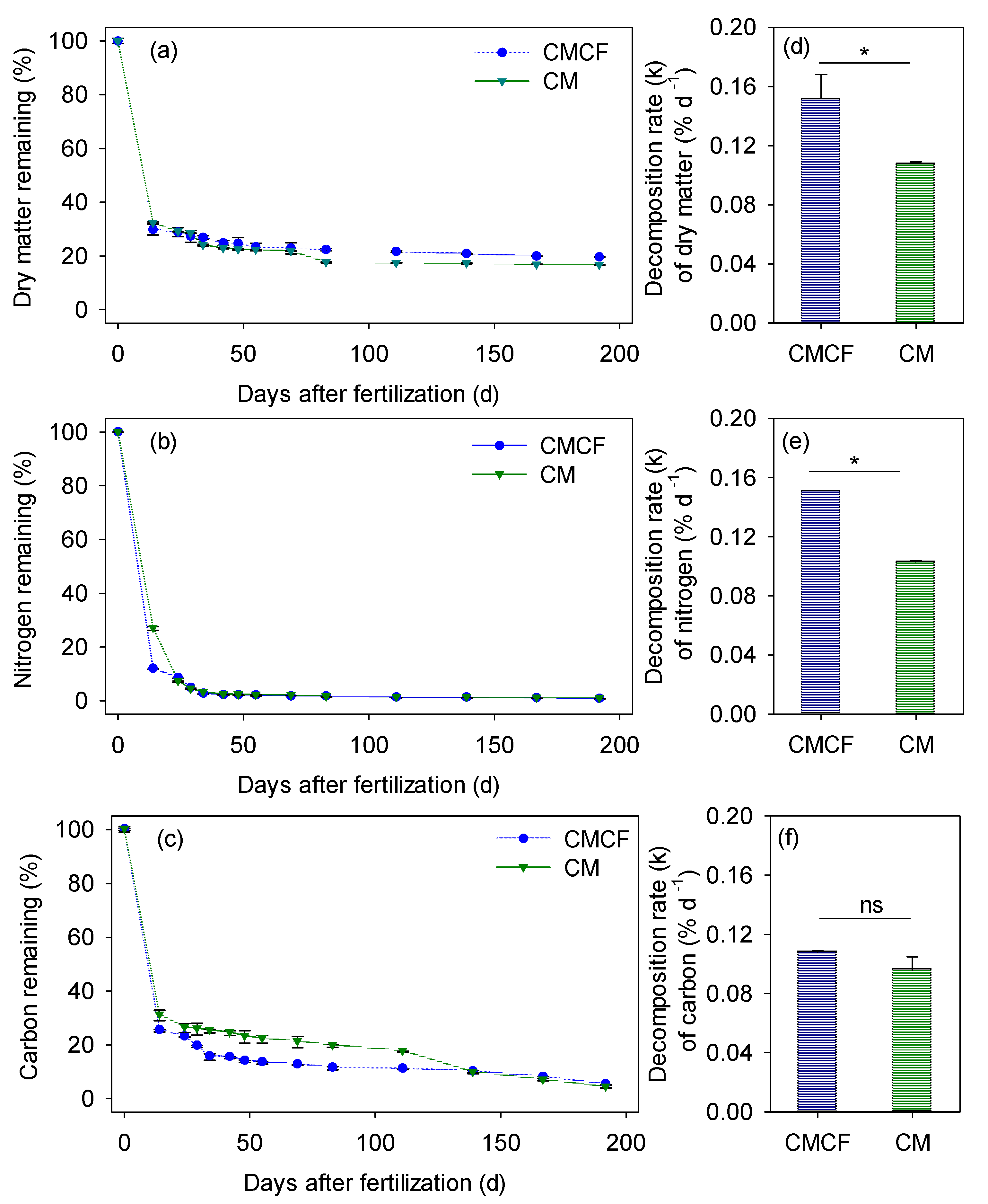
Throughout the entire rice growth cycle, the decomposition of dry matter from milk vetch exhibited a pattern of rapid decomposition in the early stages and slow decomposition in the later stages (Figure 1a). During the initial 0–34 days and the subsequent 34–192 days, the decomposition rates of the dry matter of milk vetch reached 81.9–85.2% and 11.8–14.4%, respectively. Notably, between 55 and 192 days of decomposition, the dry matter retention rate under CMCF was higher than that under CM (Figure 1a). During the first 0–42 days of milk vetch decomposition, N decomposition exceeded 95% (Figure 1b), with a relatively lower N retention rate under CMCF. With respect to C release, the C decomposition rate varied from 74.9% to 84.5% over the period from day 0 to day 139, with CMCF showing a significantly higher C decomposition rate than CM (Figure 1c).
The decay rate equation (Table S2) indicates that the decomposition of dry matter in milk vetch straw, as well as the release of C and N, is primarily concentrated in the early decomposition stage. During the early decomposition stage, the decomposition rates of dry matter, C, and N in the milk vetch straw were 0.108–0.152%·d−1, 0.096–0.108%·d−1, and 0.103–0.151%·d−1, respectively, with both dry matter and N decomposition rates under the CMCF being significantly higher than those under CM (Figure 1d–f).

3.2. Soil Properties During Decomposition

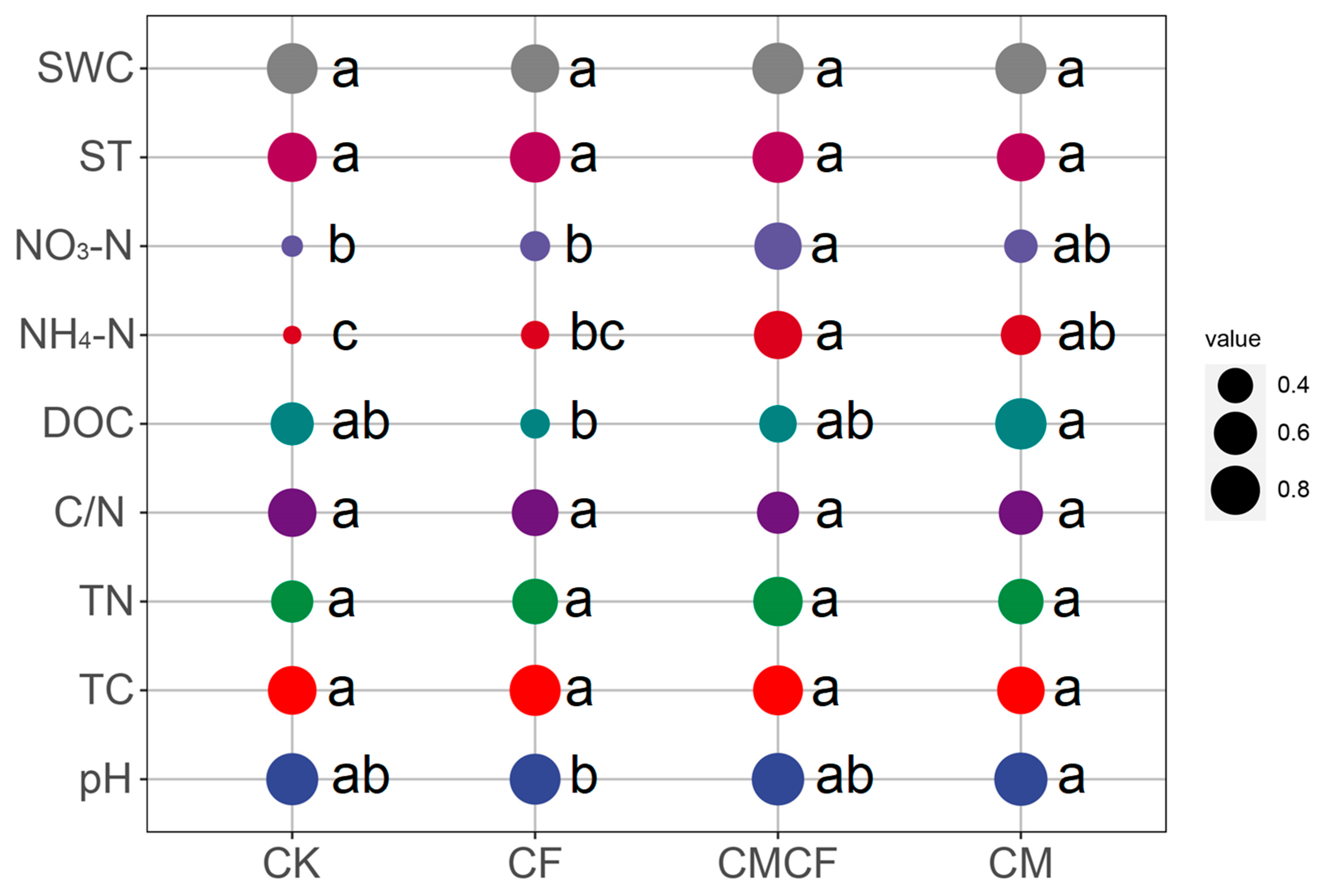
Compared with CF, CM significantly increased soil pH and DOC (Figure 2; Table S1); whereas compared with CK and CF, CMCF significantly increased soil NH4+-N and NO3-N. There were no significant differences in TC, TN, C/N ratio, ST, or SWC among the treatments.

3.3. Soil Bacterial Alpha Diversity and Community Structure During Decomposition

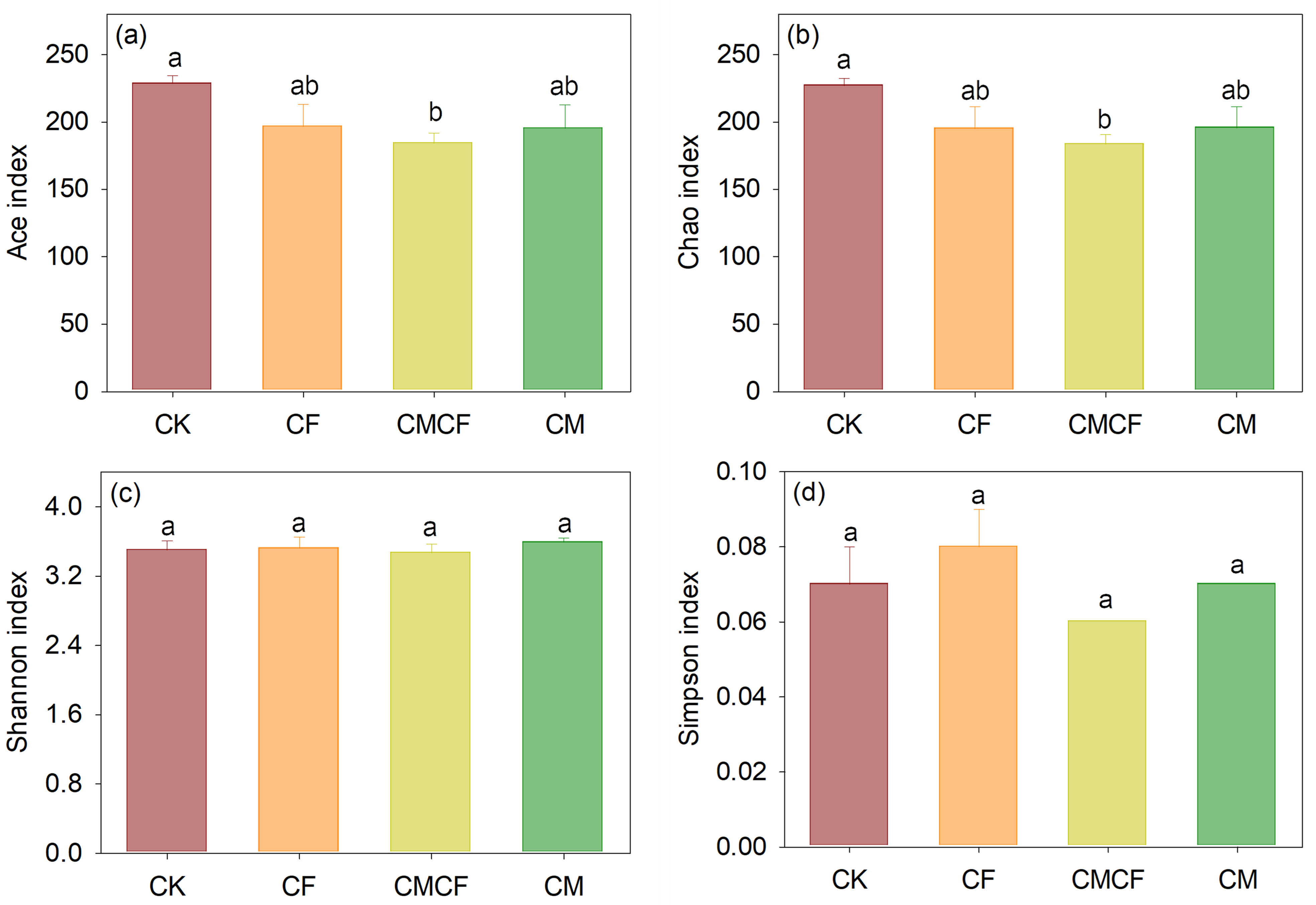
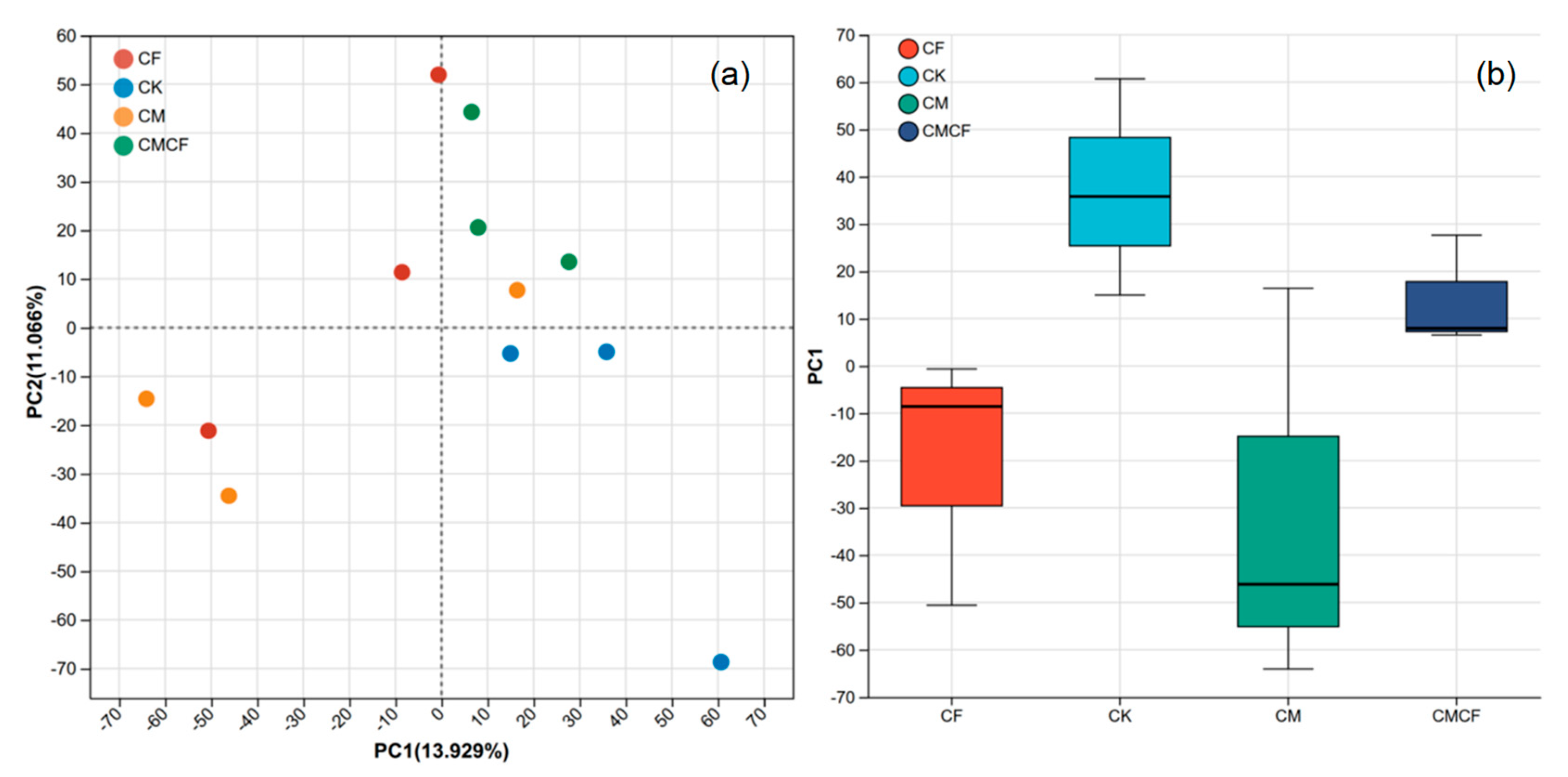
Compared with CK, the ACE index and Chao index under CMCF were significantly reduced by 19.38% and 19.27%, respectively, while no significant differences in diversity indices (Shannon index and Simpson index) were observed among treatments (Figure 3). Compared to CK, samples of CMCF exhibited closer distances, while samples of CF and CM showed greater distances, indicating more pronounced differences in community structure (Figure 4).
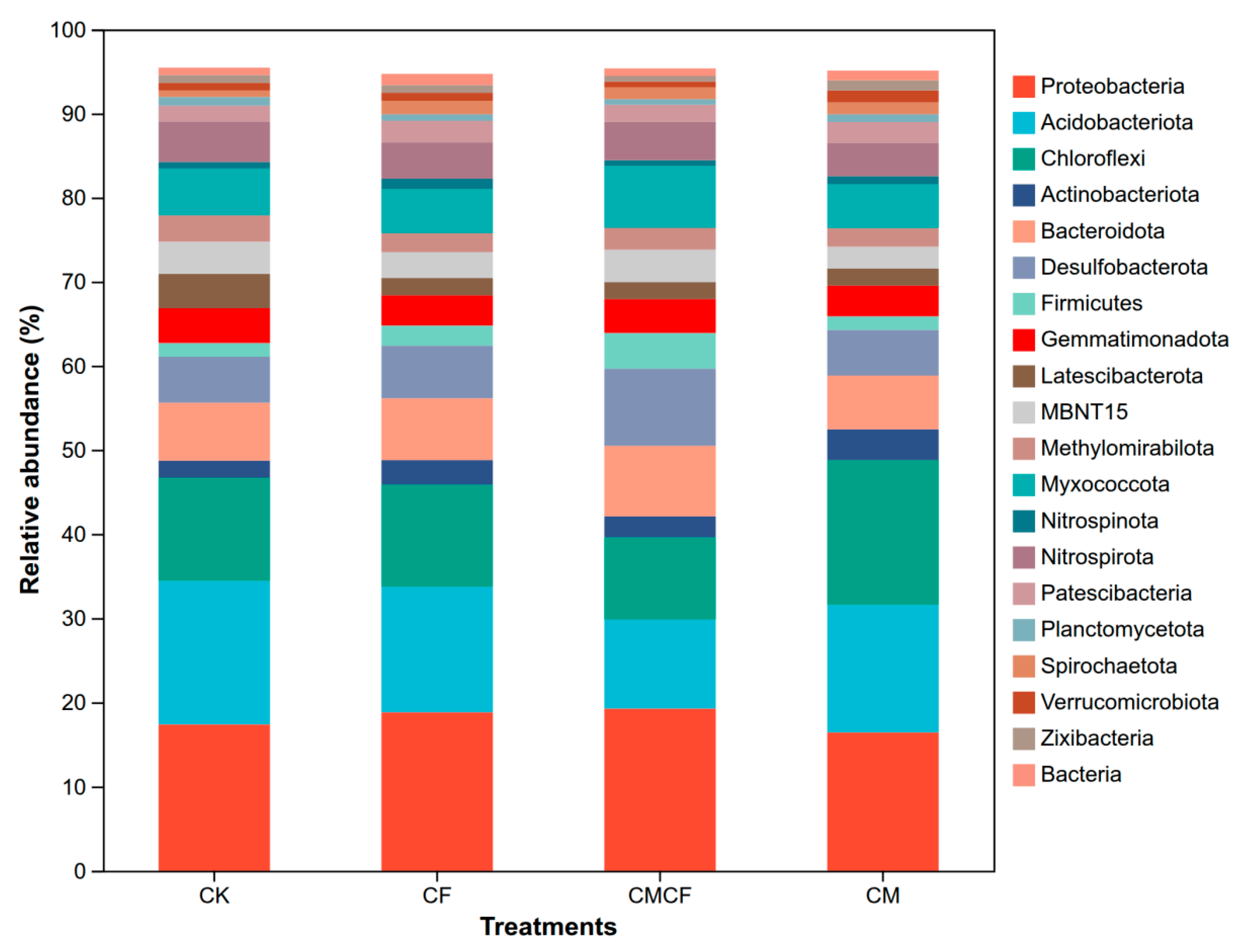
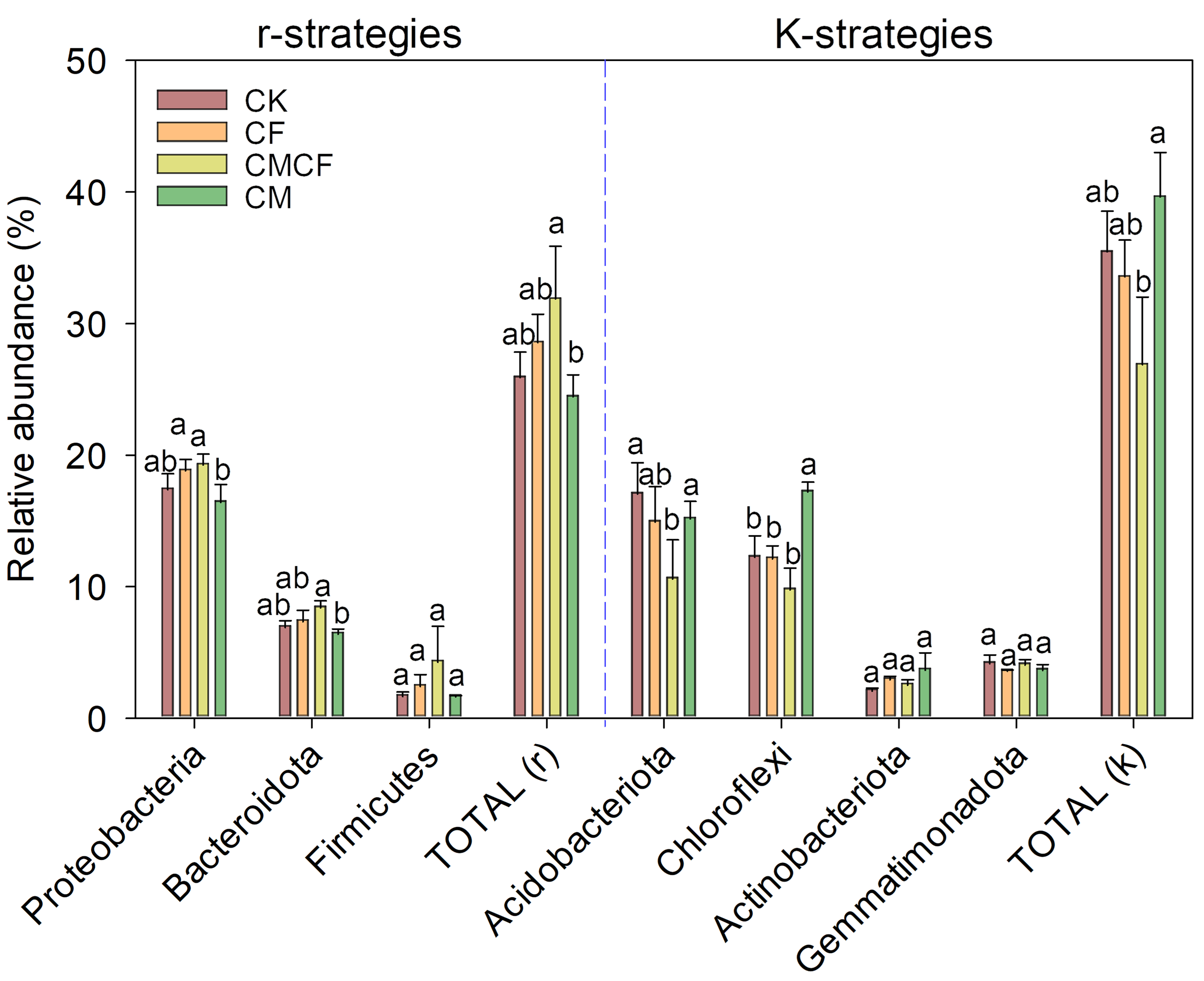
Further analysis of the top 20 phylum-level community components revealed Acidobacteria, Chloroflexi, and Proteobacteria as the three dominant phyla, accounting for 14.4%, 12.8%, and 18.0% of the community, respectively (Figure 5, on average). Relative abundances of Proteobacteria, Bacteroidetes and Firmicutes were 17.3% higher under CM (p < 0.05), 31.2% (p < 0.05), and 160.8%, respectively, under CMCF. Conversely, Acidobacteria, Chloroflexi (p < 0.05), and Actinobacteria significantly decreased by 30.2%, 43.3%, and 31.4%, respectively, under CMCF (Figure 6). Ultimately, compared to CM, CMCF significantly increased r-strategist bacterial community abundance by 30.5% while decreasing K-strategist bacterial community abundance by 32.2%. Fertilization regimes shaped microbial life strategies during vetch decomposition. Organic–inorganic co-application shifted bacteria communities from K- to r-strategists versus sole green manure.

3.4. Relationship Between Bacterial Communities and the Rate of Milk Vetch Straw Decomposition as Well as Soil Properties

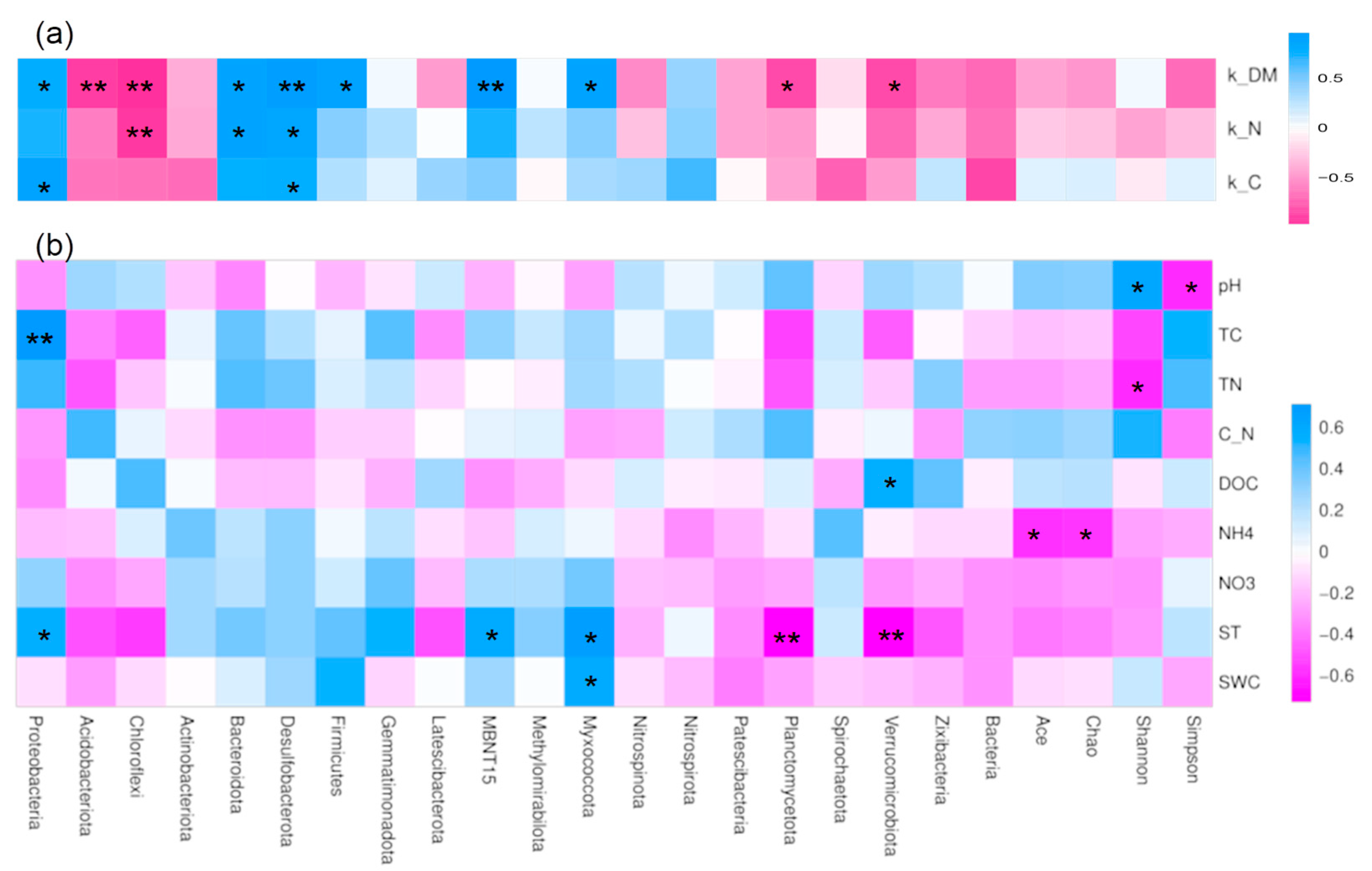
Correlation analysis indicated that the rate of dry matter decomposition in milk vetch straw was positively correlated with Proteobacteria, Bacteroidetes, Desulfobacterota, Firmicutes, MBNT15, and Nitrospinota, and significantly negatively correlated with Acidobacteria, Chloroflexi, Planctomycetota, and Verrucomicrobota. N decomposition rate of milk vetch straw was significantly positively correlated with Bacteroidetes and Firmicutes, and negatively correlated with Chloroflexi. The rate of carbon decomposition in milk vetch straw was significantly positively correlated with Proteobacteria and Desulfobacterota.
Correlation analysis revealed (Figure 7b) that bacterial diversity (ACE and Chao indices) showed a significant negative correlation with soil ammonium nitrogen (p < 0.05). The Shannon index was significantly negatively correlated with soil temperature and positively correlated with soil pH, whereas the Simpson index was significantly negatively correlated with soil pH (p < 0.05).
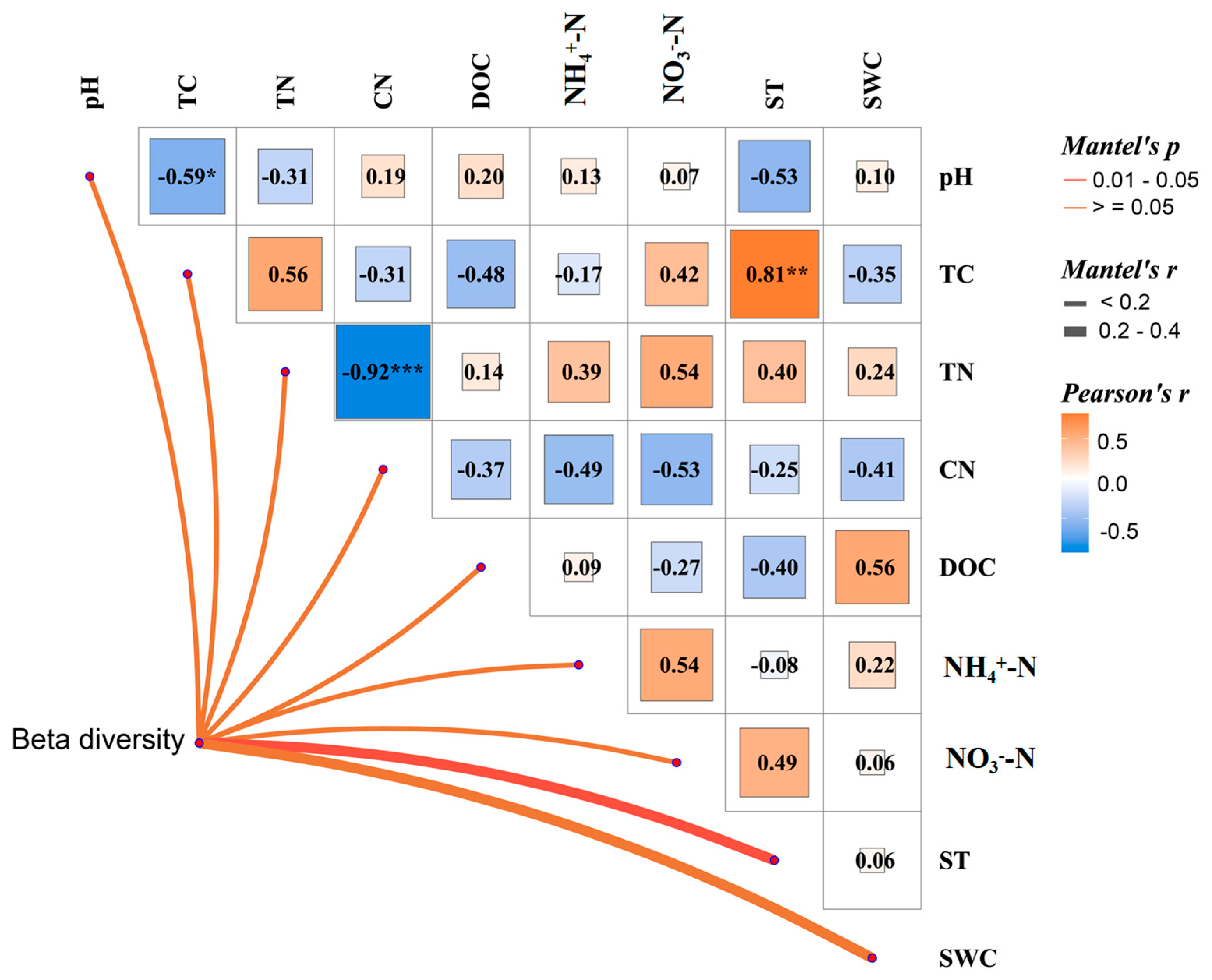
Additionally, Proteobacteria was significantly positively correlated with ST and TC; MBNT15 showed a significant positive correlation with ST; Myxococcota was significantly positively correlated with SWC and ST; Planctomycetota was significantly negatively correlated with ST; Verrucomicrobiota correlated negatively with ST but significantly positively with DOC. Mental test indicates (Figure 8) that bacterial community structure is primarily influenced by ST (p < 0.05) and SWC (Table S3). In summary, the decomposition of milk vetch straw was closely associated with soil bacterial community composition, and soil temperature (ST), soil carbon (C), and nitrogen (N) contents were the dominant abiotic drivers shaping the soil bacterial community structure.

3.5. Soil Bacterial Co-Occurrence Networks

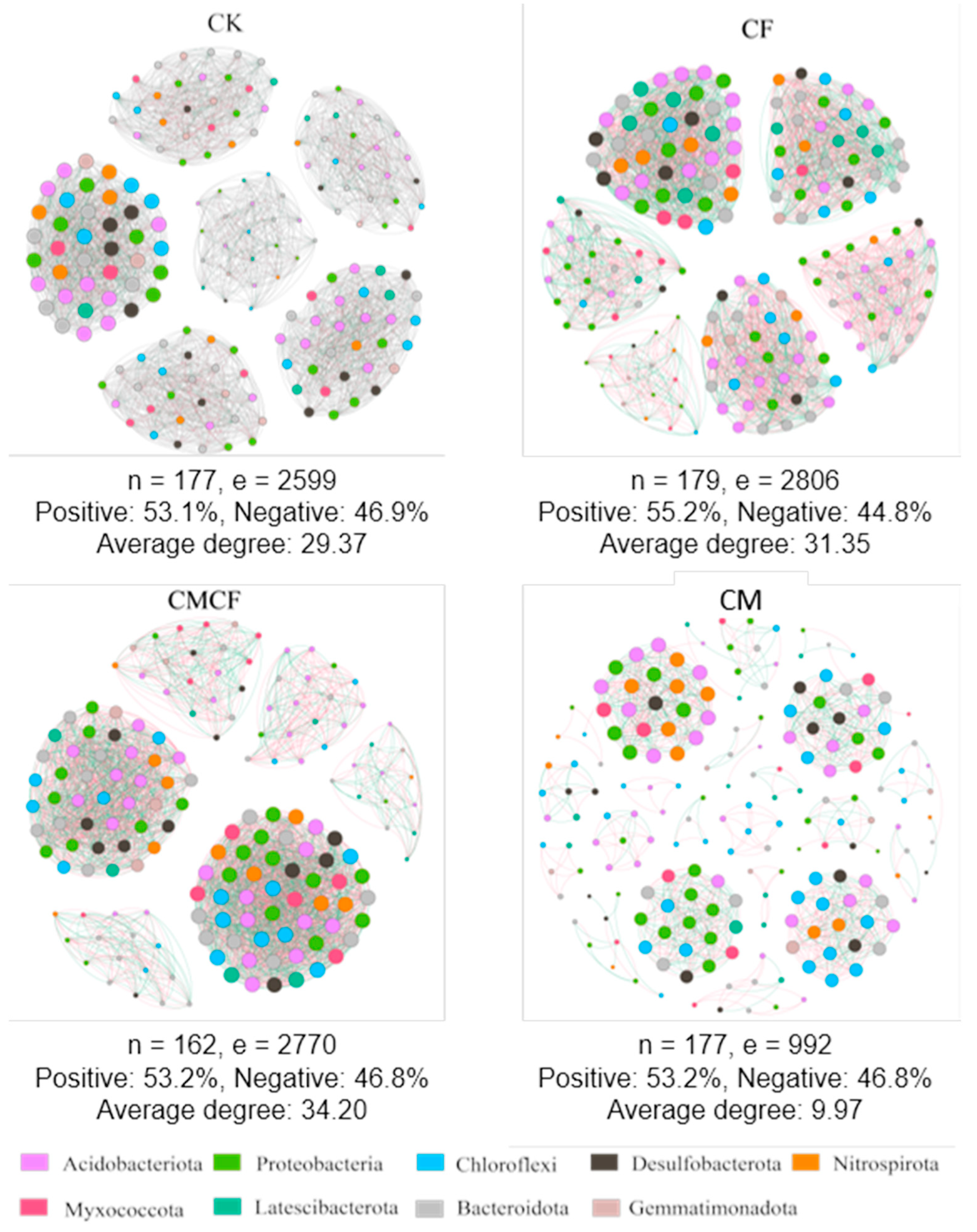
Co-network analysis revealed (Figure 9) that the number of co-network nodes and the proportions of positive and negative edges showed little variation among treatments. However, compared with the other treatments, CM exhibited a significant decrease in both the number of edges and the average degree, with average reductions of 63.6% and 68.5%, respectively, indicating that CM resulted in a less complex soil bacterial network structure. Key taxa were identified as potential regulators of bacterial communities within each network. Fertilization significantly changed the key bacterial phyla in the co-occurrence networks (Figure 9). OTUs associated with the five phyla—Actinobacteria, Proteobacteria, Bacteroidetes, Chloroflexi, and Desulfobacterota—were the dominant key taxa in bacterial networks across all fertilization regimes.

4. Discussion

4.1. Milk Vetch Straw Decomposition During the Rapid Decomposition Stage

Most studies indicate that straw decomposition follows a two-stage pattern: rapid in the early stage and slow in the later stages [35,36]. Similarly, our study found that the decomposition of milk vetch reached over 82% within the first 34 days, while the decomposition rate in the later stages accounted for only about 11%. This universal two-stage pattern was not altered by fertilization regimes; instead, organic–inorganic application (CMCF) further enhanced the early-stage decomposition rate within the rapid-decomposition phase compared with sole green manure (CM) [8,37]. Microbial metabolic activity is relatively vigorous during this phase, leading to a rapid decomposition rate in the early stages [15,37]. As these easily degradable substances are consumed early during decomposition, microbial activity gradually slows down, shifting to the decomposition of more resistant substances (such as cellulose and lignin), resulting in a reduced decomposition rate at the later phase [37]. Our results also indicate that under milk vetch return-to-field conditions, the addition of inorganic N fertilizer accelerates the decomposition of milk vetch. This aligns with the observation that the combined application of crop straw and N fertilizer yields greater increases in soil microbial biomass and related enzyme activities [38,39]. This is because the application of additional N fertilizer under crop straw return conditions reduces the soil C/N ratio during the early stages of straw decomposition, alleviates N deficiency during the initial phase of decomposition, and thereby promotes straw decomposition [40].
However, we found that the application of inorganic N fertilizer significantly increased both the dry matter and N release from milk vetch straw, while the rate of C release did not increase at the same rate. Similarly, other studies have found that the rate of nutrient release from milk vetch is higher for N than for C [41,42]. This may be because inorganic N fertilizer provides an easily available N source, which promotes microbial growth and activity [43]. During the decomposition of milk vetch straw, microorganisms prioritize the use of N sources for metabolism, resulting in a higher rate of N release [17]. Additionally, the N content in milk vetch straw is relatively high. The addition of inorganic N fertilizer improves the N status in the soil, which may have adjusted the priority of microbial C decomposition [44]. Although N sources are abundant, microorganisms still require time to degrade the high-carbon components in the straw, such as cellulose and lignin, during the decomposition process [45]. Consequently, the rate of C release does not increase as rapidly as that of N. Therefore, while N release increases, the rate of C release does not rise significantly in tandem.

4.2. Bacterial Diversity and Community Structure

Most previous studies have confirmed that long-term green manure cultivation does indeed significantly alter soil bacterial diversity, but there are considerable variations among different experiments [46,47,48]. For example, Zhang et al. [46] found that long-term winter green manure cultivation and incorporation significantly reduced bacterial diversity and abundance. However, some studies have also indicated that long-term green manure cultivation significantly increases soil bacterial diversity and abundance [48]. This is not entirely consistent with our results, where all fertilization treatments tended to reduce bacterial abundance—especially the combined organic–inorganic N application. This discrepancy may be attributed to differences in soil pH and local agroclimatic conditions, which are major drivers shaping soil bacterial diversity. This indicated that the number of specific bacterial species was reduced even when the total bacterial population increased after long-term green manure rotations. One possible explanation for this result could be the impact of stronger roots in the green manure treatments. The long-term use of green manure might lead to the accumulation of root exudates such as rhizodeposits [49,50], and the better-growing rice could also produce more root exudates. Together, these factors may enhance the root selection process, resulting in the life-history of fewer bacteria in the rhizosphere. Furthermore, we found a significant negative correlation between bacterial richness and soil ammonium nitrogen (Figure 7b). Therefore, we believe that the differences among treatments may be attributed to the fact that, compared to the application of green manure alone or chemical N fertilizer, the combined application of organic and inorganic N fertilizers exerts a stronger influence on the rhizosphere of green manure. For example, the combined application of vetch and chemical N fertilizer leads to higher concentrations of soil ammonium N (Figure 2), resulting in the enrichment of dominant bacterial groups (such as Proteobacteria and Bacteroidetes) and ultimately a decline in diversity.
Furthermore, consistent with previous studies [16,51], we found that different fertilization regimes led to changes in bacterial community structure. Specifically, compared to the application of milk vetch green manure alone, the proportion of r-strategy bacteria significantly increased, while that of K-strategy bacteria significantly decreased under the combined organic–inorganic N fertilization regime. This indicates that bacterial life histories underwent significant changes under the two green manure application regimes. The reason lies in the fact that milk vetch green manure typically releases nutrients slowly, whereas inorganic fertilizers release nutrients rapidly [52,53]. This difference in nutrient release rates may exert selective pressure on different bacterial populations. For example, r-strategy bacteria may be favored under rapid nutrient input, while K-strategy bacteria may dominate under relatively stable, long-term nutrient supply [52,53]. Furthermore, different fertilization regimes may alter microenvironmental conditions such as soil pH, temperature, and aeration, all of which directly influence bacterial community structure [54]. For instance, our study found that the r-strategy community component Proteobacteria was significantly positively correlated with total soil carbon and soil temperature (Figure 7b and Figure 8). Therefore, different green manure application regimes affect soil nutrient composition, thereby driving dynamic changes in bacterial community structure.
Previous studies have found that incorporating organic fertilizer (green manure) into the soil helps increase the complexity of bacterial communities in dryland soils [16]. However, on the other hand, compared to the combined application of organic and inorganic N fertilizers, the sole application of organic fertilizer results in reduced bacterial complexity. This discrepancy may be attributed to inconsistencies in sampling periods and soil types [36,37,55]. Our study focuses primarily on the specific period of straw decomposition (15 days after incorporation), a time of dramatic nutrient fluctuations, whereas previous studies mostly collected samples during the crop maturity stage when soil nutrients are relatively stable [53]. In this study, the sole application of green manure primarily provides specific types of organic matter (such as proteins, cellulose, and sugars), while lacking diverse nutrient sources [56,57]. This single-source supply allows specific types of bacteria (typically r-strategy bacteria) to rapidly dominate, suppressing other bacteria that rely on different resources, thereby reducing the overall complexity of the community [58]. Second, the decomposition of green manure may release specific organic acids or inhibitory compounds, altering local pH or nutrient availability [35,59]. For example, bacterial richness was significantly and positively correlated with soil pH (Figure 7b). In the present study, CM and CMCF treatments significantly increased soil pH from an initial level of 6.1, which may partly explain the reduced bacterial richness. Furthermore, because green manure is rich in organic matter—particularly plant residues containing potassium and calcium (such as legumes)—its decomposition releases alkaline substances (such as calcium hydroxide, Ca(OH)2), thereby significantly increasing soil pH (Figure 2) [59,60]. Such local changes may be detrimental to the life-history of certain microorganisms, leading to a more monotonous community composition and reduced network complexity [61].

4.3. Linking Milk Vetch Straw Decomposition with Bacterial Communities

High decomposition rates are typically associated with rapid changes in microbial communities and intensified competition, which may lead to the dominance of certain bacterial groups but do not significantly alter the overall diversity of the community, as competitive pressure may inhibit the growth of some species [15,37]. This study shows that decomposition rates during the early stages of milk vetch straw decomposition are significantly correlated with bacterial life history strategies. For example, the rate of dry matter decomposition is significantly positively correlated with r-strategy bacteria and significantly negatively correlated with K-strategy bacteria (Figure 7a). The reason for this is that r-strategy bacteria typically grow rapidly under resource-rich, environmentally unstable conditions, reproduce quickly, and adapt to short-term changes [52]. Thus, they dominate the decomposition of milk vetch straw and accelerate its decomposition rate. In contrast, K-strategy bacteria are better adapted to stable environments with limited resources; they grow more slowly but exhibit stronger environmental adaptability [62]. However, their activity may be lower during the early stages of decomposition, leading to a slower decomposition rate. Further analysis revealed that r-strategy bacteria were significantly positively correlated with total soil carbon and soil temperature [63]. Notably, although sole milk vetch application provided a higher carbon input, our results indicate that combined organic–inorganic N application primarily accelerates vetch straw decomposition by modulating soil temperature [63,64], thereby influencing bacterial community structure (e.g., promoting the growth of r-strategy bacteria and inhibiting that of K-strategy bacteria). Studies have shown that the rate of straw decomposition is significantly correlated with soil temperature [64,65,66]. This is consistent with our findings, which indicate that soil temperature was the dominant abiotic driver shaping bacterial community structure (Mantel test, p < 0.05) rather than treatment-level temperature differences, thereby regulating microbial life-history strategies and accelerating vetch decomposition.
On the other hand, bacterial diversity was not significantly correlated with straw decomposition, suggesting it is primarily related to community composition rather than diversity, which aligns with earlier results [67,68,69]. Nevertheless, while this study primarily focused on the overall decomposition rates during the early (0–34 days) and late (34–192 days) stages of straw decomposition, it lacked long-term in situ monitoring of the continuous succession of microbial life-history strategies and synchronized C–N mineralization dynamics throughout the entire process. Therefore, future studies could extend the observation period to cover the entire straw decomposition process and systematically monitor the long-term coupling patterns between microbial life-history strategies, co-occurrence networks, and nutrient turnover, thereby more comprehensively revealing the dynamic roles of microorganisms in straw decomposition and the C and N cycles [70,71]. While our study clarifies the microbial mechanisms by which N combinations accelerate residue decomposition and alter soil nutrient dynamics, the translation of these soil-level changes into subsequent crop growth and yield requires investigation in a full plant–soil system over a complete growing cycle. Future field or mesocosm studies incorporating a cash crop like rice are thus warranted to bridge this gap and evaluate the ultimate agronomic value of this decomposition enhancement.

5. Conclusions

This study demonstrates that fertilization regimes significantly affect milk vetch straw decomposition. Milk vetch straw decomposition exhibited a distinct two-stage pattern: rapid during the early stage (within 34 days, reaching 81.9–85.2%), followed by slow decomposition in the later stages. The combination of milk vetch incorporation and a 40% N-reduced fertilization regime (CMCF) enhanced early-stage dry matter and N release rates. Compared to CM, CMCF increased r-strategy bacteria (e.g., Proteobacteria, Bacteroidota) and reduced K-strategy bacteria (e.g., Chloroflexi), indicating a shift from K-type to r-type bacterial life strategies. Correlation analysis confirmed that decomposition rate was positively correlated with r-strategy bacteria and negatively with K-strategy bacteria, with soil temperature as a key environmental factor. Additionally, CM reduced network complexity, as shown by decreased nodes and average degree in the bacterial co-clustering network. Overall, combining milk vetch as green manure with inorganic N fertilizer promotes straw decomposition while preserving the microbial community structure, offering promising potential for soil improvement.

Supplementary Materials

The following supporting information can be downloaded at https://www.mdpi.com/article/10.3390/agriculture16101077/s1: Figure S1: Monthly accumulative precipitation and averaged monthly air temperature in Jingzhou in 2022; Table S1: Soil properties of different fertilization treatments; Table S2: Decomposition rates (K) of dry matter, carbon and nitrogen of Chinese milk vetch during the rapid decomposition stage; Table S3: Results of mental test.

Author Contributions

Y.Z.: Formal analysis, writing—original draft, writing—review and editing. F.Z., J.S. and X.L.: Validation, writing—review and editing. W.Y.: Data curation, investigation. J.N.: Data curation, formal analysis, investigation, methodology, software, visualization, writing—review and editing. Z.L.: Methodology, supervision. B.Z.: Methodology, supervision, validation, writing—review and editing. All authors have read and agreed to the published version of the manuscript.

Funding

This study was supported by the National Natural Science Foundation of China (32401972), the Natural Science Foundation of Hubei Province (2024AFA078), the Youth Scientific Research Foundation of Education Department of Hubei Province (Q20231310), the Open Foundation of Engineering Research Center of Ecology and Agricultural Use of Wetland, Ministry of Education, College of Agriculture, Yangtze University (KFK202404), the Key Research Project of Scientific Research Plan of Hubei Provincial Department of Education (D20232704), the Hubei Provincial Natural Science Foundation Innovation Development Joint Fund Project (2026AFC0683).

Data Availability Statement

The original contributions presented in this study are included in the article and Supplementary Materials. Further inquiries can be directed to the corresponding author.

Conflicts of Interest

The authors declare no conflicts of interest.

References

  1. Turmel, M.S.; Speratti, A.; Baudron, F.; Verhulst, N.; Govaerts, B. Crop residue management and soil health: A systems analysis. Agric. Syst. 2015, 134, 6–16. [Google Scholar] [CrossRef]
  2. Haas, E.; Carozzi, M.; Massad, R.S.; Butterbach-Bahl, K.; Scheer, C. Long term impact of residue management on soil organic carbon stocks and nitrous oxide emissions from European croplands. Sci. Total Environ. 2022, 836, 154932. [Google Scholar] [CrossRef]
  3. Singh, Y.; Singh, B.; Timsina, J. Crop residue management for nutrient cycling and improving soil productivity in rice-based cropping systems in the tropics. Adv. Agron. 2005, 85, 269–407. [Google Scholar] [CrossRef]
  4. Li, H.; Dai, M.W.; Dai, S.L.; Dong, X.J. Current status and environment impact of direct straw return in China’s cropland—A review. Ecotoxicol. Environ. Saf. 2018, 159, 293–300. [Google Scholar] [CrossRef]
  5. Kerdraon, L.; Laval, V.; Suffert, F. Microbiomes and pathogen survival in crop residues, an ecotone between plant and soil. Phytobiomes J. 2019, 3, 246–255. [Google Scholar] [CrossRef]
  6. Liu, Y.L.; Gu, Y.; Wu, C.S.; Zhao, H.X.; Hu, W.H.; Xu, C.; Chen, X.F. Short-term straw returning improves quality and bacteria community of black soil in Northeast China. Pol. J. Environ. Stud. 2022, 31, 1869–1884. [Google Scholar] [CrossRef]
  7. Orlova, O.V.; Kichko, A.A.; Pershina, E.V.; Pinaev, A.G.; Andronov, E.E. Succession of bacterial communities in the decomposition of oats straw in two soils with contrasting properties. Eurasian Soil Sci. 2020, 53, 1620–1628. [Google Scholar] [CrossRef]
  8. Miao, Y.Z.; Wang, W.; Xu, H.H.; Xia, Y.W.; Gong, Q.X.; Xu, Z.H.; Zhang, N.; Xun, W.B.; Shen, Q.R.; Zhang, R.F. A novel decomposer-exploiter interaction framework of plant residue microbial decomposition. Genome Biol. 2025, 26, 20. [Google Scholar] [CrossRef]
  9. Qian, R.; Gao, L.; Liu, J.J.; Biswas, A.; Peng, X.H. Linking microbial life strategies to carbon mineralization under diverse tillage practices: Insights from eroding black soil hillslopes. Agric. Ecosyst. Environ. 2026, 399, 110174. [Google Scholar] [CrossRef]
  10. Fierer, N.; Bradford, M.A.; Jackson, R.B. Toward an ecological classification of soil bacteria. Ecology 2007, 88, 1354–1364. [Google Scholar] [CrossRef] [PubMed]
  11. Dong, H.X.; He, P.; Liu, M.H.; Kuzyakov, Y.; Li, L.J. Nitrogen availability governs priming effect induced by biodegradable microplastics through microbial life-strategies. Eur. J. Soil Sci. 2025, 76, e70170. [Google Scholar] [CrossRef]
  12. Habets, S.; de Wild, P.J.; Huijgen, W.J.J.; van Eck, E.R.H. The influence of thermochemical treatments on the lignocellulosic structure of wheat straw as studied by natural abundance 13C NMR. Bioresour. Technol. 2013, 146, 585–590. [Google Scholar] [CrossRef]
  13. Li, X.G.; Jia, B.; Lv, J.T.; Ma, Q.J.; Kuzyakov, Y.; Li, F.M. Nitrogen fertilization decreases the decomposition of soil organic matter and plant residues in planted soils. Soil Biol. Biochem. 2017, 112, 47–55. [Google Scholar] [CrossRef]
  14. Dong, L.; Berg, B.; Sun, T.; Wang, Z.; Han, X. Response of fine root decomposition to different forms of N deposition in a temperate grassland. Soil Biol. Biochem. 2020, 147, 107845. [Google Scholar] [CrossRef]
  15. Zhang, M.L.; Zhang, L.Y.; Li, J.; Huang, S.Y.; Wang, S.Y.; Zhao, Y.Z.; Zhou, W.; Ai, C. Nitrogen-shaped microbiotas with nutrient competition accelerate early-stage residue decomposition in agricultural soils. Nat. Commun. 2025, 16, 5793. [Google Scholar] [CrossRef]
  16. Wang, P.X.; Wang, X.Q.; Nie, J.W.; Wang, Y.; Zang, H.D.; Peixoto, L.; Yang, Y.D.; Zeng, Z.H. Manure application increases soil bacterial and fungal network complexity and alters keystone taxa. J. Soil Sci. Plant Nutr. 2022, 22, 607–618. [Google Scholar] [CrossRef]
  17. Ma, X.L.; Dai, Q.J.; Qin, W.J.; Liu, J.; Liu, X.L.; Chen, L.; Fan, J.B.; Wu, M.; Li, D.M.; Liu, M. Milk vetch (Astragalus sinicus L.) affects microbial-driven rice straw decomposition in multiple stages. Plant Soil 2025, 512, 963–975. [Google Scholar] [CrossRef]
  18. Zhou, G.P.; Chang, D.N.; Gao, S.J.; Liang, T.; Liu, R.; Cao, W.D. Co-incorporating leguminous green manure and rice straw drives the synergistic release of carbon and nitrogen, increases hydrolase activities, and changes the composition of main microbial groups. Biol. Fertil. Soils 2021, 57, 547–561. [Google Scholar] [CrossRef]
  19. Delgado-Baquerizo, M.; Reich, P.B.; Trivedi, C.; Eldridge, D.J.; Abades, S.; Alfaro, F.D.; Bastida, F.; Berhe, A.A.; Cutler, N.A.; Gallardo, A.; et al. Multiple elements of soil biodiversity drive ecosystem functions across biomes. Nat. Ecol. Evol. 2020, 4, 210–220. [Google Scholar] [CrossRef] [PubMed]
  20. Jiao, S.; Lu, Y.H.; Wei, G.H. Soil multitrophic network complexity enhances the link between biodiversity and multifunctionality in agricultural systems. Glob. Change Biol. 2022, 28, 140–153. [Google Scholar] [CrossRef] [PubMed]
  21. Banerjee, S.; Kirkby, C.A.; Schmutter, D.; Bissett, A.; Kirkegaard, J.A.; Richardson, A.E. Network analysis reveals functional redundancy and keystone taxa amongst bacterial and fungal communities during organic matter decomposition in an arable soil. Soil Biol. Biochem. 2016, 97, 188–198. [Google Scholar] [CrossRef]
  22. Faust, K.; Raes, J. Microbial interactions: From networks to models. Nat. Rev. Microbiol. 2012, 10, 538–550. [Google Scholar] [CrossRef] [PubMed]
  23. Fan, K.K.; Delgado-Baquerizo, M.; Guo, X.S.; Wang, D.Z.; Zhu, Y.G.; Chu, H.Y. Biodiversity of key-stone phylotypes determines crop production in a 4-decade fertilization experiment. ISME J. 2021, 15, 550–561. [Google Scholar] [CrossRef] [PubMed]
  24. Ling, N.; Zhu, C.; Xue, C.; Chen, H.; Duan, Y.H.; Peng, C.; Guo, S.W.; Shen, Q.R. Insight into how organic amendments can shape the soil microbiome in long-term field experiments as revealed by network analysis. Soil Biol. Biochem. 2016, 99, 137–149. [Google Scholar] [CrossRef]
  25. Xue, C.; Penton, C.R.; Zhu, C.; Chen, H.; Duan, Y.H.; Peng, C.; Guo, S.W.; Ling, N.; Shen, Q.R. Alterations in soil fungal community composition and network assemblage structure by different long-term fertilization regimes are correlated to the soil ionome. Biol. Fertil. Soils 2018, 54, 95–106. [Google Scholar] [CrossRef]
  26. García-Palacios, P.; Shaw, E.A.; Wall, D.H.; Hättenschwiler, S. Temporal dynamics of biotic and abiotic drivers of litter decomposition. Ecol. Lett. 2016, 19, 554–563. [Google Scholar] [CrossRef]
  27. Bani, A.; Pioli, S.; Ventura, M.; Panzacchi, P.; Borruso, L.; Tognetti, R.; Tonon, G.; Brusetti, L. The role of microbial community in the decomposition of leaf litter and deadwood. Appl. Soil Ecol. 2018, 126, 75–84. [Google Scholar] [CrossRef]
  28. Nie, J.W.; Yi, L.X.; Xu, H.S.; Liu, Z.Y.; Zeng, Z.H.; Dijkstra, P.; Koch, G.W.; Hungate, B.A.; Zhu, B. Leguminous cover crop astragalus sinicus enhances grain yields and nitrogen use efficiency through increased tillering in an intensive double-cropping rice system in Southern China. Agronomy 2019, 9, 554. [Google Scholar] [CrossRef]
  29. Nie, J.W.; Yang, Y.D.; Wang, B.; Liu, Z.Y.; Zhu, B. Stronger impact of urea application than incorporation of Chinese milk vetch (Astragalus sinicus L.) on nirK-denitrifying bacterial communities in a Chinese double-rice paddy. Acta Agric. Scand. B Soil Plant Sci. 2021, 71, 530–540. [Google Scholar] [CrossRef]
  30. Yang, W.; Yao, L.; Zhu, M.Z.; Li, C.W.; Li, S.Q.; Wang, B.; Dijkstra, P.; Liu, Z.Y.; Zhu, B. Replacing urea-N with Chinese milk vetch (Astragalus sinicus L.) mitigates CH4 and N2O emissions in rice paddy. Agric. Ecosyst. Environ. 2022, 336, 108033. [Google Scholar] [CrossRef]
  31. Zhao, Z.; Gonsior, M.; Schmitt-Kopplin, P.; Zhan, Y.C.; Zhang, R.; Jiao, N.Z.; Chen, F. Microbial transformation of virus-induced dissolved organic matter from picocyanobacteria: Coupling of bacterial diversity and DOM chemodiversity. ISME J. 2019, 13, 2551–2565. [Google Scholar] [CrossRef]
  32. Duan, P.P.; Fu, R.T.; Nottingham, A.T.; Domeignoz-Horta, L.A.; Yang, X.Y.; Du, H.; Wang, K.L.; Li, D.J. Tree species diversity increases soil microbial carbon use efficiency in a subtropical forest. Glob. Change Biol. 2023, 29, 7131–7144. [Google Scholar] [CrossRef]
  33. Koch, A.L. Oligotrophs versus copiotrophs. BioEssays 2001, 23, 657–661. [Google Scholar] [CrossRef]
  34. Wang, X.; Zhang, Q.; Zhang, Z.J.; Li, W.J.; Liu, W.C.; Xiao, N.J.; Liu, H.Y.; Wang, L.Y.; Li, Z.X.; Ma, J. Decreased soil multifunctionality is associated with altered microbial network properties under precipitation reduction in a semiarid grassland. IMeta 2023, 2, e106. [Google Scholar] [CrossRef] [PubMed]
  35. Zhu, B.; Yi, L.X.; Hu, Y.G.; Zeng, Z.H.; Lin, C.W.; Tang, H.M.; Yang, G.L.; Xiao, X.P. Nitrogen release from incorporated 15N-labelled Chinese milk vetch (Astragalus sinicus L.) residue and its dynamics in a double rice cropping system. Plant Soil 2014, 374, 331–344. [Google Scholar] [CrossRef]
  36. Li, D.D.; Li, Z.Q.; Zhao, B.Z.; Zhang, J.B. Relationship between the chemical structure of straw and composition of main microbial groups during the decomposition of wheat and maize straws as affected by soil texture. Biol. Fertil. Soils 2020, 56, 11–24. [Google Scholar] [CrossRef]
  37. Wahdan, S.F.M.; Ji, L.; Schädler, M.; Wu, Y.T.; Sansupa, C.; Tanunchai, B.; Buscot, F.; Purahong, W. Future climate conditions accelerate wheat straw decomposition alongside altered microbial community composition, assembly patterns, and interaction networks. ISME J. 2023, 17, 238–251. [Google Scholar] [CrossRef]
  38. Riggs, C.E.; Hobbie, S.E. Mechanisms driving the soil organic matter decomposition response to nitrogen enrichment in grassland soils. Soil Biol. Biochem. 2016, 99, 54–65. [Google Scholar] [CrossRef]
  39. Zhou, G.P.; Gao, S.J.; Chang, D.N.; Rees, R.M.; Cao, W.D. Using milk vetch (Astragalus sinicus L.) to promote rice straw decomposition by regulating enzyme activity and bacterial community. Bioresour. Technol. 2021, 319, 124215. [Google Scholar] [CrossRef]
  40. Craine, J.M.; Morrow, C.; Fierer, N. Microbial nitrogen limitation increases decomposition. Ecology 2007, 88, 2105–2113. [Google Scholar] [CrossRef] [PubMed]
  41. Chatterjee, A.; Acharya, U. Controls of carbon and nitrogen releases during crops’ residue decomposition in the Red River Valley, USA. Arch. Agron. Soil Sci. 2020, 66, 614–624. [Google Scholar] [CrossRef]
  42. Yang, W.; Zhou, L.N.; Yao, L.; Nie, J.W.; Jiang, M.D.; Liu, Z.Y.; Liu, H.; Zhu, B.; Wang, B. Water management alleviates greenhouse gas emissions by promoting carbon and nitrogen mineralization after Chinese milk vetch incorporation in a paddy soil. Agric. Ecosyst. Environ. 2025, 381, 109468. [Google Scholar] [CrossRef]
  43. Farzadfar, S.; Knight, J.D.; Congreves, K.A. Soil organic nitrogen: An overlooked but potentially significant contribution to crop nutrition. Plant Soil 2021, 462, 7–23. [Google Scholar] [CrossRef]
  44. Ge, Z.; Li, S.Y.; Bol, R.; Zhu, P.; Peng, C.; An, T.T.; Cheng, N.; Liu, X.; Li, T.Y.; Xu, Z.Q. Differential long-term fertilization alters residue-derived labile organic carbon fractions and microbial community during straw residue decomposition. Soil Tillage Res. 2021, 213, 105120. [Google Scholar] [CrossRef]
  45. Aggarwal, N.; Pham, H.L.; Ranjan, B.; Saini, M.; Liang, Y.; Hossain, G.S.; Ling, H.; Foo, J.L.; Chang, M.W. Microbial engineering strategies to utilize waste feedstock for sustainable bioproduction. Nat. Rev. Bioeng. 2024, 2, 155–174. [Google Scholar] [CrossRef]
  46. Zhang, X.X.; Zhang, R.J.; Gao, J.S.; Wang, X.C.; Fan, F.L.; Ma, X.T.; Yin, H.Q.; Zhang, C.W.; Feng, K.; Deng, Y. Thirty-one years of rice-rice-green manure rotations shape the rhizosphere microbial community and enrich beneficial bacteria. Soil Biol. Biochem. 2017, 104, 208–217. [Google Scholar] [CrossRef]
  47. Xu, J.; Si, L.L.; Zhang, X.; Cao, K.; Wang, J.H. Various green manure-fertilizer combinations affect the soil microbial community and function in immature red soil. Front. Microbiol. 2023, 14, 1255056. [Google Scholar] [CrossRef] [PubMed]
  48. Nie, J.W.; Xie, Q.Y.; Zhou, Y.; He, F.; Yousaf, M.; Zhu, B.; Liu, Z.Y. Long-term legume green manure residue incorporation is more beneficial to improving bacterial richness, soil quality and rice yield than mowing under double-rice cropping system in Dongting Lake Plain, China. Front. Plant Sci. 2025, 16, 1603434. [Google Scholar] [CrossRef] [PubMed]
  49. Dennis, P.G.; Miller, A.J.; Hirsch, P.R. Are root exudates more important than other sources of rhizodeposits in structuring rhizosphere bacterial communities? FEMS Microbiol. Ecol. 2010, 72, 313–327. [Google Scholar] [CrossRef]
  50. Ryan, P.R.; Delhaize, E.; Jones, D.L. Function and mechanism of organic anion exudation from plant roots. Annu. Rev. Plant Physiol. Plant Mol. Biol. 2001, 52, 527–560. [Google Scholar] [CrossRef]
  51. Nie, J.W.; Zhou, Y.; Yang, W.; Li, S.Q.; Li, H.X.; Wu, J.W.; Li, C.W.; Yan, X.Y.; Zhu, R.; Zhu, B. Effect of fertilization regimes and seasonal change on nosZ-denitrifying bacterial community in a double-rice paddy field. J. Soil Sci. Plant Nutr. 2022, 22, 324–333. [Google Scholar] [CrossRef]
  52. Shi, S.W.; Gao, S.J.; Zhou, G.P.; Chang, D.N.; Liu, R.; Liang, T.; Zhang, J.D.; Che, Z.X.; Cao, W.D. Green manuring outperforms cattle manure in soil carbon sequestration by reshaping dissolved organic matter composition and fungal life strategies. Soil Tillage Res. 2026, 261, 107158. [Google Scholar] [CrossRef]
  53. Kang, B.; Huang, R.; Yan, X.; Chen, L.K.; Chen, S.H.; Luo, Y.L.; Tang, X.Y.; Wu, Y.J.; Tao, Q.; Xu, Q.; et al. Microbial lifestyles driven by C: N stoichiometric imbalance govern responses of carbon metabolism to nitrogen addition. Soil Biol. Biochem. 2026, 218, 110162. [Google Scholar] [CrossRef]
  54. Guo, Z.B.; Wan, S.X.; Hua, K.K.; Yin, Y.; Chu, H.Y.; Wang, D.Z.; Guo, X.S. Fertilization regime has a greater effect on soil microbial community structure than crop rotation and growth stage in an agroecosystem. Appl. Soil Ecol. 2020, 149, 103510. [Google Scholar] [CrossRef]
  55. Ma, L.; Li, Z.S.; Li, Y.; Wei, J.L.; Zhang, L.F.; Zheng, F.L.; Liu, Z.H.; Tan, D.S. Variations in crop yield caused by different ratios of organic substitution are closely related to microbial ecological clusters in a fluvo-aquic soil. Field Crops Res. 2024, 306, 109239. [Google Scholar] [CrossRef]
  56. Redin, M.; Recous, S.; Giacomini, S.J. How the chemical composition and heterogeneity of crop residue mixtures decomposing at the soil surface affects C and N mineralization. Soil Biol. Biochem. 2014, 78, 65–75. [Google Scholar] [CrossRef]
  57. Ren, H.L.; Lv, H.S.; Xu, Q.; Yao, Z.Y.; Yao, P.W.; Zhao, N.; Wang, Z.H.; Huang, D.L.; Cao, W.D.; Gao, Y.J. Green manure provides growth benefits for soil mesofauna by promoting soil fertility in agroecosystems. Soil Tillage Res. 2024, 238, 106006. [Google Scholar] [CrossRef]
  58. Chen, Y.L.; Du, Z.L.; Weng, Z.; Sun, K.; Zhang, Y.Q.; Liu, Q.; Yang, Y.; Li, Y.; Wang, Z.B.; Luo, Y. Formation of soil organic carbon pool is regulated by the structure of dissolved organic matter and microbial carbon pump efficacy: A decadal study comparing different carbon management strategies. Glob. Change Biol. 2023, 29, 5445–5459. [Google Scholar] [CrossRef]
  59. Wang, Y.F.; Liu, X.M.; Butterly, C.; Tang, C.X.; Xu, J.M. pH change, carbon and nitrogen mineralization in paddy soils as affected by Chinese milk vetch addition and soil water regime. J. Soils Sediments 2013, 13, 654–663. [Google Scholar] [CrossRef]
  60. Ma, D.K.; Yin, L.N.; Ju, W.L.; Li, X.K.; Liu, X.X.; Deng, X.P.; Wang, S.W. Meta-analysis of green manure effects on soil properties and crop yield in northern China. Field Crops Res. 2021, 266, 108146. [Google Scholar] [CrossRef]
  61. Gonzalez, J.M.; Aranda, B. Microbial growth under limiting conditions-future perspectives. Microorganisms 2023, 11, 1641. [Google Scholar] [CrossRef]
  62. Gao, Y.L.; Zhou, J.C.; Lin, T.C.; Li, Y.Q.; Zeng, Q.X.; Chen, S.D.; Xiong, D.C.; Zhang, Q.F.; Yang, Z.J.; Yang, Y.S. The dominance of K-strategy microbes enhances the potential of soil carbon decomposition under long-term warming. Appl. Soil Ecol. 2024, 206, 105854. [Google Scholar] [CrossRef]
  63. Du, Y.; Yu, A.L.; Chi, Y.; Wang, Z.L.; Han, X.R.; Liu, K.F.; Fan, Q.P.; Hu, X.; Che, R.X.; Liu, D. Organic carbon decomposition temperature sensitivity positively correlates with the relative abundance of copiotrophic microbial taxa in cropland soils. Appl. Soil Ecol. 2024, 204, 105712. [Google Scholar] [CrossRef]
  64. Wang, X.Y.; Sun, B.; Mao, J.D.; Sui, Y.Y.; Cao, X.Y. Structural convergence of maize and wheat straw during two-year decomposition under different climate conditions. Environ. Sci. Technol. 2012, 46, 7159–7165. [Google Scholar] [CrossRef]
  65. Gregorich, E.G.; Janzen, H.; Ellert, B.H.; Helgason, B.L.; Qian, B.; Zebarth, B.J.; Angers, D.A.; Beyaert, R.P.; Drury, C.F.; Duguid, S.D.; et al. Litter decay controlled by temperature, not soil properties, affecting future soil carbon. Glob. Change Biol. 2017, 23, 1725–1734. [Google Scholar] [CrossRef]
  66. Yang, L.; Zhou, J.; Zamanian, K.; Zhang, K.; Zhao, J.; Zang, H.D.; Yang, Y.D.; Zeng, Z.H. Peanut straw application rate had a greater effect on decomposition and nitrogen, potassium and phosphorus release than irrigation. Plant Soil 2024, 499, 193–205. [Google Scholar] [CrossRef]
  67. Jin, W.; Hu, Z.J.; Bai, Y.J.; Dong, C.X.; Jin, S.L. Response of rice and bacterial communities to the incorporation of rice straw in areas mined for heavy rare earth elements. BioResources 2019, 14, 9392–9409. [Google Scholar] [CrossRef]
  68. Sun, R.B.; Zhang, X.X.; Guo, X.S.; Wang, D.Z.; Chu, H.Y. Bacterial diversity in soils subjected to long-term chemical fertilization can be more stably maintained with the addition of livestock manure than wheat straw. Soil Biol. Biochem. 2015, 88, 9–18. [Google Scholar] [CrossRef]
  69. Zhang, M.M.; Dang, P.F.; Haegeman, B.; Han, X.Q.; Wang, X.F.; Pu, X.; Qin, X.L.; Siddique, K.H.M. The effects of straw return on soil bacterial diversity and functional profiles: A meta-analysis. Soil Biol. Biochem. 2024, 195, 109484. [Google Scholar] [CrossRef]
  70. Zhao, S.C.; Qiu, S.J.; Xu, X.P.; Ciampitti, I.A.; Zhang, S.Q.; He, P. Change in straw decomposition rate and soil microbial community composition after straw addition in different long-term fertilization soils. Appl. Soil Ecol. 2019, 138, 123–133. [Google Scholar] [CrossRef]
  71. Zhu, B.; Yi, L.X.; Guo, L.M.; Chen, G.; Hu, Y.G.; Tang, H.M.; Xiao, C.F.; Xiao, X.P.; Yang, G.L.; Acharya, S.N. Performance of two winter cover crops and their impacts on soil properties and two subsequent rice crops in Dongting Lake Plain, Hunan, China. Soil Tillage Res. 2012, 124, 95–101. [Google Scholar] [CrossRef]
Figure 1. The dynamics release (ac) and decomposition rate (df) of dry matter, carbon and nitrogen during the rapid decomposition stage under different treatments of Chinese milk vetch incorporation to the field. CMCF, 40% substitution of inorganic nitrogen fertilizer with Chinese milk vetch; CM, complete substitution of inorganic nitrogen fertilizer with Chinese milk vetch. ns and * indicate no significant difference and significant differences at p = 0.05, respectively.
Agriculture 16 01077 g001
Figure 2. The Z-score in soil properties of different fertilization treatments. TC: soil total carbon, TN: total nitrogen, C/N: soil carbon and nitrogen ratio, DOC: dissolved organic carbon, NH4+-N: ammonium nitrogen, NO3-N: nitrate nitrogen, ST: soil temperature, SWC: Soil water content. Lowercase letters mean a significant difference at the 0.05 level among treatments.
Agriculture 16 01077 g002
Figure 3. Differences in bacterial α diversity during the rapid decomposition phase (15 days after incorporation) of Chinese milk vetch under different fertilization treatments. (a) Chao1 index; (b) ACE index; (c) Shannon index; (d) Simpson index. CK, no fertilization treatment; CF, inorganic nitrogen fertilizer alone; CMCF, Chinese milk vetch replacing 40% of inorganic nitrogen fertilizer; CM, Chinese milk vetch replacing all inorganic nitrogen fertilizer. Different lowercase letters indicate significant differences between treatments (p < 0.05).
Agriculture 16 01077 g003
Figure 4. Soil bacterial community structure (β-diversity) under different fertilization regimes based on principal coordinate analysis (PCoA). (a) PCoA score plot; (b) PCoA loading plot. CK, no fertilization treatment; CF, inorganic nitrogen fertilizer alone; CMCF, Chinese milk vetch replacing 40% of inorganic nitrogen fertilizer; CM, Chinese milk vetch replacing all inorganic nitrogen fertilizer.
Agriculture 16 01077 g004
Figure 5. Relative abundance of the top 20 bacterial phyla in soil under different fertilization treatments. CK, no fertilization treatment; CF, inorganic nitrogen fertilizer alone; CMCF, Chinese milk vetch replacing 40% of inorganic nitrogen fertilizer; CM, Chinese milk vetch replacing all inorganic nitrogen fertilizer.
Agriculture 16 01077 g005
Figure 6. Differences in the relative abundance of r- and K-strategy bacterial communities at the phylum level under different fertilization treatments. CK, no fertilization treatment; CF, inorganic nitrogen fertilizer alone treatment; CMCF, 40% inorganic nitrogen fertilizer replaced by Chinese milk vetch treatment; CM, full replacement of inorganic nitrogen fertilizer with Chinese milk vetch treatment. Different lowercase letters indicate significant differences between treatments (p < 0.05).
Agriculture 16 01077 g006
Figure 7. The correlation between bacterial communities and the rate of milk vetch residue decomposition (a) as well as soil properties (b). * and ** indicate a correlation at the p = 0.05 and p = 0.01 levels, respectively.
Agriculture 16 01077 g007
Figure 8. Relationship between soil bacterial β-diversity (community structure) and soil physicochemical factors. *, **, and *** indicate a correlation at the p = 0.05, p = 0.01, and p = 0.001 levels, respectively.
Agriculture 16 01077 g008
Figure 9. Co-occurrence network and topological features under different fertilization treatments. CK, no fertilization treatment; CF, inorganic nitrogen fertilizer alone; CMCF, Chinese milk vetch replacing 40% of inorganic nitrogen fertilizer; CM, Chinese milk vetch replacing all inorganic nitrogen fertilizer.
Agriculture 16 01077 g009
Disclaimer/Publisher’s Note: The statements, opinions and data contained in all publications are solely those of the individual author(s) and contributor(s) and not of MDPI and/or the editor(s). MDPI and/or the editor(s) disclaim responsibility for any injury to people or property resulting from any ideas, methods, instructions or products referred to in the content.