Molecular Mechanisms Underlying Divergent Biochemical Compositions in Longissimus Dorsi of Huainan and Yunan Black Pigs: Insights from Fatty Acids, Amino Acids, and Transcriptomic Profiling

 , , , and
Abstract
1. Introduction
2. Materials and Methods
2.1. Ethics Approval
2.2. Animals and Tissue Samples
2.3. Determination of Fatty Acid Content
2.4. Characterization and Quantification of Fatty Acids
2.5. Longissimus Dorsi Muscle
2.6. Total RNA Isolation and Sequencing
2.7. Bioinformatic Analysis of mRNA and miRNA
2.8. Protein–Protein Interaction Analysis (PPI) of DEGs
2.9. Quantitative Real-Time PCR (qRT-PCR) Validation of DEGs and miRNAs
2.10. Statistical Analysis
3. Results
3.1. Fatty Acid Composition of HN Black Pigs and YN Black Pigs
3.2. Amino Acid Differences Between HN and YN Black Pigs
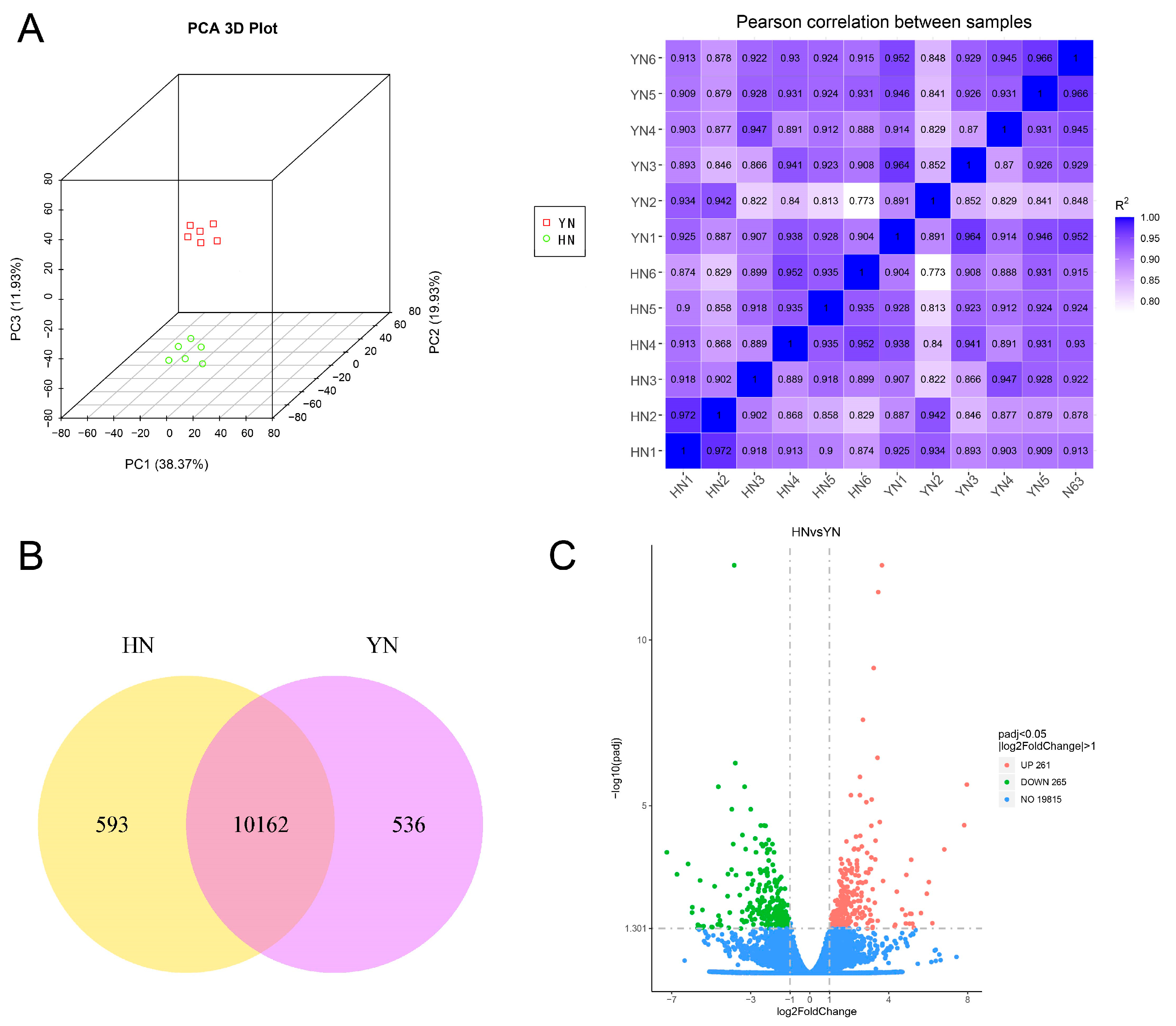
3.3. mRNA-Seq Analysis and DEG Profiling
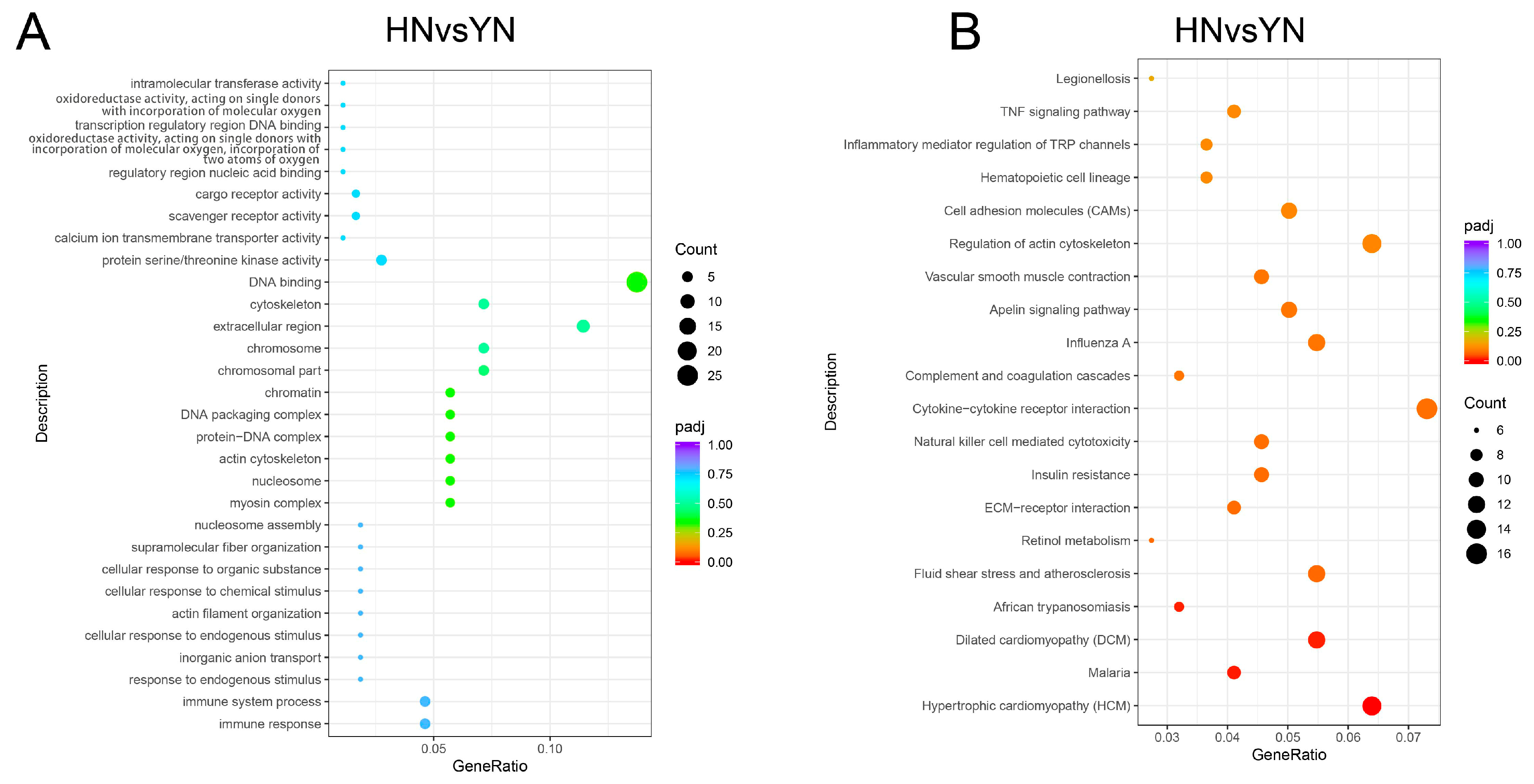
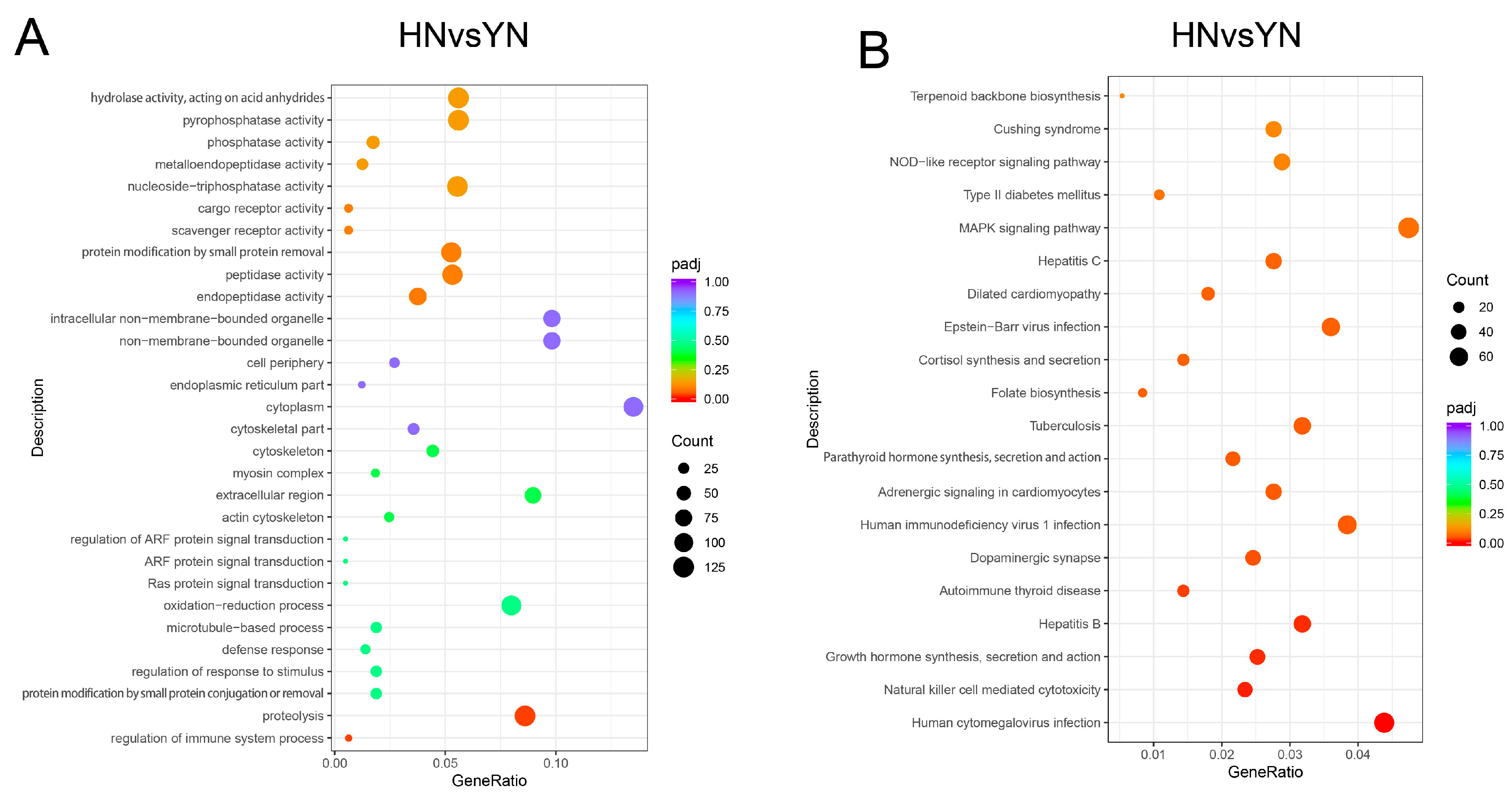
3.4. GO Terms and KEGG Pathway Enrichment Analyses
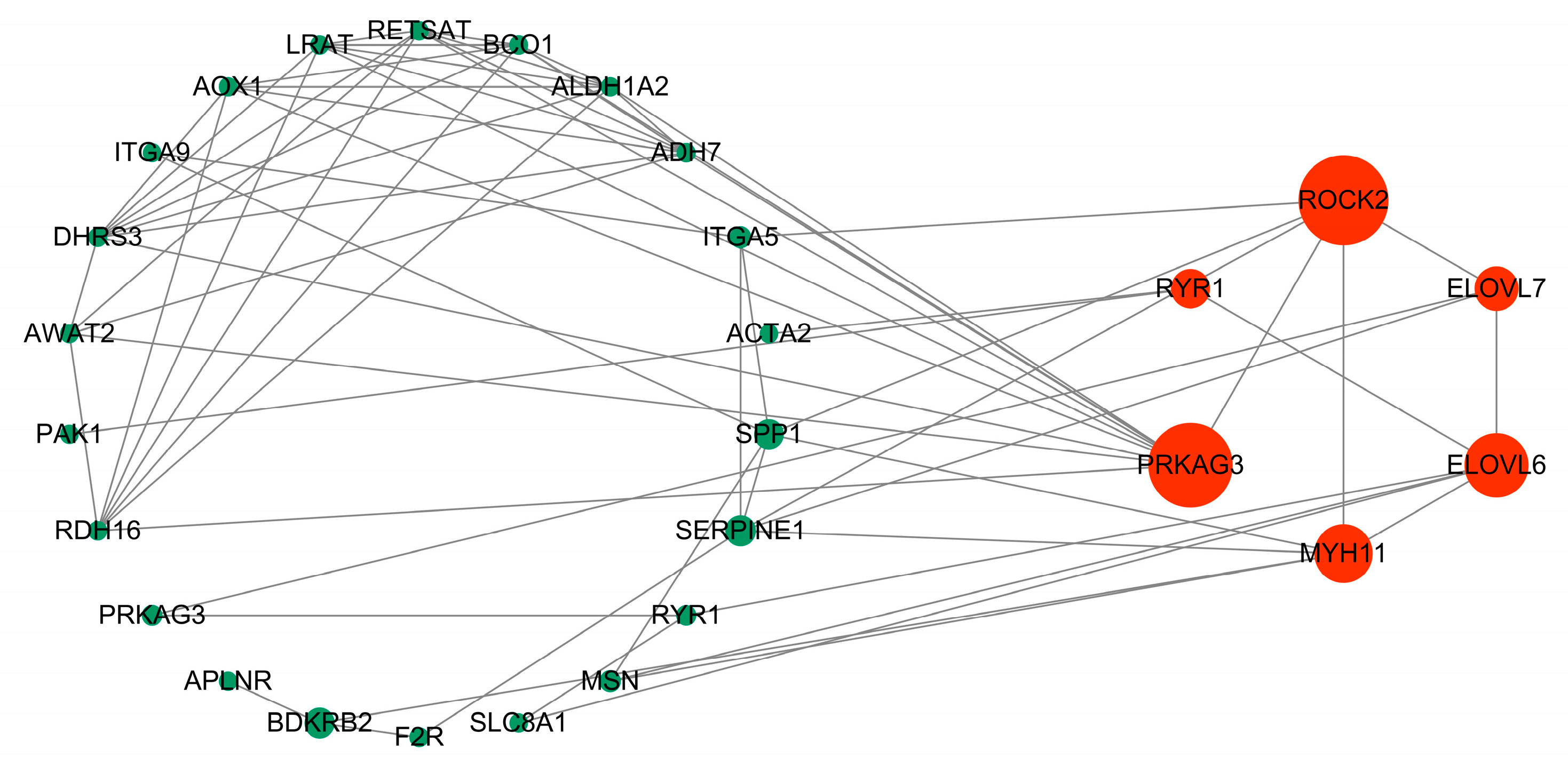
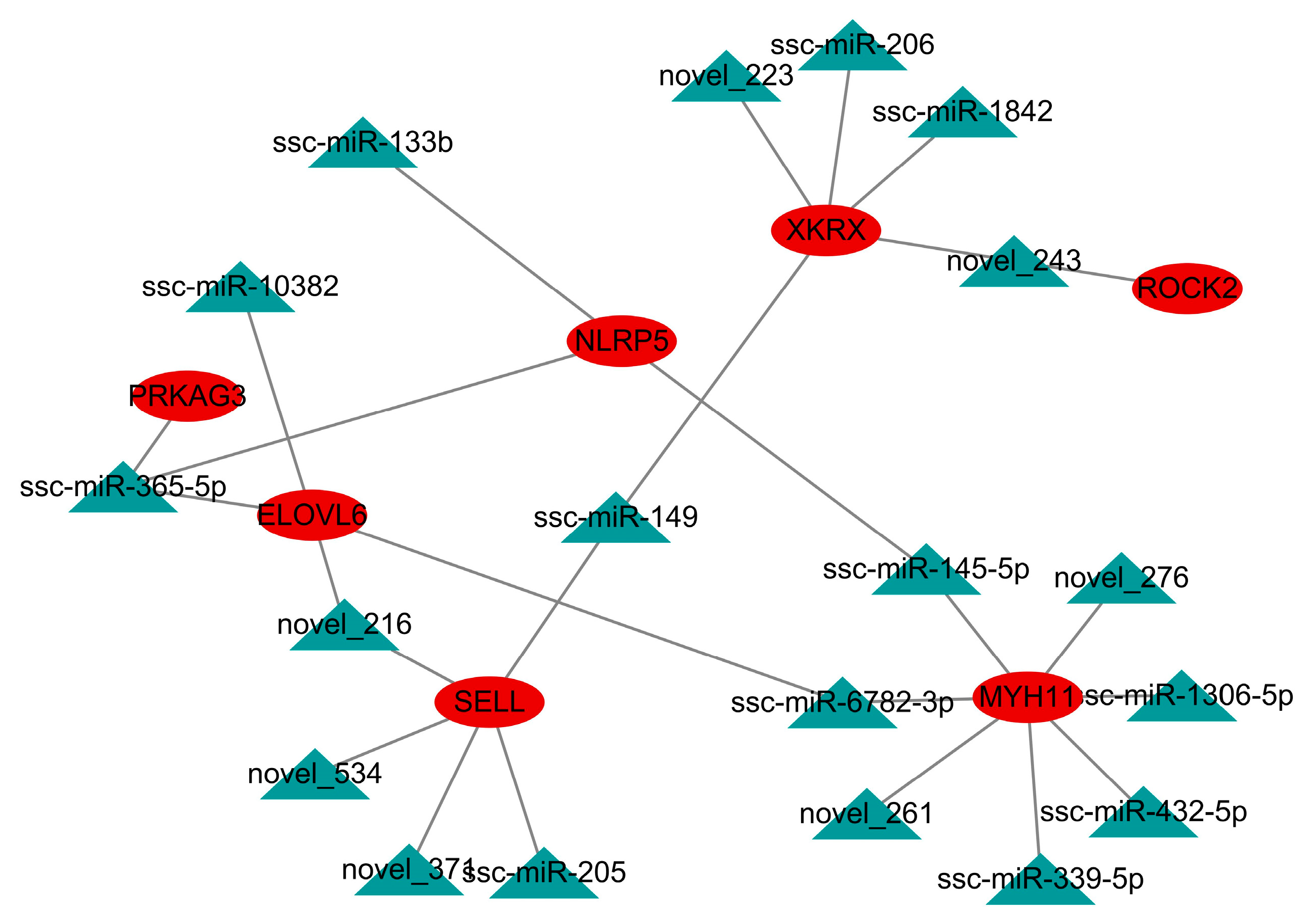
3.5. PPI Network Analysis
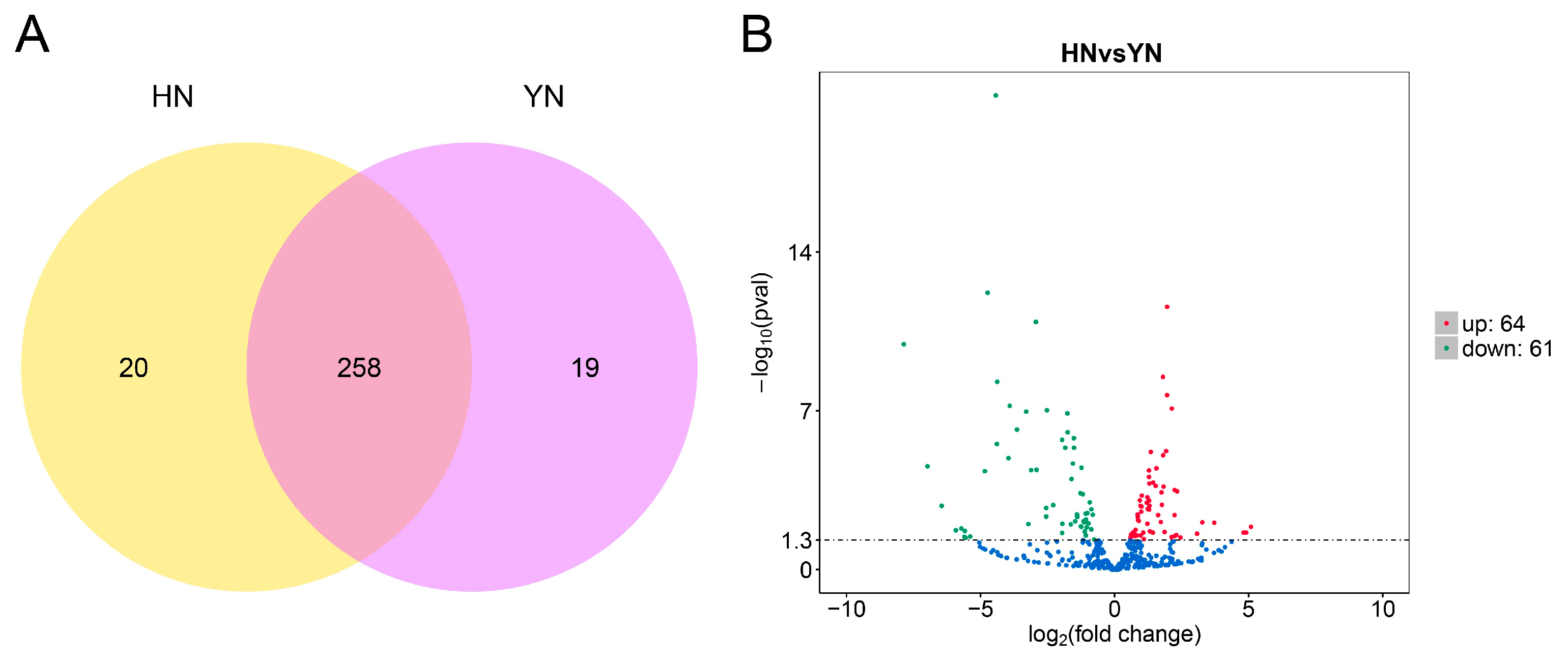
3.6. miRNA-Seq Analysis and miRNA Identification
3.7. Target Prediction of DEMs and Functional Analysis
3.8. Correlation Analysis Between Differentially Expressed Genes and Fatty Acid Content
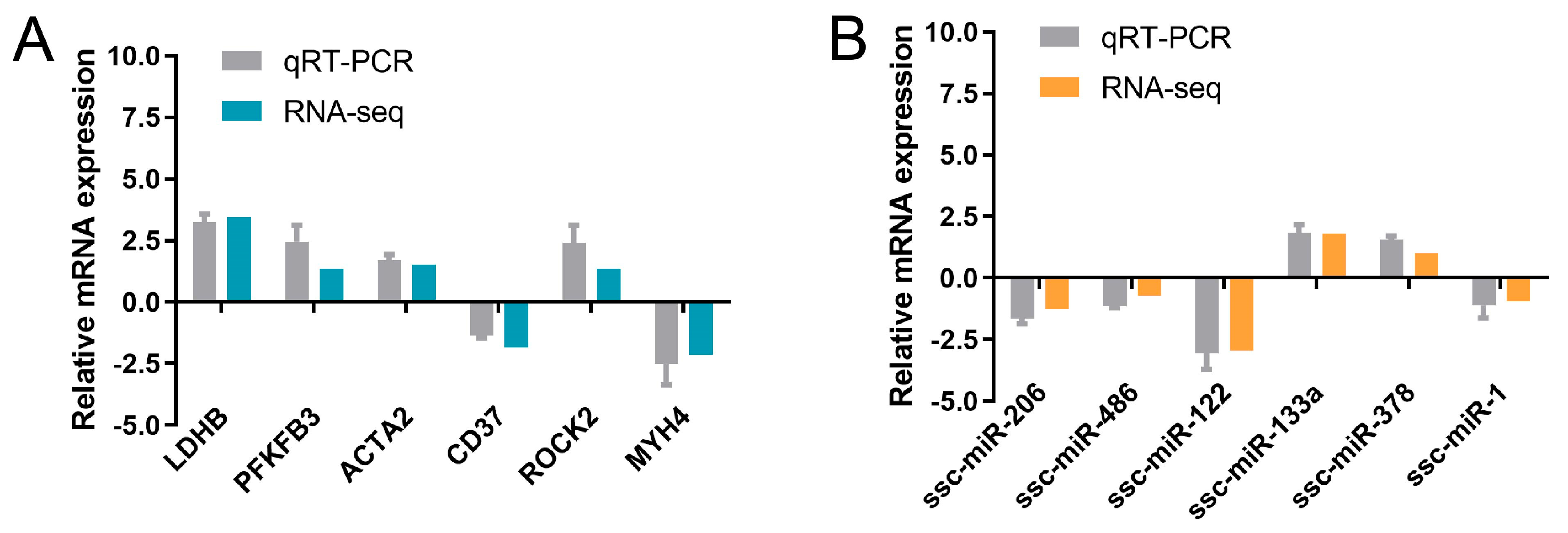
3.9. qRT-PCR Validation of mRNAs and miRNAs
4. Discussion
5. Conclusions
Supplementary Materials
Author Contributions
Funding
Institutional Review Board Statement
Data Availability Statement
Conflicts of Interest
References
- Han, Y.; Tan, T.; Li, Z.; Ma, Z.; Lan, G.; Liang, J.; Li, K.; Bai, L. Identification of Selection Signatures and Loci Associated with Important Economic Traits in Yunan Black and Huainan Pigs. Genes 2023, 14, 655. [Google Scholar] [CrossRef]
- Zhao, J.; Wang, M.; Xie, J.; Zhao, M.; Hou, L.; Liang, J.; Wang, S.; Cheng, J. Volatile Flavor Constituents in the Pork Broth of Black Pig. Food Chem. 2017, 226, 51–60. [Google Scholar] [CrossRef]
- Wang, J.; Hua, L.; Chen, J.; Zhang, J.; Bai, X.; Gao, B.; Li, C.; Shi, Z.; Sheng, W.; Gao, Y. Identification and Characterization of Long non-coding RNAs in Subcutaneous Adipose Tissue from Castrated and Intact Full-Sib Pair Huainan Male Pigs. BMC Genom. 2017, 18, 542. [Google Scholar] [CrossRef]
- Qiao, R.; Zhang, M.; Zhang, B.; Li, X.; Han, X.; Wang, K.; Li, X.; Yang, F.; Hu, P. Population Genetic Structure Analysis and Identification of Backfat Thickness Loci of Chinese Synthetic Yunan Pigs. Front. Genet. 2022, 13, 1039838. [Google Scholar] [CrossRef]
- Iqbal, A.; Ping, J.; Ali, S.; Zhen, G.; Juan, L.; Kang, J.Z.; Ziyi, P.; Huixian, L.; Zhihui, Z. Role of microRNAs in Myogenesis and their Effects on Meat Quality in Pig—A review. Anim. Biosci. 2020, 33, 1873. [Google Scholar] [CrossRef] [PubMed]
- Mármol-Sánchez, E.; Luigi-Sierra, M.G.; Castelló, A.; Guan, D.; Quintanilla, R.; Tonda, R.; Amills, M. Variability in Porcine microRNA Genes and Its Association with mRNA Expression and Lipid Phenotypes. Genet. Sel. Evol. 2021, 53, 43. [Google Scholar] [CrossRef]
- Cánovas, A.; Quintanilla, R.; Amills, M.; Pena, R.N. Muscle Transcriptomic Profiles in Pigs with Divergent Phenotypes for Fatness Traits. BMC Genom. 2010, 11, 372. [Google Scholar] [CrossRef] [PubMed]
- Mattick, J.S.; Amaral, P.P.; Carninci, P.; Carpenter, S.; Chang, H.Y.; Chen, L.L.; Chen, R.; Dean, C.; Dinger, M.E.; Fitzgerald, K.A. Long non-coding RNAs: Definitions, Functions, Challenges and Recommendations. Nat. Rev. Mol. Cell Biol. 2023, 24, 430–447. [Google Scholar] [CrossRef]
- Zhang, J.; Wang, J.; Ma, C.; Wang, W.; Wang, H.; Jiang, Y. Comparative Transcriptomic Analysis of miRNAs, miRNAs and lncRNAs in the Longissimus Dorsi Muscles between Fat-Type and Lean-Type Pigs. Biomolecules 2022, 12, 1294. [Google Scholar] [CrossRef] [PubMed]
- Ma, Y.; Zhang, S.; Zhang, K.; Fang, C.; Xie, S.; Du, X.; Li, X.; Ni, D.; Zhao, S. Genomic Analysis to Identify Signatures of Artificial Selection and Loci Associated with Important Economic Traits in Duroc Pigs. G3 Genes Genomes Genet. 2018, 8, 3617–3625. [Google Scholar] [CrossRef]
- Chen, Y.; Wu, X.; Wang, J.; Hou, Y.; Liu, Y.; Wang, B.; Hu, X.; Zheng, X.; Zhang, X.; Ding, Y. Detection of Selection Signatures in Anqing Six-End-White Pigs Based on Resequencing Data. Genes 2022, 13, 2310. [Google Scholar] [CrossRef]
- Zhao, P.; Yu, Y.; Feng, W.; Du, H.; Yu, J.; Kang, H.; Zheng, X.; Wang, Z.; Liu, G.E.; Ernst, C.W. Evidence of Evolutionary History and Selective Sweeps in the Genome of Meishan Pig Reveals Its Genetic and Phenotypic Characterization. Gigascience 2018, 7, giy058. [Google Scholar] [CrossRef]
- Cao, R.; Feng, J.; Xu, Y.; Fang, Y.; Zhao, W.; Zhang, Z.; Zhang, Z.; Li, M.; Wang, Q.; Pan, Y. Genomic Signatures Reveal Breeding Effects of Lulai Pigs. Genes 2022, 13, 1969. [Google Scholar] [CrossRef]
- Zhang, S.; Knight, T.J.; Stalder, K.J.; Goodwin, R.N.; Lonergan, S.M.; Beitz, D.C. Effects of Breed, Sex, and halothane genotype on Fatty Acid Composition of Pork Longissimus Muscle. J. Anim. Sci. 2007, 85, 583–591. [Google Scholar] [CrossRef] [PubMed]
- Jackman, J.A.; Boyd, R.D.; Elrod, C.C. Medium-Chain Fatty Acids and Monoglycerides as Feed Additives for Pig Production: Towards Gut Health Improvement and Feed Pathogen Mitigation. J. Anim. Sci. Biotechnol. 2020, 11, 44. [Google Scholar] [CrossRef]
- Zhou, H.; Yu, B.; Sun, J.; Liu, Z.; Chen, H.; Ge, L.; Chen, D. Short-Chain Fatty Acids Can Improve Lipid and Glucose Metabolism Independently of the Pig Gut Microbiota. J. Anim. Sci. Biotechnol. 2021, 12, 61. [Google Scholar] [CrossRef] [PubMed]
- Cameron, N.D.; Enser, M.B. Fatty Acid Composition of Lipid in Longissimus Dorsi Muscle of Duroc and British Landrace Pigs and Its Relationship with Eating Quality. Meat Sci. 1991, 29, 295–307. [Google Scholar] [CrossRef]
- Liao, J.; Zhang, P.; Yin, J.; Zhang, X. New Insights into the Effects of Dietary Amino Acid Composition on Meat Quality in Pigs: A Review. Meat Sci. 2025, 221, 109721. [Google Scholar] [CrossRef]
- Li, X.; Liu, S.Q. Effect of Heat Treatment on Amino Acids and Volatile Compounds of Enzymatic Pork Trimmings Hydrolysate Supplemented with Xylose and Cysteine. Food Biosci. 2022, 46, 101538. [Google Scholar] [CrossRef]
- Corino, C.; Magni, S.; Pagliarini, E.; Rossi, R.; Pastorelli, G.; Chiesa, L.M. Effects of Dietary Fats on Meat Quality and Sensory Characteristics of Heavy Pig Loins. Meat Sci. 2002, 60, 1–8. [Google Scholar] [CrossRef]
- Tartrakoon, W.; Tartrakoon, T.; Kitsupee, N. Effects of the Ratio of Unsaturated Fatty Acid to Saturated Fatty Acid on the Growth Performance, Carcass and Meat Quality of Finishing Pigs. Anim. Nutr. 2016, 2, 79–85. [Google Scholar] [CrossRef]
- Zeng, X.; Yang, Y.; Wang, J.; Wang, Z.; Li, J.; Yin, Y.; Yang, H. Dietary Butyrate, Lauric acid and Stearic Acid Improve Gut Morphology and Epithelial Cell Turnover in Weaned Piglets. Anim. Nutr. 2022, 11, 276–282. [Google Scholar] [CrossRef] [PubMed]
- Renaville, B.; Prandi, A.; Fan, B.; Sepulcri, A.; Rothschild, M.F.; Piasentier, E. Candidate Gene Marker Associations with Fatty Acid Profiles in Heavy Pigs. Meat Sci. 2013, 93, 495–500. [Google Scholar] [CrossRef] [PubMed]
- Ascenzi, F.; de Vitis, C.; Maugeri-Saccà, M.; Napoli, C.; Ciliberto, G.; Mancini, R. SCD1, Autophagy and Cancer: Implications for Therapy. J. Exp. Clin. Cancer Res. 2021, 40, 265. [Google Scholar] [CrossRef]
- Sun, X.; Gao, Y.; Li, Z.; He, J.; Wu, Y. Magnetic Responsive Hydroxyapatite Scaffold Modulated Macrophage Polarization Through PPAR/JAK-STAT Signaling and Enhanced Fatty Acid metabolism. Biomaterials 2023, 295, 122051. [Google Scholar] [CrossRef] [PubMed]
- Medoro, A.; Graziano, F.; Cardinale, G.; Voccola, S.; Zotti, T.; Intrieri, M.; Scapagnini, G.; Davinelli, S. The Influence of FADS1 and ELOVL2 Genetic Polymorphisms on Polyunsaturated Fatty Acid Composition in Response to Fish Oil Supplementation. Lipids Health Dis. 2025, 24, 102. [Google Scholar] [CrossRef]
- Sereti, I.; Verburgh, M.L.; Gifford, J.; Lo, A.; Boyd, A.; Verheij, E.; Verhoeven, A.; Wit, F.W.N.M.; Schim van der Loeff, M.F.; Giera, M. Impaired Gut microbiota-mediated Short-Chain Fatty Acid Production Precedes Morbidity and Mortality in People with HIV. Cell Rep. 2023, 42, 113336. [Google Scholar] [CrossRef]
- Zhao, Q.; Oyelami, F.O.; Qadri, Q.R.; Sun, H.; Xu, Z.; Wang, Q.; Pan, Y. Identifying the Unique Characteristics of the Chinese Indigenous Pig Breeds in the Yangtze River Delta Region for Precise Conservation. BMC Genom. 2021, 22, 151. [Google Scholar] [CrossRef]
- Wu, G. Functional Amino Acids in Growth, Reproduction, and Health. Adv. Nutr. 2010, 1, 31–37. [Google Scholar] [CrossRef]
- Neinast, M.; Murashige, D.; Arany, Z. Branched Chain Amino Acids. Annu. Rev. Physiol. 2019, 81, 139–164. [Google Scholar] [CrossRef]
- Nie, C.; He, T.; Zhang, W.; Zhang, G.; Ma, X. Branched Chain Amino Acids: Beyond Nutrition Metabolism. Int. J. Mol. Sci. 2018, 19, 954. [Google Scholar] [CrossRef]
- Richard, A.; Margaritis, A. Poly(glutamic Acid) for Biomedical Applications. Crit. Rev. Biotechnol. 2001, 21, 219–232. [Google Scholar] [CrossRef] [PubMed]
- Brosnan, M.E.; Brosnan, J.T. Histidine Metabolism and Function. J. Nutr. 2020, 150, 2570S–2575S. [Google Scholar] [CrossRef] [PubMed]
- Liao, S.M.; Du, Q.S.; Meng, J.Z.; Pang, Z.W.; Huang, R.B. The Multiple Roles of Histidine in Protein Interactions. BMC Genom. 2013, 7, 44. [Google Scholar] [CrossRef]
- Corominas, J.; Marchesi, J.A.P.; Puig-Oliveras, A.; Revilla, M.; Estellé, J.; Alves, E.; Folch, J.M.; Ballester, M. Epigenetic Regulation of the ELOVL6 Gene is Associated with a Major QTL Effect on Fatty Acid Composition in pigs. Genet. Sel. Evol. 2015, 47, 20. [Google Scholar] [CrossRef] [PubMed]
- Yi, W.; Huang, Q.; Wang, Y.; Shan, T. Lipo-nutritional Quality of Pork: The Lipid Composition, Regulation, and Molecular Mechanisms of Fatty Acid Deposition. Anim. Nutr. 2023, 13, 373–385. [Google Scholar] [CrossRef]
- Matsuzaka, T.; Shimano, H. Elovl6: A New Player in Fatty Acid Metabolism and Insulin Sensitivity. J. Mol. Med. 2009, 87, 379–384. [Google Scholar] [CrossRef]
- Albuquerque, A.; Óvilo, C.; Núñez, Y.; Benítez, R.; López-Garcia, A.; García, F.; Félix, M.d.R.; Laranjo, M.; Charneca, R.; Martins, J.M. Comparative Transcriptomic Analysis of Subcutaneous Adipose Tissue from Local Pig Breeds. Genes 2020, 11, 422. [Google Scholar] [CrossRef]
- Milan, D.; Jeon, J.T.; Looft, C.; Amarger, V.; Robic, A.; Thelander, M.; Rogel-Gaillard, C.; Paul, S.; Iannuccelli, N.; Rask, L. A Mutation in PRKAG3 Associated with Excess Glycogen Content in Pig Skeletal Muscle. Science 2000, 288, 1248–1251. [Google Scholar] [CrossRef]
- Huang, L.S.; Ma, J.W.; Ren, J.; Ding, N.S.; Guo, Y.M.; Ai, H.S.; Li, L.; Zhou, L.H.; Chen, C.Y. Genetic Variations of the Porcine PRKAG3 Gene in Chinese Indigenous Pig Breeds. Genet. Sel. Evol. 2004, 36, 481–486. [Google Scholar] [CrossRef]
- Dall’Olio, S.; Scotti, E.; Costa, L.N.; Fontanesi, L. Effects of Single Nucleotide Polymorphisms and Haplotypes of the Protein Kinase AMP-Activated Non-Catalytic Subunit Gamma 3 (PRKAG3) Gene on Production, Meat Quality and Carcass Traits in Italian Large White Pigs. Meat Sci. 2018, 136, 44–49. [Google Scholar] [CrossRef]
- Bertić, V.; Bošnjak, Z.; Đurkin, I.; Lukić, B.; Jovanovac, S.; Kušec, G. PRKAG3 Gene and Meat Quality of Hybrid Pigs. Agric. Conspec. Sci. 2013, 78, 159–162. [Google Scholar]
- Ryan, M.T.; Hamill, R.M.; O’Halloran, A.M.; Davey, G.C.; McBryan, J.; Mullen, A.M.; McGee, C.; Gispert, M.; Southwood, O.I.; Sweeney, T. SNP Variation in the Promoter of the PRKAG3 Gene and Association with Meat Quality Traits in Pig. BMC Genet. 2012, 13, 66. [Google Scholar] [CrossRef]
- Fernández-Simón, E.; Suárez-Calvet, X.; Carrasco-Rozas, A.; Piñol-Jurado, P.; López-Fernández, S.; Pons, G.; Bech Serra, J.J.; de la Torre, C.; de Luna, N.; Gallardo, E. RhoA/ROCK2 Signalling is Enhanced by PDGF-AA in Fibro-Adipogenic Progenitor Cells: Implications for Duchenne Muscular Dystrophy. J. Cachexia Sarcopenia Muscle 2022, 13, 1373–1384. [Google Scholar] [CrossRef]
- Shang, P.; Wang, Z.; Chamba, Y.; Zhang, B.; Zhang, H.; Wu, C. A Comparison of Prenatal Muscle Transcriptome and Proteome Profiles between Pigs with Divergent Growth Phenotypes. J. Cell. Biochem. 2019, 120, 5277–5286. [Google Scholar] [CrossRef]
- Muñoz, V.R.; Gaspar, R.C.; Severino, M.B.; Macêdo, A.P.A.; Simabuco, F.M.; Ropelle, E.R.; Cintra, D.E.; da Silva, A.S.R.; Kim, Y.B.; Pauli, J.R. Exercise Counterbalances Rho/ROCK2 Signaling Impairment in the Skeletal Muscle and Ameliorates Insulin Sensitivity in Obese Mice. Front. Immunol. 2021, 12, 702025. [Google Scholar] [CrossRef]
- Nagai, Y.; Matoba, K.; Kawanami, D.; Takeda, Y.; Akamine, T.; Ishizawa, S.; Kanazawa, Y.; Yokota, T.; Utsunomiya, K.; Nishimura, R. ROCK2 Regulates TGF-β-induced Expression of CTGF and Profibrotic Genes via NF-κB and Cytoskeleton Dynamics in Mesangial Cells. Am. J. Physiol. Ren. Physiol. 2019, 317, F389–F851. [Google Scholar] [CrossRef]
- Tong, L.; Ao, J.P.; Lu, H.L.; Huang, X.; Zang, J.Y.; Liu, S.H.; Song, N.N.; Huang, S.Q.; Lu, C.; Chen, J. Tyrosine Kinase Pyk2 is Involved in Colonic Smooth Muscle Contraction via the RhoA/ROCK Pathway. Physiol. Res. 2019, 68, 89–98. [Google Scholar] [CrossRef]
- Tan, X.; He, Y.; Qin, Y.; Yan, Z.; Chen, J.; Zhao, R.; Zhou, S.; Irwin, D.M.; Li, B.; Zhang, S. Comparative analysis of differentially abundant proteins between high and low intramuscular fat content groups in donkeys. Front. Vet. Sci. 2022, 9, 951168. [Google Scholar] [CrossRef] [PubMed]
- Noguchi, M.; Hosoda, K.; Fujikura, J.; Fujimoto, M.; Iwakura, H.; Tomita, T.; Ishii, T.; Arai, N.; Hirata, M.; Ebihara, K. Genetic and Pharmacological Inhibition of Rho-associated Kinase II Enhances Adipogenesis. J. Biol. Chem. 2007, 282, 29574–29583. [Google Scholar] [CrossRef] [PubMed]
- Renard, M.; Callewaert, B.; Baetens, M.; Campens, L.; MacDermot, K.; Fryns, J.P.; Bonduelle, M.; Dietz, H.C.; Gaspar, I.M.; Cavaco, D.; et al. Novel MYH11 and ACTA2 Mutations Reveal A Role for Enhanced TGFβ Signaling in FTAAD. Int. J. Cardiol. 2013, 165, 314–321. [Google Scholar] [CrossRef]
- Edman, K.A.P. Contractile Performance of Skeletal Muscle Fibres. Strength Power Sport 2008, 114–133. [Google Scholar] [CrossRef]
- Yue, C.; Wang, J.; Shen, Y.; Zhang, J.; Liu, J.; Xiao, A.; Liu, Y.; Eer, H.; Zhang, Q. Whole-genome DNA Methylation Profiling Reveals Epigenetic Signatures in Developing Muscle in Tan and Hu Sheep and Their Offspring. Front. Vet. Sci. 2023, 10, 1186040. [Google Scholar] [CrossRef]
- Xiao, W.; Jiang, N.; Ji, Z.; Ni, M.; Zhang, Z.; Zhao, Q.; Huang, R.; Li, P.; Hou, L. Single-cell RNA Sequencing Reveals the Cellular Landscape of Longissimus Dorsi in A Newborn Suhuai Pig. Int. J. Mol. Sci. 2024, 25, 1204. [Google Scholar] [CrossRef]
- Stefani, G.; Slack, F.J. Small non-coding RNAs in Animal Development. Nat. Rev. Mol. Cell Biol. 2008, 9, 219–230. [Google Scholar] [CrossRef]
- Hou, X.; Yang, Y.; Zhu, S.; Hua, C.; Zhou, R.; Mu, Y.; Tang, Z.; Li, K. Comparison of Skeletal Muscle miRNA and mRNA Profiles among Three Pig Breeds. Mol. Genet. Genom. 2016, 291, 559–573. [Google Scholar] [CrossRef]
- Li, Y.; Wang, X.; Ren, J.; Wu, X.; Li, G.; Fan, Z.; Zhang, C.; Li, A.; Wang, S. Mandible Exosomal ssc-mir-133b Regulates Tooth development in miniature swine via endogenous apoptosis. Bone Res. 2018, 6, 28. [Google Scholar] [CrossRef] [PubMed]
- Chen, W.; Fang, G.F.; Wang, S.D.; Wang, H.; Zeng, Y.Q. Characterization and Differential Expression of microRNA in Skeletal Muscle of Laiwu and Yorkshire Pig Breeds. Genes Genom. 2017, 39, 173–182. [Google Scholar] [CrossRef]
- Tang, Z.; Yang, Y.; Wang, Z.; Zhao, S.; Mu, Y.; Li, K. Integrated Analysis of miRNA and mRNA Paired Expression Profiling of prenatal skeletal muscle development in three genotype pigs. Sci. Rep. 2015, 5, 15544. [Google Scholar] [CrossRef] [PubMed]
- Xu, K.; Ji, M.; Huang, X.; Peng, Y.; Wu, W.; Zhang, J. Differential Regulatory Roles of MicroRNAs in Porcine Intramuscular and Subcutaneous Adipocytes. J. Agric. Food Chem. 2020, 68, 3954–3962. [Google Scholar] [CrossRef]
- Ma, G.; Wang, Y.; Li, Y.; Cui, L.; Zhao, Y.; Zhao, B.; Li, K. MiR-206, A Key Modulator of Skeletal Muscle Development and Disease. Int. J. Biol. Sci. 2015, 11, 345. [Google Scholar] [CrossRef]
- Cui, Y.; Chen, R.; Ma, L.; Yang, W.; Chen, M.; Zhang, Y.L.; Yu, S.; Dong, W.; Zeng, W.; Lan, X. miR-205 Expression Elevated with EDS Treatment and Induced Leydig Cell Apoptosis by Targeting RAP2B via the PI3K/AKT Signaling Pathway. Front. Cell Dev. Biol. 2020, 8, 448. [Google Scholar] [CrossRef]
- Bai, Y.; Huang, J.M.; Liu, G.; Zhang, J.B.; Wang, J.Y.; Liu, C.K.; Fang, M.Y. A Comprehensive microRNA Expression Profile of the Backfat Tissue from Castrated and Intact Full-Sib Pair Male Pigs. BMC Genom. 2014, 15, 47. [Google Scholar] [CrossRef][Green Version]
- Li, J.; Shang, X.; Zhang, S.; Yang, Q.; Yan, Z.; Wang, P.; Gao, X.; Gun, S.; Huang, X. Breed-Related Differential microRNA Expression and Analysis of Colostrum and Mature Milk Exosomes in Bamei and Landrace Pigs. Int. J. Mol. Sci. 2024, 25, 667. [Google Scholar] [CrossRef]
- Valdés-Hernández, J.; Folch, J.M.; Crespo-Piazuelo, D.; Passols, M.; Sebastià, C.; Criado-Mesas, L.; Castelló, A.; Sánchez, A.; Ramayo-Caldas, Y. Identification of candidate regulatory genes for intramuscular fatty acid composition in pigs by transcriptome analysis. Genet. Sel. Evol. 2024, 56, 12. [Google Scholar] [CrossRef] [PubMed]
- Andersson, L. Identification and characterization of AMPK gamma 3 mutations in the pig. Biochem. Soc. Trans. 2003, 31, 232–335. [Google Scholar] [CrossRef] [PubMed]
- He, D.; Zou, T.; Gai, X.; Ma, J.; Li, M.; Huang, Z.; Chen, D. MicroRNA expression profiles differ between primary myofiber of lean and obese pig breeds. PLoS ONE 2017, 31, e0181897. [Google Scholar] [CrossRef] [PubMed]



| Types of Fatty Acids | HN Black Pigs (ug/mg) | YN Black Pigs (ug/mg) | p-Value |
|---|---|---|---|
| C14:0 | 0.42 ± 0.08 | 0.23 ± 0.02 | p = 0.34 |
| C15:1 | 6.47 ± 1.56 | 3.57 ± 0.43 | p = 0.012 |
| C16:0 | 10.58 ± 1.20 | 5.83 ± 0.70 | p = 0.005 |
| C16:1 | 1.09 ± 0.35 | 0.61 ± 0.02 | p = 0.021 |
| C17:0 | 0.04 ± 0.01 | 0.02 ± 0.002 | p = 0.24 |
| C17:1 | 0.02 ± 0.008 | 0.01 ± 0.001 | p = 0.24 |
| C18:0 | 4.92 ± 1.24 | 2.56 ± 0.46 | p = 0.023 |
| C18:1n9t | 0.07 ± 0.02 | 0.03 ± 0.004 | p = 0.22 |
| C18:1n9c | 15.83 ± 5.79 | 8.17 ± 1.24 | p = 0.002 |
| C18:2n6c | 2.91 ± 0.25 | 1.10 ± 0.13 | p = 0.019 |
| C20:1 | 0.16 ± 0.08 | 0.05 ± 0.01 | p = 0.23 |
| C18:3n3 | 0.07 ± 0.003 | 0.015 ± 0.002 | p = 0.17 |
| C20:2 | 0.07 ± 0.03 | 0.02 ± 0.002 | p = 0.19 |
| C22:1n9 | 0.05 ± 0.009 | 0.04 ± 0.005 | p = 0.48 |
| C20:4n6 | 0.1 ± 0.01 | 0.05 ± 0.002 | p = 0.13 |
| Amino Acids | HN Black Pigs (%) | YN Black Pigs (%) | p-Value |
|---|---|---|---|
| Aspartic acid | 2.20 ± 0.20 | 1.96 ± 0.09 | p = 0.041 |
| Glutamic acid | 3.46 ± 0.29 | 3.04 ± 0.13 | p = 0.049 |
| Serine | 0.99 ± 0.08 | 0.90 ± 0.05 | p = 0.54 |
| Arginine | 1.50 ± 0.13 | 1.35 ± 0.06 | p = 0.65 |
| Glycine | 1.36 ± 0.12 | 1.19 ± 0.05 | p = 0.59 |
| Threonine | 1.08 ± 0.10 | 0.94 ± 0.04 | p = 0.72 |
| Proline | 0.85 ± 0.08 | 0.78 ± 0.04 | p = 0.69 |
| Alanine | 1.26 ± 0.12 | 1.12 ± 0.05 | p = 0.48 |
| Valine | 1.22 ± 0.13 | 1.09 ± 0.06 | p = 0.047 |
| Methionine | 0.35 ± 0.07 | 0.32 ± 0.03 | p = 0.79 |
| Cystine | 0.17 ± 0.02 | 0.15 ± 0.01 | p = 0.81 |
| Isoleucine | 1.08 ± 0.09 | 0.94 ± 0.04 | p = 0.65 |
| Leucine | 1.80 ± 0.13 | 1.62 ± 0.09 | p = 0.044 |
| Phenylalanine | 0.93 ± 0.08 | 0.83 ± 0.02 | p = 0.35 |
| Histidine | 1.51 ± 0.09 | 0.87 ± 0.05 | p = 0.021 |
| Lysine | 2.47 ± 0.22 | 2.12 ± 0.08 | p = 0.36 |
| Tyrosine | 0.76 ± 0.08 | 0.64 ± 0.02 | p = 0.44 |
| Total amino acid | 23.00 ± 2.04 | 19.88 ± 0.89 | p = 0.034 |
| Total umami amino acids | 18.19 ± 1.89 | 16.11 ± 1.31 | p = 0.029 |
| Total essential amino acids | 8.93 ± 1.01 | 7.86 ± 0.98 | p = 0.042 |
| Sample | Raw_Reads | Clean_Reads | Q20 | Q30 | GC (%) | Mapping Rate |
|---|---|---|---|---|---|---|
| HN1 | 44,556,038 | 41,516,514 | 96.32 | 90.9 | 51.87 | 85.41% |
| HN2 | 42,522,622 | 39,570,808 | 96.52 | 91.27 | 51.8 | 86.46% |
| HN3 | 41,716,848 | 38,210,420 | 96.77 | 91.36 | 53.86 | 86.25% |
| HN4 | 47,065,726 | 43,197,454 | 96.28 | 90.82 | 51.88 | 83.85% |
| HN5 | 37,247,516 | 37,021,118 | 96.36 | 91.14 | 54.83 | 81.47% |
| HN6 | 41,761,618 | 39,591,040 | 96.92 | 91.66 | 52.21 | 88.08% |
| YN1 | 39,774,740 | 37,323,634 | 96.47 | 91.26 | 53.74 | 86.12% |
| YN2 | 44,155,756 | 41,376,022 | 96.92 | 91.64 | 52.15 | 88.63% |
| YN3 | 43,360,774 | 39,728,160 | 96.36 | 91.00 | 53.44 | 84.54% |
| YN4 | 44,279,380 | 42,238,080 | 96.79 | 91.46 | 53.42 | 88.27% |
| YN5 | 40,122,388 | 38,217,128 | 96.55 | 91.38 | 53.62 | 86.96% |
| YN6 | 41,217,434 | 38,745,976 | 96.32 | 90.85 | 53.33 | 86.57% |
| Sample | Raw_Reads | Clean_Reads | Q20 | Q30 | Q20/Q30 (%) | GC (%) |
|---|---|---|---|---|---|---|
| HN1 | 11,967,189 | 11,867,154 | 99.25 | 97.58 | 1.017 | 45.13 |
| HN2 | 11,406,040 | 11,316,113 | 99.24 | 97.5 | 1.017 | 47.4 |
| HN3 | 11,607,412 | 11,534,660 | 99.29 | 97.5 | 1.018 | 47.33 |
| HN4 | 12,130,108 | 12,029,902 | 99.24 | 97.59 | 1.017 | 47.31 |
| HN5 | 11,842,520 | 11,752,301 | 99.23 | 97.58 | 1.017 | 46.67 |
| HN6 | 11,360,111 | 11,283,794 | 99.2 | 97.26 | 1.020 | 47.06 |
| YN1 | 11,899,770 | 11,703,531 | 99.18 | 97.25 | 1.020 | 46.01 |
| YN2 | 11,353,977 | 11,213,124 | 99.25 | 97.6 | 1.017 | 45.8 |
| YN3 | 11,835,438 | 11,762,998 | 99.29 | 97.66 | 1.017 | 45.9 |
| YN4 | 11,958,181 | 10,643,459 | 99.19 | 97.25 | 1.020 | 49.59 |
| YN5 | 11,475,075 | 11,355,918 | 99.29 | 97.7 | 1.016 | 46.59 |
| YN6 | 11,972,774 | 11,902,100 | 99.34 | 97.57 | 1.018 | 45.55 |
| Fatty Acids | Gene | Partial Correlation Coefficient (r) | p-Value |
|---|---|---|---|
| C16:0 | ELOVL6 | 0.65 | p = 0.003 |
| C16:0 | PRKAG3 | −0.52 | p = 0.015 |
| C18:0 | ELOVL6 | 0.68 | p = 0.002 |
| C18:0 | ROCK2 | 0.38 | p = 0.047 |
| C18:1n9c | PRKAG3 | −0.57 | p = 0.008 |
| C18:1n9c | MYH11 | −0.41 | p = 0.049 |
| C18:2n6c | ELOVL6 | 0.49 | p = 0.025 |
| C18:2n6c | PRKAG3 | −0.45 | p = 0.034 |
Disclaimer/Publisher’s Note: The statements, opinions and data contained in all publications are solely those of the individual author(s) and contributor(s) and not of MDPI and/or the editor(s). MDPI and/or the editor(s) disclaim responsibility for any injury to people or property resulting from any ideas, methods, instructions or products referred to in the content. |
© 2025 by the authors. Licensee MDPI, Basel, Switzerland. This article is an open access article distributed under the terms and conditions of the Creative Commons Attribution (CC BY) license (https://creativecommons.org/licenses/by/4.0/).
Share and Cite
Wen, Y.; Liao, C.; Wang, R.; Wen, B.; Luo, W.; Zhang, W.; Zhu, C.; Sun, H.; Zhang, L.; Liu, X.; et al. Molecular Mechanisms Underlying Divergent Biochemical Compositions in Longissimus Dorsi of Huainan and Yunan Black Pigs: Insights from Fatty Acids, Amino Acids, and Transcriptomic Profiling. Agriculture 2025, 15, 2532. https://doi.org/10.3390/agriculture15242532
Wen Y, Liao C, Wang R, Wen B, Luo W, Zhang W, Zhu C, Sun H, Zhang L, Liu X, et al. Molecular Mechanisms Underlying Divergent Biochemical Compositions in Longissimus Dorsi of Huainan and Yunan Black Pigs: Insights from Fatty Acids, Amino Acids, and Transcriptomic Profiling. Agriculture. 2025; 15(24):2532. https://doi.org/10.3390/agriculture15242532
Chicago/Turabian StyleWen, Yuliang, Chengshui Liao, Ruibiao Wang, Bo Wen, Weiyu Luo, Wei Zhang, Chunling Zhu, Huarun Sun, Longfei Zhang, Xuehan Liu, and et al. 2025. "Molecular Mechanisms Underlying Divergent Biochemical Compositions in Longissimus Dorsi of Huainan and Yunan Black Pigs: Insights from Fatty Acids, Amino Acids, and Transcriptomic Profiling" Agriculture 15, no. 24: 2532. https://doi.org/10.3390/agriculture15242532
APA StyleWen, Y., Liao, C., Wang, R., Wen, B., Luo, W., Zhang, W., Zhu, C., Sun, H., Zhang, L., Liu, X., Shen, J., Xiang, Y., Li, H., Hu, J., Bai, Y., Ding, K., & Wang, L. (2025). Molecular Mechanisms Underlying Divergent Biochemical Compositions in Longissimus Dorsi of Huainan and Yunan Black Pigs: Insights from Fatty Acids, Amino Acids, and Transcriptomic Profiling. Agriculture, 15(24), 2532. https://doi.org/10.3390/agriculture15242532