Article

The Influence of Grape Skin Flour on Reproductive Performance in Botoşani Karakul Rams

by
Constantin Pascal
1,
Claudia Pânzaru
1,*,
Daniel Simeanu
1,
Cristina-Gabriela Radu-Rusu
1 and
Ionică Nechifor
2,*
1
Faculty of Food and Animal Sciences, “Ion Ionescu de la Brad” Iasi University of Life Sciences, 700490 Iasi, Romania
2
Research and Development Station for Sheep and Goat Breeding, Popăuți-Botoșani, 710004 Botoșani, Romania
*
Authors to whom correspondence should be addressed.
Agriculture 2025, 15(23), 2513; https://doi.org/10.3390/agriculture15232513
Submission received: 31 October 2025 / Revised: 28 November 2025 / Accepted: 2 December 2025 / Published: 3 December 2025

Abstract

The present research aimed to analyze the influence of dietary supplementation with grape skin flour (GSF) in rams on body weight, body condition, semen quality, plasma testosterone levels, behavior, and fertility. The biological material consisted of four groups of rams (GSF0, GSF30, GSF60, and GSF90), with each group comprising six adult individuals. The experimental period lasted 60 days and was carried out prior to the onset of the mating season. During this period, the experimental factor was represented by the supplementation level: GSF30 received 30 g GSF/kg dry matter (DM), GSF60 received 60 g GSF/kg DM, while GSF90 received 90 g GSF/kg DM. Although no significant differences in live body weight (LW) were observed among groups at the beginning of the mating period (MP), the additional supplementation with GSF supported a more consistent accumulation of body reserves. As a result, at the onset of the mating season (MS), body weight increased, though with different intensities: by 0.77% in L0 and by more than 6% in GSF90, with the difference between L0 and GSF90 being highly significant at p ≥ 0.01 (p value = 0.0028). Furthermore, GSF administration induced highly significant differences between GSF0 and GSF60 in body condition score (p ≤ 0.01), and high significant differences (p ≤ 0.001) between GSF0 and GSF90 in testicular circumference. Regarding ejaculate volume, differences were highly significant (p ≤ 0.01) only between GSF0 and GSF60, whereas sperm motility showed significant differences (p ≤ 0.05) between GSF0 and GSF60, and highly significant differences (p ≤ 0.001) between GSF0 and GSF90. The fertility of the rams, assessed by the total number of ewes fertilized, showed highly significant differences (p < 0.01) between GSF0 and GSF60, as well as between GSF0 and GSF90.

1. Introduction

At the global level, the total vineyard area is estimated at 7.9 million hectares, of which approximately 4.5 million hectares are located in Europe. Under these conditions, in the European Union, about 1.55 million tons of grapes are processed annually, and after the extraction of wine and juice, approximately 500,000 tons of winemaking by-products are generated. Of this quantity, grape pomace accounts for about 20–30% and is composed of grape skins (approximately 70–80%), stalks (10%), seeds (8%), stems (2.5–7.5%), and pulp (57%) [1].
All these winemaking by-products lack a well-defined processing chain for further valorization, generating concerns and challenges related to their storage, processing, and utilization [2]. Although they possess nutritional value, their valorization opportunities are limited because these by-products become unstable immediately after grape processing, creating major inconveniences in their management [3].
Many scientific studies highlight that grape pomace, as well as grape skins, represent an important source for obtaining secondary products with applications in various industrial sectors [4,5,6], thereby reducing some of the disadvantages of the winemaking process. The interest in solid by-products resulting from vinification is mainly due to their high content of polyphenols, represented by tannins and anthocyanins [6], dietary fibers, and fatty acids, which provide natural antioxidant, anti-inflammatory, and antimicrobial properties [5,6,7,8,9,10].
In farm animals, grape pomace is primarily used in the feeding of ruminants, either in fresh or dried form, or as silage or dehydrated material [11,12]. Ruminants (cattle, sheep, goats) possess the biological capacity to utilize the cellulose present in these by-products, thanks to the cellulolytic bacteria inhabiting the rumen. The multi-compartmented stomach of ruminants (rumen, reticulum, omasum, and abomasum) functions as an efficient fermenter, where intensive digestive (fermentation) processes as well as biosynthetic activities take place [13,14].
The inclusion of solid winemaking by-products in animal diets reduces feeding costs, leading to improved profitability for farmers and a reduced environmental impact [15,16]. Grape pomace silage can be incorporated into the diet of young sheep at levels of up to 30% since it has been shown that at this level it does not negatively affect growth performance, carcass traits, or meat quality [17].
Other scientific studies evaluating the inclusion of grape pomace in sheep diets highlight multiple possibilities of administration and numerous economic advantages. For instance, several results emphasize that grape pomace supplementation in sheep diets positively influences ruminal fermentation [18,19,20,21], enhances the utilization of dietary nutrients [22], supports growth performance in young sheep [20,22], improves meat quality [23], exerts antioxidant effects contributing to intestinal health [24], increases feed digestibility [25], and affects methane emissions [21,26].
Additional findings suggest that feeding sheep with dehydrated or fermented grape pomace may generate clear advantages [21,22] and improve nitrogen utilization [27]. However, some studies also indicate that excessively high levels of certain compounds in the chemical composition of grape pomace, such as tannins and fibers, may impair digestion and negatively affect nutrient intake [18,21].
Results of a recent study conducted by Juráček et al. [28] suggest that the inclusion of 1% and 2% dried grape pomace in rams’ diets reduces blood glucose concentration, without affecting other biochemical blood parameters. The same study highlights that grape pomace, administered in this form, supports the reduction of oxidative stress and improves both seminal fluid characteristics and sperm quality traits. Furthermore, in rams used for breeding, the moderate supplementation with a mixture of grape pomace, pomegranate, and tomato was shown to increase melatonin levels in seminal plasma, improve sperm viability, and enhance protection against oxidative damage [29].
Understanding the interactions between dietary components, including the moderate addition of winemaking by-products, and analyzing the physiological, physicochemical, morphological, and behavioral changes that may occur in farm animals, is very important. Such knowledge can provide innovative and effective solutions to support sheep productivity and to promote efficient valorization of winemaking by-products, as well as to identify the optimal level of their inclusion in the diet of rams used for breeding.
The objective of the present study was to evaluate the effects of dietary supplementation with flour obtained from black grape skins and its potential impact on rams’ welfare, reproductive traits, productivity, semen quality, hormonal profile, behavior, and fertility.

2. Materials and Methods

2.1. Ethical Approval

The requirements and specific conditions of the research were approved by the Ethics Committee of the Research and Development Station for Sheep and Goat Breeding Popăuți-Botoșani, which favorably endorsed the experimental protocol (No. 256/04.03.2024). During immobilization, handling, and throughout the period in which biological samples were collected, all specific requirements of experimental animal ethics were respected, as well as those recommended by the Institute for Diagnosis and Animal Health, Bucharest. The techniques applied were intended to ensure that the rams did not undergo painful treatments, were not exposed to stress factors, and did not experience periods of discomfort.

2.2. Research Area and Specific Conditions

The research was conducted within a facility dedicated to small ruminants (sheep and goats) research activities. The facility is located at the geographical coordinates 47°47′45″ N and 26°40′43″ E [30], where the climate is temperate-continental and the natural breeding season of sheep begins at the end of summer (August–September) and ends before the onset of winter (October–November).
In the same area, vineyards cover a total surface of 69,134 hectares [31], which annually generates large amounts of viticultural by-products. Under these conditions, the objective of the study was to evaluate whether the inclusion of grape skin flour (GSF), at a certain proportion of the total dry matter (DM), could contribute, through the bioactive compounds in its chemical composition, to the improvement of productive and reproductive traits in rams used for breeding.

2.3. Technology for Obtaining Grape Skin Flour (GSF)

The grape skin flour (GSF) was obtained by separating the grape skins from the pomace resulting from the processing of grapes of the local Fetească Neagră variety, removing parts such as leaves, seeds, and stems. The skin fraction was retained and then subjected to a slow dehydration process at 40 °C under low pressure for 24 h, using a Steba dehydrator (Strullendorf, Germany). After dehydration, the resulting flakes were ground using a Wolfson MCR-1 cereal mill (Riviera Works, Ilfov, Romania) with a 0.6 mm sieve.

2.4. Animal Selection and Management

The biological material used in the study consisted of 24 adult rams intended for reproduction activity, belonging to the Botoșani Karakul sheep breed. All selected rams were evaluated in terms of body condition, health status, and reproductive system. The initial minimum body weight was 86.87 kg in GSF30, while the maximum recorded at the start of the breeding period was 92.35 kg in GSF90. To avoid experimental errors, the selected rams were randomly allocated into four groups, designated GSF0, GSF30, GSF60, and GSF90, each consisting of six individuals. All research activities were carried out during the natural breeding season, which took place between September and October of 2024.

2.5. Experimental Design

The experimental groups were established 60 days prior to the scheduled onset of the breeding season (BS). During this period, each group of rams was housed in a common pen, with all animal welfare standards being strictly observed. Feeding was based on the administration of a formulated diet (Table 1), ensuring that the nutritional requirements recommended by the HYBRIMIN program (www.hybrimin.com), designed for the optimization of farm animal nutrition, were fully met.
Through the validated diet, the experimental groups received 30, 60, or 90 g/head/day DM of GSF, which may result in a consumption of 1588 g DM/head/day in GSF30, 1618 g DM/head/day in GSF60, and 1648 g DM/head/day in GSF90. To ensure actual consumption, the grape skin flour was administered individually in a single feeding, with each ram separated, while water and salt blocks were provided ad libitum.

2.6. The Body Condition Score (BCS) and Live Body Weight (LW)

To evaluate how the bioactive compounds in GSF might influence body condition, the rams were assessed according to the method described in a previous study by Pascal et al. [32]. The body condition of the rams was evaluated by two experienced assessors who assigned scores by consensus. live weight was measured at the beginning of the pre-breeding period (PB) and at the onset of the mating season (MS) using an electronic scale with a precision of ±100 g.

2.7. The Scrotal Biometry

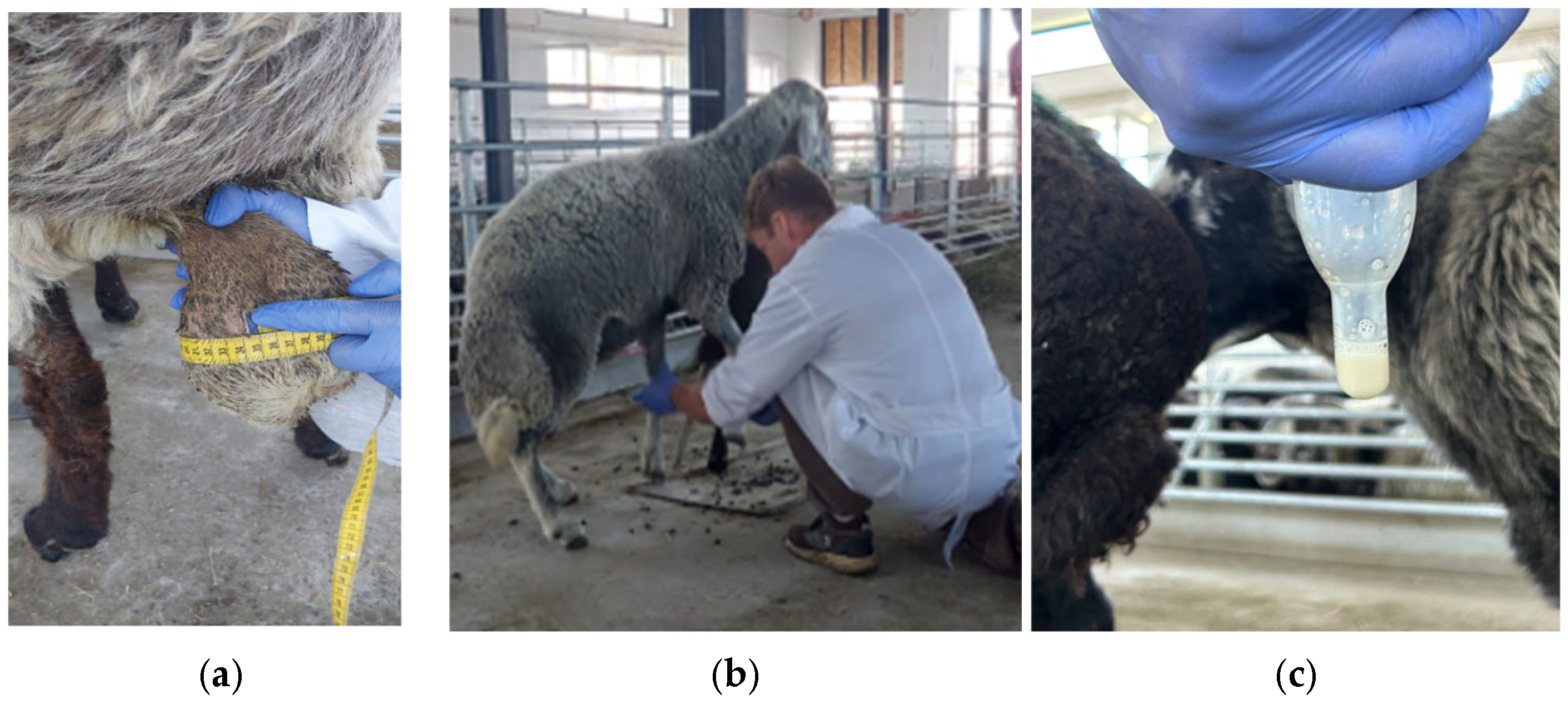
Measurements of testicular circumference (TC) were performed individually at the beginning of the pre-breeding period (PB) and at the onset of the mating season (MS). Testicular circumference was determined by gently pulling the testes downward toward the lower part of the scrotum and placing a graduated tape measure around the widest point (Figure 1a), with the result expressed in centimeters.

2.8. Semen Analysis

Assessment of semen-specific traits was performed on samples collected from each male at the beginning of the pre-breeding (PB) and mating (MS) periods. Collection was carried out by experienced personnel (Figure 1b) using the artificial vagina method. To prevent semen contamination, the prepuce was cleaned prior to collection. The collected samples (Figure 1c) were stored in a water bath at 35–37 °C and transported to the laboratory within a maximum of ten minutes for analysis and evaluation.

The Volume, Color, and pH of the Ejaculate

Semen volume was measured directly using the graduated collection container. The color of the seminal fluid was assessed visually and scored from 1 to 4 according to the model presented by Jha et al. [33], as follows: 1 = watery; 2 = milky; 3 = whitish-yellow; 4 = creamy white. The degree of acidity, or semen pH, was estimated on samples collected from the ejaculates using a colorimetric method with phenolphthalein paper and compared against a standard color scale.

2.9. The Evaluation of Specific Characteristics of Semen

Semen characteristics were evaluated using a CASA analyzer (CEROS II CASA, IMV Technologies, L’Aigle, France), with the Animal Breeders II software (version 1.13.7; Hamilton Thorne, Beverly, MA, USA). The procedure was carried out in accordance with the method described in a previous study [32].

2.10. The Assessment of Blood Testosterone Levels

The samples used for determining testosterone levels were collected and prepared for analysis using a procedure described in a previous study [32]. Testosterone concentration was measured using the radioimmunoassay (RIA) method, performed with TESTO-RIA-CT (DIAsource ImmunoAssays, Ottignies-Louvain-la-Neuve, Belgium) and a commercial kit (KIP1709), which allows quantitative measurement of testosterone (T) in both serum and plasma, with a detection range of 0.1–20 ng/mL and a sensitivity of 0.05 ng/mL.

2.11. The Sexual Behavior and Reflexes

To evaluate whether GSF supplementation could also influence behavior and sexual reflexes, rams were isolated from females one month prior to group allocation and throughout the experimental period. Rams’ behavior was analyzed both at the beginning of the pre-breeding period (PB) and at the onset of sexual activity (mating season—MS), using the method described by Goshme et al. [34]. The following aspects were assessed for an accurate evaluation: the male’s reaction and desire to mate, the time required to approach the female, the attitude adopted in the presence of the female, and the reaction time of males when a female was introduced into a 5 × 6 m pen.
Sexual behavior (SB) and the males’ reactions in the presence of females were scored according to the following categories, including certain behavioral manifestations. The scoring was based on the rams’ responses in the presence of the female, and points were assigned in accordance with the method described in a previous study [32,35].

2.12. Determination of Bioactive Compounds in GSF

Bioactive compounds were determined from a GSF extract using the ultrasound-assisted method described by Albishi et al. [36], and their analysis was based on measuring the extract’s capacity to scavenge anthocyanin, flavonoid, polyphenol radicals, and 2,2-diphenyl-1-picrylhydrazil (DPPH). Total anthocyanin content (TA) was determined spectrophotometrically by measuring absorbance at 520 nm after sample extraction and pH adjustment, according to the method described by Rațiu et al. [37]. Total polyphenol content (TP) was measured using the Folin–Ciocalteu spectrophotometric method as described by Horincar et al. [38]. Total flavonoid compounds (TFCs) were determined spectrophotometrically according to Albishi et al. [36].
Antioxidant activity (DPPH method) was assessed using a spectrophotometric technique based on the extract’s capacity to react with the stable free radical 2,2-diphenyl-1-picrylhydrazil. The procedure involved adding a sample of the extract to a DPPH solution (antioxidant activity), observing the color change of the radical from violet to yellow due to neutralization, and quantifying antioxidant activity by measuring UV-Vis absorbance at a specific wavelength (Vlaic et al.) [39]. The greater the ability of the sample to neutralize DPPH, the higher its antioxidant activity.

2.13. Statistical Data Processing

Experimental data were input into a column-type database and submitted to processing within GraphPad Prism, v. 10.2.0. software (Palo Alto, CA, USA) to obtain statistical descriptor values (mean, standard error, standard deviation) and to compare the performances of all three groups (GSF0-control, vs. GSF30, GSF60, GSF90), using the ANOVA single-factor test followed by Tukey Post Hoc processing of quantitative data. Mann–Whitney U Test for independent groups was used to compare non-quantitative data, such as scorings of Semen Color, the Behavior and Sexual Reflexes (discontinued variables), and one to one comparison was carried out (within each season, between the GSF0 group-control and GSF30, GSF60 and GSF90). Also, Pearson correlation coefficients and the level of significance for the correlations were computed, using the same software package. Correlations were calculated within groups, between body weight and certain testicular traits, and between the ejaculate volume and certain quality traits of the semen.

3. Results

3.1. Extraction and Characterization of Grape Skin Flour (GSF)

The data obtained from the ultrasound-assisted extraction allowed the evaluation of the levels of certain antioxidant compounds present in GSF, as well as the content of the main physiologically or biologically active components (Table 2).
Analysis of the obtained data showed that the total flavonoid content was 10.36 ± 0.15 mg CE/g DW, while total anthocyanin content was 1.62 ± 0.04 mg C3G/g DW, and total phenolic content was 21.74 ± 0.30 mg GAE/g DW. The free radical (DPPH) scavenging activity of the GSF extract was 78.67 ± 0.03%. The radical scavenging capacity of the extract was determined as 20.822 ± 0.102 mM Trolox/g DW.

3.2. Effect of GSF Supplementation Level in the Diet on Body Weight (LW), Body Condition Score (BCS), and Testicular Circumference (TC)

To evaluate how supplementation with GSF, at different proportions of DM, could contribute to improvements in body condition score and live weight, breeding rams from the experimental groups were weighed, assessed for BCS, and measured for testicular circumference during the first days of the pre-breeding (PB) and mating (MS) periods. Mean values (Mean ± SD), differences, and the statistical significance of differences between groups are presented in Table 3.
Supplementation with GSF at levels of 60 g/kg DM and 90 g/kg DM during the 60-day pre-breeding period resulted in a marked and significant improvement in the mean values of live weight, body condition score, and testicular circumference. The statistical analysis confirmed that, during the pre-breeding period, the nutritional requirements were met at an optimal level, and the experimental factor, represented by GSF administration, significantly influenced the occurrence of differences: distinct significance (p ≤ 0.01) was observed for live weight between GSF0 and GSF90, and for BCS between GSF0 and GSF60, while highly significant differences (p ≤ 0.001) were observed for testicular circumference between GSF0 and GSF90.

3.3. Semen Characteristics in Relation to the Level of GSF Supplementation

Evaluations of semen quality in rams during each breeding season should be a constant concern for farmers, as the reproductive capacity of the flock is influenced by numerous factors, including reproductive health, fertility, prolificacy, mating ability, and the nutritional level provided to individuals. Assessments performed on semen samples collected at the onset of the pre-breeding period indicated the presence of statistically non-significant differences (p ≥ 0.05) for all evaluated traits (Table 4).
In semen samples collected during the mating period (MP), a significant improvement was observed in traits characterizing semen quality. For the ejaculate volume (EV), distinct significant differences (p ≤ 0.01) were recorded between GSF0 and GSF60, while for motility (M), differences were significant (p ≤ 0.05) between GSF0 and GSF60 and highly significant (p ≤ 0.001) between GSF0 and GSF90.
Assessment of semen quality based on sperm concentration (SC) indicates that, under the provided feeding and management conditions and under the influence of the experimental factor (GSF), there was a marked improvement, particularly in groups that received a higher intake of 60 g GSF/kg DM (Table 3). In this case, SC differences between GSF0 and GSF60, as well as GSF0 and GSF90, were distinctly significant (p ≤ 0.01). Evaluation of semen quality showed an increase in the proportion of live spermatozoa (LS) to levels above 83%, along with a significant reduction in abnormal spermatozoa (AS) to values below 4%. In the groups receiving more than 60 g GSF/kg DM (GSF60 and GSF90), a further reduction in spermatozoa with certain morphological defects (AS—abnormal spermatozoa) to values below 3.5% was observed. The reduction in abnormal spermatozoa observed in the GFS60 and GFS90 groups can be explained by the fact that, under the effect of the experimental treatment, oxidative stress was alleviated due to the higher concentration of total phenolic compounds (21.74 ± 0.30 mg GAE/g DW). Conversely, sperm color (SC), although showing a more intense yellow-white hue, did not reveal statistically significant differences (p ≥ 0.05).

3.4. Variations in Testosterone, Semen pH, Sexual Behavior, Reflexes, and Number of Ewes Mounted in Relation to the Level of GSF Supplementation

Research indicates that, in blood samples collected from rams during the pre-breeding period (PB), no significant differences were observed between groups, and serum testosterone levels corresponded to the sexual rest phase. At the onset of the mating season (MS) and under the influence of the experimental factor, administration of GSF at levels higher than 60 g/kg DM resulted in differences between groups (Table 5). Specifically, the difference between GSF0 and GSF90 was significant at p ≤ 0.05 (p = 0.0488).
Regarding semen pH, the values obtained were within optimal limits, and the absence of significant differences between groups confirms that GSF administration does not affect semen acidity. Furthermore, as no differences were observed between groups for sexual behavior (SB) and sexual reflexes (SR), this suggests that the levels of GSF supplementation do not induce significant changes in SB and SR (Table 5). Ram fertility, assessed by the total number of ewes fertilized, showed distinct significant differences between GSF0 and GSF60, as well as between GSF0 and GSF90 (p < 0.01). Moreover, the better fertility of the rams in the GFS60 and GFS90 groups can also be assessed from the average number of lambs obtained. The fact that each ram produced an average of 33 ± 0.91 and 33.50 ± 0.88 lambs, respectively, supports that the experimental treatment was effective and maintained the rams’ fertility.

3.5. Variations in the Relationships Between Reproductive Traits According to the Level of GSF Supplementation

To analyze the degree of dependence between two variables, assuming that each is subject to random variation, correlation analysis methods are applied. In this case, it examines the average behavior of each variable in relation to the values of the other variable, as well as the degree of dependence between the variables under consideration. Therefore, the inclusion among the research objectives of determining the correlations between live weight at the beginning of the pre-breeding (PB) and mating (MS) periods with certain testicular traits (TC), as well as with ejaculate volume (EV), sexual reflexes (SR), and number of ewes mounted (EM), was motivated by the desire to perform a comprehensive evaluation of practical aspects useful for assessing the quality of breeding rams. The results obtained (Table 6) after applying the experimental factor correlations between these variables were generally positive but non-significant (p ≥ 0.05), with the exception of live weight vs. sexual reflexes, which was significant at p ≤ 0.05.
The determination of correlations between ejaculate volume (EV) and motility (M), sperm concentration (SC), live spermatozoa (LS), and sperm color (SC) suggests that, although the relationships between these variables are positive, they are not statistically significant at the thresholds considered. Similarly, when the same analysis was performed for testosterone levels (T) in plasma and motility, ejaculate volume, live spermatozoa, and sexual reflexes, the results indicated that correlations between these variables were low, positive, and non-significant (p ≥ 0.05). The only exception was the correlation between T and SR in group GSF60, which was strong, positive, and significant (p ≤ 0.05; p = 0.0446).

4. Discussion

4.1. Composition, Role, and Effects of GSF Supplementation on Ram Reproductive Traits

The total flavonoid content (TFC) confirms that the sum of all flavonoid compounds present in GSF contributes to its antioxidant properties, which help protect the organism from oxidative damage by scavenging free radicals. Similarly, the total phenolic content (TPC) serves as a significant indicator that GSF supplementation in ram diets can support antioxidant activity and facilitate free radical neutralization. Moreover, the DPPH value of the GSF sample further confirms the extract’s antioxidant capacity. Overall, these bioactive factor values are comparable to those determined for grape skin powder obtained from the Merlot variety [37]. Considering that agro-industrial viticulture by-products contain complex chemical substances with bioactive roles, they represent a valuable source capable of complementing the nutritional requirements of farm animals. This statement is supported by several studies reporting that their use in small and large ruminants (e.g., goats, sheep, cows, buffaloes) has effects on rumen parameters (pH, gas, volatile fatty acids, ammonia, methane production), digestibility, milk yield, and chemical composition, with a particular emphasis on the fatty acid profile [40,41,42]. Additionally, scientific studies [43,44,45] highlight that tannins, administered in various forms in the diets of small ruminants, can induce modifications in certain parameters, positively influencing feed intake, forage digestibility, growth performance, meat quality, and reproductive performance.
The completion of the research highlights that a balanced diet, including a quantity of 90 g GSF, significantly improves several traits that support reproductive activity in rams. According to the results obtained, a positive evolution of live body weight (LW), body condition score (BCS), and testicular circumference (TC) was observed during the pre-breeding period (PM), confirming that the feeding regimen provided was balanced and adapted to the specific requirements of adult rams preparing for mating. Another factor contributing to these statistically significant results is the valuable chemical composition of GSF, particularly its anthocyanin content (1.62 ± 0.04 mg C3G/g DW) and total flavonoid compounds (10.36 ± 0.15 mg CE/g DW). Similar conclusions have been drawn by other research groups, which confirmed that grape skin possesses a valuable chemical composition and represents an optimal and cost-effective source of essential nutrients for animals.
Based on this complex, diverse, and nutritionally valuable chemical composition, as reported in other scientific articles [46,47,48], the results obtained indicate that the administration of GSF in the rams’ diet had a favorable effect, particularly improving the traits that determine the quality of male breeders (live weight—LW, body condition score—BCS, testicular circumference—TC). Considering that live weight and body condition score vary considerably during the sexual rest period, rams should undergo proper preparation during preparation for mating to ensure they are capable of sustaining intense sexual activity. The feeding regimen aims to achieve optimal requirements with direct reference to live weight and body condition score, as over-conditioned rams may exhibit reduced libido, while underweight rams may have lower semen quantity and quality and may not perform effective reproductive activity [49,50,51].
Live weight measurements at the beginning of preparation for mating indicated mean values appropriate for the sexual rest period, with minimal differences between groups (86.87 ± 3.37 cm for GSF30 and 87.80 ± 1.61 cm for GSF0), which were not statistically significant (p ≥ 0.05). After completing the preparation for mating, live weight increased in all groups, though with varying intensity—from 0.77% in GSF0 to over 6% in GSF90. At the onset of the mating season (SM), differences between groups were generally not significant, except for the statistical difference between GSF0 and GSF90—the control group (GSF0) and the group receiving an additional 90 g GSF/kg DM. In this case, the difference in live weight at the beginning of SM between GSF0 and GSF90 was distinctly significant at p ≤ 0.01 (p = 0.0028).
Body condition score (BCS) was assessed on the same day as the rams’ weighing. The evaluation indicated a similar maintenance condition among the experimental groups at the beginning of the pre-breeding period (PM), with mean values ranging from 2.25 ± 0.27 points for GSF0 to 2.58 ± 0.49 points for GSF60. Such evaluations have practical significance, as body condition score at the onset of the mating season (SM) affects sexual behavior (SB) and sexual reflexes (SR) in rams. Previous studies have shown that rams with a body condition score ≤ 3 require more time to successfully mate an ewe. Moreover, body condition score influences semen quantity and quality. Therefore, the preparation for mating plays a crucial role, aiming to bring rams to a favorable condition corresponding to a score of ≥3.0 points. Rams with a body condition score ≤ 3 are likely to produce lower ejaculate volumes, and their sperm will exhibit reduced motility compared with rams scoring between 3 and 4 points [18,50,52,53].
Re-evaluation at the beginning of SM demonstrated a clear improvement in body condition across all groups. Thus, under the provided feeding regimen and the influence of the experimental factor (GSF), the mean body condition score values differed between groups. Mean values ≤ 3 points were observed in GSF0 and GSF30, while scores ≥ 3.0 points were recorded for GSF60 and GSF90, corresponding to the groups receiving 60 g GSF/kg DM (GSF60) and 90 g GSF/kg DM (GSF90) in their diet. For body condition score measured in mating season, the results revealed a distinct significant difference at p < 0.01 (p = 0.0051) only between GSF0 and GSF60.
Scrotal circumference (TC) in rams is directly related to higher semen production, influencing male fertility. For rams at the onset of the breeding season, a testicular circumference greater than 30 cm is recommended [50,52,54]. The diet provided during the preparation for mating must support not only body restoration but also semen production. According to the results, testicular circumference increased across all groups, with the most pronounced growth observed in GSF90, rising from 31.91 ± 1.36 cm in pre-breeding period to 35.62 ± 0.80 cm in mating season.
Rams in GSF30, GSF60, and GSF90, although initially having lower live weight compared to GSF0, showed a more pronounced recovery of live weight and body condition score under the effect of GSF supplementation above 30 g/kg DM. Considering that groups receiving more than 60 g and 90 g GSF/kg DM exhibited statistically significant improvements in live weight, body condition score, and testicular circumference, this effect can be attributed to the bioactive compounds present in GSF (Table 2).
The results indicate that supplementation with only 30 g GSF/kg DM during preparation for mating does not produce statistically significant differences for any of the analyzed parameters. In contrast, GSF supplementation at 60 g/kg DM had a more pronounced effect on body condition score, with the difference between GSF0 and GSF60 being distinctly significant at p ≤ 0.01 (p = 0.0051). At the same level of GSF administration, testicular circumference increased from 31.93 cm to 33.68 cm in GSF60, while in GSF90, which received 90 g GSF/kg DM, testicular circumference rose from 31.91 cm to 35.62 cm. The lack of significant differences between GSF0 and GSF30 supports that 30 g GSF/kg DM is insufficient. In contrast, supplementation at 60 g/kg DM and 90 g/kg DM promotes better testicular development. This conclusion is supported by the observation that the difference between GSF0 and GSF90 was highly significant at p ≤ 0.001 (p = 0.0003), while the difference between GSF30 and GSF90 was distinctly significant at p ≤ 0.01 (p = 0.0021) for testicular circumference.
All obtained results suggest that the application of this experimental treatment, based on the administration of GSF to rams, has a positive effect on maintenance condition and facilitates body recovery. The improvement of these parameters is supported particularly by modifications in ruminal protozoa [55]. Given that grape skins are rich in polyphenols, also known as tannins, which possess antimicrobial properties, they promote favorable digestion of the provided feedstuffs. The complex structure and high content of bioactive chemical compounds in black grape skins prevent microbial degradation of proteins in the rumen, thereby ensuring an increase in the amount of valuable dietary proteins that subsequently reach the intestines for absorption [56].

4.2. Composition, Role, and Effect of GSF Administration on Ram-Specific Reproductive Traits Affecting Sperm Quality and Fertility

For traits that directly influence reproductive quality, most studies suggest that ram semen quality is affected by numerous factors, particularly age [57] and the methods used during sexual preparation [51]. Therefore, preparing rams for optimal sexual performance is crucial, as it accounts for approximately 50% of a flock’s reproductive success, and any reduction in male fertility factors can negatively impact overall flock fertility. Extensive research by Campbell et al. [58] indicates that around 20% of rams may be infertile, primarily due to poor or inconsistent semen quality.
Semen quality in rams is generally considered satisfactory if the ejaculate volume exceeds 1.25 mL, sperm concentration is at least 2.5 billion/mL, progressive motility is greater than 80%, and sperm viability and membrane integrity exceed 85% [51,59].
Ejaculate volume (EV) was one of the semen traits evaluated immediately after collection. Statistical analysis of the data showed that EV ranged from 1.12 mL to 1.18 mL in samples collected at the beginning of the pre-breeding preparation period (PM), with no significant differences between groups (p ≥ 0.05). After completion of the pre-breeding period, semen collected at the start of the mating season (SM) indicated the highest ejaculate volume in group GSF60 (1.72 ± 0.31 mL) and the lowest in GSF0 (1.24 ± 0.09 mL). These results suggest that administration of 60 g GSF/kg DM is optimal and positively influences sperm production, as the difference between GSF0 and GSF60 was statistically significant (p < 0.01; p = 0.0058).
Sperm motility (M) is a key indicator of ram reproductive quality. Rams that undergo a pre-breeding preparation period typically exhibit higher progressive motility rates (often >68%) and vigorous activity. At the start of preparation for mating, motility was approximately 80% across all groups, indicating good and comparable body condition among the rams. Subsequently, under the influence of the experimental factor, differences between groups emerged with varying levels of statistical significance. Evaluation of samples collected at the beginning of mating season showed an increase in motility to ≥82% in groups receiving more than 60 g GSF/kg DM, with differences between GSF0 and GSF90 being significant (p ≤ 0.05; p = 0.0467) and highly significant (p ≤ 0.001; p = 0.0001) for GSF0 vs. GSF90.
Analysis of sperm concentration (SC) revealed different trends between samples collected at preparation for mating and mating season (Table 3). Since all groups were maintained under similar conditions, differences observed in the mating season can be attributed to the experimental treatment. Specifically, the sperm concentration values at the start of preparation for mating were below 2 × 10⁹/mL, with non-significant differences between groups. In the mating season, the semen concentration increased to >2 × 10⁹/mL across all groups, indicating that the diet provided essential nutritional factors influencing semen quality. However, only groups receiving more than 60 g GSF/kg DM showed significant improvements, suggesting that the bioactive compounds in GSF supported spermatogenesis. Differences between GSF0 vs. GSF30 and GSF0 vs. GSF90 were highly significant (p ≤ 0.001).
Live spermatozoa (LS) represent a trait that is strongly influenced by both genetic factors and feeding regimen, similarly to semen production. This was the reason for using GSF in the research and the results obtained support the adequacy of the experimental design. At the beginning of the preparation for mating period, the proportion of live spermatozoa ranged between 80.17 ± 2.23% in GSF0 and 80.83 ± 0.75% in GSF90, with no significant differences recorded among groups. After completion of the preparation period, the effect of bioactive compounds from GSF led to higher live spermatozoa levels, and certain differences emerged between groups that received more than 60 g/kg DM of GSF. Thus, the difference observed between GSF0 and GSF60 was highly significant at the threshold of p ≤ 0.01 (p value 0.0061), and highly significant between GSF0 and GSF90 for p ≤ 0.001 (p value 0.0001).
Abnormal spermatozoa (AS) differ from normal ones in shape or size, presenting deformed heads, bent tails, or motility impairments, all of which reduce their likelihood of reaching the ovum. Analysis of abnormal spermatozoa during the pre-breeding period showed no significant differences among groups and the mean values determined can be considered normal for the sexual rest phase. The results obtained in this study indicate a clear improvement in the proportion represented by abnormal spermatozoa. Therefore, during the pre-breeding period, the proportion of spermatozoa exhibiting certain morphological defects decreased from 3.80 ± 0.07% to 3.27 ± 0.05% in GSF60 and from 3.81 ± 0.09% to 3.33 ± 0.09% in GSF90. In line with these results, the differences between GSF0 vs. GSF60 and GSF0 vs. GSF90 were highly significant (p ≤ 0.001). All the results obtained suggest that GSF administration exerts a positive effect, supporting not only testicular functionality but also the spermatogenesis process. This finding is consistent with other scientific studies showing that bioactive factors present in viticultural by-products play a particularly important role, as their effects are associated with antioxidant enzymes [60,61]. In this regard, anthocyanins and phenolic compounds help maintain the functional competence of spermatozoa exposed to oxidative stress. These bioactive compounds also contribute to increased sperm viability and reduced lipid peroxidation when subjected to factors inducing oxidative stress [39].
The results obtained in the present research are consistent with findings from other studies, which have shown that the inclusion of grape pomace in sheep diets, after drying or fermentation, provides multiple benefits [62]; it can improve nitrogen utilization efficiency [63] and enhance antioxidant properties [64], while potentially reducing both parasitic load [65] and methane emissions [66,67].
Testosterone (T) is the most important sex hormone in males, and its concentration in the blood directly influences sexual activity by regulating libido and enzymes such as nitric oxide synthase and phosphodiesterase type 5 (PDE5), which are crucial for the erectile process. The primary role of testosterone is to timely modulate the erectile process according to sexual desire, thereby facilitating successful copulation [68]. Analysis of testosterone levels in samples collected at the onset of the pre-breeding period showed testosterone concentrations ranging from 2.21 ng/mL in GSF60 to 2.28 ng/mL in GSF0, with no significant differences among groups. These values are considered normal and are consistent with previously reported data for rams of the same breed [51,69]. After the completion of the preparation period, plasma testosterone levels increased across all groups, with higher levels recorded in the experimental groups. Under the influence of the experimental factor, the highest testosterone concentration was recorded in the group receiving 90 g GSF/kg DM, with the GSF0 vs. GSF90 difference being statistically significant at p ≤ 0.05 (p value 0.0488).
Semen acidity or pH for rams must be alkaline, ranging between 6.8 and 8.0, to ensure sperm survival and motility within the female reproductive tract [51,69]. The determinations made on samples collected during both the pre-breeding and mating periods showed similar values among groups, with no statistically significant differences (p ≥ 0.05). The fact that during the mating season the semen pH ranged between 7.08 and 7.18 in GSF60 confirms that GSF administration did not affect semen acidity. This pH range reflects an alkaline environment essential for sperm survival and motility in the female reproductive tract.
The study of sexual behavior (SB) and sexual reflexes (SR) in animals, along with the associated physiological and behavioral changes that precede fertilization, are aspects analyzed in detail by ethologists. In rams, for the reproductive results to be positive, the animals must be young, strong, healthy, and well-fed. Only such males are preferred by farmers, as they exhibit sexual behavior and sexual reflexes that enable active and successful reproduction [69,70].
The analysis of sexual behavior (SB) confirms that, under the influence of the experimental factor, certain behavioral modifications were observed, resulting in a higher score compared to the evaluation conducted at the beginning of the period. However, the differences between the experimental groups and the control group were not statistically significant (p ≥ 0.05).
Sexual reflexes (SR) include several traits specific to breeding males. The results confirm that the administration of 90 g GSF/kg DM contributed to the improvement of sexual reflexes in rams, and this level of supplementation led to a statistically significant difference between GSF0 and GSF90 (p ≤ 0.05; p value 0.0081).
Fertility in sheep depends on the mating ratio, that is, on the fecundation capacity of the rams and the number of ewes assigned to each male. A ram is considered fertile when it has healthy testicles and epididymis, normal semen volume (EV), spermatozoa with good motility, a low proportion of abnormal spermatozoa (AS) per ejaculate, and an optimal body condition—neither too thin nor overweight [69]. Specifically, all these traits were monitored and measured during the conducted research, and the results indicate that the experimental treatment was effective only when GSF was administered at 60 g and 90 g per kg DM. In these cases, the differences between GSF0 vs. GSF60 and GSF0 vs. GSF90 were statistically significant (p < 0.01).
According to the experimental design, 35 ewes were assigned to each ram. During the corresponding breeding season, the number of ewes mated by each ram was 26.83 ± 3.06 in GSF0 and 28.50 ± 1.51 in GSF30, with differences that were not statistically significant (p ≥ 0.05). In contrast, in rams that received 60 g/DM and 90 g/DM of GSF, the effect of the bioactive compounds supported a more efficient and intense sexual activity, with the number of mated ewes exceeding 30 individuals. The differences observed between GSF0 vs. GSF60 and GSF0 vs. GSF90 were statistically significant at p ≤ 0.01 (p value 0.0024 and p value 0.0024, respectively).
All these differences recorded for the respective traits may be attributed to the fact that the bioactive factors represented by Total Anthocyanins Content, Total Flavonoids Compounds, and Total Phenolic Compounds in grape skin flour improved and supported male sexual function through their antioxidant and anti-inflammatory properties, enhancing testosterone production, spermatogenesis, and erectile function.

4.3. Relationship Between Body Weight, Ejaculate Volume, and Testosterone Levels and Their Influence on Sperm Quality and Fertility in Rams

In every study, the role of statistical correlations is to describe the linear relationship between two variables. The value of a correlation provides information about how strongly two traits or characteristics are associated. Determining correlations not only helps identify traits that covary but also allows for predicting how one variable may change in relation to another as an effect of an experimental treatment. The practical importance of correlation analysis lies in its ability to support evidence-based decision-making within a specific field.
Understanding the correlations established among different groups of traits, depending on the level of GSF administration, was motivated by the need to conduct a realistic assessment of aspects that can be considered when evaluating the reproductive quality of rams used for breeding. The condition of a breeding male depends on multiple factors that manifest through different mechanisms of influence and origin. Including in the analysis the correlations established between live weight and traits such as testicular circumference, ejaculate volume, sexual reflexes, and mounted ewes aimed to evaluate the direction, strength, and statistical significance of these relationships. The results indicate that live weight is positively correlated with testicular circumference, EV, and EM (Table 6), although these correlations are not statistically significant (p ≥ 0.05). However, live weight is strongly and significantly correlated (p ≤ 0.05) with SR expressed by the rams from GSF90 during the start of mating period (r = 0.738).
The analysis of correlations between ejaculate volume and motility, live spermatozoa, and semen concentration shows positive but statistically non-significant relationships (p ≥ 0.05). Typically, as ejaculate volume increases, sperm concentration tends to decrease and vice versa, since spermatozoa become more diluted in a larger semen volume. However, the fact that under the influence of the experimental factor administered at GSF90, ejaculate volume reached 1.53 ± 0.23 and semen concentration 2.59 × 10⁹ indicates that sperm count per unit volume remained high. In this context, the total sperm number (SC × EV) can be considered a more clinically relevant parameter for fertility, as both sperm quantity and quality are essential for conception—an observation also supported by other studies [70].
For the trait pairs represented by testosterone and motility, ejaculate volume, and live spermatozoa, although the correlations established are strong and positive, they are not statistically significant (p ≥ 0.05). However, the testosterone level in samples from GSF30 is positively and significantly correlated (p ≤ 0.05) with sexual reflexes (r = 0.647).
The fact that testosterone level is positively correlated with sexual reflexes suggests that this hormone acts directly on the spinal neural tissues involved in these reflexes. Studies in this field have shown that testosterone can rapidly restore penile reflexes in castrated rats [71,72]. This effect is distinct from the role of this hormone in supporting sexual behavior, which requires different physiological mechanisms.

5. Conclusions

Supplementation with grape skin flour (GSF) in the diet of rams during the pre-breeding period significantly improved maintenance status and body condition, and notably enhanced ejaculate volume, several semen quality traits, testosterone levels, mating reflexes, and fertility. Under the influence of grape skin flour supplementation, statistically significant differences of varying degrees were observed, particularly in reproductive condition, seminal fluid quality, testosterone concentration, sexual behavior, and ram fertility.

Author Contributions

Conceptualization, C.P. (Constantin Pascal); methodology, C.P. (Constantin Pascal), D.S., C.-G.R.-R. and I.N.; software, C.-G.R.-R. and C.P. (Constantin Pascal); validation, C.P. (Claudia Pânzaru) and I.N.; formal analysis, I.N.; investigation, C.P. (Constantin Pascal) and I.N.; data curation, C.P. (Constantin Pascal); writing—original draft preparation, C.P. (Constantin Pascal) and C.P. (Claudia Pânzaru) and C.-G.R.-R.; writing—review and editing, C.P. (Constantin Pascal), C.P. (Claudia Pânzaru) and D.S.; visualization, C.P. (Constantin Pascal), C.P. (Claudia Pânzaru), I.N. and D.S.; supervision, C.P. (Constantin Pascal) and D.S. All authors have read and agreed to the published version of the manuscript.

Funding

This research received no external funding.

Institutional Review Board Statement

The study was conducted in accordance with the Declaration of Helsinki, and the protocol was approved by the Ethics Committee of Research and Development Station for Sheep and Goat Breeding, Popăuți-Botoșani, Romania (Registration number: 256) on 3 April 2024.

Data Availability Statement

The raw data supporting the conclusions of this article will be made available by the authors on request.

Conflicts of Interest

The authors declare no conflicts of interest.

References

  1. Jiang, Y.; Simonsen, J.; Zhao, Y. Compression-molded biocomposite boards from red and white wine grape pomaces. J. Appl. Polym. Sci. 2010, 119, 2834–2846. [Google Scholar] [CrossRef]
  2. Guerra-Rivas, C.; Gallardo, B.; Mantecón, A.R.; Del Álamo-Sanza, M.; Manso, T. Evaluation of grape pomace from red wine by-product as feed for sheep. J. Sci. Food Agric. 2017, 97, 1885–1893. [Google Scholar] [CrossRef] [PubMed]
  3. Iqbal, A.; Schulz, P.; Rizvi, S.S.H. Valorization of Bioactive Compounds in Fruit Pomace from Agro-Fruit Industries: Present Insights and Future Challenges. Food Biosci. 2021, 44, 101384. [Google Scholar] [CrossRef]
  4. Caldeira, C.; De Laurentiis, V.; Corrado, S.; van Holsteijn, F.; Sala, S. Quantification of food waste per product group along the food supply chain in the European Union: A Mass Flow Analysis. Resour. Conserv. Recycl. 2019, 149, 479–488. [Google Scholar] [CrossRef] [PubMed]
  5. Rațu, R.N.; Usturoi, M.G.; Radu Rusu, R.M.; Veleșcu, I.D.; Lipșa, F.D.; Arsenoaia, V.N.; Postolache, A.N.; Crivei, I.C.; Cârlescu, P.M. Effect of grape skin powder addition on chemical, nutritional and technological properties of cheese. J. Appl. Life Sci. Environ. 2023, 56, 41–58. [Google Scholar] [CrossRef]
  6. Díaz-Vela, J.; Totosaus, A.; Pérez-Chabela, M.L. Integration of agroindustrial Co-products as functional food ingredients: Cactus pear (Opuntia ficus indica) flour and pineapple (Ananas comosus) peel flour as fiber source in cookedsausages inoculated with lactic acid bacteria. J. Food Process. Preserv. 2015, 39, 2630–2638. [Google Scholar] [CrossRef]
  7. Ferri, M.; Bin, S.; Vallini, V.; Fava, F.; Michelini, E.; Roda, A.; Minnucci, G.; Bucchi, G.; Tassoni, A. Recovery of polyphenols from red grape pomace and assessment of their antioxidant and anti-cholesterol activities. New Biotechnol. 2016, 33, 338–344. [Google Scholar] [CrossRef]
  8. Fontana, A.R.; Antoniolli, A.; Bottini, R. Grape pomace as a sustainable source of bioactive compounds: Extraction, characterization, and biotechnological applications of phenolics. J. Agric. Food Chem. 2013, 61, 8987–9003. [Google Scholar] [CrossRef]
  9. Vieira, C.; Guerra-Rivas, C.; Martínez, B.; Rubio, B.; Manso, T. Effects of grape pomace supplementation on the diet of lactating ewes as compared to vitamin E on the meat shelf life of suckling lambs. Meat Sci. 2022, 184, 108666. [Google Scholar] [CrossRef]
  10. Blasi, F.; Trovarelli, V.; Mangiapelo, L.; Ianni, F. Grape Pomace for Feed Enrichment to Improve the Quality of Animal-Based Foods. Foods 2024, 13, 3541. [Google Scholar] [CrossRef]
  11. Alipour, D.; Rouzbehan, Y. Effects of ensiling grape pomace and addition of polyethylene glycol on in vitro gas production and microbial biomass yield. Anim. Feed Sci. Technol. 2007, 137, 138–149. [Google Scholar] [CrossRef]
  12. Zalikarenab, L.R.; Pirmohammadi, R.; Asadollah, T.Y. Chemical composition and digestibility of dried white and red grape pomace for ruminants. J. Anim. Vet. Adv. 2007, 6, 1107–1111. [Google Scholar]
  13. Pop, I.M.; Pascariu, S.M.; Simeanu, D.; Radu-Rusu, C.; Albu, A. Determination of the chemical composition of the grape pomace of different varieties of grapes. Scie. Pap.-Anim. Sci. Ser. 2015, 63, 76–80. [Google Scholar]
  14. Nistor, E.; Dobrei, A.; Dobrei, A.; Bampidis, V.; Ciolac, V. Grape pomace in sheep and dairy cows feeding. J. Hortic. For. Biotechnol. 2014, 18, 146–150. [Google Scholar]
  15. Nath, P.C.; Ojha, A.; Debnath, S.; Sharma, M.; Nayak, P.K.; Sridhar, K.; Inbaraj, B.S. Valorization of Food Waste as Animal Feed: A Step towards Sustainable Food Waste Management and Circular Bioeconomy. Animals 2023, 13, 1366. [Google Scholar] [CrossRef]
  16. Abel, H.; Icking, H. Zum Futterwert von getrockneten Traubentrestern fur Wiederkauer (Feeding value of dried grape pomace for ruminants). Landw. Forsch. 1984, 37, 44–52. [Google Scholar]
  17. Luiz Massaro, F., Jr.; Bumbieris, H.V.; Pereira, E.S.; Zanin, E.; Horst, H.E.; Calixto, O.P.P.; Peixoto, E.L.T.; Galbeiro, S.; Mizubuti, I.Y. Grape pomace silage on growth performance, carcass, and meat quality attributes of lambs. Sci. Agric. 2022, 79, e20200343. [Google Scholar] [CrossRef]
  18. Abarghuei, M.J.; Rouzbehan, Y.; Alipour, D. The influence of the grape pomace on the ruminal parameters of sheep. Livest. Sci. 2010, 132, 73–79. [Google Scholar] [CrossRef]
  19. Chiofalo, B.; Liotta, L.; Di Pasquale, E. Use of grape pomace as a feed supplement in sheep. Small Rum. Res. 2004, 53, 159–163. [Google Scholar] [CrossRef]
  20. Zhao, J.X.; Li, Q.; Zhang, E.X.; Liu, W.Z.; Ren, Y.S.; Zhang, C.X.; Zhang, J.X. Effect of dietary grape pomace on growth performance, meat quality and antioxidant activity in ram lambs. Anim. Feed Sci. Technol. 2018, 236, 76–85. [Google Scholar] [CrossRef]
  21. Hasanzadeh, M.; Dayani, O.; Tahmasbi, R.; Khezri, A.; Dadvar, P. Nutrients digestibility, microbial protein synthesis and rumen and blood parameters in sheep feeding grape pomace treated with Neurospora sitophila. Anim. Prod. Sci. 2023, 63, 570–578. [Google Scholar] [CrossRef]
  22. Chikwanha, O.C.; Raffrenato, E.; Muchenje, V.; Musarurwa, H.T.; Mapiye, C. Varietal differences in nutrient, amino acid and mineral composition and in vitro rumen digestibility of grape (Vitis vinifera) pomace from the Cape Winelands vineyards in South Africa and impact of preservation techniques. Ind. Crops Prod. 2018, 118, 30–37. [Google Scholar] [CrossRef]
  23. Chikwanha, O.C.; Raffrenato, E.; Muchenje, V.; Nolte, J.v.E.; Mapiye, C. Effect of grape (Vitis vinifera L. cv. Pinotage) pomace supplementation on nutrient utilization in finisher lambs. Small Rumin. Res. 2019, 179, 48–55. [Google Scholar] [CrossRef]
  24. Kafantaris, I.; Kotsampasi, B.; Christodoulou, V.; Kokka, E.; Kouka, P.; Terzopoulou, Z.; Gerasopoulos, K.; Stagos, D.; Mitsagga, D.; Giavasis, I.; et al. Grape pomace improves antioxidant capacity and faecal microflora of lambs. J. Anim. Physiol. Anim. Nutr. 2016, 101, e108–e121. [Google Scholar] [CrossRef]
  25. Sarong, S.; Anusorn, C.; Uriyapongson, S. Potential use of tomato pomace as ruminants diet: A review. Biosci. Res. 2019, 16, 1538–1548. [Google Scholar]
  26. Moate, J.P.; Jacobs, J.L.; Hicson, J.L.; Deighton, M.H.; Hannah, M.C.; Morris, G.L.; Ribaux, B.E.; Wales, W.; Williams, S.R.O. Effects of Feeding either Red or White Grape Marc on Milk Production and Methane Emissions from Early-Lactation Dairy Cows. Animals 2020, 10, 976. [Google Scholar] [CrossRef]
  27. Khiaosa-ard, R.; Ottoboni, M.; Verstringe, S.; Gruber, T.; Hartinger, T.; Humer, E.; Bruggeman, G.; Zebeli, O. Magnesium in dairy cattle nutrition: A meta-analysis on magnesium absorption in dairy cattle and assessment of simple solubility tests to predict magnesium availability from supplemental sources. J. Dairy Sci. 2023, 106, 8758–8773. [Google Scholar] [CrossRef]
  28. Juráček, M.; Vašeková, P.; Massányi, P.; Kováčik, A.; Bíro, D.; Šimko, M.; Gálik, B.; Rolinec, M.; Hanušovský, O.; Kolláthová, R.; et al. The Effect of Dried Grape Pomace Feeding on Nutrients Digestibility and Serum Biochemical Profile of Wethers. Agriculture 2021, 11, 1194. [Google Scholar] [CrossRef]
  29. Wu, H.; Zhang, P.; Shishir, M.S.R.; Chauhan, S.S.; Rugoho, I.; Suleria, S.; Zhao, G.; Cullen, B.; Cheng, C. Effect of Grape Marc Added Diet on Live Weight Gain, Blood Parameters, Nitrogen Excretion, and Behaviour of Sheep. Animals 2022, 12, 225. [Google Scholar] [CrossRef]
  30. Rachiți-Short Monography. Available online: https://zmbotosani.ro/membri/rachiti (accessed on 22 March 2025).
  31. Winesday Wine App. Available online: https://winesdayapp.ro (accessed on 24 June 2025).
  32. Pascal, C.; Panzaru, C.; Radu Rusu Razvan Florea, A.M.; Nechifor, I.; Maciuc, V. The Influence of Season and Age on Specific Semen Traits and Reproductive Behavior in Carpatina Breed Bucks. Agriculture 2024, 14, 2092. [Google Scholar] [CrossRef]
  33. Jha, P.K.; Paul, A.K.; Rahman, M.B.; Tanjim, M.; Bari, F.Y.; Golam, M. Improvement of preservation quality of chilled bull semen using α-tocopherol as an antioxidant. J. Emb. Trans. 2013, 28, 31–39. [Google Scholar] [CrossRef]
  34. Goshme, S.; Banerjee, S.; Rekik, M.; Haile, H.; Yitagesu, E.; Getachew, T. Evaluation and characterization of semen quality in rams of Menz, Dorper and Awassi crosses in different seasons in Ethiopia. Livest. Res. Rural. Dev. 2020, 32, 180. Available online: http://www.lrrd.org/lrrd32/11/shenk32180.html (accessed on 15 July 2025).
  35. Operational Procedure for the Implementation of Technical Rules concerning the Organization and Conduct of Authorized Natural Breeding. Available online: https://www.anarz.eu/AnarzAdministratorSite/CMSContent/Procedura%20operationala%20pt%20implement%20normelor%20tehnice%20privind%20organiz%20si%20desfas%20MN%20autorizate%202020.pdf (accessed on 16 July 2025).
  36. Albishi, T.; John, J.A.; Al-Khalifa, A.S.; Shahidi, F. Antioxidative phenolic constituents of skins of onion varieties and their activities. J. Funct. Foods. 2013, 5, 1191–1203. [Google Scholar] [CrossRef]
  37. Ogunkunle, N.F.; Adeniyi, N.O.; Simpson, M.D. The use of pomace as animal feed: A review of grape and tomato pomace. J. Agric. Sci. 2024, 16, 1–9. [Google Scholar] [CrossRef]
  38. Horincar, G.; Enachi, E.; Stănciuc, N.; Râpeanu, G. Extraction and characterization of bioactive compounds from eggplant peel using ultrasound—Assisted extraction. Ann. Univ. Dunarea De Jos Galati. Fascicle VI—Food Technol. 2019, 43, 40–53. [Google Scholar] [CrossRef]
  39. Vlaic, R.A.; Mureșan, V.; Mureșan, A.E.; Mureșan, C.C.; Păucean, A. The changes of polyphenols, flavonoids, anthocyanins and chlorophyll content in plum peels during growth phases: From fructification to ripening. Not. Bot. Horti Agrobot. Cluj Napoca 2019, 46, 148–155. [Google Scholar] [CrossRef]
  40. Halmemies-Beauchet-Filleau, A.; Rinne, M.; Lamminen, M.; Mapato, C.; Ampapon, T.; Wanapat, M.; Vanhatalo, A. Review: Alternative and novel feeds for ruminants: Nutritive value, product quality and environmental aspects. Animal 2018, 12, 295–309. [Google Scholar] [CrossRef]
  41. Correddu, F.; Lunesu, M.F.; Buffa, G.; Atzori, A.S.; Nudda, A.; Battacone, G.; Pulina, G. Can Agro-Industrial By-Products Rich in Polyphenols be Advantageously Used in the Feeding and Nutrition of Dairy Small Ruminants? Animals 2020, 10, 131. [Google Scholar] [CrossRef]
  42. Formato, M.; Cimmino, G.; Brahmi-Chendouh, N.; Piccolella, S.; Pacifico, S. Polyphenols for Livestock Feed: Sustainable Perspectives for Animal Husbandry? Molecules 2022, 27, 7752. [Google Scholar] [CrossRef]
  43. Costa, E.I.D.S.; Ribiero, C.; Silva, T.M.; Ribeiro, R.D.X.; Vieira, J.F.; Lima, A.G.V.D.O.; Barbosa, A.M.; da Silva Júnior, J.M.; Bezerra, L.R.; Oliveira, R.L. Intake, nutrient digestibility, nitrogen balance, serum metabolites and growth performance of lambs supplemented with Acacia mearnsii condensed tannin extract. Anim. Feed Sci. Technol. 2021, 272, 114744. [Google Scholar] [CrossRef]
  44. Terra-Braga, M.; Poli, C.H.E.C.; Tontini, J.F.; Ahsin, M.; Van Vliet, S.; Villalba, J.J. Trade-Offs between Selection of Crude Protein and Tannins in Growing Lambs. J. Anim. Sci. 2024, 102, skae298. [Google Scholar] [CrossRef] [PubMed]
  45. Asma Al, R.; Soufiane, E.A.; Avril, C.; Souradjou, A.; Sow, F.; Camara, Y.; Hornick, L.L.; Boukrouh, S. Meta-Analysis of Dietary Tannins in Small Ruminant Diets: Effects on Growth Performance, Serum Metabolites, Antioxidant Status, Ruminal Fermentation, Meat Quality, and Fatty Acid Profile. Animals 2025, 15, 596. [Google Scholar] [CrossRef] [PubMed]
  46. Niculescu, V.C.; Ionete, R.E. An Overview on Management and Valorisation of Winery Wastes. Appl. Sci. 2023, 13, 5063. [Google Scholar] [CrossRef]
  47. Rondeau, P.; Gambier, F.; Jolibert, F.; Brosse, N. Compositions and Chemical Variability of Grape Pomaces from French Vineyard. Ind. Crops Prod. 2013, 43, 251–254. [Google Scholar] [CrossRef]
  48. Ishmael, S.M.; Soltan, S.; Selim, K.; Ahmed, H.M.H. Phenolic Compounds and Antioxidant Activity of White, Red, Black Grape Skin and White Grape Seeds. Life Sci. J. 2012, 9, 3464–3474. [Google Scholar]
  49. Whaley, J. Boosting Ram Nutrition for Optimal Breeding Success. Available online: https://extension.sdstate.edu/boosting-ram-nutrition-optimal-breeding-success (accessed on 20 August 2025).
  50. Nechifor, I.; Florea, M.A.; Radu-Rusu, R.-M.; Pascal, C. Influence of supplemental feeding on body condition score and reproductive performance dynamics in Botosani Karakul Sheep. Agriculture 2022, 12, 2006. [Google Scholar] [CrossRef]
  51. Pascal, C.; Gîlcă, I.; Nacu, G.H. Researches related to age influence on certain reproduction traits in Tigaie sheep bred in Romania. In Reproduction in Domestic Animals; Blackwell Publishing: Oxon, UK, 2010; p. 102. [Google Scholar]
  52. Pascal, C. Treaty for Sheep and Goat Breeding; Ion Ionescu de la Brad Publishing House: Iași, Romania, 2015. [Google Scholar]
  53. Simeanu, D.; Radu Rusu, M.R. Animal Nutrition and Productions. Agriculture 2023, 13, 943. [Google Scholar] [CrossRef]
  54. Matos, C.A.P.; Thomas, D.L. Physiology and genetics of testicular size in sheep: A review. Livest. Prod. Sci. 1992, 2, 1–30. [Google Scholar] [CrossRef]
  55. Alipour, D.; Rouzbehan, Y. Effects of grape pomace on performance and ruminal parameters of Holstein steers. J. Anim. Physiol. Anim. Nutr. 2012, 96, 444–453. [Google Scholar]
  56. Wang, Y.; Waghorn, G.C.; McNabb, W.C.; Barry, T.N.; Hedley, M.J.; Shelton, D.I. Effect of Condensed Tannins in Lotus corniculatus upon the Digestion of Methionine and Cysteine in the Small Intestine of Sheep; Cambridge University Press: Cambridge, UK, 2009; Available online: https://www.cambridge.org/ (accessed on 12 September 2025).
  57. Blaga, P.A.; Gog-Bogdan, S.; Berean, D.; Popescu, S. Assessment of Some Microscopic Parameters of Ram Semen Correlated with the Age of the Animals. Sci. Pap.-Ser. Vet. Med. 2023, 66, 19–22. [Google Scholar] [CrossRef]
  58. Campbell, J.R.; Kenealy, M.D.; Campbell, K.L. Animal Science: The Biology, Care and Production of Domestic Animals; Mc Graw Hill: New York, NY, USA, 2003; p. 510. [Google Scholar]
  59. Jha, K.P.; Alam, S.G.M.; Mansur Al, A.M.; Islam, T.M.; Bari, Y.F. Selection of breeding rams by evaluating semen quality. J. Appl. Anim. Sci. 2018, 11, 9–20. [Google Scholar]
  60. Syrpas, M.; Fegeros, K.; Zervas, G. The effect of supplementing sheep diets with olive cake or grape pomace on growth performance, carcass characteristics and meat quality. Anim. Feed. Sci. Technol. 2005, 118, 53–64. [Google Scholar]
  61. Veskoukis, A.S.; Kyparos, A.; Nikolaidis, M.G.; Stagos, D.; Aligiannis, N.; Halabalaki, M.H.; Chronis, K.; Goutzourelas, N.; Skaltsounis, L.; Kouretas, D. The antioxidant effects of a polyphenol-rich grape pomace extract in vitro do not correspond in vivo using exercise as an oxidant stimulus. Oxidative Med. Cell Longev. 2012, 2012, 185867. [Google Scholar] [CrossRef] [PubMed]
  62. Chikwanha, O.C.; Moelich, E.; Gouws, P.; Muchenje, V.; Nolte, J.V.E.; Dugan, M.E.R.; Mapiye, C. Effects of feeding increasing levels of grape (Vitis vinifera cv. Pinotage) pomace on lamb shelf-life and eating quality. Meat Sci. 2019, 157, 107887. [Google Scholar] [CrossRef]
  63. Khiaosa-ard, R.; Mahmood, M.; Mickdam, E.; Pacífico, C.; Meixner, J.; Traintinger, L.-S. Winery By-Products as a Feed Source with Functional Properties: Dose–Response Effect of Grape Pomace, Grape Seed Meal, and Grape Seed Extract on Rumen Microbial Community and Their Fermentation Activity in rusitec. J. Anim. Sci. Biotechnol. 2023, 14, 92. [Google Scholar] [CrossRef]
  64. El-Kadi, S.A.; Saker, A.A.; Darwish, M.T.; Hassan, M.M. Effect of different levels of dried red grape pomace on performance, carcass characteristics and meat quality of growing Rahmani lambs. Egypt. J. Anim. Prod. 2017, 54, 1–13. [Google Scholar]
  65. Mena, M.O.; Trevise, G.G.O.; Silva, T.N.R.; Moellmann, V.M.; Bassetto, C.C.; Gatti, B.S.; Louvandini, H.; Soutello, R.V.G.; Albuquerque, A.C.A.; Amarante, A.F.T. Evaluation of grapepomace supplementation in lamb diets to mitigate Haemonchus contortus infection. Agriculture 2025, 15, 341. [Google Scholar] [CrossRef]
  66. Moate, P.J.; Williams, S.R.O.; Torok, V.A.; Hannah, M.C.; Ribaux, B.E.; Tavendale, M.H.; Eckard, R.J. Grape marc reduces methane emissions when fed to dairy cows. J. Dairy Sci. 2014, 97, 5073–5087. [Google Scholar] [CrossRef]
  67. García-Rodríguez, J.; Mateos, I.; Saro, C.; González, J.S.; Carro, M.D.; Ranilla, M.J. Replacing Forage by Crude Olive Cake in a Dairy Sheep Diet: Effects on Ruminal Fermentation and Microbial Populations in Rusitec Fermenters. Animals 2020, 10, 2235. [Google Scholar] [CrossRef]
  68. Vignozzi, L.; Corona, G.; Petrone, L.; Filippi, S.; Morelli, A.M.; Forti, G.; Maggi, M. Testosterone and sexual activity. J. Endocrinol. Investig. 2005, 28 (Suppl. S3), 39–44. [Google Scholar]
  69. Pascal, C.; Nechifor, I.; Florea, M.A.; Pânzaru, C.; Simeanu, D.; Mierliță, D. Diet Influence on Sperm Quality, Fertility, and Reproductive Behavior in Karakul of Botoșani Rams. Agriculture 2023, 13, 2168. [Google Scholar] [CrossRef]
  70. Hechtman, L. Infertility, Male. In Textbook of Natural Medicine; Elsevier: New York, NY, USA, 2020; pp. 1453–1472. [Google Scholar] [CrossRef]
  71. Brito, L.F.C.; Althose, G.C.A.; Aurich, C.; Peter, J.; Eilts, B.E.; Love, C.C.; Luvoni, G.C.; Mitchel, J.R.; Peter, A.T.; Pugh, D.C.; et al. Andrology laboratory review: Evaluation of sperm concentration. Theriogenology 2016, 85, 1507–1527. [Google Scholar] [CrossRef]
  72. Hart, B.L. Role of testosterone secretion and penile reflexes in sexual behavior and sperm competition in male rats: A theoretical contribution. Physiol. Behav. 1983, 31, 823–827. [Google Scholar] [CrossRef]
Figure 1. Determination of scrotal circumference (a); semen collection (b); and semen color analysis (c).
Agriculture 15 02513 g001
Table 1. Diet for rams during the pre-breeding preparation period.
Feed(g)
Flowering grass hay800
Barley straw800
Barley grains160
Sunflower meal40
Vitamin-mineral premix5
Nutritional values/UM
Dry matter (g)1558
CP (g)131.78
ME-ruminants (MJ)12.67
NEL (MJ)7.30
Ca (g)8.24
P (g)3.57
Na (g)3.04
Mg (g)2.50
Zn (mg)29.76
Fe (mg)39.68
Mn (mg)3.97
Notes: UM = Unit of Measure; ME = Metabolizable Energy; CP = Crude protein; NEL = Net Energy for Lactation.
Table 2. Antioxidant activity and phytochemical content of the GSF extract.
SampleTAC
(mg C3G/g DW)
TFC
(mg CE/g DW)
TPC
(mg GAE/g DW)
DPPH
(mM Trolox/g DW)
Inhibition %
GSF1.62 ± 0.0410.36 ± 0.1521.74 ± 0.3020.82 ± 0.1278.67 ± 0.03
Notes: GSF—Grape Skin Flour; TAC—Total Anthocyanins Content; TFC—Total Flavonoids Compounds; TPC—Total Phenolic Compounds; DPPH-Antioxidant Activity.
Table 3. Mean (±SD) of Live Body Weight, Body Condition Score, and Testicular Circumference According to the Level of GSF Supplementation.
Assessment
Moment
TraitsAnimal Group
GSF0GSF30GSF60GSF90
Mean±St. DevMean±St. DevMean±St. DevMean±St. Dev
Preparation for mating (PM)LW (kg)87.801.6186.873.3786.921.9687.052.03
BCS (points)2.250.272.410.372.580.492.500.44
TC (cm)31.72.1031.800.9431.930.9431.911.36
Start of mating (SM)LW (kg)88.48 a1.8989.022.4590.131.5592.95 c1.44
BCS (points)2.50 a0.002.830.403.25 c0.273.080.49
TC (cm)32.03 a1.8332.60 a0.7433.681.2135.62 d,c0.80
Notes: LW—live body weight; BCS—body condition score; TC—testicular circumference. Statistically different: ab for p < 0.05; ac for p < 0.01; ad for p < 0.001.
Table 4. Mean (±SD) Differences in Semen Quality Traits in Relation to the Level of GSF Supplementation.
Assessment
Moment
TraitsAnimal Group
GSF0GSF30GSF60GSF90
Mean±St. DevMean±St. DevMean±St. DevMean±St. Dev
Preparation for mating (PM)EV (mL)1.1180.171.150.221.120.171.140.15
M (%)80.000.6380.171.4280.670.5180.50.54
SC (109/mL)1.840.611.860.281.870.531.850.13
LS (%)80.172.3180.000.8980.671.3680.830.75
AS (%)3.830.133.820.083.80.073.810.09
Sc (points)2.660.512.830.402.660.512.500.54
Start of mating (SM)EV (mL)1.24 a0.091.480.151.72 c0.311.530.23
M (%)81.33 a0.8181.331.3682.83 b0.4084.67 d0.81
SC (109/mL)2.07 a0.272.080.092.68 c0.192.59 c0.29
LS (%)81.33 a1.581.830.9883.67 c0.5185.50 d1.04
AS (%)3.66 a0.073.620.093.27 d0.053.33 d0.09
Sc (points)3.160.403.330.813.660.513.500.54
Notes: EV—ejaculated volume; M—motility; SC—sperm concentration; LS—live spermatozoa; AS—abnormal sperm; Sc—semen color; Statistically different: ab for p < 0.05; ac for p < 0.01; ad for p < 0.001.
Table 5. Mean (±SD) Differences in Testosterone, Semen pH, Sexual Behavior, Sexual Reflexes, and Number of Ewes Mounted.
Assessment
Moment
TraitsAnimal Group
GSF0GSF30GSF60GSF90
Mean±St. DevMean±St. DevMean±St. DevMean±St. Dev
Preparation for mating (PM)T (ng/mL)2.280.092.230.092.210.132.220.06
pH (acidity sperm)6.960.126.930.137.010.147.050.08
SB (points)3.160.153.000.513.330.213.500.09
SR (points)3.660.093.830.123.830.094.500.15
Start of mating (SM)T (ng/mL)2.54 a0.082.840.693.130.473.85 b0.42
pH (acidity sperm)7.100.067.180.177.100.147.080.09
SB (points)3.330.163.330.813.660.813.830.75
SR (points)3.83 a0.984.160.754.330.814.66 b0.51
EM (n)26.83 a3.0628.501.5131.50 c1.0431.83 c1.47
TL (n)28.00 a0.9029.660.8933.00 b0.9133.50 b0.88
Notes: T—testosterone; pH-acidity sperm; SB—sexual behavior; SR—sexual reflexes; EM—ewes mounted. TL—total number of lambs; Statistically different: ab for p < 0.05; ac for p < 0.01.
Table 6. Correlations and Their Significance Between Different Traits According to the Level of GSF Supplementation.
TraitsParameter
Statistics
Animal Group
GSF0GSF30GSF60GSF90
LWTCR0.0910.1360.1600.669
p value0.560 NS0.470 NS0.432 NS0.046 *
EVR0.4140.0920.1650.531
p value0.167 NS0.557 NS0.423 NS0.101 NS
SRR0.0010.0070.7380.122
p value0.975 NS0.868 NS0.029 *0.467 NS
EMR0.0010.1240.2060.001
p value0.951 NS0.516 NS0.365 NS0.978 NS
EVMR0.1200.4720.0080.054
p value0.501 NS0.131 NS0.806 NS0.657 NS
SCR0.2610.0300.1300.346
p value0.299 NS0.741 NS0.481 NS0.218
LSR0.0100.00060.4710.172
p value0.849 NS0.916 NS0.132 NS0.413 NS
ScR0.0080.2920.6340.004
p value0.861 NS0.746 NS0.057 NS0.894 NS
TEMR0.1030.3730.0050.054
p value0.533 NS0.197 NS0.886 NS0.657 NS
EVR0.4670.0420.2360.054
p value0.134 NS0.696 NS0.327 NS0.655 NS
LSR0.5610.2050.2820.076
p value0.086 NS0.367 NS0.278 NS0.596 NS
SRR0.5970.6760.0700.076
p value0.072 NS0.044 *0.610 NS0.595 NS
Notes: LW—live weight; TC—testicular circumference; EV—ejaculated volume; T—testosterone; SR—sexual reflexes; M—motility; SC—sperm concentration; LS—live spermatozoa; Sc—semen color; EM—mounted ewes; SR—sexual reflexes. Statistically different: * for p < 0.05; NS: p > 0.05.
Disclaimer/Publisher’s Note: The statements, opinions and data contained in all publications are solely those of the individual author(s) and contributor(s) and not of MDPI and/or the editor(s). MDPI and/or the editor(s) disclaim responsibility for any injury to people or property resulting from any ideas, methods, instructions or products referred to in the content.