Review

Sheep Artificial Insemination: History, Current Practices, Limitations, and Methodological Challenges


by
Lucie Langerová
1,
Filipp Georgijevič Savvulidi
1,*,
Martin Ptáček
1,
Christopher LeBrun
1,
Desislava Abadjieva
2,
Alikhan Magauiya
3,
Aizhan Makhanbetova
3,
Temirkhan Kenzhebaev
3,
Beybit Kulataev
3 and
Nurlan Malmakov
3
1
Department of Animal Science, Faculty of Agrobiology, Food and Natural Resources, Czech University of Life Sciences (CULS), 165 00 Prague, Czech Republic
2
Institute of Biology and Immunology of Reproduction, Bulgarian Academy of Sciences, 1113 Sofia, Bulgaria
3
Meat Sheep Breeding Department, Kazakh Research Institute of Livestock and Fodder Production, Almaty 050 035, Kazakhstan
*
Author to whom correspondence should be addressed.
Agriculture 2026, 16(2), 160; https://doi.org/10.3390/agriculture16020160
Submission received: 19 November 2025 / Revised: 23 December 2025 / Accepted: 6 January 2026 / Published: 8 January 2026

Abstract

Artificial insemination (AI) is a key reproductive biotechnology for genetic improvement in sheep. However, its efficiency remains lower and more variable than in most other livestock species. This review critically synthesizes the historical foundations of sheep AI, including methodological principles established by the Soviet school, and evaluates how these concepts have been further developed and adapted to contemporary reproductive biology. Particular emphasis is placed on estrous synchronization protocols, semen processing and cryopreservation, and insemination techniques. We highlight how anatomical constraints of the ovine cervix, seasonal reproductive physiology, and species-specific characteristics of ram sperm collectively limit fertility outcomes, especially when frozen–thawed semen is used. Comparative analysis of cervical, transcervical, and laparoscopic insemination methods indicates that laparoscopic AI remains the most reliable approach, although recent advances in catheter design and semen handling have improved the feasibility of less invasive techniques. This review further discusses emerging approaches, including sperm sex-sorting, alternative recovery methods, and early-stage spermatogonial stem cell–based technologies, emphasizing both their potential applications and current limitations. Overall, the available evidence suggests that future progress in sheep AI will depend on the integrated optimization of hormonal synchronization, semen preservation, and insemination strategies, rather than on isolated technical innovations.

1. Introduction

Artificial insemination (AI) is an efficient method to improve the genetics composition of animals by producing large numbers of offspring using valuable, high-yield sires with strong trait profiles and validated performance [1,2]. This method involves collecting sperm from a male and depositing an insemination dose into the female’s genital tract using instruments. When combined with sperm cryopreservation, AI can significantly improve breeding value and raise flock productivity by enabling sperm-bank development and controlled use of valuable rams even postmortem while preventing sexual transmission of infectious diseases.
The aim of this review is to present the historical development of the Soviet School of Artificial Insemination of Sheep, which has had a fundamental influence on the development of reproductive techniques in Europe. Its approach was based on a high degree of standardization, controlled laboratory conditions, and an emphasis on technical precision, thus laying a solid foundation for further development of reproductive biotechnology. Currently, the foundational principles of the Soviet school are further developed through the optimization of estrous synchronization protocols, improvements in semen extenders and cryopreservation techniques, and the refinement of artificial insemination methods. Current knowledge of endocrine regulation, follicular wave dynamics, and sperm physiology guide these advances, allowing the original Soviet school methodology to be adapted to modern reproductive biology. For a comprehensive account, the Scandinavian school warrants inclusion, as its findings substantially challenge the limitations of the traditional Soviet approach.
Ilya Ivanovich Ivanov (1870–1932) is regarded as a founder of AI research in Russia and Central Asia. His work laid the foundations for modern AI through early studies across multiple species and the development of key methodological principles, including semen extenders, standardized semen handling, and personnel training [3,4]. Throughout the late 1920s and early 1930s, these approaches were further disseminated through institutional research and education, particularly in Kazakhstan, where they contributed to the rapid adoption of AI in sheep breeding [4]. The implementation of AI enabled genetic improvement programs that transformed local coarse-wooled sheep into fine- and semi-fine-wooled breeds, including Kazakh fine-wool and Arkhar-Merino sheep [5].
Early technical advances further supported the scalability of AI. In 1929, Kuznetsova N.A. conducted one of the first large-scale sheep AI trials, inseminating more than 1000 ewes [5]. The subsequent development of an artificial vagina for rams in 1931 represented a major methodological improvement over earlier collection techniques [5], while later innovations such as electro-ejaculation facilitated semen collection from sexually inactive males [6]. Together, these developments established standardized AI practices that underpin contemporary reproductive technologies in sheep.
Ivanov’s work also played a key role in the international dissemination of AI concepts. His early publications contributed to the transfer of AI methodology beyond the Soviet sphere, while Walton’s seminal monograph further popularized the technique in Western countries and demonstrated the feasibility of transporting ram semen for the insemination of ewes in Europe, including Poland. Inspired by these developments, Eduard Sörensen established Denmark’s first cooperative dairy AI association in 1933, marking an important step in the institutionalization of AI in Europe [7].
Over the following decades, artificial insemination became an integral component of sheep breeding programs worldwide, with large-scale application reported in Australia, France, Spain, Canada, and several South American countries [8]. However, despite the widespread adoption of AI with fresh semen since the 1960s, progress in sheep reproduction remained constrained for many years by the lack of reliable protocols for semen cryopreservation, storage, and deposition, which limited the practical use of frozen-thawed semen [9]. These technical challenges ultimately stimulated further methodological innovation and regional adaptation of AI techniques in Europe.
This review covers: (I) the development of synchronization protocols to help increase AI success; (II) the origins and subsequent development of AI in sheep, beginning with the storage and use of fresh and chilled semen; (III) cryopreservation of ram sperm cells; (IV) AI with frozen-thawed sperm, including laparoscopic and cervical insemination; (V) sex-sorting of sperm in small ruminants; (VI) approaches to overcome the limitations of the traditional ram semen collection method via artificial vagina.

2. Methods of Estrous Synchronization

Estrus synchronization denotes bringing a group of females to the same stage of the estrous cycle [9]. Various breeding management tools in the sheep industry such as fixed-time breeding, AI, laparoscopic ovum pick-ups (LOPU), and embryo transfers are then performed after synchronization [9,10,11,12].
Estrous synchronization in sheep is based on controlled manipulation of the hypothalamic-pituitary-ovarian axis to regulate luteal function, follicular wave dynamics, and ovulation timing [13]. Progesterone and its synthetic analogues suppress gonadotropin secretion via negative feedback, preventing ovulation and stabilizing follicular development until progesterone withdrawal. This triggers a rapid decline in circulating progesterone concentrations and allows for renewed secretion of gonadotropin-releasing hormone (GnRH), follicle-stimulating hormone (FSH), and luteinizing hormone (LH), leading to synchronized follicular growth and ovulation [14]. Prostaglandin (PG) F2α induces functional and structural luteolysis of the corpus luteum (CL) in cyclic ewes, resulting in decreased progesterone levels and resumption of follicular activity; however, its effectiveness is limited to the breeding season when a responsive CL is present [15]. Gonadotropins, including equine Chorionic Gonadotrophin (eCG), FSH, and GnRH, directly stimulate follicular recruitment, growth, and maturation. GnRH induces a preovulatory LH surge, and eCG exerts both FSH- and LH-like activity to support dominant follicle development and ovulation [16]. In seasonal anestrus, additional endocrine stimulation is required, as photoperiod-dependent melatonin signaling influences GnRH secretion and ovarian cyclicity [17]. Together, these hormonal treatments regulate follicular wave emergence, dominant follicle selection, luteolysis, and ovulation, thereby enabling effective synchronization protocols during both the breeding season and seasonal anestrus. From a practical perspective, estrous synchronization protocols in sheep can be classified according to their primary objective: synchronizing cyclic ewes during the breeding season or inducing estrus and ovulation in anestrous ewes outside of the breeding season.
Approximately 90% of Kazakhstani fine-wooled and semi-fine-wooled breeding ewes were inseminated cervically during the Soviet era. Each morning, aproned teaser rams were used to detect ewes in natural heat, which were subsequently cervically inseminated twice in one day with fresh semen 2–3 and 8–10 h post heat detection [18]. As a result of estrus synchronization, the timing of insemination becomes precisely schedulable, yielding higher pregnancy rates [19].

2.1. Hormones Used for Estrous Synchronization

The most commonly used hormonal treatments for estrous synchronization are progesterone (P4), fluorogestone acetate (FGA), or medroxyprogesterone acetate (MPA), followed by eCG near the end of progestogen treatment. Progestagen-based protocols are widely applied for both estrous synchronization during the breeding season and estrous induction during seasonal anestrus [9].
Progesterone (P4) treatments are given by either controlled internal drug-releasing (CIDR) devices, intravaginal sponges, or injection. P4 treatments are given for both short (5–9 days) and long (14 days) durations in combination with gonadotropins [20]. Previous studies have confirmed high estrous response and pregnancy rates with CIDR protocols: 95.9% and 59.6% [21], 96.9% and 77.8%, respectively [22]. However, Swelum et al. [23] indicated that estrus response was significantly greater (p < 0.05) for ewes treated with CIDR for 9 and 12 days than those treated for 3 and 6 days. The lowest pregnancy rate (p < 0.05) was observed in ewes treated with CIDR for 3 days, and CIDR application for a minimum of 6 days was sufficient to induce estrous synchronization during the breeding season. These differences treatment durations can be attributed to follicular wave dynamics. Insufficient progesterone exposure (<6 days) may fail to fully suppress endogenous gonadotropin secretion, resulting in asynchronous follicular development and reduced fertility [24]. In contrast, prolonged progesterone treatments have been associated with the persistence of a dominant follicle, which may negatively affect oocyte quality and subsequent fertility if ovulation is delayed [25]. Consequently, adequate progesterone priming of at least 6 days appears necessary to achieve synchronized follicular wave emergence and optimal reproductive outcomes. Recently, González-Puente et al. [26] proved no significant differences in estrus response between short-term and long-term protocols with rates of 100% and 95.8%, respectively. The pregnancy rates were identical for both groups at 87.5%.
Intravaginal sponges with different MPA concentrations (40, 50, and 60 mg) were also compared for estrus response. Concentrations as low as 40 mg of MPA proved to be effective for estrous synchronization with higher MPA concentrations making no difference in outcomes [27]. A concentration of 30 mg FGA for 14 days had a similar effect: estrous response 96.2% and pregnancy rate 92.3% [28]. Another form of progesterone that can be used to synchronize estrous in sheep is melengestrol acetate (MGA) and norgestomet. Both products exhibited a positive effect on both estrus response and pregnancy rates [29,30]. In addition to synthetic progestagen analogues, natural progesterone delivered via CIDR devices is widely used for estrous synchronization in sheep. CIDR devices provide a more stable and physiological release of progesterone compared to intravaginal sponges, resulting in more consistent circulation of progesterone concentrations and a reduced instances of vaginal irritation or infection [31]. Multiple studies have reported high estrous response and pregnancy rates following CIDR-based protocols, making them a commonly preferred alternative to synthetic progestagens for both breeding season synchronization and estrus induction protocols [23,24].
However, the endocrine environment created by progestagen-based synchronization protocols plays a critical role in determining follicular dynamics and subsequent reproductive outcomes. When circulating progesterone concentrations are not adequately maintained throughout treatment, follicular wave turnover may be disrupted, favoring prolonged dominance of a single follicle rather than timely emergence of a new ovulatory wave [32]. Savio et al. [32] demonstrated that experimentally induced low plasma progesterone concentrations in cattle led to the formation of persistent dominant follicles, which were associated with temporarily reduced fertility despite normal estrous expression. Persistent dominant follicles are characterized by extended growth phases and prolonged exposure to gonadotropins, which may compromise oocyte competence and subsequent fertility, even when estrous response remains high [33,34]. Therefore, although progestagen protocols can effectively synchronize estrus, estrous response alone does not necessarily reflect follicular quality or reproductive potential, and follicular dynamics should be considered when evaluating protocol effectiveness [35,36].
Although intravaginal sponges are widely used for estrous synchronization, their application has been associated with an increased incidence of vaginal discharge and uterine or vaginal infections, particularly under suboptimal hygienic conditions or prolonged treatment durations [31,37]. These effects are attributed to mechanical irritation and alterations in the vaginal environment, which may also negatively affect sperm transport and fertility [31]. Consequently, appropriate hygiene, careful handling, and consideration of alternative progesterone delivery systems, such as CIDR devices, are recommended to minimize adverse reproductive outcomes [31].
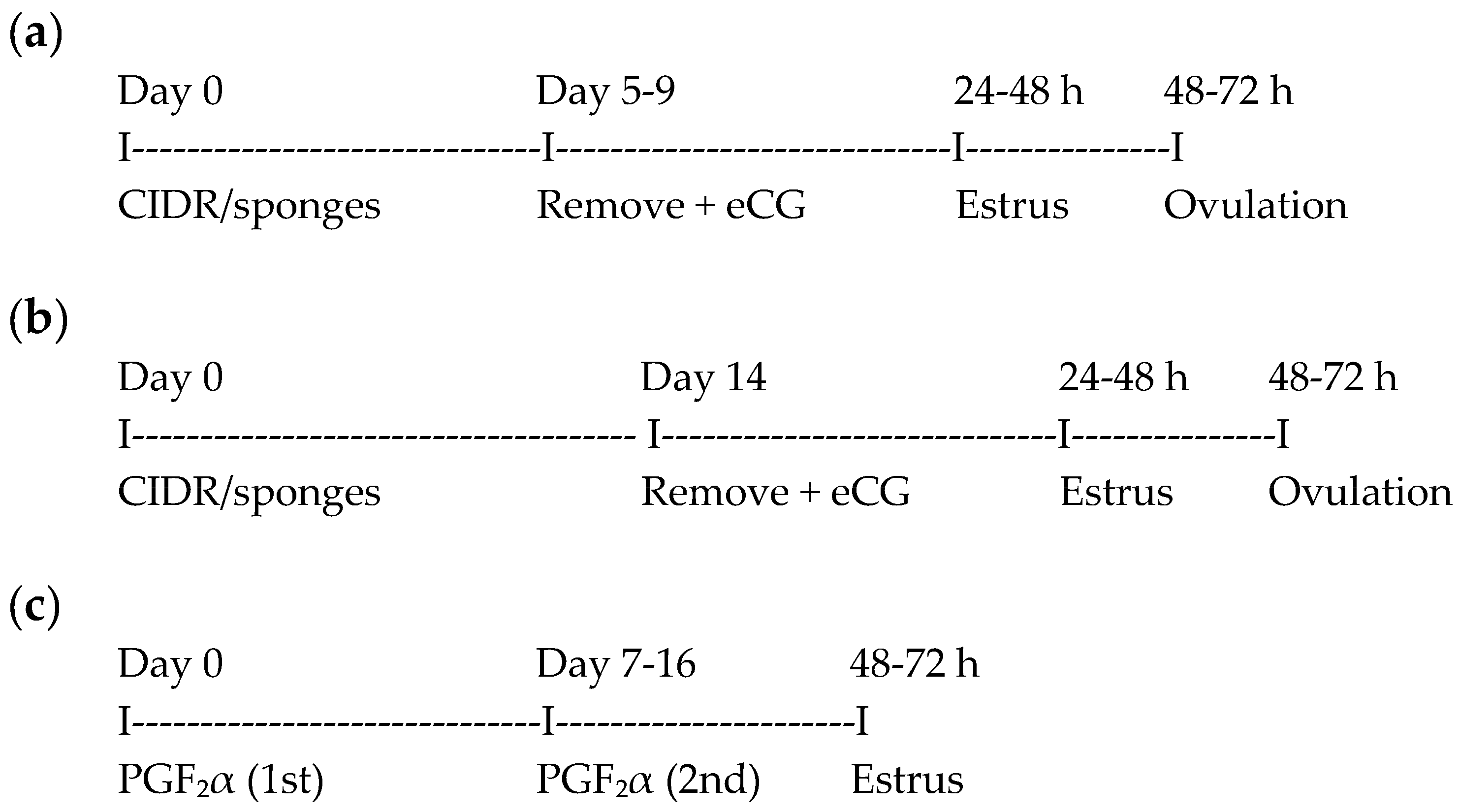
PGF2α and its synthetic analogues are also widely used for estrous synchronization. These protocols are primarily applied during synchronization of cyclic ewes during the breeding season, as their effectiveness depends on the presence of an active CL. Furthermore, ovine CL is responsive to PGF2α on day 3 following ovulation (Day 0). Double injections of PG are often recommended for synchronization [38]. The interval variation between the two injections of PGs ranges from 7 to 16 days [39,40]. Synchronization protocols with short intervals may reduce pregnancy rates, which could be caused by decreased luteal length that altered the P4 profile prior to ovulation [27]. Meneses et al. [41] reported that using prostaglandin resulted in 70–80% of females showing estrus within 48 h, and 100% within 72 h for both intramuscular and vulvar-submucosal administration, demonstrating effective synchronization protocols in Blackbelly sheep. Moreover, the addition of gonadotropin-releasing hormone (GnRH) to PG protocols has been shown to improve synchronization and reproductive performance, leading to a higher number of corpora lutea and more synchronous estruses compared to PG alone [40]. Schematic timeline of commonly used estrous synchronization protocols in sheep is provided in Appendix A, Figure A1.
Gonadotropins are also used in synchronization protocols. The role of gonadotropins is to stimulate and achieve synchronous follicular growth, maturation, and ovulation. They are particularly important components of estrus induction protocols applied during seasonal anestrus, although they are also used to enhance follicular development in cyclic ewes during the breeding season [38]. These include eCG, GnRH [38], and follicle-stimulating hormone (FSH) [42]. FSH is primarily used in superovulation protocols rather than routine estrous synchronization. In sheep, superovulation treatments commonly involve total FSH doses of approximately 200 mg, administered across multiple injections with decreasing doses over 3–4 days to stimulate the development of numerous preovulatory follicles [43]. Detailed superovulation protocols are beyond the scope of the present review.
eCG is widely administered in sheep estrous synchronization regimens [38]. Its relatively long biological half-life (approximately 2–3 days) results from a high degree of glycosylation, which allows for prolonged stimulation of ovarian follicles [44]. However, repeated administration of eCG may induce the formation of anti-eCG antibodies, potentially reducing its biological effectiveness and altering ovarian response, particularly when used frequently or at high doses [45,46]. The dose of eCG can vary from 250 to 750 IU, depending on factors like age, season and breed [47,48]. Lower doses of eCG (100–400 IU) can induce the early onset of estrus by promoting the growth rate of the dominant follicle [49]; however, these had a limited impact on ovulation rate [50]. Higher doses of these hormones can lead to the ovulation of a larger number of eggs [47,51]. Akbulut & Kutlu [47] reported that higher doses of eCG (600 IU) resulted in improved conception and pregnancy rates compared to lower doses (400 and 500 IU) in Merino ewes, suggesting a potential increase in litter size as a result of enhanced reproductive performance. Different doses of eCG have been shown to have a minor effect during the non-breeding season, but when compared to untreated-control ewes that received no sponge or eCG, ewes treated with eCG showed a significantly stronger estrous response and higher pregnancy rates than those in the control group [47].

2.2. Ram Effect

Estrous synchronization in sheep using the ram effect involves isolating ewes from rams for 4 to 6 weeks and then introducing the rams to stimulate reproductive activity through pheromones, enhancing luteinizing hormone pulsatility, triggering ovulation, and facilitating out-of-season lambing [45]. The use of this method during the breeding and non-breeding seasons for estrous synchronization was intended to be a hormone-free protocol, because despite advances in estrous synchronization and insemination techniques, some studies suggest that protocols involving eCG may impair fertility due to abnormal follicular dynamics [46]. Additionally, in many regions of the world, estrous synchronization using progestogen pessaries or CIDR is not common and is mainly used for experimental purposes [52].
The ram effect induces ovulation among anovulatory ewes by modulating LH secretion [38]. When used alongside hormonal treatments, it can improve estrous synchronization efficiency and lead to higher lambing rates and improved fertility outcomes [53,54,55]. The introduction of a ram on the fourth day after the first administration of PGF2α improved the pregnancy and fertility rates of sheep [38]. Nakafeero et al. [56] reported that combining the ram effect with progestin-based protocols with or without eCG resulted in similar (p > 0.05) estrous responses, pregnancies, and lambing rates in Merino ewes during the non-breeding season. However, a short-term progesterone (9-day CIDR) protocol resulted in a greater (p < 0.05) pregnancy rate than a long-term (14-day CIDR) progesterone treatment. These findings suggest that eCG in progesterone-based protocols can be replaced with the ram effect for estrous synchronization during the non-breeding season [38,56].
However, the effectiveness may vary based on factors such as ram maturity and environmental conditions, which can influence overall reproductive success [53]. Adult rams showed a higher frequency of mountings and induced a better estrous response and pregnancy rate in ewes than those of yearling rams during the non-breeding season [38]. Maksimović et al. [53] reported that sheep estrous synchronization using progestagen sponges and Pregnant Mare Serum Gonadotropin (PMSG) resulted in a 57.14% lambing rate. Mature rams significantly improved lambing rates and litter sizes compared to young, inexperienced rams, highlighting the importance of ram maturity in fertility outcomes.
Estrous synchronization is an effective tool for programmed reproduction, particularly for fixed timed artificial insemination. This method represents an valuable tool when estrus detection is not feasible for commercial reproductive programs with small ruminants [9]. However, the ram effect is primarily effective during the breeding season or transition period, whereas its efficacy as a synchronization method is limited during seasonal anestrus without additional hormonal support [57].

3. Development of Artificial Insemination with Fresh or Chilled Sperm

The first major advance in AI technology occurred in 1940 with the development of a yolk-phosphate extender by Phillips & Lardy [58], which enabled sperm storage at 5 °C for up to three days. This extender for bull semen was later improved with the addition of caproic acid, catalase, and egg yolk to create “caprogen”, while, simultaneously, introduced the Cornell extender, which contained penicillin, polymyxin B, and streptomycin [12]. Subsequent research identified milk and glycerol as key components of modern sperm preservation protocols [59,60,61].
Ram insemination doses were initially prepared using a cold shock–mitigating diluent containing ammonium sulfate, sodium citrate, and egg yolk developed by Platov [62]. For short-term storage (<12 h, 15 °C), extenders based on milk (66%) [63], egg yolk (56%) [64], or a combination of both (70%) [65] provided good fertility results. Replacing egg yolk with purified yolk or low-density lipoprotein further improved sperm motility and morphology after 48 h of storage [66]. More recently, Tris(hydroxymethyl)aminomethane (TRIS-based) extenders demonstrated superior preservation of sperm motility compared to skim milk and sodium citrate [38,63], maintaining 80% motility after dilution and 70% after 24–48 h [67,68].
According to Dinatolo [69], it is important to consider that preserved sperm present functional and structural changes in their membranes that determine a shorter half-life. In fact, sperm transport in the genital tract was demonstrably slower for chilled semen than for fresh semen [63], and pregnancy rates with chilled semen (5–7 °C) rapidly decreased (60, 52, 30, and 18% for 0, 24, 48, and 72 h, respectively) [70].
Although in vitro tests confirm that chilled sperm retain viability and motility for several days, fertility in vivo declines earlier [70]. After 24 h of storage at 5 °C, robust fertility was achieved with AndroMed® (79.6%) and BioXcell® (70.8%) [71], INRA 96® (52.2%) [70] and egg yolk supplemented with seminal plasma (49.7%) [72]. A complex comparison of individual types of extenders is shown in Table 1.
Nevertheless, the use of fresh or chilled semen in sheep is an economically advantageous practice that is easily implemented with acceptable and promising results. AI is usually performed vaginally by depositing the semen dose within the cervix at the external uterine orifice. This route is the simplest and least expensive method to disseminate the use of semen in commercial flocks [87]. By tailoring estrous synchronization and AI protocols to specific production systems, reproductive techniques can be used more efficiently, as confirmed by several studies reporting high pregnancy rates (50–70%) [9,64,88,89].

Multiple Environmental and Management Factors Affecting Fertility

The physical environment, including ambient temperature during insemination (Figure 1), relative humidity, and the Temperature-Humidity Index (THI), has been identified as an important risk factor [83,90,91,92,93]. Santolaria et al. [90] observed a significant drop in pregnancy rates in Rasa Aragonesa ewes when outdoor temperatures exceeded 30 °C two days before AI. Similarly, Palacios et al. [83] reported a negative correlation between maximum daily temperature on the day of AI and fertility in Churra ewes. Studies in dairy cows further highlight the role of housing conditions in reproductive outcomes [9,94]. In sheep, Priskas et al. [95] demonstrated that high indoor temperatures, elevated THI, limited space, infrequent bedding renewal, and lack of outdoor access negatively affected pregnancy rates after cervical AI with cooled semen.
In temperate climates, the breeding season of sheep typically lasts from September to February [96]. Several studies have confirmed the importance of seasonal timing for insemination success [83,84,85]. Neila-Montero et al. [97] observed a higher lambing rate later in the breeding season (34.7%) compared to the early season (28.6%). Likewise, De et al. [85] reported higher rates from late-season insemination (66.7% vs. 57.6%). Lower fertility at the end of the season may be linked to CL instability [86] and reduced semen quality [98]. Even so, Wildeus [99] showed that lambing rates of 40–64% can be achieved outside the breeding season with cervical insemination and fresh semen, which can be attributed to effective estrous synchronization. Proper synchronization and precise insemination timing relative to ovulation are therefore crucial, especially during the non-breeding season [100,101]. Future research will generate region-specific protocols, enabling the dissemination of superior genetic material at a reduced cost for smallholder sheep systems [9].
To further enhance cervical insemination efficiency, advancements have been explored not only in semen extenders and synchronization methods but also in the design of insemination devices. Macías et al. [102] evaluated the DARIO device (Dispositivo Anti Reflujo para Inseminación Ovina), designed to reduce semen backflow. DARIO increased fertility (59.4% vs. 49.6%) and fecundity (0.99 vs. 0.82 lambs per ewe) in 1299 Rasa Aragonesa ewes compared to insemination with a conventional catheter with identical AI protocols. This simple, low-cost tool improved cervical insemination outcomes by minimizing reflux and optimizing semen deposition.
These studies suggest that the decisive factor for success is not only the ability of the catheter to pass through the cervix without causing trauma, but also the minimization of cervical stimulation and the optimization of the depth of sperm placement and its retention in the uterine cavity.

4. Cryopreservation of Ram Sperm Cells

Ram sperm are characterized by increased sensitivity to temperature changes [103], which is evident when compared to bulls [104], bucks [105] or stallions [106]. This differential resistance to cold shock is largely determined by plasma membrane composition, especially the cholesterol to phospholipid ratio. Bull sperm have a high proportion of cholesterol, contributing to increased membrane stability during cooling and limits destabilization [107]. In contrast, ram sperm have a lower proportion of cholesterol, which increases their susceptibility to thermal shock damage [103]. The presence of polyunsaturated and saturated fatty acids bound to membrane phospholipids, which influence low-temperature stability, also plays a significant role [108].
Predictive markers of sperm freezability have been investigated in various livestock species such as pigs [109], cattle [110], horses [111] and goats [112,113] and mainly include conventional semen parameters, functional indicators of membrane and mitochondrial integrity, and selected molecular markers associated with cryotolerance. Rams likewise display individual variability that affects cryopreservation outcomes and fertilization capacity, allowing for classification by freezability [114]. Freezability is influenced by factors such as ejaculate order [115,116,117], breed [117,118], and age or type of birth [119,120]. It is also linked to the expression of specific proteins detectable by Western blotting and other advanced methods [113,114,121]. Method selection must consider cost and time efficiency [117], and although hypoosmotic swelling (HOS) testing was once a common predictor [122,123], its time demands have led many studies to focus on conventional ejaculate parameters [117,124,125,126]. For example, motility proved useful in goats [125] but showed weak correlation with ram sperm freezability [117,124]. Furthermore, including ejaculates with lower concentration, volume, or motility in cryopreservation helps avoid unnecessary rejection [117,127]. Accurate prediction of freezability reduces failed inseminations and enables targeted use of alternative methods [109,128,129], leading to cost savings by reducing diluent consumption, labor, and storage [130].

4.1. Semen Centrifugation

The increasing importance of AI in sheep requires improvements in ejaculate handling. Sperm centrifugation is a common procedure in AI and other assisted reproductive technologies, used for sperm analysis [131], selection, or preservation [132], sperm washing to rescue urine-contaminated ejaculates obtained by electroejaculation [133], and freezing [134]. Although centrifugation is a very simple procedure, it can compromise sperm integrity, reducing viability or motility [135]. For instance, Gil et al. [136] reported that centrifugation at 700× g for 10 min is detrimental to ram spermatozoa. Similarly, Neila-Montero et al. [132] detected detrimental effects on the sperm quality parameters of ram sperm centrifuged at or greater than 3000× g, though fertility rates were not assessed.

4.2. Diluents and Cryoprotectants Used in Ram Semen Cryopreservation

An appropriate diluent is therefore essential to provide both nutrition and protection during freezing, it can be prepared conventionally or purchased commercially [137].
Egg yolk-based diluents, particularly Tris-egg yolk, are widely used for ram sperm cryopreservation and enhance post-thaw motility [138]. It should be noted that negative interactions between egg yolk-based extenders and enzymes secreted by the bulbourethral glands have been reported in goats, leading to lipid hydrolysis and reduced sperm viability. These effects have been primarily attributed to phospholipase activity present in buck seminal plasma [139]. In contrast, such enzymatic interactions are less pronounced in rams.
Soy lecithin offers a viable alternative, achieving comparable results at 0.5–1.5% concentrations (Table 1) [77,140]. As a result of microbial contamination risks linked to egg yolk, soy lecithin-based media such as Ovixcell® and AndroMed® have gained popularity. These diluents improve sperm motility and membrane protection (Table 1) while eliminating animal components [64,73,141]. Although some studies reported better results with egg yolk extenders [74,76], commercial diluents often show comparable to even superior motility and offer advantages in hygiene, handling, and composition standardization [142].
Another key determinant of post-thaw viability is the formation of ice crystals during freezing. The growth of intracellular ice crystals has been identified as a main cause of sperm damage [143,144]. Moreover, the suppression of extracellular ice formation alone does not improve viability, emphasizing the need to minimize intracellular crystallization. Thus, cryopreservation protocols must optimize both extender composition and the control of ice-crystal dynamics during cooling.
Cryoprotectants play a key role in the successful cryopreservation of ram sperm by protecting sperm cells against osmotic stress, ice crystal formation, and membrane damage during cooling and freezing [145]. The main mechanism of action of cryoprotectants is their ability to replace intracellular water while protecting cell membranes [146]. Penetrating cryoprotectants, such as glycerol, dimethyl sulfoxide (DMSO), and ethylene glycol, permeate the sperm cell membrane and reduce intracellular ice formation [146,147], while non-penetrating cryoprotectants, including sugars (e.g., trehalose and sucrose), egg yolk, and milk-derived components, provide extracellular protection by stabilizing sperm membranes and maintaining osmotic balance [148,149].
Glycerol remains the most widely used cryoprotectant in ram semen extenders. However, its concentration must be carefully optimized, as excessive glycerol levels may exert cytotoxic effects and impair post-thaw sperm motility and fertility [150,151].
In addition to extender choice, equilibration, freezing, and thawing procedures themselves play a decisive role in cryopreservation success. In Wallachian rams, equilibration in a glycerol-free medium followed by the addition of 6% glycerol shortly before freezing (within 10 min) resulted in improved post-thaw motility and membrane integrity [151]. Furthermore, the gradual lowering of straws above liquid nitrogen according to an optimized freezing curve increased post-thaw viability to approximately 48% and reduced mitochondrial and acrosomal damage compared with static methods [152]. Thawing conditions are equally critical, with optimal sperm motility and organelle integrity achieved at 39 °C for 30 s [141].

5. Artificial Insemination with Frozen-Thawed Sperm

The first artificial inseminations with frozen-thawed semen were carried out in Kazakhstan in 1955 with the insemination of 72 ewes. During that same year, 224 ewes in Tajikistan and 136 ewes in North Caucasus were inseminated with frozen-thawed semen [153]. Loginova [154] attributed the low fertility observed after cervical insemination with frozen-thawed semen to the short lifespan of sperm in the female reproductive tract. Since ovulation occurs 30–32 h after the start of heat, and frozen-thawed sperm live in the reproductive tract of the ewe for up to 10 h, insemination in the first 20 h from the start of heat will not result in fertilization. Many authors found that even though many motile sperm are inserted into the cervix, fertility was lower with frozen-thawed sperm than with fresh sperm [155,156,157].

5.1. Laparoscopic Artificial Insemination

The ovine cervical region consists of four to seven cervical rings and exhibits a non-uniform lumen configuration. Typically, the second ring is more displaced than the first and third, producing a narrow cervical lumen [157,158]. This anatomy hinders the passage of an artificial insemination catheter difficult, often rendering it nearly impossible, and restricts the wider adoption of transcervical artificial insemination in the ovine production [159]. As a result, AI in sheep is usually performed using laparoscopic techniques (laparoscopic artificial insemination, LAI) [1,9,160]. Additionally, the reduced functional lifespan of cryopreserved ram spermatozoa in the female reproductive tract further supports intrauterine sperm deposition to improve fertilization success [108]. Consequently, for improved fertilization success, insemination doses are most effective when deposited directly into the uterus [159]. The number of sperm required for each insemination does is lower (20 to 50 × 106), which, in turn, allows for higher dilution rates and thus better sperm protection during cryopreservation [64]. According to various studies, the fertility rates of LAI with cryopreserved sperm range from 12% [161], 32–64% [162], and 70% [163]. This outcome has been shown to be significantly influenced by the season of insemination, quality of the insemination doses, and the synchronization of estrus [9,148,161,164]. Strong results can be achieved using estrous synchronization or fixed-time artificial insemination (FTAI) [9,148,165,166]. FTAI usually involves synchronizing the sheep using exogenous hormones and subsequent insemination at a precisely defined time [167], even without the need to detect estrus [10]. It remains the most effective method for increasing the number of ewes inseminated in one day [168] with a pregnancy rate of around 70% [169]. Due to its excellent results, artificial insemination by frozen-thawed semen combined with estrus synchronization has become a routine method for LAI in sheep [170].
Several authors have investigated LAI of cryopreserved sperm in sheep in natural heat, i.e., without the use of hormonal synchronization of heat [101,171,172]. The main motivation for this can be attributed to consumer concerns about hormone residues in animal products and regulatory restrictions on the use of exogenous hormones in livestock [38]. For this reason, the ram effect is still used very effectively. According to Malmakov et al. [101], implementing estrous synchronization protocols can be challenging, especially when raising sheep on permanent pastures (in areas with systems of extensive sheep farming). Fertilization success, in this case, depends on optimizing insemination time in conjunction with estrus detection. Jakupov [171] achieved a 61.1% birth rate by inseminating 10–14 h after estrus detection while checking twice a day. Aybazov et al. [172] nearly achieved a 43.7% fertility rate while checking once a day. Malmakov et al. [101] reported the optimal time for LAI with cryopreserved semen to be 18.5 h after estrus detection. In this case, estrus detection was performed once a day, and a lambing rate of 70.7% was achieved.
Given these considerations, LAI requires expensive equipment and the assistance of a veterinary surgeon [173]. The laparoscopic procedure involves surgical intervention and carries potential risks, including infection, anesthesia complications, and possible damage to reproductive organs [1]. Other techniques, such as cervical insemination, are thus becoming a promising alternative, which can be performed without the need for surgical intervention, making it less invasive and more accessible for sheep breeders [174].

5.2. Cervical and Transcervical Insemination

Cervical insemination generally requires a minimum of 100 × 106 spermatozoa to optimize the likelihood of conception [175]. Transcervical insemination, when successful cervical passage is achieved, represents an intermediate approach, requiring sperm doses lower than those for cervical but higher than for laparoscopic insemination (approximately 50–100 × 106 spermatozoa) [169].
At the structural level, the fibrous, tubular cervix deflects the catheter from the central lumen, limiting insertion into the cervical canal to about 1 cm [173]. Eppleston et al. [176] documented a direct link between the depth of cervical-lumen penetration and fertility rate in 1994. Consistently higher fertility rates were achieved when frozen–thawed sperm was deposited deeper in the cervix (beyond the 3rd–4th fold) compared to deposition at 1 cm [176]. These observations are supported by the poor pregnancy rates obtained when frozen–thawed semen was deposited in the external os of the cervix, ranging from less than 5% [64] to 36% [177].
Three primary approaches exist for reducing the physical constraints of the ovine cervix. The first is attaching a hemostat to the external cervical os to retract and align the cervix, thereby reducing obstructions to the uterine lumen [178]. The second approach is to chemically dilate the cervix with PGE2 or oxytocin [179,180,181,182,183]. The third approach is mechanical, which entails designing specialized AI equipment capable of overcoming the anatomical challenges associated with the ovine cervix [183]. Most equipment for artificial insemination of sheep is similar to that used for cattle, as such, it is usually too rigid and too large for the sheep cervix. These instruments usually cause bruising and tears in the cervical wall, which can lead to the release of spermicidal or embryonical substances, thus reducing fertility [184]. Since hormones are generally expensive, and consumer demand is pushing for drug-free alternatives in animal production [185], focusing on the design of devices capable of transversing the cervical lumen without damaging surrounding tissues could be the key to overcoming the limitations of transcervical insemination [159].
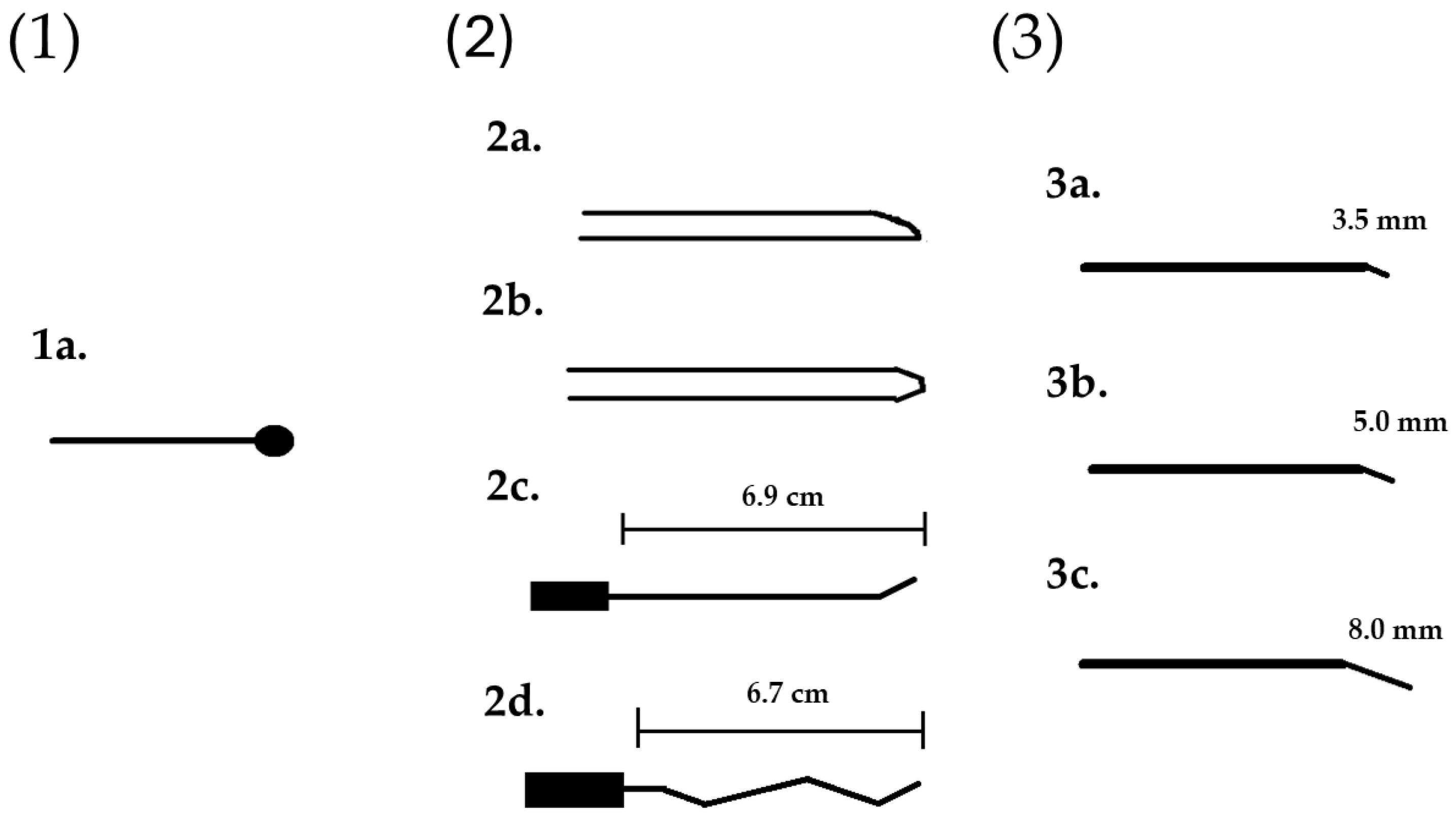
Early efforts to overcome cervical anatomy in ewes focused on catheter design. Wulster-Radcliffe et al. [183] developed a flexible stainless-steel catheter with a curved brass tip enabling sperm deposition directly into the uterine horn. Although the passage was atraumatic, transcervical insemination achieved only 17.2% pregnancy compared to 61.0% with LAI, while surgical use of the same catheter yielded 76.6%. The reduced fertility was attributed to cervical manipulation triggering prostaglandin release and inflammatory responses. Álvarez et al. [186] compared two new designs (CAT06 with one 30° curve, ZIGZAG with five 15° bends) with commercial IMV® and Minitüb® catheters. CAT06 showed the best cervical penetration (3.5 cm) with minimal reflux (9%) and higher fertility in Assaf (48.1%) and Churra (39.0%) ewes. ZIGZAG achieved deeper penetration but lower fertility and required longer handling. This study highlighted the importance of ergonomic catheter geometry for successful transcervical insemination. Falchi et al. [159] tested catheters with different tip lengths (3.5 mm, 5.0 mm, 8.0 mm) in comparison with surgical intrauterine insemination (SICF). The 5.0 mm tip achieved fertility rates comparable to SICF (63.3% vs. 79.3%) with minimal handling time (<30 s) and no cervical trauma, confirming that optimized geometry enhances non-surgical insemination efficiency. The parameters of individual catheter types are shown in Table 2. Schematic representation of insemination catheters is summarized in Appendix A (Figure A2).
The success of cervical insemination can be influenced by both insemination interval and breeding season. Lopyrin & Donskaya [187] and Lopyrin [188] recommended double cervical insemination with a 12 h interval to improve fertility. Although shortening the interval to 6 h slightly reduced fertility, the results remained superior to a 24 h interval. Kazakov [189] demonstrated that double insemination in the summer with an 8 h interval resulted in significantly higher fertility rates compared to single insemination (75.0% vs. 56.9%; p < 0.001). In autumn, when higher quality semen was used, fertility rates were slightly higher (83.3% vs. 74.5%; p > 0.05). Later studies found no significant difference between single and double insemination in terms of lambing rate (e.g., 44.4% vs. 46.2% [190]; 45.6% vs. 50.4% [191]). However, Paulenz et al. [192] reported approximately a 5% higher lambing rate after double insemination. This effect is likely related to variations in ovulation timing and sperm survival in the female genital tract [192].
The timing of insemination plays a crucial role in achieving high fertility and lambing rates. It has been reported that the optimal time for a single cervical insemination is approximately 55 h after progesterone sponge removal or 15–17 h after estrus detection, while for double insemination, the recommended times are 50 and 60 h after sponge removal [193,194]. Variability in insemination timing is often attributed to differences in synchronization protocols, as these protocols can influence both the onset and dispersion of estrus and ovulation, thereby affecting the optimal time for insemination [36,99,195].

5.3. The Scandinavian School of Sheep Insemination: Key Differences

Over the past two decades, a series of Norwegian and Scandinavian studies have provided a detailed understanding of the factors affecting sheep fertility following AI with frozen–thawed semen. These investigations focused on the influence of insemination sites, sperm dosage, packaging, thawing procedures, and extender composition on fertility outcomes under field conditions.
Early field trials demonstrated that both vaginal and cervical insemination with frozen-thawed semen could achieve comparable fertility results when performed after natural estrus. Paulenz et al. [196] found no significant difference between vaginal and cervical deposition, though higher sperm doses (150 × 106 sperm cells) yielded significantly higher non-return rates than lower doses (75 × 106 sperm cells). Comparing cervical and vaginal insemination with frozen-thawed semen confirmed that vaginal AI, despite being technically simpler, can provide satisfactory fertility outcomes when conducted during natural estrus [194].
Subsequent research focused on optimizing semen handling. Paulenz et al. [197] compared different thawing temperatures and packaging systems, concluding that mini-straws thawed at 35 °C for 12 s achieved the highest lambing rates (59.2%), though differences among rams and farmers remained significant. Nordstoga et al. [198] similarly highlighted that packaging type and freezing–thawing protocols significantly influence post-thaw sperm viability, underlining the importance of standardized semen-handling systems.
The long-term results summarized in a recent review by Abril-Parreño & Fair [199] show that the key factor for successful insemination in Norwegian breeds is not only the method, but primarily the anatomical and biochemical properties of the cervix. Norwegian sheep breeds have a different cervical mucus composition (particularly lower sialic acid content and a different glycan profile), which facilitates sperm penetration through the cervix, even following the vaginal deposition of frozen-thawed semen. This physiological difference explains why it is possible to achieve fertility rates of over 60% without laparoscopy in Norway, while, in other countries, the success rate remains below 30%.

6. Sex-Sorting of Sperm in Small Ruminants

The preliminary selection of spermatozoa based on the presence of a specific sex chromosome is a widely used biotechnology to obtain offspring of the desired sex in the livestock industry. Its aim is to improve efficiency and ensure sustainable milk and meat production for the human population. This biotechnology is becoming increasingly popular worldwide due to its numerous advantages and can help mitigate potential security threats on farms [200].
The sorting of mammalian sperm based on total DNA content began in the late 1970s and early 1980s [201] with the initial goal of distinguishing X- from Y-chromosome-bearing sperm. The first report of live births from sexed sperm, sorted based on DNA content, was published in 1989 for rabbits [202].
Additional techniques have been developed for determining the sex of bovine sperm, such as the Percoll density gradient method, electrophoresis, immunological approaches, and flow cytometry. Gaur et al. [203] describe the Percoll density method using the sedimentation density of sperm carrying X chromosomes. Free-flow electrophoresis separates sperm by using electrical charges, as sperm carrying the X chromosome are negatively charged. Antigen-based methods target proteins specific to X- or Y-bearing sperm on the surface, and flow cytometry methods have proven to be a successful commercial method for determining the sex of sperm in mammals, but mainly in cattle.

6.1. Sperm Sex Separation by Flow Cytometry

Sperm sexing based on quantitative flow cytometry utilizes a fluorescent dye (most commonly Hoechst), and gametes are irradiated with a UV laser beam. The detection and selection of individual sperm cells can achieve up to 90% accuracy for the desired sex, but major damage is inflicted on the sperm during the process [204]. Although there have been improvements in sperm processing, sample preparation, and media composition, which have led to better results, this method has been associated with decreased gamete quality. Additional washing is required because the high polyunsaturated-fatty acid content of ram sperm membranes promotes agglutination and interferes with sorting [205]. Earlier research demonstrated that X-bearing ram spermatozoa contain about 4.2% more DNA than Y-bearing spermatozoa [206]. Using flow cytometry, our team detected a 3.8–4.1% DNA-content difference between X- and Y-bearing fractions (unpublished data, Abadjieva et al.). Greater variation permits recovery of a larger, sex-specific fraction at the end of the process.
Hollinshead et al. [207] reported only a 25% pregnancy rate with X-sorted sperm and 15% with Y-sorted sperm, compared to up to 50% in the control group. Increasing the dose and exercising precise control over insemination could improve outcomes, but substantial obstacles to achieve higher efficiency remain. Thus far, sperm sorting based on sex chromosomes has been applied in various animal species; however, it is less frequently used in ruminants, such as rams [208] and bucks [209], where reports have indicated low success rates.

6.2. Sexing Sperm Using the Swim-up Method

With the growing demand for sexed sperm for AI, the need for a more accessible alternatives led to the development of the swim-up method. With this technique, the semen sample is incubated in an upright position at 37 °C for 45 min using a specific medium. The Y-bearing sperm are expected to migrate upwards due to their lower mass and higher speed compared to X-bearing sperm. In vitro studies with sheep found that 81% of the resulting embryos were male [210]. Azizeddin et al. [211] proposed a modified method for bulls, achieving 62% representation of Y-bearing sperm. Cooling and sex determination have been shown to alter the motility and kinematics of sorted spermatozoa compared to fresh and merely cooled semen. The differences between the separated fractions in the upper and lower parts can be seen in the number of motile sperm, progressive motility, curvilinear velocity (VCL), straightness (STR), and linearity (LIN). According to Agasi et al. [212], the decrease in motility during the separation process may be a result of reduced cell nutrition.
Recent research demonstrated that molecular activation of Toll-like receptors (TLRs), particularly TLR7 and TLR8, when combined with the swim-up method, can be exploited for sperm sex-sorting in livestock species, including small ruminants. TLRs are known to play a critical role in the regulation of sperm function and spermatogenesis, and sperm-sorting methods based on TLR7/8, including those utilizing Resiquimod (R848), leverage functional differences between X- and Y-bearing sperm through glycolytic pathway activation during capacitation. Resiquimod is a low-molecular-weight imidazoquinoline and a TLR7/8 agonist. Umehara et al. [213] showed that R848-mediated TLR7/8 activation differentially affects X- and Y-bearing sperm. In Y-sperm, ATP-generating pathways remain largely intact, supporting high velocity and progressive motility, while X-sperm exhibit reduced mitochondrial ATP synthesis via TLR8 and inhibited glycolysis through TLR7-induced phosphorylation of NFκB and GSK3α/β, decreasing ATP availability and motility. This selective modulation allows for preferential inhibition of X-sperm motility without affecting Y-sperm, supporting TLR7/8-based sperm-sorting strategies. It should be noted that these approaches limit the use of the sex-sorted sperm to artificial insemination due to the irreversible hyperactivation of Y-sperm. Additionally, species-specific variations in TLR expression, proteolytic maturation, alternative splicing, and polymorphisms influence receptor function, accounting for the effectiveness of TLR7/8-mediated sperm-sorting in some species (e.g., mice, cattle, goats, and sheep) but not others (e.g., swine and dogs) [214]. Collectively, these findings emphasize the tightly regulated and multifunctional roles of TLRs in sperm maturation, metabolism, and motility while highlighting significant challenges for their application in reproductive technologies.

6.3. Density Gradient Centrifugation Method

Density gradient centrifugation (DGC) has emerged as an alternative method that provides sperm with normal motility and a higher degree of capacitation compared to flow cytometry. This technique separates sperm by density and motility, leaving dead and immature sperm between gradients. To create a gradient with increasing density from top to bottom, Percoll medium is commonly used. Because Y-bearing sperm are smaller and lighter than X-bearing sperm [215], heavier X-sperm migrate to the denser lower layers during centrifugation, while lighter Y-sperm remain in the middle layers [216].
Nurlatifah et al. [217] compared two media and found that bovine serum albumin (BSA) media was superior to albumin for maintaining motility, kinematic stability (Y-sperm), and fertility. BSA produced higher X- (65.4% vs. 62.8%) and Y-sperm fractions (66.4% vs. 61.6%) and higher fertility for both X- (62.8% vs. 56.6%) and Y-sperm (63.4% vs. 57.8%).
Yotov et al. [218] evaluated multiple in vitro characteristics of ram sperm sorted by a column containing BSA and TLR7/8 ligand R848. In both protocols, the DNA mass of the X-bearing fractions was higher than the mass from the Y-bearing fractions. Under the BSA protocol, high overall motility was observed in both X- and Y-bearing homogeneous sperm populations. However, application of the R848 protocol with TLR7/8 ligand resulted in a decrease in Y-sperm motility and increased non-progressive motility in both fractions, which was consistent with the elevated amount of extracellular lactate found [219]. Both methods found significantly reduced enzyme activity in the fluids surrounding X- and Y-sperm, and both protocols produced fractions of X- and Y-spermatozoa of satisfactory quality (exceeding 80% total motility and over 50% fast- and medium-progressive sperm in each fraction).

6.4. Methods of Validating Sperm Sex Sorting

Methods have been developed to validate sex-sorted sperm using ligands or proteins specific to each chromosome, as well as real-time Polymerase Chain Reaction (PCR) to target sex-chromosome-specific DNA sequences. Quantitative PCR (qPCR) has also been applied to quantify the X and Y chromosomes in semen samples through chromosome-specific genes, such as the protelipid protein (PLP) gene on the X chromosome or the sex-determining region Y gene on the Y chromosome [220,221]. Not only are the results encouraging, but they are able to verify the purity of the sorted-sperm population. Developing these methods could lead to safer and more effective protocols for sorting ram sperm by sex [222]. Even though the ability to preselect the sex of offspring by sorting X- and Y-bearing sperm has been demonstrated in multiple species, the effectiveness of these sorting protocols varies significantly, with success remaining limited in rams. New scientific research and development are essential to improve the efficiency of the sex-sorting method with ram sperm.

7. Alternative Approaches to Traditional Ram Semen Collection Using an Artificial Vagina

The traditional method for obtaining sperm cells for AI in the sheep industry involves collecting ejaculates from pedigree rams with an artificial vagina. However, this approach presents several significant limitations. Effective semen collection requires rams that have been trained and accustomed to the extraction procedure, which demands substantial time and effort, particularly when dealing with rams kept on pasture. In some cases, due to age, health status, or death, semen cannot be collected from genetically valuable rams using the traditional method. In addition, ejaculate quality in high-value sires of modern, improved breeds introduced into environmentally unfavorable regions (arid zones, cold climates, or areas with limited forage) often declines relative to that of locally adapted but genetically less valuable rams. Furthermore, large-scale insemination dose production, necessary for the widespread implementation of AI in advanced sheep-breeding industries, requires maintaining sizable populations of purebred animals at breeding centers. This substantially increases the cost of producing insemination doses. These and related limitations of the traditional approach have driven the development of alternative methods for obtaining ram sperm [223].
In line with the general concept of this review, the purpose of this chapter is to provide a concise overview of the basic methodological approaches used to obtain sperm cells suitable for the preparation of insemination doses, focusing on alternatives to the traditional method involving the use of an artificial vagina. This chapter, however, will not include a detailed description of spermatogenesis in farm animals at the cellular or molecular levels. Likewise, it will not critically discuss laboratory protocols for the isolation and cultivation of spermatogonial stem or supporting cells, nor their application in producing fertile spermatozoa through in vitro spermatogenesis. Readers seeking more comprehensive information on these topics are encouraged to consult specialized references [140,224,225].
The investigation of alternatives to ejaculated sperm cells in livestock has attracted significant attention due to the limitations of the traditional semen collection method. Several innovative techniques have emerged in recent decades, including electroejaculation (EEJ), epididymal sperm recovery, and more recently, advanced reproductive technologies based on spermatogonial stem-cell isolation and culture. Collectively, these methods have the potential to substantially improve breeding efficiency and enhance genetic conservation.
EEJ is effective for collecting semen from wild or untrained animals, especially ram sires on pasture. It enables out-of-season semen collection and supports assessments of reproductive competence [137]. Epididymal sperm recovery is another alternative collection method, applicable in castration or postmortem cases and useful for gene conservation and assisted reproductive technologies [226].

7.1. Advanced Reproductive Technologies

Advanced Reproductive Technologies (ARTs) are based on utilizing current knowledge about spermatogonial stem cells (SSCs). SSCs possess the capacity for both self-renewal and differentiation into mature, functional spermatozoa. In certain livestock species, including ovine species, cell lines exhibiting characteristic SSC properties have been successfully established [227,228]. SSCs can be isolated, cultured, and transplanted into surrogate sires, facilitating the propagation of superior genetics without reliance on traditional sperm collection methods [229]. Several ARTs have been developed, including Testis Germ Cell Transplantation (TGCT) and in vitro spermatogenesis (IVS).
TGCT transfers testis stem cells from genetically elite donors to recipients, allowing recipients to produce functional sperm from the original donor [230].
IVS represents a rapidly advancing methodology that holds promise to become a key technology in producing fertile ram sperm. IVS refers to the complete (or partial) development of germ cells in a controlled-culture environment, such as a dish, bioreactor, or organoid, instead of within an animal’s testicular tissue. The development of IVS techniques presents significant promise for ARTs, particularly in the context of genetic conservation and livestock improvement. This approach is critical for disseminating desirable genetic traits and preserving valuable germplasm in breeds where conventional artificial insemination or embryo transfer methods face technical constraints, including difficulties with sperm cryopreservation. Furthermore, the establishment of reliable in vitro models for livestock spermatogenesis would facilitate in-depth studies into complex cellular events and regulatory mechanisms governing germ cell development, which have thus far been challenging to investigate in vivo [231]. This technique provides a controlled environment for analyzing germ-cell propagation and differentiation, enabling the generation of haploid germ cells under defined conditions. Such control is crucial for dissecting the intricate cellular interactions between germline stem cells and somatic support cells that govern spermatogenesis. Moreover, the ability to manipulate spermatogonial stem cells in vitro provides a powerful tool for accelerating livestock transgenesis, which can improve the efficiency of genetic preservation strategies [229,231]. When integrated with established sperm-sexing techniques and optimized AI protocols, this approach could substantially reduce production costs and accelerate genetic selection in the sheep industry. The ability to generate functional spermatozoa outside the testis would not only improve breeding program efficiency but also enhance the preservation and utilization of valuable genetic resources. However, it is important to draw the reader’s attention to the fact that a complete and fully functional IVS system does not yet exist in sheep. To date, no study has demonstrated the production of fully functional ovine spermatozoa capable of generating live offspring.

7.1.1. Approaches to IVS and Species-Specific Progress

Approaches to IVS can be broadly categorized into organ culture, cell suspension, and 3D/organoid systems [232,233]. In the organ culture system, small fragments of testicular tissue containing seminiferous tubules are maintained to preserve native architecture and cell interactions. This method achieved successful spermatogenesis and the production of fertile sperm in mice [234]. The cell suspension culture system involves culturing isolated germ cells, often with somatic testicular cells or feeder layers (Sertoli or Leydig cells), under controlled conditions and supplementing the culture with growth factors like GDNF, FGF2, and LIF; however, the absence of a native microenvironment limits its physiological relevance. More recently, 3D culture and organoid systems have emerged, using scaffolds (agarose, collagen, or Matrigel) to recreate testicular microarchitecture [235]. These models have demonstrated improved germ-cell survival and partial meiotic progression in bovine and porcine studies, indicating a promising direction toward achieving complete in vitro spermatogenesis. Furthermore, the progress in IVS varies markedly among livestock species due to differences in testicular physiology and spermatogenic timing. In sheep, meiotic entry has been achieved, but maintaining functional Sertoli-cell support over extended periods remains difficult [236].

7.1.2. Main Methodological Challenges of IVS in Ovine and Other Livestock Species

Despite the significant technical progress that has been made for IVS (especially in 3D/organotypic culture methods, SSC cryopreservation/expansion, and mechanistic knowledge from omics), fully reliable production of functionally competent ovine sperm entirely in vitro remains a current near-future research goal rather than an established technology. Full IVS has not yet been achieved due to the complex microenvironment required for germ cell maturation. Testicular temperature must remain slightly below body temperature, a gradient that is difficult to replicate in culture. Additionally, in vitro systems lack native vascularization, which leads to uniform oxygen diffusion rather than the physiological gradients seen in vivo. Moreover, precise temporal regulation of hormones and paracrine factors, such as FSH, LH, testosterone, and retinoic acid, is hard to reproduce dynamically. Prolonged co-culture often causes Sertoli cell dedifferentiation or the loss of polarity, disrupting their germ cell support. Current extracellular matrix scaffolds and 3D models fail to fully recreate the seminiferous tubule architecture necessary for complete spermatogenesis. As such, further refinement of culture conditions, scaffold systems, and the molecular regulation of germ cell development is essential before large-scale application of IVS becomes feasible.

7.1.3. ARTs: Current Feasibility and Realistic Expectations for Practical Application in Sheep Industry

Among the emerging reproductive technologies evaluated, sperm sex-sorting is currently the most mature and immediately applicable option in the sheep breeding industry. Although it is already operational and has been validated in field conditions, its use remains constrained by reduced fertility relative to conventional semen, limited throughput, and higher costs. Consequently, its practical value in the near future is largely restricted to targeted applications, such as elite breeding, conservation programs, or nucleus flocks where economic returns justify these limitations. SSC-based approaches represent a promising but still transitional technology. While substantial experimental progress has been made, including SSC isolation and cryopreservation in sheep, the lack of standardized long-term culture systems and reliable production of donor-derived sperm in recipients currently limits their scalability. In the medium term, these methods are most realistically positioned for applications, including genetic preservation, research breeding, and potentially advanced genetic interventions, subject to regulatory and welfare considerations. IVS remains the least feasible option for practical use in sheep industry at present. Despite major advances in model species and in vitro systems, the biological complexity of spermatogenesis in large mammals, coupled with strong species-specific differences, has thus far prevented the generation of fully functional, fertility-competent ovine spermatozoa in vitro. As such, IVS should be regarded as a long-term research objective rather than an imminent industry tool.
Finally, it must be concluded that, until a major technological breakthrough in ARTs is achieved, the primary source of sperm cells for producing insemination doses in the sheep breeding industry, as well as in several other livestock sectors, will continue to rely on conventional collection methods, including the use of an artificial vagina, electroejaculation, or harvesting spermatozoa from the epididymis.

8. Conclusions

The history of artificial insemination in sheep began in the early 20th century with the work of I. I. Ivanov, forming the foundation of many principles still applied today. Despite substantial progress, the success of AI in sheep remains constrained by biological and technical limitations, underscoring the need for further optimization. This review demonstrates that effective AI outcomes depend on the coordinated integration of estrus synchronization, appropriate semen handling, and the choice of semen deposition route. While fresh and chilled semen can achieve high fertility when properly timed and deposited, the use of frozen–thawed semen is limited by cervical anatomy and the pronounced cold-shock sensitivity of ram sperm, making laparoscopic AI the most reliable method under most conditions.
Sperm sex-sorting is currently the most feasible ART technology for selective breeding in sheep, though high costs, reduced fertility and the need for sexing protocol optimization currently limit its routine flock-level use. SSC-based approaches offer promise for genetic preservation and specialized breeding programs, but challenges in long-term culture, reliable engraftment, and functional fertility remain. In vitro spermatogenesis is still experimental, with the full production of functional sperm yet to be achieved, requiring advances in replicating the complex testicular niche and validating offspring viability. Collectively, these technologies present a continuum from near-term practical application to long-term research goals, highlighting clear knowledge gaps and priorities for improving efficiency, scalability, and functional outcomes.

9. Perspectives

Future progress in sheep artificial insemination using cryopreserved ram semen will depend on improving sperm cryosurvival and optimizing insemination strategies to match the limited lifespan of frozen–thawed spermatozoa in the female reproductive tract. Advances in extender formulation, cryoprotectant use, and freezing–thawing protocols, together with improved catheter design enabling deeper and less traumatic cervical or intrauterine sperm deposition, may enhance fertility outcomes and reduce reliance on invasive laparoscopic techniques.
In parallel, emerging sperm sex-sorting approaches and alternative methods of sperm acquisition, such as epididymal sperm recovery or electroejaculation, represent promising tools for genetic preservation and breeding programs, although their routine application is still limited by reduced sperm quality and fertility. In the longer term, advanced reproductive technologies based on spermatogonial stem cells and in vitro spermatogenesis may offer new opportunities to overcome current constraints of semen collection and cryopreservation. However, substantial technical and biological challenges remain, and until these are resolved, improvements in conventional semen handling, insemination technology, and reproductive management will remain central to the effective application of artificial insemination in sheep production systems.

Author Contributions

Conceptualization, N.M., M.P., L.L. and F.G.S.; methodology, L.L., M.P., F.G.S., D.A. and N.M., writing—original draft preparation, L.L., N.M., F.G.S. and D.A.; visualization, L.L., writing—review and editing, C.L., F.G.S., M.P., L.L., A.M. (Alikhan Magauiya), A.M. (Aizhan Makhanbetova), T.K., B.K. and N.M.; supervision, N.M.; project administration, M.P. and N.M.; funding acquisition, M.P. and N.M. All authors have read and agreed to the published version of the manuscript.

Funding

This research was funded by the Science Committee of the Ministry of Science and Higher Education of the Republic of Kazakhstan (Grant No. IRN BR21882201 “Improvement of meat performance in fat-rumped sheep with new methods of selection, genetics and biotechnology”); it was also supported by the Ministry of Education, Youth and Sports of the Czech Republic with an SGS grant.

Institutional Review Board Statement

Not applicable.

Data Availability Statement

No new data were created or analyzed in this study.

Conflicts of Interest

The authors declare no conflicts of interest.

Appendix A

Appendix A.1

Figure A1. Schematic timeline of commonly used estrous synchronization protocols in sheep. (a) Progesterone-based estrous synchronization (CIDR/sponges)–short term protocol. (b) Progesterone-based estrous synchronization (CIDR/sponges)–long term protocol. (c) Prostaglandin-based synchronization (breeding season only).
Agriculture 16 00160 g0a1

Appendix A.2

Figure A2. Schematic representation of insemination catheters. (1) (1a.) Stainless-steel catheter with a curved brass tip [183]. (2) (2a.) IMV® (control); (2b.) Minitübe® (control); (2c.) CAT06 (new); (2d.) ZIGZAG (new) [186]. (3) (3a.) Catheter 3.5 mm; (3b.) Catheter 5.0 mm; (3c.) Catheter 8.0 mm [159].
Agriculture 16 00160 g0a2

References

  1. Spanner, E.A.; De Graaf, S.P.; Rickard, J.P. A Multivariate Model for the Prediction of Pregnancy Following Laparoscopic Artificial Insemination of Sheep. Sci. Rep. 2024, 14, 27556. [Google Scholar] [CrossRef] [PubMed]
  2. Zuidema, D.; Kerns, K.; Sutovsky, P. An Exploration of Current and Perspective Semen Analysis and Sperm Selection for Livestock Artificial Insemination. Animals 2021, 11, 3563. [Google Scholar] [CrossRef] [PubMed]
  3. Ivanoff, E.I. On the Use of Artificial Insemination for Zootechnical Purposes in Russia. J. Agric. Sci. 1922, 12, 244–256. [Google Scholar] [CrossRef]
  4. Zvereva, G.V. Professor II Ivanov—Founder of artificial insemination of animals. Veterinariia 1970, 7, 88–90. [Google Scholar]
  5. Ozhin, F.V. Artificial insemination is an important reserve for increasing of fine-wooled and semi-fine-wooled sheep. Ovtsevodstvo 1956, 6, 17–22. (In Russian) [Google Scholar]
  6. Lopyrin, A.I. Next Tasks in the Organization of Artificial Insemination of Sheep. Ovtsevodstvo 1959, 3, 22–25. (In Russian) [Google Scholar]
  7. Ombelet, W.; Van Robays, J. Artificial Insemination History: Hurdles and Milestones. Facts Views Vis. ObGyn 2015, 7, 137–143. [Google Scholar]
  8. Hernández Ballesteros, J.A.; Navarrete Méndez, R.; Benítez Meza, J.A.; Moreno Flores, L.A.; Gómez Gurrola, A.; Bernal Partida, M.A. Fertilidad con el Uso de Inseminación Artificial en Ovejas; Editorial BM: São Paulo, Brazil, 2015; Volume 71. [Google Scholar]
  9. Gibbons, A.E.; Fernandez, J.; Bruno-Galarraga, M.M.; Spinelli, M.V.; Cueto, M.I. Technical Recommendations for Artificial Insemination in Sheep. Anim. Reprod. 2019, 16, 803–809. [Google Scholar] [CrossRef]
  10. Luther, J.S.; Grazul-Bilska, A.T.; Kirsch, J.D.; Weigl, R.M.; Kraft, K.C.; Navanukraw, C.; Pant, D.; Reynolds, L.P.; Redmer, D.A. The Effect of GnRH, eCG and Progestin Type on Estrous Synchronization Following Laparoscopic AI in Ewes. Small Rumin. Res. 2007, 72, 227–231. [Google Scholar] [CrossRef]
  11. Baldassarre, H. Laparoscopic Ovum Pick-Up Followed by In Vitro Embryo Production and Transfer in Assisted Breeding Programs for Ruminants. Animals 2021, 11, 216. [Google Scholar] [CrossRef]
  12. Naitana, S.; Ledda, S. Reproductive Technologies in Sheep. In Reproductive Technologies in Animals; Elsevier: Amsterdam, The Netherlands, 2020; pp. 31–54. ISBN 978-0-12-817107-3. [Google Scholar]
  13. Zhang, Z.; Tang, J.; He, X.; Zhu, M.; Gan, S.; Guo, X.; Zhang, X.; Zhang, J.; Hu, W.; Chu, M. Comparative Transcriptomics Identify Key Hypothalamic Circular RNAs That Participate in Sheep (Ovis aries) Reproduction. Animals 2019, 9, 557. [Google Scholar] [CrossRef] [PubMed]
  14. Moenter, S.M.; Silveira, M.A.; Wang, L.; Adams, C. Central Aspects of Systemic Oestradiol Negative- and Positive-feedback on the Reproductive Neuroendocrine System. J. Neuroendocrinol. 2020, 32, e12724. [Google Scholar] [CrossRef] [PubMed]
  15. Kim, S.O.; Markosyan, N.; Pepe, G.J.; Duffy, D.M. Estrogen Promotes Luteolysis by Redistributing Prostaglandin F2α Receptors within Primate Luteal Cells. Reproduction 2015, 149, 453–464. [Google Scholar] [CrossRef] [PubMed]
  16. Kopycińska, K.; Wojtulewicz, K.; Herman, A.P.; Tomaszewska-Zaremba, D. The Effect of Photoperiodic Conditions on GnRH/LH Secretion in Ewes. Animals 2022, 12, 283. [Google Scholar] [CrossRef]
  17. Habeeb, H.M.H.; Anne Kutzler, M. Estrus Synchronization in the Sheep and Goat. Vet. Clin. N. Am. Food Anim. Pract. 2021, 37, 125–137. [Google Scholar] [CrossRef]
  18. Kasymov, K.T. Flock reproduction questions. In Sheep Industry of Kazakhstan; Kolos Press: Moscow, Russia, 1977. [Google Scholar]
  19. Efird, E.E.; Lawrence, T.E.; Richardson, J.T. PSIII-7: Effect of Time of Estrus on Conception Rate for a Sexed Semen Artificial Insemination Protocol in Multiparous Beef Cows. J. Anim. Sci. 2023, 102, 474. [Google Scholar] [CrossRef]
  20. Duport Percier, M.; Brouillet, S.; Mollevi, C.; Duraes, M.; Anahory, T.; Ranisavljevic, N. Serum Progesterone Concentration on Pregnancy Test Day Might Predict Ongoing Pregnancy after Controlled Ovarian Stimulation and Fresh Embryo Transfer. Front. Endocrinol. 2023, 14, 1191648. [Google Scholar] [CrossRef]
  21. Ungerfeld, R.; Rubianes, E. Short Term Primings with Different Progestogen Intravaginal Devices (MAP, FGA and CIDR) for eCG-Estrous Induction in Anestrus Ewes. Small Rumin. Res. 2002, 46, 63–66. [Google Scholar] [CrossRef]
  22. Swelum, A.A.-A.; Alowaimer, A.N.; Abouheif, M.A. Use of Fluorogestone Acetate Sponges or Controlled Internal Drug Release for Estrus Synchronization in Ewes: Effects of Hormonal Profiles and Reproductive Performance. Theriogenology 2015, 84, 498–503. [Google Scholar] [CrossRef]
  23. Swelum, A.A.-A.; Saadeldin, I.M.; Moumen, A.F.; Ali, M.A.; Alowaimer, A.N. Efficacy of Controlled Internal Drug Release (CIDR) Treatment Durations on the Reproductive Performance, Hormone Profiles, and Economic Profit of Awassi Ewes. Small Rumin. Res. 2018, 166, 47–52. [Google Scholar] [CrossRef]
  24. Santos-Jimenez, Z.; Martínez-Ros, P.; Encinas, T.; Morales-Cruz, J.L.; Guerrero-Gallegos, H.Z.; Gonzalez-Avalos, R.; Gonzalez-Bulnes, A.; Guillen-Muñoz, J.M. Ovarian Response and Fertility after Short-Term Progestagen/eCG Treatments Are Compromised in Nulliparous Sheep during Non-Breeding Season. Vet. Sci. 2022, 9, 663. [Google Scholar] [CrossRef] [PubMed]
  25. Dai, W.; Bu, Z.; Wang, L.; Sun, Y. The Relationship between the Changes in the Level of Progesterone and the Outcome of in Vitro Fertilization-Embryo Transfer. Syst. Biol. Reprod. Med. 2015, 61, 388–397. [Google Scholar] [CrossRef] [PubMed]
  26. González-Puente, M.A.; Buendía-Rodríguez, G.; Jimenez-Severiano, H.; Villaseñor-González, F.; Estrada-Cortés, E.; Montiel-Olguín, L.J.; Espinosa-Martínez, M.A. Reproductive Response of Hair Sheep to Short or Long Duration Estrus Synchronization Protocols. Agro Product. 2024, 17, 193–202. [Google Scholar] [CrossRef]
  27. Xu, Z.Z. Estrous Cycles, Control: Synchronization of Estrus. In Encyclopedia of Dairy Sciences; Elsevier: Amsterdam, The Netherlands, 2022; pp. 850–856. ISBN 978-0-12-818767-8. [Google Scholar]
  28. ÖziŞ AltinçekïÇ, Ş.; Koyuncu, M.; Nageye, F.İ. Anöstrus Dönemindeki Koyunlarda CIDR, Vitamin A, E + Selenium Kullanımının Döl Verimine Etkileri. Kahramanmaraş Sütçü İmam Üniversitesi Tarım Doğa Derg. 2019, 22, 179–187. [Google Scholar] [CrossRef]
  29. Salas-Razo, G.; Rojo-Martínez, J.A.; Garcidueñas-Piña, R.; Espinoza-Villavicencio, J.L. Effect of an Intermediate Dose of Melengestrol Acetate (MGA) on Ovulation Inhibition in Ewes. Int. J. Biosci. Biochem. Bioinform. 2014, 4, 171–174. [Google Scholar] [CrossRef]
  30. Bragança, J.F.M.; Oliveira Drissen, R.; Abreu Machado, S.; Bennemann, P.E.; Da Rocha, R.X. Efficacy of the Re-Utilization of an Ear Implant Impregnated with Progestogen in Estrus Synchronization Response and Pregnancy in Sheep. Trop. Anim. Health Prod. 2019, 51, 1763–1765. [Google Scholar] [CrossRef]
  31. Martinez-Ros, P.; Lozano, M.; Hernandez, F.; Tirado, A.; Rios-Abellan, A.; López-Mendoza, M.; Gonzalez-Bulnes, A. Intravaginal Device-Type and Treatment-Length for Ovine Estrus Synchronization Modify Vaginal Mucus and Microbiota and Affect Fertility. Animals 2018, 8, 226. [Google Scholar] [CrossRef]
  32. Savio, J.D.; Boland, M.P.; Roche, J.F. Development of Dominant Follicles and Length of Ovarian Cycles in Post-Partum Dairy Cows. Reproduction 1990, 88, 581–591. [Google Scholar] [CrossRef]
  33. Sirois, J.; Fortune, J.E. Ovarian Follicular Dynamics during the Estrous Cycle in Heifers Monitored by Real-Time UItrasonograph1. Biol. Reprod. 1988, 39, 308–317. [Google Scholar] [CrossRef]
  34. Mihm, M.; Curran, N.; Hyttel, P.; Knight, P.G.; Boland, M.P.; Roche, J.F. Effect of Dominant Follicle Persistence on Follicular Fluid Oestradiol and Inhibin and on Oocyte Maturation in Heifers. Reproduction 1999, 116, 293–304. [Google Scholar] [CrossRef]
  35. Menchaca, A.; Rubianes, E. New Treatments Associated with Timed Artificial Insemination in Small Ruminants. Reprod. Fertil. Dev. 2004, 16, 403–413. [Google Scholar] [CrossRef] [PubMed]
  36. Abecia, J.A.; Forcada, F.; González-Bulnes, A. Hormonal Control of Reproduction in Small Ruminants. Anim. Reprod. Sci. 2012, 130, 173–179. [Google Scholar] [CrossRef] [PubMed]
  37. Manes, J.; Campero, C.; Hozbor, F.; Alberio, R.; Ungerfeld, R. Vaginal Histological Changes after Using Intravaginal Sponges for Oestrous Synchronization in Anoestrous Ewes. Reprod. Domest. Anim. 2015, 50, 270–274. [Google Scholar] [CrossRef] [PubMed]
  38. Hameed, N.; Khan, M.I.-R.; Zubair, M.; Andrabi, S.M.H. Approaches of Estrous Synchronization in Sheep: Developments during the Last Two Decades: A Review. Trop. Anim. Health Prod. 2021, 53, 485. [Google Scholar] [CrossRef]
  39. Mohan, K.; Kumar, N. Comparative Evaluation of Estrus Synchronization Protocols on Reproductive Performance and Estrus Behavior in Barbados Black Belly Sheep. Vet. World 2023, 16, 2244–2249. [Google Scholar] [CrossRef]
  40. Duan, Z.; Liu, M.; Li, J.; Hou, J. Long-Interval Prostaglandin F2α Combined with GnRH Improves the Estrus Synchronization and Reproductive Performance of Sheep During the Breeding Season. Animals 2025, 15, 336. [Google Scholar] [CrossRef]
  41. Meneses, B.L.; Muller, L.S.; Da Silva Reinehr, J.; Braga, R.M.; Carlini, F. Estrus Synchronization Protocols in Blackbelly Sheep in Tropical Region: Prostaglandin and Male Effect. Acta Vet. Bras. 2024, 18, 229–233. [Google Scholar] [CrossRef]
  42. Barreto, J.V.P.; Da Cunha Filho, L.F.C.; Pertile, S.F.N.; De Almeida Rêgo Grecco, F.C.; Castilho, C.; Matias, B.F.; De Souza Reis, L.S.L.; Queiroz, G.R. FSH Como Alternativa Para Protocolo de Sincronização de Estro Ovino. Ens. Ciênc. Ciênc. Biól. Agrár. Saúde 2020, 24, 2–6. [Google Scholar] [CrossRef]
  43. Chaves, M.S.; Ramos, A.F.; Brasil, N.H.M.; Ferreira-Silva, J.C.; Paiva, S.R.; Melo, E.O.; Barros, I.; De Figueirêdo Freitas, V.J.; Junior, V.R.; Bartolomeu, C.C.; et al. Use of Logistic Models to Evaluate the Response of Superovulation Treatment and Embryo Production in Santa Inês Ewes. Trop. Anim. Health Prod. 2022, 54, 276. [Google Scholar] [CrossRef]
  44. Hervé, V.; Roy, F.; Bertin, J.; Guillou, F.; Maurel, M.-C. Antiequine Chorionic Gonadotropin (eCG) Antibodies Generated in Goats Treated with eCG for the Induction of Ovulation Modulate the Luteinizing Hormone and Follicle-Stimulating Hormone Bioactivities of eCG Differently. Endocrinology 2004, 145, 294–303. [Google Scholar] [CrossRef]
  45. Ben Salem, I.; Rouatbi, M.; Mlika, M.; Getachew, T.; Govind, A.; Haile, A.; Raggem, M.; Lahsoumi, R.; Rekik, M. Response of Maiden Ewes to the ‘Ram Effect’ Is a Robust Management Practice and a Candidate Selection Trait for Enhanced Reproductive Performance in Drylands. Animal 2024, 18, 101332. [Google Scholar] [CrossRef]
  46. Bruno-Galarraga, M.; Cano-Moreno, V.; Lago-Cruz, B.; Encinas, T.; Gonzalez-Bulnes, A.; Martinez-Ros, P. The Use of hCG for Inducing Ovulation in Sheep Estrus Synchronization Impairs Ovulatory Follicle Growth and Fertility. Animals 2021, 11, 984. [Google Scholar] [CrossRef] [PubMed]
  47. Akbulut, N.K.; Kutlu, M. The Effects of Different Doses of eCG Injection on Reproductive Parameters in Nulliparous Merino Ewes During the Non- Breeding Season. Livest. Stud. 2024, 64, 51–55. [Google Scholar] [CrossRef]
  48. Quintero-Elisea, J.A.; Olguín-Arredondo, H.A.; Velázquez-Morales, J.V.; Garay-Martínez, J.R.; Vázquez-Rocha, L.; Limas-Martínez, G.A.; Joaquín-Cancino, S. Effect of the Breed, Reproductive Season, Doses and Time of Application of eCG in the Estrous Cycle in Hair Ewe Lambs. Agro Product. 2022, 15, 187–194. [Google Scholar] [CrossRef]
  49. Barrett, D.M.W.; Bartlewski, P.M.; Batista-Arteaga, M.; Symington, A.; Rawlings, N.C. Ultrasound and Endocrine Evaluation of the Ovarian Response to a Single Dose of 500 IU of eCG Following a 12-Day Treatment with Progestogen-Releasing Intravaginal Sponges in the Breeding and Nonbreeding Seasons in Ewes. Theriogenology 2004, 61, 311–327. [Google Scholar] [CrossRef] [PubMed]
  50. Bartlewski, P.M.; Beard, A.P.; Cook, S.J.; Chandolia, R.K.; Honaramooz, A.; Rawlings, N.C. Ovarian Antral Follicular Dynamics and Their Relationships with Endocrine Variables throughout the Oestrous Cycle in Breeds of Sheep Differing in Prolificacy. Reproduction 1999, 115, 111–124. [Google Scholar] [CrossRef]
  51. Takcı, A.; Kıvrak, M.B.; Yüksel, M. Determination of the Effect of Different Doses of ECG Applications on Reproductive Parameters in Primiparous Akkaraman Kangal Sheep. Turk. J. Agric.—Food Sci. Technol. 2023, 11, 1128–1133. [Google Scholar] [CrossRef]
  52. Walker, S.K.; Weaver, A.C.; Swinbourne, A.M.S.; Kelly, J.M.; Kleemann, D.O. Improving the Efficacy of Progesterone Pessary Treatment for Synchrony of Estrus in the Sheep. Theriogenology 2025, 233, 24–31. [Google Scholar] [CrossRef]
  53. Maksimovic, N.; Ruzic-Muslic, D.; Caro-Petrovic, V.; Mandic, V.; Lazarevic, M.; Cekic, B.; Cosic, I. Oestrus Synchronization Efficiency in Ewes and Ram Maturity Effect on Fertility during Summer Season. Biotechnol. Anim. Husb. 2020, 36, 427–435. [Google Scholar] [CrossRef]
  54. Gallacher, K.L.; Dunlap, R.L.; Cox, S.H.; Andrews, T.N.; Melchior, E.A.; Summers, A.F. PSI-6 The Influence of a Single Administration of Prostaglandin on Estrus Synchronization in Range Sheep Production. J. Anim. Sci. 2022, 100, 23–24. [Google Scholar] [CrossRef]
  55. Lebata, P.S.; Dawuda, P.M.; Molapo, S. Oestrus Synchronization in Merino Sheep Using Intravaginal Sponges, Estrumate PMSG on Oestrus Activity. Indian J. Anim. Reprod. 2024, 45, 59–66. [Google Scholar] [CrossRef]
  56. Nakafeero, A.; Hassen, A.; Lehloenya, K.C. Investigation of Ram Effect and eCG Usage in Progesterone Based Oestrous Synchronization Protocols on Fertility of Ewes Following Fixed Time Artificial Insemination. Small Rumin. Res. 2020, 183, 106034. [Google Scholar] [CrossRef]
  57. Chanvallon, A.; Sagot, L.; Pottier, E.; Debus, N.; François, D.; Fassier, T.; Scaramuzzi, R.J.; Fabre-Nys, C. New Insights into the Influence of Breed and Time of the Year on the Response of Ewes to the ‘Ram Effect’. Animal 2011, 5, 1594–1604. [Google Scholar] [CrossRef] [PubMed]
  58. Phillips, P.H.; Lardy, H.A. A Yolk-Buffer Pabulum for the Preservation of Bull Semen. J. Dairy Sci. 1940, 23, 399–404. [Google Scholar] [CrossRef]
  59. Thacker, D.L.; Almquist, J.O. Diluters for Bovine Semen. I. Fertility and Motility of Bovine Spermatozoa in Boiled Milk. J. Dairy Sci. 1953, 36, 173–180. [Google Scholar] [CrossRef]
  60. O’Dell, W.T.; Almquist, J.O. Freezing Bovine Semen. I. Techniques for Freezing Bovine Spermatozoa in Milk Diluents. J. Dairy Sci. 1957, 40, 1534–1541. [Google Scholar] [CrossRef]
  61. Almquist, J.O.; Wickersham, E.W. Diluents for Bovine Semen. XII. Fertility and Motility of Spermatozoa in Skimmilk with Various Levels of Glycerol and Methods of Glycerolization. J. Dairy Sci. 1962, 45, 782–787. [Google Scholar] [CrossRef]
  62. Platov, E.M. Medium mitigating cold shock of spermatozoa at rapid cooling of semen. Ovtsevodstvo 1969, 10, 26–27. [Google Scholar]
  63. Hameed, N.; Zubair, M.; Ahmad, N.; Durrani, A.Z.; Khan, M.I.-R. Effect of Cooling Rate, Extender Type, and Storage Temperature on Chilled Sperm Quality and Pregnancy Rate in Kail Sheep. Small Rumin. Res. 2024, 231, 107202. [Google Scholar] [CrossRef]
  64. Masoudi, R.; Shahneh, A.Z.; Towhidi, A.; Kohram, H.; Akbarisharif, A.; Sharafi, M. Fertility Response of Artificial Insemination Methods in Sheep with Fresh and Frozen-Thawed Semen. Cryobiology 2017, 74, 77–80. [Google Scholar] [CrossRef]
  65. Donovan, A.; Hanrahan, J.P.; Kummen, E.; Duffy, P.; Boland, M.P. Fertility in the Ewe Following Cervical Insemination with Fresh or Frozen–Thawed Semen at a Natural or Synchronised Oestrus. Anim. Reprod. Sci. 2004, 84, 359–368. [Google Scholar] [CrossRef] [PubMed]
  66. Snoeck, P.P.D.N.; Câmara, D.R.; Moura, L.C.D.O.; Silva, M.C.D.; Machado-Neves, M.; Teixeira-Neto, M.R.; Henry, M. Post-Thaw Quality of Ram Sperm Frozen with Different Concentrations of Low-Density Lipoproteins Associated with Non-Enzymatic Antioxidants. Anim. Reprod. 2023, 20, e20220068. [Google Scholar] [CrossRef] [PubMed]
  67. Sharawy, S.M.; Saleh, N.H.; Attalah, S.A.; Absy, G.M.; Doaa, H.K. Studies on the Effect of Added Ascorbic Acid and Trehalose to Tris Buffered Egg Yolk Extender on Chilled Ram Semen. MENA Sci. J. 2015, 1, 1–4. [Google Scholar] [CrossRef]
  68. Rekha, A.; Zohara, B.F.; Bari, F.Y.; Alam, M.G.S. Comparisons of Commercial Triladyl and Locally Manufactured Extenders for the Chilling of Semen and Their Effects on Pregnancy Rates after Transcervical AI in Bangladeshi Indigenous (Ovis aries) Sheep. Anim. Reprod. 2016, 13, 735–742. [Google Scholar] [CrossRef]
  69. Dinatolo, E.F. Efecto de La Trehalosa En La Viabilidad de Semen Ovino Refrigerado; Universidad Católica Argentina (UCA): Buenos Aires, Argentina, 2011. [Google Scholar]
  70. O’Hara, L.; Hanrahan, J.P.; Richardson, L.; Donovan, A.; Fair, S.; Evans, A.C.O.; Lonergan, P. Effect of Storage Duration, Storage Temperature, and Diluent on the Viability and Fertility of Fresh Ram Sperm. Theriogenology 2010, 73, 541–549. [Google Scholar] [CrossRef]
  71. Khalifa, T.; Lymberopoulos, A.; Theodosiadou, E. Association of Soybean-Based Extenders with Field Fertility of Stored Ram (Ovis aries) Semen: A Randomized Double-Blind Parallel Group Design. Theriogenology 2013, 79, 517–527. [Google Scholar] [CrossRef]
  72. López-Pérez, A.; Pérez-Clariget, R. Ram Seminal Plasma Improves Pregnancy Rates in Ewes Cervically Inseminated with Ram Semen Stored at 5 °C for 24 Hours. Theriogenology 2012, 77, 395–399. [Google Scholar] [CrossRef]
  73. Arando, A.; Delgado, J.V.; León, J.M.; Nogales, S.; Navas-González, F.J.; Pizarro, M.G.; Pérez-Marín, C.C. Effect of Three Commercial Extenders on Sperm Motility and Fertility in Liquid Ram Semen Stored at 15 °C or 5 °C. Acta Vet. Hung. 2019, 67, 430–444. [Google Scholar] [CrossRef]
  74. Fernandes, M.; Hernández, P.R.; Simões, J.; Barbas, J.P. Effects of Three Semen Extenders, Breeding Season Month and Freezing–Thawing Cycle on Spermatozoa Preservation of Portuguese Merino Sheep. Animals 2021, 11, 2619. [Google Scholar] [CrossRef]
  75. Abdel-Khalek, A.; Khalil, W.; El-Saidy, B.; Yousif, A. Effect of Some Alternative Components of Egg Yolk in Tris-Extender on Sperm Characteristics of Ram Semen Frozen with Two Methods of Packaging Semen. J. Anim. Poult. Prod. 2018, 9, 33–40. [Google Scholar] [CrossRef]
  76. Kakati, U.; Sinha, S.; Deka, B.; Biswas, R.; Baruti, M.; Nahardeka, N.; Borah, R. Effect of Soybean Lecithin Based Extender and Ovixcell on Quality of Frozen Semen in Beetal, Sirohi and Assam Hill Goat. Int. J. Livest. Res. 2019, 9, 95–109. [Google Scholar] [CrossRef]
  77. Emamverdi, M.; Zhandi, M.; Shahneh, A.Z.; Sharafi, M.; Akhlaghi, A.; Motlagh, M.K.; Dadkhah, F.; Davachi, N.D. Flow Cytometric and Microscopic Evaluation of Post-Thawed Ram Semen Cryopreserved in Chemically Defined Home-Made or Commercial Extenders. Anim. Prod. Sci. 2015, 55, 551–558. [Google Scholar] [CrossRef]
  78. Setiadi, D.R.; Magfira; Riwu, R.M.J.; Arifiantini, R.I. Effectivness of Various Commercial Extenders in Cryopreserving Semen of Local Indonesian Rams. J. Bioteknol. Biosains Indones. JBBI 2025, 12, 68–77. [Google Scholar] [CrossRef]
  79. Saratsi, A.; Samartzi, F.; Tsiokos, D.; Theodosiadou, E.K.; Panagiotidis, I.; Ligda, C.; Rekkas, C.A. Effect of Three Commercially Available Extenders Containing Phospholipids of Different Sources on Skopelos Buck Liquid-Stored Sperm Quality. Vet. Sci. 2024, 11, 494. [Google Scholar] [CrossRef]
  80. Shamsollahi, M.; Daghigh Kia, H.; Moghaddam, G.; Taghizade, A. Effects of Centrifugation and Different Levels of Soybean Lecithin-Based Extender on Post-Thaw Sperm Quality of Ghezel Ram Semen. Iran. J. Appl. Anim. Sci. 2018, 8, 257–262. [Google Scholar]
  81. Akçay, E.; Kulaksız, R.; Daşkin, A.; Çebi, Ç.; Tekin, K. The Effect of Different Dilution Rates on Post-Thaw Quality of Ram Semen Frozen in Two Different Egg-Yolk Free Extenders. Slov. Vet. Res. 2012, 49, 97–102. [Google Scholar]
  82. Quintero-Elisea, J.A.; Clemente-Sánchez, F.; Velázquez-Morales, J.V.; Vázquez-Rocha, L.; Quintanilla-Medina Jairo, J. Use of Andromed® and OviXcell® Extenders in the Processing of Ram Semen with the Addition of HTF. Agro Product. 2024, 16, 41–48. [Google Scholar] [CrossRef]
  83. Palacios, C.; Abecia, J.A. Meteorological Variables Affect Fertility Rate after Intrauterine Artificial Insemination in Sheep in a Seasonal-Dependent Manner: A 7-Year Study. Int. J. Biometeorol. 2015, 59, 585–592. [Google Scholar] [CrossRef]
  84. Mitchell, L.M.; King, M.E.; Aitken, R.P.; Gebbie, F.E.; Wallace, J.M. Ovulation, Fertilization and Lambing Rates, and Peripheral Progesterone Concentrations, in Ewes Inseminated at a Natural Oestrus during November or February. Reproduction 1999, 115, 133–140. [Google Scholar] [CrossRef][Green Version]
  85. De, K.; Kumar, D.; Balaganur, K.; Gulyani, R.; Naqvi, S.M.K. Effect of Breeding Season on Fertility of Sheep Following Estrus Synchronization and Fixed-Time Artificial Insemination under Field Conditions in Semi-Arid Tropical Region. Biol. Rhythm Res. 2016, 47, 787–795. [Google Scholar] [CrossRef]
  86. Chao, L.M.; Takayama, K.; Nakanishi, Y.; Hamana, K.; Takagi, M.; Kubota, C.; Kojima, T. Luteal Lifespan and Fertility after Estrus Synchronization in Goats. J. Vet. Sci. 2008, 9, 95. [Google Scholar] [CrossRef] [PubMed]
  87. Olivera, J.; Gil, J.; Araujo, A.; Gamarra, J.; Teixeira, V.; Fierro, S. I—Preservación Seminal Para La IA Cervical en Majadas Del Proyecto Merino Fino: Semen Refrigerado (24 y 48 Horas); INIA Serie Actividades de Difusión; Instituto Nacional de Investigación Agropecuaria (INIA): Montevideo, Uruguay, 2005. [Google Scholar]
  88. Korkmaz, M.K.; Emsen, E.; Köker, A.; Kocamüftüolu, M. Duration Effect of Fresh Semen Kept in Vitro on Sheep Conception Rate. Anim. Reprod. 2017, 14, 1147–1150. [Google Scholar] [CrossRef]
  89. Faigl, V.; Vass, N.; Jávor, A.; Kulcsár, M.; Solti, L.; Amiridis, G.; Cseh, S. Artificial Insemination of Small Ruminants—A Review. Acta Vet. Hung. 2012, 60, 115–129. [Google Scholar] [CrossRef] [PubMed]
  90. Santolaria, P.; Yániz, J.; Fantova, E.; Vicente-Fiel, S.; Palacín, I. Climate Factors Affecting Fertility after Cervical Insemination during the First Months of the Breeding Season in Rasa Aragonesa Ewes. Int. J. Biometeorol. 2014, 58, 1651–1655. [Google Scholar] [CrossRef]
  91. Abecia, J.A.; Arrébola, F.; Macías, A.; Laviña, A.; González-Casquet, O.; Benítez, F.; Palacios, C. Temperature and Rainfall Are Related to Fertility Rate after Spring Artificial Insemination in Small Ruminants. Int. J. Biometeorol. 2016, 60, 1603–1609. [Google Scholar] [CrossRef]
  92. Arrébola, F.; Sánchez, M.; López, M.D.; Rodríguez, M.; Pardo, B.; Palacios, C.; Abecia, J.-A. Effects of Weather and Management Factors on Fertility after Artificial Insemination in Florida Goats: A Ten-Year Study. Small Rumin. Res. 2016, 137, 47–52. [Google Scholar] [CrossRef]
  93. Van Wettere, W.H.E.J.; Kind, K.L.; Gatford, K.L.; Swinbourne, A.M.; Leu, S.T.; Hayman, P.T.; Kelly, J.M.; Weaver, A.C.; Kleemann, D.O.; Walker, S.K. Review of the Impact of Heat Stress on Reproductive Performance of Sheep. J. Anim. Sci. Biotechnol. 2021, 12, 26. [Google Scholar] [CrossRef]
  94. Hodel, C.; Nathues, H.; Grahofer, A. Effect of Housing Conditions, Management Procedures and Traits of the External Male Reproductive Tract on the Sexual Behaviour of Natural Mating Boars. Theriogenology 2021, 167, 44–50. [Google Scholar] [CrossRef]
  95. Priskas, S.; Valergakis, G.; Tsakmakidis, I.; Vouraki, S.; Papanikolopoulou, V.; Theodoridis, A.; Arsenos, G. The Role of Housing Conditions on the Success of Artificial Insemination in Intensively Reared Dairy Ewes in Greece. Animals 2022, 12, 2693. [Google Scholar] [CrossRef]
  96. Ahmad Pampori, Z.; Ahmad Sheikh, A.; Aarif, O.; Hasin, D.; Ahmad Bhat, I. Physiology of Reproductive Seasonality in Sheep—An Update. Biol. Rhythm Res. 2020, 51, 586–598. [Google Scholar] [CrossRef]
  97. Neila-Montero, M.; Alvarez, M.; Riesco, M.F.; Montes-Garrido, R.; Palacin-Martinez, C.; Silva-Rodríguez, A.; Martín-Cano, F.E.; Peña, F.J.; De Paz, P.; Anel, L.; et al. Ovine Fertility by Artificial Insemination in the Breeding Season Could Be Affected by Intraseasonal Variations in Ram Sperm Proteomic Profile. Theriogenology 2023, 208, 28–42. [Google Scholar] [CrossRef] [PubMed]
  98. Kukovics, S.; Gyoker, E.; Nemeth, T.; Gergatz, E. Artificial Insemination of Sheep—Possibilities, Realities and Techniques at the Farm Level. In Artificial Insemination in Farm Animals; Manafi, M., Ed.; InTech: London, UK, 2011; ISBN 978-953-307-312-5. [Google Scholar]
  99. Wildeus, S. Current Concepts in Synchronization of Estrus: Sheep and Goats. J. Anim. Sci. 2000, 77, 1–14. [Google Scholar] [CrossRef]
  100. Kumar, D.; Naqvi, S.M.K. Effect of Time and Depth of Insemination on Fertility of Bharat Merino Sheep Inseminated Trans-Cervical with Frozen-Thawed Semen. J. Anim. Sci. Technol. 2014, 56, 8. [Google Scholar] [CrossRef] [PubMed]
  101. Malmakov, N.; Ptacek, M.; Savvulidi, F.G.; Stadnik, L. Optimal Time for Laparoscopic Intrauterine Insemination Performed on Ewes Detected in Natural Heat. Saudi J. Biol. Sci. 2022, 29, 103416. [Google Scholar] [CrossRef]
  102. Macías, A.; Ferrer, L.M.; Ramos, J.J.; Lidón, I.; Rebollar, R.; Lacasta, D.; Tejedor, M.T. Technical Note: A New Device for Cervical Insemination of Sheep—Design and Field Test1. J. Anim. Sci. 2017, 95, 5263–5269. [Google Scholar] [CrossRef]
  103. Salamon, S.; Maxwell, W.M.C. Frozen Storage of Ram Semen II. Causes of Low Fertility after Cervical Insemination and Methods of Improvement. Anim. Reprod. Sci. 1995, 38, 1–36. [Google Scholar] [CrossRef]
  104. Zenteno, E.S.; Rojano, B.; Betancur, G.R. Influence of Thawing Temperature on Sperm Motility, Structure, and Metabolism of Frozen Bovine Semen. Ciênc. Rural 2023, 53, e20210731. [Google Scholar] [CrossRef]
  105. Kumar, M.; Ranjan, R.; Bhardwaj, A. Effects of Liquid Storage of Buck Semen at Refrigeration Temperatures on Sperm Viability and Fertility to Develop Ready to Use Goat Semen Diluent. J. Appl. Biol. Biotechnol. 2024, 12, 114–118. [Google Scholar] [CrossRef]
  106. Aurich, J.; Kuhl, J.; Tichy, A.; Aurich, C. Efficiency of Semen Cryopreservation in Stallions. Animals 2020, 10, 1033. [Google Scholar] [CrossRef]
  107. Rizkallah, N.; Chambers, C.G.; De Graaf, S.P.; Rickard, J.P. Factors Affecting the Survival of Ram Spermatozoa during Liquid Storage and Options for Improvement. Animals 2022, 12, 244. [Google Scholar] [CrossRef]
  108. Hezavehei, M.; Sharafi, M.; Kouchesfahani, H.M.; Henkel, R.; Agarwal, A.; Esmaeili, V.; Shahverdi, A. Sperm Cryopreservation: A Review on Current Molecular Cryobiology and Advanced Approaches. Reprod. Biomed. Online 2018, 37, 327–339. [Google Scholar] [CrossRef] [PubMed]
  109. Zhang, Y.; Liang, H.; Liu, Y.; Zhao, M.; Xu, Q.; Liu, Z.; Weng, X. Metabolomic Analysis and Identification of Sperm Freezability-Related Metabolites in Boar Seminal Plasma. Animals 2021, 11, 1939. [Google Scholar] [CrossRef] [PubMed]
  110. Giaretta, E.; Damato, A.; Zennaro, L.; Bonfatti, V.; Mislei, B.; Vigolo, V.; Falomo, M.E.; Bertuzzo, F.; Gabai, G.; Bucci, D. Metabolome and Oxidative Stress Markers in the Seminal Plasma of Holstein Bulls and Their Relationship with the Characteristics of Fresh and Frozen/Thawed Sperm. Theriogenology 2025, 235, 262–274. [Google Scholar] [CrossRef] [PubMed]
  111. Al-Kass, Z.; Morrell, J.M. Freezing Stallion Semen—What Do We Need to Focus on for the Future? Vet. Sci. 2024, 11, 65. [Google Scholar] [CrossRef]
  112. Xu, B.; Bai, X.; Zhang, J.; Li, B.; Zhang, Y.; Su, R.; Wang, R.; Wang, Z.; Lv, Q.; Zhang, J.; et al. Metabolomic Analysis of Seminal Plasma to Identify Goat Semen Freezability Markers. Front. Vet. Sci. 2023, 10, 1132373. [Google Scholar] [CrossRef]
  113. Sun, P.; Zhang, G.; Xian, M.; Zhang, G.; Wen, F.; Hu, Z.; Hu, J. Proteomic Analysis of Frozen–Thawed Spermatozoa with Different Levels of Freezability in Dairy Goats. Int. J. Mol. Sci. 2023, 24, 15550. [Google Scholar] [CrossRef]
  114. Pequeño, B.; Castaño, C.; Alvarez-Rodriguez, M.; Bóveda, P.; Millán De La Blanca, M.G.; Toledano-Díaz, A.; Galarza, D.A.; Rodriguez-Martinez, H.; Martínez-Madrid, B.; Santiago-Moreno, J. Variation of Existence and Location of Aquaporin 3 in Relation to Cryoresistance of Ram Spermatozoa. Front. Vet. Sci. 2023, 10, 1167832. [Google Scholar] [CrossRef]
  115. Nel-Themaat, L.; Harding, G.D.; Chandler, J.E.; Chenevert, J.F.; Damiani, P.; Fernandez, J.M.; Humes, P.E.; Pope, C.E.; Godke, R.A. Quality and Freezing Qualities of First and Second Ejaculates Collected from Endangered Gulf Coast Native Rams. Anim. Reprod. Sci. 2006, 95, 251–261. [Google Scholar] [CrossRef]
  116. Ben Moula, A.; Badi, A.; Hamidallah, N.; Allai, L.; El Khalil, K.; El Fadili, M.; Moussafir, Z.; El Amiri, B. Effect of Ejaculation Frequency on Ram Semen Characteristics, Seminal Plasma Composition and Chilled Sperm Quality. J. Cent. Eur. Agric. 2022, 23, 722–731. [Google Scholar] [CrossRef]
  117. Makhanbetova, A.; Georgijevič Savvulidi, F.; Ptáček, M.; Langerová, L.; Kulataev, B.; Malmakov, N. Association between Conventional Semen Variables and Sperm Freezability in Rams. Czech J. Anim. Sci. 2025, 70, 93–101. [Google Scholar] [CrossRef]
  118. Tohura, S.; Parvin, A.; Siddique, A.; Assaduzzaman, M.; Zohara, B.; Islam, M. Factors Affecting the Semen Quality of Breeding Bulls. Bangladesh Vet. 2019, 35, 32–39. [Google Scholar] [CrossRef]
  119. Martí, J.I.; Aparicio, I.M.; García-Herreros, M. Head Morphometric Changes in Cryopreserved Ram Spermatozoa Are Related to Sexual Maturity. Theriogenology 2011, 75, 473–481. [Google Scholar] [CrossRef] [PubMed]
  120. Málková, A.; Ptáček, M.; Savvulidi, F.G.; Nagy, S.T.; Stádník, L. Effects of Age and Litter-of-Origin on Cryopreserved Spermatozoa in Sumava Rams. Czech J. Anim. Sci. 2024, 69, 129–138. [Google Scholar] [CrossRef]
  121. Ren, C.; Sun, Z.; Chen, Y.; Chen, J.; Wang, S.; Liu, Q.; Wang, P.; Cheng, X.; Zhang, Z.; Wang, Q. Identification of Biomarkers Affecting Cryopreservation Recovery Ratio in Ram Spermatozoa Using Tandem Mass Tags (TMT)-Based Quantitative Proteomics Approach. Animals 2023, 13, 2368. [Google Scholar] [CrossRef]
  122. Padrik, P.; Hallap, T.; Kaart, T.; Bulitko, T.; Jaakma, Ü. Relationships between the Results of Hypo-Osmotic Swelling Tests, Sperm Motility, and Fertility in Estonian Holstein Dairy Bulls. Czech J. Anim. Sci. 2012, 57, 490–497. [Google Scholar] [CrossRef]
  123. Přinosilová, P.; Kopecká, V.; Hlavicová, J.; Kunetková, M. Modified Hypoosmotic Swelling Test for the Assessment of Boar and Bull Sperm Sensitivity to Cryopreservation. Acta Vet. Brno 2014, 83, 313–319. [Google Scholar] [CrossRef]
  124. Gil, M.A.; Roca, J.; Cremades, T.; Hernández, M.; Vázquez, J.M.; Rodríguez-Martínez, H.; Martínez, E.A. Does Multivariate Analysis of Post-Thaw Sperm Characteristics Accurately Estimate in Vitro Fertility of Boar Individual Ejaculates? Theriogenology 2005, 64, 305–316. [Google Scholar] [CrossRef]
  125. Dorado, J.; Hidalgo, M.; Muñoz, A.; Rodríguez, I. Assessment of Goat Semen Freezability According to the Spermatozoa Characteristics from Fresh and Frozen Samples. Anim. Reprod. Sci. 2009, 112, 150–157. [Google Scholar] [CrossRef]
  126. David, I.; Kohnke, P.; Lagriffoul, G.; Praud, O.; Plouarboué, F.; Degond, P.; Druart, X. Mass Sperm Motility Is Associated with Fertility in Sheep. Anim. Reprod. Sci. 2015, 161, 75–81. [Google Scholar] [CrossRef]
  127. Nikitkina, E.V.; Shapiev, I.S. Use of bovine sperm with low concentration and activity of spermatozoa for cryopreservation. Dostizhenija Nauk. Teh. APK 2010, 7, 49–51. [Google Scholar]
  128. Isachenko, E.; Isachenko, V.; Sanchez, R.; Katkov, I.I.; Kreienberg, R. Cryopreservation of Spermatozoa: Old Routine and New Perspectives. In Principles and Practice of Fertility Preservation; Donnez, J., Kim, S.S., Eds.; Cambridge University Press: Cambridge, UK, 2011; pp. 176–198. ISBN 978-0-511-92189-6. [Google Scholar]
  129. Martí, V. Freezability Markers for Boar Sperm: New Proteomic Approaches. Ph.D. Thesis, University of Girona, Girona, Spain, 2016. [Google Scholar]
  130. Martín, A.; Castaño, C.; O’Brien, E.; Toledano-Díaz, A.; Guerra, R.; Gómez-Guillamón, F.; Santiago-Moreno, J. Equilibration Time Improves the Sperm Variables of Wild Ruminant Ejaculated and Epididymal Sperm Cryopreserved by Ultra-Rapid Freezing. Cryobiology 2023, 113, 104579. [Google Scholar] [CrossRef]
  131. F. Riesco, M.; Anel-Lopez, L.; Neila-Montero, M.; Palacin-Martinez, C.; Montes-Garrido, R.; Alvarez, M.; De Paz, P.; Anel, L. ProAKAP4 as Novel Molecular Marker of Sperm Quality in Ram: An Integrative Study in Fresh, Cooled and Cryopreserved Sperm. Biomolecules 2020, 10, 1046. [Google Scholar] [CrossRef] [PubMed]
  132. Neila-Montero, M.; Riesco, M.F.; Alvarez, M.; Montes-Garrido, R.; Boixo, J.C.; De Paz, P.; Anel-Lopez, L.; Anel, L. Centrifugal Force Assessment in Ram Sperm: Identifying Species-Specific Impact. Acta Vet. Scand. 2021, 63, 42. [Google Scholar] [CrossRef] [PubMed]
  133. Gomes-Alves, S.; Alvarez, M.; Nicolas, M.; Martínez-Rodríguez, C.; Borragán, S.; Chamorro, C.A.; Anel, L.; De Paz, P. Salvaging Urospermic Ejaculates from Brown Bear (Ursus Arctos). Anim. Reprod. Sci. 2014, 150, 148–157. [Google Scholar] [CrossRef] [PubMed]
  134. Santiago-Moreno, J.; Esteso, M.C.; Castaño, C.; Toledano-Díaz, A.; Delgadillo, J.A.; López-Sebastián, A. Seminal Plasma Removal by Density-Gradient Centrifugation Is Superior for Goat Sperm Preservation Compared with Classical Sperm Washing. Anim. Reprod. Sci. 2017, 181, 141–150. [Google Scholar] [CrossRef]
  135. Söderquist, L.; Lundeheim, N.; Nilsson, B. Assessment of Fertility after Using Different Procedures to Thaw Ram Spermatozoa Frozen in Mini Straws. Reprod. Domest. Anim. 1999, 34, 61–66. [Google Scholar] [CrossRef]
  136. Gil, J.; Söderquist, L.; Rodriguez-Martinez, H. Influence of Centrifugation and Different Extenders on Post-Thaw Sperm Quality of Ram Semen. Theriogenology 2000, 54, 93–108. [Google Scholar] [CrossRef]
  137. Mujitaba, M.A.; Kútvölgyi, G.; Debnár, V.J.; Tokár, A.; Posta, J.; Bodó, S.; Vass, N. The Impact of Retrieval Method and Breed on the Motility and Kinematic Parameters of Fresh and Post-Thaw Ram Epididymal Spermatozoa. Acta Vet. Hung. 2024, 71, 210–218. [Google Scholar] [CrossRef]
  138. Saieed, A.Y.; Mahdi, Z.A.; Ibrahim, A.A. Effect of Addition from Egg Yolk of Different Avian to Tris Extender on Freezing Semen Traits of Awassi Rams. Iraqi J. Agric. Sci. 2018, 49, 663–669. [Google Scholar] [CrossRef]
  139. Pellicer-Rubio, M.-T.; Combarnous, Y. Deterioration of Goat Spermatozoa in Skimmed Milk-Based Extenders as a Result of Oleic Acid Released by the Bulbourethral Lipase BUSgp60. Reproduction 1998, 112, 95–105. [Google Scholar] [CrossRef]
  140. Zhao, J.; Xiao, G.; Zhu, W.; Fang, D.; Li, N.; Han, C.; Gao, Q. Ram Semen Preserved at 0 °C with Soybean Lecithin Tris-Based Extender Substituted for Egg Yolk. Anim. Biosci. 2021, 34, 192–197. [Google Scholar] [CrossRef] [PubMed]
  141. Ptáček, M.; Savvulidi, F.G.; LeBrun, C.; Janošíková, M.; Kenzhebaev, T.; Omashev, K.; Kulataev, B.; Malmakov, N. Effect of Different Thawing Regimes on Cell Kinematics and Organelle Integrity of Nitrogen-Stored Wallachian Ram Spermatozoa. Vet. Sci. 2024, 11, 602. [Google Scholar] [CrossRef] [PubMed]
  142. Oliveira, W.; Mota, M.F.; Pinto Neto, A.; Becher, B.G. Semen Cryopreservation and Use of Vitamins in the Extender Medium: Literature Review. Sci. Electron. Arch. 2018, 11, 145–152. [Google Scholar]
  143. Lv, C.; Wu, G.; Hong, Q.; Quan, G. Spermatozoa Cryopreservation: State of Art and Future in Small Ruminants. Biopreserv. Biobank. 2019, 17, 171–182. [Google Scholar] [CrossRef]
  144. Savvulidi, F.G.; Ptacek, M.; Malkova, A.; Kratochvilova, I.; Simek, D.; Martinez-Pastor, F.; Stadnik, L. Inhibition of Extracellular Ice Crystals Growth for Testing the Cryodamaging Effect of Intracellular Ice in a Model of Ram Sperm Ultra-Rapid Freezing. J. Appl. Anim. Res. 2023, 51, 182–192. [Google Scholar] [CrossRef]
  145. Bittencourt, R.F.; Oba, E.; Ribeiro Filho, A.D.L.; Chalhoub, M.; Azevedo, H.C.; Bicudo, S.D. Avanços na Criopreservação do Sêmen Ovino I: Diluidores e Crioprotetores. Ciênc. Anim. Bras. 2013, 14, 522–536. [Google Scholar] [CrossRef][Green Version]
  146. Bhattacharya, S. Cryopretectants and Their Usage in Cryopreservation Process. In Cryopreservation Biotechnology in Biomedical and Biological Sciences; Bozkurt, Y., Ed.; IntechOpen: London, UK, 2018; ISBN 978-1-78984-680-5. [Google Scholar]
  147. Rakha, B.A.; Ansari, M.S.; Akhter, S.; Zafar, Z.; Naseer, A.; Hussain, I.; Blesbois, E.; Santiago-Moreno, J. Use of Dimethylsulfoxide for Semen Cryopreservation in Indian Red Jungle Fowl (Gallus gallus murghi). Theriogenology 2018, 122, 61–67. [Google Scholar] [CrossRef]
  148. Salamon, S.; Maxwell, W.M.C. Frozen Storage of Ram Semen I. Processing, Freezing, Thawing and Fertility after Cervical Insemination. Anim. Reprod. Sci. 1995, 37, 185–249. [Google Scholar] [CrossRef]
  149. Alcay, S.; Gokce, E.; Toker, M.B.; Onder, N.T.; Ustuner, B.; Uzabacı, E.; Gul, Z.; Cavus, S. Freeze-Dried Egg Yolk Based Extenders Containing Various Antioxidants Improve Post-Thawing Quality and Incubation Resilience of Goat Spermatozoa. Cryobiology 2016, 72, 269–273. [Google Scholar] [CrossRef]
  150. Sandoval, M.R.; Santiani, A.A.; Ruiz, G.L.; Leyva, V.V.; Coronado, S.L.; Delgado, C.A. Cryopreservación De Semen Ovino Empleando Tres Dilutores y Cuatro Combinationes De Agentes Crioprotectores Permeantes y No Permeantes. Rev. Investig. Vet. Perú 2012, 18, 107–114. [Google Scholar] [CrossRef]
  151. Málková, A.; Savvulidi, F.G.; Ptáček, M.; Machová, K.; Janošíková, M.; Nagy, S.; Stádník, L. Glycerol-Free Equilibration with the Addition of Glycerol Shortly before the Freezing Procedure: A Perspective Strategy for Cryopreservation of Wallachian Ram Sperm. Animals 2023, 13, 1200. [Google Scholar] [CrossRef] [PubMed]
  152. Savvulidi, F.G.; Ptacek, M.; Malkova, A.; Beranek, J.; Stadnik, L. Optimizing the Conventional Method of Sperm Freezing in Liquid Nitrogen Vapour for Wallachian Sheep Conservation Program. Czech J. Anim. Sci. 2021, 66, 55–64. [Google Scholar] [CrossRef]
  153. Lihachev, A.N. Organization of transport of semen from valuable rams. Ovtsevodstvo 1956, 9, 17–21. (In Russian) [Google Scholar]
  154. Loginova, N.V. Causes of low fertility of ewes inseminated with frozen semen. Ovtsevodstvo 1962, 8, 20–23. (In Russian) [Google Scholar]
  155. Maxwell, W.M.C.; Hewitt, L.J. A Comparison of Vaginal, Cervical and Intrauterine Insemination of Sheep. J. Agric. Sci. 1986, 106, 191–193. [Google Scholar] [CrossRef]
  156. Kaabi, M.; Alvarez, M.; Anel, E.; Chamorro, C.A.; Boixo, J.C.; De Paz, P.; Anel, L. Influence of Breed and Age on Morphometry and Depth of Inseminating Catheter Penetration in the Ewe Cervix: A Postmortem Study. Theriogenology 2006, 66, 1876–1883. [Google Scholar] [CrossRef]
  157. Richardson, L.; Hanrahan, J.P.; O’Hara, L.; Donovan, A.; Fair, S.; O’Sullivan, M.; Carrington, S.D.; Lonergan, P.; Evans, A.C.O. Ewe Breed Differences in Fertility after Cervical AI with Frozen–Thawed Semen and Associated Differences in Sperm Penetration and Physicochemical Properties of Cervical Mucus. Anim. Reprod. Sci. 2011, 129, 37–43. [Google Scholar] [CrossRef]
  158. Gonçalves, J.D.; Dias, J.H.; Machado-Neves, M.; Vergani, G.B.; Ahmadi, B.; Pereira Batista, R.I.T.; Souza-Fabjan, J.M.G.; Oliveira, M.E.F.; Bartlewski, P.M.; Da Fonseca, J.F. Transcervical Uterine Flushing and Embryo Transfer in Sheep: Morphophysiological Basis for Approaches Currently Used, Major Challenges, Potential Improvements, and New Directions (Alas, Including Some Old Ideas). Reprod. Biol. 2024, 24, 100920. [Google Scholar] [CrossRef]
  159. Falchi, L.; Zedda, M.T.; Pau, S.; Ledda, M.; Melosu, V.; Rassu, S.P.G. The Design of a New Catheter for Transcervical Artificial Insemination in Ewes. Animals 2021, 11, 3348. [Google Scholar] [CrossRef]
  160. Khan, M.T.; Ahmad, E.; Husnain, A.; Yousaf, M.R.; Oneeb, M.; Ahmad, T.; Khan, M.I. Factors Influencing Pregnancy Rate and Loss after Laparoscopic Artificial Insemination with Frozen–Thawed Semen in Lohi Sheep under Sub-tropical Conditions. Reprod. Domest. Anim. 2024, 59, e14579. [Google Scholar] [CrossRef]
  161. Hill, J.R.; Thompson, J.A.; Perkins, N.R. Factors Affecting Pregnancy Rates Following Laparoscopic Insemination of 28,447 Merino Ewes under Commercial Conditions: A Survey. Theriogenology 1998, 49, 697–709. [Google Scholar] [CrossRef] [PubMed]
  162. Bergstein-Galan, T.G.; Weiss, R.R.; Camargo, C.E.; Kozicki, L.E. Factors Influencing Fertility in Laparoscopic Artificial Insemination in Sheep. Arch. Vet. Sci. 2022, 27, 76–87. [Google Scholar] [CrossRef]
  163. Geenty, K.G.; Brien, F.D.; Hinch, G.N.; Dobos, R.C.; Refshauge, G.; McCaskill, M.; Ball, A.J.; Behrendt, R.; Gore, K.P.; Savage, D.B.; et al. Reproductive Performance in the Sheep CRC Information Nucleus Using Artificial Insemination across Different Sheep-Production Environments in Southern Australia. Anim. Prod. Sci. 2014, 54, 715–726. [Google Scholar] [CrossRef]
  164. Del Olmo, E.; Bisbal, A.; Maroto-Morales, A.; García-Alvarez, O.; Ramon, M.; Jimenez-Rabadan, P.; Martínez-Pastor, F.; Soler, A.J.; Garde, J.J.; Fernandez-Santos, M.R. Fertility of Cryopreserved Ovine Semen Is Determined by Sperm Velocity. Anim. Reprod. Sci. 2013, 138, 102–109. [Google Scholar] [CrossRef]
  165. De, K.; Kumar, D.; Sethi, D.; Gulyani, R.; Naqvi, S.M.K. Estrus Synchronization and Fixed-Time Artificial Insemination in Sheep under Field Conditions of a Semi-Arid Tropical Region. Trop. Anim. Health Prod. 2015, 47, 469–472. [Google Scholar] [CrossRef]
  166. Macías, A.; Martín, E.; Laviña, A.; Ferrer, L.M.; Lidón, I.; Rebollar, R.; Tejedor, M.T. Cervical Artificial Insemination in Sheep: Sperm Volume and Concentration Using an Antiretrograde Flow Device. Anim. Reprod. Sci. 2020, 221, 106551. [Google Scholar] [CrossRef]
  167. Lu, X.; Liu, Y.; Zhang, J.; Wu, X.; Li, X. Oxytocin Increases Pregnancy Rates after Fixed Time Artificial Insemination in Kazak Ewes. Reprod. Domest. Anim. 2021, 56, 942–947. [Google Scholar] [CrossRef]
  168. Menchaca, A.; dos Santos Neto, P.C.; Cuadro, F. Estrous Synchronization Treatments in Sheep: Brief Update (Atualização Nos Protocolos de Sincronização Do Cio Em Ovinos). Rev. Bras. Reprod. Anim. 2017, 41, 340–344. [Google Scholar]
  169. Pau, S.; Falchi, L.; Ledda, M.; Pivato, I.; Valentino, M.; Bogliolo, L.; Ariu, F.; Zedda, M.T. Reproductive Performance Following Transcervical Insemination with Frozen Thawed Semen in Ewes Submitted to Surgical Incision of Cervical Folds (SICF): Comparison with Laparoscopic Artificial Insemination. Animals 2020, 10, 108. [Google Scholar] [CrossRef]
  170. Casali, R.; Pinczak, A.; Cuadro, F.; Guillen-Muñoz, J.M.; Mezzalira, A.; Menchaca, A. Semen Deposition by Cervical, Transcervical and Intrauterine Route for Fixed-Time Artificial Insemination (FTAI) in the Ewe. Theriogenology 2017, 103, 30–35. [Google Scholar] [CrossRef]
  171. Jakupov, I.T. Improvement of the Insemination Methods for the Fertility Increase; Kazakh Research-Technological Institute of Sheep Breeding: Mynbaevo, Kazakhstan, 1996. [Google Scholar]
  172. Aybazov, A.M.; Malmakov, N.I.; Selionova, M.I.; Mamontova, T.V. Fertility of Ewe Following Intrauterine Laparoscopic Insemination with Frozen-Thawed Semen. IOP Conf. Ser. Earth Environ. Sci. 2019, 341, 012163. [Google Scholar] [CrossRef]
  173. Kershaw, C.M.; Khalid, M.; McGowan, M.R.; Ingram, K.; Leethongdee, S.; Wax, G.; Scaramuzzi, R.J. The Anatomy of the Sheep Cervix and Its Influence on the Transcervical Passage of an Inseminating Pipette into the Uterine Lumen. Theriogenology 2005, 64, 1225–1235. [Google Scholar] [CrossRef]
  174. Neto, B.M.C.; Barbosa, L.P.; Dutra, P.A.; Santana, A.L.A.; de Araújo, M.L.; de Andrade Silva, M.A.; Souza, R.S. Alternatives to Enable the Transcervical Artificial Insemination in Sheep. Magistra 2020, 31, 502–511. [Google Scholar]
  175. Cowan, D.B.; Santis, M.; Keefe, T.; Hargreaves, C.A.; Howell, R.J.S.; Homa, S.T. Fertilization and Early Embryology: A Bridge to Intracytoplasmic Sperm Injection—High Insemination Concentrations Benefit Patients Who Have a Reduced Chance of Fertilization with Standard in-Vitro Fertilization. Hum. Reprod. 1996, 11, 1985–1989. [Google Scholar] [CrossRef] [PubMed][Green Version]
  176. Eppleston, J.; Salamon, S.; Moore, N.W.; Evans, G. The Depth of Cervical Insemination and Site of Intrauterine Insemination and Their Relationship to the Fertility of Frozen-Thawed Ram Semen. Anim. Reprod. Sci. 1994, 36, 211–225. [Google Scholar] [CrossRef]
  177. Richardson, L.; Hanrahan, J.P.; Donovan, A.; Martí, J.I.; Fair, S.; Evans, A.C.O.; Lonergan, P. Effect of Site of Deposition on the Fertility of Sheep Inseminated with Frozen-Thawed Semen. Anim. Reprod. Sci. 2012, 131, 160–164. [Google Scholar] [CrossRef]
  178. Halbert, G.W.; Dobson, H.; Walton, J.S.; Buckrell, B.C. The Structure of the Cervical Canal of the Ewe. Theriogenology 1990, 33, 977–992. [Google Scholar] [CrossRef]
  179. Barry, D.M.; van Niekerk, C.H.; Rust, J.; van der Walt, T. Cervical Embryo Collection in Sheep after Ripening of the Cervix with Prostaglandin E2 and Estradiol. Theriogenology 1990, 33, 190. [Google Scholar] [CrossRef]
  180. Khalifa, R.M.; Sayre, B.L.; Lewis, G.S. Exogenous Oxytocin Dilates the Cervix in Ewes. J. Anim. Sci. 1992, 70, 38–42. [Google Scholar] [CrossRef]
  181. Wulster-Radcliffe, M.C.; Costine, B.A.; Lewis, G.S. Estradiol-17 Beta-Oxytocin-Induced Cervical Dilation in Sheep: Application to Transcervical Embryo Transfer. J. Anim. Sci. 1999, 77, 2587. [Google Scholar] [CrossRef]
  182. Sayre, B.L.; Lewis, G.S. Cervical Dilation with Exogenous Oxytocin Does Not Affect Sperm Movement into the Oviducts in Ewes. Theriogenology 1996, 45, 1523–1533. [Google Scholar] [CrossRef]
  183. Wulster-Radcliffe, M.C.; Lewis, G.S. Development of a New Transcervical Artificial Insemination Method for Sheep: Effects of a New Transcervical Artificial Insemination Catheter and Traversing the Cervix on Semen Quality and Fertility. Theriogenology 2002, 58, 1361–1371. [Google Scholar] [CrossRef] [PubMed]
  184. Hawk, H.W. Sperm Survival and Transport in the Female Reproductive Tract. J. Dairy Sci. 1983, 66, 2645–2660. [Google Scholar] [CrossRef] [PubMed]
  185. Scaramuzzi, R.; Martin, G. The Importance of Interactions Among Nutrition, Seasonality and Socio-sexual Factors in the Development of Hormone-free Methods for Controlling Fertility. Reprod. Domest. Anim. 2008, 43, 129–136. [Google Scholar] [CrossRef] [PubMed]
  186. Álvarez, M.; Chamorro, C.A.; Kaabi, M.; Anel-López, L.; Boixo, J.C.; Anel, E.; Anel, L.; De Paz, P. Design and “in Vivo” Evaluation of Two Adapted Catheters for Intrauterine Transcervical Insemination in Sheep. Anim. Reprod. Sci. 2012, 131, 153–159. [Google Scholar] [CrossRef]
  187. Lopyrin, A.I.; Donskaya, V.I. Increasing fertility of sheep during spring-summer mating. Ovtsevodstvo 1959, 6, 18–22. (In Russian) [Google Scholar]
  188. Lopyrin, A.I. Increasing fertility of ewes when inseminating them with transported semen. Ovtsevodstvo 1962, 8, 11–15. (In Russian) [Google Scholar]
  189. Kazakov, V.M. The best way to inseminate sheep is with chilled semen. Ovtsevodstvo 1963, 2, 20–22. (In Russian) [Google Scholar]
  190. Salamon, S. Fertility Following Deposition of Equal Numbers of Frozen-Thawed Ram Spermatozoa by Single and Double Insemination. Aust. J. Agric. Res. 1977, 28, 477. [Google Scholar] [CrossRef]
  191. Fukui, Y.; Yamamoto, Y.; Goda, S.; Ono, H. Single or Double Insemination at Fixed-Time Basis on Lambing Rate of Ewes Treated with Progestogen-Impregnated Intravaginal Sponges during the Non-Breeding Season. Jpn. J. Anim. Reprod. 1991, 37, 231–235. [Google Scholar] [CrossRef]
  192. Paulenz, H.; Söderquist, L.; Ådnøy, T.; Fossen, O.H.; Berg, K.A. Effect of Milk- and TRIS-Based Extenders on the Fertility of Sheep Inseminated Vaginally Once or Twice with Liquid Semen. Theriogenology 2003, 60, 759–766. [Google Scholar] [CrossRef] [PubMed]
  193. Anel, L.; Kaabi, M.; Abroug, B.; Alvarez, M.; Anel, E.; Boixo, J.C.; Fuente, L.F.D.L.; Paz, P.D. Factors Influencing the Success of Vaginal and Laparoscopic Artificial Insemination in Churra Ewes: A Field Assay. Theriogenology 2005, 63, 1235–1247. [Google Scholar] [CrossRef] [PubMed]
  194. Paulenz, H.; SÖderquist, L.; Ådnøy, T.; Nordstoga, A.B.; Andersen Berg, K. Effect of Vaginal and Cervical Deposition of Semen on the Fertility of Sheep Inseminated with Frozen-thawed Semen. Vet. Rec. 2005, 156, 372–375. [Google Scholar] [CrossRef] [PubMed]
  195. Bartlewski, P.M.; Baby, T.E.; Giffin, J.L. Reproductive Cycles in Sheep. Anim. Reprod. Sci. 2011, 124, 259–268. [Google Scholar] [CrossRef]
  196. Paulenz, H.; Ådnøy, T.; Fossen, O.H.; Söderquist, L.; Andersen Berg, K. Effect of Deposition Site and Sperm Number on the Fertility of Sheep Inseminated with Liquid Semen. Vet. Rec. 2002, 150, 299–302. [Google Scholar] [CrossRef]
  197. Paulenz, H.; Ådnøy, T.; Söderquist, L. Comparison of Fertility Results after Vaginal Insemination Using Different Thawing Procedures and Packages for Frozen Ram Semen. Acta Vet. Scand. 2007, 49, 26. [Google Scholar] [CrossRef]
  198. Nordstoga, A.; Söderquist, L.; Ådnøy, T.; Paulenz, H. Effect of Different Packages and Freezing/Thawing Protocols on Fertility of Ram Semen. Reprod. Domest. Anim. 2009, 44, 527–531. [Google Scholar] [CrossRef]
  199. Abril-Parreño, L.; Fair, S. Cervical Artificial Insemination with Frozen-Thawed Semen in Sheep: The Secret Is in the Cervix of Norwegian Ewe Breeds. Biol. Reprod. 2025, ioaf084. [Google Scholar] [CrossRef]
  200. Bittante, G.; Negrini, R.; Bergamaschi, M.; Cecchinato, A.; Toledo-Alvarado, H. Pure-Breeding with Sexed Semen and Crossbreeding with Semen of Double-Muscled Sires to Improve Beef Production from Dairy Herds: Factors Affecting Heifer and Cow Fertility and the Sex Ratio. J. Dairy Sci. 2020, 103, 5246–5257. [Google Scholar] [CrossRef]
  201. Gledhill, B.L.; Pinkel, D.; Garner, D.L.; Van Dilla, M.A. Identifying X- and Y-Chromosome-Bearing Sperm by DNA Content: Retrospective Perspectives and Prospective Opinions. In Prospects for Sexing Mammalian Sperm; Colorado Associated University Press: Boulder, CO, USA, 1982; pp. 177–191. [Google Scholar]
  202. Johnson, L.A.; Flook, J.P.; Hawk, H.W. Sex Preselection in Rabbits: Live Births from X and Y Sperm Separated by DNA and Cell Sorting. Biol. Reprod. 1989, 41, 199–203. [Google Scholar] [CrossRef]
  203. Gaur, P.; Saini, G.; Saharan, P.; Bisla, A.; Yadav, V. Sex Sorted Semen—Methods, Constraints and Future Perspective. Vet. Res. Int. 2020, 8, 368–375. [Google Scholar]
  204. Evans, K.M.; Hauer, C.; González-Marín, C.; Vishwanath, R. High-Resolution Purity Analysis of Sex-Sorted Sperm and the Correlation with Field Results. J. Dairy Sci. 2019, 102, 29. [Google Scholar]
  205. Castro, M.; Leal, K.; Pezo, F.; Contreras, M.J. Sperm Membrane: Molecular Implications and Strategies for Cryopreservation in Productive Species. Animals 2025, 15, 1808. [Google Scholar] [CrossRef] [PubMed]
  206. Rahman, M.S.; Pang, M.-G. New Biological Insights on X and Y Chromosome-Bearing Spermatozoa. Front. Cell Dev. Biol. 2020, 7, 388. [Google Scholar] [CrossRef]
  207. Hollinshead, F.K.; O’Brien, J.K.; Maxwell, W.M.C.; Evans, G. Production of Lambs of Predetermined Sex after the Insemination of Ewes with Low Numbers of Frozen–Thawed Sorted X- or Y-Chromosome-Bearing Spermatozoa. Reprod. Fertil. Dev. 2003, 14, 503–508. [Google Scholar] [CrossRef]
  208. De Graaf, S.; Evans, G.; Maxwell, W.; Downing, J.; O’Brien, J. Successful Low Dose Insemination of Flow Cytometrically Sorted Ram Spermatozoa in Sheep. Reprod. Domest. Anim. 2007, 42, 648–653. [Google Scholar] [CrossRef]
  209. Bathgate, R.; Mace, N.; Heasman, K.; Evans, G.; Maxwell, W.; De Graaf, S. Birth of Kids After Artificial Insemination with Sex-Sorted, Frozen-Thawed Goat Spermatozoa. Reprod. Domest. Anim. 2013, 48, 893–898. [Google Scholar] [CrossRef]
  210. Hadi, S. Effect of Sperm Selection by “Swim-Up” Technique on the Sex Ratio of In Vitro Produced Ovine Embryos: Saja Hadi and Ihsan H. AL-Timimi. Iraqi J. Vet. Med. 2013, 37, 175–179. [Google Scholar] [CrossRef]
  211. Azizeddin, A.; Ashkar, F.; King, W.; Revay, T. Enrichment of Y-Chromosome-Bearing Bull Spermatozoa by Swim-up Through a Column. Reprod. Domest. Anim. 2014, 49, e1–e4. [Google Scholar] [CrossRef]
  212. Agasi, F.A.; Yusuf, M.; Said, S.; Toleng, A.L. The Quality of Sumba Ongole Sperms after Sexing Using Bovine Serum Albumin Column in Bracket Oliphant Extender at Different Temperatures. IOP Conf. Ser. Earth Environ. Sci. 2020, 492, 012066. [Google Scholar] [CrossRef]
  213. Umehara, T.; Tsujita, N.; Shimada, M. Activation of Toll-like Receptor 7/8 Encoded by the X Chromosome Alters Sperm Motility and Provides a Novel Simple Technology for Sexing Sperm. PLoS Biol. 2019, 17, e3000398. [Google Scholar] [CrossRef] [PubMed]
  214. Magauiya, A.; Torebek, K.; Savvulidi, F.G.; Ptáček, M.; LeBrun, C.; Langerová, L.; Sagdat, E.; Baikoshkarova, S.; Malmakov, N. Molecular Constraints of Sperm Sex Sorting via TLR7/8 Activation. Animals 2025, 15, 2976. [Google Scholar] [CrossRef] [PubMed]
  215. Johnson, L.A. Sexing Mammalian Sperm for Production of Offspring: The State-of-the-Art. Anim. Reprod. Sci. 2000, 60–61, 93–107. [Google Scholar] [CrossRef] [PubMed]
  216. Henkel, R.R.; Schill, W.-B. Sperm Preparation for ART. Reprod. Biol. Endocrinol. 2003, 1, 108. [Google Scholar] [CrossRef]
  217. Nurlatifah, A.; Diansyah, A.; Damaris, C.; Saili, T.; Amrullah, M.; Rahmat, R.; Alfian, A.; Adam, A. Evaluation of Sperm Sexing Technique Using BSA Column Medium in Garut Rams: Enhancing Sperm Quality, Kinematics, and Fertility Performance for Improved Breeding Efficiency. Open Vet. J. 2025, 15, 3727. [Google Scholar] [CrossRef]
  218. Yotov, S.; Abadjieva, D.; Atanasov, A.; Ivanova, B.; Taushanova, P.; Fasulkov, I.; Kistanova, E. In Vitro Characteristics of X- and Y-Bearing Ram Spermatozoa Sorted by Bovine Serum Albumin (BSA) Column and TLR7/8 Ligand R848. Anim. Reprod. Sci. 2024, 263, 107450. [Google Scholar] [CrossRef]
  219. Abadjieva, D.; Kistanova, E.; Yotov, S.; Atanasov, A.; Ivanova, B.; Yarkov, D.; Sinapov, B. Sexing of Fresh Ram Semen by Activation of the Toll-like Receptors 7/8 (TLR7/8). Reprod. Domest. Anim. 2022, 57, 72. [Google Scholar]
  220. Khamlor, T.; Pongpiachan, P.; Sangsritavong, S.; Chokesajjawatee, N. Determination of Sperm Sex Ratio in Bovine Semen Using Multiplex Real-Time Polymerase Chain Reaction. Asian-Australas. J. Anim. Sci. 2014, 27, 1411–1416. [Google Scholar] [CrossRef][Green Version]
  221. Ulviani, Y.; Kusumawati, A.; Setyawan, E.M.N.; Nissa, K.; Rahman, A.; Unsunnidhal, L.; Prihantoko, K.D.; Fathurrahman, I. Genetic Insights: PCR-Based Sex Verification of Limousin Bull (Bos taurus) Semen. BIO Web Conf. 2025, 162, 00014. [Google Scholar] [CrossRef]
  222. Zhao, R.; Liu, J.; Bakhtari, A.; Shen, J.; Fayad-Costa, A.; Wang, B.; Tian, X. Evidence against the Role of Toll-like Receptors 7 and 8 in Sex Selection in Mice, Cattle, and Humans. iScience 2025, 28, 113164. [Google Scholar] [CrossRef]
  223. Mujitaba, M.A.; Egerszegi, I.; Kútvölgyi, G.; Nagy, S.; Vass, N.; Bodó, S. Alternative Opportunities to Collect Semen and Sperm Cells for Ex Situ In Vitro Gene Conservation in Sheep. Agriculture 2022, 12, 2001. [Google Scholar] [CrossRef]
  224. Damyanova, K.B.; Nixon, B.; Johnston, S.D.; Gambini, A.; Benitez, P.P.; Lord, T. Spermatogonial Stem Cell Technologies: Applications from Human Medicine to Wildlife Conservation. Biol. Reprod. 2024, 111, 757–779. [Google Scholar] [CrossRef]
  225. Liu, W.; Du, L.; Li, J.; He, Y.; Tang, M. Microenvironment of Spermatogonial Stem Cells: A Key Factor in the Regulation of Spermatogenesis. Stem Cell Res. Ther. 2024, 15, 294. [Google Scholar] [CrossRef] [PubMed]
  226. Orihuela, J.C.; Freitas-de-Melo, A.; Pinto-Santini, L.; Giriboni, J.; Beracochea, F.; Viera, M.N.; Ungerfeld, R. Brushing Rams before and during Electroejaculation Improves Sperm Motility and Kinetics with Slight Changes in Stress Biomarkers. Anim. Reprod. Sci. 2024, 268, 107565. [Google Scholar] [CrossRef]
  227. Zheng, Y.; Feng, T.; Zhang, P.; Lei, P.; Li, F.; Zeng, W. Establishment of Cell Lines with Porcine Spermatogonial Stem Cell Properties. J. Anim. Sci. Biotechnol. 2020, 11, 33. [Google Scholar] [CrossRef] [PubMed]
  228. Pramod, R.K.; Varughese, D.; Jameel, A.J.; Panda, B.N.; Goswami, S.; Mitra, A. Cryopreserved Ovine Spermatogonial Stem Cells Maintain Stemness and Colony Forming Ability in Vitro. Asian Pac. J. Reprod. 2023, 12, 273–280. [Google Scholar] [CrossRef]
  229. Zheng, Y.; Zhang, Y.; Qu, R.; He, Y.; Tian, X.; Zeng, W. Spermatogonial Stem Cells from Domestic Animals: Progress and Prospects. Reproduction 2014, 147, R65–R74. [Google Scholar] [CrossRef]
  230. Herrid, M.; McFarlane, J.R. Application of Testis Germ Cell Transplantation in Breeding Systems of Food Producing Species: A Review. Anim. Biotechnol. 2013, 24, 293–306. [Google Scholar] [CrossRef]
  231. Savvulidi, F.; Ptacek, M.; Savvulidi Vargova, K.; Stadnik, L. Manipulation of Spermatogonial Stem Cells in Livestock Species. J. Anim. Sci. Biotechnol. 2019, 10, 46. [Google Scholar] [CrossRef]
  232. Liu, S.; Wu, J.; Zhao, X.; Yu, M.; Taniguchi, M.; Bao, H.; Kang, K. Recent Progress of Induced Spermatogenesis In Vitro. Int. J. Mol. Sci. 2024, 25, 8524. [Google Scholar] [CrossRef]
  233. Reuter, K.; Schlatt, S.; Ehmcke, J.; Wistuba, J. Fact or Fiction: In Vitro Spermatogenesis. Spermatogenesis 2012, 2, 245–252. [Google Scholar] [CrossRef]
  234. Sato, T.; Katagiri, K.; Gohbara, A.; Inoue, K.; Ogonuki, N.; Ogura, A.; Kubota, Y.; Ogawa, T. In Vitro Production of Functional Sperm in Cultured Neonatal Mouse Testes. Nature 2011, 471, 504–507. [Google Scholar] [CrossRef]
  235. Park, S.-R.; Kook, M.G.; Kim, S.-R.; Lee, C.-M.; Lee, J.W.; Park, J.-K.; Park, C.H.; Oh, B.-C.; Jung, Y.; Hong, I.-S. Development of a Novel Testis-on-a-Chip That Demonstrates Reciprocal Crosstalk between Sertoli and Leydig Cells in Testicular Tissue. Exp. Mol. Med. 2024, 56, 1591–1605. [Google Scholar] [CrossRef]
  236. Salem, M.; Khadivi, F.; Javanbakht, P.; Mojaverrostami, S.; Abbasi, M.; Feizollahi, N.; Abbasi, Y.; Heidarian, E.; Rezaei Yazdi, F. Advances of Three-Dimensional (3D) Culture Systems for in Vitro Spermatogenesis. Stem Cell Res. Ther. 2023, 14, 262. [Google Scholar] [CrossRef]
Figure 1. (a) In Kazakhstan yurts are often used while the AI of sheep is performed on remote seasonal pastures, “Koktem” farm, Zhetysu region, Kazakhstan; (b) a mobile wagon used as an AI facility, “Razakhun” farm, Jambul region, Kazakhstan (author’s archive).
Agriculture 16 00160 g001
Table 1. Comparative evaluation of extenders used for dilution of ram ejaculates.
ExtenderStorage Type 1TM/PM 2 (%)Viability (%)Membrane Integrity (%)Acrosome Integrity (%)References
Skim milkChilled ** 65.0/-69.0-72.0[63]
INRA 96® Chilled ***55.0–60.0/
50.0
---[73]
Tris based +
15% egg yolk
Fresh85.0/37.661.5--[74]
Thawed45.4–74.2/
17.7
30.1–46.346.64-[74,75]
Tris based +
20% egg yolk
Chilled * 47.5/-61.0--[72]
Thawed44.3–62.1/
21.6–28.5
39.2–64.944–49.644.6[64,76,77]
Biladyl® Chilled ***50.0–55.0/
24.0–48.0
---[73]
Steridyl®Fresh81.0–76.0/----[78]
Thawed50.3–60.7/
31.6
61.1–66.9-74.7[78,79]
Tris based +
1% soybean lecithin
Thawed45.0–55.4/
22.4
45.6–61.646.8–51.6-[64,75,80]
Tris based + 1.5% soybean lecithinThawed55.8–62.6/
26.2
66.450.8–53.2-[77,80]
Tris based +
2% soybean lecithin
Thawed52.0/19.659.249.0-[80]
Tris based + 15% soybean lecithinThawed57.67/-61.3946.742.8[76]
Bioxcell®Thawed40.0–47.6/
22.4
54.129.0–38.829.0–65.1[77,79,81]
Andromed®Fresh74.1–92.0/
34.2
59.9--[74,78,82]
Chilled ***69.0/----[82]
Thawed33.7–53.0/
4.6–22.4
15.1–56.732.026.0–70.9[83,84,85,86]
Ovixcell®Fresh69.4–87.0/
26.0
55.5--[74,82]
Chilled ***88.0–90.0/
55.0
---[73]
Thawed35.33–55.0/
5.0
13.7–38.7730.8229.83[74,76,82]
OptiXcell®Fresh81.0–76.0/----[78]
1 Storage type-Fresh: room temperature; Chilled: 4–5 °C: * 24 h; ** 48 h; *** 72 h; Thawed: −196 °C. 2 Total motility/Progressive motility (%).
Table 2. Catheter specifications and fertility rates after AI with frozen semen.
StudyCatheter NameTip Length (mm)Placement TypeDepth (cm)Fertility Rate (%)
Wulster-Radcliffe et al. [183]Catheter-Intrauterine-17.2
Álvarez et al. [186]IMV®-Cervical1.529.0–39.5
Minitüb®-Cervical1.3-
CAT0669.0Cervical3.539.0–48.1
ZIGZAG67.0Cervical3.227.2
Falchi et al. [159]Catheter 3.53.5Cervical-16.6
Catheter 5.05.0Intrauterine-58.3
Catheter 8.08.0Intrauterine-8.3
Disclaimer/Publisher’s Note: The statements, opinions and data contained in all publications are solely those of the individual author(s) and contributor(s) and not of MDPI and/or the editor(s). MDPI and/or the editor(s) disclaim responsibility for any injury to people or property resulting from any ideas, methods, instructions or products referred to in the content.