Review

Remote Sensing Vegetation Indices in Viticulture: A Critical Review
GIS Research Unit, Laboratory of Soils and Agricultural Chemistry, Department of Natural Resources and Agricultural Engineering, Agricultural University of Athens, 118 55 Athens, Greece
*
Author to whom correspondence should be addressed.
Agriculture 2021, 11(5), 457; https://doi.org/10.3390/agriculture11050457

Submission received: 15 March 2021 / Revised: 6 May 2021 / Accepted: 14 May 2021 / Published: 18 May 2021

Abstract

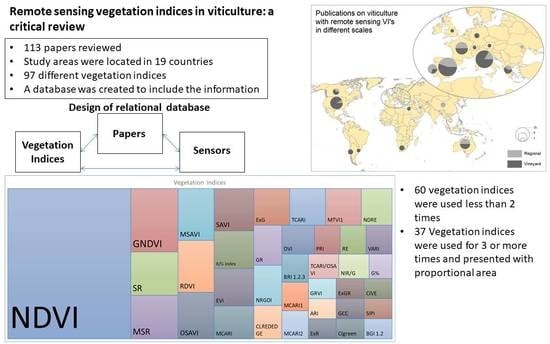
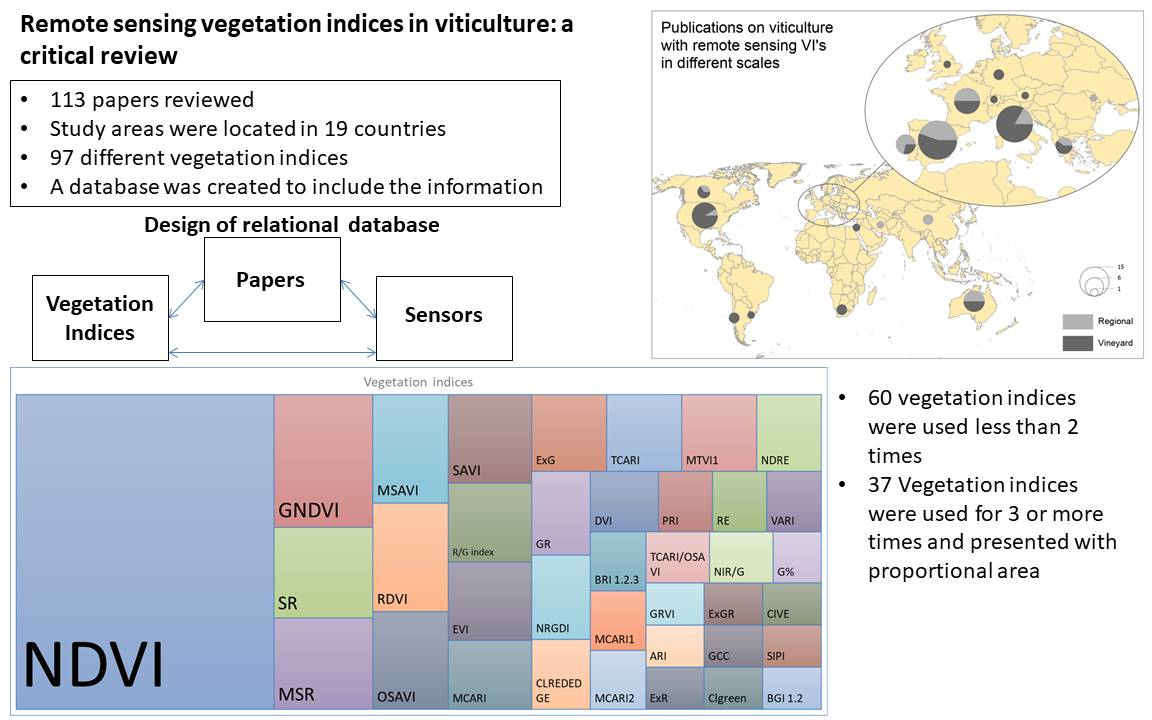
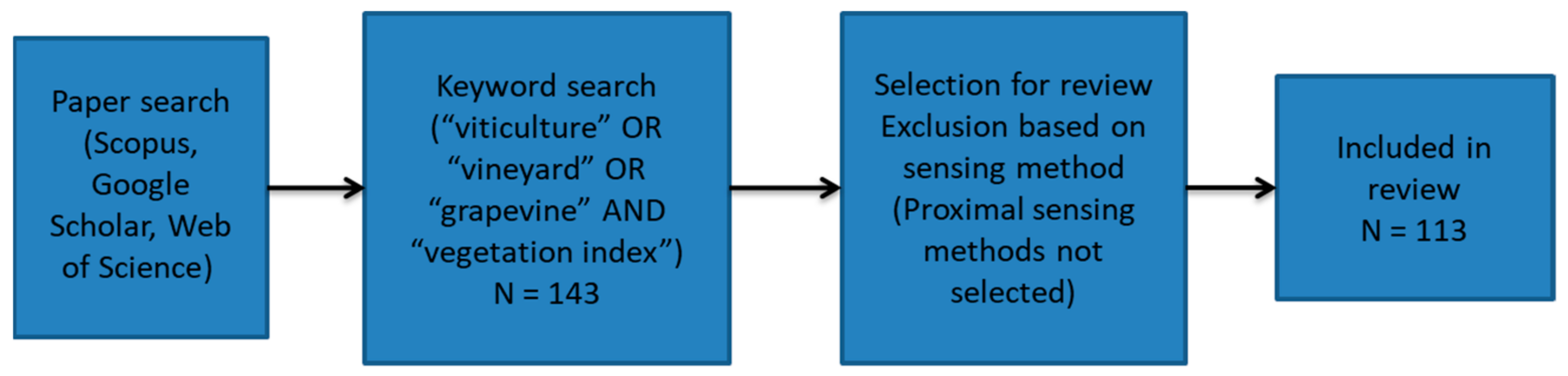
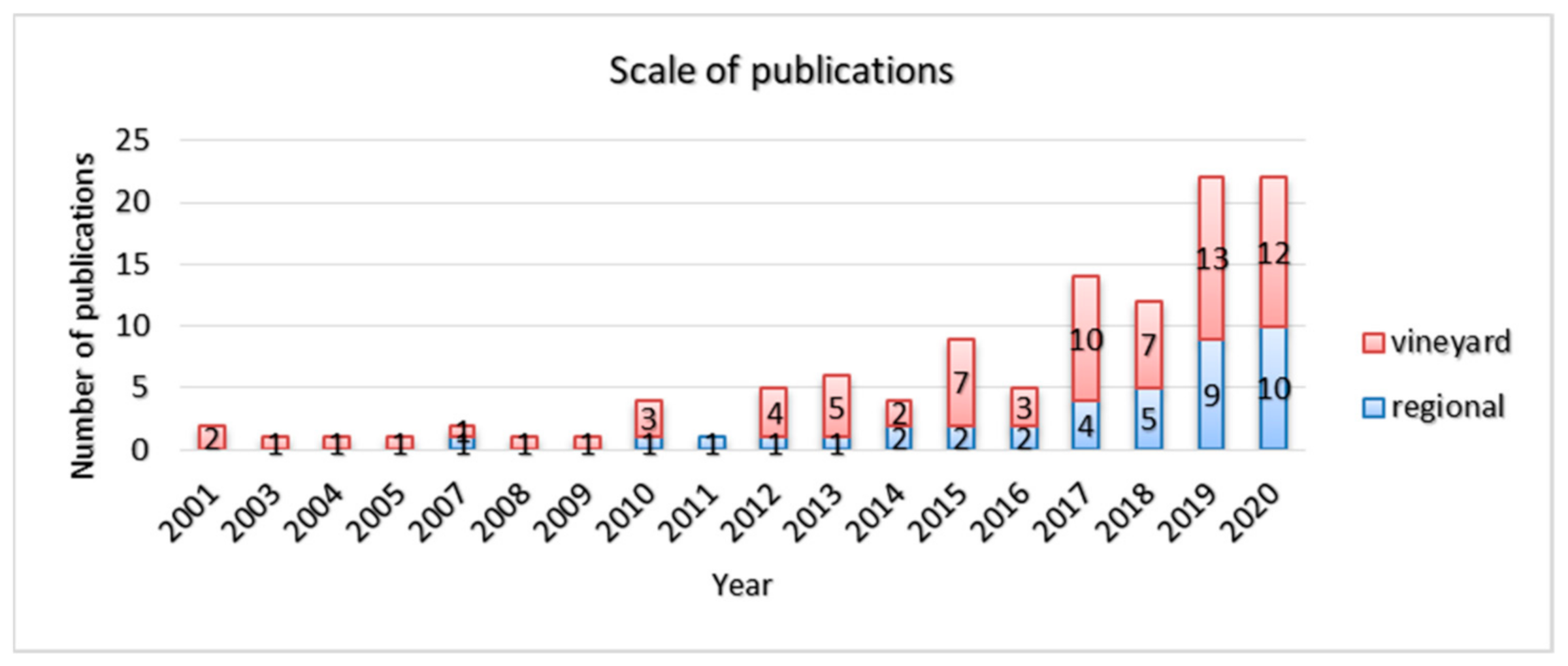
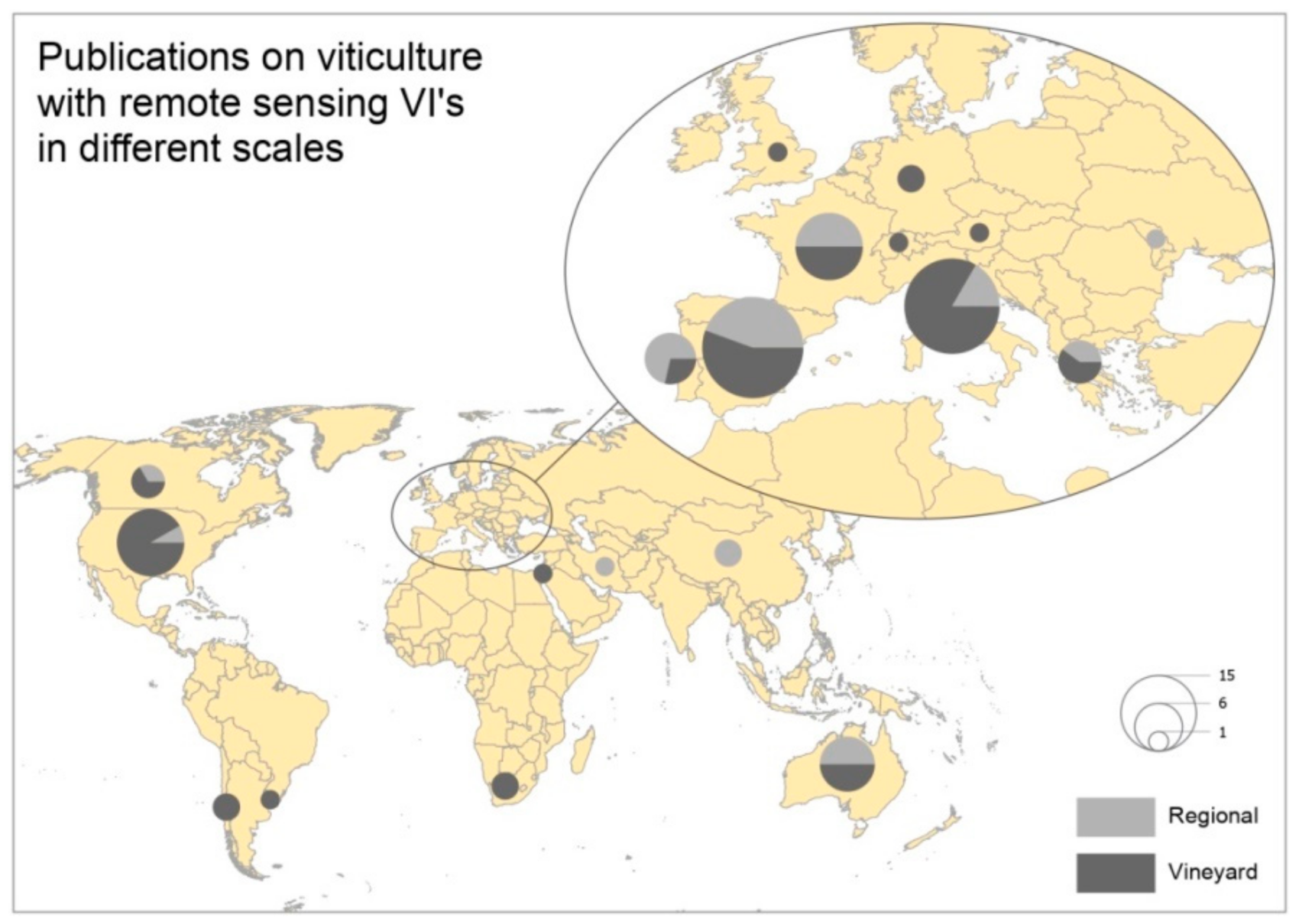
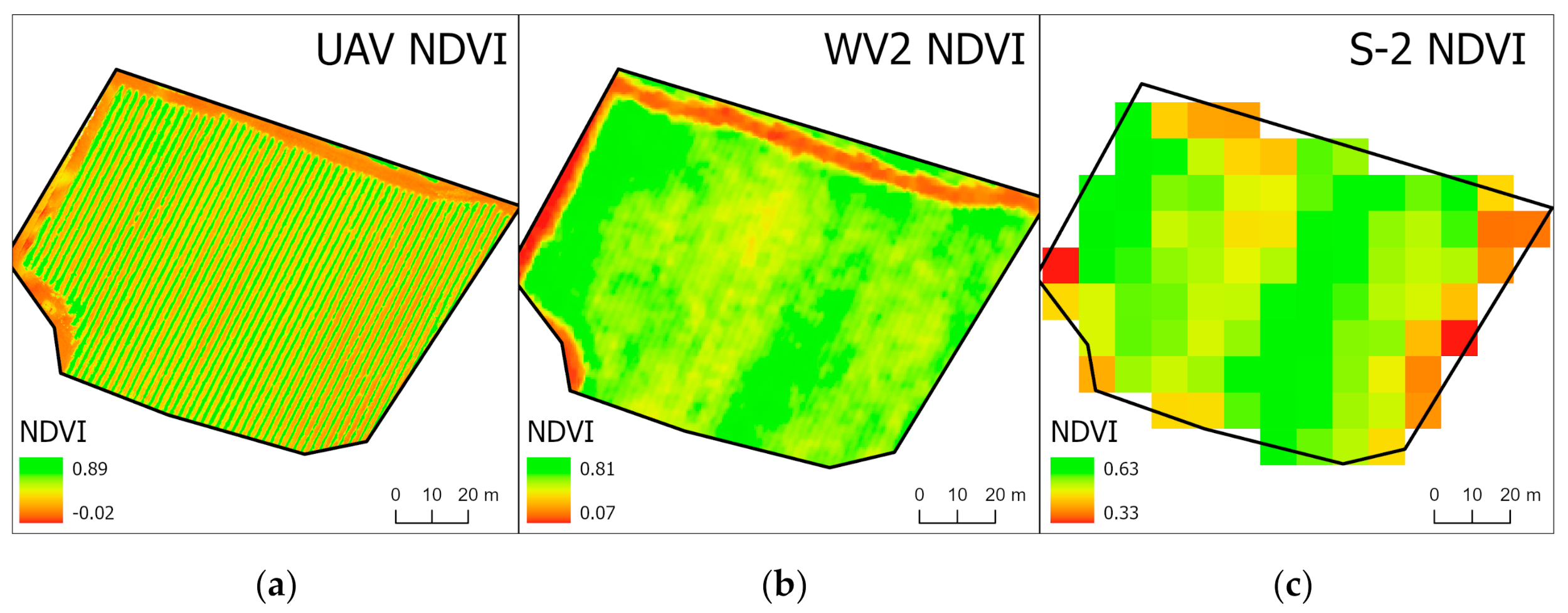
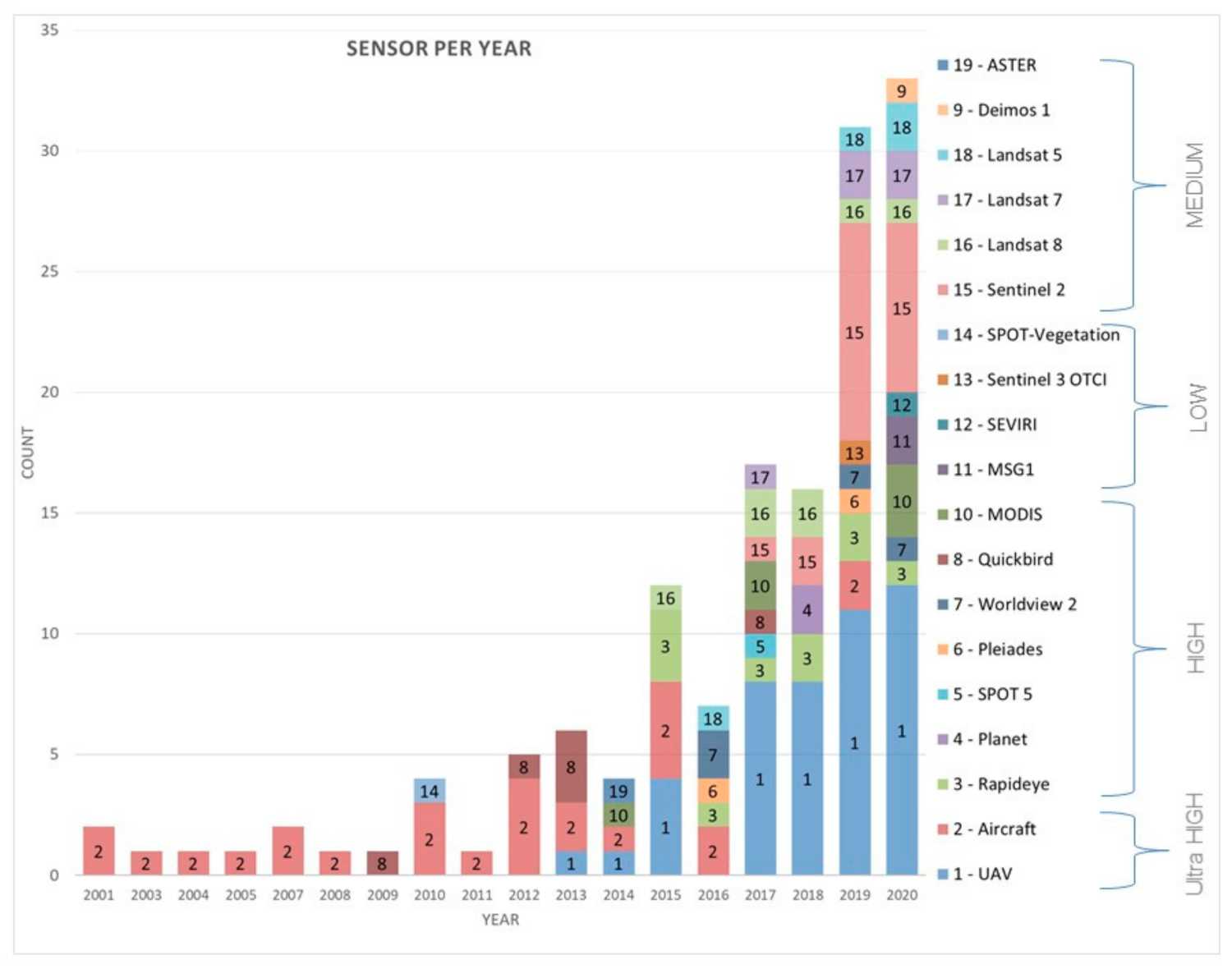
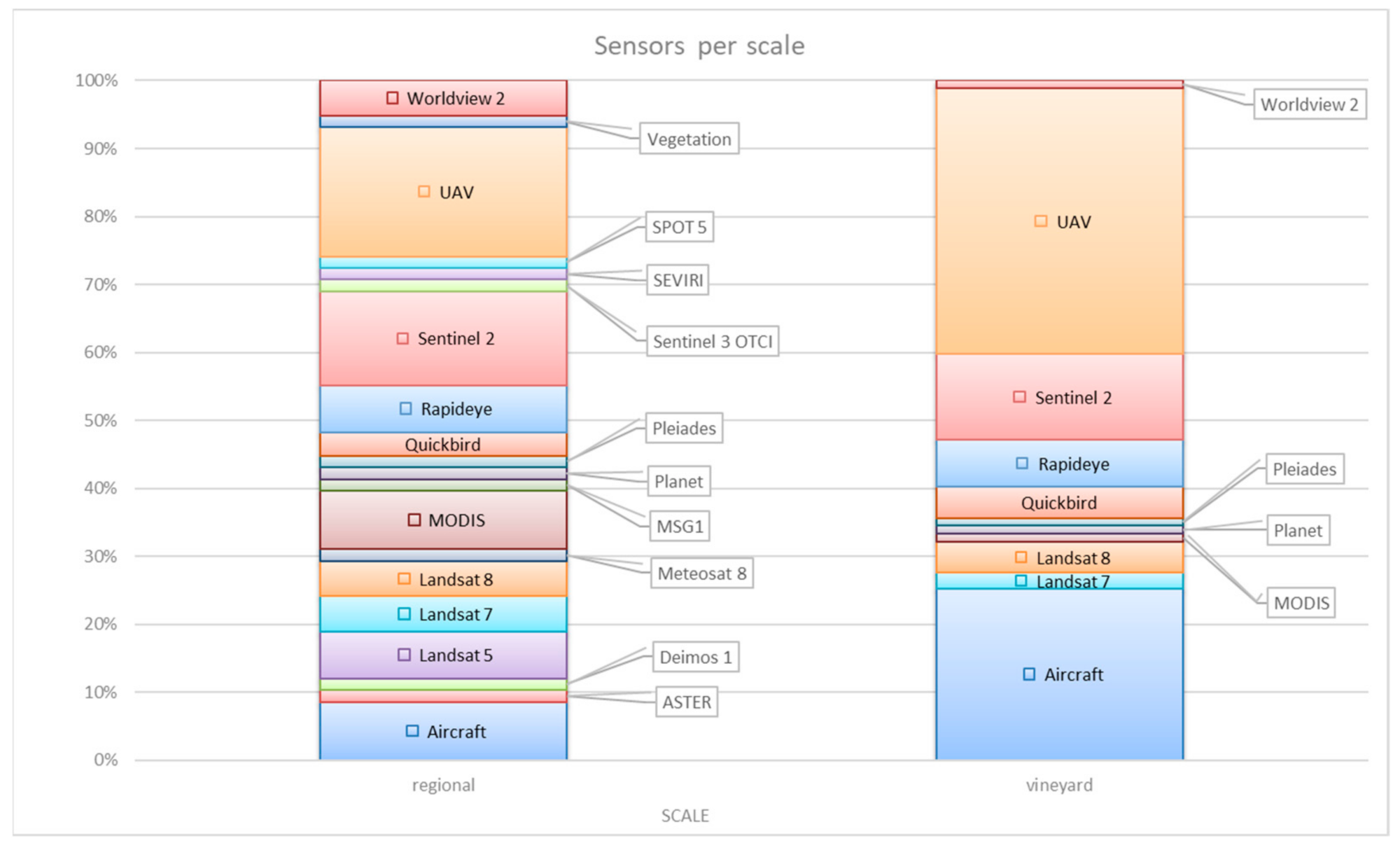
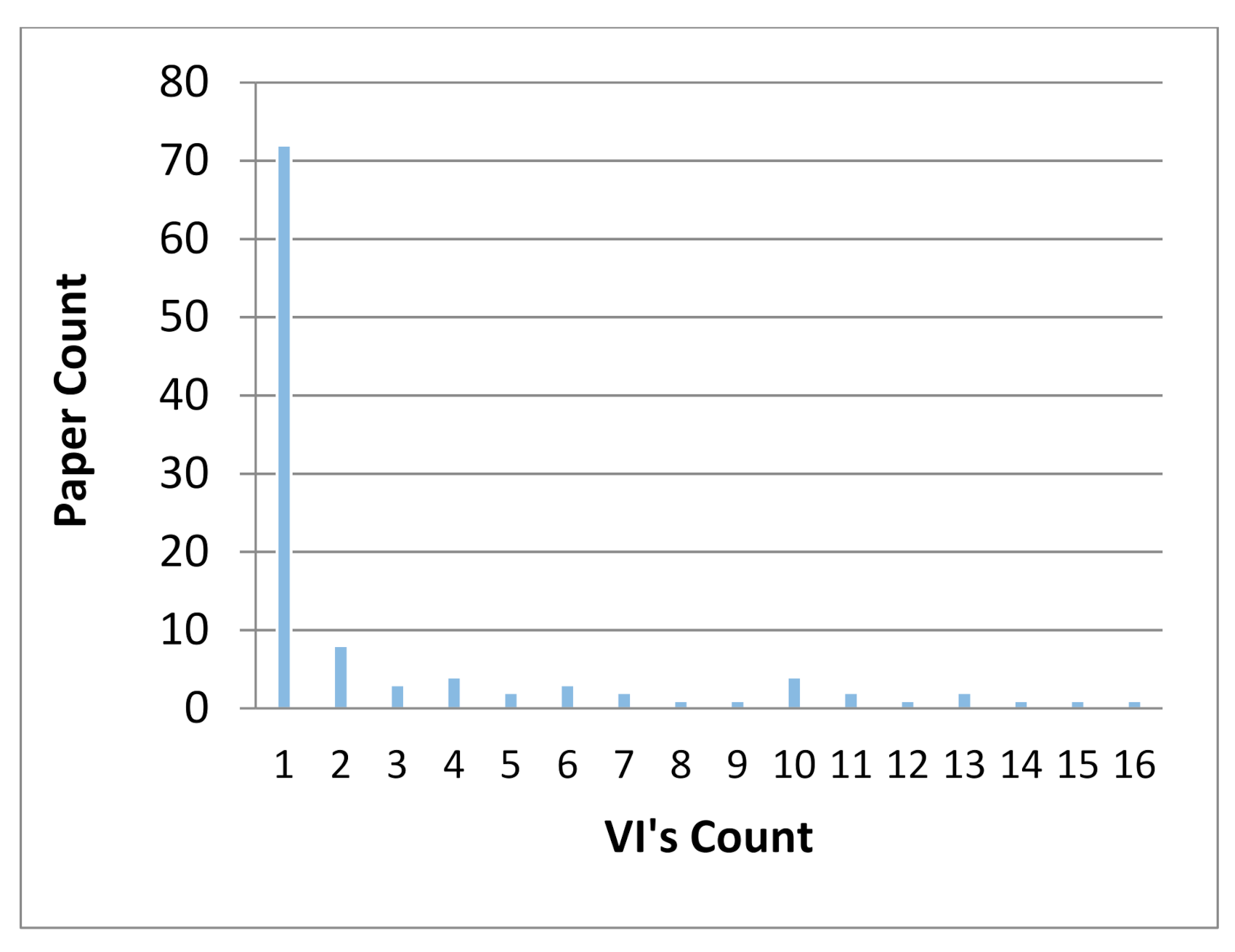
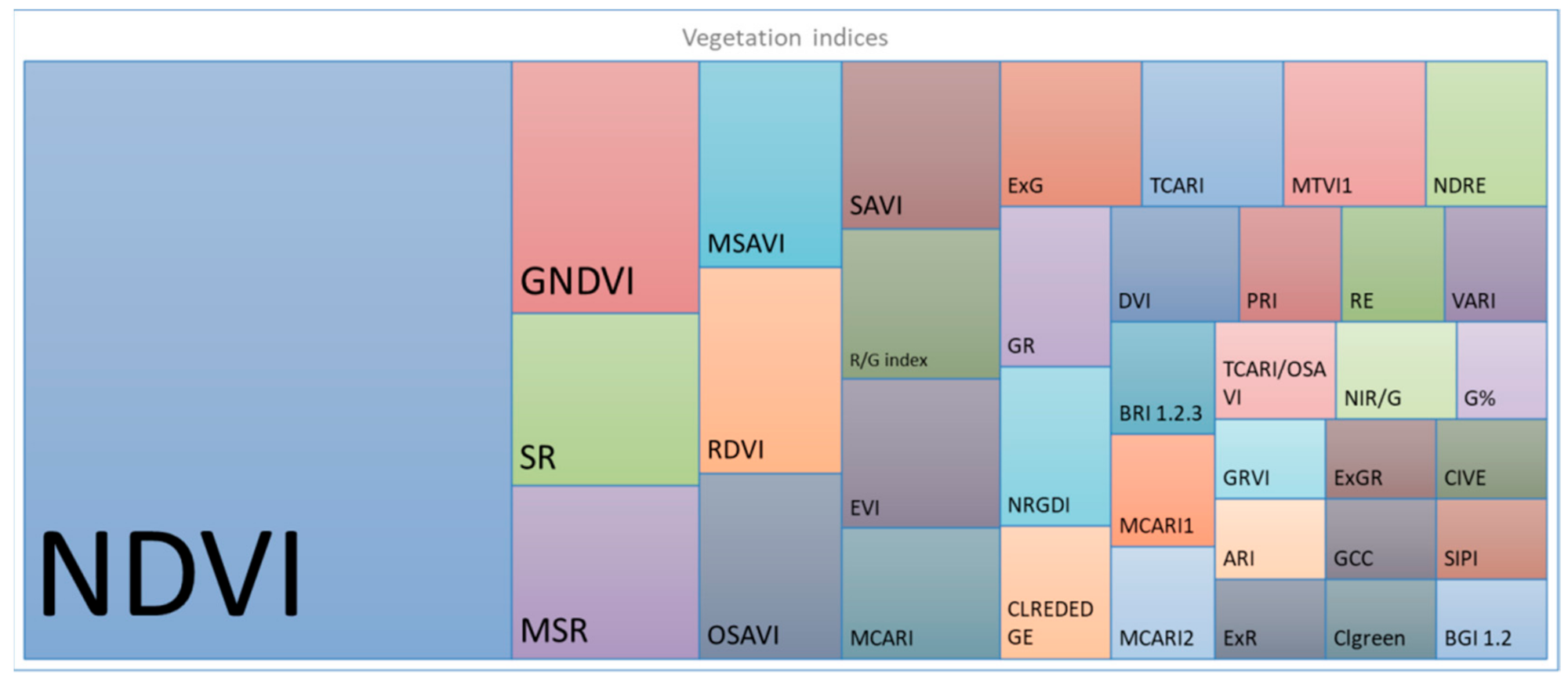
One factor of precision agriculture is remote sensing, through which we can monitor vegetation health and condition. Much research has been conducted in the field of remote sensing and agriculture analyzing the applications, while the reviews gather the research on this field and examine different scientific methodologies. This work aims to gather the existing vegetation indices used in viticulture, which were calculated from imagery acquired by remote sensing platforms such as satellites, airplanes and UAVs. In this review we present the vegetation indices, the applications of these and the spatial distribution of the research on viticulture from the early 2000s. A total of 143 publications on viticulture were reviewed; 113 of them had used remote sensing methods to calculate vegetation indices, while the rejected ones have used proximal sensing methods. The findings show that the most used vegetation index is NDVI, while the most frequently appearing applications are monitoring and estimating vines water stress and delineation of management zones. More than half of the publications use multitemporal analysis and UAVs as the most used among remote sensing platforms. Spain and Italy are the countries with the most publications on viticulture with one-third of the publications referring to regional scale whereas the others to site-specific/vineyard scale. This paper reviews more than 90 vegetation indices that are used in viticulture in various applications and research topics, and categorized them depending on their application and the spectral bands that they are using. To summarize, this review is a guide for the applications of remote sensing and vegetation indices in precision viticulture and vineyard assessment.
Keywords: vine; spectral bands; precision viticulture; imagery; spatial analysis vine; spectral bands; precision viticulture; imagery; spatial analysis
Graphical Abstract