


Revisiting Abdominal Pain in IBS: From Pathophysiology to Targeted Management with Alverine Citrate/Simeticone





Abstract
1. Introduction
2. Methods
3. Pathophysiology of Abdominal Pain in IBS
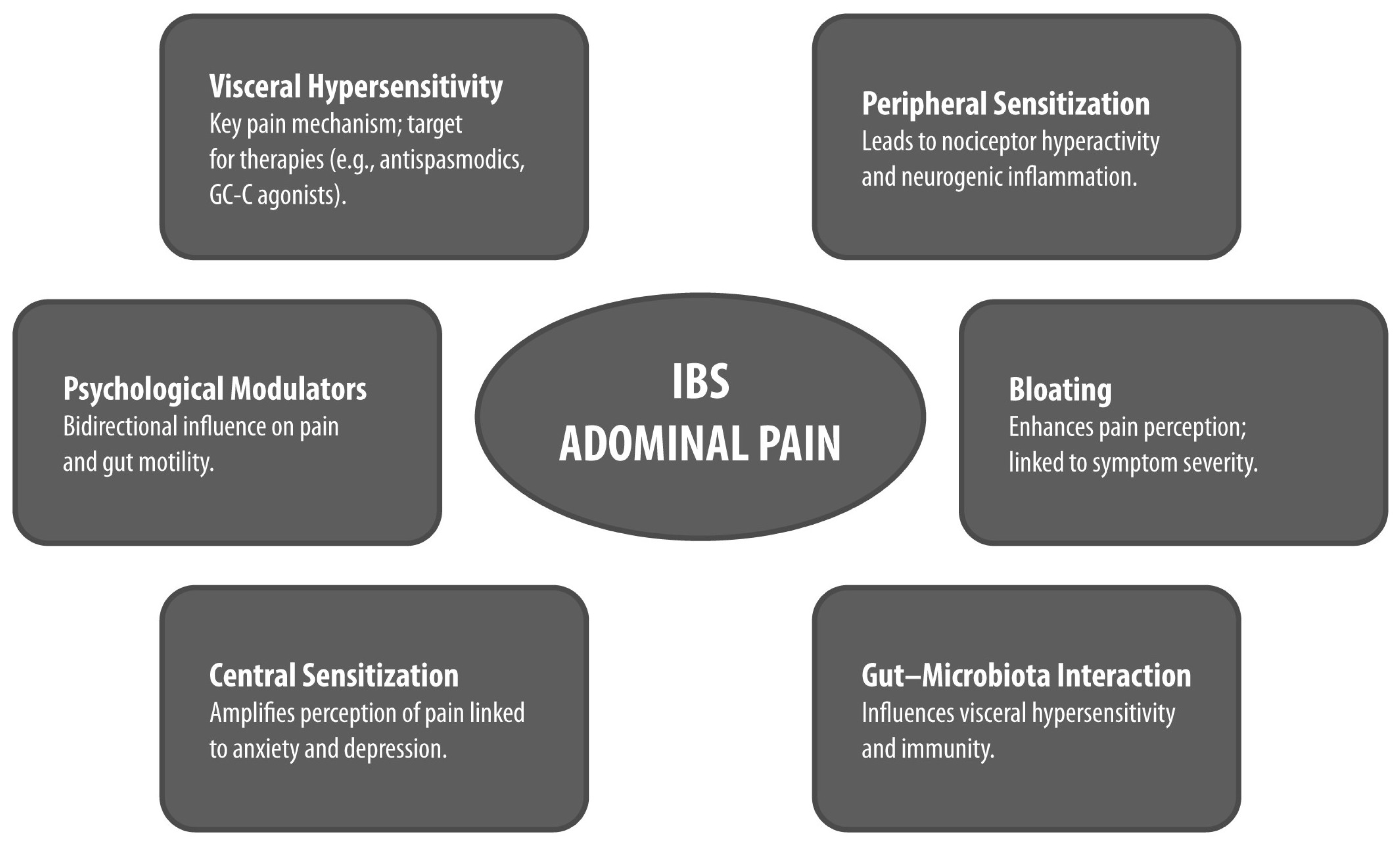
3.1. VH and Peripheral Mechanisms
3.2. Central Mechanisms and the Gut–Brain Axis
3.3. Clinical Characteristics of Abdominal Pain in IBS
3.4. Differences Among IBS Subtypes
4. Impact of Abdominal Pain in IBS
5. Management of Pain in IBS: Current Guidelines and Implementation in Clinical Practice
5.1. Diagnosis: A Symptom-Based Strategy
5.2. Non-Pharmacological and Pharmacological Management
5.3. Implementation and Real-World Application
6. Overview of Non-Pharmacological and Pharmacological Options for IBS Management
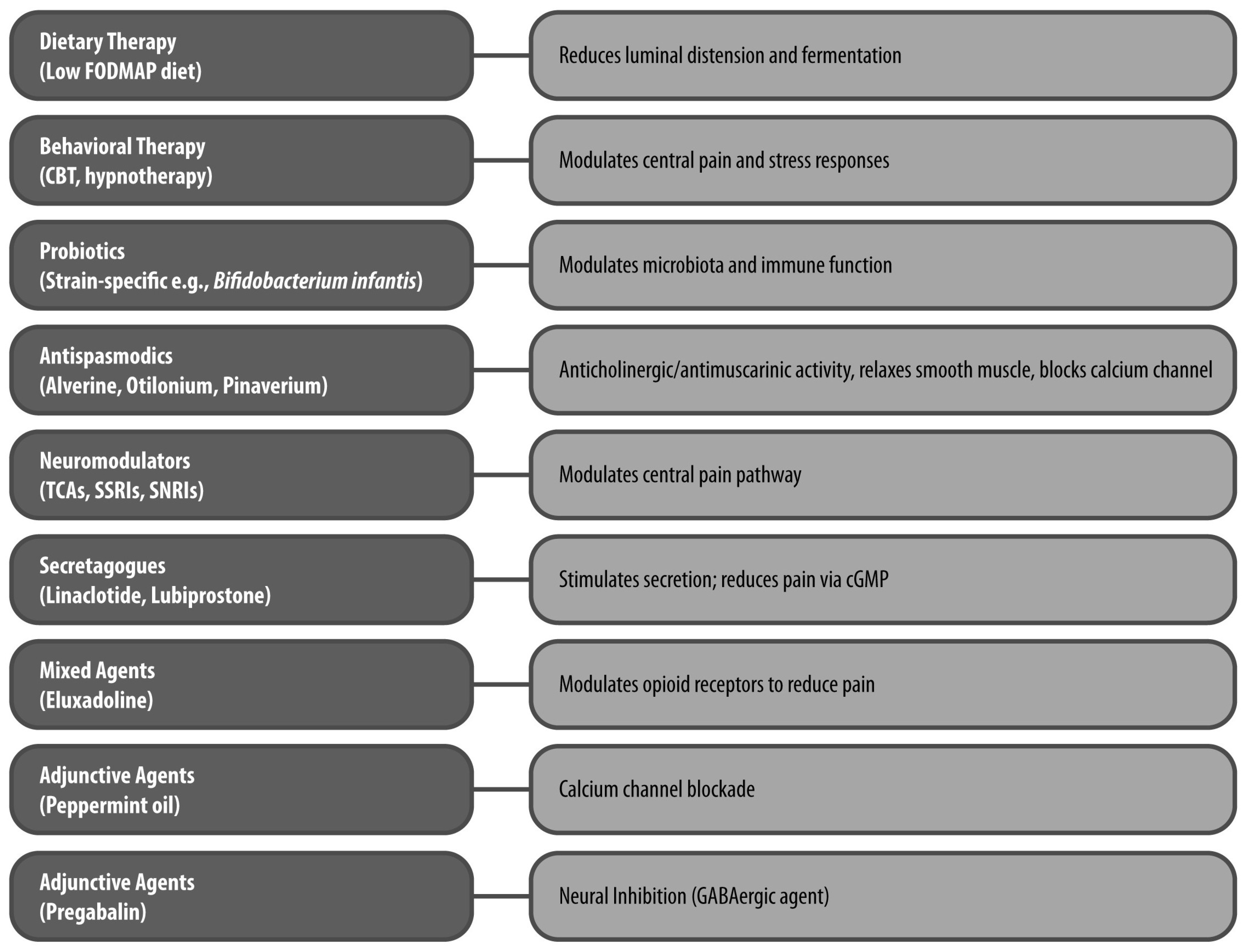
6.1. Non-Pharmacological Interventions
6.1.1. Dietary Interventions
6.1.2. Behavioral and Brain–Gut Therapies
6.1.3. Probiotics
6.2. Pharmacological Interventions
6.2.1. Antispasmodics
6.2.2. Neuromodulators
6.2.3. Secretagogues and Mixed Mechanism Agents
6.2.4. Adjunctive and Investigational Agents
7. Alverine Citrate/Simeticone in IBS: Mechanistic Rationale and Clinical Evidence
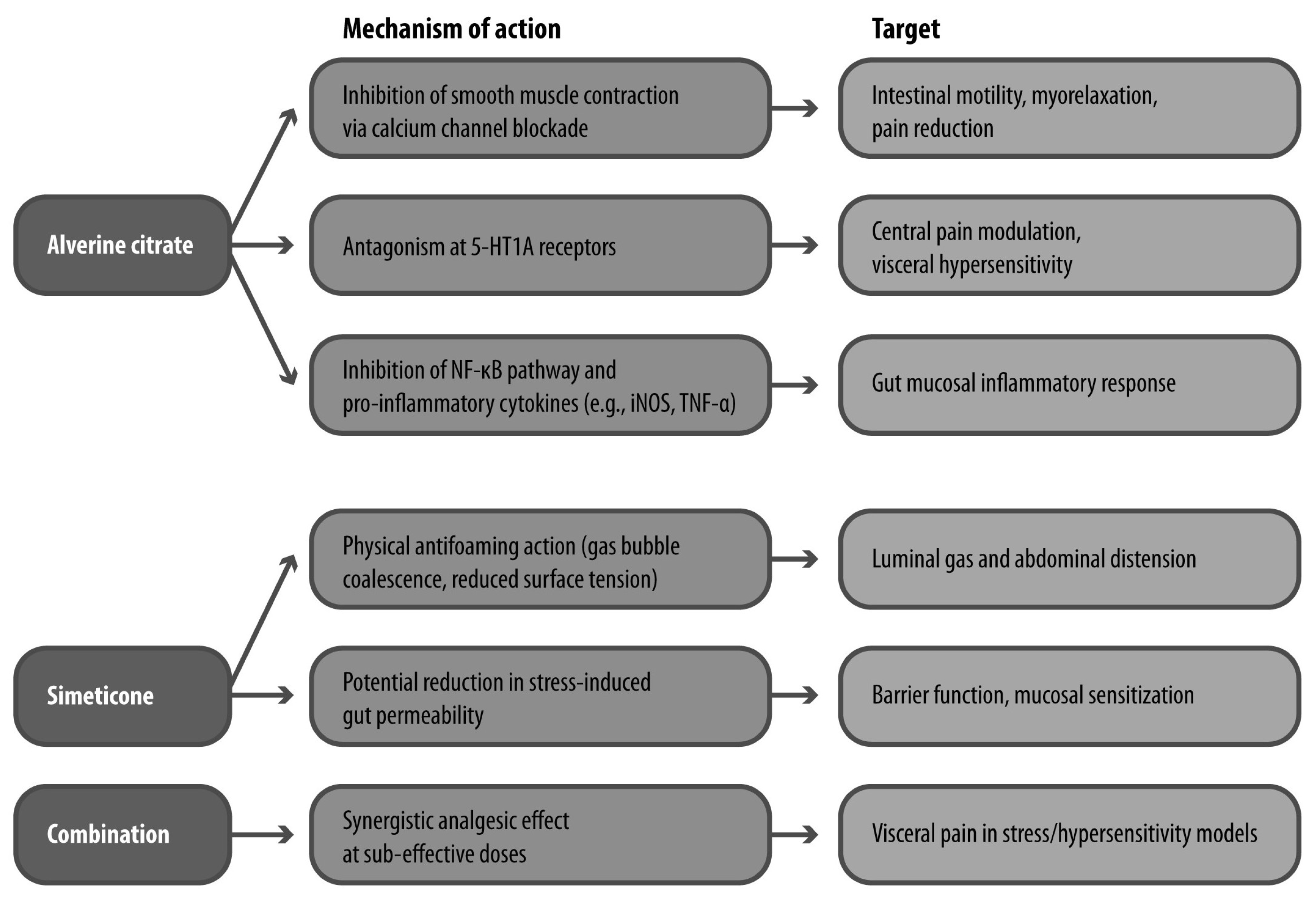
7.1. Mechanism of Action
7.2. Preclinical Evidence
7.3. Clinical Evidence
8. Reframing IBS Pain Management: Gaps, Opportunities, and the Role of Alverine Citrate/Simeticone
9. Future Directions
Author Contributions
Funding
Data Availability Statement
Acknowledgments
Conflicts of Interest
References
- Lacy, B.E.; Mearin, F.; Chang, L.; Chey, W.D.; Lembo, A.J.; Simren, M.; Spiller, R. Bowel Disorders. Gastroenterology 2016, 150, 1393–1407.e5. [Google Scholar] [CrossRef]
- Camilleri, M. Diagnosis and treatment of irritable bowel syndrome: A review. JAMA 2021, 325, 865–877. [Google Scholar] [CrossRef]
- Drossman, D.A.; Morris, C.B.; Schneck, S.; Hu, Y.J.; Norton, N.J.; Weinland, S.R.; Dalton, C.; Leserman, J.; Bangdiwala, S.I. International survey of patients with IBS: Symptom features and their severity, health status, treatments, and risk taking to achieve clinical benefit. J. Clin. Gastroenterol. 2009, 43, 541–550. [Google Scholar] [CrossRef]
- Bhinder, G.; Meza-Cardona, J.M.; Low, A.; Aumais, G.; Attara, G.P.; Gray, J.R. Irritable bowel syndrome patient experience: A survey of patient-reported symptoms by irritable bowel syndrome subtype and impact on quality of life. J. Can. Assoc. Gastroenterol. 2023, 6, 219–228. [Google Scholar] [CrossRef]
- Soncini, M.; Stasi, C.; Usai-Satta, P.; Milazzo, G.; Bianco, M.; Leandro, G.; Montalbano, L.M.; Muscatiello, N.; Monica, F.; Galeazzi, F.; et al. IBS clinical management in Italy: The AIGO survey. Dig. Liver Dis. 2019, 51, 782–789. [Google Scholar] [CrossRef] [PubMed]
- Algera, J.; Lövdahl, J.; Sjölund, J.; Tornkvist, N.T.; Törnblom, H. Managing pain in irritable bowel syndrome: Current perspectives and best practice. Expert Rev. Gastroenterol. Hepatol. 2023, 17, 871–881. [Google Scholar] [CrossRef] [PubMed]
- Ray, G.; Ghoshal, U.C. Epidemiology of disorders of the gut-brain interaction: An appraisal of the Rome IV criteria and beyond. Gut Liver 2024, 18, 578–592. [Google Scholar] [CrossRef] [PubMed]
- Luo, Y.; Camey, S.A.; Bangdiwala, S.I.; Palsson, O.S.; Sperber, A.D.; Keefer, L.A. Global patterns of prescription pain medication usage in disorders of gut–brain interactions. Neurogastroenterol. Motil. 2023, 35, e14457. [Google Scholar] [CrossRef]
- Lacy, B.E.; Pimentel, M.; Brenner, D.M.; Chey, W.D.; Keefer, L.; Long, M.D.; Moshiree, B. ACG Clinical Guideline: Management of irritable bowel syndrome. Am. J. Gastroenterol. 2020, 115, 17–44. [Google Scholar] [CrossRef]
- Black, C.J.; Ford, A.C. An evidence-based update on the diagnosis and management of irritable bowel syndrome. Expert Rev. Gastroenterol. Hepatol. 2025, 19, 227–242. [Google Scholar] [CrossRef]
- Wittmann, T.; Paradowski, L.; Ducrotté, P.; Bueno, L.; Andro Delestrain, M.C. Clinical trial: The efficacy of alverine citrate/simeticone combination on abdominal pain/discomfort in irritable bowel syndrome—A randomized, double-blind, placebo-controlled study. Aliment. Pharmacol. Ther. 2010, 31, 615–624. [Google Scholar] [CrossRef] [PubMed]
- Ducrotté, P.; Andro Delestrain, M.C.; Barthélemy, P.; Personnic, S.; O’Mahony, V.; Andro-Delestrain, M.C. On-demand treatment with alverine citrate/simeticone improves quality of life and reduces healthcare resource use in patients with irritable bowel syndrome: A pragmatic randomized study in general practice. Int. J. Clin. Pract. 2014, 68, 245–254. [Google Scholar] [CrossRef] [PubMed]
- Farzaei, M.H.; Bahramsoltani, R.; Abdollahi, M.; Rahimi, R. The role of visceral hypersensitivity in irritable bowel syndrome: Pharmacological targets and novel treatments. J. Neurogastroenterol. Motil. 2016, 22, 558–574. [Google Scholar] [CrossRef] [PubMed]
- Ford, A.C.; Vanner, S.; Kashyap, P.C.; Nasser, Y. Chronic visceral pain: New peripheral mechanistic insights and resulting treatments. Gastroenterology 2024, 166, 976–994. [Google Scholar] [CrossRef]
- Luo, J.; Xu, Q.; Xu, S.; Zhai, L.; Yuan, C.; Bian, Z. Decoding abdominal pain in constipation-predominant irritable bowel syndrome and functional constipation: Mechanisms and managements. Curr. Gastroenterol. Rep. 2025, 27, 22. [Google Scholar] [CrossRef]
- Hod, K.; Ringel, Y.; van Tilburg, M.A.L.; Ringel-Kulka, T. Bloating in irritable bowel syndrome is associated with symptoms severity, psychological factors, and comorbidities. Dig. Dis. Sci. 2019, 64, 1288–1295. [Google Scholar] [CrossRef]
- Shah, E.D.; Almario, C.V.; Spiegel, B.M.; Chey, W.D. Presentation and characteristics of abdominal pain vary by irritable bowel syndrome subtype: Results of a nationwide population-based study. Am. J. Gastroenterol. 2020, 115, 294–301. [Google Scholar] [CrossRef]
- Drossman, D.A.; Tack, J.; Ford, A.C.; Szigethy, E.; Keefer, L.; Drossman, D. Neuromodulators for functional gastrointestinal disorders: A Rome Foundation working team report. Gastroenterology 2018, 154, 1140–1171.e1. [Google Scholar] [CrossRef]
- Sabaté, J.M.; Ducrotté, P.; Piche, T.; Zerbib, F.; Dapoigny, M.; Bruley des Varannes, S.; Bonaz, B.; Mion, F.; Iglicki, F.; Denhez, D.; et al. Expectations of IBS patients concerning disease and healthcare providers: Results of a prospective survey among members of a French patients’ association. Clin. Res. Hepatol. Gastroenterol. 2020, 44, 961–967. [Google Scholar] [CrossRef]
- Farrukh, A. Measurement of pain and related symptoms in irritable bowel syndrome: The use of validated pain measurement tools. Gastrointest. Disord. 2022, 4, 22–29. [Google Scholar] [CrossRef]
- Bousaba, J.; Sannaa, W.; Camilleri, M. Pain in irritable bowel syndrome: Does anything really help? Neurogastroenterol. Motil. 2022, 34, e14305. [Google Scholar] [CrossRef]
- Vasant, D.H.; Paine, P.A.; Black, C.J.; Houghton, L.A.; Everitt, H.A.; Corsetti, M.; Agrawal, A.; Aziz, I.; Farmer, A.D.; Eugenicos, M.P.; et al. British Society of Gastroenterology guideline on the management of irritable bowel syndrome. Gut 2021, 70, 1214–1240. [Google Scholar] [CrossRef] [PubMed]
- Savarino, E.; Zingone, F.; Barberio, B.; Marasco, G.; Akyuz, F.; Akpinar, H.; Barboi, O.; Bodini, G.; Bor, S.; Chiarioni, G.; et al. Functional bowel disorders with diarrhoea: Clinical guidelines of the United European Gastroenterology and European Society for Neurogastroenterology and Motility. United Eur. Gastroenterol. J. 2022, 10, 556–584. [Google Scholar] [CrossRef] [PubMed]
- Barbara, G.; Cremon, C.; Bellini, M.; Corsetti, M.; Di Nardo, G.; Falangone, F.; Fuccio, L.; Galeazzi, F.; Iovino, P.; Sarnelli, G.; et al. Italian guidelines for the management of irritable bowel syndrome: Joint consensus from seven scientific societies. Digest. Liver Dis. 2023, 55, 187–207. [Google Scholar] [CrossRef] [PubMed]
- Choi, Y.; Youn, Y.H.; Kang, S.J.; Shin, J.E.; Cho, Y.S.; Jung, Y.S.; Shin, S.Y.; Huh, C.W.; Lee, Y.J.; Koo, H.S.; et al. 2025 Seoul Consensus on Clinical Practice Guidelines for Irritable Bowel Syndrome. J. Neurogastroenterol. Motil 2025, 31, 133–169. [Google Scholar] [CrossRef]
- Lembo, A.; Sultan, S.; Chang, L.; Heidelbaugh, J.J.; Smalley, W.; Verne, G.N. AGA clinical practice guideline on the pharmacological management of irritable bowel syndrome with diarrhea. Gastroenterology 2022, 163, 137–151. [Google Scholar] [CrossRef]
- Bellini, M.; Tosetti, C.; Rettura, F.; Morganti, R.; Lambiase, C.; Bassotti, G.; Visaggi, P.; Pancetti, A.; Benedetto, E.; de Bortoli, N.; et al. Translational gap between guidelines and clinical medicine: The viewpoint of Italian general practitioners in the management of IBS. J. Clin. Med. 2022, 11, 3861. [Google Scholar] [CrossRef]
- Siddiqui, M.T.; Cresci, G.A.M. The immunomodulatory functions of butyrate. J. Inflamm. Res. 2021, 14, 6025–6041. [Google Scholar] [CrossRef]
- Borycka-Kiciak, K.; Banasiewicz, T.; Rydzewska, G. Butyric acid—A well-known molecule revisited. Prz. Gastroenterol. 2017, 12, 83–89. [Google Scholar] [CrossRef]
- El Ezaby, S.A.; Salama, M.M.; Bayoumy, E.; Marzouk, D.A. Adherence to guidelines in management of irritable bowel syndrome in internal medicine outpatient clinic in Ain Shams University Hospitals and three Minister of Health Family centers. QJM 2018, 111, hcy200.049. [Google Scholar] [CrossRef]
- Yawn, B.P.; Lydick, E.; Locke, G.R.; Wollan, P.C.; Bertram, S.L.; Kurland, M.J. Do published guidelines for evaluation of irritable bowel syndrome reflect practice? BMC Gastroenterol. 2001, 1, 11. [Google Scholar] [CrossRef] [PubMed]
- Black, C.J.; Staudacher, H.M.; Ford, A.C. Efficacy of a low FODMAP diet in irritable bowel syndrome: Systematic review and network meta-analysis. Gut 2022, 71, 1117–1126. [Google Scholar] [CrossRef]
- Goyal, O.; Batta, S.; Nohria, S.; Kishore, H.; Goyal, P.; Sehgal, R.; Sood, A. Low fermentable oligosaccharide, disaccharide, monosaccharide, and polyol diet in patients with diarrhea-predominant irritable bowel syndrome: A prospective, randomized trial. J. Gastroenterol. Hepatol. 2021, 36, 2107–2115. [Google Scholar] [CrossRef] [PubMed]
- Zahedi, M.J.; Behrouz, V.; Azimi, M. Low fermentable oligo-di-mono-saccharides and polyols diet versus general dietary advice in patients with diarrhea-predominant irritable bowel syndrome: A randomized controlled trial. J. Gastroenterol. Hepatol. 2018, 33, 1192–1199. [Google Scholar] [CrossRef] [PubMed]
- Staudacher, H.M.; Lomer, M.C.E.; Farquharson, F.M.; Louis, P.; Fava, F.; Franciosi, E.; Scholz, M.; Tuohy, K.M.; Lindsay, J.O.; Irving, P.M.; et al. A diet low in FODMAPs reduces symptoms in patients with irritable bowel syndrome and a probiotic restores bifidobacterium species: A randomized controlled trial. Gastroenterology 2017, 153, 936–947. [Google Scholar] [CrossRef]
- Eswaran, S.L.; Chey, W.D.; Han-Markey, T.; Ball, S.; Jackson, K. A randomized controlled trial comparing the low FODMAP diet vs. modified NICE guidelines in US adults with IBS-D. Am. J. Gastroenterol. 2016, 111, 1824–1832. [Google Scholar] [CrossRef]
- Goodoory, V.C.; Khasawneh, M.; Thakur, E.R.; Everitt, H.A.; Gudleski, G.D.; Lackner, J.M.; Moss-Morris, R.; Simren, M.; Vasant, D.H.; Moayyedi, P.; et al. Effect of Brain-Gut Behavioral Treatments on Abdominal Pain in Irritable Bowel Syndrome: Systematic Review and Network Meta-Analysis. Gastroenterology 2024, 167, 934–943.e5. [Google Scholar] [CrossRef]
- Everitt, H.A.; Landau, S.; O’Reilly, G.; Sibelli, A.; Hughes, S.; Windgassen, S.; Holland, R.; Little, P.; McCrone, P.; Bishop, F.; et al. Assessing telephone-delivered cognitive-behavioural therapy (CBT) and web-delivered CBT versus treatment as usual in irritable bowel syndrome (ACTIB): A multicentre randomised trial. Gut 2019, 68, 1613–1623. [Google Scholar] [CrossRef]
- Lackner, J.M.; Jaccard, J.; Keefer, L.; Brenner, D.M.; Firth, R.S.; Gudleski, G.D.; Hamilton, F.A.; Katz, L.A.; Krasner, S.S.; Ma, C.X.; et al. Improvement in gastrointestinal symptoms after cognitive behavior therapy for refractory irritable bowel syndrome. Gastroenterology 2018, 155, 47–57. [Google Scholar] [CrossRef]
- Kikuchi, S.; Oe, Y.; Ito, Y.; Sozu, T.; Sasaki, Y.; Sakata, M.; Luo, Y.; Sahker, E.; Horikoshi, M.; Seno, H.; et al. Group cognitive-behavioral therapy with interoceptive exposure for drug-refractory irritable bowel syndrome: A randomized controlled trial. Am. J. Gastroenterol. 2022, 117, 668–677. [Google Scholar] [CrossRef]
- Annaházi, A.; Róka, R.; Rosztóczy, A.; Wittmann, T. Role of antispasmodics in the treatment of irritable bowel syndrome. World J. Gastroenterol. 2014, 20, 6031–6043. [Google Scholar] [CrossRef] [PubMed]
- Khasawneh, M.; Mokhtare, M.; Moayyedi, P.; Black, C.J.; Ford, A.C. Efficacy of gut-brain neuromodulators in irritable bowel syndrome: An updated systematic review and meta-analysis. Lancet Gastroenterol. Hepatol. 2025, 10, 537–549. [Google Scholar] [CrossRef] [PubMed]
- Videlock, E.J.; Cheng, V.; Cremonini, F. Effects of linaclotide in patients with irritable bowel syndrome with constipation or chronic constipation: A meta-analysis. Clin. Gastroenterol. Hepatol. 2013, 11, 1084–1092.e3. [Google Scholar] [CrossRef] [PubMed]
- Li, F.; Fu, T.; Tong, W.D.; Liu, B.H.; Li, C.X.; Gao, Y.; Wu, J.S.; Wang, X.F.; Zhang, A.P. Lubiprostone is effective in the treatment of chronic idiopathic constipation and irritable bowel syndrome: A systematic review and meta-analysis of randomized controlled trials. Mayo Clin. Proc. 2016, 91, 456–468. [Google Scholar] [CrossRef]
- Dove, L.S.; Lembo, A.; Randall, C.W.; Fogel, R.; Andrae, D.; Davenport, J.M.; Mcintyre, G.; Almenoff, J.S.; Covington, P.S. Eluxadoline benefits patients with irritable bowel syndrome with diarrhea in a phase 2 study. Gastroenterology 2013, 145, 329–338.e1. [Google Scholar] [CrossRef]
- Lembo, A.J.; Lacy, B.E.; Zuckerman, M.J.; Schey, R.; Dove, L.S.; Andrae, D.A.; Davenport, J.M.; McIntyre, G.; Lopez, R.; Turner, L.; et al. Eluxadoline for irritable bowel syndrome with diarrhea. N. Engl. J. Med. 2016, 374, 242–253. [Google Scholar] [CrossRef]
- Khanna, R.; MacDonald, J.K.; Levesque, B.G. Peppermint oil for the treatment of irritable bowel syndrome: A systematic review and meta-analysis. J. Clin. Gastroenterol. 2014, 48, 505–512. [Google Scholar] [CrossRef]
- Hookway, C.; Buckner, S.; Crosland, P.; Longson, D. Irritable bowel syndrome in adults in primary care: Summary of updated NICE guidance. BMJ 2015, 350, h701. [Google Scholar] [CrossRef]
- McKenzie, Y.A.; Bowyer, R.K.; Leach, H.; Gulia, P.; Horobin, J.; O’Sullivan, N.A.; Pettitt, C.; Reeves, L.B.; Seamark, L.; Williams, M.; et al. British Dietetic Association systematic review and evidence-based practice guidelines for the dietary management of irritable bowel syndrome in adults (2016 update). J. Hum. Nutr. Diet. 2016, 29, 549–575. [Google Scholar] [CrossRef]
- Bertin, L.; Zanconato, M.; Crepaldi, M.; Marasco, G.; Cremon, C.; Barbara, G.; Barberio, B.; Zingone, F.; Savarino, E.V. The role of the FODMAP diet in IBS. Nutrients 2024, 16, 370. [Google Scholar] [CrossRef]
- Liu, J.; Dai, Q.; Qu, T.; Ma, J.; Lv, C.; Wang, H.; Yu, Y. Ameliorating effects of transcutaneous auricular vagus nerve stimulation on a mouse model of constipation-predominant irritable bowel syndrome. Neurobiol. Dis. 2024, 193, 106440. [Google Scholar] [CrossRef]
- Liu, J.; Lv, C.; Yin, M.; Zhu, M.; Wang, B.; Tian, J.; Hashimoto, K.; Yu, Y. Efficacy and safety of transcutaneous auricular vagus nerve stimulation in patients with constipation-predominant irritable bowel syndrome: A single-center, single-blind, randomized controlled trial. Am. J. Gastroenterol. 2024, 120, 2139–2153. [Google Scholar] [CrossRef] [PubMed]
- Umeano, L.; Iftikhar, S.; Alhaddad, S.F.; Paulsingh, C.N.; Riaz, M.F.; Garg, G.; Mohammed, L. Effectiveness of probiotic use in alleviating symptoms of irritable bowel syndrome: A systematic review. Cureus 2024, 16, e58306. [Google Scholar] [CrossRef] [PubMed]
- Brenner, D.M.; Lacy, B.E. Antispasmodics for chronic abdominal pain: Analysis of North American treatment options. Am. J. Gastroenterol. 2021, 116, 1587–1600. [Google Scholar] [CrossRef] [PubMed]
- Camilleri, M.; Boeckxstaens, G. Dietary and pharmacological treatment of abdominal pain in IBS. Gut 2017, 66, 966–974. [Google Scholar] [CrossRef]
- Bouvier, M.; Grimaud, J.C.; Abysique, A.; Chiarelli, P. Effects of alverine on the spontaneous electrical activity and nervous control of the proximal colon of the rabbit. Gastroenterol. Clin. Biol. 1992, 16, 334–338. [Google Scholar]
- Lee, C.Y.; Kim, H.G.; Park, S.H.; Jang, S.G.; Park, K.J.; Kim, D.S.; Kim, J.H.; Cho, J.Y. Anti-inflammatory functions of alverine via targeting Src in the NF-κB pathway. Biomolecules 2020, 10, 611. [Google Scholar] [CrossRef]
- Coelho, A.M.; Jacob, L.; Fioramonti, J.; Bueno, L. Rectal antinociceptive properties of alverine citrate are linked to antagonism at the 5-HT1A receptor subtype. J. Pharm. Pharmacol. 2001, 53, 1419–1426. [Google Scholar] [CrossRef]
- Bueno, L.; Beaufrand, C.; Theodorou, V.; Andro-Delestrain, M.C. Influence of simethicone and alverine on stress-induced alterations of colonic permeability and sensitivity in rats: Beneficial effect of their association. J. Pharm. Pharmacol. 2013, 65, 567–573. [Google Scholar] [CrossRef]

| Study | Patients (n) | Intervention | Key Findings on Abdominal Pain |
|---|---|---|---|
| Non-Pharmacological Interventions | |||
| Low FODMAP Diet | |||
| Meta-analysis (13 RCTs) [32] | 944 | Low FODMAP diet vs. habitual/sham/NICE diet | Ranked highest for pain improvement. Not superior to habitual diet (RR = 0.72; 65% CI: 0.47–1.10), but superior to sham diet. |
| RCT [33] | 101 (IBS-D) | Low FODMAP vs. TDA | ≥50-point reduction in IBS-SSS or adequate symptom relief in 62.7% (FODMAP) vs. 40.8% (TDA); p = 0.0448. |
| RCT [34] | 101 (IBS-D) | Low FODMAP vs. TDA | Significant improvement in IBS-SSS for pain intensity (p = 0.001) and frequency (p = 0.017) for FODMAP vs. TDA. |
| RCT [35] | 104 | Low FODMAP vs. sham diet vs. probiotics vs. placebo (2 × 2 factorial) | IBS-SSS was significantly lower for low FODMAP vs. sham (173 ± 95 vs. 224 ± 89; p = 0.001), with lower sub scores for pain intensity (p = 0.002) and frequency (p = 0.001). No difference vs. probiotics and vs. placebo. |
| RCT [36] | 84 (IBS-D) | Low FODMAP vs. mNICE diet | Higher proportion of abdominal pain responders for FODMAP (51%) vs. mNICE (23%); p = 0.008. |
| Cognitive–behavioral therapy | |||
| Meta-analysis (42 RCTs) [37] | 5220 | Brain–gut behavioral therapies (CBT, hypnotherapy, stress management) vs. control | Self-guided/minimal contact CBT reduced pain (RR = 0.71; 95% CI: 0.54–0.95); p-score = 0.58; consistently ranked among top interventions. |
| RCT [38] | 558 | Internet-/telephone-CBT vs. usual care | Significant reduction in abdominal pain at 12 months (p < 0.001); moderate, sustained effect. |
| RCT [39] | 436 | Standard CBT vs. minimal-contact CBT vs. education | Both CBT formats improved IBS-SSS; effects were durable at 6 months; NNT = 4–5. |
| RCT [40] | 100 | Weekly CBT (10 sessions) vs. usual care | Pain intensity significantly reduced (−1.6 vs. −0.4; p = 0.003). |
| Pharmacological intervention | |||
| Antispasmodics | |||
| Meta-analysis (23 RCTs) [41] | 2779 | Various antispasmodics (e.g., alverine, otilonium, mebeverine, hyoscine) vs. placebo | Significant pain reduction vs. placebo (RR = 1.57; 95% CI: 1.33–1.85); NNT = 5. Broad efficacy across antispasmodic classes. |
| Neuromodulators | |||
| Meta-analysis (7 RCTs) [42] | 708 | TCAs vs. placebo | Pain persistence reduced (RR = 0.69; 95% CI: 0.54–0.88); low certainty. |
| Meta-analysis (7 RCTs) [42] | 324 | SSRIs vs. placebo | Pain persistence reduced (RR = 0.74; 95% CI: 0.56–0.99); very low certainty. |
| Meta-analysis (2 RCTs) [42] | 94 | SNRIs vs. placebo | Substantial reduction (RR = 0.22; 95% CI: 0.08–0.59); very low certainty. |
| Meta-analysis (2 RCTs) [42] | 415 | Gabapentinoids vs. placebo | No significant difference in abdominal pain. |
| Secretagogues and mixed agents | |||
| Meta-analysis (3 RCTs) [43] | 1773 (IBS-C) | Linaclotide vs. placebo | ≥30% pain reduction in ≥75% of weeks: RR = 1.58 (95% CI: 1.02–2.46). |
| Meta-analysis (9 trials) [44] | 2309 (IBS-C) | Lubiprostone vs. placebo | Pain reduction at 1 week (combined SMD = 0.55; 95% CI: 0.19–0.91; p = 0.003); no effect at 1 or 3 months. |
| Phase II trial [45] | 807 (IBS-D) | Eluxadoline 5–200 mg vs. placebo | Combined response (pain + stool consistency) at week 4: 12.0–13.8% (eluxadoline) vs. 5.7% (placebo); p < 0.05. |
| Phase III trials (IBS-3001, IBS-3002) [46] | 2427 (IBS-D) | Eluxadoline 75–100 mg vs. placebo | Combined response: 23.9–29.6% (eluxadoline) vs. 16.2–17.1% (placebo); p ≤ 0.01. |
| Peppermint oil | |||
| Meta-analysis (5 RCTs) [47] | 357 | Peppermint oil vs. placebo | RR = 2.14 (95% CI: 1.64–2.79); significantly more effective than placebo. |
| Study | Design and Setting | Population | Primary Endpoint | Main Results |
|---|---|---|---|---|
| Wittmann 2010 [11] | RCT, double-blind, multicenter | 409 IBS patients (Rome III) | ≥50% reduction in pain VAS (4 weeks) | Responder rate: 46.8% vs. 34.3% (p = 0.01); median VAS: 40 mm vs. 50 mm (p = 0.047); early benefit from week 2; improved global symptom perception |
| Ducrotté 2013 [12] | Pragmatic RCT, open-label, primary care | 436 IBS patients (IBS-SSS 175–400) | IBS-QoL improvement (6 months) | QoL gain: +13.8 vs. +8.4 points (p = 0.0008); ≥50% IBS-SSS reduction: 58.6% vs. 35.9% (p = 0.0001); clinical remission: 37.7% vs. 16.0% (p < 0.0001); lower healthcare use |
Disclaimer/Publisher’s Note: The statements, opinions and data contained in all publications are solely those of the individual author(s) and contributor(s) and not of MDPI and/or the editor(s). MDPI and/or the editor(s) disclaim responsibility for any injury to people or property resulting from any ideas, methods, instructions or products referred to in the content. |
© 2026 by the authors. Licensee MDPI, Basel, Switzerland. This article is an open access article distributed under the terms and conditions of the Creative Commons Attribution (CC BY) license.
Share and Cite
Sacco, R.; Facciorusso, A.; Giannini, E.; Bellini, M. Revisiting Abdominal Pain in IBS: From Pathophysiology to Targeted Management with Alverine Citrate/Simeticone. J. Clin. Med. 2026, 15, 722. https://doi.org/10.3390/jcm15020722
Sacco R, Facciorusso A, Giannini E, Bellini M. Revisiting Abdominal Pain in IBS: From Pathophysiology to Targeted Management with Alverine Citrate/Simeticone. Journal of Clinical Medicine. 2026; 15(2):722. https://doi.org/10.3390/jcm15020722
Chicago/Turabian StyleSacco, Rodolfo, Antonio Facciorusso, Edoardo Giannini, and Massimo Bellini. 2026. "Revisiting Abdominal Pain in IBS: From Pathophysiology to Targeted Management with Alverine Citrate/Simeticone" Journal of Clinical Medicine 15, no. 2: 722. https://doi.org/10.3390/jcm15020722
APA StyleSacco, R., Facciorusso, A., Giannini, E., & Bellini, M. (2026). Revisiting Abdominal Pain in IBS: From Pathophysiology to Targeted Management with Alverine Citrate/Simeticone. Journal of Clinical Medicine, 15(2), 722. https://doi.org/10.3390/jcm15020722

