Systematic Review

The Effectiveness of Emotional Freedom Techniques for Depressive Symptoms: A Meta-Analysis

1
Digital Health Research Division, Korea Institute of Oriental Medicine, 1672, Yuseong-daero, Yuseong-gu, Daejeon 34054, Republic of Korea
2
KM Convergence Science, University of Science and Technology, Daejeon 34113, Republic of Korea
*
Author to whom correspondence should be addressed.
J. Clin. Med. 2024, 13(21), 6481; https://doi.org/10.3390/jcm13216481
Submission received: 9 September 2024 / Revised: 18 October 2024 / Accepted: 21 October 2024 / Published: 29 October 2024
(This article belongs to the Special Issue Treatment Personalization in Clinical Psychology and Psychotherapy)

Abstract

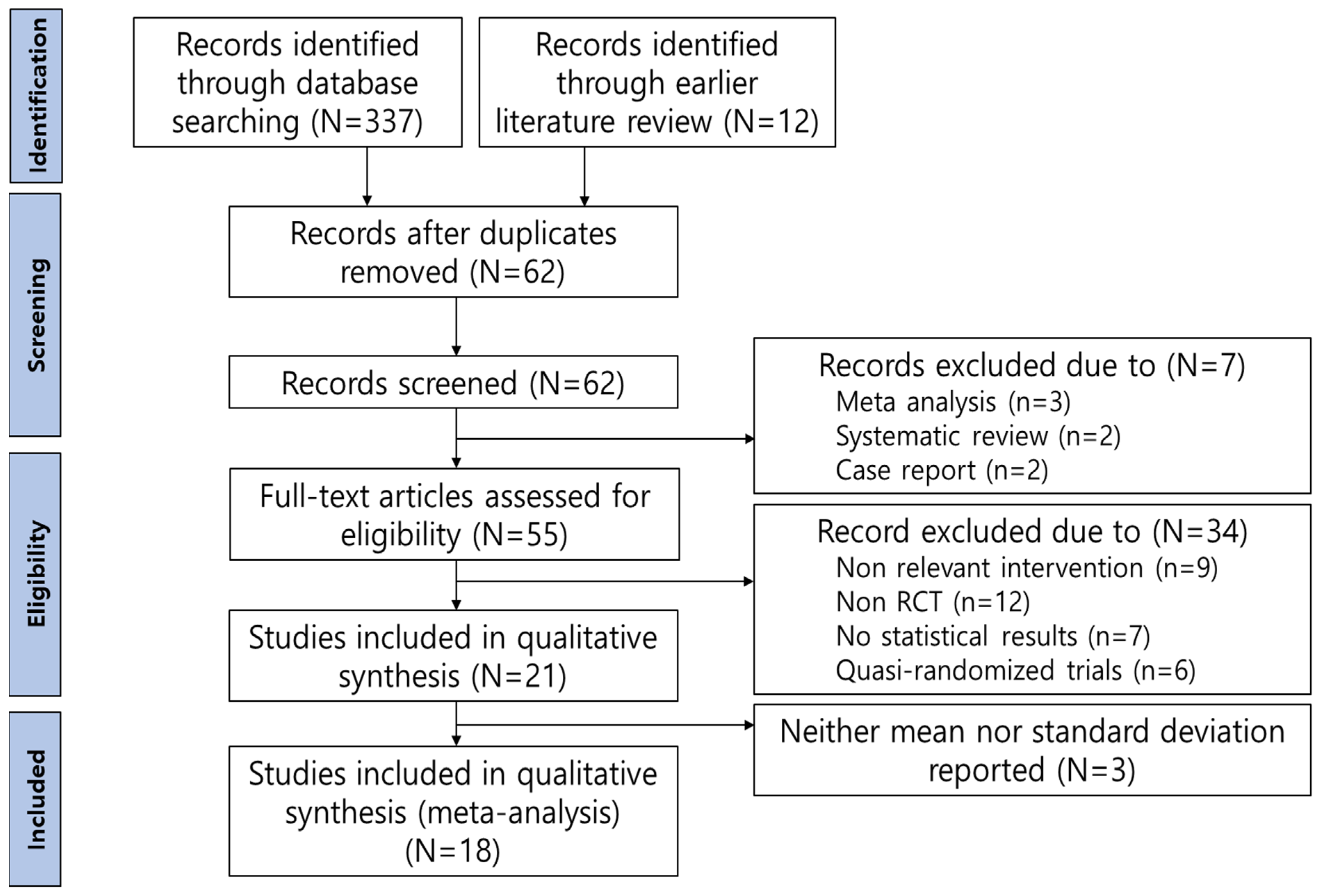
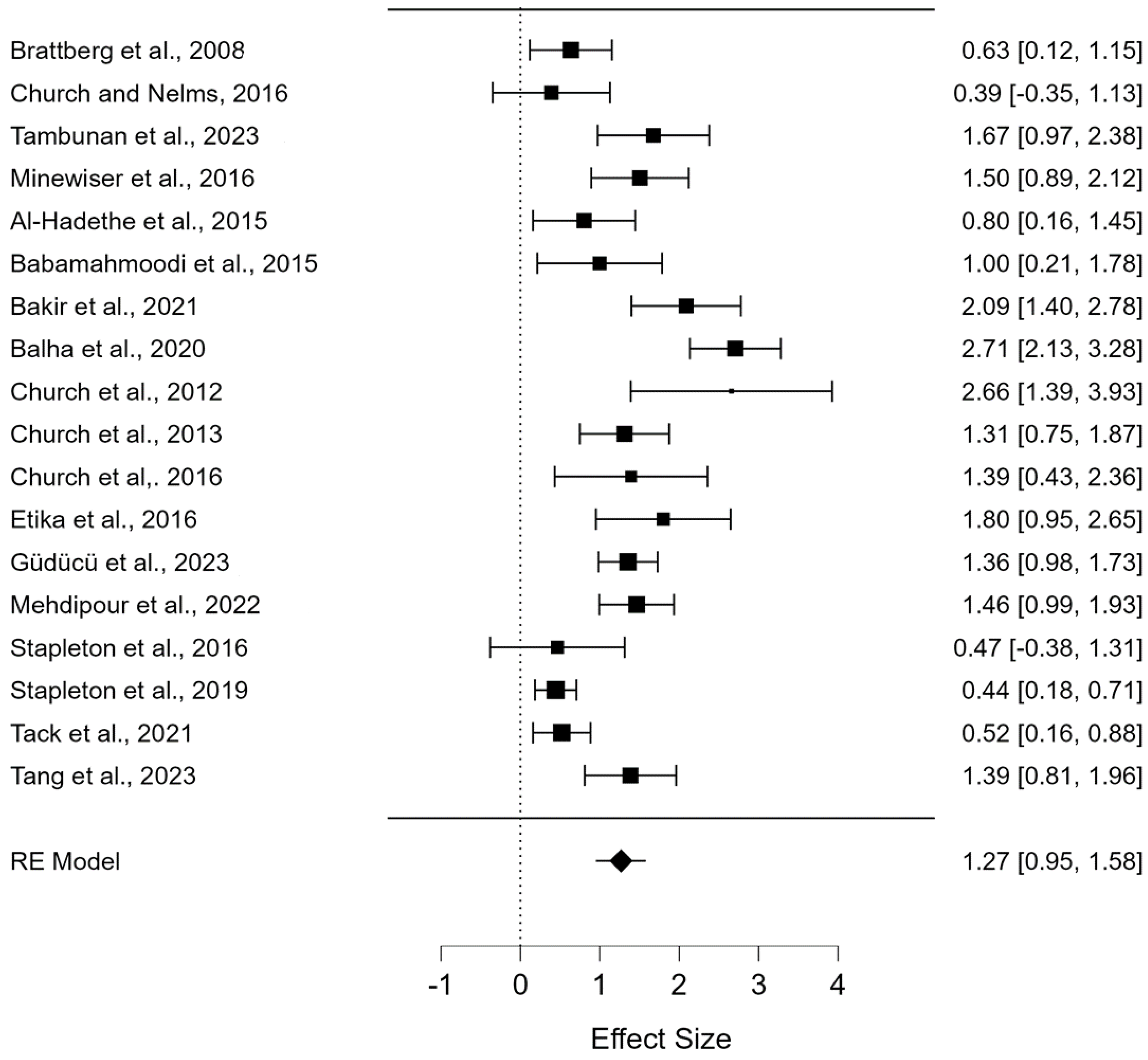
Background: Emotional Freedom Techniques (EFT) have gained attention as a potential therapy for reducing depressive symptoms. However, the evidence remains inconsistent. This meta-analysis aims to assess the overall efficacy of EFT in treating depressive symptoms and explore moderators influencing its effectiveness. Methods: A meta-analysis of 18 randomized controlled trials (RCTs) was conducted, with depressive symptom reduction as the primary outcome. Meta-regression explored moderators such as the EFT format, duration, age, and depression severity. Results: The analysis showed a significant overall effect size of 1.268 for EFT in reducing depressive symptoms. A moderator analysis revealed that group-based EFT interventions were more effective than individual ones, and participants with moderate depression experienced the greatest benefits. Additionally, shorter interventions were found to be highly effective. Conclusions: EFT effectively reduces depressive symptoms, particularly in group settings and for those with moderate depression. Shorter, well-structured interventions may enhance treatment efficiency. Further studies should explore long-term effects and broader applications.
Keywords: emotional freedom techniques; depressive symptoms; meta-analysis; meta-regression; psychotherapy; effectiveness emotional freedom techniques; depressive symptoms; meta-analysis; meta-regression; psychotherapy; effectiveness