Review

Radiological Cardiothoracic Ratio in Evidence-Based Medicine
1
Center for Diagnostic Imaging, University Clinical Hospital in Wrocław, Borowska 213, PL 50-556 Wroclaw, Poland
2
Department of Internal Medicine, Occupational Diseases and Hypertension, Wroclaw Medical University, Borowska 213, PL 50-556 Wroclaw, Poland
3
Centre for Diagnostic Imaging, 4th Military Hospital, Weigla 5, PL 50-981 Wroclaw, Poland
4
Department of Hygiene, Wroclaw Medical University, Mikulicza-Radeckiego 7, PL 50-368 Wroclaw, Poland
*
Author to whom correspondence should be addressed.
J. Clin. Med. 2021, 10(9), 2016; https://doi.org/10.3390/jcm10092016
Submission received: 18 March 2021 / Revised: 30 April 2021 / Accepted: 5 May 2021 / Published: 8 May 2021
(This article belongs to the Special Issue The Roles of Cardiac Imaging in Medical Diagnosis and Management)

Abstract

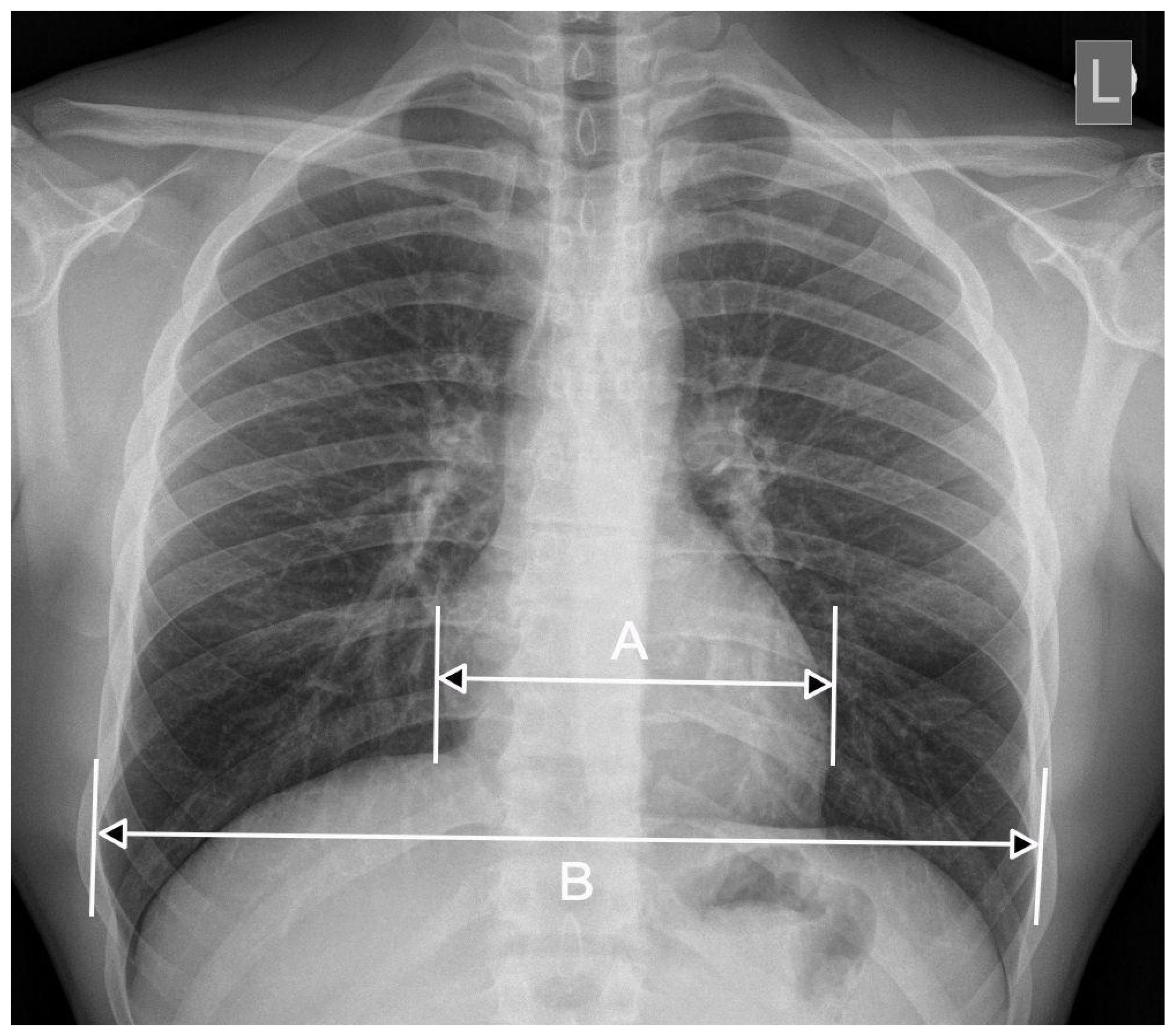
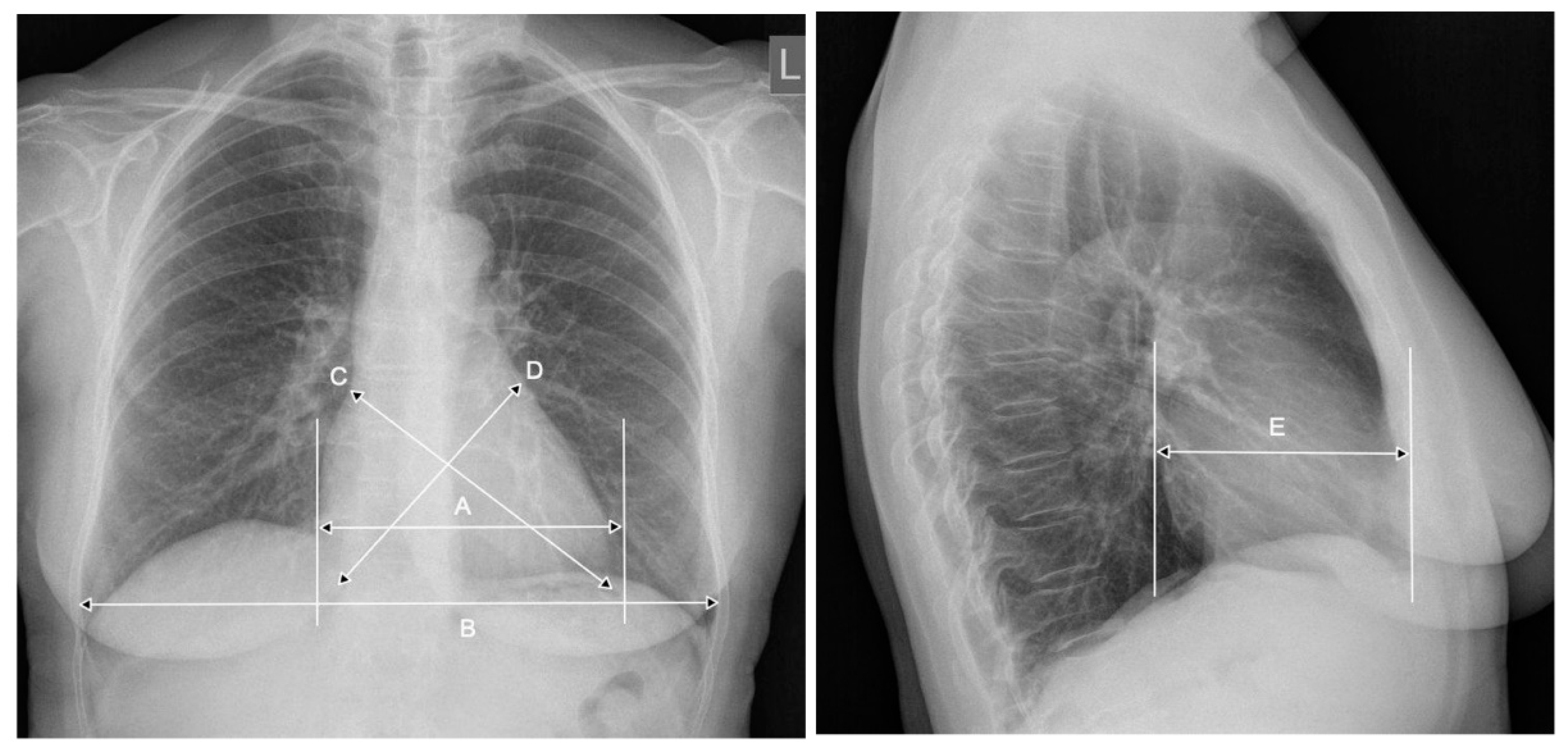
The cardiothoracic ratio (CTR), expressing the relationship between the size of the heart and the transverse dimension of the chest measured on a chest PA radiograph, is a commonly used parameter in the assessment of cardiomegaly with a cut-off value of 0.5. A value of >0.5 should be interpreted as enlargement of the heart. The following review describes the current state of available knowledge in terms of contentious issues, limitations and useful aspects regarding the CTR. The review was carried out on the basis of an analysis of scientific articles available in the PubMed database, searched for using the following keywords: “CTR”, “cardiothoracic ratio”, “cardiopulmonary ratio”, “cardiopulmonary index”, and “heart-lung ratio”. According to the accumulated knowledge, the CTR can still be used as an important parameter that can be easily determined in establishing enlargement of the heart. However, an increased CTR does not directly relate to heart function. In the era following the development of diagnostic methods such as computed tomography, magnetic resonance imaging, and ultrasonography, CTR modifications based on these methods are used with varying clinical usefulness. It is important to consider the definition of the CTR and remember to base measurements on PA radiographs, as attempts to mark it in other projections face many limitations.
Keywords: cardiothoracic ratio; chest radiography; heart enlargement cardiothoracic ratio; chest radiography; heart enlargement