Review

Implications of Endogenous Retroelements in the Etiopathogenesis of Systemic Lupus Erythematosus

Division of Rheumatology, Department of Medicine, University of Washington School of Medicine, 750 Republican Street, Seattle, WA 98109, USA
*
Author to whom correspondence should be addressed.
J. Clin. Med. 2021, 10(4), 856; https://doi.org/10.3390/jcm10040856
Submission received: 31 December 2020 / Revised: 9 February 2021 / Accepted: 13 February 2021 / Published: 19 February 2021
(This article belongs to the Special Issue Systemic Lupus Erythematosus: Pathogenesis, Diagnosis and Treatment)

Abstract

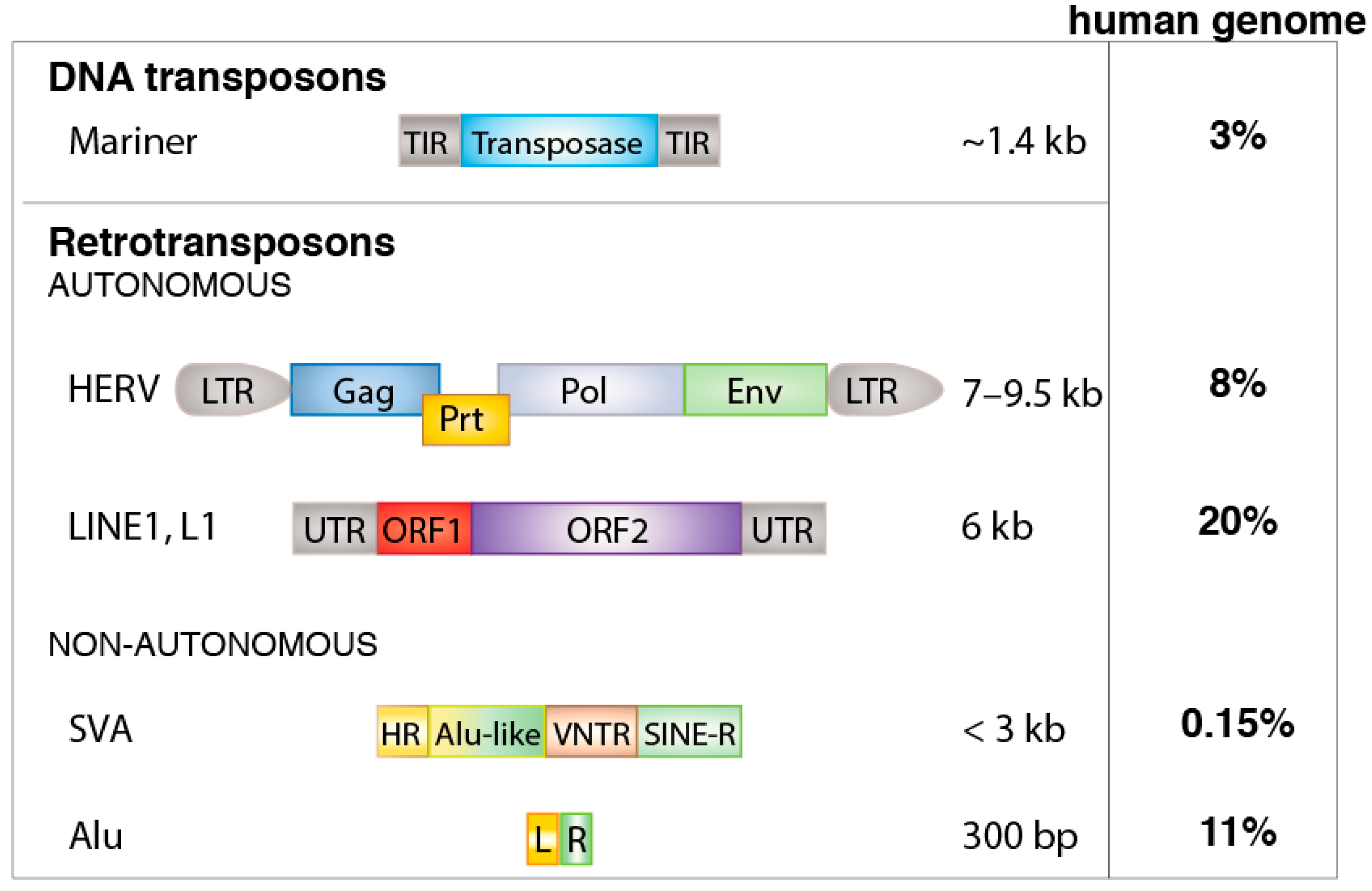
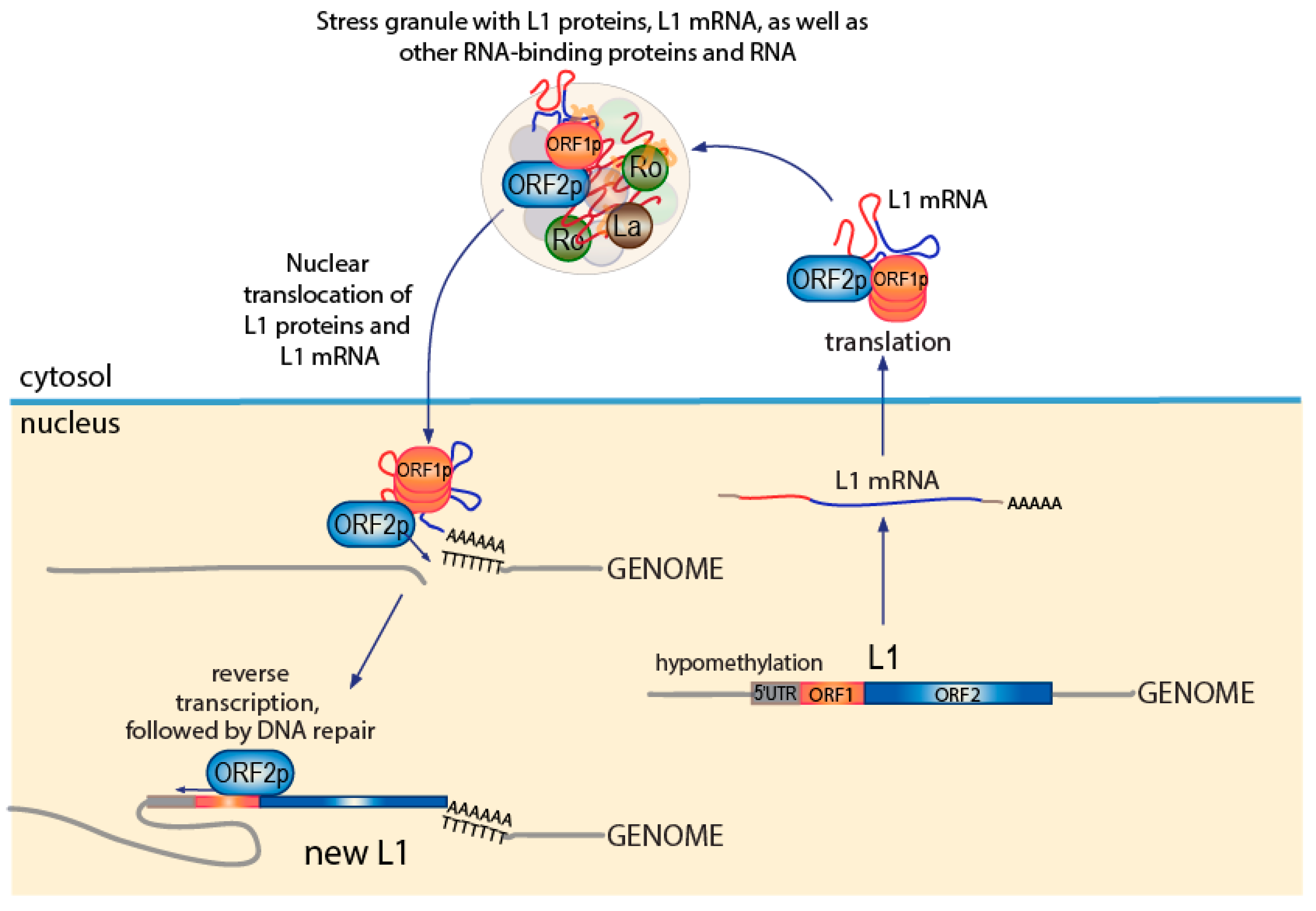
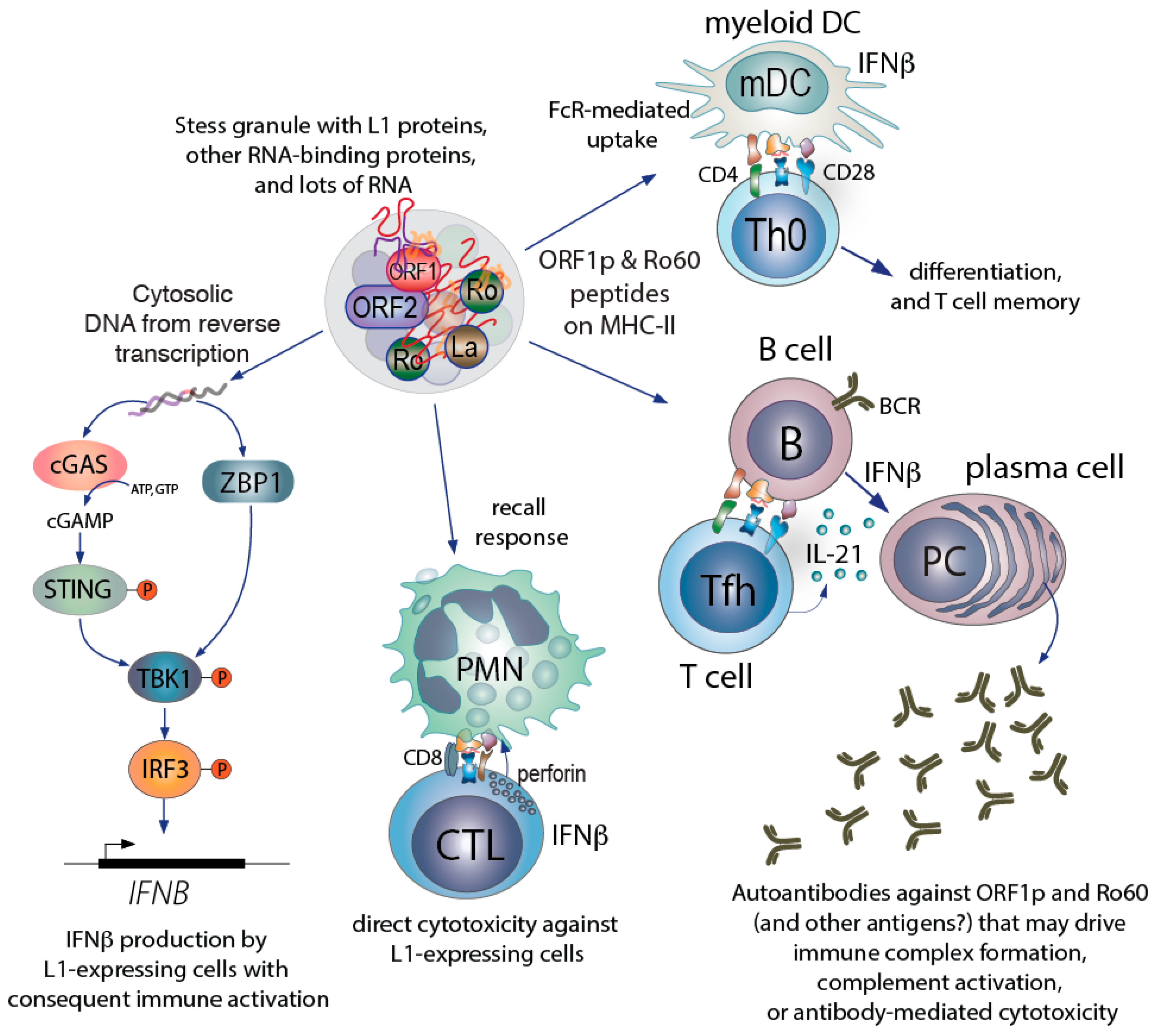
Systemic lupus erythematosus (SLE) is a heterogeneous autoimmune disease. While its etiology remains elusive, current understanding suggests a multifactorial process with contributions by genetic, immunologic, hormonal, and environmental factors. A hypothesis that combines several of these factors proposes that genomic elements, the L1 retrotransposons, are instrumental in SLE pathogenesis. L1 retroelements are transcriptionally activated in SLE and produce two proteins, ORF1p and ORF2p, which are immunogenic and can drive type I interferon (IFN) production by producing DNA species that activate cytosolic DNA sensors. In addition, these two proteins reside in RNA-rich macromolecular assemblies that also contain well-known SLE autoantigens like Ro60. We surmise that cells expressing L1 will exhibit all the hallmarks of cells infected by a virus, resulting in a cellular and humoral immune response similar to those in chronic viral infections. However, unlike exogenous viruses, L1 retroelements cannot be eliminated from the host genome. Hence, dysregulated L1 will cause a chronic, but perhaps episodic, challenge for the immune system. The clinical and immunological features of SLE can be at least partly explained by this model. Here we review the support for, and the gaps in, this hypothesis of SLE and its potential for new diagnostic, prognostic, and therapeutic options in SLE.
Keywords: systemic lupus erythematosus; retroelements; L1; LINE-1; reverse transcriptase; type I interferons; autoimmunity systemic lupus erythematosus; retroelements; L1; LINE-1; reverse transcriptase; type I interferons; autoimmunity