Article

Improving Agent Quality in Dynamic Smart Cities by Implementing an Agent Quality Management Framework


1
Digital Cities Research Institute, Multimedia University, Persiaran Multimedia, Cyberjaya 63100, Malaysia
2
Media and Games Center of Excellence (MagicX) Universiti Teknologi Malaysia & School of Computing, Faculty of Engineering, Universiti Teknologi Malaysia, Skudai 81310, Johor, Malaysia
3
Malaysia Japan International Institute of Technology (MJIIT), Universiti Teknologi Malaysia Kuala Lumpur, Jalan Sultan Yahya Petra, Kuala Lumpur 54100, Malaysia
4
Center for Basic and Applied Science, Faculty of Informatics and Management, University of Hradec Kralove, Rokitanskeho 62, 50003 Hradec Kralove, Czech Republic
*
Author to whom correspondence should be addressed.
Appl. Sci. 2019, 9(23), 5111; https://doi.org/10.3390/app9235111
Submission received: 31 October 2019 / Revised: 18 November 2019 / Accepted: 20 November 2019 / Published: 26 November 2019
(This article belongs to the Special Issue Multi-Agent Systems 2020)

Abstract

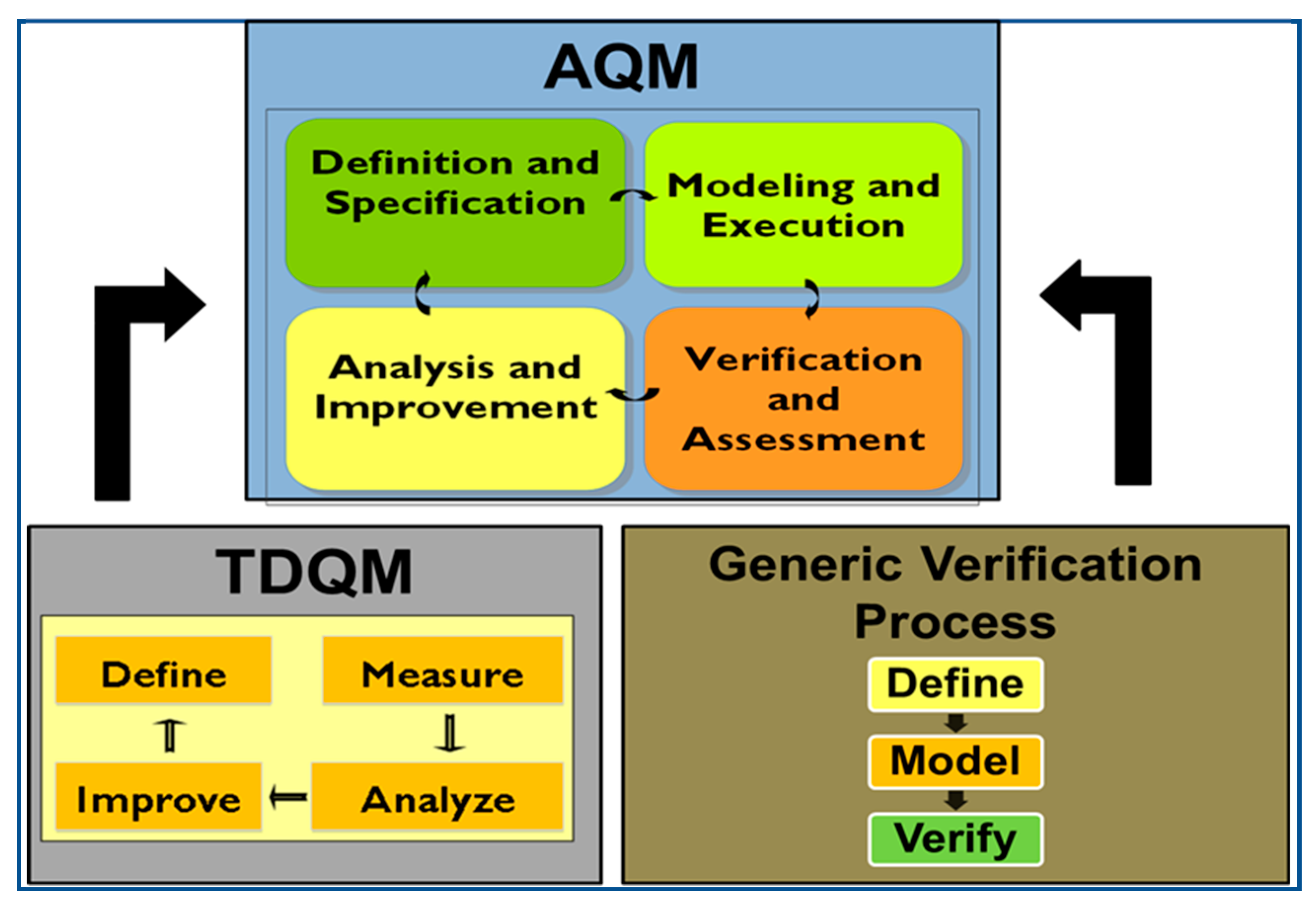
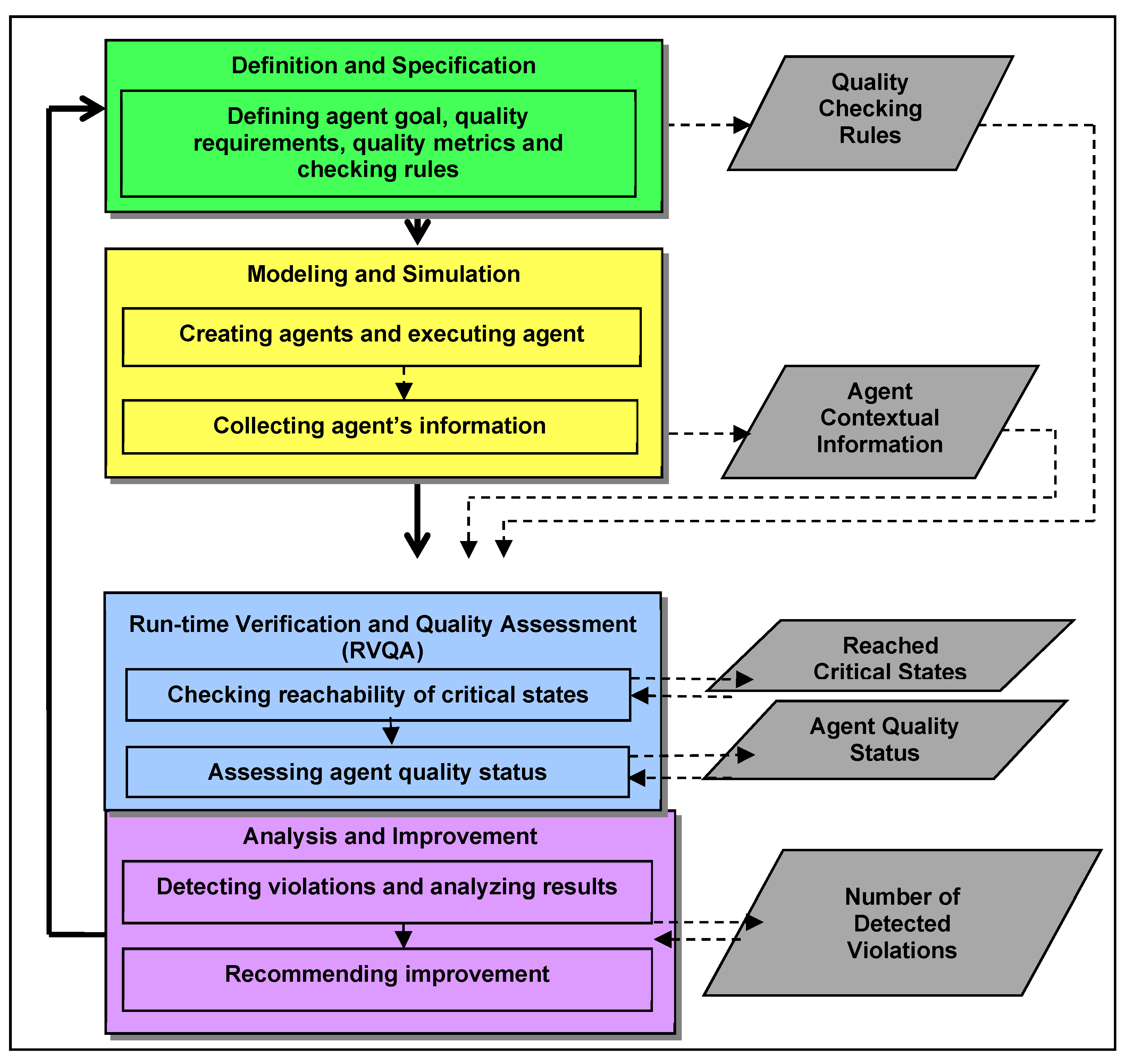
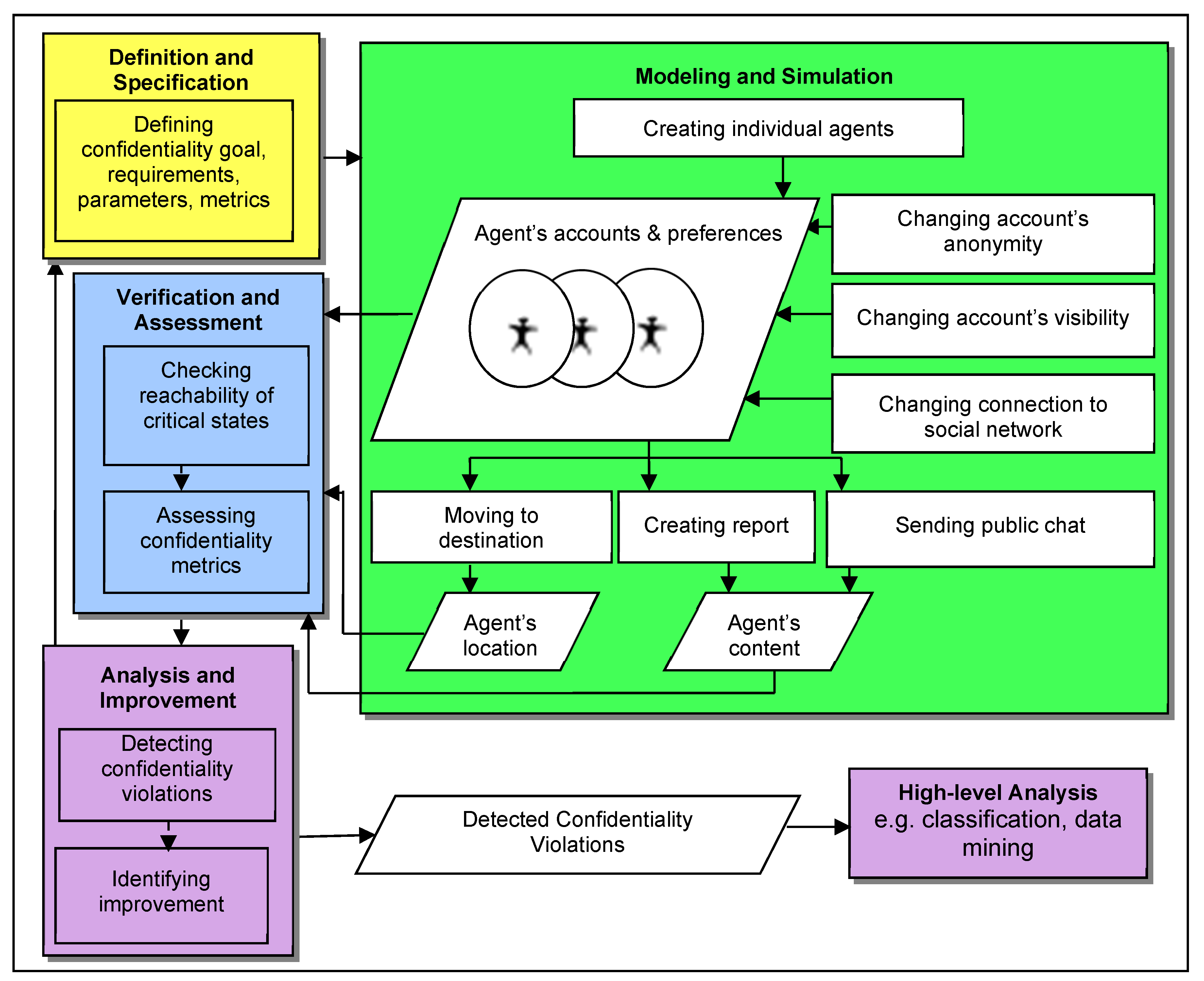
It is critical for quality requirements, such as trust, privacy, and confidentiality, to be fulfilled during the execution of smart city applications. In this study, smart city applications were modeled as agent systems composed of many agents, each with its own privacy and confidentiality properties. Violations of those properties may occur during execution due to the dynamic of agent behavior, decision-making capabilities, and social activities. In this research, a framework called Agent Quality Management was proposed and implemented to manage agent quality in agent systems. This paper demonstrates the effectiveness of the approach by applying it toward a smart city application called a crowdsourced navigation system to verify and assess agent data confidentiality. The AnyLogic Agent-Based Modeling tool was used to model and conduct the experiments. The experiments showed that the framework helped to improve the detection of agent quality violations in a dynamic smart city application. The results can be further analyzed using advanced data analytic approach to reduce future violations and improve data confidentiality in a smart city environment.
Keywords: smart city; agent quality; confidentiality; quality management; violations detection smart city; agent quality; confidentiality; quality management; violations detection