Article

Effects of a Fermented Shrimp-Waste Formulation on Growth and Chlorophyll Content of Mays (Zea mays)

1
Plant and Animal Production and Agro-Industry Laboratory, Faculty of Science Kenitra, Ibn Tofail University, Kenitra 14000, Morocco
2
Natural Resources and Sustainable Development Laboratory, Faculty of Science Kenitra, Ibn Tofail University, Kenitra 14000, Morocco
3
Biology and Health Laboratory, Faculty of Science Kenitra, Ibn Tofail University, Kenitra 14000, Morocco
4
Bio-Resources, Environment and Health, Faculty of Science and Technology of Errachidia, Moulay Ismaïl University, Meknes 50050, Morocco
5
Laboratory of Scientific Innovation in Sustainability, Environment, Education, and Health in the AI Era (LSISEEHAI), Normal School of Education, Sidi Mohamed Ben Abdellah University, Fez 30000, Morocco
*
Author to whom correspondence should be addressed.
Appl. Sci. 2026, 16(9), 4506; https://doi.org/10.3390/app16094506
Submission received: 14 February 2026 / Revised: 28 April 2026 / Accepted: 29 April 2026 / Published: 3 May 2026

Abstract

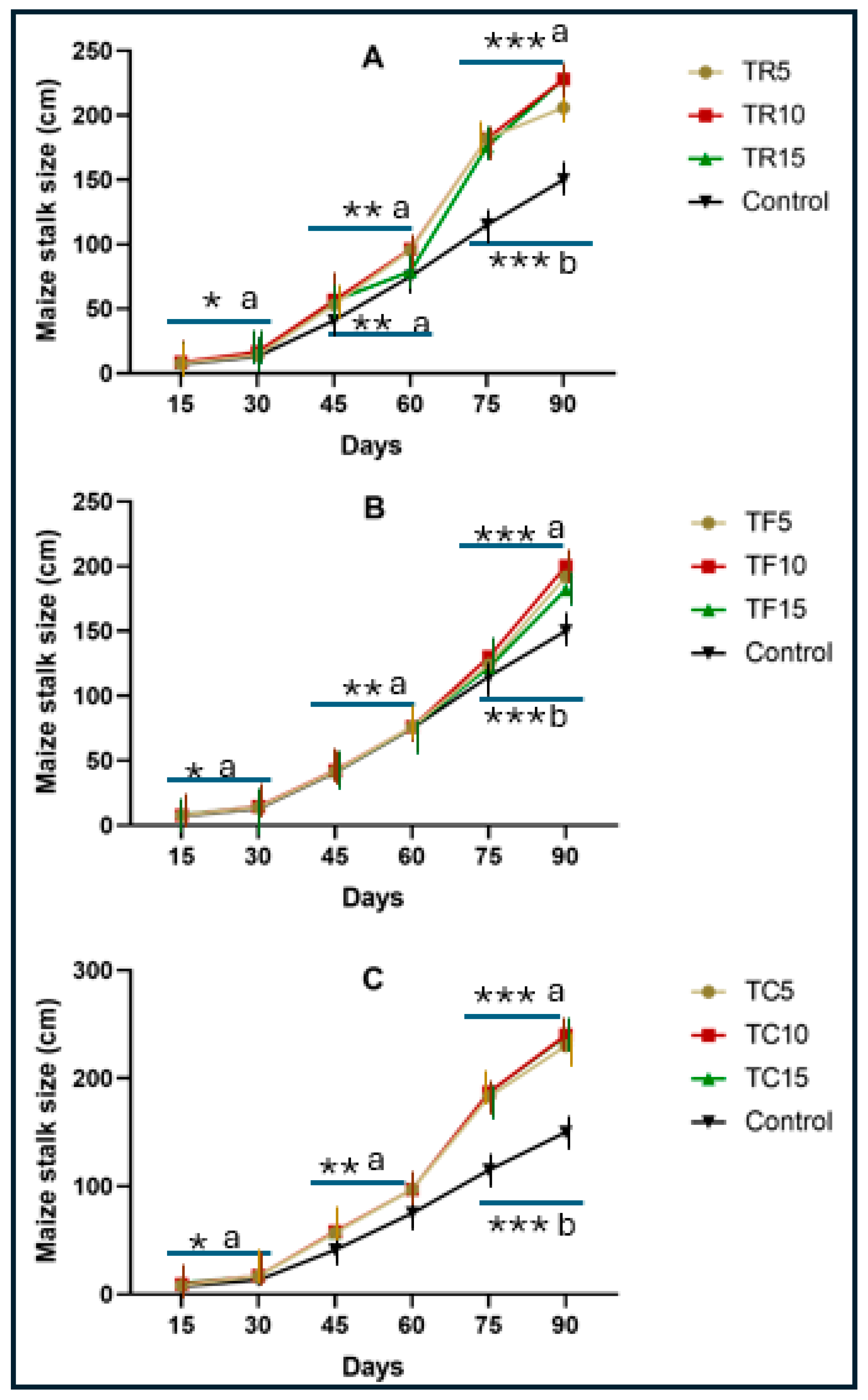
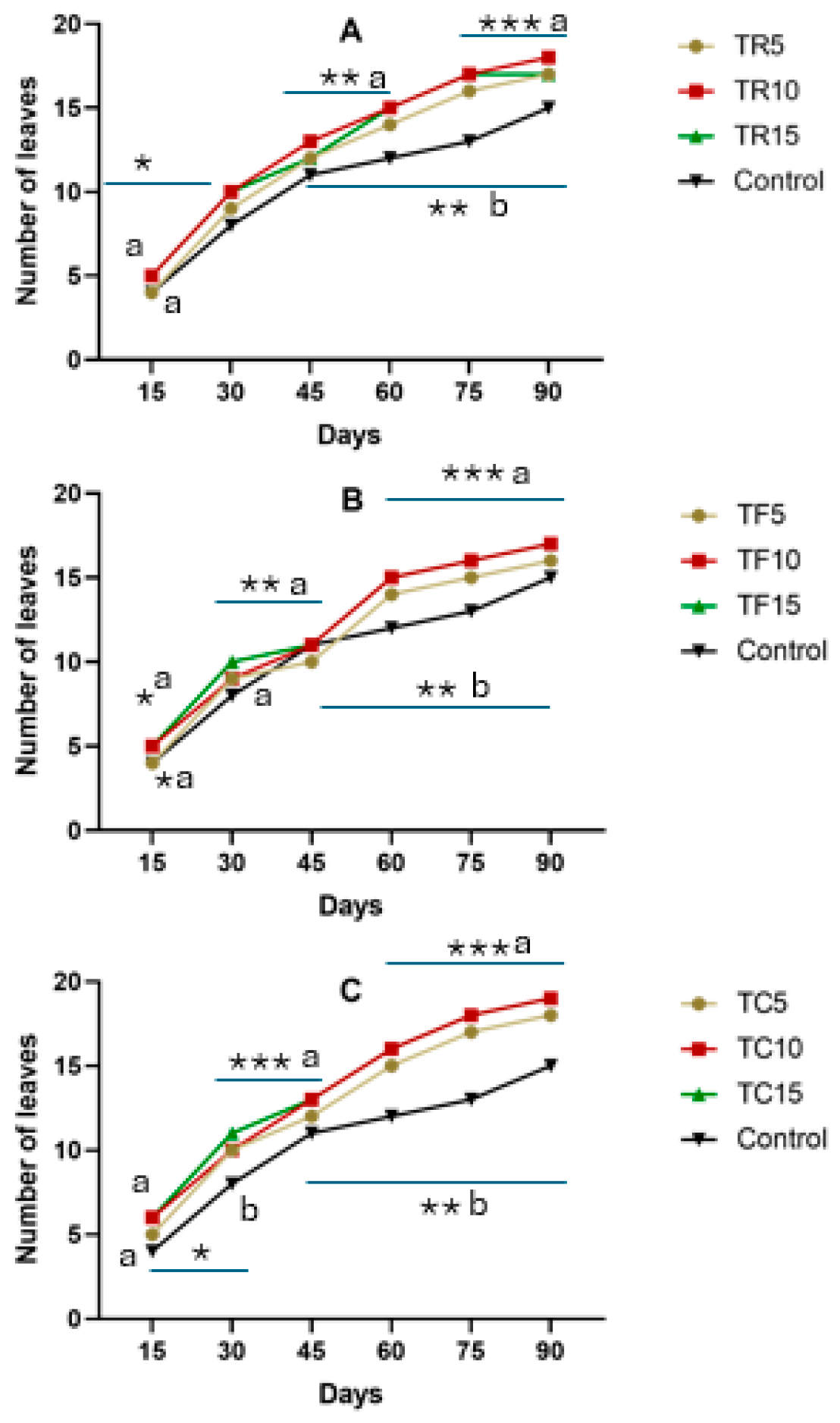
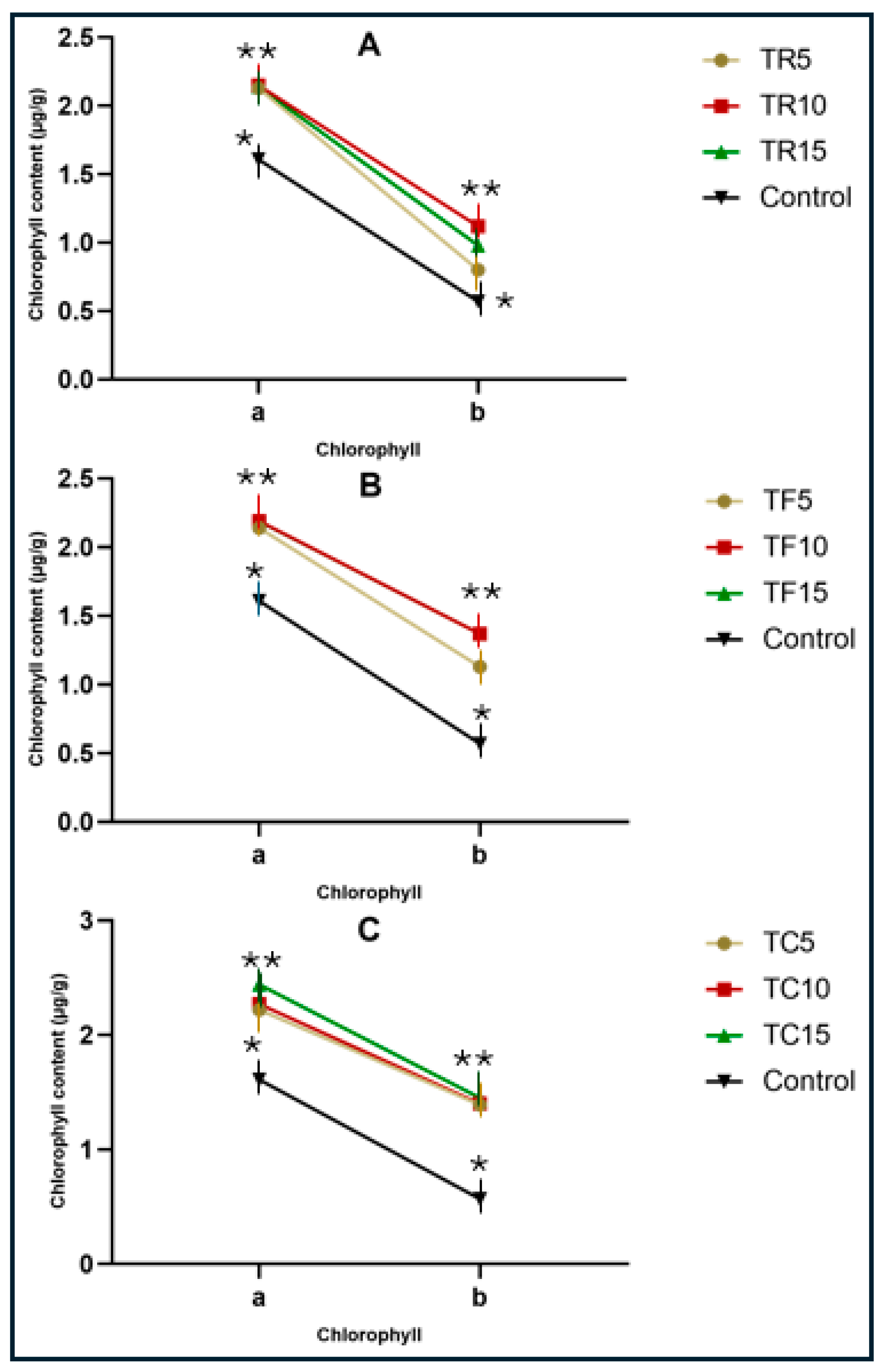
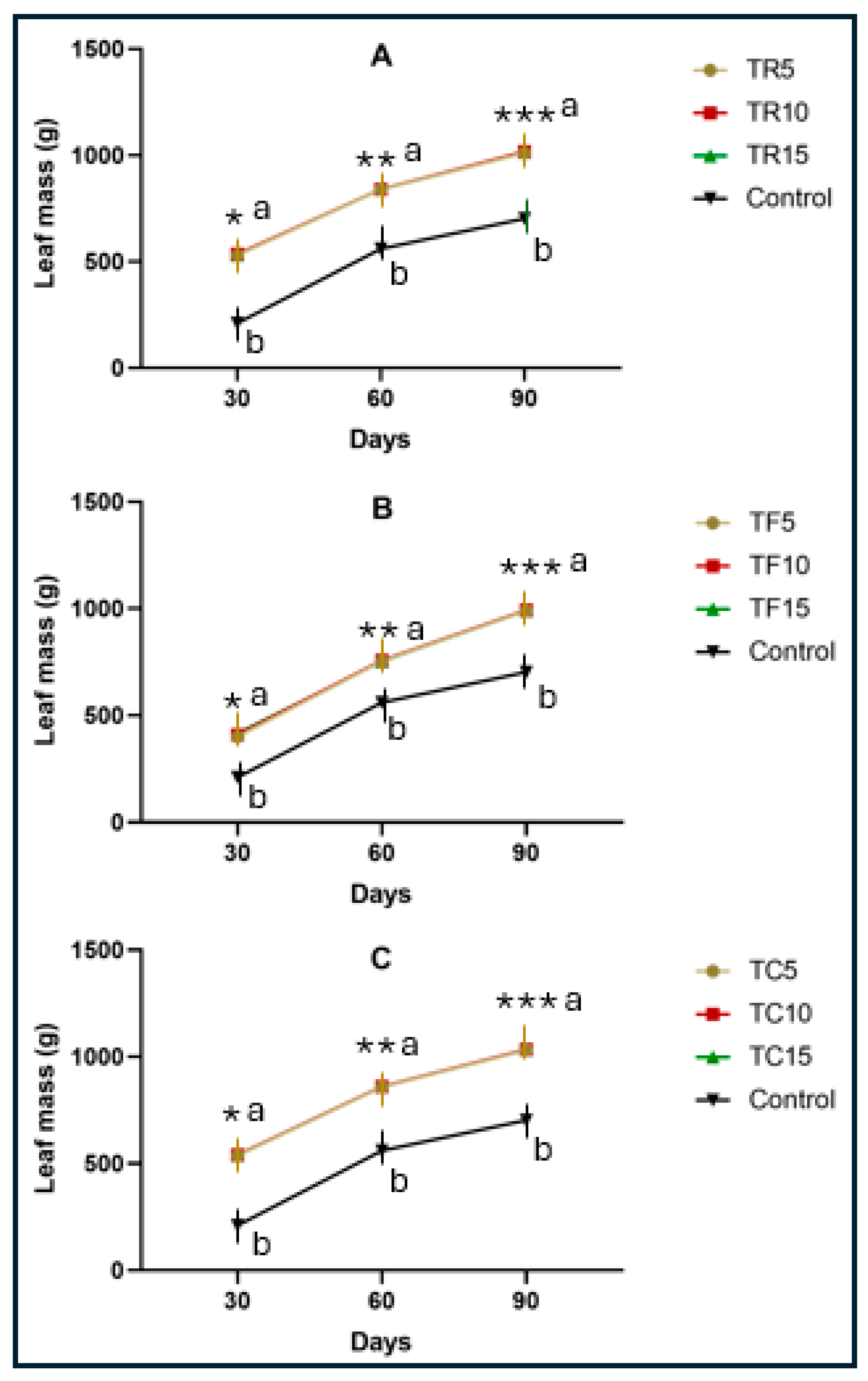
The sustainable valorization of marine biowaste, particularly shrimp residues, has emerged as a promising strategy to develop eco-friendly agricultural inputs that enhance crop productivity and reduce environmental impacts. This study investigated the effects of a biotechnologically processed fermented shrimp-waste (Parapenaeus longirostris) formulation as a biostimulant on the growth, physiological performance, and development of a local mays variety (Zea mays L., DKC 744) under controlled pot conditions. The experiment evaluated root, foliar, and combined applications of the biostimulant at three concentrations (5%, 10%, and 15%) over a 90-day vegetative cycle. Morphological parameters, including stem height, leaf number, leaf mass, and root biomass, were measured at regular intervals, while chlorophyll a and b contents were assessed to evaluate photosynthetic efficiency. The results indicated that all biostimulant treatments significantly enhanced mays growth. Root-applied biostimulants primarily stimulated root biomass by up to 764.0 ± 66.8 g at the 10% concentration, whereas foliar applications improved above-ground traits, including stem elongation and leaf formation, reaching maximum heights of 200.0 ± 1.9 cm and 17.0 ± 0.4 leaves under intermediate concentrations. Combined root and foliar applications produced the highest stem height (240.0 ± 5.6 cm), leaf number (19.0 ± 0.0), leaf mass (1034.0 ± 11.1 g), and chlorophyll content (2.44 ± 0.9 for chlorophyll a) at 10–15% concentrations. The results also revealed that moderate concentrations generally provided the most balanced stimulation, suggesting the presence of an optimal dose threshold. This study demonstrated the comparative effectiveness of root, foliar, and combined applications of a fermented shrimp-waste biostimulant and identified an optimal concentration. However, its limitations lie in the use of controlled pot conditions and a single crop variety, which restrict the extrapolation of results to field-scale applications and diverse agroecological environments. Therefore, more research is needed to explore the action mechanisms of the studied biostimulant and elicitors, mainly the interaction between biocompounds and the treated plant.
Keywords: shrimp co-product; physiological performance; vegetative growth; biostimulants shrimp co-product; physiological performance; vegetative growth; biostimulants