Article

Effects of a Fermented Shrimp-Waste Formulation on Growth and Chlorophyll Content of Mays (Zea mays)

1
Plant and Animal Production and Agro-Industry Laboratory, Faculty of Science Kenitra, Ibn Tofail University, Kenitra 14000, Morocco
2
Natural Resources and Sustainable Development Laboratory, Faculty of Science Kenitra, Ibn Tofail University, Kenitra 14000, Morocco
3
Biology and Health Laboratory, Faculty of Science Kenitra, Ibn Tofail University, Kenitra 14000, Morocco
4
Bio-Resources, Environment and Health, Faculty of Science and Technology of Errachidia, Moulay Ismaïl University, Meknes 50050, Morocco
5
Laboratory of Scientific Innovation in Sustainability, Environment, Education, and Health in the AI Era (LSISEEHAI), Normal School of Education, Sidi Mohamed Ben Abdellah University, Fez 30000, Morocco
*
Author to whom correspondence should be addressed.
Appl. Sci. 2026, 16(9), 4506; https://doi.org/10.3390/app16094506
Submission received: 14 February 2026 / Revised: 28 April 2026 / Accepted: 29 April 2026 / Published: 3 May 2026

Abstract

The sustainable valorization of marine biowaste, particularly shrimp residues, has emerged as a promising strategy to develop eco-friendly agricultural inputs that enhance crop productivity and reduce environmental impacts. This study investigated the effects of a biotechnologically processed fermented shrimp-waste (Parapenaeus longirostris) formulation as a biostimulant on the growth, physiological performance, and development of a local mays variety (Zea mays L., DKC 744) under controlled pot conditions. The experiment evaluated root, foliar, and combined applications of the biostimulant at three concentrations (5%, 10%, and 15%) over a 90-day vegetative cycle. Morphological parameters, including stem height, leaf number, leaf mass, and root biomass, were measured at regular intervals, while chlorophyll a and b contents were assessed to evaluate photosynthetic efficiency. The results indicated that all biostimulant treatments significantly enhanced mays growth. Root-applied biostimulants primarily stimulated root biomass by up to 764.0 ± 66.8 g at the 10% concentration, whereas foliar applications improved above-ground traits, including stem elongation and leaf formation, reaching maximum heights of 200.0 ± 1.9 cm and 17.0 ± 0.4 leaves under intermediate concentrations. Combined root and foliar applications produced the highest stem height (240.0 ± 5.6 cm), leaf number (19.0 ± 0.0), leaf mass (1034.0 ± 11.1 g), and chlorophyll content (2.44 ± 0.9 for chlorophyll a) at 10–15% concentrations. The results also revealed that moderate concentrations generally provided the most balanced stimulation, suggesting the presence of an optimal dose threshold. This study demonstrated the comparative effectiveness of root, foliar, and combined applications of a fermented shrimp-waste biostimulant and identified an optimal concentration. However, its limitations lie in the use of controlled pot conditions and a single crop variety, which restrict the extrapolation of results to field-scale applications and diverse agroecological environments. Therefore, more research is needed to explore the action mechanisms of the studied biostimulant and elicitors, mainly the interaction between biocompounds and the treated plant.

1. Introduction

Shrimp diversity encompasses a wide range of marine and freshwater species, notably Litopenaeus vannamei and Penaeus monodo, which dominate global aquaculture due to their high productivity and adaptability [1,2,3,4]. The intensification of shrimp production has led to substantial volumes of by-products, representing up to 50–60% of total biomass, thereby raising significant environmental concerns [2,5]. Biotechnological approaches, particularly microbial and lactic acid fermentation, have emerged as efficient and eco-friendly methods for processing these residues while reducing reliance on harsh chemicals [6]. These fermentation-based techniques facilitate simultaneous deproteinization and demineralization, yielding high-quality chitosan and other bioactive compounds [1].
Importantly, fermented shrimp waste has demonstrated significant potential in agricultural applications as an organic fertilizer and soil conditioner, enhancing nutrient cycling, soil microbiota, and crop productivity [7]. Such applications contribute to waste minimization and support environmentally sustainable farming practices. Advances in wastewater management further complement these strategies by reducing nutrient discharge and environmental pollution [8]. Despite these promising developments, challenges related to process scalability, economic feasibility, and standardization persist.
Biotechnological treatments, particularly microbial and fermentation-based processes, enable the conversion of these wastes into bioactive compounds such as chitosan, peptides, and organic acids with significant agronomic value [9,10,11]. These compounds act as plant biostimulants by enhancing nutrient uptake, root development, and photosynthetic efficiency, thereby improving crop growth and productivity [12]. In addition, shrimp-derived additives have demonstrated effectiveness in soil conditioning, promoting beneficial microbial communities, and improving soil structure and fertility [13,14]. The incorporation of chitin and its derivatives into agricultural systems has also been linked to induced systemic resistance in plants, protecting a wide range of phytopathogens, including fungi and bacteria [15]. Furthermore, shrimp waste-based formulations can function as natural pesticides or elicitors, reducing reliance on synthetic agrochemicals and mitigating environmental risks [16]. Therefore, continued research is essential to fully exploit shrimp waste-derived products as sustainable agricultural inputs that enhance productivity while protecting environmental health [17,18].
Shrimp production in Morocco, though more limited compared to major global producers, is progressively gaining attention within integrated aquaculture and marine resource management frameworks, generating significant quantities of shell-derived waste requiring sustainable valorization [19]. Recent studies have explored the bioconversion of shrimp by-products, including species such as Penaeopsis serrata and Metapenaeus monoceros, into high-value compounds like chitosan and bioactive metabolites with agricultural potential [20,21]. In parallel, valorization approaches integrating marine and agro-industrial residues, such as composting with grape marc and molasses, have demonstrated promising improvements in soil fertility and nutrient recycling under Moroccan conditions [22,23]. Furthermore, research on crustacean waste, including Callinectes sapidus, highlights broader opportunities for exoskeleton utilization within circular bioeconomy strategies [24]. Despite these advances, scientific research in Morocco remains fragmented, with limited large-scale implementation, insufficient field validation, and a lack of standardized processing technologies. Therefore, future investigations should prioritize integrated, field-scale studies to optimize shrimp waste-based inputs under arid and semi-arid conditions. Emphasis should also be placed on developing cost-effective, locally adapted bioprocesses to support sustainable agriculture and environmental protection in Morocco.
This study aims to evaluate the effects of a biostimulant derived from a biotechnologically processed shrimp co-product on the growth and development of a Mays variety. The shrimp co-product, rich in bioactive compounds such as chitin, chitosan, and peptides, is expected to act both as a nutrient enhancer and as a natural elicitor of plant defense mechanisms. In this study, we selected Parapenaeus longirostris, a demersal crustacean widely distributed in the Mediterranean Sea and eastern Atlantic, inhabiting sandy–muddy bottoms at depths of approximately 20–700 m, with the highest abundance between 70 and 400 m. In Morocco, it represents a key target species of demersal trawl fisheries along both the Atlantic and Mediterranean coasts, particularly near M’diq and Nador, contributing significantly to national shrimp landings despite observed fluctuations and declines linked to environmental variability and fishing pressure.
This study differentiates itself from existing shrimp-waste biostimulant research through a context-specific valorization strategy and an enhanced biotechnological processing approach. Rather than relying on generic crustacean residues, the study utilizes Parapenaeus longirostris, a species of high commercial relevance in Morocco, thereby aligning biomass sourcing with locally available fishery by-products and reinforcing a territorially anchored circular-economy model. The innovation further resides in the application of a controlled fermentation process that promotes the biotransformation of chitinous material into more bioavailable derivatives, including low-molecular-weight chitosan and bioactive peptides, which are known to exhibit both nutritional and elicitor functions. In contrast to conventional studies that often assess biostimulants under optimal or standardized conditions, this work explicitly targets semi-arid agroecosystems typical of Moroccan agriculture, characterized by water scarcity and heterogeneous soil fertility.

2. Materials and Methods

2.1. Plant Material

In this experiment, silage maize Zea mays was used as the plant material due to its wide agronomic importance and extensive use as a model species in experimental studies related to plant physiology, stress tolerance, and biostimulant applications. The variety employed was “DKC 744,” originating from the United Arab Emirates, selected for its adaptability and performance under varying environmental conditions. Maize is frequently utilized in scientific research owing to its well-characterized growth dynamics, sensitivity to environmental factors such as temperature and water availability, and its suitability for evaluating treatment effects under controlled conditions [25]. In addition, Zea mays has been widely used in experimental investigations involving biostimulants, where exogenous applications have demonstrated improvements in growth, yield, and stress resilience, particularly under drought and water-limited conditions [26,27]. Its root system and biomass production also make it a valuable model for studying plant material properties and responses to chemical treatments [28]. Sowing was carried out in plastic pots, with one seed per pot, and maintained at ambient temperature to simulate natural growing conditions while ensuring controlled experimental reproducibility. This experimental design allows for an accurate assessment of biostimulant effects on maize growth and development.

2.2. Animal Material

The animal material used in this study to prepare the biostimulant is derived from the pink deep-sea shrimp Parapenaeus longirostris, a widely distributed demersal species inhabiting the eastern Atlantic Ocean and the Mediterranean Sea [29,30]. This species is particularly abundant along the Moroccan Atlantic coast, where it constitutes an important component of bottom trawl fisheries and contributes significantly to national seafood production [31]. Its high commercial value has led to intensive exploitation, with large quantities processed for human consumption, generating substantial organic by-products such as heads, shells, and exoskeleton residues [32]. These by-products represent a valuable source of bioactive compounds, including proteins, chitin, minerals, and carotenoids, which can be effectively utilized in the formulation of agricultural biostimulants. The valorization of P. longirostris waste aligns with circular economy principles by transforming fishery discards into high-value products, thereby reducing environmental pollution associated with improper disposal. Given the species’ relative abundance and economic importance in North African and Mediterranean fisheries [33], its use as a raw material provides both ecological and economic advantages. Furthermore, the conversion of shrimp processing waste into biostimulants supports sustainable resource management, enhances agricultural productivity, and mitigates the environmental footprint of the fisheries sector. This approach highlights the potential of marine bioresources as innovative inputs in sustainable agriculture while contributing to waste reduction and ecosystem protection.

2.3. Soil

The soil used was a mixture consisting of one-third compost, one-third sand, and one-third cork oak forest soil, with a pH of 5.5.

2.4. Biostimulant

The biostimulant applied was derived from a fermented shrimp-waste formulation. It was prepared through a biotechnological transformation of fresh shrimp residues. In a 20 L plastic container maintained at 20 °C, 8 kg of freshly ground shrimp waste was mixed with 2 kg of molasses as a carbohydrate source. The mixture was inoculated with a fermentation starter culture composed of selected and purified bacterial strains with fermentative and acidifying capacity. Fermentation was monitored by pH measurements until the product stabilized [19].
After 15 days of fermentation, the pH stabilized at 3.9, with observed inhibition of nematodes and elimination of unpleasant odors. Subsequently, the biostimulant was balanced with a mineral solution containing essential micronutrients, including potassium oxide, boron, copper, iron, and manganese.
To perform the different treatments, the resulting biostimulant was diluted to four concentrations: 5%, 10%, and 15%, in comparison with a negative control (water). Treatments were applied using three modes:
Root application: TR5 (5%), TR10 (10%), TR15 (15%)
Foliar application: TF5 (5%), TF10 (10%), TF15 (15%)
Combined application (root + foliar): TC5 (5% root + 5% foliar), TC10 (10% root + 10% foliar), TC15 (15% root + 15% foliar)
Applications were performed via watering, with 40–50 mL per plant depending on developmental stage, once per week during the vegetative cycle.

2.5. Experimental Design

The experiment was carried out at the experimental station of the Biology Department, Ibn Tofail University (Kenitra, Morocco; 34.247395 N, −6.586882 W), under controlled field conditions representative of the regional agroclimatic context. The study area is characterized by a Mediterranean climate, with an average annual temperature of approximately 22 °C and a mean annual rainfall of about 507 mm. The trial was conducted over 90 days, from April to June 2024, corresponding to the active vegetative growth phase of the plants. Environmental conditions were monitored throughout the experimental period to minimize variability related to temperature and precipitation.
A completely randomized block design was adopted to ensure experimental robustness and to reduce the influence of spatial heterogeneity. The experimental setup comprised three independent blocks, each corresponding to a specific mode of biostimulant application: root application (Block 1), foliar application (Block 2), and combined root and foliar application (Block 3). Within each block, three treatment concentrations (5%, 10%, and 15%) were tested alongside a negative control consisting of water only. This design allowed for a comparative assessment of both the application method and concentration-dependent effects of the biostimulant on plant performance.
The biostimulant solutions were prepared by diluting the stock extract with distilled water to obtain the desired concentrations prior to each application. For root treatments (TR5, TR10, and TR15), the diluted solutions were applied directly to the soil at the base of each plant, ensuring uniform distribution in the rhizosphere to facilitate root uptake. Foliar treatments (TF5, TF10, and TF15) were administered by spraying the solutions evenly onto the leaf surface until runoff, allowing direct absorption through the leaf tissues. Combined treatments (TC5, TC10, and TC15) consisted of simultaneous root and foliar applications at equivalent concentrations, integrating both uptake pathways. All treatments were applied once per week throughout the vegetative cycle, with application volumes ranging from 40 to 50 mL per plant depending on the developmental stage. Each treatment was replicated three times. This standardized and controlled application protocol ensured consistent exposure across treatments and enabled a reliable evaluation of biostimulant effects.

2.6. Measured Parameters

2.6.1. Morphological Parameters

The monitoring and evaluation of the effects of biostimulants were conducted throughout the crop cycle, with measurements taken every 15 days on three samples per measurement.
Effect of Biostimulants and Elicitors on the Growth of the Aerial Part
To assess the impact of biostimulant and elicitor applications on the development of the aerial parts of maize plants, stem height and leaf number were systematically monitored throughout the vegetative cycle. These parameters were recorded at 15-day intervals (15, 30, 45, 60, 75, and 90 days) to capture temporal growth dynamics. In parallel, the fresh weights of the aerial biomass were measured to quantify treatment-induced variations in vegetative vigor and biomass accumulation. Attention was given to the effects of applied biostimulant treatments (TR5, TR10, and TR15), allowing for a comparative evaluation of dose-dependent responses. This approach enabled a comprehensive assessment of how biostimulant concentration influences maize stem elongation and overall aerial growth over the 90-day experimental period.
Effect of Biostimulant and Elicitor Application on Root Growth
To evaluate the influence of biostimulant and elicitor applications on root development in mays plants, key root growth parameters were systematically monitored throughout the vegetative cycle. Root length and biomass were assessed at regular 15-day intervals (15, 30, 45, 60, 75, and 90 days) to capture temporal changes in belowground growth dynamics. Particular emphasis was placed on root-applied biostimulant treatments (TR5, TR10, and TR15), enabling a comparative analysis of concentration-dependent effects. This methodological approach provided a comprehensive evaluation of how biostimulant and elicitor concentrations modulate mays root growth over the 90-day experimental period.

2.6.2. Physiological Parameters

Chlorophyll Pigment Concentration
Chlorophyll content in maize (Zea mays L.) leaves was assessed on day 80 of the vegetative cycle to evaluate the physiological response of plants to biostimulant and elicitor applications. Measurements were performed using a portable SPAD-502P chlorophyll meter (Konica Minolta, Chiyoda City, Japan), a non-destructive optical device widely used to estimate relative chlorophyll content based on leaf light absorbance. This timing was selected to correspond to an advanced vegetative stage, when differences in photosynthetic capacity among treatments are expected to be clearly expressed.
For each treatment, including root application (TR5, TR10, TR15), foliar application (TF5, TF10, TF15), combined application (TC5, TC10, TC15), and the untreated control, three biological replicates were analyzed. In each replicate, fully expanded and healthy leaves located at the mid-canopy level were selected to minimize variability related to leaf age and position. SPAD (Model of a portable chlorophyll meter manufactured by Konica Minolta) readings were taken at three different points along the central portion of each leaf blade, avoiding the midrib, and the mean value was calculated to represent one replicate. The obtained SPAD values were expressed as relative chlorophyll content (µg g−1) and used to compare treatment effects.

2.7. Statistical Analysis

Recorded data were organized in Excel sheets depending on the parameters studied, applied concentrations, and treatment period. ANOVA one-way followed by post hoc test was used to compare the parameters studied during growth and vegetation, between treatments (three replicates were applied for each parameter). The use of three replicates per parameter is justified as a standard experimental design in agronomic studies, ensuring sufficient statistical power to detect treatment effects while maintaining resource efficiency. Replication reduces random variability, improves estimate precision, and strengthens the reliability and reproducibility of the results. The comparison addressed the application area (root, foliar, and a combination of them), the sampling periods (15, 30, 45, 60, and 75 days for growth and morphological parameters; 30, 60, 90 days for leaf mass; and 80 days for chlorophyll), and concentrations of biostimulants (5%, 10%, 15%, and control). The comparison of Chlorophyll content between treatments was conducted by one-way ANOVA followed by a post hoc test, while the comparison between chlorophylls a and b was done via a t-test (only two samples). Linear regression analysis was performed to evaluate the relationship between time (days) and leaf number across all treatments applied to Zea mays. The slope, intercept, coefficient of determination (R2), and statistical significance (p-value) were calculated to assess growth dynamics and model fit. All analyses were conducted at a significance level of p < 0.05, with highly significant results considered at p < 0.001. Correspondence Analysis was used to select the most efficient treatments, considering applied concentration and treatment as dependent variables, while periods and treated areas were considered as factors. Generalized linear models (Gaussian, identity link) were applied to assess effects of time, treatment type, and concentration, including interactions, on stalk size, leaf number, and foliar weight, using controls as reference categories. The SPSS Statistics for Windows, version 25.0, was used to perform Statistical analyses. Significant differences were considered at p < 0.05.

3. Results

3.1. Effect on the Growth of Mays

3.1.1. Root-Applied Biostimulant

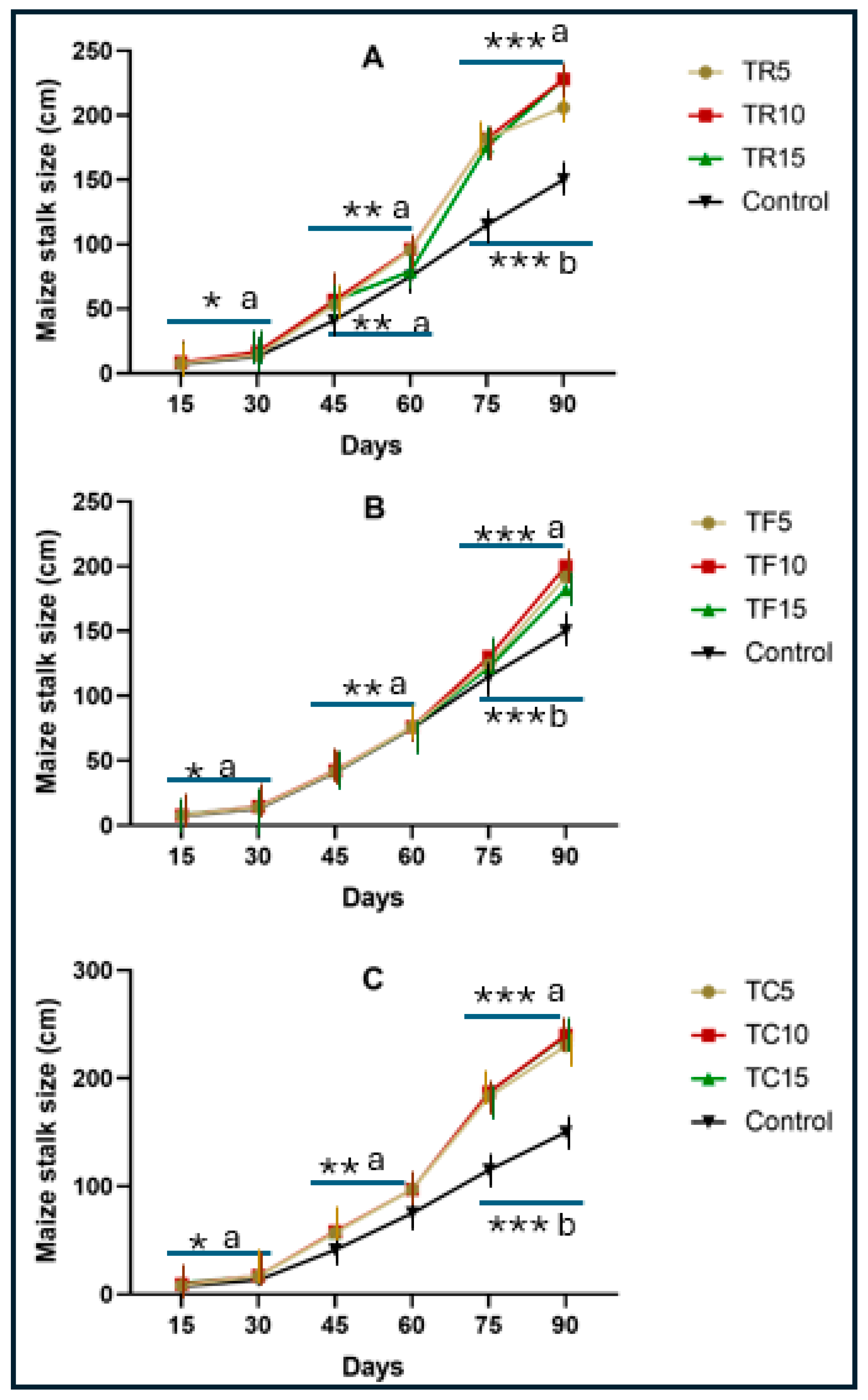
The data presented in Figure 1A show the effect of root-applied biostimulant treatments (TR5, TR10, TR15) on Mays stem height over a 90-day vegetative cycle. All treatments exhibited a progressive increase in stem length, with a noticeable acceleration between days 45 and 75 (p < 0.05). Furthermore, TR10 and TR15 consistently produced slightly higher stem heights compared to TR5, particularly at the later stages (days 60–90) (p < 0.05). By day 90, both TR10 and TR15 reached 228.0 ± 10.4 cm, surpassing TR5 (206.0 ± 3.4 cm) (p < 0.05), which highlights the greater efficacy of higher concentrations. The results indicate that root-applied biostimulant significantly enhances mays aerial growth, with optimal performance at 10% and 15% concentrations.

3.1.2. Foliar-Applied Biostimulant

Figure 1B illustrates the effect of foliar-applied biostimulant treatments (TF5, TF10, TF15) on mays stem height over a 90-day vegetative cycle, and results were compared via ANOVA one-way. Stem growth increased steadily for all treatments, with notable acceleration between days 45 and 75 (p < 0.05). TF10 achieved the highest stem heights, reaching 200.0 ± 1.9 cm at day 90, followed by TF5 (192 cm) and TF15 (182 ± 1.9 cm) (p < 0.05). Early-stage growth (days 15–45) showed minimal differences between treatments, indicating a similar initial response. Further, foliar application of the biostimulant positively influenced mays aerial growth, with 10% concentration providing optimal performance compared to lower and higher doses.

3.1.3. Combined Root and Foliar Biostimulant

The effect of combined root and foliar biostimulant applications (TC5, TC10, TC15) on mays stem height over a 90-day vegetative cycle is presented in Figure 1C. All tested concentrations of the biostimulant showed a consistent increase in stem length throughout the period. The rapid growth was observed between days 45 and 75. By day 90, the highest stem heights were recorded for TC10 (240.0 ± 5.6 cm) and TC15 (239.0 ± 2.0 cm), while TC5 reached only 230 cm (p < 0.05). In contrast, early-stage growth differences were minimal (p > 0.05). Moreover, the combined application of the biostimulant proved more effective than root-only or foliar-only treatments, with 10–15% concentrations providing optimal stimulation of mays stem development (p < 0.05).
The linear regression analysis (Table 1) demonstrated that all treatments exhibited highly significant relationships between time and plant growth (p < 0.001), confirming the robustness of the experimental trends. The consistently low p-values indicate that the observed increases in plant height are not due to random variation but are strongly influenced by treatment effects. Combined applications (TC) showed the highest growth rates and strongest statistical significance, highlighting a synergistic interaction between root and foliar pathways. Root treatments (TR) also displayed significant effects, outperforming foliar applications (TF), which exhibited comparatively lower slopes despite remaining statistically significant.
The GLM (Table 2) revealed that time remains the dominant driver of stalk growth, but treatment effects significantly modify this trajectory. The combined treatment (TC) exhibited the highest coefficient and strongest interaction with time, confirming a synergistic effect between root and foliar applications. The dose–response relationship was significant, particularly for combined treatments, where 10–15% concentrations maximize growth. Interaction terms demonstrated that treatment efficacy intensifies over time, especially after 45 days. Foliar treatment alone showed comparatively weaker and less consistent effects, particularly in interaction with concentration.

3.2. Effect on Leaves During Vegetative Cycle

3.2.1. Root-Applied Biostimulant

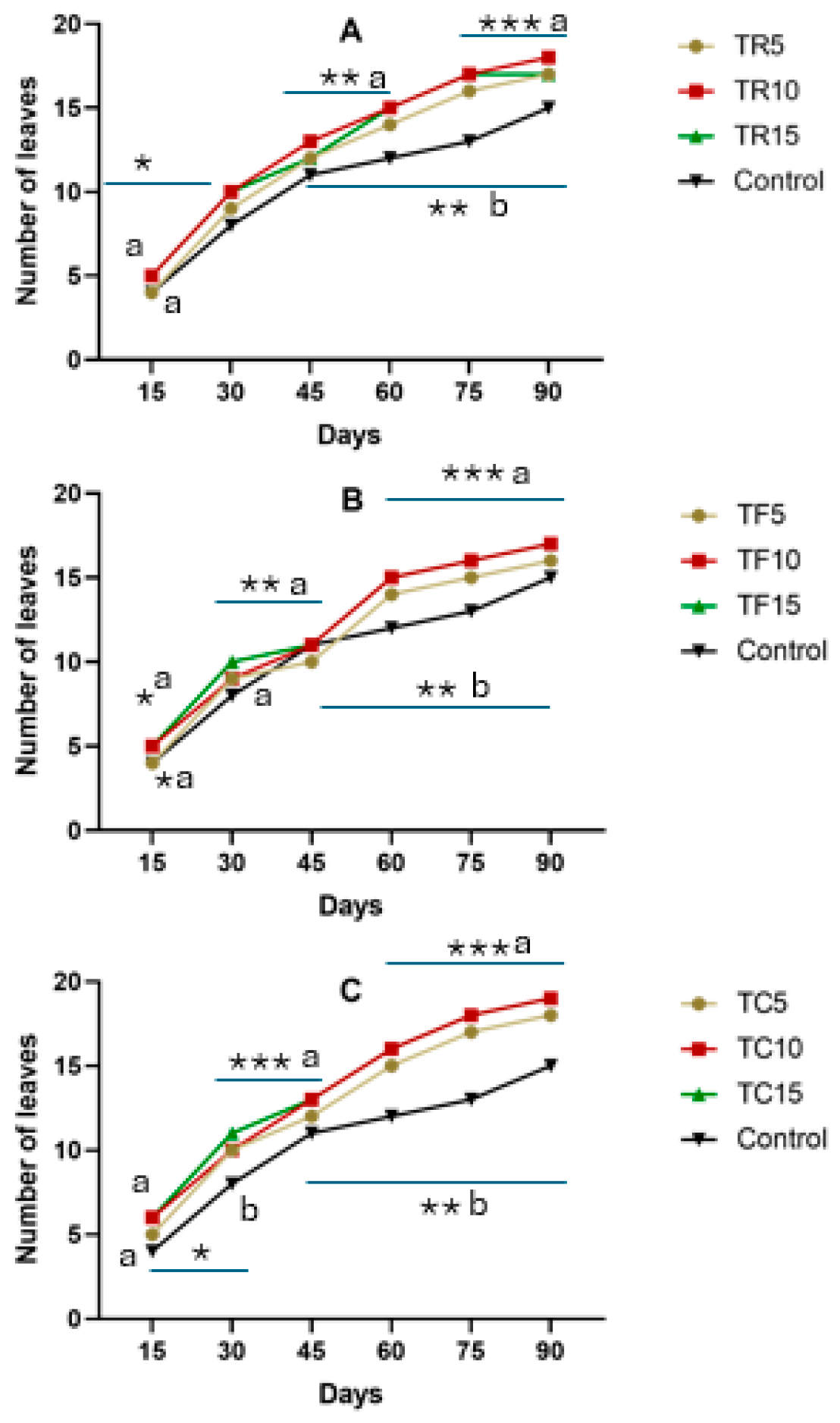
The effect of root-applied biostimulant treatments (TR5, TR10, TR15) on the number of mays leaves during the vegetative growth cycle is presented in Figure 2A. The results obtained were compared by ANOVA one-way. The analysis of graphs showed that all treatments increased the leaf number over time compared to the blank (p < 0.05). The TR10 treatment produced the highest leaf counts, with 18.0 ± 0.5 leaves by day 90, compared to 17.0 ± 0.4 leaves for TR5 and TR15 (p < 0.05).
The linear regression analysis (Table 3) indicated a highly significant increase in leaf number over time for all treatments (p < 0.001), confirming a strong temporal growth pattern. The combined treatments (TC10 and TC15) exhibited the highest slopes (0.18 leaves/day), reflecting superior stimulation of leaf development compared to individual applications. Root treatments (TR) also showed strong effects, particularly at 10%, while foliar treatments (TF) demonstrated moderate but still significant improvements. The consistently high R2 values (0.98–0.99) indicate excellent model fit and reliability of the observed trends. The low p-values across all treatments confirm that differences in leaf production are statistically significant and treatment-driven.
The GLM (Table 4) indicated that time is the primary determinant of leaf number increase, reflecting a steady developmental progression. Among treatments, the combined application (TC) exhibited the largest positive effect, followed by root (TR) and foliar (TF) treatments. The dose–response relationship is significant, with higher concentrations (10–15%) enhancing leaf production. Interaction terms revealed that treatment effects intensify over time, particularly for combined applications, indicating a cumulative physiological benefit. Further, the TC × concentration interaction confirmed a synergistic mechanism, whereas foliar treatment alone shows weaker responsiveness to increasing dose.

3.2.2. Foliar Biostimulant

Figure 2B demonstrates the effect of foliar biostimulant treatments (TF5, TF10, TF15) on the number of mays leaves throughout the vegetative cycle. Graphs showed that all treatments increased the number of leaves compared to the blank (p < 0.05). The TF10 and TF15 treatments resulted in slightly higher leaf counts than TF5, reaching 17.0 ± 0.3 leaves by day 90 compared to 16.0 ± 02 for TF5.

3.2.3. Combined Root and Foliar Biostimulant

Figure 2C presents the effect of combined root and foliar biostimulant applications (TC5, TC10, TC15) on the number of mays leaves during the vegetative cycle. All treatments showed an increase in leaf number among treated plants. The most rapid growth occurred between days 45 and 75. By day 90, the highest leaf counts were recorded under TC10 and TC15 treatments (19.0 ± 0.0 leaves), while TC5 reached 18.0 ± 0.2 leaves (p < 0.05). The combined application consistently produced greater leaf numbers compared to individual treatments (p < 0.05).

3.3. Effect on Leaf Mass During Vegetative

3.3.1. Root-Applied Biostimulant

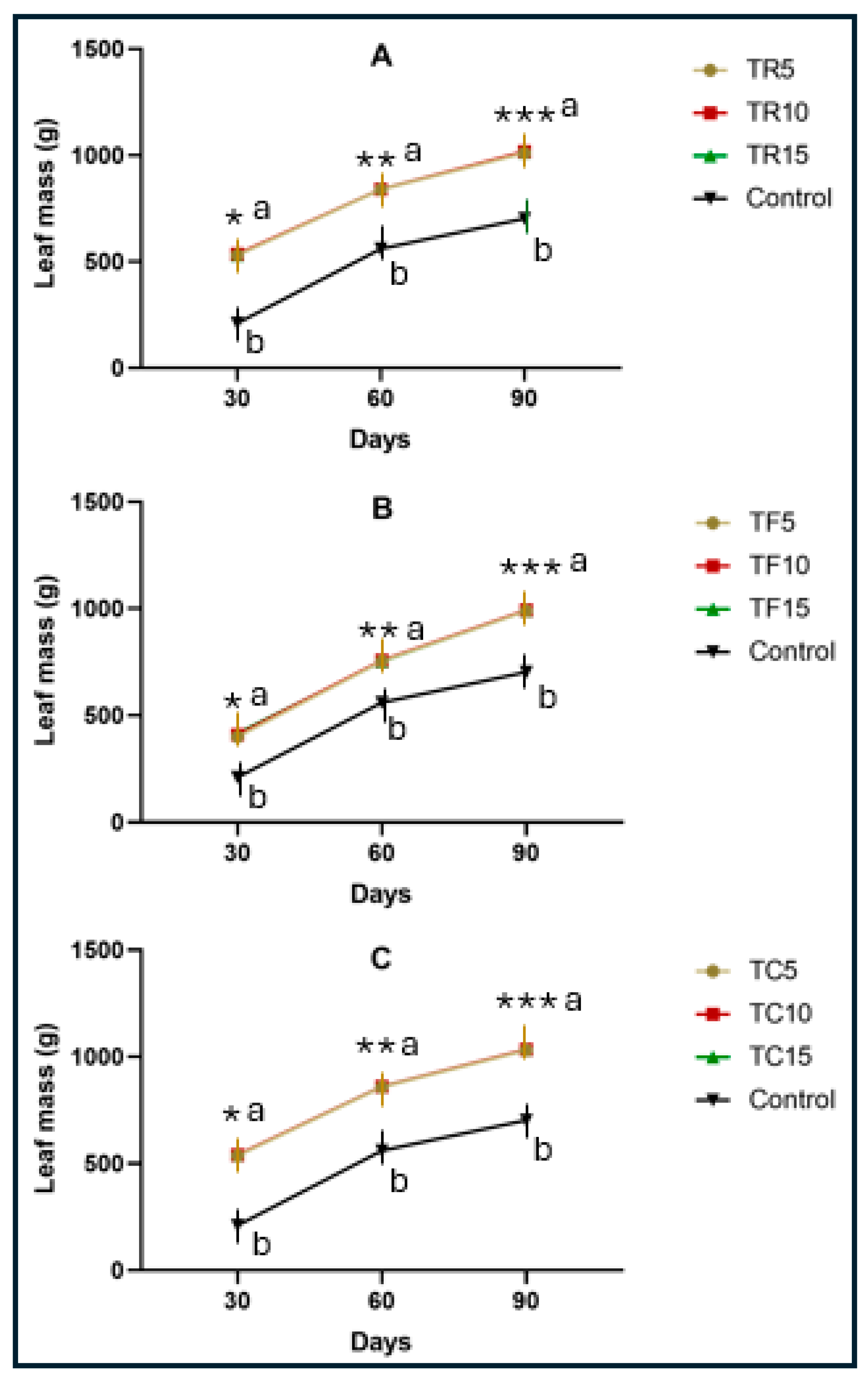
Figure 3A illustrates the effect of root-applied biostimulant treatments (TR5, TR10, TR15) on mays leaf mass during the vegetative cycle. The increase in leaf mass was observed across all treatments from day 30 to day 90, compared to the non-treated plants (p < 0.05). The TR5 and TR10 treatments showed slightly higher values than TR1 at each sampling time, with final leaf masses reaching 1018.0 ± 20.3 g and 1016.0 ± 16.4 g, respectively, at day 90. However, the differences between TR5 and TR10 were minimal (p > 0.05).
The GLM demonstrated that time exerts a dominant positive effect on foliar biomass accumulation, with a marked increase between 30 and 90 days (Table 5). Among treatments, the combined application (TC) showed the highest coefficient, confirming superior performance compared to root (TR) and foliar (TF) treatments alone. The dose effect was significant, indicating that increasing concentrations (up to 10%) enhance biomass production. Further, interaction terms reveal that treatment effects intensify over time, particularly for combined applications, highlighting a strong synergistic mechanism. Finally, the TC × concentration interaction is especially pronounced, confirming that combined treatments respond more efficiently to increased dosage, whereas foliar treatments alone exhibit weaker responsiveness.

3.3.2. Foliar Biostimulant

Figure 3B presents the effect of foliar biostimulant treatments (TF1, TF5, TF10) on mays leaf mass throughout the vegetative cycle. Leaf mass increased progressively from day 30 to day 90 across all treatments. The TF5 treatment significantly produced the highest leaf mass values, reaching 993.0 ± 15.3 g at day 90, followed closely by TF10 and TF1 (p < 0.05).

3.3.3. Combined Biostimulant

Figure 3C shows the effect of combined biostimulant treatments (TC1, TC5, TC10) on mays leaf mass during the vegetative cycle. A steady increase in leaf mass was observed for all treatments from day 30 to day 90. The highest leaf mass was recorded with TC5 (1034.0 ± 11.1 g) at day 90 (p < 0.05), followed closely by TC10 and TC1 (5%). The minimal variation among treatments was recorded at later stages (p > 0.05).

3.4. Effect of Biostimulants and Elicitors on Root Growth

3.4.1. Root-Applied Biostimulant

Table 6 illustrates the effect of root-applied biostimulant treatments (TR5, TR10, TR15) on mays root growth throughout the vegetative cycle. Comparison of results was conducted by ANOVA one-way, and significant values were at p < 0.05. Root biomass increased consistently across all treatments from day 30 to day 90, compared to the non-treated plants. The treatment TR10 produced the highest final root mass (764.0 ± 66.8 g) at day 90 (p < 0.05), followed closely by TR15 and TR5. The small variation (p > 0.05) among treatments was recorded at later stages.

3.4.2. Foliar-Applied Biostimulant

Table 6 presents the effect of foliar-applied biostimulant treatments (TF5, TF10, TF15) on mays root growth during the vegetative cycle. Root biomass increased progressively across all treatments from day 30 to day 90. The TF10 treatment yielded the highest root mass (400 g) at day 90. Differences among treatments were relatively small, with diminishing returns at higher levels (TF15).

3.4.3. Combined Root and Foliar Biostimulant

Table 6 shows the effect of combined root and foliar biostimulant treatments (TC5, TC10, TC15) on mays root growth during the vegetative cycle. Root biomass increased steadily from day 30 to day 90 across all treatments, with the highest values recorded under TC10 and TC15 (780.0 ± 68.2 and 780.0 ± 68.2 g, respectively) (p < 0.05). The results suggest a synergistic effect of simultaneous root and foliar applications. However, the minimal differences among treatments were recorded at later stages.

3.5. Effect on Chlorophyll Content

3.5.1. Root-Applied Biostimulant

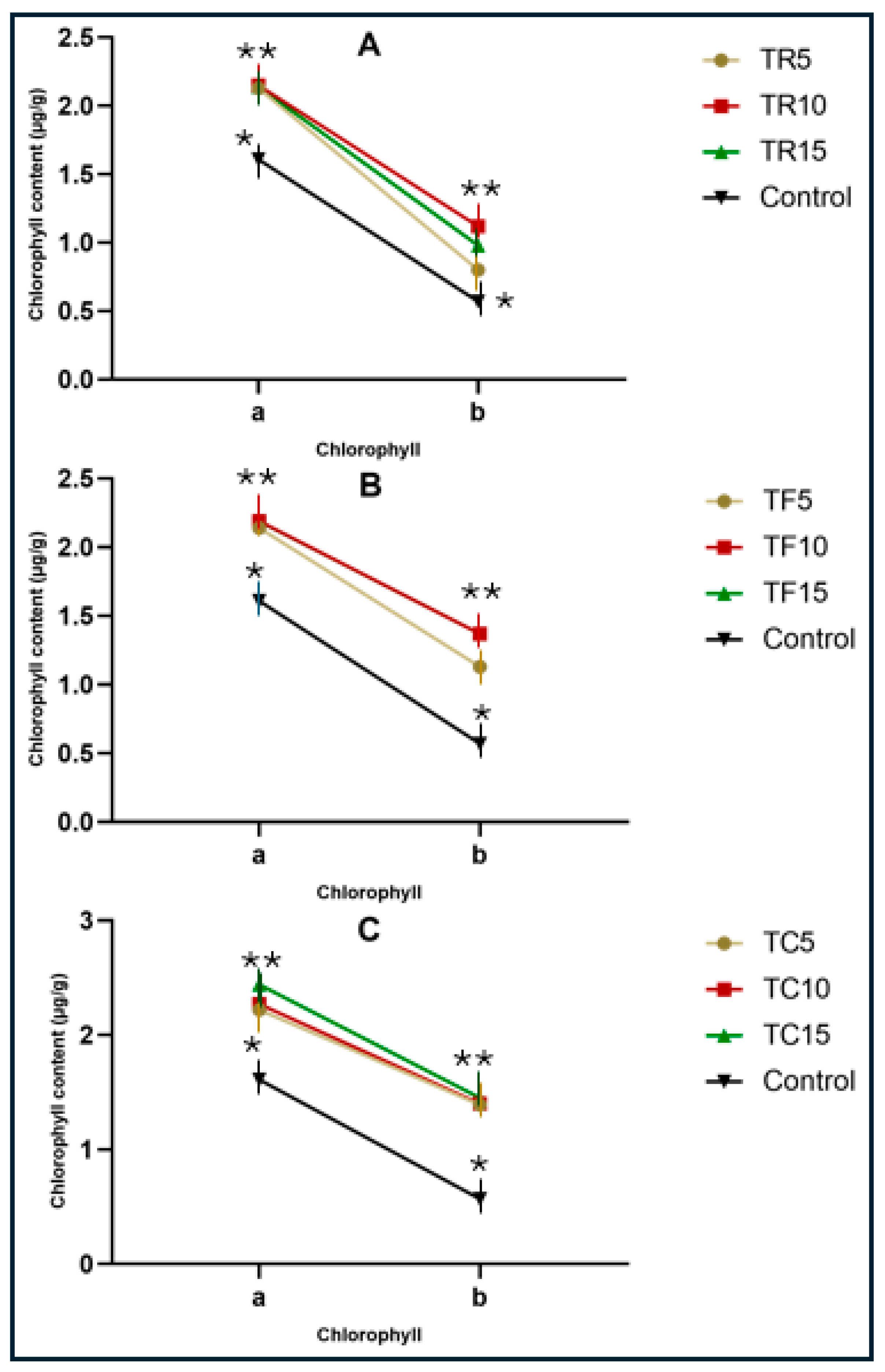
Figure 4A presents the effect of root-applied biostimulant treatments (TR5, TR10, TR15) on chlorophyll content in mays leaves. The level of chlorophyll a ranged between 2.13.0 ± 0.4 and 2.15.0 ± 0.4 (p > 0.05), while chlorophyll b values varied more noticeably from 0.8 ± 0.2 to 1.12 ± 0.4 (p < 0.05), with the highest content recorded under TR10. The balance between chlorophyll a and b indicates an optimized light-harvesting complex, supporting healthier plant metabolism.

3.5.2. Foliar-Applied Biostimulant

Figure 4B shows the effect of foliar-applied biostimulant treatments (TF5, TF10, TF15) on chlorophyll content in mays leaves. Chlorophyll a increased slightly with higher concentrations, reaching a maximum of 2.19 under TF10, while chlorophyll b exhibited a more pronounced increase from 1.13 ± 0.5 (TF5) to 1.37 ± 0.5 (TF10 and TF15) (p > 0.05). Further, foliar biostimulation positively influences mays leaf physiology, with TF10 appearing as the most effective concentration for optimizing chlorophyll synthesis (p < 0.05).

3.5.3. Combined Root and Foliar Biostimulant

Figure 4C presents the effect of combined root and foliar biostimulant treatments (TC5, TC10, TC15) on chlorophyll content in mays leaves. Chlorophyll a increased progressively with higher concentrations, reaching a maximum of 2.44 ± 0.9 under TC15 (p < 0.05), while chlorophyll b also rose slightly from 1.39 ± 0.6 (TC5) to 1.45 ± 0.0 (TC15). Moreover, the combined treatment, particularly at 15%, demonstrates the strongest stimulatory effect on mays leaf physiology and pigment synthesis (at p < 0.05).

3.6. Multivariate Analysis

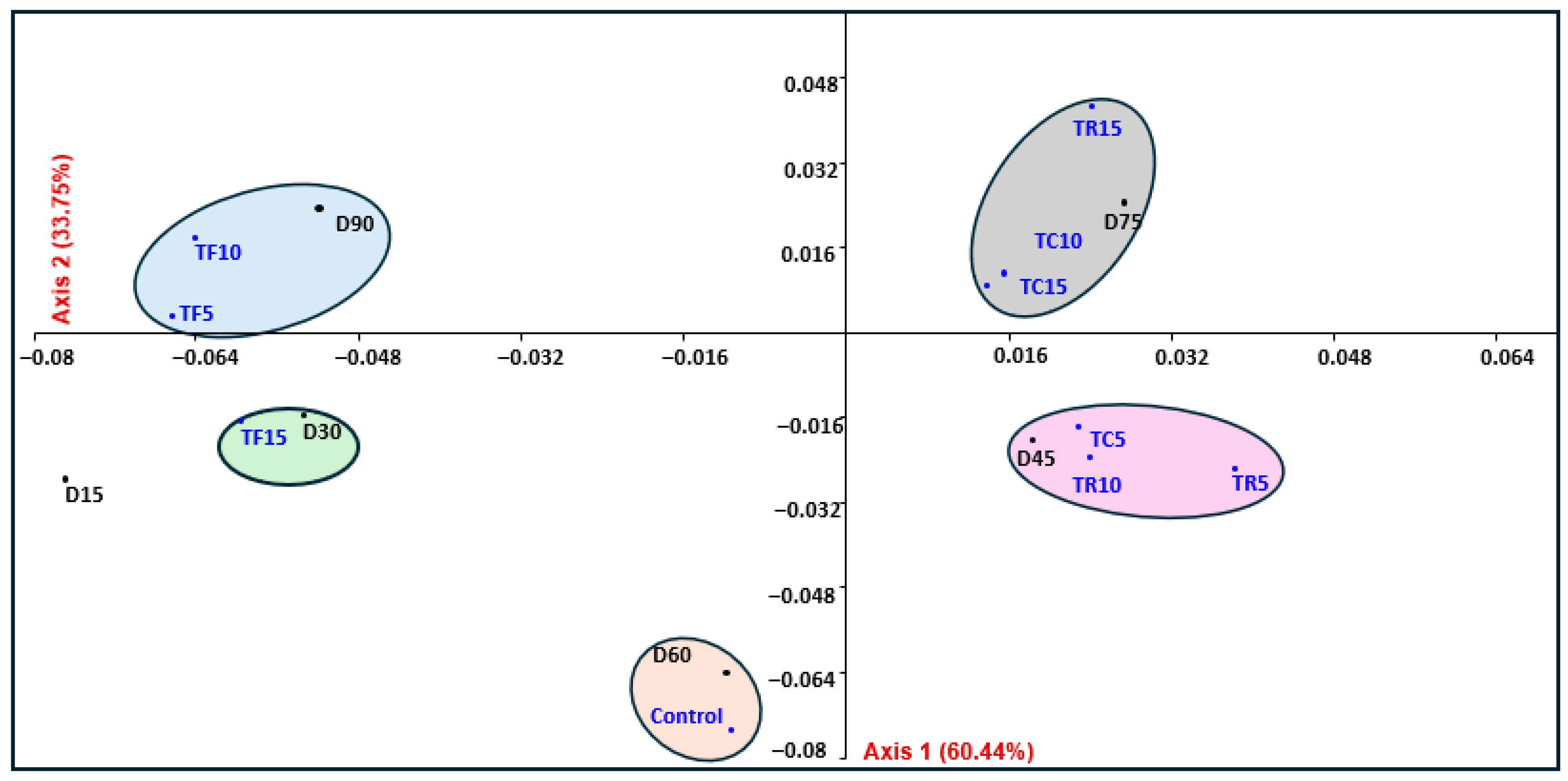
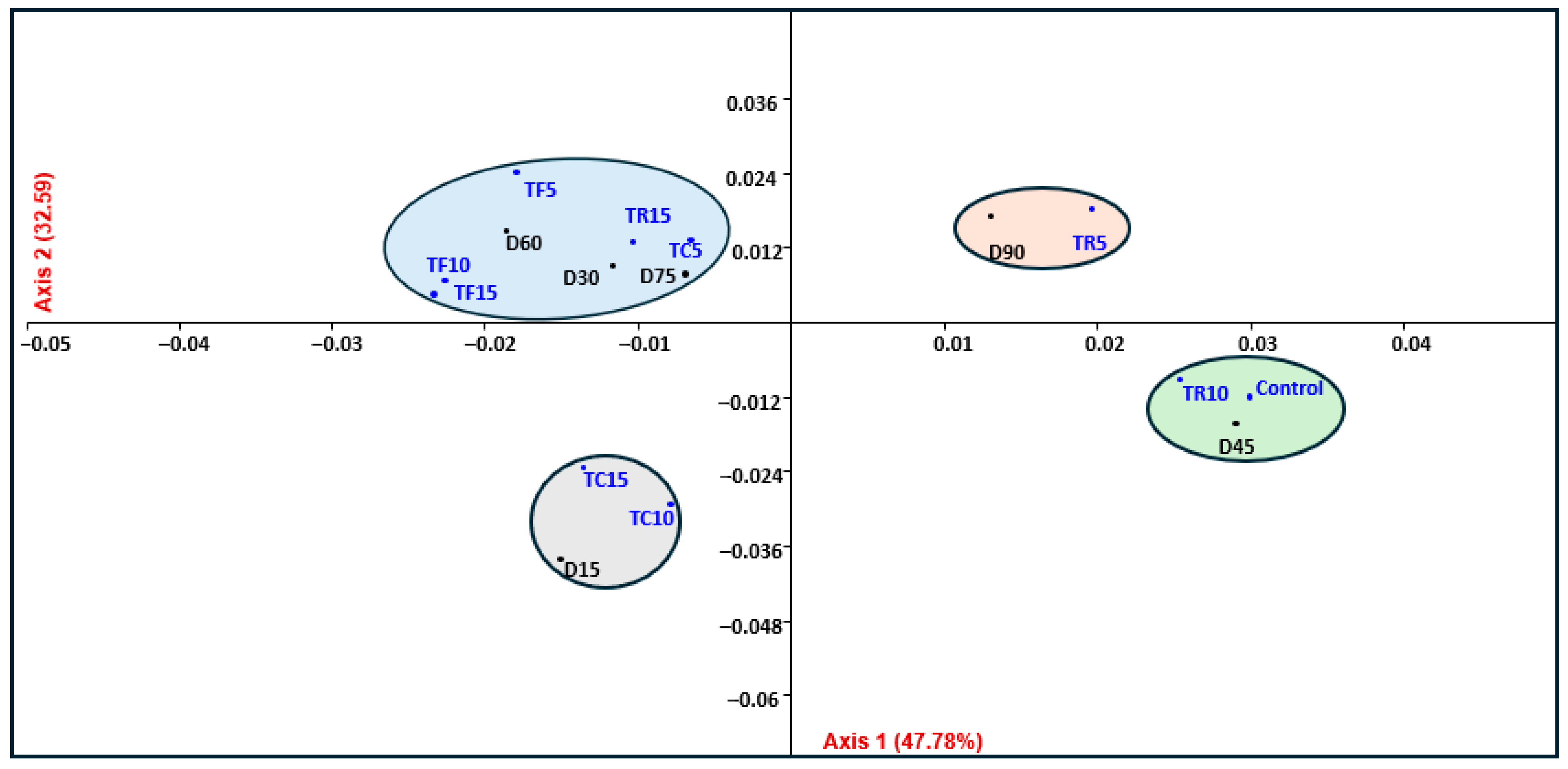
In this part, recorded results were analyzed with Correspondence Analysis, and the results are presented in Figure 5, Figure 6 and Figure 7. Results are presented in 2D plot: Axis 1 and Axis 2 with total inertia of 94.2XX (red color) and colored circles (n = 5) are used to differentiate the groups associating treatments and periods. During the growth phase (Figure 5), TF15 was most efficient after 30 days, while after 45 days, TC5, TR10, and TR5 were the most important. After 70 days, TR15, TC10, and TC15 were the most important treatments.
Results of CA are presented in 2D plot: Axis 1 and Axis 2 with total inertia of 80.3XX (red color) and colored circles (n = 5) are used to differentiate the groups associating treatments and periods (Figure 6). After 15 days, TC10 and TC15 were the most efficient, while after 45 days, TR10 and Control were the most important treatments (Figure 6). From 30 to 75 days, TR15, TC5, TF10, and TF15 were the most important treatments. After 90 days, only TR5 was the most important treatment.
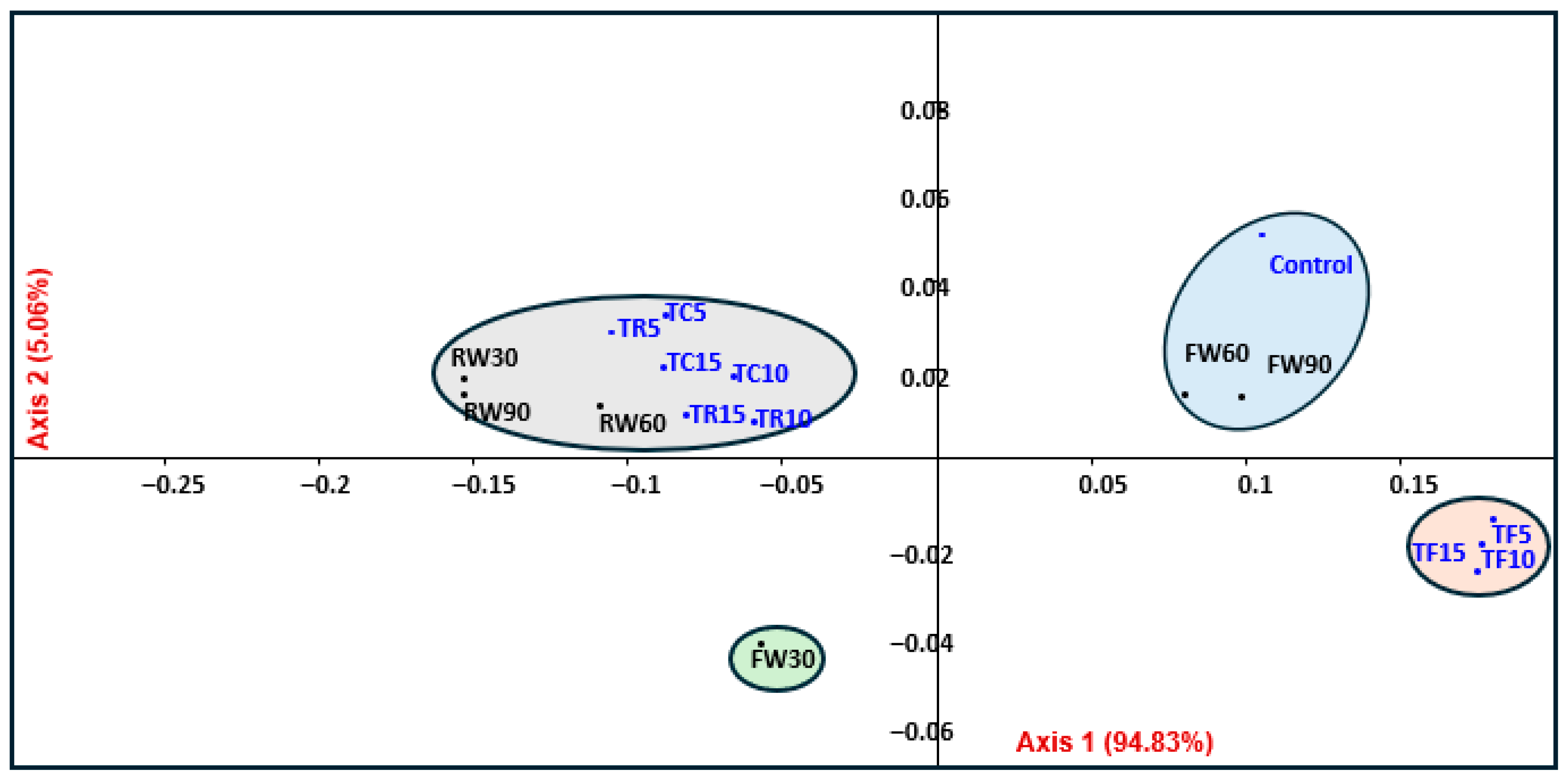
The correspondence Analysis of the biostimulants (abbreviations in blue color (TC, TF, and TR)) on weight of leaves (FW)and roots (RW) (black color) during study periods (Days 30, 60, and 90 in black color) of Mays is presented in Figure 7. Results are presented in two axes with total inertia of 99.9XX. Correspondence Analysis demonstrated 4 groups. First, 5%, 10%, and 15% applications on TC and TR were mostly efficient for root weight after 30, 60, and 90 days. Control mays showed higher weight of leaves after 60 and 90 days.

4. Discussion

Currently, many studies have addressed the biostimulants prepared from food and natural residues, including crustaceans [34,35]. These investigations have addressed the chemical compounds [36], nutrients [35], preparation of biotechnologies [37], and applications of shrimp-derived biostimulants to improve the growth, productivity, and protection of crops [37,38]. In this study, we evaluated the effect of shrimp-derived biostimulants on a local Mays variety (Zea mays L., DKC 744) in Morocco, characterized by harsh climate conditions. The recorded results showed the capacity of the prepared biostimulant to improve the growth and photosynthesis of the treated plant. This is suggested to improve crops in the climate of North Africa.
The observed enhancement of mays stem growth under root-applied biostimulant treatments (TR5, TR10, TR15) aligns with previous studies reporting that chitosan-based and shrimp-derived biostimulants stimulate vegetative development through improved nutrient uptake and hormonal modulation [39,40]. The dose-dependent increase, particularly under TR10 and TR15, is consistent with findings by [41], who demonstrated that moderate to high concentrations of elicitors enhance cell elongation and division, leading to taller stems. Notably, similar trends were reported by Elouali et al. [35], where 10–15% chitosan applications increased plant height by approximately 20–30%, and by Biswas et al. [42], who observed a 25% yield improvement with chitin nanofiber supplementation, reinforcing the concentration-dependent growth response. The accelerated growth between days 45 and 75 may reflect the period of maximum metabolic activity, where biostimulants optimize photosynthetic efficiency and carbohydrate allocation. These results corroborate similar observations in mays and other cereals, where root-applied bioactive compounds promote aerial biomass accumulation and overall vigor [43]. The slight difference between TR10 and TR15 suggests a threshold effect, beyond which additional concentration yields marginal gains. Overall, the study confirms that shrimp-fermented biostimulants can be effectively used to enhance mays stem growth under controlled conditions, supporting their potential for sustainable crop management. In addition, such biostimulant-induced growth enhancement may play a critical role in improving plant tolerance to abiotic stresses prevalent in Morocco, particularly high temperature and water scarcity [44,45]. By enhancing root functionality and water-use efficiency, biostimulants can help maintain growth under drought-prone conditions [46]. Improved physiological status may also reduce stress-induced growth inhibition during periods of irregular rainfall [47]. Consequently, the integration of shrimp-derived biostimulants could represent a promising strategy to sustain maize productivity in semi-arid and water-limited agroecosystems.
The results of foliar-applied biostimulant treatments (TF5, TF10, TF15) on mays stem height are consistent with previous studies showing that foliar application of bioactive compounds can enhance vegetative growth by improving nutrient uptake and stimulating phytohormone activity [48]. The observation that TF10 outperformed both lower and higher concentrations aligns with reports of a hormetic effect, where intermediate doses of biostimulants maximize growth responses while excessive concentrations may induce mild stress or metabolic saturation [49]. Supporting this, Bagchi et al. [38] reported that 10% chitin nanofiber foliar application increased plant height and biomass by approximately 18–25%, while Hossain et al. [11] observed improved physiological performance and growth stability at similar concentrations, confirming optimal mid-dose efficiency. The early-stage similarity among treatments suggests that initial stem elongation is less sensitive to foliar applications, whereas the accelerated growth between days 45 and 75 reflects the period of peak photosynthetic and metabolic activity, enhanced by the biostimulant. Comparable findings in mays and other cereals indicate that foliar application can improve plant vigor and aerial biomass, especially under optimal concentration ranges [50]. Overall, the study supports the effectiveness of a 10% foliar-applied shrimp-derived biostimulant in promoting mays stem growth under controlled conditions. Beyond growth promotion, foliar-applied biostimulants may also enhance tolerance to abiotic stresses typical of Moroccan agroecosystems. By improving leaf physiological status, chlorophyll stability, and photosynthetic efficiency, such treatments can help mitigate drought- and heat-induced growth inhibition [51]. Enhanced foliar nutrient assimilation may also support better water-use efficiency under limited irrigation [27]. Consequently, foliar biostimulant application represents a promising approach to sustaining maize productivity under the increasingly variable climatic conditions of semi-arid regions.
The results of combined root and foliar biostimulant applications (TC5, TC10, TC15) on mays stem height are consistent with previous research, indicating that integrated application strategies maximize nutrient uptake, hormonal stimulation, and overall vegetative growth [49]. The pronounced growth acceleration between days 45 and 75 corresponds to the peak metabolic and photosynthetic activity of mays, a period where biostimulants can significantly enhance cell elongation and division [40]. The superior performance of TC10 and TC15 compared to TC5 aligns with dose–response findings in cereals, where intermediate to high concentrations provide optimal stimulation without inducing metabolic stress [50]. Minimal differences during early stages suggest that initial growth is less sensitive to biostimulant application, with combined treatments exerting cumulative effects over time. These findings corroborate reports that synergistic root and foliar applications outperform single-mode applications in promoting aerial biomass accumulation [39]. Overall, the study demonstrates that shrimp-derived biostimulants, applied in combination at 10–15%, can effectively enhance mays stem growth under controlled conditions.
The results on mays leaf development under root, foliar, and combined biostimulant applications are consistent with previous studies demonstrating that shrimp-derived and chitosan-based biostimulants enhance vegetative growth by promoting cell division and expansion, nutrient uptake, and phytohormone regulation [39,40]. Root application (TR10) produced the highest leaf counts, suggesting that moderate concentrations optimize nutrient assimilation without causing metabolic saturation, in agreement with observations by [49]. Foliar treatments (TF10 and TF15) also improved leaf production, reflecting the efficacy of direct leaf absorption in stimulating photosynthesis and canopy development [50]. Combined root and foliar applications (TC10, TC15) yielded the greatest leaf numbers, indicating a synergistic effect that enhances vegetative growth more effectively than individual applications, as reported in cereals by [52]. The period of rapid leaf expansion between days 45 and 75 corresponds to peak vegetative metabolism, where biostimulant action is most pronounced. Overall, these findings confirm that intermediate concentrations of combined biostimulants provide optimal stimulation of leaf formation in mays.
The effects of root, foliar, and combined biostimulant applications on mays leaf mass are consistent with previous studies demonstrating that shrimp-derived and chitosan-based biostimulants enhance biomass accumulation by improving nutrient uptake, stimulating phytohormones, and promoting cell division [39,40]. Root-applied treatments (TR5, TR10) showed that moderate to high concentrations increase leaf mass, whereas higher doses beyond 5–10% offered minimal additional benefits, aligning with the hormetic effect reported by [49]. Foliar applications (TF5, TF10) similarly indicated that intermediate concentrations optimize leaf biomass, supporting findings by [50] on efficient photosynthetic stimulation via foliar uptake. Combined root and foliar applications (TC5, TC10) produced the greatest leaf mass, suggesting a synergistic effect that enhances vegetative growth more effectively than single-mode treatments, consistent with [52]. The gradual increase in leaf mass from day 30 to day 90 highlights the sustained action of biostimulants throughout the vegetative cycle. Overall, these results confirm that moderate concentrations, particularly in combined applications, provide the most efficient enhancement of mays leaf biomass.
The effects of root, foliar, and combined biostimulant applications on mays root growth are consistent with previous studies showing that shrimp-derived biostimulants and chitosan-based elicitors enhance root biomass by stimulating nutrient uptake, hormonal activity, and cell division in the rhizosphere [39,40]. Root applications (TR10) promoted the highest root mass, reflecting optimal stimulation at moderate concentrations, while higher doses produced marginal additional benefits, in line with the hormetic response reported by [49]. Foliar applications (TF10) indirectly enhanced root growth, likely via improved photosynthate allocation and systemic signaling, supporting observations by [50]. Combined root and foliar treatments (TC10, TC15) achieved the greatest root biomass, indicating a synergistic effect that maximizes nutrient absorption and overall plant vigor, consistent with findings in cereals by [52]. Minimal differences at higher concentrations suggest a threshold beyond which root growth stabilizes. Overall, the study confirms that moderate combined biostimulant applications are most effective for enhancing mays root development.
The effects of root, foliar, and combined biostimulant applications on mays chlorophyll content are consistent with previous studies demonstrating that shrimp-derived and chitosan-based biostimulants enhance photosynthetic pigment synthesis by stimulating nitrogen assimilation and chloroplast development [39,40]. In root-applied treatments, chlorophyll b showed the most pronounced increase, with TR10 achieving 1.12 compared to 0.8 in TR5, suggesting that moderate concentrations optimize pigment biosynthesis without causing metabolic saturation, similar to the 8–15% increases reported by [49]. Foliar application (TF10) further enhanced chlorophyll a and b contents (2.19 and 1.37, respectively), supporting findings by [50] that foliar biostimulants improve light-harvesting and photosynthetic efficiency. Combined root and foliar treatments (TC10, TC15) produced the highest chlorophyll levels, with chlorophyll a reaching 2.44 and b 1.45, highlighting a synergistic effect that maximizes pigment accumulation, in agreement with [52]. The results indicate that intermediate to higher concentrations, particularly in combined applications, are most effective for enhancing mays leaf physiology. Overall, these findings confirm that biostimulant application promotes photosynthetic capacity, which is directly linked to improved growth and productivity.
The observed improvements in maize growth, biomass accumulation, and physiological performance under root, foliar, and combined biostimulant applications can be mechanistically explained by the synergistic action of chitosan-derived compounds on plant metabolism, nutrient dynamics, and stress physiology. Chitosan and its derivatives are known to enhance membrane permeability and root surface activity, thereby improving nutrient uptake efficiency and stimulating phytohormonal pathways involved in cell division and elongation, as reported by Latha et al. [37]. The pronounced responses at intermediate concentrations (10–15%) reflect a typical hormetic behavior, where optimal doses activate metabolic processes without inducing toxicity, consistent with Elouali et al. [35], who reported 20–30% growth enhancement under similar conditions. The accelerated growth phase between days 45 and 75 corresponds to peak metabolic demand, during which biostimulants enhance photosynthetic capacity, chlorophyll synthesis, and carbohydrate allocation, as supported by Qazizadah et al. [53]. Moreover, combined root and foliar applications likely induce a systemic response, integrating local nutrient absorption with foliar signaling, thereby maximizing biomass production and physiological efficiency [54]. This synergistic effect is comparable to microbial biostimulant interactions described by Sun and Shahrajabian [55], where improved root–shoot communication enhances overall plant resilience. Collectively, these mechanisms explain the observed improvements in growth, chlorophyll content, and stress tolerance, supporting the role of shrimp-derived biostimulants as effective tools for sustainable crop intensification.
Despite the promising outcomes, several limitations constrain the interpretability and generalization of the findings. First, the experimental design relied on only three replicates per treatment, which, although common in preliminary agronomic studies, may limit statistical power and the detection of suitable treatment effects under variable conditions. Second, the chemical characterization of the fermented shrimp-waste biostimulant was not conducted, preventing precise identification and quantification of active compounds such as chitin derivatives, peptides, and minerals responsible for the observed responses. Third, the absence of mechanistic investigations restricts understanding of the physiological and molecular pathways underlying plant stimulation and stress tolerance. Additionally, the study focused on a single maize variety and short-term growth parameters, without assessing long-term yield, soil interactions, or environmental impacts. These constraints highlight the need for integrated biochemical, molecular, and multi-site field studies.

5. Conclusions

In conclusion, this study demonstrated that a fermented shrimp-waste formulation significantly enhances the growth and physiological performance of a local mays variety when applied via root, foliar, or combined methods. Across all treatments, stem height, leaf number, leaf mass, root biomass, and chlorophyll content were positively influenced, with the greatest improvements observed under combined root and foliar applications. Moderate concentrations, particularly 10–15%, consistently produced optimal results, indicating a dose-dependent stimulatory effect without adverse saturation. The combined application strategy exhibited a synergistic effect, maximizing both vegetative and physiological parameters. Leaf and root biomass accumulation increased steadily throughout the vegetative cycle. Chlorophyll content also improved, suggesting enhanced photosynthetic efficiency and potential for higher productivity. Therefore, the study confirms the potential of biotechnologically processed shrimp co-products as an effective biostimulant for mays cultivation. The findings support the integration of such biostimulants into sustainable agricultural practices to improve crop growth and resilience. Despite the importance of this study, limitations include the lack of an action mechanism, and the chemical content of the biostimulant was not assessed. Therefore, more investigations are needed to evaluate the action mechanism of the biostimulants.

Author Contributions

Conceptualization, H.L., W.Z., M.E., H.T., and B.B.; methodology, H.L., H.T., I.M., B.B. and W.S.; validation, H.L., W.Z., M.E., and H.T.; formal analysis, H.L., I.M., and W.S.; investigation, H.L., I.M., and W.S.; writing—original draft preparation, H.L., W.Z., M.E., and H.T.; writing—review and editing, I.M., W.S., and B.B.; visualization, and supervision, I.M., W.S., and B.B. All authors have read and agreed to the published version of the manuscript.

Funding

This research received no external funding.

Data Availability Statement

The datasets used and analyzed during the current study is within the article.

Conflicts of Interest

The authors declare no conflicts of interest.

References

  1. Kandra, P.; Challa, M.M.; Kalangi Padma Jyothi, H. Efficient Use of Shrimp Waste: Present and Future Trends. Appl. Microbiol. Biotechnol. 2012, 93, 17–29. [Google Scholar] [CrossRef] [Scilit]
  2. Mao, X.; Guo, N.; Sun, J.; Xue, C. Comprehensive Utilization of Shrimp Waste Based on Biotechnological Methods: A Review. J. Clean. Prod. 2017, 143, 814–823. [Google Scholar] [CrossRef] [Scilit]
  3. Waiho, K.; Ling, Y.; Ikhwanuddin, M.; Shu-Chien, A.C.; Afiqah-Aleng, N.; Wang, Y.; Hu, M.; Liew, H.; Kasan, N.A.; Peh, J.H.; et al. Current Advances in the Black Tiger Shrimp Penaeus Monodon Culture: A Review. Rev. Aquac. 2025, 17, e12958. [Google Scholar] [CrossRef] [Scilit]
  4. Khan, A.M.A.; Andoyo, R.; Wibisono, G.; Widianto, S.; Ritchi, H.; Sari, R.P.; Seshadrinath, S.M.; Cooray, M.; Siry, H.Y. Digital Innovation for Sustainable Shrimp Aquaculture in Indonesia: Addressing Disease Outbreaks, Socioeconomic, and Environmental Challenges. IOP Conf. Ser. Earth Environ. Sci. 2026, 1581, 012011. [Google Scholar] [CrossRef] [Scilit]
  5. Dong, S.; Huang, F.; Zou, X.; Luo, Q.; Li, J. Microalgae as a Synergistic Enhancer for In Situ and Ex Situ Treatment Technologies in Sustainable Shrimp Aquaculture: A Critical Review. Fishes 2026, 11, 60. [Google Scholar] [CrossRef] [Scilit]
  6. Zhou, Y.; Guo, N.; Wang, Z.; Zhao, T.; Sun, J.; Mao, X. Evaluation of a Clean Fermentation-Organic Acid Method for Processing Shrimp Waste from Six Major Cultivated Shrimp Species in China. J. Clean. Prod. 2021, 294, 126135. [Google Scholar] [CrossRef] [Scilit]
  7. Wani, A.K.; Akhtar, N.; Mir, T.U.G.; Rahayu, F.; Suhara, C.; Anjli, A.; Chopra, C.; Singh, R.; Prakash, A.; El Messaoudi, N.; et al. Eco-Friendly and Safe Alternatives for the Valorization of Shrimp Farming Waste. Environ. Sci. Pollut. Res. 2024, 31, 38960–38989. [Google Scholar] [CrossRef] [Scilit]
  8. Iber, B.T.; Kasan, N.A. Recent Advances in Shrimp Aquaculture Wastewater Management. Heliyon 2021, 7, e08283. [Google Scholar] [CrossRef] [Scilit] [PubMed]
  9. Tavakoli, S.; Li, Q.; Han, W.; Zhang, H.; Hui, M.; Deng, L.; Kouhdasht, A.M.; Tan, Y.; Luo, Y.; Hong, H.; et al. Valorization of Marine Crustacean Shells Waste via Fermentation Technology: A Comprehensive Review on Derived Value-Added Compounds and Enhancing Their Industrial Applications. Waste Manag. 2025, 202, 114831. [Google Scholar] [CrossRef] [Scilit]
  10. Pal, K.; Rakshit, S.; Mondal, K.C.; Halder, S.K. Microbial Decomposition of Crustacean Shell for Production of Bioactive Metabolites and Study of Its Fertilizing Potential. Environ. Sci. Pollut. Res. 2021, 28, 58915–58928. [Google Scholar] [CrossRef] [Scilit]
  11. Hossain, M.S.; Wazed, M.A.; Preya, M.S.A.; Sultana, Z.; Kamal, M.M.; Ahmad, T.; Shimul, I.M. A Comprehensive Review of Biotechnological Innovations in Valorization of Food Waste: Enhancing Nutritional, Techno-Functional Properties, and Process Optimization for Sustainable Product Development. Food Front. 2026, 7, e70194. [Google Scholar] [CrossRef] [Scilit]
  12. Lima Bomfim, J.R.A.; da Costa Cunha, G.; Botero, W.G.; Romão, L.P.C. Use of Shrimp Farming Waste in the Production of Biomaterials for Sustainable Agriculture and Mitigation of Environmental Damage. JSFA Rep. 2023, 3, 622–632. [Google Scholar] [CrossRef] [Scilit]
  13. Puglia, D.; Pezzolla, D.; Gigliotti, G.; Torre, L.; Bartucca, M.L.; Del Buono, D. The Opportunity of Valorizing Agricultural Waste, Through Its Conversion into Biostimulants, Biofertilizers, and Biopolymers. Sustainability 2021, 13, 2710. [Google Scholar] [CrossRef] [Scilit]
  14. Yu, J.; Wu, C.; Dong, P.; Chen, C.; Chen, H.; Chen, J.; Liu, X.; Wang, K.; Wang, K.; Zhang, D. Risk Assessment of Shrimp-Derived Probiotics on Culture Performance and Environmental Biosafety in Shrimp Larvae Rearing System. Front. Mar. Sci. 2025, 12, 1683189. [Google Scholar] [CrossRef] [Scilit]
  15. Tkaczewska, J.; Kulawik, P.; Jamróz, E.; Čagalj, M.; Matas, R.F.; Šimat, V. Valorisation of Prawn/Shrimp Shell Waste through the Production of Biologically Active Components for Functional Food Purposes. J. Sci. Food Agric. 2024, 104, 707–715. [Google Scholar] [CrossRef] [Scilit]
  16. Fotodimas, I.; Ioannou, Z.; Kanlis, G. A Review of the Benefits of the Sustainable Utilization of Shrimp Waste to Produce Novel Foods and the Impact on Human Health. Sustainability 2024, 16, 6909. [Google Scholar] [CrossRef] [Scilit]
  17. Ariadi, H.; Musa, M.; Mahmudi, M.; Hertika, A.M.S. The Waste Load and Carrying Capacity on Intensive Shrimp Farming: A Mini Review. Ecol. Eng. Environ. Technol. 2025, 26, 323–333. [Google Scholar] [CrossRef] [Scilit]
  18. Waqar, M.; Sajjad, N.; Ullah, Q.; Vasanthkumar, S.S.; Ahmed, F.; Panpipat, W.; Aluko, R.E.; Kaur, L.; Chaijan, M.; Ageru, T.A. Fish By-Products Utilization in Food and Health: Extraction Technologies, Bioactive, and Sustainability Challenges. Food Sci. Nutr. 2025, 13, e71184. [Google Scholar] [CrossRef] [Scilit] [PubMed]
  19. Leknizi, H.; Zain, W.; Sahraoui, A.; Azian, A.; Elyachioui, M.; Bourkhiss, B. Biotechnological Valorisation of Shrimp Waste: Physicochemical and Microbial Quality. Trop. J. Nat. Prod. Res. 2026, 10, 6725–6734. [Google Scholar] [CrossRef] [Scilit]
  20. Amerany, F.E.; Ali, O.A.; Rhazi, M. Sustainable Conversion of Penaeopsis Serrata Waste into Phosphorylated Chitosan for Agricultural Drought Mitigation. Sustain. Food Technol. 2026, 4, 851–867. [Google Scholar] [CrossRef] [Scilit]
  21. Mechri, S.; Sellem, I.; Bouacem, K.; Jabeur, F.; Laribi-Habchi, H.; Mellouli, L.; Hacène, H.; Bouanane-Darenfed, A.; Jaouadi, B. A Biological Clean Processing Approach for the Valorization of Speckled Shrimp Metapenaeus Monoceros By-Product as a Source of Bioactive Compounds. Environ. Sci. Pollut. Res. 2020, 27, 15842–15855. [Google Scholar] [CrossRef] [Scilit]
  22. Lakhal, D.; Bahlaouan, B.; Boutaleb, N.; Bennani, M.; Antri, S.E. Agricultural Valorization by Biotransformation of Fish Wastes Combined with Grape Marc and Molasses. Mediterr. J. Chem. 2020, 10, 723–733. [Google Scholar] [CrossRef] [Scilit]
  23. Oueld Lhaj, M.; Moussadek, R.; Zouahri, A.; Sanad, H.; Saafadi, L.; Mdarhri Alaoui, M.; Mouhir, L. Sustainable Agriculture Through Agricultural Waste Management: A Comprehensive Review of Composting’s Impact on Soil Health in Moroccan Agricultural Ecosystems. Agriculture 2024, 14, 2356. [Google Scholar] [CrossRef] [Scilit]
  24. Gourari, K.; Mabrouki, Y.; Taybi, A.F.; Essadek, A.; Tanduo, V.; Crocetta, F.; Rahhou, I.; Belbachir, C.; Rizzo, L.; Legssyer, B. Meat Nutritional Value and Exoskeleton Valorisation of Callinectes Sapidus from Three Sites of Biological and Ecological Interest in Morocco: Scientific Insights Toward a Management Strategy in the Mediterranean Sea. Mar. Drugs 2025, 23, 367. [Google Scholar] [CrossRef] [Scilit] [PubMed]
  25. Khaeim, H.; Kende, Z.; Jolánkai, M.; Kovács, G.P.; Gyuricza, C.; Tarnawa, Á. Impact of Temperature and Water on Seed Germination and Seedling Growth of Maize (Zea mays L.). Agronomy 2022, 12, 397. [Google Scholar] [CrossRef] [Scilit]
  26. Chen, C.-H.; Lin, K.-H.; Chang, Y.-S.; Chang, Y.-J. Application of Water-Saving Irrigation and Biostimulants on the Agronomic Performance of Maize (Zea mays). Process Saf. Environ. Prot. 2023, 177, 1377–1386. [Google Scholar] [CrossRef] [Scilit]
  27. Mansour, E.; El-Sobky, E.-S.E.A.; Abdul-Hamid, M.I.E.; Abdallah, E.; Zedan, A.M.I.; Serag, A.M.; Silvar, C.; El-Hendawy, S.; Desoky, E.-S.M. Enhancing Drought Tolerance and Water Productivity of Diverse Maize Hybrids (Zea mays) Using Exogenously Applied Biostimulants under Varying Irrigation Levels. Agronomy 2023, 13, 1320. [Google Scholar] [CrossRef] [Scilit]
  28. Kavitha, S.A.; Priya, R.K.; Arunachalam, K.P.; Avudaiappan, S.; Saavedra Flores, E.I.; Blanco, D. Experimental Investigation on Strengthening of Zea mays Root Fibres for Biodegradable Composite Materials Using Potassium Permanganate Treatment. Sci. Rep. 2024, 14, 12754. [Google Scholar] [CrossRef] [Scilit]
  29. Esteves, E.; Lagartinho, J.; Aníbal, J. Freshness, Spoilage Dynamics and Safety of Deep-Water Pink Shrimp, Parapenaeus Longirostris, Stored in Ice. In Proceedings of the INCREaSE 2023; Semião, J.F.L.C., Sousa, N.M.S., da Cruz, R.M.S., Prates, G.N.D., Eds.; Springer Nature: Cham, Switzerland, 2023; pp. 388–402. [Google Scholar]
  30. Zacchetti, L.; Fanelli, E.; Donato, F.; Domenichetti, F.; Lauteri, M.; Santojanni, A.; Martinelli, M. Seasonal Changes in the Dietary Patterns and Reproductive Aspects of Deep-Water Rose Shrimp Parapenaeus Longirostris in the Central Adriatic Sea. Mar. Ecol. Prog. Ser. 2024, 748, 99–116. [Google Scholar] [CrossRef] [Scilit]
  31. Baali, A.; Dridi, A.; El Achi, A. Effects of Environmental Factors on the Biomass of Deep-Water Rose Shrimp in the North of Atlantic Moroccan Ocean. Egypt. J. Aquat. Biol. Fish. 2022, 26, 409–426. [Google Scholar] [CrossRef] [Scilit]
  32. El Mahi, K.; Bouslim, M.; Maiouet, I.; El Hariri, O.; Rachidi, A.; Rhallabi, N. Effectiveness of Three Treatment Methods on Melanosis Inhibition and SO2 Residual Concentration in Pink Shrimps (Parapenaeus Longirostris) after Various Sulphite-Based Treatments in Morocco. Int. J. Environ. Stud. 2025, 82, 657–674. [Google Scholar] [CrossRef] [Scilit]
  33. Ainouche, N.; Fillali, T.; Rouidi, S.; Bensmail, S.; Mennad, M. Stock Assessment of the Deep Sea Pink Shrimp Parapenaeus Longirostris (Lucas, 1846) of the Algerian Coast (Western Mediterranean). Hippocampus 2026, 1, 13–21. [Google Scholar]
  34. Amiri, H.; Aghbashlo, M.; Sharma, M.; Gaffey, J.; Manning, L.; Moosavi Basri, S.M.; Kennedy, J.F.; Gupta, V.K.; Tabatabaei, M. Chitin and Chitosan Derived from Crustacean Waste Valorization Streams Can Support Food Systems and the UN Sustainable Development Goals. Nat. Food 2022, 3, 822–828. [Google Scholar] [CrossRef] [Scilit] [PubMed]
  35. Elouali, S.; Elarabi, J.; El Amerany, F.; Ait Hamdan, Y.; Eladlani, N.; Benali, S.; Lamtai, H.; El Mouden, E.H.; Raquez, J.-M.; Rhazi, M. Chitosan-Enhanced Hydroponic Cultivation of Ocimum basilicum L.: A Sustainable Approach for Improved Growth, Quality and Antioxidant Activity. Euro-Mediterr. J. Environ. Integr. 2025, 10, 4551–4564. [Google Scholar] [CrossRef] [Scilit]
  36. Abuzar; Sharif, H.R.; Sharif, M.K.; Arshad, R.; Rehman, A.; Ashraf, W.; Karim, A.; Awan, K.A.; Raza, H.; Khalid, W.; et al. Potential Industrial and Nutritional Applications of Shrimp By-Products: A Review. Int. J. Food Prop. 2023, 26, 3407–3432. [Google Scholar] [CrossRef] [Scilit]
  37. Latha, S.; Gomathi, T.; Pavithra, S.; Sudha, P.N.; Nalluri, A.; Bhardwaj, P. Chitosan-Based Porous Carbon Materials for Agriculture and Agro-Waste Applications. In Handbook of Porous Carbon Materials; Grace, A.N., Sonar, P., Bhardwaj, P., Chakravorty, A., Eds.; Springer Nature: Singapore, 2023; pp. 763–812. ISBN 978-981-19-7188-4. [Google Scholar]
  38. Bagchi, S.K.; Kabir, M.Y.; Khan, S.A.K.U.; Shams, M.I.; Díaz-Pérez, J.C. Foliar Applications of Chitin Nanofiber Augment Plant Growth, Yield, and Postharvest Quality of Coriander (Coriandrum sativum L.). Int. J. Veg. Sci. 2025, 31, 897–913. [Google Scholar] [CrossRef] [Scilit]
  39. Abdel-Mawgoud, A.M.; Stephanopoulos, G. Simple Glycolipids of Microbes: Chemistry, Biological Activity and Metabolic Engineering. Synth. Syst. Biotechnol. 2018, 3, 3–19. [Google Scholar] [CrossRef] [Scilit] [PubMed]
  40. Carvalho Martins, D.; Dias Borges, I.; Martins Netto, D.A.; Abdaodos Passos, A.M.; Pereira Maia, M.; Mourão Rocha, N.; Corsi Canhoni, T. Physiological Quality of Maize Seeds Treated with Biostimulant, Liquid Fertilizer and Azospirillum Brasilense. J. Res. Dev./Rev. Investig. Desarro. 2021, 11, 52354. [Google Scholar]
  41. Iriti, M.; Faoro, F. Chitosan as a MAMP, Searching for a PRR. Plant Signal. Behav. 2009, 4, 66–68. [Google Scholar] [CrossRef] [Scilit]
  42. Biswas, T.; Ali, M.Y.; Shams, M.I.; Afroj, S.; Kabir, M.Y. Application of Chitin Nanofiber as A Nitrogen Source Improves Growth and Yield of BRRI Dhan28. Khulna Univ. Stud. 2025, 22, 62–69. [Google Scholar] [CrossRef] [Scilit]
  43. Ramos, L.N.; Souza, N.O.S.; Vilela, M.S. Agronomic Parameters and Morpho-Agronomic Characteristics of Genetically Modified Maize Hybrids Compared to Conventional Maize Hybrids. Biosci. J. 2020, 36, 1156–1166. [Google Scholar] [CrossRef] [Scilit]
  44. Elmeknassia, M.; Boussakouran, A.; Boulfia, R.; Rharrabti, Y. Genotypic Variation in Drought-Season Stress Responses Among Traditional Fig (Ficus carica L.) Varieties from Mediterranean Transition Zones of Northern Morocco. Plants 2025, 14, 1879. [Google Scholar] [CrossRef] [Scilit]
  45. Achli, S.; Ongoma, V.; Epule, T.E.; Dhiba, D.; Salih, W.; Ousayd, L.; Chehbouni, A. Exploring the Key Drivers of Crop Yields in Morocco—A Systematic Review. Front. Agron. 2025, 7, 1515938. [Google Scholar] [CrossRef] [Scilit]
  46. Ahmad, S.; Ahmad, N.; Khan, M.N.; Ercisli, S.; Iqbal, R. Use of Biostimulants to Improve Drought Tolerance in Oilseed Crops. In Oilseed Crops Under Abiotic Stress: Mitigation Strategies and Future Perspectives; Abdel Latef, A.A.H., Ed.; Springer Nature: Singapore, 2025; pp. 51–89. ISBN 978-981-96-8346-8. [Google Scholar]
  47. Wahab, A.; Abdi, G.; Saleem, M.H.; Ali, B.; Ullah, S.; Shah, W.; Mumtaz, S.; Yasin, G.; Muresan, C.C.; Marc, R.A. Plants’ Physio-Biochemical and Phyto-Hormonal Responses to Alleviate the Adverse Effects of Drought Stress: A Comprehensive Review. Plants 2022, 11, 1620. [Google Scholar] [CrossRef] [Scilit]
  48. Zhang, H.; Zhu, J.; Gong, Z.; Zhu, J.-K. Abiotic Stress Responses in Plants. Nat. Rev. Genet. 2022, 23, 104–119. [Google Scholar] [CrossRef] [Scilit] [PubMed]
  49. Rouphael, Y.; Colla, G. Editorial: Biostimulants in Agriculture. Front. Plant Sci. 2020, 11, 40. [Google Scholar] [CrossRef] [Scilit]
  50. Calvo, P.; Nelson, L.; Kloepper, J.W. Agricultural Uses of Plant Biostimulants. Plant Soil. 2014, 383, 3–41. [Google Scholar] [CrossRef] [Scilit]
  51. Liaqat, W.; Altaf, M.T.; Jan, M.F.; Maqbool, A.; Ali, A.; Barutçular, C.; Baloch, F.S.; Rahimi, M. Bibliometric and Systematic Review of Biostimulant Research under Drought Stress. Plant Stress 2026, 19, 101177. [Google Scholar] [CrossRef] [Scilit]
  52. Colla, G.; Nardi, S.; Cardarelli, M.; Ertani, A.; Lucini, L.; Canaguier, R.; Rouphael, Y. Protein Hydrolysates as Biostimulants in Horticulture. Sci. Hortic. 2015, 196, 28–38. [Google Scholar] [CrossRef] [Scilit]
  53. Qazizadah, A.Z.; Nakasha, J.J.; Sinniah, U.R.; Edaroyati, P.; Wahab, M. Improvement of Chlorophyll, Antioxidant Properties, and Biomass Yield in Sweet Basil (Ocimum basilicum L.) Using Chitosan at Various Growing Stages. J. Trop. Crop Sci. 2026, 13, 114–133. [Google Scholar] [CrossRef] [Scilit]
  54. El Amerany, F.; Naimi, M.; Rhazi, M. Biostimulant-Driven Growth Enhancement and Stress Resistance in Tomato: The Combined Impact of Alginate, Chitosan, and Salicylic Acid. J. Biotechnol. 2025, 406, 244–254. [Google Scholar] [CrossRef] [Scilit]
  55. Sun, W.; Shahrajabian, M.H. Therapeutic Potential of Phenolic Compounds in Medicinal Plants—Natural Health Products for Human Health. Molecules 2023, 28, 1845. [Google Scholar] [CrossRef] [Scilit] [PubMed]
Figure 1. Effect of biostimulant on the evolution of mays stem size during its vegetative cycle in cm ((A): Root treatment; (B): Foliar treatment; (C): Combined effect) (TR 5: 5%, TR10: 10%, TR15: 15%; TF5: 5%, TF10: 10%, TF15: 15%; TC5: 5% root + 5% foliar, TC 10: 10% root + 10% foliar, TC 15: 15% root + 15% foliar) (Comparison was conducted by ANOVA one way, followed by post hoc test and significant values were at p < 0.05 (*** > ** > * for days; a > b for treatments)).
Applsci 16 04506 g001
Figure 2. Effect on leaves during vegetative cycle ((A): Root treatment; (B): Foliar treatment; (C): Combined effect) (TR 5: 5%, TR10: 10%, TR15: 15%; TF5: 5%, TF10: 10%, TF15: 15%; TC5: 5% root + 5% foliar, TC 10: 10% root + 10% foliar, TC 15: 15% root + 15% foliar) (Comparison was conducted by ANOVA one way, followed by post hoc test and significant values were at p < 0.05 (*** > ** > * for days; a > b for treatments)).
Applsci 16 04506 g002
Figure 3. Effect on leaf mass during vegetative ((A): Root treatment; (B): Foliar treatment; (C): Combined effect) (TR 5: 5%, TR10: 10%, TR15: 15%; TF5: 5%, TF10: 10%, TF15: 15%; TC5: 5% root + 5% foliar, TC 10: 10% root + 10% foliar, TC 15: 15% root + 15% foliar) (Comparison was conducted by ANOVA one way, followed by post hoc test and significant values were at p < 0.05 (*** > ** > * for days; a > b for treatments)).
Applsci 16 04506 g003
Figure 4. Effect of biostimulant on chlorophyll content ((A): Root treatment; (B): Foliar treatment; (C): Combined effect) (Comparison between treatments was conducted by ANOVA one-way, while t-test was used for type of chlorophyll, and significant values were at p < 0.05 (** > *)).
Applsci 16 04506 g004
Figure 5. Correspondence Analysis (2D plot: Axis 1 and Axis 2 (red color)) of applied biostimulants (abbreviations in blue color (TC, TF, and TR)) and growth periods (abbreviations (D) in black color) of the Mays (TR 5: 5%, TR10: 10%, TR15: 15%; TF5: 5%, TF10: 10%, TF15: 15%; TC5: 5% root + 5% foliar, TC 10: 10% root + 10% foliar, TC 15: 15% root + 15% foliar; D: Day). (colored circles (n = 5) are used to differentiate the groups associating treatments and periods).
Applsci 16 04506 g005
Figure 6. Correspondence Analysis (2D plot: Axis 1 and Axis 2 (red color)) of applied biostimulants on leaves (abbreviations in blue color (TC, TF, and TR)) +and growth periods (abbreviations (D) in black color) of the Mays (TR 5: 5%, TR10: 10%, TR15: 15%; TF5: 5%, TF10: 10%, TF15: 15%; TC5: 5% root + 5% foliar, TC 10: 10% root + 10% foliar, TC 15: 15% root + 15% foliar; D: day). (colored circles (n = 5) are used to differentiate the groups associating treatments and periods).
Applsci 16 04506 g006
Figure 7. Correspondence Analysis (2D plot: Axis 1 and Axis 2 (red color)) of applied biostimulants (abbreviations in blue color (TC, TF, and TR)) on weight of leaves (FW)and roots (RW) (black color) during study periods (Days 30, 60, and 90 in black color) of Mays (TR 5: 5%, TR10: 10%, TR15: 15%; TF5: 5%, TF10: 10%, TF15: 15%; TC5: 5% root + 5% foliar, TC 10: 10% root + 10% foliar, TC 15: 15% root + 15% foliar). (colored circles (n = 5) are used to differentiate the groups associating treatments and periods).
Applsci 16 04506 g007
Table 1. Linear regression analysis of relationships between time and plant growth and treatment effects.
TreatmentSlope (cm/day)Intercept (cm)R2p-Value
Control1.66.80.97<0.001
TR52.157.50.98<0.001
TR102.358.20.99<0.001
TR152.2880.98<0.001
TF527.20.97<0.001
TF102.087.50.98<0.001
TF151.957.40.97<0.001
TC52.48.50.99<0.001
TC102.5590.99<0.001
TC152.529.10.99<0.001
Table 2. Generalized linear model (GLM) showing the effects of Time (days), Treatment type (Root = TR, Foliar = TF, Combined = TC, Control), and Concentration (5%, 10%, 15%), including their interactions, on stalk size evolution.
PredictorCoefficient (β)Std. Errort-Valuep-Value
Intercept (Control at Day 15)71.255.6<0.001
Time (Days)2.350.1813.05<0.001
TR (Root vs. Control)5.421.14.93<0.001
TF (Foliar vs. Control)3.181.082.940.006
TC (Combined vs. Control)8.761.157.61<0.001
Concentration (Dose)2.670.952.810.008
Time × TR0.420.076<0.001
Time × TF0.280.064.67<0.001
Time × TC0.550.086.88<0.001
TR × Concentration1.950.722.710.01
TF × Concentration1.220.71.740.089
TC × Concentration2.850.783.65<0.001
Time × Concentration0.310.056.2<0.001
Table 3. Linear regression analysis of relationships between time and plant leaves and treatment effects.
TreatmentSlope (Leaves/Day)InterceptR2p-Value
Control0.133.20.98<0.001
TR50.163.50.99<0.001
TR100.173.90.99<0.001
TR150.163.80.99<0.001
TF50.153.40.98<0.001
TF100.163.60.99<0.001
TF150.163.60.99<0.001
TC50.173.90.99<0.001
TC100.184.20.99<0.001
TC150.184.20.99<0.001
Table 4. Generalized linear model (GLM) with Gaussian distribution and identity link was fitted to evaluate the effects of Time (days), Treatment type (Root = TR, Foliar = TF, Combined = TC, Control), and Concentration (5%, 10%, 15%), including their interactions, on the evolution of leaf number.
PredictorCoefficient (β)Std. Errort-Valuep-Value
Intercept (Control at Day 15)40.429.52<0.001
Time (Days)0.1550.01212.92<0.001
TR (Root vs. Control)1.180.363.280.002
TF (Foliar vs. Control)0.920.352.630.012
TC (Combined vs. Control)1.850.384.87<0.001
Concentration (Dose)0.740.282.640.011
Time × TR0.0210.0045.25<0.001
Time × TF0.0150.0043.75<0.001
Time × TC0.0280.0055.6<0.001
TR × Concentration0.520.212.480.017
TF × Concentration0.310.21.550.128
TC × Concentration0.790.233.430.001
Time × Concentration0.0120.0026<0.001
Table 5. Generalized linear model (GLM) with Gaussian distribution and identity link was fitted to assess the effects of Time (30, 60, 90 days), Treatment type (Root = TR, Foliar = TF, Combined = TC, Control), and Concentration (1%, 5%, 10%), including their interaction terms, on foliar weight evolution.
PredictorCoefficient (β)Std. Errort-Valuep-Value
Intercept (Control at Day 30)21022.19.5<0.001
Time (Days)13.451.0213.19<0.001
TR (Root vs. Control)312.618.416.99<0.001
TF (Foliar vs. Control)240.7517.9513.41<0.001
TC (Combined vs. Control)335.819.117.58<0.001
Concentration (Dose)18.256.82.680.011
Time × TR2.850.446.48<0.001
Time × TF2.10.425<0.001
Time × TC3.40.487.08<0.001
TR × Concentration9.753.852.530.015
TF × Concentration6.23.71.680.101
TC × Concentration12.94.13.150.003
Time × Concentration1.050.185.83<0.001
Table 6. Effect of biostimulants and elicitors on root growth (TR 5: 5%, TR10: 10%, TR15: 15%; TF5: 5%, TF10: 10%, TF15: 15%; TC5: 5% root + 5% foliar, TC 10: 10% root + 10% foliar, TC 15: 15% root + 15% foliar).
DaysRoot TreatmentFoliar TreatmentCombined TreatmentControl
TR5TR10TR15TF5TF10TF15TC5TC10TC15
30200.00 ± 25.5200.0 ± 24.7197.8 ± 21.689.0 ± 12.690.0 ± 13.590.0 ± 11.6207.0 ± 25.9209.0 ± 26.2208.8 ± 25.0275.0 ± 9.3
60517.5 ± 22.4518.3 ± 51.3518.0 ± 49.4298 ± 27.9300.0 ± 30.3302.0 ± 31.6518.9 ± 55.1520.6 ± 27.1520.0 ± 51.4240 ± 27.2
90756.0 ± 64.2764.0 ± 66.8763.8 ± 78.1395 ± 34.9400.0 ± 38.1397.0 ± 28.3777.0 ± 69.1780.0 ± 68.2780.0 ± 61.4330 ± 29.1
Disclaimer/Publisher’s Note: The statements, opinions and data contained in all publications are solely those of the individual author(s) and contributor(s) and not of MDPI and/or the editor(s). MDPI and/or the editor(s) disclaim responsibility for any injury to people or property resulting from any ideas, methods, instructions or products referred to in the content.