Review

From Supplements to Therapeutics: Repurposing Antioxidant Compounds in the Management of NAFLD (Non-Alcoholic Fatty Liver Disease)

by
Rafailia-Eirini Theodorou
,
Nikiforos Vrettos
and
Panagiotis Theodosis-Nobelos
*
Department of Pharmacy, School of Health Sciences, Frederick University, Nicosia 1036, Cyprus
*
Author to whom correspondence should be addressed.
Appl. Sci. 2026, 16(9), 4239; https://doi.org/10.3390/app16094239
Submission received: 27 March 2026 / Revised: 22 April 2026 / Accepted: 24 April 2026 / Published: 26 April 2026
(This article belongs to the Special Issue Bioorganic Chemistry and Medicinal Chemistry)

Abstract

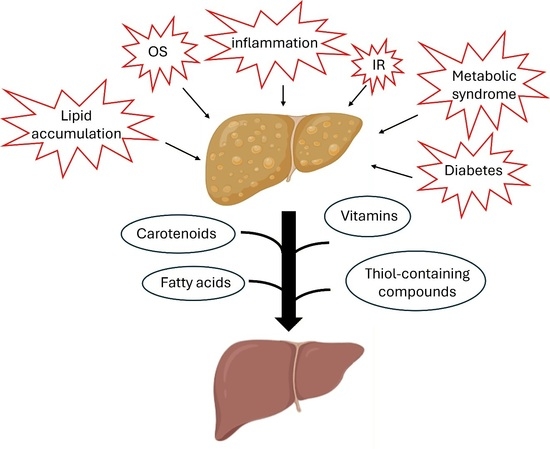
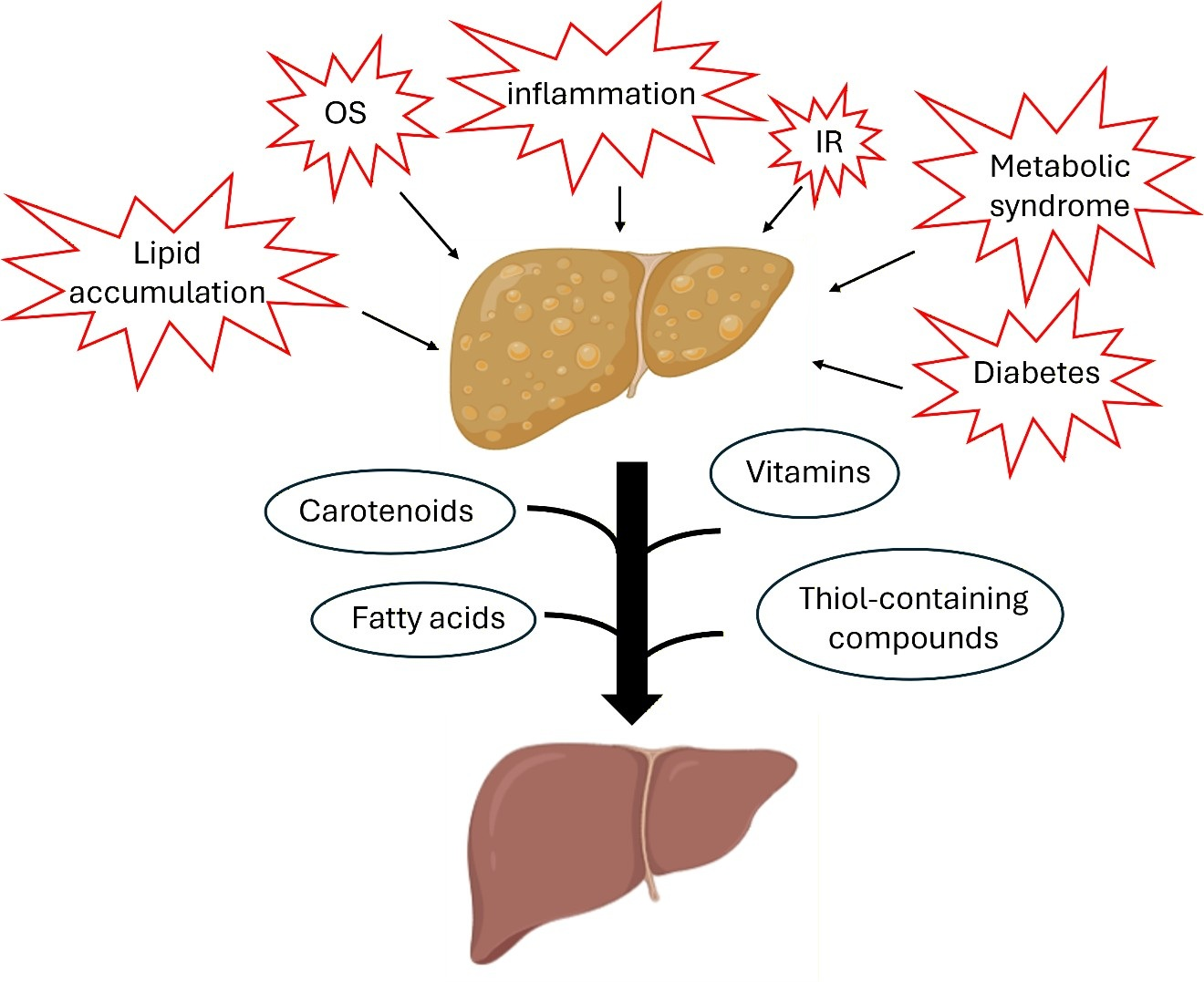
Non-alcoholic fatty liver disease (NAFLD) is the most common liver disease worldwide. Its main contributors are obesity, insulin resistance, diabetes and metabolic syndrome. Liver pathogenesis exacerbates when oxidative stress, inflammation, lipid accumulation, and attenuated autophagy signals coexist together with the main determinants of the liver disease. These findings may indicate that the suppression of the disease requires multi-targeting compounds to alleviate more than one factor, resulting in improved histopathological outcomes. This review studies natural compounds, given as supplements, with antioxidant and anti-inflammatory properties. The compounds included are vitamins, carotenoids, low-molecular-weight thiol-containing compounds, fatty acids and others that have been investigated for their pleiotropic activity alone or in combination. They act at different pathways and signals, and at gene expression control, modulating oxidative stress and inflammation, such as collagen, TNF-α, NF-κB, Nrf2 and PPARs genes. Their mechanism of action and characteristics may be encouraging treatment options as multi-targeting compounds for NAFLD and other diseases whose pathophysiology is closely related to metabolic syndrome. However, extensive study on their safety, toxicity, mechanisms of action and dosage regimen is needed before their final establishment as potential treatment options.

Graphical Abstract

1. Introduction

Non-alcoholic fatty liver disease (NAFLD) is the most common liver disorder related to, and derived from, metabolic disturbances such as metabolic syndrome, obesity, diabetes and insulin resistance [1]. Prevalence of these conditions keeps giving rise to NAFLD as a major health problem. Hepatic and extrahepatic extensions of them lead to hormone deregulation, endocrinopathies, inability of the organism to cope with xenobiotic management and, finally, morbidity and mortality [2,3,4]. The main therapeutic options nowadays concern the control of fat accumulation in the liver, serum lipid manipulation, calorie restriction, diet management, lifestyle change, and exercise [5]. NAFLD is associated with an increase in all-cause mortality, a high risk of hepatic steatosis, hepatic diseases and carcinomas as it progresses, whilst it is also related to cardiovascular disease and extrahepatic malignancies [6].
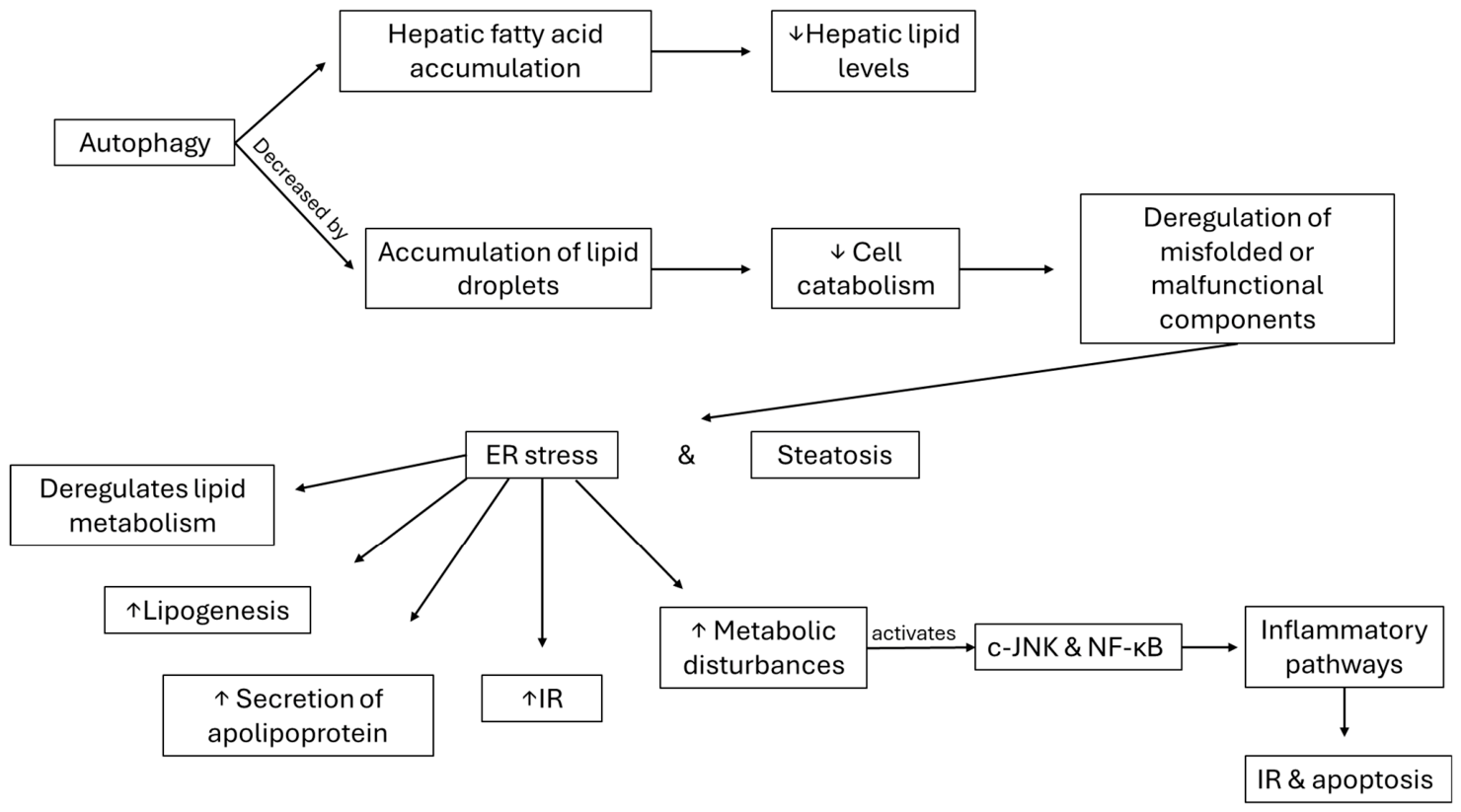
Autophagy is a major factor of hepatic fatty acid accumulation, resulting in decreased hepatic lipid levels. There seems to be an ambivalent interconnection between hepatic lipid levels and autophagy, since accumulation of lipid droplets decrease the autophagy, depriving the cells of an important catabolic mechanism that allows the degradation of misfolded or malfunctional cellular components, resulting in induction of endoplasmic reticulum (ER) stress and aggravation of hepatic steatosis [7,8,9,10]. In turn, ER stress deregulates hepatic lipid metabolism, increases lipogenesis and apolipoprotein secretion, and intensifies insulin resistance and metabolic disturbances. Additionally, ER stress activates the c-Jun N-terminal kinase (JNK) and NF-kB (nuclear factor kappa Β) inflammatory pathways, which also lead to apoptosis and insulin receptor substrate 1 (IRS-1) modulation, further resulting in insulin resistance (IR) [11,12] (Figure 1).
Triacyloglycerol accumulation in the liver, and the increased de novo lipogenesis and reduced hepatic oxidation of the lipids, are the main factors leading to NAFLD. However, according to the multiple hits of the NAFLD hypothesis, oxidative stress and inflammatory signals take place, together with endoplasmic reticulum (ER) stress and autophagic conditions, promoting cellular death and hepatic fibrosis [7,13,14]. Lipid accumulation may provoke hepatic oxidative stress and inflammatory processes, accentuating their interrelation and their common ground, towards fibrosis installation [15]. Thus, due to the oxidative stress and inflammation-derived nature of NAFLD, antioxidant compounds with pleiotropic immunomodulatory potential could be a treatment option towards the deterrence of NAFLD and its comorbidities. In view of the above, in this review we will try to analyze the research of the last two decades on certain widely applied categories of antioxidant supplements and supplemented compounds with pharmaceutical interest against NAFLD, and their effects on the various mechanisms that are implicated in this disease progression.

Multiple-Hit Pathogenesis of NAFLD and the Rationale for Multi-Targeting Therapeutic Approaches

The pathogenesis of NAFLD is currently best explained by the “multiple-hit” hypothesis, which proposes that the disease arises from the synergistic and parallel interaction of metabolic, molecular, and environmental factors rather than a linear sequence of events [16,17]. In contrast to the earlier “two-hit” model described in the literature, this concept recognizes that insulin resistance, adipose tissue dysfunction, gut microbiota alterations, genetic predisposition, and dietary factors simultaneously contribute to hepatic lipid accumulation and subsequent disease progression [18]. These multiple insults converge to promote hepatocellular injury, inflammation, and fibrogenesis, finally driving the evolution from steatosis to non-alcoholic steatohepatitis (NASH) and advanced liver disease, or even hepatocellular carcinoma (HCC) [19].
A central feature of this multifactorial model is the ambivalent interconnection between oxidative stress, inflammation, and autophagy, which cumulatively promote NAFLD progression (Figure 1). Excessive lipid accumulation within hepatocytes induces lipotoxicity and mitochondrial dysfunction, leading to increased production of reactive oxygen species (ROS). This oxidative stress not only damages cellular components, but also activates inflammatory signaling pathways and pro-inflammatory cytokine cascades [20]. In parallel, chronic inflammation further exacerbates oxidative stress, creating a self-perpetuating cycle of hepatocellular injury [21]. Autophagy, a critical cellular homeostasis factor, plays a dual and context-dependent role in NAFLD, since, under physiological conditions, autophagy (particularly lipophagy) limits lipid accumulation and protects hepatocytes. However, in NAFLD, autophagic flux is often impaired, leading to the accumulation of dysfunctional mitochondria, endoplasmic reticulum stress, and further ROS generation [22,23]. This impairment amplifies inflammatory signaling and promotes apoptosis and fibrosis, highlighting autophagy as both a key pathogenic mechanism and a potential therapeutic target (Figure 1).
Given these complex and interconnected pathogenesis mechanisms, single-target therapeutic approaches may be insufficient to restore disease progression. Instead, multi-targeting compounds, with antioxidant and anti-inflammatory ability, offer a more rational therapeutic strategy (multi-targeting compounds for multi-component diseases). These compounds are capable of simultaneously modulating multiple pathways, including oxidative stress reduction, inflammatory signaling suppression, lipid metabolism regulation, and restoration of autophagic function. For instance, several bioactive molecules have been shown to influence central regulators such as AMPK, PPARs, and SIRT1, affecting metabolic, oxidative, and inflammatory responses in NAFLD [24,25]. The advantage of such multi-targeting approaches lies in their ability to address the heterogenic and systemic nature of NAFLD. Unlike therapies that target isolated pathways, antioxidant combinations or pleiotropic compounds may exert synergistic effects, enhancing the therapeutic efficacy, while potentially reducing the required doses of individual agents. This is particularly relevant in a disease like NAFLD, driven by overlapping mechanisms, where the modulation of one pathway may indirectly influence others [26]. Nevertheless, the verification and the optimization of such strategies require careful consideration of the pharmacokinetic interactions, dose ratios, and potential antagonistic effects.

2. Vitamins

2.1. Vitamin E

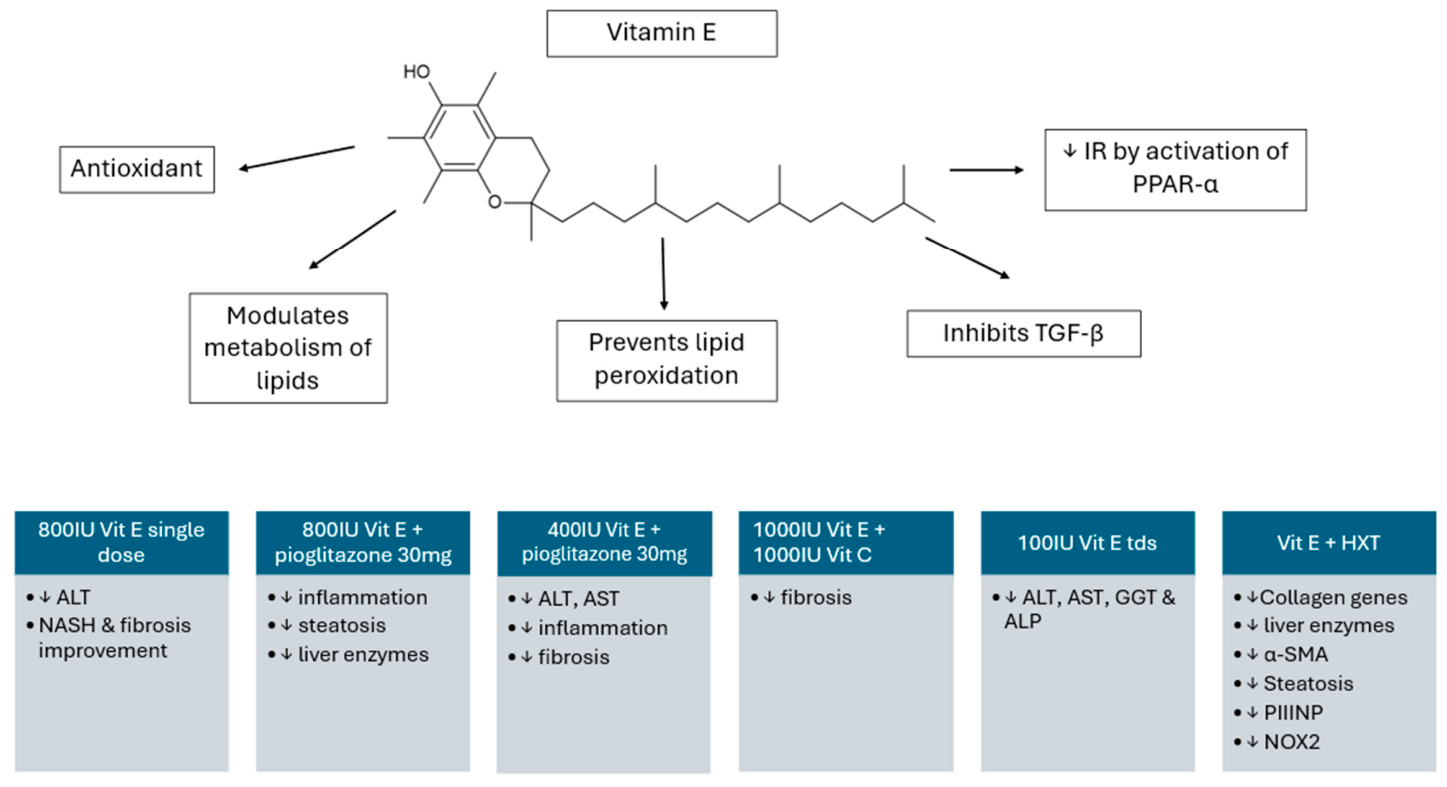
Alpha-tocopherol (α-TOC), also known as the main form of Vitamin E, is a fat-soluble, antioxidant molecule that participates in the metabolism of lipids, prevents lipid peroxidation, and alleviates oxidative stress [27]. It inhibits the transforming growth factor (TGF-β), which is important for the hepatic adipocyte activity and fibrosis [28,29]. Additionally, there has been evidence that α-TOC may alter insulin resistance (IR), influencing the activation of PPAR-α (peroxisome proliferator-activated receptor alpha) [30]. Concerning its properties, it was tested as a potential treatment for NAFLD, on a single daily dose of 800 IU orally, and the results assessed a decrease in ALT (alanine aminotransferase) and its effect on non-alcoholic steatohepatitis (NASH) and fibrosis through a double-blind randomized study [31]. The Vitamin E-treated group showed a mean reduction of 41 U/L in ALT levels, while the placebo group had a 21 U/L reduction, although 82% of patients did not respond to ALT change. Recipients that responded early to treatment, regardless of the group they belonged to, showed an improvement in NASH. Those that did not alter their ALT levels did not appear to have an improvement in liver histology. Similar results were seen for fibrosis. Regarding weight, patients who lost weight by a mean of 2 kg or more, regardless of the treatment, showed improvement in NASH and fibrosis compared to those who gained weight [31]. Another study [32] relied on the PIVENS trials, in which patients received Vitamin E (800 IU/daily), Pioglitazone (30 mg/daily), or a placebo, orally for the first 96 weeks, whilst the study duration was 120 weeks. Only those who took Vitamin E showed statistically significant improvement in NASH, whilst both treatment groups (with combinations of Vitamin E + placebo or placebo + pioglitazone) showed significant reduction in inflammation, steatosis and serum liver enzymes. However, the liver fibrosis was not significantly improved. Insulin resistance developed only in the pioglitazone group, accompanied by weight gain. Also, based on the PIVENS trial, another study has also been designed [33], where the combination of pioglitazone (30 mg/Kg) and Vitamin E (400 IU) was evaluated on patients diagnosed with NAFLD. The results showed normalization of ALT and AST (aspartate aminotransferase) serum levels and a significant decrease in ballooning, inflammation and fibrosis up to 80%.
Another treatment combination tested was Vitamin E (1000 IU) with Vitamin C (1000 mg), because of the potential cumulative actions of Vitamins C and E as antioxidant molecules. In this co-treatment regimen, only fibrosis was improved (p < 0.02), while the ALT and AST levels remained unchanged [34]. In addition, the efficacy of α-TOC was assessed on patients with NASH and NAFLD, on a lower dose of 100 IU, three times daily, with food, for one year [35]. All patients were assigned a low-calorie diet for 6 months before the treatment initiation. Those with NASH showed a decrease in ALT, AST, gammaGT (gamma-glutamyl-transferase) and ALP (alkaline phosphatase) after administration of α-TOC, while those with NAFLD did not have the notable response they had with diet modulation. The TGF-β factor was elevated in the untreated patients with NASH, but not in the NAFLD group, and the response to the treatment in the NASH group showed TGF-β reduction (after one year of treatment), whilst in the NAFLD group it remained unchanged [35].
At another study [36] of vitamin E combined with hydrotyrosol (HXT) (a polyphenol in extra virgin olive oil with antioxidant, anti-inflammatory and antiatherogenic properties [37]), the combination was tested in vitro, in vivo, and clinically. The in vitro study of the efficacy of the combination was made on LX-2 hepatic stellate cells. NAFLD conditions were provoked by the administration of 10 ng/mL TGF-β. The results after the treatment showed a reduction in the proliferation of gene expression related to fibrosis, such as COL1A1 (Collagen, type I, alpha 1), COL3A1 (Collagen, type III, alpha 1) and TGF-β. ROS (reactive oxygen species) accumulation, by TGF-β signaling, through transcriptional factors SMAD2, SMAD3 (mothers against decapentaplegic homolog 2 and 3), NOX (NADPH oxidase) gene expression, and collagen production, contributes to fibrosis. All these factors were found to be alleviated by the combined treatment, with the parallel reduction of α-SMA (alpha-smooth muscle actin), a marker of myofibroblast formation. At the in vivo level, a study on male FVB/N mice was conducted. The NAFLD conditions were provoked with a Western diet, accompanied with a high-sugar solution in water and CCl4 injection for 12 weeks. The treatment lasted 2 weeks and contained 7.5 mg/kg of HXT and 10 mg/kg of Vitamin E by oral gavage. A reduction of up to 50% showed on α-SMA, COL1A1, COL1A3, and NOX genes, compared to the untreated group. As a result, there was an improvement in steatosis and fibrosis. A clinical study was conducted on children with the same doses for 4 months [36]. A significant decrease was marked on ALT, AST, GGT, triglycerides, and steatosis, while the HOMA-IR (homeostatic model assessment for insulin resistance) was worse than the baseline characteristics of those with NAFLD. Additionally, the PIIINP (type III procollagen peptide) and NOX2 levels decreased, and, consensually, fibrosis as well (Figure 2). Thus, it is concluded that although Vitamin E improves histological parameters and improves liver function and inflammation, its role in resolving fibrosis remains inconclusive, indicating the need for more rigorous, long-term studies to fully understand its potential to reverse or halt fibrosis progression and to assess its long-term safety [38,39].
Delta-tocotrienol is another isoform of Vitamin E, and potentially the most potent direct antioxidant isoform of Vitamin E [40,41]. Capsules containing 600 mg of delta-tocotrienol were administered (once a day, orally) in a double-blind, randomized-controlled pilot study of patients with confirmed NAFLD, and no history of alcohol consumption [42]. Delta-tocotrienol showed a safe toxicological profile and demonstrated significantly greater effectiveness than the placebo in improving serum aminotransferases, high-sensitivity C-reactive protein (hs-CRP), malondialdehyde (MDA), and fatty liver index (FLI) scores in NAFLD patients. In the placebo group, which received glucose capsules, the improvement was less pronounced, but existent, most likely because both groups were being advised to exercise and maintain a low-fat diet, with the results underscoring a therapeutic role for delta-tocotrienol in NAFLD [42].

2.2. Vitamin C

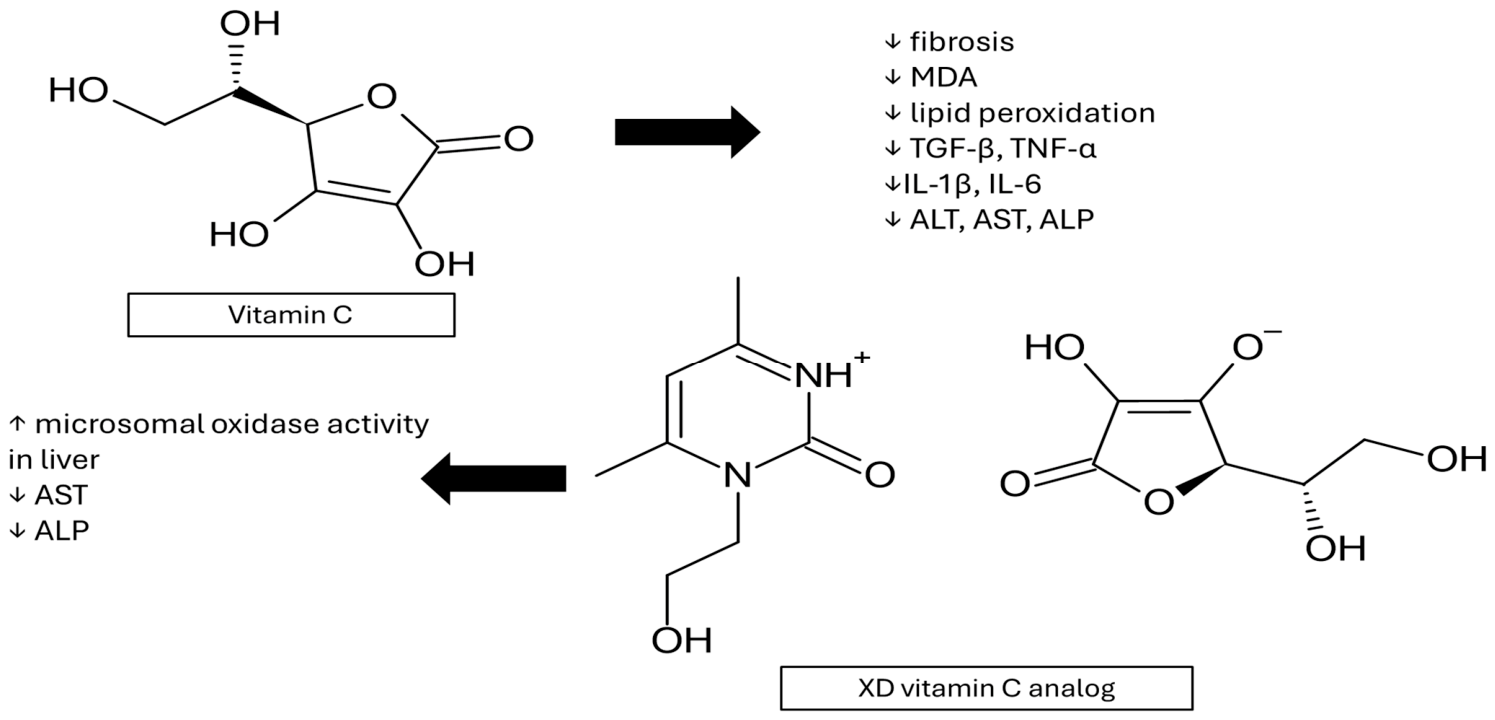
Vitamin C is an organic compound found in plants, and it is known for its antioxidant properties, since it can donate hydrogen atoms and form stabilized ascorbic acid radicals [43]. However, a deficiency appears due to its reduced production and its high excretion rate [44]. In a study on male Wistar albino rats, the efficacy of ascorbic acid on liver fibrosis was investigated [45]. Vitamin C was tested in doses of 75 mg, 150 mg, and 225 mg, orally, in NAFLD provoked by bile duct ligation, in order to induce liver fibrosis. The administration of vitamin C was initiated 3 days after the surgery and lasted for 14 days. On the 14th day, liver tissue was collected, and the efficacy was evaluated histopathologically. The results showed that as the dosage increased, the degree of liver fibrosis was reduced: the low-dosage-treated group showed 40% severe fibrosis, and in the middle-dosage group this reduction was 20%, whilst in the high-dosage group no fibrosis was detected. These results are also confirmed by the in vitro results, which evaluated malondialdehyde (MDA), whose levels were normalized on the low dosage and decreased as the dose increased. Thus, vitamin C is shown to inhibit lipid peroxidation and liver fibrosis, decreasing also TGF-β and TNF-α. Although no causal relation between vitamin C levels and NAFLD risk has been recorded [46], very high doses administered in C57BL6 mice, fed with a high-fat and high-fructose diet, significantly suppressed the development of NASH, independently of the catabolic process, with increases in digestion and water intake [47]. These outcomes were verified by the reduction in body weight, adipocyte size, liver weight, and liver-to-body weight ratio. Additionally, free fatty acid (FFA) and triglyceride content in the liver was reduced, together with the steatosis, ballooning and NAFLD activity score, and the lobular inflammation (parallel decrease in IL-1β, IL-6, ICAM-1 levels). These effects were also followed by ALT, ALP and AST normalization, but with no significant effects on serum glucose and FFA serum levels.
In accordance with Vitamin’s C beneficial effect, the hepatoprotective effects of a new pyrimidine derivative, L-ascorbate 1-(2-hydroxyethyl)-4,6-dimethyl-1,2-dihydropyrimidine-2-one (XD), synthesized from (1-(2-hydroxyethyl)-4,6-dimethylpyrimidin-2-one (Xymedon), was evaluated in rats exposed to carbon tetrachloride (CCl4) [48]. Xymedon has been developed as a tissue regeneration stimulant, and it is known as an enhancer of microsomal oxidase activity in the human liver [49,50]. In rats, oral administration either with Xymedon or XD, at doses of 10 and 20 mg/kg, took place for four days [48]. About 1–1.5 h after drug administration, CCl4 mixed with vegetable oil was given to induce liver damage. In the rats treated with Xymedon or XD, there was a non-significant trend toward a decrease in ALT levels compared to the control group, but AST levels were lower in the treated groups compared to the control. Additionally, XD treatment led to a decrease in alkaline phosphatase levels in the low-dosage group, with the 20 mg/kg dose showing no difference (Figure 3).

2.3. Vitamin D

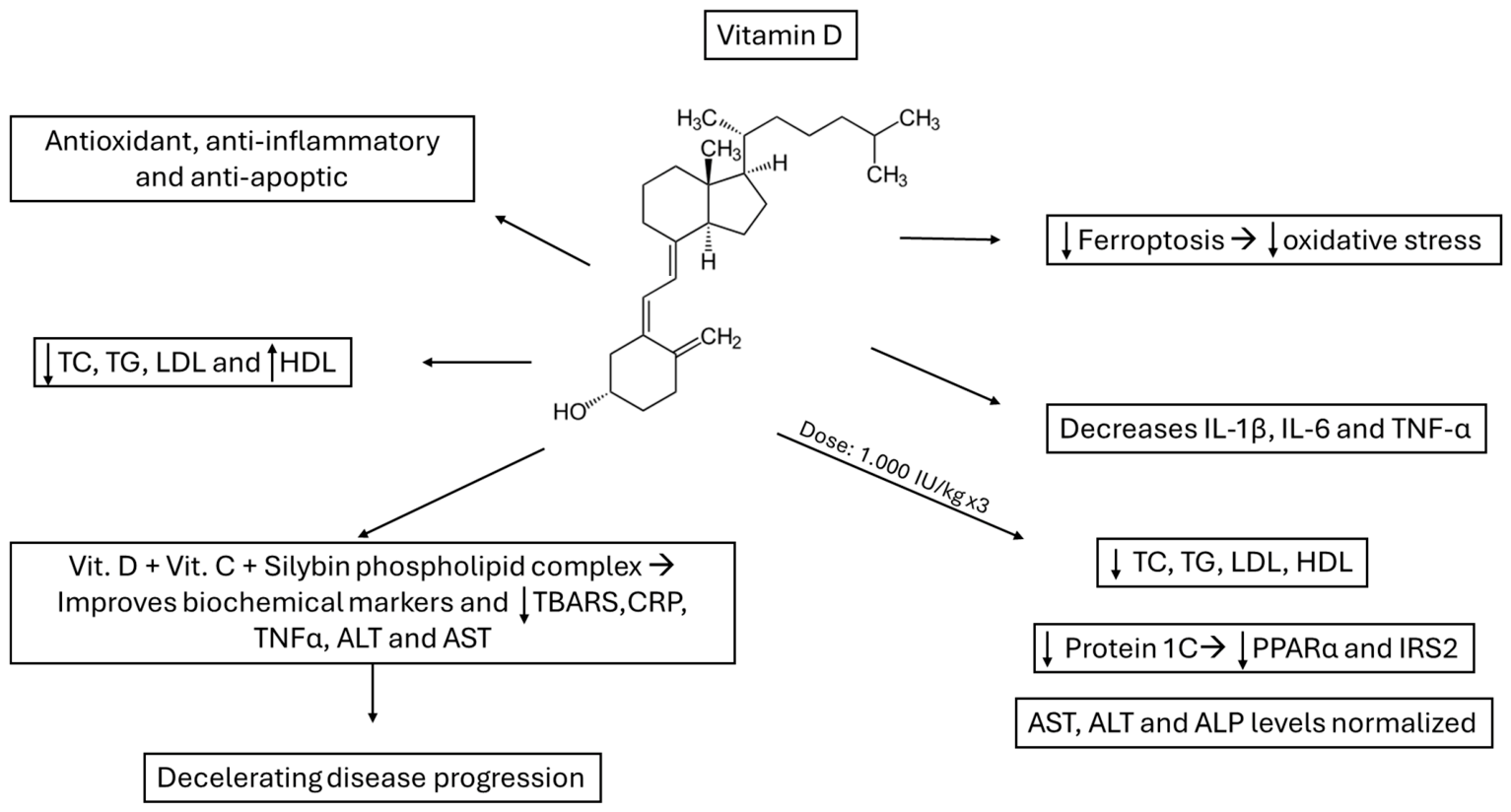
Vitamin D (1,25-dihydroxycholecalciferol) is a lipid-soluble hormone with antioxidant, anti-inflammatory, and anti-apoptotic effects [51]. It also increases the H2S levels in liver tissue [52]. Ferroptosis, resulting from iron overload, leads to cellular apoptosis due to oxidative stress, and has been found to be connected to liver conditions, with Vitamin D shown to be able to reverse this situation [53]. A study on C57BL/6J male mice fed with a high-fat diet for 4 weeks, in which Vitamin D was administered intraperitoneally, for 16 weeks, at a dose of 1.68 IU per kilogram, showed body weight normalization in the treatment group [54]. Additionally, the inflammatory markers TNF-α, IL-1β, and IL-6 decreased, compared to the diseased group. Serum TC, TG, and LDL were also reduced while HDL was increased, with normalized blood glucose levels. Additionally, a significant reduction was observed in blood insulin and the HOMA-IR index (p < 0.01). The mRNA expression of enzymes related to lipid synthesis and metabolism, such as fatty acid synthase (FAS), peroxisome proliferator-activated receptor gamma (PPARγ), fatty acid uptake (CD36), and lipoprotein lipase (LPL), were downregulated, with the mRNA levels of PPARα, conversely, being increased. The hepatic enzymes ALT, AST, and ALP were also decreased after the administration of Vitamin D. The assessment of Vitamin D in oxidative stress, as measured by GSH and MDA, showed that these marker levels were deteriorated in the HFD group and they were improved after Vitamin D administration. This was also affirmed in a PA-induced NAFLD condition in HepG2 cells, where the marked accumulation of ferric iron around the liver cells was alleviated in the treatment group.
Another study, which also used HFD, with the addition of 25% fructose (HFFD) in the water, was conducted in albino rats [55]. Vitamin D was administered at a dose of 1000 IU/kg intramuscularly, three times a week. Body weight did not differ between the groups; however, Vitamin D improved glucose and insulin levels, as well as HOMA-IR in the blood. Additionally, serum AST, ALT, and ALP levels were nearly normalized, and reduction was also observed in TC, TG, LDL and HDL. The activity of antioxidant enzymes (SOD and CAT) decreased in the treatment group, compared to the NAFLD non-treated group; however, the parallel GSH level increase and MDA level decrease, by up to 30%, indicated the antioxidant potency of the vitamin. In the NAFLD group, the transcription factor NF-kB was up-regulated, and the anti-inflammatory cytokine IL-10 was decreased, with these results being reversed in the treatment group. Finally, Vitamin D diminished the mRNA levels of sterol regulatory element-binding protein 1c (SREBP-1c) and increased the peroxisome proliferator-activated receptor alpha (PPARα) and the insulin receptor substrate 2 (IRS2).
Another study used albino rats fed with a high–fat diet to test the efficacy of Vitamin D at a dose of 5 μg/Kg twice a week for 4 weeks and 12 weeks [56]. The results showed similar potency to the previously referred studies, testing also the duration of treatment on the respective outcomes. In both treatment groups, TC, TG, LDL, HDL, AST and ALT were measured and were found to be statistically significantly decreased, whilst HDL was increased. The reduction in glucose, insulin, and HOMA-IR was not time-dependent; in the 12-week treated group the reduction rate was lower, compared to the 4-week group. Regarding oxidative stress and inflammation, MDA levels in the 4-week treatment group were almost normalized, whereas in the 12-week group they were decreased, but not sufficiently in order to approach normal levels. Similar results were also observed for hepatic reactive oxygen species (ROS) and tumor necrosis factor-alpha (TNF-α). Both treatment groups showed improved collagen accumulation. The reduction in mercaptopyruvate sulfurtransferase (MPST) and TNF-α expression in the short-term treated group was greater than in the long-term treated group, compared to the control groups. Additionally, the expression of 8-hydroxy-2′-deoxyguanosine (8-OHdG) decreased by up to 60% in both treated groups. The apoptotic marker, hepatic caspase-3, increased only in the 12-week HFD group, and decreased following the administration of Vitamin D.
The effectiveness of a combination of silybin phospholipid complex, Vitamin D, and Vitamin E in treating NAFLD has also been studied in male NAFLD patients that were exposed to bisphenol A (BPA) [57]. The latter has been implicated in the pathogenesis and evolution of NAFLD [45]. In this study, male patients were administered 303 mg of silybin phospholipid complex, 10 mg of Vitamin D, and 15 mg of Vitamin E (RealSIL 100D) twice a day for 6 months. At the end of the six-month period, the patients exhibited improved biochemical markers pertaining to inflammation and liver function. In greater detail, the levels of thiobarbituric acid reactive substances (TBARS), C reactive protein (CRP) and tumor necrosis factor alpha (TNF-α) were significantly decreased in comparison to their baseline levels at the start of the study, indicating that RealSIL 100D had an anti-inflammatory role. The levels of alanine aminotransferase (ALT) and aspartate aminotransferase (AST) were significantly decreased, while insulinemia also showed statistically significant improvement. The metabolism of BPA increased, as well as the conjugated BPA urine amount, and a reduction in its free form was noted. Thus, the use of silybin phospholipid complex, Vitamin D, and Vitamin E may be beneficial in improving the biochemical markers of NAFLD patients, decelerating disease progression, and indicating also the positive role of combined supplementation towards a multi-component disease such as NAFLD [58] (Figure 4).

3. Carotenoids

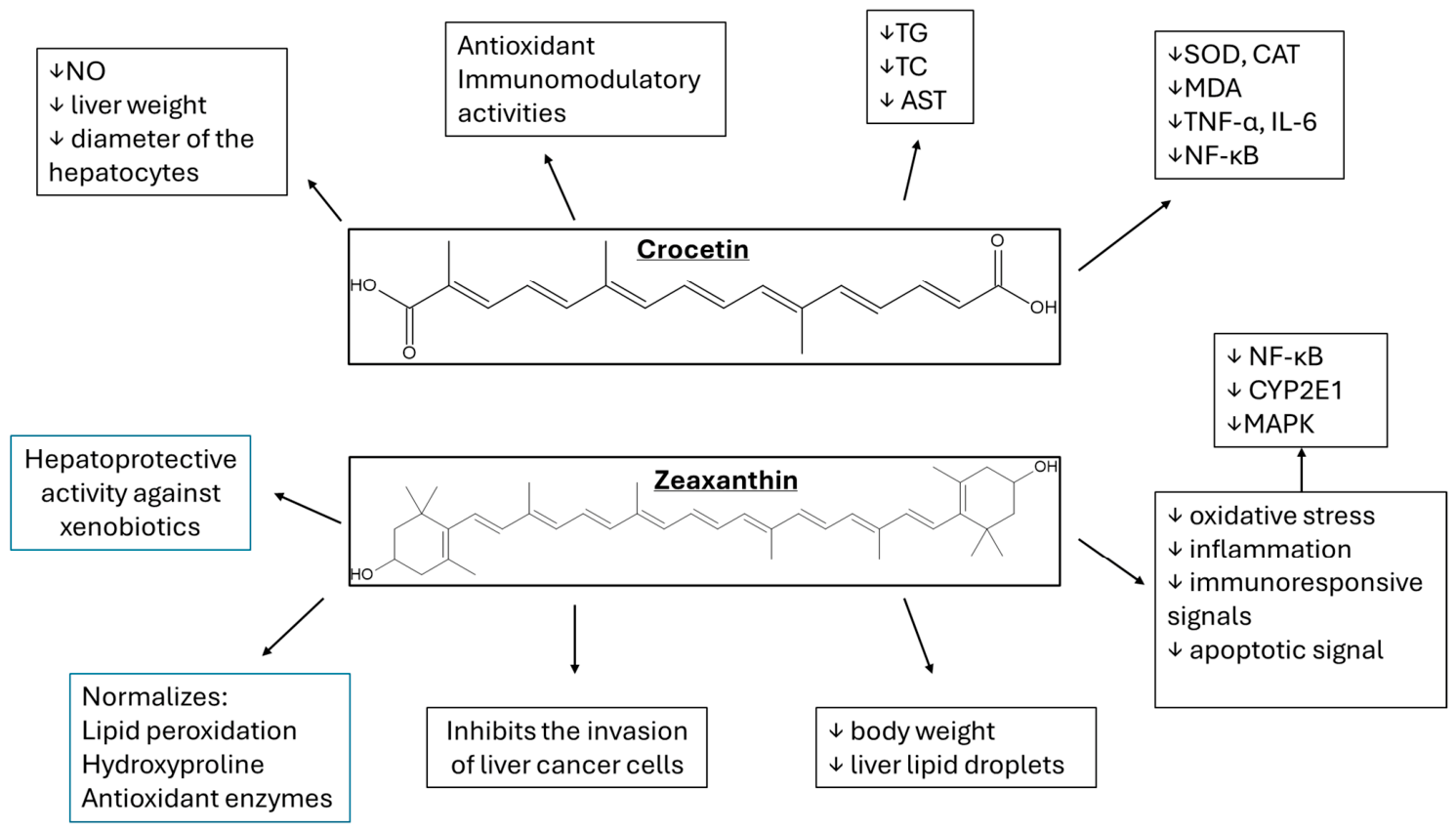
Carotenoids are naturally occurring lipophilic, colored antioxidant structures, with various properties, partly derived from ROS scavenging; this may render them tools for protection or treatment of chronic diseases, since they have shown cardiovascular disease marker improvement, cell proliferation and metabolic abnormality regulation [59]. Among the carotenoids, zeaxanthin (ZEA) is an alcohol-containing compound with potential liver protective activity against various xenobiotics such as paracetamol, ethanol and carbon tetrachloride (CCl4), with serum liver marker normalization and improvement in levels of lipid peroxidation, antioxidant enzyme and hydroxyproline (an indicator of oxidative fibrosis) [60]. Additionally, liver cancer progression and cancer cell-invasion inhibition was shown [61]. ZEA has also been shown to reverse alcoholic fatty liver disease progression. It reduced body weight, liver lipid droplets, oxidative stress and inflammation, inhibiting also the immunoresponsive and apoptotic signals, with low expression of NF-κB, and modulation of cytochrome P450 2E1 (CYP2E1) enzyme and mitogen-activated protein kinase (MAPK) [62]. Additionally, ZEA (at 12.5 and 25 mg/kg) has been tested in an MCD diet (for 6 weeks) for the prevention of NASH in male Mongolian gerbils [63]. Hematoxylin–eosin and Masson trichrome staining were used to test steatosis, inflammation and collagen deposition in liver tissue sections, with mild (at 25 mg of ZEA) and no (at 25 mg) fibrosis occurrence at Masson trichrome assay, and statistically significant hepatoprotection at 25 mg of ZEA (with no significant difference compared to the control group). Similar levels to the baseline were recorded also for lipid hydroperoxides, which were decreased-dose dependent.
Another dicarboxylic apocarotenoid, derived from Crocus sativus L., is crocetin (CRO), with antioxidant and immunomodulatory activities [64]. It has been shown to prevent morphine-induced liver toxicity (acute toxicity on a 48-day treatment) with significant decrease in liver weight, diameter of the hepatocytes and the central hepatic vein, and of liver enzyme and NO levels [65]. Similar protective results, with anti-inflammatory characteristics, were shown for CRO at lipopolysaccharide/D-galactosamine-induced fulminant hepatic failure, improving liver morphology and liver markers in serum, with apoptosis and pro-inflammatory cytokines protein or mRNA expression inhibition (p53, caspases and Bcl-2, NF-κB) [66]. Apart from xenobiotics and inflammatory compounds, CRO has also reversed liver injury provoked by infections, such as Dengue virus, without affecting the virus production [67]. In this research [67], apoptosis and the expression of pro-inflammatory genes decreased significantly, with a concomitant reduction in nuclear translocation of NF-κB. In the same study, modulation of the antioxidant status was detected, with significant, compared to the non-treated animals, increase, and no statistical difference from the control group in the levels of SOD, catalase and GPx. CRO has been tested on HFD mice at doses 10, 30 and 50 mg/kg daily by oral gavage [68]. The body weight and the liver morphology and index were improved, especially in the medium- and high-dose groups. Furthermore, a decrease in serum and liver TC and TG levels, and bilirubin, AST and blood urea levels, was shown, but not in a dose-dependent manner or with statistical significance. The same potency was observed at the SOD, CAT, MDA, TNF-α and Il-6 levels, accentuating the antioxidant (additionally HO-1 and Nrf-2 improvement) and anti-inflammatory effect of CRO, which at least partly supports the improvement of ballooning degeneration, steatosis, NAFLD, and lipid-droplet accumulation scores. These results cumulatively render CRO a promising bioactive ingredient, mitigating many of the parameters of NAFLD progression (Figure 5).

4. L-Carnitine

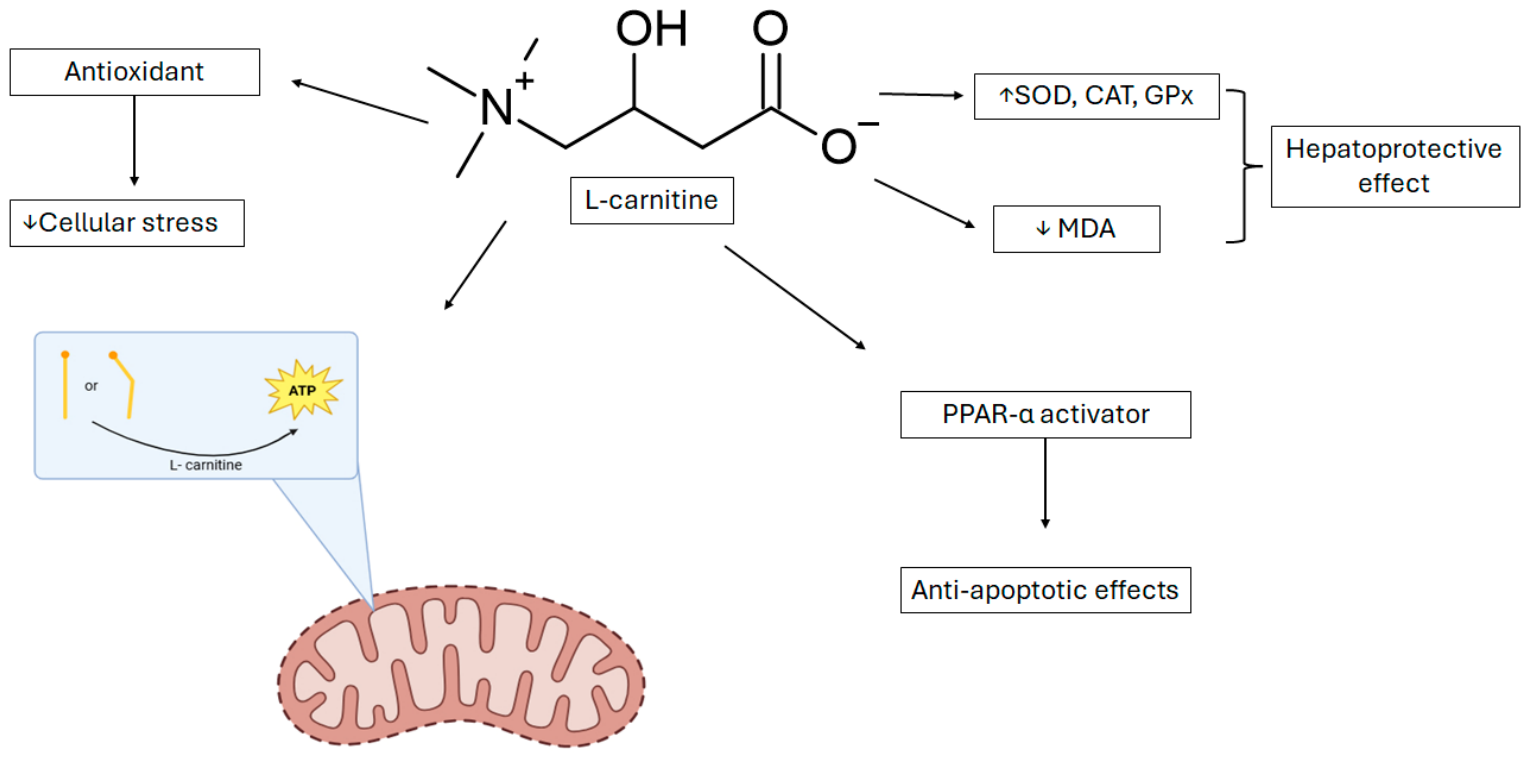
L-carnitine is a naturally occurring compound that plays a key role in transporting fatty acids across the inner mitochondrial membrane for beta-oxidation. It also functions as an antioxidant, reducing cellular metabolic stress. Studies have shown that L-carnitine exhibits significant free-radical scavenging properties [69]. Additionally, L-carnitine has been found to alleviate or prevent liver damage caused by various factors [70]. Peroxisome proliferator-activated receptors (PPARs) are transcription factors involved in regulating fatty acid oxidation and oxidative stress. L-carnitine has been shown to activate PPAR-α in renal cells, contributing to its anti-apoptotic effects, suggesting that PPAR-α may mediate its hepatoprotective actions [71]. In one study, human hepatocyte cells (HL7702) were pretreated with various concentrations of L-carnitine for 12 h, before being exposed to hydrogen peroxide (H2O2) for induction of oxidative stress [72]. The results indicated that L-carnitine significantly protected these cells from H2O2-induced cytotoxicity, with doses ranging from 0.1 to 3 mM, improving cell viability. Further analysis revealed that L-carnitine reduces the generation of reactive oxygen species (ROS), as indicated by a significant decrease in DCF (2′,7′-dichlorofluorescein) fluorescence intensity. Additionally, L-carnitine treatment increased the expression of PPAR-α, as well as the antioxidant enzymes superoxide dismutase (SOD) and catalase (CAT), highlighting its protective mechanism, at least partly through PPAR-α activation [72]. L-Carnitine significantly reduced hepatic steatosis, triglyceride content, and serum ALT/AST levels in rats treated with deep-frying oil [73]. It also upregulated hepatic antioxidant enzymes (SOD, CAT, GPx) and lowered MDA levels, suggesting protective effects against oxidative stress and fatty liver development by enhancing endogenous antioxidant defenses (Figure 6).

5. Glucosamine

Glucosamine (GLC) is an amino monosaccharide glucose derivative, vital for producing glycosaminoglycans, glycosylated proteins, and lipids, in the cartilage and synovial fluid. It exhibits anti-inflammatory properties by reducing the expression of interleukins (IL)-1β, IL-6, and TNF-α, as well as inhibiting the assembly of the NLRP3 inflammasome [74,75], with these effects potentially rendering it beneficial in treating non-alcoholic fatty liver disease (NAFLD). Li et al. examined the therapeutic effects of GLC on NAFLD, and its underlying mechanisms [76]. An NAFLD model was established in mice with a high-fat and high-sugar fed diet (HFHSD), followed by a 12-week GLC treatment [76]. GLC significantly reduced serum levels of triglycerides (TGs), low-density lipoprotein cholesterol (LDL-C), and free fatty acids (FFAs). Both high and moderate doses of GLC also lowered serum total cholesterol (TC). Additionally, GLC notably decreased serum AST and ALT levels, suggesting liver-damage reversal in NAFLD. GLC treatment decreased serum levels of pro-inflammatory cytokines TNF-α and IL-6, while increasing IL-10. This suggests that GLC improves systemic inflammation in NAFLD by enhancing the release of anti-inflammatory factors. Histological analysis showed a significant reduction in fat vacuoles and lipid droplets in liver tissue, with a reduction in their size. At the gene expression level, GLC treatment reversed the upregulation of SREBP-1, PPAR-α, and ACC, and increased the expression of CPT1, which is involved in fatty acid oxidation. These changes indicate that GLC improves liver lipid metabolism by inhibiting de novo lipogenesis (DNL) and promoting fatty acid β-oxidation. Furthermore, the protein levels of TLR4, MYD88 (myeloid differentiation primary response 88), and CD14 were significantly reduced after GLC treatment, suggesting that GLC alleviates liver inflammation by additionally modulating the TLR4/NF-κB pathway [76].

6. Betaine

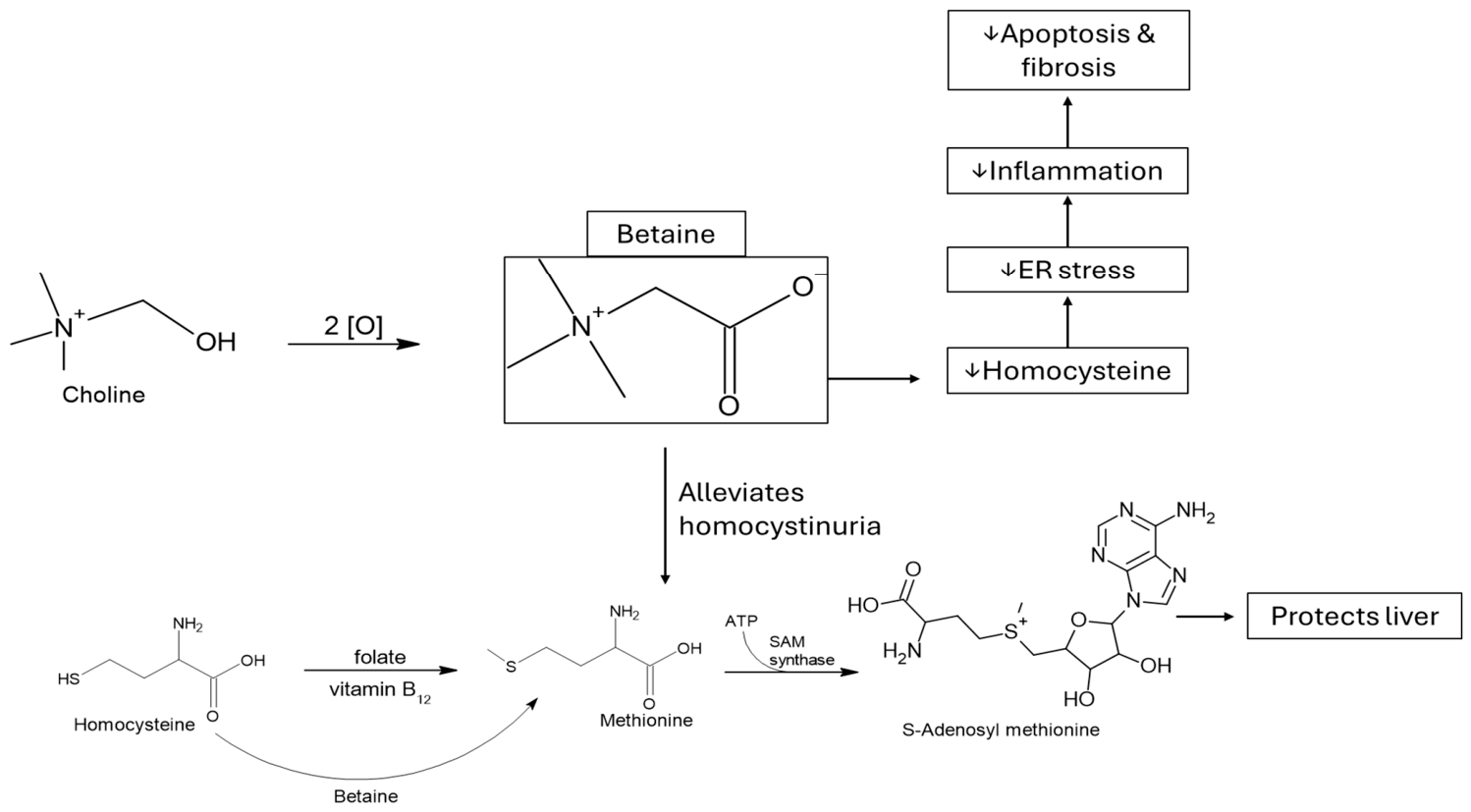
Betaine (BET) is a non-toxic trimethylated glycine derivative [77]. It is able to ameliorate homocystinuria, a disorder characterized by high levels of the amino acid homocysteine. Its main mechanism of action is the ability to convert homocysteine to methionine [78]. Also, methionine can increase S-adenosylmethionine (SAM) levels, which has a protective role against liver triglyceride deposition by activating a cascade that favors the formation of very low-density lipoprotein [79,80,81]. Decreased homocysteine contributes to lower endoplasmic reticulum stress, thus avoiding apoptosis, inflammation and fibrosis [82] (Figure 7). The effectiveness of BET was evaluated on male C57BL/6 mice in which a high-sucrose diet caused NAFLD conditions [78]. BET was administrated orally, dissolved at a concentration of 1%. The results showed reduced triglyceride accumulation and total cholesterol levels, and normalized ALT levels. In addition, in the treatment group, AMPK (AMP-activated protein kinase, a suppressor of glycolic and lipogenic pathways and promoter of fatty acid oxidation) increased up to 80%, compared to the control. BET also inhibited the ACC (acetyl-CoA carboxylase) activity in the liver, an enzyme that suppresses the de novo synthesis of lipids, which is elevated during the progression of the disease. The transcriptional factors SREBP and ChREBP, of genes that are part of the lipogenic pathway, are inhibited by BET at 30% and 40%, respectively. Finally, the grade of steatosis was found to be improved. In clinical trials [83,84], BET reduced the serum hepatic enzymes, but the difference was not statistically significant compared to the placebo. Also, ALP was normalized, with blood circulation improvement and lipid level decrease. Steatosis, fibrosis and necroinflammation were decreased; however, compared to the placebo, only the steatosis grade was significant.

7. Low Molecular-Weight Thiol-Containing Compounds

7.1. Lipoic Acid

Lipoic acid is an antioxidant agent that acts as cofactor in the α-keto acid dehydrogenase complexes of the mitochondria. It replenishes thiols and is an oxidative stress modulator, found to improve liver metabolism [85,86]. The effect of the co-administration of R/S-α-lipoic acid to fructose-fed rats was assessed. A fructose-rich diet was administered to rats to induce oxidative stress and metabolic changes, compared to a control group fed a standard diet [87]. In terms of liver function, the administration of lipoic acid reduced liver oxidative stress and enhanced antioxidant capacity, along with an increase in the expression of antioxidant enzymes. Specifically, GSH content was significantly lower in the untreated rats compared to the group receiving lipoic acid. Moreover, the lipoic acid-treated group showed a decrease in the relative gene expression of catalase and SOD1, potentially due to improved balance of the oxidative load. Additionally, lipoic acid reduced the expression of uncoupling protein 2 and PPARδ protein, while increasing PPARγ levels. It also restored the baseline gene expression of SREBP-1c and lipogenic genes, such as fatty acid synthase and glycerol-3-phosphate acyltransferase. These results indicate that lipoic acid has the capacity to improve the antioxidant defense of liver cells and their metabolic status [87]. Activation of pyrin domain-containing 3 (NLRP3) inflammasome in the liver has been associated with hepatic fat accumulation [88]. The effect of lipoic acid administration on NLRP3 inflammasome activation and NAFLD progression was investigated in groups of a high-fat diet (HFD) plus streptozotocin (STZ)-induced T2DM rats [89]. In the study, T2DM rats induced by HFD/STZ were orally treated with ALA (50, 100, or 200 mg/kg BW) once daily, for 13 weeks. The results revealed that the liver triglyceride levels in T2DM rats were originally 11.35 ± 1.84% and that after administration of 50, 100, and 200 mg/kg BW of lipoic acid the liver triglyceride content in T2DM rats significantly decreased to 4.14 ± 0.59%, 4.02 ± 0.41%, and 3.01 ± 1.07%, respectively. Additionally, the dose of 200 mg/kg BW lipoic acid notably reduced the hepatic levels of proteins associated with NLRP3 inflammasome activation, caspase-1, and interleukin-1β. In the same context as previously stated, it decreased the expression of sterol regulatory element-binding protein-1c, while the expression of hepatic lipid oxidation-related proteins, including carnitine palmitoyl transferase, was increased, after the 200 mg/kg lipoic acid treatment [89]. In another study employing mice fed with a methionine–choline deficient (MCD) diet, lipoic acid administration greatly improved fat accumulation, as in the group receiving 100 mg/kg/day i.p. lipoic acid, where single fat droplets were observed in comparison to mild microvesicular hepatic steatosis found in the MCD group [90]. Lipoic acid administration led to a reduction in liver malondialdehyde, nitrate, and nitrite levels. By enhancing SOD activity and GSH levels, it helped to ameliorate lipid peroxidation and nitrosative stress in hepatic steatosis. Furthermore, lipoic acid increased the levels of palmitic, stearic, arachidonic, and DHA fatty acids in the fatty liver [90]. Regarding its antioxidant abilities, in another study, the levels of antioxidant enzymes heme oxygenase-1 (HO-1) and Cu/Zn-superoxide dismutase were elevated in the liver of rats treated with lipoic acid [79]. Additionally, proteins linked to innate immune activation like Toll-like receptor-4 (TLR4) and high-mobility group protein box-1, as well as inflammatory markers (vascular cell adhesion molecule-1, intercellular adhesion molecule-1, and cyclooxygenase-2) were reduced in the liver of the lipoic acid-treated rats [91]. Changes in gene expression have also been documented after lipoic acid administration. Apart from changes in genes related to lipogenesis, a study observed changes in HO-1 and CYP2E1 gene levels [92]. The experiment was conducted on three groups of male Wistar rats, which were given a control diet, a hypercaloric choline-deficient diet (HCCD), or an HCCD supplemented with lipoic acid. Adding lipoic acid to the HCCD mice led to an 80% (p < 0.05) increase in Hmox1 gene expression compared to the HCCD group, and a 38% (p < 0.05) reduction in CYP2E1 expression, which was only slightly elevated in the HCCD group [92]. Lipoic acid has also been shown to ameliorate ER stress and to restore mitochondrial protein homeostasis in HepG2 cells that were treated with palmitic acid and oleic acid to establish an in vitro NAFLD model [93]. When steatosis was induced, these cells were treated with 1μΜ and 5 μΜ lipoic acid. Lipoic acid (ALA) treatment at both concentrations restored the levels of proteins related to UPRmt (mitochondrial unfolded protein response), and the ER stress markers, including IRE1α (inositol-requiring enzyme-1), CHOP (C/EBP Homologous Protein), BIP (Binding Immunoglobulin Protein), and BAX (Bcl-2-Associated X Protein), which were significantly reduced following ALA treatment. Additionally, ALA enhanced ER-mediated protein glycosylation, as shown by the decreased expression of GPX1 (Glutathione Peroxidase 1), GSTP1 (Glutathione S-Transferase Pi 1), and GSR (Glutathione-Disulfide Reductase) [93]. Finally, the effects of lipoic acid supplementation were assessed on human patients [94]. In a double-blind randomized clinical trial, fifty patients with NAFLD were assigned to receive either two capsules of α-lipoic acid, each containing 600 mg, or two placebo capsules daily for 12 weeks. No significant differences were derived between the groups in terms of liver steatosis severity and serum liver enzymes at the end of the study. However, α-lipoic acid supplementation led to a statistically significant increase in the quantitative insulin sensitivity check index (QUICKI) (p = 0.033), serum adiponectin levels (p = 0.008), and the adiponectin-to-leptin ratio (p = 0.007), compared to the placebo group [94]. Concerning the diabetes-induced liver injury treatment, another study investigated the hepatoprotective effects of alpha-lipoic acid (ALA) and its modulation of the sulfane sulfur/hydrogen sulfide (H2S) pathway in a rat model of type 2 diabetes mellitus (T2DM) [95]. ALA treatment significantly prevented liver damage, improved antioxidant status, and reduced inflammation in diabetic rats. It also enhanced hepatic expression of H2S-producing enzymes such as cystathionine γ-lyase and 3-mercaptopyruvate sulfurtransferase, and elevated hepatic H2S and sulfane sulfur levels [95]. In contrast, inhibition of this pathway deteriorated the liver injury. These findings suggest that ALA could offer protection against diabetes-induced liver damage, via activation of the hepatic sulfane sulfur/H2S pathway, offering a novel therapeutic target.

7.2. S-Allylmercaptocysteine (SAMC)

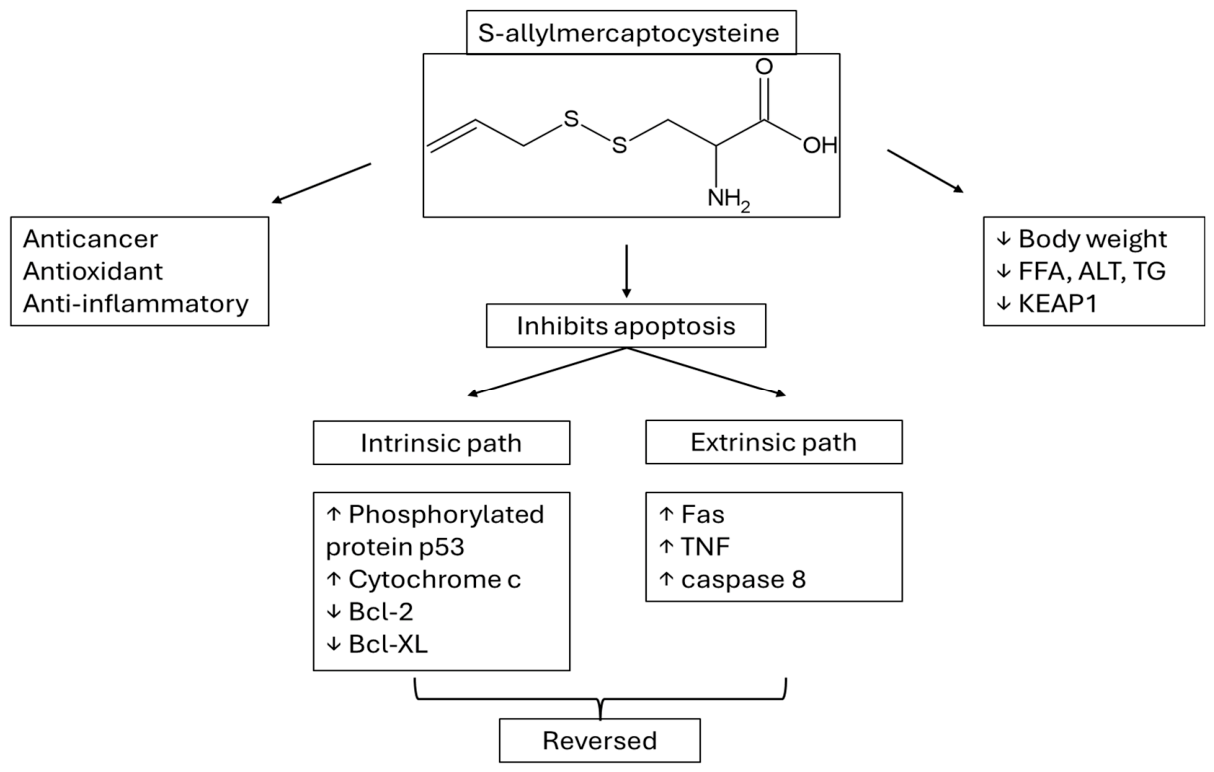
S-Allylmercaptocysteine is a water-soluble component from aged garlic. It seems to possess anticancer, antioxidant, and anti-inflammatory properties [96,97]. It inhibits apoptosis and enhances cell autophagy in order to protect against liver diseases, and has also been found to have a protective role in liver disease induced by acetaminophen or tetrachloride, through the inhibition of CYP2E1, the major enzyme of their metabolism [98,99]. One study was focused on the apoptosis mechanism, and used SD female rats, whilst the administration of SAMC was intraperitoneal, 200 mg/Kg, three times per week, for 8 weeks [100]. The lipid accumulation and inflammation were decreased significantly, and the NAS score decreased by almost 50%. SAMC alleviated the apoptosis in the treatment group by reducing the expression of caspase-3, with the intrinsic and extrinsic apoptotic signaling pathways being studied. The intrinsic signaling includes the phosphorylated protein p53 and cytochrome c, with increased expression in the NAFLD. The antiapoptotic proteins B-cell lymphoma 2 (Bcl-2) and B-cell lymphoma extra-large (Bcl-XL) decreased in the NAFLD group. These marker levels were inverted in the treated group. Regarding the extrinsic pathway, the protein expression of Fas, TNF-related apoptosis-inducing ligand (TRAIL), Fas-associated protein with death domain (FADD), and cleaved caspase-8 were evaluated, with their expression being suppressed after the administration of SAMC. To further investigate the mechanism of apoptosis, the efficacy of liver kinase B1 (LKB1)/AMP-activated protein kinase (AMPK) and phosphoinositide 3-kinase (PI3K)/AKT pathways were also evaluated. SAMC restored these low protein levels, and thus reduced the activation of caspase-3, the initiator of inflammation and cell apoptosis in the liver; whilst the expression of LKB1 and Akt was significantly high, it was higher in the treated group than in the control.
Another study used SD rats and C57BL/6N mice [88]. In the first case, NAFLD conditions were induced by a high-fat diet for 12 weeks, and SAMC was administered at 200 mg/Kg from the 9th to the 12th week of the study. In contrast, in the C57BL/6N mice, NAFLD was induced by an MCD diet for 6 weeks (with SAMC also being given at 200 mg/Kg for 3 weeks, 3 times per week) [101]. In both groups, a reduction in body weight, fat mass, serum FFAs, ALT and serum and liver TG, was recorded (Figure 8). The expression of the liver enzymes that takes place in the liver metabolism of xenobiotics was also evaluated, with SAMC found to upregulate the expression of the detoxifying liver enzymes of phases 1 and 2; thus, the liver avoids the encumbering of NAFLD. SAMC reduced the expression of KEAP1, the inhibitor of the nuclear factor erythroid 2-related factor 2 (Nrf2). Therefore, the expression of Nrf2 was increased with relevant regulation of the activity of detoxifying enzymes. Regarding oxidative stress and inflammation, the expression of IL-8, IL-1β, cleaved caspase-1, ASC, NLRP3, NLRP6 and NF-κB-p65 was reduced in the treated group, while the expression of IκBα was increased.

7.3. Diallyl Sulfide and Diallyl Disulfide

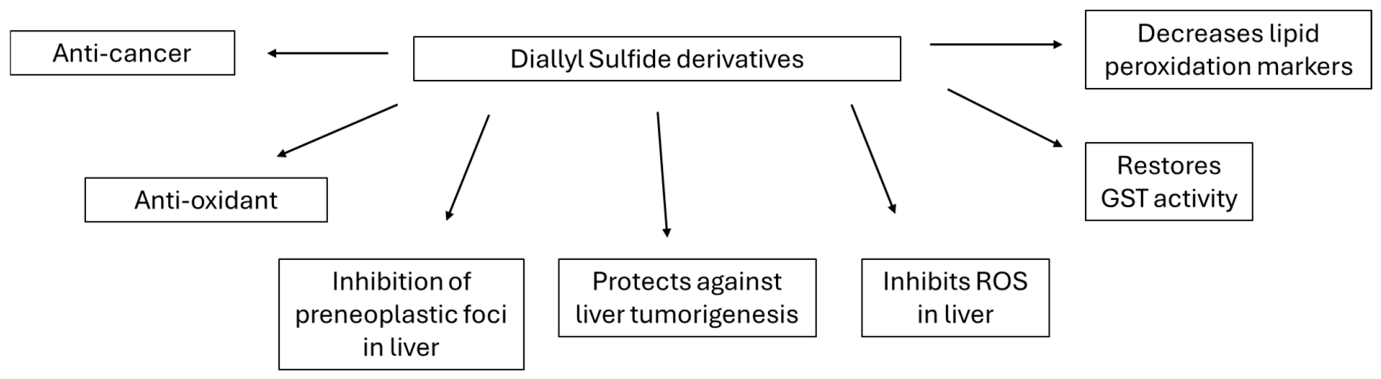
Diallyl sulfide (DAS) is a major component of garlic, proven to have various health benefits. DAS exhibits anti-cancer and antioxidant effects [102,103]. Particularly in the liver, the development of liver preneoplastic foci, caused by aflatoxin-1 and N-nitrosodiethylamine (NDEA), in rats, seems to be inhibited by dietary consumption of DAS [104]. DAS also exhibits a protective effect against liver tumorigenesis induced by NDEA, as it seems to be able to restore all liver functions that were impaired by NDEA, inhibiting the formation of ROS and restoring glutathione-S-transferase (GST) activity [105]. In a rat model of hepatic ischemia-reperfusion injury, pretreatment with DAS lowered the levels of lipid peroxidation markers (lipid hydroperoxides and 15-isoprostane-F2t), indicating a further antioxidant role [106]. In a study investigating the therapeutic potential of diallyl disulfide (DADS) in murine models of NASH induced by a methionine- and choline-deficient diet (MCD) or a high-fat diet (HFD), DADS treatment significantly reduced hepatic steatosis, inflammation, and oxidative stress [107]. It modulated key regulators of lipid metabolism, including SREBP1, ApoA1, CREBH, FGF21, PPARα, and SCD1, and decreased lipid peroxidation and pro-inflammatory markers such as TNF-α, IL-6, and NF-κB. However, these positive results may at least partially be compromised by negative effects of DADS, which may limit its application. In one study, the impact of low-dose DADS on lipid metabolism and gut microbiota in mice was also explored [108]. Histological analyses revealed DAS-induced fatty liver, while serum lipid profiles showed elevated triglycerides and cholesterol. RT-qPCR indicated altered expression of lipid metabolism-related genes. Gut microbiota analysis, via 16S rDNA sequencing, showed decreased Bacteroidetes and increased Firmicutes, resembling high-fat diet effects. KEGG pathway analysis highlighted key metabolic pathways affected by DADS. These findings suggest that low-dose DADS disrupts lipid homeostasis and gut microbiota, potentially mimicking diet-induced metabolic alterations, although also suggesting that DADS and/or DAS may ameliorate liver fibrosis through multi-pathway modulation (Figure 9), offering promise as potential therapeutic agents for managing this complex liver disorder. However, the potential negative impacts of these derivatives have to be considered, whilst their application data in humans are still limited [109,110].

7.4. Sulforaphane

Sulforaphane is found in cruciferous vegetables, and especially in broccoli [111]. It has a protective role in cells against carcinogens and generally against electrophiles, which are highly active and oxidant. This is achieved by the activation of detoxification and antioxidant enzymes and the suppression of inflammation [112]. Also, it is correlated with the upregulation of the Kelch-like ECH-associated protein 1 (Keap1), the NF-E2-related factor-2 (Nrf2) pathway and the NF-kB pathway [113]. Its efficacy was evaluated in humans through a double-blind clinical trial and in an animal model [114]. The administration of sulforaphane was carried out through the broccoli extract, which contains high concentrations of a precursor, the glucoraphanin and the glucosinolate. Patients in a clinical trial received 30 mg of broccoli extract or placebo in a capsule for 2 months. The animal study was made on male Sprague Dawley rats, which were on an AIN-76 diet for 4 weeks. The broccoli extract was administrated in 3 different doses: 62.5 mg (low), 125 mg (medium) and 250 mg (high). The rats were also injected with N-nitrosodimethylamine intraperitoneally three days per week for 4 weeks to induce the NAFLD conditions [114]. The clinical trial results showed that the reduction in ALT, AST and γ-GTP was up to 5%, with the TC and TG reduction being a little higher. LDL did not change at all, while HDL was significantly decreased; however, the 8-OHdG, an oxidative stress marker, was reduced by 20%. The in vivo results showed that the decrease in ALT and AST was dose-dependent, and the same applies to the GST activity.

8. Fatty Acids

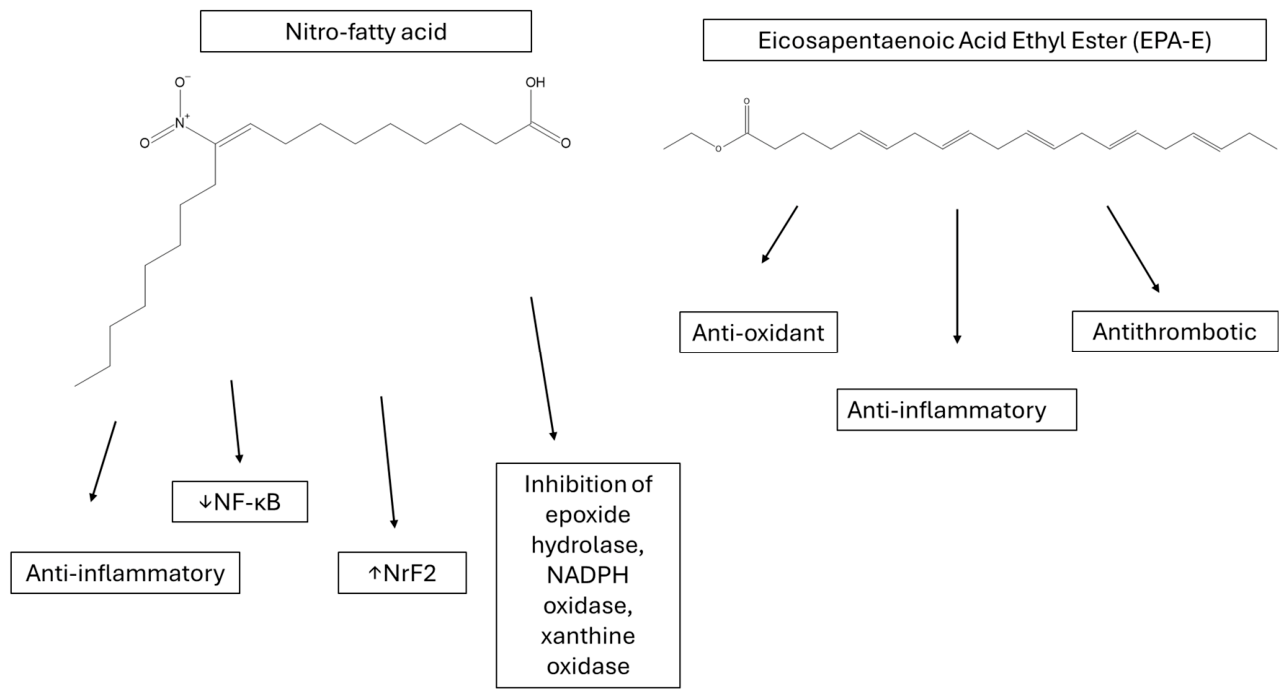
Eicosapentaenoic acid ethyl ester (EPA-E) is an agent used to treat hypertriglyceridemia, while it has been used as an antithrombotic agent, with COX-1 inhibitory potency in the platelets [115]. There have also been reports of EPA-E having anti-inflammatory and antioxidant properties [116,117]. In one study, rats were fed a methionine- and choline-deficient (MCD) diet and treated with EPA ethyl ester (EPA-E) at a dose of 1000 mg/kg/day, via oral gavage, for either 8 or 20 weeks. EPA-E administration suppressed the formation of vacuoles in the liver and reduced hepatic triglyceride (TG) content by 25%, indicating that it could effectively mitigate hepatic steatosis and slow disease progression. Notably, no nodule formation was observed in MCD-fed rats receiving EPA-E. The treatment also significantly improved MCD-induced alterations in serum biomarkers, including AST, alkaline phosphatase (ALP), and total bilirubin levels, though ALT levels remained unchanged. Image analysis also revealed that EPA-E reduces liver fibrosis by approximately 60%, compared to the control group. Additionally, analysis of fibrogenic gene expression indicated that EPA-E significantly downregulates the expression of collagen a1(1), a2(1), and CTGF (connective tissue growth factor) genes, highlighting its role in inhibiting fibrogenesis [118]. Thus, EPA-E could be an efficacious therapeutic agent in the treatment of hepatic steatosis and fibrosis.
These effects of EPA-E are common with fish oil and generally with omega-3 polyunsaturated fatty acid (ω-3 PUFA) supplementation. Metabolic syndrome-related dyslipidemia contributes to NAFLD, and a study evaluated the effects of fish oil supplementation in rats with diet-induced hypercholesterolemia. Rats were assigned a standard diet, a hypercholesterolemic diet (HD), or HD plus fish oil for 16 weeks. Fish oil supplementation significantly reduced plasma triglyceride levels and hepatic myeloperoxidase activity, and improved erythrocyte superoxide dismutase activity [119]. Histopathological analysis revealed marked hepatic lipid accumulation in HD-fed rats, while fish oil-treated rats showed hepatocyte reorganization and reduced hepatic steatosis, suggesting that fish oil supplementation may mitigate lipid accumulation and oxidative stress, supporting its potential role and that of the ω-3 PUFA in the management of NAFLD associated with dyslipidemia. In the same way as with ω-3 PUFA, the bioactive endogenous lipids belonging to the N-acylethanolamine (NAE) group may assist with NAFLD progression [120]. A study evaluated NORM3, a formulation of co-micronized palmitoylethanolamide and rutin (PEA-Rut) with hydroxytyrosol (HT), in high-fat diet (HFD)-induced diabetes in mice [121]. NORM3 reduced body weight, fat mass, hepatic steatosis, and inflammation, and improved insulin sensitivity and glucose metabolism in vivo. It restored lipid homeostasis by activating AMPK and normalizing key genes like CPT1. Antioxidant activity was confirmed through reduced ROS and enhanced detoxifying enzymes, whilst in vitro, PEA-Rut and HT synergistically protected HepG2 cells from oxidative stress.
Omega-3 fatty acids have long been accepted as basic pillars of a healthy diet, since these unsaturated fatty acids are crucial components in the protection against several metabolic diseases and cancers [122,123]. The topical delivery of these substances has been tried before, with omega-3 encapsulation being a principal mechanism potentially giving rise to their shelf-life, improving the sustained release of the compounds and lipid peroxidation inhibition, although more research is needed [124,125,126]. In this context, a-tocopheryl linolenate (LIN-Toc)-based solid lipid nanoparticles (SLNs-TL), loaded with a-linolenic acid, were produced, in order to investigate their antioxidant properties and their potential involvement in the treatment of melanoma [127]. The synthesis of the LIN-Toc was conducted via esterification of α-linolenic acid with α-tocopherol, using DCC (N,N′-dicyclohexylcarbodiimide) and DMAP (4-dimethylaminopyridine). The resulting solid lipid nanoparticles were prepared via micro-emulsification of the produced esters, with the encapsulation of the α-linolenic acid. The evaluation of their antioxidant ability was conducted by employing a malondialdehyde (MDA) test on rat liver microsomal membranes, by the addition of the tert-butylhydroperoxide (t-BOOH), which induces lipid peroxidation. It was concluded that SLNs-TLs loaded with a-linolenic acid exhibited an increased antioxidant activity, indicating a role for them as excellent carriers, which protect fatty acids from degradation and which are important contributors to the establishment of antioxidant systems.

8.1. Nitro-Oleic Acid

Nitro-fatty acids have been found to possess anti-inflammatory properties, inhibiting pro-inflammatory pathways [128]. They suppress the expression of NF-kB and upregulate the Nrf2 activity [129,130]. They also inhibit the activity of the soluble epoxide hydrolase, NADPH oxidase and xanthine oxidase [131,132,133] (Figure 10). In a study with nitro oleic acid, C57BI/6j mice were used, fed with a high-fat diet for 20 weeks to achieve the NAFLD conditions [134]. The administration of the compound was performed by means of an osmotic pump on the back of the mice, in a concentration of 8 mg/kg/day, starting at the 14th week. Rosiglitazone was used as a reference for effectiveness. The results showed that the decrease in body weight and fat mass was more effective in the nitro-oleic acid-treated group than in rosiglitazone. The impact of nitro-oleic acid on the glucose levels was similar to that of rosiglitazone. ALT level was reduced up to 50% in both treatment groups, with cholesterol, free fatty acid and serum TG reduction being similar in both groups. The liver weight and the total hepatic TG were decreased in the nitro-oleic acid group, while in the rosiglitazone group they were increased, compared to the NAFLD group. As for oxidative stress, H2O2 generation was also decreased in the treated groups.

8.2. Plasmalogens

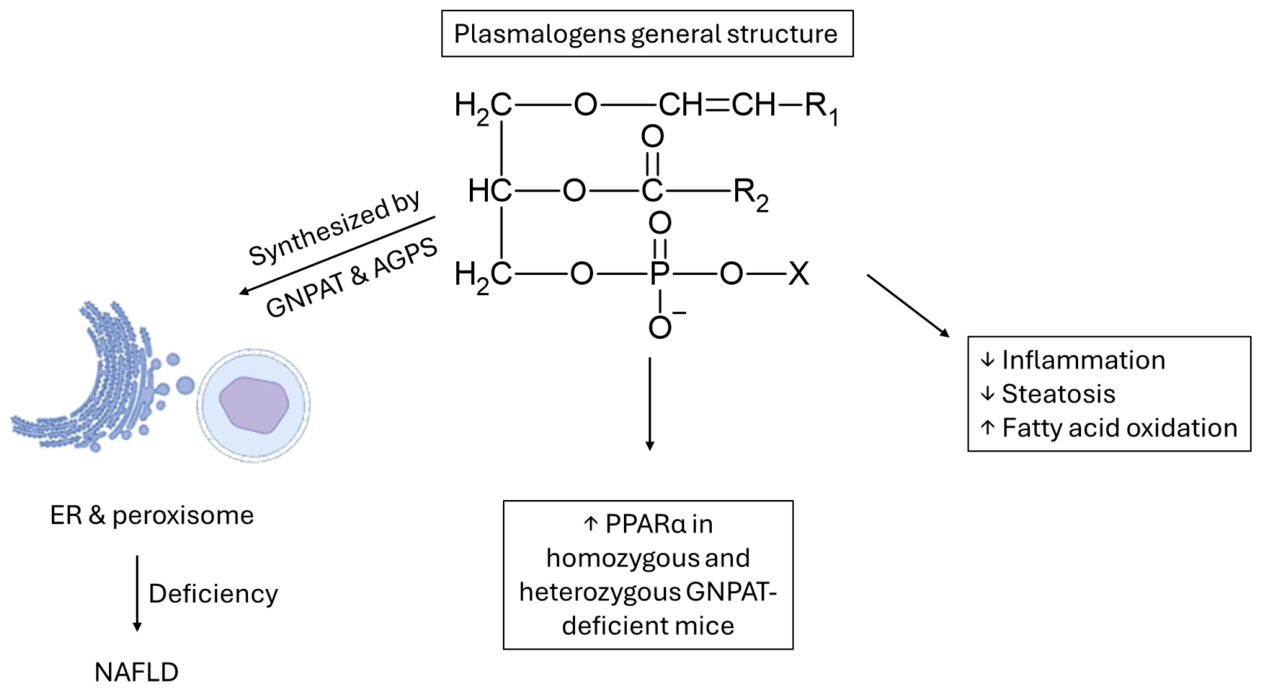
Plasmalogens are a subgroup of lipids synthesized in peroxisomes and the endoplasmic reticulum [135]. They are present in the nervous system, especially in cellular membranes, and play a protective role against oxidative stress [136,137]. Their deficiency is associated with several diseases, particularly with NAFLD, since the liver is the primary organ that contributes to their synthesis [138]. This deficiency primarily results from a lack of peroxisomal biogenesis or mutations in glyceronephosphate O-acyltransferase (GNPAT) and alkylglycerone phosphate synthase (AGPS), which cause Rhizomelic chondrodysplasia punctata type 1, 2, or 3, respectively (RCDP) [139]. A relevant study used two types of diet in two types of mice (C57BL/6N), which were fed a high-fat diet (HFD), a methionine-choline-deficient diet (MCD), or a high-fat high-cholesterol diet (HFHCD) and GNPAT heterozygous mice, which were fed HFD and administered fenofibrate. The treatment included the administration of alkyl glycerol (AG), a precursor of plasmalogen that enhances PPAR-α expression and prevents liver steatosis [140]. The AG in the MCD diet improved inflammation and steatosis, but did not affect body weight or blood insulin levels. It also increased the expression of PPAR-α. However, in heterozygous GNPAT mice, steatosis and inflammation were reversed. In the HFHCD, steatosis was improved by an increase in the PPAR-α mRNA expression in the mitochondria and peroxisomes, thus enhancing fatty acid oxidation (Figure 11). Deficiency in bile acids can lead to cholesterol accumulation in hepatocytes [141]. The administration of AG did not increase bile acid concentration or change the free cholesterol in cells.

9. Miscelllaneous Natural Supplements

9.1. Cannabis and Its Derivatives

Cannabis, used recreationally or for medical purposes such as chronic pain management, is derived from the Cannabis sativa plant [142]. Cannabidiol and Δ9-tetrahydrocannabinol (Δ9-THC), which are components of cannabis, appear to have potential applications in the treatment of liver disease, given their anti-inflammatory, antioxidant, and hepatoprotective properties, which they have exhibited both in vitro and in vivo. A connection between endocannabinoids, which are naturally occurring in the human body, and the development of hepatic diseases has been observed. Increased levels of endocannabinoids and their interaction with hepatic cannabinoid receptors have been implicated in inflammation, vascular alterations, and hepatocyte apoptosis, further supporting their role in the development and progression of liver diseases [143]. It has been demonstrated that the activation of cannabinoid receptor-1 (CB1) in mice is related to steatosis and increases lipogenesis in the liver through the induction of the expression of sterol regulatory element-binding protein-1c (SREBP-1c), along with the enzymes acetyl-CoA-carboxylase (ACCA) and fatty acid synthase (FAS) [144,145]. Endocannabinoids are also implicated in hepatic fibrosis, as CB1 activation has a pro-fibrogenic effect [146]. Circling back to Δ9-THC, it has been shown to possess hepatoprotective properties to some extent, as indicated by mouse model studies [147]. In mice with alcohol-induced liver damage, cannabidiol alleviated liver inflammation, evidenced by a reduction in mRNA levels of TNFα, MCP1, IL-1β, MIP2 (CXC ligand 2), and E-Selectin, along with a decrease in neutrophil accumulation [148]. Additionally, it mitigated oxidative and nitrosative stress by lowering lipid peroxidation and reducing the expression of NOX2 (NADPH oxidase 2) [148]. These observations suggest that cannabidiol might possess the same effect regarding NAFLD. Regarding the latter, cannabis use is linked to a lower prevalence of NAFLD [149]. The findings revealed that cannabis users, both dependent and non-dependent, had a significantly lower prevalence of NAFLD compared to non-users. Specifically, non-dependent cannabis users exhibited a 15% lower prevalence of NAFLD, while dependent users showed a 52% reduction (AOR: 0.49 [0.36–0.65]; p < 0.0001). Furthermore, dependent cannabis users demonstrated a 43% lower prevalence of NAFLD compared to their non-dependent counterparts. Cannabis consumption and its connection to NAFLD prevalence is further underscored by the fact that cannabis use has also been linked to a reduced prevalence of obesity and diabetes mellitus in both humans and mouse models of disease, both of which are independent risk factors for NAFLD [150,151]. The mechanisms described above can possibly indicate how cannabis derivatives alleviate or protect against NAFLD. However, further research is required to elucidate the connection between the two.
The main cannabinoid of cannabis is tetrahydrocannabinolic acid (Δ9-THCA), with the ability to inhibit the activation of cyclooxygenase-1 and 2, combined with modulation of the PPARγ pathway, associated with insulin resistance, which render it a potential treatment for metabolic conditions [152]. Δ9-THCA has been tested on male CB57BL/6 mice [137]. The liver toxicity conditions were provoked by two methods, in one group by CCl4 (which induces the accumulation of collagen in the liver and fibrosis) dissolved in corn oil (it was injected twice a week for four weeks), and in the other group in which the disease conditions were achieved by a high-fat diet for 23 weeks. In the CCl4 group, the administration of Δ9-THCA was intraperitoneally daily, starting from the fourth week of the CCl4 injection (at a dose of 20 mg/Kg or 40 mg/Kg). In contrast, in the high-fat diet group, the intraperitoneal administration started on the 20th week at 20mg/kg and continued for 3 weeks. The effects of Δ9-THCA on the CCl4 group showed a dose-dependent reduction in liver fibrosis. This is achieved by decreasing the α-SMA (alpha-smooth muscle actin), TCN (tenascin C, a fibrotic marker) and ALT levels. Also, the expression of fibrosis-associated genes such as COL1A2 (collagen type I alpha 2 chain), COL3A1 (collagen type III alpha 1 chain), ACTA2 (actin alpha 2) and TGF-β was diminished significantly. In addition, the inflammatory cytokines IL-1b and IL-6 were reduced. The high-fat diet group showed a reduction in body weight, TG, leptin and serum insulin, a marker of attenuation of insulin resistance. Furthermore, the expression of COL1A2, COL1A3, ACTA2, TGF-β and the inflammation markers IL-1b and IL-6, was also decreased, as was the case with the CCl4 group [153]. These results confirm the antifibrotic potency of Δ9-THCA, which is further achieved by its ability to modulate the PPRAγ pathway due to its 11-Nor-9-carboxy-Δ9-THCA metabolite, which can bind to the PPRAγ as the Ajulemic acid (synthetic cannabinoid) [154]. Finally, another potent antifibrotic mechanism may be the inhibition of the T-type calcium channels, since verapamil, a blocker of those channels, seems to impede liver steatosis [155].
In another study, Barré T et al. [156] also studied the effects of cannabis and its derivatives on the disease. Firstly, cannabis showed a reduction in body weight and an improvement in liver steatosis and insulin resistance after long-term use, although there are people who did not show any effect [149,157]. Regarding the derivatives of cannabis and the combinations of these derivatives, cannabidiol (CBD) was tested in a phase 2 randomized controlled study at doses of 200 mg, 400 mg and 800 mg per day, compared to a placebo, for 8 weeks [158]. The results showed that neither the higher dose nor the lower doses combined with tetrahydrocannabivarin (THCV) affected the TG levels. Referring to THCV, a neutral antagonist of the CB1 receptor, it managed to improve the glucose metabolism, although with no effect on liver fat [159]. Finally, Δ9-tetrahydrocannabinol (THC) and cannabidiol (CBD) were also evaluated in vitro and in vivo, in another study, with the outcomes showing an increase in the expression of PPAR-γ, improving also the histopathological outcomes [160]. Despite these encouraging results, there are still derivatives such as tetrahydrocannabinolic acid [THCA] and cannabidiolic acid [CBDA] that have not been studied with regard to NAFLD yet, whilst many of the findings are ambivalent concerning the preclinical and the clinical studies of the tested derivatives.

9.2. Echinacea

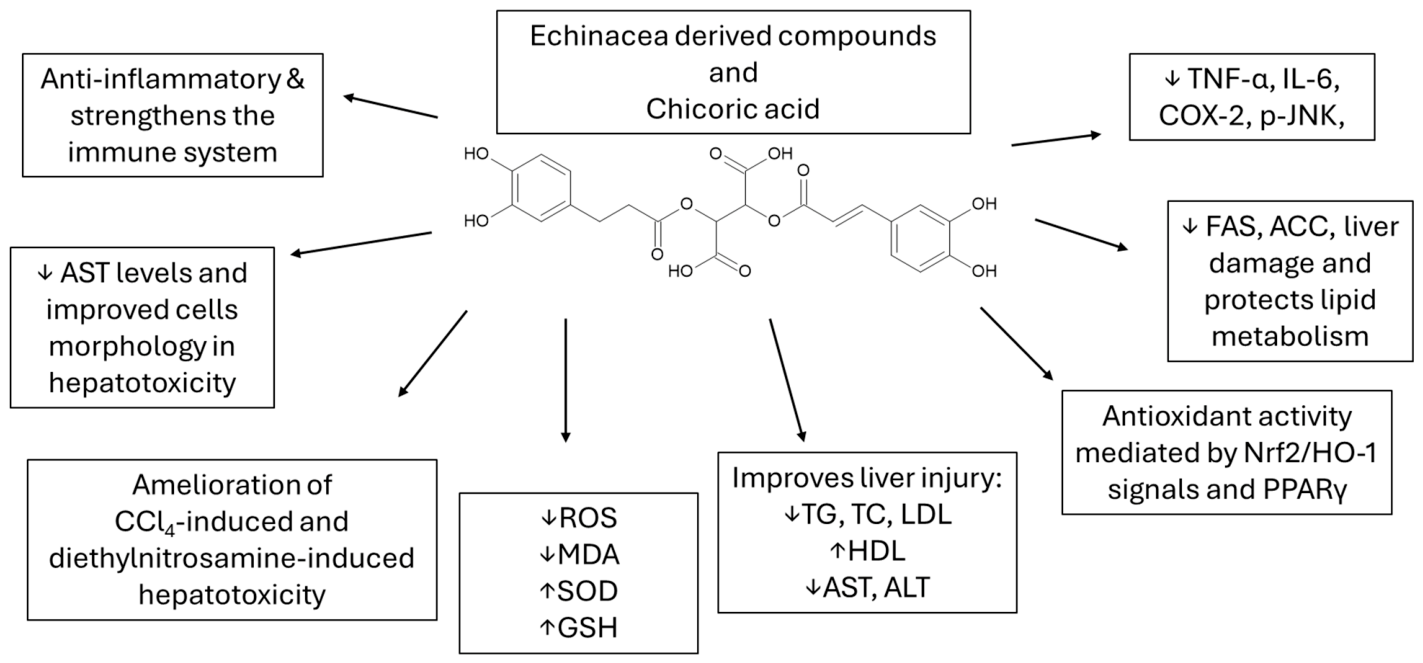
Echinacea is a frequently used herb that belongs to the Asteraceae (Compositae) family, known for its nutritional value. It has been extensively used to treat various conditions due to its anti-inflammatory activity and its potently positive contributions in strengthening the immune system [161,162]. Echinacea has also been shown to ameliorate the effects of diethylnitrosamine-induced hepatotoxicity, as administration of Echinacea purpurea extract improved AST levels and resulted in improved hepatic cell morphology [163]. Similarly, Echinacea showcased hepatoprotective effects against CCl4-induced hepatotoxicity in rats, as intraperitoneal administration of Echinacoside reduced the levels of reactive oxygen species (ROS) and malondialdehyde (MDA), while increasing superoxide dismutase (SOD) activity and glutathione (GSH) concentration in hepatic cells [164]. The antioxidant properties of Echinacea are possibly mediated through the activation of Nrf2/HO-1 signaling and PPARγ, as chicoric acid (a polyphenol active component of Echinacea) protected against methotrexate hepatotoxicity and induced increased expression of hepatic Nrf2, HO-1, NADPH quinone acceptor oxidoreductase 1 (NQO-1), and PPARγ [165]. Regarding NAFLD, a study revealed that chicoric acid exerts protective effects on liver lipid metabolism, ameliorates liver damage, and normalizes the expression of fatty acid synthase (FAS) and acetyl CoA carboxylase (ACC) in HepG2 cell cultures (Figure 12). Additionally, oral administration of chicoric acid (60 mg/kg) alleviates high-fat diet-induced liver injury by improving serum biochemical markers, including total glycerin (TG), total cholesterol (TC), high-density lipoprotein/low-density lipoprotein cholesterol (HDL-C/LDL-C), AST, and ALT levels [166]. Furthermore, it attenuates hepatic steatosis and demonstrates anti-inflammatory properties in the liver by reducing tumor necrosis factor-α (TNF-α), interleukin-6 (IL-6), cyclooxygenase-2 (COX-2), and phosphorylated JNK (p-JNK) expression [167].

9.3. Ginger Derivatives

6-Gingerol (GN), a key ingredient of Ginger or Zingiber officinale, is a phenolic compound with antioxidant, antiproliferative and pro-inflammatory mediators down-regulating activity in vitro and in vivo [168,169]. GN has been tested in vitro for the verification of its antioxidant and anti-inflammatory capacity and in vivo for the inhibition of diethylnitrosamine (DEN)-induced liver damage (both DEN and GN were given 50 mg/kg body weight) [170]. The diphenyl-2-picryl-hydrazyl (DPPH) radical scavenging activity gave an IC50 of 400 μg/mL, and the IC50 for the hydrogen peroxide-reducing capacity was of 500 μg/mL, with the activity in all the in vitro experiments being dose-dependent. Concerning the anti-inflammatory potency, expressed by the inhibition of heat-induced denaturation of bovine serum and egg albumin, GN at 600 μg/mL was shown to be of similar activity to ibuprofen (200 μg/mL), a well applied non-steroidal anti-inflammatory (NSAID) agent. Concerning antiprotease activity, GN 500 μg/mL was equal to ibuprofen (200 μg/mL). GN also ameliorated the liver damage in vivo, since it decreased statistically significantly (p < 0.05) the AST and ALT levels, and increased the serum albumin and protein levels, with a parallel reduction in ALP (alkaline phosphatase), indicating the generally healthy state of the animals and the preservation of the functionality of the liver. Furthermore, a substantial (statistically significant and more than 20%) reduction in the serum cholesterol and triglycerides levels, and an increase in the antioxidant status of the liver, documented as an increase in SOD, glutathione-S-transferase (GST) and GSH, with a parallel decrease in hepatic lipid peroxidation, inflammatory cell infiltration, blood vessel dilation and oedema, were observed. These results were accompanied by a decrease in liver fibrosis (about half of the non-treated group), with much lower collagen fibers and normal hepatocyte appearance and cellular organelle shape, with a significant decrease in TNF-α, IL-6, C-reactive protein (CRP) and intercellular adhesion molecule-1 (ICAM1), accentuating the positive effects of GN in all aspects implicating liver damage.
Zingerone is a natural component of dry ginger, with pharmacologic properties, including the suppression of lipid peroxidation, and with antioxidant, anti-inflammatory, anticancer, and antimicrobial activity [171,172,173]. In a study on Wistar rats to test the hepatoprotective role of zingerone [174], NAFLD conditions were provoked in rats with a fructose-enriched diet. The compound was administered intragastrically throughout the study, at 100 mg/Kg. The body weight was reduced statistically significantly (p < 0.05) in the treated group, compared to the untreated. The improvement in the hepatic function was determined by the hepatic enzymes AST, ALT, and ALP. The reduction in these marker levels was higher than 35% and statistically significant compared to the NAFLD group. Additionally, the serum total cholesterol, triglycerides and glucose levels were reduced, while the HDL cholesterol was increased in the treated group. Finally, the fibrosis in the treated group was reduced by at least 65% compared to the fructose group, reaching values similar to those of the control group. This is also confirmed by histological analysis, which showed less collagen accumulation (observed in the photomicrographs of the hepatic tissue) [174].

10. Future Perspectives and Limitations

Despite the growing body of evidence supporting the therapeutic potential of naturally derived antioxidant compounds in non-alcoholic fatty liver disease (NAFLD), several critical limitations must be addressed before their clinical translation can be fully applied. A major concern lies in their incomplete characterization of a safety and toxicity profile, particularly in cases of long-term administration and at pharmacological doses. While many of the reviewed compounds, such as vitamins, carotenoids, and fatty acids, are generally regarded as safe when used as dietary supplements, their repurposing as therapeutic agents necessitates rigorous toxicological evaluation, including dose-response relationships, bioaccumulation in body tissues, and interactions with conventional pharmacotherapies, since most of them are expected to be supplementary co-treatment options, with multi-targeting potential [175,176]. Notably, high-dose antioxidant compound supplementation may exert pro-oxidant effects or interfere with physiological redox signaling, underscoring the need for carefully designed clinical trials to establish optimal dosing regimens and long-term safety [177].
Another important limitation concerns the discrepancy between the positive preclinical findings and inconsistent clinical outcomes of compounds against NAFLD progression [178]. This is particularly demonstrated in the case of Vitamin E, which, despite its significant improvements in steatosis and inflammation in experimental models, has shown variable efficacy in clinical trials, with limited impact on fibrosis and heterogeneous patient response [179]. These inconsistencies may be attributed to differences in disease stage, patient stratification, genetic background, and the multifactorial nature of NAFLD pathogenesis. Furthermore, most preclinical studies are conducted in controlled environments using animal models that do not fully depict the complexity of human metabolic dysfunction, thereby limiting the direct translatability of these findings. Additionally, the wide variety of preclinical models render the deduction of safe comparative conclusions rather arduous [180].
With the lack of standardized therapeutic dosing remaining another significant barrier for many compounds discussed in this review, including lipoic acid, carotenoids, and bioactive sulfur-containing molecules, there has been until now insufficient evidence to define precise therapeutic windows or to determine whether their beneficial effects follow linear or hormetic (U- or J-shaped curve) dose-response patterns. In addition, pharmacokinetic parameters such as bioavailability, tissue distribution, and metabolic stability are often inadequately characterized, further complicating dose optimization [181].
Future research should also focus on the rational design of combination therapies that exploit potential synergistic interactions among antioxidant compounds. Given that NAFLD is a multifactorial disease that involves oxidative stress, inflammation, lipid dysregulation, and mitochondrial dysfunction, multi-target approaches may offer superior therapeutic efficacy compared to single-agent interventions. For instance, combinations of vitamins (e.g., C and E), carotenoids, and omega-3 fatty acids may enhance antioxidant capacity while simultaneously modulating inflammatory and metabolic pathways. However, the identification of optimal combinations requires systematic investigation using well-designed experimental and clinical protocols, as synergistic effects may be experimental assay-dependent and influenced by dose ratios, timing of administration, and patient-specific factors.
In addition, certain compounds highlighted in this review, such as endocannabinoid modulators and cannabis-derived substances, present intriguing yet insufficiently understood therapeutic prospects. Although epidemiological and preclinical data suggest a potential protective role in NAFLD, the underlying molecular mechanisms, receptor-specific actions, and long-term metabolic consequences remain to be fully elucidated. Similarly, compounds such as diallyl sulfide and related organosulfur derivatives demonstrate both beneficial and potentially adverse effects on lipid metabolism and gut microbiota, emphasizing the necessity for comprehensive safety assessments before clinical application.
Finally, a substantial proportion of the available evidence is derived from in vitro studies or animal models, with a relative lack of large-scale, randomized controlled clinical trials. This gap highlights the intense need for translational research that integrates mechanistic insights with clinical validation. Future studies should prioritize well-characterized patient cohorts, standardized endpoints, and long-term follow-up to determine not only efficacy, but also safety and sustainability of the observed therapeutic outcomes. Thus, while antioxidant-based repurposing strategies hold considerable promise for the management of NAFLD, their successful clinical implementation will depend on addressing key challenges related to safety, dosing, mechanistic understanding, and clinical translation. As a result, a multidisciplinary approach combining pharmacology, molecular biology, and clinical research will be essential to unlock the full therapeutic potential of these compounds.

11. Conclusions

NALFD is a multifunctional metabolic syndrome without an established treatment completely reversing its histopathology or suppressing the progression of the disease. Thus, this study summarized some natural products used as supplements with antioxidant and anti-inflammatory properties. Most of these compounds reduced the liver enzymes (ALT, AST) and serum TC and TG, which are important factors for liver deterioration and fibrosis amelioration. The modulation of inflammation and oxidative stress in most of the compounds is a result of the modulation of NF-κB, Nrf2, TNF-α and IL-6 markers (Table 1). Furthermore, lipid metabolism was enhanced through the activation of PPAR isoforms by several supplements. All these are advantageous results for their potent interference in the NAFLD progression, since the evaluated compounds showed pleiotropic activity, interacting with many aspects of NAFLD and concomitant diseases or syndromes related to it. However, there is a need for thorough studies to establish their dose, efficacy, safety, and toxicity. Moreover, to achieve improved results and the potential repurposing of these compounds, it could be of assistance to evaluate the synergistic activity of the referred compounds or use them as ‘hit’ molecules to design better agents with enhanced characteristics and pharmacological properties. Multi-targeting antioxidant compounds represent an encouraging avenue in this context, offering the potential to disrupt the vicious cycle of oxidative stress, inflammation, and impaired autophagy that drives disease progression. However, further mechanistic and clinical studies are required to fully translate this approach into effective and safe therapeutic interventions.

Author Contributions

Study conception and study design, P.T.-N.; literature review, R.-E.T. and P.T.-N.; draft manuscript, R.-E.T., N.V. and P.T.-N.; editing and critical revision of the manuscript, R.-E.T. and P.T.-N. All authors have read and agreed to the published version of the manuscript.

Funding

This review did not receive any financial support.

Institutional Review Board Statement

Not applicable.

Informed Consent Statement

Not applicable.

Data Availability Statement

No new data were created in this study.

Conflicts of Interest

The authors declare no conflicts of interest.

References

  1. Smith, B.W.; Adams, L.A. Non-alcoholic fatty liver disease. Crit. Rev. Clin. Lab. Sci. 2011, 48, 97–113. [Google Scholar] [CrossRef]
  2. Heindel, J.J.; Blumberg, B.; Cave, M.; Machtinger, R.; Mantovani, A.; Mendez, M.A.; Nadal, A.; Palanza, P.; Panzica, G.; Sargis, R.; et al. Metabolism disrupting chemicals and metabolic disorders. Reprod. Toxicol. 2017, 68, 3–33. [Google Scholar] [CrossRef] [PubMed]
  3. Eslam, M.; Sanyal, A.J.; George, J.; On behalf of the International Consensus Panel. MAFLD: A consensus-driven proposed nomenclature for metabolic associated fatty liver disease. Gastroenterology 2020, 158, 1999–2014.E1. [Google Scholar] [CrossRef]
  4. Ekstedt, M.; Franzén, L.E.; Mathiesen, U.L.; Thorelius, L.; Holmqvist, M.; Bodemar, G.; Kechagias, S. Long-term follow-up of patients with NAFLD and elevated liver enzymes. Hepatology 2006, 44, 865–873. [Google Scholar] [CrossRef]
  5. Polyzos, S.A.; Kang, E.S.; Boutari, C.; Rhee, E.J.; Mantzoros, C.S. Current and emerging pharmacological options for the treatment of nonalcoholic steatohepatitis. Metabolism 2020, 111, 154203. [Google Scholar] [CrossRef]
  6. Deleuran, T.; Grønbaek, H.; Vilstrup, H.; Jepsen, P. Cirrhosis and mortality risks of biopsy-verified alcoholic pure steatosis and steatohepatitis: A nationwide registry-based study. Aliment. Pharmacol. Ther. 2012, 35, 1336–1342. [Google Scholar] [CrossRef]
  7. Yan, S.; Huda, N.; Khambu, B.; Yin, X.M. Relevance of autophagy to fatty liver diseases and potential therapeutic applications. Amino Acids 2017, 49, 1965–1979. [Google Scholar] [CrossRef]
  8. Lee, J.M.; Wagner, M.; Xiao, R.; Kim, K.H.; Feng, D.; Lazar, M.A.; Moore, D.D. Nutrient sensing nuclear receptors coordinate autophagy. Nature 2014, 516, 112–115. [Google Scholar] [CrossRef] [PubMed]
  9. Czaja, M.J. Functions of autophagy in hepatic and pancreatic physiology and disease. Gastroenterology 2011, 140, 1895–1908. [Google Scholar] [CrossRef] [PubMed]
  10. González-Rodríguez, Á.; Mayoral, R.; Agra, N.; Valdecantos, M.P.; Pardo, V.; Miquilena-Colina, M.E.; Vargas-Castrillón, J.; Lo Iacono, O.; Corazzari, M.; Fimia, G.M.; et al. Impaired autophagic flux is associated with increased endoplasmic reticulum stress during the development of NAFLD. Cell Death Dis. 2014, 5, e1179. [Google Scholar] [CrossRef]
  11. Liu, J.; Jin, X.; Yu, C.H.; Chen, S.H.; Li, W.P.; Li, Y.M. Endoplasmic reticulum stress involved in the course of lipogenesis in fatty acids-induced hepatic steatosis. J. Gastroenterol. Hepatol. 2010, 25, 613–618. [Google Scholar] [CrossRef]
  12. Zhuang, J.; Song, Y.; Ye, Y.; He, S.; Ma, X.; Zhang, M.; Ni, J.; Wang, J.; Xia, W. PYCR1 interference inhibits cell growth and survival via c-Jun N-terminal kinase/insulin receptor substrate 1 (JNK/IRS1) pathway in hepatocellular cancer. J. Transl. Med. 2019, 17, 343. [Google Scholar] [CrossRef]
  13. Schuster, S.; Cabrera, D.; Arrese, M.; Feldstein, A.E. Triggering and resolution of inflammation in NASH. Nat. Rev. Gastroenterol. Hepatol. 2018, 15, 349–364. [Google Scholar] [CrossRef] [PubMed]
  14. Miyagawa, K.; Oe, S.; Honma, Y.; Izumi, H.; Baba, R.; Harada, M. Lipid-Induced Endoplasmic Reticulum Stress Impairs Selective Autophagy at the Step of Autophagosome–Lysosome Fusion in Hepatocytes. Am. J. Pathol. 2016, 186, 1861–1873. [Google Scholar] [CrossRef] [PubMed]
  15. Svegliati-Baroni, G.; Pierantonelli, I.; Torquato, P.; Marinelli, R.; Ferreri, C.; Chatgilialoglu, C.; Bartolini, D.; Galli, F. Lipidomic biomarkers and mechanisms of lipotoxicity in non-alcoholic fatty liver disease. Free Radic. Biol. Med. 2019, 144, 293–309. [Google Scholar] [CrossRef] [PubMed]
  16. Rinaldi, L.; Pafundi, P.C.; Galiero, R.; Caturano, A.; Morone, M.V.; Silvestri, C.; Giordano, M.; Salvatore, T.; Sasso, F.C. Mechanisms of Nonalcoholic Fatty Liver Disease in the Metabolic Syndrome: A Narrative Review. Antioxidants 2021, 10, 270. [Google Scholar] [CrossRef]
  17. Xu, J.; Wei, Y.; Huang, Y.; Wei, X. Regulatory Effects and Molecular Mechanisms of Tea and Its Active Compounds on Nonalcoholic Fatty Liver Disease. J. Agric. Food Chem. 2023, 71, 3103–3124. [Google Scholar] [CrossRef]
  18. Dawood, R.M.; Salum, G.M.; Abd El-Meguid, M.; Fotouh, B.E. Molecular Insights of Nonalcoholic Fatty Liver Disease Pathogenesis. J. Interferon Cytokine Res. 2024, 44, 111–123. [Google Scholar] [CrossRef]
  19. Petagine, L.; Zariwala, M.G.; Patel, V.B. Nonalcoholic Fatty Liver Disease: Immunological Mechanisms and Current Treatments. World J. Gastroenterol. 2023, 29, 4831–4850. [Google Scholar] [CrossRef]
  20. Zheng, Y.; Wang, S.; Wu, J.; Wang, Y. Mitochondrial Metabolic Dysfunction and Nonalcoholic Fatty Liver Disease: New Insights from Pathogenic Mechanisms to Clinically Targeted Therapy. J. Transl. Med. 2023, 21, 510. [Google Scholar] [CrossRef]
  21. Li, S.; Hong, M.; Tan, H.Y.; Wang, N.; Feng, Y. Insights into the Role and Interdependence of Oxidative Stress and Inflammation in Liver Diseases. Oxid. Med. Cell. Longev. 2016, 2016, 4234061. [Google Scholar] [CrossRef] [PubMed]
  22. Jin, S.; Li, Y.; Xia, T.; Liu, Y.; Zhang, S.; Hu, H.; Chang, Q.; Yan, M. Mechanisms and Therapeutic Implications of Selective Autophagy in Nonalcoholic Fatty Liver Disease. J. Adv. Res. 2025, 67, 317–329. [Google Scholar] [CrossRef]
  23. Liu, Y.; Zhang, M.; Wang, Y. Induction of Autophagy as a Therapeutic Breakthrough for NAFLD: Current Evidence and Perspectives. Biology 2025, 14, 989. [Google Scholar] [CrossRef]
  24. Tian, C.; Huang, R.; Xiang, M. SIRT1: Harnessing Multiple Pathways to Hinder Nonalcoholic Fatty Liver Disease. Pharmacol. Res. 2024, 203, 107155. [Google Scholar] [CrossRef]
  25. Tauil, R.B.; Golono, P.T.; de Lima, E.P.; de Alvares Goulart, R.; Guiguer, E.L.; Bechara, M.D.; Nicolau, C.C.T.; Yanaguizawa Junior, J.L.; Fiorini, A.M.R.; Méndez-Sánchez, N.; et al. Metabolic-Associated Fatty Liver Disease: The Influence of Oxidative Stress, Inflammation, Mitochondrial Dysfunctions, and the Role of Polyphenols. Pharmaceuticals 2024, 17, 1354. [Google Scholar] [CrossRef]
  26. Sawada, K.; Chung, H.; Softic, S.; Moreno-Fernandez, M.E.; Divanovic, S. The Bidirectional Immune Crosstalk in Metabolic Dysfunction-Associated Steatotic Liver Disease. Cell Metab. 2023, 35, 1852–1871. [Google Scholar] [CrossRef]
  27. Traber, M.G.; Stevens, J.F. Vitamins C and E: Beneficial effects from a mechanistic perspective. Free Radic. Biol. Med. 2011, 51, 1000–1013. [Google Scholar] [CrossRef] [PubMed]
  28. Pacana, T.; Sanyal, A.J. Vitamin E and nonalcoholic fatty liver disease. Curr. Opin. Clin. Nutr. Metab. Care 2012, 15, 641–648. [Google Scholar] [CrossRef]
  29. Nagashimada, M.; Ota, T. Role of vitamin E in nonalcoholic fatty liver disease. IUBMB Life 2019, 71, 516–522. [Google Scholar] [CrossRef]
  30. Yakaryilmaz, F.; Guliter, S.; Savas, B.; Erdem, O.; Ersoy, R.; Erden, E.; Akyol, G.; Bozkaya, H.; Ozenirler, S. Effects of vitamin E treatment on peroxisome proliferator-activated receptor-alpha expression and insulin resistance in patients with nonalcoholic steatohepatitis: Results of a pilot study. Intern. Med. J. 2007, 37, 229–235. [Google Scholar] [CrossRef] [PubMed]
  31. Hoofnagle, J.H.; Van Natta, M.L.; Kleiner, D.E.; Clark, J.M.; Kowdley, K.V.; Loomba, R.; Neuschwander-Tetri, B.A.; Sanyal, A.J.; Tonascia, J.; Non-Alcoholic Steatohepatitis Clinical Research Network (NASH CRN). Vitamin E and changes in serum alanine aminotransferase levels in patients with non-alcoholic steatohepatitis. Aliment. Pharmacol. Ther. 2013, 38, 134–143. [Google Scholar] [CrossRef]
  32. Sanyal, A.J.; Chalasani, N.; Kowdley, K.V.; McCullough, A.; Diehl, A.M.; Bass, N.M.; Neuschwander-Tetri, B.A.; Lavine, J.E.; Tonascia, J.; Unalp, A.; et al. Pioglitazone, vitamin E, or placebo for nonalcoholic steatohepatitis. N. Engl. J. Med. 2010, 362, 1675–1685. [Google Scholar] [CrossRef]
  33. Sanyal, A.J.; Mofrad, P.S.; Contos, M.J.; Sargeant, C.; Luketic, V.A.; Sterling, R.K.; Stravitz, R.T.; Shiffman, M.L.; Clore, J.; Mills, A.S. A pilot study of vitamin E versus vitamin E and pioglitazone for the treatment of nonalcoholic steatohepatitis. Clin. Gastroenterol. Hepatol. 2004, 2, 1107–1115. [Google Scholar] [CrossRef]
  34. Harrison, S.A.; Torgerson, S.; Hayashi, P.; Ward, J.; Schenker, S. Vitamin E and vitamin C treatment improves fibrosis in patients with nonalcoholic steatohepatitis. Am. J. Gastroenterol. 2003, 98, 2485–2490. [Google Scholar] [CrossRef]
  35. Hasegawa, T.; Yoneda, M.; Nakamura, K.; Makino, I.; Terano, A. Plasma transforming growth factor-β1 level and efficacy of α-tocopherol in patients with non-alcoholic steatohepatitis: A pilot study. Aliment. Pharmacol. Ther. 2001, 15, 1667–1672. [Google Scholar] [CrossRef] [PubMed]
  36. Panera, N.; Braghini, M.R.; Crudele, A.; Smeriglio, A.; Bianchi, M.; Condorelli, A.G.; Nobili, R.; Conti, L.A.; De Stefanis, C.; Lioci, G.; et al. Combination treatment with hydroxytyrosol and vitamin E improves NAFLD-related fibrosis. Nutrients 2022, 14, 3791. [Google Scholar] [CrossRef]
  37. Bertelli, M.; Kiani, A.K.; Paolacci, S.; Manara, E.; Kurti, D.; Dhuli, K.; Bushati, V.; Miertus, J.; Pangallo, D.; Baglivo, M.; et al. Hydroxytyrosol: A natural compound with promising pharmacological activities. J. Biotechnol. 2020, 309, 29–33. [Google Scholar] [CrossRef]
  38. Abera, M.; Suresh, S.B.; Malireddi, A.; Boddeti, S.; Noor, K.; Ansar, M.; Malasevskaia, I. Vitamin E and Nonalcoholic Fatty Liver Disease: Investigating the Evidence Through a Systematic Review. Cureus 2024, 16, e72596. [Google Scholar] [CrossRef] [PubMed]
  39. Podszun, M.C.; Alawad, A.S.; Lingala, S.; Morris, N.; Huang, W.A.; Yang, S.; Schoenfeld, M.; Rolt, A.; Ouwerkerk, R.; Valdez, K.; et al. Vitamin E Treatment in NAFLD Patients Demonstrates That Oxidative Stress Drives Steatosis Through Upregulation of De Novo Lipogenesis. Redox Biol. 2020, 37, 101710. [Google Scholar] [CrossRef] [PubMed]
  40. Vasanthi, H.R.; Parameswari, R.P.; Das, D.K. Multifaceted role of tocotrienols in cardioprotection supports their structure–function relation. Genes Nutr. 2012, 7, 19–28. [Google Scholar] [CrossRef]
  41. Theodosis-Nobelos, P.; Papagiouvannis, G.; Rekka, E.A. A review on vitamin E natural analogues and on the design of synthetic vitamin E derivatives as cytoprotective agents. Mini Rev. Med. Chem. 2021, 21, 10–22. [Google Scholar] [CrossRef]
  42. Pervez, M.A.; Khan, D.A.; Ijaz, A.; Khan, S. Effects of delta-tocotrienol supplementation on liver enzymes, inflammation, oxidative stress and hepatic steatosis in patients with nonalcoholic fatty liver disease. Turk. J. Gastroenterol. 2018, 29, 170–176. [Google Scholar] [CrossRef] [PubMed]
  43. Yin, X.; Chen, K.; Cheng, H.; Chen, X.; Feng, S.; Song, Y.; Liang, L. Chemical Stability of Ascorbic Acid Integrated into Commercial Products: A Review on Bioactivity and Delivery Technology. Antioxidants 2022, 11, 153. [Google Scholar] [CrossRef]
  44. Van Gorkom, G.N.Y.; Lookermans, E.L.; Van Elssen, C.H.M.J.; Bos, G.M.J. The Effect of Vitamin C (Ascorbic Acid) in the Treatment of Patients with Cancer: A Systematic Review. Nutrients 2019, 11, 977. [Google Scholar] [CrossRef]
  45. Widhitomo, N.; Usman, N.; Rudima, R. Effect of Vitamin C Inhibiting Liver Fibrosis and Lipid Peroxidation in Biliary Obstruction of Wistar Rats. Int. Surg. J. 2020, 7, 2830–2836. [Google Scholar] [CrossRef]
  46. Wu, H.; Guo, J.L.; Yao, J.J.; Yu, J.J.; Xia, R.Y.; Huang, W.Q.; Tang, X.; He, G.M. Serum Vitamin C Levels and Risk of Non-Alcoholic Fatty Liver Disease: Results from a Cross-Sectional Study and Mendelian Randomization Analysis. Front. Nutr. 2023, 10, 1162031. [Google Scholar] [CrossRef]
  47. Lee, S.-W.; Baek, S.-M.; Kang, K.-K.; Lee, A.-R.; Kim, T.-U.; Choi, S.-K.; Roh, Y.-S.; Hong, I.-H.; Park, S.-J.; Kim, T.-H.; et al. Vitamin C Deficiency Inhibits Nonalcoholic Fatty Liver Disease Progression through Impaired de Novo Lipogenesis. Am. J. Pathol. 2021, 191, 1550–1563. [Google Scholar] [CrossRef]
  48. Vyshtakalyuk, A.B.; Nazarov, N.G.; Zobov, V.V.; Abdulkhakov, S.R.; Minnekhanova, O.A.; Semenov, V.E.; Galyametdinova, I.V.; Cherepnev, G.V.; Reznik, V.S. Evaluation of the Hepatoprotective Effect of L-Ascorbate 1-(2-Hydroxyethyl)-4,6-Dimethyl-1,2-Dihydropyrimidine-2-One Upon Exposure to Carbon Tetrachloride. Bull. Exp. Biol. Med. 2017, 162, 340–342. [Google Scholar] [CrossRef]
  49. Vyshtakaliuk, A.B.; Zueva, I.V.; Minnechanova, O.A.; Reznik, V.S.; Zobov, V.V.; Nicolskyi, E.E.; Nazarov, N.G.; Porfiriev, A.G.; Mayatina, O.V. The Influence of the Xymedon Preparation (Hydroxyethyldimethyldihydropyrimidine) on the Rat Liver Recovery under Toxic Damage Induced by Carbon Tetrachloride. Dokl. Biochem. Biophys. 2015, 462, 143–146. [Google Scholar] [CrossRef] [PubMed]
  50. Vyshtakalyuk, A.B.; Nazarov, N.G.; Zueva, I.V.; Lantsova, A.V.; Minnekhanova, O.A.; Busygin, D.V.; Porfiryev, A.G.; Evtyugin, V.G.; Reznik, V.S.; Zobov, V.V. Study of Hepatoprotective Effects of Xymedon. Bull. Exp. Biol. Med. 2013, 155, 643–646. [Google Scholar] [CrossRef] [PubMed]
  51. Abramovitch, S.; Dahan-Bachar, L.; Sharvit, E.; Weisman, Y.; Ben Tov, A.; Brazowski, E.; Reif, S. Vitamin D Inhibits Proliferation and Profibrotic Marker Expression in Hepatic Stellate Cells and Decreases Thioacetamide-Induced Liver Fibrosis in Rats. Gut 2011, 60, 1728–1737. [Google Scholar] [CrossRef]
  52. Wiliński, B.; Wiliński, J.; Somogyi, E.; Piotrowska, J.; Opoka, W. Vitamin D3 (Cholecalciferol) Boosts Hydrogen Sulfide Tissue Concentrations in Heart and Other Mouse Organs. Folia Biol. 2012, 60, 243–247. [Google Scholar] [CrossRef][Green Version]
  53. Chen, J.; Li, X.; Ge, C.; Min, J.; Wang, F. The Multifaceted Role of Ferroptosis in Liver Disease. Cell Death Differ. 2022, 29, 467–480. [Google Scholar] [CrossRef] [PubMed]
  54. Miao, Y.; Jiang, Z.; Song, H.; Zhang, Y.; Chen, H.; Liu, W.; Wei, X.; Li, L.; Li, W.; Li, X. Vitamin D Supplementation Alleviates High Fat Diet-Induced Metabolic Associated Fatty Liver Disease by Inhibiting Ferroptosis Pathway. Eur. J. Nutr. 2024, 64, 50. [Google Scholar] [CrossRef]
  55. Reda, D.; Elshopakey, G.E.; Albukhari, T.A.; Almehmadi, S.J.; Refaat, B.; Risha, E.F.; Mahgoub, H.A.; El-Boshy, M.E.; Abdelhamid, F.M. Vitamin D3 Alleviates Nonalcoholic Fatty Liver Disease in Rats by Inhibiting Hepatic Oxidative Stress and Inflammation via the SREBP-1c/PPARα–NF-κB/IRS2 Signaling Pathway. Front. Pharmacol. 2023, 14, 1164512. [Google Scholar] [CrossRef]
  56. Ibrahim, M.N.; Khalifa, A.A.; Hemead, D.A.; Alsemeh, A.E.; Habib, M.A. 1,25-Dihydroxycholecalciferol Down-Regulates 3-Mercaptopyruvate Sulfur Transferase and Caspase-3 in a Rat Model of Non-Alcoholic Fatty Liver Disease. J. Mol. Histol. 2023, 54, 119–134. [Google Scholar] [CrossRef]
  57. Federico, A.; Dallio, M.; Gravina, A.G.; Diano, N.; Errico, S.; Masarone, M.; Romeo, M.; Tuccillo, C.; Stiuso, P.; Morisco, F.; et al. The Bisphenol A-Induced Oxidative Stress in Non-Alcoholic Fatty Liver Disease Male Patients: A Clinical Strategy to Antagonize the Progression of the Disease. Int. J. Environ. Res. Public Health 2020, 17, 3369. [Google Scholar] [CrossRef] [PubMed]
  58. Dallio, M.; Diano, N.; Masarone, M.; Gravina, A.G.; Patanè, V.; Romeo, M.; Di Sarno, R.; Errico, S.; Nicolucci, C.; Abenavoli, L.; et al. Chemical Effect of Bisphenol A on Non-Alcoholic Fatty Liver Disease. Int. J. Environ. Res. Public Health 2019, 16, 3134. [Google Scholar] [CrossRef] [PubMed]
  59. González-Peña, M.A.; Ortega-Regules, A.E.; Anaya de Parrodi, C.; Lozada-Ramírez, J.D. Chemistry, Occurrence, Properties, Applications, and Encapsulation of Carotenoids—A Review. Plants 2023, 12, 313. [Google Scholar] [CrossRef]
  60. Firdous, A.P.; Sindhu, E.R.; Kuttan, R. Hepatoprotective Potential of Carotenoid Meso-Zeaxanthin against Paracetamol, CCl4, and Ethanol-Induced Toxicity. Indian J. Exp. Biol. 2011, 49, 44–49. [Google Scholar]
  61. Kozuki, Y.; Miura, Y.; Yagasaki, K. Inhibitory Effects of Carotenoids on the Invasion of Rat Ascites Hepatoma Cells in Culture. Cancer Lett. 2000, 151, 111–115. [Google Scholar] [CrossRef]
  62. Xiao, J.; Wang, J.; Xing, F.; Han, T.; Jiao, R.; Liong, E.C.; Fung, M.L.; So, K.F.; Tipoe, G.L. Zeaxanthin Dipalmitate Therapeutically Improves Hepatic Functions in an Alcoholic Fatty Liver Disease Model through Modulating MAPK Pathway. PLoS ONE 2014, 9, e95214. [Google Scholar] [CrossRef]
  63. Chamberlain, S.M.; Hall, J.D.; Patel, J.; Lee, J.R.; Marcus, D.M.; Sridhar, S.; Romero, M.J.; Labazi, M.; Caldwell, R.W.; Bartoli, M. Protective Effects of the Carotenoid Zeaxanthin in Experimental Nonalcoholic Steatohepatitis. Dig. Dis. Sci. 2009, 54, 1460–1464. [Google Scholar] [CrossRef]
  64. Boskabady, M.H.; Farkhondeh, T. Anti-Inflammatory, Antioxidant, and Immunomodulatory Effects of Crocus sativus L. and Its Main Constituents. Phytother. Res. 2016, 30, 1072–1094. [Google Scholar] [CrossRef]
  65. Salahshoor, M.R.; Khashiadeh, M.; Roshankhah, S.; Kakabaraei, S.; Jalili, C. Protective Effect of Crocin on Liver Toxicity Induced by Morphine. Res. Pharm. Sci. 2016, 11, 120–129. [Google Scholar] [PubMed]
  66. Gao, K.; Liu, F.; Chen, X.; Chen, M.; Deng, Q.; Zou, X.; Guo, H. Crocetin Protects against Fulminant Hepatic Failure Induced by Lipopolysaccharide/D-Galactosamine by Decreasing Apoptosis, Inflammation, and Oxidative Stress in a Rat Model. Exp. Ther. Med. 2019, 18, 3775–3782. [Google Scholar] [CrossRef]
  67. Sreekanth, G.P.; Chuncharunee, A.; Yenchitsomanus, P.T.; Limjindaporn, T. Crocetin Improves Dengue Virus-Induced Liver Injury. Viruses 2020, 12, 825. [Google Scholar] [CrossRef] [PubMed]
  68. Xu, Z.; Lin, S.; Gong, J.; Feng, P.; Cao, Y.; Li, Q.; Jiang, Y.; You, Y.; Tong, Y.; Wang, P. Exploring the Protective Effects and Mechanism of Crocetin from Saffron against NAFLD by Network Pharmacology and Experimental Validation. Front. Med. 2021, 8, 681391. [Google Scholar] [CrossRef] [PubMed]
  69. Rebouche, C.J. Kinetics, Pharmacokinetics, and Regulation of L-Carnitine and Acetyl-L-Carnitine Metabolism. Ann. N. Y. Acad. Sci. 2004, 1033, 30–41. [Google Scholar] [CrossRef]
  70. Li, N.; Zhao, H. Role of Carnitine in Non-Alcoholic Fatty Liver Disease and Other Related Diseases: An Update. Front. Med. 2021, 8, 689042. [Google Scholar] [CrossRef]
  71. Chen, H.H.; Sue, Y.M.; Chen, C.H.; Hsu, Y.H.; Hou, C.C.; Cheng, C.Y.; Lin, S.L.; Tsai, W.L.; Chen, T.W.; Chen, T.H. Peroxisome Proliferator-Activated Receptor Alpha Plays a Crucial Role in L-Carnitine Anti-Apoptosis Effect in Renal Tubular Cells. Nephrol. Dial. Transplant. 2009, 24, 3042–3049. [Google Scholar] [CrossRef]
  72. Li, J.L.; Wang, Q.Y.; Luan, H.Y.; Kang, Z.C.; Wang, C.B. Effects of L-Carnitine against Oxidative Stress in Human Hepatocytes: Involvement of Peroxisome Proliferator-Activated Receptor Alpha. J. Biomed. Sci. 2012, 19, 32. [Google Scholar] [CrossRef] [PubMed]
  73. Pradhany, R.C.; Siswanto, F.M.; Sukoco, H.; Suarsana, I.N.; Suartini, I.G.A.A. L-Carnitine Prevents Hepatic Steatosis in Deep-Frying Oil-Treated Rat. Biomed. Pharmacol. J. 2022, 15, 1751–1758. [Google Scholar] [CrossRef]
  74. Chen, T.Y.; Sun, D.; Lin, W.S.; Lin, Y.L.; Chao, Y.M.; Chen, S.Y.; Chen, Y.R.; Wu, Y.L. Glucosamine Regulation of Fibroblast Growth Factor 21 Expression in Liver and Adipose Tissues. Biochem. Biophys. Res. Commun. 2020, 529, 714–719. [Google Scholar] [CrossRef]
  75. Chiu, H.W.; Li, L.H.; Hsieh, C.Y.; Rao, Y.K.; Chen, F.H.; Chen, A.; Ka, S.M.; Hua, K.F. Glucosamine Inhibits IL-1β Expression by Preserving Mitochondrial Integrity and Disrupting Assembly of the NLRP3 Inflammasome. Sci. Rep. 2019, 9, 5603. [Google Scholar] [CrossRef]
  76. Li, F.; Zhang, Z.; Bai, Y.; Che, Q.; Cao, H.; Guo, J.; Su, Z. Glucosamine Improves Non-Alcoholic Fatty Liver Disease Induced by High-Fat and High-Sugar Diet through Regulating Intestinal Barrier Function, Liver Inflammation, and Lipid Metabolism. Molecules 2023, 28, 6918. [Google Scholar] [CrossRef] [PubMed]
  77. Zhao, G.; He, F.; Wu, C.; Li, P.; Li, N.; Deng, J.; Zhu, G.; Ren, W.; Peng, Y. Betaine in Inflammation: Mechanistic Aspects and Applications. Front. Immunol. 2018, 9, 1070. [Google Scholar] [CrossRef]
  78. Song, Z.; Deaciuc, I.; Zhou, Z.; Song, M.; Chen, T.; Hill, D.; McClain, C.J. Involvement of AMP-Activated Protein Kinase in Beneficial Effects of Betaine on High-Sucrose Diet-Induced Hepatic Steatosis. Am. J. Physiol. Gastrointest. Liver Physiol. 2007, 293, G894–G902. [Google Scholar] [CrossRef]
  79. Barak, A.J.; Beckenhauer, H.C.; Junnila, M.; Tuma, D.J. Dietary Betaine Promotes Generation of Hepatic S-Adenosylmethionine and Protects the Liver from Ethanol-Induced Fatty Infiltration. Alcohol. Clin. Exp. Res. 1993, 17, 552–555. [Google Scholar] [CrossRef] [PubMed]
  80. Zhu, X.; Song, J.; Mar, M.H.; Edwards, L.J.; Zeisel, S.H. Phosphatidylethanolamine N-Methyltransferase (PEMT) Knockout Mice Have Hepatic Steatosis and Abnormal Hepatic Choline Metabolite Concentrations Despite Ingesting a Recommended Dietary Intake of Choline. Biochem. J. 2003, 370, 987–993. [Google Scholar] [CrossRef]
  81. Kharbanda, K.K.; Mailliard, M.E.; Baldwin, C.R.; Beckenhauer, H.C.; Sorrell, M.F.; Tuma, D.J. Betaine Attenuates Alcoholic Steatosis by Restoring Phosphatidylcholine Generation via the Phosphatidylethanolamine Methyltransferase Pathway. J. Hepatol. 2007, 46, 314–321. [Google Scholar] [CrossRef]
  82. Ji, C.; Kaplowitz, N. Betaine Decreases Hyperhomocysteinemia, Endoplasmic Reticulum Stress, and Liver Injury in Alcohol-Fed Mice. Gastroenterology 2003, 124, 1488–1499. [Google Scholar] [CrossRef]
  83. Abdelmalek, M.F.; Angulo, P.; Jorgensen, R.A.; Sylvestre, P.B.; Lindor, K.D. Betaine, a Promising New Agent for Patients with Nonalcoholic Steatohepatitis: Results of a Pilot Study. Am. J. Gastroenterol. 2001, 96, 2711–2717. [Google Scholar] [CrossRef]
  84. Abdelmalek, M.F.; Sanderson, S.O.; Angulo, P.; Soldevila-Pico, C.; Liu, C.; Peter, J.; Keach, J.; Cave, M.; Chen, T.; McClain, C.J.; et al. Betaine for Nonalcoholic Fatty Liver Disease: Results of a Randomized Placebo-Controlled Trial. Hepatology 2009, 50, 1818–1826. [Google Scholar] [CrossRef] [PubMed]
  85. Theodosis-Nobelos, P.; Rekka, E.A. The Multiple Sclerosis Modulatory Potential of Natural Multi-Targeting Antioxidants. Molecules 2022, 27, 8402. [Google Scholar] [CrossRef]
  86. Theodosis-Nobelos, P.; Kourti, M.; Gavalas, A.; Rekka, E.A. Amides of Non-Steroidal Anti-Inflammatory Drugs with Thiomorpholine Can Yield Hypolipidemic Agents with Improved Anti-Inflammatory Activity. Bioorg. Med. Chem. Lett. 2016, 26, 910–913. [Google Scholar] [CrossRef] [PubMed]
  87. Castro, M.C.; Massa, M.L.; Schinella, G.; Gagliardino, J.J.; Francini, F. Lipoic Acid Prevents Liver Metabolic Changes Induced by Administration of a Fructose-Rich Diet. Biochim. Biophys. Acta 2013, 1830, 2226–2232. [Google Scholar] [CrossRef]
  88. Sayaf, K.; Battistella, S.; Russo, F.P. NLRP3 Inflammasome in Acute and Chronic Liver Diseases. Int. J. Mol. Sci. 2024, 25, 4537. [Google Scholar] [CrossRef]
  89. Ko, C.Y.; Lo, Y.M.; Xu, J.H.; Chang, W.C.; Huang, D.W.; Wu, J.S.; Yang, C.H.; Huang, W.C.; Shen, S.C. Alpha-Lipoic Acid Alleviates NAFLD and Triglyceride Accumulation in Liver via Modulating Hepatic NLRP3 Inflammasome Activation Pathway in Type 2 Diabetic Rats. Food Sci. Nutr. 2021, 9, 2733–2742. [Google Scholar] [CrossRef] [PubMed]
  90. Stanković, M.N.; Mladenović, D.; Ninković, M.; Ethuričić, I.; Sobajić, S.; Jorgačević, B.; de Luka, S.; Vukicevic, R.J.; Radosavljević, T.S. The Effects of α-Lipoic Acid on Liver Oxidative Stress and Free Fatty Acid Composition in Methionine-Choline Deficient Diet-Induced NAFLD. J. Med. Food 2014, 17, 254–261. [Google Scholar] [CrossRef]
  91. Jung, T.S.; Kim, S.K.; Shin, H.J.; Jeon, B.T.; Hahm, J.R.; Roh, G.S. α-Lipoic Acid Prevents Non-Alcoholic Fatty Liver Disease in OLETF Rats. Liver Int. 2012, 32, 1565–1573. [Google Scholar] [CrossRef] [PubMed]
  92. Balakina, A.; Trusov, N.; Tutelyan, V. Effect of Lipoic Acid on the Expression of Nonalcoholic Fatty Liver Disease-Associated Genes in the Liver of Rats Fed a Hypercaloric Choline-Deficient Diet. J. Adv. Biotechnol. Exp. Ther. 2024, 7, 612–619. [Google Scholar] [CrossRef]
  93. Longhitano, L.; Distefano, A.; Musso, N.; Bonacci, P.; Orlando, L.; Giallongo, S.; Tibullo, D.; Denaro, S.; Lazzarino, G.; Ferrigno, J.; et al. (+)-Lipoic Acid Reduces Mitochondrial Unfolded Protein Response and Attenuates Oxidative Stress and Aging in an in vitro Model of Non-Alcoholic Fatty Liver Disease. J. Transl. Med. 2024, 22, 82. [Google Scholar] [CrossRef]
  94. Rahmanabadi, A.; Mahboob, S.; Amirkhizi, F.; Hosseinpour-Arjmand, S.; Ebrahimi-Mameghani, M. Oral α-Lipoic Acid Supplementation in Patients with Non-Alcoholic Fatty Liver Disease: Effects on Adipokines and Liver Histology Features. Food Funct. 2019, 10, 4941–4952. [Google Scholar] [CrossRef]
  95. Dugbartey, G.J.; Alornyo, K.K.; Adams, I.; Atule, S.; Obeng-Kyeremeh, R.; Amoah, D.; Adjei, S. Targeting Hepatic Sulfane Sulfur/Hydrogen Sulfide Signaling Pathway with α-Lipoic Acid to Prevent Diabetes-Induced Liver Injury via Upregulating Hepatic CSE/3-MST Expression. Diabetol. Metab. Syndr. 2022, 14, 148. [Google Scholar] [CrossRef]
  96. Zhu, X.; Jiang, X.; Li, A.; Zhao, Z.; Li, S. S-Allylmercaptocysteine Attenuates Cisplatin-Induced Nephrotoxicity through Suppression of Apoptosis, Oxidative Stress, and Inflammation. Nutrients 2017, 9, 166. [Google Scholar] [CrossRef]
  97. Stępień, A.E.; Trojniak, J.; Tabarkiewicz, J. Anti-Cancer and Anti-Inflammatory Properties of Black Garlic. Int. J. Mol. Sci. 2024, 25, 1801. [Google Scholar] [CrossRef]
  98. Xiao, J.; Liong, E.C.; Ling, M.T.; Ching, Y.P.; Fung, M.L.; Tipoe, G.L. S-Allylmercaptocysteine Reduces Carbon Tetrachloride-Induced Hepatic Oxidative Stress and Necroinflammation via Nuclear Factor Kappa B-Dependent Pathways in Mice. Eur. J. Nutr. 2011, 51, 323–333. [Google Scholar] [CrossRef]
  99. Xiao, J.; Ching, Y.P.; Liong, E.C.; Nanji, A.A.; Fung, M.L.; Tipoe, G.L. Garlic-Derived S-Allylmercaptocysteine Is a Hepatoprotective Agent in Non-Alcoholic Fatty Liver Disease In Vivo Animal Model. Eur. J. Nutr. 2013, 52, 179–191. [Google Scholar] [CrossRef]
  100. Xiao, J.; Guo, R.; Fung, M.L.; Liong, E.C.; Chang, R.C.; Ching, Y.P.; Tipoe, G.L. Garlic-Derived S-Allylmercaptocysteine Ameliorates Nonalcoholic Fatty Liver Disease in a Rat Model through Inhibition of Apoptosis and Enhancing Autophagy. Evid.-Based Complement. Altern. Med. 2013, 2013, 642920. [Google Scholar] [CrossRef] [PubMed]
  101. Yu, Q.; Lee, Y.Y.; Xia, Z.Y.; Liong, E.C.; Xiao, J.; Tipoe, G.L. S-Allylmercaptocysteine Improves Nonalcoholic Steatohepatitis by Enhancing AHR/NRF2-Mediated Drug Metabolising Enzymes and Reducing NF-κB/IκBα and NLRP3/6-Mediated Inflammation. Eur. J. Nutr. 2021, 60, 961–973. [Google Scholar] [CrossRef]
  102. Ferguson, D.T.; Taka, E.; Tilghman, S.L.; Womble, T.; Redmond, B.V.; Gedeon, S.; Flores-Rozas, H.; Reed, S.L.; Soliman, K.F.A.; Kanga, K.J.W.; et al. The Anticancer Effects of the Garlic Organosulfide Diallyl Trisulfide through the Attenuation of B[a]P-Induced Oxidative Stress, AhR Expression, and DNA Damage in Human Premalignant Breast Epithelial (MCF-10AT1) Cells. Int. J. Mol. Sci. 2024, 25, 923. [Google Scholar] [CrossRef]
  103. Mitra, S.; Das, R.; Emran, T.B.; Labib, R.K.; Noor-E-Tabassum; Islam, F.; Sharma, R.; Ahmad, I.; Nainu, F.; Chidambaram, K.; et al. Diallyl Disulfide: A Bioactive Garlic Compound with Anticancer Potential. Front. Pharmacol. 2022, 13, 943967. [Google Scholar] [CrossRef]
  104. Haber-Mignard, D.; Suschetet, M.; Bergès, R.; Astorg, P.; Siess, M.H. Inhibition of Aflatoxin B1- and N-Nitrosodiethylamine-Induced Liver Preneoplastic Foci in Rats Fed Naturally Occurring Allyl Sulfides. Nutr. Cancer 1996, 25, 61–70. [Google Scholar] [CrossRef]
  105. Ibrahim, S.S.; Nassar, N.N. Diallyl Sulfide Protects against N-Nitrosodiethylamine-Induced Liver Tumorigenesis: Role of Aldose Reductase. World J. Gastroenterol. 2008, 14, 6145–6153. [Google Scholar] [CrossRef]
  106. Shaik, I.H.; George, J.M.; Thekkumkara, T.J.; Mehvar, R. Protective Effects of Diallyl Sulfide, a Garlic Constituent, on the Warm Hepatic Ischemia-Reperfusion Injury in a Rat Model. Pharm. Res. 2008, 25, 2231–2242. [Google Scholar] [CrossRef] [PubMed]
  107. Zhang, N.; Wang, Y.; Zhang, J.; Liu, B.; Li, G.; Xin, S.; Xu, K. Diallyl Disulfide Attenuates Non-Alcoholic Steatohepatitis by Suppressing Key Regulators of Lipid Metabolism, Lipid Peroxidation and Inflammation in Mice. Mol. Med. Rep. 2019, 20, 1363–1372. [Google Scholar] [CrossRef]
  108. Yang, Y.; Yang, F.; Huang, M.; Wu, H.; Yang, C.; Zhang, X.; Yang, L.; Chen, G.; Li, S.; Wang, Q.; et al. Fatty Liver and Alteration of the Gut Microbiome Induced by Diallyl Disulfide. Int. J. Mol. Med. 2019, 44, 1908–1920. [Google Scholar] [CrossRef] [PubMed]
  109. Wang, M.; Yu, J.; Xu, H.; Xu, K.; Sohail, M.; Wang, J.; Ning, H.; Zhang, J.; Yu, B. Recent Research Advances in Multi-Functional Diallyl Trisulfide (DATS): A Comprehensive Review of Characteristics, Metabolism, Pharmacodynamics, Applications, and Drug Delivery Systems. Int. J. Nanomed. 2025, 20, 4381–4398. [Google Scholar] [CrossRef] [PubMed]
  110. Song, X.; Yue, Z.; Nie, L.; Zhao, P.; Zhu, K.; Wang, Q. Biological Functions of Diallyl Disulfide, a Garlic-Derived Natural Organic Sulfur Compound. Evid.-Based Complement. Altern. Med. 2021, 2021, 5103626. [Google Scholar] [CrossRef]
  111. Mangla, B.; Javed, S.; Sultan, M.H.; Kumar, P.; Kohli, K.; Najmi, A.; Alhazmi, H.A.; Al Bratty, M.; Ahsan, W. Sulforaphane: A Review of Its Therapeutic Potentials, Advances in Its Nanodelivery, Recent Patents, and Clinical Trials. Phytother. Res. 2021, 35, 5440–5458. [Google Scholar] [CrossRef] [PubMed]
  112. Guerrero-Beltrán, C.E.; Calderón-Oliver, M.; Pedraza-Chaverri, J.; Chirino, Y.I. Protective Effect of Sulforaphane against Oxidative Stress: Recent Advances. Exp. Toxicol. Pathol. 2012, 64, 503–508. [Google Scholar] [CrossRef]
  113. Gerhauser, C. Cancer Chemoprevention and Nutriepigenetics: State of the Art and Future Challenges. Top. Curr. Chem. 2013, 329, 73–132. [Google Scholar] [CrossRef] [PubMed]
  114. Kikuchi, M.; Ushida, Y.; Shiozawa, H.; Umeda, R.; Tsuruya, K.; Aoki, Y.; Suganuma, H.; Nishizaki, Y. Sulforaphane-Rich Broccoli Sprout Extract Improves Hepatic Abnormalities in Male Subjects. World J. Gastroenterol. 2015, 21, 12457–12467. [Google Scholar] [CrossRef]
  115. Mourikis, P.; Benkhoff, M.; Wildeis, L.; Barcik, M.; Helten, C.; Coman, C.; Solari, F.A.; Krahn, D.; Dannenberg, L.; Ahlbrecht, S.; et al. Icosapent Ethyl Reduces Arterial Thrombosis by Inhibition of Cyclooxygenase-1-Induced Platelet Reactivity. Sci. Transl. Med. 2025, 17, eado0610. [Google Scholar] [CrossRef]
  116. Miyoshi, T.; Naoe, S.; Wakabayashi, H.; Yano, T.; Mori, T.; Kanda, S.; Arita, M.; Ito, H. Enhanced Production of EPA-Derived Anti-Inflammatory Metabolites after Oral Administration of a Novel Self-Emulsifying Highly Purified EPA Ethyl Ester Formulation (MND-2119). J. Atheroscler. Thromb. 2023, 30, 1927–1949. [Google Scholar] [CrossRef]
  117. Abbas, N.A.T.; El-Sayed, S.S.; Abd El-Fatah, S.S.; Sarhan, W.M.; Abdelghany, E.M.A.; Sarhan, O.; Mahmoud, S.S. Mechanistic Aspects of Ameliorative Effects of Eicosapentanoic Acid Ethyl Ester on Methotrexate-Evoked Testiculopathy in Rats. Naunyn-Schmiedeberg’s Arch. Pharmacol. 2024, 397, 357–369. [Google Scholar] [CrossRef]
  118. Kajikawa, S.; Harada, T.; Kawashima, A.; Imada, K.; Mizuguchi, K. Highly Purified Eicosapentaenoic Acid Ethyl Ester Prevents Development of Steatosis and Hepatic Fibrosis in Rats. Dig. Dis. Sci. 2010, 55, 631–641. [Google Scholar] [CrossRef]
  119. Lima Rocha, J.É.; Mendes Furtado, M.; Mello Neto, R.S.; da Silva Mendes, A.V.; Brito, A.K.d.S.; Sena de Almeida, J.O.C.; Rodrigues Queiroz, E.I.; de Sousa França, J.V.; Silva Primo, M.G.; Cunha Sales, A.L.d.C.; et al. Effects of Fish Oil Supplementation on Oxidative Stress Biomarkers and Liver Damage in Hypercholesterolemic Rats. Nutrients 2022, 14, 426. [Google Scholar] [CrossRef]
  120. Russo, R.; Cristiano, C.; Avagliano, C.; De Caro, C.; La Rana, G.; Raso, G.M.; Canani, R.B.; Meli, R.; Calignano, A. Gut–Brain Axis: Role of Lipids in the Regulation of Inflammation, Pain and CNS Diseases. Curr. Med. Chem. 2018, 25, 3930–3952. [Google Scholar] [CrossRef] [PubMed]
  121. Melini, S.; Pirozzi, C.; Lama, A.; Comella, F.; Opallo, N.; Del Piano, F.; Di Napoli, E.; Mollica, M.P.; Paciello, O.; Ferrante, M.C.; et al. Co-Micronized Palmitoylethanolamide and Rutin Associated with Hydroxytyrosol Recover Diabesity-Induced Hepatic Dysfunction in Mice: In Vitro Insights into the Synergistic Effect. Phytother. Res. 2024, 38, 6035–6047. [Google Scholar] [CrossRef]
  122. Noel, S.E.; Stoneham, A.C.; Olsen, C.M.; Rhodes, L.E.; Green, A.C. Consumption of Omega-3 Fatty Acids and the Risk of Skin Cancers: A Systematic Review and Meta-Analysis. Int. J. Cancer 2014, 135, 149–156. [Google Scholar] [CrossRef] [PubMed]
  123. Huerta, A.E.; Laiglesia, L.M.; Martínez-Fernández, L.; Moreno-Aliaga, M.J. Role of Omega-3 Fatty Acids in Metabolic Syndrome. In Omega-3 Fatty Acids; Hegde, M., Zanwar, A., Adekar, S., Eds.; Springer: Cham, Switzerland, 2016; pp. 189–202. [Google Scholar] [CrossRef]
  124. Choi, J.M.; Park, K.M.; Kim, S.H.; Hwang, D.W.; Chon, S.H.; Lee, J.H.; Lee, S.Y.; Lee, Y.J. Effect of Necrosis Modulator Necrox-7 on Hepatic Ischemia-Reperfusion Injury in Beagle Dogs. Transplant. Proc. 2010, 42, 3414–3421. [Google Scholar] [CrossRef] [PubMed]
  125. Kolanowski, W.; Ziolkowski, M.; Weißbrodt, J.; Kunz, B.; Laufenberg, G. Microencapsulation of Fish Oil by Spray Drying—Impact on Oxidative Stability. Eur. Food Res. Technol. 2006, 222, 336–342. [Google Scholar] [CrossRef]
  126. Serfert, Y.; Drusch, S.; Schwarz, K. Sensory Odour Profiling and Lipid Oxidation Status of Fish Oil and Microencapsulated Fish Oil. Food Chem. 2010, 123, 968–975. [Google Scholar] [CrossRef]
  127. Cassano, R.; Mellace, S.; Marrelli, M.; Conforti, F.; Trombino, S. α-Tocopheryl Linolenate Solid Lipid Nanoparticles for the Encapsulation, Protection, and Release of Omega-3 Polyunsaturated Fatty Acid: In Vitro Anti-Melanoma Activity Evaluation. Colloids Surf. B Biointerfaces 2017, 151, 128–133. [Google Scholar] [CrossRef]
  128. Elshoura, Y.; Herz, M.; Gad, M.Z.; Hanafi, R. Nitro Fatty Acids: A Comprehensive Review on Analytical Methods and Levels in Health and Disease. Anal. Biochem. 2024, 694, 115624. [Google Scholar] [CrossRef] [PubMed]
  129. Woodcock, C.-S.C.; Huang, Y.; Woodcock, S.R.; Salvatore, S.R.; Singh, B.; Golin-Bisello, F.; Davidson, N.E.; Neumann, C.A.; Freeman, B.A.; Wendell, S.G. Nitro-Fatty Acid Inhibition of Triple-Negative Breast Cancer Cell Viability, Migration, Invasion, and Tumor Growth. J. Biol. Chem. 2018, 293, 1120–1137. [Google Scholar] [CrossRef]
  130. Kansanen, E.; Bonacci, G.; Schopfer, F.J.; Kuosmanen, S.M.; Tong, K.I.; Leinonen, H.; Woodcock, S.R.; Yamamoto, M.; Carlberg, C.; Ylä-Herttuala, S.; et al. Electrophilic Nitro-Fatty Acids Activate NRF2 by a KEAP1 Cysteine 151-Independent Mechanism. J. Biol. Chem. 2011, 286, 14019–14027. [Google Scholar] [CrossRef]
  131. Charles, R.L.; Rudyk, O.; Prysyazhna, O.; Kamynina, A.; Yang, J.; Morisseau, C.; Hammock, B.D.; Freeman, B.A.; Eaton, P. Protection from Hypertension in Mice by the Mediterranean Diet Is Mediated by Nitro Fatty Acid Inhibition of Soluble Epoxide Hydrolase. Proc. Natl. Acad. Sci. USA 2014, 111, 8167–8172. [Google Scholar] [CrossRef]
  132. González-Perilli, L.; Álvarez, M.N.; Prolo, C.; Radi, R.; Rubbo, H.; Trostchansky, A. Nitroarachidonic Acid Prevents NADPH Oxidase Assembly and Superoxide Radical Production in Activated Macrophages. Free Radic. Biol. Med. 2013, 58, 126–133. [Google Scholar] [CrossRef] [PubMed]
  133. Kelley, E.E.; Baust, J.; Bonacci, G.; Golin-Bisello, F.; Devlin, J.E.; St. Croix, C.M.; Watkins, S.C.; Gor, S.; Cantu-Medellin, N.; Weidert, E.R.; et al. Fatty Acid Nitroalkenes Ameliorate Glucose Intolerance and Pulmonary Hypertension in High Fat Diet-Induced Obesity. Cardiovasc. Res. 2014, 101, 352–363. [Google Scholar] [CrossRef]
  134. Khoo, N.K.H.; Fazzari, M.; Chartoumpekis, D.V.; Li, L.; Guimaraes, D.A.; Arteel, G.E.; Shiva, S.; Freeman, B.A. Electrophilic Nitro-Oleic Acid Reverses Obesity-Induced Hepatic Steatosis. Redox Biol. 2019, 22, 101132. [Google Scholar] [CrossRef] [PubMed]
  135. Bozelli, J.C., Jr.; Azher, S.; Epand, R.M. Plasmalogens and Chronic Inflammatory Diseases. Front. Physiol. 2021, 12, 730829. [Google Scholar] [CrossRef]
  136. Wallner, S.; Schmitz, G. Plasmalogens—The Neglected Regulatory and Scavenging Lipid Species. Chem. Phys. Lipids 2011, 164, 573–589. [Google Scholar] [CrossRef] [PubMed]
  137. Hossain, M.S.; Mawatari, S.; Fujino, T. Biological Functions of Plasmalogens. In Advances in Experimental Medicine and Biology; Fujino, T., Ed.; Springer: Cham, Switzerland, 2020; Volume 1299, pp. 171–193. [Google Scholar] [CrossRef]
  138. Braverman, N.E.; Moser, A.B. Functions of Plasmalogen Lipids in Health and Disease. Biochim. Biophys. Acta 2012, 1822, 1442–1452. [Google Scholar] [CrossRef] [PubMed]
  139. Malheiro, A.R.; da Silva, T.F.; Brites, P. Plasmalogens and fatty alcohols in rhizomelic chondrodysplasia punctata and Sjogren Larsson syndrome. J. Inherit. Metab. Dis. 2015, 38, 111–121. [Google Scholar] [CrossRef]
  140. Jang, J.E.; Park, H.S.; Yoo, H.J.; Baek, I.J.; Yoon, J.E.; Ko, M.S.; Kim, A.R.; Kim, H.S.; Park, H.S.; Lee, S.E.; et al. Protective Role of Endogenous Plasmalogens against Hepatic Steatosis and Steatohepatitis in Mice. Hepatology 2017, 66, 416–431. [Google Scholar] [CrossRef]
  141. Corso, G.; Dello Russo, A.; Gelzo, M. Liver and the Defects of Cholesterol and Bile Acid Biosynthesis: Rare Disorders, Many Diagnostic Pitfalls. World J. Gastroenterol. 2017, 23, 5257–5265. [Google Scholar] [CrossRef]
  142. Hill, K.P. Medical Marijuana for Treatment of Chronic Pain and Other Medical and Psychiatric Problems: A Clinical Review. JAMA 2015, 313, 2474–2483. [Google Scholar] [CrossRef]
  143. Caraceni, P.; Domenicali, M.; Bernardi, M. The Endocannabinoid System and Liver Diseases. J. Neuroendocrinol. 2008, 20, 47–52. [Google Scholar] [CrossRef] [PubMed]
  144. Osei-Hyiaman, D.; DePetrillo, M.; Pacher, P.; Liu, J.; Radaeva, S.; Bátkai, S.; Harvey-White, J.; Mackie, K.; Offertáler, L.; Wang, L.; et al. Endocannabinoid Activation at Hepatic CB1 Receptors Stimulates Fatty Acid Synthesis and Contributes to Diet-Induced Obesity. J. Clin. Investig. 2005, 115, 1298–1305. [Google Scholar] [CrossRef]
  145. Purohit, V.; Rapaka, R.; Shurtleff, D. Role of Cannabinoids in the Development of Fatty Liver (Steatosis). AAPS J. 2010, 12, 233–237. [Google Scholar] [CrossRef]
  146. Kunos, G.; Gao, B. Endocannabinoids, CB1 Receptors, and Liver Disease: Hitting More Than One Bird with the Same Stone. Gastroenterology 2008, 134, 1243–1246. [Google Scholar] [CrossRef] [PubMed]
  147. Pinto, C.E.; Moura, E.; Serrão, M.P.; Martins, M.J.; Vieira-Coelho, M.A. Effect of (−)-Δ9-Tetrahydrocannabinol on the Hepatic Redox State of Mice. Braz. J. Med. Biol. Res. 2010, 43, 325–329. [Google Scholar] [CrossRef]
  148. Wang, Y.; Mukhopadhyay, P.; Cao, Z.; Wang, H.; Feng, D.; Haskó, G.; Mechoulam, R.; Gao, B.; Pacher, P. Cannabidiol Attenuates Alcohol-Induced Liver Steatosis, Metabolic Dysregulation, Inflammation, and Neutrophil-Mediated Injury. Sci. Rep. 2017, 7, 12064. [Google Scholar] [CrossRef] [PubMed]
  149. Adejumo, A.C.; Alliu, S.; Ajayi, T.O.; Adejumo, K.L.; Adegbala, O.M.; Onyeakusi, N.E.; Akinjero, A.M.; Durojaiye, M.; Bukong, T.N. Cannabis Use Is Associated with Reduced Prevalence of Non-Alcoholic Fatty Liver Disease: A Cross-Sectional Study. PLoS ONE 2017, 12, e0176416. [Google Scholar] [CrossRef]
  150. Bryan, A.D.; Skrzynski, C.J.; Giordano, G.; Yang, J.; Stanger, M.; Bidwell, L.C.; Hutchison, K.E.; Perreault, L. Cannabis Use Is Associated with Less Peripheral Inflammation but Similar Insulin Sensitivity as Nonuse in Healthy Adults. Am. J. Med. 2025, 138, 1285–1295. [Google Scholar] [CrossRef]
  151. Ramlugon, S.; Levendal, R.A.; Frost, C.L. Effect of Oral Cannabis Administration on the Fat Depots of Obese and Streptozotocin-Induced Diabetic Rats. Phytother. Res. 2023, 37, 1806–1822. [Google Scholar] [CrossRef]
  152. Nadal, X.; Del Río, C.; Casano, S.; Palomares, B.; Ferreiro-Vera, C.; Navarrete, C.; Sánchez-Carnerero, C.; Cantarero, I.; Bellido, M.L.; Meyer, S.; et al. Tetrahydrocannabinolic Acid Is a Potent PPARγ Agonist with Neuroprotective Activity. Br. J. Pharmacol. 2017, 174, 4263–4276. [Google Scholar] [CrossRef]
  153. Carmona-Hidalgo, B.; González-Mariscal, I.; García-Martín, A.; Prados, M.E.; Ruiz-Pino, F.; Appendino, G.; Tena-Sempere, M.; Muñoz, E. Δ9-Tetrahydrocannabinolic Acid Markedly Alleviates Liver Fibrosis and Inflammation in Mice. Phytomedicine 2021, 81, 153426. [Google Scholar] [CrossRef]
  154. Ambrosio, A.L.; Dias, M.G.; Polikarpov, I.; Zurier, R.B.; Burstein, S.H.; Garratt, R.C. Ajulemic Acid, a Synthetic Non-Psychoactive Cannabinoid Acid, Bound to the Ligand-Binding Domain of the Human Peroxisome Proliferator-Activated Receptor γ. J. Biol. Chem. 2007, 282, 18625–18633. [Google Scholar] [CrossRef] [PubMed]
  155. Park, H.W.; Park, H.; Semple, I.A.; Jang, I.; Ro, S.H.; Kim, M.; Cazares, V.A.; Stuenkel, E.L.; Kim, J.J.; Kim, J.S.; et al. Pharmacological Correction of Obesity-Induced Autophagy Arrest Using Calcium Channel Blockers. Nat. Commun. 2014, 5, 4834. [Google Scholar] [CrossRef]
  156. Barré, T.; Di Marzo, V.; Marcellin, F.; Burra, P.; Carrieri, P. Expanding Research on Cannabis-Based Medicines for Liver Steatosis: A Low-Risk High-Reward Way Out of the Present Deadlock? Cannabis Cannabinoid Res. 2023, 8, 5–11. [Google Scholar] [CrossRef]
  157. Barré, T.; Nishimwe, M.L.; Protopopescu, C.; Marcellin, F.; Carrat, F.; Dorival, C.; Delarocque-Astagneau, E.; Larrey, D.; Bourlière, M.; Petrov-Sanchez, V.; et al. Cannabis Use Is Associated with a Lower Risk of Diabetes in Chronic Hepatitis C–Infected Patients (ANRS CO22 Hepather Cohort). J. Viral Hepat. 2020, 27, 1473–1483. [Google Scholar] [CrossRef]
  158. Clinicaltrials.gov. Study to Assess the Effect of Cannabidiol on Liver Fat Levels in Subjects with Fatty Liver Disease. 2018. Available online: https://clinicaltrials.gov/ct2/show/results/NCT01284634 (accessed on 19 April 2026).
  159. Jadoon, K.A.; Ratcliffe, S.H.; Barrett, D.A.; Thomas, E.L.; Stott, C.; Bell, J.D.; O’sUllivan, S.E.; Tan, G.D. Efficacy and Safety of Cannabidiol and Tetrahydrocannabivarin on Glycemic and Lipid Parameters in Patients with Type 2 Diabetes: A Randomized, Double-Blind, Placebo-Controlled, Parallel Group Pilot Study. Diabetes Care 2016, 39, 1777–1786. [Google Scholar] [CrossRef]
  160. Silvestri, C.; Paris, D.; Martella, A.; Melck, D.; Guadagnino, I.; Cawthorne, M.; Motta, A.; Di Marzo, V. Two Nonpsychoactive Cannabinoids Reduce Intracellular Lipid Levels and Inhibit Hepatosteatosis. J. Hepatol. 2015, 62, 1382–1390. [Google Scholar] [CrossRef] [PubMed]
  161. Fu, A.; Wang, Y.; Wu, Y.; Chen, H.; Zheng, S.; Li, Y.; Xu, X.; Li, W. Echinacea purpurea Extract Polarizes M1 Macrophages in Murine Bone Marrow-Derived Macrophages through the Activation of JNK. J. Cell. Biochem. 2017, 118, 2664–2671. [Google Scholar] [CrossRef]
  162. Gulledge, T.V.; Collette, N.M.; Mackey, E.; Johnstone, S.E.; Moazami, Y.; Todd, D.A.; Moeser, A.J.; Pierce, J.G.; Cech, N.B.; Laster, S.M. Mast Cell Degranulation and Calcium Influx Are Inhibited by an Echinacea purpurea Extract and the Alkylamide Dodeca-2E,4E-Dienoic Acid Isobutylamide. J. Ethnopharmacol. 2018, 212, 166–174. [Google Scholar] [CrossRef] [PubMed]
  163. Rezaie, A.; Fazlara, A.; Haghi Karamolah, M.; Shahriari, A.; Najaf Zadeh, H.; Pashmforosh, M. Effects of Echinacea purpurea on Hepatic and Renal Toxicity Induced by Diethylnitrosamine in Rats. Jundishapur J. Nat. Pharm. Prod. 2013, 8, 60–64. [Google Scholar] [CrossRef]
  164. Wu, Y.; Li, L.; Wen, T.; Li, Y.Q. Protective effects of echinacoside on carbon tetrachloride-induced hepatotoxicity in rats. Toxicology 2007, 232, 50–56. [Google Scholar] [CrossRef]
  165. Hussein, O.E.; Hozayen, W.G.; Bin-Jumah, M.N.; Germoush, M.O.; Abd El-Twab, S.M.; Mahmoud, A.M. Chicoric Acid Prevents Methotrexate Hepatotoxicity via Attenuation of Oxidative Stress and Inflammation and Up-Regulation of PPARγ and Nrf2/HO-1 Signaling. Environ. Sci. Pollut. Res. Int. 2020, 27, 20725–20735. [Google Scholar] [CrossRef] [PubMed]
  166. Guo, R.; Zhao, B.; Wang, Y.; Wu, D.; Wang, Y.; Yu, Y.; Yan, Y.; Zhang, W.; Liu, Z.; Liu, X. Cichoric Acid Prevents Free-Fatty-Acid-Induced Lipid Metabolism Disorders via Regulating Bmal1 in HepG2 Cells. J. Agric. Food Chem. 2018, 66, 9667–9678. [Google Scholar] [CrossRef]
  167. Xiao, H.; Xie, G.; Wang, J.; Hou, X.; Wang, X.; Wu, W.; Liu, X. Chicoric Acid Prevents Obesity by Attenuating Hepatic Steatosis, Inflammation, and Oxidative Stress in High-Fat Diet-Fed Mice. Food Res. Int. 2013, 54, 345–353. [Google Scholar] [CrossRef]
  168. Abusarah, J.; Benabdoune, H.; Shi, Q.; Lussier, B.; Martel-Pelletier, J.; Malo, M.; Fernandes, J.C.; de Souza, F.P.; Fahmi, H.; Benderdour, M. Elucidating the Role of Protandim and 6-Gingerol in Protection against Osteoarthritis. J. Cell. Biochem. 2017, 118, 1003–1013. [Google Scholar] [CrossRef]
  169. Chakraborty, D.; Bishayee, K.; Ghosh, S.; Biswas, R.; Mandal, S.K.; Khuda-Bukhsh, A.R. [6]-Gingerol Induces Caspase 3 Dependent Apoptosis and Autophagy in Cancer Cells: Drug–DNA Interaction and Expression of Certain Signal Genes in HeLa Cells. Eur. J. Pharmacol. 2012, 694, 20–29. [Google Scholar] [CrossRef]
  170. Alsahli, M.A.; Almatroodi, S.A.; Almatroudi, A.; Khan, A.A.; Anwar, S.; Almutary, A.G.; Alrumaihi, F.; Rahmani, A.H. 6-Gingerol, a Major Ingredient of Ginger, Attenuates Diethylnitrosamine-Induced Liver Injury in Rats through the Modulation of Oxidative Stress and Anti-Inflammatory Activity. Mediat. Inflamm. 2021, 2021, 6661937. [Google Scholar] [CrossRef] [PubMed]
  171. Chung, S.W.; Kim, M.K.; Chung, J.H.; Kim, D.H.; Choi, J.S.; Anton, S.; Seo, A.Y.; Park, K.Y.; Yokozawa, T.; Rhee, S.H.; et al. Peroxisome Proliferator-Activated Receptor Activation by a Short-Term Feeding of Zingerone in Aged Rats. J. Med. Food 2009, 12, 345–350. [Google Scholar] [CrossRef]
  172. Kumar, L.; Chhibber, S.; Harjai, K. Zingerone Inhibits Biofilm Formation and Improves Antibiofilm Efficacy of Ciprofloxacin against Pseudomonas aeruginosa PAO1. Fitoterapia 2013, 90, 73–78. [Google Scholar] [CrossRef]
  173. Al-Daghri, N.M.; Alokail, M.S.; Alkharfy, K.M.; Mohammed, A.K.; Abd-Alrahman, S.H.; Yakout, S.M.; Amer, O.E.; Krishnaswamy, S. Fenugreek Extract as an Inducer of Cellular Death via Autophagy in Human T Lymphoma Jurkat Cells. BMC Complement. Altern. Med. 2012, 12, 202. [Google Scholar] [CrossRef] [PubMed]
  174. Muniandy Narayanan, J.; Jesudoss, V.A. Hepatoprotective Potential of Zingerone against Nonalcoholic Fatty Liver Disease in Rats Fed with Fructose-Enriched Diet. Gen. Physiol. Biophys. 2016, 35, 185–194. [Google Scholar] [CrossRef]
  175. van Eekhout, K.M.A.; Broekman, L.D.; de Jong, V.D.; Michel, M.; Grobbee, R.; Maya-Miles, D.; Romero-Gómez, M.; Muris, J.; Mendive, J.M.; Vali, Y.; et al. Care Pathways for Metabolic Dysfunction-Associated Steatotic Liver Disease (MASLD): A State-of-the-Art Review. Liver Int. 2026, 46, e70603. [Google Scholar] [CrossRef]
  176. Reinson, T.; Bilson, J.; Childs, C.; Buchanan, R.M.; Targher, G.; Byrne, C.D. Metabolic Dysfunction-Associated Steatotic Liver Disease: Mechanisms, Diagnosis, and Management in Adults. BMJ Med. 2026, 5, e002038. [Google Scholar] [CrossRef]
  177. Kozlov, A.V.; Javadov, S.; Sommer, N. Cellular ROS and Antioxidants: Physiological and Pathological Role. Antioxidants 2024, 13, 602. [Google Scholar] [CrossRef]
  178. Ampuero, J.; Gallego-Durán, R.; Maya-Miles, D.; Montero, R.; Gato, S.; Rojas, Á.; Gil, A.; Muñoz, R.; Romero-Gómez, M. Systematic Review and Meta-Analysis: Analysis of Variables Influencing the Interpretation of Clinical Trial Results in NAFLD. J. Gastroenterol. 2022, 57, 357–371. [Google Scholar] [CrossRef] [PubMed]
  179. Bril, F.; Biernacki, D.M.; Kalavalapalli, S.; Lomonaco, R.; Subbarayan, S.K.; Lai, J.; Tio, F.; Suman, A.; Orsak, B.K.; Hecht, J.; et al. Role of Vitamin E for Nonalcoholic Steatohepatitis in Patients with Type 2 Diabetes: A Randomized Controlled Trial. Diabetes Care 2019, 42, 1481–1488. [Google Scholar] [CrossRef] [PubMed]
  180. Oligschlaeger, Y.; Shiri-Sverdlov, R. NAFLD Preclinical Models: More Than a Handful, Less of a Concern? Biomedicines 2020, 8, 28. [Google Scholar] [CrossRef] [PubMed]
  181. Sun, D.; Gao, W.; Hu, H.; Zhou, S. Why 90% of Clinical Drug Development Fails and How to Improve It? Acta Pharm. Sin. B 2022, 12, 3049–3062. [Google Scholar] [CrossRef]
Figure 1. The interlinking role of autophagy, deranged metabolism, inflammation and ER stress in the progression of NAFLD. This interplay gives rise to lipid deregulated production, secretion and metabolism, steatosis, and factors and pathways such as c-Jun N-terminal kinase and nuclear factor kappa B.
Applsci 16 04239 g001
Figure 2. Characteristics of Vitamin E (its main form, α-tocopherol, is depicted) and the effect of its combinations with drugs or supplements on NAFLD progression. Various co-treatment options (with drugs or supplements) have been applied and a variety of mechanisms of action have been proposed, with some key aspects such as the inflammation, fibrosis and oxidative stress markers being affected.
Applsci 16 04239 g002
Figure 3. Protective effects of Vitamin C and XD on NAFLD. Vitamin C reduced oxidative stress, inflammation and liver fibrosis in a dose-dependent manner, improving histological and biochemical markers of liver injury. Similarly, the ascorbate derivative XD showed hepatoprotective effects by lowering liver enzymes levels and attenuating hepatic damage.
Applsci 16 04239 g003
Figure 4. Effects of vitamin D on NAFLD progression. Vitamin D reduced oxidative stress, inflammation, ferroptosis, dyslipidemia, insulin resistance and liver-injury markers, improving hepatic function and showing NAFLD progression. Combined supplementation with antioxidant compounds shows further improvement in these biochemical outcomes.
Applsci 16 04239 g004
Figure 5. Beneficial effects of carotenoids on NAFLD. The hepatoprotective zeaxanthin and crocetin reduced inflammation, oxidative stress, steatosis, fibrosis, and liver-injury markers, while improving antioxidant defense.
Applsci 16 04239 g005
Figure 6. Properties of L-carnitine concerning energy metabolism and oxidative stress. L-carnitine reduces hepatic steatosis, oxidative stress and liver enzymes levels, while enhancing antioxidant enzyme activity. Activation of PPAR-α, combined with the increased endogenous antioxidant defenses, contributes to its hepatoprotective effects.
Applsci 16 04239 g006
Figure 7. Effects of betaine on NAFLD progression. Betaine converts homocysteine to methionine, increasing SAM levels and reducing oxidative stress, inflammation, hepatic steatosis, fibrosis, and the levels of hepatic enzymes.
Applsci 16 04239 g007
Figure 8. Properties of SAMC in hepatic protection. SAMC reduced lipid accumulation, inflammation and liver-injury markers through the inhibition of apoptotic pathways, LKB1/AMPK, and PI3K/AKT, and the enhancement of Nrf2.
Applsci 16 04239 g008
Figure 9. The pleiotropic potential of diallyl sulfide derivatives against NAFLD. DAS derivatives reduce lipid peroxidation, inflammation, hepatic steatosis and oxidative stress, while its hepatoprotective effects are associated with glutathione-S-transferase (GST) activity.
Applsci 16 04239 g009
Figure 10. Effects of fatty acid supplements. Nitro-oleic acid reduces ALT levels and other biochemical markers, as well as oxidative stress.
Applsci 16 04239 g010
Figure 11. Plasmalogens and their implication in NAFLD and its comorbidities. Alkyl glycerol (AG) increases PPAR-α and fatty acid oxidation while improving inflammation and steatosis.
Applsci 16 04239 g011
Figure 12. Multi-factorial implication of Echinacea and its derivatives in the factors related to the NAFLD progression. Echinacea reduces ROS and inflammation, and enhances antioxidant activity. These effects are mediated by pathways leading to improvement in liver enzymes, steatosis and lipid metabolism.
Applsci 16 04239 g012
Table 1. Comparative evaluation of natural antioxidant compounds for NAFLD management.
CompoundMain MechanismsEvidence TypeEffects on NAFLD ParametersStrengthsLimitations
Vitamin E (α-tocopherol)Antioxidant,
↓ lipid peroxidation,
↓ TGF-β,
↑ PPAR-α
In vitro, in vivo, clinical↓ ALT/AST,
↓ steatosis,
↓ inflammation
Strong clinical evidence (PIVENS), well-studiedLimited effect on fibrosis, variable response
Vitamin CROS scavenger,
↓ lipid peroxidation,
↓ TGF-β,
↓ TNF-α
In vivo, clinical↓ fibrosis,
↓ oxidative stress
Dose-dependent efficacyWeak clinical correlation
Vitamin DAnti-inflammatory (↓ TNF-α/IL-6),
↑ insulin sensitivity
In vitro, in vivo, limited clinical↓ inflammation,
↓ lipogenesis,
improved metabolic profile
Multi-target metabolic effectsLimited human trials
Carotenoids (e.g., Zeaxanthin, Crocetin)Antioxidant,
anti-inflammatory,
↓ NF-κB
in vivo↓ steatosis,
↓ fibrosis,
↓ cytokines
Broad protective effectsLack of clinical trials
L-Carnitine↑ β-oxidation,
↑ PPAR-α,
antioxidant
In vitro, in vivo↓ steatosis,
↓ ALT/AST,
↑ antioxidant enzymes
Targets mitochondrial dysfunctionLack of clinical
trials
Glucosamine↓ NLRP3 inflammasome
↓ NF-κB
In vivo↓ inflammation,
↓ lipid accumulation
Novel mechanismLimited evidence
Betaine↓ Homocysteine
↓ ER stress,
↑ lipid export
In vivo, clinical↓ steatosis,
mild liver enzyme improvement
Targets methylation pathwaysLimited efficacy vs. placebo
Lipoic AcidRedox regulator,
↓ NLRP3 inflammasome
↑ insulin sensitivity
In vitro, in vivo, clinical↓ TG,
↓ oxidative stress,
↑ insulin sensitivity
Strong mechanistic profileMixed clinical results
SAMC (garlic derivative)Anti-apoptotic,
↑ Nrf2,
↓ NF-κB
In vivo↓ steatosis,
↓ inflammation,
↓ apoptosis
Strong molecular effectsNo clinical trials
Sulforaphane↑ Nrf2,
↓ oxidative stress, detoxification
Clinical,
in vivo
↓ ALT/AST,
↓ oxidative markers
Targets key antioxidant pathwaysModest clinical effects
Omega-3 fatty acids (EPA, fish oil)↓ TG, anti-inflammatoryIn vitro, in vivo, clinical↓ steatosis, ↓ TG,
↓ fibrosis
Good safety profile, metabolic benefitsVariable outcomes
Nitro-oleic acid↓ NF-κB,
↑ Nrf2
In vivo↓ steatosis,
↓ inflammation
Strong mechanistic actionNo clinical data
Endocannabinoid modulators (e.g., Δ9-THCA)CB1 modulation,
↓ fibrosis,
↓ lipogenesis
In vivo, clinical↓ fibrosis,
↓ inflammation, ↓ IR
Multi-pathway targetingRegulatory & clinical limitations
Disclaimer/Publisher’s Note: The statements, opinions and data contained in all publications are solely those of the individual author(s) and contributor(s) and not of MDPI and/or the editor(s). MDPI and/or the editor(s) disclaim responsibility for any injury to people or property resulting from any ideas, methods, instructions or products referred to in the content.