Exploring eMath4All Platform for Private Mathematics Tutoring: Empirical Insights and Evaluation
Abstract
1. Introduction
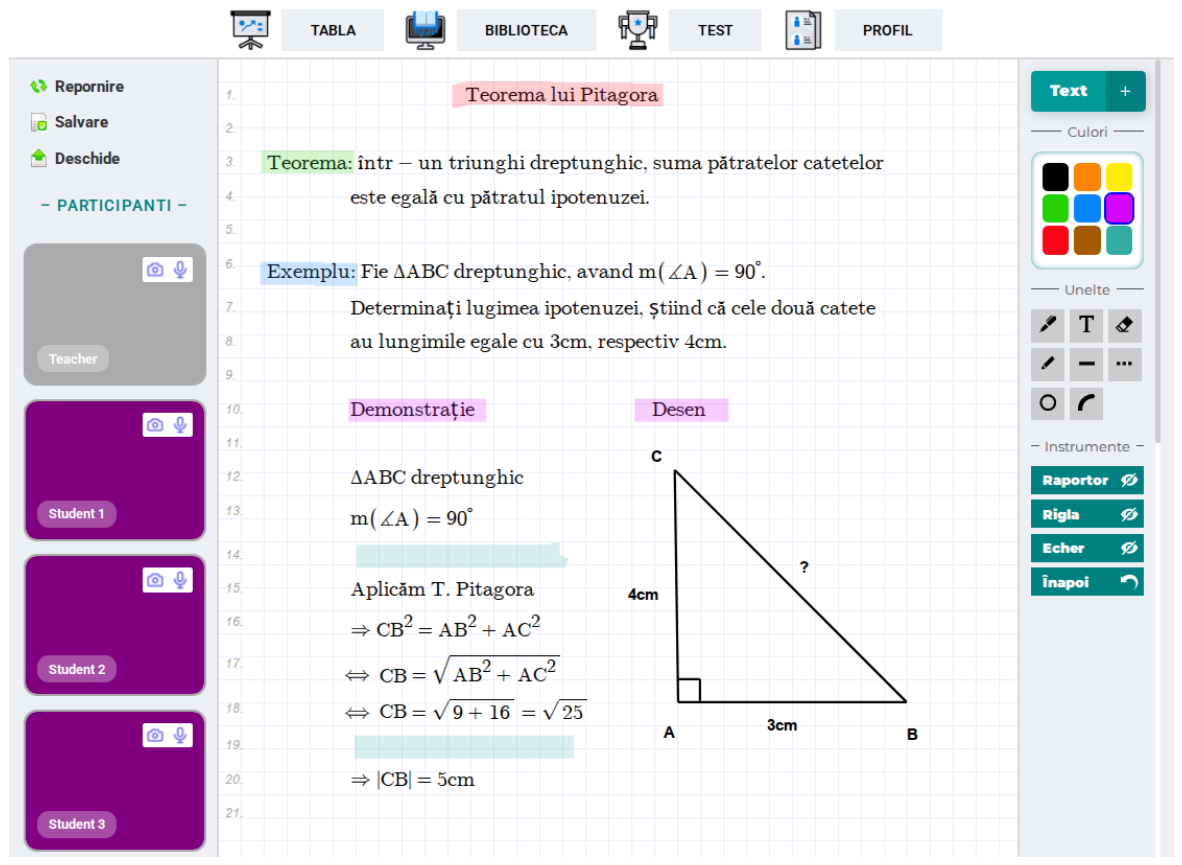
- How can eMath4All be used for private tutoring?
- How do students perceive the use of eMath4All in group private tutoring settings?
- How do students perceive the use of eMath4All in individual private tutoring settings?
- What is students’ experience and satisfaction with eMath4All in private tutoring?
2. Background and Literature Overview
3. Materials and Methods
3.1. Materials
3.2. Methodology
- (i)
- Usage patterns, based on system-generated interaction data;
- (ii)
- Student perceptions, collected through questionnaires;
- (iii)
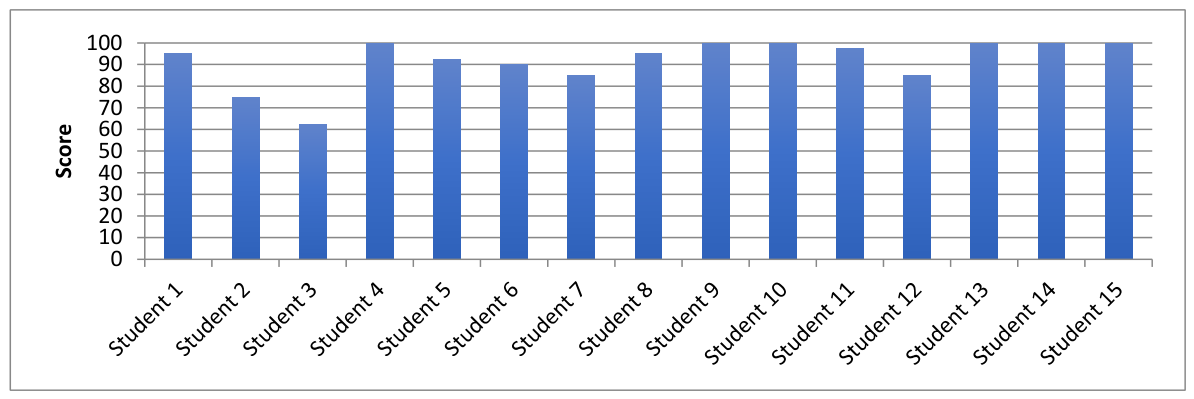
- Observed learning progress, analyzed descriptively through assessment results.
- Section 1: Demographic and tech profile—device type, internet quality, and self-assessed digital skills;
- Section 2: Technical performance—faults, lag, connection issues, and slowdowns;
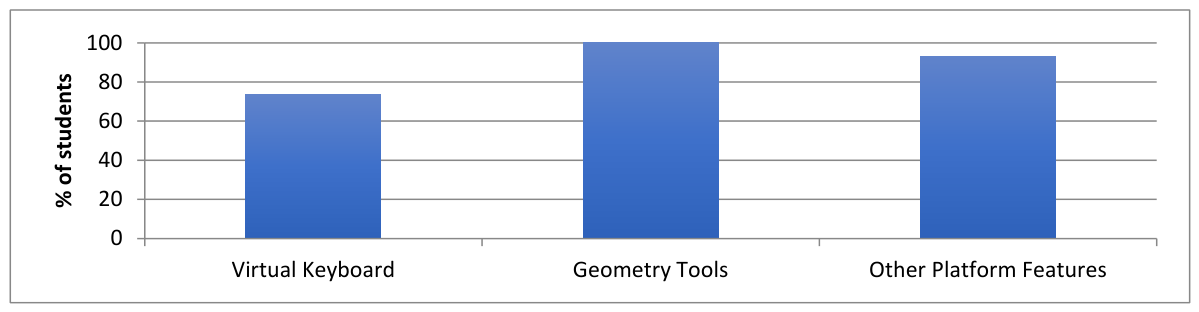
- Section 3: Learning time—effort required to familiarize with features like virtual keyboard, drawing tools, library, and personal profile;
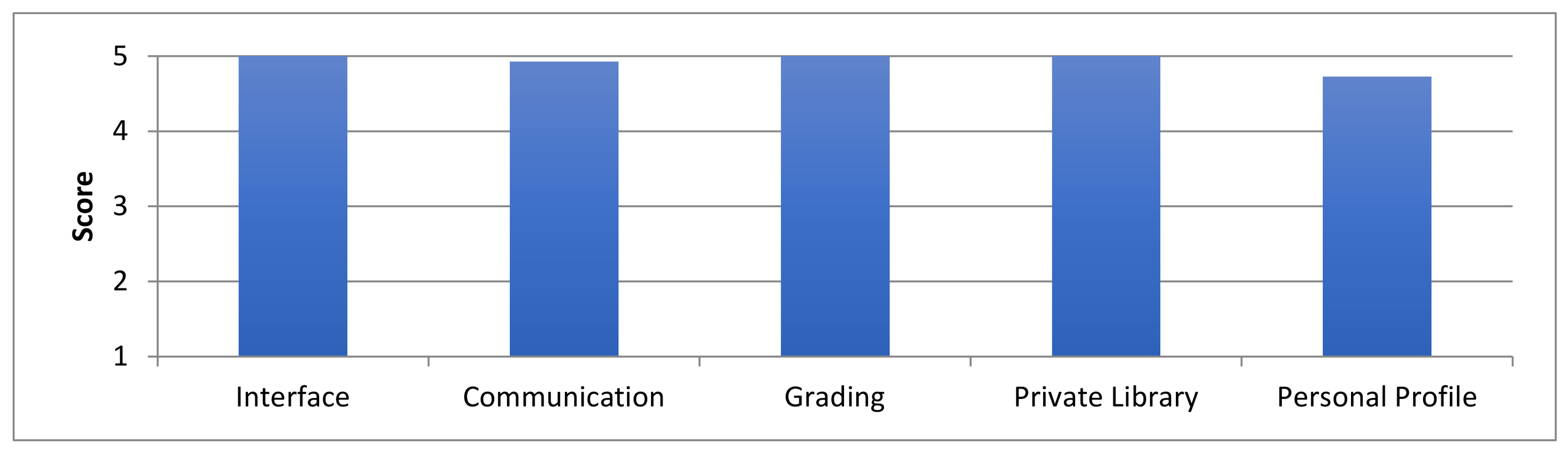
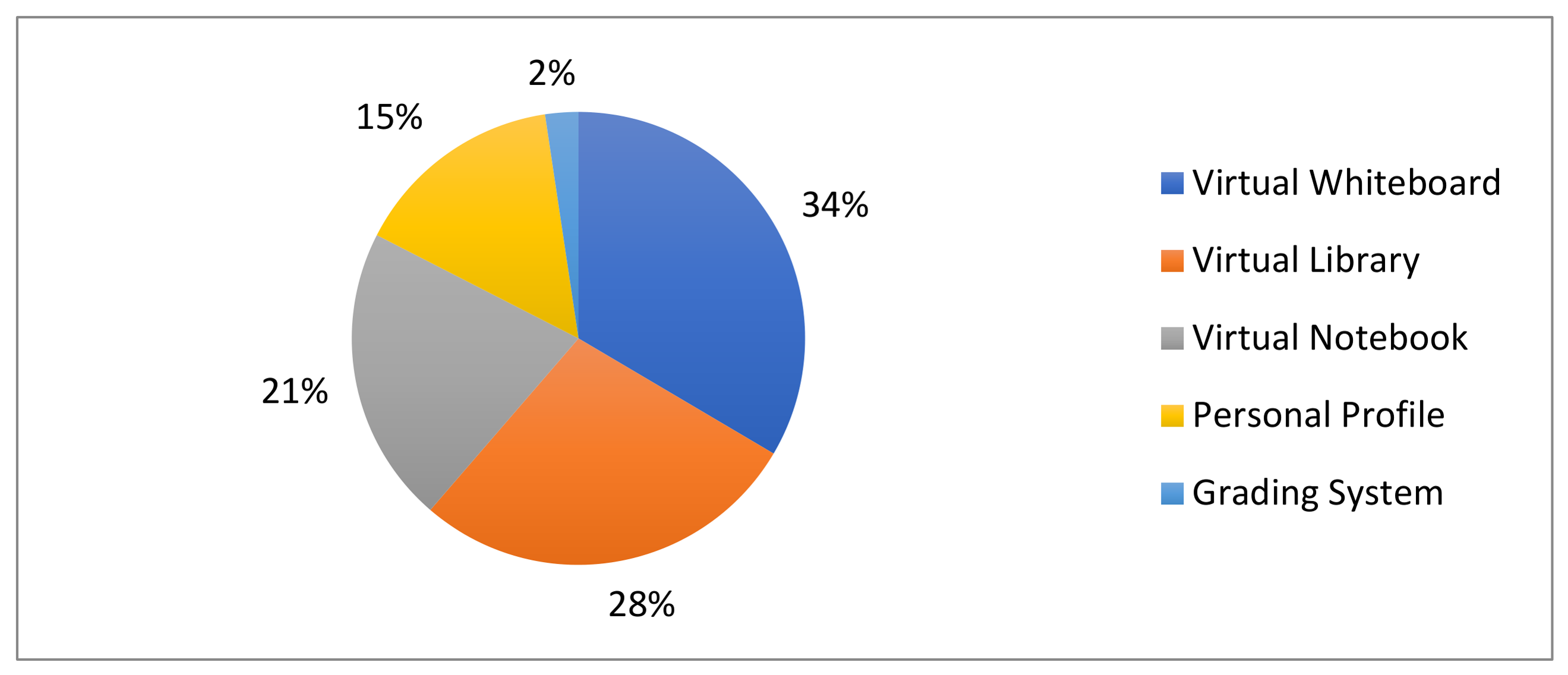
- Section 4: User experience—satisfaction rating and open feedback regarding preferred platform components;
- Section 5: Comparison with in-person tutoring—perceived academic progress, student-tutor interaction, learning experience, advantages, and disadvantages;
- Section 6: Group tutoring experience (only for Study A)—student-tutor interaction, peer relationships, distractions, and overall experience;
- Section 7: Long-term use—future plans, skill development, and suggestions for platform improvement.
4. Results and Experimental Findings
4.1. Study A—Group Tutoring
4.2. Study B—Individual Tutoring
4.3. Insights into Students’ Experience—Questionnaire Results
5. Discussion and Conclusions
5.1. How Can eMath4All Be Used for Private Tutoring?
5.2. How Do Students Perceive the Use of eMath4All in Group Private Tutoring Settings?
5.3. How Do Students Perceive the Use of eMath4All in Individual Private Tutoring Settings?
5.4. What Is Students’ Experience and Satisfaction with eMath4All in Private Tutoring?
5.5. Limitations and Future Work
Author Contributions
Funding
Institutional Review Board Statement
Informed Consent Statement
Data Availability Statement
Conflicts of Interest
References
- Dziuban, C.; Picciano, A. The evolution continues. ECAR Res. 2015, 6, 1–19. [Google Scholar]
- Onyema, E.M.; Eucheria, N.C.; Obafemi, F.A.; Sen, S.; Atonye, F.G.; Sharma, A.; Alsayed, A.O. Impact of Coronavirus pandemic on education. J. Educ. Pract. 2020, 11, 108–121. [Google Scholar] [CrossRef]
- Ion, T.C.; Popescu, E. Distance Mathematics Teaching During the Pandemic–Experiences from Secondary Schools in Romania. In International Conference in Methodologies and Intelligent Systems for Technology Enhanced Learning; Springer Nature: Cham, Switzerland, 2023; pp. 179–188. [Google Scholar] [CrossRef]
- Gupta, A. Exposing the “shadow”: An empirical scrutiny of the “shadowing process” of private tutoring in India. Educ. Rev. 2023, 75, 394–410. [Google Scholar] [CrossRef]
- Longjam, G. The Rapid Rise and Transformational Trends of Private Tutoring; Notion Press: Chennai, India, 2022. [Google Scholar]
- Bray, T.M. The Shadow Education System: Private Tutoring and Its Implications for Planners; UNESCO International Institute for Educational Planning: Paris, France, 1999. [Google Scholar]
- Ramaley, J.A.; Zia, L. The real versus the possible: Closing the gaps in engagement and learning. In Educating the Net Generation; EDUCAUSE: Boulder, CO, USA, 2005. [Google Scholar]
- Terzieva, V.; Ivanova, M.; Djambazova, E.; Ilchev, S. The Role of Internet of Things and Security Aspects in STEM Education. Information 2025, 16, 533. [Google Scholar] [CrossRef]
- Paunova-Hubenova, E.; Bontchev, B.; Terzieva, V.; Dankov, Y. Teachers’ Views on STEM Education in Bulgaria: A Qualitative Survey. Educ. Sci. 2025, 15, 1155. [Google Scholar] [CrossRef]
- Ventura, A.; Jang, S. Private tutoring through the internet: Globalization and offshoring. Asia Pac. Educ. Rev. 2010, 11, 59–68. [Google Scholar] [CrossRef]
- Diskin, K.S. Private Tutoring: An Intersection of Economic Interests and Social Capital. Ph.D. Thesis, Walden University, Minneapolis, MN, USA, 2010. [Google Scholar]
- Bray, M. Private supplementary tutoring: Comparative perspectives on patterns and implications. Compare 2006, 36, 515–530. [Google Scholar] [CrossRef]
- Alam, G.M.; Forhad, M.A.R. Impact of private tutoring for university admission and subsequently on students’ academic results. J. Appl. Res. High. Educ. 2025, 17, 75–91. [Google Scholar] [CrossRef]
- Zhang, Y.; Wu, X.; Chen, S.; Cui, C.; He, Y.; Wang, L. Differential effects of private tutoring on groups of students’ mathematics achievements: A longitudinal study. Educ. Stud. Math. 2024, 115, 197–222. [Google Scholar] [CrossRef]
- He, Y.; Zhang, Y.; Ma, X.; Wang, L. Does private supplementary tutoring matter? The effect of private supplementary tutoring on mathematics achievement. Int. J. Educ. Dev. 2021, 84, 102402. [Google Scholar] [CrossRef]
- Zhang, Y.; Liu, L.; Wang, Z.; Wang, L. The association between private tutoring and mathematics learning outcomes in primary and secondary schools: A three-level meta-analysis. Learn. Individ. Differ. 2026, 127, 102877. [Google Scholar] [CrossRef]
- Akimenko, O. Investigating the effectiveness of private small group tutoring of English in Kazakhstan: Perceptions of tutors and students. NUGSE Res. Educ. 2017, 2, 16–26. [Google Scholar]
- Ion, T.C.; Popescu, E. An innovative distance learning platform for mathematics education in secondary schools: Design, development and preliminary studies. Educ. Inf. Technol. 2025, 30, 5529–5560. [Google Scholar] [CrossRef]
- Mischo, C.; Haag, L. Expansion and effectiveness of private tutoring. Eur. J. Psychol. Educ. 2002, 17, 263–273. [Google Scholar] [CrossRef]
- Kobakhidze, N.; Šťastný, V. Different contexts, similar mindsets? A comparative study of parental decision-making in private tutoring in Hong Kong and the Czech Republic. Comp. A J. Comp. Int. Educ. 2026, 1–21. [Google Scholar] [CrossRef]
- Hajar, A.; Özdemir, M.; Aypay, A. The nature and implications of shadow education for displaced Syrian secondary students in Türkiye: A quantitative inquiry. Int. J. Educ. Dev. 2026, 121, 103513. [Google Scholar] [CrossRef]
- Zumbuehl, M.; Hof, S.; Wolter, S.C. Private tutoring and academic achievement in a selective education system. Educ. Econ. 2025, 33, 613–630. [Google Scholar] [CrossRef]
- Soeung, S. Factors Influencing Engagement of Private Tutoring at Cambodian Upper Secondary Schools. Ph.D. Thesis, Hiroshima University, Higashihiroshima, Japan, 2022. [Google Scholar]
- Dang, H.A.; Rogers, F.H. How to Interpret the Growing Phenomenon of Private Tutoring: Human Capital Deepening, Inequality Increasing, or Waste of Resources? Policy Research working paper; no. WPS 4530; World Bank: Washington, DC, USA, 2008; Available online: http://documents.worldbank.org/curated/en/615341468134395802 (accessed on 15 April 2026).
- Ciuchi, O.M. Tutoring—An Emerging Phenomenon in the Romanian Education System. Sustainability 2023, 15, 14054. [Google Scholar] [CrossRef]
- De Cort, W.; De Witte, K. The potential of tutoring in higher education: Students’ preferences, consumption, and the role of information. High. Educ. 2025, 90, 921–939. [Google Scholar] [CrossRef]
- Dang, H.A. The determinants and impact of private tutoring classes in Vietnam. Econ. Educ. Rev. 2007, 26, 683–698. [Google Scholar] [CrossRef]
- Azam, M. Private tutoring: Evidence from India. Rev. Dev. Econ. 2016, 20, 739–761. [Google Scholar] [CrossRef]
- Dongre, A.; Tewary, V. Impact of private tutoring on learning levels. Econ. Political Wkly. 2015, 50, 72–80. [Google Scholar]
- Zhan, S.; Bray, M.; Wang, D.; Lykins, C.; Kwo, O. The effectiveness of private tutoring: Students’ perceptions in comparison with mainstream schooling in Hong Kong. Asia Pac. Educ. Rev. 2013, 14, 495–509. [Google Scholar] [CrossRef]
- Tian, R. Whose visions for what learning? Perspectives, policies and practices in private supplementary tutoring. Int. Rev. Educ. 2026, 1–3. [Google Scholar] [CrossRef]
- Benckwitz, L.; Guill, K.; Roloff, J.; Ömeroğulları, M.; Köller, O. Investigating the relationship between private tutoring, tutors’ use of an individual frame of reference, reasons for private tutoring, and students’ motivational-affective outcomes. Learn. Individ. Differ. 2022, 95, 102137. [Google Scholar] [CrossRef]
- Hof, S. Does private tutoring work? The effectiveness of private tutoring: A nonparametric bounds analysis. Educ. Econ. 2014, 22, 347–366. [Google Scholar] [CrossRef]
- Maiti, A.; Midya, S.; Paul, P.K. Private Coaching Across Institutions in India: Do Management Types Make a Difference? Int. J. Soc. Sci. Educ. Res. 2026, 8, 120–127. [Google Scholar] [CrossRef]
- Mohamad Hanefar, S.B.; Wong, L.S.; Chan, C.T. The Effectiveness of Reciprocal Peer Tutoring in Supporting Blended Learning in both Online and Offline Modes. INTI J. Spec. Issue Teach. Learn. 2011, 47–57. Available online: http://eprints.intimal.edu.my/284/ (accessed on 15 April 2026).
- Mahmud, R.; Kwok, P.; Kenayathulla, H.B. Involvement, features and practice of Bangladeshi distance learners in private tutoring through blended learning during the COVID-19 pandemic. Asian Educ. Dev. Stud. 2026, 1–18. [Google Scholar] [CrossRef]
- Jatmika, S.; Khasanah, L.; Martama, H.; Pertiwi, P. Adapting to Online Education: A Case Study of Resilience and Innovation in Private Tutoring During the Pandemic. J. VARIDIKA 2024, 36, 126–142. [Google Scholar] [CrossRef]
- Glotova, A.; Samoylenko, N.; Zharko, L.; Georgiadi, A.; Shevchenko, M. Shadow education: Shapes of private tutoring in e-learning environment. E-Learn. Digit. Media 2023, 20, 314–330. [Google Scholar] [CrossRef]
- Yıldız, A.; Türkdoğan, A.; Koçak, E. Negative Effects of Private Tutoring on Stakeholders from Teachers’ Perspective/Öğretmenlerin Gözünden Özel Dersin Paydaşlara Olumsuz Etkileri. e-Uluslararası Eğitim Araştırmaları Derg. 2022, 13, 19–37. [Google Scholar] [CrossRef]
- Bray, M.; Kwok, P. Demand for private supplementary tutoring: Conceptual considerations, and socio-economic patterns in Hong Kong. Econ. Educ. Rev. 2003, 22, 611–620. [Google Scholar] [CrossRef]
- Călin, R.A.; Teodorescu, B. The Tutoring Phenomenon-An Exploratory Study. In Proceedings of the CIL 2016: Third Edition of International Conference of Humanities and Social Sciences–Creativity, Imaginary, Language (Creativity in Social Sciences), Craiova, Romania, 20–21 May 2016; pp. 127–139. [Google Scholar]
- Šťastný, V.; Walterová, E. The influence of school on private tutoring usage. Stud. Paedagog. 2019, 24, 51–78. [Google Scholar] [CrossRef]
- Guill, K.; Bos, W. Effectiveness of private tutoring in mathematics with regard to subjective and objective indicators of academic achievement. Evidence from a German secondary school sample. J. Educ. Res. Online 2014, 6, 34–67. [Google Scholar] [CrossRef]
- Berberoğlu, G.; Tansel, A. Does private tutoring increase students’ academic performance? Evidence from Turkey. Int. Rev. Educ. 2014, 60, 683–701. [Google Scholar] [CrossRef]
- Popa, S.; Acedo, C. Redefining professionalism: Romania secondary education teachers and the private tutoring system. Int. J. Educ. Dev. 2006, 26, 98–110. [Google Scholar] [CrossRef]
- Chui, M.M. Private Supplementary Tutoring: Motivations and Effects: A Review Study. J. Educ. Pract. 2016, 7, 195–198. [Google Scholar]
- Cassibba, R.; Ferrarello, D.; Mammana, M.F.; Musso, P.; Pennisi, M.; Taranto, E. Teaching Mathematics at Distance: A Challenge for Universities. Educ. Sci. 2021, 11, 1. [Google Scholar] [CrossRef]
- Barlovits, S.; Jablonski, S.; Lázaro, C.; Ludwig, M.; Recio, T. Teaching from a Distance—Math Lessons during COVID-19 in Germany and Spain. Educ. Sci. 2021, 11, 406. [Google Scholar] [CrossRef]
- Çetin, İ.; Yüceer, E.G. Teachers in math lessons in the digital age: The real face of distance education. Ahmet Keleşoğlu Eğitim Fakültesi Derg. 2023, 5, 1489–1514. [Google Scholar] [CrossRef]
- Irfan, M.; Kusumaningrum, B.; Yulia, Y.; Widodo, S.A. Challenges during the pandemic: Use of e-learning in mathematics learning in higher education. Infin. J. 2020, 9, 147–158. [Google Scholar] [CrossRef]
- Brooke, J. SUS: A retrospective. J. Usability Stud. 2013, 8, 29–40. [Google Scholar]
- Ion, T.C.; Popescu, E. Enhancing Synchronous Online Education: Overcoming Connectivity Challenges with Innovative Video-Conferencing Solutions. In Proceedings of the 34th Annual Conference of the European Association for Education in Electrical and Information Engineering (EAEEIE), Cluj-Napoca, Romania, 18–20 June 2025; pp. 1–6. [Google Scholar] [CrossRef]




Disclaimer/Publisher’s Note: The statements, opinions and data contained in all publications are solely those of the individual author(s) and contributor(s) and not of MDPI and/or the editor(s). MDPI and/or the editor(s) disclaim responsibility for any injury to people or property resulting from any ideas, methods, instructions or products referred to in the content. |
© 2026 by the authors. Licensee MDPI, Basel, Switzerland. This article is an open access article distributed under the terms and conditions of the Creative Commons Attribution (CC BY) license.
Share and Cite
Ion, T.-C.; Popescu, E. Exploring eMath4All Platform for Private Mathematics Tutoring: Empirical Insights and Evaluation. Appl. Sci. 2026, 16, 4238. https://doi.org/10.3390/app16094238
Ion T-C, Popescu E. Exploring eMath4All Platform for Private Mathematics Tutoring: Empirical Insights and Evaluation. Applied Sciences. 2026; 16(9):4238. https://doi.org/10.3390/app16094238
Chicago/Turabian StyleIon, Teo-Christian, and Elvira Popescu. 2026. "Exploring eMath4All Platform for Private Mathematics Tutoring: Empirical Insights and Evaluation" Applied Sciences 16, no. 9: 4238. https://doi.org/10.3390/app16094238
APA StyleIon, T.-C., & Popescu, E. (2026). Exploring eMath4All Platform for Private Mathematics Tutoring: Empirical Insights and Evaluation. Applied Sciences, 16(9), 4238. https://doi.org/10.3390/app16094238