1. Introduction
Grass and agricultural waste are abundantly available sources of renewable carbon from land. For instance, around a million tons of grass are mowed annually from road verges in the Netherlands [
1]. While chemical and physical contamination often prevents the use of these lignocellulosic clippings as cattle feed, they possess value, are cheap, and their valorisation into biobased products does not compete with food production [
2]. These renewable sources present practical alternatives to finite fossil resources in industrial applications. Grasses and lignocellulosic biomass hold immense promise as a sustainable feedstock for the production of valuable chemicals and fuels.
Next to dissolved organic compounds, lignocellulosic structural solid biomass is composed of cellulose (30–55%), hemicelluloses (18–37%), and lignin (10–30%) [
1,
3,
4]. The anaerobic decomposition of the solid components of lignocellulosic biomass is a complex and challenging process due to the presence of lignin. Lignin’s robust cross-linking and protective encapsulation impede enzymatic and microbial access to cellulose and hemicellulose within lignocellulosic matrices [
5]. Consequently, an intensive chemical and/or physical pretreatment is essential to disrupt lignin architecture, thereby exposing cellulose fibres for subsequent enzymatic and microbial hydrolysis. For comprehensive insights into the difficulties and mechanisms of lignin breakdown under anaerobic conditions, the review by Khan and Ahring [
6] provides a detailed analysis [
7]. Pretreatment methods, such as wet explosion, increase lignocellulosic biomass accessibility to anaerobic microbes, thereby improving its accessibility and, e.g., resulting in increased biogas production [
6].
Furthermore, research has shown that specific microbial consortia can anaerobically break down lignin, although the efficiency of these processes can vary significantly [
7]. Enzymatic actions to decompose lignin are often oxidative, requiring oxygen and involving complex biochemistry influenced by the specific conditions of the degradation environment [
8].
Ruminants are known to be among the best-adapted cows to digest plant cell walls into, amongst others, volatile fatty acids (VFA) [
9]. The rumen harbours a complex microbial ecosystem comprising numerous bacteria, archaea, protozoa, and fungi that collaboratively decompose lignocellulosic biomass [
10]. Ruminants serve as a particularly effective natural model in this regard. The rumen functions as a continuously operating bioreactor in which cellulose and hemicellulose, the main component of the predominantly fibrous feed, is hydrolysed into sugars. Specialised microorganisms convert these sugars into short-chain fatty acids, mainly acetic, propionic, and butyric acids. The anaerobic conversion of plant cell walls containing cellulose and hemicellulose occurs with very high quantitative and temporal efficiency. Cattle, for example, a natural model for the technological process, can produce approximately 6–9 kg of short-chain fatty acids from a feed intake of up to 20 kg/day, with a SRT of only 3 days [
11]. Such high VFA production may lead to a decrease in rumen pH. The ruminants overcome this acidification by buffering with large volumes of saliva and by efficiently removing VFAs from the rumen. VFAs are rapidly transferred into subsequent parts of the digestive tract and across the rumen cell wall into the bloodstream [
12]. Depending on physiological conditions, approximately 50–85% of VFA removal occurs via rumen epithelial absorption, with the remainder leaving the rumen via liquid outflow [
13].
Then, VFAs are used by the cow as an energy source and for synthesising, e.g., milk constituents.
VFAs produced in an industrial reactor can be converted into valuable products such as polyhydroxyalkanoates, biofuels, and bioplastics.
The rumen microbial consortium may convert 55% (
w/
w) of lignocellulose into VFA as the main product [
14]. Part of the solid fibre fraction, including microorganisms attached, remains in the rumen for a longer time, making the rumen a very efficient bio-digestive reactor for herbal biomass. Anaerobic digestion (AD) in ruminants is fast and efficient, converting more organic material per unit volume and time than human-designed industrial acidification digesters. The cattle rumen has a volume between 100 and 150 L; the daily feed intake corresponds to approximately 150–200 kg/m
3·day. The high daily feed intake significantly exceeds the daily substrate input volume in industrial fermenters, as in classical biogas plants. In the cattle rumen, 75% of the fibre biomass decomposes in 3–4 days [
15,
16]. Industrial AD of lignocellulosic biomass via VFAs into biogas [
17] takes about 40–60 days.
In batch experiments, rumen populations have been shown to improve hydrolysis [
18,
19]. In continuous-flow systems using rumen content as inoculum, however, the rumen microbial population tended to wash out over time. As a result, hydrolysis improved only at the start of the experiments [
20].
Despite the promising hydrolytic capacity of rumen microbial consortia, translating this biological efficiency into engineered reactor systems remains challenging. Previous studies have shown that rumen-based or rumen-inspired fermentation systems can enhance lignocellulosic biomass degradation and VFA production, and can achieve stable long-term operation under certain conditions [
21]. However, these systems primarily focused on biogas production rather than VFA accumulation, and reactor scale was constrained by filtration capacity, limiting process intensification.
Nevertheless, several limitations have been reported for such systems, including incomplete degradation of lignocellulosic substrates, accumulation of VFAs leading to acidification at higher organic loading rates, and wash-out of slow-growing microorganisms under short hydraulic retention times. These factors can reduce process stability and limit long-term continuous operation [
22,
23].
To address these challenges, the present study proposes an artificial rumen reactor (ARR) integrated with membrane ultrafiltration. This configuration enables the decoupling of SRT and LRT, allowing effective retention of the microbial community while simultaneously enabling continuous extraction of VFAs from the liquid phase. By combining rumen-derived microbial activity with controlled product removal, the proposed system aims to improve process stability and support sustained VFA production from lignocellulosic biomass.
The absence of oxygen in anaerobic systems prevents the complete decomposition of lignin because the anaerobic microbial flora cannot produce oxidative enzymes with ligninolytic activity [
24,
25]. The application of oxygen may have significant potential to induce the production of specific oxidative enzymes by microbes [
26,
27]. Micro-aeration, the controlled introduction of a small amount of oxygen to an anaerobic process, has been shown previously to have several benefits [
28,
29,
30]. Oxygen sparging may enhance lignin breakdown. In ruminants, a certain oxygen input occurs naturally during the swallowing of grass and during rumination, when small amounts of oxygen are introduced into the rumen environment [
31]. Thus, low oxygen levels may support microorganisms in degrading a recalcitrant compound without disturbing anaerobic processes.
VFA concentrations in the rumen are regulated through a balance between microbial production, absorption across the rumen epithelium, and liquid outflow. However, translating these highly efficient rumen processes into stable, long-term continuous bioreactor systems remains challenging, particularly because maintaining the microbial consortium while enabling efficient product removal is difficult.
The current study describes the design of an ARR for converting lignocellulosic biomass into VFAs. Rumen fluid is used as the inoculum, and grass pellets serve as the model substrate. The anticipated outcome of this study is an effective process for the continuous production of VFAs from recalcitrant biomass types. Hereto, our research evaluated the following parameters:
(1) Liquid Retention Time (LRT) and Solid Retention Time (SRT); (2) decomposition of organic matter; (3) continuous VFA production and extraction from the system; (4) the VFA yield and composition; (5) reproducibility when employing rumen fluid from four different cows as an inoculum; (6) the impact of micro-aeration on the process; and (7) the system’s robustness under fluctuating scenarios.
2. Materials and Methods
2.1. Reactor Design
The ARR used in this study was a 4 L stainless-steel fermenter (Biostream International, Doetinchem, The Netherlands). The ARR was equipped with two peristaltic pumps, a stirrer, an oxidation–reduction potential (ORP) sensor (EasyFerm Plus ORP, Hamilton Bonaduz, Bonaduz, Switzerland), a temperature sensor (PT100), and a pH electrode (EasyFerm Plus pH). The reactor contents were stirred at 125 rpm using two three-bladed impellers to promote a homogeneous mixture.
2.2. Filtration
Continuous filtration of the reactor content was applied to retain microorganisms within the system. Filtration was performed using a stainless steel Amiad filter housing (1″, 300 µm, Amiad Water Systems, Galil Elyon, Israel) serving as structural support, around which a polypropylene filter bag (25 µm, Borselen Filters B.V., Zoetermeer, The Netherlands) was installed. Reactor liquid was withdrawn through the filter using a peristaltic pump (Masterflex, Cole-Parmer, Vernon Hills, IL, USA), thereby removing permeate while retaining biomass and particulate matter inside the reactor. This configuration enabled the selective removal of dissolved compounds, such as VFAs, while maintaining the microbial consortium within the system.
This type of filtration led to severe clogging (see
Section 3), and they were replaced by an ultrafiltration unit outside the fermenter.
The fermenter was connected via a high-flex pressure hose (inner diameter: 13 mm, Gardena, Ulm, Germany) to two parallel ceramic ultrafiltration units (UF150 KDZ membranes; Al
2O
3/ZrO
2, mono-channel design, length 500 mm, surface area 0.95 × 10
−3 m
2; Atech Innovations GmbH, Gladbeck, Germany) [
32]. A peristaltic pump (Verderflex Dura 10, Verder B.V., Groningen, The Netherlands) was used to circulate the reactor contents through the membrane modules at a flow rate of 1.2 L min
−1.
In contrast to conventional operation under transmembrane overpressure, a reduced pressure was applied on the permeate side using a vacuum pump (Büchi vacuum pump V-100, BÜCHI Labortechnik GmbH, Breda, The Netherlands), thereby inducing permeation across the membrane. This configuration facilitated the selective passage of solutes below the membrane cut-off (~150 kDa), while retaining biomass and macromolecular components within the reactor system.
Powered by a water bath, the reactor contents were kept at 39 °C to mimic the rumen temperature.
2.3. Reactor Feed
Grass pellets (Pavo Fibre Nuggets, a commercially available fibrous forage product) were used as a model reactor feed. Prior to use, pellets were milled using a cutter mill (Retsch SM 300, Retsch Benelux Verder Scientific Benelux BV, Groningen, The Netherlands) to particles smaller than 2 mm. Van Soest analysis revealed an NDF content of 57.4% DM, comprising cellulose (28.7%), hemicellulose (23.3%), and lignin (5.4%); the non-NDF soluble fraction accounted for 42.6% DM. Milled grass was added manually via a funnel at the top feeding port at 60–80 g dry matter day−1.
2.4. Artificial Saliva
An artificial saliva was used to buffer the reactor contents and to compensate for the removed liquids. The artificial saliva buffer (pH 8.2) consisted of 9.8 g/L NaHCO3, 0.57 g/L KCl, 9.3 g/L Na2HPO4 12 H2O, 0.13 g/L MgCl2·6H2O, 0.05 g/L CaCl2·2H2O and 0.47 g/L NaCl.
2.5. Reactor Operation
To inoculate the ARR, 3.5–4.0 L of fresh cattle rumen fluid from a nearby slaughterhouse was collected and kept warm and anaerobic during transport. The rumen fluid was stored for up to 1 h in preheated thermos flasks at 39 °C. Under anaerobic conditions (flushed with nitrogen), the rumen liquid was sieved over a 2 mm filter to remove large solid particles and poured into a preheated (39 °C) reactor. Pure N2 gas was then purged into the reactor until the oxygen redox potential decreased to below −400 mV. Subsequently, the ARR was sealed and milled grass pellets were added.
After adding fresh grass, the circulation of reactor contents through the ultrafiltration unit was temporarily stopped to prevent membrane clogging. Once the grass was thoroughly mixed into the reactor, the circulation was restarted after ten minutes.
The permeate and vacuum pumps operated continuously to achieve an LRT of 0.5 days, and the ultrafiltrate was sampled to determine the VFA yield and composition. Anaerobic saliva buffer was added to compensate for liquid losses. A level sensor was used to maintain a constant reactor volume.
Backflushing of the ceramic filters was done daily (30 s) and perpendicular to the membrane by applying air pressure from the outside to the inside (Hyundai Super Silent compressor, 2 bar).
Additionally, before adding fresh grass, one-tenth of the reactor’s volume was removed every 24 h and filtered through a 35-mesh sieve to achieve an SRT of 10 days. The liquid was returned to the reactor. The solid fraction was dried overnight at 105 °C, weighed and subsequently analysed using the Van Soest method [
32].
The pH, ORP, and temperature were monitored and recorded throughout the operation period.
The ARR was operated during two periods of ca. 17 days each (short-term) and two periods of ca. 50 days each (long-term), during which samples for ODM, lignin, hemicellulose, and cellulose measurements were collected daily, dried, and stored at room temperature until analysis.
2.6. Oxygen Input
Micro-aeration was applied by supplying air to the reactor at a rate of 0.9 L day−1 (assuming an oxygen content of ~20% in air) through the gas inlet using a mass flow controller (Bronkhorst High-Tech B.V., Ruurlo, The Netherlands) via a metal tube (ID = 3.85 mm, OD = 6.35 mm) at 50% of the Liquid height. The addition of oxygen was used to evaluate its potential effects on lignin degradation and VFA production.
2.7. Chemical Analysis
The van Soest method [
32] was used to determine the cellulose, hemicellulose, and lignin fractions in the feed and in the ARR contents. The method involved drying the ARR contents to remove water, extracting the soluble components to determine the neutral detergent fibre (NDF) content, removing hemicellulose to determine the ADF content, and removing cellulose to leave only lignin to determine the ADL content. The percentage recovery for each sample was calculated as the sample weight used for the determination divided by the sum of the soluble, cellulose, hemicellulose, and lignin fractions. Before the fiber analysis, the reactor content was filtered and dried at 105 °C using a Buchner funnel with 0.5 mm gauze. Each analysis used ~0.5 g of dry substrate in triplicate. After determining the dry weight, all fibre residues were heated to 550 °C for 5 h to determine the ash content.
2.8. Organic Dry Matter Analysis
Organic Dry Matter content (ODM) was analyzed daily. Three aliquots of ~20 mL each were extracted from the reactor content using a 25 mL volumetric pipette (Kremsmünster, Austria) to determine the water content, the solids (total solids), the organic fraction of the total solids, and the ash content. The samples were dispensed in triplicate into clean, pre-dried and pre-weighed crucibles and dried overnight at 105 °C to determine the Total Suspended Solids (TSS). After weighing, the crucibles were allowed to cool and then weighed to assess mass changes. The final step involved incinerating the crucible contents for at least 5 h at 550 °C to determine ash content, thereby enabling calculation of Volatile Suspended Solids (VSS).
2.9. VFA Measurements
2.9.1. Sample Preparation
In total, 2 mL samples were centrifuged at 17,000× g for 10 min at room temperature (Eppendorf mini spin, Eppendorf Group, Hamburg, Germany). 1500 µL of the supernatant was mixed with 167 µL of 85% phosphoric acid, thoroughly vortexed, and centrifuged for 10 min at 17,000× g. In addition, 997 µL of the supernatant was mixed with 3 µL valeric acid ( n-Valeric acid, Sigma-Aldrich, St. Louis, MO, USA) as an internal standard and analysed by gas chromatography.
2.9.2. Gas Chromatography
A GC-FiD (Shimadzu GC-2014 (Kyoto, Japan) equipped with a Stabilwax GC Capillary Column (Bellefonte, PA, USA), 30 m, 0.32 mm ID, 0.25 μm and nitrogen as carrier gas at 4.0 mL/min) was used to determine individual fatty acid concentrations. Samples of 0.2 µL were injected into the GC. The injector and detector temperatures were 250 °C. The column temperature was 100 °C for 5 min upon sample injection, after which it was ramped at 5 °C/min to 150 °C and held for 5 min. Data collection and integration were performed using Shimadzu software (LabSolutions version 5.111, Kyoto, Japan). The calibration curve involved a standard mix of acetic acid (AA), propionic acid (PA), and butyric acid (BA). This VFA mix was serially diluted to generate calibration curves for each VFA from 0 to 2500 ppm. To 997 µL of all samples and standards, 3.0 µL of IS solution was added. A calibration curve was generated by plotting the ratio of the internal standard area to the area of each VFA in the chromatogram as a function of concentration (ppm).
2.10. Data Analysis
Data processing was performed using Excel. For visualization, PrismGraph 10 was used.
3. Results & Discussion
To investigate the efficiency of VFA production from a lignocellulosic biomass stream, an artificial rumen reactor, inoculated with fresh rumen, was designed. This system was tested initially to choose an efficient filtration technology to separate the liquid from the solids without clogging the filtration device. Secondly, the stability and reproducibility of the system were assessed with respect to VFA yields, VFA profiles, and their steady-state concentrations after inoculation of the reactors with rumen fluid from 4 different cows.
Finally, the introduction of small amounts of oxygen into the reactor, as a potential stimulant for lignin decomposition, was investigated.
3.1. Decoupling of the Solid and Liquid Retention Time (SRT and LRT)
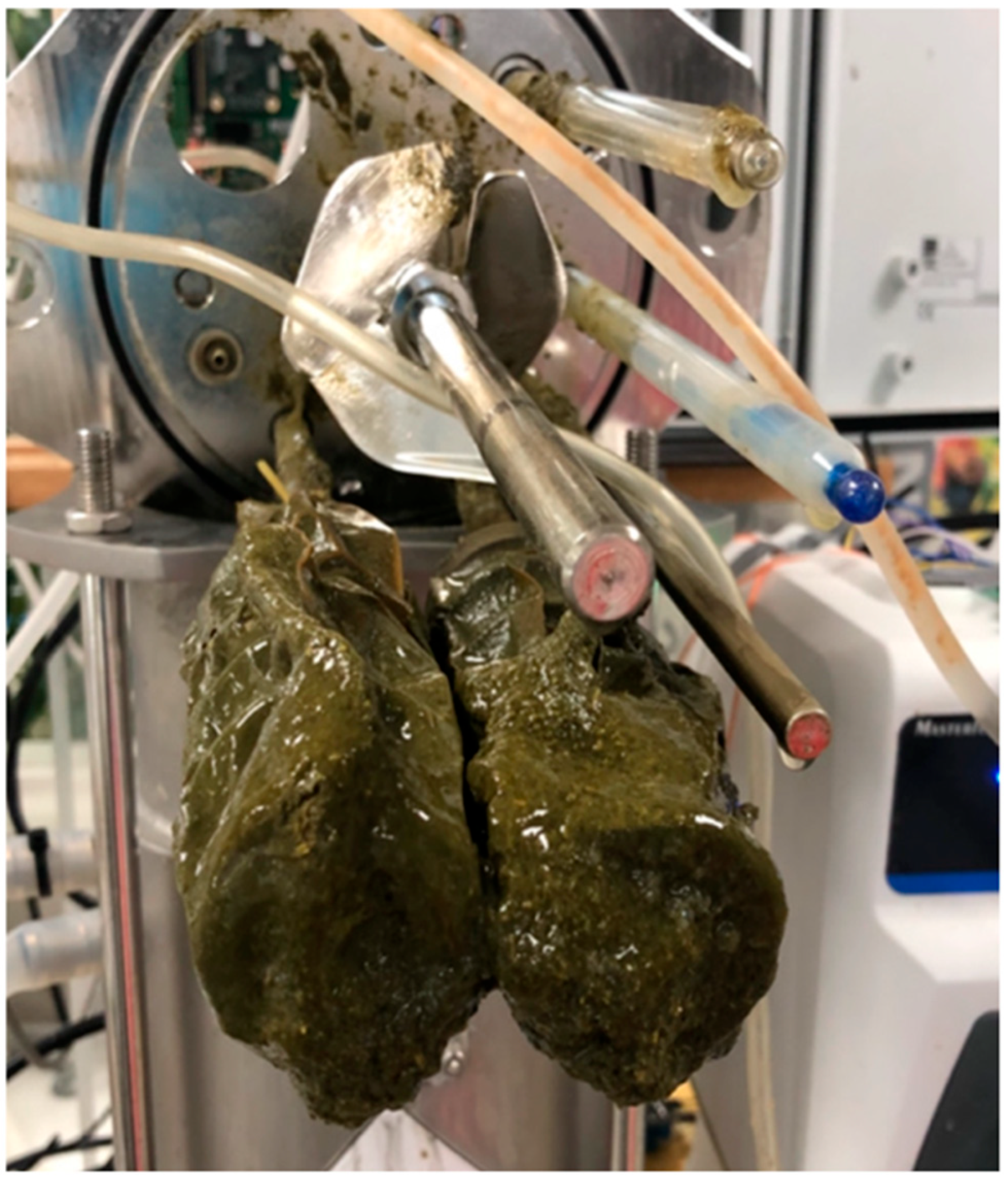
In the ARR, the LRT and the SRT must be uncoupled to maintain microbial activity in the reactor and to extract the formed VFAs from the liquid phase. Before ultrafiltration, various filters, such as cheesecloth and particle-inlet filters, were tested in the fermenter to retain microorganisms within the reactor. Clogging of all tested filter materials occurred very quickly, as early as 4 days after the start of reactor operation (
Figure 1). Restoring the filter flow rates using different backflow regimes was unsuccessful. The formation of a cake layer on the membrane surface appeared to be the most significant hindrance to separating the liquid from the solids.
To solve the filtration problems using the simple filtration systems described above, we tested a crossflow ultrafiltration system using an external hollow ceramic membrane to remove the liquid phase. During the following experimental periods, permeate extraction remained stable, and no membrane replacement was required. The diameter of the hollow membrane (6 mm) was sufficiently large to prevent the build-up of the grass particles at the inlet of the membrane. The smooth internal surface of the ceramic membrane prevented the formation of an internal cake layer, and no clogging occurred.
Although membrane fouling is commonly reported as a limiting factor in membrane-assisted anaerobic systems, the ceramic crossflow membrane used in this study maintained stable filtration without clogging or the need for specific cleaning procedures, indicating that membrane fouling was minimal under the applied operating conditions. Although no decrease in permeate flux was observed during the experimental period, indicating stable membrane operation, membrane fouling was not systematically quantified. Therefore, the presence of reversible or steady-state fouling cannot be excluded. Long-term fouling behaviour, cleaning requirements, and membrane lifetime should be addressed in future studies. The stable membrane operation enabled an effective decoupling of solid retention time (SRT) and liquid retention time (LRT), allowing continuous extraction of VFAs while retaining the microbial community in the reactor. This relatively simple ceramic membrane filtration setup enabled the separation of LRT and SRT during the experiments.
3.2. Decomposition of ODM in the Reactor
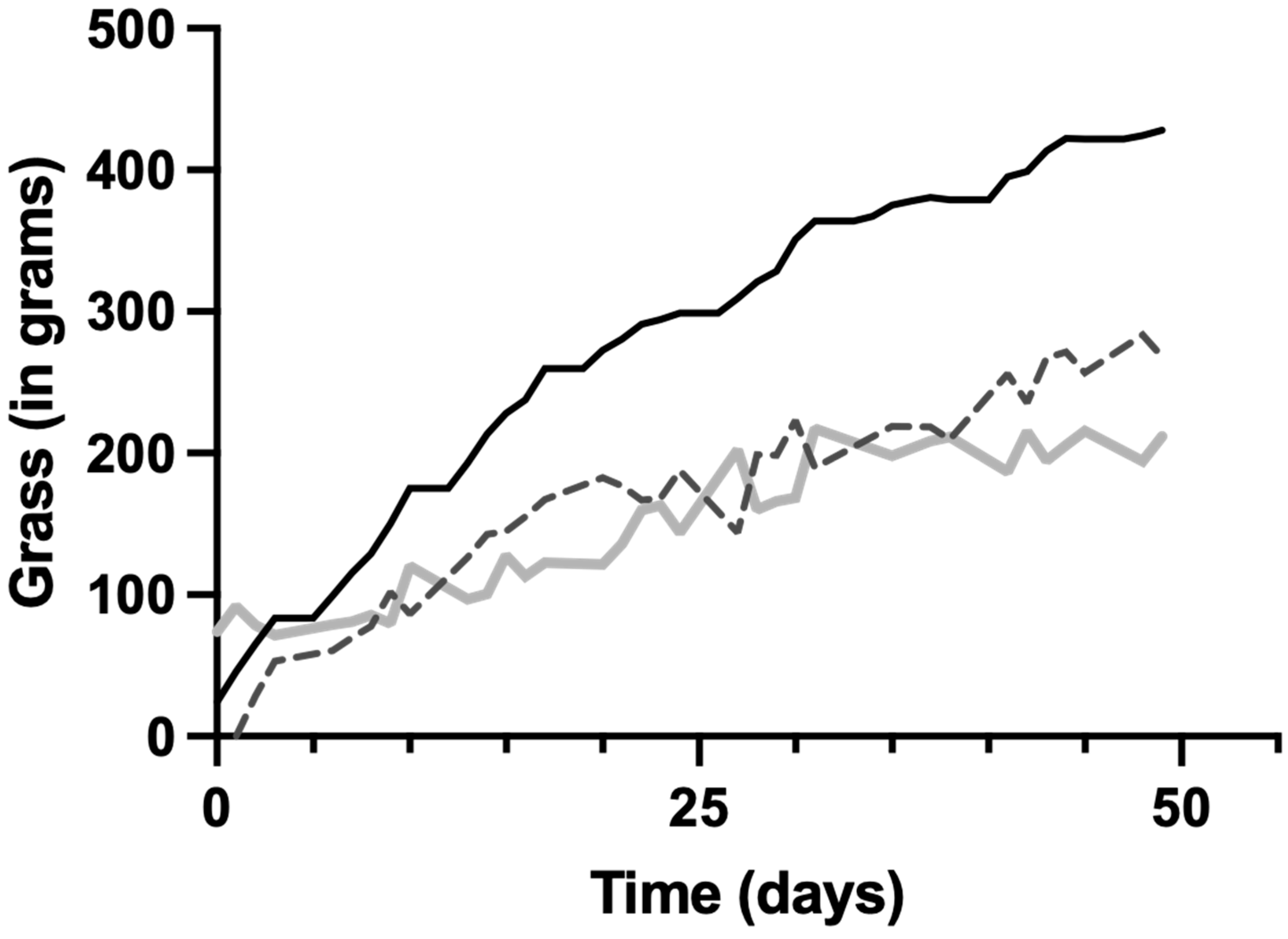
Thorough homogenisation of the bioreactor content, together with daily removal of 10% of the reactor content, effectively established an SRT of 10 days. By sampling and analysing the reactor solids, the reactor ODM was quantified to monitor the degradation process. The results show that significant weight loss of the added biomass occurred. The biomass weight loss in the bioreactor approached its theoretical maximum (
Figure 2), indicating an efficient biological decomposition process. After 30 days, the amount of residual ODM remained constant in the reactor, indicating that, after three solids refreshments at the SRT of 10 days, grass decomposition remained constant. The microorganisms converted ca. 60% of the grass ODM into VFAs under steady-state conditions.
3.3. Stable VFA Production
The average VFA concentrations in the ARR inoculated with rumen fluid from cow #1 were ca. 28 mM. High VFA concentrations can inhibit microbial activity in the system [
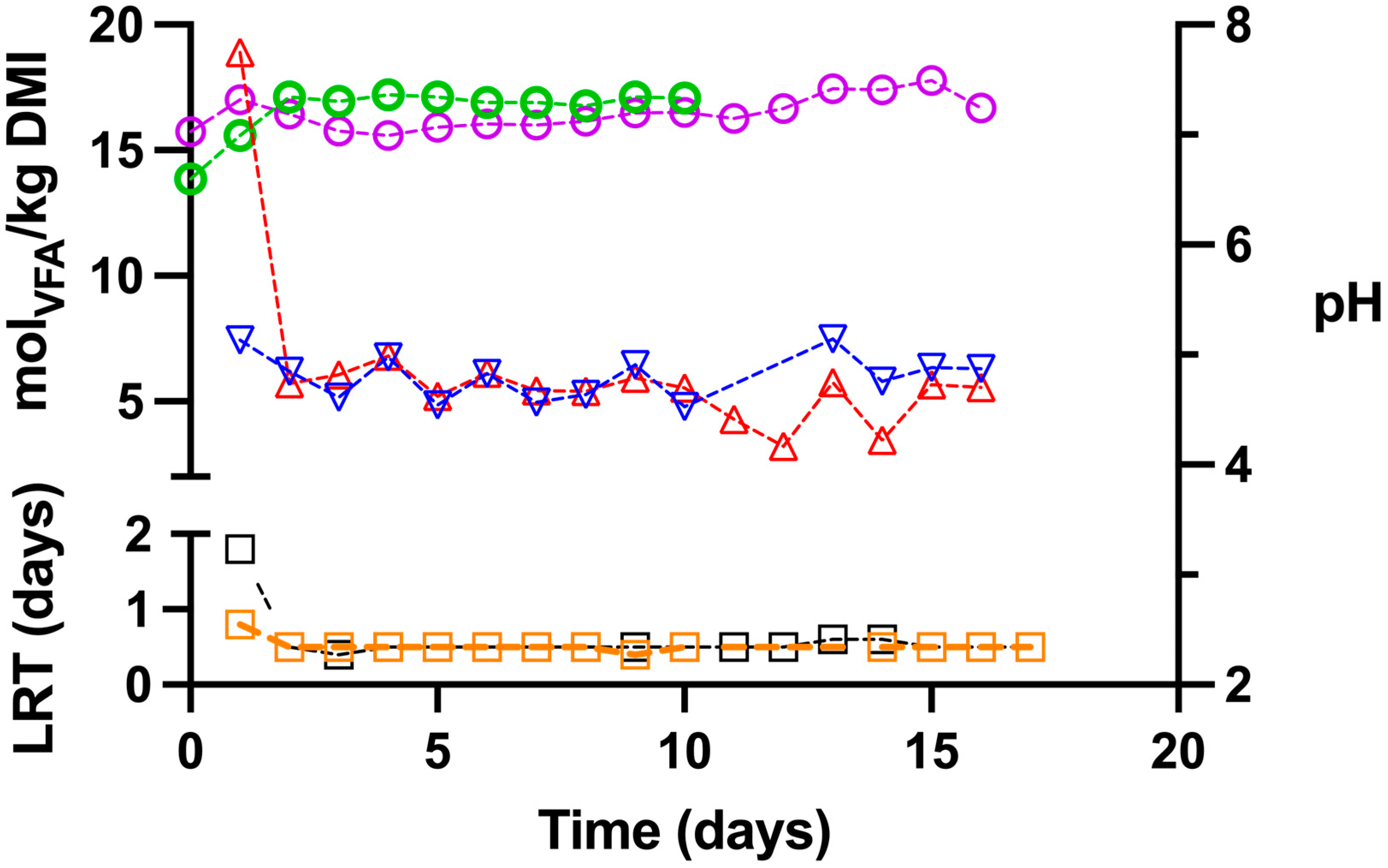
33], but an LRT of 0.5 days was shown to maintain non-inhibitory VFA concentrations (
Figure 2). Typical VFA concentrations in the rumen of healthy cows range from 30 to 60 mM under normal feeding conditions [
34]. The VFA levels observed in the ARR align with these physiological concentrations in cows, indicating the system’s stability and biological relevance. To further assess the reactor’s stability and the reproducibility of the experiments, a second ARR was inoculated with rumen fluid from another cow (cow #2). Then, an LRT of 0.5 days resulted in comparable VFA concentrations (
Figure 3), confirming that the system consistently maintained a physiologically relevant environment.
As shown in
Figure 3, the pH remained stable at approximately 7–8 throughout the experiment, indicating effective buffering and conditions comparable to those of the natural rumen environment. An optimal pH is necessary for efficient microbial conversion of fibrous plant material into VFAs [
35]. In the present study, the pH was not actively controlled. However, the artificial saliva used contained a bicarbonate buffer (pH 8.3), which, together with the low LRT, provided sufficient buffering capacity to the reactor. Because the permeate removal rate equalled the artificial saliva inflow, the buffering capacity remained constant, and the reactor maintained a relatively stable pH during operation (
Figure 3). A low LRT prevents reactor acidification but may also result in low VFA concentrations. On the other hand, higher LRT values decrease energy use. They may enhance bioprocess efficiency by increasing VFA concentrations and reducing volumetric throughput, thereby lowering energy demand and downstream processing requirements per unit of product. Higher VFA concentrations enable more efficient use of VFA in downstream processes, e.g., the production of bioenergy or other molecules. To prevent microbial activity inhibition at higher LRTs and achieve maximal VFA production, an LRT is considered pH-controlled, and the VFAs should be effectively extracted from the liquid phase.
3.4. Volatile Fatty Acids: Yield
The primary parameter and critical indicator of the ARR effectiveness, in our case, is the yield of VFAs produced per kilogram of dry matter intake (DMI). The quantities of newly produced VFAs per day, expressed in moles, are determined using Formula (1).
where n = day.
where n represents the day of sampling.
VFA_{permeate(n)} is the VFA concentration in the permeate on day n.
VFA_{ARR(n − 1)} is the VFA concentration in the reactor on the previous day (n − 1).
VFA_{ARR(n)} is the VFA concentration in the reactor on day n.
Figure 2 shows the stable production of VFAs over 17 days during the anaerobic digestion of grass in two different experiments, using inocula. from two different cows. The VFA concentration in the reactor was comparable to that in the permeate, indicating that all VFAs passed over the ceramic membrane. The average VFA production was 5.34 +/− 0.98 and 6.00 +/− 0.89 mol-VFAs/kg DMI for cow #1 and #2, respectively (
Figure 4). Previously reported values [
34] ranged from 5.6 to 10.6 mol of VFAs/kg DMI. In another study, in vitro and in vivo methods were used to determine the production rate of total VFA in cattle [
36]. They estimated that the yield of total VFA production across diets ranged from 3.0 to 3.3 mol VFA/kg DMI. The VFA productions in our ARR are within the range reported by others.
Given that VFAs represent the dominant energy carrier in ruminants, the rumen can be considered a reference system for the maximum achievable conversion of grass into VFAs. However, both predicting this production in vivo and replicating it in artificial rumen reactors (ARRs) remain challenging, as current models inadequately capture the complexity of microbial community dynamics, substrate degradation, and the effects of retention time.
In the present study, the artificial rumen reactor (ARR) produced VFA yields comparable to those reported for rumen-based fermentation systems, in the order of 3–8 mol VFAs per kg DMI, as derived from stoichiometric rumen fermentation models [
37].
This indicates that, regarding this aspect, the ARR can reproduce rumen fermentation under controlled conditions. To further contextualize the reactor performance,
Table 1 compares the ARR system with previously reported anaerobic fermentation systems that produce VFAs from lignocellulosic biomass. Conventional anaerobic digestion (AD) and sequencing batch reactors (SBR) typically require hydraulic retention times of 15–20 days to reach VFA concentrations of approximately 4–5 g L
−1. In contrast, the ARRs achieved comparable VFA concentrations while operating at a liquid retention time of only 0.5 days, resulting in a substantially higher volumetric productivity (10~12 g L
−1 d
−1). It should be noted that VFA yields expressed in mol per kg DMI reflect substrate conversion efficiency, whereas concentrations and volumetric productivities (g L
−1 and g L
−1 d
−1) describe reactor performance and are therefore not directly comparable.
This higher productivity of the ARR is likely due to the combination of rumen-derived microbial consortia, which enable rapid hydrolysis of lignocellulosic biomass, and membrane-assisted phase separation, allowing decoupling of solid and liquid retention times. However, a short LRT may also result in relatively low VFA concentrations in the reactor broth, indicating that downstream concentration or recovery may be required for further VFA processing.
3.5. Volatile Fatty Acids: Composition
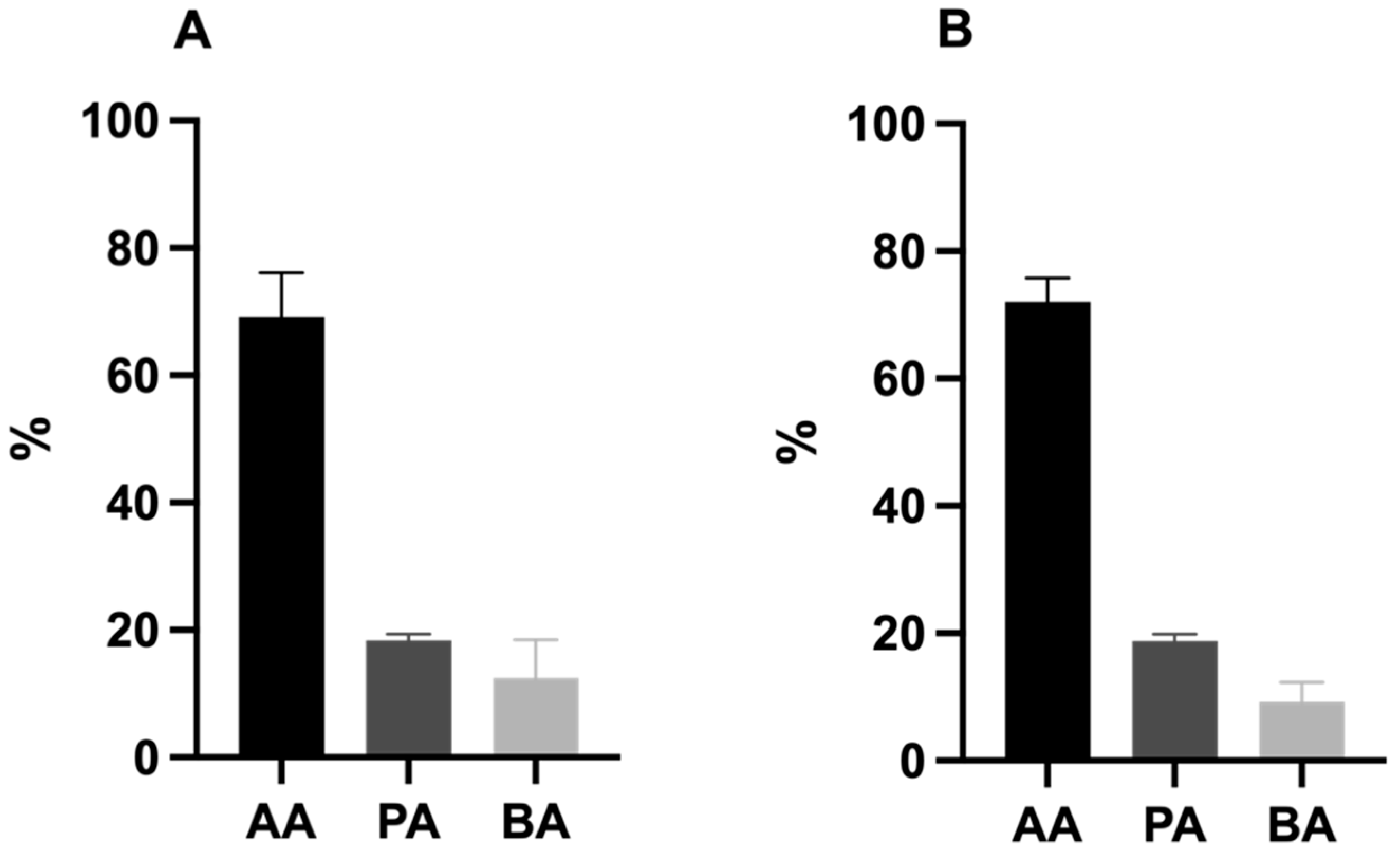
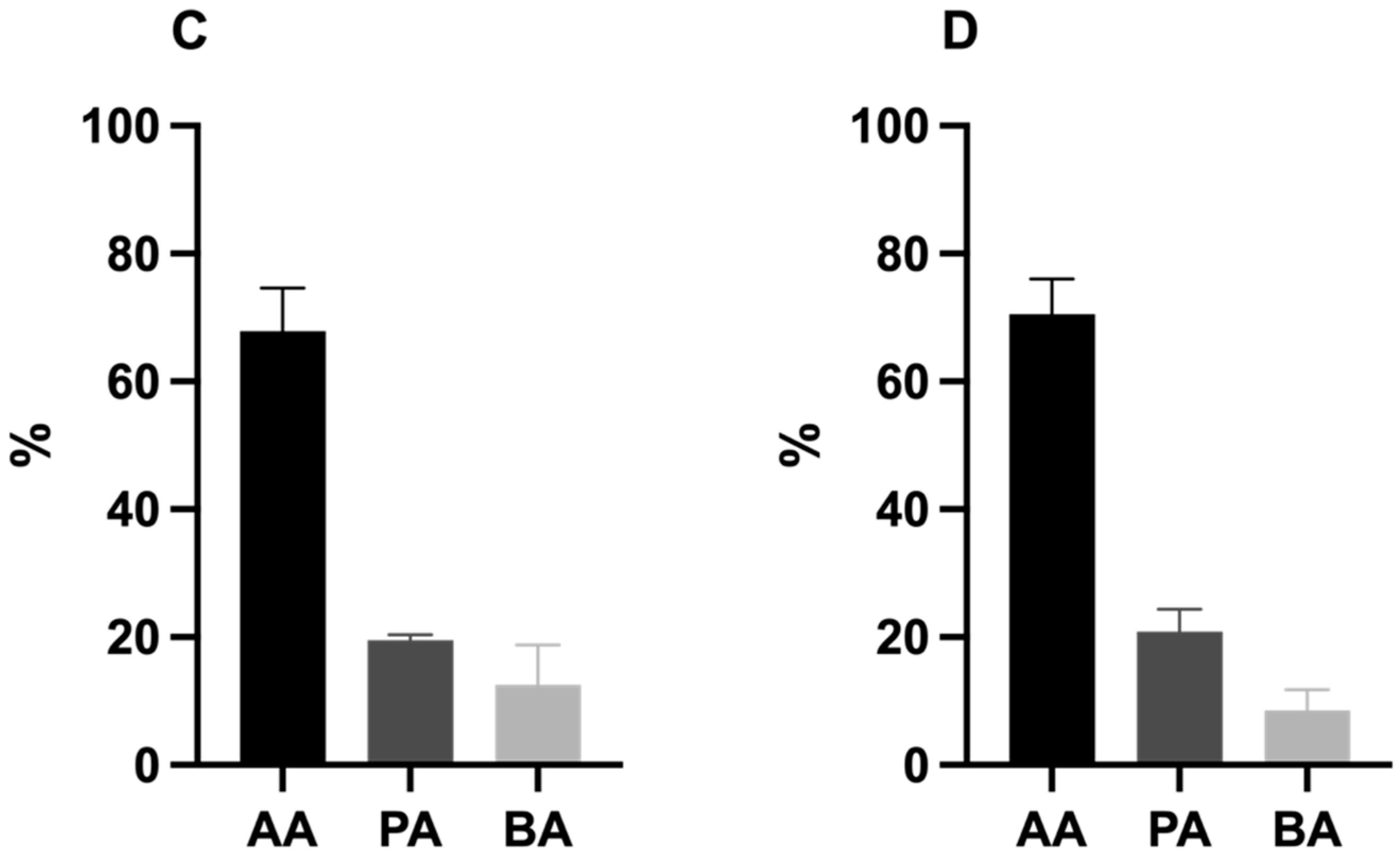
The fatty acid composition in the reactor and the permeate was analysed for the ARRs inoculated with the rumen of cow #1 (
Figure 4A,B) and cow #2 (
Figure 4 C,D). The average VFA composition in the permeate for cow #1 was 70.7 ± 3.2% AA, 18.4 ± 1.1% PA, and 11.0 ± 3.3% BA. For cow #2, the relative VFA composition was 72.0 ± 3.8% AA, 18.8 ± 1.1% PA, and 9.2 ± 3.1% BA. The VFA composition in the permeate was comparable to that of VFA in the reactor.
Over 17 days, minimal variations in fatty acid composition and concentration were found if rumen inocula of two different cows were used, as shown by the low standard deviations for each fatty acid. Such stable and reproducible VFA mixtures align with previous observations by Lazuka [
14]. Although high VFA yields are most relevant for biogas production, for further valorization of VFAs into biochemicals, a consistent composition of the mixtures is even more important. For instance, a constant fatty acid composition offers notable advantages for industrial applications, enabling high-performance, scalable biopolymer production with continuous feeding strategies [
38].
Cellulolytic and hemicellulolytic microorganisms convert complex substrates into a mixture of predominantly acetate, propionate and butyrate. Of these, acetate is a more straightforward molecule for further processing than the other two [
39].
Adaptation of microbial communities to available substrates and environmental conditions can lead to shifts in VFA production. Moreover, continuous feeding of a specific substrate, such as grass, may select for more efficient bacteria to decompose it. If such bacteria are mono-acetate producers, the reactor’s acetate concentration may increase. Acetate accumulation is well-documented in studies where the fermentation of fibrous materials leads predominantly to acetic acid due to the enzymatic capabilities and metabolic preferences of the fibrolytic bacteria involved [
40]. A steady increase in the relative amount of acetic acid in the VFA composition has been reported earlier for fermentative bacteria converting woody plant material [
41]. To this end, long-duration performance of the ARR system could also lead to a shift towards higher acetic acid levels due to the adaptation of the microbial community. This suggests that the long-term operation of the ARR system may lead to a similar shift in VFA profiles. The continuous presence of a specific substrate would further shape the microbial community, potentially leading to increased acetate levels and a gradual change in VFA composition over time. However, in the present study, no significant shift towards acetate dominance was observed, indicating that, under the applied operational conditions, the microbial community remained functionally stable with respect to VFA distribution despite prolonged exposure to a lignocellulosic substrate.
3.6. Changes in Fiber Composition
Neutral Detergent Fiber (NDF) reflects the fibrous content of forage and its potential for microbial digestion. High NDF values typically indicate a higher proportion of fibrous, less digestible components in the feed. Regular analysis of NDF fractions helps to monitor the reactor performance over time [
42,
43,
44]. The composition of NDF, cellulose, hemicellulose, and lignin, expressed in g kg
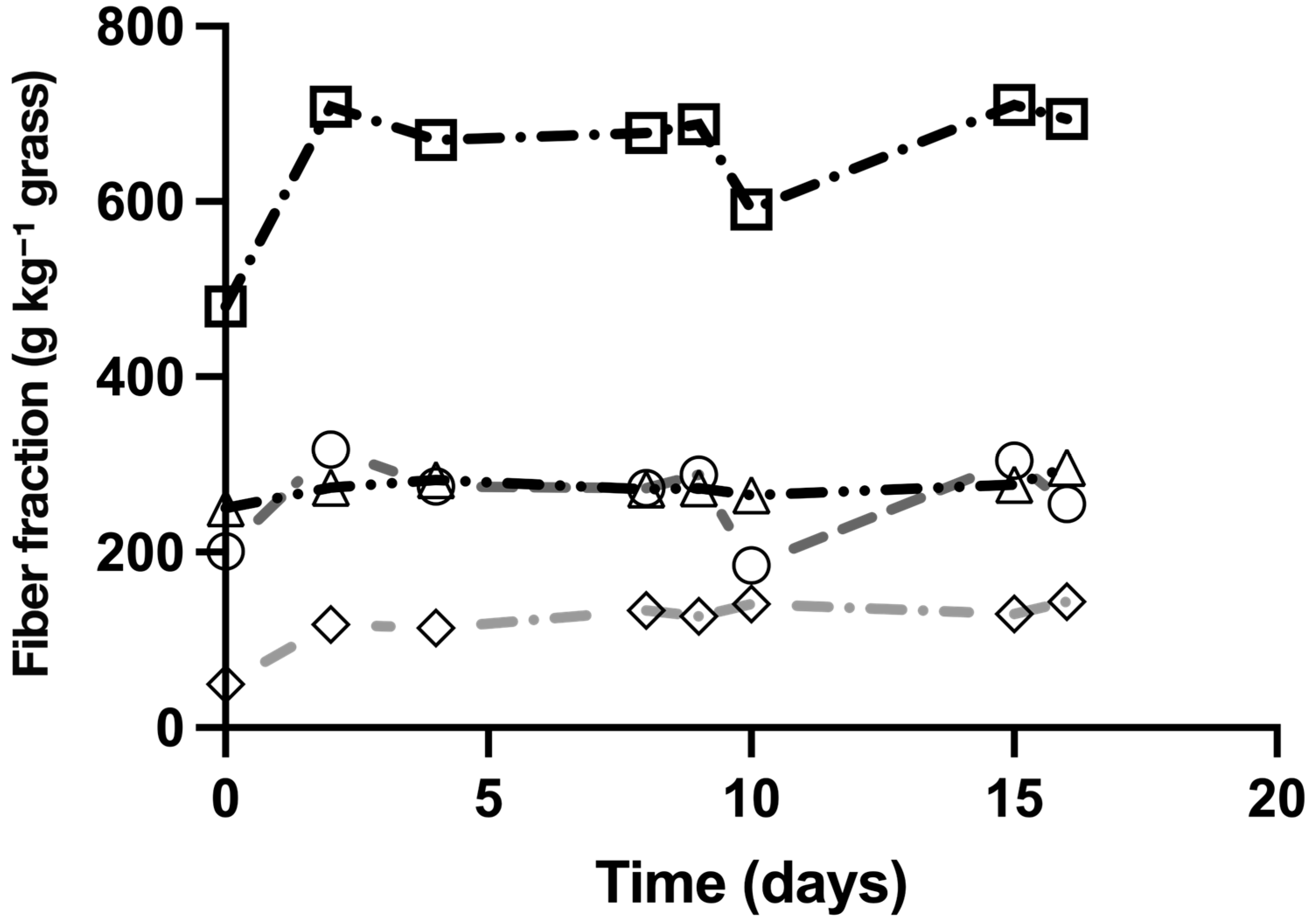
−1 of reactor dry organic matter (ODM), was determined over 17 days during daily feeding (
Figure 5). The apparent increase in lignin reflects relative enrichment due to preferential degradation of cellulose and hemicellulose, rather than actual lignin accumulation. The initial increase in NDF values suggests rapid digestion of non-fibrous components, leading to a temporary rise in the relative concentration of fibrous material. Over time, NDF values stabilised, indicating a dynamic balance between continuous substrate input and microbial fibre degradation under the applied operating conditions. However, because the data are expressed on a mass-normalised basis (g kg
−1 ODM), the observed increase in lignin cannot be interpreted as direct evidence of enhanced lignin recalcitrance, but rather reflects relative compositional changes [
42].
Cellulose and hemicellulose concentrations remained relatively stable throughout the experimental period, showing only minor fluctuations over time (
Figure 5). Similarly, NDF levels exhibited limited variation. In contrast, lignin content showed a slight increase when expressed as g kg
−1 grass.
The relatively constant levels of cellulose and hemicellulose suggest a dynamic balance between continuous substrate input and microbial degradation under the applied operating conditions. The increase in lignin content likely reflects a relative enrichment due to preferential degradation of more readily degradable fibre fractions. However, as the data are expressed on a mass-normalised basis (g kg
−1), this observation reflects changes in relative composition rather than direct evidence of differential degradation rates. The limited variation in NDF indicates stable reactor performance, although this alone does not conclusively demonstrate steady-state conditions (
Figure 5).
3.7. Impact of Oxygen
Lignin degradation generally only occurs in the presence of oxygen because oxygenases are required to open its aromatic ring structures, facilitating further breakdown [
45]. Usually, the rumen operates under anaerobic conditions, but some oxygen may help to degrade lignin. However, the introduction of oxygen into the rumen could also disrupt rumen microbial processes [
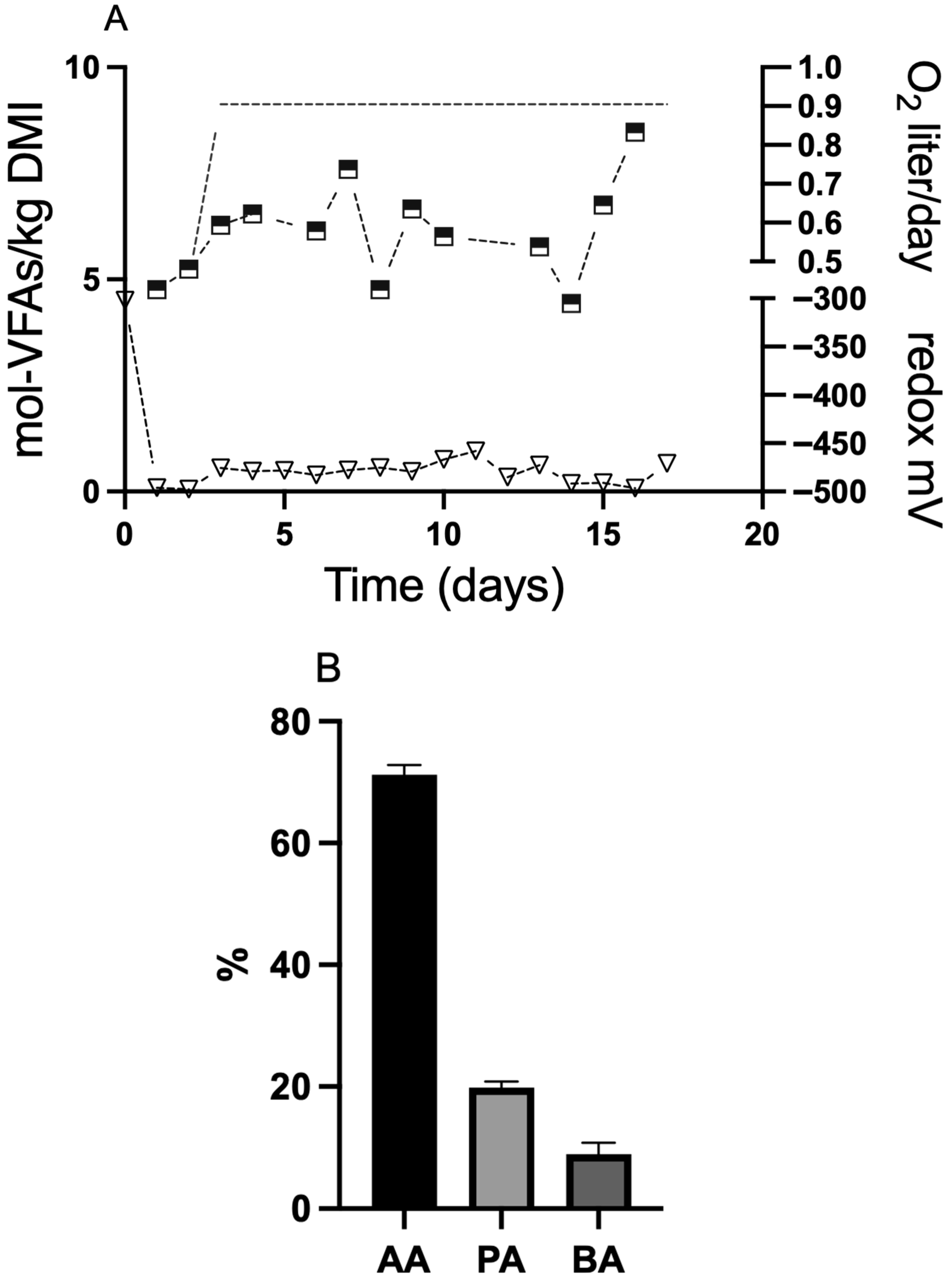
46]. An experiment was performed in which air was introduced into the reactor to test the hypothesis that oxygen addition could facilitate lignin degradation, with the caveat that it might reduce VFA production [
30]. The introduction of oxygen demonstrated that the VFA yield (
Figure 6A) and composition (
Figure 6B) were unaffected, compared with the results without oxygen (
Figure 2 and
Figure 3, respectively). This outcome may seem counterintuitive, given the potential for increased lignin degradation by lignin-degrading enzymes in the presence of oxygen, and a concomitant higher VFA yield.
On the other hand, oxygen could also, in principle, alter the microbial ecosystem towards non-VFA-producing organisms [
47]. Remarkably, introducing oxygen into our ARR system did not affect VFA production positively or negatively. Several possible explanations may account for this outcome. One possible explanation is that the introduced oxygen was rapidly consumed by facultative anaerobic, cellulose- and hemicellulose-dissolved compound- and methane-consuming microorganisms present in the mixed culture, thereby preventing inhibition of the strictly anaerobic VFA-producing community, although this does not necessarily preclude competition for soluble substrates. However, given the high availability of fermentable substrates and the hydrolysis-limited nature of lignocellulosic conversion, this potential competition is unlikely to have significantly affected overall VFA production rates. Similar observations have been reported for microaerobic digestion systems, in which limited oxygen addition led to only a modest increase in redox potential, while anaerobic performance remained largely unaffected. Furthermore, background oxygen ingress via membrane diffusion and feedstock introduction may have resulted in a baseline microaerobic environment, limiting the relative impact of additional oxygen dosing. In addition, the oxygen dose applied in the present study was likely too low relative to the available reducing equivalents in the system to induce a measurable disturbance of the anaerobic microbial processes [
46]. Anaerobic microbial processes are generally favoured under strongly reducing conditions, and disturbance may occur when oxygen addition increases the redox potential beyond the tolerance of strictly anaerobic microorganisms. In addition, oxygen-dependent ligninolytic reactions are energetically less favourable and often co-metabolic, such that microorganisms preferentially utilise readily degradable substrates (e.g., sugars and soluble intermediates) before engaging in oxidative lignin degradation even in the presence of oxygen. Moreover, some oxygen may have escaped from the system via diffusion through the reactor’s membranes even before it affected lignin degradation. Therefore, it is crucial to implement robust monitoring and process control systems in applications where oxygen is used as an operational parameter or an experimental variable. In our system, oxygen did not stimulate lignin degradation to make more carbon available for VFAs production, nor did it disturb the anaerobic population.
3.8. Long-Term Stability: VFA Yield
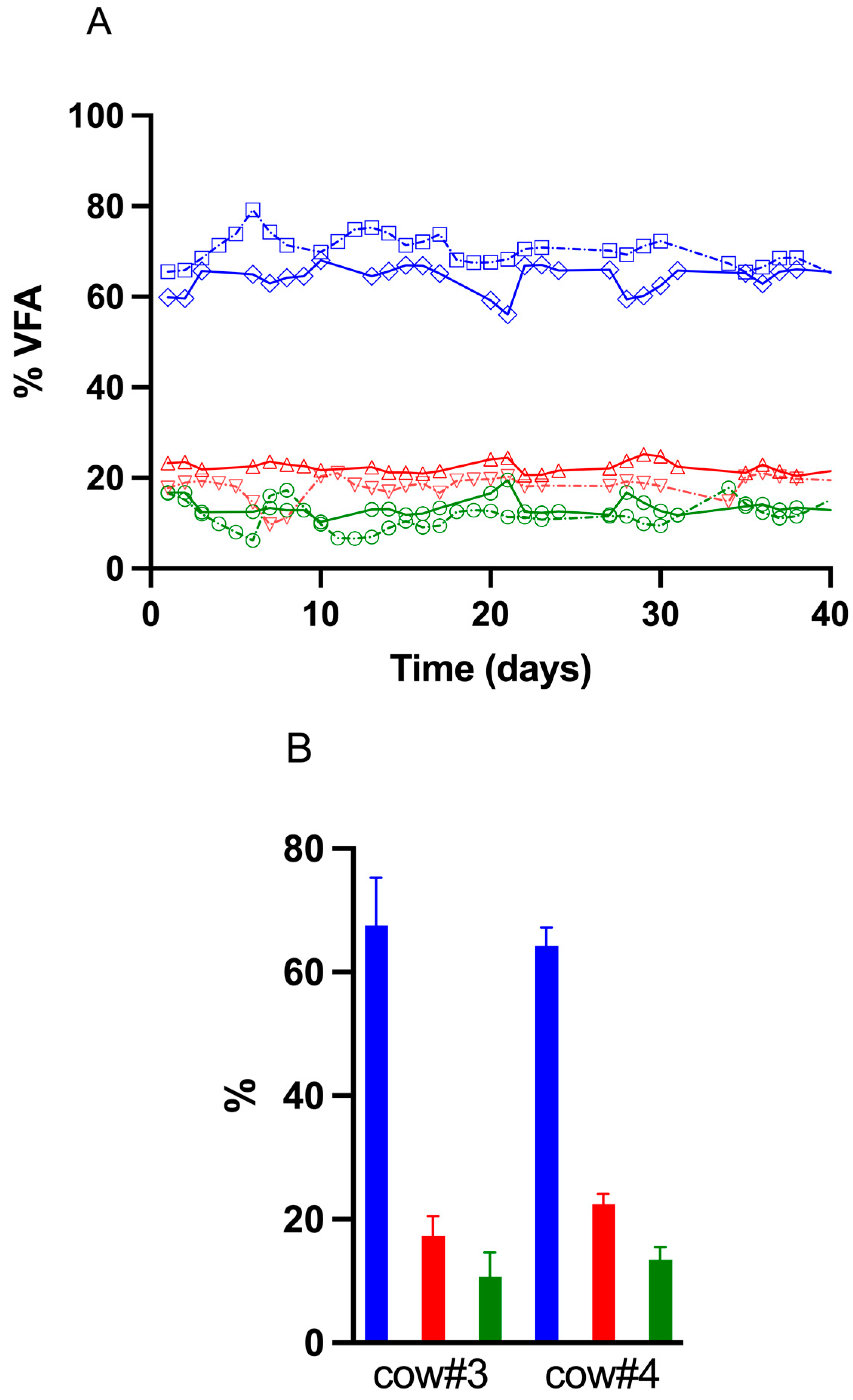
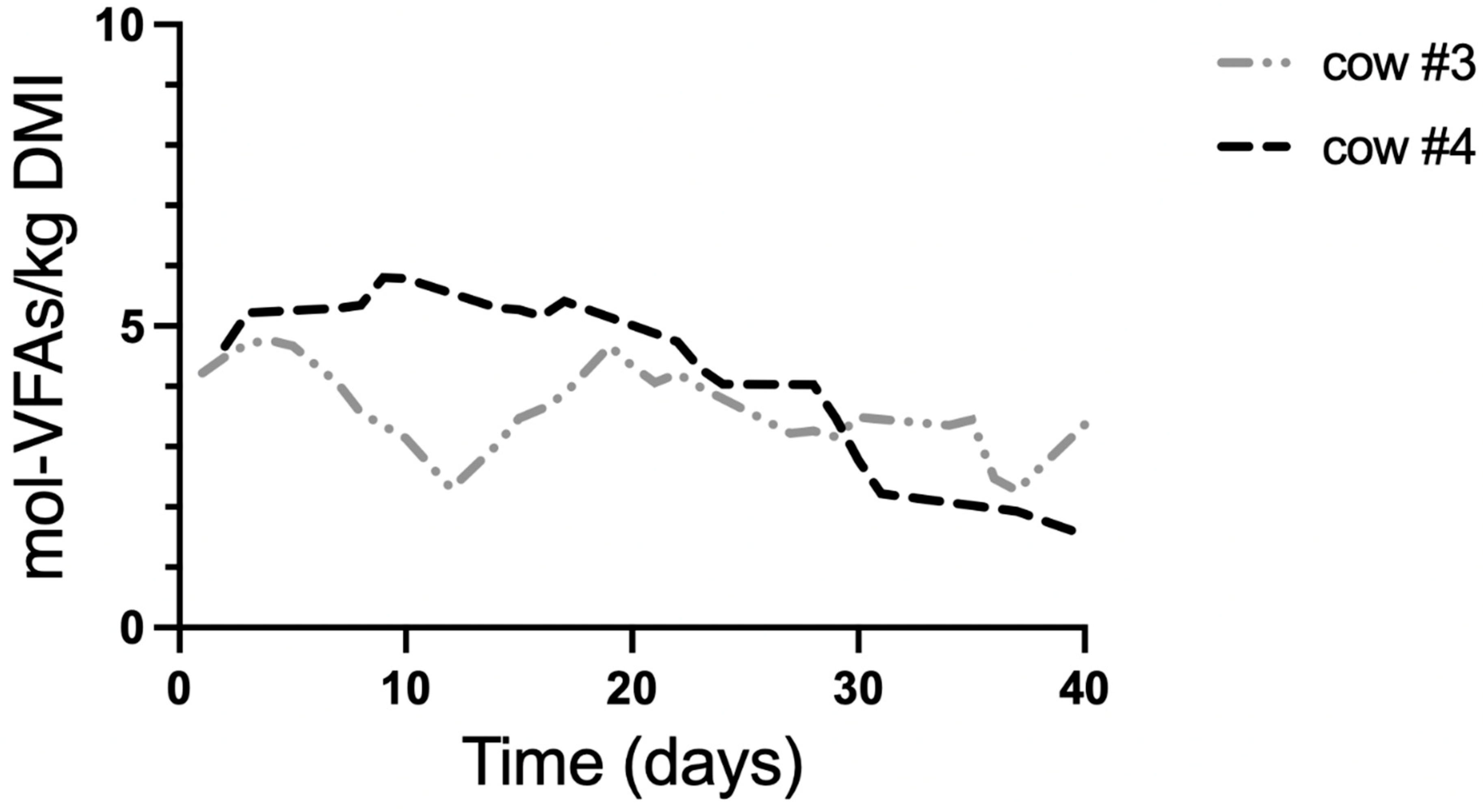
To evaluate the long-term operational stability of the ARR yield, two extended experiments of approximately 40 days were conducted. The temporal evolution of VFA production during these experiments is shown in
Figure 7. Both experiments—one with rumen from cow #3 and the other from cow #4—exhibited a somewhat lower VFA production and higher standard deviation over time compared to the shorter-duration experiments involving cow #1 and cow #2 (
Figure 7). This suggests that some natural variation is present. However, the amounts are in the same range. The average VFA concentration in ARR #3 and #4 was 4.19 +/− 1.94 and 3.67 +/− 2.00 mol/kg grass, respectively. It demonstrates that the ARR can operate for an extended period without re-inoculation with fresh rumen fluid. However, this extended operation coincided with a slight reduction in VFA production efficiency as the experiment progressed, particularly after a specific period (30 days in the case of cow #4). After 37 days, performance began to decline in one case (cow #4) but remained stable in the other (cow #3). The reasons for this variation remain unclear, indicating that further investigation is needed to better understand the underlying factors affecting long-term stability.
3.9. Long-Term Stability: VFA Composition
In addition to the VFA yield, we also examined the composition of the VFAs. Investigating the VFA profile may provide insight into the metabolic pathways active within the system, determine the extent to which the separate routes are affected, and assess the reactor’s performance. The relative percentages of the individual fatty acids in the permeate from the reactor inoculated with rumen contents of cows #3 and #4 were relatively stable (
Figure 8).
The VFA profile, with a slight decrease in VFA yield, suggests a decline in overall microbial activity, e.g., due to nutrient limitation or the accumulation of unknown growth-inhibiting compounds, both of which can cause stress. Such conditions could influence the microbial community, reducing their efficiency without necessarily killing off specific microbial groups that would alter VFA composition.





 ,
,