Upcycling Winery Waste into Functional Cosmetic Ingredient: Green Recovery of Squalene from Wine Lees as a Potential In Vitro Permeation Enhancer

 , ,
, ,  ,
,  , ,
, ,  and
and 
Abstract
1. Introduction
2. Materials and Methods
2.1. Materials and Reagents
2.2. Ultrasound-Assisted Extraction of Squalene from Wine Lees
2.3. Quantification of Squalene by HPLC–DAD
2.4. Purification of Squalene by Column Chromatography and Thin-Layer Chromatography (TLC)
2.5. Catalytic Hydrogenation of Squalene to Squalane
2.6. In Vitro Permeation Studies Using Franz Diffusion Cells
2.7. Oxidative Stability Assessment
3. Results and Discussion
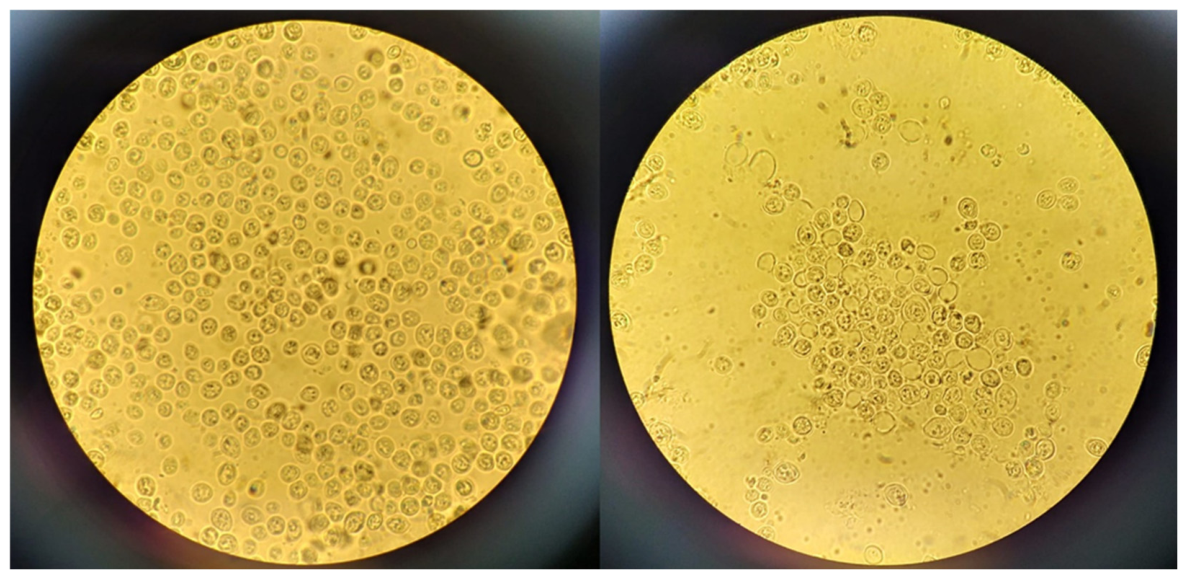
3.1. Ultrasound-Assisted Extraction Results of Squalene from Wine Lees
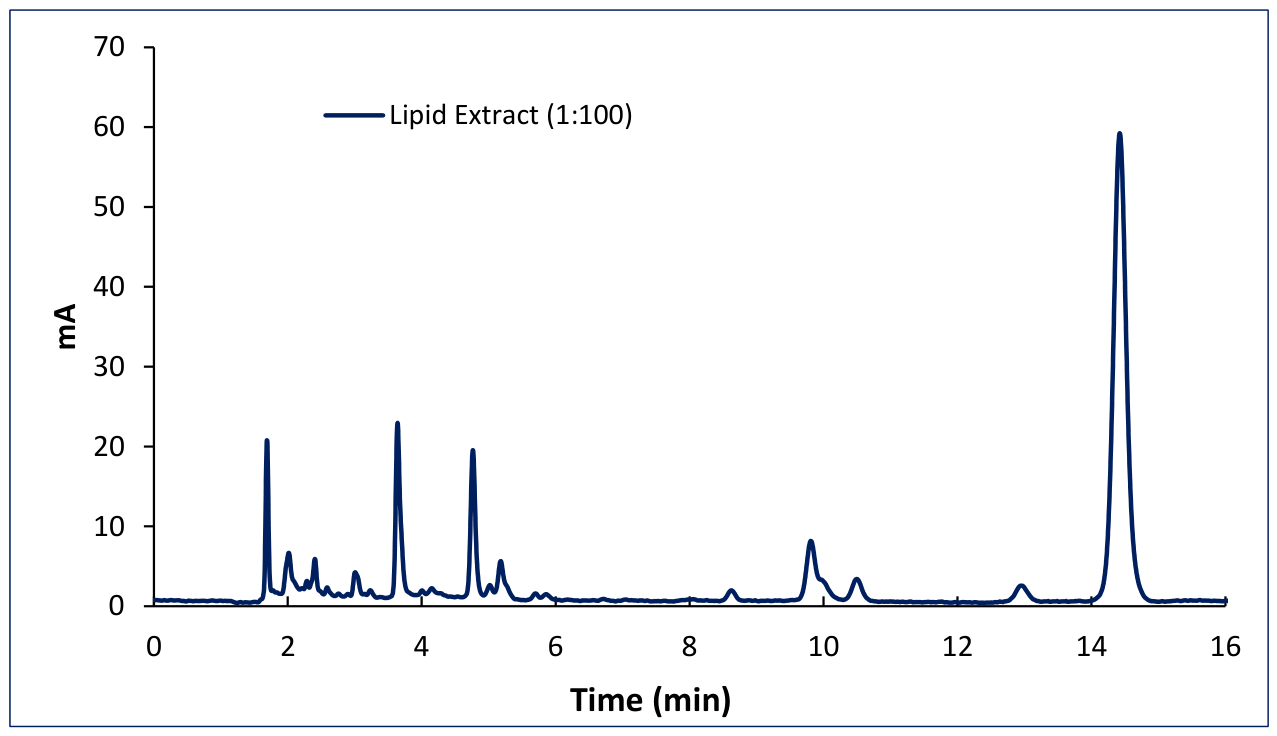
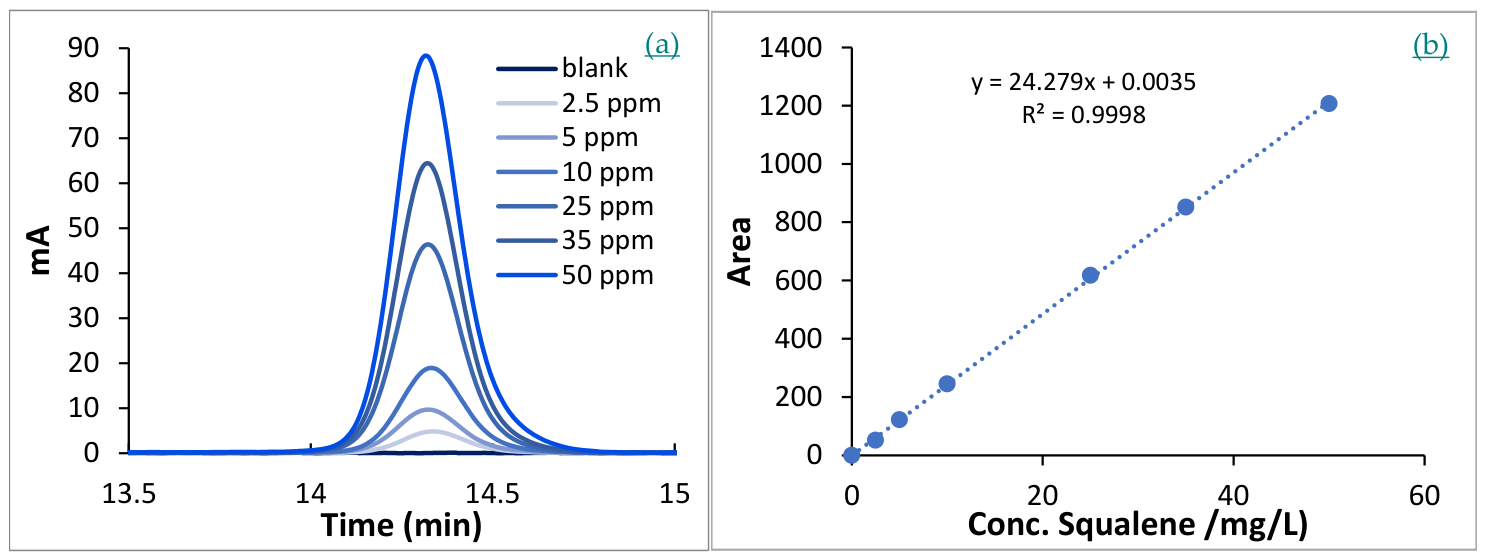
3.2. Quantification and Purification of Squalene
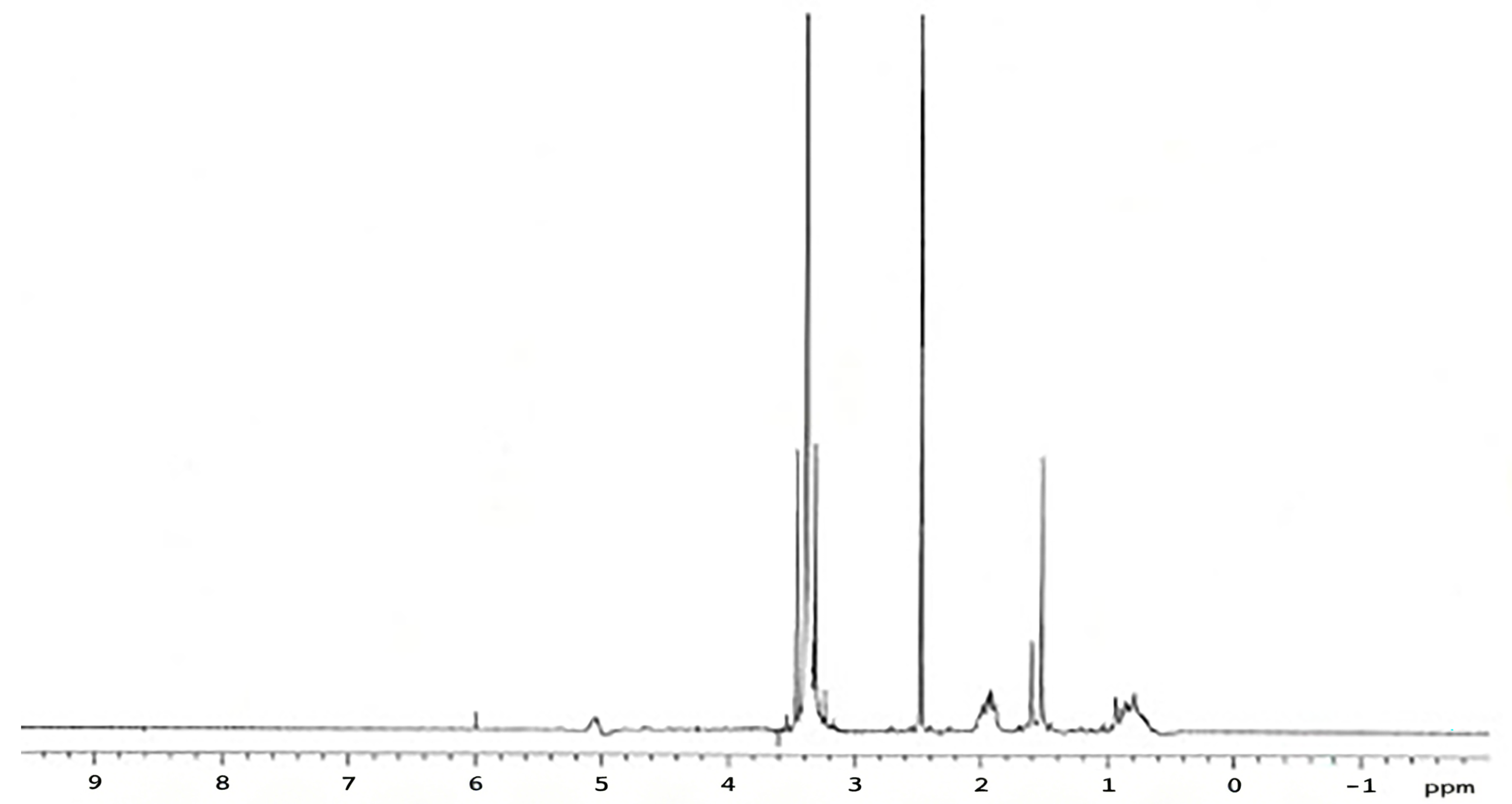
3.3. Catalytic Hydrogenation Results of Squalene to Squalane
3.4. In Vitro Transport Enhancement Across an Artificial Membrane by Squalene and Squalane
3.5. Oxidative Stability of Wine-Lees-Derived Squalene and Squalane
4. Conclusions
Author Contributions
Funding
Institutional Review Board Statement
Informed Consent Statement
Data Availability Statement
Conflicts of Interest
References
- Smith, T.J. Squalene: Potential chemopreventive agent. Expert Opin. Investig. Drugs 2000, 9, 1841–1848. [Google Scholar] [CrossRef]
- Huang, Z.R.; Lin, Y.K.; Fang, J.Y. Biological and pharmacological activities of squalene and related compounds: Potential uses in cosmetic dermatology. Molecules 2009, 14, 540–554. [Google Scholar] [CrossRef] [PubMed]
- Spanova, M.; Daum, G. Squalene–biochemistry, molecular biology, process biotechnology, and applications. Eur. J. Lipid Sci. Technol. 2011, 113, 1299–1320. [Google Scholar] [CrossRef]
- Rude, M.A.; Schirmer, A. New microbial fuels: A biotech perspective. Curr. Opin. Microbiol. 2009, 12, 274–281. [Google Scholar] [CrossRef]
- Tao, Y.; Wu, D.; Zhang, Q.-A.; Sun, D.-W. Ultrasound-assisted extraction of phenolics from wine lees: Modeling, optimization and stability of extracts during storage. Ultrason. Sonochem. 2014, 21, 706–715. [Google Scholar] [CrossRef] [PubMed]
- Naziri, E.; Mantzouridou, F.; Tsimidou, M.Z. Recovery of squalene from wine lees using ultrasound assisted extraction-a feasibility study. J. Agric. Food Chem. 2012, 60, 9195–9201. [Google Scholar] [CrossRef] [PubMed]
- Rani, J.; Indrajeet; Rautela, A.; Kumar, S. Chapter 4—Biovalorization of winery industry waste to produce value-added products. In Biovalorisation of Wastes to Renewable Chemicals and Biofuels; Krishnaraj Rathinam, N., Sani, R.K., Eds.; Elsevier: Amsterdam, The Netherlands, 2020; pp. 63–85. [Google Scholar]
- Barba, F.J.; Zhu, Z.; Koubaa, M.; Sant’Ana, A.S.; Orlien, V. Green alternative methods for the extraction of antioxidant bioactive compounds from winery wastes and by-products: A review. Trends Food Sci. Technol. 2016, 49, 96–109. [Google Scholar] [CrossRef]
- Shen, L.; Pang, S.; Zhong, M.; Sun, Y.; Qayum, A.; Liu, Y.; Rashid, A.; Xu, B.; Liang, Q.; Ma, H.; et al. A comprehensive review of ultrasonic assisted extraction (UAE) for bioactive components: Principles, advantages, equipment, and combined technologies. Ultrason. Sonochem. 2023, 101, 106646. [Google Scholar] [CrossRef]
- Tsevdou, M.; Ntzimani, A.; Katsouli, M.; Dimopoulos, G.; Tsimogiannis, D.; Taoukis, P. Comparative Study of Microwave, Pulsed Electric Fields, and High Pressure Processing on the Extraction of Antioxidants from Olive Pomace. Molecules 2024, 29, 2303. [Google Scholar] [CrossRef]
- Lu, H.-T.; Jiang, Y.; Chen, F. Determination of Squalene Using High-Performance Liquid Chromatography with Diode Array Detection. Chromatographia 2004, 59, 367–371. [Google Scholar] [CrossRef]
- Cheng, Y.; Fei, T.; Liu, Y.; Chen, S.; Wang, Z.; Han, Y.; Wang, L.; Li, C. Ultrasound-Assisted Extraction of Squalene and 2-Acetyl-1-Pyrroline from Pandan Leaf: The Effects of Drying Methods and Extraction Conditions. Foods 2024, 13, 4010. [Google Scholar] [CrossRef] [PubMed]
- Frankel, E.N. Lipid oxidation. Prog. Lipid Res. 1980, 19, 1–22. [Google Scholar] [CrossRef] [PubMed]
- Choe, E.; Min, D.B. Mechanisms of Antioxidants in the Oxidation of Foods. Compr. Rev. Food Sci. Food Saf. 2009, 8, 345–358. [Google Scholar] [CrossRef]
- Medina Ruiz, M.E.; Maderuelo-Solera, R.; Jiménez-Gómez, C.P.; Moreno-Tost, R.; Malpartida, I.; García-Sancho, C.; Cecilia, J.A.; Len, C.; Mérida-Robles, J.M.; Maireles-Torres, P. Supported Palladium Catalysts for the Selective Hydrogenation of Furfural with Polymethylhydrosiloxane. ACS Sustain. Chem. Eng. 2024, 12, 14910–14920. [Google Scholar] [CrossRef]
- Fan, W.K.; Tahir, M. Structured clay minerals-based nanomaterials for sustainable photo/thermal carbon dioxide conversion to cleaner fuels: A critical review. Sci. Total Environ. 2022, 845, 157206. [Google Scholar] [CrossRef]
- Ng, K.W. Penetration Enhancement of Topical Formulations. Pharmaceutics 2018, 10, 51. [Google Scholar] [CrossRef] [PubMed]
- Haq, A.; Dorrani, M.; Goodyear, B.; Joshi, V.; Michniak-Kohn, B. Membrane properties for permeability testing: Skin versus synthetic membranes. Int. J. Pharm. 2018, 539, 58–64. [Google Scholar] [CrossRef]
- Neupane, R.; Boddu, S.H.S.; Renukuntla, J.; Babu, R.J.; Tiwari, A.K. Alternatives to Biological Skin in Permeation Studies: Current Trends and Possibilities. Pharmaceutics 2020, 12, 152. [Google Scholar] [CrossRef]
- Gupta, U.; Krishnapriya, R.; Sharma, R.K. A Sustainable Palladium-Intercalated Montmorillonite Clay Catalytic System for Imine Hydrogenation under Mild Conditions. ChemPlusChem 2021, 86, 540–548. [Google Scholar] [CrossRef]
- Pandarus, V.; Ciriminna, R.; Béland, F.; Pagliaro, M.; Kaliaguine, S. Solvent-Free Chemoselective Hydrogenation of Squalene to Squalane. ACS Omega 2017, 2, 3989–3996. [Google Scholar] [CrossRef]
- Oliveira, A.L.S.; Valente, D.; Moreira, H.R.; Pintado, M.; Costa, P. Effect of squalane-based emulsion on polyphenols skin penetration: Ex vivo skin study. Colloids Surf. B Biointerfaces 2022, 218, 112779. [Google Scholar] [CrossRef] [PubMed]
- Mason, T.J.; Lorimer, J.P. General Principles. In Applied Sonochemistry; Wiley: New York, NY, USA, 2002; pp. 25–74. [Google Scholar]
- Kumar, K.; Srivastav, S.; Sharanagat, V.S. Ultrasound assisted extraction (UAE) of bioactive compounds from fruit and vegetable processing by-products: A review. Ultrason. Sonochem. 2021, 70, 105325. [Google Scholar] [CrossRef]
- Perez-Torrado, R.; Gamero, E.; Gómez-Pastor, R.; Garre, E.; Aranda, A.; Matallana, E. Yeast biomass, an optimised product with myriad applications in the food industry. Trends Food Sci. Technol. 2015, 46, 167–175. [Google Scholar] [CrossRef]
- Chemat, F.; Vian, M.A.; Cravotto, G. Green Extraction of Natural Products: Concept and Principles. Int. J. Mol. Sci. 2012, 13, 8615–8627. [Google Scholar] [CrossRef] [PubMed]
- Ratledge, C.; Wynn, J.P. The biochemistry and molecular biology of lipid accumulation in oleaginous microorganisms. Adv. Appl. Microbiol. 2002, 51, 1–52. [Google Scholar] [CrossRef]
- Bavisetty, S.C.; Narayan, B. An improved RP-HPLC method for simultaneous analyses of squalene and cholesterol especially in aquatic foods. J. Food Sci. Technol. 2015, 52, 6083–6089. [Google Scholar] [CrossRef]
- Waksmundzka-Hajnos, M.; Sherma, J. High Performance Liquid Chromatography in Phytochemical Analysis; CRC Press: Boca Raton, FL, USA, 2010. [Google Scholar]
- Stahl, E. Thin Layer Chromatography. A Laboratory Handbook, Second Edition, Edited by E. Stahl, 1041 pp., 244 Figs., Springer-Verlag. Berlin. Heidelberg. New York 1969, Preis: 128.-DM. Fette Seifen Anstrichm. 1971, 73, 736. [Google Scholar] [CrossRef]
- Abdussalam-Mohammed, W.; Ali, A.Q.; Errayes, A. Green chemistry: Principles, applications, and disadvantages. Chem. Methodol. 2020, 4, 408–423. [Google Scholar] [CrossRef]
- Fatimah, I.; Fadillah, G.; Yanti, I.; Doong, R.-a. Clay-Supported Metal Oxide Nanoparticles in Catalytic Advanced Oxidation Processes: A Review. Nanomaterials 2022, 12, 825. [Google Scholar] [CrossRef] [PubMed]
- Nishimura, S. Handbook of Heterogeneous Catalytic Hydrogenation for Organic Synthesis; Wiley: New York, NY, USA, 2001. [Google Scholar]
- Martins, A.M.; Silva, A.T.; Marto, J.M. Advancing Cosmetic Sustainability: Upcycling for a Circular Product Life Cycle. Sustainability 2025, 17, 5738. [Google Scholar] [CrossRef]
- Eudier, F.; Savary, G.; Grisel, M.; Picard, C. Skin surface physico-chemistry: Characteristics, methods of measurement, influencing factors and future developments. Adv. Colloid Interface Sci. 2019, 264, 11–27. [Google Scholar] [CrossRef] [PubMed]
- Casagrande, R.; Georgetti, S.R.; Verri, W.A., Jr.; Borin, M.F.; Lopez, R.F.; Fonseca, M.J. In vitro evaluation of quercetin cutaneous absorption from topical formulations and its functional stability by antioxidant activity. Int. J. Pharm. 2007, 328, 183–190. [Google Scholar] [CrossRef] [PubMed]
- Jenner, J. OECD Test Guideline 428—A Method for In Vitro Percutaneous Absorption Measurement? In Topical Drug Bioavailability, Bioequivalence, and Penetration; Shah, V.P., Maibach, H.I., Jenner, J., Eds.; Springer: New York, NY, USA, 2014; pp. 381–387. [Google Scholar]
- Guaratini, T.; Gianeti, M.D.; Campos, P.M.B.G.M. Stability of cosmetic formulations containing esters of Vitamins E and A: Chemical and physical aspects. Int. J. Pharm. 2006, 327, 12–16. [Google Scholar] [CrossRef] [PubMed]
- Petkovic, A.; Jakovljevic, V.; Tomovic, M.; Jeremic, J.; Ristic, G.; Bradic, J. Improving Oxidative Stability of Cosmetic Emulsions with Plant Extracts: Current Status and Potential. J. Cosmet. Sci. 2021, 72, 189–199. [Google Scholar]





Disclaimer/Publisher’s Note: The statements, opinions and data contained in all publications are solely those of the individual author(s) and contributor(s) and not of MDPI and/or the editor(s). MDPI and/or the editor(s) disclaim responsibility for any injury to people or property resulting from any ideas, methods, instructions or products referred to in the content. |
© 2026 by the authors. Licensee MDPI, Basel, Switzerland. This article is an open access article distributed under the terms and conditions of the Creative Commons Attribution (CC BY) license.
Share and Cite
Hoti, E.; Di Nicolantonio, L.; Zannotti, M.; Giovannetti, R.; Ferraro, S.; Di Martino, P.; Gigliobianco, M.R. Upcycling Winery Waste into Functional Cosmetic Ingredient: Green Recovery of Squalene from Wine Lees as a Potential In Vitro Permeation Enhancer. Appl. Sci. 2026, 16, 3893. https://doi.org/10.3390/app16083893
Hoti E, Di Nicolantonio L, Zannotti M, Giovannetti R, Ferraro S, Di Martino P, Gigliobianco MR. Upcycling Winery Waste into Functional Cosmetic Ingredient: Green Recovery of Squalene from Wine Lees as a Potential In Vitro Permeation Enhancer. Applied Sciences. 2026; 16(8):3893. https://doi.org/10.3390/app16083893
Chicago/Turabian StyleHoti, Ela, Lucrezia Di Nicolantonio, Marco Zannotti, Rita Giovannetti, Stefano Ferraro, Piera Di Martino, and Maria Rosa Gigliobianco. 2026. "Upcycling Winery Waste into Functional Cosmetic Ingredient: Green Recovery of Squalene from Wine Lees as a Potential In Vitro Permeation Enhancer" Applied Sciences 16, no. 8: 3893. https://doi.org/10.3390/app16083893
APA StyleHoti, E., Di Nicolantonio, L., Zannotti, M., Giovannetti, R., Ferraro, S., Di Martino, P., & Gigliobianco, M. R. (2026). Upcycling Winery Waste into Functional Cosmetic Ingredient: Green Recovery of Squalene from Wine Lees as a Potential In Vitro Permeation Enhancer. Applied Sciences, 16(8), 3893. https://doi.org/10.3390/app16083893