Article

Evaluation of FT Waxes Synthesized from Natural Gas for Cosmetic Applications: Safety, Sensory Properties, and Lipid Packing Characteristics

1
Brenntag Asia Pacific Pte. Ltd., 29 Media Circle #10-01, Alice@Mediapolis, Singapore 138565, Singapore
2
Division of Applied Chemistry and Cosmetic Science, Dongduk Women’s University, Seoul 02748, Republic of Korea
*
Author to whom correspondence should be addressed.
Appl. Sci. 2026, 16(8), 3720; https://doi.org/10.3390/app16083720
Submission received: 26 February 2026 / Revised: 31 March 2026 / Accepted: 7 April 2026 / Published: 10 April 2026
(This article belongs to the Special Issue Development of Innovative Cosmetics—2nd Edition)

Featured Application

The FT waxes evaluated in this study can be utilized as multifunctional structuring agents in high-performance skincare and dermo-cosmetic formulations designed to restore the skin barrier by promoting orthorhombic lipid packing.

Abstract

This study investigates the potential of Fischer–Tropsch (FT) waxes, synthesized from natural gas, as high-performance and sustainable alternatives to conventional ester waxes in cosmetic applications. To evaluate their technical viability, a series of FT waxes with varying hydrocarbon chain lengths were synthesized and characterized. Safety was rigorously assessed through human patch tests and irritation surveys, while sensory attributes, including gloss and transparency, were compared against beeswax and carnauba wax. Furthermore, the impact on the skin barrier was analyzed using Attenuated Total Reflection Fourier Transform Infrared (ATR-FTIR) spectroscopy to determine lipid packing characteristics. The results demonstrated that FT waxes possess an excellent safety profile with irritation levels comparable to traditional waxes. Sensory evaluations revealed that adjusting the hydrocarbon chain length allows for precise control over melting points and texture, offering significant formulation flexibility. Crucially, lipid packing analysis indicated that FT waxes promote an orthorhombic organization, effectively mimicking and reinforcing the native crystalline structure of the human skin barrier. These findings conclude that FT waxes provide both superior sensory properties and functional skin-barrier benefits, positioning them as versatile and innovative ingredients for advanced dermo-cosmetic formulations.

1. Introduction

The use of lipophilic components in cosmetics plays a crucial role in enhancing product performance, texture, and efficacy. These oil-based ingredients not only provide moisturization and nourishment to the skin but also improve the stability and spreadability of formulations [1]. Oils and waxes are widely incorporated into cosmetics for their ability to create occlusive barriers, preventing trans epidermal water loss (TEWL), and delivering a smooth and luxurious sensory experience [2].
Cosmetic oils can be broadly categorized based on their chemical composition and origin. Triglyceride oils, derived from natural sources such as plants and animals, are rich in fatty acids that mimic the skin’s natural lipid layer, making them ideal for hydration and repair [3]. Examples include olive oil, coconut oil, and shea butter [4]. The biosynthesis of triglycerides typically occurs through esterification, where glycerol reacts with fatty acids. The chain length and degree of saturation of the fatty acids determine the physical and chemical properties of the triglyceride, such as melting point, spreadability, and stability. For instance, short-chain triglycerides, exemplified by medium-chain triglyceride (MCT) oil, consist mainly of C6 caproic acid, C8 caprylic acid, C10 capric acid, and C12 lauric acid, exhibit lower melting points and higher volatility, whereas long-chain triglycerides, such as those containing behenic acid (C22:0), are more stable and provide enhanced occlusive properties [5,6,7].
In contrast, hydrocarbon-derived oils, often from petroleum or natural gas, consist of saturated and unsaturated hydrocarbons. These oils, such as mineral oil and squalane [8], are valued for their inertness, stability, and hypoallergenic properties. In addition, ester oils such as isononyl isononanoate (ININ) or cetearyl ethylhexanoate are widely used in cosmetics for their lightweight texture, smooth spreadability, and fast absorption. These esters often serve as emollients that improve the sensorial profile of formulations without leaving a greasy residue.
Alongside oils, waxes, another key group of lipophilic ingredients, are solid at room temperature and provide structure and rigidity to cosmetic formulations. These include natural waxes like beeswax and carnauba wax [9]. The unique properties of waxes, such as melting point and hardness, contribute to the formulation’s texture, durability, and water resistance [10]. Ester waxes, on the other hand, can be either naturally occurring or synthetically produced. Naturally occurring ester waxes, such as beeswax and carnauba wax, are composed of long-chain fatty acids and alcohols. These are synthesized in plants and animals through enzymatic reactions. Synthetic ester waxes are often produced via chemical esterification of fatty acids with fatty alcohols, allowing precise control over chain length and branching to tailor their properties for specific applications. An example of an ester wax with a long hydrocarbon chain is myricyl palmitate, found in carnauba wax, which consists of a C30 fatty alcohol (myricyl alcohol) esterified with a C16 fatty acid (palmitic acid), yielding a total chain length of 46 carbons [11].
The selection and combination of these ingredients depend on the desired functionality of the cosmetic product. By leveraging the diverse characteristics of triglyceride oils, hydrocarbon oils, and waxes, formulators can achieve optimized performance tailored to specific skin types and consumer preferences. This study explores the classification, functionality, and potential applications of these lipophilic components, with a focus on their interaction and contributions to cosmetic formulations.
Building on the versatility of ester waxes, natural gas—composed primarily of light alkanes—can serve as a sustainable precursor for the synthesis of long-chain normal hydrocarbon waxes (Fischer–Tropsch wax, FT wax) [12]. FT wax is derived from natural gas via Fischer–Tropsch synthesis, specifically tailored for personal care and cosmetic application due to its high purity and consistent properties. Through controlled catalytic processes, these waxes can be tailored in chain length and structure, offering a renewable alternative to conventional waxes. Furthermore, via esterification reactions, synthetic analogues of beeswax (FT BW) can be produced [13], mimicking the occlusive and stabilizing properties of natural beeswax while providing enhanced consistency and tunability. These advancements broaden the potential applications of lipophilic components in cosmetic formulations, particularly in supporting skin barrier function, which relies heavily on the organization of lipid components.
To evaluate the practical benefits of generic FT waxes, comparative studies were conducted on cream formulations containing these synthetic waxes versus those with conventional waxes. The results demonstrated that FT waxes not only matched the occlusive and stabilizing properties of traditional waxes but also exhibited safety and sensory profiles that were comparable to conventional options. In patch tests, formulations containing FT waxes showed irritation potential similar to that of creams formulated with standard waxes, indicating equivalent suitability for sensitive skin [14]. Moreover, sensory evaluations revealed that creams with FT waxes delivered a texture, absorption rate, and overall feel that they were on par with those made using conventional waxes, ensuring user comfort and satisfaction.
The skin barrier is essential for protecting the body from external aggressors and preventing transepidermal water loss (TEWL). This barrier function is primarily attributed to the lipid matrix in the intercellular spaces of the stratum corneum (SC), which is composed of ceramides, free fatty acids, and cholesterol [15]. The organization and packing of these lipids significantly influence the barrier’s integrity and functionality, with orthorhombic packing being the most ordered and stable lipid arrangement, providing optimal barrier properties.
The formation of orthorhombic packing in the lipid matrix can be achieved through precise combinations of lipid components. Factors such as the ratio of ceramides to free fatty acids and cholesterol, as well as the chain length and saturation of these lipids, play a pivotal role in determining the packing state. Studies have shown that formulations designed to mimic the natural lipid composition of the stratum corneum can promote orthorhombic packing, thereby enhancing the skin barrier’s structural integrity and recovery [16]. Such lipid combinations not only restore damaged barriers but also improve overall skin health by maintaining optimal lipid organization.
ATR (attenuated Total Reflectance)–Fourier-transform infrared (FTIR) spectroscopy is a powerful tool for studying lipid packing states [17], enabling the characterization of molecular vibrations. The CH2 scissoring band (~1470 cm−1) is particularly significant in assessing lipid packing. When analyzed using second derivative spectroscopy, subtle shifts and peak splitting in the scissoring band provide detailed insights into the transitions between orthorhombic, hexagonal, and liquid crystalline packing states [18]. This advanced analytical approach allows for precise evaluation of lipid organization in the stratum corneum and the impact of specific lipid combinations on packing states [19].
The ability to recreate orthorhombic packing through tailored lipid formulations has implications for both skin barrier recovery and the development of therapeutic and cosmetic products. By focusing on the relationship between lipid composition, packing states, and barrier functionality, this study aims to advance our understanding of skin barrier mechanisms and provide a scientific basis for creating innovative skincare solutions that promote barrier restoration and maintenance.
This study aimed to explore the potential of synthesized FT waxes, derived from natural gas, to achieve functionalities beyond those of conventional ester waxes. By comparing their performance in terms of occlusive properties, stability, skin barrier enhancement, safety, and sensory attributes, we aim to determine whether FT waxes offer superior benefits for cosmetic applications.

2. Materials and Methods

2.1. Chemicals

All FT waxes (GTL Saracare series) were supplied by Shell Distributor–Brenntag Asia Pacific Ltd. Pte., Singapore, Singapore. The melting points and carbon contents are shown in Table 1. SDS (Sodium Dodecyl sulfate, Sigma Aldrich, St. Louis, MO, USA), PBS (Phosphate-Buffered Saline, pH 7.4, Thermo Fisher Scientific, Waltham, MA, USA), Porcine Dorsal skin (1 mm thick) from a 6-month-old MICROPIG (~20 kg, APURES, Republic of Korea), MCT oil (IOI OLEO, Malaysia), Montanov68 (Seppic, France), Polydecene (Sigma, USA), Isononyl Isononanoate (ININ; BASF, SE, Ludwigshafen, Germany), Cyclomethicone (Momentive, Thailand), Dimethicone (DOW Corning, Midland, MI, USA), 1,2-Hexanediol (Teakyung, Republic of Korea), Glycerin (Goldenbell, Malaysia), Mineral oil, castor oil, beeswax; a solid consist esters of free fatty acid (C24–C30) and various long-chain alcohol (C24–C36), and carnauba wax (Dain, Republic of Korea) were purchased from their respective suppliers. ART-FT-IR (Jasco 4200; ATR PRO450-S, JASCO, Japan) and TEWL meter (Barrier Pro II, Howskin, Republic of Korea) were used.
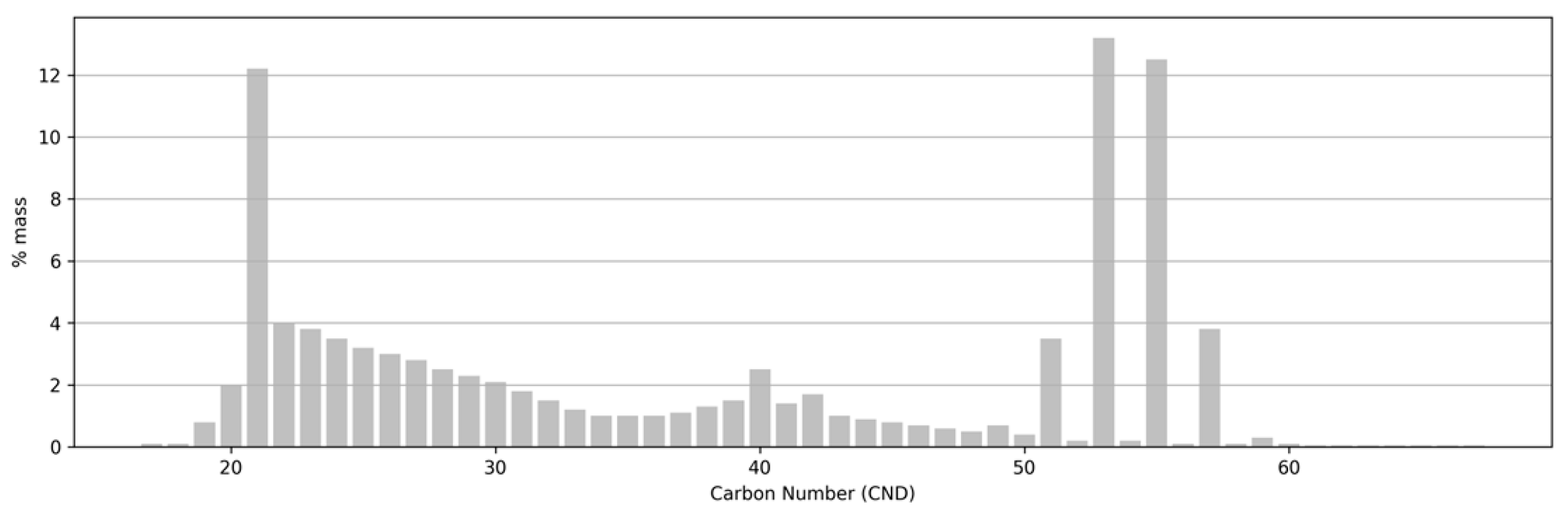
The carbon number distribution, as shown in Figure 1, of beeswax exhibits a bimodal pattern, indicating the presence of two distinct chain populations, which can be attributed to differences in the chain lengths of fatty acids and fatty alcohols.

2.2. Cosmetic Formulations for Sensory and Safety Test

The formulations used for sensory and safety tests consisted of an oil phase (12%) and a commonly used water phase. The oil phase was composed of MCT oil and Montanov 68, with the addition of specific waxes as detailed in Table 2. The wax content was standardized to 1% of the total formulation. The aqueous phase contains moisturizers, pH adjusters, thickeners, and distilled water, accounting for 88% of the total composition.

2.3. Preparation of the Formulation for Structural Analysis

Both the aqueous and oil phases were heated to 60 °C prior to homogenization. Emulsification was performed using a high-shear homogenizer (Primix Mark II, PRIMIX Corporation, Osaka, Japan) at 5000 rpm for 10 min to obtain a homogeneous emulsion. After mixing, the emulsion was allowed to cool naturally to ambient temperature. All analyses were carried out within a period of six months, beginning at least one week after preparation. The resulting emulsion was either topically applied to porcine skin or subjected to structural characterization using ATR-FT-IR spectroscopy.

2.4. Measurement and Analysis Using ATR-FT-IR

ATR-FT-IR measurements were performed at five different points using an ATR-FT-IR spectrometer (Jasco 4200, Jasco, Japan) equipped with an ATR PRO450-S accessory. For liquid samples, a drop of each material was carefully placed on a ZnSe crystal. For solid samples, a thin layer was directly pressed onto the crystal surface to ensure close contact. Spectra were acquired at room temperature with 24 scans over the range of 3000–400 cm−1 at a resolution of 4 cm−1. Subsequently, a second derivative graph was generated for the range of 1460–1480 cm−1 [20]. The local heights of two peaks (1474/1463) were calculated, and their relative ratio was quantified [19]. In this study, absorbance spectra were processed using a second-derivative transformation to improve the resolution of overlapping bands and enhance the visibility of subtle spectral features. This approach facilitated the detection of peak splitting and the evaluation of minor variations in lipid packing. Because the amplitude of the second-derivative peak corresponds to the original band intensity [21], attenuation of a vibrational mode appears as a reduction in its derivative signal. For the CH2 scissoring vibration, derivative spectra were calculated within the 1460–1480 cm−1 range. In the orthorhombic lipid phase, this region typically displays two distinct scissoring bands. The splitting arises from Davydov coupling, in which vibrational modes of adjacent, closely packed lipid chains interact and split into separate components [22]. A reduction in the intensity of one peak, particularly the 1463 cm−1 band relative to the 1471 cm−1 band, indicates a weakening of orthorhombic packing [19]. When the cooperative interactions diminish, the two peaks broaden and merge into a single band near 1466 cm−1, which is characteristic of a hexagonal phase [19]. All FT-IR measurements were performed in five replicates, and representative spectra were selected for presentation.

2.5. Sample Treatment for Skin Barrier Analysis

Porcine dorsal skin (1 cm × 1 cm) was prepared and mounted onto a Franz diffusion cell (diffusion area: 0.8 cm). To induce barrier disruption, the skin surface was treated with 5% SDS solution for 16 h at 32 °C. Following incubation, each sample was rinsed three times with distilled water to remove residual SDS. Subsequently, 100 µL of test solutions were applied in the donor chamber, including PBS (control) and formulated emulsions. The Franz cells were sealed with lids to prevent evaporation and incubated under the same conditions. After incubation with the test solutions, the skin was again washed three times with 0.01% SDS solution, followed by a final rinse with distilled water. Excess surface moisture was gently removed using Kimwipes, and a single tape stripping was performed to eliminate any remaining formulation residues. Finally, the treated skin samples were placed on moistened gauze in a 6-well plate (500 µL PBS added to the bottom) with the stratum corneum oriented upward. Transepidermal water loss (TEWL) was then measured, followed by ATR-FT-IR analysis. TEWL measurements were performed on five independent skin samples (n = 5). Normality of data distribution was assessed using the Shapiro–Wilk test (p > 0.05 for all groups), and homogeneity of variances was verified using Levene’s test (p = 0.641). Statistical analysis was conducted using one-way ANOVA followed by Tukey’s post hoc test.

2.6. Safety Evaluation

2.6.1. Subjects for Safety Evaluation

A total of 35 healthy volunteers with an average age of 56.54 ± 11.61 years (range 22–65 years) participated in this study. The study was conducted according to the principles of the Declaration of Helsinki. The study was approved by the Ethics Committee of Korea Institute of Dermatological Sciences (KIDS-BCK001-DDU). The exclusion criteria for test subjects, based on interviews with applicants, are as follows: Pregnant or breastfeeding women, and women with the potential to become pregnant; individuals using topical steroid-containing treatments for skin conditions for more than one month; individuals with sensitive or hypersensitive skin; individuals with abnormal skin conditions at the test site, such as moles, acne, erythema, or telangiectasia; individuals taking contraceptives, antihistamines, or anti-inflammatory drugs; individuals with severe irritation or allergies to patch test adhesives; individuals who participated in the same test within the past four weeks; and individuals deemed unsuitable for the test by the principal investigator. The experiment was conducted by the Korea Institute of Dermatological Sciences, and the results were derived from the institute.

2.6.2. Human Patch Test

A patch test using Finn Chamber (SmartPractice, Phoenix, AZ, USA) was performed on 35 subjects. The subjects’ back area was wiped with 70% ethanol and dried, then 20 µL of test substance was applied to a Finn Chamber with a diameter of 8 mm and attached and fixed to the test area. The patch was attached for 24 h, and the degree of irritation was observed by a dermatologist according to the criteria of the International Contact Dermatitis Research Group (ICDRG) after 30 min, 24 h, and 48 h of patch removal.

2.6.3. Irritation Survey After Single Application

The survey test was performed on 23 subjects. The tester observed the presence of skin abnormalities such as erythema, edema, scaling, itching, stinging, burning, tightness, and prickling on the test area and recorded the results by grading the skin reactions when they occurred. The tester also conducted a survey on skin reactions among the subjects.

2.7. Sensory Experience Survey

2.7.1. Subjects for Sensory Survey

A total of 23 healthy volunteers with an average age of 51.32 ± 11.05 years (range 20–65 years) participated in this study. All 23 test subjects reported that their skin type is dry. The study was conducted according to the principles of the Declaration of Helsinki. The study was approved by the Ethics Committee of Korea Institute of Dermatological Sciences (KIDS-BCJ071-DDU). The exclusion criteria for test subjects, based on interviews with applicants, are as follows: Pregnant or breastfeeding women, and women with the potential to become pregnant; individuals using topical steroid-containing treatments for skin conditions for more than one month; individuals with sensitive or hypersensitive skin; individuals with abnormal skin conditions at the test site, such as moles, acne, erythema, or telangiectasia; individuals taking contraceptives, antihistamines, or anti-inflammatory drugs; individuals with severe irritation or allergies to patch test adhesives; individuals who participated in the same test within the past four weeks; and individuals deemed unsuitable for the test by the principal investigator. The experiment was conducted by the Korea Institute of Dermatological Sciences, and the results were derived from the institute.

2.7.2. Survey After Single Application

After cleansing, the test subjects applied 300 Cream to the left forearm and Beeswax Cream to the right forearm, using an equal amount. Subsequently, a survey regarding user experience was conducted (Table 3). The same procedure was followed for 600 Cream and Carnauba Wax Cream. The scores of the survey (Table 4) were analyzed for statistical significance using the t-test method, and when p < 0.05, it was indicated as statistically significant.

3. Results

3.1. Solubility Test

Waxes produced via the Fischer–Tropsch (FT) process exhibit higher purity and more uniform crystalline structures compared to natural waxes, making them promising candidates for improving formulation stability and sensory properties in cosmetics. However, their practical applicability must be verified through compatibility tests with various cosmetic solvents of different polarities. In this study, FT Wax was tested for solubility in representative cosmetic solvents to determine its formulation feasibility (Table 5). After heating the solvent to the DMP of each wax, adding wax at a concentration of 5% and the solubility will be analyzed in DMP temperature. Waxes dissolve well in ester oil, hydrocarbon oil, and triglyceride. In the case of silicone oil, high DMP wax such as FT 1000 was found to be insoluble. Not all of them were soluble in water, but the short lengths FT 300 and FT 400 were compatible in 1,2 hexanediol (Table 6). The solubility analysis demonstrated that FT-derived waxes exhibit distinct compatibility profiles depending on both chain length and solvent polarity. In particular, ester oils, hydrocarbon oils, and triglycerides provided favorable solvation environments, supporting the use of FT waxes as structuring and stabilizing agents in conventional emulsion and anhydrous systems. By contrast, high-melting-point waxes such as FT 1000 showed poor compatibility with silicone oils, suggesting that the incorporation of such waxes into silicone-based formulations may be limited or require the use of co-solubilizers.

3.2. Lipid Packing Structure Analysis

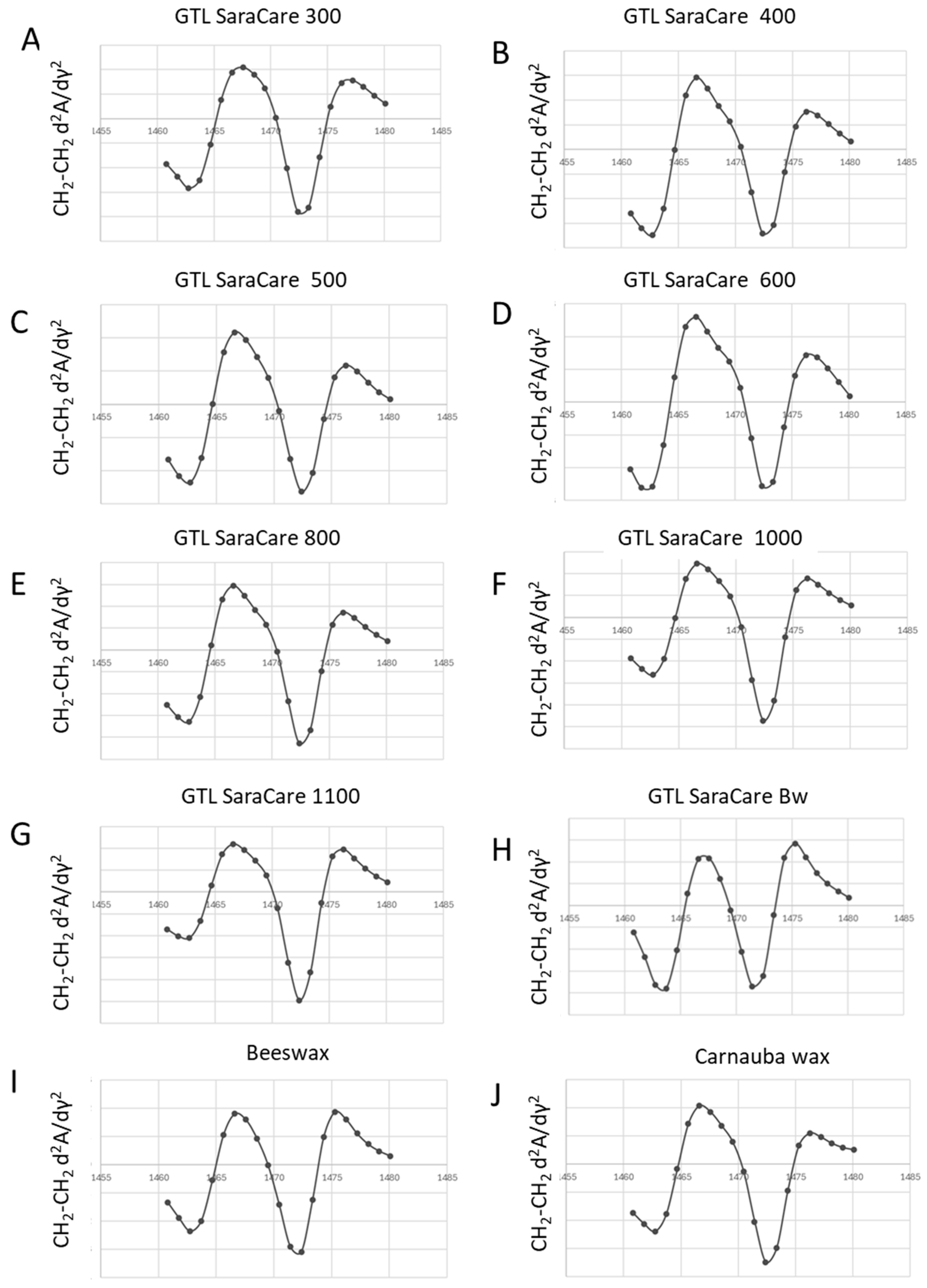
The lipid structure of the skin barrier exhibits its strongest configuration when organized in orthorhombic packing. External components can influence this structure, and to maintain stability, it is beneficial for lipid-based external components to exhibit orthorhombic characteristics as well, which can contribute to barrier reinforcement. In this context, the packing structures of various waxes were analyzed. FT-IR analysis was conducted on each wax sample, focusing on the absorbance data for the CH2 scissoring band region (1460–1480 cm−1). Second-derivative spectra were generated (Figure 2), and the ratio of the peak height at 1466–1472 cm−1 to the peak height at 1462–1466 cm−1 was calculated, defined as the orthorhombic score (Table 7). Higher orthorhombic scores indicated a stronger orthorhombic structure [23]. While common ester waxes like carnauba wax and beeswax exhibited scores around 0.8, FT 400 to FT 600 displayed scores closer to 1. Additionally, FT BW showed an orthorhombic score of approximately 1.08.
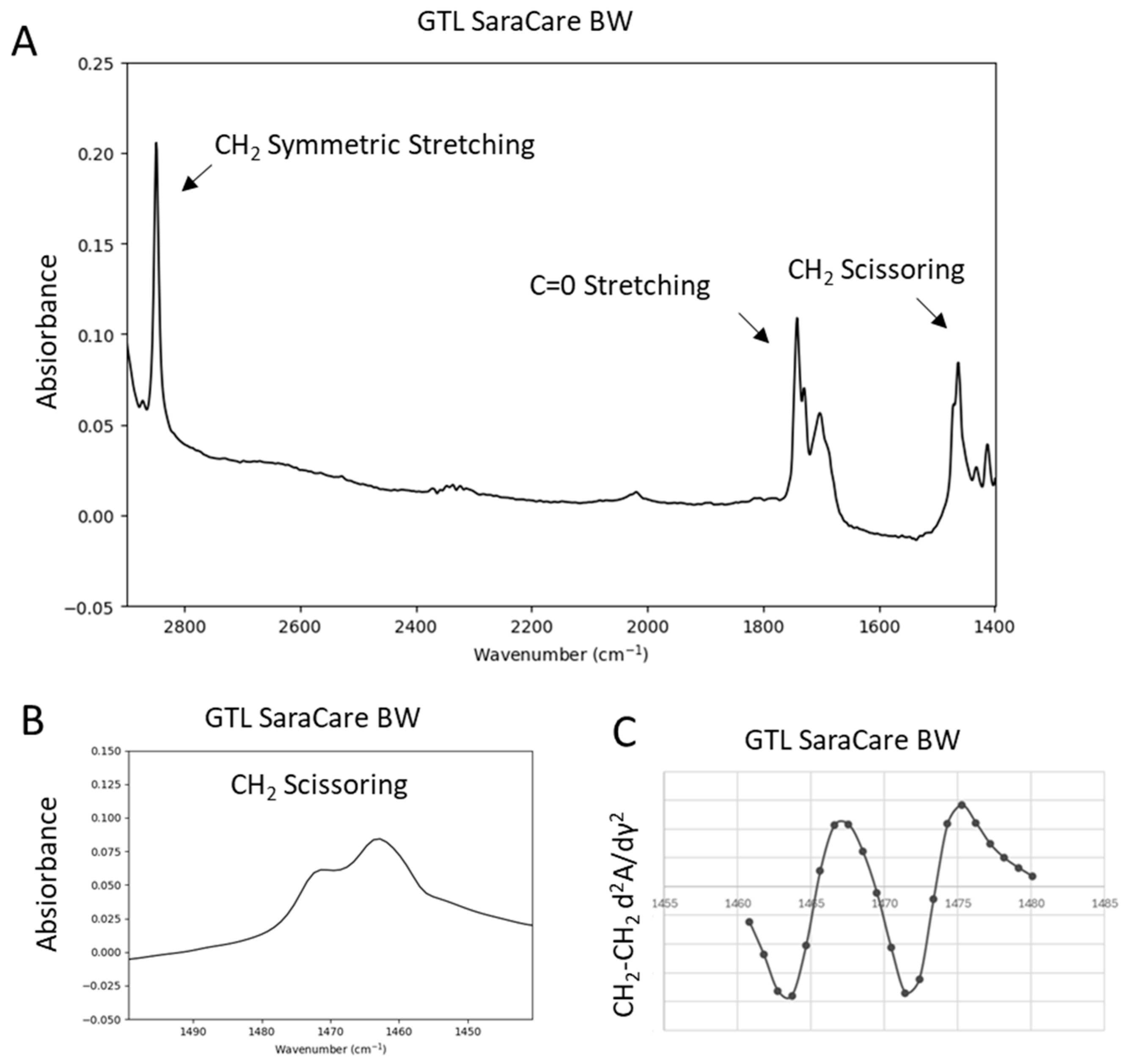
A representative ATR-FTIR spectrum of GTL Saracare BW in the selected spectral region is presented in Figure 3 to provide an overview of characteristic vibrational bands. In the CH2 scissoring region, two partially overlapping peaks are observed in the original absorbance spectrum, which are more clearly resolved into distinct components upon second-derivative analysis, reflecting the presence of orthorhombic lipid packing.

3.3. Role of Waxes in Achieving Orthorhombic Packing Within Emulsified Systems

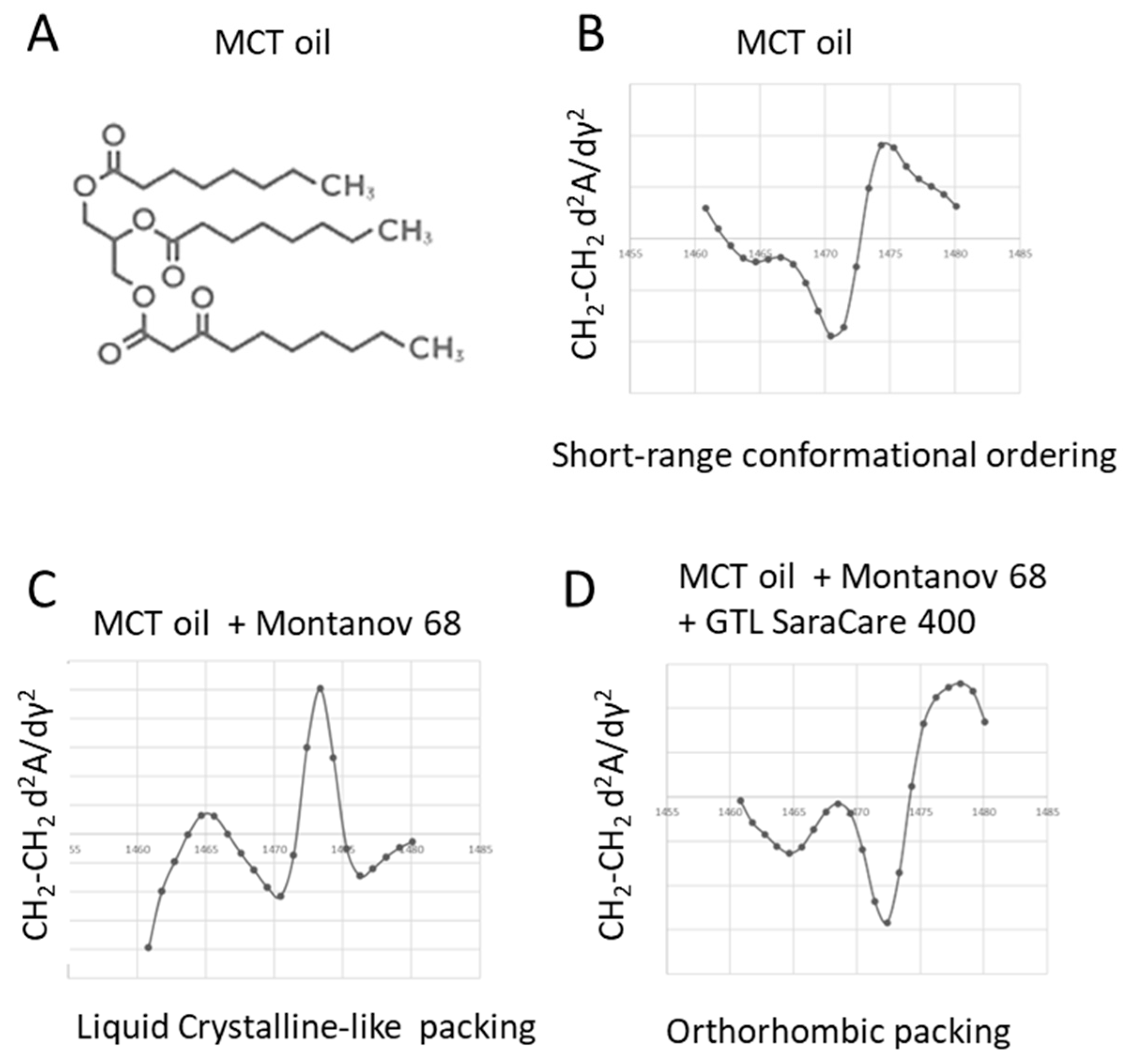
MCT oil, composed of linear saturated C8–C12 fatty acid chains, exhibits short-range conformational ordering in its neat liquid state, wherein transient local alignment of all-trans chain segments among neighboring molecules gives rise to weak spectral features in the CH2 scissoring region of the second-derivative ATR-FTIR spectrum [24,25]. This represents a dynamic, locally ordered liquid state rather than long-range crystalline orthorhombic packing.
When an oil-in-water (O/W) emulsion was prepared with MCT oil and Montanov 68 emulsifier without wax (Table 8), the lipid phase undergoes a complex structural reorganization upon cooling to room temperature. Montanov 68, comprising cetearyl alcohol and cetearyl glucoside, constitutes approximately 20% of the oil phase and solidifies upon cooling, forming a structured network. Similarly, the MCT oil component undergoes partial solidification within this matrix. However, the interfacial regions between these two solidified components remain in a disordered, liquid crystalline-like state, lacking coherent chain alignment, as evidenced by the loss of the doublet signal in the second-derivative spectrum (Figure 4C). This finding demonstrates that emulsification alone, even in the presence of a solidifying emulsifier network, is insufficient to establish long-range orthorhombic lipid organization throughout the formulation matrix.
In contrast, incorporation of FT 400, which possesses well-defined orthorhombic crystalline packing, reorganizes the interfacial regions between the solidified MCT and Montanov 68 components upon recrystallization. The long linear hydrocarbon chains of FT 400 intercalate within the disordered interfacial domains, promoting coherent parallel chain alignment and establishing an orthorhombic crystalline network throughout the bulk oil phase, as confirmed by the restoration of the characteristic doublet at 1463 and 1474 cm−1 (Figure 4D). These results demonstrate that orthorhombic waxes serve not merely as conventional viscosity and hardness modifiers, but as critical structural directors capable of propagating long-range orthorhombic lipid organization within emulsified cosmetic systems.
These results suggest that waxes not only function as conventional modifiers of viscosity and hardness for sensory optimization but also serve as critical stabilizers of orthorhombic lipid packing in cosmetic formulations.
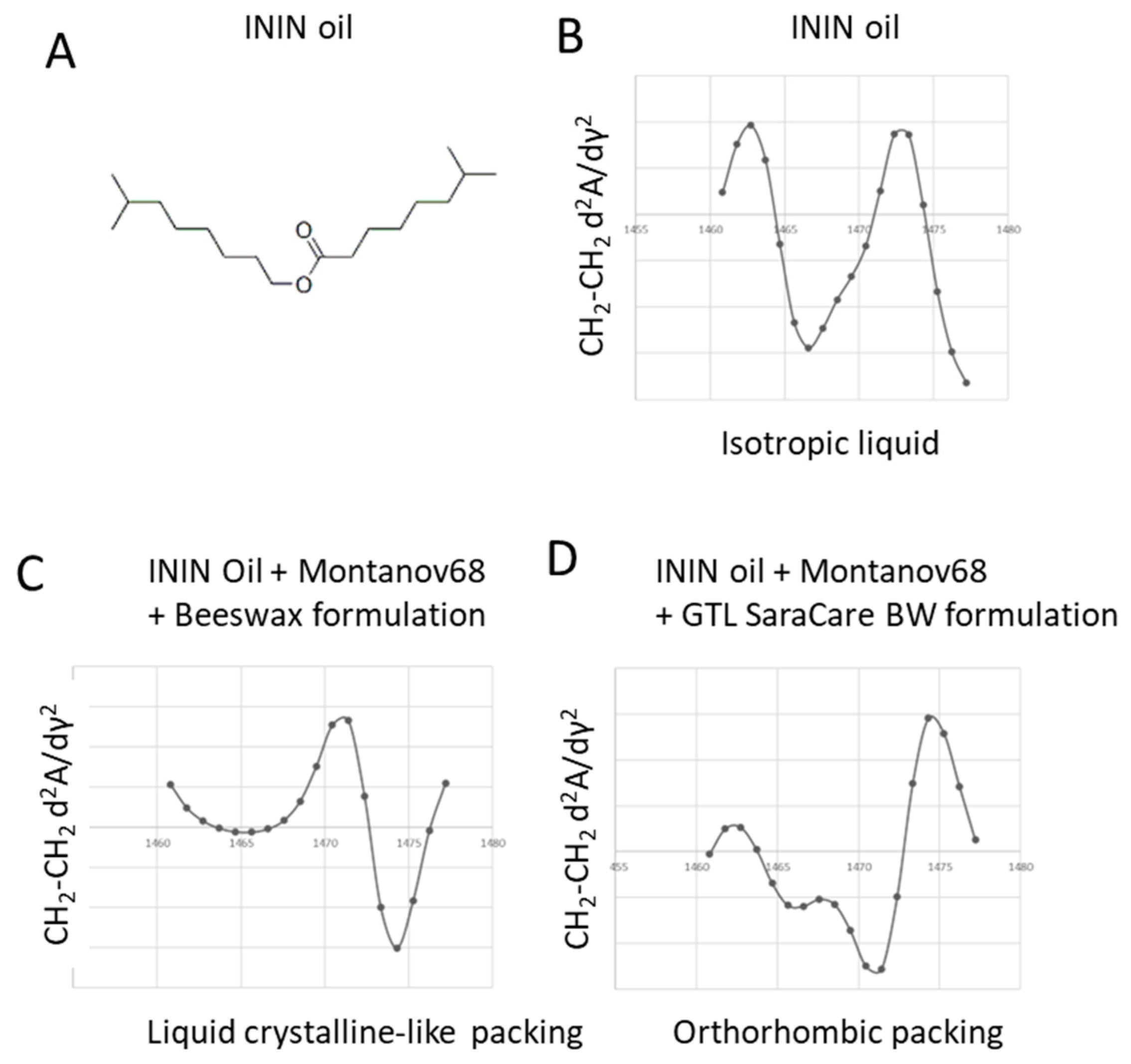
ININ (isononyl isononanoate), a branched-chain ester widely used in cosmetic formulations for its lightweight texture and spreadability, exists as a fully isotropic liquid due to its branched molecular architecture. The steric hindrance imposed by the branched isononyl moieties on both the acid and alcohol components prevents parallel chain alignment, rendering coherent conformational ordering—even at the short-range level—thermodynamically unfavorable.
General emulsified formulations are frequently composed of a combination of isotropic ester oils, structuring waxes, and emulsifying agents. The lipid packing state was analyzed in an emulsified formulation consisting of 16% ININ, 4% wax, and 4% emulsifier (Montanov 68) (Table 9). The results showed that formulations using conventional beeswax transitioned to a liquid-crystalline phase (Figure 5C), whereas formulations with FT BW exhibited orthorhombic packing (Figure 5D). Although the orthorhombic packing observed with FT BW was not as robust as that of solid waxes in their neat state (Figure 2), the degree of orthorhombic organization achieved within the emulsion matrix was comparable to the level of orthorhombic packing typically characterized in stratum corneum lipid analysis (Figure 6A). These findings suggest that waxes with superior orthorhombic packing properties are advantageous for achieving orthorhombic structures in final formulations. Conventional natural beeswax is mainly composed of fatty acids with chain lengths of approximately C20 and alcohols around C24, whereas BW contains fatty acids of C22–C24 and a higher proportion of long-chain alcohols (C53–C55). This structural difference likely contributes to the higher orthorhombic score observed with BW. Thus, the compositional variation in chain length and alcohol content appears to underlie the differential stabilizing capacity of waxes toward orthorhombic lipid organization.

3.4. Barrier Recovery in Relation to Formulation Packing States

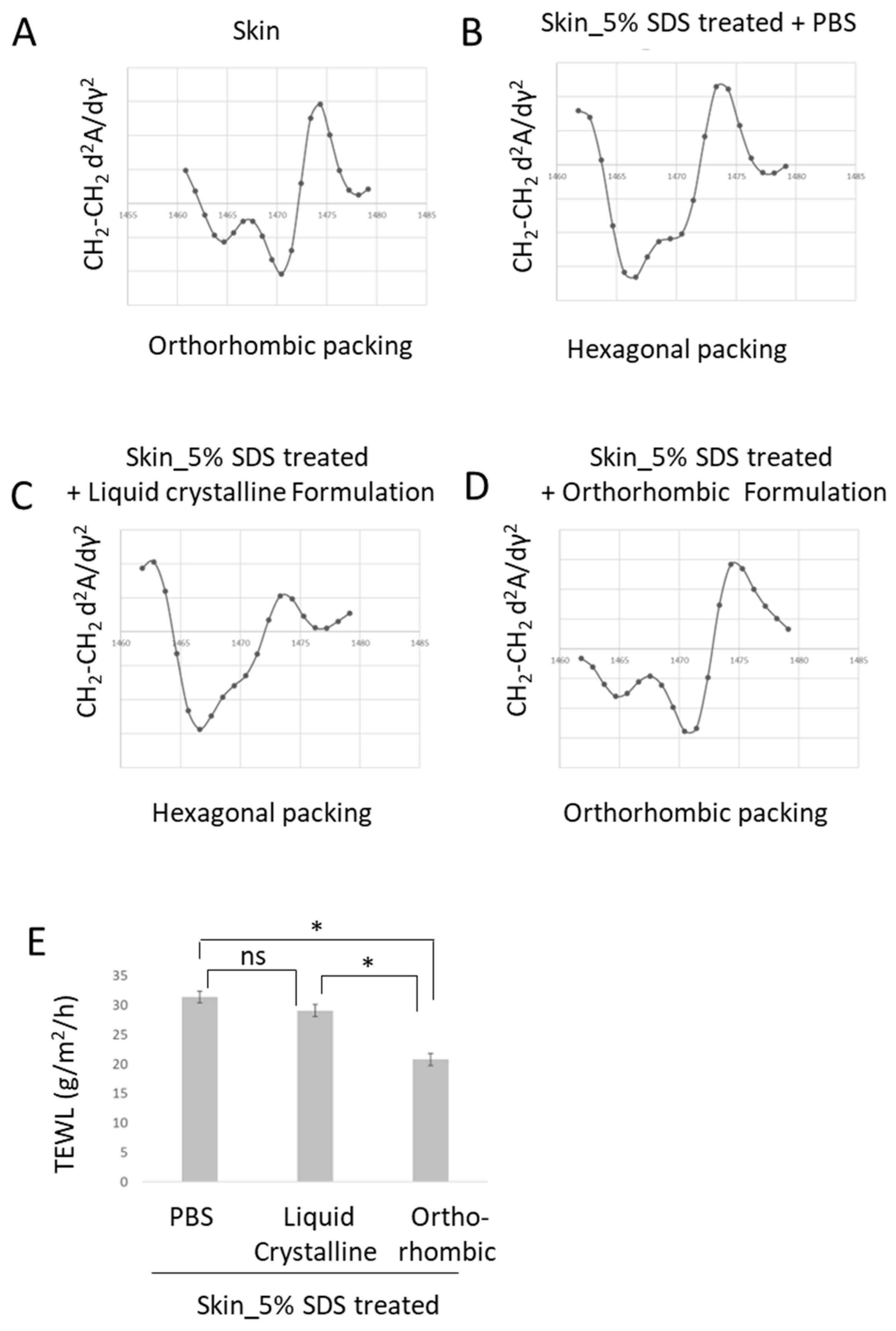
Normal porcine skin exhibited an orthorhombic lipid packing structure. However, treatment with 5% SDS disrupted the skin barrier, resulting in a transition of the packing state. PBS-treated skin was used as a control, and two types of formulations were applied: one with a liquid-like packing state and another with an orthorhombic packing state. In the control group, the disrupted skin maintained a hexagonal packing structure, and application of the liquid-crystalline phase formulation (Figure 5C) did not alter this state (Figure 6C). In contrast, treatment with the orthorhombic formulation (Figure 5D) restored the lipid organization back to an orthorhombic packing state (Figure 6D). This recovery was further supported by TEWL measurements. The damaged control skin showed a TEWL value of 31.35 ± 3.79 g/m2·h, and the liquid-phase formulation group displayed a similar value of 29.07 ± 3.73 g/m2·h, indicating no significant improvement. By comparison, the orthorhombic formulation significantly reduced TEWL to 20.76 ± 2.58 g/m2·h. These findings highlight that orthorhombic formulations play a crucial role in restoring disrupted skin barriers and underscore the importance of orthorhombic waxes in achieving such restorative effects.
Both the liquid crystalline formulation (Figure 5C) and the orthorhombic formulation (Figure 5D) contained equivalent amounts of wax and oil components. To isolate the spectroscopic signal of the skin lipid layer from formulation residues, SDS washing followed by single tape stripping was performed after formulation application to remove occluded surface oil prior to ATR-FTIR measurement and TEWL assessment. Under these conditions, the liquid crystalline formulation group showed no significant improvement in TEWL compared to the PBS-treated control (29.07 ± 3.73 vs. 31.35 ± 3.79 g/m2·h, p > 0.05), indicating that the occlusive oil components shared by both formulations did not contribute meaningfully to barrier recovery. The significant TEWL reduction observed exclusively in the orthorhombic formulation group (20.76 ± 2.58 g/m2·h, p < 0.05) therefore cannot be attributed to a simple occlusive film effect, but rather reflects a structural contribution specific to the orthorhombic wax component in reorganizing the disrupted stratum corneum lipid architecture. Importantly, the liquid crystalline formulation, containing equivalent amounts of oil and emulsifier as the orthorhombic formulation but lacking the orthorhombic crystalline wax structure, effectively served as a vehicle control in this experimental design. The absence of barrier recovery in the liquid crystalline formulation group—despite containing the same occlusive oil and emulsifier components—demonstrates that the restorative effect observed in the orthorhombic formulation group is attributable specifically to the orthorhombic crystalline architecture of the FT BW wax, rather than to the shared formulation excipients. This internal control design allows the contribution of the orthorhombic wax component to be delineated from that of the remaining formulation matrix.

3.5. Safety Evaluation Results

To investigate whether synthesized mineral wax exhibits greater irritation compared to traditional ester wax, formulations were prepared under the assumption that cosmetics typically consist of various ingredient combinations. The formulations contained 9% MCT oil, 2% emulsifier Montanov 68, and 1% of either FT 300, FT 600, natural Beeswax, or natural Carnauba wax. Irritation evaluations were conducted using these four formulations. The results indicated that none of the formulations showed significant irritation in both patch tests (Table 10) and irritation surveys (Table 11). This finding aligns with the general observation that mineral oils and ester waxes do not typically cause irritation.

3.6. Sensory Test

Mineral waxes, compared to traditional ester waxes, are advantageous in forming waxes with varying chain lengths. To determine whether this difference impacts the overall sensory experience, formulations were prepared containing 9% MCT oil, 2% emulsifier Montanov 68, and 1% of either FT 300, FT 600, natural Beeswax, or natural Carnauba wax.
The average age of the study participants is 51, indicative of a predilection for formulations with higher oil content in contrast to their younger counterparts. A majority of respondents self-identified with dry skin types, leading to a pronounced preference for products tailored to such conditions.
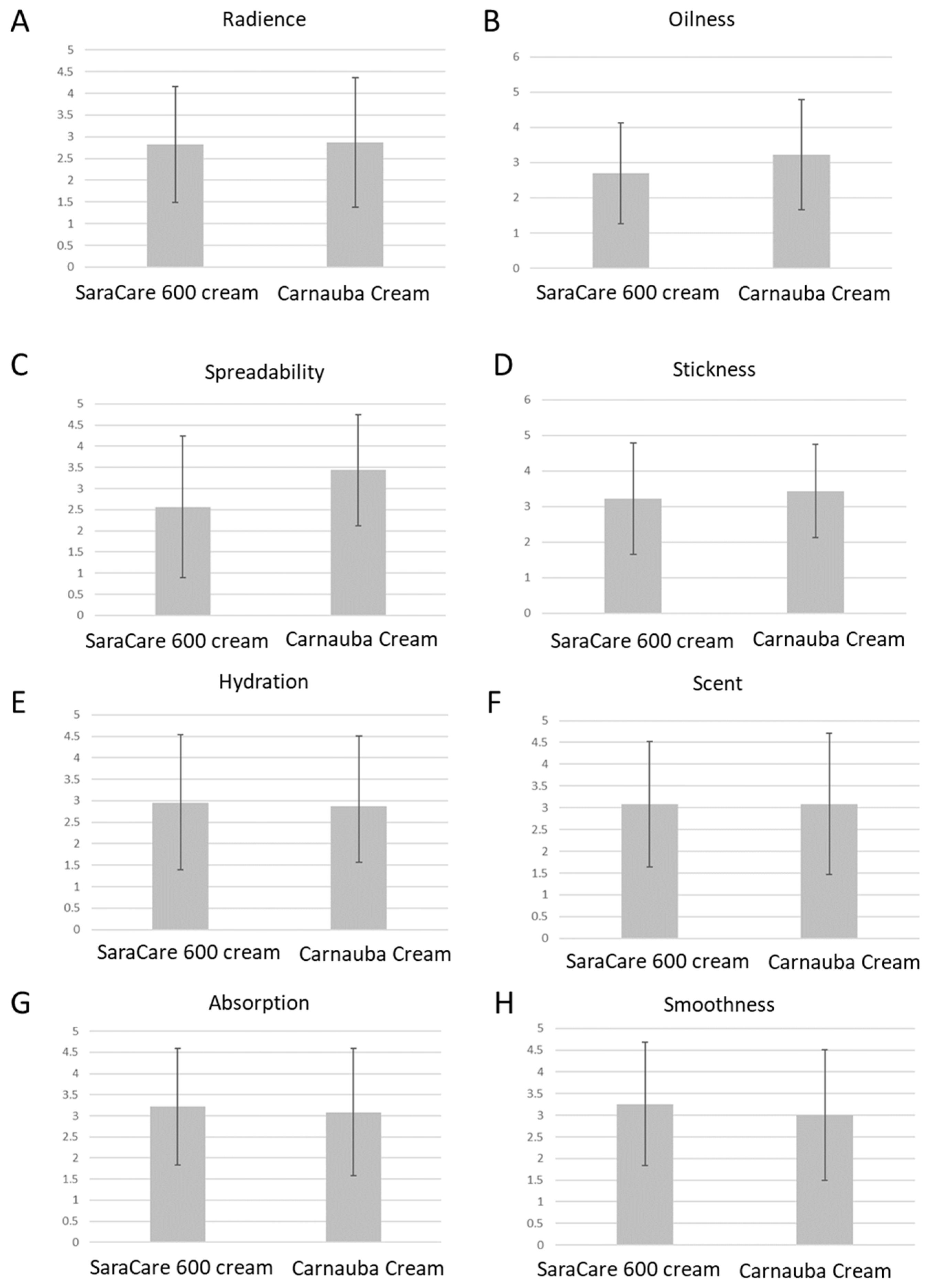
In the case of 600 cream, a substantial degree of comparability in preference to carnauba wax was observed across various sensory dimensions. This underscores the potential suitability of FT 600 as a viable alternative to carnauba wax (Figure 7).
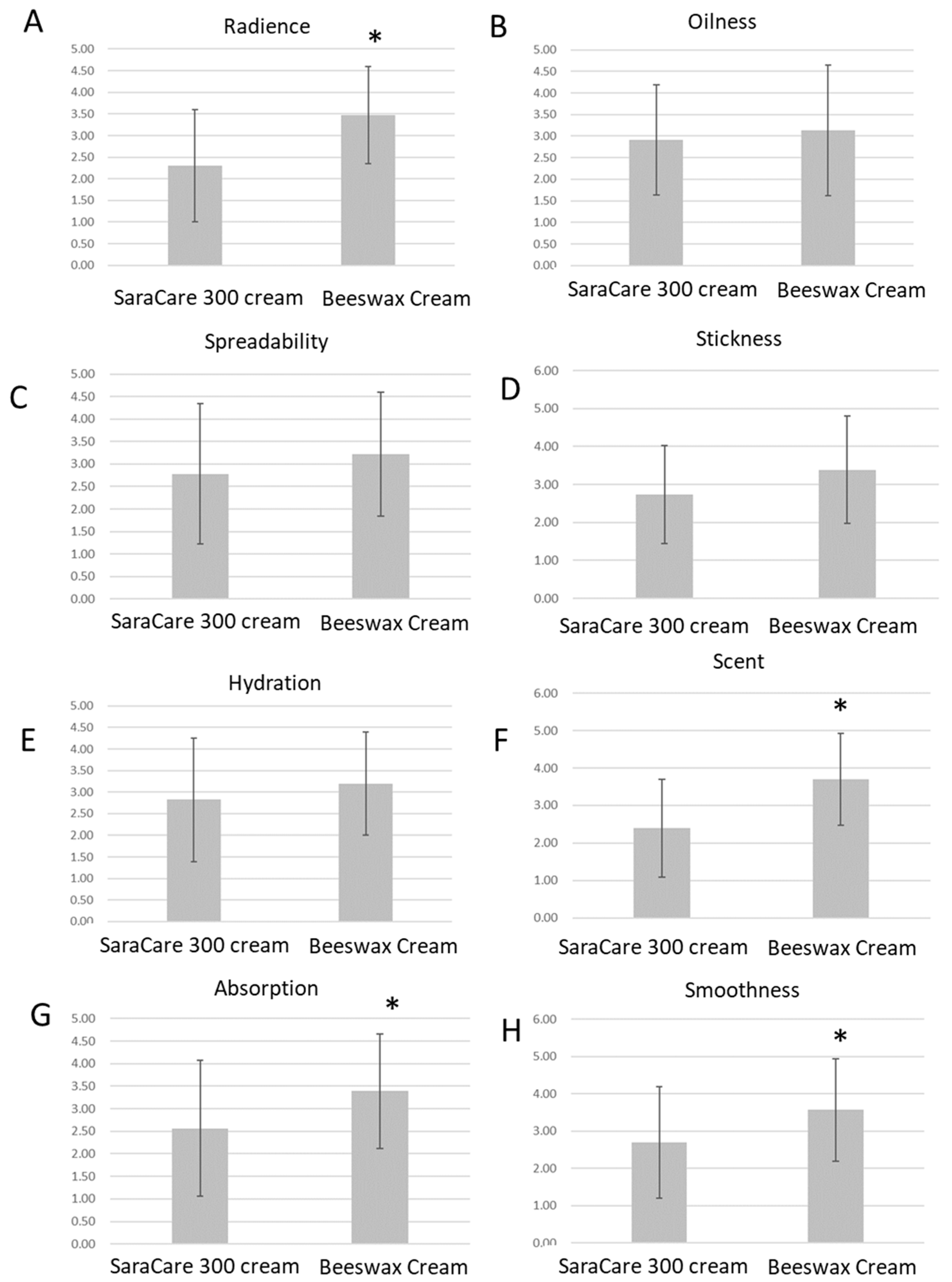
Conversely, 300 cream yielded lower ratings in radiance, moisture, and smoothness relative to beeswax (Figure 8). Upon application, 300 cream exhibited diminished luminosity and a swifter absorption rate, resulting in reduced smoothness during tactile interaction. These perceptible distinctions were corroborated by the survey responses from the study participants.
Nevertheless, these characteristics may prove advantageous for individuals favoring lighter formulations, particularly within the younger demographic. The utilization of FT 300 facilitates the attainment of a light tactile sensation, a feat challenging to replicate with beeswax. Although statistical significance (* p < 0.05) was observed for selected attributes, most sensory parameters did not show statistically significant differences between formulations. These results indicate that FT wax-based formulations provide sensory performance comparable to conventional ester wax systems.

4. Discussion

This study highlights the potential of synthesized solid mineral waxes (FT waxes and FT BW) as alternatives to conventional ester waxes in cosmetic formulations. Safety evaluations confirmed that the FT waxes exhibit irritation levels comparable to traditional ester waxes, ensuring its suitability for topical applications. The ability to tailor hydrocarbon chain lengths allowed the development of waxes with a range of melting points, providing versatility in formulation design.
Short-chain hydrocarbons demonstrated lower gloss and transparency, while longer-chain hydrocarbons delivered sensory properties similar to carnauba wax. Additionally, lipid packing analysis using FT BW revealed superior performance in the orthorhombic packing structure, contributing to improvements in skin barrier function.
While the current study primarily focused on the safety, sensory experience, and lipid packing structure characteristics of FT waxes, previous research has indicated that these waxes may offer additional benefits, such as good heat resistance, high thermal and color stability, and a unique opaque white appearance that enhances color brilliance with minimal use of coloring agents. These properties suggest potential applications in personal care and cosmetic formulations, including skin feel and rheology modification, structuring and binding, wear resistance, and waterproofing. Furthermore, they may also be utilized in various product categories such as cleansing, moisturizing, conditioning, softening, fragrance extension, long-wear color cosmetics, and lip care.
These findings underscore the significant potential of FT waxes for diverse applications in the cosmetic industry, offering both functional benefits and formulation flexibility.
Beyond these general formulation advantages, an equally important aspect lies in their ability to stabilize orthorhombic lipid packing, which directly influences the recovery of disrupted skin barriers. Importantly, the present study further demonstrated that FT waxes play a pivotal role in the construction of formulations with orthorhombic lipid packing, a structural feature that is closely associated with the integrity and recovery of the skin barrier. While the liquid crystalline phase formulation failed to restore the disrupted lipid order after SDS-induced barrier damage, the inclusion of FT BW, possessing well-defined orthorhombic crystalline architecture, enabled the re-establishment of orthorhombic packing. This structural restoration was associated with a significant reduction in transepidermal water loss (TEWL), suggesting the functional relevance of orthorhombic organization in improving barrier recovery.
It is postulated that the oil and wax components of the applied formulation are partially absorbed into the stratum corneum lipid matrix, where they interact with and influence the endogenous lipid organization. Previous studies have demonstrated that exogenous lipids, such as ceramides, can penetrate into the stratum corneum and modulate lipid packing, thereby contributing to barrier restoration [26]. When the formulation exists in a liquid crystalline-like phase—as observed with the beeswax-containing formulation—the absorbed lipid components lack sufficient structural directionality to reorganize the SDS-disrupted stratum corneum lipids and consequently fail to reinforce the compromised lipid packing. In contrast, when the oil and wax components are pre-organized into an orthorhombic crystalline network within the formulation matrix prior to application—as achieved with FT BW—the absorbed components retain their directional chain alignment upon penetration into the stratum corneum, providing a structural template that promotes the reorganization of disordered endogenous lipids into a more ordered orthorhombic arrangement. This mechanism suggests that the packing state of the formulation itself, rather than its chemical composition alone, is a critical determinant of its capacity to restore disrupted skin barrier function.
The ability of FT waxes to reinforce orthorhombic packing not only contributes to the mechanical stability of formulations but also provides a physiological advantage by supporting the reorganization of disrupted stratum corneum lipids. This dual role—enhancing both formulation robustness and biological efficacy—highlights their unique value as multifunctional excipients in cosmetic science. Furthermore, given that barrier dysfunction is a hallmark of sensitive and compromised skin conditions, formulations designed with orthorhombic waxes such as FT BW may offer therapeutic potential for restoring barrier function in damaged or disease-prone skin.
Together, these insights suggest that FT waxes are not only safe and versatile formulation ingredients but also active contributors to skin health through their capacity to promote orthorhombic lipid packing and accelerate barrier recovery. This positions them as essential materials for the next generation of barrier-focused cosmetic formulations


Author Contributions

Conceptualization, writing—review and editing, funding acquisition X.L.L.; methodology, investigation, Y.Y.; data curation, writing—original draft preparation, project administration, S.-H.L. All authors have read and agreed to the published version of the manuscript.

Funding

This research received no external funding.

Institutional Review Board Statement

The study was conducted in accordance with the Declaration of Helsinki and approved by the Ethics Committee of the Korea Institute of Dermatological Sciences (protocol codes KIDS-BCK001-DDU and KIDS-BCJ071-DDU).

Informed Consent Statement

Informed consent was obtained from all subjects involved in the study.

Data Availability Statement

The data presented in this study are available upon reasonable request from the corresponding author. The data are not publicly available due to laboratory confidentiality.

Conflicts of Interest

Xue Li Lim is employed by Brenntag Asia Pacific Pte. Ltd. The remaining authors declare that the research was conducted in the absence of any commercial or financial relationships that could be construed as a potential conflict of interest.

References

  1. Lodén, M. Role of Topical Emollients and Moisturizers in the Treatment of Dry Skin Barrier Disorders. Am. J. Clin. Dermatol. 2012, 4, 771–788. [Google Scholar] [CrossRef]
  2. Souza, C.; de Freitas, L.A.P.; Maia Campos, P.M.B.G. Topical Formulation Containing Beeswax-Based Nanoparticles Improved In Vivo Skin Barrier Function. AAPS PharmSciTech 2017, 18, 2505–2516. [Google Scholar] [CrossRef]
  3. Vaughn, A.R.; Clark, A.K.; Sivamani, R.K.; Shi, V.Y. Natural Oils for Skin-Barrier Repair: Ancient Compounds Now Backed by Modern Science. Am. J. Clin. Dermatol. 2017, 19, 103–117. [Google Scholar] [CrossRef]
  4. O’Connor, R.J.; Visscher, M.O.; Narendran, V.; Wang, Y.; Wiesemann, F.; Carr, A.N. Clinical Evaluation of a Diaper Containing a Shea Butter-Based Emollient and Impact on Diapered Skin Erythema. Pediatr. Dermatol. 2025, 42, 532–538. [Google Scholar] [CrossRef] [PubMed]
  5. Bouwstra, J.A.; Ponec, M. The Skin Barrier in Healthy and Diseased State. Biochim. Biophys. Acta (BBA) Biomembr. 2006, 1758, 2080–2095. [Google Scholar] [CrossRef] [PubMed]
  6. Knox, S.; O’Boyle, N.M. Skin Lipids in Health and Disease: A Review. Chem. Phys. Lipids 2021, 236, 105005. [Google Scholar] [CrossRef] [PubMed]
  7. Draelos, Z.D. The Science behind Skin Care: Moisturizers. J. Cosmet. Dermatol. 2018, 17, 138–144. [Google Scholar] [CrossRef]
  8. Soni, V.K.; Sharma, R.K. Palladium-Nanoparticles-Intercalated Montmorillonite Clay: A Green Catalyst for the Solvent-Free Chemoselective Hydrogenation of Squalene. ChemCatChem 2016, 8, 1763–1768. [Google Scholar] [CrossRef]
  9. Demski, K.; Ding, B.-J.; Wang, H.-L.; Tran, T.N.T.; Durrett, T.P.; Lager, I.; Löfstedt, C.; Hofvander, P. Manufacturing Specialized Wax Esters in Plants. Metab. Eng. 2022, 72, 391–402. [Google Scholar] [CrossRef]
  10. Patel, S.; Nelson, D.R.; Gibbs, A.G. Chemical and Physical Analyses of Wax Ester Properties. J. Insect Sci. 2001, 1, 1–7. [Google Scholar] [CrossRef]
  11. Brychka, S.; Brychka, A.; Hedin, N.; Mondeshki, M. Sustainable Composite Materials Based on Carnauba Wax and Montmorillonite Nanoclay for Energy Storage. Materials 2024, 17, 1978. [Google Scholar] [CrossRef] [PubMed]
  12. Alsudani, F.T.; Saeed, A.N.; Ali, N.S.; Majdi, H.S.; Salih, H.G.; Albayati, T.M.; Saady, N.M.C.; Shakor, Z.M. Fisher–Tropsch Synthesis for Conversion of Methane into Liquid Hydrocarbons through Gas-to-Liquids (GTL) Process: A Review. Methane 2023, 2, 24–43. [Google Scholar] [CrossRef]
  13. Leckel, D. Diesel Production from Fischer−Tropsch: The Past, the Present, and New Concepts. Energy Fuels 2009, 23, 2342–2358. [Google Scholar] [CrossRef]
  14. Tanno, L.K.; Darlenski, R.; Sánchez-Garcia, S.; Bonini, M.; Vereda, A.; Kolkhir, P.; Antolin-Amerigo, D.; Dimov, V.; Gallego-Corella, C.; Becerra, J.C.A.; et al. International Survey on Skin Patch Test Procedures, Attitudes and Interpretation. World Allergy Organ. J. 2016, 9, 8. [Google Scholar] [CrossRef]
  15. Jungersted, J.M.; Hellgren, L.I.; Jemec, G.B.E.; Agner, T. Lipids and Skin Barrier Function–a Clinical Perspective. Contact Dermat. 2008, 58, 255–262. [Google Scholar] [CrossRef]
  16. Yun, Y.; Lee, S.-H. Orthorhombically Packed Cosmetic Oils or Formulations Could Ensure Skin Lipid Barrier Stability—An Ex Vivo Porcine Skin Study. Dermato 2025, 5, 20. [Google Scholar] [CrossRef]
  17. Yarovoy, Y.; Drutis, D.M.; Hancewicz, T.M.; Garczarek, U.; Ananthapadmanabhan, K.P.; Misra, M. Quantification of Lipid Phase Order of In Vivo Human Skin Using Attenuated Total Reflection Fourier Transform Infrared (ATR FT-IR) Spectroscopy and Multivariate Curve Resolution Analysis. Appl. Spectrosc. 2019, 73, 182–194. [Google Scholar] [CrossRef]
  18. Bouwstra, J.A.; Nădăban, A.; Bras, W.; McCabe, C.; Bunge, A.; Gooris, G.S. The Skin Barrier: An Extraordinary Interface with an Exceptional Lipid Organization. Prog. Lipid Res. 2023, 92, 101252. [Google Scholar] [CrossRef]
  19. Boncheva, M.; Damien, F.; Normand, V. Molecular Organization of the Lipid Matrix in Intact Stratum Corneum Using ATR-FTIR Spectroscopy. Biochim. Biophys. Acta (BBA) Biomembr. 2008, 1778, 1344–1355. [Google Scholar] [CrossRef]
  20. Rieppo, L.; Saarakkala, S.; Närhi, T.; Helminen, H.J.; Jurvelin, J.S.; Rieppo, J. Application of Second Derivative Spectroscopy for Increasing Molecular Specificity of Fourier Transform Infrared Spectroscopic Imaging of Articular Cartilage. Osteoarthr. Cartil. 2012, 20, 451–459. [Google Scholar] [CrossRef] [PubMed]
  21. Savitzky, A.; Golay, M.J.E. Smoothing and differentiation of data by simplified least squares procedures. Anal Chem. 1964, 36, 1627–1639. [Google Scholar] [CrossRef]
  22. Arrondo, J.L.R.; Goñi, F.M. Infrared Studies of Protein-Induced Perturbation of Lipids in Lipoproteins and Membranes. Chem. Phys. Lipids 1998, 96, 53–68. [Google Scholar] [CrossRef]
  23. Kim, S.; Lee, S.-H. A Study on the Enhancement of Barrier Function and Improvement of Lipid Packing Structure in a 3D Skin Model by Ginsenoside Rg3. J. Soc. Cosmet. Sci. Korea 2023, 49, 323–330. [Google Scholar]
  24. Yano, J.; Kaneko, F.; Kobayashi, M.; Sato, K. Structural Analyses of Triacylglycerol Polymorphs with FT-IR Techniques. 1. Assignments of CH2 Progression Bands of Saturated Monoacid Triacylglycerols. J. Phys. Chem. B 1997, 101, 8112–8119. [Google Scholar] [CrossRef]
  25. Snyder, R.G.; Clavell-Grunbaum, D.; Strauss, H.L. Spinodal Phase Separation of Unstable Solid-State Binary n-Alkane Mixtures. J. Phys. Chem. B 2007, 111, 13957–13966. [Google Scholar] [CrossRef] [PubMed]
  26. Schild, J.; Kalvodová, A.; Zbytovská, J.; Farwick, M.; Pyko, C. The Role of Ceramides in Skin Barrier Function and the Importance of Their Correct Formulation for Skincare Applications. Int. J. Cosmet. Sci. 2024, 46, 526–543. [Google Scholar] [CrossRef] [PubMed]
Figure 1. Carbon number distribution of Saracare BeesWax. The distribution exhibits a bimodal pattern, indicating the presence of two distinct chain populations, reflecting differences in the chain lengths of fatty acids and fatty alcohols.
Applsci 16 03720 g001
Figure 2. Secondary Derivatives of FT-IR CH2-CH2 Scissoring Vibrations of Lipids. (AH) Second-derivative FT-IR spectra of CH2 scissoring vibrations (1460–1480 cm−1) for various FT-derived waxes (300, 400, 500, 600, 800, 1000, 1100 and BW) and (I,J), natural waxes (beeswax, carnauba wax). Two distinct peaks near 1463 and 1474 cm−1 are indicative of orthorhombic lipid chain packing.
Applsci 16 03720 g002
Figure 3. Representative ATR-FTIR spectra of GTL Saracare BW in the selected spectral region. (A) Original absorbance spectrum showing characteristic vibrational bands, including CH2 stretching and CH2 scissoring regions. (B) Enlarged view of the CH2 scissoring region, where two partially overlapping peaks are observed in the original spectrum. (C) Second-derivative spectrum of the CH2 scissoring region, in which the overlapping peaks are resolved into distinct components, indicative of orthorhombic lipid packing.
Applsci 16 03720 g003
Figure 4. Effect of wax addition on the lipid packing state of MCT oil formulations. (A) Chemical structure of MCT oil (medium-chain triglyceride). (B) MCT oil alone, showing weak spectral features associated with short-range conformational ordering in an isotropic liquid state. (C) MCT oil emulsified with Montanov 68, showing reduced spectral features associated with short-range conformational ordering and a transition toward a more disordered liquid crystalline-like state. (D) MCT oil emulsified with Montanov 68 and supplemented with GTL Saracare 400, showing spectral features consistent with orthorhombic-like packing.
Applsci 16 03720 g004
Figure 5. Effect of wax addition on the lipid packing state of ININ oil formulations. (A) Chemical structure of ININ oil (isononyl isononanoate). (B) ININ oil alone, showing spectral features characteristic of an isotropic liquid state with minimal conformational ordering. (C) ININ oil emulsified with Montanov 68 and beeswax, showing the development of structured spectral features with possible liquid-crystalline–like characteristics. (D) ININ oil emulsified with Montanov 68 and GTL Saracare BW, showing enhanced spectral features indicative of increased molecular ordering, consistent with orthorhombic-like packing.
Applsci 16 03720 g005
Figure 6. Recovery of Disrupted Skin Barrier by Orthorhombic Formulations. (A) Second-derivative FT-IR spectrum of untreated porcine skin showing characteristic orthorhombic packing. (B) Skin treated with 5% SDS followed by PBS, displaying a transition to hexagonal packing. (C) Skin treated with 5% SDS followed by a liquid crystalline-like phase formulation, maintaining a hexagonal packing structure. (D) Skin treated with 5% SDS followed by an orthorhombic formulation, showing restoration of orthorhombic packing. (E) Transepidermal water loss (TEWL) values of damaged skin treated with PBS, liquid crystalline-phase formulation, or orthorhombic formulation. Orthorhombic formulation significantly reduced TEWL compared with PBS and liquid groups (p < 0.05). Data are presented as mean ± SD (n = 5 independent skin samples). Normality of data distribution was assessed using the Shapiro–Wilk test (p > 0.05 for all groups), and homogeneity of variances was verified using Levene’s test (p = 0.641). Statistical analysis was performed using one-way ANOVA followed by Tukey’s post hoc test. Differences were considered statistically significant at * p < 0.05.
Applsci 16 03720 g006
Figure 7. Sensory test between 600 Cream (FT 600 1%) vs. Carnauba Cream (Carnauba wax 1%). Sensory evaluation of creams formulated with FT 600 compared to a carnauba wax control. Attributes assessed were: (A) Radiance, (B) Oiliness, (C) Spreadability, (D) Stickiness, (E) Hydration, (F) Scent, (G) Absorption, and (H) Smoothness. Values are expressed as mean ± SD (n = [number of panelists]). No statistically significant differences were observed between the two formulations across the evaluated attributes.
Applsci 16 03720 g007
Figure 8. Sensory test between 300 Cream (FT 300, 1%) and Beeswax cream (Beeswax 1%). (* p < 0.05) Sensory evaluation of creams formulated with FT 300 compared to a beeswax control. Attributes assessed were: (A) Radiance, (B) Oiliness, (C) Spreadability, (D) Stickiness, (E) Hydration, (F) Absorption, (G) Scent, and (H) Smoothness. Values are expressed as mean ± SD (n = [number of panelists]). Statistical significance (* p < 0.05) was observed only for selected attributes (radiance, absorption, scent, and smoothness), while other attributes did not show significant differences.
Applsci 16 03720 g008
Table 1. Melting Point and Carbon Composition of FT Waxes.
FTFT BW
30040050060080010001100
Melting point (°C)54–6062–6870–7690–10098–104113–118116–12172–78
Carbon Min1616192720233020
Carbon Max43645899102>111>11157
n-Paraffin (%)94.795.798.3100100100100
Table 2. Oil Phase Composition of Formulations.
IngredientPhaseBeeswax Cream300 CreamCarnauba Cream600 Cream
Oil phaseCaprylic/Capric Triglyceride
(MCT oil)
oil9.009.009.009.00
Cetearyl Alcohol/Cetearyl Glucoside/Water/Glucose
(Montanov 68)
emulsifier2.002.002.002.00
Beeswaxwax1.00
FT 300wax 1.00
Carnauba waxwax 1.00
FT 600wax 1.00
Water phaseWater 75.275.275.275.2
1,2 Butylene Glycol 10101010
1,2-Hexanediol 2222
Carbomer 940 0.50.50.50.5
L-Arginine 0.30.30.30.3
Table 3. Grading Criteria of Skin Reactions by CTFA Guideline.
ItemDescription
RadianceThe formulation’s ability to provide a luminous finish, enhancing the skin’s natural radiance for a healthy and glowing complexion.
OilinessThe inclusion of emollients or oils in the product, contributing to a subtle, dewy effect on the skin for a nourished appearance.
SpreadabilityThe smooth and easily spreadable nature of the cosmetic product, ensuring effortless application and a seamless blending experience.
StickinessThe formulation’s capacity to adhere to the skin without feeling overly tacky, promoting long-lasting wear and comfort.
HydrationThe product’s ability to hydrate and moisturize the skin, leaving it feeling supple and well-nourished.
ScentThe pleasant scent or fragrance incorporated into the formulation, enhancing the overall sensory appeal of the cosmetic product.
AbsorptionThe formulation’s ease of absorption into the skin, ensuring a seamless integration and a natural, non-greasy finish.
SmoothnessThe velvety and smooth texture of the formulation, resulting in a soft and touchable finish for a polished look.
Table 4. Grading Criteria of Skin Reactions.
ScoreSurvey Scale
1Not at all satisfied
2Not satisfied
3Neutral
4Satisfied
5Very satisfied
Table 5. Grading Criteria of Solubility Decision.
CodeDescription
SSoluble
CCompatible (disperses with no separation)
SCSlightly compatible
NCNot compatible
Table 6. Solubility of FT Waxes in Cosmetic Solvent.
FT
3004005006008001000
WaterNCNCNCNCNCNC
1.2 HexanediolCCNCNCNCNC
Castor oilSSSSSS
MCT oilSSSSSS
Mineral oilSSSSSS
PolydeceneSSSSSS
ININSSSSSS
Wheat ester oilSSSSSS
CyclomethiconeSSSSSNC
DimethiconeSSSSCNC
Table 7. Lipid Packing Structure of Waxes.
Orthorhombic ScoreStructure
FT BW1.08Orthorhombic
FT 3000.83Orthorhombic
FT 4001.01Orthorhombic
FT 5000.94Orthorhombic
FT 6001.00Orthorhombic
FT 8000.86Orthorhombic
FT 10000.71Orthorhombic
FT 11000.60Orthorhombic
Carnauba Wax0.80Orthorhombic
Beeswax0.85Orthorhombic
Table 8. Composition of MCT Emulsion.
PhaseMaterialOil + EmulsifierOil + Emulsifier + Wax
Water PhaseWater73%69%
1,2-Hexanediol2%2%
Glycerin5%5%
Lipid PhaseMCT16%16%
4000%4%
Montanov 684%4%
Table 9. Composition of ININ Oil Emulsion.
PhaseMaterialBeeswax FormulationBW Formulation
Water PhaseWater69%69%
1,2-Hexanediol2%2%
Glycerin5%5%
Lipid PhaseININ16%16%
Beeswax4%0%
FT BW0%4%
Montanov 684%4%
Table 10. Safety evaluation via Patch Test.
SampleMean ScoreGrade
300 Cream0.00No reaction
Beeswax Cream0.63No reaction
600 Cream0.63No reaction
Carnauba Cream0.32No reaction
Table 11. Irritation Survey after Single Application.
AbnormalityCase
300 CreamBeeswax Cream600 CreamCarnauba Cream
  • Erythema
0000
2.
Edema
0000
3.
Scaling
0000
4.
Itching
0000
5.
Pain
0000
6.
Burning
0000
7.
Tightness
0000
8.
Sting
0000
Disclaimer/Publisher’s Note: The statements, opinions and data contained in all publications are solely those of the individual author(s) and contributor(s) and not of MDPI and/or the editor(s). MDPI and/or the editor(s) disclaim responsibility for any injury to people or property resulting from any ideas, methods, instructions or products referred to in the content.