Article

Eating Habits, Knowledge and Perceptions of Functional Foods Among Primary School Students in Greece: Pilot Remote Educational Intervention Involving Children and Their Parents

by
Irene Chrysovalantou Votsi
and
Antonios Ε. Koutelidakis
*
Laboratory of Nutrition and Public Health, Department of Food Science and Nutrition, University of the Aegean, 81400 Myrina, Lemnos, Greece
*
Author to whom correspondence should be addressed.
Appl. Sci. 2026, 16(6), 2983; https://doi.org/10.3390/app16062983
Submission received: 17 February 2026 / Revised: 12 March 2026 / Accepted: 17 March 2026 / Published: 19 March 2026
(This article belongs to the Special Issue Functional Foods and Active Natural Products)

Abstract

Background: Parental knowledge and perceptions towards Functional Foods (FFs) play a critical role in shaping children’s dietary behaviors. This study aimed to investigate dietary habits, FFs knowledge and perceptions among Greek primary school children and their parents and to evaluate the feasibility of a one-month pilot asynchronous nutrition education program. Methods: A cross-sectional study included 374 children aged 9–11 years and 159 parents from urban (Thessaloniki) and rural (Lemnos) areas. Children completed questionnaires on dietary habits, FFs knowledge and Mediterranean Diet (MD) adherence (KIDMED score), while parents provided sociodemographic information, BMI, dietary habits, FFs knowledge and perceptions. A pilot asynchronous nutrition education intervention was delivered via pre-recorded videos on FFs, the MD, portion sizes and food label interpretation, with participation tracked and program evaluation conducted among parents. Data was analyzed using IBM SPSS Statistics (version 28). Descriptive statistics were calculated, group differences were assessed with t-tests and ANOVA and associations between variables were examined using chi-square tests and Pearson correlations (p < 0.06). Results: Children showed moderate MD adherence, frequent fast-food and soft drinks consumption and low FF knowledge, with a substantial gap between perceived and actual understanding. Parental FF knowledge was uneven, higher among normal-weight participants and largely limited to fortified products. Positive associations were found between children’s and parents’ diet quality and natural FF consumption, as well as between parental and child physical activity. The asynchronous intervention was positively rated; substantial attrition was observed across sessions and follow-up, which limited the ability to assess the intervention’s effects on behavioral change. Conclusions: This study highlights critical gaps in FFs knowledge among families and demonstrates that asynchronous, family-based nutrition education is feasible but challenged by engagement attrition. Targeted interventions are needed to clarify FF concepts and promote healthier family dietary behaviors.

1. Introduction

There are several factors that influence food purchasing and consumption among adults and parents. Of scientific interest are the factors that determine consumers’ decisions to purchase Functional Foods (FFs) and provide these foods to their families [1,2,3,4,5,6]. For the purpose of the present study, FFs are defined as conventional foods that, beyond their basic nutritional value, provide scientifically substantiated health benefits due to the presence of biologically active components, when consumed as part of a normal diet [7,8]. According to the Functional Food Science in Europe (FUFOSE) framework, a food can be regarded as functional if it is satisfactorily demonstrated to beneficially affect one or more target functions in the body, beyond adequate nutritional effects, in a way that is relevant to improved health and/or reduction in disease risk [7]. FFs may be categorized as (1) naturally Functional Foods, which inherently contain bioactive constituents (e.g., fiber, polyphenols, probiotics), and (2) fortified or enriched Functional Foods, in which specific nutrients or other bioactive compounds have been intentionally added, increased, or modified to confer additional health benefits [8,9,10,11,12]. Naturally, FFs include unprocessed fruits, nuts, vegetables, fish, dairy products, whole grains, legumes and fortified or enriched FFs include, for example, calcium- and folic acid-enriched bread, products fortified with dietary fiber, omega-3 fatty acids in eggs, probiotics in yogurts or gluten-free products [10,11].
Consumer research indicates that attitudes, motivational factors and nutrition knowledge are significant predictors of Functional Foods acceptance [13,14]. Karelakis et al. (2019) [13] found that consumers recognize various types of FFs, are often willing to pay more for products perceived to contribute to a healthy and balanced diet, but concerns regarding health claims and product information on labels remain important determinants of purchasing decisions. Topolska et al. (2021) [14] reported that higher levels of nutrition knowledge, positive attitudes towards health benefits and socio-demographic characteristics such as age and education are associated with greater acceptance of FFs. Furthermore, interventions using visual cues and engaging educational materials can improve children’s comprehension and willingness to make healthier food choices, illustrating the synergy between perception and actual behavior [15,16].
Adults’ perceptions of FFs, their overall level of nutritional knowledge, self-perception of health status, attitudes toward food, and concerns regarding the quality of their children’s diet have all been independently reported as factors influencing the purchase and consumption of FFs with the aim of promoting health and reducing disease risk [1,2,3,4,5,6]. Individuals who perceive their health as relatively good, while simultaneously expressing concerns about potential future disease risks, demonstrate greater intention to purchase FFs [2,5,17,18,19]. A lack of awareness may deter parents from providing healthy foods for their children. In this light, it is insufficient for parents to intend to feed their children healthy choices; they must possess the appropriate knowledge to recognize what constitutes a healthy food. In this context, awareness reinforces the adoption of healthy eating practices, whereas its absence may favor the provision of unhealthy foods, with negative consequences for the children’s well-being [2,5,17]. The results of the studies emphasize that parents who consume FFs themselves are more likely to offer FFs to their children than parents who are merely aware of their benefits [17,20].
The provision of FFs to children appears to depend largely on parents’ perceptions of these foods and their confidence in the potential health benefits for themselves and their families. Numerous studies demonstrate that consumers increasingly adopt the perception that the FFs directly contribute to health maintenance and promotion [1,11,20]. Acceptance and intention to purchase FFs are directly related to the degree of acceptance of the staple food to which the functional ingredient is added. Since the health benefits of foods cannot be directly perceived, unlike attributes such as taste, clear and targeted communication of relevant health claims is necessary to increase consumer awareness and trust [1,20]. Increasing consumers’ nutrition knowledge appears to lead to more conscious and healthier purchasing behaviors [1,21]. However, merely knowing the health benefits of FFs is not sufficient to encourage their consumption. The ability to link nutritional claims to personal benefit, combined with high levels of self-efficacy, increases the likelihood of incorporating FFs into the diet. Regarding children’s diets and health, parents’ self-efficacy concerning their nutritional knowledge plays a major role in providing healthy foods in the family environment, along with reducing various diet-related health problems in children [1,5,19,21]. Therefore, parental awareness and positive attitudes towards FFs are crucial to enhance their use in children’s diets and to maintain the momentum of this growing market [1,5]. Despite growing interest in Functional Foods and the Mediterranean Diet, limited research has explored how parental and child dietary behaviors, knowledge and lifestyle factors are interrelated within families. Although previous studies have implemented interventions targeting parents and children in parallel for general dietary behaviors, no research to date has evaluated a digital asynchronous, family-based nutrition education program specifically aimed at improving knowledge, perceptions and consumption of Functional Foods, simultaneously engaging both children and their parents. This represents a critical research gap and underscores the need for family-focused interventions addressing FF education. Considering the above, the present study aimed to investigate the dietary habits, FFs knowledge, perceptions and consumption patterns of primary school children and their parents and to assess the feasibility and potential impact of a pilot asynchronous nutrition education intervention on family-level behavior. Based on these objectives, the study addresses the following key research questions: (1) Is there an association between children’s adherence to the MD and their BMI? (2) How does parental BMI influence children’s BMI? (3) What is the relationship between parents’ knowledge and perceptions of FFs and children’s dietary behaviors? (4) Which factors are associated with parents’ knowledge and perceptions of FFs? (5) What is the impact of a pilot asynchronous online nutrition education intervention on family engagement and dietary habits?

2. Materials and Methods

2.1. Participants and Study Procedures

This was a two-phase observational study with a pilot intervention. Phase I consisted of a cross-sectional study using a sample composed of Greek schoolchildren aged 9–11 years old (n = 374) and their parents (n = 159). Phase II involved a pilot asynchronous family-based nutritional education program aimed at evaluating feasibility and engagement. Children and their parents/guardians were recruited from eight [8] elementary schools located in Thessaloniki and Lemnos. To include students from different city areas (north, south, east, west and central), one school per region was randomly selected. Fifteen [15] primary public schools in the town (10 schools) and on the island (5 schools) were invited to participate in the study, and eight [8] agreed to participate (5 schools from Thessaloniki and 3 schools from Lemnos). Participating in public schools was equally spread over the area of Thessaloniki and Lemnos. In Phase I, the researcher visited the schools where children’s eating and physical habits and their knowledge, perceptions and frequency of Functional Foods’ consumption were investigated using printed questionnaires. The meeting and interview day with the students was determined following communication with the school principals and teachers. The researcher entered the classrooms, and after informing the children about the purpose of the visit, they began completing their questionnaires. The questionnaires were completed by the students at school in the presence of a dietitian researcher who was available to answer any questions. No anthropometric measurements (weight or height) were taken; instead, the study relied on the weight and height reported by the parents in their electronic questionnaires. Parents were invited to complete a largely similar questionnaire in structure and content to that administered to their children at the same time, electronically, via the Google Forms platform (Version N/A, Google LLC, Mountain View, CA, USA) and one parent per child was asked to respond.
Recognizing that nutritional education delivered through customized online programs is an accessible and effective way to change dietary behavior and knowing that technology in recent decades has provided advanced ways of communication, a remote nutritional education program was designed. Due to difficulties in identifying common days and times, the educational intervention was implemented in an asynchronous format. Pre-recorded educational videos were developed and delivered to participating families, allowing parents and children to view the material together at a convenient time and place. This approach was selected to enhance feasibility, flexibility and participation, while facilitating joint parent–child engagement with the educational content.
In Phase II, the educational videos were distributed to parents via email on a weekly basis. Each video was also uploaded to a dedicated YouTube channel (Version N/A, Google LLC, Mountain View, CA, USA) created for the purposes of the study (FUNKIDS: Functional Foods and Kids) and made available on the study’s official website (www.funkids50.webnode.gr (accessed on 16 March 2026) (Webnode platform, Webnode AG, Zurich, Switzerland), which was designed and developed by the researcher.
Phase III involved program evaluation exclusively among parents, conducted through two electronic questionnaires: a brief program evaluation and a follow-up assessing potential changes in dietary habits six months after completion of the educational program (Figure 1).
Inclusion criteria were: (1) students aged 9–11 years; (2) students enrolled in public elementary schools; (3) students who had returned the informed consent form authorizing their participation, signed by their parents or guardians. Exclusion criteria were: (1) students with a physical disability or having a limitation for doing any activity usually carried out by children due to any health issue, (2) students who had health problems and needed to follow a special dietary pattern that excludes certain foods from their diet or who had been diagnosed with a food disorder such as anorexia nervosa, bulimia nervosa, dysphagia, etc., (3) students and parents who did not speak Greek with sufficient fluency were excluded from the study to avoid errors in the research.
This study was conducted according to the guidelines laid down in the Declaration of Helsinki of 1975 and all procedures involving research study participants were approved by the Ethical Review Board of the Ministry of Education and Religious Affairs and the Ethical Committee of the University of the Aegean, approved the study before its commencement.

2.2. Feasibility Indicators

To assess the feasibility of the intervention, recruitment and participation were systematically reported (Table 1). A total of 15 elementary schools (10 in the city and 5 on the island) were invited to participate, but only 8 schools (5 from Thessaloniki and 3 from Lemnos) agreed to take part in the study. In these 8 schools, consent forms were distributed to all children in grades 4, 5 and 6 (n = 534), of whom 374 (70%) returned written parental consent and participated in Phase I of the study. Therefore, the sample cannot be considered fully representative of the target population in Thessaloniki and Lemnos, as participation was limited to schools that agreed to take part. For the remote educational intervention (Phase II), 159 families agreed to participate. Follow-up assessment six months after the intervention yielded a very low response rate, with only 13 parents (8%) completing the evaluation questionnaires (Phase III).

2.3. Questionnaires

The questionnaires were designed based on relevant literature to evaluate participants’ lifestyle and dietary behaviors, as well as their knowledge, perceptions and consumption frequency of FFs. Most questions were close-ended and included multiple-choice and Likert-type scales to facilitate quantitative analysis. The reliability of the questionnaires was assessed using internal consistency analysis (Cronbach’s alpha), with values above 0.7, indicating satisfactory reliability. No factor structure analysis or content validity assessment was conducted, which is acknowledged as a limitation.

2.3.1. Children’s Questionnaire

Children completed the questionnaire using their names so that the researcher could link it with the parents’ electronic questionnaire. Subsequently, families were coded and assigned a unique identification number. The questionnaire was structured into two [2] distinct sections. The first section included questions regarding children’s lifestyle and dietary habits in order to capture baseline behaviors that may influence food choices. The second section comprised questions on knowledge, perceptions and frequency of consumption of Functional Foods, allowing the assessment of their familiarity and attitudes towards these foods.

2.3.2. Parents’ Questionnaire

Participants completed the electronic questionnaire before and after the implementation of the nutrition education intervention. The questionnaire was structured into two [2] distinct sections. The first section included questions regarding parents’ lifestyle and dietary habits, and the second section comprised questions on knowledge and perceptions related to Functional Foods, as well as the frequency of their consumption. The pre- and post- intervention administration enabled the evaluation of potential changes in parents’ knowledge and perceptions following the nutrition education program.

2.3.3. Dietary Assessment

Children’s questionnaire includes questions about how many meals they consume every day, the frequency of breakfast consumption and school snacks and the frequency of fast foods consumption, Functional Foods and beverages. To evaluate adherence to the Mediterranean Diet by the students, the KIDMED score was used. The KIDMED score classifies participants into three categories: low adherence (3 or fewer points), medium adherence (4–7 points) and high adherence (8 or more points) [22].
Parents indicated the frequency (number of everyday and weekend days) of glasses per day of coffee/wine/soft drinks consumption. To evaluate adherence to the Mediterranean Diet by the parents, the MedDiet Score was used. In particular, for the consumption of food items that are close to the Mediterranean diet scores 0 for rare or no consumption, to 5 for almost daily consumption, were assigned, whereas, for the consumption of foods that are away from this traditional diet (like meat and meat products), the opposite scores were assigned (i.e., 0 for almost daily consumption to 5 for rare or no consumption). For alcohol consumption, score 5 for the consumption of less than 3 wine glasses per day and, progressively, score 0 for the consumption of more than 7 wine glasses per day. Thus, the range of the diet score is between 0 and 55 [23].
Participants reported the frequency of consumption of Functional Food items based on daily, weekly and monthly intakes over the past year. A FFFQ (Functional Food Frequency Questionnaire) with 50 food items (more natural and some enriched Functional Foods) was given to the subjects using the following categories of frequency consumption: never, rarely, two to three times a month, once to two times a week, three to five times a week, daily. Functional Foods were selected according to the position paper of Papagianni et al., who developed and validated a new FFFQ which includes 48 food groups and 28 individual foods (food subgroups), for a total of 76 food groups, which were categorized mainly based on the major food groups they belong to, but also on their bioactive component [24]. The 50 Functional Foods included in the questionnaire were selected because they were considered the most consumed by children and parents, and due to time constraints, it was not feasible to include more items for participants to answer.

2.3.4. Questions on Knowledge and Perceptions of Functional Foods

Knowledge and perceptions regarding Functional Foods were assessed using a set of Likert-type statements evaluating perceived safety, healthiness, taste, quality, trust in labeling, perceived commercial value and the integration of Functional Foods into dietary habits. Example items included statements such as ‘Functional Foods are safer for health compared with other products’ and ‘Functional Foods are healthier compared with other products’, rated on a 5-point Likert scale (Table 2 and Table 3). As no fully standardized questionnaire assessing perceptions of Functional Foods was available for this population, the development of the items was informed by previously published Likert-type scales and instruments measuring consumers’ attitudes and perceptions toward FFs reported in the literature [25,26,27].

2.3.5. Measures

Parents’ self-reported body weight and height data were used to calculate their Body Mass Index (BMI). Parents’ weight status was assessed using BMI, calculated using the formula: weight (kg)/height (m2). The weight status variable was classified into four categories: Underweight, Healthy Weight, Overweight and Obesity [28]. The BMI-for-age cut-off points of the WHO child growth standards were used for children [29].

2.3.6. Demographic and Socioeconomic Characteristics

Sociodemographic information of the parents, including age, gender and socioeconomic status (SES), was collected. SES was assessed through the following questions: educational level, type of profession, income and number of family members. Parental educational level was classified as low (lower general secondary education, lower vocational training and primary school or less), medium (intermediate vocational training, higher general secondary training and pre-university education) or high (completed higher vocational training and University) based on the highest completed education level of both parents. The type of profession was classified as private or public employee, freelancer, self-employed, domestic worker and farmer. Income was classified as low, medium and high [30,31].

2.3.7. Physical Activity

Children’s activity behavior items included in the study were playing outside and participating in organized sports (hours/week). Parents were asked to indicate the average number of days per week and weekends that they spent time on physical activity (none, 1–2 times/week, 3–4 times/week, >4 times/week)

2.4. Video Topics

The educational videos presented to students and their parents covered four main topics: (1) the Mediterranean Diet Pyramid, including an analysis of food groups; (2) portion sizes and guidance on constructing balanced daily meals; (3) how to accurately read and interpret food labels; and (4) an introduction to Functional Foods, including their definition, types, health benefits and the importance of regular consumption, strategies to incorporate Functional Foods into daily dietary routines.
Each educational video, lasting approximately 15–20 min, was sent directly to participants by the research coordinator. Participant engagement was tracked using a structured Google Forms questionnaire, in which families entered their unique code and submitted any questions or clarifications.

2.5. Statistical Analysis

Statistical analyses were performed using IBM SPSS for Windows, version 29.0 (IBM Corp., Armonk, NY, USA). The level of statistical significance was set a priori at α = 0.0.5. (two-tailed tests). Initially, descriptive analyses were conducted for all variables. Categorical variables are presented as absolute (n) and relative (%) frequencies, while continuous variables are presented as mean (M) ± standard deviation (SD). Normality of continuous variables was assessed using the Kolmogorov–Smirnov and Shapiro–Wilk tests, as well as visual inspection of histograms and Q-Q plots. To examine differences between two independent groups, independent samples t-tests were performed. Homogeneity of variances was evaluated using Levene’s test, and where necessary, corrected degrees of freedom were applied (Welch correction). Results are reported with t-values, degrees of freedom (df), p-values and 95% confidence intervals. For comparisons involving more than two groups, one-way analysis of variance (ANOVA) was conducted using the Bonferroni method to control for Type I errors. When statistically significant differences were detected, trends between groups were examined based on group means. Homogeneity of variances was also assessed using Levene’s test. Correlations between continuous variables were examined using Pearson’s correlation coefficient (r). Associations between categorical variables were evaluated with Pearson’s Chi-square test, and in cases of small, expected frequencies, Fisher’s exact test was applied. Effect sizes were estimated where possible using appropriate indices. Correlations were categorized as weak, moderate or strong based on the absolute value of r and significance levels were reported (p < 0.05, p < 0.01).
Additional analyses related to FFs were conducted only among parents who reported prior knowledge of FFs. Specifically, out of 159 parents who participated in the study, 88 parents (55.3%) stated that they were familiar with the concept of FFs and therefore responded to the corresponding additional questions. Analyses examining associations between knowledge, perceptions and consumption of FFs and sociodemographic or lifestyle variables were restricted to this subsample.

3. Results

This study included 374 children (162 girls, 212 boys) from eight public primary schools in Thessaloniki and Lemnos. Descriptive characteristics of participants are presented in Table 4.
Concerning dietary habits, 204 students (71.1%), representing more than half of the sample, reported consuming breakfast every day before leaving home. 242 out of 374 children (65.8%) reported consuming soft drinks. With respect to fast food consumption, 230 children (62.2%) replied that they consume fast food 1–2 times per week. According to the KIDMED index, 33 students (12.4%) exhibited very low diet quality, 130 students (48.9%) had average Mediterranean Diet adherence, indicating a need for dietary improvement, and 103 students (38.7%) demonstrated good adherence to the principles of the Mediterranean Diet.
Among the schoolchildren, 88% reported that they did not know what FFs are. Notably, among those who reported knowing what FF are (11.8%), 90.4% were unable to correctly identify which foods qualify as FFs, indicating a substantial gap between perceived and actual knowledge.
A total of 159 parents (139 mothers and 20 fathers) agreed to participate and were included in the study. Detailed demographic characteristics of the parent sample are presented in Table 5.
The results regarding parents’ BMI, parents’ MedDiet Score and children’s BMI, both overall and stratified by gender, are presented in Table 6.
A statistically significant association was observed between children’s BMI (Body Mass Index) and KidMed score (p < 0.05), indicating that higher adherence to the Mediterranean Diet was associated with lower BMI values among children. Children’s BMI was also positively associated with parents’ BMI (p < 0.01), with higher parental BMI corresponding to higher BMI values in children. In contrast, no statistically significant association was found between parents’ MedDiet score and children’s KidMed score, suggesting that greater parental adherence to MD does not necessarily translate into higher adherence among their children. A strong positive association was observed between children’s KIDMED score and their consumption of natural FFs (p < 0.01), indicating that children with better adherence to the MD were more likely to consume natural FFs. In addition, parents’ MedDiet score was positively correlated with their consumption of natural FFs (p < 0.01) and with perceptions of healthy eating (p < 0.05), while a negative association was observed with the consumption of fortified FFs (p < 0.05) (Table 7).
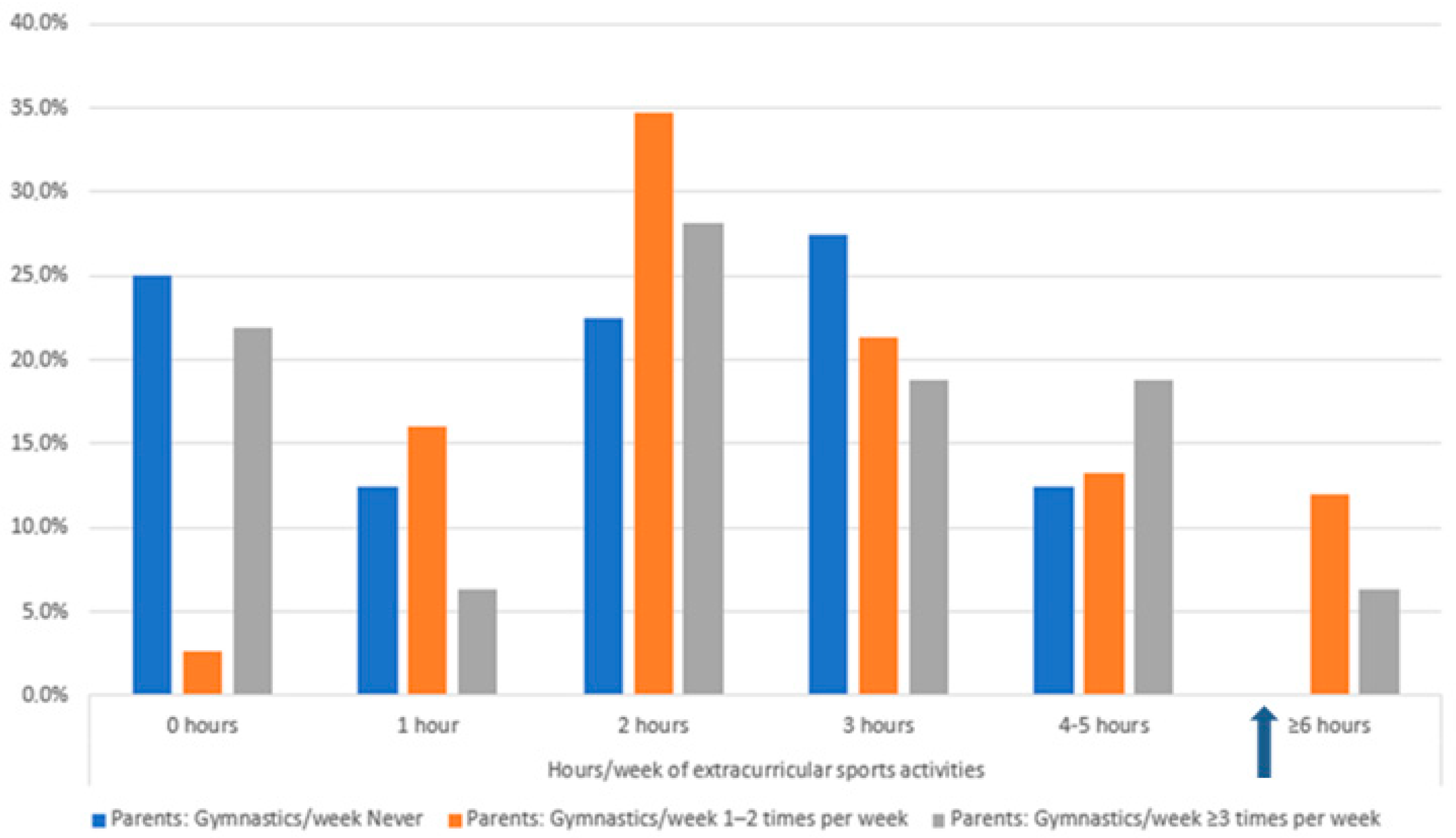
A statistically significant association was found between children’s participation in extracurricular physical activities and parents’ frequency of physical exercise (p = 0.015). Higher levels of parental physical activity were associated with increased engagement of children in extracurricular sports and physical activities (Figure 2). Specifically, children who did not participate in any extracurricular physical activities were more likely to have parents who also reported no engagement in physical exercise. In contrast, among children who participated in extracurricular activities for six or more hours per week, no parents reported complete physical inactivity, indicating the absence of sedentary parental behavior in this subgroup (the arrow in the graph illustrates the absence of the blue column). Furthermore, children with higher weekly involvement in organized physical activities were more frequently associated with parents exercising either 1–2 times per week or more than three times per week, suggesting a positive behavioral alignment between parental and child physical activity patterns. These findings emphasize the potential role of parental physical activity as a behavioral model influencing children’s engagement in organized sports.
Most parents (96,9%) showed moderate adherence to the MD. The mean MedDiet score was 34 for mothers and 33 for fathers, indicating minimal differences between sexes. No statistically significant differences in MD adherence were observed according to gender (p = 0.360), area of residence (p = 0.983), or parental occupation (p = 0.392). These findings suggest that adherence to the MD was relatively homogeneous across demographic subgroups in the present sample.
No statistically significant associations were observed between parental educational level or household income and children’s KIDMED score (p = 0.113), children’s BMI (p = 0.279) or children’s consumption of natural FFs (p = 0.214). The absence of significant associations between household income and children’s BMI, consumption of natural FFs and adherence to the MD may be attributed, at least in part, to the limited variability in income within the sample. Specifically, most participating parents (88 of 159) reported a middle-income level (€ 15.000–30.000 annually), which may have reduced the ability to detect income-related differences.
Parental occupational status was found to be significantly associated with children’s adherence to the MD, as reflected by KIDMED scores (p = 0.023). Specifically, children of public sector employees and parents classified as unemployed, homemakers or ‘other’ exhibit higher adherence to the MD, with mean KIDMED scores of approximately 7.2. In contrast, lower KIDMED scores were observed among children of private sector employees (mean ~6) and self-employed parents (mean ~5.8). These differences may be partially explained by variations in working hours, job stability, and daily schedules across occupational groups.

3.1. Knowledge, Perceptions of Parents About Functional Foods

Analyses regarding knowledge, perceptions and consumption of FFs were performed among a subgroup of parents who reported familiarity with FFs (n = 88, 55.3% of the total sample). This approach was considered appropriate, as meaningful responses to questions related to FFs presuppose a basic level of awareness of the concept.
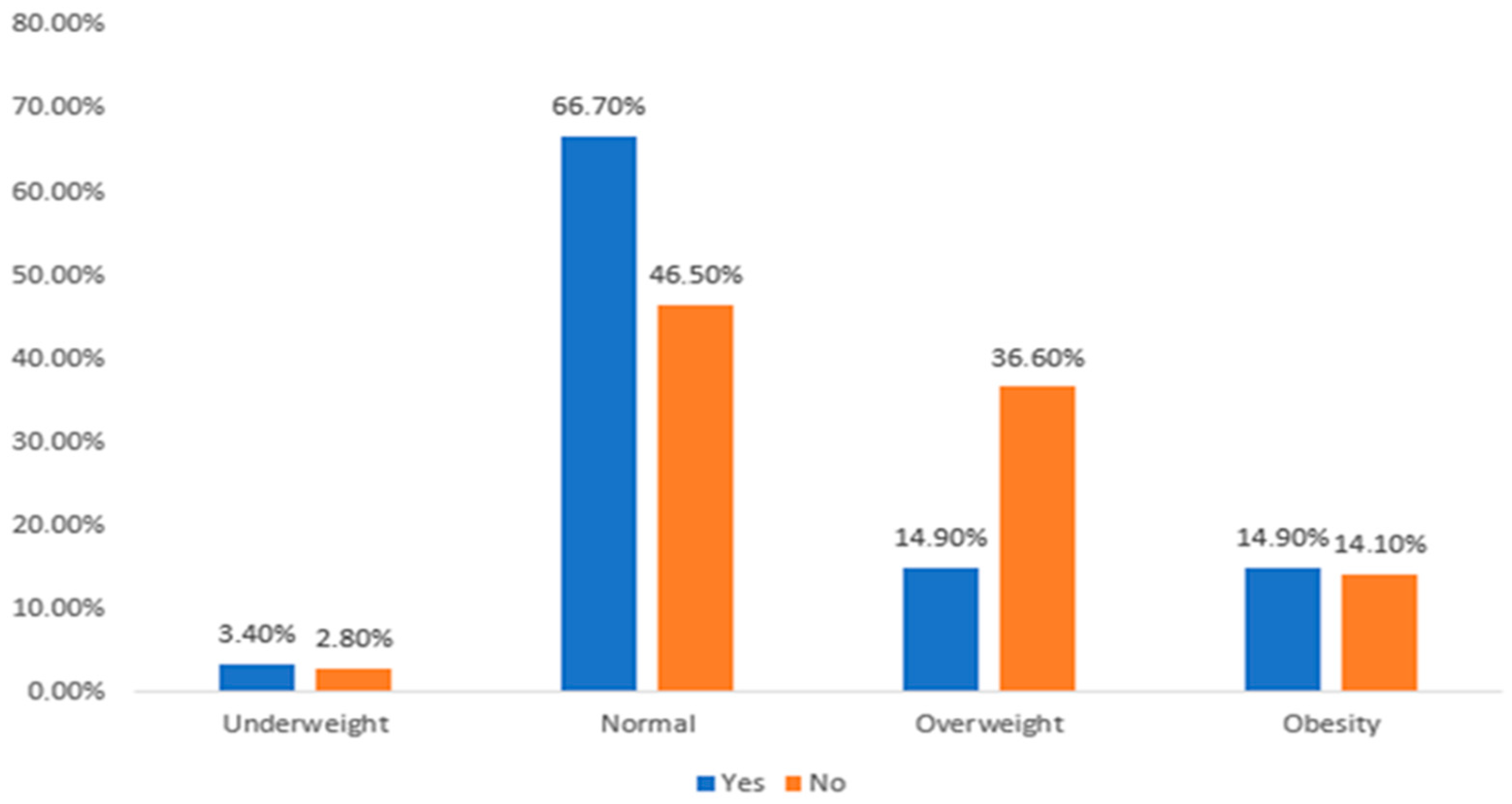
No statistically significant differences were observed regarding parents’ knowledge of FFs across sociodemographic characteristics. Specifically, knowledge about FFs was not associated with parental occupation (p = 0.066), educational level (p = 0.720), income level (p = 0.105), gender (p = 0.140), physical activity (p = 0.935), or area of residence (p = 0.477). Normal-weight participants demonstrated greater knowledge of FFs compared to overweight participants. Particularly, 66.7% of normal- weight individuals reported knowing what FFs are, whereas only 14.9% of overweight individuals were aware. This difference was statistically significant (p = 0.013) (Figure 3).
No statistically significant associations were observed between parents’ perceptions of FFs and sociodemographic variables, including gender, educational level, income, area of residence (urban vs. rural) or profession (p > 0.05 for all comparisons). The absence of statistically significant differences by gender should be interpreted with caution, as only eight fathers reported familiarity with FFs, resulting in a highly unbalanced gender distribution within this subgroup. Furthermore, perceptions toward FFs were not associated with parents’ adherence to the MD, indicating that higher adherence to the MD dietary pattern does not necessarily correspond to more favorable perceptions of FFs. Also, no significant association was found between parents’ perceptions toward FFs and parental BMI.
Correlation analyses among perceptions, consumption of FFs, Mediterranean Diet (MD) adherence and BMI are presented in Table 8. Perceptions of healthy eating were positively associated with the consumption of both fortified FFs and natural FFs (p < 0.01), indicating that participants who perceive themselves as eating healthily tend to consume FFs. Perceptions of FFs were strongly associated with the consumption of fortified FFs (p < 0.01) but showed no significant correlation with natural FF, suggesting that participants’ knowledge of FFs is primarily limited to fortified products. Adherence to the MD was positively associated with the consumption of natural FF (p < 0.01) and negatively associated with the consumption of fortified FF (p < 0.05). Perceptions of healthy eating showed a very weak, non-significant correlation with MD adherence, and BMI score did not correlate with any of the variables measured, likely due to the predominance of normal-weight participants in the sample. These findings indicate that participants’ self-perceived healthy eating aligns with greater consumption of FFs in general. Correlation analyses indicated that higher MedDiet adherence was associated with lower consumption of fortified FF and higher consumption of natural FFs, suggesting that parents following healthier dietary patterns tended to prefer natural over fortified FFs.

3.2. Implementation and Evaluation of a Pilot Asynchronous Nutrition Education Intervention

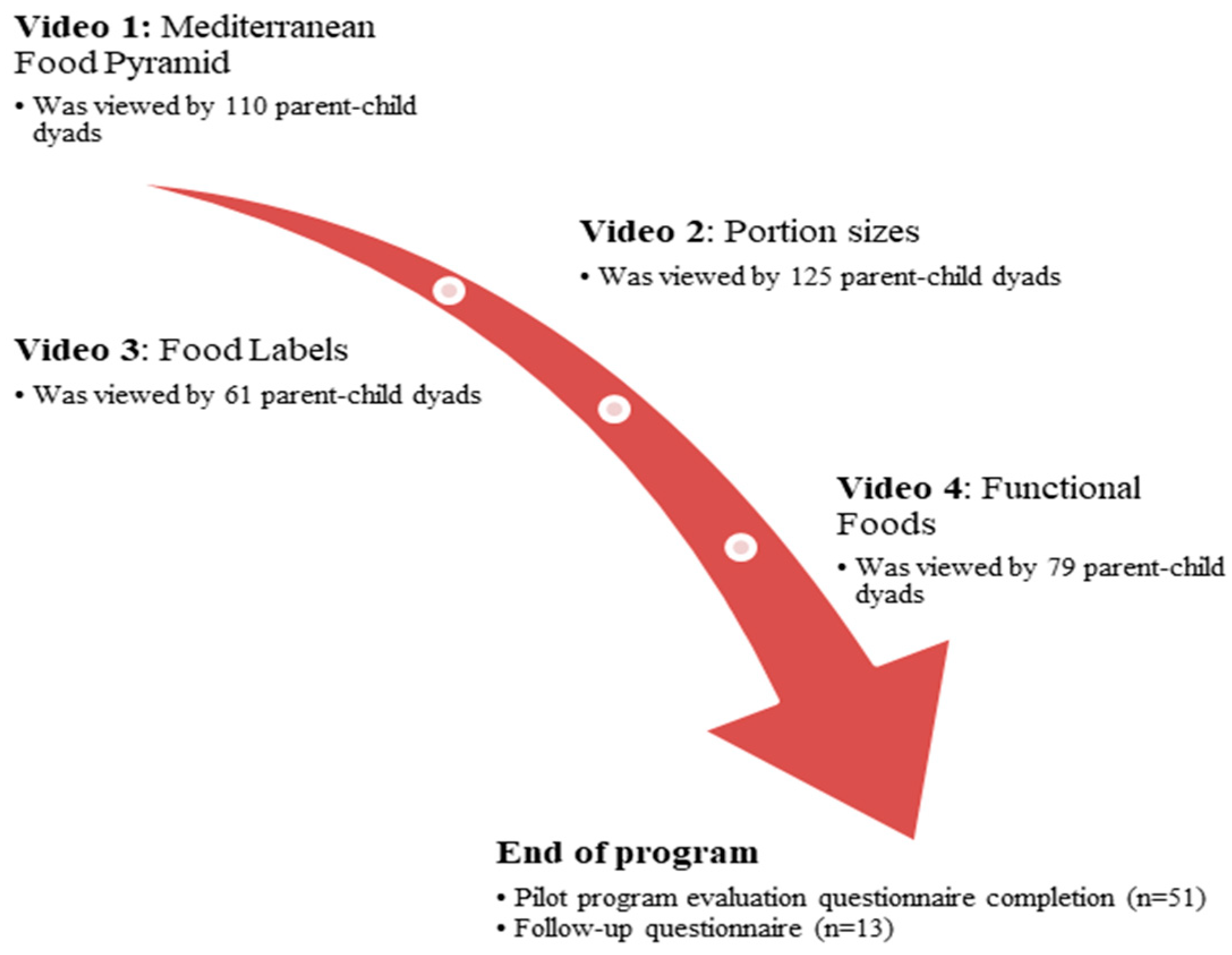
Phase II of the study involved the implementation of a pilot asynchronous remote nutrition education program. Educational videos were uploaded on a regular basis to the project’s YouTube channel and to a purpose-built research website. Parents were encouraged to watch the videos together with their children and were given the opportunity to contact the researcher to ask questions and receive clarifications related to the educational content (Figure 4).
Participation in the educational intervention varied across the four video sessions. Of the 159 parents who initially expressed willingness to participate in the second phase of the study, 110 families (parents and children) viewed the first video about the Mediterranean Food Pyramid. The second educational video focusing on portion sizes recorded the highest level of engagement, with 125 families accessing the content. Engagement declined in the subsequent sessions, with the third video on food label reading viewed by 61 families, while the fourth video, focusing on Functional Foods, was accessed by 79 families.
Six months after the completion of the nutrition education intervention program, parents were invited to complete evaluation questionnaires assessing the educational material and self-reported changes in dietary habits following the intervention. Of the 159 parents who participated in the study (Phase I), 13 parents completed the follow-up questionnaire (Phase 3). Due to the extremely low response rate at the follow-up (n = 13), no conclusions regarding the effectiveness of the intervention can be drawn; only process evaluation data are reported. A total of 51 parents completed the pilot program evaluation questionnaire. Participants rated the program positively across all evaluation items. The relevance of selected thematic modules to family needs received a mean score (8.38 out of 10), indicating that the content was perceived as well aligned with participants’ expectations. The perceived effectiveness of the duration of nutrition education in facilitating changes in dietary habits was also rated favorably (mean score: 7.94). Satisfaction with the distance-based nutrition education format was high, with a mean score of 7.98, suggesting good acceptance of the online delivery method. Finally, participants rated the overall benefit of nutritional education on their family’s dietary habits with a mean score of 8.22, reflecting a positive perceived impact of the intervention.
Overall, a progressive reduction in participation was observed across the educational sessions and at follow-up, indicating a notable attrition rate over the course of the intervention and the post-intervention evaluation phase.

4. Discussion

Given the limited number of family-based studies on Functional Foods education, our findings provide novel insights by demonstrating the feasibility of delivering an asynchronous remote intervention targeting both parents and children.
The present study provides valuable insights into dietary habits, Functional Food knowledge and lifestyle behaviors among primary school children and their parents in urban and rural Greek settings. Overall dietary patterns observed in the sample, including moderate adherence to the Mediterranean Diet [32,33] and frequent consumption of fast food [34,35,36] and soft drinks [37,38], are consistent with previous studies conducted among Mediterranean pediatric populations. Most children in our sample consumed breakfast daily (71.1%), which is comparable to high breakfast consumption reported in the European pediatric population [39] and in contrast with students from the National Action for Children’s Health program, who reported lower breakfast frequency [40]. A key finding of this study is the markedly low level of knowledge regarding FFs among children. Most participants reported awareness of FFs, while most of those claiming knowledge were unable to correctly identify FFs, revealing a substantial discrepancy between perceived and actual knowledge. Similar gaps have been documented in recent European studies, suggesting that FFs are often misunderstood and frequently equated with fortified or processed products rather than naturally occurring FFs [41,42,43]. This misconception highlights limited nutrition literacy and supports the need for clearer educational strategies targeting both children and parents.
The positive association between children’s KIDMED scores and lower BMI corresponds with extensive evidence supporting the protective role of MD adherence against childhood overweight and obesity. Similar effects have been reported in recent studies of Pavlidou et al. (2023) [33], Larruy-García et al. (2024) [44], Jacovides et al. (2024), [32] Bozkurt et al. (2024) [45] and Kosti et al. (2020) [46]. Additionally, the positive correlation between parental and child BMI reinforces the well-established influence of familial and shared lifestyle environments on child weight status, as confirmed by recent studies [47,48,49,50]. However, the absence of a significant association between parental MD adherence and children’s KIDMED scores suggests that parental dietary quality alone may be insufficient to shape children’s eating behaviors, possibly due to competing influences such as school food environments [51], peer norms [51,52] and media exposure [53].
Importantly, both children’s and parents’ adherence to the MD was positively associated with the consumption of natural FFs and negatively associated with the intake of fortified FFs. This pattern suggests a preference for minimally processed foods among individuals with higher MD adherence, a finding consistent with other literature emphasizing the alignment between MD principles and natural FFs consumption [54,55]. The strong association between perceptions of healthy eating and fortified FF consumption further supports the notion that fortified foods are commonly perceived as the primary forms of FFs. Finally, the observed association between parental and child physical activity levels corroborates evidence that parents act as behavioral role models influencing children’s engagement in organized physical activity, consistent with results from recent studies [56,57,58,59,60].
Although more than half of the parent sample reported familiarity with FFs, the results suggest that this knowledge is uneven and frequently superficial. This discrepancy may reflect the well-documented gap between perceived and objective nutrition knowledge, where individuals can overestimate their understanding of nutrition-related concepts [61,62]. These findings indicate the need for clear and targeted nutrition education strategies for both children and parents. The absence of statistically significant differences in FFs knowledge across most sociodemographic characteristics echoes the findings of Sulaiman et al. (2025) [43] and Çelik et al. (2021) [63]. Awareness of FFs may not be systematically driven by education, income or occupational status, but rather by individual health orientation, perceived health benefits and exposure to nutrition-related information [42,64,65,66].
Notably, normal-weight parents demonstrated significantly greater knowledge of FFs compared to overweight participants. This finding is in line with previous research showing that higher levels of nutrition knowledge and nutrition literacy are associated with healthier dietary behaviors and more favorable weight status in adults [67,68]. Recent studies suggest that individuals with greater nutrition-related awareness are more likely to engage in proactive health behaviors, including informed food choices, which may contribute to healthier body weight profiles [69,70,71]. Nevertheless, due to the cross-sectional design of the present study, causality cannot be inferred.
The lack of association between parents’ perceptions of FFs and adherence to the MD is a noteworthy finding. In contrast to our results, Oliveira et al. 2025 [25] and Ozen et al. (2015) [55] reported high MD scores and high awareness of FFs. The strong positive association between perceptions of FFs and consumption of fortified FFs, coupled with the absence of significant correlation with natural FFs, further supports the existence of this misconception. Parents appear to misunderstand the nature of FFs, associating them primarily with fortified products rather than natural foods. Conversely, higher adherence to the MD was associated with increased consumption of natural FFs and reduced intake of fortified FFs. These findings are in line with our results, as Ponte et al. (2025) [41] also reported that consumers, despite claiming familiarity with FFs, frequently misunderstand them. The positive association between perceptions of healthy eating and the consumption of both fortified and natural FFs suggests that self-perceived healthy eaters are more engaged in health-oriented food choices, although their understanding of FFs may remain incomplete or influenced by marketing narratives. Finally, the absence of associations between BMI and perceptions or consumption of FFs or consumption may be attributed to the predominance of normal-weight participants in the sample, which likely limited variability in BMI outcomes. Also, parental occupational status was found to be significantly associated with children’s adherence to MD, as reflected by KIDMED scores (p = 0.023). This finding is consistent with evidence from a recent systematic review examining correlates of MD adherence among schoolchildren in Mediterranean countries, which identified parental socioeconomic characteristics, including occupational status, as important determinants of children’s diet quality [72]. Overall, these findings highlight a critical gap between perceived and actual knowledge of FFs among parents and underscore the need for targeted nutrition education programs that clearly distinguish between natural and fortified FFs within the broader framework of the MD and nutrition literacy promotion within the family context.
The pilot asynchronous nutrition education intervention demonstrated good initial reach and overall acceptability among participating families. Preliminary observations suggest potential positive effects on participants’ engagement and perceptions, although these results should be interpreted cautiously due to high attrition and the absence of a control group. Similar engagement patterns have been documented in digital and remote nutrition education interventions, where interest tends to diminish over time, particularly in asynchronous formats lacking real-time interaction [73,74,75,76,77]. In contrast, in the web-based study by Gençer Bingöl et al. (2025) [78], a small dropout rate of approximately 10% was observed, compared with the substantially higher attrition recorded in our study. Despite the high attrition rate, parents who completed the evaluation questionnaire rated the intervention positively across all dimensions, suggesting that the educational content was perceived as relevant and potentially beneficial for family dietary habits. Satisfaction with the distance-based delivery format is consistent with recent evidence supporting the feasibility and accessibility of online nutrition education for families, especially when flexibility and accessibility are prioritized [77,78,79,80]. Nevertheless, the limited follow-up participation restricts conclusions regarding sustained behavioral change. Attrition remains a common challenge in digitally delivered health interventions and emphasizes the need for future programs to incorporate engagement-enhancing strategies, such as interactive components, reminders or hybrid delivery models.
Building on the concept of nudging, which emphasizes subtle changes in the choice architecture to steer individuals toward healthier decisions without restricting freedom of choice [81], future asynchronous, remote family-centered interventions on FFs could integrate digital nudges to enhance engagement and promote healthier behaviors. The following ideas are inspired by previous research on nudging and children’s dietary behaviors [16,82,83]. Examples include appealing visual representations of natural FFs, gamification elements such as points or badges for completing educational videos, push notifications or email reminders to encourage participation and structured digital choice architecture to emphasize healthier options, e.g., preselected or visually highlighted natural FFs in menus, appealing icons or images for healthier options and clear categorization of natural vs. fortified FFs to guide choices. These strategies may help reduce attrition, increase program completion and improve the translation of knowledge about FFs into actual consumption among both children and parents. In summary, while participants expressed positive attitudes towards healthy eating, their actual knowledge of FFs is incomplete and biased toward fortified FFs. Enhancing education on natural and fortified FFs and the Mediterranean Diet could bridge this knowledge gap and encourage more accurate and health-promoting dietary choices.
Several limitations should be acknowledged. The cross-sectional design of Phase I limits causal interpretation of the observed associations. Data were based on self-reported questionnaires in parents, which may be affected by recall and social desirability bias. Children’s BMI was based on parental self-report, which may have introduced reporting bias and could affect the accuracy of the findings. In Phase II, substantial attrition and the very low response rate to the follow-up dietary behavior questionnaire limited the evaluation of long-term intervention effects. Moreover, the asynchronous nature of the intervention did not allow direct assessment of participant engagement or comprehension. Additionally, the absence of a control group limits the ability to draw causal inferences regarding the effects of the intervention. Also, the analysis of parent–child concordance in knowledge and FFs consumption patterns was not performed, which represents a limitation of the study and should be explored in future research. Finally, the study was conducted in only two regions of Greece (Thessaloniki and Lemnos), which limits the generalizability of the findings to other geographic areas and populations.

5. Conclusions

Conclusively, this study underscores important gaps between perceived and actual knowledge of functional foods among parents, particularly regarding the distinction between natural and fortified FFs, while a large proportion of children reported that they did not know what FFs are. These findings support the need for targeted nutrition education initiatives that clarify FF concepts and enhance parental engagement in order to promote healthier family dietary behaviors and practices. Future research should expand to include a more diverse and larger population across multiple geographic regions, integrate control groups and assess parent–child concordance in knowledge and consumption of FFs. Long-term evaluation of nutrition education interventions, as well as interactive and school-based programs combined with parent workshops, would provide deeper insight into effective strategies for improving dietary behaviors.
Regarding the intervention component, the pilot asynchronous nutrition education program demonstrated the feasibility of a flexible online approach engaging both children and parents. Although the intervention was positively evaluated by participating families, the high attrition rate illustrates the challenges of sustaining engagement in remote programs. Future programs could explore the integration of interactive elements, school collaboration and parent workshops to optimize participation, enhance knowledge retention and better support the practical implementation of healthy dietary choices at home.

Author Contributions

Conceptualization, A.Ε.K. and I.C.V.; methodology, I.C.V.; software, EV.; validation, A.Ε.K.; formal analysis, I.C.V.; investigation, I.C.V.; resources, I.C.V.; data curation, A.Ε.K.; writing—original draft preparation, I.C.V.; writing—review and editing, A.Ε.K.; visualization, I.C.V.; supervision, A.Ε.K.; project administration, A.Ε.K. All authors have read and agreed to the published version of the manuscript.

Funding

This research received no external funding.

Institutional Review Board Statement

This study adhered to the principles outlined in the Declaration of Helsinki and received approval from the University of the Aegean’s ethics and deontology committee (approval No. 22/13 February 2022).

Informed Consent Statement

Informed consent was obtained from all subjects involved in the study.

Data Availability Statement

The data presented in this study are available on request from the corresponding author due to privacy.

Acknowledgments

We would like to thank all students and parents who participated in the study.

Conflicts of Interest

The authors declare no conflicts of interest.

References

  1. Guy, L.E. Parental Attitudes, Concerns, Health and Knowledge of Nutrition and Their Relationship to Usage of Functional Foods in Parental Feeding. Master Thesis, University of Mississippi, Oxford, MS, USA, 2015. [Google Scholar]
  2. Oliveira, L.; Poínhos, R.; Sousa, F. Attitudes towards functional foods scale: Psychometric proprieties and adaptation for use among adolescents. Acta Médica Port. 2019, 32, 266–271. [Google Scholar] [CrossRef]
  3. Rollins, M.; Chwialkowska, A.; Shen, T. Chinese parents’ attitudes and purchase intentions of children’s functional foods. Int. J. Export Mark. 2023, 6, 75–97. [Google Scholar] [CrossRef]
  4. Schnettler, B.; Miranda, H.; Lobos, G.; Sepúlveda, J.; Orellana, L.; Mora, M.; Grunert, K.G. Willingness to purchase functional foods according to their benefits. Br. Food J. 2015, 117, 1453–1473. [Google Scholar] [CrossRef]
  5. Đanić, M.; Pavlović, N.; Ostojić, T.; Marković, N.; Stanimirov, B.; Lazarević, S.; Mikov, M. Parental knowledge, attitudes, and practices on probiotic use in preschool children in Serbia: A cross-sectional study. Front. Immunol. 2025, 16, 1601876. [Google Scholar] [CrossRef]
  6. Andersen, S.S.; Michaelsen, K.F.; Laursen, R.P.; Holm, L. Why parents are skeptical about using probiotics preventively for small children: A Danish qualitative study. BMC Complement. Altern. Med. 2018, 18, 336. [Google Scholar] [CrossRef] [PubMed]
  7. Contor, L. Functional Food Science in Europe. Nutr. Metab. Cardiovasc. Dis. 2001, 11, 20–23. [Google Scholar] [PubMed]
  8. Granato, D.; Barba, F.J.; Kovačević, D.B.; Lorenzo, J.M.; Cruz, A.G.; Putnik, P. Functional foods: Product development, echnological trends, efficacy testing, and safety. Annu. Rev. Food Sci. Technol. 2020, 11, 93–118. [Google Scholar] [CrossRef]
  9. Soumya, N.P.P.; Mini, S.; Sivan, S.K.; Mondal, S. Bioactive compounds in functional food and their role as therapeutics. Bioact. Compd. Health Dis. 2021, 4, 24–39. [Google Scholar]
  10. Essa, M.M.; Bishir, M.; Bhat, A.; Chidambaram, S.B.; Al-Balushi, B.; Hamdan, H.; Govindarajan, N.; Freidland, R.P.; Qoronfleh, M.W. Functional foods and their impact on health. J. Food Sci. Technol. 2021, 60, 820–834. [Google Scholar] [CrossRef]
  11. Fekete, M.; Lehoczki, A.; Kryczyk-Poprawa, A.; Zábó, V.; Varga, J.T.; Bálint, M.; Fazekas-Pongor, V.; Csípő, T.; Rząsa-Duran, E.; Varga, P. Functional foods in modern nutrition science: Mechanisms, evidence, and public health implications. Nutrients 2025, 17, 2153. [Google Scholar] [CrossRef]
  12. Hakim, A.B.N.; Xuan, N.J.; Oslan, S.N.H. A comprehensive review of bioactive compounds from lactic acid bacteria: Potential functions as functional food in dietetics and the food industry. Foods 2023, 12, 2850. [Google Scholar] [CrossRef]
  13. Karelakis, C.; Zevgitis, P.; Galanopoulos, K.; Mattas, K. Consumer trends and attitudes to functional foods. J. Int. Food Agribus. Mark. 2019, 32, 266–294. [Google Scholar] [CrossRef]
  14. Topolska, K.; Florkiewicz, A.; Filipiak-Florkiewicz, A. Functional food—Consumer motivations and expectations. Int. J. Environ. Res. Public Health 2021, 18, 5327. [Google Scholar] [CrossRef]
  15. Benito-Ostolaza, J.M.; Echavarri, R.; Garcia-Prado, A.; Oses-Eraso, N. Using visual stimuli to promote healthy snack choices among children. Soc. Sci. Med. 2021, 270, 113587. [Google Scholar] [CrossRef]
  16. Lycett, K.; Miller, A.; Knox, A.; Dunn, S. ‘Nudge’ interventions for improving children’s dietary behaviors in the home: A systematic review. Obes. Med. 2017, 7, 21–33. [Google Scholar] [CrossRef]
  17. Weiss, P.J. Parental Awareness, Consumption and Feeding Practices of Functional Foods. Master’s Thesis, University of Mississippi, Oxford, MS, USA, 2016. [Google Scholar]
  18. Wang, E.S.-T.; Chu, Y.-H. How social norms affect consumer intention to purchase certified functional foods: The mediating role of perceived effectiveness and attitude. Foods 2021, 10, 1151. [Google Scholar] [CrossRef] [PubMed]
  19. Parry, G.; Tuthill, D. Probiotics: Popping the prevalence and parental perspective. Am. J. Pediatr. 2021, 7, 28–33. [Google Scholar] [CrossRef]
  20. Annunziata, A.; Vecchio, R.; Kraus, A. Factors affecting parents’ choices of functional foods targeted for children. Int. J. Consum. Stud. 2016, 40, 527–535. [Google Scholar] [CrossRef]
  21. Thornton, J.M. The Relationship of Parental Barriers to Parents Feeding Their Children Health-Promoting, Functional Foods. Master’s Thesis, University of Mississippi, Oxford, MS, USA, 2016. [Google Scholar]
  22. Serra-Majem, L.; Ribas, L.; Ngo, J.; Ortega, R.M.; García, A.; Pérez-Rodrigo, C.; Aranceta, J. Food, youth and the Mediterranean diet in Spain: Development of KIDMED, Mediterranean Diet Quality Index in children and adolescents. Public Health Nutr. 2004, 7, 931–935. [Google Scholar] [CrossRef]
  23. Panagiotakos, D.B.; Milias, G.A.; Pitsavos, C.; Stefanadis, C. MedDietScore: A computer program that evaluates the adherence to the Mediterranean dietary pattern and its relation to cardiovascular disease risk. Comput. Methods Programs Biomed. 2006, 83, 73–77. [Google Scholar] [CrossRef]
  24. Papagianni, O.; Staramou, A.; Rigopoulos, N.; Dimou, C.; Koutelidakis, A.E. Development and validation of a Functional Foods Frequency Questionnaire for Greek adults. Curr. Top. Nutraceutical Res. 2021, 19, 373–381. [Google Scholar]
  25. Oliveira, L.; Ferreira, J.; Esgalhado, M. Exploring the relationship between functional food perceptions and Mediterranean diet adherence in a Portuguese adult sample. Discov. Food 2025, 5, 385. [Google Scholar] [CrossRef]
  26. Salmani, F.; Norozi, E.; Moodi, M.; Zeinali, T. Assessment of attitudes toward functional foods based on theory of planned behavior: Validation of a questionnaire. Nutr. J. 2020, 19, 56. [Google Scholar] [CrossRef] [PubMed]
  27. Landström, E.; Koivisto Hursti, U.-K.; Becker, W.; Magnusson, M. Use of functional foods among Swedish consumers is related to health-consciousness and perceived effect. Br. J. Nutr. 2007, 98, 1058–1069. [Google Scholar] [CrossRef]
  28. Flegal, K.M.; Kit, B.K.; Graubard, B.I. Body mass index categories in observational studies of weight and risk of death: Meta-analysis. Am. J. Epidemiol. 2014, 180, 288–296. [Google Scholar] [CrossRef]
  29. De Onis, M.; Onyango, A.W.; Borghi, E.; Siyam, A.; Nishida, C.; Siekmann, J. Development of a WHO growth reference for school-aged children and adolescents. Bull. World Health Organ. 2007, 85, 660–667. [Google Scholar] [CrossRef] [PubMed]
  30. Galobardes, B.; Shaw, M.; Lawlor, D.A.; Lynch, J.W.; Davey Smith, G. Indicators of socioeconomic position (part 1). J. Epidemiol. Community Health 2006, 60, 7–12. [Google Scholar] [CrossRef]
  31. Braveman, P.A.; Cubbin, C.; Egerter, S.; Chideya, S.; Marchi, K.S.; Metzler, M.; Posner, S. Socioeconomic status in health research: One size does not fit all. JAMA 2005, 294, 2879–2888. [Google Scholar] [CrossRef]
  32. Jacovides, C.; Pritsa, A.; Chrysafi, M.; Papadopoulou, S.K.; Kapetanou, M.G.; Lechouritis, E.; Mato, M.; Papadopoulou, V.G.; Tsourouflis, G.; Migdanis, A.; et al. Childhood Mediterranean diet compliance is associated with lower incidence of childhood obesity, specific sociodemographic, and lifestyle factors: A cross-sectional study in children aged 6–9 years. Pediatr. Rep. 2024, 16, 1207–1222. [Google Scholar] [CrossRef]
  33. Pavlidou, E.; Papadopoulou, S.K.; Alexatou, O.; Voulgaridou, G.; Mentzelou, M.; Biskanaki, F.; Psara, E.; Tsourouflis, G.; Lefantzis, N.; Dimoliani, S.; et al. Childhood Mediterranean diet adherence is associated with lower prevalence of childhood obesity, specific sociodemographic, and lifestyle factors: A cross-sectional study in pre-school children. Epidemiologia 2023, 5, 11–28. [Google Scholar] [CrossRef]
  34. Tambalis, K.D.; Panagiotakos, D.B.; Sidossis, L.S. Dietary habits among 177,091 Greek schoolchildren by age, sex, weight status, region, and living area: A cross-sectional study. Hell. J. Cardiol. 2025, 85, 3–11. [Google Scholar] [CrossRef]
  35. Shah, N.N.; Fryar, C.D.; Ahluwalia, N.; Akinbami, L.J. Health E-Stat 106: Fast-Food Intake Among Children and Adolescents in the United States, August 2021–August 2023. National Center for Health Statistics. 2024. Available online: https://www.cdc.gov/nchs/data/hestat/hestat106.pdf (accessed on 16 March 2026).
  36. Ibrahim, A.M.; Hussein, N.A.; Ahmed, M.A.; Wadajo, G.T.; Osman, M.O.; Yusuf, R.B.; Muse, A.I.; Abdilaahi, S.M.; Place, R.; Zinsstag, J. Prevalence of fast food consumption and associated factors among secondary school adolescents in Jigjiga Town, Somali Region, Eastern Ethiopia. PLoS ONE 2025, 20, e0327787. [Google Scholar] [CrossRef]
  37. Lara-Castor, L.; Micha, R.; Cudhea, F.; Miller, V.; Shi, P.; Zhang, J.; Sharib, J.R.; Erndt-Marino, J.; Cash, S.B.; Barquera, S.; et al. Intake of sugar sweetened beverages among children and adolescents in 185 countries between 1990 and 2018: Population based study. BMJ 2024, 386, e079234. [Google Scholar] [CrossRef]
  38. Reppas, K.; Papamichael, M.M.; Usheva, N.; Iotova, V.; Chakarova, N.; Cardon, G.; Rurik, I.; Antal, E.; Valve, P.; Liatis, S.; et al. Associations between household food environment and daily intake of regular and diet soft drinks per BMI status of European children: Feel4Diabetes Study. Nutr. Bull. 2024, 49, 82–95. [Google Scholar] [CrossRef] [PubMed]
  39. Mahmood, L.; Moreno, L.A.; Schwarz, P.; Willems, R.; Cardon, G.; Hilal, S.; Rurik, I.; Iotova, V.; Bazdarska, Y.; Dimova, R.; et al. A snapshot of country-specific dietary habits and obesity in European children: The Feel4Diabetes study. Eur. J. Pediatr. 2025, 184, 214. [Google Scholar] [CrossRef] [PubMed]
  40. Tambalis, K.D.; Panagiotakos, D.B.; Psarra, G.; Sidossis, L.S. Breakfast skipping in Greek schoolchildren connected to an unhealthy lifestyle profile: Results from the National Action for Children’s Health program. Nutr. Diet. 2019, 76, 328–335. [Google Scholar] [CrossRef]
  41. Ponte, L.G.S.; Ribeiro, S.F.; Pereira, J.C.V.; Antunes, A.E.C.; Bezerra, R.M.N.; da Cunha, D.T. Consumer perceptions of functional foods: A scoping review focusing on non-processed foods. Food Rev. Int. 2025, 41, 1738–1756. [Google Scholar] [CrossRef]
  42. Baker, M.T.; Lu, P.; Parrella, J.A.; Leggette, H.R. Investigating the effect of consumers’ knowledge on their acceptance of functional foods: A systematic review and meta-analysis. Foods 2022, 11, 1135. [Google Scholar] [CrossRef]
  43. Sulaiman, R.A.; Phuah, E.-T.; Basri, A.M. Assessing consumer awareness and perceptions of functional foods: A survey study in Brunei Darussalam. Food Humanit. 2025, 5, 100823. [Google Scholar] [CrossRef]
  44. Larruy-García, A.; Mahmood, L.; Miguel-Berges, M.L.; Masip, G.; Seral-Cortés, M.; De Miguel-Etayo, P.; Moreno, L.A. Diet quality scores, obesity and metabolic syndrome in children and adolescents: A systematic review and meta-analysis. Curr. Obes. Rep. 2024, 13, 755–788. [Google Scholar] [CrossRef]
  45. Bozkurt, O.; Kocaadam Bozkurt, B.; Koçyiğit, E. Evaluation of the relationships among mindful eating, environmental beliefs, adherence to the Mediterranean diet, and obesity in children. Turk. Arch. Pediatr. 2024, 59, 98–105. [Google Scholar] [CrossRef] [PubMed]
  46. Kosti, R.I.; Kanellopoulou, A.; Fragkedaki, E.; Notara, V.; Giannakopoulou, S.-P.; Antonogeorgos, G.; Rojas-Gil, A.P.; Kornilaki, E.N.; Lagiou, A.; Panagiotakos, D.B. The influence of adherence to the Mediterranean diet among children and their parents in relation to childhood overweight/obesity: A cross-sectional study in Greece. Child. Obes. 2020, 16, 571–578. [Google Scholar] [CrossRef] [PubMed]
  47. Kocaadam-Bozkurt, B.; Sözlü, S.; Macit-Çelebi, M.S. Exploring the understanding of how parenting influences the children’s nutritional status, physical activity, and BMI. Front. Nutr. 2023, 9, 1096182. [Google Scholar] [CrossRef]
  48. Bushnik, T.; Garriguet, D.; Colley, R. Parent-child association in body weight status. Health Rep. 2017, 28, 12–19. [Google Scholar] [PubMed]
  49. Dereń, K.; Wyszyńska, J.; Nyankovskyy, S.; Nyankovska, O.; Łuszczki, E.; Sobolewski, M.; Mazur, A. Assessment of the impact of parental BMI on the incidence of overweight and obesity in children from Ukraine. J. Clin. Med. 2020, 9, 1060. [Google Scholar] [CrossRef]
  50. Maia, C.; Braz, D.; Fernandes, H.M.; Sarmento, H.; Machado-Rodrigues, A.M. The impact of parental behaviors on children’s lifestyle, dietary habits, screen time, sleep patterns, mental health, and BMI: A scoping review. Children 2025, 12, 203. [Google Scholar] [CrossRef] [PubMed]
  51. Scaglioni, S.; De Cosmi, V.; Ciappolino, V.; Parazzini, F.; Brambilla, P.; Agostoni, C. Factors influencing children’s eating behaviours. Nutrients 2018, 10, 706. [Google Scholar] [CrossRef]
  52. Street, S.; Simoncini, K.; Byrne, R. Peer influence on eating behaviour in early childhood: A scoping review. Appetite 2024, 203, 107708. [Google Scholar] [CrossRef]
  53. Prybutok, V.; Prybutok, G.; Yogarajah, J. Negative influence of social media on children’s diets: A systematic review. Encyclopedia 2024, 4, 1700–1710. [Google Scholar] [CrossRef]
  54. Christodoulou, E.; Deligiannidou, G.-E.; Kontogiorgis, C.; Giaginis, C.; Koutelidakis, A.E. Natural functional foods as a part of the Mediterranean lifestyle and their association with psychological resilience and other health-related parameters. Appl. Sci. 2023, 13, 4076. [Google Scholar] [CrossRef]
  55. Ozen, A.E.; Bibiloni Mdel, M.; Murcia, M.A.; Pons, A.; Tur, J.A. Adherence to the Mediterranean diet and consumption of functional foods among the Balearic Islands’ adolescent population. Public Health Nutr. 2015, 18, 659–668. [Google Scholar] [CrossRef]
  56. Xu, W.; Hu, C.; Zhang, E.; Xiang, C.; Yang, J. The effect of parental expectancy value beliefs on children’s physical activity: The chain mediating role of parental exercise commitment and children’s exercise self-efficacy. Front. Psychol. 2025, 16, 1599121. [Google Scholar] [CrossRef]
  57. Licata, F.; Di Gennaro, G.; Basile, E.; Angelillo, S.; Bianco, A. Is being a physically active parent related to having a physically active son/daughter? Eur. J. Public Health 2024, 34, ckae144.1777. [Google Scholar] [CrossRef]
  58. Sigmundová, D.; Voráčová, J.; Dygrýn, J.; Vorlíček, M.; Sigmund, E. Parent–child associations in accelerometer-measured physical activity and sedentary behaviour: The FAMIPASS study. Children 2024, 11, 710. [Google Scholar] [CrossRef] [PubMed]
  59. Saunders, R.P.; Dowda, M.; Dishman, R.K.; Pate, R.R. A longitudinal examination of direct and indirect influences of parental behaviors on child physical activity. J. Child Fam. Stud. 2024, 33, 2262–2270. [Google Scholar] [CrossRef]
  60. Rodríguez-Rodríguez, F.; Hernández-Jaña, S.; Castro-Piñero, J.; Brazo-Sayavera, J.; Carcamo-Oyarzun, J.; Rhodes, R.E. Active behaviour of parents is more associated with out-of-school physical activity in their children. BMC Pediatr. 2025, 25, 650. [Google Scholar] [CrossRef] [PubMed]
  61. Worsley, A. Nutrition knowledge and food consumption: Can nutrition knowledge change food behaviour? Asia Pac. J. Clin. Nutr. 2002, 11, S579–S585. [Google Scholar] [CrossRef]
  62. Grunert, K.G.; Fernández-Celemín, L.; Wills, J.M.; Storcksdieck Genannt Bonsmann, S.; Nureeva, L. Use and understanding of nutrition information on food labels in six European countries. Z. Gesundheitswissenschaften 2010, 18, 261–277. [Google Scholar] [CrossRef]
  63. Çelik, H.; Çelik, A.D.; Hayran, S.; Gül, A. Knowledge level and consumption tendency of university students about functional foods: A case study of Çukurova University. Turk. J. Agric.-Food Sci. Technol. 2021, 9, 1242–1249. [Google Scholar]
  64. Votsi, I.C.; Koutelidakis, A.E. Functional foods’ consumption in children and parents: A literature review. Appl. Sci. 2024, 14, 1492. [Google Scholar] [CrossRef]
  65. Jia, H.; Liu, S. Sociopsychological determinants of functional foods consumption in China: Based on the theory of the planned behavior expansion model. Front. Nutr. 2025, 12, 1624390. [Google Scholar] [CrossRef] [PubMed]
  66. Nazzaro, C.; Uliano, A.; Lerro, M.; Stanco, M. From claims to choices: How health information shapes consumer decisions in the functional food market. Foods 2025, 14, 699. [Google Scholar] [CrossRef] [PubMed]
  67. Cui, Y.; Qi, Q.; Sun, Y.; Liu, R.; Yin, W.; Liu, H. Nutrition literacy is associated with general obesity, abdominal obesity, and body fat percentage obesity. Front. Nutr. 2025, 12, 1555725. [Google Scholar] [CrossRef]
  68. Saintila, J.; Calizaya-Milla, Y.E.; Calizaya-Milla, S.E.; Elejabo-Pacheco, A.A.; Sandoval-Valentin, G.A.; Rodriguez-Panta, S.G. Association between nutritional knowledge, dietary regimen, and excess body weight in primary school teachers. J. Multidiscip. Healthc. 2022, 15, 2331–2339. [Google Scholar] [CrossRef] [PubMed]
  69. Kozan Çıkırıkçı, E.H.; Esin, M.N. Nutrition literacy of overweight/obese and non-overweight/obese Turkish women and affecting factors. Eur. J. Public Health 2022, 32, ckac131.317. [Google Scholar] [CrossRef]
  70. Taylor, M.K.; Sullivan, D.K.; Ellerbeck, E.F.; Gajewski, B.J.; Gibbs, H.D. Nutrition literacy predicts adherence to healthy/unhealthy diet patterns in adults with a nutrition-related chronic condition. Public Health Nutr. 2019, 22, 2157–2169. [Google Scholar] [CrossRef]
  71. Chrissini, M.K.; Panagiotakos, D.B. Health literacy as a determinant of childhood and adult obesity: A systematic review. Int. J. Adolesc. Med. Health 2021, 33, 9–39. [Google Scholar] [CrossRef]
  72. Trezia, N.; Obeid, C.; Abou Jaoude, M.; Gubbels, J.; Mazloum, C.; Aoun, A.; El Hayek Fares, J. Correlates of adherence to the Mediterranean diet among preschool-age and school-age children living in Mediterranean countries: A systematic review. Eur. J. Nutr. 2025, 64, 264. [Google Scholar] [CrossRef]
  73. Wang, J.; Mahe, J.; Huo, Y.; Huang, W.; Liu, X.; Zhao, Y.; Huang, J.; Shi, F.; Li, Z.; Jiang, D.; et al. Framework development for reducing attrition in digital dietary interventions: Systematic review and thematic synthesis. JMIR 2024, 26, 58735. [Google Scholar] [CrossRef]
  74. Murimi, M.; Nguyen, B.; Moyeda-Carabaza, A.F.; Lee, H.-J. Factors that contribute to effective online nutrition education interventions: A systematic review. Nutr. Rev. 2019, 77, 663–690. [Google Scholar] [CrossRef]
  75. Delaney, T.; Mclaughlin, M.; Hall, A.; Yoong, S.L.; Brown, A.; O’Brien, K.; Dray, J.; Barnes, C.; Hollis, J.; Wyse, R.; et al. Associations between digital health intervention engagement and dietary intake: A systematic review. Nutrients 2021, 13, 3281. [Google Scholar] [CrossRef]
  76. Grutzmacher, S.K.; Munger, A.L.; Speirs, K.E.; Vafai, Y.; Hilberg, E.; Braunscheidel Duru, E.; Worthington, L.; Lachenmayr, L. Predicting attrition in a text-based nutrition education program: Survival analysis of Text2BHealthy. JMIR Mhealth Uhealth 2019, 7, e9967. [Google Scholar] [CrossRef]
  77. Crespo-Bellido, M.; Fernandez Ong, J.; Yaroch, A.; Byker Shanks, C. E-health dietary interventions for participants of SNAP and WIC: A systematic review. Curr. Dev. Nutr. 2024, 8, 102099. [Google Scholar] [CrossRef]
  78. Gençer Bingöl, F.; Çakmak, Ö.N.; Bayrak, R.; Doğan, S. Digital interventions in nutrition education: A web-based model for promoting sustainable nutrition among young adults. BMC Public Health 2025, 25, 3946. [Google Scholar] [CrossRef] [PubMed]
  79. Tripicchio, G.L.; Anderson, J. Assessment of an online nutrition education program to improve mealtime practices among families receiving SNAP and WIC. Am. J. Health Promot. 2023, 37, 830–834. [Google Scholar] [CrossRef] [PubMed]
  80. Talens, C.; da Quinta, N.; Adebayo, F.A.; Erkkola, M.; Heikkilä, M.; Bargiel-Matusiewicz, K.; Ziółkowska, N.; Rioja, P.; Łyś, A.E.; Santa Cruz, E.; et al. Mobile- and web-based interventions for promoting healthy diets, preventing obesity, and improving health behaviors in children and adolescents: Systematic review of randomized controlled trials. JMIR 2025, 27, 60602. [Google Scholar]
  81. Thaler, R.H.; Sunstein, C.R. Nudge: Improving Decisions About Health, Wealth, and Happiness; Yale University Press: New Haven, CT, USA, 2008. [Google Scholar]
  82. Saracino, E.; Bianchin, G.; Zanelli, A.; Cavaliere, A.; Mattoni, S.; Dragoni, B.; Polo, E.; Torreggiani, A. Using nudging to incentivize vegetable and legume consumption in children diet: A case study to promote healthier eating habits. In New Perspectives in Science Education Conference; Pixel International Conferences; Filodiritto Editore: Bologna, Italy, 2025. [Google Scholar]
  83. Marcano-Olivier, M.I.; Horne, P.J.; Viktor, S.; Erjavec, M. Using nudges to promote healthy food choices in the school dining room: A systematic review of previous investigations. J. Sch. Health 2020, 90, 143–157. [Google Scholar] [CrossRef]
Figure 1. Study Flow Diagram showing Phases 0-III of the study.
Applsci 16 02983 g001
Figure 2. Relationship between parents’ physical activity frequency and children’s participation in extracurricular sports.
Applsci 16 02983 g002
Figure 3. Knowledge of Functional Foods by BMI category.
Applsci 16 02983 g003
Figure 4. Phases of the asynchronous remote nutrition education program.
Applsci 16 02983 g004
Table 1. Feasibility indicators (summary).
Indicatorn%Comments
Schools invited15100-
Schools participated8535 Thessaloniki, 3 Lemnos
Consent forms distributed534100All children in grades 4,5,6 of participating schools
Children participated (Phase I)37470Parental consent
Families participated in (Phase II)159100Agreed to watch educational videos
Follow-up questionnaires (Phase III)138Low response rate, data not analyzed
Table 2. Likert-type items assessing participants’ knowledge of Functional Foods.
1. I know what a functional food is.
2. I often purchase functional foods.
3. I am willing to pay more for functional foods.
4. I would buy more functional foods if they were cheaper.
5. My child’s diet includes at least one functional food daily.
6. I intend to offer my child a functional food.
Table 3. Likert-type items assessing participants’ perceptions of Functional Foods.
1. Functional foods are safer for health compared with other products.
2. Functional foods are healthier compared with other products.
3. Functional foods taste better than other products.
4. It is wise to buy functional foods.
5. Functional foods are of higher quality.
6. Functional foods are part of my lifestyle.
7. The taste of food is more important than how it is produced.
8. Functional foods are part of company marketing and do not reflect their actual nutritional value.
Table 4. Descriptive characteristics of children, total and by gender.
GenderChi-Square Test of Association
p-Value
TotalGirlBoy
N%N%N%
RegionCity (Thessaloniki)25367.6%11973.5%13463.2%0.036
Island (Lemnos)12132.4%4326.5%7836.8%
Breakfast consumption frequencyevery day20471.1%8273.2%12269.7%0.693
1–2 times/week3813.2%1513.4%2313.1%
3–5 times/week4515.7%1513.4%3017.1%
Beverage consumptionYES24265.8%11370.6%12962.0%
NO12634.2%4729.4%7938.0%
Fast food consumption/weeknone8723.5%3421.3%5325.2%0.437
every day215.7%116.9%104.8%
1–2 times/week23062.2%10465.0%12660.0%
3–4 times/week328.6%116.9%2110.0%
KIDMED score (0–12)poor score < 33312.4%1615.0%1710.7%0.307
medium score 4–713048.9%5551.4%7547.2%
high score > 810338.7%3633.6%6742.1%
Knowledge for FFsYES4411.8%2414.9%209.4%
NO32988.2%13785.1%19290.6%
Table 5. Descriptive characteristics of parents, total and by gender.
ParentsChi-Square Test of Association
p-Value
TotalMothersFathers
N%N%N%
RegionCity (Thessaloniki)10566.0%9266.2%1365.0%0.917
Island (Lemnos)5434.0%4733.8%735.0%
Occupation typeprivate employee5434.0%4935.3%525.0%0.679
public employee5232.7%4431.7%840.0%
freelancer/self-employed3119.5%2618.7%525.0%
Unemployed/Household/other2213.8%2014.4%210.0%
EducationComplete High School2918.2%2316.5%630.0%0.333
Institute of Vocational Training3220.1%2920.9%315.0%
College-educated9861.6%8762.6%1155.0%
Annual income<15,000 €5031.4%4733.8%315.0%0.207
15,000–30,000 €8855.3%7554.0%1365.0%
>30,000 €2113.2%1712.2%420.0%
SmokingYES6037.7%5338.1%735.0%0.787
NO9962.3%8661.9%1365.0%
Beverage consumptionYES5333.3%4230.2%1155.0%0.028
NO10666.7%9769.8%945.0%
Fast food consumption/weeknone6239.0%5741.0%525.0%0.612
1 time/ween7345.9%6244.6%1155.0%
2 times/week1811.3%1510.8%315.0%
3–5 times/week21.3%21.4%00.0%
every day42.5%32.2%15.0%
Exercise/weeknone4528.3%3726.6%840.0%0.427
1–2 times/week8251.6%7453.2%840.0%
>3 times/week3220.1%2820.1%420.0%
Table 6. Parents’ BMI and MedDiet Score/children’s BMI total and by gender.
Gendert-Test
p-Value
TotalWomen/GirlsMen/Boys
MSDMSDMSD
Parents’ BMI24.754.7024.354.7327.673.270.004
Children’s BMI18.623.1218.623.2018.602.590.981
Parents’ MedDiet Score34.043.1734.123.0533.503.970.508
Table 7. Pearson correlation coefficients for the association of children’s BMI, parents’ BMI, KIDMED score and MedDiet score.
Children’s BMI ScoreKIDMED ScoreConsumption of Natural Functional Foods (Children)MedDiet ScoreParents’ BMI Score
Children’s BMI score--
KIDMED score−0.190 *--
Consumption of natural Functional Foods (children)−0.1020.588 **--
MedDiet score−0.0290.1440.016--
Parents’ BMI score0.314 **−0.1180.032−0.07--
Perceptions of Functional Foods−0.049−0.0280.007−0.1510.067
Consumption of fortified Functional Foods−0.1010.0880.105−0.163 *0.087
Consumption of natural Functional Foods−0.1250.1030.0630.438 **−0.154
Perceptions of healthy eating−0.1150.1170.150.172 *−0.13
* p < 0.05, ** p < 0.01.
Table 8. Correlation analyses among perceptions, consumption of FFs, Mediterranean Diet (MD) adherence and BMI.
Perception of Healthy EatingPerceptions of FFsConsumption of Fortified FFsConsumption of Natural FFsMeddiet ScoreBMI Score
Perception of Healthy Eating--
Perceptions of Functional Foods0.356 **--
Consumption of Fortified FFs0.449 **0.676 **--
Consumption of Natural FFs0.414 **0.0870.167--
MedDiet score0.095−0.155−0.226 *0.462 **--
BMI score−0.0340.140.124−0.0740.029--
* p < 0.05, ** p < 0.01.
Disclaimer/Publisher’s Note: The statements, opinions and data contained in all publications are solely those of the individual author(s) and contributor(s) and not of MDPI and/or the editor(s). MDPI and/or the editor(s) disclaim responsibility for any injury to people or property resulting from any ideas, methods, instructions or products referred to in the content.