Article

Biochemical and Functional Properties of a Novel Curd-Based Products on Traditional Mongolian Fermentation Method


by
Ganzorig Oyundelger
1,2,†,
Altangerel Bayanmunkh
1,2,†,
Gereltuya Renchinkhand
1,
Chuluunbaatar Myagmardorj
3,
Tumurbaatar Tserenpagam
3,
Baldorj Ochirkhuyag
1,2 and
Batdorj Batjargal
1,2,*
1
Department of Biology, School of Arts and Sciences, National University of Mongolia, Ulaanbaatar 14200, Mongolia
2
Food Analysis Laboratory, Graduate School, National University of Mongolia, Ulaanbaatar 14200, Mongolia
3
Product Development and Technological Control Department, Teso Foods LLC., Ulaanbaatar 16100, Mongolia
*
Author to whom correspondence should be addressed.
These authors contributed equally to this work.
Appl. Sci. 2026, 16(5), 2532; https://doi.org/10.3390/app16052532
Submission received: 28 January 2026 / Revised: 2 March 2026 / Accepted: 3 March 2026 / Published: 6 March 2026
(This article belongs to the Special Issue Functional Foods and Active Natural Products)

Abstract

This study aims to investigate the biochemical and functional properties of innovative curd-based products prepared by the traditional method. In this study, four samples (raw curd, curd powder, curd balls, and curd drink) were analyzed using Kjeldahl method for protein, Soxhlet for fat, atomic absorption spectrophotometry for minerals, RP-HPLC for amino acids and organic acids, SDS-PAGE and HPLC for protein fractions, DPPH assay for antioxidant activity, antibacterial assays, and laser diffraction for particle size distribution. The raw curd contained 13.96 ± 0.15 g protein, 6.77 ± 0.19 g fat, and 0.42 ± 0.05 g calcium, corresponding to 30.08 mg Ca per gram of protein. Lactic acid was the major organic acid, with concentrations ranging from 16.04 to 32.00 mg/g in curd balls and powder, respectively. The highest antioxidant activity was observed in raw material (72.3 ± 1.50% DPPH inhibition) followed by curd balls (53 ± 2.00%). Particle size analysis revealed a monomodal distribution with a median diameter (D50) of 3.7 ± 0.20 µm. Antibacterial activity was observed in non-neutralized samples, indicating pH-dependent inhibitory effects. These findings support the potential of traditionally fermented curd as a functional dairy product that preserves bioactive peptides and antioxidant properties while adapting to modern consumer demands.

1. Introduction

Mongolians are a traditionally nomadic people with a 5000-year history of producing and consuming dairy products [1]. They have a unique heritage of processing the largest variety of milk types in the world, including cow, mare, camel, goat, sheep, yak, and reindeer milk. Among these, curd is a healthful and nutritious dairy product made by fermenting cow’s milk with natural starter cultures, showcasing a traditional method that has remained unchanged over time. The main strains in traditional curd products are Streptococcus thermophilus and Lactobacillus helveticus, along with other species such as Enterococcus faecalis, Lacticaseibacillus casei, Lactococcus lactis, etc. [2,3,4].
Dairy products are an indigenous staple food for Mongolians, and during the summer season, more than 50% of their daily nutritional and hydration needs are met through fresh and fermented dairy products [5].
Warinner et al. also reported that despite the high prevalence of lactose intolerance in Mongolia, herders exhibited few clinical symptoms and produced low hydrogen levels. Their gut microbiome contained abundant lactic acid bacteria acting as a probiotics, which support digestion, as well as beneficial bifidobacteria that help metabolize lactose without generating hydrogen [6]. However, in recent years, as nomadic communities have increasingly transitioned to a more sedentary lifestyle, the types and choices of foods in the Mongolian diet have changed considerably.
Dairy proteins suppress short-term food intake and enhance satiety by activating physiological pathways that regulate appetite. In addition to these effects, dairy consumption reduces the prevalence of metabolic syndrome through distinct mechanisms [7,8,9]. The observed association between dairy intake and healthier body weight may be attributable to milk proteins. Furthermore, dairy products are inversely associated with low-grade systemic inflammation, influencing both pro-inflammatory and anti-inflammatory markers [10]. Importantly, milk fat intake is associated with a reduced risk of heart disease, which challenges the traditional diet-heart hypothesis that recommends limiting saturated fat for cardiovascular health [8,11].
Evidence also indicates that milk-derived bioactive peptides, such as lactotripeptides, provide a range of health-promoting benefits including lowering blood pressure, regulating insulin levels, improving lipid profiles, and preventing conditions such as metabolic syndrome and abdominal obesity. Additionally, these peptides demonstrate antimicrobial, antioxidative, immunomodulatory, and mineral-binding properties [12,13,14,15,16,17]. Despite the extensive literature on milk bioactive compounds, limited studies have evaluated the biochemical composition and functional properties of commercially processed curd-based products derived from traditional Mongolian fermentation methods. With the rapid decline in consumption of traditional dairy products, there is an urgent need for innovative products that preserve the nutritional benefits of traditional Mongolian dairy while adapting to modern lifestyles.

2. Material and Methods

2.1. Material

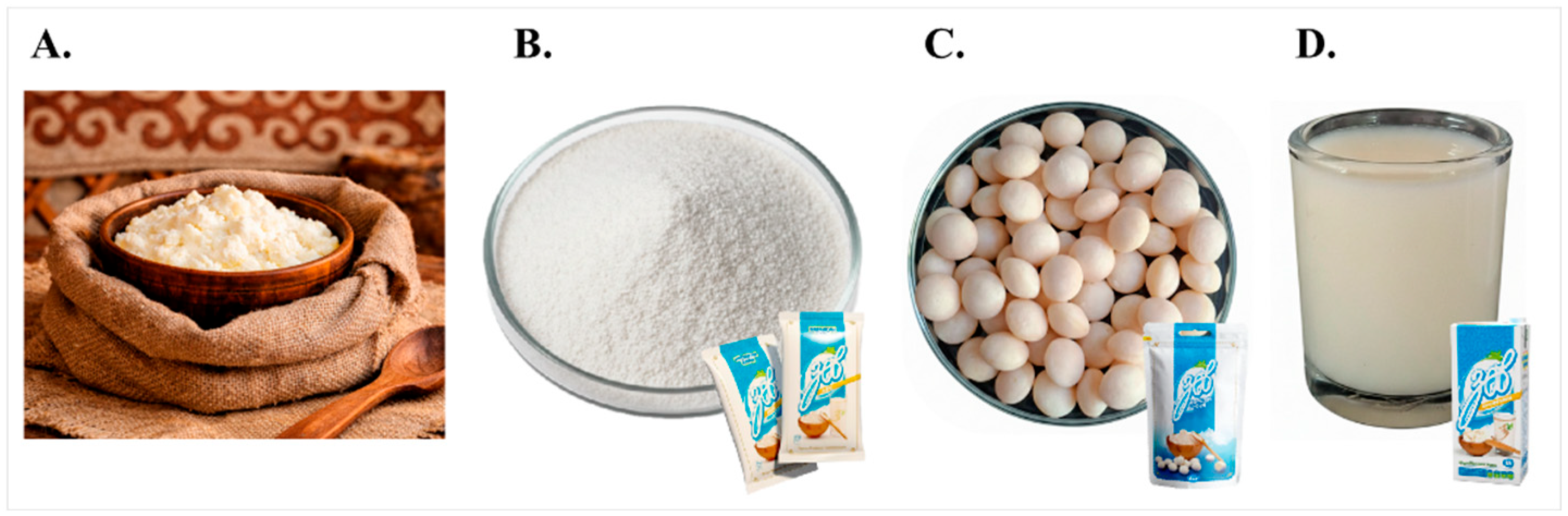
Raw curd is prepared by traditional starter cultures (Figure S1) and used as a control. The three types of curd-based products used for experiments include curd powder, curd balls, and curd drink (Figure S2) of the Zuv brand, manufactured by Teso Foods LLC. (Ulaanbaatar, Mongolia) in June 2024. The samples were stored at −20 °C in the Food Analysis Laboratory of the National University of Mongolia until analysis. The derived products were obtained from the fermented curd through subsequent technological processes, including controlled thermal treatment, dehydration (drying), and mechanical shaping, depending on product type. Curd-based products used in the study are shown in Figure 1. All chemical reagents used in the experiments were of analytical grade.

2.2. Determination of Biochemical Composition of Raw Material

The raw material was dried in an oven at 105 °C until it reached a constant weight, with its mass checked every hour. The dried sample was utilized for biochemical analyses. All results were expressed based on dry weight.
To determine the biochemical composition of the raw material, the protein content was measured by the Kjeldahl system and distillates were titrated with 0.1 M HCl. The nitrogen correction factor was 6.38 (specific for milk protein) [18,19]. Total fat content was determined by the Soxhlet method according to AOAC 932.06 [20]. The calcium and phosphorus content was determined by the dry ashing method. After incineration, the residue was dissolved in hydrochloric acid (HCl, 1:1, v/v) to prepare an experimental solution. A certain amount of the sample was taken and placed in a 50.0 mL volumetric flask. A total of 10.0 mL of 5% lanthanum solution and 1 mL of hydrochloric acid (1:1) were added, and the volume was made up to the mark with distilled water. The prepared solution was preheated for 30 min, and the absorbance was measured at a wavelength of 422.7 nm using an Atomic Absorption Spectrophotometer (GBC Scientific Equipment, SavantAA, Dandenong, Victoria, Australia). Calcium standard solutions (0, 2, 4, 6, 8, and 10 ppm) were prepared to construct a calibration curve [21,22]. All experiments were performed in 3 replicates for each sample.

2.3. Determination of Amino Acid Content

The amino acid content of the raw materials and three types of curd-based products was determined by RP-HPLC under the following conditions.
Sample preparation: A total of 18 amino acids was determined by ion-exchange chromatography and the ninhydrin post-column method, modified from the AOAC (2005) method for the determination of amino acid content [23]. For 16 common amino acids, approximately 0.1 g of the sample was placed in a glass bottle, 10.0 mL of 6 N HCl was added, and the sample was purged with nitrogen gas, then hydrolyzed at 110 °C for 24 h.
The hydrolysis solution was concentrated by vacuum evaporation, then dissolved in 0.2 M sodium citrate buffer to a final volume of 50 mL. The solution was filtered through a 0.20 μm cellulose acetate syringe filter and used for analysis.
The sulfur-containing amino acids methionine and cysteine were prepared by oxidation with performic acid, and tryptophan was prepared by alkaline hydrolysis and used for analysis.
Chromatographic condition: Total amino acids in samples were analyzed using a High Speed Amino Acid Analyzer Hitachi L-8900 (Hitachi High-Technologies Coorp, Tokyo, Japan) and an ion exchange column (2622PH, 4.6 × 60 mm) equilibrated with buffer set (PH SET KANTO). The samples were eluted with a linear gradient of buffer set and ninhydrin. Runs were conducted at 40 °C at a flow rate of 0.3 mL/min for ninhydrin and 0.35 mL/min for the buffer, and the absorbance of the elute samples was measured at 440 nm and 570 nm. All samples were filtered through 0.2 µm Acrodisc Syringe Filters (Gelman Laboratory, Arbor, MI, USA), and the injection volume of samples was 20.0 µL.
Tryptophan in the sample was analyzed using a reversed-phase HPLC system Waters Isocractic 600 pump (Waters Associates, Milford, MA, USA) and an CAPCELL PAK C18 column (Shiseido Co., Ltd., Tokyo, Japan) (4.6 × 250 mm) equilibrated with a solvent of 0.0085 M Sodium acetate/Methanol (v/v). Runs were conducted at 40 °C using the same HPLC system at a flow rate of 1.0 mL/min, and the absorbance of the elute samples was read at 280 nm using a 486 UV/VIS detector (Waters Associates, Milford, MA, USA). All samples were filtered through 0.2 µm Acrodisc Syringe Filters (Gelman Laboratory, USA), and the injection volume of samples was 20 µL. Amino acid contents were calculated and expressed as g/100 g protein (protein basis). Accordingly, the reported percentage values correspond directly to grams per 100 g of protein.

2.4. Determination of Protein Profile by SDS PAGE

Protein profile and differences in the four types of samples including raw materials were determined by Sodium dodecyl sulfate–polyacrylamide gel electrophoresis (SDS-PAGE) according to the slightly modified Laemmli method. Raw material, curd powder, and curd balls were reconstituted at 1:10 (w/v) and proteins were extracted using Tris-HCl extraction buffer (50 mM Tris-HCl, 0.5% SDS, pH 8). After incubation at room temperature for 10 min and centrifugation at 4000 rpm for 10 min, the supernatant was used for analyzed. The curd drink was analyzed as a liquid matrix. All samples were normalized to the same protein concentration, and an equal amount of total protein (2 µg) was loaded per lane. Samples were mixed with Laemmli sample buffer containing β-mercaptoethanol and heated at 95 °C for 5 min before electrophoresis. A 3% stacking gel with pH 6.8 and 12.5% separating gel with pH 8.8 were used.
For the prepared protein sample, mix 10.0 μL of the sample in 2× sample buffer (1:1) and add 5.0 μL of Page® Ruler™ Prestained Protein Ladder (Thermo Fisher, Waltham, MA, USA) marker to the gel. Gel electrophoresis was performed by placing 1× glycine buffer in the gel electrophoresis tank and running at 85 V for 15 min and 100 V for 90 min. Gel staining is performed with Coomassie blue on a gentle shaker for 2 h and then it is decolorized in a destaining solution of 40% methanol and 10% acetic acid for 6 h by gently shaking [19,24].

2.5. Determination of α-Lactoalbumin, β-Lactoglobulin

Sample preparation: The sample was centrifuged at 5000 rpm, and the supernatant was filtered through a 0.22 μm filter (Acrodisc Syringe Filters, Gelman Laboratory, Ann Arbor, MI, USA) before use.
Chromatographic condition: The high-performance liquid chromatograpy, reversed-phase HPLC system (Waters Associates, Milford, MA, USA) was utilized for determination of α-LB and β-LG in samples and used C18 column (4.6 × 250 mm, Vydac, Hesperia, CA, USA). Samples were eluted with linear gradient of solvent A and solvent B. Solvent A consisted of 0.1% TFA in distilled water and solvent B consisted of 0.1% TFA in acetonitrile (HPLC grade). Runs were conducted at 40 °C using an HPLC system at a flow rate of 1.0 mL/min. The detection was performed at 214 nm for 40 min. Injection volume of standards and samples was 20.0 µL.

2.6. Antibacterial Activity

The antibacterial activity of samples was determined using the microplate and agar diffusion methods. Six types of pathogenic bacteria were used for experiment: Escherichia coli KCTC1039, Staphylococcus aureus KCTC1621, Salmonella typhimurium KCCM40253, Pseudomonas aeruginosa KACC1402, Listeria monocytogenes KCTC3443, and Bacillus cereus ATCC 11778. LB agar and broth was used to incubate pathogenic bacteria, excluding L. monocytogenes KCTC 3443. Listeria broth and agar were used for L. monocytogenes KCTC3443. Incubation temperature was 37 °C for pathogenic bacteria. Only Pseudomonas aeruginosa KACC1402 was incubated at 30 °C.
All supernatants of samples were filtered through a 0.22 μm filter (Acrodisc Syringe Filters, Gelman Laboratory, Ann Arbor, MI, USA) before inoculation.

2.6.1. Kirby-Bauer Method

Concentration of pathogenic bacteria was adjusted to 1 × 10⁶ CFU/mL and used 100 µL suspension of bacteria for experiments. The 100 µL supernatants were used for antibacterial acitvity. Results were evaluated, and when a clear zone forms around the disc where bacteria do not grow, the sample is considered to possess antibacterial activity [25].

2.6.2. 96-Well Microplate Method

Concentration of each pathogen was adjusted to 1 × 10⁶ CFU/mL and inoculated 1% (v/v) into LB broth. A total of 100 µL of bacterial suspension was dispensed into each well in a 96-well microplate.
For experiments, two types of supernatants of samples were used: one unadjusted and one adjusted to pH 7.0. A total of 100 µL of the supernatant was added to each well of the 96-well microplate containing 100 µL of the pathogen inoculum. Absorbance was measured at 600 nm every 3 h.

2.7. DPPH Radical Scavenging Activity

100.0 mL samples of both the raw material and the liquid curd are centrifuged at 5000 rpm for 10 min. The supernatant is then transferred to a clean tube.
100.0 mL of hot water (95 °C) was added to 14.5 g of curd powder and 16.6 g of curd ball, respectively. After thorough mixing, the samples are centrifuged under the same conditions at 5000 rpm for 10 min, and the supernatant is transferred to a clean tube. All supernatants are prepared by filtration through a 0.22 µm sterile filter. These samples are stored at −20 °C until use in subsequent experiments.
A total of 2.0 mL of the sample supernatant is placed in a test tube, and 2.0 mL of a 500 µM DPPH solution in ethanol is added. After mixing, the sample solution is incubated in the dark at room temperature for 30 min. The absorbance was measured at a wavelength of 517 nm. Ethanol was used as the blank, the DPPH solution in ethanol as the control, and the mixture of the sample and the DPPH solution measured as the test solution [26,27]. All measurements were performed in triplicate and expressed as mean ± standard deviation.
The following formula was used to compute the percentage of scavenging activity:
Inhibition % = [(Acontrol − Atest)/Acontrol] × 100

2.8. Content of Organic Acids

The composition of organic acids in the sample was determined by high-performance ion-exchange liquid chromatography system (Waters Associates, Milford, MA, USA).
Sample preparation: Each 100.0 mL raw material and curd drink were centrifuged at 5000 rpm for 10 min at 4 °C, and the supernatant was separated in clear tube. A total of 14.5 g of curd powder and 16.6 g of curd balls were added to 100 mL hot water and mixed well after centrifuging at 5000 rpm for 10 min at 4 °C. All supernatants were filtered through a 0.2 μm membrane filter (Acrodisc Syringe Filters, Gelman Laboratory, Ann Arbor, MI, USA).
Chromatographic condition: Organic acids were analyzed using a reversed-phase HPLC system Waters system (Waters Associates, Milford, MA, USA) and a SupelcogelTM C-610H column (30 × 7.8 mm; Supelco Inc., Bellefonte, PA, USA) equilibrated with 0.1% phosphoric acid for 40 min. The detection was performed at 203 nm and a flow rate of 0.5 mL/min at 40 °C. Injection volume of standard organic acids (5 mg/mL) and samples was 20 µL.

2.9. Analysis of Particle Size

Particle size distribution (PSD) of the raw curd sample was determined using a Shimadzu SALD-2300 Wing Laser Particle Size Analyzer (Sald II, Version 3.4.6). A total of 1–2 mL of the curd sample was dispersed in deionized water at a ratio of 1:10 (w/v) and gently stirred using a magnetic stirrer to minimize aggregation. Care was taken to avoid excessive sonication or mechanical shear, which could disrupt the natural micro-floc structure. The sample was introduced into the wet dispersion unit of the analyzer, and the measurements were performed using the Mie scattering model. The refractive index of the particles was set to 1.70 and the absorption index to 0.01, with the dispersion medium (water) refractive index at 1.33. Obscuration was maintained between 5 and 15% to ensure accurate measurement without multiple scattering artifacts [28]. The results were exported to Microsoft Excel for statistical analysis.

3. Results and Discussion

3.1. Biochemical Composition of Raw Material as a Traditional Curd

Dairy products like a curd contain valuable nutrients, especially high-quality protein and essential micronutrient calcium, magnesium, phosphorus, etc. Starter cultures degrade milk protein into bioactive peptides [12], thereby increasing nutritional value. The total carbohydrate, protein, fat, calcium and phosphorus of the raw material samples were determined. The results are shown in Table 1.
The results of the biochemical composition of the raw materials reveal that curd is rich in protein (13.96 ± 0.15 g/100 g), fat (6.77 ± 0.19 g/100 g), and calcium (0.42 ± 0.05 g/100 g). Milk proteins serve as an excellent source of amino acids and other essential nutrients that contribute to human health. The metabolic activities of lactic acid bacteria during fermentation contribute to enhanced functional properties of fermented products, including increased antioxidant potential, antimicrobial effects, and improved digestibility [29].
The bioactive components present in milk, including key and minor protein fractions, immunoglobulins, lactoferrin, the lactoperoxidase system, α-lactalbumin, and β-lactoglobulin, are known for their valuable health-promoting properties [13,14,15]. Additionally, milk fat contains both short- and long-chain saturated fatty acids, as well as polyunsaturated fatty acids, making it the primary dietary source of conjugated linoleic acid [14]. These components play a significant role in health issues [16]. Kłobukowski et al. [12] reported that the proportion of calcium to protein (mg Ca in 1 g protein) in milk and dairy products is an important index for bone health. This ratio depends on the type of dairy product: milk and natural yogurt are about is 35.3–39.5 mg calcium per gram of protein, while kefir has 30.3 mg calcium per gram of protein. Our results show 30.08 mg calcium per gram of protein, which it is similar to these findings. Many researchers reported that milk is made up of several components, including calcium, phosphate, protein, and lipids, which have been found to help prevent demineralization. Studies have indicated that consuming dairy products can provide protection against dental caries [30]. Alongside transformations driven by microbial diversity, protein hydrolysis is a fundamental mechanism for developing functional properties in fermented dairy matrices. Bibliometric analyses indicate that enzymatic protein hydrolysis is a rapidly expanding research area, largely due to its ability to produce value-added bioactive peptides for use in functional food systems [31]. In the curd-based product studied, the buildup of low-molecular-weight compounds is a natural result of fermentation. This process also aligns with global research, which shows that protein hydrolysates can improve nutrition, functionality, and health benefits in food products.
Furthermore, research conducted by [32] suggests that meals containing cheese can enhance the calcium levels in dental plaque, offering additional defense against dental caries.

3.2. Amino Acid Content

The results of the study revealed that out of a total of 18 amino acids, phenylalanine, valine, threonine, tryptophan, methionine, leucine, isoleucine, lysine, and histidine were all found in relatively high concentrations. The results are summarized in Table 2.
The results of amino acid analysis showed that raw and dried curds had the highest glutamic acid content, with glutamic acid content in the raw pure protein being 15.23 g/100 g and in dried curds being 20.04 g/100 g. This is relatively high compared to the protein content of other dairy products (12.9 g/100 g pure protein) [33]. Microbial fermentation of traditional products is known to improve the nutritional profile of fermented foods by stimulating proteolytic activity, which leads to the release of bioactive peptides and enhances the bioavailability of essential amino acids [29].
Glutamic acid is a safe nutrient in foods; it helps nitrogen homeostasis by detoxifying ammonia by absorbing nitrogen during the formation of glutamine. The process of converting glutamic acid to glutamine is the only way for the brain to detoxify ammonia [34]. Dairy products such as milk, yogurt, and cheese are rich sources of glutamic acid, and its deficiency can cause various health problems. Our study revealed that the essential amino acids, threonine, valine, isoleucine, leucine, phenylalanine, histidine, lysine, methionine, and tryptophan, were detected in raw material, curd powder, and curd balls, and the results were close to the amount of essential amino acids found in 100 g of milk [35]. Compared to the essential amino acid content of pure cow’s milk, the content of these amino acids in curds did not change significantly after fermentation, indicating that these products did not lose their biologically active properties after processing.

3.3. Determination of Protein Profile of Curd Samples

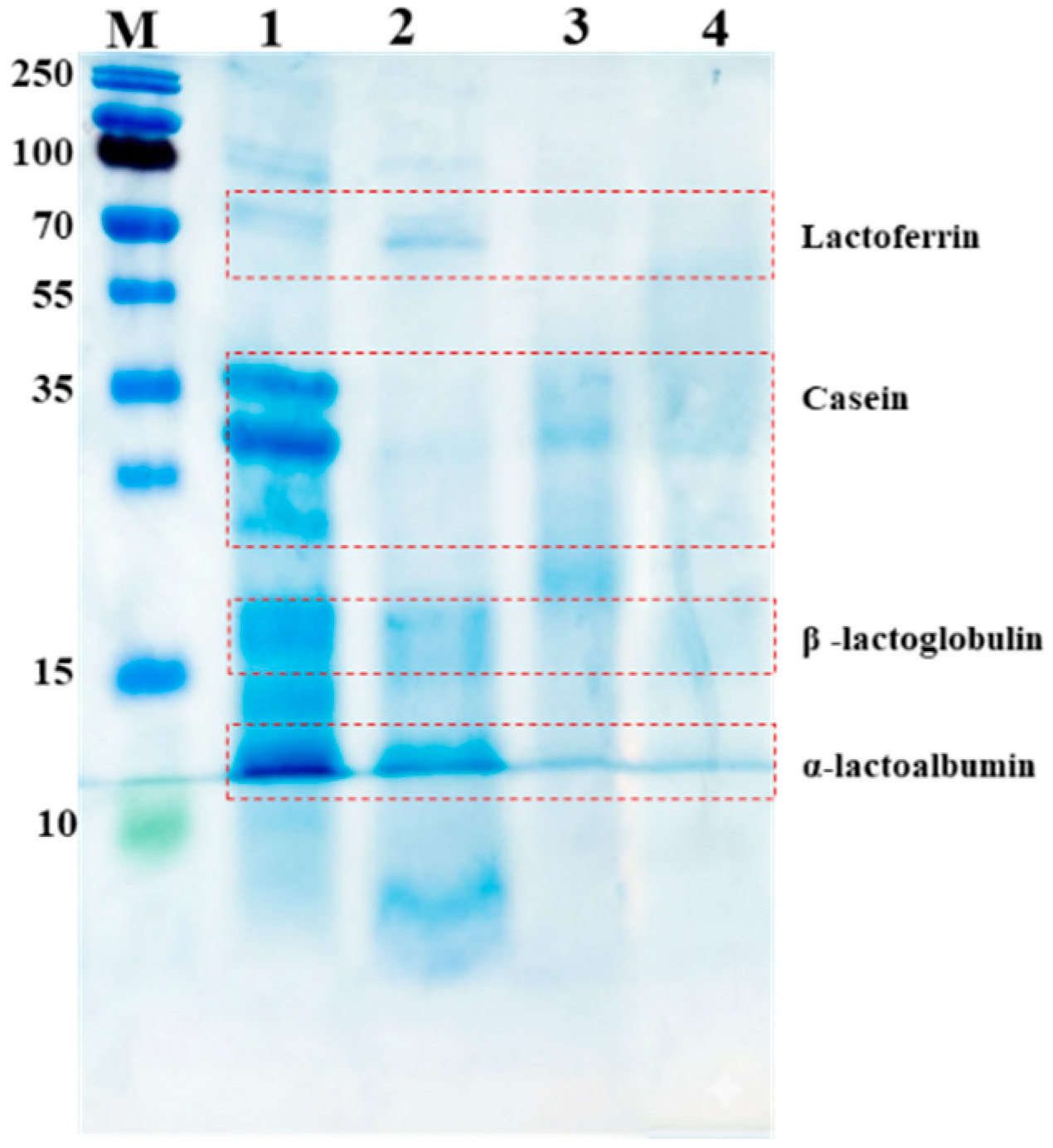
An experiment was conducted to detect the fractions formed as a result of the protein degradation of raw material and three types of curd product; the results are shown in Figure 2.
SDS-PAGE analysis revealed that protein bands correspond to molecular weight, consistent with casein, β-lactoglobulin, and α-lactalbumin fraction. The raw material and curd balls observed most of the milk proteins as α-lactoalbumin, β-lactoglobulin, casein fractions, and a small amount of lactoferrin. However, these protein profiles are based on molecular weight comparison with the standard marker and should be considered tentative. The protein content and profiles differed between the raw material and its processed products. Kjeldahl analysis showed protein content decreased from 13.9% (raw material, dry basis) to 11.5% (curd powder) and 9.0% (curd balls), indicating that processing reduces protein levels. Similar protein changes have been reported in other fermented dairy products due to structural modification and protein redistribution during processing [36]. Curd drink contained 1.5 g/100 mL of protein and the lower protein content in liquids is mainly due to dilution and the presence of whey proteins in the liquid phase. The differences in protein content and electrophoretic profiles observed between the raw material and the modified curd-based products in this study are likely attributable to matrix-dependent effects on protein interactions during acid coagulation and subsequent processing, as previously reported for yogurt systems [11]. The next experiment determined the whey protein fraction contained in all the samples.

3.4. Determination of Whey Protein Fraction by HPLC

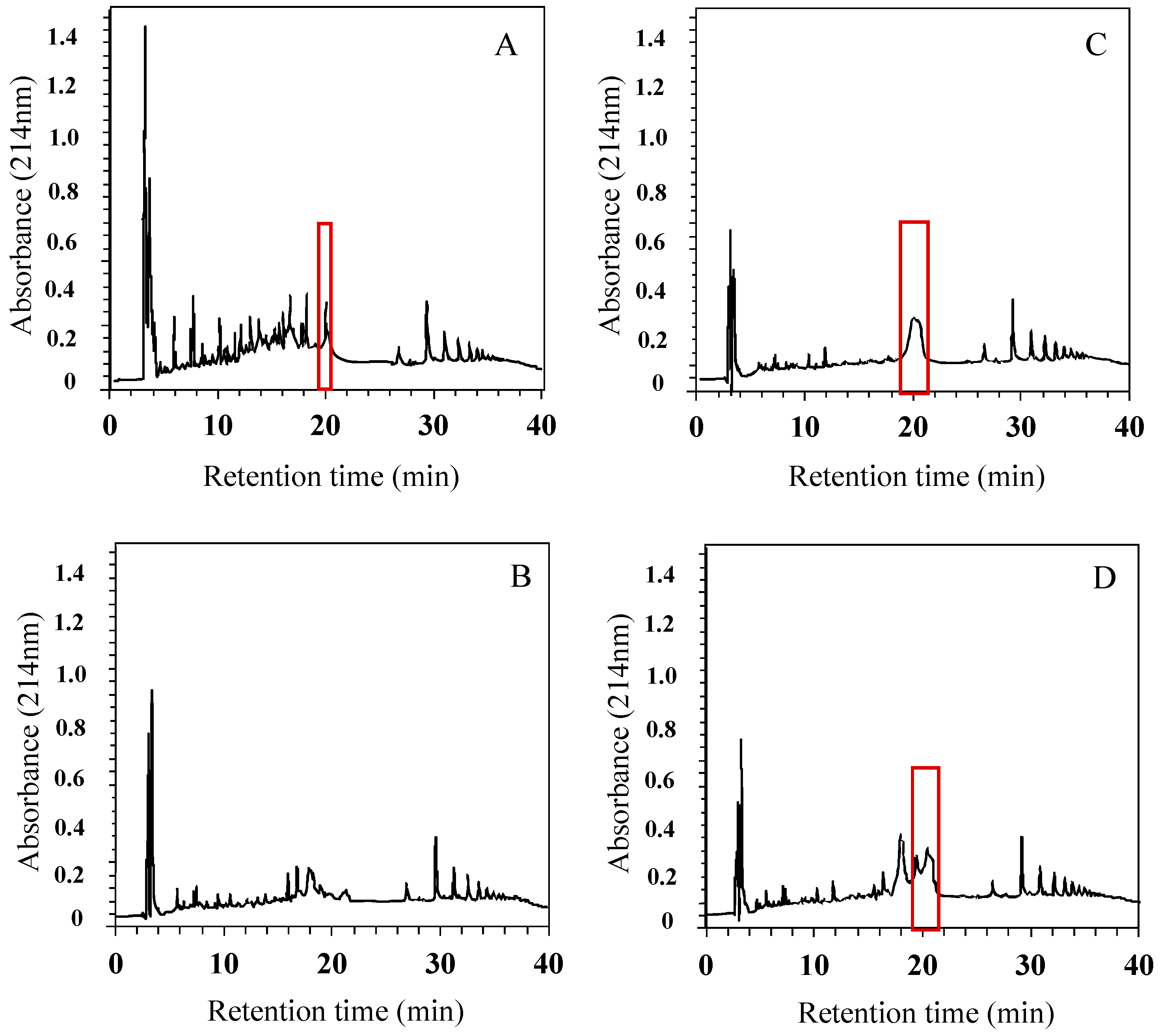
The content of α-lactoalbumin and β-lactoglobulin, the main whey fractions detected in SDS gel electrophoresis, was determined in four types of samples by HPLC. The results are shown in Figure 3.
HPLC analysis of only the water-soluble proteins in the curds revealed a high concentration of peptides in the raw material. α-lactoalbumin was observed in very low concentrations in the raw material, curd balls, and curd drink, but β-lactoglobulin was not detected. This suggests that the number of water-soluble peptides may have been reduced by the separation of whey during the manufacturing process. It is also possible that these proteins were digested to form smaller peptides during fermentation and industrial processing. Siqi Li et al. demonstrated that whey proteins are heat-aggregated by and thatheat-induced aggregation improves digestibility compared with the unheated control. In other words, during the breakdown of dairy proteins, bioactive peptides are formed, which can be regulated by heat treatment [37].

3.5. Antibacterial Activity of Curd Samples

3.5.1. Antibacterial Activity by Kirby–Bauer Method

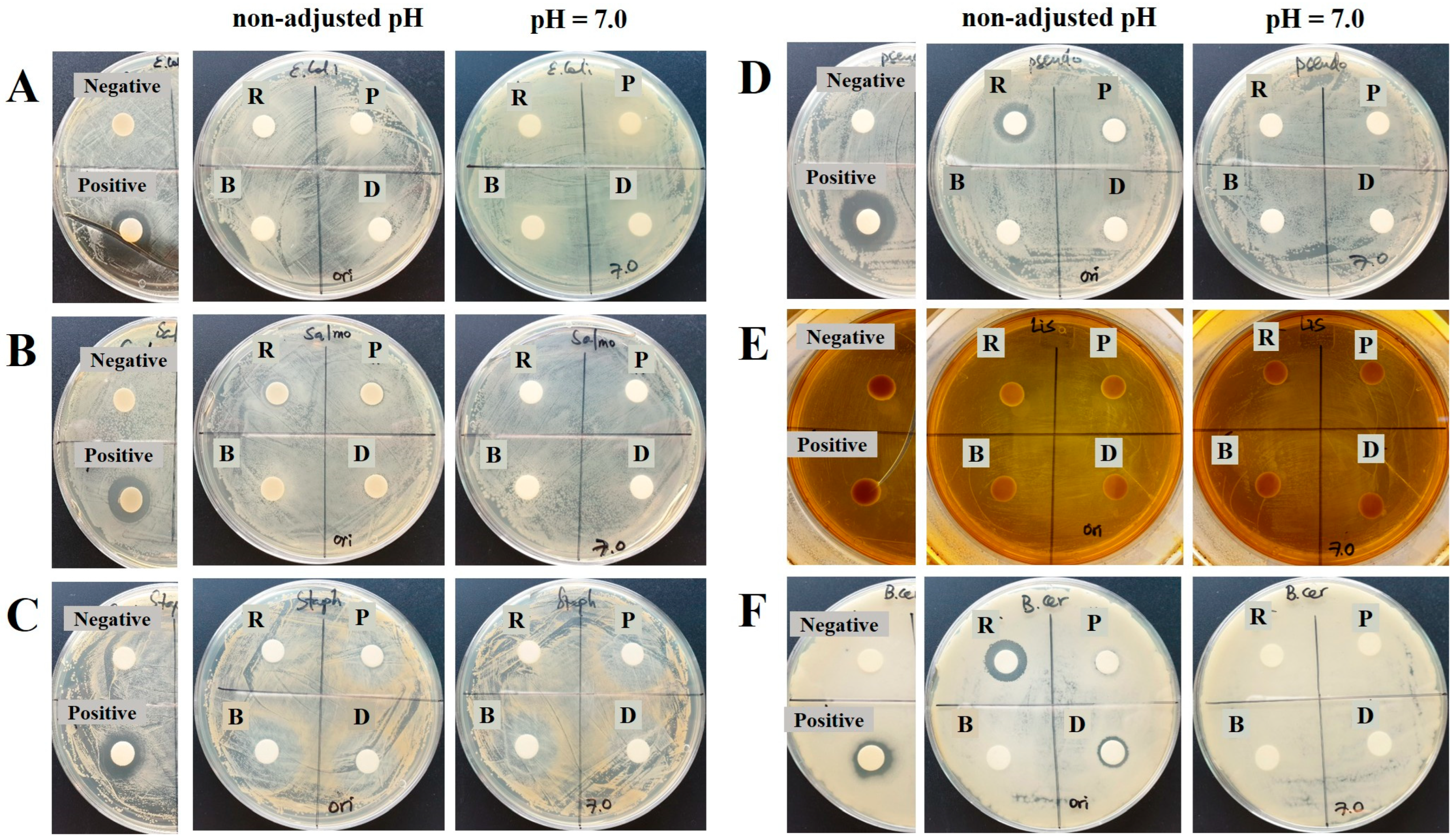
The screening of antibacterial activity in the supernatants of samples, including raw materials, curd powder, curd balls, and curd drink, was investigated. The results are shown in Figure 4.
These screening results show that the raw material showed antibacterial activity against P. aeruginosa (3.0 mm) and B. cereus (3.0 mm). Curd drink showed antibacterial activity against B. cereus (1.0 mm). After the pH was adjusted to 7.0, all samples did not show antibacterial activity. These results may reveal that the antibacterial activity is dependent on acidity. Lactic acid in fermented dairy products is able to inhibit the growth of many types of food spoilage bacteria including Gram-negative bacteria. Thus, lactic acid, with its antimicrobial properties due to the lowering of the pH, also functions as a permeabilizer of the Gram-negative bacterial outer membrane [27]. Yesillik et al. investigated the antibacterial effect of homemade and commercial dairy products and compared them with lactic acid (0.9%). Results of this study showed homemade yogurt had very high antibacterial activity against S. typhymurium [38]. Therefore, the results were confirmed again in the next experiment.

3.5.2. Antibacterial Activity by 96-Well Microplate Method

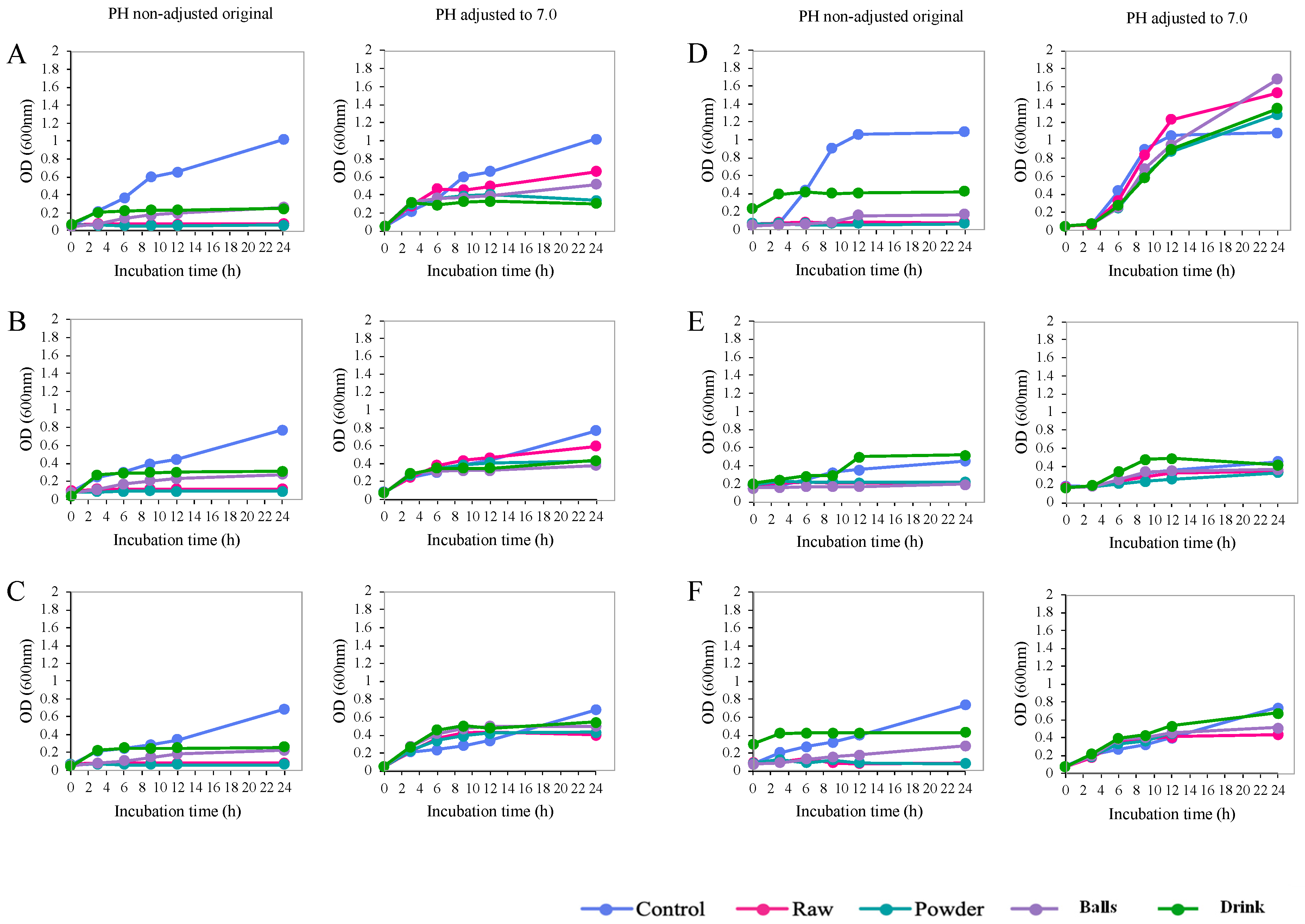
Another screening method using a 96-well microplate was performed against six different pathogenic bacteria. All samples were measured without pH adjustment and with pH adjusted to 7.0. The results are shown in Figure 5.
Figure 5 shows that all samples exhibited antibacterial activity without adjustment, and no growth of the pathogen was observed in the medium with the supernatant of the raw material and dried powdered curd. However, slight growth was observed in the medium with the supernatant of the curd drink and curd balls.
When the environmental pH was adjusted to 7.0, thereby neutralizing the medium, the addition of product supernatants resulted in observable growth of the pathogenic strain. Notably, the greatest increase in growth occurred when the supernatants of the curd drink and curd balls were added. The antibacterial activity observed in non-neutralized samples suggests that organic acids, particularly lactic acid, are the primary inhibitory agents rather than bacteriocins or peptide fractions. These findings suggest that the antibacterial activity of curd-based products is closely associated with their acidity, which is likely associated with organic acids rather than proteinaceous antimicrobial compounds.

3.6. Organic Acid Content

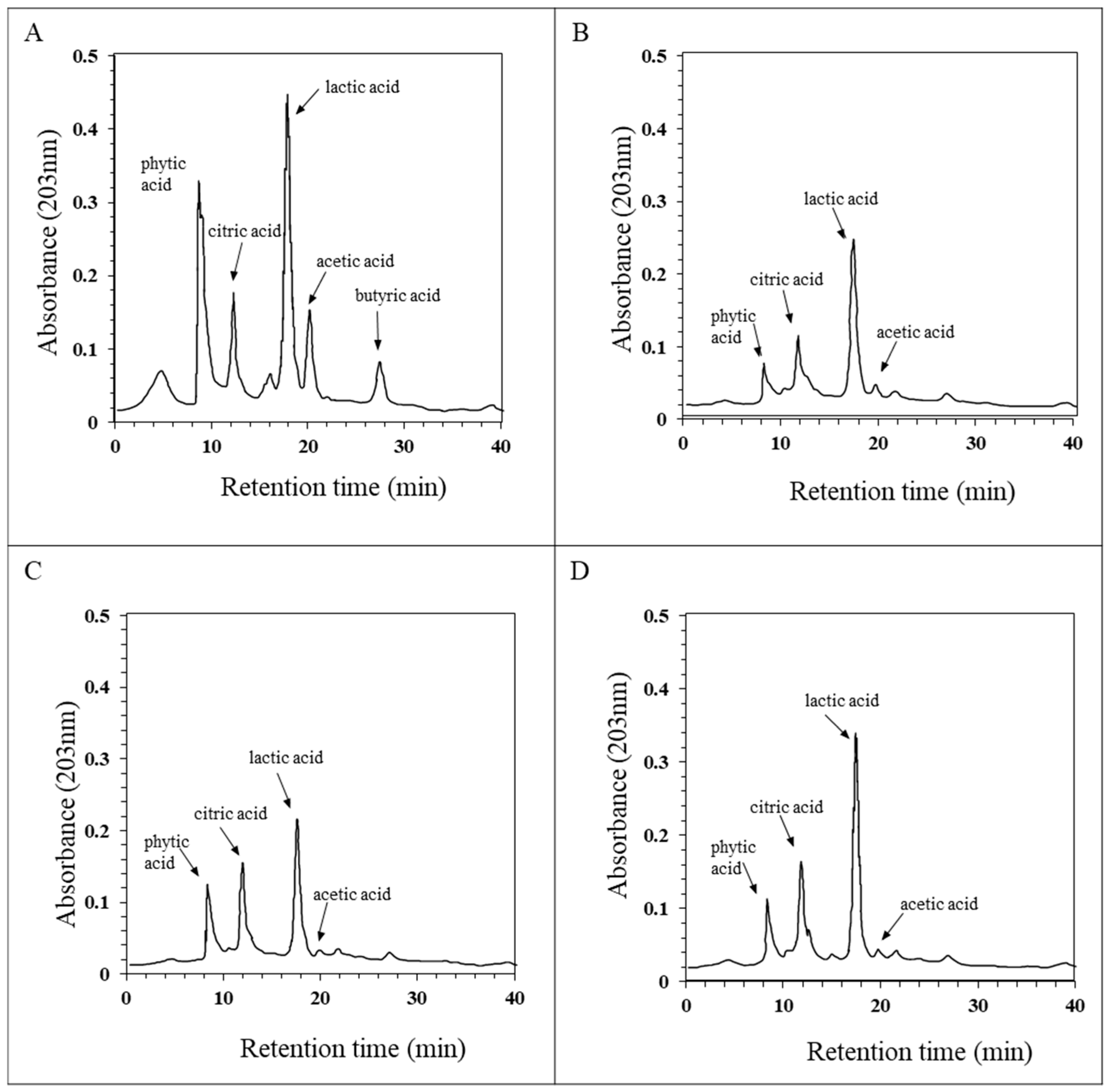
The organic acid content of the raw material and three types of curd-based products was determined by HPLC, and the results are presented in Table 3 and Figure 6.
From these results, although raw materials contained a broad range of organic acids, the highest lactic acid concentration (32.00 ± 0.01 mg/g) was detected in curd powder, likely due to concentration effects during dehydration, ranging from 16.04 to 32.00 mg/g. Lactic acid is one of the earliest known antimicrobial compounds used by humans and is especially effective against Gram-negative bacteria. In addition, lactic acid has been shown to stabilize calcium compounds, thereby reducing the risk of oxaluria [39]. Citric acid and acetic acid were also detected in the dairy products, and these acids contribute to the development of the characteristic flavor and aroma of the final products [40]. Naturally fermented buttermilk samples contained several organic acids, including lactic, uric, acetic, citric, a-ketoglutaric, pyruvic, and succinic acids. The major acids were lactic acid (7 mg/g), citric acid (0.6–1.7 mg/g), and acetic acid (0.7–1.3 mg/g) [41], which were present at levels similar to those found in our study.
In addition, the observed differences in antibacterial activity and organic acid composition provide additional evidence for the role of lactic acid bacteria in modulating product functionality. These effects occur primarily through acidification and proteolysis, processes that influence protein structure and microbial stability in fermented dairy systems.

3.7. Antioxidant Activity

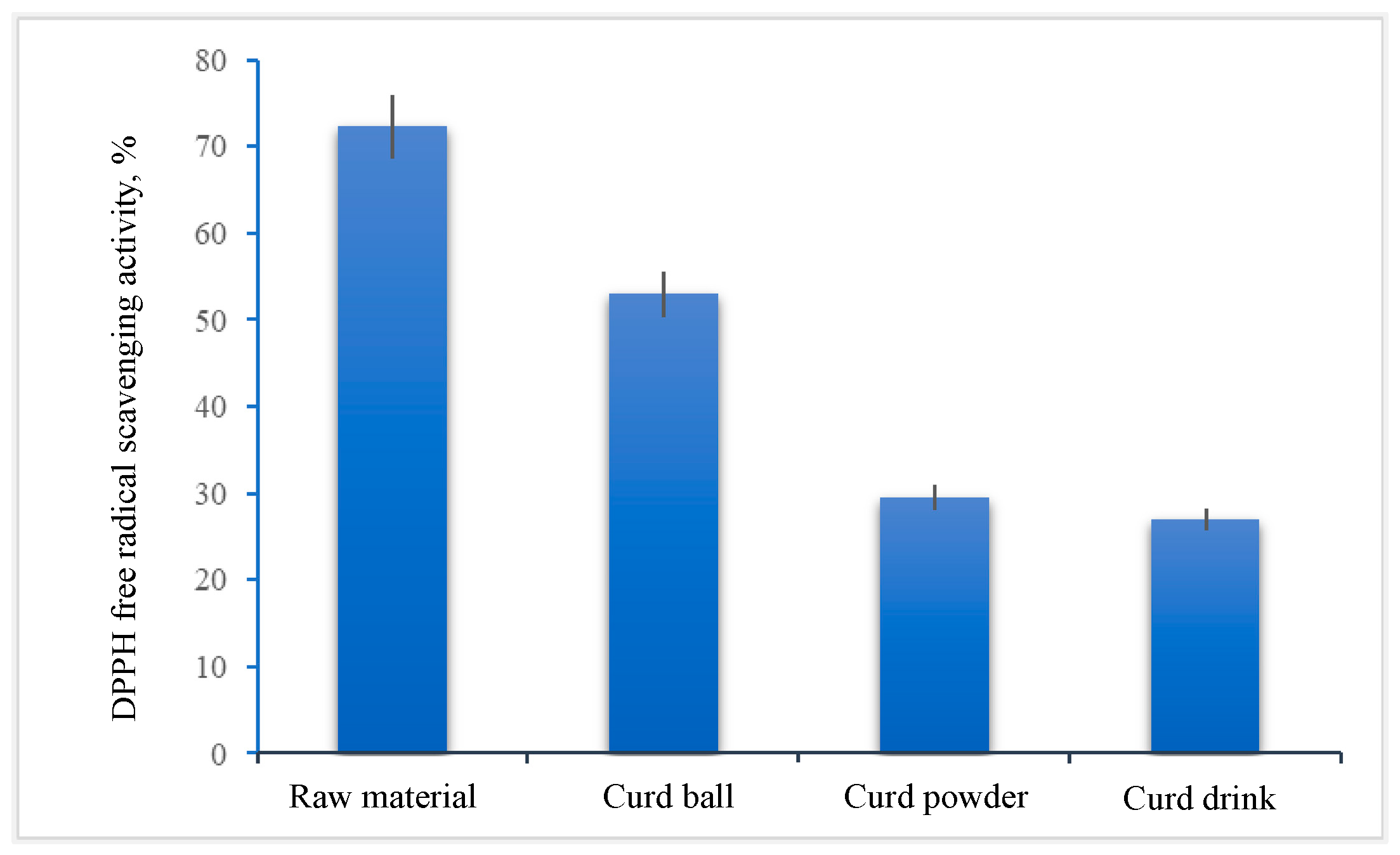
The antioxidant activity of raw materials and curd-based products of the Zuv brand was determined by DPPH free radical scavenging activity. The results are shown in Figure 7.
The results showed that the free radical scavenging activity was highest in raw materials at 72.3 ± 1.50% and in curd balls at 53 ± 2.00%, while it decreased to 27–29.52% in curd powder and curd drink. Comparing the results of protein fraction determination, it can be seen that lactoferrin and low molecular weight peptides are more abundant in raw materials and curd ball products than in curd powder and drink. Other ingredients such as fillers in ball products may also have affected the antioxidant activity. The antioxidant activity of Zuv brand raw material and products is generally consistent with the study by [42]. The researchers determined the antioxidant activity of yogurt enriched with lactic acid bacteria of the Lactobacillus genus, and the DPPH free radical scavenging activity was 39–58%. Pappas et al. reported Greek yogurt had 36.66 ± 1.18% DPPH scavenging activity [43], while yogurt made by traditional methods ranged from 44.37 ± 3.69% to 57.08 ± 6.48% [44].
The Mongolian curd-based product studied here is a naturally fermented system, like other traditional starter-driven products. Song et al. (2025) showed that traditional fermentation starters contain a mix of lactic acid bacteria, yeasts, and filamentous fungi whose combined metabolic actions shape the transformation of ingredients and the qualities of the final product. In our study, we observed increased protein breakdown (proteolysis) and the accumulation of low-molecular-weight compounds, likely due to similar coordinated enzyme activity as seen in other traditional fermentation systems [45].

3.8. Results of Particle Size Measurement of Curd

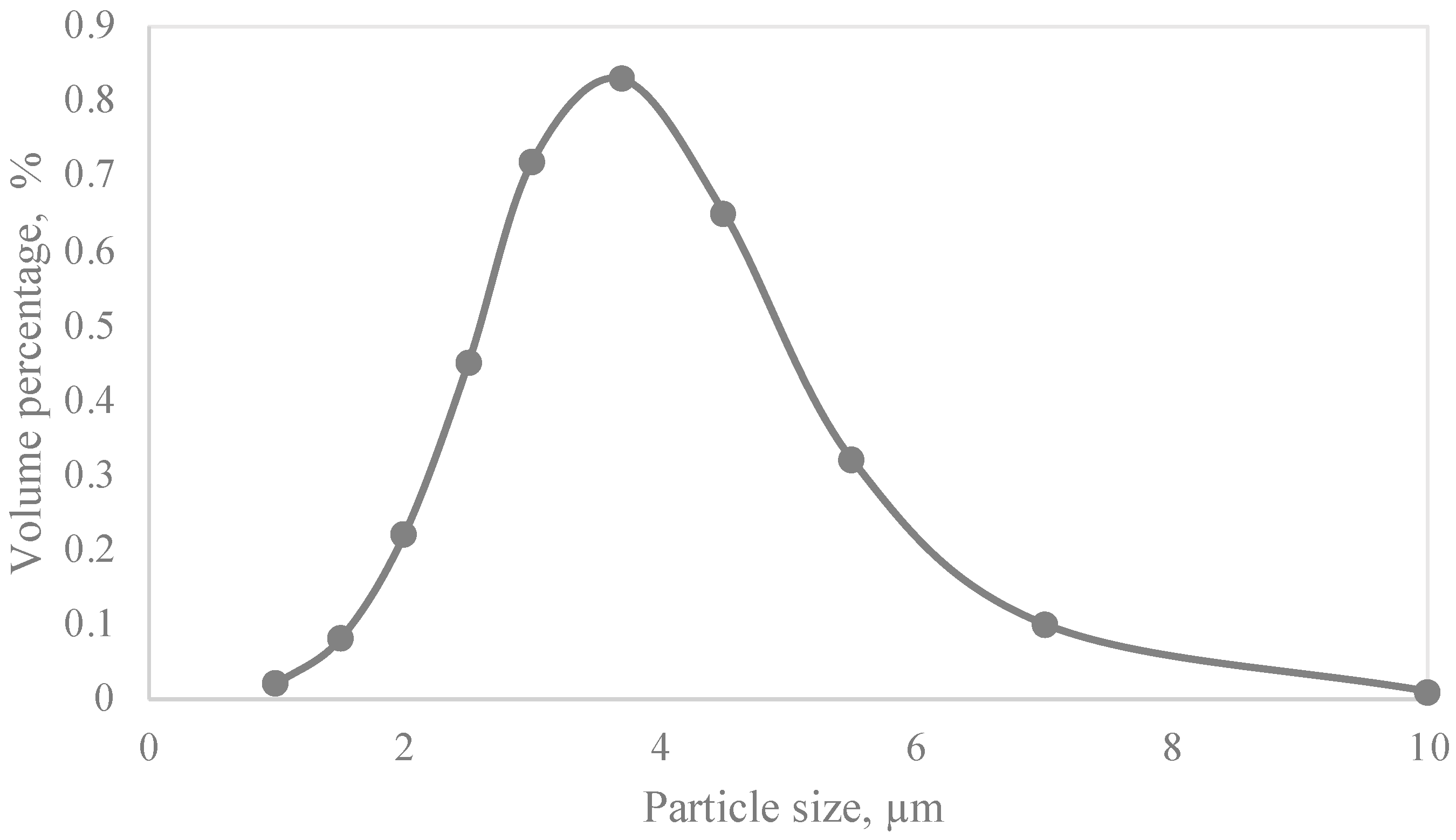
The curd system containing 13 g/100 g protein and 400 mg/100 g calcium exhibited a monomodal particle size distribution within the range of 1–10 µm, with a median particle size (D50) of 3.7 ± 0.20 µm and a span value of 1.0. The results are shown in Figure 8.
This narrow distribution indicates a relatively homogeneous population of finely dispersed casein micro-flocs with minimal secondary aggregation [46]. The moderate protein concentration likely promoted sufficient particle–particle interactions to form stable aggregates without inducing excessive flocculation. Meanwhile, the calcium level appeared adequate to facilitate ionic bridging between casein phosphoserine residues while avoiding the formation of large, heterogeneous aggregates. The absence of larger particle populations (>10 µm) suggests controlled acid-induced coagulation rather than coarse curd grain formation [47]. Overall, these results demonstrate that the combined effects of protein and calcium concentrations led to a stable, finely structured curd matrix with high particle size uniformity.

4. Conclusions

The results indicate that curd-based products produced through traditional Mongolian fermentation retain substantial biochemical and functional properties including elevated antioxidant activity and preserved essential amino acid composition. Raw curd and curd ball products demonstrated elevated antioxidant activity (72.3% and 53% DPPH inhibition, respectively) and preserved bioactive protein fractions compared to more intensively processed forms. These findings provide a scientific basis for optimizing traditional curd processing techniques to develop innovative functional dairy products aligned with contemporary health-oriented markets.

Supplementary Materials

The following supporting information can be downloaded at https://www.mdpi.com/article/10.3390/app16052532/s1, Figure S1: Process Flowchart for Raw material preparation; Figure S2: Process Flowchart for the Manufacturing Curd-based Products from Raw materials.

Author Contributions

G.O. and A.B. contributed equally to the experiments and manuscript preparation. G.R. conducted the experiment. B.B. and B.O. designed and supervised the research. C.M. and T.T. provided funding and project administration. G.O. and B.B. revised the manuscript. All authors have read and agreed to the published version of the manuscript.

Funding

This research was carried out within the framework of the project number TEF-AGG-24/25 fully funded by the Teso Foods LLC., Teso Group.

Institutional Review Board Statement

Not applicable.

Informed Consent Statement

Not applicable.

Data Availability Statement

The original contributions presented in this study are included in the article/Supplementary Material. Further inquiries can be directed to the corresponding author.

Acknowledgments

The authors sincerely thank T. Amartaivan, Dean of the Graduate School, National University of Mongolia, for her continuous encouragement, insightful suggestions, and academic support. The authors are also grateful to B. Tuvshinjargal, CEO of Teso Foods LLC., for his kind assistance and financial support throughout this research.

Conflicts of Interest

Authors Chuluunbaatar Myagmardorj, Tumurbaatar Tserenpagam were employed by Teso Foods LLC. The remaining authors declare that the research was conducted in the absence of any commercial or financial relationships that could be construed as a potential conflict of interest.

References

  1. Reinhold, S.; Warinner, C. Research Briefing: The birth of Bronze Age pastoralism where Europe meets Asia. Nature 2024, 635, 917–925. [Google Scholar] [CrossRef]
  2. Watanabe, K.; Fujimoto, J.; Sasamoto, M.; Dugersuren, J.; Tumursukh, T.; Demberel, S. Diversity of lactic acid bacteria and yeasts in Airag and Tarag, traditional fermented milk products of Mongolia. World J. Microbiol. Biotechnol. 2008, 24, 1313–1325. [Google Scholar] [CrossRef]
  3. Yu, J.; Wang, W.H.; Menghe, B.L.G.; Jiri, M.T.; Wang, H.M.; Liu, W.J.; Bao, Q.H.; Lu, Q.; Zhang, J.C.; Wang, F.; et al. Diversity of lactic acid bacteria associated with traditional fermented dairy products in Mongolia. J. Dairy Sci. 2011, 94, 3229–3324. [Google Scholar] [CrossRef]
  4. Oki, K.; Dugersuren, J.; Demberel, S.; Watanabe, K. Pyrosequencing analysis of the microbial diversity of airag, khoormog and tarag, traditional fermented dairy products of mongolia. Biosci. Microbiota Food Health 2014, 33, 53–64. [Google Scholar] [CrossRef]
  5. Wilkin, S.; Ventresca Miller, A.; Taylor, W.T.T.; Miller, B.K.; Hagan, R.W.; Bleasdale, M.; Scott, A.; Gankhuyg, S.; Ramsøe, A.; Uliziibayar, S.; et al. Dairy pastoralism sustained eastern Eurasian steppe populations for 5000 years. Nat. Ecol. Evol. 2020, 4, 346–355. [Google Scholar] [CrossRef]
  6. Warinner, C. An Archaeology of Microbes. J. Anthropol. Res. 2022, 78, 420–458. [Google Scholar] [CrossRef]
  7. Teegarden, D.; White, K.M.; Lyle, R.M.; Zemel, M.B.; Van Loan, M.D.; Matkovic, V.; Craig, B.A.; Schoeller, D.A. Calcium and Dairy Product Modulation of Lipid Utilization and Energy Expenditure. Obesity 2008, 16, 1566–1572. [Google Scholar] [CrossRef]
  8. Astrup, A. Yogurt and dairy product consumption to prevent cardiometabolic diseases: Epidemiologic and experimental studies. Am. J. Clin. Nutr. 2014, 99, 1235–1242. [Google Scholar] [CrossRef] [PubMed]
  9. Aziz, A.; Anderson, G.H. The effects of dairy components on food intake and satiety. In Woodhead Publishing Series in Food Science, Technology and Nutrition, Functional Dairy Products; Woodhead Publishing: Cambridge, UK, 2007; pp. 19–45. [Google Scholar] [CrossRef]
  10. Bordoni, A.; Danesi, F.; Dardevet, D.; Dupont, D.; Fernandez, A.S.; Gille, D.; dos Santos, C.N.; Pinto, P.; Re, R.; Rémond, D.; et al. Dairy products and inflammation: A review of the clinical evidence. Crit. Rev. Food Sci. Nutr. 2017, 57, 2497–2525. [Google Scholar] [CrossRef] [PubMed]
  11. Magan, J.B.; O′Callaghan, T.F.; Kelly, A.L.; McCarthy, N.A. Compositional and functional properties of milk and dairy products derived from cows fed pasture or concentrate-based diets. Compr. Rev. Food Sci. Food Saf. 2021, 20, 2769–2800. [Google Scholar] [CrossRef] [PubMed]
  12. Kłobukowski, J.; Skibniewska, K.; Kowalski, I. Calcium bioavailability from dairy products and its release from food by in vitro digestion. J. Elem. 2014, 19, 277–288. [Google Scholar] [CrossRef]
  13. Górska-Warsewicz, H.; Rejman, K.; Laskowski, W.; Czeczotko, M. Milk and Dairy Products and Their Nutritional Contribution to the Average Polish Diet. Nutrients 2019, 11, 1771. [Google Scholar] [CrossRef] [PubMed]
  14. Miciński, J.; Zwierzchowski, G.; Kowalski, I.M.; Szarek, J.; Pierozynski, B.; Raistenskis, J. The effects of bovine milk fat on human health. Pol. Ann. Med. 2012, 19, 170–175. [Google Scholar] [CrossRef]
  15. Park, Y.W.; Nam, M.S. Bioactive Peptides in Milk and Dairy Products: A Review. Korean J. Food Sci. Anim. Resour. 2015, 35, 831–840. [Google Scholar] [CrossRef] [PubMed]
  16. Parodi, P.W. Milk fat in human nutrition. Aust. J. Dairy Technol. 2004, 59, 3–59. [Google Scholar]
  17. Zebib, H.; Abate, D.; Woldegiorgis, A.Z. Nutritional quality and adulterants of cow raw milk, pasteurized and cottage cheese collected along value chain from three regions of Ethiopia. Heliyon 2023, 9, e15922. [Google Scholar] [CrossRef]
  18. Mungunkhuyag, K.; Bayarsukh, Z.; Ganzorig, O.; Batdorj, B. Chemical composition and nutritional value of some varieties of soybean cultivated in Mongolia. Mong. J. Agric. Sci. 2021, 33, 31–37. [Google Scholar] [CrossRef]
  19. Bzducha, A.; Wołosiak, R. Synergistic effect of antioxidant activity of casein and its enzymatic hydrolysate in combination with ascorbic acid and β-carotene in model oxidation systems. Acta Sci. Pol. Technol. Aliment. 2006, 5, 113–133. [Google Scholar]
  20. AOAC International. Official Methods of Analysis of AOAC International, 21st ed.; Method 932.06: Fat in Dried Milk; AOAC International: Gaithersburg, MD, USA, 2019. [Google Scholar]
  21. El-Shaarawy, M.I.; Reith, J.F. Determination of calcium intake of help of atomic absorption spectrophotometry. Z. Ernahrungswiss 1981, 2, 119–131. [Google Scholar] [CrossRef]
  22. Tee, E.S.; Khor, S.C.; Siti, M.S. Determination of calcium in foods by the atomic absorption spectrophotometric and titrimetric methods. Pertanika 1989, 12, 303–311. [Google Scholar]
  23. Rutherfurd, S.M.; Gilani, G.S. Amino acid analysis. Curr. Protoc. Protein Sci. 2009, 58, 11.9.1–11.9.37. [Google Scholar] [CrossRef] [PubMed]
  24. Zhang, L.; Zhang, L.; Han, X.; Li, Y. Effects of Fat on Relationship between Particle Size and Physical Properties of Cross-Linking Yogurt by Purified Transglutaminase from Streptomyces mobaraensis DSM 40587. Adv. Mater. Res. 2012, 468–471, 1631–1637. [Google Scholar] [CrossRef]
  25. Jan, H. Kirby-Bauer Disk Diffusion Susceptibility Test Protocol. Am. Soc. Microbiol. 2009, 15, 1–23. [Google Scholar]
  26. Şanlıdere, H.; Aloğlu, Z.O. Determination of antioxidant activity of bioactive peptide fractions obtained from yogurt. J. Dairy Sci. 2011, 94, 5305–5314. [Google Scholar] [CrossRef]
  27. Alakomi, H.; Skyttä, E.; Saarela, M.; Mattila-Sandholm, T.; Latva-Kala, K.; Helander, I.M. Lactic Acid Permeabilizes Gram-Negative Bacteria by Disrupting the Outer Membrane. Appl. Environ. Microbiol. 2000, 66, 2001–2005. [Google Scholar] [CrossRef]
  28. Zengjia, Z.; Zhang, L.; Liu, T.; Hu, G.; Hu, H.; Aziz, T.; Zhang, M.; Wu, J.; Naseeb, J.; Yang, Z.; et al. Physicochemical properties of yoghurt supplemented with polymerized whey protein and inulin. LWT 2024, 210, 116888. [Google Scholar] [CrossRef]
  29. Sawant, S.S.; Park, H.-Y.; Sim, E.-Y.; Kim, H.-S.; Choi, H.-S. Microbial Fermentation in Food: Impact on Functional Properties and Nutritional Enhancement—A Review of Recent Developments. Fermentation 2025, 11, 15. [Google Scholar] [CrossRef]
  30. Johansson, I. Milk and dairy products: Possible effect on dental health. Scand. Food Nutr. Res. 2002, 46, 119–122. [Google Scholar] [CrossRef][Green Version]
  31. Plaza, S.; Nuñez, S.M.; Masip, Y.; Valencia, P. Bibliometric Analysis of the Scientific Productivity on Functional Properties and Enzymatic Hydrolysis of Proteins from By-Products. Foods 2025, 14, 3693. [Google Scholar] [CrossRef]
  32. Edgar, W. Eating cheese: Does it reduce caries? Br. Dent. J. 1999, 187, 662. [Google Scholar] [CrossRef]
  33. Lapierre, H.; Lobley, G.E.; Doepel, L.; Raggio, G.; Rulquin, H.; Lemosquet, S. Triennial Lactation Symposium: Mammary metabolism of amino acids in dairy cows. J. Anim. Sci. 2012, 90, 1708–1721. [Google Scholar] [CrossRef]
  34. Hakvoort, T.B.; He, Y.; Kulik, W.; Vermeulen, J.L.; Duijst, S.; Ruijter, J.M.; Runge, J.H.; Deutz, N.E.; Koehler, S.E.; Lamers, W.H. Pivotal role of glutamine synthetase in ammonia detoxification. Hepatology 2017, 65, 281–293. [Google Scholar] [CrossRef]
  35. Landi, N.; Ragucci, S.; Di Maro, A. Amino Acid Composition of Milk from Cow, Sheep and Goat Raised in Ailano and Valle Agricola, Two Localities of ‘Alto Casertano’ (Campania Region). Foods 2021, 10, 2431. [Google Scholar] [CrossRef]
  36. Jovanovic, S.; Barac, M.; Macej, O.; Vucic, T.; Lacnjevac, C. SDS-PAGE Analysis of Soluble Proteins in Reconstituted Milk Exposed to Different Heat Treatments. Sensors 2007, 7, 371–383. [Google Scholar] [CrossRef]
  37. Siqi, L.; Aiqian, Y.; Harjinder, S. Impacts of heat-induced changes on milk protein digestibility: A review. Int. Dairy J. 2021, 123, 105160. [Google Scholar] [CrossRef]
  38. Yesillik, S.; Yildirim, N.; Dikici, A.; Yıldız, A.; Yesllik, S. Antibacterial Effects of Some Fermented Commercial and Homemade Dairy Products and 0.9% Lactic Acid against Selected Foodborne Pathogens. Asian J. Anim. Vet. Adv. 2011, 6, 189–195. [Google Scholar] [CrossRef]
  39. Campieri, C.; Campieri, M.; Bertuzzi, V.; Swennen, E.; Matteuzzi, D.; Stefoni, S.; Pirovano, F.; Centi, C.; Ulisse, S.; Famularo, G.; et al. Reduction of oxaluria after an oral course of lactic acid bacteria at high concentration. Kidney Int. 2001, 60, 1097–1105. [Google Scholar] [CrossRef]
  40. Hartwig, P.; Mcdaniel, M.R. Flavor Characteristics of Lactic, Malic, Citric, and Acetic Acids at Various pH Levels. J. Food Sci. 1995, 60, 384–388. [Google Scholar] [CrossRef]
  41. Gebreselassie, N.; Abrahamsen, R.K.; Beyene, F.; Abay, F.; Narvhus, J.A. Chemical composition of naturally fermented buttermilk. Int. J. Dairy Technol. 2016, 69, 200–208. [Google Scholar] [CrossRef]
  42. Gjorgievski, N.; Tomovska, J.; Dimitrovska, G.; Makarjoski, B.; Shariati, M.A. Determination of the antioxidant activity in yogurt. J. Hyg. Eng. Des. 2014, 8, 67–73. [Google Scholar]
  43. Pappa, E.C.; Kondyli, E.; Pappas, A.C.; Kyriakaki, P.; Zoidis, E.; Papalamprou, L.; Karageorgou, A.; Simitzis, P.; Goliomytis, M.; Tsiplakou, E.; et al. Physicochemical Characteristics of Commercially Available Greek Yoghurts. Dairy 2024, 5, 436–450. [Google Scholar] [CrossRef]
  44. Huang, Q.; Ye, H.; Yang, Y.; Zhu, C.; Tang, J. Physicochemical Properties, Antioxidant Activities, and Aromatic Profile of Yogurt Co-Fermented by Weissella cibaria G232 with Traditional Starters. Foods 2025, 14, 1607. [Google Scholar] [CrossRef] [PubMed]
  45. Song, D.; Zhong, X.; Wu, Y.; Guo, J.; Song, L.; Yang, L. From Artisan Experience to Scientific Elucidation: Preparation Processes, Microbial Diversity, and Food Applications of Chinese Traditional Fermentation Starters (Qu). Foods 2025, 14, 3814. [Google Scholar] [CrossRef]
  46. Jablonka, M.S.; Munro, P.A. Particle size distribution and calcium content of batch-precipitated acid casein curd: Effect of precipitation temperature and pH. J. Dairy Res. 1985, 52, 419–428. [Google Scholar] [CrossRef]
  47. Marine, M.; Valérie, G.L.; Kevin, L.; Gabrielle, M.; Sylvie, L.T.; Camille, M.; Delphine, H.; Véronique, B. What do stirred yogurt microgels look like? Comparison of laser diffraction, 2D dynamic image analysis and 3D reconstruction. Food Struct. 2019, 20, 100107. [Google Scholar] [CrossRef]
Figure 1. Materials used in this study. (A) Raw material—Curd; (B) Curd powder; (C) Curd ball; (D) Curd drink.
Applsci 16 02532 g001
Figure 2. The results of protein fractions of raw curd material and curd-based products by SDS PAGE. M—Prestained Protein Ladder, 1—raw material (0.1 g/mL), 2—curd ball (0.1 g/mL), 3—curd powder (0.1 g/mL), 4—curd drink (0.1 g/mL).
Applsci 16 02532 g002
Figure 3. Determination of whey protein fraction by high-performance liquid chromatography (HPLC). (A)—Raw material; (B)—curd powder; (C)—curd balls; (D)—curd drink. Reversed-phase HPLC system C18 column; 1.0 mL/min, linear gradient: A solution 0.1% TFA in purified water; B solution 0.1% TFA in acetonitrile; run time: 40 min; injection volume 20.0 µL; standard concentration 2 mg/mL; α-lactoalbumin is marked in red line.
Applsci 16 02532 g003
Figure 4. The formation of a clear zone indicating inhibition of the pathogen cultured in a Petri dish. (A) Escherichia coli KCTC1039; (B) Salmonella typhimurium KCCM40253; (C) Staphylococcus aureus KCTC1621; (D) Pseudomonas aeruginosa KACC1402; (E) Listeria monocytogenes KCTC3443; (F) Bacillus cereus ATCC 11778. Negative–negative control; positive–positive control used lactic acid (5 mg/g); R—raw material; P—curd powder; B—curd ball; D—curd drink.
Applsci 16 02532 g004
Figure 5. Results of antibacterial activity against pathogenic bacteria in curd raw material and curd-based products. Notes: (A) Escherichia coli KCTC1039; (B) Salmonella typhimurium KCCM40253; (C) Staphylococcus aureus KCTC1621; (D) Pseudomonas aeroginosa KACC1402; (E) Listeria monocytogenes KCTC3443; (F) Bacillus cereus ATCC 11778.
Applsci 16 02532 g005
Figure 6. Results of the organic acid content in the raw curd and curd-based product using by HPLC. (A)—Raw material; (B)—curd drink; (C)—curd ball; (D)—curd powder. Reversed-phase HPLC system; ion exchange 0.5 mL/min; run time 40 min; injection volume 20.0 µL.
Applsci 16 02532 g006
Figure 7. Results of antioxidant activity in raw materials and curd-based products.
Applsci 16 02532 g007
Figure 8. Particle size distribution (PSD) of the raw curd sample. The PSD curve demonstrates a monomodal distribution with a median particle size (D50) of 3.7 µm and a narrow span of 1.
Applsci 16 02532 g008
Table 1. Biochemical composition of raw curd.
CharacterizationContent
Total protein, g13.96 ± 0.15
Total fat, g6.77 ± 0.19
Calcium, g0.42 ± 0.05
Phosphorus, g0.096 ± 0.01
Note: Biochemical compositions were calculated in g per 100 g. All data were subjected to triplicate analysis (n = 3).
Table 2. The results of amino acid contents in raw curd material, curd powder and balls.
Amino AcidCurd Sample (%)
Raw MaterialCurd PowderCurd BallCurd Drink
Aspartic Acid0.78 ± 0.011.03 ± 0.000.78 ± 0.010.11 ± 0.00
Threonine *0.33 ± 0.030.60 ± 0.010.46 ± 0.010.06 ± 0.00
Serine0.40 ± 0.020.71 ± 0.000.54 ± 0.000.08 ± 0.00
Glutamic Acid1.37 ± 0.052.73 ± 0.032.07 ± 0.030.29 ± 0.01
Proline0.59 ± 0.011.35 ± 0.011.02 ± 0.010.15 ± 0.01
Glycine0.51 ± 0.010.27 ± 0.020.20 ± 0.000.03 ± 0.00
Alanine0.97 ± 0.010.48 ± 0.010.36 ± 0.000.05 ± 0.00
Valine *0.52 ± 0.020.80 ± 0.010.61 ± 0.010.09 ± 0.00
Isoleucine *0.39 ± 0.030.65 ± 0.010.49 ± 0.010.07 ± 0.00
Leucine *0.81 ± 0.001.28 ± 0.100.97 ± 0.030.14 ± 0.01
Tyrosine0.23 ± 0.010.52 ± 0.010.39 ± 0.020.06 ± 0.00
Phenylalanine *0.42 ± 0.150.63 ± 0.010.48 ± 0.010.07 ± 0.00
Histidine *0.23 ± 0.010.37 ± 0.020.28 ± 0.050.04 ± 0.00
Lysine *0.41 ± 0.011.10 ± 0.020.83 ± 0.010.12 ± 0.01
Arginine0.49 ± 0.010.43 ± 0.050.33 ± 0.010.05 ± 0.00
Cysteine0.24 ± 0.010.15 ± 0.060.11 ± 0.000.02 ± 0.00
Methionine *0.16 ± 0.010.36 ± 0.020.27 ± 0.000.04 ± 0.00
Tryptophan *0.14 ± 0.020.16 ± 0.010.12 ± 0.020.02 ± 0.00
Note: Essential amino acids marked (*). Values are means ± (SD).
Table 3. Results of organic acid content in raw materials and curd-based products.
Curd SamplesOrganic Acids (mg/g)
Citric AcidLactic AcidAcetic AcidPhytic Acid
1Raw material3.62 ± 0.047.09 ± 0.064.31 ± 0.043.43 ± 0.04
2Curd drink1.49 ± 0.023.25 ± 0.040.53 ± 0.010.64 ± 0.01
3Curd ball13.41 ± 0.0116.04 ± 0.011.25 ± 0.017.46 ± 0.00
4Curd powder18.62 ± 0.0132.00 ± 0.013.60 ± 0.008.15 ± 0.01
Note: Values are means ± (SD).
Disclaimer/Publisher’s Note: The statements, opinions and data contained in all publications are solely those of the individual author(s) and contributor(s) and not of MDPI and/or the editor(s). MDPI and/or the editor(s) disclaim responsibility for any injury to people or property resulting from any ideas, methods, instructions or products referred to in the content.