Article

IoT Technology and Augmented Reality Integrated into Urban Furniture for Tourism 4.0

by
Ana Pamela Castro-Martin
1,*,
Christian Morales Guanga
1,
Josue Rafael Carrera Barrionuevo
1,
Mayra Paucar Samaniego
2,
Martin Monar Naranjo
2,
Jorge Santamaría Aguirre
2,* and
Andrés López Vaca
2
1
Facultad de Ingeniería en Sistemas Electrónica e Industrial (FISEI), Universidad Técnica de Ambato (UTA), Campus Huachi Chico, Ambato 180207, Ecuador
2
Facultad de Diseño y Arquitectura (FDA), Universidad Técnica de Ambato (UTA), Campus Huachi Chico, Ambato 180207, Ecuador
*
Authors to whom correspondence should be addressed.
Appl. Sci. 2026, 16(5), 2603; https://doi.org/10.3390/app16052603
Submission received: 20 January 2026 / Revised: 25 February 2026 / Accepted: 25 February 2026 / Published: 9 March 2026
(This article belongs to the Special Issue Application of IoT and Cybersecurity Technologies)

Abstract

Tourism 4.0 integrates Industry 4.0 technologies into tourism services to enhance visitor experiences and improve destination management. This study presents the design, implementation, and pilot validation of an integrated IoT–Augmented Reality (IoT–AR) cyber-physical urban node developed for smart tourism infrastructure in Baños de Agua Santa, Ecuador. The system combines distributed environmental sensing, LoRa-based communication, edge-level preprocessing, cloud data management via RESTful services, and immersive visualization through a cross-platform augmented reality mobile interface. The development followed the TDDM4IoTS methodology, adapted into five phases covering requirements analysis, technological design, modeling, validation, and deployment. The architecture supports contextual real-time information delivery while maintaining low power consumption and robustness under heterogeneous connectivity conditions. Field tests confirmed stable communication between sensor nodes and the gateway, as well as reliable AR marker recognition under varying light and distance conditions. Usability evaluation using the System Usability Scale (SUS) yielded a mean score of 84.38, classified as excellent, with high internal consistency (α ≈ 0.89). The results demonstrate technical feasibility and strong user acceptance, providing a scalable and replicable model for interactive IoT–AR urban systems in smart tourism environments.

Graphical Abstract

1. Introduction

Tourism represents a data-intensive economic activity with an increasing dependence on digital infrastructures to support visitor services, operational efficiency, and urban management processes, particularly in destinations whose competitiveness relies on the quality of public space and service performance. Within this context, Tourism 4.0 is associated with the integration of digital technologies and cyber-physical systems aimed at personalizing and optimizing the visitor experience. This paradigm highlights the role of mobile platforms, the Internet of Things (IoT), and immersive technologies, specifically augmented reality (AR), as enabling components. Academic research on AR in tourism shows sustained growth, with applications focused on contextual guidance, heritage interpretation, and interactive experiences, predominantly implemented on mobile devices and deployed in outdoor environments [1,2].
In the urban domain, smart city approaches have promoted territorial sensing and data-driven decision-making through IoT-based architectures supporting environmental monitoring, mobility management, and digital service provision. Recent reviews on IoT in smart cities systematize architectural layers, interoperability challenges, and criteria for selecting communication and operational technologies based on coverage, energy efficiency, robustness, and scalability [3,4,5]. However, digital infrastructure gaps and territorial heterogeneity frequently constrain the deployment of these solutions in tourist environments characterized by complex topography or intermittent connectivity. In such scenarios, it becomes critical to explicitly justify the connectivity and operational technology stack, as well as its fault tolerance under real-world operating conditions [6,7,8].
Within this context, smart urban furniture functions as a cyber-physical interface that integrates sensing, connectivity, and user interaction within public space. It operates simultaneously as an interaction node and as a data acquisition node, enabling localized data capture and service delivery. Systematic reviews on smart urban furniture indicate that most existing proposals prioritize sensor integration and network connectivity, often validated through partial implementations or short-term pilot deployments, while showing limited development of immersive AR layers oriented toward visitors [9,10]. In parallel, AR-based tourism applications are commonly deployed as standalone digital services, decoupled from sensorized physical infrastructure, which limits their contribution to data-driven municipal planning and operational decision-making [1,11]. As a result, a relevant research gap persists: the lack of solutions that simultaneously integrate effective sensing, robust connectivity under real-world conditions, and immersive AR interaction within a single multifunctional urban device, supporting an end-to-end data loop [4,9,12].
In Ecuador, urban digitalization and smart tourism initiatives are currently in consolidation stages. Consequently, destinations with high tourist demand must advance toward solutions that enhance visitor orientation and contextual information delivery while generating reliable data to support local management processes. In this context, Baños de Agua Santa (Tungurahua) exhibits intense tourism dynamics associated with nature, adventure, and wellness activities, which exert pressure on public space and generate operational challenges related to visitor flow management, signage, and real-time information provision. From a technical standpoint, the spatial dispersion of points of interest and environmental variability justify the adoption of long-range, low-power communication technologies, as well as sustained operation and maintenance strategies—issues widely addressed in real-world deployments of LPWAN technologies, such as LoRa [6,7,8].
Based on this scenario, the present study aims to design and integrate an IoT–AR system embedded in smart urban furniture to (i) deliver an immersive and context-aware visitor experience and (ii) enable an end-to-end data loop to support data-driven municipal planning and operational decision-making. To strengthen the theory–gap–contribution chain, the following research questions are addressed: How can an end-to-end architecture be designed to transform smart urban furniture into an interaction node for Tourism 4.0? What criteria justify the selection of the connectivity and operational technology stack for tourism scenarios characterized by heterogeneous digital infrastructure? To what extent does the AR layer improve visitor experience and system usability under real-world operating conditions?
Accordingly, the contributions of this study are summarized as follows: (i) a conceptual framework positioning smart urban furniture as a cyber-physical interaction node within the Tourism 4.0 ecosystem; (ii) a reproducible methodological and design approach with explicitly justified technology stack decisions; (iii) an integrated IoT–AR architecture supporting a complete end-to-end data loop; and (iv) empirical evidence derived from real-world deployment and user-based evaluation, including usability assessment of the AR interface [13,14].

2. Related Works

2.1. Smart Urban Furniture and IoT Sensing (IoT-Only Approaches)

Smart urban furniture has become a relevant component of the digital infrastructure of smart cities by integrating sensors, connectivity, and basic actuation mechanisms oriented toward the acquisition of environmental, usage, and contextual data, as well as the provision of elementary urban services (e.g., environmental monitoring, public connectivity, digital signage, or adaptive lighting). Recent systematic reviews characterize smart urban furniture based on three core technological pillars: (i) data acquisition through distributed sensing, (ii) data transmission and processing via IoT architectures, and (iii) limited local actuation capabilities. These reviews consistently report that a significant proportion of proposed solutions remain at low to intermediate technology readiness levels, with partial validation in controlled environments or short-term pilot deployments, and limited longitudinal evaluation under real-world operating conditions [9,10].
From a design and implementation perspective, an increasing number of studies incorporate sustainability, energy autonomy, and contextual adaptation criteria, particularly through the integration of renewable energy sources, primarily photovoltaic systems, and co-design approaches involving local stakeholders. These contributions provide methodological frameworks to justify the scalability and resilience of smart urban furniture by including material selection, cost estimation, and life-cycle considerations, as well as participatory processes aimed at social acceptance and long-term maintenance [15].
Despite advances in data acquisition and transmission, the literature focused exclusively on IoT-based smart urban furniture tends to restrict end-user interaction to conventional interfaces, such as information displays, static panels, or connectivity provision. As a result, immersive or experiential interaction layers are rarely integrated in a systematic manner, limiting the added value of smart urban furniture from the perspective of visitors or tourists [9,10].

2.2. Augmented Reality for Tourism and Mobile Experiences (AR-Only Approaches)

In parallel, augmented reality (AR) has been consolidated as a key technology for enhancing tourism experiences through the overlay of contextual digital content, interactive guides, and spatial narratives associated with cultural and natural heritage. Bibliometric reviews and synthesis studies reveal sustained growth in research on AR applied to tourism, identifying recurring system design components such as mobile device usage, outdoor operation, marker-based or marker-less tracking techniques, and the visualization of informational overlays. Dominant application domains include cultural heritage interpretation, smart tourism services, and destination marketing [1,2].
From an implementation standpoint, location-based AR systems stand out due to their ability to guide visitors through physical environments using geolocation combined with augmented interaction modalities. Several studies report empirical user evaluations, incorporating usability and technology acceptance validation procedures that contribute to the establishment of reproducible methodological practices, including sample size definition, standardized measurement instruments (e.g., questionnaires), and basic statistical analysis [11].
Despite their contribution to enriching visitor experiences in terms of information, narrative, and spatial orientation, AR-only approaches typically operate decoupled from the underlying physical urban infrastructure. They rarely integrate data streams originating from environmental or usage sensors deployed in public space, which limits their potential to support data-driven decision-making processes at municipal or territorial scales [1,11].

2.3. IoT–AR Convergence in Smart Cities and Tourism 4.0 (IoT–AR Approaches)

In recent years, the convergence between IoT systems and immersive interfaces has been increasingly recognized as an enabler of advanced interactions within the context of smart cities and Tourism 4.0. Under this paradigm, data flows captured by distributed sensors can feed contextual user experiences such as situated visualizations, adaptive recommendations, or dynamic content, while reciprocally, user interactions generate data relevant for urban management and operational processes. Synthesis works on immersive technologies in smart cities explicitly address the intersection between IoT and AR/VR, proposing conceptual frameworks and application examples oriented toward both urban services and interactive experiences in public space [12].
Complementarily, reviews focused on IoT in smart city scenarios systematize architectural models, interoperability challenges, and technological heterogeneity, as well as criteria for communication technology selection. These studies emphasize the need to justify the technology stack according to deployment context, considering variables such as communication range, energy consumption, operational robustness, and integration with existing infrastructure [3,4,5].
Despite the growing recognition of the potential of IoT–AR convergence, a relevant gap persists: the lack of solutions that simultaneously integrate (i) effective environmental sensing, (ii) robust connectivity under real-world operating conditions, and (iii) immersive AR experiences within a single multifunctional urban device, supported by field validation and systematic user evaluation. This limitation highlights the need for proposals capable of articulating a complete end-to-end data loop (data acquisition–transmission–processing–user service) in real tourism environments [5,9,12].

2.4. LPWAN/LoRa Connectivity and Outdoor Operation: Energy, Resilience, and Deployment

In tourism contexts characterized by complex geographies, such as natural trails, mountainous areas, or regions with limited digital infrastructure, connectivity emerges as a critical factor for the feasibility of IoT–AR systems. In this regard, low-power wide-area network (LPWAN) technologies, particularly LoRa and LoRaWAN, are widely adopted to extend communication range while maintaining low energy consumption, especially in scenarios with intermittent or nonexistent Internet connectivity. Several LoRa-based network proposals for environmental monitoring emphasize long-range architectures, minimal infrastructure requirements, and the use of local or private servers, making them highly relevant for deployments outside dense urban areas [6].
Studies focused on energy efficiency in LoRa-based systems report detailed analyses of power consumption and device autonomy in real-world deployments, providing guidelines for battery sizing, renewable energy integration, and long-term operational sustainability [14]. From a network performance perspective, evaluations of LoRaWAN in smart city environments offer metrics related to link stability, packet delivery rates, and behavior under connectivity loss, which are useful for discussing fault tolerance and strategies to cope with intermittent operation [8].
Available evidence indicates that the selection of LPWAN technologies, such as LoRa and LoRaWAN, together with associated energy system design, should be addressed as an architectural and strategic decision rather than as a low-level implementation choice. These decisions directly impact system scalability, service continuity, and maintenance costs of IoT–AR solutions deployed in real tourism contexts, particularly in environments with limited connectivity and high environmental variability [6,7,8].
The literature recommends selecting communication technologies based on criteria such as coverage, energy consumption, operational robustness, and infrastructure availability. In scenarios characterized by complex topography, LPWAN technologies (e.g., LoRa/LoRaWAN) offer advantages in terms of range-to-energy ratio and minimal infrastructure requirements compared to short-range alternatives (Wi-Fi, BLE) or cellular technologies (LTE, NB-IoT), which depend on coverage availability and recurring operational costs. Furthermore, to preserve the end-to-end data loop under intermittent connectivity conditions, fault-tolerance mechanisms such as data buffering, retransmission strategies, and deferred synchronization are required [3,7,8].
Given that the proposed solutions involve direct interaction with visitors, usability evaluation is a critical component. In AR applications, the System Usability Scale (SUS) is commonly reported as a standardized instrument to quantify perceived ease of use and user satisfaction, if sample size, participant profiles, and testing conditions are explicitly described [2]. Reviews on usability evaluation in immersive systems systematize methods and challenges such as cognitive load and user comfort and recommend transparent reporting of usage contexts and threats to validity to improve reproducibility and methodological rigor [13].
To synthesize differences among existing approaches and highlight the specific contribution of integrated IoT–AR solutions, Table 1 presents a structured comparison of the literature, contrasting IoT-only and AR-only approaches with the IoT–AR approach, considering connectivity, energy, and validation aspects [8,9].
The adoption of smart infrastructure in tourism destinations is often constrained by budgetary limitations; therefore, scalability must be assessed not only from a technical perspective but also in economic terms. Reviews on IoT development and management in smart cities emphasize the importance of implementation metrics and criteria that account for operational efficiency, sustainability, and institutional adoption capacity. Such considerations strengthen the justification for deployment in resource-constrained contexts [4,5].
In outdoor deployments, the reliability of IoT nodes is affected by environmental factors, including humidity, ultraviolet (UV) radiation, and thermal variations, which directly influence maintenance frequency and total life-cycle cost. The literature recommends explicitly defining mitigation strategies such as protective encapsulation, component selection, periodic calibration, and data quality monitoring and reporting operational conditions to support reproducibility and realism in prototypes intended for large-scale deployment [16].

3. Methodology

3.1. TDDM4IoTS Adapted Methodology

Although there is currently no officially standardized IoT development methodology that fully integrates the processes defined in ISO/IEC/IEEE 12207:2017 [17], ISO/IEC/IEEE 15288:2023 [18], and ISO/IEC/IEEE 15289:2019 [19], the recent literature reviews indicate that most existing IoT methodologies do not comprehensively address the technical lifecycle aspects required by these standards. In this context, TDDM4IoTS has been identified as the only IoT development methodology whose lifecycle structure is explicitly aligned with ISO/IEC/IEEE 15289:2019 [20].
Considering that the proposed system integrates heterogeneous components including sensor nodes, LoRa communication, edge processing, cloud-based storage, and a mobile augmented reality application, a methodology capable of covering the full cyber physical lifecycle was required. Therefore, TDDM4IoTS, Test Driven Development Methodology for IoT-based Systems [21], was adopted as the methodological framework for this research.
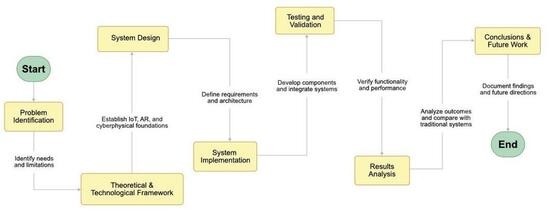
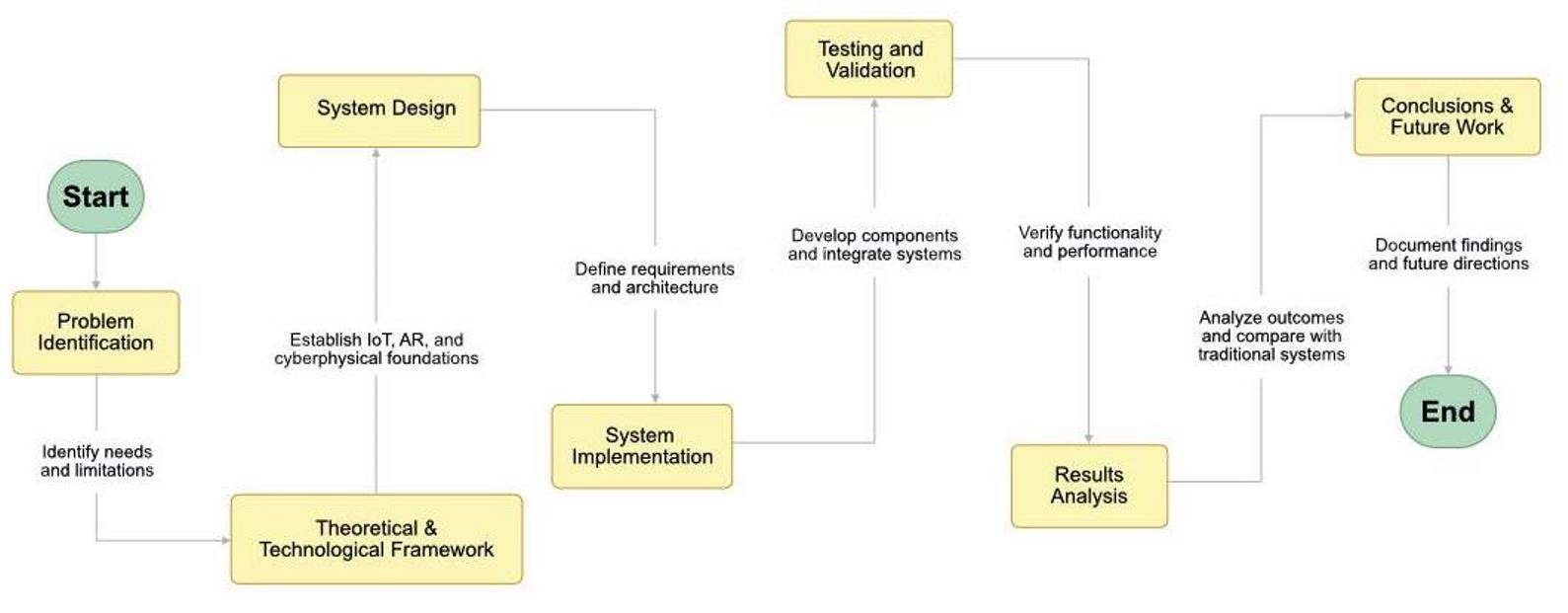
TDDM4IoTS comprises eleven stages oriented toward the systematic design and implementation of IoT systems, spanning from business logic definition and requirement analysis to hardware configuration, software development, integration, and validation. However, given the applied nature of this study and its focus on a smart tourism use case in Baños de Agua Santa, the methodology was structured and operationally adapted into five main phases:
  • Preliminary analysis and requirements gathering (P1): This phase establishes a solid starting point for the development of the intelligent system. It involves identifying the initial conditions of the environment where the system will be implemented and assessing the feasibility of meeting user requirements within the local tourism context.
  • Technological design and architecture (P2): The technological structure of the innovative tourism system for Baños de Agua Santa was defined, describing and justifying the hardware components, as well as the layered architecture that enables efficient integration of the IoT and AR.
  • Requirements analysis and modeling (P3): In this stage, the system’s functionalities and constraints are specified, ensuring that the technological solution addresses the real needs of tourists, residents, and municipal administrators.
  • Model and software generation and validation (P4): Based on the created models, a series of tests were conducted to validate the proper operation of the sensor nodes. The evaluation focused on sensor accuracy, stability of wireless communication, and integration with the data visualization software.
  • Deployment and integration (P5): This stage describes the deployment and integration of the intelligent system, including the configuration and validation of communication links, the physical implementation of sensor nodes, and the usability evaluation of the AR application.
The adaptation of the original methodology addresses the need to simplify the development process without compromising technical rigor. Instead of following the eleven proposed stages, only the critical ones were prioritized to achieve efficiency and tangible results in contexts with limited resources. This adaptation aligns with recommended practices in the management and simplification of technological and administrative processes, where streamlining phases enhance communication among stakeholders, optimize implementation, and support system scalability [22].
Consequently, the adapted methodology ensures a structured, efficient, and innovative process that is aligned with the principles of Tourism 4.0. It equips Baños de Agua Santa with smart urban furniture that integrates IoT and AR technologies to benefit residents, visitors, and local authorities. Table 2 details the inputs, outputs, evaluation metrics, iteration points, and stopping criteria for each phase of the TDDM4IoTS methodology as adapted for this work.

3.2. Usability Evaluation and Statistical Analysis

To quantify perceived usability, the System Usability Scale (SUS) questionnaire was applied. The SUS, originally proposed by Brooke (1996) and later formalized in detail [23], consists of 10 items with alternating positive and negative statements to reduce response bias, rated on a 5-point Likert scale (1 = strongly disagree, 5 = strongly agree) [24]. The SUS has been widely validated across domains including software systems, interactive platforms, mobile applications, and extended reality environments [13,25], demonstrating high reliability and sensitivity for pilot-level usability validation. The SUS score was computed according to the standard procedure [23]:
  • For positively worded items (1, 3, 5, 7, 9):
Adjusted score = Response − 1
  • For negatively worded items (2, 4, 6, 8, 10):
Adjusted score = 5 − Response
The sum of adjusted scores was multiplied by 2.5 to yield a final usability score ranging from 0 to 100.
To strengthen statistical rigor beyond descriptive reporting, the following analyses were conducted:
  • 95% confidence interval (CI) using Student’s t-distribution (small-sample correction).
  • Effect size estimation using Cohen’s d relative to the established usability benchmark of 68 [26].
  • Internal consistency assessment using Cronbach’s alpha coefficient [27].
The evaluation involved 20 participants distributed across two independent sessions (n = 10 each), conducted under controlled real-use conditions as part of a pilot deployment phase consistent with early-stage usability validation practices in human–computer interaction research [28].

4. Implementation

4.1. Preliminary Analysis and Requirements Gathering

Baños de Agua Santa is a nationally and internationally recognized tourist destination, characterized by its privileged natural environment and urban infrastructure that receives a constant flow of visitors throughout the year. Tourism is one of the primary economic drivers of the city, which necessitates the efficient management of public space and the modernization of services offered to both residents and visitors. However, the existing urban furniture exhibits significant deficiencies in terms of maintenance, signage, accessibility, and technological integration, which limit the quality of the tourist experience and hinder efficient public space management.
To identify requirements, field observations and a contextual analysis of the tourism and urban environment of Baños de Agua Santa were conducted. Figure 1 presents the results of the analysis of the furniture context in Baños de Agua Santa. Additionally, previous studies on smart cities and digital tourism were reviewed, highlighting the importance of incorporating emerging technologies in tourist areas to optimize interaction with the environment and access to visitor information [29,30,31].
Based on this empirical and bibliographic analysis, the following priority needs were identified:
Interactive visualization of tourist points using augmented reality (AR): This requirement aligns with the work of Expósito-Barea and Navarrete-Cardero [32], who implemented the CulturAR application to explore cultural heritage through AR, and with Nguyen [33], who emphasized the role of AR in smart tourism.
Access to useful information from mobile devices, such as historical data, georeferenced location, and nearby tourism services: Nguyen [33] analyzed the digitalization of tourism services through mobile applications, and to Premier et al. [15], who described smart urban furniture providing connectivity, information, and real-time services.
Integration of sensors to collect environmental data, such as temperature and humidity, for real-time urban monitoring: This requirement is supported by Ciaramella et al. [34], who proposed a network of urban sensors for monitoring environmental variables, and by Nassar et al. [35], who developed an adaptive system for real-time measurements.
Real-time visualization of data captured by sensors, enabling users to access updated information through an intuitive digital interface: This need relates to the work of Kamal et al. [36], who developed smart bus stops providing real-time data for public transport, and Steinmetz et al. [16], whose integrated urban furniture enhanced user experience through digital platforms.
Following the analysis of the furniture context conducted on the main streets of Baños, the condition, number, and physical as well as technological characteristics of the city’s urban furniture were recorded. The absence of modern technologies limits the city’s ability to meet the expectations of contemporary tourism and delays its development as a smart city.
For system implementation, strategic tourist trails were selected based on visitor flow, cultural relevance, and accessibility. The selection focused on covering areas with high visitor concentration and potential for technological integration to enhance the tourist experience. In a context where urban furniture often lacks modern technological solutions, implementing an innovative system along tourist trails presents an opportunity to promote innovation and enhance visitor experiences. Among the selected trails, the Virgen and Cross Trail stands out as an emblematic trekking route offering panoramic views, cultural and religious significance, and a high flow of tourists throughout the year.
To ensure project feasibility, the following aspects were evaluated:
Technical: Baños has basic connectivity infrastructure, including mobile networks and public Wi-Fi in certain areas, which enables the operation of IoT sensors and mobile applications. Additionally, there are urban furniture spaces suitable for technological integration without requiring major structural interventions.
Economic: The use of open-source technologies and low-cost devices ensures economic feasibility, particularly considering the possibility of gradually scaling the system without compromising the local authorities’ budget.
Social: Interaction with tourists and residents revealed a strong interest in technological solutions to improve both the tourist experience and the city’s image.

4.2. Technological Design and Architecture

This section details the technological components, the layered architecture that enables the efficient integration of IoT, and the development software used for the AR application.
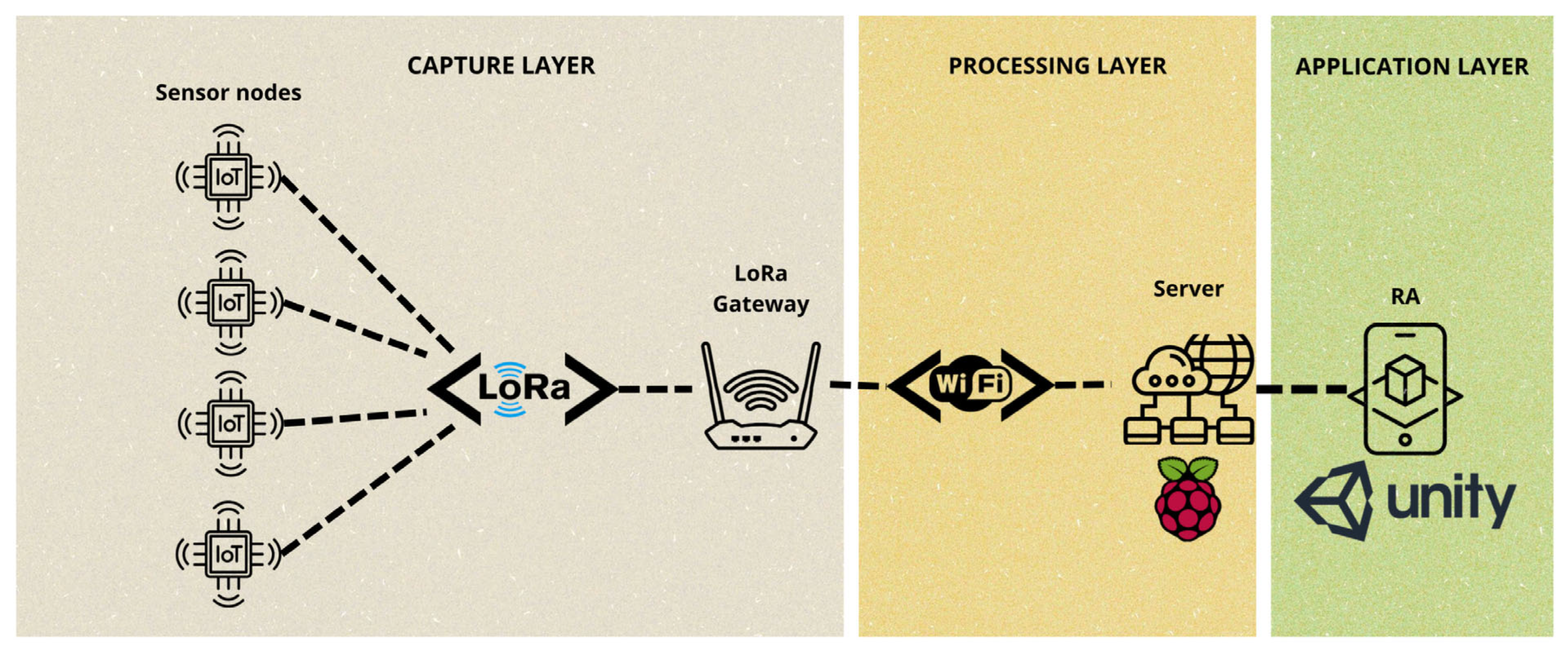
The proposed technological architecture is illustrated in Figure 2 and is organized into three functional layers:
Capture Layer: Composed of four sensor nodes equipped with LoRa technology, which transmit information to the LoRa Gateway.
Processing Layer: The collected information is sent to a server with internet connectivity, responsible for managing and storing the data in a cloud database.
Application Layer: Includes a mobile application with AR functionalities, designed to provide interactive experiences and enhance the perception of the tourist environment.
This modular architecture ensures scalability, interoperability, and efficient communication among system components, in line with recommended design principles for IoT environments and immersive applications.

4.2.1. Capture Layer

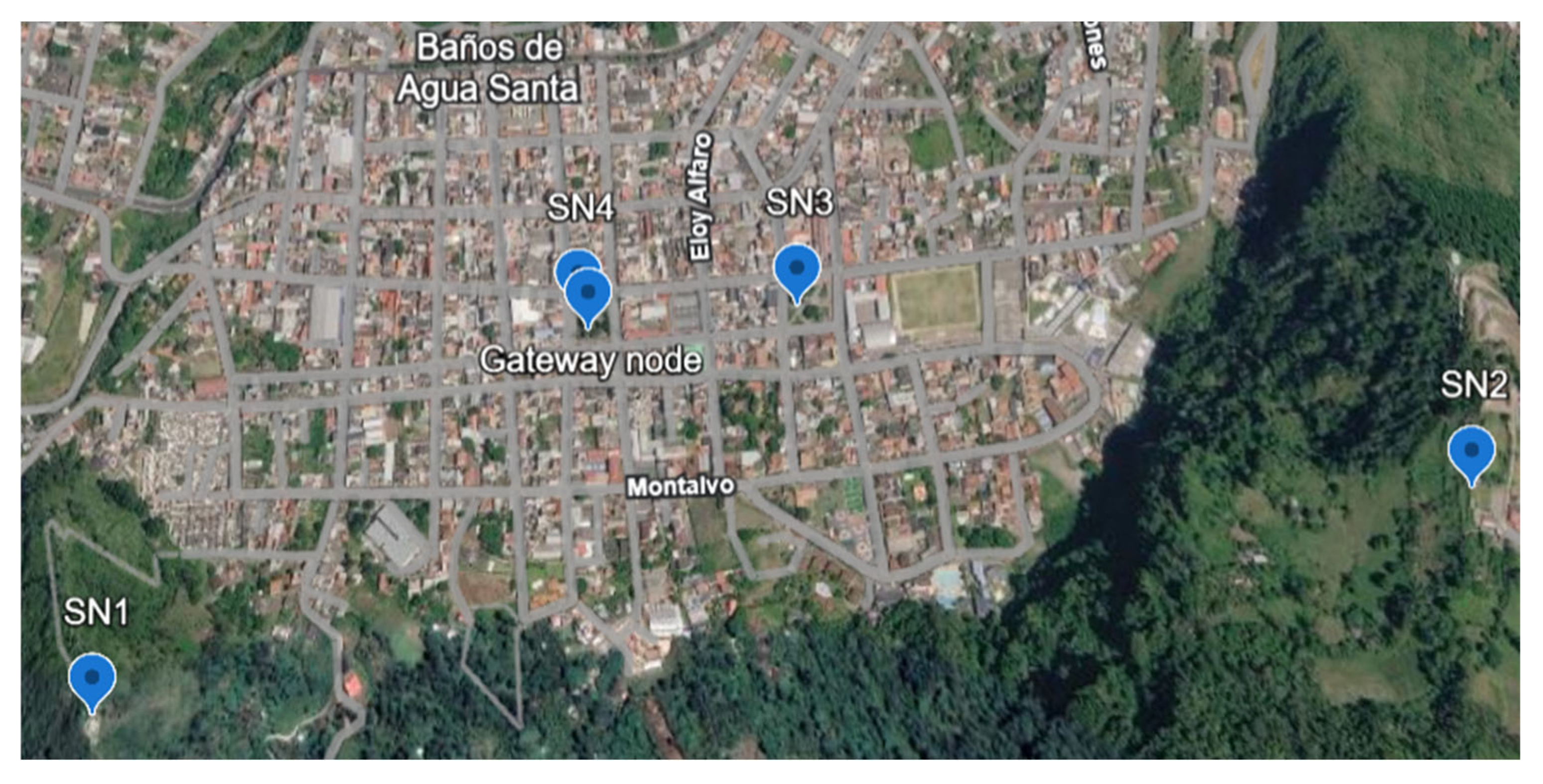
It consists of four sensor nodes that monitor environmental conditions at four strategic locations in the city. Figure 3 shows a simplified physical deployment diagram, where the sensor nodes are distributed at key tourist sites in Baños de Agua Santa: a sensor node on the La Virgen trail (SN1), a sensor node on the La Cruz trail (SN2), a sensor node in the central park (SN3), and a sensor node in the church park (SN4). Each node is represented as an IoT sensing device that wirelessly communicates with the central gateway through LoRa technology. The geographical location of the nodes was determined through propagation simulations using Radio Mobile (version 11.6.6) software to ensure Line of Sight (LoS) and maximize coverage at the points of highest tourist influx identified in the cantonal development plan.
Wireless communication: The city of Baños de Agua Santa presents a mountainous geography, as it is located on the outer slopes of the Andes mountain range. This condition limits the availability of Internet connectivity (Wi-Fi or mobile networks) mainly to the urban area, while coverage along the surrounding trekking trails is intermittent or nonexistent.
To transmit the environmental variables recorded by the sensor nodes to the gateway installed in the central park, short and medium range wireless technologies such as Wi Fi, Bluetooth, and Zigbee, as well as LoRa alternative, were evaluated considering communication range, data rate, energy consumption, network topology, and deployment cost. Although short range technologies are widely used in IoT systems, they are not well suited for geographically distributed outdoor scenarios, where LoRa can cover a wider area with low power consumption and cost-effective wireless connectivity [37]. Under energy constraints, the literature highlights LoRa as an appropriate technology for deploying sensor networks across large geographical areas, since low power nodes can continuously interact with the environment and opportunely report data before issues escalate into crises [38]. Therefore, LoRa was selected as the most suitable communication technology for the proposed architecture due to its long distance coverage and low energy requirements in the targeted deployment context. According to the National Frequency Allocation Plan of Ecuador, the 915 MHz band must be used [39].
Once the data are received by the gateway, they are transmitted via Wi-Fi connection to the processing layer.
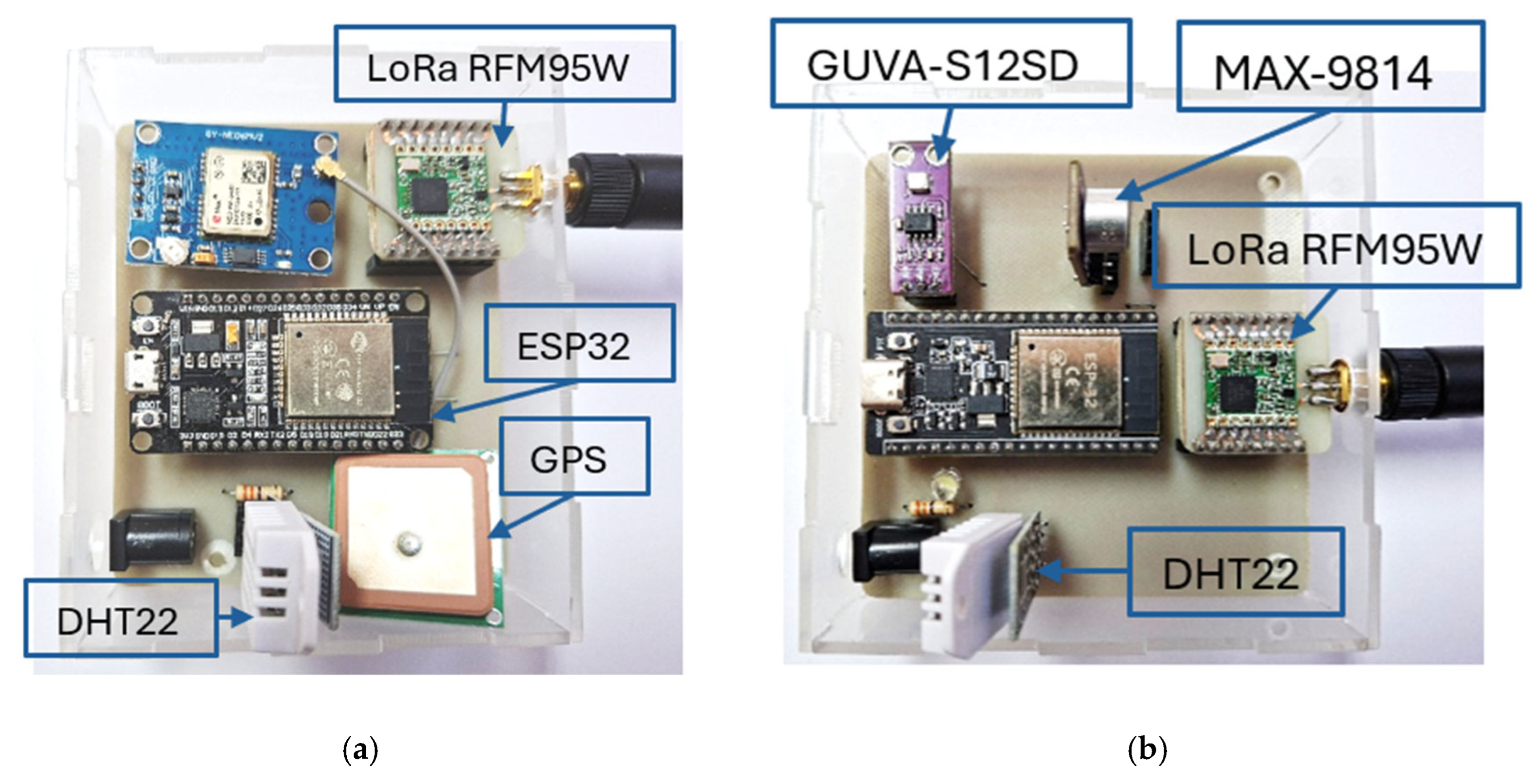
Sensors: To monitor temperature and humidity, the DHT22 sensor was used (Aosong Electronics Co., Ltd., Guangzhou, China). The GUVA-S12SD sensor (Genicom Co., Ltd., Daejeon, Republic of Korea) measures ultraviolet radiation due to its wide UV-A detection range. For the geolocation of sensor nodes along the hiking trails, the NEO-6M GPS module was integrated, providing reliable positioning for tourists during their routes. To capture environmental noise levels at the urban sensor nodes, the MAX9814 sensor (Maxim Integrated, Wilmington, MA, USA) was used, which integrates a microphone with an automatic gain amplifier.
Two node configurations were implemented according to the integrated sensor set. Sensor nodes SN1 and SN2 include the following components: ESP32 microcontroller (Espressif Systems, Shanghai, China), DHT22 sensor, Neo-6M GPS module (u-blox, Thalwil, Switzerland), and LoRa RFM95W module (Hope Microelectronics, Shenzhen, China). Sensor nodes SN3 and SN4 include the following components: ESP32 microcontroller, DHT22 sensor, MAX9814, GUVA-S12SD, and LoRa RFM95W module.
An initial calibration of the sensors was performed by comparing their readings with a certified meteorological station (Davis Vantage Pro2), in order to determine and apply the corresponding correction factors in the system backend. The sensor nodes are illustrated in Figure 4.
Power Supply and Autonomy: SN1 and SN2 exhibit a current consumption of 827.4 mAh/day. SN3 and SN4 register a daily consumption of 748.8 mAh/day. The sensor nodes operate with autonomous power supply based on Panasonic NCR18650B batteries (Panasonic Corporation, Osaka, Japan) configured in one series and two parallel (1S2P), with a total capacity of 6800 mAh at 3.7 V. The pack voltage is regulated to 3.3 V using an HT7333-A LDO (Holtek Semiconductor Inc., Hsinchu, Taiwan), required by the ESP32 microcontroller.
For SN1 and SN2, this configuration provides an approximate autonomy of up to 7 days, while for SN3 and SN4 the estimated autonomy is approximately 8 days with the 6800 mAh battery pack. To enable a future recharging scheme and protect the cells against current variations, the use of a CN3065 charge controller (BMS) is contemplated (Consonance Electronics, Shanghai, China); however, in the current deployment the nodes do not employ solar panels and operate exclusively on batteries, which must be replaced once depleted.
Data Processing and Transmission: The ESP32 microcontroller was selected to collect sensor data and transmit them wirelessly through the RFM95W LoRa module. The ESP32 acts as the core of the system, processing the data acquired from the sensors and controlling data transmission.
The sensor nodes implement an optimized operating pattern to reduce energy consumption; therefore, they remain active only during short time intervals. In each sensor node, the active time per cycle is 15 s, with a cycle frequency of 12 times per hour. For outlier management, firmware-level filtering was implemented to discard readings outside the technical operating ranges of the sensors (e.g., null or negative UV values).
The payload transmitted by each node has an approximate size of 160 bytes, which is within the operational limits of the link, considering that LoRa modulation supports a maximum payload size close to 256 bytes per frame.
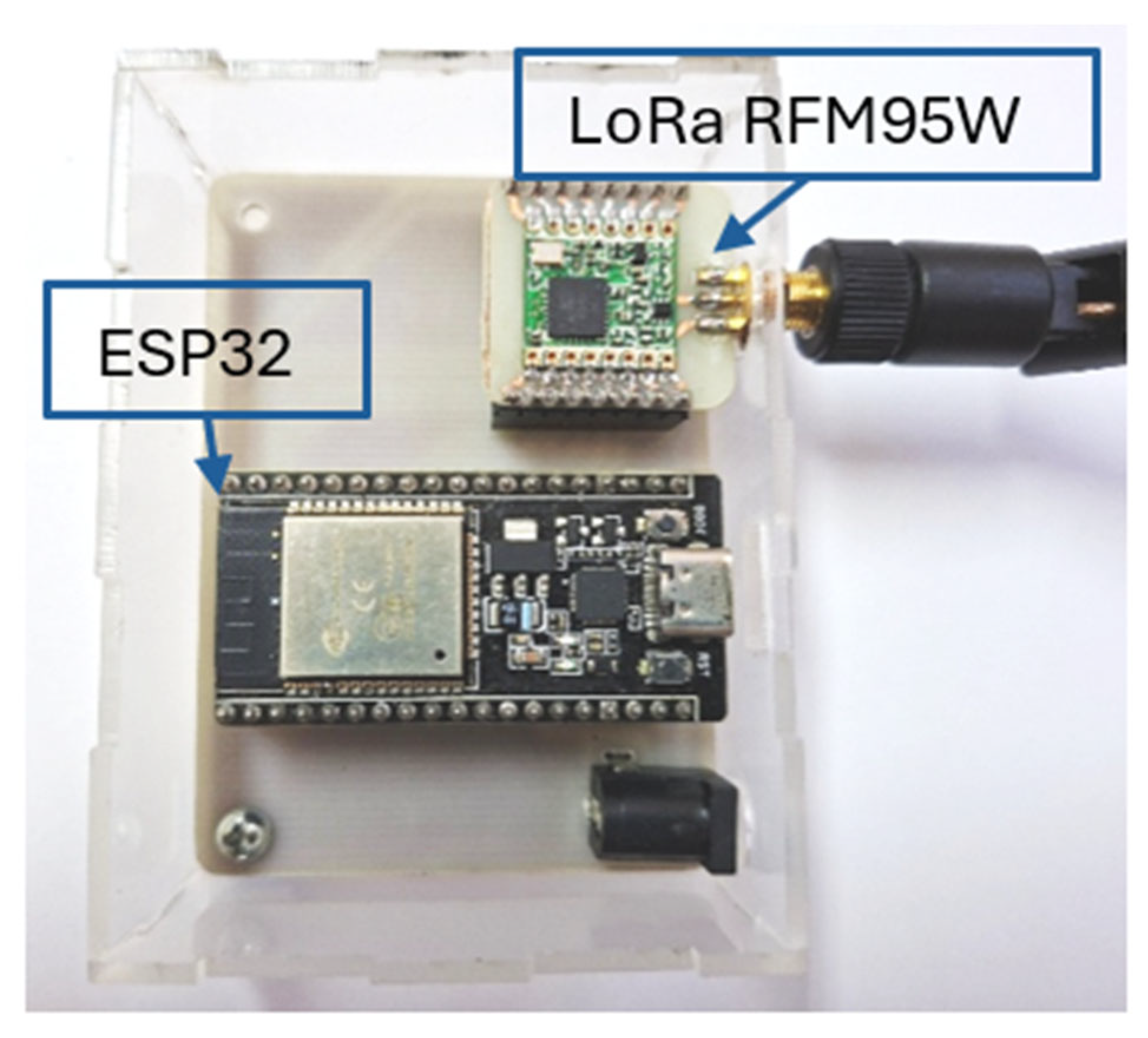
Gateway node: The receiver node or gateway, shown in Figure 5, is equipped with an ESP32 microcontroller and a LoRa RFM95W module. Located at the center of the network, it receives the data sent by the end nodes, processes them, and forwards them to the server via Wi-Fi communication. Both the gateway node and the server are powered from the electrical grid through AC/DC converters.

4.2.2. Processing Layer

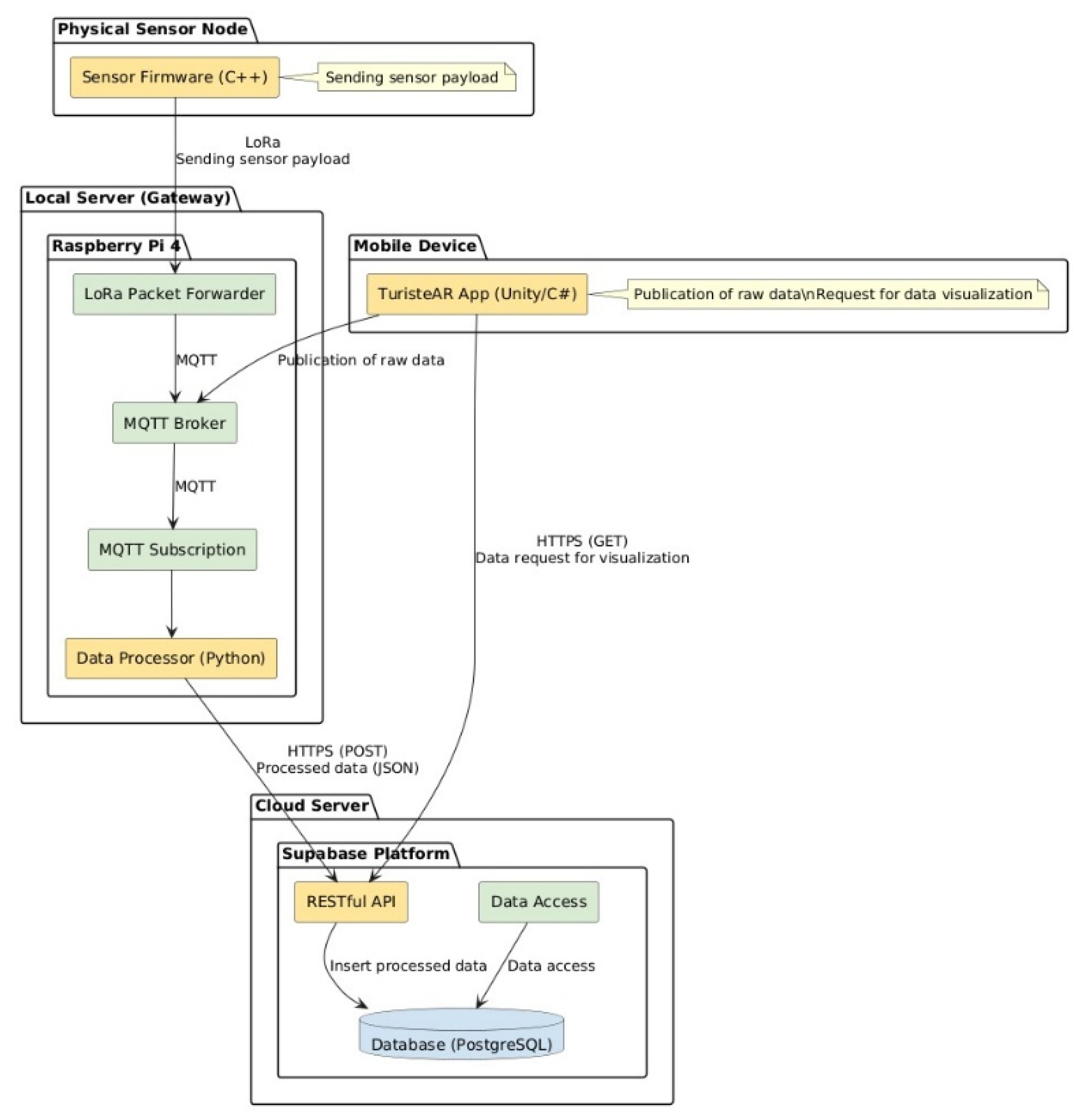
This layer is implemented on a Raspberry Pi 4, which operates as a local server for data ingestion, preprocessing, and forwarding. The data flow follows the sequence: (1) the sensor nodes transmit measurements via LoRa to the gateway; (2) the gateway delivers the packets to the Raspberry Pi 4, where they are decoded and normalized with timestamp addition; (3) the measurements are published to an MQTT topic through the Mosquitto broker and consumed by Node-RED; (4) in Node-RED, basic quality control rules are executed, including range validation, timestamp verification, and missing data detection; the message is then structured in JSON format; (5) finally, the validated data are forwarded via HTTP POST requests to the endpoint defined by the Supabase API for storage and subsequent consumption by the mobile application and the web dashboard.
Although HTTP and CoAP can be used as request response protocols in IoT systems, the proposed deployment scenario involves distributed sensor nodes operating in outdoor environments with potential network instability. In such contexts, there is a need for a lightweight protocol specifically designed to operate under unreliable networks or intermittent connectivity conditions. MQTT was selected because it is a publish/subscribe lightweight messaging protocol optimized for constrained devices and capable of enabling near real time data exchange with cloud platforms [40].
Additionally, MQTT does not require large bandwidth consumption, which makes it particularly suitable for distributed environmental sensors transmitting small payloads at periodic intervals [41]. Its broker-based architecture facilitates decoupling between data producers and consumers, allowing scalable integration with processing tools such as Node-RED while minimizing communication overhead at the edge level.
MQTT messaging was configured with QoS 0 (at most once) to reduce protocol overhead and resource consumption, given that environmental monitoring in this case is not mission critical and tolerates occasional packet loss. The combination of MQTT lightweight messaging and local buffering contributes to preserving data continuity while maintaining efficient resource utilization in the edge device. To operate under intermittent connectivity conditions, when Internet outages are detected, records are stored in a local buffer and automatically retransmitted once the connection is restored.
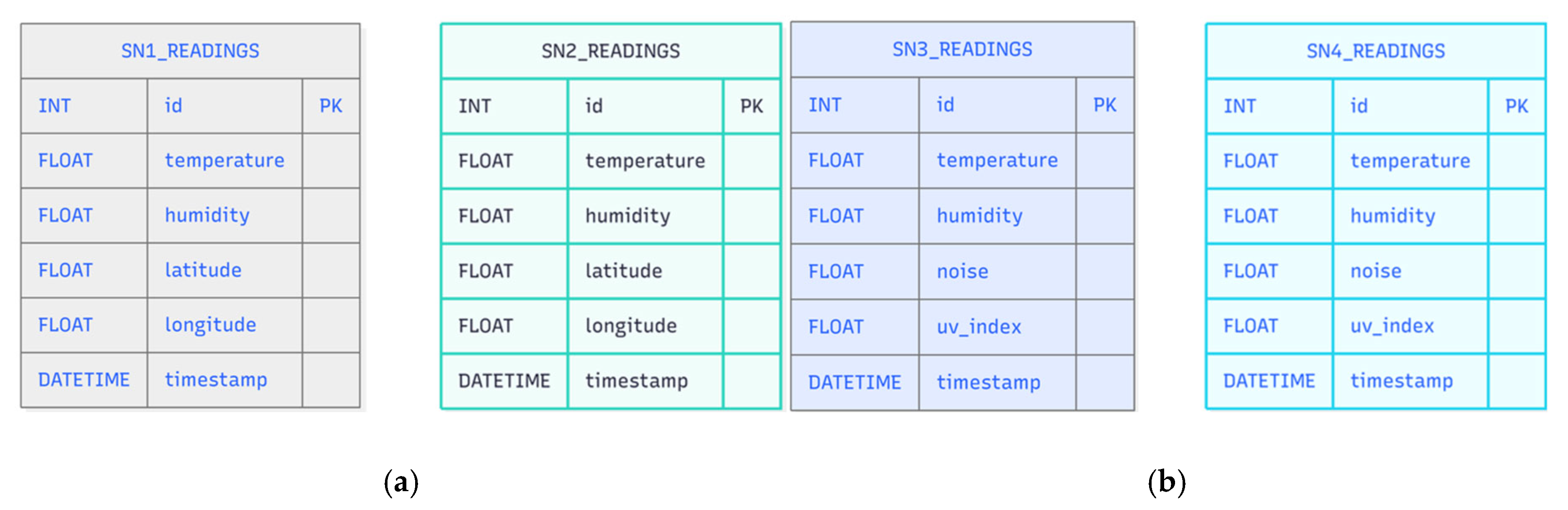
Database: The database was implemented in PostgreSQL (Supabase) using four node-specific tables without foreign keys. It is composed of four independent tables, each intended to store the measurements of a specific sensor node together with the timestamp (date and time) of each reading. Figure 6 presents the logical diagram of the schema: tables SN1 and SN2 share the same structure but are kept separate to differentiate the node and its location; similarly, SN3 and SN4 record the same variables and are stored in distinct tables according to the monitoring point. No foreign keys or inter-table relationships were implemented; the separation is physical by node, and data integration is performed at the application level.

4.2.3. Application Layer

For the development of the smart tourism mobile application in Baños de Agua Santa, several augmented reality frameworks were comparatively evaluated, including Unity with Vuforia, ARKit, ARCore, Spark AR, and 8th Wall. Although ARKit and ARCore offer robust native tracking performance, their functionality is limited to devices that meet specific hardware requirements, which may exclude mid range or older smartphones commonly used by visitors in emerging tourism contexts. In contrast, Unity combined with Vuforia provides broader device compatibility, including smartphones that do not natively support advanced ARCore or ARKit features. This was particularly relevant given the heterogeneous technological profile of tourists and residents in Baños de Agua Santa. Unity enables integrated management of 3D assets, multimedia content, user interaction logic, and cross platform deployment within a unified development environment. The Vuforia Engine SDK was used under a development and testing license, allowing rapid prototyping while maintaining scalability for potential production deployment.
The application employs a multi-trigger activation strategy: (1) Image Targets to display general tourist information based on the municipality’s official tourist map; (2) QR codes for signage and guidance along hiking routes; and (3) GPS-based activation to present contextual content at points of interest.
Communication between the application and the cloud platform is performed via HTTP/HTTPS through RESTful APIs. Environmental data queries are executed on demand when the user accesses the weather section; within this view, information is refreshed every 2 min. In the absence of connectivity, the application uses local caching and retries synchronization once the connection is restored. Consequently, the application can operate without Internet access for tourist content and AR functionalities; the main limitation in offline mode is that environmental variables will not be periodically updated, and the last available record will be displayed.
Minimum Requirements: On Android, Android 8.0 or higher is required, with RAM ≥ 3 GB, rear camera, and GPS. On iOS, iOS 13 or higher is required, with 2–3 GB RAM, rear camera, and GPS. A gyroscope is not required on either platform.

4.2.4. Smart Tourism System Integration

Figure 7 illustrates the component diagram, which outlines the overall structure of the innovative tourism system implemented in Baños de Agua Santa. The diagram highlights the interaction between the main technological modules: IoT sensors capturing environmental data, the LoRa gateway transmitting this data to the Raspberry Pi central server, the Supabase cloud platform managing data storage and processing, and finally the AR mobile application developed with Vuforia, which consumes this data to provide users with interactive and contextualized experiences.

4.3. Requirements Analysis and Modeling

This stage defines the system’s functionalities and constraints, ensuring that the technological solution addresses the real needs of tourists, residents, and municipal administrators.

4.3.1. Identification and Classification of Requirements

To classify the requirements, clear criteria were established to organize the identified elements into two main categories:
Functional requirements: These correspond to the actions, processes, or specific functionalities that the system must perform to achieve its objectives, focusing on user interaction and information processing. These requirements describe observable and measurable behaviors and are presented in Table 3.
Non-functional requirements: These refer to quality attributes, constraints, and conditions that affect the system’s performance, security, usability, availability, and scalability, without representing direct operational functions. The non-functional requirements are presented in Table 4.

4.3.2. Identification of Actors

For the development of the intelligent system, both human and technical actors were identified, as each one plays a specific role within the technological ecosystem. Table 5 describes the role and functions of each actor.
Human actors: Users, including tourists and city residents; and the System Administrator, who is responsible for the technical operation of the platform.
Technical components: Sensor nodes, gateway node, central server, and the AR application.
Use Case Modeling: Use case modeling provides a structured visualization of the main interactions between actors and the system, facilitating the identification of key scenarios for smart tourism in Baños de Agua Santa. Table 6 and Table 7 describe the use cases for the tourist and the administrator, respectively.

5. Results

5.1. Model and Software Validation

Based on the developed models, tests were conducted to validate the performance of sensor nodes and the implemented algorithms for data collection, transmission, and processing. These validations enabled early parameter adjustments and error detection, ensuring consistency and reliability of the collected information.

5.1.1. Sensor Tests

The validation of the sensors integrated into the nodes is described below:
Temperature and humidity sensors: The DHT22 sensor was validated through a field comparison against a reference meteorological station located at Parque de la Familia (Baños de Agua Santa). Measurements were collected over three days, within a daily observation window from 11:45 to 20:45 (approximately 9 h/day). The sensor node was installed outdoors at approximately 2 m from the station to minimize spatial variability. Environmental conditions during the tests were characterized by partly cloudy skies.
Since the meteorological station provides records at 15 min intervals, the DHT22 data stream (sampled every 15 s) was time-aligned to the reference by extracting the corresponding DHT22 value at each station timestamp (nearest-neighbor selection at the station timestamp). A total of 38 paired samples per day were obtained, yielding n = 114 paired samples over the three-day period. Performance was summarized using reliability, defined in Equation (1):
Reliability ( % ) = 100 R E ( % ) ,
where RE is the mean relative error across samples.
The comparison yielded a reliability of 89.75% for temperature and 86.35% for humidity, with absolute errors of 1.77 °C (temperature) and 11.63%RH (humidity). Overall, these results support the use of the DHT22 for contextual environmental monitoring and tourist-facing information within the proposed smart tourism system.
Ultraviolet radiation sensor GUVA-S12D: Its performance was evaluated against the meteorological station under the same field conditions and at the same site used for the DHT22 validation. However, both devices record different portions of the electromagnetic spectrum, making direct comparison unfeasible. While the station measures total solar radiation (UV, visible, and infrared) in W/m2, the GUVA-S12D detects ultraviolet radiation in the UV-A range and partially in the UV-B range. Therefore, this sensor is more suitable for providing UV risk warnings and supporting preventive health decisions, representing a low-cost alternative for IoT systems.
Acoustic sensor MAX9814: Validation was conducted indoors using a professional digital dosimeter Sonus 2 Plus (Criffer) as reference. The MAX9814-based node and the dosimeter were co-located with a separation distance of approximately 4 cm to minimize spatial differences in sound exposure. The MAX9814, a low-cost microphone module with automatic gain control (AGC), produced measurements that were strongly consistent with the reference instrument: the Pearson correlation coefficient was 0.875 for SN3 and 0.852 for SN4. These results indicate a high correspondence in the temporal variation in acoustic levels between both instruments under controlled indoor conditions.
GPS module Neo-6M: The Neo-6M positioning performance was evaluated in an outdoor drive test by comparing its latitude–longitude estimates against the iPhone 11 GNSS location estimate (Google Maps used as the visualization interface). Data were collected over a 1 h route by car, registering 10 paired position samples along the trajectory. This assessment was conducted as a pilot test aimed at rapid validation of the module’s operational feasibility in real conditions. The position difference was computed as the great-circle distance between coordinate pairs, and the analysis showed a maximum discrepancy of 4 m with respect to the mobile device estimate.
In the proposed system, the GPS module is primarily used to georeference the fixed sensor nodes deployed along trekking routes, serving as a reference datum in the mobile application and to document the exact installation locations of the nodes. Therefore, the sensor node is not expected to operate under continuous motion, and the observed error range is sufficient for node location tagging and contextual visualization rather than for high-precision navigation or surveying.

5.1.2. Radio Link Simulation

The radio connection was designed using software such as Google Earth (version 7.3) to determine the geographic coordinates of the system nodes, considering factors such as line of sight and potential geographic obstructions. The node locations are entered into the Radio Mobile program, which allows for determining the feasibility of the wireless connection, predicts data transmission and reception losses, and ensures an efficient and reliable connection. The gateway node is located at the geographic coordinates (−1.39825, −78.4235), the sensor node located at La Cruz at (−1.39930, −78.4146), and the sensor node located at La Virgen at (−1.40213, −78.4288). For the design of the wireless network, it is necessary to establish the radio link configuration parameters shown in Table 8.
The radio link design results for the Cruz and Virgen nodes showed received electric field strengths of 56.4 dBµV/m and 54.5 dBµV/m, respectively, with received power levels of −78.4 dBm and −79.6 dBm. These values are above the receiver sensitivity threshold (−132 dBm), providing favorable communication margins. Furthermore, the relative signal-to-noise ratio obtained was 53.6 dB (Cruz) and 52.4 dB (Virgen), suggesting a highly reliable and robust link.

5.1.3. User Interface

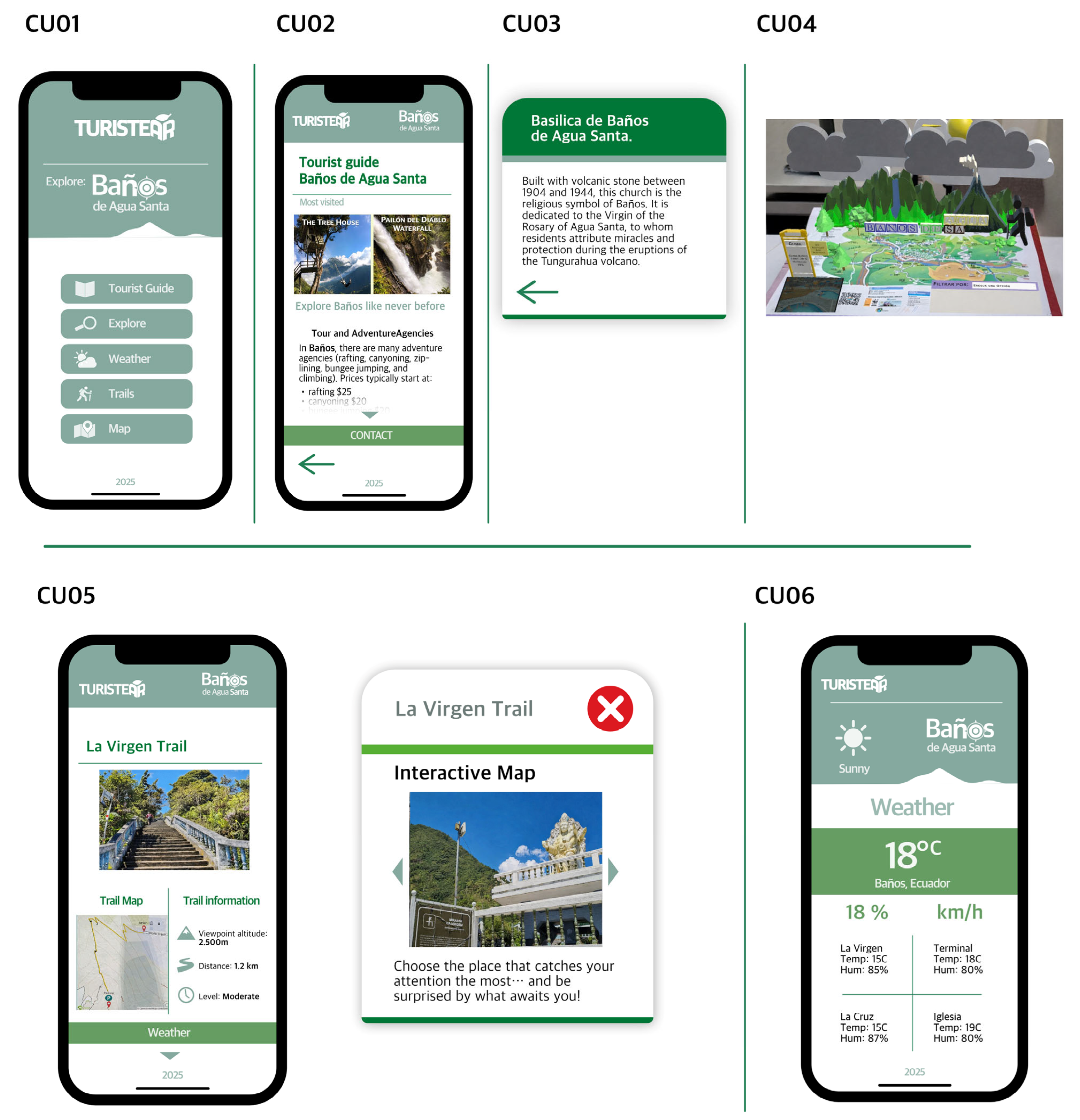
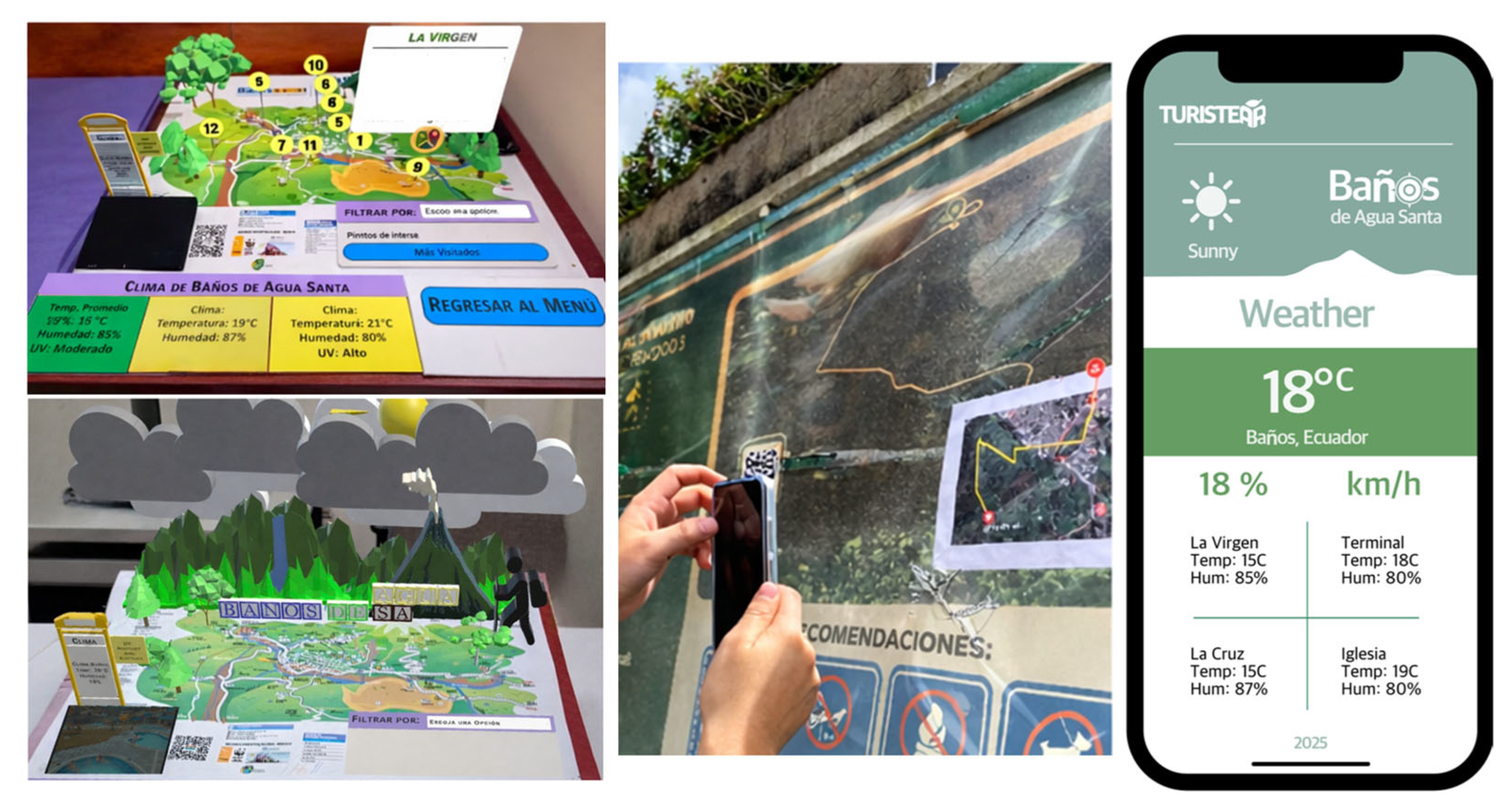
The user interface of the TuristeAR Baños application was designed to provide an intuitive, user-friendly, and accessible experience for tourists of all ages. The screen layout follows a logical and sequential flow that facilitates navigation and access to the main functionalities of the application. Users access the main menu, where the key sections of the application are presented: Tourist Guide, Explore, Weather, Trails, and Map. Each button is designed with an icon and descriptive text, enabling visual recognition and quick selection of the desired function. The design follows usability principles such as visual consistency, logical grouping of options, and the use of graphic elements that enhance comprehension and navigation experience. Figure 8 presents screenshots of the mobile application that address the use case requirements for the tourist.
Tourist Guide: It is an interactive tool designed to provide users with an organized and comprehensive consultation experience regarding the main attractions, tours, and tourism services of the city of Baños de Agua Santa. This option facilitates autonomous and planned exploration of the destination, offering structured, clear, and easily accessible content.
Explore allows users to receive contextual information about nearby places without needing to scan markers. It is based on the use of the mobile device’s Global Positioning System (GPS). When the user approaches a geographical point of interest such as a tourist trail, natural attraction, or cultural site, the application detects their location through latitude–longitude coordinates and, if within a defined proximity radius (15 m), automatically displays an informative panel on the screen. This functionality enables spontaneous and immersive exploration of the environment without direct interaction with buttons or codes, making it ideal for walks, free tours, or visitors with limited mobility.
Weather: It provides users with updated environmental information about Baños de Agua Santa and specific zones where sensors are located. This option is part of the system’s immersive functions, designed to provide tourists with contextual data within the framework of Tourism 4.0. The weather module updates every 2 min with values of temperature, humidity, UV radiation, and the location of the nearest node, thus providing visitors with environmental information.
Map: It allows users to interact with an augmented reality visual representation of the official map of Baños de Agua Santa through image recognition of a predefined image target. This functionality was developed in Unity using Vuforia, overlaying digital elements such as 3D models, pins, and interactive buttons onto the physical map. In field use, point of interest activation via image target recognition is functional at an approximate distance of 0.30–1.20 m, depending on the size of the printed target, under medium lighting conditions and with a camera capture angle of up to 30°.
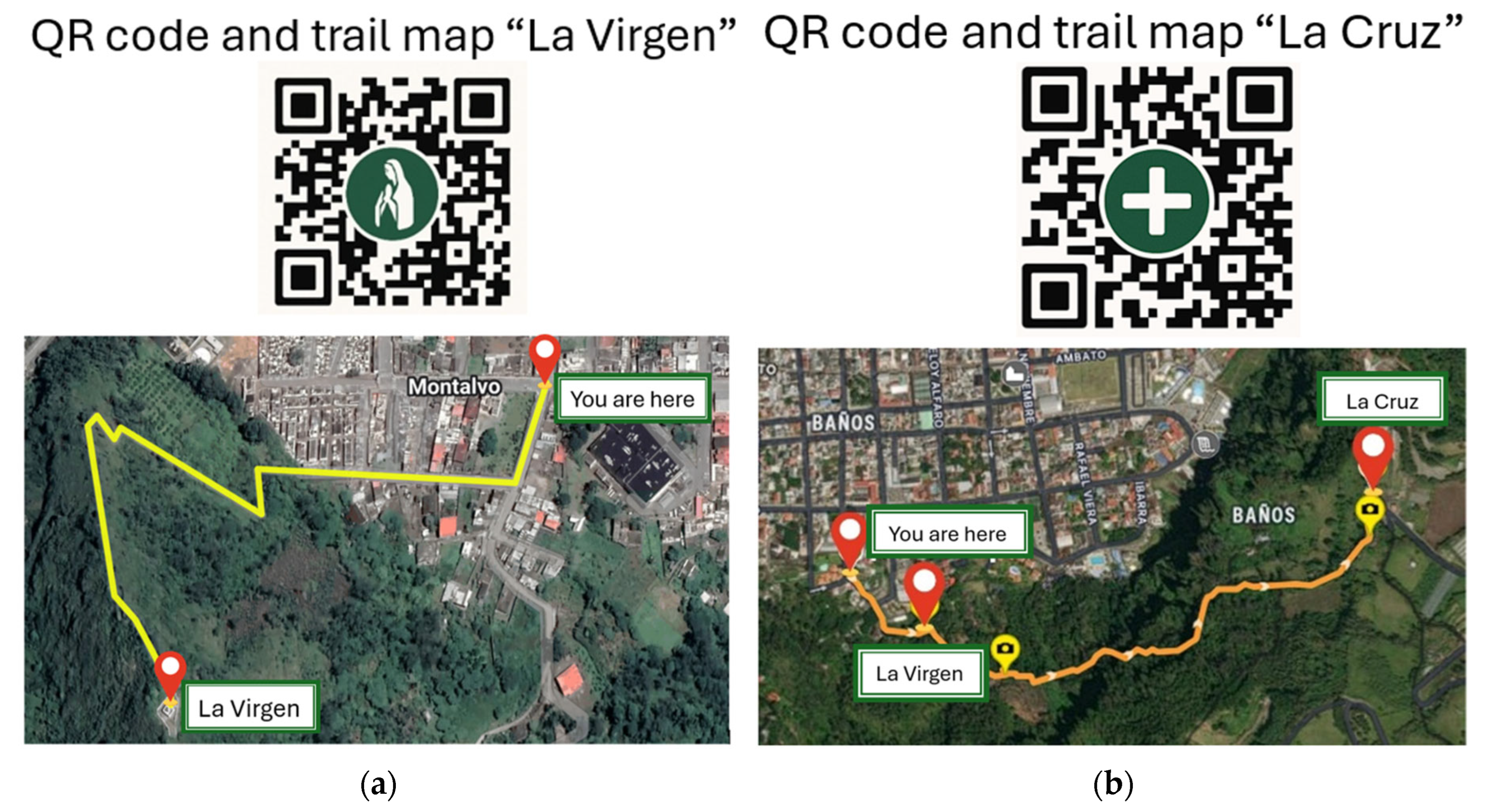
Trails: QR codes were printed and placed at the starting points of the trekking routes, allowing users to scan them with the mobile device’s camera to access trail guidance and contextual content. Additionally, the maps of the “La Virgen” and “La Cruz” trails were implemented as augmented reality targets. When the camera is focused on these maps, 2D pin-shaped buttons are displayed and can be selected to open scrollable image galleries, providing an immersive and educational experience. Similar to the Map module, recognition of QR codes and image targets is functional at an approximate distance of 0.30–1.20 m (depending on the printed marker size), under medium lighting and with capture angles up to 30°. Figure 9 presents the image targets used in the augmented reality application (trail maps and QR codes).
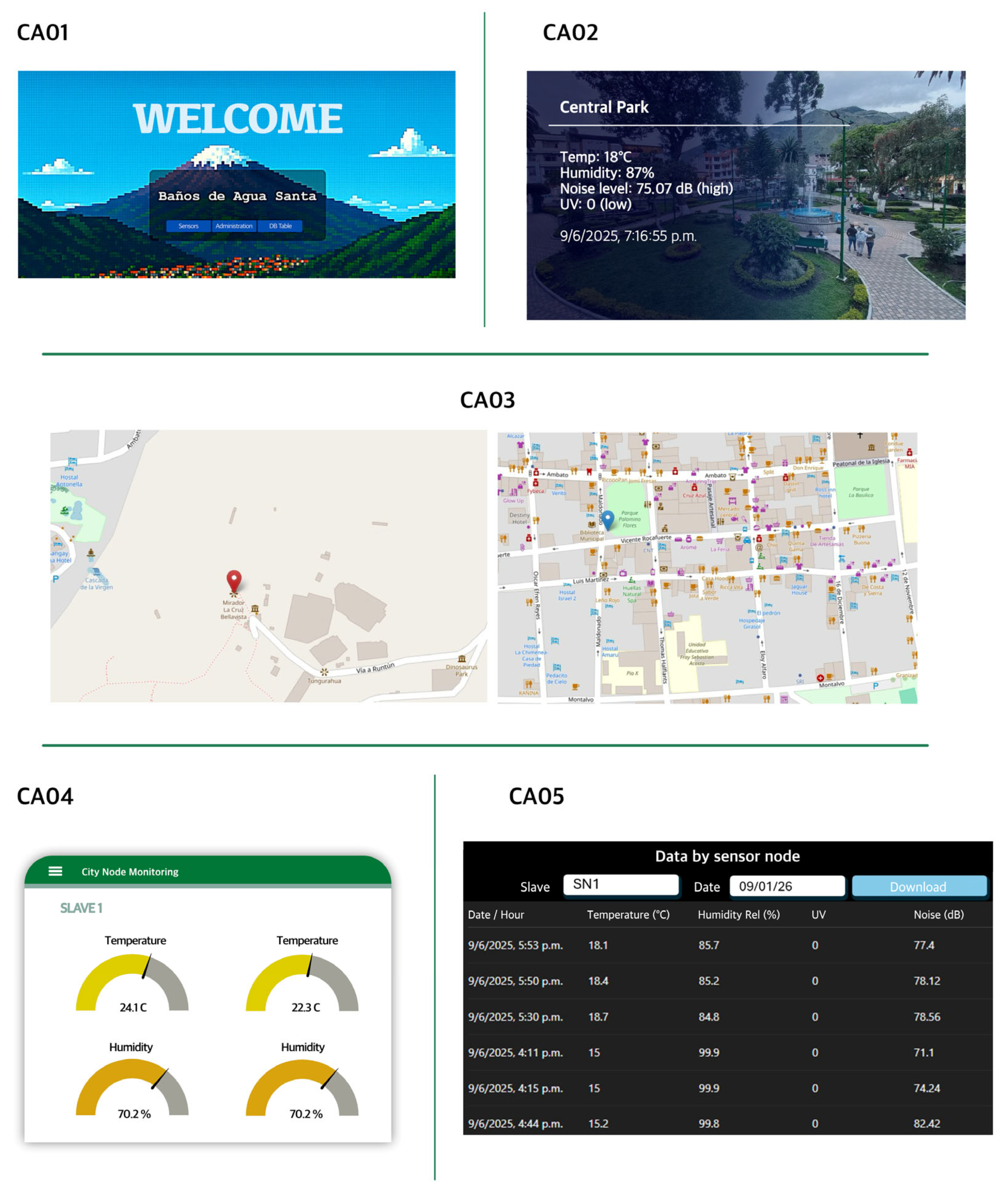
Additionally, a web interface for the administrator profile was developed, allowing historical records stored in the database to be consulted and exported in CSV format, thereby facilitating subsequent data analysis. Figure 10 illustrates the information available for this type of user.

5.1.4. Validation of Functionalities

During the development phase of the TuristeAR Baños application, a rigorous validation process was conducted to ensure that each implemented module met the established requirements and provided a smooth and stable user experience. Figure 11 shows several test scenarios in which the IoT–AR mobile application was validated.
Each module was tested independently and subsequently in conjunction with the others to identify potential interferences, integration errors, or communication bottlenecks with the server. The results showed that the application maintained stable behavior under varied conditions, responding appropriately to user requests and updating data at defined intervals, particularly in the weather, routes, and tourist content modules.
The validation was carried out through functional field tests using two mid-range mobile devices (Realme C35 and Redmi A5), both running the Android operating system. The main validated functionalities were:
  • Periodic-time visualization of weather information.
  • Activation of tourist content through AR markers.
  • Operation of buttons and navigation within the application.
  • Periodic query and update of sensor data.
  • Error handling and stability in server communication.
  • Accurate user geolocation.
  • Reliable marker recognition.

5.2. Deployment and Integration

This section describes the deployment and integration process of the proposed smart system, from the test and validation of communication links to the physical implementation of sensor nodes and the usability evaluation of the augmented reality application.

5.2.1. Wireless Transmission Tests

After completing the radio link simulation, field transmission tests were conducted. The tests were carried out during the afternoon (16:00–18:00) under partially clear sky conditions. The scenario presented partial visibility, with segments in Line of Sight (LoS) and others affected by elements of the urban and natural environment, such as poles and trees. The gateway node was installed at a strategic location near the city’s central park, approximately 8 m above ground level. This elevated and unobstructed position provided a line of sight toward nearby viewpoints.
SN1: Communication was evaluated over a linear distance of 791 m with an altitude difference of 197 m. Transmission interruptions were shorter than 3 min, indicating minimal data loss mainly attributable to distance and environmental conditions. RSSI values were recorded in the range of −64 dBm to −84 dBm.
SN2: The separation from the gateway was 1.08 km, with an altitude difference of 68 m. The scenario presented partial visibility, with intermittent line of sight obstructed by urban and natural elements. RSSI values averaged around −90 dBm, with occasional improvements up to −70 dBm in clearer areas.
SN3: The distance between devices was 90 m at the same altitude. Visibility conditions were optimal, with a clear line of sight. RSSI values ranged from −30 dBm to −50 dBm, reflecting a strong and stable signal with minimal data loss.
SN4: Tests were conducted at distances between 10 and 30 m from the gateway, with a height difference of 8 m. Despite the short range, obstacles such as shrubs, walls, and urban furniture generated mixed visibility conditions (LoS and NLoS). Recorded RSSI values ranged from −40 dBm to −60 dBm, indicating low signal loss due to obstructions.

5.2.2. System Usability Evaluation

To validate the system in a real context and assess its practical feasibility, a functional prototype was deployed using existing urban furniture at strategic tourist sites in Baños de Agua Santa. The intervention consisted of temporarily integrating the system’s AR activators into physical structures and preparing the supporting materials required for interaction in the field. Specifically, QR codes were placed at selected points such as trail entrances and informative signs, and printed replicas of the official tourist map were distributed at key locations in the urban area (e.g., totems, information centers, and entrances to natural routes). These materials supported visitor orientation and complemented the Map functionality, which is based on interactive pins and geolocated information.
The usability evaluation was conducted as an initial assessment using focus groups recruited voluntarily on Saturday afternoons in the city center, a time period characterized by high visitor flow. In the first session, the SUS questionnaire was applied to 10 participants, and in a second session conducted approximately four months later, it was applied to an additional 10 participants under the same test protocol and field conditions. In total, the evaluation included 20 respondents, with each session comprising 5 men and 5 women and participants aged 18–40 years. The groups included both tourists and residents, selected to represent typical visitors with basic technological familiarity. The results from both sessions were compared to assess response consistency and verify the stability of the usability outcomes over time.
Before answering the usability questionnaire, participants performed a guided task sequence covering the main application modules: (1) opening the app and browsing Tourist Guide content; (2) using Explore to verify that cultural POI information was displayed when the device detected proximity through GPS; (3) accessing Weather to visualize environmental data; (4) using Map through the printed tourist map (Image Target) to interact with AR content; and (5) testing Trails on trekking routes using QR codes and trail maps as AR targets. Most application features were designed to operate without Internet access; however, the Weather module required connectivity. During the tests, this module was executed using 4G mobile data, which provided full coverage within the urban area.
Within the excellent usability range, as scores above 68 are generally considered acceptable and scores above 80 excellent. These results indicate that, in this pilot evaluation, users perceived the application as easy to learn and use, requiring minimal support while completing the proposed tasks. Table 9 shows the average of the SUS responses from test 1 and test 2.
Confidence Interval Estimation: Given the pilot sample size n = 10 on each test, a 95% confidence interval was computed using Student’s t -distribution ( d f = 9 ). The mean SUS score used in this estimation was 84.38, computed as the average of Test 1 (80.75) and Test 2 (88.0). Assuming a conservative standard deviation of 7.5, consistent with reported SUS dispersion in small-sample usability studies [26], the confidence interval was estimated as it is shown in Equations (2) and (3):
C I 95 % = 84.38 ± 5.36
C I 95 % = [ 79.02 ,   89.74 ]
The lower bound of the interval (79.02) remains within the “Excellent” usability category, indicating statistical robustness despite limited sample size.
Effect Size Analysis: To evaluate practical significance, Cohen’s d was computed relative to the standard usability benchmark (μ0 = 68) [26], as shown in Equation (4).
d = 84.38 68 7.5 = 2.18
An effect size of 2.18 is considered extremely large according to conventional thresholds [42], demonstrating substantial practical superiority over minimum usability acceptance criteria.
Internal Consistency: Internal consistency was assessed using Cronbach’s alpha [27], yielding an estimated coefficient of: ∝ ≈ 0.89. This value 0.89 indicates very good internal consistency, confirming stable response patterns across positively and negatively worded items. The estimated coefficient aligns with reliability levels commonly reported for the SUS in pilot-scale usability evaluations.
Usability Implications for IoT–AR Urban Systems: The obtained SUS score of 84.38, supported by a narrow confidence interval and extremely large effect size, indicates that the proposed IoT–AR urban node demonstrates high usability performance under real-world pilot conditions. Item-level analysis reveals strong perceived ease of use, rapid learnability, and effective functional integration, while complexity and inconsistency indicators remain minimal. These results suggest low cognitive load and high interface coherence, which are critical factors for public infrastructure adoption in smart tourism environments. From an engineering standpoint, usability directly influences deployment feasibility, system scalability, and user retention in urban interactive systems. Previous research emphasizes that technological robustness alone is insufficient without high user acceptance and low interaction friction [13,25]. Although the present evaluation corresponds to a pilot phase, the large effect size (d = 2.18) and excellent internal consistency (α ≈ 0.89) indicate that the observed usability performance is structurally significant rather than incidental.

6. Limitations and Future Work

The developed prototype demonstrated the technical feasibility of integrating IoT–AR into smart urban furniture within a real-world context. However, it is important to acknowledge certain limitations inherent to the pilot scope of the project, as well as the improvements required for long-term and large-scale implementation.
In terms of energy autonomy, the sensor nodes currently operate using rechargeable batteries in a 1S2P configuration, with an approximate duration of 7 to 8 days depending on the node type and the integrated sensors. Although the incorporation of monocrystalline solar panels (6 V/5 W) was evaluated as a solution for autonomous recharging, these were not implemented during the pilot phase. For permanent deployment, the integration of solar generation systems is necessary. Currently, the enclosures of the sensor nodes and the gateway node are fabricated from 3 mm acrylic. However, for long-term installation in the locations identified in this study, it will be necessary to design enclosures with certified IP65 protection.
The sensors employed correspond to low-cost devices, suitable for contextual monitoring and tourism-oriented applications, but not designed for regulatory-grade measurements. For large-scale implementation, the incorporation of certified sensors could be considered. Regarding connectivity, although the system implements local buffer storage and subsequent synchronization in the event of Internet outages, the update of environmental variables depends on network availability. In areas with difficult access or limited coverage, delays in data visualization within the mobile application may occur.
To prevent radio link connectivity failures, redundant gateways and advanced fault-tolerance strategies should be implemented.
With respect to usability evaluation, the SUS questionnaire was conducted with a small focus group, which allows validation of the system’s initial acceptance but does not represent a statistically generalizable study. Future studies with larger samples and more diverse demographic profiles would enable more robust conclusions.
The integration of smart urban furniture with IoT and AR presents significant potential to enhance the visitor experience, strengthen data-driven municipal management, and promote smart tourism under the Tourism 4.0 framework. For sustained institutional adoption, the technological component should be complemented with cost–benefit analyses, maintenance models, and community engagement strategies.

7. Conclusions

This study designed and validated an end-to-end IoT–AR system embedded in existing urban furniture to support Tourism 4.0 services in Baños de Agua Santa, Ecuador. The prototype integrates four environmental sensing nodes, a LoRa gateway and edge server, a cloud data repository (Supabase), and a mobile AR application (Unity/Vuforia), enabling a continuous data loop from in-field sensing to user-facing visualization and municipal consultation.
The proposed architecture demonstrates that smart urban furniture can be operationalized as an interaction node by combining (i) in situ sensing, (ii) low-power long-range communication, (iii) edge-based preprocessing and quality checks, and (iv) AR-driven user interaction. In the pilot deployment, AR activators were integrated into totems, informational signage, and the official tourist map without structural modifications, supporting low-impact integration into the existing urban environment.
The selected stack is justified by the local infrastructure constraints and operational needs of a mountainous tourist context: LoRa provides coverage beyond areas with reliable Wi-Fi/mobile service, while MQTT and Node-RED enable lightweight ingestion, validation, and buffering under intermittent connectivity. Data were stored in Supabase and consumed by the mobile and web applications via REST APIs, allowing periodic updates and offline operation through local caching (with the limitation of non-updated environmental values while disconnected). The payload size per message and the implemented buffering/retry policy support reliable operation under field conditions.
The AR layer enabled multimodal access to tourist information through GPS-based proximity triggers (15 m radius for Explore) and marker-based activation (Image Targets/QRs), which was functional at 0.30–1.20 m depending on marker size, under medium lighting and capture angles up to 30°.
The usability evaluation provides empirical support for the effectiveness of the AR layer. Two independent SUS sessions yielded scores of 80.75 and 88.0, with a combined mean of 84.38, consistently classified within the excellent usability range. These results indicate strong perceived ease of use, rapid learnability, and low interaction friction under real-world pilot conditions. The temporal separation between sessions further supports the structural consistency of the usability findings, suggesting that the observed performance is not incidental but stable across measurements.
In terms of contributions, this work provides: (i) a conceptual rationale for smart urban furniture as a Tourism 4.0 interaction node linking physical context to digital content; (ii) a methodological contribution through the adaptation of TDDM4IoTS into five phases for tourism-oriented cyber–physical systems; (iii) a system contribution consisting of a fully implemented IoT–AR data loop; and (iv) empirical evidence from pilot deployment, sensor validation, wireless link assessment, and usability evaluation.
Despite these positive results, the current evidence reflects a pilot-scale deployment. Future work should strengthen long-term viability by integrating solar charging for remote nodes, improving environmental durability, expanding the usability study to larger and more diverse samples, and conducting a cost–benefit and socio-economic impact assessment to support municipal-scale adoption and replication across other destinations.
It is recommended to enhance the user interface, particularly its graphic components, as a final stage of the proposal, to optimize interaction quality prior to its deployment in public spaces. Strengthening the visual coherence, hierarchical organization, and standardization of interface elements will ensure more intuitive navigation, reduce cognitive load, and improve the integration between physical urban furniture and the digital components of the system.

Author Contributions

Conceptualization, A.P.C.-M.; Methodology, A.P.C.-M., C.M.G. and J.R.C.B.; Software, A.P.C.-M., C.M.G. and J.R.C.B.; Validation, A.P.C.-M., C.M.G. and J.R.C.B.; Formal analysis, M.P.S. and A.L.V.; Investigation, M.P.S. and A.L.V.; Writing—original draft, A.P.C.-M., M.P.S. and J.S.A.; Writing–review and editing, M.M.N. and J.S.A.; Visualization, M.M.N. and J.S.A.; Supervision, A.P.C.-M. and A.L.V.; Project administration, M.M.N.; Funding acquisition, A.L.V. All authors have read and agreed to the published version of the manuscript.

Funding

This work was supported by Universidad Técnica de Ambato and jointly to the Directorate of Research and Development (DIDE), grant number UTA-CONIN-2025-0188-R.

Institutional Review Board Statement

Not applicable.

Informed Consent Statement

Not applicable.

Data Availability Statement

The original contributions presented in this study are included in the article. Further inquiries can be directed to the corresponding author.

Acknowledgments

The authors would like to thank the Investigation and Development Directorate, DIDE, of the Technical University of Ambato for its special help with the development of this proposal.

Conflicts of Interest

The authors declare no conflict of interest.

References

  1. Zaifri, M.; Khalloufi, H.; Kaghat, F.Z.; Azough, A.; Zidani, K.A. From Earlier Exploration to Advanced Applications: Bibliometric and Systematic Review of Augmented Reality in the Tourism Industry (2002–2022). Multimodal Technol. Interact. 2023, 7, 64. [Google Scholar] [CrossRef]
  2. Bretos, M.A.; Ibáñez-Sánchez, S.; Orús, C. Applying virtual reality and augmented reality to the tourism experience: A comparative literature review. Span. J. Mark. ESIC 2024, 28, 287–309. [Google Scholar] [CrossRef]
  3. Alahi, M.E.E.; Sukkuea, A.; Tina, F.W.; Nag, A.; Kurdthongmee, W.; Suwannarat, K.; Mukhopadhyay, S.C. Integration of IoT-Enabled Technologies and Artificial Intelligence (AI) for Smart City Scenario: Recent Advancements and Future Trends. Sensors 2023, 23, 5206. [Google Scholar] [CrossRef]
  4. Zaman, M.; Puryear, N.; Abdelwahed, S.; Zohrabi, N. A Review of IoT-Based Smart City Development and Management. Smart Cities 2024, 7, 1462–1501. [Google Scholar] [CrossRef]
  5. Salih, S.; Abdelmaboud, A.; Husain, O.; Motwakel, A.; Elshafie, H.; Sharif, M.; Hamdan, M. IoT in urban development: Insight into smart city applications, case studies, challenges, and future prospects. PeerJ Comput. Sci. 2025, 11, e2816. [Google Scholar] [CrossRef] [PubMed]
  6. Jayakanth, J.J.; Elumalai, P.; Ovean, S. LoRa Based Wireless Sensor Network for Environmental Monitoring. In Communications in Computer and Information Science; Springer: Cham, Switzerland, 2024; Volume 2177, pp. 55–72. [Google Scholar] [CrossRef]
  7. Georgantas, I.; Mitropoulos, S.; Katsoulis, S.; Chronis, I.; Christakis, I. Integrate13d Low-Cost Water Quality Monitoring System Based on LoRa Network. Electronics 2025, 14, 857. [Google Scholar] [CrossRef]
  8. Lavdas, S.; Bakas, N.; Vavousis, K.; Khalifeh, A.; El Hajj, W.; Zinonos, Z. Evaluating LoRaWAN Network Performance in Smart City Environments Using Machine Learning. IEEE Internet Things J. 2025, 12, 27060–27074. [Google Scholar] [CrossRef]
  9. Mimoso, I.; Brites-Pereira, M.; Alcántara, L.; Morgado, M.I.; Morgado, G.; Saavedra, I.; Muñoz, F.J.M.; Louceiro, J.; Costa, E. Exploring Smart Furniture: A Systematic Review of Integrated Technologies, Functionalities, and Applications. Sensors 2025, 25, 6900. [Google Scholar] [CrossRef] [PubMed]
  10. Maulana, F.I.; Kurniawan, B.K.; Pramono, A.; Purnomo, A.; Abdulah, M.E.B.Z.; Mohamed, M. Internet of Things for Smart Furniture: A Systematic Review. In Proceedings of the 2024 International Conference on ICT for Smart Society (ICISS), Bandung, Indonesia, 4–5 September 2024; pp. 1–6. [Google Scholar] [CrossRef]
  11. Evagelou, A.; Kleftodimos, A.; Lappas, G. Creating Location-Based Mobile Applications for Tourism: A Virtual AR Guide for Western Macedonia. Digital 2024, 4, 271–301. [Google Scholar] [CrossRef]
  12. Aurelia, S.; Paiva, S. Immersive Technology in Smart Cities; Springer: Cham, Switzerland, 2022. [Google Scholar] [CrossRef]
  13. Simões-Marques, M. Usability Assessment of Extended Reality Applications: A Review. In Human Factors and Systems Interaction; AHFE International: Nice, France, 2024; pp. 257–267. [Google Scholar] [CrossRef]
  14. Moreira, A.; Gomes, J.P.; Mendonça, V.; Cunha, C.R. Use of Extended Reality in the Tourism Sector: A Bibliometric Analysis Across Scopus and Web of Science Over the Last Ten Years. In Proceedings of the 19th Iberian Conference on Information Systems and Technologies (CISTI 2024), Salamanca, Spain, 25–28 June 2024; pp. 85–98. [Google Scholar] [CrossRef]
  15. Premier, A.; Shamout, S.; Patel, Y. Smart Solar Urban Furniture: A Co-Ideation and Design Process to Help Enhance the Urban Resilience of Auckland, New Zealand. In Integrating Resiliency into Future Sustainable Cities; Springer: Cham, Switzerland, 2024; pp. 159–168. [Google Scholar] [CrossRef]
  16. Steinmetz, C.; Park, M.; Tietz, C.; Rahmat, H.; Marhsall, N.; Thompson, S.; Obispo, K.; Corkery, L. IoT Integrated Smart Street Furniture: A Case Study of University, Industry and Local Government Collaboration. Int. J. Eng. Sci. Technol. 2021, 5, 43–53. [Google Scholar] [CrossRef]
  17. ISO/IEC/IEEE 12207:2017; Systems and Software Engineering—Software Life Cycle Processes. IEEE Standards Association: Piscataway, NJ, USA, 2017.
  18. ISO/IEC/IEEE 15288:2023; Systems and Software Engineering—System Life Cycle Processes. International Organization for Standardization: Geneva, Switzerland, 2023.
  19. ISO/IEC/IEEE 15289:2019; Systems and Software Engineering—Content of Life-Cycle Information Items (Documentation). International Organization for Standardization: Geneva, Switzerland, 2019.
  20. Guerrero-Ulloa, G.; Rodríguez-Domínguez, C.; Hornos, M.J. Agile Methodologies Applied to the Development of Internet of Things (IoT)-Based Systems: A Review. Sensors 2023, 23, 790. [Google Scholar] [CrossRef]
  21. Hornos, M.J.; Quinde, M. Development Methodologies for IoT-Based Systems: Challenges and Research Directions. J. Reliab. Intell. Environ. 2024, 10, 215–244. [Google Scholar] [CrossRef]
  22. Gobierno del Ecuador. Agenda de Transformación Digital 2022–2025; Gobierno del Ecuador: Quito, Ecuador, 2022. [Google Scholar]
  23. Brooke, J. SUS: A “Quick and Dirty” Usability Scale. In Usability Evaluation in Industry; Taylor & Francis: London, UK, 1996. [Google Scholar]
  24. Brooke, J. SUS: A retrospective. J. Usability Stud. 2013, 8, 29–40. [Google Scholar]
  25. Lewis, J.R. The System Usability Scale: Past, Present, and Future. Int. J. Hum. Comput. Interact. 2018, 34, 577–590. [Google Scholar] [CrossRef]
  26. Bangor, A.; Kortum, P.; Miller, J. Determining What Individual SUS Scores Mean: Adding an Adjective Rating Scale. J. Usability Stud. 2009, 4, 114–123. [Google Scholar]
  27. Cronbach, L.J. Coefficient Alpha and the Internal Structure of Tests. Psychometrika 1951, 16, 297–334. [Google Scholar] [CrossRef]
  28. Nielsen, J. Why You Only Need to Test with 5 Users; Nielsen Norman Group: Dover, DE, USA, 2000. [Google Scholar]
  29. Ivars-Baidal, J.A.; Celdrán-Bernabeu, M.A.; Femenia-Serra, F.; Perles-Ribes, J.F.; Giner-Sánchez, D. Measuring the progress of smart destinations: The use of indicators as a management tool. J. Destin. Mark. Manag. 2021, 19, 100531. [Google Scholar] [CrossRef]
  30. Mer Group. Serie 2: Ciudades Seguras e Inteligentes. Available online: https://mer-group.com/es/ciudad-segura-e-inteligente/ (accessed on 16 September 2025).
  31. ENDESA. Smart Sensors: Tipos de Sensores Inteligentes. Available online: https://www.fundacionendesa.org/es/educacion/endesa-educa/recursos/smart-sensors (accessed on 16 September 2025).
  32. Expósito-Barea, M.; Navarrete-Cardero, L. La Realidad Aumentada como herramienta turística. Caso de estudio de la aplicación CulturAR de Priego de Córdoba. Rev. Mediterr. Comun. 2023, 14, 111–126. [Google Scholar] [CrossRef]
  33. Nguyen, T.T. Desarrollo del turismo inteligente en la era industrial 4.0: El caso de Vietnam. In Proceedings of the Conferencia Internacional Científica y Práctica Sobre Desarrollo Sostenible de Infraestructura Regional, Yekaterinburg, Russia, 14–15 March 2021. [Google Scholar]
  34. Ciaramella, A.; Bellintani, S.; Savio, L.; Carbonaro, C.; Pagani, R.; Pennacchio, R.; Peretti, G.; Thiebat, F. Smart furniture and smart city. IOP Conf. Ser. Mater. Sci. Eng. 2018, 365, 022012. [Google Scholar] [CrossRef]
  35. Nassar, M.A.; Luxford, L.; Cole, P.; Oatley, G.; Koutsakis, P. Adaptive Low-Power Wireless Sensor Network Architecture for Smart Street Furniture-based Crowd and Environmental Measurements. In Proceedings of the 2019 IEEE 20th International Symposium on WoWMoM, Washington, DC, USA, 10–12 June 2019; pp. 1–9. [Google Scholar] [CrossRef]
  36. Kamal, M.; Atif, M.; Mujahid, H.; Shanableh, T.; Al-Ali, A.R.; Al Nabulsi, A. IoT Based Smart City Bus Stops. Future Internet 2019, 11, 227. [Google Scholar] [CrossRef]
  37. Alam, N.A.; Ahsan, M.; Based, M.A.; Haider, J.; Rodrigues, E.M.G. Smart Monitoring and Controlling of Appliances Using LoRa Based IoT System. Designs 2021, 5, 17. [Google Scholar] [CrossRef]
  38. Zhou, Q.; Zheng, K.; Hou, L.; Xing, J.; Xu, R. Diseño e implementación de LoRa abierto para IoT. IEEE Access 2019, 7, 100649–100657. [Google Scholar] [CrossRef]
  39. Dirección Técnica de Regulación del Espectro Radioeléctrico. In Plan Nacional de Frecuencias Ecuador; Dirección Técnica de Regulación del Espectro Radioeléctrico: Quito, Ecuador, 2021. [Google Scholar]
  40. Al-Masri, E.; Kalyanam, K.R.; Batts, J.; Kim, J.; Singh, S.; Vo, T.; Yan, C. Investigación de protocolos de mensajería para el Internet de las cosas (IoT). IEEE Access 2020, 8, 94880–94911. [Google Scholar] [CrossRef]
  41. Tightiz, L.; Yang, H. A Comprehensive Review on IoT Protocols’ Features in Smart Grid Communication. Energies 2020, 13, 2762. [Google Scholar] [CrossRef]
  42. Cohen, J. Statistical Power Analysis for the Behavioral Sciences, 2nd ed.; Lawrence Erlbaum Associates: Mahwah, NJ, USA, 1988. [Google Scholar]
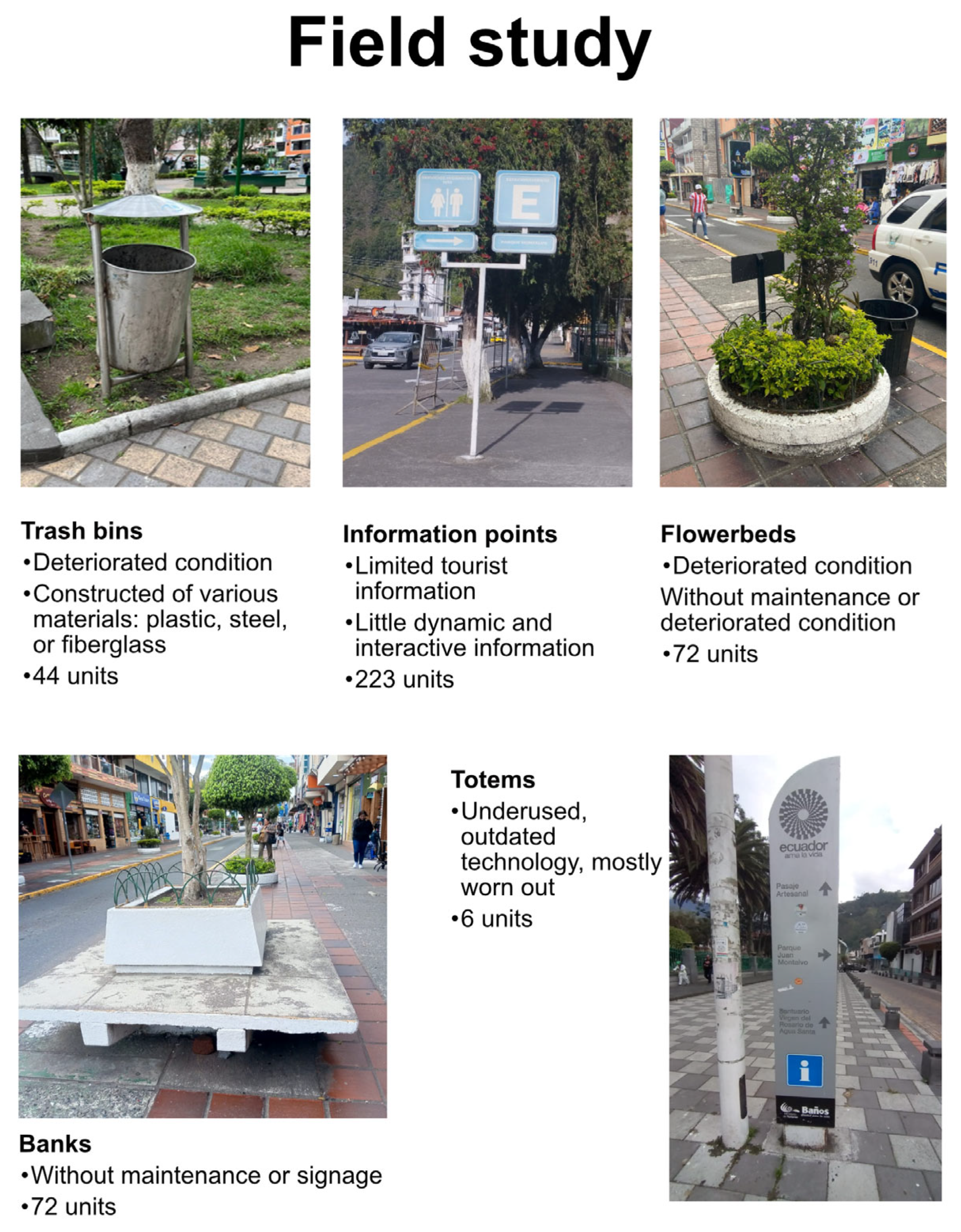
Figure 1. Analysis of the furniture context in Baños de Agua Santa.
Applsci 16 02603 g001
Figure 2. Layered architecture of the smart tourism system.
Applsci 16 02603 g002
Figure 3. Physical deployment map of sensor nodes.
Applsci 16 02603 g003
Figure 4. Sensor nodes and their components: (a) SN1 and SN2; (b) SN3 and SN4.
Applsci 16 02603 g004
Figure 5. Gateway node and their components.
Applsci 16 02603 g005
Figure 6. Logical database schema showing the table structures for: (a) SN1 SN2 and (b) SN3 SN4.
Applsci 16 02603 g006
Figure 7. Interaction diagram of the components of the smart tourism system.
Applsci 16 02603 g007
Figure 8. Results of the implementation of use cases for tourists.
Applsci 16 02603 g008
Figure 9. Image targets for the augmented reality application: trekking trail maps and QR codes; (a) La Virgen trail; (b) La Cruz trail.
Applsci 16 02603 g009
Figure 10. Results of the implementation of administrator use cases.
Applsci 16 02603 g010
Figure 11. Field testing of mobile application deployment in real-world scenarios. The figure includes the following terms in Spanish: “Clima de Baños de Agua Santa” (Weather in Baños de Agua Santa), “Clima, temperatura, humedad” (Weather, temperature, humidity), “Regresar al menú” (Return to menu), and “Filtrar por: escoja una opción; puntos de interes mas visitados” (Filter by: choose an option; most visited points of interest).
Applsci 16 02603 g011
Table 1. Synthetic comparison of bibliographic approaches (2021–2026) and differentiation of the IoT–AR approach.
CriterionIoT-Only (Smart Urban Furniture)AR-Only (Tourism Applications)Integrated IoT–AR (This Work)
Primary purposeData acquisition and provision of basic urban servicesVisitor experience enhancement and digital guidanceImmersive visitor experience combined with data generation for municipal management (end-to-end data loop)
User interactionLimited (information displays, connectivity access)High (AR overlays, digital narratives)High (AR-based interaction) enhanced by real-time contextual data
Environmental/usage data captureYes (distributed sensors)Typically not includedYes (sensor data integrated into tourism services)
ConnectivityWi-Fi/BLE/IoT; LPWAN depending on deployment contextDependent on mobile network and Internet availabilityLPWAN/LoRa at node level with fault tolerance and data synchronization mechanisms
Energy/autonomyVariable (grid-powered, solar-assisted, battery-based)Dependent on mobile device batteryExplicit energy-aware design (autonomy, power consumption, sustainability)
Validation approachFrequently partial (pilot deployments)Usability evaluation with users in multiple case studiesReal-world deployment combined with systematic user evaluation (including usability assessment)
Typical limitation/gapLow level of immersive tourist experienceDecoupling from sensorized urban infrastructureIntegrated IoT–AR solution within a multifunctional urban interaction node
Table 2. Phases of TDDM4IoTS methodology adapted.
PhaseInputsOutputsEvaluation MetricsIteration PointsStopping Criteria
P1Local needs; site constraints; literature review and similar solutionsRequirements list, scenariosBasic connectivity infrastructure; available spaces in urban furniture for technological integrationAdjustment of requirements due to real constraintsRequirements traceable to use cases
P2Requirements; technological components; preliminary location mapIoT–AR architecture; data flow diagram; technology selection; power planArchitectural coherence; selected technologies and parametersChange in technology or parameters; relocation of gateway and nodes; model adjustmentValidated architecture; critical requirements satisfied
P3Architecture design; selected hardware; firmware base; AR backend appRequirements model; functional specifications; interface definitionsRequirements consistency; functional requirements covered; defined acceptance criteriaReview and refinement of requirements versus prototypePrototype executes use cases without critical failures during controlled testing
P4Prototype; sensor node locationsFunctional user application with final adjustments; calibrated sensorsRadio link margin > receiver sensitivity; environmental measurements with reliability > 85%; functional softwareRelocation of sensor nodes; adjustment and recalibration of sensors; error correction in the user interfaceMetrics meet defined thresholds; operational software without critical failures
P5Validated prototype; final locations; urban furniture available; AR targetsOperational end-to-end system; deployed application; SUS resultsSUS questionnaire; system availability; packet loss; task success rateParameter adjustment; improvement of the user interfaceFully operational system in real scenario; SUS > 68 (acceptable); objectives achieved
Table 3. Functional Requirements.
CodeFunctional RequirementDescription
FR1Periodically environmental monitoring.The system must measure and display variables such as temperature and humidity.
FR2Tourist information visualization through ARTourists must be able to access relevant data using the AR application.
FR3Tourist information query via webThe system must provide a web page with information and recommendations.
FR4IoT device management and administrationThe administrator must be able to monitor and configure sensors through Node-RED.
FR5Automatic alert generationThe system must issue alerts in the event of adverse environmental conditions.
Table 4. Non-Functional Requirements.
CodeNon-Functional RequirementsDescription
FNR1Information securityData must be protected and access must be restricted.
FNR2AvailabilityThe system must operate continuously.
FNR3Ease of useInterfaces must be intuitive and accessible for all types of tourists.
FNR4ScalabilityIt must be possible to add new sensors and AR modules in the future.
Table 5. Actors, their roles and functions.
ActorRolFunctions
UsersEnd User of the SystemConsult tourist information, maps, and routes.
Visualize environmental data.
Use the AR application to explore the environment.
Indirectly influence system design through usage.
System AdministratorAvailabilityConfigure and monitor IoT nodes.
Manage system content and databases.
Update tourist and multimedia information.
Resolve technical failures and apply improvements.
Supervise system performance and security.
Sensor NodesDevices responsible for environmental data acquisition.Measure temperature, humidity, noise, UV radiation, and location.
Send data to the gateway for transmission.
Gateway NodeActs as a link for data transmission between sensor devices and the server.Receive data from sensor nodes.
Transmit information to the server.
Ensure stable connectivity among components.
Central ServerPlatform for data management, processing, and distribution.Store and organize information sent from sensors.
Process data for use in the mobile application.
Manage databases, web services, and security mechanisms.
AR ApplicationDigital interface for user interaction with the system.Overlay digital content on the physical environment.
Display routes, tourist attractions, and environmental data.
Provide an immersive experience through markers or geolocation.
Table 6. Description of use cases for the tourist.
Code ObjectiveFlow of Events
CU01Access the main functionalities of the application: Tourist Guide, ExploRA, Map, Trails, and Weather.1. The user opens the application.
2. The home screen is displayed with three buttons: Tourist Guide, Explora, Map, Trails, and Weather.
CU02Display general information and images of tourist sites in Baños de Agua Santa.1. The user selects “Tourist Guide”.
2. Static informative content about tourism is displayed.
CU03Explore Points of Interest with AR.1. The user selects “Explora” from the menu.
2. The app uses GPS to detect location.
3. Points of interest nearby are displayed.
4. The user interacts with the information.
CU04Visualize tourist information through AR.1. The user selects “Map.”
2. The camera and AR functionality with Vuforia are activated.
3. Three-dimensional pins and interactive buttons are displayed on the tourist map.
4. When pressing the corresponding button, the app connects to the selected location on Google Maps.
CU05Display trail information at the beginning of the route using AR by scanning a QR code.The user selects “Trails”.
The QR scanner is activated.
Upon detecting the QR code, trail information, images, and route details are displayed.
CU06Obtain updated weather data according to the user’s location.1. The user accesses the Weather option from the main menu.
2. The location request (GPS) is activated.
3. Environmental data are retrieved from Supabase.
4. The sensor values are displayed.
Table 7. Use Cases for the Administrator.
Code ObjectiveFlow of Events
CA01Allow the administrator to manage and monitor sensor and GPS data from urban furniture.1. The administrator logs into the web platform.
2. The welcome screen is displayed with buttons: Sensors, Administration, Data Table.
3. The administrator selects the desired option to monitor data or manage information.
CA02Display general system information: sensors, GPS locations, and urban furniture.1. The administrator selects “Web Guide.”
2. General system data is displayed.
CA03Allow the administrator to visualize environmental data and node locations.1. The administrator selects “Sensors” from the menu.
2. Sensor data and GPS locations are displayed.
CU04Visualize historical environmental information in graphical format for analysis and decision-making.1. The administrator accesses the main menu.
2. Selects “Administrator” or “Information.”
3. Five panels with historical graphs are displayed (X: time, Y: value).
4. The administrator can select time intervals for consultation.
CU05Allow the administrator to select nodes and dates to query registered data and export it in formats such as CSV.1. In the main menu, the administrator selects the database management option.
2. The desired node is chosen.
3. A specific date is entered.
4. The registered data is displayed.
5. Data can be exported in CSV format.
Table 8. Radio link configuration parameters.
ParametersValue
Line losses0.5 dB
Antenna gain5 dB
Maximum frequency928 MHz
Minimum frequency902 MHz
Transmitter power17 dBm
Receiver sensitivity−132 dBm
Antenna height10 m
Antenna typeOmnidirectional
Table 9. Average SUS responses.
ItemQuestionsTest 1
Average
Test 2
Average
1Would you use the system frequently?5.04.3
2Do you find the system unnecessarily complex?1.61.2
3Is the interface easy to use?4.44.5
4Would you need support to use it?2.31.6
5Were the functions well integrated?4.54.3
6Are there inconsistencies in the interface?2.11.1
7Are the graphics provided useful?4.54.5
8Is the information on screen unnecessary?1.91.1
9Will you learn to use the interface quickly?4.34.4
10Do you need to know additional aspects to use it?2.51.8
Disclaimer/Publisher’s Note: The statements, opinions and data contained in all publications are solely those of the individual author(s) and contributor(s) and not of MDPI and/or the editor(s). MDPI and/or the editor(s) disclaim responsibility for any injury to people or property resulting from any ideas, methods, instructions or products referred to in the content.