Evaluation of the Quality and Composition of the Lipid Fraction Obtained from Acorns

 , ,
, , 
Featured Application
Abstract
1. Introduction
2. Materials and Methods
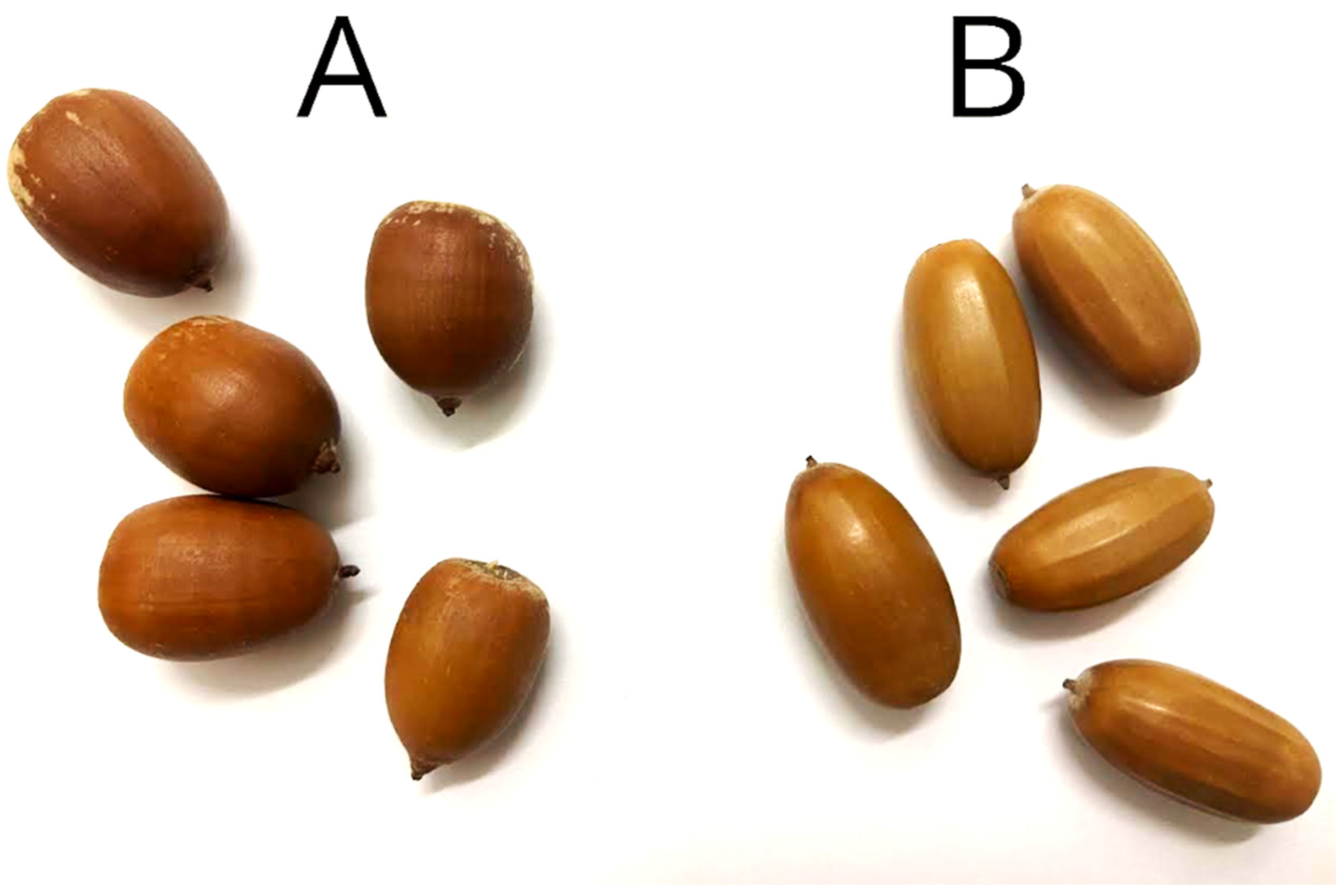
2.1. Materials
2.2. Oil Extraction from Acorns
2.2.1. Soxhlet Extraction
2.2.2. Cold Solvent Extraction
2.2.3. Mechanical Pressing
2.3. Determination of Oil Yield
2.4. Determination of Acid Value
2.5. Determination of Peroxide Value
2.6. Fatty Acid Methyl Ester Analysis by Gas Chromatography
2.7. Oxidative Stability Analysis by Isothermal Pressure Differential Scanning Calorimetry
2.8. Determination of Bioactive Compounds
2.8.1. Determination of Total Phenolic Content (TPC)
2.8.2. Determination of Total Flavonoid Content (TFC)
2.8.3. DPPH Radical Scavenging Activity Assay
2.8.4. ABTS Radical Cation Scavenging Activity Assay
2.9. Statistical Analysis
3. Results and Discussion
4. Conclusions
Author Contributions
Funding
Institutional Review Board Statement
Informed Consent Statement
Data Availability Statement
Conflicts of Interest
Abbreviations
| ABTS | 2,2′-azino-bis(3-ethylbenzothiazoline-6-sulfonic acid) |
| ANOVA | Analysis of variance |
| AI | Atherogenic index |
| AV | Acid Value |
| CGA | Chlorogenic acid equivalents |
| CHE | Cold hexane extraction |
| DPPH• | 2,2-diphenyl-1-picrylhydrazyl radical |
| DW | Dry weight |
| FAME | Fatty acid methyl esters |
| FFA | Free fatty acids |
| FID | Flame Ionization Detector |
| GC | Gas Chromatography |
| h/H | hypocholesterolaemic/hypercholesterolaemic ratio |
| HSD | Honestly significant difference |
| MP | Mechanical pressing |
| MAE | Microwave-assisted extraction |
| MUFA | Monounsaturated fatty acids |
| PDSC | Pressure Differential Scanning Calorimetry |
| PUFA | Polyunsaturated fatty acids |
| PV | Peroxide Value |
| QE | Quercetin equivalents |
| Qro | Q. robur |
| Qru | Q. rubra |
| SD | Standard deviation |
| SE | Soxhlet extraction |
| SFA | Saturated fatty acids |
| TE | Trolox equivalents |
| TI | Thrombogenic index |
| TFC | Total flavonoid content |
| TPC | Total phenolic content |
| UAE | Ultrasound-assisted extraction |
| UV–Vis | Ultraviolet–visible |
References
- GUS Statistical Yearbook of Forestry 2024. Available online: https://stat.gov.pl/en/topics/statistical-yearbooks/statistical-yearbooks/statistical-yearbook-of-forestry-2024,12,7.html (accessed on 11 February 2026).
- Bonner, F.T.; Vozzo, J.A. Seed Biology and Technology of Quercus; U.S. Department of Agriculture, Forest Service, Southern Forest Experiment Station: New Orleans, LA, USA, 1987.
- Cedro, A. Tree-Ring Chronologies of Downy Oak (Quercus pubescens), Pedunculate Oak (Q. robur) and Sessile Oak (Q. petraea) in the Bielinek Nature Reserve: Comparison of the Climatic Determinants of Tree-Ring Width. Geochronometria 2007, 26, 39–45. [Google Scholar] [CrossRef]
- Głowacki, D.; Sławska, M.; Sławski, M. The Dynamics of Northern Red Oak (Quercus rubra L.) in Managed Forests of Central Poland. For. Res. Pap. 2016, 77, 32–41. [Google Scholar] [CrossRef]
- Woziwoda, B.; Potocki, M.; Sagan, J.; Zasada, M.; Tomusiak, R.; Wilczyński, S. Commercial Forestry as a Vector of Alien Tree Species—The Case of Quercus rubra L. Introduction in Poland. Balt. For. 2014, 20, 131–141. [Google Scholar]
- Acorns as Food. History, Use, Recipes, and Bibliography. Available online: https://snakeroot.net/MTCA/wp-content/uploads/Acorns_as_Food_Text_and_Bibliography.pdf (accessed on 11 February 2026).
- Taib, M.; Bouyazza, L. Composition, Physicochemical Properties, and Uses of Acorn Starch. J. Chem. 2021, 2021, 9988570. [Google Scholar] [CrossRef]
- Li, S.; Zhou, Y.; Liu, M.; Zhang, Y.; Cao, S. Nutrient Composition and Starch Characteristics of Quercus glandulifera Bl. Seeds from China. Food Chem. 2015, 185, 371–376. [Google Scholar] [CrossRef]
- Özcan, T. Total Protein and Amino Acid Compositions in the Acorns of Turkish Quercus L. Taxa. Genet. Resour. Crop Evol. 2006, 53, 419–429. [Google Scholar] [CrossRef]
- Ayayee, E.; Chivandi, E. Quercus robur (English Oak) Seed: A Potential Energy, Oleic and Cis- Linoleic Acid Rich Nutritional Supplement in South Africa. Pak. J. Bot. 2018, 50, 1907–1912. [Google Scholar]
- Papoti, V.T.; Kizaki, N.; Skaltsi, A.; Karayannakidis, P.D.; Papageorgiou, M. The Phytochemical Rich Potential of Acorn (Quercus aegilops) Products and by Products. Food Sci. Biotechnol. 2018, 27, 819–828. [Google Scholar] [CrossRef]
- Taib, M.; Bouyazza, L.; Lyoussi, B. Acorn Oil: Chemistry and Functionality. J. Food Qual. 2020, 2020, 8898370. [Google Scholar] [CrossRef]
- Charef, M.; Yousfi, M.; Saidi, M.; Stocker, P. Determination of the Fatty Acid Composition of Acorn (Quercus), Pistacia lentiscus Seeds Growing in Algeria. J. Am. Oil Chem. Soc. 2008, 85, 921–924. [Google Scholar] [CrossRef]
- Al-Rousan, W.M.; Ajo, R.Y.; Al-Ismail, K.M.; Attlee, A.; Shaker, R.R.; Osaili, T.M. Characterization of Acorn Fruit Oils Extracted from Selected Mediterranean Quercus Species. Grasas Aceites 2013, 64, 554–560. [Google Scholar] [CrossRef]
- Stankov Jovanović, V.; Djurić, V.; Mitić, V.; Barjaktarević, A.; Cupara, S.; Ilić, M.; Nikolić, J. Oak Acorns as Functional Foods: Antioxidant Potential and Safety Assessment. Foods 2025, 14, 2486. [Google Scholar] [CrossRef] [PubMed]
- Samsonowicz, M.; Regulska, E.; Karpowicz, D.; Leśniewska, B. Antioxidant Properties of Coffee Substitutes Rich in Polyphenols and Minerals. Food Chem. 2019, 278, 101–109. [Google Scholar] [CrossRef] [PubMed]
- Zocchi, D.M.; Bondioli, C.; Hamzeh Hosseini, S.; Miara, M.D.; Musarella, C.M.; Mohammadi, D.; Khan Manduzai, A.; Dilawer Issa, K.; Sulaiman, N.; Khatib, C.; et al. Food Security beyond Cereals: A Cross-Geographical Comparative Study on Acorn Bread Heritage in the Mediterranean and the Middle East. Foods 2022, 11, 3898. [Google Scholar] [CrossRef]
- Taib, M.; Rezzak, Y.; Bouyazza, L.; Lyoussi, B. Medicinal Uses, Phytochemistry, and Pharmacological Activities of Quercus Species. Evid. Based Complement. Altern. Med. 2020, 2020, 1920683. [Google Scholar] [CrossRef]
- Mohebi, R.; Ghafourian, S.; Sekawi, Z.; Khosravi, A.; Galehdari, E.A.; Hushmandfar, R.; Ranjbar, R.; Maleki, A.; Mohammadzadeh, M.; Rahbar, M.; et al. In Vitro and in Vivo Antibacterial Activity of Acorn Herbal Extract against Some Gram-Negative and Gram-Positive Bacteria. Roum. Arch. Microbiol. Immunol. 2011, 70, 149–152. [Google Scholar]
- Bogdziewicz, M.; Kelly, D.; Zwolak, R.; Szymkowiak, J.; Hacket-Pain, A. Dynamics, Mechanisms, and Consequences of Mast Seeding. Annu. Rev. Ecol. Evol. Syst. 2025, 56, 119–144. [Google Scholar] [CrossRef]
- AOCS Official Method Te 1a-64; Acid Value Official Methods and Recommended Practices of the AOCS. AOCS Press: Champaign, IL, USA, 2009.
- AOCS Official Method Cd 8b-90; Peroxide Value Acetic Acid-Isooctane Method Official Methods and Recommended Practices of the AOCS. AOCS Press: Champaign, IL, USA, 2009.
- PN-EN ISO 5509:2001; Vegetable and Animal Oils and Fats. Preparation of Fatty Acid Methyl Esters. Polish Committee for Standardization: Warsaw, Poland, 2001.
- Kozłowska, M.; Mańko-Jurkowska, D.; Zieniuk, B.; Rudzińska, M. Influence of Extraction Techniques on Almond Oil Quality: A Comparative Study of Solvent-Extracted and Commercial Products. Molecules 2025, 30, 3519. [Google Scholar] [CrossRef]
- Siol, M.; Witkowska, B.; Mańko-Jurkowska, D.; Makouie, S.; Bryś, J. Comprehensive Evaluation of the Nutritional Quality of Stored Watermelon Seed Oils. Appl. Sci. 2025, 15, 830. [Google Scholar] [CrossRef]
- Rybak, K.; Wiktor, A.; Witrowa-Rajchert, D.; Parniakov, O.; Nowacka, M. The Quality of Red Bell Pepper Subjected to Freeze-Drying Preceded by Traditional and Novel Pretreatment. Foods 2021, 10, 226. [Google Scholar] [CrossRef]
- Aryal, S.; Baniya, M.K.; Danekhu, K.; Kunwar, P.; Gurung, R.; Koirala, N. Total Phenolic Content, Flavonoid Content and Antioxidant Potential of Wild Vegetables from Western Nepal. Plants 2019, 8, 96. [Google Scholar] [CrossRef]
- Zanetti, M.; Carniel, T.K.; Valério, A.; de Oliveira, J.V.; de Oliveira, D.; de Araújo, P.H.H.; Riella, H.G.; Fiori, M.A. Synthesis of Geranyl Cinnamate by Lipase-catalyzed Reaction and Its Evaluation as an Antimicrobial Agent: Lipase-Catalyzed Synthesis of Geranyl Cinnamate. J. Chem. Technol. Biotechnol. 2017, 92, 115–121. [Google Scholar] [CrossRef]
- Moreira, D.C. ABTS Decolorization Assay—In Vitro Antioxidant Capacity V1. protocols.io. 2019. Available online: https://www.protocols.io/view/abts-decolorization-assay-in-vitro-antioxidant-cap-14egnxk86l5d/v1.
- ChiPlot. Available online: https://www.chiplot.online/ (accessed on 11 February 2026).
- Górnaś, P.; Rudzińska, M.; Grygier, A.; Ying, Q.; Mišina, I.; Urvaka, E.; Rungis, D. Sustainable Valorization of Oak Acorns as a Potential Source of Oil Rich in Bioactive Compounds. Process Saf. Environ. Prot. 2019, 128, 244–250. [Google Scholar] [CrossRef]
- Makhlouf, F.Z.; Squeo, G.; Barkat, M.; Trani, A.; Caponio, F. Antioxidant Activity, Tocopherols and Polyphenols of Acornoil Obtained from Quercus Species Grown in Algeria. Food Res. Int. 2018, 114, 208–213. [Google Scholar] [CrossRef] [PubMed]
- Niari, S.; Hamdami, N.; Dalvi-Isfahan, M.; Le-Bail, A. Ultrasound and Microwave Assisted Extraction of Acorn Oil (Quercus brantii): Optimization and Characterization. Appl. Food Res. 2025, 5, 100706. [Google Scholar] [CrossRef]
- Shahamati, M.; Ahmadi, P.; Tabibiazar, M.; Fazelioskouei, T.; Azadmard-Damirchi, S.; Zargaraan, A. Characterization of Acorn Oil and Its Application on Carnauba Wax-Based Oleogel and Chocolate Spread. Int. J. Biol. Macromol. 2024, 260, 129571. [Google Scholar] [CrossRef]
- Araújo-Rodrigues, H.; Ribeiro, T.B.; Machado, M.; Pereira, C.D.; Pintado, M.E. The Potential of Acorn Extract Treatment on PUFAs Oxidative Stability: A Case Study on Fish Cooking Wastewater. Foods 2024, 13, 935. [Google Scholar] [CrossRef]
- SECTION 2. Codex Standards for Fats and Oils from Vegetable Sources. Available online: https://www.fao.org/4/y2774e/y2774e04.htm (accessed on 2 March 2026).
- Makhlouf, F.Z.; Squeo, G.; Difonzo, G.; Faccia, M.; Pasqualone, A.; Summo, C.; Barkat, M.; Caponio, F. Effects of Storage on the Oxidative Stability of Acorn Oils Extracted from Three Different Quercus Species. J. Sci. Food Agric. 2021, 101, 131–138. [Google Scholar] [CrossRef]
- Zarroug, Y.; Sriti, J.; Boulares, M.; Mejri, J.; Sfayhi, D.; Hamdaoui, G.; Kharrat, M. Chemical Composition and Sterol Profile of Tunisian Quercus ilex Oil. Riv. Ital. Delle Sostanze Grasse. 2021. Available online: https://www.innovhub-ssi.it/kdocs/2012989/2021_vol._982_-_art._08_-_zarroug.pdf.



| Oak Species | Oil Yield (%) | ||
|---|---|---|---|
| Soxhlet Extraction | Cold Hexane Extraction | Mechanical Pressing | |
| Q. rubra | 17.56 ± 1.29 Aa | 14.87 ± 1.13 Ab | 7.28 ± 0.42 c |
| Q. robur | 7.01 ± 0.27 Ba | 4.18 ± 0.38 Bb | – |
| Oak Species | Acid Value (mg KOH/g Oil) | ||
|---|---|---|---|
| Soxhlet Extraction | Cold Hexane Extraction | Mechanical Pressing | |
| Q. rubra | 0.57 ± 0.04 Bc | 0.43 ± 0.07 Bb | 0.77 ± 0.09 a |
| Q. robur | 3.77 ± 0.22 Aa | 3.55 ± 0.31 Aa | – |
| Oak Species | Peroxide Value (mEq O2/kg Oil) | ||
|---|---|---|---|
| Soxhlet Extraction | Cold Hexane Extraction | Mechanical Pressing | |
| Q. rubra | 1.10 ± 0.08 Bb | 1.23 ± 0.10 Bb | 2.89 ± 0.10 a |
| Q. robur | 2.78 ± 0.12 Aa | 2.37 ± 0.08 Ab | – |
| Fatty Acid | Q. rubra Mechanical Pressing | Q. rubra Cold Hexane Extraction | Q. rubra Soxhlet Extraction | Q. robur Cold Hexane Extraction | Q. robur Soxhlet Extraction |
|---|---|---|---|---|---|
| C14:0 | 0.11 ± 0.03 a* | 0.12 ± 0.01 a | 0.11 ± 0.02 a | 0.08 ± 0.01 a | 0.10 ± 0.03 a |
| C16:0 | 9.05 ± 0.24 c | 10.06 ± 0.95 b | 9.85 ± 0.25 bc | 13.36 ± 0.18 a | 13.09 ± 0.35 a |
| C16:1 | 0.20 ± 0.01 b | 0.23 ± 0.04 b | 0.21 ± 0.01 b | 0.27 ± 0.03 a | 0.24 ± 0.01 ab |
| C18:0 | 2.37 ± 0.06 a | 2.16 ± 0.10 b | 2.12 ± 0.01 b | 1.78 ± 0.08 c | 1.89 ± 0.01 c |
| C18:1 | 64.59 ± 1.44 a | 64.02 ± 0.78 a | 64.22 ± 0.18 a | 49.48 ± 0.93 c | 52.08 ± 0.04 b |
| C18:2 n-6 | 22.26 ± 1.22 c | 22.13 ± 0.05 c | 22.19 ± 0.06 c | 32.11 ± 0.89 a | 30.26 ± 0.35 b |
| C18:3 n-3 | 0.39 ± 0.01 c | 0.38 ± 0.01 c | 0.38 ± 0.01 c | 1.93 ± 0.06 a | 1.34 ± 0.01 b |
| C20:0 | 0.51 ± 0.01 a | 0.42 ± 0.08 b | 0.43 ± 0.01 b | 0.42 ± 0.03 b | 0.52 ± 0.01 a |
| C20:1 | 0.56 ± 0.01 a | 0.51 ± 0.09 a | 0.52 ± 0.01 a | 0.61 ± 0.10 a | 0.52 ± 0.01 a |
| SFA | 12.04 ± 0.23 b | 12.75 ± 0.78 b | 12.50 ± 0.27 b | 15.64 ± 0.11 a | 15.60 ± 0.33 a |
| MUFA | 65.35 ± 1.41 a | 64.75 ± 0.83 a | 64.95 ± 0.19 a | 50.36 ± 1.00 c | 52.84 ± 0.03 b |
| PUFA | 22.65 ± 1.23 c | 22.51 ± 0.04 c | 22.56 ± 0.06 c | 34.04 ± 0.83 a | 31.60 ± 0.34 b |
| PUFA/SFA | 1.88 ± 0.07 c | 1.77 ± 0.11 c | 1.81 ± 0.04 c | 2.18 ± 0.04 a | 2.03 ± 0.06 b |
| n-6/n-3 | 57.06 ± 1.05 a | 58.27 ± 2.30 a | 59.17 ± 1.29 a | 16.65 ± 0.95 c | 22.58 ± 0.50 b |
| AI | 0.11 ± 0.01 c | 0.12 ± 0.01 b | 0.12 ± 0.01 bc | 0.16 ± 0.01 a | 0.16 ± 0.01 a |
| TI | 0.26 ± 0.01 b | 0.28 ± 0.02 b | 0.27 ± 0.01 b | 0.32 ± 0.01 a | 0.33 ± 0.01 a |
| h/H | 9.53 ± 0.30 a | 8.54 ± 0.97 b | 8.72 ± 0.27 ab | 6.21 ± 0.09 c | 6.35 ± 0.19 c |
| Oak Species | Onset Oxidation Time (τon, Min) | ||
| Soxhlet Extraction | Cold Hexane Extraction | Mechanical Pressing | |
| Q. rubra | 126.11 ± 1.22 Ba | 106.29 ± 1.11 Bb | 99.78 ± 0.67 c |
| Q. robur | 212.95 ± 2.56 Aa | 149.41 ± 1.25 Ab | – |
| Oak species | Maximum oxidation time (τmax, min) | ||
| Soxhlet Extraction | Cold Hexane Extraction | Mechanical Pressing | |
| Q. rubra | 136.38 ± 1.43 Ba | 117.12 ± 1.16 Bb | 110.44 ± 0.87 c |
| Q. robur | 227.92 ± 2.43 Aa | 156.04 ± 0.86 Ab | – |
| Oak Species | TPC (mg CGA/g DW) | TFC (mg QE/g DW) | DPPH (mmol TE/g DW) | ABTS (mmol TE/g DW) |
|---|---|---|---|---|
| Q. rubra | 79.43 ± 2.09 a | 0.69 ± 0.09 a | 0.34 ± 0.01 a | 0.53 ± 0.02 a |
| Q. robur | 49.28 ± 0.38 b | 0.41 ± 0.05 b | 0.21 ± 0.03 b | 0.37 ± 0.03 b |
Disclaimer/Publisher’s Note: The statements, opinions and data contained in all publications are solely those of the individual author(s) and contributor(s) and not of MDPI and/or the editor(s). MDPI and/or the editor(s) disclaim responsibility for any injury to people or property resulting from any ideas, methods, instructions or products referred to in the content. |
© 2026 by the authors. Licensee MDPI, Basel, Switzerland. This article is an open access article distributed under the terms and conditions of the Creative Commons Attribution (CC BY) license.
Share and Cite
Kowalska, D.; Kołowrocka, Z.; Gruczyńska-Sękowska, E.; Tarnowska, K.; Zieniuk, B. Evaluation of the Quality and Composition of the Lipid Fraction Obtained from Acorns. Appl. Sci. 2026, 16, 2564. https://doi.org/10.3390/app16052564
Kowalska D, Kołowrocka Z, Gruczyńska-Sękowska E, Tarnowska K, Zieniuk B. Evaluation of the Quality and Composition of the Lipid Fraction Obtained from Acorns. Applied Sciences. 2026; 16(5):2564. https://doi.org/10.3390/app16052564
Chicago/Turabian StyleKowalska, Dorota, Zofia Kołowrocka, Eliza Gruczyńska-Sękowska, Katarzyna Tarnowska, and Bartłomiej Zieniuk. 2026. "Evaluation of the Quality and Composition of the Lipid Fraction Obtained from Acorns" Applied Sciences 16, no. 5: 2564. https://doi.org/10.3390/app16052564
APA StyleKowalska, D., Kołowrocka, Z., Gruczyńska-Sękowska, E., Tarnowska, K., & Zieniuk, B. (2026). Evaluation of the Quality and Composition of the Lipid Fraction Obtained from Acorns. Applied Sciences, 16(5), 2564. https://doi.org/10.3390/app16052564